





























32.2 C
Bangkok
Wednesday, June 24, 2026
Home Blog Page 2800

Reject the Draft Charter to Break the Cycle of Coups

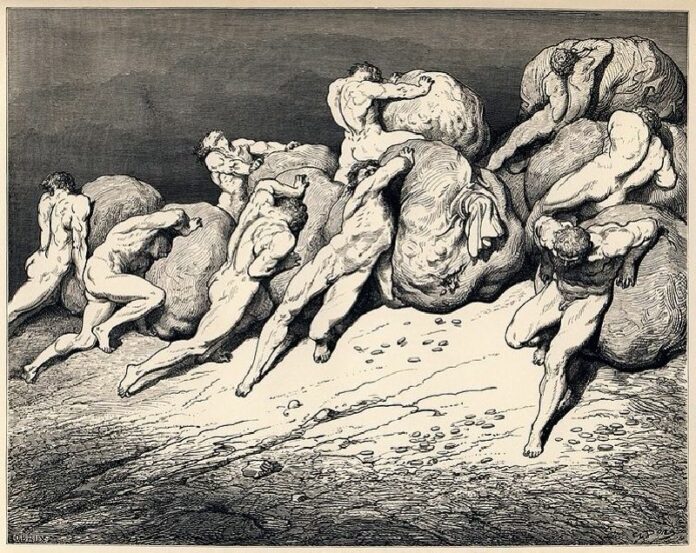
Illustration to Dante's Inferno, 1857, Gustave Dore.

By Pravit Rojanaphruk
Senior Staff Writer

\

BANGKOK — Has giving a middle finger to the junta’s draft charter become a crime in Thailand? When I posted such a photo recently along with another version in which I gave it a thumbs-up junta reps rang me up twice to express their displeasure before putting pressure on my employer Friday.

But none of that’s why I will reject its proposed constitution.

\

While many will reserve judgment until the final draft is issued by the end of March, I will not. I have already decided that I must reject it.

It’s not because I don’t care about the content of what could become Thailand’s 20th “permanent” constitution. My reason to reject it cannot be found in its 270 articles (nor their many flaws).

Nor do I have anything personal against junta leader Gen. Prayuth Chan-ocha, who staged the coup in 2014, or the charter drafters. In fact I’ve known drafting committee spokesman Amorn Wanichwiwatana since we were trapped together at the same university in England a decade and a half ago, while another, Norachit Sinhaseni, served under my father at the Thai Embassy in Manila. I call him “Uncle Norachit” to this day.

It pains me to see them on the junta’s side of the political divide, but it’s their choice, and I respect that.

Personal connections and sentiments aside, I am being a political early bird and announcing that I will vote against the charter on July 31 because, to me, its context is more important than its content.

More important than being asked what kind of constitution we want to have is weighing in on what kind of Thailand we’d like to live in. A Thailand where the military presents us fresh constitutions to approve after tearing up the last is not for me.

I am not a dog that will keep fetching a Frisbee thrown by its master without questioning why I should be stuck in a never-ending game.

First, the whole drafting process is illegitimate and undemocratic. The current (second) effort stems from the 2014 coup. People only need a new constitution because the coup makers tore up the previous one when they staged a putsch. That 2007 constitution was also prepared under military sponsorship, but at least it was adopted by voters after a period of free debate in which people were allowed to publicly campaign for or against it.

Those who now want to campaign against it are being threatened with prosecution. In recent weeks, two meetings to debate the draft were banned by the junta: one at the National Institute of Development Administration in Bangkok and another at a kindergarten in Amnat Charoen province. We’re unlikely to see an end to such censorship and restriction.

Up until now, with less than six months to go before it goes to a vote, Thai citizens are not being told what will happen if they reject it.

Second, the whole process was not participatory. All 21 charter drafters, mostly men, were appointed by junta leader Prayuth without any consultation with the public.

Third and most importantly, endorsing the junta-sponsored draft charter is tantamount to endorsing more coups in the future because it validates the whole cycle.

The message sent to the generals is that they can always get away with seizing power and starting the whole protracted process over again because people will dutifully come out to vote on such drafts based only on their content.

Like the dog and frisbee, the public seems to have no political memory of doing it all before and is stuck in a loop approving military-sponsored charters for the purpose of being torn up by future coup-makers.

Instead of weighing its articles and clauses, voters should apply the same bigger-picture thinking as when buying a used car – be sure it’s not stolen and thus won’t perpetuate thievery and looting.

Come July 31, I am going to have to say NO to the draft charter, regardless of its virtues or problems, to play my part in ending the cycle of coups.

Do not encourage more political thievery and looting. Do not encourage more coups.


Follow Khaosod English on Facebook and Twitter for news, politics and more from Thailand. To reach Khaosod English about this article or another matter, please contact us by e-mail at [email protected].


Follow @KhaosodEnglish

\

Advertisement

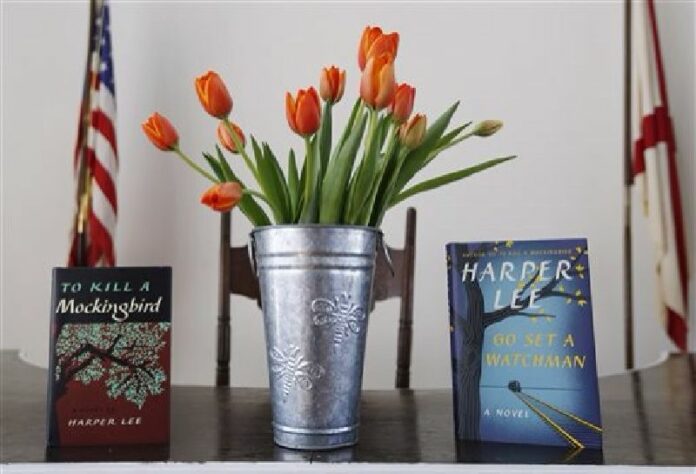
Harper Lee, Author 'To Kill a Mockingbird,' 89

Harper Lee's two books, "To Kill a Mockingbird," and "Go Set A Watchman" are displayed with a bouquet of tulips in the Monroe County Heritage Museum old courthouse Friday, Feb. 19, 2016, in Monroeville, Ala. Photo: Brynn Anderson / Associated Press

NEW YORK — Harper Lee, the elusive novelist whose child's-eye view of racial injustice in a small Southern town, "To Kill a Mockingbird," became standard reading for millions of young people and an Oscar-winning film, has died. She was 89.

Lee died Friday, publisher HarperCollins said in a statement. It did not give any details about how she died.

"The world knows Harper Lee was a brilliant writer, but what many don't know is that she was an extraordinary woman of great joyfulness, humility and kindness. She lived her life the way she wanted to — in private — surrounded by books and the people who loved her," Michael Morrison, head of HarperCollins U.S. general books group, said in the statement.

For most of her life, Lee divided her time between New York City, where she wrote the novel in the 1950s, and her Alabama hometown, which inspired the book's fictional Maycomb.

"To Kill a Mockingbird," published in 1960, is the story of a girl nicknamed Scout growing up in a Depression-era Southern town. A black man has been wrongly accused of raping a white woman, and Scout's father, the lawyer Atticus Finch, defends him despite threats and the scorn of many.

The book quickly became a best-seller, won the Pulitzer Prize and was made into a movie in 1962, with Gregory Peck winning an Oscar for his portrayal of Atticus. As the civil rights movement grew, the novel inspired a generation of young lawyers and was assigned in schools all over the country.

By 2015, its sales were reported by HarperCollins to be more than 40 million worldwide, making it one of the most widely read American novels of the 20th century. When the Library of Congress did a survey in 1991 on books that have affected people's lives, "To Kill a Mockingbird" was second only to the Bible.

Lee herself became more mysterious as her book became more famous. She began declining interviews in the late 1960s and, until late in her life, firmly avoided making any public comment about her novel or her career. Other than a few magazine pieces for Vogue and McCall's in the 1960s and a review of a 19th-century Alabama history book in 1983, she published no other book until stunning the world in 2015 by permitting "Go Set a Watchman" to be released.

"Watchman" was written before "Mockingbird" but was set 20 years later, using the same location and many of the same characters. Readers and reviewers were disheartened to find an Atticus who seemed nothing like the hero of the earlier book. The man who defied the status quo in "Mockingbird" was now part of the mob in "Watchman," denouncing blacks as unfit to enjoy full equality.

But despite unenthusiastic reviews and questions whether Lee was well enough to approve the publication, "Watchman" jumped to the top of best-seller lists within a day of its announcement and remained there for months.

Story: Kendal Weaver / Associated Press

To reach us about this article or another matter, please contact us by e-mail at: [email protected].

Follow Khaosod English on Facebook and Twitter for news, politics and more from Thailand.

Follow @KhaosodEnglish

\

Advertisement

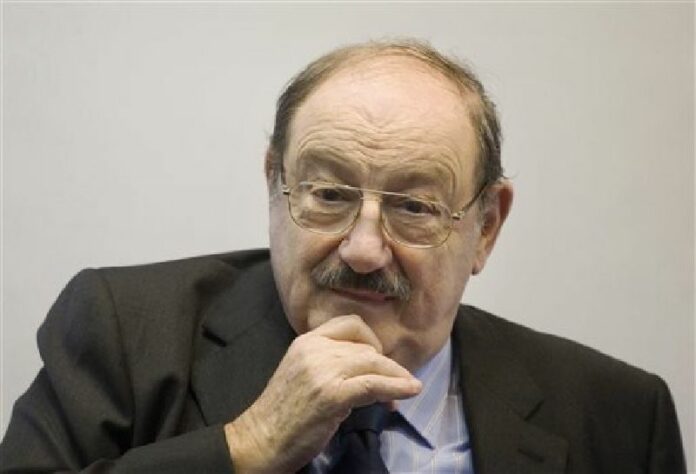
Umberto Eco, Author 'The Name of the Rose,' 84

Italian writer Umberto Eco gestures as he speaks during a press conference in 2011 at a book fair in Jerusalem. Photo: Sebastian Scheiner / Associated Press

ROME — Italian author Umberto Eco, who intrigued, puzzled and delighted readers worldwide with his best-selling historical novel "The Name of the Rose," has died.

Spokeswoman Lori Glazer of Eco's American publisher, Houghton Mifflin Harcourt, told The Associated Press that Eco died Friday at 84. She could not immediately confirm the cause of death or where he died.

Author of a wide range of books, Eco was fascinated with the obscure and the mundane, and his books were both engaging narratives and philosophical and intellectual exercises. The bearded, heavy-set scholar, critic and novelist took on the esoteric theory of semiotics, the study of signs and symbols in language; on popular culture icons like James Bond; and on the technical languages of the Internet.

"The Name of the Rose" transformed him from academic to international celebrity, especially after the medieval thriller set in a monastery was made into a film starring Sean Connery in 1986. "The Name of the Rose" sold millions of copies, a feat for a narrative filled with partially translated Latin quotes and puzzling musings on the nature of symbols. But Eco talked about his inspiration with characteristic irony: "I began writing … prodded by a seminal idea: I felt like poisoning a monk."

His second novel, the 1988 "Foucault's Pendulum," a byzantine tale of plotting publishers and secret sects also styled as a thriller, was successful, too —though it was so complicated that an annotated guide accompanied it to help the reader follow the plot.

In 2000, when awarding Eco Spain's prestigious Prince of Asturias Prize for communications, the jury praised his works "of universal distribution and profound effect that are already classics in contemporary thought."

Eco was born Jan. 5, 1932 in Alessandria, a town east of Turin; he said the reserved culture there was a source for his "world vision: a skepticism and an aversion to rhetoric." He received a university degree in philosophy from the University of Turin in 1954, beginning his fascination with the Middle Ages and the aesthetics of text. He later defined semiotics as "a philosophy of language."

He had always loved storytelling and as a teenager wrote comic books and fantasy novels.

"I was a perfectionist and wanted to make them look as though they had been printed, so I wrote them in capital letters and made up title pages, summaries, illustrations," he told The Paris Review in 1988. "It was so tiring that I never finished any of them. I was at that time a great writer of unaccomplished masterpieces."

Eco remained involved with academia, becoming the first professor of semiotics at the University of Bologna in 1971. He also lectured at institutions worldwide and was a fellow at elite colleges like Oxford University and Columbia University. Twenty-three institutions had awarded him honorary degrees by 2000.

But Eco was also able to bridge the gap between popular and intellectual culture, publishing his musings in daily newspapers and Italy's leading weekly magazine L'Espresso.

Eco started in journalism in the 1950s, working for the Italian state-owned television RAI. From the 1960s onwards, he wrote columns for several Italian dailies. He also wrote children's books, including "The Bomb and the General" ("La Bomba e il Generale").

In 2003, Eco published a collection of lectures on translations, "Mouse or Rat? Translation as Negotiation," and a year later he wrote the novel "The Mysterious Flame of Queen Loana," a story about an antiquarian book dealer who loses his memory.

Recent works include "From the Tree to the Labyrinth," an essay on semiology and language published in 2007 and "Turning Back the Clock," a collection of essays on various subjects, ranging from the recent wars in Iraq and Afghanistan, anti-Semitism and his staunch criticism of Silvio Berlusconi's conservative government. His most recent novel, "Numero Zero," came out last year and recalled a political scandal from the 1990s that helped lead to Berlusconi's rise.


Advertisement

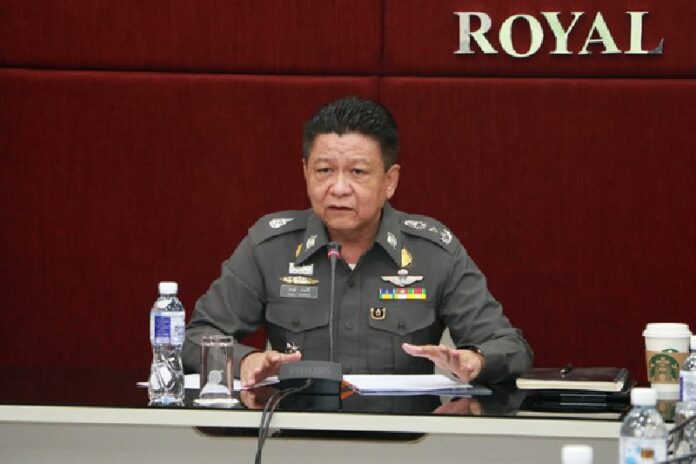
Police Spokesman Prawut to be Indicted

Lt. Gen. Prawut Thavornsiri speaks in his capacity as police spokesman April 22, 2015, at the national police headquarters in Bangkok. Photo: Royal Thai Police

BANGKOK — High-ranking police officials including a well-known police spokesman will be prosecuted for allegedly installing a communications device atop Bangkok’s tallest building for a “suspicious purpose” during last August’s Bike for Mom event.

Lt. Gen. Prawut Thavornsiri and other unnamed officers face prosecution for malfeasance after their case was forwarded to the national police chief today, according to deputy police chief Sriwarah Rangsitpramkul.

Prawut has not been seen publicly since he was pulled from his post Oct. 27 when he seemed to be swept up in a crackdown on officials said to be abusing their connections to the monarchy.

An arrest warrant was eventually approved by the Criminal Court for Prawut for allegedly installing a radio transmitter on the Baiyoke Tower II during the Bike for Mom event. Lt. Gen. Sriwarah on Friday said the case went to national police chief Chakthip Chaijinda to forward to the National Anti-Corruption Commission.

Sriwarah said he was not concerned that Prawut would flee the prosecution.

In October, during a purge of high-level officials accused of defaming the monarchy by exploiting their links, one of the suspects, later found dead in his cell, was accused of sneaking into the skyscraper to install radio devices taken from the Bung Kum Police Station.

Investigators said they found five mobile phones inside the residence of police Maj. Prakrom Warunprapha tuned in to the signal coming from Baiyoke II, which led to an accusation of unauthorized eavesdropping.

It was not specified what Prawut’s alleged criminal link was to Prakrom.

He suddenly stepped down from a very visible post as the public face of the national police 11 days after three men – Suriyan "Mor Yong" Sujaritpalawong, Jirawong Watanathewasilp and Prakrom – were arrested and charged with defaming the monarchy.

A martial court ordered the trio into a military prison and two nights later authorities said Prakrom was found hanged in his room. On Nov. 9, officials announced Suriyan, a nationally famous astrologer and palace aide, had died two days earlier in the same military base prison of a blood infection.

At the time, Chakthip dismissed speculation Prawut was linked to the other suspects as “just a rumor.”

No mention was made Friday of Prawut’s present whereabouts.


Related stories:

Fallen Former Police Spokesman ‘Back in Thailand’

Police Spokesman Prawuth Replaced


Advertisement

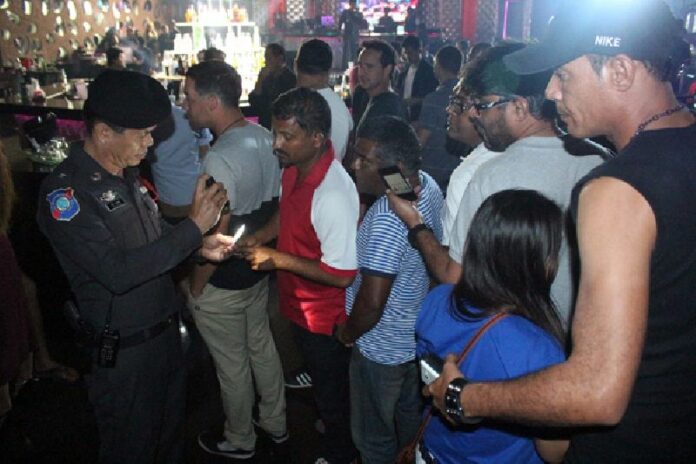
Walking Street Sweep Nets 30 Foreigners Without Proper Papers in Pattaya

Police checks the identification document of foreign tourists at a club on Pattaya Walking Street early Friday morning.

PATTAYA — More than 100 officers raided nightclubs along Pattaya’s famed Walking Street early Friday morning and took dozens of foreigners in for interrogation because they were not holding passports.

Officers from the Central Investigation Bureau and soldiers from the 14th Military Base went into five venues in the infamous nightlife and red-light area in what was billed as a crackdown on transnational crime, which ended up finding at least 30 foreigners without their passports.

All of them were taken in for criminal record checks and were reportedly released after they were able to show their passports to police.


Advertisement

Wildlife Inspectors Find Orangutan ‘Disappeared’ from Phuket Zoo

Milo, now a 13-year-old orangutan in an undated photo. Photo: Vicky Kiely / Change.org

PHUKET — A female orangutan whose conditions in captivity were decried by activists vanished from the Phuket Zoo just before wildlife officials arrived to see if it was keeping her legally.

Methee Meechai, a local National Parks Department director, said Friday afternoon that the 13-year-old ape named Milo was missing when officials went to inspect the zoo this morning after finding no record she was legally registered. Witnesses said she was last seen at the zoo Thursday.

An animal rights activist Friday accused the zoo of hiding her from authorities.

Edwin Wiek, founder of Wildlife Friends of Thailand, said he does not believe zoo owner Surapong Tantaweewong’s claim to have released Milo in the woods where she was found two years ago. He believes Milo may have been removed from her cage and hidden somewhere.

“I don’t believe they released Milo into the forest. If they did, it’s illegal to release wildlife into public areas,” the activist said over the phone Friday afternoon.

Attention was drawn to Milo’s status after an online petition calling for her release from captivity drew nearly 9,000 signatures since January.

Petition author Vicki Kiely said she was concerned about the orangutan’s conditions, saying she was locked up in a dark concrete box with no light, forced to pose for photos with tourists, looked overweight and appeared unhappy.

Kiely was present this morning for the inspection, and when Milo could not be found, she drove around the island but failed to find her beloved animal.

The incident comes a few months after smuggled orangutans were reportedly seized from private zoos and tourist attractions throughout Phuket and sent back home to Indonesia on Nov. 14.


Advertisement

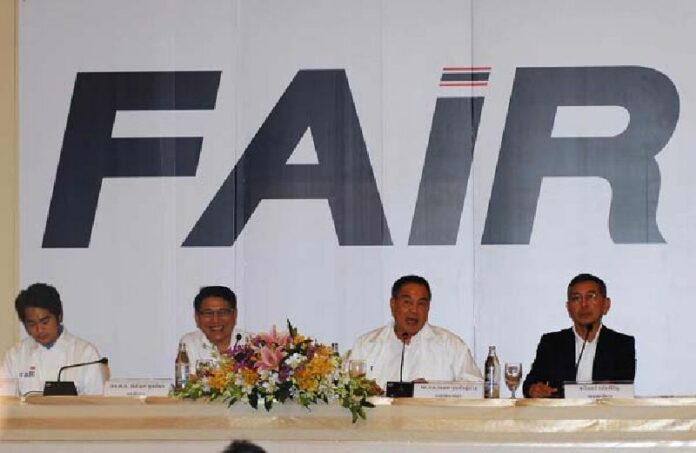
Ex-Top Cop Appoints Top Cop to Run Premier League

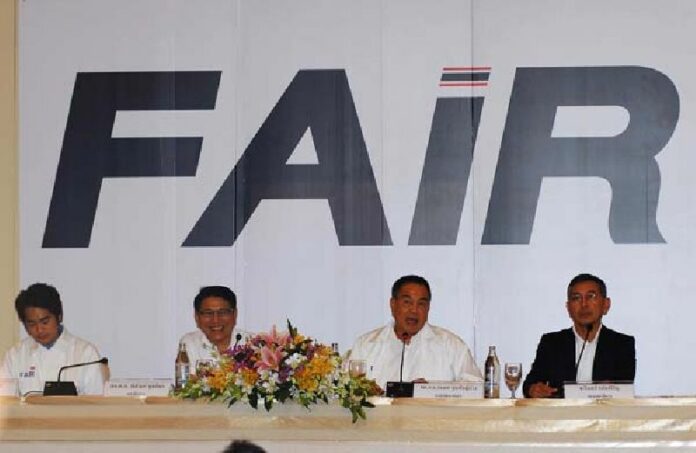
Former police chief Gen. Somyot Pumpanmuang, second from right, gave his first public address Friday as president of the Football Association of Thailand at The Emerald Hotel in Bangkok.

BANGKOK — Looking to expand the organizational culture he oversaw as Thailand’s top cop, the former national police chief-turned-president of Thai football today appointed his successor – the current police chief – to head the company behind the Thai Premier League series.

In his first meeting since his landslide win Feb. 11, newly elected Football Association of Thailand chief Somyot Pumpanmuang announced that Gen. Chakthip Chaijinda, who succeeded him as head of the Royal Thai Police, will serve as president of Premier League Thailand Co. Ltd.

The company is responsible for arranging the nation’s largest football competition. Somyot told reporters it was normal for top brass to be involved in organizations such as the state railway, national airline carrier and other large concerns.

Gen. Somyot, who sought the presidency after setting aside plans to lobby for legalized gambling, outlined other initiatives.

In his first week on the job, the man famous worldwide for giving his police a cash bounty for arresting a bombing suspect, has encouraged the public to send money to a bank account he says will help achieve a dream: Getting Thailand into the World Cup.

He claimed the private sector has already contributed 5 million baht to his “Send the Thai Team to the World Cup Fund.”

Any fans eager to support Somyot’s efforts to get Thailand into the World Cup can transfer money to account No. 127-240-870-2 at Siam Commercial Bank’s Chokchai 4 branch.

Somyot’s reign over Thai football follows the long and contentious presidency of Worawi Makudi. During his four terms, Worawi was attached to a series of scandals and accusations of corruption, few of which stuck until he was convicted of forging documents last year in relation to his 2013 re-election. Fifa later suspended him.

To clean the slate, Somyot said he’s dismissed all contracts the association signed prior to today, including all employment contracts except for permanent staff. He also lifted all previous bans placed on football teams under the Worawi administration and urged them to drop all ongoing litigation.

The freshly installed president moved back the first match of the Thai Premier League to March 5 from Feb. 27.


\

Advertisement

Ex-Top Cop Appoints Top Cop to Run Premier League

Former police chief Gen. Somyot Pumpanmuang, second from right, gave his first public address Friday as president of the Football Association of Thailand at The Emerald Hotel in Bangkok.

BANGKOK — Looking to expand the organizational culture he oversaw as Thailand’s top cop, the former national police chief-turned-president of Thai football today appointed his successor – the current police chief – to head the company behind the Thai Premier League series.

In his first meeting since his landslide win Feb. 11, newly elected Football Association of Thailand chief Somyot Pumpanmuang announced that Gen. Chakthip Chaijinda, who succeeded him as head of the Royal Thai Police, will serve as president of Premier League Thailand Co. Ltd.

The company is responsible for arranging the nation’s largest football competition. Somyot told reporters it was normal for top brass to be involved in organizations such as the state railway, national airline carrier and other large concerns.

Gen. Somyot, who sought the presidency after setting aside plans to lobby for legalized gambling, outlined other initiatives.

In his first week on the job, the man famous worldwide for giving his police a cash bounty for arresting a bombing suspect, has encouraged the public to send money to a bank account he says will help achieve a dream: Getting Thailand into the World Cup.

He claimed the private sector has already contributed 5 million baht to his “Send the Thai Team to the World Cup Fund.”

Any fans eager to support Somyot’s efforts to get Thailand into the World Cup can transfer money to account No. 127-240-870-2 at Siam Commercial Bank’s Chokchai 4 branch.

Somyot’s reign over Thai football follows the long and contentious presidency of Worawi Makudi. During his four terms, Worawi was attached to a series of scandals and accusations of corruption, few of which stuck until he was convicted of forging documents last year in relation to his 2013 re-election. Fifa later suspended him.

To clean the slate, Somyot said he’s dismissed all contracts the association signed prior to today, including all employment contracts except for permanent staff. He also lifted all previous bans placed on football teams under the Worawi administration and urged them to drop all ongoing litigation.

The freshly installed president moved back the first match of the Thai Premier League to March 5 from Feb. 27.


Advertisement

Citizens Should Resist Online Censorship, Advocates Say

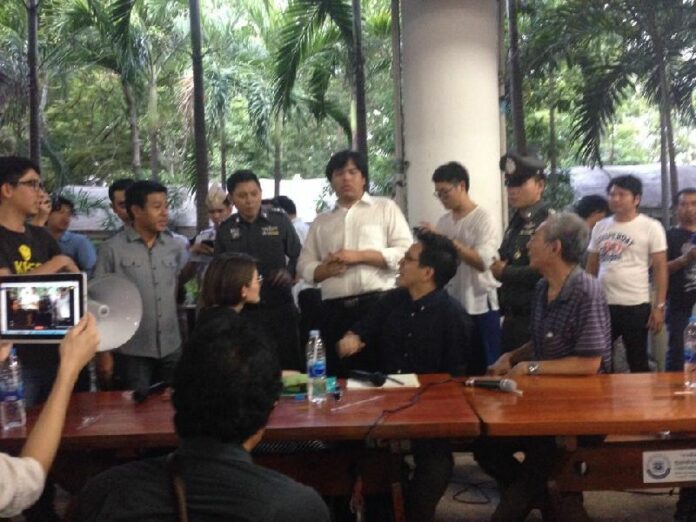
Police break up a talk 18 Sep. 2014 at Thammasat University on the "Demise of Foreign Dictators" Photo: Provided by student who attended the event

By Pravit Rojanaphruk
Senior Staff Writer

BANGKOK — Citizens have a duty to not buy into state propaganda, be critical of the powers that be and resist censorship, anti-coup activist Sombat Boonngamanong said at a symposium yesterday.

Sombat was among five speakers invited to speak Thursday on the topic of online censorship by the Thammasat Student Union at the Pridi Banomyong lawn on the Tha Prachan campus.

He cited a recent, “very crazy” example of a man arrested for privately sending a link to a music video mildly mocking junta leader Gen. Prayuth Chan-ocha as an example of the absurdity of the military regime’s pursuit of censorship online.

People should not allow state propaganda to lead them by the nose like cows, he said.

“What’s our duty? We are the governed, and if someone puts a lead through our nose, your duty is to remove it. We have to stop behaving like children,” he said.

Sirawith Rojwattanasiri, a panelist and member of student discussion group Youth Network of Bangkok, received the junta’s blessing for Thursday’s event after tweaking the topic for the “Politics on Fiberoptics: Do Not Share, Do Not Click Like.” Sirawith thanked the junta for permitting the discussion and said he welcomed state censorship of the internet because people can then assured of getting only “good” information.

“The good thing about it is that they can select only good things for us to consume,” he said, adding that terrorism could be combated if the junta goes forward with its plan to route all internet traffic through a single gateway under its control.

“I think it’s a good thing the government can control what [information] we consume although the negative side is that people do not have freedom,” said the student from a prestigious Bangkok high school.

Natchaphon Sae Tan, a Thammasat University student and panellist, said he’s more worried about the state censoring what it thinks is unsuitable.

“I have no problem with the media being biased because you can decide by yourself,” he said. “I’m more concerned if the state were to remove media B and C and only leave us with media A.”

Arthit Suriyawongkul of the Foundation for Internet and Civic Culture – formerly known as the Thai Netizen Network – said he worries the single gateway project would enable officers to censor content online without seeking a court order as now required under the Computer Crime Act.

He said censorship proponents argue that it takes too long. In recent weeks a junta-appointed censorship committee has tried winning support from Google and other major service providers to waive their usual legal requirements.

Sombat, who’s facing sedition and computer crime charges for calling for peaceful opposition to the junta online, said criticism of junta leader Prayuth should not be regarded as a threat.

“Criticizing Prayuth won’t ruin the country,” he declared loudly to the crowd.

Sombat sought to underscore what he sees as the junta’s absurd paranoia over the internet.

He told the audience about a thick file of his Facebook posts used in his interrogation after his 2014 arrest for trying to organize peaceful resistance to the junta online.

“But I’m not a bomb maker,” Sombat said.

Sombat has since receded from the limelight, which he said is for pragmatic reasons.

“I am now rather well-behaved not because of the laws, but because they have guns. Everyone is just trying to censor themselves. I swear, I dare not click ‘Like’ on posts by people such as Somsak, and I believe there’re many people like me,” he said, referring to Paris-based exiled historian Somsak Jeamteerasakul, who often posts messages that risk being deemed as defaming the monarchy by authorities.

Related stories:

Libel Unclear in ‘Illegal’ Video Mocking Prayuth

Thailand Asks Google to Bend Censorship Rules


Pravit Rojanaphruk can be reached at [email protected] and @PravitR.

Follow Khaosod English on Facebook and Twitter for news, politics and more from Thailand. To reach Khaosod English about this article or another matter, please contact us by e-mail at [email protected].
 

Follow @KhaosodEnglish

\

Advertisement

Man Confesses to ‘Seducing’ 300 School Boys, Police Say

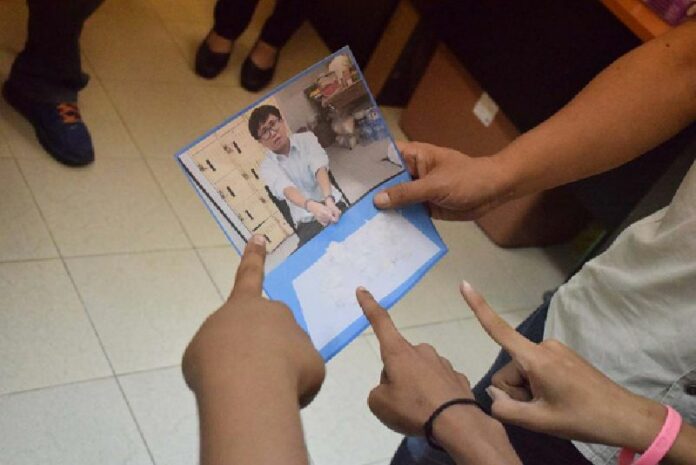
Accusing fingers are pointed toward a photograph of Chanabodin ‘Ja’ Nikulkan on Thursday at the Buppha Ram Police Station in western metro Bangkok.

BANGKOK — A 23-year-old man Thursday reportedly confessed to having inappropriate contact with hundreds of junior high school boys, some of whom were sexually abused, over the years since he himself graduated from high school.

Chanabodin “Ja” Nikulkan, 23, was charged Thursday morning with the abduction and abuse of children under 15 after parents of six boys went to police. Police said he subsequently admitted to seducing more than 300 children from the same boys school he once attended, and other nearby schools.

At least six boys made specific allegations of sexual abuse. Aged 13 to 15, they told police that Chanabodin treated them to food, alcohol and cigarettes before taking them to his room, showing them pornography, then sexually abusing them. Boys who offered resistance were not allowed to leave, according to police Maj. Gen. Montri Yimyam.

In front of the parents of the six boys, Chanabodin apologized and told them he contacted their children because he wanted to have a son. The children were said to all call him respectfully by his nickname as “Father Ja” or “Teacher Ja.”

The alleged abuser said in most cases he would ask boys to meet him after school finished at around 6pm. They would then go for a walk or dinner, and he would sometimes give them up to 30 baht.

He insisted not all of the 300 boys he had seduced were sexully assualted, saying that some were able to fend him off. He said the abuse consisted of oral sex and touching their genitals.

Police are collecting forensic evidence from his room in the west of Bangkok in Thonburi province and urged parents of other victims to come forward and report any suspicions of abuse at the Buppha Ram police station.


Advertisement

Hot News

LATEST NEWS

Bangkok
broken clouds
32.2 ° C
36.6 °
32.2 °
69 %
5.3kmh
67 %
Wed
32 °
Thu
37 °
Fri
36 °
Sat
37 °
Sun
36 °