





























28.3 C
Bangkok
Sunday, June 21, 2026
Home Blog Page 2810

10 Other Surprisingly Absurd Thai Laws

As everyone but Pattaya police scratch their heads over why 32 elderly, Western retirees were taken into custody in a raid on their bridge game, authorities point to a 73-year-old law banning the possession of more than 120 playing cards.

While police are now throwing the book at the seniors, one need only turn its pages to find other peculiar laws that remain in effect to this day: How to properly pilot a chariot, what you should never do in front of the enemy, the importance of rendering aid to postal workers and more.

With a tendency to change governments with an impressive frequency, Thailand has accumulated a body of laws that remain in effect to today. Niwat Kaewluan, head of the Lawyers Council of Thailand, said those laws, no matter how surreal or impractical they may be, remain in effect if Parliament does not formally abolish them.

A number of fine examples remain from the dictatorship era of the 1960s, when the ruling junta – the self-styled “Revolutionary Council” – enacted decree after decree without consultation of anyone.

Here are a few wacky laws to become familiar with because, as Niwat said, ignorance of them is no defense in the courtroom.


1. Roller-Skating or Bowling After Midnight (1972)

\

The 45th Revolutionary Decree issued in January 1972 bans public skating and bowling in any venue, whether commercial or noncommercial, between midnight and midday. The law said the ban was meant “to encourage frugality and health of the people and to prevent ill incidents that can occur” because “criminals exploit opportunities to use these venues to gather and commit crimes.”


2. Forming or Joining a Secret Society (1800s)

\

The offense dates back to Rama IV, when Chinese triads (secret societies) were formed, sometimes with criminal intent. Triads, known in Thai-Chinese lingo as Ang Yi, were also accused of sparking riots and revolts against the authorities in Thailand.

Although long gone in history, Ang Yi  remain alive and well in the law. Section 109 of the Penal Code specifically outlaws Ang Yi and similar organizations. The law defines Ang Yi-like behavior as belonging to a secret society with an intent to break the law.


3. Being a Lazy Cop (1934)

Photo: Bobby Shi / Flickr

Laziness, negligence of duty, getting drunk on duty or using foul language are violations under Section 5 of the 1934 Act of Police Disciplines. Signed by Rama VII only two years after the revolution that established a democratic regime in Thailand.


4. Cutting Down a Tree in Military Sensitive Areas in Full View of the Enemy (1935)

\

A 1935 law specifically outlaws unauthorized removal of trees in any place declared a “military sensitive area.” You will go to jail for one year for such a treasonous act.

But if the enemy sees you doing it? Cutting down trees while in view of the enemy gets you five years in jail.


5. Don’t Let Go of the Harness (1979)

\

Section 111 of the Land Traffic Act bans riding a chariot without hands firmly gripping the horse’s harness. Driving any animal-teamed carriage without control over the animal is also illegal.


6. Inspecting a Crime Inside a Catholic Church Without Priest Permission (1909)

\

Section 11 of the 1909 Act of Catholic Churches in Siam states that priests have full authority over their respective churches and requires laws enforcement officers to first ask for their permission to investigate any crime reported inside.


7. Wear It and Wear it Correctly (1972)

\

If you are a student and don’t wear your uniform according to code, you break not only school regulations but the law. As enshrined in the 132nd Revolutionary Decree, repeated offenses may land students in a state welfare facility, with their parents fined 1,000 baht.


8. Booze Ban, Old School Edition (1972)

\

While booze bans come and booze bans go, the central pillar of such laws – an order it only be sold from 11am to 2pm and 5pm to midnight – was first enacted by the 253rd Revolutionary Decree in 1972.


9. No Caps for Cabbies (2002)

Photo: Kevin J. Charles / Flickr

According to 2002 order issued by the Royal Thai Police, taxi drivers must only dress in plain shirts, with their shirts always tucked into their pants. They must also wear “ankle-covering shoes” at all times, except when their feet are hurt, and they cannot wear any hat or cap, unless it is military-styled headgear.


10. Refusing to Help a Postman (1934)

Responding to frustration over regularly mangled packages, Thailand Post issued this helpful infographic in 2014 on how parcels should be sent inside of larger parcels to decrease the chance of damage.

Kind of like those Good Samaritan laws but with a very specific application. Section 47 of the 1934 Post Act states that if a mail bag falls by accident (whether on land OR sea!) it is the “duty of every capable individual to provide assistance” to the postman and ensure the mail bag goes on its way. Be warned: Refusal to help a mailman in distress will get you a hefty fine of 50 baht.


Advertisement

UN Panel: Assange Detained Arbitrarily, Should Be Freed

Demonstrators hold banners outside the Ecuadorean Embassy in London, where Wikileaks founder Julian Assange is staying, Thursday, Feb. 4, 2016. Photo: Kirsty Wigglesworth / AP

GENEVA — WikiLeaks founder Julian Assange has been "arbitrarily detained" by Britain and Sweden since December 2010, and should be freed and compensated, a U.N. human rights panel said.

The U.N. Working Group on Arbitrary Detention, which falls under the offices of the U.N. human rights chief, made the call in an 18-page document made public on Friday after it had notified Assange.

Swedish prosecutors want to question Assange over allegations of rape stemming from a working visit he made to the country in 2010 when WikiLeaks was attracting international attention for its secret-spilling.

Assange has consistently denied the allegations but declined to return to Sweden to meet with prosecutors and eventually sought refuge in the Ecuadorean embassy in London, where he has lived since June 2012.

In an indirect swipe at Sweden's judicial system, the panel noted that Assange was never formally charged in Sweden — only placed under preliminary investigation.

"The Working Group on Arbitrary Detention considers that the various forms of deprivation of liberty to which Julian Assange has been subjected constitute a form of arbitrary detention," said panel chairman Seong-Phil Hong in a statement.

Citing the International Covenant on Civil and Political Rights that has 168 state parties including both Sweden and Britain, the panel said "the adequate remedy would be to ensure the right of free movement of Mr. Assange and accord him an enforceable right to compensation."

The panel's decisions are not binding on states, even if they are generally considered a good arbiter of international law. Both countries rejected the findings in the Assange case.

"The statement from the Working Group has no formal impact on the ongoing investigation, according to Swedish law," said Karin Rosander, spokeswoman for the Swedish Prosecution Authority. She said the prosecutor in charge of the case was traveling and not immediately available for comment on the decision.

The panel criticized a "disproportionate" reaction by Swedish prosecutors in issuing a European arrest warrant rather than seeking to question Assange using bilateral agreements with Britain, and insisted that the Swedish prosecutor "refused" to consider other ways of interviewing him compatible with his right to asylum — which it said was not properly respected.

Britain's Foreign Office said in a statement it would formally contest the panel's opinion.

"This changes nothing. We completely reject any claim that Julian Assange is a victim of arbitrary detention," the Foreign Office said in a statement. "Julian Assange has never been arbitrarily detained by the U.K. The opinion of the U.N. Working Group ignores the facts and the well-recognized protections of the British legal system."

It countered that Assange was "voluntarily avoiding lawful arrest by choosing to remain in the Ecuadorean embassy."

The case has also been complicated by uncertainty surrounding Assange's legal status in the United States. The U.S. government has not revealed whether he has been indicted — grand jury proceedings are secret there — but has indicated that sensitive investigations into Assange and WikiLeaks have been made.

The working group said Assange could face "refoulement" to the United States — being handed over to a country where he could face violence or prison. The U.N. upholds the principle of non-refoulement prohibiting that practice.

Story: Jamey Keaten / Associated Press


Advertisement

Gardener Guns Down Colleague at Thammasat University

Blood marks the scene of a fatal shooting Friday morning in the main administrative building of Thammasat University’s Rangsit campus.

BANGKOK — A university gardener is in custody on suspicion for killing a fellow employee on the Rangsit campus of Thammasat University this morning.

Police said Somnuek Kaewtham, 55, opened fire and killed an administrative official at around 10am after a heated argument, then fled the scene. The shooting in front of numerous bystanders just outside the Rector’s Office was described by a university administrator as “unprecedented.”

Local police commander Kemphat Bodhipitak identified the victim as 58-year-old Amnart Niyomsakdi, a university employee in the disabled students affairs department. 

According to Col. Kemphat, Somnuek and Amnart had a long history of enmity. Their dispute turned fatal today when Somnuek and Amnart got into an argument, and Somnuek abruptly pulled out a revolver and shot Amnart, Kemphat said.

Amnart died on the way to the hospital, the officer added. 

Somnuek initially fled the scene on a motorcycle, but police arrested him Friday afternoon, Col. Kemphat said. He has yet to be charged with any offense.

Chanan Phonprapai, an assistant rector of Thammasat University, said he was shocked.

“We never expected this. It’s unprecedented,” Chanan said. “It’s already very, very rare for our staff to have fights, let alone kill each other.” 

Asked why a gardener would carry a revolver on his duty, Chanan said the university has a no-firearms policy, and he was not aware why Somnuek was packing heat.

He added that university administrators will convene to consider possible security measures in light of the fatal shooting.


Teeranai Charuvastra can be reached at [email protected] and @Teeranai_C.


\

Advertisement

Police Seek Spanish Murder Suspect

An immigration photo provided by police of Artur Princep, a Spanish national and their lead suspect in the murder of another Spaniard, David Bernat. Photo: Courtesy Immigration Bureau

BANGKOK — Police on Friday published a photo of a Spanish national they are seeking in connection with the murder and dismemberment of a man whose remains were recovered from the Chao Phraya River.

Artur Segarra Princep, 36, has been named as a suspect of the murder of 39-year-old David Bernat, a telecom consultant whose remains were found floating in the river this past weekend. He is believed last seen Thursday in Bangkok.

Police also revealed that money worth 37 million baht had been transferred from Bernat’s account in Singapore to that of Princep.

“We believe there are more than two perpetrators but not more than 10” because of the extreme measures taken in the crime, said police Gen. Panya Maman. “They are suspected to be mostly Spanish with Thai nationals lending a hand in some stages.”

Police said Artur was last seen Thursday traveling in a black truck with a woman, on the same day he withdrew money from two ATMs: one in Ayutthaya’s Wang Noi district and another about 6pm on Suwinthawong Road in Bangkok.

Artur has reportedly entered Thailand 13 times. For now, police are seeking him in regards to his immigration status as his visa expired in December.


Related stories:

Spanish National Identified as Dismembered Man

Police Puzzled After Body Parts Fished Out of Chao Phraya


Advertisement

Japan to Deport Maker of Oscar-Winning Dolphin Documentary

In this Sept. 16, 2015 photo released by DolphinProject.com, Ric O'Barry checks the status of Angel the dolphin at the Taiji Whale Museum in Taiji, Wakayama prefecture, western Japan. Photo: DolphinProject.com / AP

TOKYO — After more than two weeks of detention at a Tokyo airport, Japan is set to deport the star of an Oscar-winning documentary that showed how dolphins were hunted in a Japanese village.

Ric O'Barry's lawyer and his son Lincoln O'Barry told The Associated Press that an appeal against a decision by Japanese immigration officials to deny O'Barry entry has been turned down.

O'Barry has been held in a detention facility since Jan. 18 when he landed at Tokyo's Narita airport. O'Barry and his lawyer say officials accuse him of lying during his past visits to Japan. He denies that, and says he is a tourist.

O'Barry starred in "The Cove," which won the 2009 Academy Award for best documentary. In it, dolphins get herded by fishermen into a cove in Taiji, Japan, and speared to death, turning the waters red with blood.

Officials and fishermen in Taiji have defended the hunt as traditional, saying that eating dolphin meat is no different than eating beef or chicken.

Immigration officials do not comment on cases.

O'Barry has vowed to keep at his effort to save the dolphins.

As the dolphin trainer for the "Flipper" TV series, he has long felt responsible for dolphin shows and aquariums. He regularly visits Taiji.

"They are trying to shut me up. But they are creating a tsunami of attention for this issue," he said in a telephone call earlier this week from the detention facility.

O'Barry, 76, said the officials questioned him daily in what he described as an effort to get him to fall for trick questions and end up confessing to wrongdoing.

"It breaks my heart to be deported," he said. "I never violated Japanese law. I never lied to Japanese authorities."

He said he felt weak and had not slept well, adding the food at the detention center did not agree with him so he ended up eating candy bars and chips.

The lies he is alleged to have told immigration officials were technical, he said, such as initially saying he wouldn't go to a demonstration when he went, but that was because at that time he had not yet been invited.

He was also initially accused of having ties to anti-whaling group Sea Shepherd.

O'Barry heads his own group Dolphin Project, which aims to peacefully protect dolphins worldwide.

"This is a slap in the face to the freedom of speech," O'Barry said. "But this has not shaken my love for Japan."

Story: Associated Press

Advertisement

Mahout Charged with Recklessness in Death of Scotsman

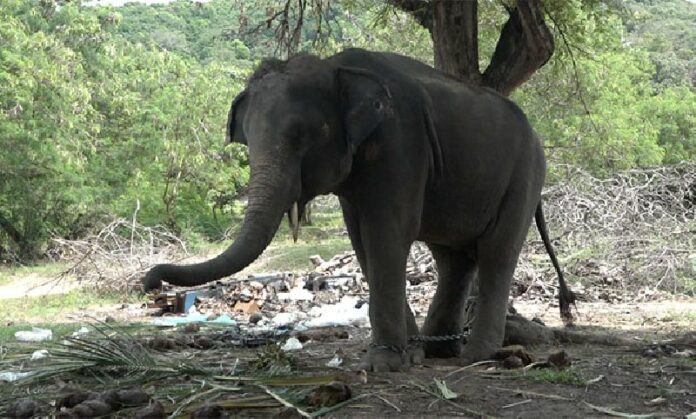
‘Golf’ the elephant is seen chained up Thursday after attacking his mahout and two tourists on Monday.

SAMUI — A mahout was charged Thursday with recklessness three days after his elephant killed a British man and injured his step-daughter on Koh Samui, according to local police.

Saw Win Tun, the 37-year-old Myanmar mahout, told police via a Burmese translator that during the trek, the deceased man, Gareth Crowe, enraged the elephant by teasing it with food.

Saw Win, who was slightly injured in the attack, said Crowe gave a bunch of bananas to the elephant, a male named Golf. When Golf finished the fruit, he leaned in his trunk asking for more, Saw Win said. Crowe, 36, then teased the elephant by pulling back the bananas several times, which angered Golf, the mahout told police.

Police Col. Chaiyan Bandit said the mahout neglected his duty by climbing down to take a photo for the tourists.

Chaiyan said the trekking company, Samui Island Safari, continues to operate. Golf the elephant has been retired.

Police are still questioning Crowe’s injured 16-year-old step-daughter Eilidh Hughes about the incident, Chaiyan said.


Related stories

Elephant Kills Scotsman, Injures Teen Daughter


Chayanit Itthipongmaetee can be reached at[email protected] and @chayaniti92.

Follow Khaosod English on Facebook and Twitter for news, politics and more from Thailand. To reach Khaosod English about this article or another matter, please contact us by e-mail at [email protected].


Follow @KhaosodEnglish

Advertisement

Rescue Workers Search for Victims Trapped in Fire

Still image from a video showing the ongoing fire Friday afternoon at a building on Soi Narathiwas 18.

BANGKOK — At least one person was killed and three injured this morning when fire engulfed the top floors of a 10-story building located downtown on Soi Naradhiwas Rajanagarindra 18.

Firefighters have brought the blaze under control, but rescue efforts continue after at least 10 people were stuck inside the building after a fire broke at around 10:22am. Firefighters and rescue workers faced dangerous conditions as the building was said to be on the verge of collapse.

A reporter on the scene said workers could not reach the first three floors of the building.

The deceased was identified as Angkana Osiri, 65, who witnesses reportedly saw burn to death on the seventh floor. There are unconfirmed reports of more victims inside the building.

The cause of the fire has yet to be concluded, but according to some reports, open flames were lit in a ceremony to pay respects to Chinese gods on the third floor prior to the fire breaking out.


Advertisement

Rape of Russian Woman Reported in Pattaya

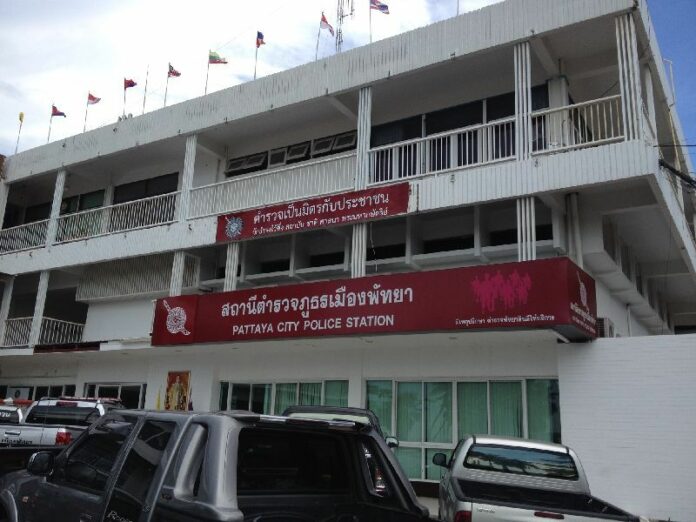
Pattaya City Police Station in an undated file photo.

PATTAYA — A Russian tourist said today she was drugged and raped by a Thai man in the resort town of Pattaya Thursday night.

The Russian woman alerted the police at about 4am on Friday, though police said they have  yet to confirm she was sexually assaulted. 

According to Pattaya City Police Station officer Thitawassa Boon-orn, the 20-year-old woman said she was drugged by a Thai friend and later sexually assaulted in an apartment or hotel room in Pattaya. Capt. Thitawassa said the tourist has a very hazy recollection of the incident. 

Pattaya police commander Sukthat Pumpanmuang said this afternoon that the woman had undergone a medical test at a hospital to determine whether she was attacked, and the results have not been released yet.

As of the time of writing, Col. Sukthat said they are still waiting for a certified interpreter to interrogate the woman. No person has been arrested so far, the commander added.

Pattaya, a coastal resort town east of Bangkok, is well-known for its seedy red light district and high rate of crimes against foreigners. 


Teeranai Charuvastra can be reached at [email protected] and @Teeranai_C.


\

Advertisement

Case Against Elderly Bridge Players Moves Forward

Bridge players during a Wednesday raid at Alto’s Restaurant and Bar in Pattaya.

PATTAYA — Thirty-two elderly, bridge-playing foreigners will face the music and must defend their innocence in court, Pattaya police said today.

After a surprise crackdown in which seniors were arrested under an antiquated law made headlines worldwide Thursday, Police said the elderly Westerners are now free on 5,000 baht bonds.

“The case will still have to follow the legal process,” said Col. Sukthat Pumpanmuang, commander of the Pattaya Police Station.

Police did not find evidence of gambling when they raided Alto’s Restaurant and Bar on Wednesday and took the players into custody, but they seized computers on suspicion the players, 26 men and six women, might have been making electronic transfers of money.

The senior citizens were held until the early hours of the morning before being released. The oldest of the suspects is 84. They will all be charged under a law nearly as old.

In 1943, during the reign of Rama VIII, possession of more than 120 playing cards was criminalized, as was the use of playing cards not certified by authorities.

Bridge was once a prohibited form of gambling under a 1935 law, but became permitted in 1960 so long as no money changed hands, according to Chodchoy Sophonpanich, president of the Contract Bridge League of Thailand.

Chodchoy on Wednesday evening met Sukthat to confirm playing bridge is legal. She said the case could be the first ever arrest of bridge players in the country, and if it goes to the court, she will testify on behalf of the defendants.

In the interview with Manager online published today, Banglamung District Chief Chakorn Kanjawattana, who provided the tip to police that led to the crackdown, insisted bridge is only legal if played in a private group at a private residence.

He said it’s up to the court to decide whether the seniors, who were playing in a public place, aimed to gamble.


Related stories:

Pattaya Police Bust Bridge Playing Pensioners


Advertisement

Maurice White, Founding Member of Earth, Wind & Fire, 74

In this July 7, 2003 file photo, Maurice White, of Earth, Wind, & Fire, appears at an induction ceremony at the Hollywood Rock Walk in the Hollywood section of Los Angeles. Photo: Matt Sayles / AP

NEW YORK — Maurice White, 74, founder of Earth, Wind & Fire, who sold more than 90 million albums and made hits like "September," ''Shining Star" and "Boogie Wonderland," died Wednesday at his home in Los Angeles, his brother Verdine said.

White, who was 74, suffered from Parkinson's Disease and had retreated from the public even as the band he founded kept performing.

"My brother, hero and best friend Maurice White passed away peacefully last night in his sleep," Verdine White, also a member of the band, told The Associated Press on Thursday. "While the world has lost another great musician and legend, our family asks that our privacy is respected as we start what will be a very difficult and life changing transition in our lives. Thank you for your prayers and well wishes."

Earth, Wind & Fire, a nine-piece band centered featuring the two White brothers, singer Philip Bailey and the distinctive horn section, were inducted into the Rock and Roll Hall of Fame in 2000. The band's most successful period started with the 1975 album "That's The Way of The World" and continued through the rest of the decade. Other hits included "Serpentine Fire," ''That's the Way of the World" and a cover of the Beatles' "Got to Get You Into My Life."

Chris Rock tweeted his condolences Thursday with a photo of White and the lyrics, "You can't hide love." Nile Rogers called White "one of the most amazing innovators of all time" on the social media platform, while Diane Warren said "this world just got a lot less soulful."

White publicly revealed he had Parkinson's at the time of the band's Hall of Fame induction, but he had shown symptoms of the neurological disease back in the 1980s. He stopped touring with the band in 1995 because of weariness from the road combined with his health problems.

White said in an interview with The Associated Press in 2000 that he wanted the band's music to inspire instead of just entertain.

"That was the whole objective, to try to inspire young people to believe in themselves and to follow through on their ideas," he said. "We've touched so many people with these songs."

A former session drummer, White founded the band Salty Peppers in the Chicago area in the late 1960s and had some modest success in the Midwest. After relocating to Los Angeles and ditching all of the band members except Verdine, he renamed the outfit Earth, Wind & Fire after the three elements in his astrological chart.

Bailey's bright falsetto defined many of Earth, Wind & Fire's hits. "We experienced pure magic together," Bailey said during the band's Rock and Roll Hall of Fame induction, standing next to White.

The band's early sound was jazzy, but evolved into an exuberant, horn-driven mix of jazz, funk, gospel and Big Band music. Their appeal wasn't just on records but on stage, their concerts a whirl of dancing, fog machines, multi-colored lights and glittery costumes. Earth, Wind & Fire performed everywhere from the Super Bowl to the White House.

Maurice White also had a substantial side career producing other artists, including Barbra Streisand and Cher. In the 1970s, he co-wrote and co-produced the Emotions' No. 1 hit "Best of My Love."

White was born in Memphis in 1941, the son of a doctor and grandson of a New Orleans piano player. He showed musical gifts at an early age, studying at the Chicago Conservancy. During the 1960s, he backed Muddy Waters, the Impressions and others and worked as a session drummer in Chicago.

The band performed in the movie, "Sgt. Pepper's Lonely Hearts Club Band" and had hits with the ballad "After the Love Has Gone," ''All 'n' All," ''Let's Groove" and "Fall in Love With Me." The band took a four-year hiatus in the 1980s and then returned, its primary success then on the road.

"We live in a negative society," White told Newsweek at the height of the band's success. "Most people can't see beauty and love. I see our music as medicine."

White's memoir, "Keep Your Head to the Sky: My Life with Earth, Wind & Fire," is scheduled to be released Sept. 13 by Amistad. The book features a forward by Steve Harvey and an afterword by David Foster.

Earth, Wind & Fire are to be honored at the Grammy Awards on Feb. 15.

Story: David Bauder and Hillel Italie / Associated Press


Advertisement

Hot News

LATEST NEWS

Bangkok
overcast clouds
28.3 ° C
33.3 °
28.3 °
77 %
3.3kmh
100 %
Sun
32 °
Mon
38 °
Tue
37 °
Wed
37 °
Thu
37 °