



























33.3 C
Bangkok
Sunday, June 21, 2026
Home Blog Page 2813

Zika Virus Sexually Transmitted in Texas

Blood samples from pregnant women wait to be analyzed for the presence of the Zika virus at a hospital in Guatemala on Tuesday. Photo: Moises Castillo / Associated Press

DALLAS — Health officials in Texas on Tuesday reported the first case of the Zika virus being transmitted within the United States amid the current outbreak in Latin America — a person who was infected through sex.

Dallas County health officials said the unidentified person had not traveled but had sex with a person who had returned from Venezuela and fallen ill with Zika, which has been linked to birth defects in the Americas. The virus is primarily spread through mosquito bites, but investigators had been exploring the possibility it could be sexually transmitted. There was a report of a Colorado researcher who picked up the virus in Africa and apparently spread it to his wife back home in 2008, and it was found in one man's semen in Tahiti.

"It's very rare, but this is not new," Zachary Thompson, director of the Dallas County Health and Human Services, told WFAA-TV in Dallas. "We always looked at the point that this could be transmitted sexually."


Zika Virus in Thailand but Not Epidemic, Health Officials Assure


The CDC says it will issue guidance in the coming days on prevention of sexual transmission of Zika virus, focusing on the male sexual partners of women who are or may be pregnant. The CDC has already recommended that pregnant women postpone trips to more than two dozen countries with Zika outbreaks, mostly in Latin America and the Caribbean, including Venezuela. It also said other visitors should use insect repellent and take other precautions to prevent mosquito bites.

In the epidemic in Latin America and the Caribbean, the main villain identified so far is called Aedes aegypti — a species of mosquito that spreads other tropical diseases, including chikungunya and dengue fever. It is found in the southern United States, though no mosquito-borne transmission has been reported in the continental United States to date. There have been about 30 cases in the U.S. in the last year, all travelers who brought it into the country.

The World Health Organization on Monday declared a global emergency over the rapidly spreading Zika virus, saying it is an "extraordinary event" that poses a threat to the rest of the world. The declaration was made after an emergency meeting of independent experts called in response to a spike in babies born with brain defects and abnormally small heads in Brazil since the virus was first found there last year.

WHO officials say it could be six to nine months before science proves or disproves any connection between the virus and babies born with abnormally small heads.

The CDC said that in the recent Texas case, there's no risk to a developing fetus.

Zika was first identified in 1947 in Uganda. It wasn't believed to cause any serious effects until last year; about 80 percent of infected people never experience symptoms.

The most common symptoms are fever, rash, joint pain and red eyes. The illness is usually mild with symptoms lasting several days to a week. Symptoms usually start two days to a week after being bitten by an infected mosquito.

While Thompson told the television station that the case of sexual transmission is "a game-changer," he added that he didn't want people in Dallas County to overreact. Health officials and Thompson noted that sexual partners can protect themselves by using condoms to prevent spreading sexually transmitted infections.

Story: Jamie Stengle / Associated Press


Related stories:

Second Zika Case of 2016 Found, Treated

WHO Declares Global Emergency Over Zika Virus

Advertisement

Explosion Forces Airliner to Ground in Somalia

Mogadishu International Airport. Photo: Wikimedia Commons

MOGADISHU, Somalia — An explosion and fire blew a gaping hole in a commercial airliner, forcing it to make an emergency landing at Mogadishu's international airport late Tuesday, officials and witnesses said.

The pilot said he thought it was a bomb. An aviation expert who looked at photographs of the hole in the fuselage said the damage was consistent with an explosive device.

Two people were slightly injured as 74 passengers and crew of the plane were evacuated after the plane made a safe landing, Somali aviation official Ali Mohamoud said. It was not certain if all the passengers were accounted for.

The plane, operated by Daallo Airlines and headed to Djibouti in the Horn of Africa, was forced to land minutes after taking off from the Mogadishu airport, said Mohamoud.

"I think it was a bomb," said the Serbian pilot, Vladimir Vodopivec, who was quoted by Belgrade daily Blic. "Luckily, the flight controls were not damaged so I could return and land at the airport. Something like this has never happened in my flight career. We lost pressure in the cabin. Thank god it ended well," the 64-year-old pilot said.

Awale Kullane, Somalia's deputy ambassador to the U.N. who was on board the flight, said on Facebook that he "heard a loud noise and couldn't see anything but smoke for a few seconds." When visibility returned they realized "quite a chunk" of the plane was missing, he wrote.

Kullane, who was going to Djibouti to attend a conference for diplomats, also posted a video showing some passengers putting on oxygen masks inside the plane. The post was later removed from his Facebook page.

"We don't know a lot, but certainly it looks like a device," said John Goglia, a former member of the U.S. National Transportation Safety and aviation safety expert. There are only two things that could have caused a hole in the plane that looks like the one in photos circulated online — a bomb or a pressurization blowout caused by a flaw or fatigue in the plane's skin, said Goglia.

The photos appear to show black soot around the aircraft skin that is peeled back, said Goglia. A pressurization blowout wouldn't create soot, but a bomb would, he said.

Also, information about the event posted online indicate it took place during the takeoff phase of flight before the plane reached 30,000 feet (9,144 meters), where there is maximum pressurization, Goglia said. That makes the case for a pressurization blowout even less likely, he said.

Another passenger, Mohamed Ali, told The Associated Press that he and others heard a bang before flames opened a gaping hole in the plane's side.

"I don't know if it was a bomb or an electric shock, but we heard a bang inside the plane," he said, adding he could not confirm reports that passengers had fallen from the plane.

Although the Somali aviation official said that there were only two injuries, there were unverified reports that a person fell out of the hole. Mohamed Hassan, a police officer in nearby Balad town, said residents had found the dead body of an old man who might have fallen from a plane. Balad is an agricultural town 30 kilometers (about 18 miles) north of Mogadishu.

On Dec. 11, 1994, a bomb blew a 2-foot (0.61-meter) hole in the floor leading to the cargo hold of a Philippine Airlines jetliner with 293 people aboard, but the pilot was able to make a safe emergency landing. One passenger was killed and 10 others were injured on the Manila-to-Japan flight.

The plane was flying at about 33,000 feet (10,058 meters) when the blast occurred. The flight landed about an hour later at Naha airport on Okinawa in southern Japan.

Ramzi Yousef, who was sentenced to life in prison for the Feb. 26, 1993 World Trade Center bombing in New York, was convicted in the bombing of the Philippine Airlines flight.

Somalia faces an insurgency perpetrated by the Somali Islamic extremist group al-Shabab, which is responsible for many deadly attacks across the nation.

Story: Abdi Guled / Associated Press

Advertisement

3 Facebook Lese Majeste Suspects Released Without Charge

By Pravit Rojanaphruk
Senior Staff Writer

BANGKOK — Three people earlier charged with defaming the monarchy on Facebook were released today after spending 84 days in prison.

The trio, who were identified only by first name, were released after prosecutors dropped charges of lese majeste, or insulting the monarchy, against them without further explanation, while their lawyer suspected there wasn’t enough grounds to try them in court.

“This is a good sign,” said Sasinan Thamnitinan, a human rights lawyer representing the three said by telephone, adding however that there’s a legal loophole barring them from receiving compensation for their nearly three-month stint in prison.

The lawyer released the given names and ages of the three without identifying their family names due to the stigma associated with such accusations: Jaruwan, 26, Anond, 22, and 20-year-old Chat.

She said Jaruwan is a female factory worker from Ratchaburi province and Anond was her boyfriend, while Chat was an unemployed acquaintance implicated during the interrogation. All three were initially accused of posting defamatory content against the monarchy on Facebook and were arrested and jailed in November.

The lawyer said she had thought from the very beginning the three were innocent, as they didn’t even seem aware of what lese majeste was.
 

Related stories:

Woman Convicted of Sedition for Facebook Rumor

More Charges Against Facebooker for 'Liking' Photos

Record Sentences Today For Facebook Lese Majeste Offenses


Pravit Rojanaphruk can be reached at [email protected] and @PravitR.

Follow Khaosod English on Facebook and Twitter for news, politics and more from Thailand. To reach Khaosod English about this article or another matter, please contact us by e-mail at [email protected].


Follow @KhaosodEnglish

\

Advertisement

Police Unpersuaded by Fallen Abbot’s ‘Suicide Note’

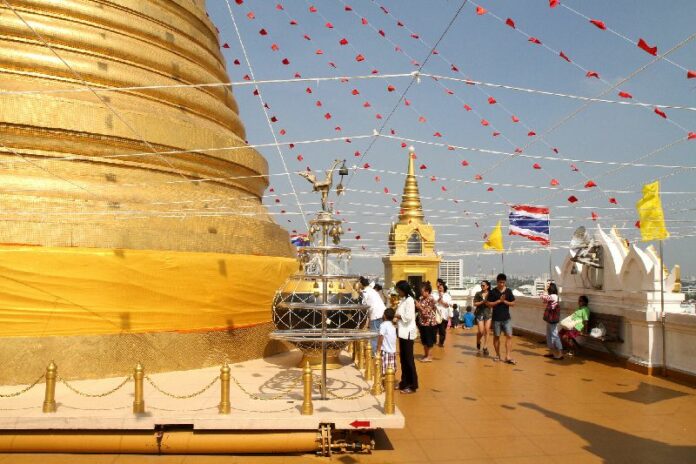
Wat Saket, aka The Golden Mount, in a 2012 file photo. Photo: Jason Eppink / Flickr

BANGKOK — Police say they will continue investigating the death of the former abbot of Bangkok’s Golden Mount Temple, despite the discovery of what his relatives insist to be the monk’s suicide note.

Phra Phromsuthi, who was found hanged in his monk residence on Jan. 25 at Wat Saket, has been the subject of an inquiry by Royal Thai Police investigators seeking to determine whether his death was indeed a suicide.

Although Phra Phromsuthi’s family believes the monk committed suicide and gave to police a note he purportedly wrote, investigators are still working the case because of the former abbot’s “notable” history, as Bangkok police commander Songpol Wattanachai put it.

“He was a high-ranking monk, and there are many notable issues,” Maj. Gen. Songpol said Tuesday. 

\

The alleged suicide note detailed former abbot Phra Phromsuthi’s desired funeral arrangements.

Songpol was referring to a 2013 investigation launched into Phra Phromsuthi, then temple abbot, by the Office of Auditor-General for allegedly misusing 64 million baht in state funds. The monk was later cleared of wrongdoing but was removed from his position as abbot as a result.


Police Investigate Former ‘Golden Mount’ Abbot’s Death as Suspicious 


According to Songpol, forensic police are examining evidence, including the alleged suicide note.

“Please wait a little. We are waiting for the results of the inspection of evidence. We are checking fingerprints on the suicide note, the handwriting, the pen, the ink and the paper itself, to find out whether he really wrote it,” Songpol said. 

Phra Phromsuthi’s family members told the press they found the letter in the monk’s bag several days after his death. The note expressed a wish for a “humble funeral.” 

If the note is proven to be genuine, it will be a strong indicator the monk indeed killed himself, he said, adding that police have not found anything that indicates foul play in Phra Phromsuthi’s death so far. 

“Right now, there’s nothing that indicates any other cause, but we don’t want to wrap it up before all the evidence has been thoroughly inspected,” Songpol said. 

Their conclusions will probably be announced next week, he said.


Teeranai Charuvastra can be reached at [email protected] and @Teeranai_C.


\

Advertisement

Film Tribute to Japanese Actress ‘Setsuko’ Sunday

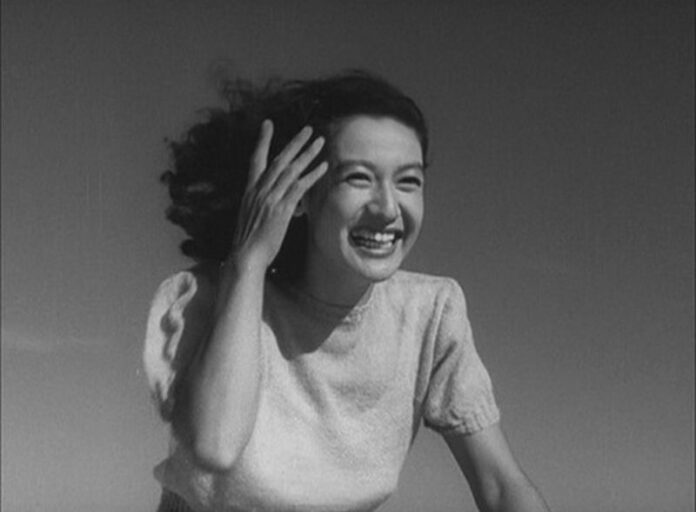
Setsuko Hara as seen in “Late Spring” (1949)

BANGKOK — As a tribute to the legendary Japanese actress Setsuko Hara, who died in 2015, a Bangkok art library will screen three films featuring her performances.

See the postwar feminist icon in three films starting at 1pm with Hara’s first postwar movie, “No Regret for Our Youth,” (1946) directed by Akira Kurosawa, at Sayonara Setsuko, hosted by The Reading Room on lower Silom Road.

“Setsuko Hara’s recognized as one of the most important actresses from the golden era of Japanese cinema,” Filmvirus organizer Wiwat Lertwiwatwongse said. “Remembering her also reminds us of movies from that era.”

At 3:30pm watch a story of a father-daughter bond in “Late Spring” (1949), directed by Yasujiro Ozu, who later reunited with her for Tokyo Story. Finally, Hara plays a wife trapped in an unhappy marriage in “Repast” (1951) to be screened at 6pm.

All three films will be screened in 16mm with English subtitles at The Reading Room, an art library on Soi Silom 19. Admission for Sayonara Setsuko is free.

Hara is known for her contemporary feminist roles playing independent individuals in many postwar film such as “Tokyo Story” (1953), the film she’s perhaps best known for.

She died of pneumonia at 95 on Sept. 5. She started acting when she was 15 and retired early at 42, the same year her beloved director Yasujiro Ozu died. Hara appeared little in public from that time until her death.


Chayanit Itthipongmaetee can be reached at [email protected] and @chayaniti92.

Follow Khaosod English on Facebook and Twitter for news, politics and more from Thailand. To reach Khaosod English about this article or another matter, please contact us by e-mail at [email protected].


Follow @KhaosodEnglish

\

Advertisement

Charter’s Uncertain Fate Mirrors Junta’s Own Lack of Confidence

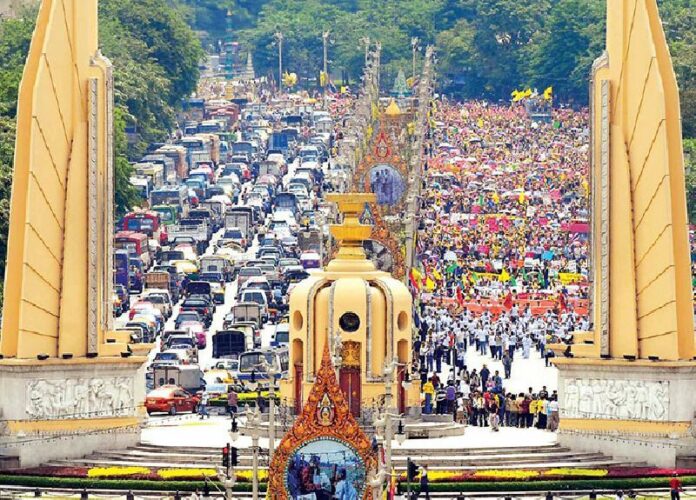
A large rally is held in opposition to a previous junta-sponsored draft charter in June 2007 on Ratchadamnoen Avenue in Bangkok.

By Pravit Rojanaphruk
Senior Staff Writer

BANGKOK — Uncertainty over what will happen if voters reject the draft charter this July, critics agree, reflects the junta's own lack of confidence in its success. They differ, however, on whether it’s failure is intended as a means for the junta to stay in power longer than promised.

Political scientist Puangthong Pawakapan said the whole thing has never been about drafting a new, acceptable constitution but finding excuses for the National Council for Peace and Order, or NCPO, as it is formally known, to maintain its hold on power and allow the political old guard to re-establish its grip on politics and society.

“As long as this goal is not achieved, it will be hard for them to step down. My reading is that there’s a lack of confidence in the roadmap [to restoring democracy], as it can always be revised. There may be no election next year. The junta should come clean on how many years they intend to stay on,” said Puangthong, Associate Professor of Political Science at Chulalongkorn University. “It seems the draft charter thing is just an excuse [to stay in power]. If it’s not passed, there will be new excuses made.”


Junta Orders Media to Discuss Charter ‘Respectfully’


Puangthong warned that political history shows that autocratic power tends to corrupt, citing Field Marshal Sarit Thanarat, a military dictator in the 1960s who came into power through a coup and whose huge assets were confiscated after his death when they were deemed ill-gotten wealth.

“Dictators won’t step down of their own volition,” he said.

Former Pheu Thai Party MP Weng Tojirakarn said the ambiguous situation is a clear signal that the NCPO plans to stay longer that promised.

“I don’t believe there’ll be an election in 2017 [as promised by junta leader Gen. Prayuth Chan-ocha],” said Weng, who’s also a leader of the Redshirt movement. “Do it, stay on and end up being ousted as a tyrant! When people are fed up, they’re gonna stand up and get rid of you.”

Calling an endorsement of any less-than-democratic charter “suicide,” Weng said Prayuth should study the demise of previous dictators such as Sarit; or even field marshals Thanom Kittikachorn and Prapas Charusathien, who were ousted in a popular uprising in 1973; because he could end up like them.

For Red Sunday leader and pro-democracy activist Sombat Boonngam-anong, the uncertainties reflect the junta’s increasingly precarious grip on power.

Sombat, who led failed opposition to a previous junta-sponsored charter in 2007, predicts that there may in fact be no referendum if the junta believes the draft charter will go down in defeat.

“Rejecting the draft charter in the referendum is tantamount to rejecting the NCPO,” Sombat said.

He said the junta is keeping its cards close to its chest and people guessing because it may resort to using absolute power to impose yet another draft charter, possibly prepared in secret, to avoid losing face with the electorate.

“This is a possibly extreme option,” he said, adding however that he believes the current draft charter is destined to be rejected by voters.

“It will be very chaotic,” Sombat predicts the aftermath of such a defeat for the junta’s second proposed constitution. “I don’t think [the junta] can hang on to power. They can’t due to the political situation.”

 Democrat Party deputy leader Niphit Intarasombat is more sympathetic to the situation, saying the junta may not think the time has arrived to reveal to the public what would exactly happen if the draft charter is to be rejected in the plebiscite. “[Letting the public know the option] a month before the referendum should be satisfactory.

 Niphit also discounted the apparent threat made by junta-appointed chairman of the Constitution Drafting Committee who said over the weekend that if his draft was rejected, people will have to live with a more draconian charter as a joke and not something to be taken seriously.

Related stories:

The Good, Bad and Ugly of Junta’s ‘Anti-Corruption’ Constitution

The Quixotic Quest to Alternative Charter Drafting

'Supreme Honor’ for Junta Charter Salesman

Junta Marks Constitution Day as Drafting of New Charter Drags On

Critics See Insecurity in Junta’s Charter Wish List


Pravit Rojanaphruk can be reached at [email protected] and @PravitR.


\

Advertisement

Charter’s Uncertain Fate Mirrors Junta’s Own Lack of Confidence

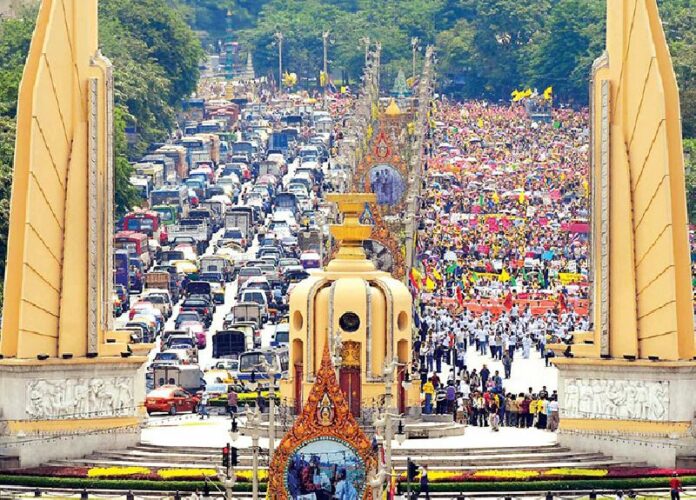
A large rally is held in opposition to a previous junta-sponsored draft charter in June 2007 on Ratchadamnoen Avenue in Bangkok.

By Pravit Rojanaphruk
Senior Staff Writer

BANGKOK — Uncertainty over what will happen if voters reject the draft charter this July, critics agree, reflects the junta's own lack of confidence in its success. They differ, however, on whether it’s failure is intended as a means for the junta to stay in power longer than promised.

Political scientist Puangthong Pawakapan said the whole thing has never been about drafting a new, acceptable constitution but finding excuses for the National Council for Peace and Order, or NCPO, as it is formally known, to maintain its hold on power and allow the political old guard to re-establish its grip on politics and society.

“As long as this goal is not achieved, it will be hard for them to step down. My reading is that there’s a lack of confidence in the roadmap [to restoring democracy], as it can always be revised. There may be no election next year. The junta should come clean on how many years they intend to stay on,” said Puangthong, Associate Professor of Political Science at Chulalongkorn University. “It seems the draft charter thing is just an excuse [to stay in power]. If it’s not passed, there will be new excuses made.”


Junta Orders Media to Discuss Charter ‘Respectfully’


Puangthong warned that political history shows that autocratic power tends to corrupt, citing Field Marshal Sarit Thanarat, a military dictator in the 1960s who came into power through a coup and whose huge assets were confiscated after his death when they were deemed ill-gotten wealth.

“Dictators won’t step down of their own volition,” he said.

Former Pheu Thai Party MP Weng Tojirakarn said the ambiguous situation is a clear signal that the NCPO plans to stay longer that promised.

“I don’t believe there’ll be an election in 2017 [as promised by junta leader Gen. Prayuth Chan-ocha],” said Weng, who’s also a leader of the Redshirt movement. “Do it, stay on and end up being ousted as a tyrant! When people are fed up, they’re gonna stand up and get rid of you.”

Calling an endorsement of any less-than-democratic charter “suicide,” Weng said Prayuth should study the demise of previous dictators such as Sarit; or even field marshals Thanom Kittikachorn and Prapas Charusathien, who were ousted in a popular uprising in 1973; because he could end up like them.

For Red Sunday leader and pro-democracy activist Sombat Boonngam-anong, the uncertainties reflect the junta’s increasingly precarious grip on power.

Sombat, who led failed opposition to a previous junta-sponsored charter in 2007, predicts that there may in fact be no referendum if the junta believes the draft charter will go down in defeat.

“Rejecting the draft charter in the referendum is tantamount to rejecting the NCPO,” Sombat said.

He said the junta is keeping its cards close to its chest and people guessing because it may resort to using absolute power to impose yet another draft charter, possibly prepared in secret, to avoid losing face with the electorate.

“This is a possibly extreme option,” he said, adding however that he believes the current draft charter is destined to be rejected by voters.

“It will be very chaotic,” Sombat predicts the aftermath of such a defeat for the junta’s second proposed constitution. “I don’t think [the junta] can hang on to power. They can’t due to the political situation.”

 Democrat Party deputy leader Niphit Intarasombat is more sympathetic to the situation, saying the junta may not think the time has arrived to reveal to the public what would exactly happen if the draft charter is to be rejected in the plebiscite. “[Letting the public know the option] a month before the referendum should be satisfactory.

 Niphit also discounted the apparent threat made by junta-appointed chairman of the Constitution Drafting Committee who said over the weekend that if his draft was rejected, people will have to live with a more draconian charter as a joke and not something to be taken seriously.

Related stories:

The Good, Bad and Ugly of Junta’s ‘Anti-Corruption’ Constitution

The Quixotic Quest to Alternative Charter Drafting

'Supreme Honor’ for Junta Charter Salesman

Junta Marks Constitution Day as Drafting of New Charter Drags On

Critics See Insecurity in Junta’s Charter Wish List


Pravit Rojanaphruk can be reached at [email protected] and @PravitR.

Follow Khaosod English on Facebook and Twitter for news, politics and more from Thailand. To reach Khaosod English about this article or another matter, please contact us by e-mail at [email protected].


Follow @KhaosodEnglish

\

Advertisement

Longtime Political Cartoonist ‘Stephff’ Loses Work Permit & Visa

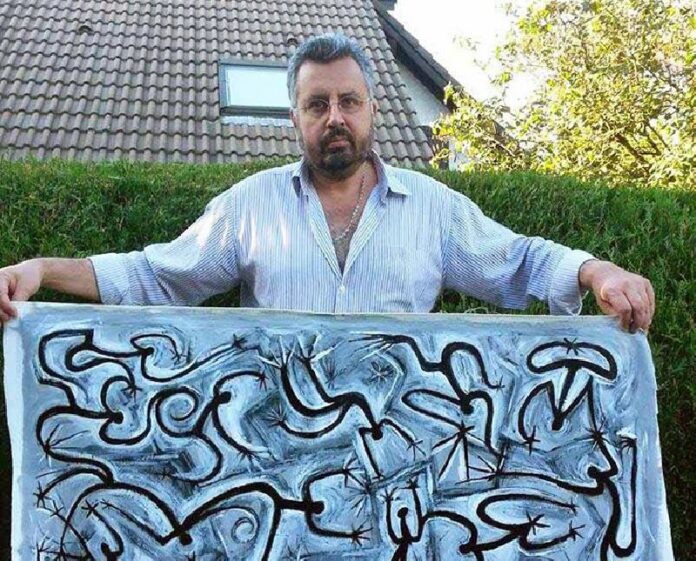
The Nation political cartoonist Stephane 'Stephff' Peray poses with one of his paintings in a photo posted online Sept. 20. Photo: Stephane Peray / Facebook

By Pravit Rojanaphruk and Teeranai Charuvastra
Staff Writers

BANGKOK — A longtime political cartoonist for a major English-language newspaper said today he has been denied his media visa, working permit and press card, effectively making it illegal for him to work in Thailand as a journalist.

Known for skewering figures across the political spectrum in cartoons for The Nation newspaper, Stephane "Stephff" Peray wrote exasperated messages on social media Tuesday afternoon questioning the reason for the decision.

“Very good news for those who hate me, the Ministry of Foreign Affairs refused me [sic] renewal of my visa, work permit and press card after 16 years,” tweeted Stephane Peray, a French national and political cartoon contributor to The Nation newspaper who works under the name Stephff.

Although Peray’s work was known for an anti-Shinawatra stance and lukewarm acceptance of the 2014 coup d’etat, he has for some months made fun of junta leader Gen. Prayuth Chan-ocha as a dictator.

Peray was confident that for now his work would continue appearing in the newspaper, at least until his work permit expires.

The Nation Managing Editor Jintana Panyaarvudh on Tuesday afternoon confirmed the news and would not say whether the paper would print Peray’s cartoon in Wednesday’s newspaper.

“We will have to meet and decide about it,” said Jintana, who added that Peray works as a freelancer for the paper.

\
A Stephff political cartoon posted online Oct. 13, 2015. Image: Stephane Peray / Facebook
 

Peray is the most recent foreign national working in journalism to face difficulty.

Foreign Correspondents Club of Thailand President Jonathan Head said there were no such problems prior to the coup and urged the Foreign Ministry to clarify the issue, adding that five foreign journalists have been denied legal working status and press credentials since the May 2014 coup.

“Journalists are encountering a much more rigorous screening process that involves tough interviews where their opinions on the monarchy and the military government are sought, and where they are required to produce a greater amount of reporting work they’ve done in Thailand,” Head told Khaosod English by phone today. “We urge the Ministry of Foreign Affairs to explain clearly why journalists who have worked in Thailand for many years are being denied visas.”

Foreign Minister Don Pramudwinai could not be immediately reached for comment. Ministry spokesman Sek Wannamethee declined to comment.

Peray tweeted late this afternoon from his account @stephffart to a Khaosod English reporter saying he could not conclude the decision had anything to do with his mocking of the junta leader, however.

“[T]o be fair it’s not proven it comes from Prayut at all, yes the timing suggests that but it’s not proven… It could be simply overzealous civil servants who are doing their usual shit at making life difficult at freelancers. [sic]”

Peray added that the Foreign Ministry told him they don’t consider his job as a journalist anymore.

“This new rule was tailored-size for me…,” he wrote.

Editor's note: After this story was published, Peray wrote Tuesday night to say he'd been contacted by the Ministry of Foreign Affairs and asked to submit a letter of support from The Nation instead of relying on his longstanding affiliation with The Kuwait Times.

"So apparently it's not politically motivated – just [a] new regulation from the Foreign Ministry to make life harder on freelance journalists," Peray wrote.

Related stories:

Newspaper Cartoonist Detained by Junta


Pravit Rojanaphruk can be reached at [email protected] and @PravitRTeeranai Charuvastra can be reached at [email protected] and @Teeranai_C.

Follow Khaosod English on Facebook and Twitter for news, politics and more from Thailand. To reach Khaosod English about this article or another matter, please contact us by e-mail at [email protected].


Follow @KhaosodEnglish

\

Advertisement

Junta Orders Media to Discuss Charter ‘Respectfully’

Junta chairman Prayuth Chan-ocha speaks to reporters Tuesday at Government House in Bangkok.

By Teeranai Charuvastra
Staff Reporter

BANGKOK — Yes, criticism of the new constitution drafted under the junta’s oversight is allowed in the media, a junta spokesman confirmed today, so long as it is “respectful.”

Such criticism must only use respectful language and avoid causing hatred in society or “damage the ongoing decent atmosphere,” spokesman Winthai Suvaree said amid growing criticism of the proposed charter by human rights activists and academics.

“The NCPO never prohibits criticism or expression of opinion,” Col. Winthai said, referring to the formal name of the ruling junta, the National Council for Peace and Order. “But expression of opinion by certain groups and individuals contains unnaturally strong language and manner, which does not appear to be constructive.”


The Good, Bad and Ugly of Junta’s ‘Anti-Corruption’ Constitution


Winthai drew a distinction between critics of the proposed charter, which was released Friday.

“Sometimes, they seem to be intent on inciting hatred or conflict, which will damage the ongoing decent atmosphere,” he said. “We want all expression of opinions to be within appropriate boundaries. Use of words should be in a respectful manner.” 

Winthai’s statement came just hours after another spokesman for the military regime delivered a personal warning from junta chairman Prayuth Chan-ocha that the media must not criticize the draft charter without trying to understand its goals.

“The media should refrain from presenting news that involves misleading others or assuming things without information or correct understanding,” said spokesman Maj. Gen. Sansern Kaewkamnerd. “Such as criticizing the constitution draft shallowly. Some points or issues were presented without putting effort into understanding the important objectives of the constitution.”

Since the new constitution was unveiled to the public by its junta-appointed drafters Friday, it was met with scorn from an array of civil rights activists and academics. The critics warn it gives too much power to unelected institutions by making the entire Senate unelected, allowing a non-MP to be chosen as prime minister and empowering special bodies that can overrule civilian administrations.

Under the junta’s “roadmap” to restoring democratic rule, the constitution will go to voters for approval in July. If they approve it, the charter will be enacted and national elections held in 2017. 

The Redshirt movement has already announced that it will urge its supporters to vote against the new constitution in the upcoming referendum.


Teeranai Charuvastra can be reached at [email protected] and @Teeranai_C.


\

Advertisement

Second Zika Case of 2016 Found, Treated

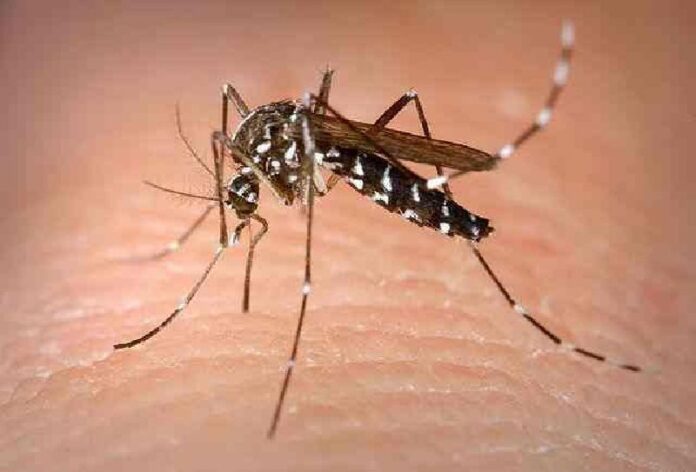
Aedes albopictus as seen in a January 2015 file photo. Also known as the Asian tiger mosquito, it is found in Thailand. Photo: microbiologybytes / Flickr

BANGKOK — A man has been treated for Thailand’s second case of Zika virus this year, according to a hospital director.

The unidentified man, said to be about 20, was admitted Jan. 24 to Bhumibol Adulyadej Hospital on Phaholyothin Road and has already recovered from his illness, according to hospital director Air Vice Marshal Santi Srisermphok.


Zika Virus in Thailand but Not Epidemic, Health Officials Assure


This year’s first reported case of Zika, a virus pandemic declared a global emergency Monday, was found Jan. 10 in a 24-year-old man who traveled from northern Thailand to Taiwan. He was diagnosed on arrival in Taipei and taken for treatment.

Cases of Zika have exploded in the Americas. Similar to dengue fever, West Nile, and yellow fever; Zika causes a relatively mild fever but has been linked to severe birth defects in babies born to infected mothers.

The virus was first discovered in Thailand in 2012 with about five patients reported each year. The Ministry of Public Health on Thursday insisted the disease now has not reached epidemic level in the country.


Related stories:

WHO Declares Global Emergency Over Zika Virus


Advertisement

Hot News

LATEST NEWS

Bangkok
overcast clouds
33.3 ° C
35 °
33.3 °
59 %
1.7kmh
100 %
Sun
36 °
Mon
37 °
Tue
36 °
Wed
37 °
Thu
36 °