

























27.2 C
Bangkok
Saturday, June 20, 2026
Home Blog Page 2840

Social Moments and Movements We Won’t Forget From 2015

By Lisnaree Vichitsorasatra
Staff Reporter

BANGKOK — What happened last year in the kingdom? We take a look back at some of the trends and interesting happenings of 2015.

THE TUK TUK DRESS


\


Thailand has not won Miss Universe since the 80’s, but who cares. We may not be the most beautiful people, but we’re the most fashionable. The Tuk-Tuk dress worn by Miss Universe Thailand, Aniporn “Nat” Chalermburanawong won the Best National Costume at Miss Universe 2015, and ever since there have been replicas of the costume, even on cats.


The tuk-tuk dress was designed by Hirankrit Pattaraboriboonkul, 35, who works at the ever so traditional, Ministry of Culture. He told Khaosod that he was “inspired by Thai pop culture and decided to break from the traditional approach to try something new.”


PETITIONS


\

A campaign asking for the right to allow Carmen to go home with her family. Photo: Courtesy of Change.org

While petitions aren’t only limited to Change.org,  Thais are most likely to turn to this website to voice their opinions and influence a movement. Change first came to the kingdom four years ago, so it isn’t something new, but the Campaign Director, Warisara Sornpet told us that the number of petitions increased by 120 percent last year. Not surprisingly, she believes junta suppression is one of the reasons people started to take more interest in online petition platforms.


“STRONG” REALITY TV SHOW


\

Photo: The Face Thailand / Facebook

Mixing juicy attitudes, bitchiness, and competition, people quickly got hooked on this modelling competition series that originated in America. Thailand’s version started in 2014, featuring Lukkade Metinee and two other models as judges, but surprisingly it has became even more popular in 2015.

Bee Namthip and Chris Horwang, both outstanding actresses, also play the part of the bitchy judges hauling hurtful remarks at contestants: “your face looks homely” or ban ( a ban face means it’s plain) and “how much plastic surgery have you had?”. Who could forget those cutting remarks? Despite this being reality TV, which is usually a byword for fake and pretentious, fans seem to think the actresses aren't acting and it’s all real.


SENTIMENTAL ADS  


\


Thai advertisers discovered, many years ago, that people will drop their fork and spoon to watch a sentimental moment.

One unforgettable ad that ran last year was the Story of Lalin, which was launched on social media and youtube. In it a popular internet celebrity escapes to Japan, hiding her face with a mask. She later reveals that her pretty face was full of pimples.

Another equally sentimental one is the ad of a homeless person, sleeping in front of a man’s shop, before being chased away. Later it turns out that the man was protecting the vendor’s shop at night. There are many more of these type of ads, and they will never stop producing them here, so be prepare a box of tissues to mop up more tears this year.

Watch Lalin here:


Watch street man Ad here:


FOOD TRUCKS


\

Two angels tacos. Photo: Courtesy of Two Angels Tacos

Despite the clean eating movement, Thai teens and adults are hoovering up more quality fast food than ever. From burger vans like Lil’ Fatso, to Pizza Massilia, Two Angels Tacos, and Manhattan Mango, the food vans have been popping up like mushrooms, making us feel like we’re in the U.S.

Across Bangkok, teens grabbed cheesy fries, sliders, and pizzas from mobile vendors.


THAI CRAFT BEER


\

Craft beer in Chinatown at Let The Boy Die. Photo: Let The Boy Die / Facebook

Although Beer gardens will always be a thing here, more beer lovers in Bangkok are searching for a more unique craft beer taste in private bars, leaving the beer gardens emptier than usual.


STAR WAR GEEKS


\

A promotional photo for "Star Wars Run Thailand" from the Facebook page of the organizers / Facebook

Before the opening of the new Star Wars movie all Star War fans rushed to reserve a ticket. People started posting pictures of themselves with lightsabers. It also joined forces with the exercise trend, to make the Star War Run which although not a success, was something to be remembered, until the next sequel.


GOING UNDERGROUND


\

Customers in front of Jam’s three year anniversary party. Photo: Snap Limn

Music, theatre, and dance aren’t always to be found in obvious places. The best music might be bubbling up somewhere in a tiny bar like Jam and films by potential future stars, can be seen in a place where you wouldn’t usually expect to find them. So, get into these hidden places and ask the people for more information about other underground spots and you’ll be a hipster in no time.


BANNED and CANCELLED


\

Scene from Arpat, the movie formerly known as Arbat. Photo: Sahamongkol Film International

How many times have you heard this? After looking forward to watching a movie or booking a ticket to an event, it gets banned or cancelled.

Remember, the ban of “Insects in the Backyard” in 2010? Well last year they lost a legal attempt to overturn the ruling. The controversy stemmed from a scene that showed sex organs as the protagonist watched a porn video.

A new film, "Arbat", about a misbehaving novice monk, was almost banned before changing the name of the film and cutting out a few minutes, winning last minute approval. 

Indie music fest, Stone Free cancelled the original plan to host it in December, changing the dates to Jan. 15- 17  and switching from the established venue to Kanchanaburi after hitting some snags.


PROUD PUBLIC SHOWS


\

A woman puzzled onlookers when she appeared casually walking down a street and riding a motorcycle taxi Sunday near a busy red light district.

Let’s face it, there was a time when you wanted to show the world your naked body, but you didn’t. Well these Chiangmai students, and "Nana Naked Girl" were cooler than you, they let it all hang out did it their way and proudly so.


To reach us about this article or another matter, please contact us by e-mail at: [email protected].

Follow Khaosod English on Facebook and Twitter for news, politics and more from Thailand.

Follow @KhaosodEnglish

\


Advertisement

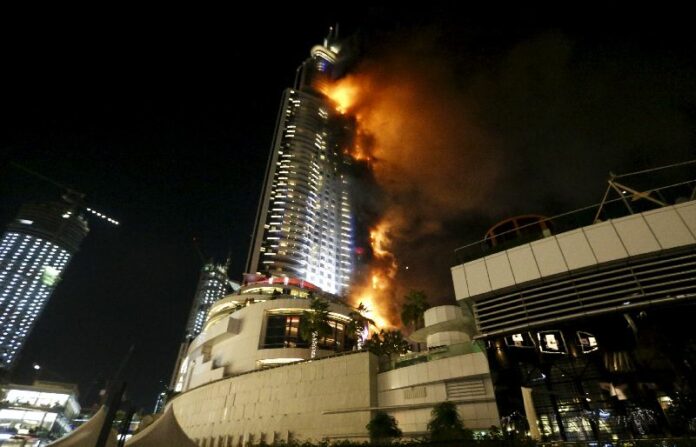
Blaze Hits Dubai Skyscraper, New Year's Fireworks Proceed Nearby

A fire engulfs The Address Hotel in downtown Dubai, Dec. 31, 2015. Photo: Ahmed Jadallah / Reuters.

By Noah Browning
Reuters

DUBAI — Fire engulfed a 63-storey skyscraper in Dubai on Thursday night, but with the block evacuated and only minor injuries reported authorities went ahead with a New Year's fireworks display at the world's tallest building a few hundred meters away.

Tongues of flame shot skywards from one side of the luxury Address Downtown Dubai hotel and residential block, which stands across a plaza from the 160-storey Burj Khalifa tower where people had gathered for fireworks to mark the New Year.

Television pictures showed pieces of blazing debris raining down from The Address as evacuated occupants hurried away from the building, some running.

"We came out on my balcony to look at the Burj. All the buildings around here had fireworks prepped on the roof," Paul Mithun, a U.S. consultant in downtown Dubai said.

"We were like, huh, that looks like a little Olympic torch off in the distance. We thought someone lit fireworks. In under two minutes, the fire went up two-thirds of the length of the hotel. I watched the whole thing. It was real bad."

But as midnight struck, with the Address building continuing to burn, onlookers cheered as a swirling mass of multicolored fireworks enveloped the Burj Khalifa.

The Dubai government's media office said the Address blaze was 90 percent under control. Police chief Major General Khamis Matar told Al Arabiya television: "All residents of the hotel were evacuated and there are 14 injured, with light injuries.”

A medic on the scene who declined to be identified said: "There are more than 60 people injured with light injuries from smoke inhalation and from crowding while in the stairs evacuating the building."

One resident staying on the 15th floor of the tower, completed in 2008, told Britain's Sky News of "absolute pandemonium" as those inside realized the building was ablaze.

"The alarms went off when the building was already properly on fire," he said.

Fireworks Go Ahead

A Reuters correspondent saw police evacuating a viewing area near the base of the Burj Khalifa.

The fire at the Address building had take hold in minutes.

"Oh my God!" shouted one witness who happened to see the first few moments.

"The flames were running up one side of the building, reaching about halfway up … Flames were licking upwards and out. Orange and yellow," the witness said.

As the evacuation proceeded, there were moments of panic.

"There's more shouting. It's more panicked this time, many voices, some screams," the witness said.

The Dubai media office said the blaze had started on the 20th floor, on the outside of the 300-meter tower, and that internal fire-fighting systems were operating to try to prevent it getting inside the hotel.

Four fire brigade teams were at the site.


To reach us about this article or another matter, please contact us by e-mail at: [email protected].
Follow Khaosod English on Facebook and Twitter for news, politics and more from Thailand.

Follow @KhaosodEnglish

\

Advertisement

Lottery Winner Thanks King’s Late Dog for Her Luck

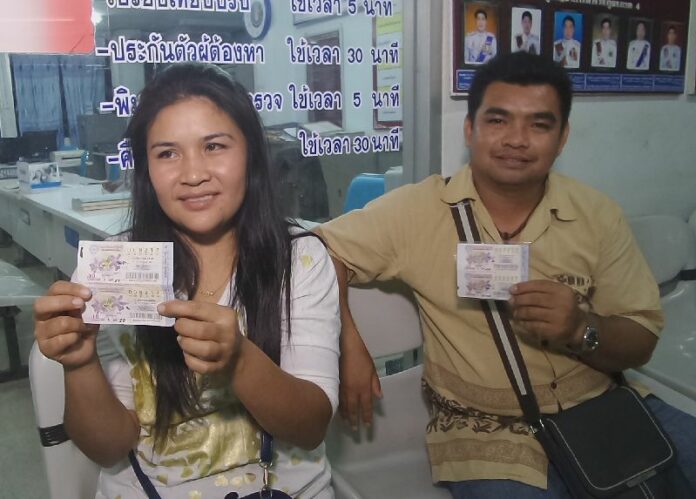
Banjong Chimnil (left) shows the winning lottery ticket to reporters today.

NONG BUA LAMPHU — One of the five winners of the government lottery’s first prize said she owes her luck to the favorite pet dog of His Majesty the King that recently passed away.

Banjong Chimnil told reporters she won 6 million baht in the government lottery yesterday because she chose her lottery ticket based on Thong Daeng’s age: 17.

Thong Daeng had been the chief pet of King Bhumibol until the dog died Saturday. The dog died of old age at Klai Kangwon Summer Palace, veterinarians who treated her said in a statement released Monday evening.

“In the morning, I watched the news about the death of Khun Thong Daeng, who died at age 17,” Banjong said today. “So I resolved to buy lottery with that number.”

Banjong, who works as an agriculture expert at a district administrative agency, later bought a lottery with the winning number 008217 from a vendor in front of her office.

Four other people bought tickets with the same number from the vendor and subsequently won six million baht each.

Two of those winners – 36-year-old Urai Namma and 32-year-old Ananya Srilawong – registered their winning tickets at the Suwankuha Police Station today.

Officials yesterday also interred the cremated remains of Thong Daeng at the base of her statue in Prachuap Khiri Khan province.

\

Advertisement

Park Scandal: Udomdej Blessed by Prem Just Before He Was Cleared

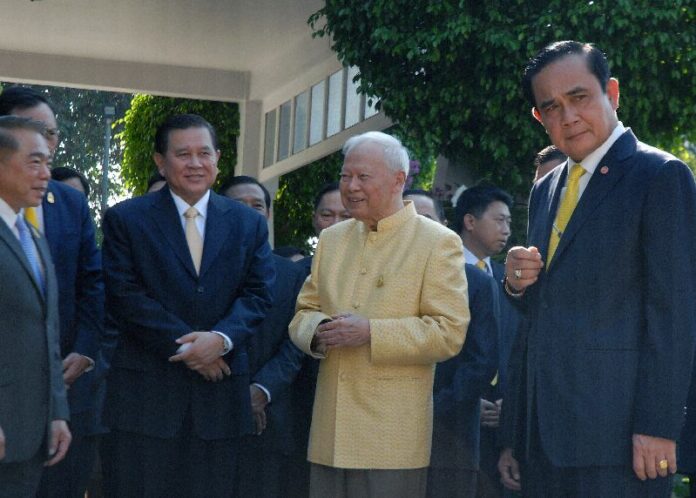
Leaders of the junta meet Gen. Prem Tinsulanonda at his residence yesterday

BANGKOK — In a way, former army chief Udomdej Sitabutr, was cleared of the allegation that he is involved in massive graft, even before an inquiry by the Ministry of Defense yesterday formally let him off the hook.

Just hours before the announcement of the Ministry’s weeks-long investigation into Rajabhakti Park, the monument complex built under Udomdej’s watch and said to be mired in widespread corruption, Udomdej received a glowing endorsement from Gen. Prem Tinsulanonda, the influential former Prime Minister and top advisor to His Majesty the King. 

“I believe goodness will bring success to you, Dong,” Gen. Prem told Udomdej at his residence on Wednesday, calling him by his nickname. “I believe you are not that kind of person. I believe you are a good person.”

Prem made the comment when Udomdej and other leaders of the junta were visiting the 95-year-old statesman, to wish him a Happy New Year. 

\

Leaders of the junta meet Gen. Prem Tinsulanonda at his residence yesterday

Udomdej later told reporters after the meeting that he also chatted with Prem some more in private, and Prem repeated his confidence that the former army chief was not involved in any wrongdoing in the construction of Rajabhakti Park. 

“He told me he believes I didn’t do anything wrong,” Gen. Udomdej said. “And I understand that this allegation isn’t directed at me. It’s about the project. As the chairman [of the project], it’s natural that I have to testify to the investigation committee.” 

Gen. Udomdej has been embroiled in the scandal since he admitted to reporters in November that he was aware of some financial irregularities in the one-billion baht project. According to Udomdej, the army hired private foundries to make giant statues for the park through a businessman who took a 10 percent cut from the budget. (Khaosod English is withholding the man’s identity to avoid a possible lawsuit under defamation laws.)


Former Army Chief Explains Royal Park Project Graft


His remark was met with ridicule from much of the media, and prompted the Ministry of Defense to set up an investigation committee into the scandal. 

But just hours after Prem endorsed Udomdej, the committee announced to reporters that they found no irregularity in the park project. 

Gen. Charnchai Changmongkol explained that the committee only looked at transactions made during the construction, so it was beyond their duty to see whether some sophisticated corruption might have taken place. 

\

Rajabhakti Park in Prachuap Khiri Khan province

“We cannot say what is right, what is wrong,” Gen. Charnchai said. He added that other agencies could still investigate the matter further if they suspect any wrongdoing in the project. 

When a reporter asked whether the result means Udomdej is cleared of any alleged corruption, Charnchai was evasive, “In this point, individuals who are involved with the making of the royal statues, we also looked into that, but we didn’t rule about what is wrong, because we only have jurisdiction in inspecting information within the Ministry of Defense.” 

It is not immediately clear whether any other state agency will take up the investigation against Udomdej. 


Read more:

Rajabhakti Scandal: Military Closes Park 'For Maintenance,' Detains Dozens of Activists

Rajabhakti Scandal: Redshirt Leaders Released

Police, Army Disagree Over Which Should Probe Royal Park Graft


To reach us about this article or another matter, please contact us by e-mail at: [email protected].
Follow Khaosod English on and Twitter for news, politics and more from Thailand.

\

Advertisement

Top 10 Prayuth Moments of 2015 by Khaosod English

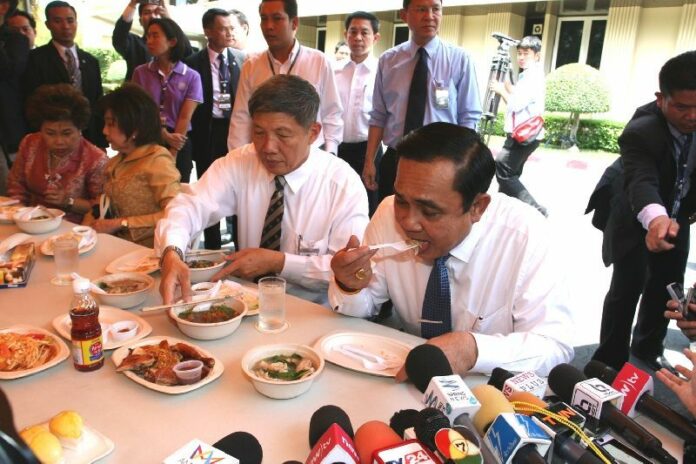
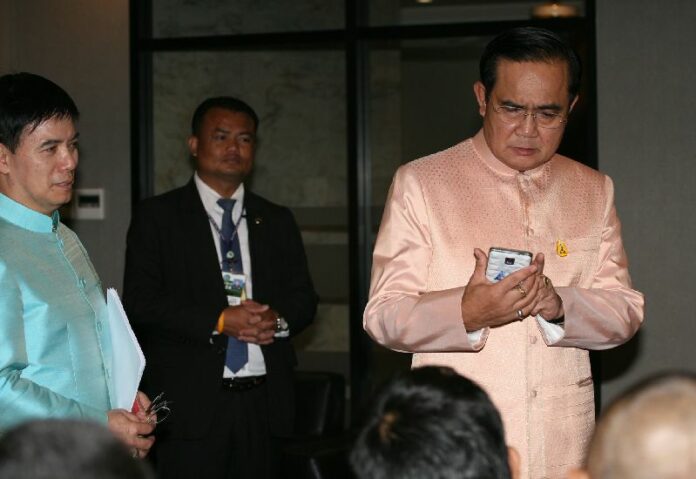
BANGKOK — Where would we journalists be without Dear Leader Prayuth Chan-ocha’s colourful soundbites and awkward photo-ops? Here’s a list of our favorite and not-so-favorite moments featuring the junta chairman from the past year:

1. The Athletic Leader

Gen. Prayuth isn’t a typical, boring politician who sits in his Government House all the time. Throughout 2015 he has displayed his uncanny talents in many fields, such as the sucker-kicking a kickboxer

\

making a hat out of a paper krathong

\

showing off his swordsmanship

\

and driving a tuk-tuk for a Miss Universe contestant.

\ 

Take that, Vladimir Putin. 

2. Inspired by Lincoln

\

Gen. Prayuth might be an autocratic leader who came to power by staging a coup against an elected government, but that does not stop him from having anadmiration for U.S. President Abraham Lincoln. Or at least the depiction of Mr. Lincoln in the 2012 Spielberg movie. 

In May, the general confided to reporters that he was inspired by Lincoln’s long effort to abolish slavery, and even more so by his opinion on protests:

"I also like his other quote about how people's protests are not wrong; insurrection is wrong."


3. 99 Percent Democracy

\

Quick – from the scale of 0 – 100, how democratic do you think Thailand is? NGOs like Freedom House and Reporters Without Borders think we are sliding back to the Dark Age, but Prayuth has other ideas: We are 99 percent democratic! In fact, the general said in March, we even have too much democracy:

"Our country has seen so much trouble because we have had too much democracy, unlike other countries where the government has more power to restrict freedom. Even the media can’t criticize [those leaders], like they do here. I insist that today, we are 99 percent democratic, because I didn't overthrow democracy at all." 

4. Media freedom, Thai-style 

\

On National Media Day in March, Gen. Prayuth shares with reporters his wisdom about what kind of ethics the press should uphold and what their mission should be:

"This morning, someone said the media needs to be impartial. No. I don't think they should say that. It isn't good. What they should say is, first, the media should report news that is factual. Second, they should support the government's efforts to move the country forward. And third, they should help reduce conflicts in society, and create understanding about the government's policies that give clear results. Can you not do these three or four things together, dears?"

While they’re at it, they should also refrain from reporting about any negative news that may affect Thailand’s reputation, the general told reporters several weeks later. The comment came when Channel 3 TV started an investigative report into human trafficking. Prayuth wasn’t pleased with the coverage because it could hurt national interests:

"The media should consider the impact the news will have on the country. It may cause problems, and affect national security … If this news gets widely published, [it could raise] problems of human trafficking and IUU [Illegal, Unreported and Unregulated Fishing]."

5. Execution, maybe?

\

When some of those pesky reporters failed to adhere to the Dear Leader’s commandments, Prayuth joked that he would just solve the problem once and for all by executing dissenting journalists.

“Execution, maybe? You ask silly questions. Just don't do actions [that warrant punishment]. Be cautious. The media has to exercise their judgment. Have some ethics. You keep calling for ethics. But they don’t know how to use ethics. They don't use them.”

The remark was widely reported by foreign media agencies, but often omitted was the fact that Prayuth was also very specific about the method of his execution: a dog-headed guillotine, like the one reputed to have been used by Chinese Judge Bao (999 – 1062) to kill convicted commoners:

“I will use a dog-headed execution device. I will deal with the media. But I still love them. Please, help me out. Don't make excuses for me, please just help me build love and unity.” 

While International media watchdogs responded to Prayuth’s ‘joke’ with fury, the National Press Council only meekly advised Prayuth to respect the Thai media’s internal regulations. 

6. The phantom menace 

\

In May, Prayuth reminded Thais why he seized power over a year ago. Apparently there is a sinister movement hell-bent on corrupting the army and the monarchy, in order to achieve its alleged conspiracy to take over Thailand: 

"Thai people must love each other, but still some evil people like to distort information about the monarchy. And everyone believes it … People who don't know and don't understand fall for these lies. People who insult the monarchy right now may not be great in number, but they belong to a movement of people who want power and seek personal gain. There are only two things that they want to control, but they cannot do so: the military and the monarchy. If they can destroy these two things, they will definitely be able take over Thailand. It will be done by someone that all of you know, but I don't want to say out loud who this person is."

7. Criticize me at your own risk

\

In November, Prayuth clarified that progressive academics who criticized his military regime were, of course, welcome to do so. However, he wouldn’t be able to guarantee their safety, though: 

“If they want to engage in activism or whatever, it’s up to them. If they aren’t afraid of the laws, it’s up to them. I don’t know about them. If the people want to join them, and then get in trouble for it, it’s up to them. And if someone finds a gun and shoots them, or throws grenades at them, well, they have to live with that. If they aren’t afraid, it’s up to them.”

To his credit, he quickly added that he wasn’t personally threatening those lecturers:

“But it wouldn’t be me, because I would never do such a thing.”


8. Un-Thai activities 

\

There are several things that can disqualify you from being a Thai citizen. One of them is fleeing Thailand after being charged with lese majeste, according to Prayuth in June: 

"Since he fled this country to another, it shows that he is no longer a Thai and he cannot stay in Thailand.” 


9. The Open-Minded Autocrat

\

Sure, with his suppression of civil rights and media freedom, Prayuth might be the most autocratic leader of Thailand for over a decade, but that doesn’t mean the general ignores the voices of the people. For instance, Prayuth said he kept an open mind to a petition from hardline conservative activists who wanted him to stay in power for five more years

"I'm so-so. If they want me to stay, I will do it. I won't stay by using power. If everyone wants me to stay, I will stay, I will do it for you. But you have to help shield me from domestic and external [pressures] – the accusations that I want to hold on to my power. I don't want power, because I don't have anything to gain from this. I only want to make this country better."

If he does stay for five more years in office, Prayuth will become the longest-serving military dictator in Thailand since the end of the 1970s. 

10. Don’t trust everything the media says

\

Lastly, the general reportedly gave some friendly advice to the Leader of the Free World during an international summit In November: that he shouldn’t believe news about human rights abuse in Thailand:

“I insisted to [US President Barack Obama] that I’m already trying to take care of these issues, but they were really [the results of] news presented by people with bad intentions. Sometimes, these reports were presented without any facts, so it led to misunderstanding.” 

No word on whether Mr.Obama took the advice. But hopefully he will pass along the useful tip to his successor who may have to deal with Gen. Prayuth in the next few years, be it Bernie Sanders, Hillary Clinton or Donald Trump. 

Can you imagine Prayuth and Trump giving a press conference in the same room? We call dibs on the first press pass for that one. 


To reach us about this article or another matter, please contact us by e-mail at: [email protected].

Follow Khaosod English on and Twitter for news, politics and more from Thailand.

\

Advertisement

Top 10 Prayuth Moments of 2015 by Khaosod English

BANGKOK — Where would we journalists be without Dear Leader Prayuth Chan-ocha’s colourful soundbites and awkward photo-ops? Here’s a list of our favorite and not-so-favorite moments featuring the junta chairman from the past year:

1. The Athletic Leader

Gen. Prayuth isn’t a typical, boring politician who sits in his Government House all the time. Throughout 2015 he has displayed his uncanny talents in many fields, such as the sucker-kicking a kickboxer

\

making a hat out of a paper krathong

\

showing off his swordsmanship

\

and driving a tuk-tuk for a Miss Universe contestant.

\ 

Take that, Vladimir Putin. 

2. Inspired by Lincoln

\

Gen. Prayuth might be an autocratic leader who came to power by staging a coup against an elected government, but that does not stop him from having an admiration for U.S. President Abraham Lincoln. Or at least the depiction of Mr. Lincoln in the 2012 Spielberg movie. 

In May, the general confided to reporters that he was inspired by Lincoln’s long effort to abolish slavery, and even more so by his opinion on protests:

“I also like his other quote about how people’s protests are not wrong; insurrection is wrong.”


3. 99 Percent Democracy

\

Quick – from the scale of 0 – 100, how democratic do you think Thailand is? NGOs like Freedom House and Reporters Without Borders think we are sliding back to the Dark Age, but Prayuth has other ideas: We are 99 percent democratic! In fact, the general said in March, we even have too much democracy:

“Our country has seen so much trouble because we have had too much democracy, unlike other countries where the government has more power to restrict freedom. Even the media can’t criticize [those leaders], like they do here. I insist that today, we are 99 percent democratic, because I didn’t overthrow democracy at all.” 

4. Media freedom, Thai-style 

\

On National Media Day in March, Gen. Prayuth shares with reporters his wisdom about what kind of ethics the press should uphold and what their mission should be:

“This morning, someone said the media needs to be impartial. No. I don’t think they should say that. It isn’t good. What they should say is, first, the media should report news that is factual. Second, they should support the government’s efforts to move the country forward. And third, they should help reduce conflicts in society, and create understanding about the government’s policies that give clear results. Can you not do these three or four things together, dears?”

While they’re at it, they should also refrain from reporting about any negative news that may affect Thailand’s reputation, the general told reporters several weeks later. The comment came when Channel 3 TV started an investigative report into human trafficking. Prayuth wasn’t pleased with the coverage because it could hurt national interests:

“The media should consider the impact the news will have on the country. It may cause problems, and affect national security … if this news gets widely published, [it could raise] problems of human trafficking and IUU [illegal, unreported and unregulated fishing].”

5. Execution, maybe?

\

When some of those pesky reporters failed to adhere to the Dear Leader’s commandments, Prayuth joked that he would just solve the problem once and for all by executing dissenting journalists.

“Execution, maybe? You ask silly questions. Just don’t do actions [that warrant punishment]. Be cautious. The media has to exercise their judgment. Have some ethics. You keep calling for ethics. But they don’t know how to use ethics. They don’t use them.”

The remark was widely reported by foreign media agencies, but often omitted was the fact that Prayuth was also very specific about the method of his execution: a dog-headed guillotine, like the one reputed to have been used by Chinese Judge Bao (999 – 1062) to kill convicted commoners:

“I will use a dog-headed execution device. I will deal with the media. But I still love them. Please, help me out. Don’t make excuses for me, please just help me build love and unity.” 

While International media watchdogs responded to Prayuth’s ‘joke’ with fury, the National Press Council only meekly advised Prayuth to respect the Thai media’s internal regulations. 

6. The phantom menace 

\

In May, Prayuth reminded Thais why he seized power over a year ago. Apparently there is a sinister movement hell-bent on corrupting the army and the monarchy, in order to achieve its alleged conspiracy to take over Thailand: 

“Thai people must love each other, but still some evil people like to distort information about the monarchy. And everyone believes it … people who don’t know and don’t understand fall for these lies. People who insult the monarchy right now may not be great in number, but they belong to a movement of people who want power and seek personal gain. There are only two things that they want to control, but they cannot do so: the military and the monarchy. If they can destroy these two things, they will definitely be able take over Thailand. It will be done by someone that all of you know, but I don’t want to say out loud who this person is.”

7. Criticize me at your own risk

\

In November, Prayuth clarified that progressive academics who criticized his military regime were, of course, welcome to do so. However, he wouldn’t be able to guarantee their safety, though: 

“If they want to engage in activism or whatever, it’s up to them. If they aren’t afraid of the laws, it’s up to them. I don’t know about them. If the people want to join them, and then get in trouble for it, it’s up to them. And if someone finds a gun and shoots them, or throws grenades at them, well, they have to live with that. If they aren’t afraid, it’s up to them.”

To his credit, he quickly added that he wasn’t personally threatening those lecturers:

“But it wouldn’t be me, because I would never do such a thing.”


8. Un-Thai activities 

\

There are several things that can disqualify you from being a Thai citizen. One of them is fleeing Thailand after being charged with lese majeste, according to Prayuth in June: 

“Since he fled this country to another, it shows that he is no longer a Thai and he cannot stay in Thailand.” 


9. The Open-Minded Autocrat

\

Sure, with his suppression of civil rights and media freedom, Prayuth might be the most autocratic leader of Thailand for over a decade, but that doesn’t mean the general ignores the voices of the people. For instance, Prayuth said he kept an open mind to a petition from hardline conservative activists who wanted him to stay in power for five more years

“I’m so-so. If they want me to stay, I will do it. I won’t stay by using power. If everyone wants me to stay, I will stay, I will do it for you. But you have to help shield me from domestic and external [pressures] – the accusations that I want to hold on to my power. I don’t want power, because I don’t have anything to gain from this. I only want to make this country better.”

If he does stay for five more years in office, Prayuth will become the longest-serving military dictator in Thailand since the end of the 1970s. 

10. Don’t trust everything the media says

\

Lastly, the general reportedly gave some friendly advice to the Leader of the Free World during an international summit In November: that he shouldn’t believe news about human rights abuse in Thailand:

“I insisted to [US president Barack Obama] that I’m already trying to take care of these issues, but they were really [the results of] news presented by people with bad intentions. Sometimes, these reports were presented without any facts, so it led to misunderstanding.” 

No word on whether Mr. Obama took the advice. But hopefully he will pass along the useful tip to his successor who may have to deal with Gen. Prayuth in the next few years, be it Bernie Sanders, Hillary Clinton or Donald Trump. 

Can you imagine Prayuth and Trump giving a press conference in the same room? We call dibs on the first press pass for that one. 


To reach us about this article or another matter, please contact us by e-mail at: [email protected].
Follow Khaosod English on and Twitter for news, politics and more from Thailand.

\

Advertisement

Behind the Scenes of Myanmar’s USD $31 Billion Jade Trade

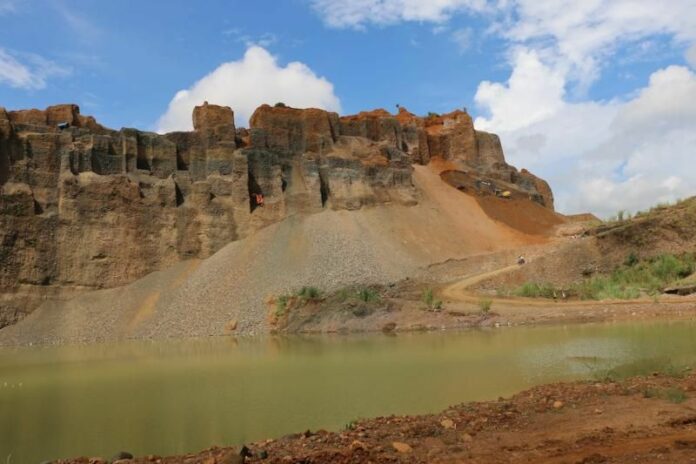
A jade mining area in Hpakant, Kachin State. Photo:Myanmar Now

YANGON — During the Nov. 8 elections, Khin Maung Myint, 65, won an Upper House parliament seat for the National League for Democracy in Kachin State’s Hpakant District, an area that has long been famous for its jade mines. The newly elected MP spoke with Myanmar Now about the industry’s heavy social and environmental impacts, and how these should be addressed.

The jade trade is highly profitable but who controls it has been shrouded in secrecy, while most raw jade flows across Myanmar’s northern border, untaxed, to China. In November, an investigation by international resource exploitation watchdog Global Witness revealed the trade could be worth as much as USD $31 billion per year. The family of former military supremo Than Shwe was said to have a large stake in the trade, along with members of the old army elite and an ethnic Wa drug lord.

Well-connected companies hold mining concessions, while thousands of small-scale, individual miners scour the edges of the mines in search of gems. This unregulated mining is dangerous; in November, more than 100 miners were killed when a huge waste heap caused a landslide. The rapacious operations have left Kachin State’s environment deeply scared.

Question: Some reports say there has been a sharp increase in mining activity after the opposition’s election victory on Nov. 8. Are companies speeding up mining? 

Answer: Yes, many heavy machinery vehicles have been coming into Hpakant since the start of this month (December). The companies are getting worried that the new government may restrict the jade mining. So they are now operating at the jade mines in Hpakant around the clock.

Particularly, the companies related to the Wa ethnic group, such as Ever Winner, Myanma Tagaung, 111, Yarza Htarni and so on. There are also other companies owned by former Kachin rebel groups that signed ceasefire agreements with the government and transformed into border guard forces (under army control). They have dramatically stepped up the mining work in Hpakant.

Q: There are also reports that some locals in Hpakant are trying to block these activities. What are they concerned about?

A: You have rules and regulations to follow when you apply for a jade mining license. For example, you cannot transfer your mining area to someone else. You also have to make sure that the mining work is carried out without causing much damage to the environment. But these rules are not enforced at all on the ground. The companies are dumping waste on the banks of the Uru River. That’s why the river is blocked during the rainy season and this causes flooding of riverside vegetable plantations of the locals.

Now, the companies are working around the clock, using heavy vehicles such as dump trucks, backhoes and excavators that are two or three stories high with a capacity to destroy mountains within a matter of days. The mining activities also leave behind huge craters, as big as 40 to 50 acres wide. So these craters become lakes during the rainy season. They can be very dangerous for the locals because these craters tend to break open under the pressure of water and cause flash floods.

Q: The Global Witness report estimated the value of jade production last year alone exceeded $30 billion, but it is onlyhundreds of millions of dollars, according to official data. What does this tell us about jade smuggling?

A: Jade smuggling is an open secret. Companies bribe military officers in charge of border checkpoints in areas of Kachin State, such as Kampaiti and Nam Sanyam, and have been openly smuggling jade to China.

Most of the best jade stones are smuggled out to China, while only a few of them go to the jade emporium in Naypyitaw. This would be very clear if you visit Chinese cities such as Guangzhou (where jade is traded).

Q: To what extent are Chinese businessmen involved in the jade mining? Government records indicate there is no foreign involvement in mining in Hpakant.

A: No foreigners are directly involved in the industry on the ground, but there is a lot of foreign investment from China. The family members of high-ranking Chinese government officials are shareholders in companies such as Ever Winner and other companies related to the Wa ethnic group. There are some others also who are investing in the industry to launder the black money gained from the drug trafficking.

Q: Hundreds of small miners have been killed in landslides in Hpakant over the years. Why do these accidents continue to happen?

A:  We are seeing excessive use of heavy machinery at the jade mines. Small-time jade stone pickers sometimes are not aware that vehicles are nearing when they are competing with each other to get jade stone. That’s when they are run over by the heavy trucks. Some of these people are high on drugs and mindlessly wandering at the jade mines.

The drivers of heavy machinery cannot properly check whether there are people near them or not, because these vehicles are 25 feet long. The diameter of a wheel of a heavy machinery vehicle can be about eight feet high. So if a man was run over, his body will be completely flattened.

Q: You are a native of Hpakant. How much has the town and its surroundings changed because of mining in past decades?

A: Jades were manually extracted about 25 years ago. There was no heavy machinery at that time. We could drink the water of Uru River that flows through Hpakant. We can use its water to cook rice. We could also get vegetables that naturally grew there. But now forests have completely been destroyed, so much so that we cannot get firewood anymore. So many natural mountains have been wiped out, in their places sprang up piles of dumped waste from the mining areas that are as high as mountains.

Some jade companies such as the Yadana Taung Tann Company owned by Tun Myint Naing (aka Steven Law, owner of Asia World), the son of the late drug lord Lo Hsing-Han, dynamited the mountains at their jade mining sites. These giant mountains would explode and collapse like the World Trade Centre during the 9/11 attack, sending off storms of dust. Mountains as high as 500 or 1,000 feet were obliterated in a matter of days.

In violation of the license rules, the companies dumped the soil near the Uru River. These soil later flowed into the Chindwin River, causing high sandbanks there during the rainy season. Given the negative environmental consequences the jade mining have caused, we think it’s time to stop this industry.

Q: Since you were recently elected as an MP for Hpakant, what laws will you propose to the parliament to address jade mining issues?

A: Transparency is the most crucial issue. We would need to find out if the money invested in the industry is coming from the drug trade, and if companies are following the rules and regulations of their mining licenses. With all these data compiled, we could regulate the industry.

If we found that the industry should be shut down, then we would have to shut it down. Actually, many countries do not have this resource, jade. So we can sell it any time we want. Since we are now producing and selling it like vegetables, we don’t get a proper price.

Story: Swe Win

Advertisement

Thailand Drops Charges Against Ex-Premier For 2010 Protest Crackdown

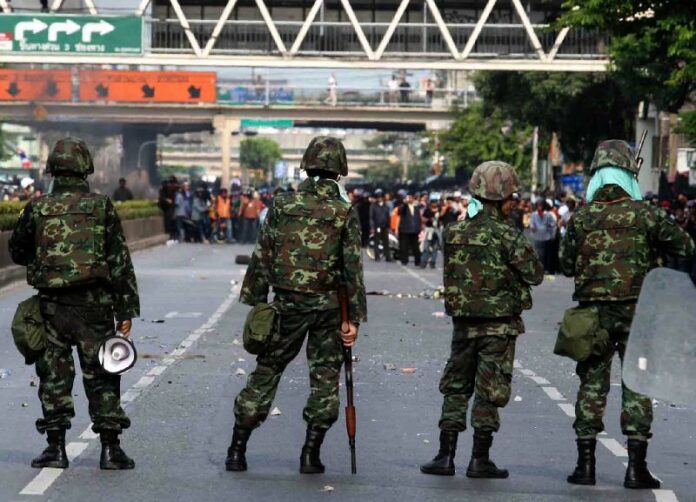
In this May 14, 2010, file photo, soldiers face off with Redshirt protesters on Rama IV Road in Bangkok.

BANGKOK — Thailand's anti-corruption commission dismissed charges against the former prime minister, his then-deputy and then-army chief for ordering a 2010 crackdown on anti-government protesters.

The National Anti-Corruption Commission voted Tuesday in favour of former prime minister Abhisit Vejjajiva, former deputy prime minister Suthep Thaugsuban and retired army chief Anupong Paojinda.

The government crackdown on the protesters, known as the red shirts, killed at least 90 people and injured more than 2,000. The protests were held from March to May of 2010 and demanded that the government dissolve parliament and hold early elections.

The demonstrations centred in one of Bangkok's main commercial districts, escalated into violence as the military moved in to dislodge the protesters, resulting in a series of clashes and arson attacks.

The committee agreed that using armed forces to reclaim protest sites was necessary because some protesters were armed, according to secretary-general Sansern Poljiak.

The committee also forwarded the case to a special investigation department to look into the military's actions during the crackdown.

Story: DPA
 

Advertisement

North Korea's Senior Official on South Korea Killed in Accident

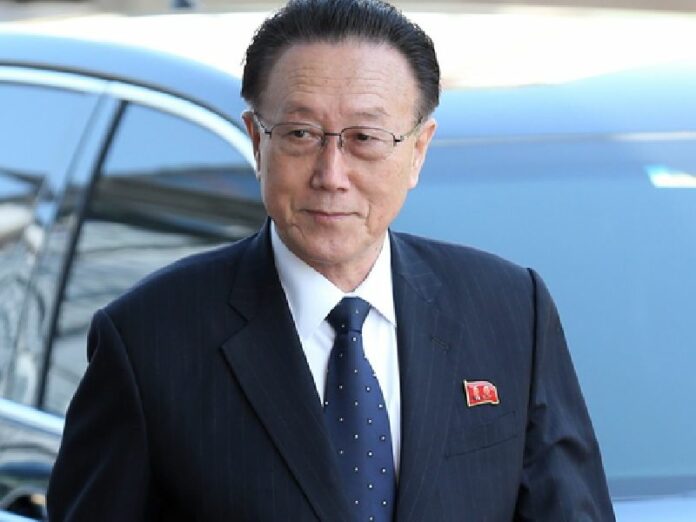
A file photo dated 04 Oct. 2014 shows Kim Yang gon, in Incheon, South Korea before the closing ceremony of the Asian Games. Photo: Yonhap / EPA

SEOUL — North Korea's top official managing ties with South Korea has been killed in a car accident, Pyongyang state media said Wednesday.

Kim Yang Gon, a secretary of the ruling Workers' Party of Korea, died Tuesday morning at age 73, the South Korean news agency Yonhap quoted the North's Korean Central News Agency as saying.

Kim was a key advisor to leader Kim Jong Un as he had tried to improve relationships with South Korea. 

The South Korean government expressed its condolences Wednesday morning.  

The report of his death came amid chills in inter-Korean ties, after the two countries unsuccessfully ended senior-level talks on Dec. 12. 

Story: DPA


Advertisement

Top Thailand News of 2015 by Khaosod English

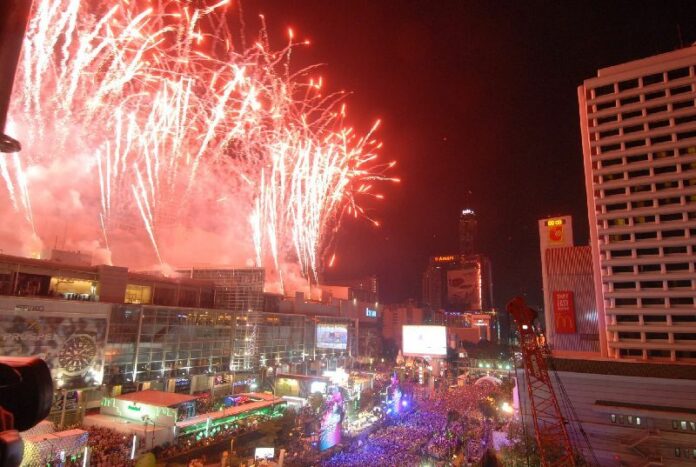
Fireworks greet the arrival of the year 2015 as the clock strikes midnight on Jan. 1, 2015, at Central World shopping mall in Bangkok

BANGKOK – Here's our list of the most defining moments of the past year, as covered by our publication:

1.  The year of living under the dictator’s laws

\

Hopes were kindled when junta chairman Prayuth Chan-ocha, announced early this year that he was willing to repeal martial law, which had been in place nationwide since May 22, 2014. However, the junta chief lifted martial law in April only to replace it with an even more draconian power: the invocation of Article 44 of the interim constitution.

The clause allows Prayuth to make an order to disrupt or suppress any act that “undermines public peace and order or national security, the Monarchy, national economics or administration of State affairs, whether that act emerges inside or outside the Kingdom.” Any orders issued by Prayuth under Article 44 are considered legally-binding by default without any civilian oversight – a classic definition of a dictatorial power. 

Article 44 ended up serving as a martial law under another name, permitting soldiers to detain suspects and search properties without warrants, and serve as laws enforcement officials alongside police.

Armed with the constitutional clause, Prayuth made no pretense about who’s calling the shots in the juntaland. With the mere mention of his near-absolute power under Article 44, the general set up committees, enacted far-reaching policies and transferred bureaucrats at will. Laws issued under the Article range from setting up a special economic zone to cracking down on young street racers. 

Further repressive enactments under Article 44 may also await us in 2016, after police threatened to curb political discussion on social media with the clause. 

2.  Progressive activists take the helm while Pheu Thai slinks back

\

After losing power in the May 2014 coup, Pheu Thai Party has been forced to the sidelines of the political arena. The party’s retreat is partly due to the junta’s relentless ban on political activities and intimidation of key Pheu Thai politicians. Meanwhile, top leaders of the Pheu Thai party, including former Prime Minister Thaksin Shinawatra himself, repeatedly showed they had no stomach for a fight with the military regime. Not until a new election anyway. 

In the absence of the political machinery of Pheu Thai, the job of resisting the junta’s rule falls onto a small group of pro-democracy, progressive activists who are not members of the traditional Redshirt movement. 

Groups like the Thai Student Center for DemocracyNew Democracy MovementDao DinResistant Citizens, and New Isaan Movementbravely risk arrests, trial under martial law and jail terms in the David-vs-Goliath campaign against the junta. They held marches and gatherings as much as they can under the ban on protest, while keeping an active presence on social media. 

When the junta pushed for a “single gateway” to control Internet traffic in and out of Thailand, geeks and online activists united to oppose the plan. Under the campaign “F5 Cyber Army,” they managed to disrupt major government websites and highlighted vulnerability of the state’s internet infrastructure. The junta eventually shelved the plan for the single gateway – officially.
 
Although the regime remains as well-entrenched as ever, these activists’ contributions for free speech in Thailand won admiration from many peers, both domestically and overseas. 


3. The unspeakable Purge 

\
 
In October, police abruptly announced a crackdown on a group of individuals who allegedly exploited ties to the Royal Family for their own gains. 

Four people were arrested, charged with lese majeste (insulting the monarchy) and placed in military custody. The suspects included palace aide Suriyan Sujaritpalawong and police officer Prakrom Warunprapha, who both died of mysterious circumstances in their cells. A number of police and military officers were also implicated in the alleged imposter ring, including former palace bodyguard Pisitsak Seniwong na Ayutthaya. 

No one knew for sure what the suspects were accused of, but a frenzy of speculation and rumors spread on social media. The media was kept strictly shut out of the discussion, however; the authorities placed a blanket ban on news coverage about the crackdown that does not come from official statements or authorized disclosures. 

The purge also ‘spilled over’ into accusations that some military officers were involved in corruption behind the construction of a monument complex calledRajabhakti Park. Again, no one knew for sure who first blew the whistle, nor out of what motive, but the park scandal will likely continue into 2016.

4. Record jail term for lese majeste

\

Discussion of the monarchy has always been outlawed and considered a taboo for the past few decades in Thailand, where lese majeste (insulting the Royal Family) is punishable by up to 15 years in prison. But the law has been more and more strictly enforced since the royalist military regime came to power in May 2014. 

 August saw a record-breaking sentence for lese majeste charges. A man from Kanchanaburi province was sentenced to 30 years in prison, while a woman from Chiang Mai was given a 28-year jail term. Their offenses? Facebook posts that reportedly defamed the monarchy. 

New lows of the law’s harsh enforcement continue to be made. Just this month, a man was arrested and slapped with a lese majeste charge for writing a sarcastic remark about the King’s dog, Thong Daeng. Police also reiterated that anyone who “likes” or “shares” Facebook posts that carry sensitive contents will be liable for prosecution. 

In spite of condemnation from various human rights organizations, including the United Nations, the junta insisted that the draconian lese majeste law is justified to maintain the dignity of the Royal Family. 


5.  Erawan Shrine bombing

\

On the evening of Aug. 17, Bangkok faced its worst terror attack in living memory. 20 people from six nations were killed and hundreds injured when a bomb struck the popular Erawan Shrine in downtown Bangkok. 

Only two Uighur men have been arrested and sent to stand trial so far, while15 other suspects wanted by police remain on the run. Yet, police declared the case closed in October, and the authorities announced no progress on the rest of the suspects since. 

The investigation was also marked by the Thai authorities’ apparent rush to convince the world that it was “business as usual” in Bangkok. The crime scene was quickly cleaned up within 48 hours after the bombing. Foreign celebritieswere hired to tour the shrine. Even terrorism was not included in the charges against the two suspects, likely due to the government’s reluctance to acknowledge the bombing as a terror attack. 

In line with the Thai government’s effort to erase the “bad memory” of the attack on Erawan Shrine, there is no plan for any memorial to honor the victims. As a remedy to this enforced amnesia, Khaosod English published a story in memory of those who died in the senseless attack. We also released an article penned by our correspondent from Butterworth, Malaysia, where a family was forever changed by the killings on Aug. 17. 

6. Thai industries came under scrutiny

\ 

After years of negligence and corruption, authorities were forced to clean up their dirty acts in some national industries this year. The wake-up call came when ICAO and the European Union warned that Thailand may be punished for their failures to regulate its aviation and fishing industries, respectively. 

NGOs also disclosed serious violations of human rights in the seafood businesses, namely the use of slave labor and widespread tolerance of human trafficking. 

While serious punishments were eventually averted, the threats highlighted the need for a long-delayed reform in the Thai economic system, in order to comply with both domestic and international laws, and satisfy concerns from human rights watchdogs.  


7.  A sad end to the human trafficking crackdown

\

With the discovery of slave camps that held trafficked refugees in southern Thailand, authorities could no longer pretend not to notice the crisis of human trafficking in the region like they have been doing for years.  

Police Maj. Gen. Paween Pongsirin was appointed the head of the task force to crack down on the illicit trade. He was told by the junta not to spare anyone. So he went to work. His team was responsible for the arrests and prosecution of over 80 suspects, including a high-ranking army general. Compared to years of silence and impunity, this was unprecedented. 

So it came as a sick joke when Paween ended up losing his job, because he was actually doing his job. He was first transferred to southern Thailand, which would leave him open to revenge from the criminal syndicates that he spent months trying to dismantle. His plea to the police force was ignored, forcing him to quit his job for the sake of his own safety. Paween later relocated to Australia, where he is applying for asylum. 

The sad case of Paween only served as a warning for investigating others who cannot be touched in Thailand. 

8. One man Prohibition crusade

\

When an avowed Buddhist who publicly denounced alcohol, seeing it as a moral sin, was put in charge of the country’s alcohol control board, things went down exactly as anyone might imagine.  

As the head of Alcohol Control Board, Samarn Futrakul went on a rampage with the aim of limiting the sale and visibility of alcohol. His achievements include: a new law that bans alcohol producers from promising positive effects, aconfusing ban on alcohol sales near schools and threats to prosecute anyone who shares photos of alcohol on social media. 

In the end, it appears that Samarn has overextended his reach. He was publicly chided by junta chairman Prayuth Chan-ocha himself, after he expressed his wish to bring an end to beer gardens – an annual gold mine for Thailand’s major beer corporations. Samarn faded from public view soon afterwards. 


9.  Road kill and impunity 

\

Apparently you can kill a police officer in a car accident and walk away from the crime scene without any charge or an alcohol test. 

That’s exactly what happened in July, when actress Anna Hambawaris (aka Anna Reese), was allowed to go home and have some rest after she crashed into a car containing a sleeping police officer. By the time she showed up at the police station the next day, any trace of alcohol that might have been in her blood system would have already dissipated. 

The story was widely shared on social media, largely because many felt it was another example of  double-standards in laws enforcement. Many ordinary, poorer citizens don’t even get a lawyer when police come after them. 

Anna later went on to make a claim at the officer’s funeral that his ghost forgave her. No word on what the ghost might have said about compensation though; Anna bulked at paying the compensation to the officer’s family for two months, before both parties finally agreed on an undisclosed sum. 


10. Bangkok cops win Ig Nobel prize

\

Finally, let us give a round of applause to the Bangkok Metropolitan Police Bureau, who won an Ig Nobel prize for its innovative idea of paying cops not to take bribes. The strategy is also known as rewarding people for doing their job and obeying the laws of the land. 

The no-bribery reward, which was eventually shelved just weeks after it was implemented, again reminds us of the surreal logic shared by the top commanders of the Thai police force.

If we need any more proof of the wonderful bubble the top police brass is living in, don’t forget that the Bangkok police chief also lashed out at his own subordinates for doing their job: Pol.Lt.Gen. Sriwarah Rangsipramkul was so offended when he was asked to take a breathalyzer test for alcohol in his system at a police checkpoint in July. 


To reach us about this article or another matter, please contact us by e-mail at: [email protected].

Follow Khaosod English on and Twitter for news, politics and more from Thailand.

\

Advertisement

Hot News

LATEST NEWS

Bangkok
overcast clouds
27.2 ° C
27.2 °
27.2 °
92 %
2.9kmh
100 %
Sat
32 °
Sun
35 °
Mon
37 °
Tue
37 °
Wed
37 °