




























37.4 C
Bangkok
Monday, June 22, 2026
Home Blog Page 2865

Southern California Massacre Suspects Killed by Police

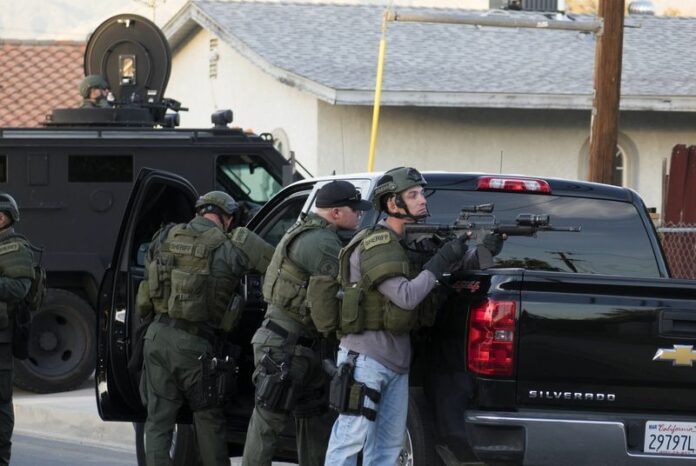
Police in San Bernardino, California, scour a residential neighborhood for a possible third suspect after trading gunfire with occupants of a vehicle linked to an earlier massacre that killed at least 14 people. Photo: Eugene Garcia / EPA

LOS ANGELES — A man and a woman suspected in a shooting spree Wednesday were dead after a car chase and shootout with police, according to authorities in San Bernardino, California.

The earlier massacre, which apparently targeted a party held in a rented conference room inside a local government centre, left 14 people dead and 17 wounded, several critically, police said.

FBI Assistant Director David Bowdich refrained from calling the shooting spree terrorism, but said there were "a few potential things" that raise suspicions.

San Bernardino Police Chief Jerrod Burguan said that officers investigating the attack, which occurred at approximately 11:00 local time, were responding to a tip about four hours later in the nearby community of Redlands.

A dark sport-utility vehicle leaving the location matched the description of a car described by witnesses as fleeing the earlier shooting. A chase ensued, leading to a gun battle with police, Burguan said.

The man and woman were each armed with both "assault-style" rifles and handguns, and dressed in what Berguan described as "tactical gear."

"Both of those people are deceased," Burguan said.

They came under fire from "several officers," but he did not know if they died from police rounds. Helicopter news video showed the vehicle riddled with bullet holes and windows shattered.

One officer was treated for minor injuries in the shooting.

A third person seen fleeing the scene of the shootout was detained but might not have been involved, Burguan said.

It was not clear late Wednesday if there was another suspect still at large, after initial reports from the shooting spree described up to three people opening fire and fleeing.

At the massacre scene, the attackers "came in with a purpose," Burguan said. "They came prepared to do what they did, as if they were on a mission."

The chief said that there was at least one apparent explosive device found at the scene of the shooting spree.

"We do not have a motive," Burguan said.

Bowdich called the case "a very fluid, active investigation," and said authorities would "go where the evidence takes us" on terrorism suspicions.

"I am still not willing to say that we know this for sure," he said. "It is a possibility, but we don't know that yet."

The massacre is the second major mass shooting in less than a week in the United States. On Friday, a gunman killed three people and injured nine others at a family planning clinic in the western state of Colorado.

The San Bernardino shooting spree is the deadliest in the United States since December 2012, when 20 children and six educators were slain by a deranged gunman at a school in Newtown, Connecticut.

In the immediate wake of the shooting, U.S. President Barack Obama called for tougher gun laws.

"There are steps we can take to make Americans safer," he told CBS News in an interview. "We should never think this is something that just happens in the normal course of events."

Obama called for Congress to close a loophole that allows people on a federal no-fly security list to purchase guns.

Story: DPA / Valerie Hamilton
Advertisement

British Parliament Approves Airstrikes Against ISIS in Syria

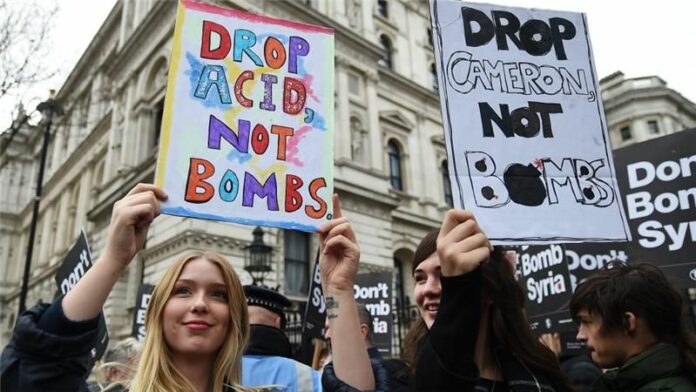
Demonstrators protest against British bombing of Syria outside Downing Street in London. Photo: EPA

LONDON — The British Parliament voted decisively late Wednesday in favor of launching airstrikes against Islamic State forces in Syria.

The 397-223 vote after 10 hours of debate opened the door to British sorties as early as Thursday against Islamic State targets. The Royal Air Force is already taking part in air operations in Iraq against the extremist militia.

Britain faced the "simple question" of whether to launch airstrikes against Islamic State forces in Syria or to wait for the group to attack the country, Prime Minister David Cameron said Wednesday as he pressed for legislative backing for military action.

"I'm not pretending that the answers are simple," he said at the start of the debate. "The situation in Syria is incredibly complex. The question before the house today is how we keep the British people safe from the threat posed by [the Islamic State movement]."

Opposition leader Jeremy Corbyn argued against expanding Britain's military involvement in the region, but told his fellow Labour Party members to follow their own conscience.

In Washington, U.S. President Barack Obama welcomed the vote, calling Britain "one of our most valued partners" in fighting Islamic State forces since the beginning of allied action against the group starting in August 2014 in Iraq.

"The special relationship between the United States and the United Kingdom is rooted in our shared values and mutual commitment to global peace, prosperity and security," he said. "We look forward to having British forces flying with the coalition over Syria and will work to integrate them into our coalition air tasking orders as quickly as possible."

Obama called the Islamic State movement "a global threat that must be defeated by a global response."

Cameron won overwhelming support for his proposal, two years after his previous effort failed to win parliamentary backing for strikes in Syria, a key contributing factor to the decision by Western forces not to launch strikes against Syria's government in response to its use of chemical weapons.

Public opinion in Britain has shifted since 2013, however, especially after the deadly Nov. 13 terrorist attacks in Paris, which prompted France to push for intensified strikes against Islamic State forces.

Cameron used his speech Wednesday to remind Britons of Islamic State backing for June attacks in Tunisia that claimed the lives of numerous British tourists.

"This is not about whether we want to fight terrorism, it's about how best we do that," he said. "We face a fundamental threat."

The premier noted that British security services have foiled seven planned terrorist attacks since November 2014: "The question is this: Do we work with our allies to degrade and destroy this threat … or do we sit back and wait for them to attack us?"

Cameron said the decision to send British forces would be about more than just sending moral support. He said British forces have some of the best precision strike aircraft in Europe, meaning a British contribution would make attacks against Islamic State in Syria more effective.

After the vote, Cameron said parliament had made the "right decision to keep the U.K. safe," according to the British-based Press Association.

The proposal enjoyed wide support with backing from Cameron's Conservative Party, as well as members of the Labour, Liberal Democrats and Democratic Unionist parties.

The only controversy was indignation by some pacifist members of the legislature at earlier comments by Cameron in which he denounced opponents of the plan as "terrorist sympathizers."

Parliament voted in 2014 to allow the British Army to attack Islamic State forces in Iraq.

Islamic State forces control large stretches of Iraq and Syria, where they have moved to set up a governing structures adhering to an extreme interpretation of Islamic law.

The organization has been on the back foot militarily at times in recent months, amid attacks from US allied forces, Russian forces, the Syrian government and rival rebel groups on the ground.


To reach us about this article or another matter, please contact us by e-mail at: [email protected].

Follow Khaosod English on Facebook and Twitter for news, politics and more from Thailand.

Follow @KhaosodEnglish

\


Advertisement

Cameron Gives Brits A Choice: Attack Islamic State or Become Victims

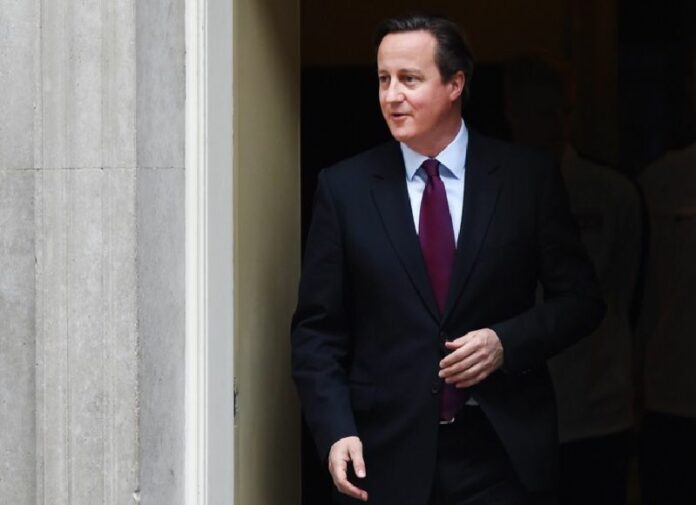
British Prime Minister David Cameron at 10 Downing Street in London, 1 December 2015. Cameron is preparing for a debate and vote in parliament on Syria airstrikes. EPA/ANDY RAIN

LONDON – Britain faces the "simple question" of whether to launch airstrikes against Islamic State forces in Syria or wait for the group to attack the country, Prime Minister David Cameron said Wednesday as he pressed for legislative backing for military action.

"I'm not pretending that the answers are simple," he said at the start of 10 hours of planned debate on the matter.

"The situation in Syria is incredibly complex. The question before the house today is how we keep the British people safe from the threat posed by ISIL," he said, using an acronym for Islamic State.

Cameron is expected to win overwhelming parliamentary support for his proposal. It comes two years after a previous effort by Cameron to win backing for strikes in Syria failed, a key contributing factor to the decision by Western forces not to launch strikes against Syria's government in response to its use of chemical weapons.

Public opinion in Britain has shifted since 2013, however, especially after the deadly November 13 terrorist attacks in Paris, which prompted France to push for intensified strikes against Islamic State forces.

Cameron also used his speech Wednesday to remind Britons of Islamic State backing for attacks in Tunisia earlier this year that claimed the lives of numerous British tourists.

"This is not about whether we want to fight terrorism, it's about how best we do that," he said. "We face a fundamental threat."

He noted that, since November 2014, British security services have foiled seven terrorist attacks.

"The question is this: Do we work with our allies to degrade and destroy this threat … Or do we sit back and wait for them to attack us?"

He added that the decision to send British forces would be about more than just sending moral support. He said British forces have some of the best precision strike aircraft in Europe, meaning a British contribution would make attacks against Islamic State in Syria more effective.

The proposal enjoys wide support in Parliament, with backing expected not just from Cameron's Conservative Party, but also members of the Labour, Liberal Democrats and Democratic Unionist parties.

The only controversy was indignation by some pacifist members of the legislature at earlier comments by Cameron in which he denounced opponents of the plan as "terrorist sympathizers."

The United Stets said it would welcome additional involvement by the British against Islamic State in Syria, according to the Pentagon.

"We look forward to an expansion of that role should the British parliament decide that's the right thing to do," US military spokesman Colonel Steven Warren says.

He says the US would welcome the additional military capabilities the British could provide to the coalition.

Parliament voted in 2014 to allow the British Army to attack Islamic State forces in Iraq. Assuming Parliament backs Cameron's request, it would join an existing US-led coalition conducting airstrikes in neighbouring Syria designed to impede Islamic State militants.

Islamic State forces control large stretches of Iraq and Syria, where they have moved to set up a separate state adhering to strict Islamic law. However, the group has been on the back foot militarily at times in recent months, thanks to attacks from US allied forces, Russian forces, the Syrian government and other rebel forces on the ground.

The vote is expected to come around 2200 GMT, after about 10 hours of scheduled debate.

Story: Niels C Sorrells / DPA


To reach us about this article or another matter, please contact us by e-mail at: [email protected].

Follow Khaosod English on and Twitter for news, politics and more from Thailand.

\

Advertisement

Police, Manufacturer Investigate Hot Pot Explosion That Injured 4

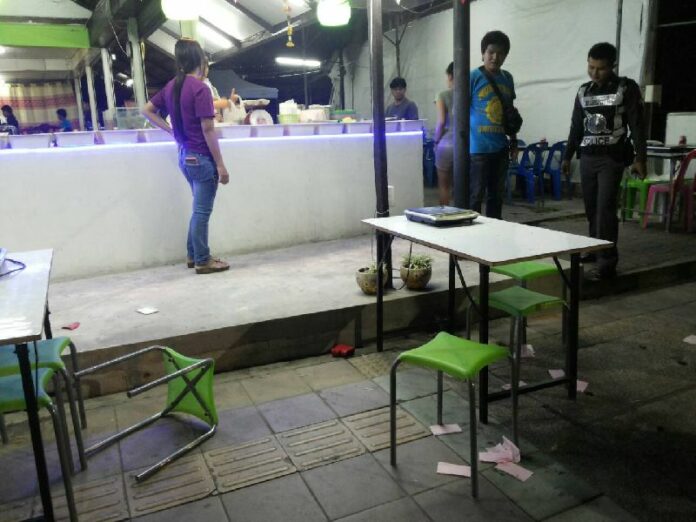
The scene at a hot pot restaurant Monday evening after a hot plate reportedly exploded, injuring 4 in Korat.

KORAT — When an electric hot plate at a restaurant in the northeast of Thailand exploded and injured four people, it shocked many as a routine and familiar action gone horribly wrong. Today investigators said it will take at least a week to find out it happened.

After four customers were injured Monday when an AJ brand stove exploded at a hot pot (shabu shabu) restaurant in Nakhon Ratchasima, restaurant owner Thananya Mahachupond said the device wasn’t even plugged in at the time. Representatives from the police and the manufacturer said they are both investigating the incident, which will take up to a week.

“Right now, we have not concluded the cause,” said Yotkrit Asana, a representative of Crown Tech Advance, which makes and sells AJ stoves. 

Restaurant owner Thananya said they’ve stopped using electric hot plates.

\
The AJ stove in question that reportedly exploded Monday night, injuring four customers at a restaurant in Korat.
 

“For now, we switched from electric stoves to charcoal grills, for safety the and confidence of  customers,” Thananya said.

The exploded stove has been sent to forensic police for examination, she said. 

Yotkrit, the representative of the stove manufacturer, said police indicated their investigation would take four days. After that, the stove will be sent to the company for a two day inspection.

Crown Tech Advance said there was no reason to recall its AJ stoves as it has received no other reports of malfunction. 

“We have sold tens of thousands of this item. This is the first case that we ever encountered,” Yotkrit said. “It’s also an extraordinary case, because the restaurant owner said it wasn’t even plugged in.”

The company will foot medical bills for the four customers injured by the explosion, he added.

Advertisement

Mainstream Media Trades in Worst LGBT Stereotypes, Review Finds

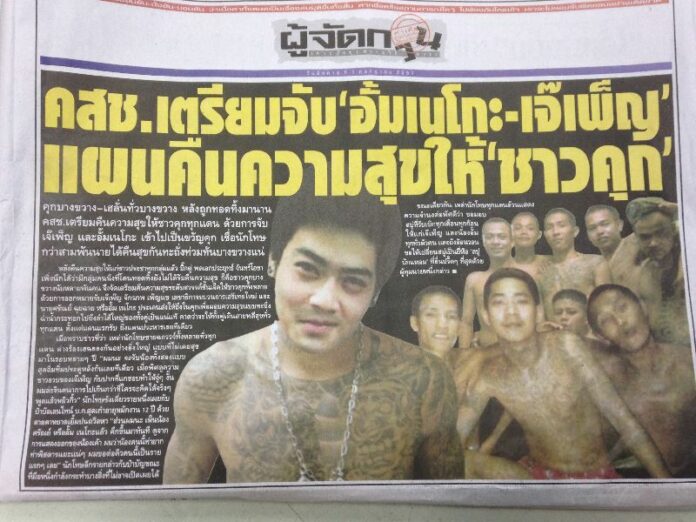
The ultra-nationalist Thai newspaper Manager ASTV on July 1, 2014, published a "mock column" describing in graphic detail of how prisoners will gang-rape a fugitive anti-coup LGBT activist when she is finally arrested.

BANGKOK — They get called many things, from “homo gangsters” (gang mai pa diew gun) to “conniving ladyboys” (katoey saab). Even more offensive are disparaging labels such as “finger-obsessed” (lhong datchanee) and “anal-lovers” (raboet suam).

The “they,” however, are not schoolyard bullies, but mainstream media outlets watched and read by millions of Thais each day.

Two terms in recent news reports have troubled Kangwan Fongkaew, a media professor at Burapha University: “finger-obsessed” and “yellow club.” The former is a derogatory term for lesbians while the latter is for gay men. It refers to the color of feces.

“For Thai media, lesbians are just fingers, and gay men are just feces,” Kangwan said Monday as the the release of a report he prepared examining how the LGBT community is portrayed in mainstream media.

Despite great gains made in recent years for the LGBT community, domestic media in Thailand are stuck in the past, using outdated and offensive stereotypes, marginalizing groups with offensive nicknames and limiting representations of them to comic, sensational roles, according to a report from Burapha University with the financial support of the United Nations Development Program.

A review of 870 news items from six major news agencies found abundant and repetitive use of offensive language and stereotypes, including “tee ching” (slang for lesbian sex), “so desperate that she is dating a lesbian,” “cocksucker,” “fails to hide his femininity, “fake pussies,” and “buffalo-sized ladyboys who scam the world.”

The report was based on a review of news reports from Thairath, Matichon Weekly, Gossip Star, Bangkok Post and Voice TV collecting between July 2014 and June 2014. It found 870 items mentioning LGBT individuals or issues.

Researchers found the vast majority – 70 percent of such reports – were tabloid stories involving celebrity, fashion, or other light-hearted matters, while only about one third contained serious reports on issues such as civil rights, laws and education.

Kangwan noted that a large portion of that serious news was actually lifted from “hard news” is in foreign news reports about matters in other countries.

What disturbed the researchers, however, was not as much the coverage ratio, but the casual and frequent use of offensive or demeaning language, as well as representations relying heavily on cultural stereotypes.

Although Kangwan did not specify which agencies used which terms, a quick search online finds “homosexual gang” turns up in a crime story by Manager from Jan. 10; while “finger-obsessed” and “yellow club” can be found in stories by Gossip Star from March 22, 2012, and Oct. 7, 2015, respectively.

Kangwan said he’s also frustrated by crime stories which almost always mention the gender or sexual identity of people involved in the headlines despite being irrelevant to the story. In fact, just this week, all mainstream newspapers in Thailand ran stories referring to suspect in an alleged scam as “the cunning ladyboy” in headlines.

“They like to brand transgenders with stigmas,” Kangwan said. “They use words like ‘cunning katoeys,’ or ‘cruel toms,’ but they never describe hereosexual suspects in the same way. There’s no ‘cunning straight guys’ in the headlines.”

1449059114 14141153951414115515l
Police round up suspected pickpockets and sex workers Oct. 24, 2014, in Pattaya. Although not every suspect was transgender, many Thai media agencies identified them as ‘ladyboy gang’ in the headlines.

Other common examples include stereotypical, comical portrayals in news stories, the report found. Katoeys are always emotional. Gay men are always sex-crazed. Queers are, without exception, funny.

Anoporn Khruataeng, who also wrote the paper, said she doesn’t blame reporters for these faults. It is the media owners, executives and editors, she said, who should be educated about ethics concerning LGBT issues, because they are the people making the decisions about what’s written in the paper.

“We talked to many reporters. They told us that even when they get things right, their work was edited by their supervisors. So that means that it’s the people with power in the agencies who don’t understand these issues,” Anoporn said.

From her experience, those media gatekeepers are not interested.

“We once wrote complaints to the media, but we never received any response,” she told reporters at Monday’s news conference. “That means you don’t care about us at all.”

Another contentious issue raised is the refusal by many mainstream newspapers to call subjects in the news by their preferred genders. Transgender women are still called “Mr.” by nearly all Thai-language agencies.

Not to say it’s limited to Thai-language media. A transgender student provocateur known as Aum Neko complained publicly in December 2013 about being referred to as “Mr.” in reports from the Bangkok Post, despite contemporary press norms. After her complaints spread over social media, the paper edited the stories online.

Commenting on the research paper on Monday, Thammasat University lecturer Chalidaporn Songsamphan advised media agencies to stop perpetuating common prejudices to their readers, and instead take a more pro-active role in dispelling those stereotypes.

“The media like to say that their job is to serve as a mirror to the society, and reflect its values. But if this is true, we won’t be able to change society at all,” Chalidaporn said.

Clarification: This story has been updated to reflect the report was commissioned by the United Nations Development Program.

Advertisement

Thailand Scrambles to Improve Aviation After FAA Downgrade

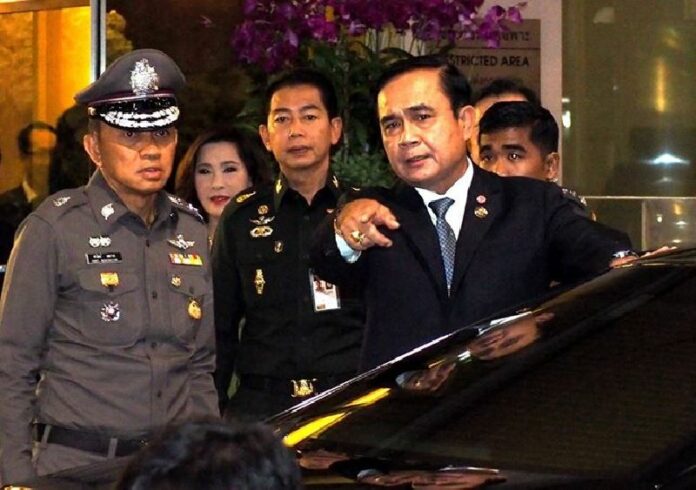
Junta chaiman Prayuth Chan-ocha at Suvarnabhumi Airport this morning after returning from a climate summit in Paris.

By Pracha Hariraksapitak
Reuters

BANGKOK — Prime Minister Prayuth Chan-ocha on Wednesday ordered officials to improve aviation safety standards after the U.S. Federal Aviation Administration, or FAA, downgraded Thailand's safety ratings.

Shares in Thai airlines fell after the FAA said Thailand had failed to tackle shortcomings found in an audit this year in commercial aviation standards.

The lower safety rating blocks the airlines from launching or expanding in the United States and may tarnish the image of the country's thriving tourist sector.

"I have ordered them to resolve the issue," Prayuth told reporters, referring to industry officials.

The FAA cut Thailand's Department of Civil Aviation to category 2 from 1 for failing to comply with FAA standards.

It did not give details of the failures but said the rating meant the department was "deficient in one or more areas, such as technical expertise, trained personnel, record-keeping or inspection procedures."

The department will boost its workforce as part of measures to raise performance and match international standards, the transport ministry said in a statement. They aim to complete a recertification process for 28 airlines flying international routes by August, which would help improve its standing in future audits, Transport Minister Arkhom Termpittayapaisith told reporters.

No Thai airline flies directly to the United States so the lower rating will have little immediate impact on operations.

"The financial impact of the FAA downgrade is small," Deputy Prime Minister Somkid Jatusripitak said. "But there is an impact in terms of sentiment. We do need to meet international standards."

The benchmark SET index slipped to a two-month low as airline shares took a tailspin.  Shares of  Thai Airways International dropped 6.3 percent to a six-year low. Shares of Asia Aviation Pcl, a major shareholder in budget carrier Thai AirAsia, and Bangkok Airways dropped more than 3 percent each.

Thai Airways and Bangkok Airways said their businesses would not be affected by the FAA downgrade because they did not fly to the United States.

Patee Sarasin, chairman of low-cost carrier Nok Airlines, said on Tuesday the FAA decision would hurt the industry's reputation and may lead to other countries limiting flights by Thai operators. Nok shares fell 1.5 percent.

South Korea, Japan and China had previously stopped Thai-based airlines from flying charters and new routes over safety worries raised in another international audit. Those restrictions have since been relaxed.

The Montreal-based International Civil Aviation Authority downgraded Thailand in June after finding a shortage of technical officers and certification problems in transporting hazardous goods.

The European Aviation Safety Agency is due to announce the results later in December of its audit.

Additional reporting by Viparat Jantraprap, Manunphattr Dhanananphorn

Advertisement

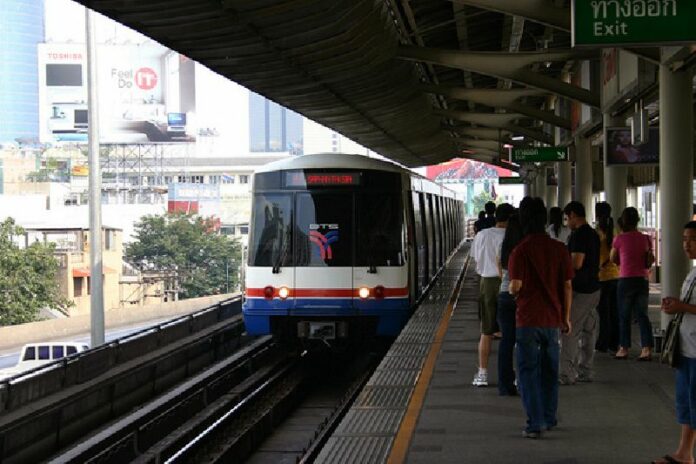
Decision Soon on Future of BTS Saphan Taksin

The platform of BTS Saphan Taksin in 2004 photo. Photo: Tom Page / Flickr

BANGKOK — A moving walkway to whisk commuters nearly a kilometer from BTS Surasak to the Chao Phraya River is one option in a long-delayed plan to rebuild or remove the 16-year-old “temporary” Skytrain station located at Saphan Taksin.

Whether the Silom Line remains a one-way service over the river or is upgraded to a more efficient double-track line, the station located above the Sathorn Pier would need to be demolished and extended for one meter on both sides, according to city officials who hope to decide the station’s future by the end of this month following years of prolonged deliberation.

The Bangkok Metropolitan Administration recently discussed options for rebuilding the station, Deputy Bangkok Gov. Amorn Kitchawengkul said, which it hopes to soon complete and forward to transportation officials and relevant agencies.

Two options were floated by officials last year: an expensive rebuild of the station with two tracks or closing the station, leaving commuters with the option of using the nearby BTS Surasak.

Were a second track added, the bridge would need to be widened by 80 centimeters on each side – not an inexpensive proposition.

In 2012 the BMA announced it would demolish BTS Saphan Taksin, but the decision was unpopular with the public and a final agreement was never reached. The station links light rail commuters with boat and ferry services across and along the river.

A 700-meter moving walkway between BTS Saphan Taksin and the Surasak station is also included in the city’s plans, most likely as a measure in case the station is closed.

Part of the Silom Line, BTS Saphan Taksin is a major bottleneck because it alternates service in one direction at a time. It was the only BTS station built with a single track; officials said it was only built for temporary use. The problem is believed to cause delays of up to 4.5 minutes on the busy line.

Advertisement

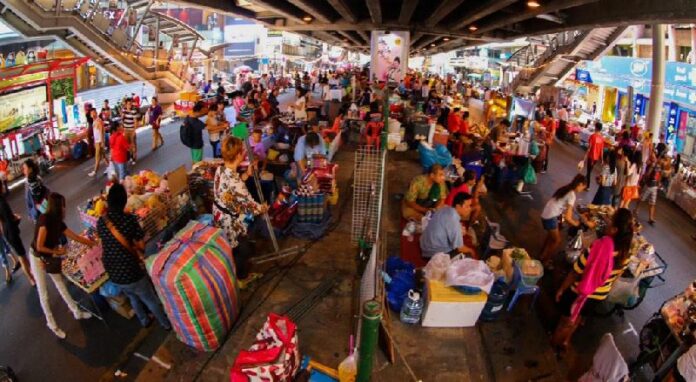
Silom Walking Street: Sunday Market is New Again

Silom Walking Street in a March 2015 photo. Photo: @Willythuan / Twitter

BANGKOK — Hundreds of vendors will converge on Silom Road for the return of a walking street market on Dec. 20.

Lanes in both directions of Silom Road, from Sala Daeng intersection down to Naradhiwas Road, will close twice each month beginning Dec. 20 for folks to walk and shop in the road.

The walking street market, first ran as a pilot in December 2014, hasn’t been held since May. It was a concession from city hall to the vendors it forced out in a 2014 “clean up” campaign intended to improve traffic and walkability as part of the junta’s bid to “reorganize” the capital city.

The pedestrian market will run from 3pm to 9pm bimonthly on Sundays: Dec. 20, Dec. 27; Jan. 10, Jan. 24, Feb. 7, Feb. 28, March 6 and March 20.

More than 1,724 vendors reportedly registered at the Bang Rak district office last week. Due to the overwhelming interest in hawking goods at Silom Walking Street, vendors drew lots for permits to sell during the four-month season. About 200 vendors will set-up shop for the opening day.

The Walking Street was held 18 times earlier this year and received more than 7,000 visitors per day, according to Bang Rak district.

Those interested in checking it out are encouraged to take public transportation; BTS Sala Daeng and MRT Silom will bring folks right to the action.


To reach us about this article or another matter, please contact us by e-mail at: [email protected].

Follow Khaosod English on Facebook and Twitter for news, politics and more from Thailand.

Follow @KhaosodEnglish

\


Advertisement

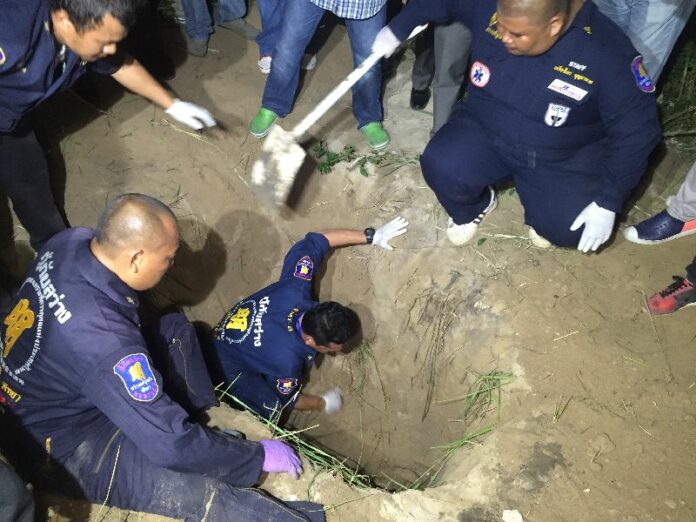
Missing Former Hells Angel Biker Found Buried in Jungle

Pattaya police at the shallow grave in which Australian national Wayne Schneider’s body was found early morning on Dec. 2, 2015.

PATTAYA — A missing former member of the Australian Hells Angels motorcycle gang was found buried early this morning.

Pattaya police found the naked body of 38-year-old Wayne Schneider buried about one-meter deep in the jungle 100 meters away from a Sattahip district road just after midnight. The ex-biker, who also owned a fitness business in Australia, was last seen in the early hours of Monday being beaten unconscious and abducted, and police suspect the involvement of an Australian gang.

Police suspect the gang rented the white truck used to abduct Schneider from a rental service in Pattaya. They tracked down the truck parked to a spot along the road, where tracks from the vehicle led them about 100 meters into the trees to where officers found his body.

Schneider’s body was found with severe head trauma and a broken neck, suggesting he was severely beaten before being buried.

Two security guards at Scheider’s residence, the Jomtien Park Villas, told Pattaya police on Monday they heard a cry for help. When they arrived, they reportedly saw Schneider being beaten by five foreign men wearing black face masks who then escaped with his unconscious body. Blood and bullets were found at the scene of the kidnapping.

Police said Schneider had been in Pattaya for a month and paid 130,000 baht for a six-month deposit to rent a house.

A court-approved warrant has been issued for a 27-year-old Antonio Bagnato, also of Australia, who was drinking with Schneider the night prior to his abduction. Police said Bagnato was also a former Hells Angels member.

Schneider had a criminal record back home in Australia, according to the Sydney Morning Herald, where he had been convicted for trafficking narcotics.

Advertisement

Facebook's Zuckerberg Pledges 99 Percent Of Stock To Philanthropy

Mark Zuckerberg and his wife Priscilla with their daughter Max in an image posted on his Facebook page announcing the birth of their daughter in Menlo Park, California, USA, 01 December 2015. EPA/COURTESY OF MARK ZUCKERBERG

LOS ANGLES — Facebook founder and chief executive Mark Zuckerberg and his wife Priscilla Chan celebrated the birth of their daughter Tuesday with a "small contribution" to their charity – 99 percent of their shares in the world's largest social network.

In a long, personal Facebook post addressed to newborn Maxima Chan Zuckerberg, the new parents pledged to give nearly all their controlling stake in Facebook to their Chan Zuckerberg Initiative during their lifetimes to fund efforts in education, health and building stronger societies.

The stake is currently valued at about USD$45 billion, Zuckerberg said. In a filing with the US Securities and Exchange Commission, Facebook made clear that the 30-year-old billionaire plans to maintain his majority control over Facebook for the foreseeable future, selling or donating no more than USD$1 billion worth of Facebook shares per year for the next three years

"We know this is a small contribution compared to all the resources and talents of those already working on these issues," Zuckerberg wrote. "But we want to do what we can, working alongside many others."

Zuckerberg and Chan have already made significant donations to charitable causes, pledging USD$25 million to the fight against Ebola in 2014 and USD$100 million to the Newark, New Jersey school system.

Story: DPA


Advertisement

Hot News

LATEST NEWS

Bangkok
scattered clouds
37.4 ° C
38.3 °
35 °
47 %
4.3kmh
30 %
Mon
36 °
Tue
37 °
Wed
37 °
Thu
36 °
Fri
36 °