27.2 C
Bangkok
Saturday, July 25, 2026
Home Blog Page 2941

Songsumon Poshyanonda, Beloved Bangkok Musician, 33


DJ Pom Pom performs at Dudesweet's 'Gatsby Who?' party on June 8, 2013, in Bangkok. Photo: Courtesy Dudesweet

By Lisnaree Vichitsorasatra
Staff Reporter

BANGKOK — Friends and family laid to rest this past weekend Songsumon Poshyanonda, a popular and beloved figure in Bangkok’s tight-knit music community, who died recently of heart failure. She was 33.

Songsumon, best known as DJ Pom Pom, was a well-known DJ for event organizer Dudesweet and performed in her electro-pop band The Diet Pills. She was known for her passion for electronic, indie rock music. Her career as a DJ spanned 10 years.

"Pom was a lively person, loved her friends, loved parties and always optimistic,” said friend and collaborator, Dudesweet founder Pongsuang “Note” Kunprasop. “Which is what made DJ Pom a talented person who always created a fun and friendly atmosphere – all the qualities of a great DJ.”

Songsumon died Oct. 6 in her sleep.

Her friends expressed disbelief that she passed away so young. Those who knew said she never complained about much about anything, whether it was her personal life or illness.

“She was always a happy, fun person who loved music and loved to dress up," said Tul Waitoonkiat, frontman of Apartment Khunpa. A close friend of Tul, Songsumon was a regular fixture and DJ at his events. He said she never confided in him any health problems.

“She always had a positive vibe,” said Chakree Yutdharaks Punyaratabandhu, music director at lounge bar Eleventh Twelfth and a resident at Bad Motel. “She never gossiped about anyone, like most girls do.”

Songsumon came from a musical family. Her brother, Atichai Poshyanonda, drummed for the band Siam Secret Service, which went on to become Apartment Khunpa.

Praewa Chirapravati Na Ayudhya, drummer of indie band Yellow Fang, said the two often partied together. She said Songsumon was “very generous and always bought things for her.”

Songsumon had recently spoken of plans to open a restaurant and sell music records.

“If I weren’t able to be a DJ, I’d like to open a restaurant because I like eating and selling records, but the restaurant would be the priority,” she said in an interview with Tempo Magazine.

It was the second recent loss for members of Bangkok’s music scene. Many of those mourning Songsumon recently gathered to celebrate the life of Sqweez Animal guitarist Prachathip “Singha” Musikapon, who committed suicide in July. Thousands turned out for an Aug. 29 street party and many heartfelt tributes at a concert held Sept. 26 in his honor.

Additional reporting Chayanit Itthipongmaetee.

Advertisement

Police Announce Investigation of ‘Royal Imposters’

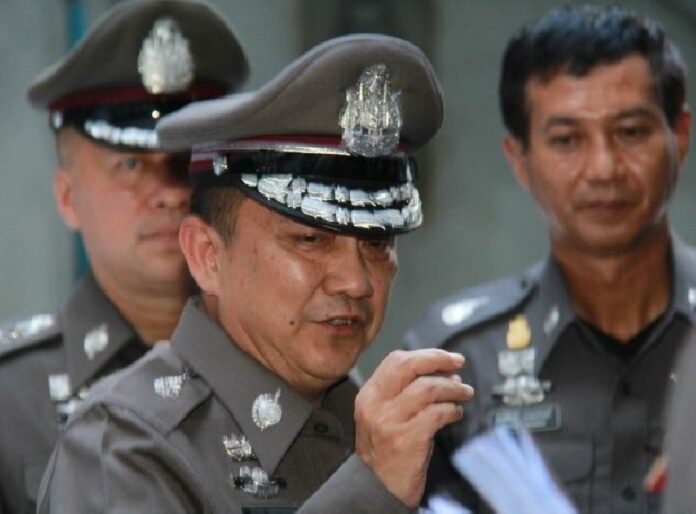
Police Lt. Gen. Sriwarah Rangsipramnakul has been selected to head an investigation into a group accused of falsely claiming ties to the Royal Family in this undated file photo. Photo: Matichon

BANGKOK — Police said they have set up a taskforce to prosecute individuals who have falsely claimed to be linked to the Royal Family for personal gain, without publicly identifying any suspects.

In a police order released to the media on Sunday, police chief Chakthip Chaijinda said “a group of individuals have been falsely claiming [ties to] the High Institution to commit inappropriate acts” that may run afoul of Thailand’s lese majeste law, which outlaws any action or remark that insults the monarchy.

“The High Institution” is widely used by Thais as a common euphemism for the Royal Family.  

To crack down on the alleged imposters, a task force of 19 high-ranking police officers has been created with deputy police chief Sriwarah Rangsipramnakul in charge. Central Investigation Bureau deputy commander Thitirat Nonghanpithak was named as Sriwarah’s second-in-command for the operation.

The letter was signed on Friday. It did not name any suspects or individuals under investigation.

“The investigators are hereby jointly responsible, in accordance with the penal codes on criminal procedures, for investigating and finishing the aforementioned case in a swift manner,” the letter said. “If the investigation finds there are others who also committed the crime, or committed any related crimes, the investigators have the authority to prosecute those wrongdoers.”

Defamation of the Thai monarchy is punishable by up to 15 years in prison per offense under Section 112 of the criminal code, a law also known as lese majeste. The law has also been interpreted to cover any action that negatively affects the institution’s reputation.

Last November, police launched a similar crackdown on what they described as a criminal syndicate that falsely flaunted ties to the monarchy. Nearly 30 people were arrested in the crackdown and charged with lese majeste, including Pongpat Chayaphan, then the chief of the Central Investigation Bureau. He was identified as the ringleader of the group.

Pongpat was subsequently found guilty of lese majeste and other charges. He is believed to be serving his jail term at a prison in Bangkok.

Related stories:

Ex-CIB Chief Gets 6 Years for Defaming Thai Crown Prince

Hundreds of Police Officers Linked To Former CIB Chief Transferred


To reach us about this article or another matter, please contact us by e-mail at: [email protected].

Follow Khaosod English on and Twitter for news, politics and more from Thailand.

\

Advertisement

Who Let the Crocs Out? Security Concerns Hit Thai Farms

A crocodile show at the Samutprakarn Crocodile Farm and Zoo southeast of Bangkok. Photo: DPA / Ian Robert Knight

By Siraphob Thanthong-Knight
DPA

BANGKOK — Dozens of crocodiles escaped from a farm in central Thailand this month, highlighting lax oversight of the world's largest crocodile-farming industry and frightening some of the locals.

Southeast of Bangkok in Samut Prakan, two yellow eyes emerge from the green water along with rows of sharp teeth, with the rest of the two-meter crocodile soon appearing into a rare sunny afternoon at the end of the monsoon season.

He finds a space among the other crocodiles to rest after feasting on fish, his dark skin contrasting with the pale concrete floor of the pit, one of many at the Samutprakarn Crocodile Farm and Zoo, the world's largest farming facility for the reptiles.

The young male lives among 60,000 other crocodiles behind double concrete walls, metal fences and steel grates. But not every farm has such escape-proof measures.


Catch a Missing Croc, Earn 1,000 Baht


"There are no detailed rules on how the pits should be," said Chanin Sangrungrueng of the fisheries department in the central province of Ratchaburi, 100 kilometers west of Bangkok. "The rule only states that the pits should be 'sturdy and strong.'"

In October, 28 crocodiles escaped in the province, but were all captured or killed within a few days.

At least seven crocodiles escaped their farm in August, and at least five escaped in 2014 from four different locations. In 2011, severe flooding in central Thailand set loose more than 100 crocodiles.

Some escaped with the help of flood waters, but many of them got out on their own.

"Because the rule is not specific enough, pits are built without any standards," Chanin said. "We need new rules to prevent the escapes," such as walls at least 1.2 meters high.

Metal grates are also needed over pit corners, the fisheries expert explained. When crocodiles are alarmed, for example by thunder or other loud noises, they tend to gather in a pile in the corner, allowing the ones on top to climb out.

Uthen Youngprapakorn, the owner of the Samut Prakan farm, argues that new rules alone may not be enough.

"Many incidents happen due to human error," Uthen said. "The most recent escape happened because the farm operator forgot to close a drainage hole."

Crocodile farms in Thailand range from large facilities that welcome tourists with crocodile shows like Uthen's to smaller pits with home-made concrete pits raising crocodiles alongside livestock such as pigs or fish or crops.

Crocodiles are native to the region, but the wild population is small and the majority of them exist in farms.

Nearly 1,000 farms across Thailand, raising more than 700,000 crocodiles, supply leather and meat to international and domestic markets, as well as the animals' blood, valued in traditional medicine. The industry contributes more than 3.5 billion baht (USD$100 million) to the economy each year.

"Many farmers got into the business without proper knowledge," Uthen said. "Licensing should only be granted to those who know how to take care of the crocodiles and those with suitable locations not at risk of flooding."

Crocodiles are a protected species in Thailand, and farm operators need to obtain a license from their local fisheries department, which checks that facilities are secure.

"We are now surveying all 31 farms in Ratchaburi for their safety measures and their licences could be revoked if we find their farms unsafe," Chanin said.

He said he had pushed for the new minimum standards, already laid out by the guidelines of the National Bureau of Agricultural Commodity and Food Standards to be adopted by the fisheries department.

Yooey Ketpetch, of the national fisheries department, said her department has recently recommended the standards be applied, but the department has not made them compulsory for crocodile farms.

Safety concerns persist among local residents.

"Authorities and crocodile farms should make sure that there are no future escapes," said Supanida Rangsriseneepitak, a native of Ratchaburi province, home to a floating market popular with locals and tourists.

"I want to have peace of mind when I go near the water without having to worry that some crocodile may attack me," she said.

There are no official records of crocodile attacks in Thailand. Last year one man was chased by an escaped crocodile, and a nun was bitten on the leg near a swamp in the grounds of a temple, local news reports said.

"I'm afraid of crocodiles," Supanida said. "Just the thought of them swimming freely in water scares me."

Advertisement

‘Gun’ was Just a Box, Angry Driver Protests

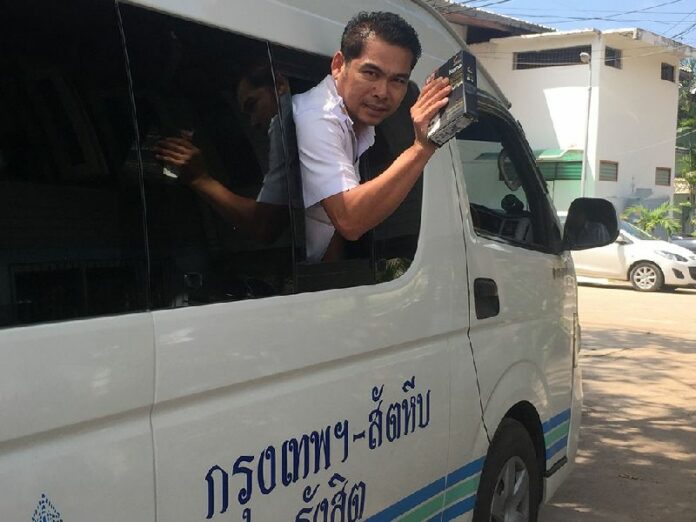
At the Sattahip Police Station, Prachop Tekrathok recreates today a dramatic scene caught on video allegedly showing him leaning out of a speeding van and pointing a gun. Except in his version, it was this cardboard box.

BANGKOK — A public van driver insisted today he was pointing a small box at another motorist – not a gun – in a video widely seen since it was uploaded yesterday.

Prachop Tekrathok, 40, told police today he was the man seen in the “armed van driver” video uploaded to Facebook, but denied having a firearm in the vehicle. A colleague also in the van threatened today to file a libel suit against whoever uploaded the video.

In the clip posted by Facebook user “Kittipol Na Ubon,” the driver of a Bangkok-Sattahip van opens his window and leans out, appearing to point a gun at the person filming. The scene is quite dark, however.

The video was later widely shared and criticized, with many bloggers reposting it with a similar description.

But Prachop said he was not carrying a gun. He said the incident took place Tuesday evening on a road north of Bangkok in Pathum Thani province. Prachop said he wasn’t actually driving at the time, but seated behind another colleague behind the wheel, Somkuan Worasith.

\

Someone on the internet posted this screenshot of the video and added a helpful pink identifier.

Prachop admitted he was steamed at the other driver, but said viewers seeing a gun are mistaken.

“That car cut the lane so fast my head banged the fire extinguisher in the van,” Prachop said today at Sattahip Police Station. “And the car tried to cut us off again, so I was angry! And when the car was close, I picked up a brake-lining box and rolled down the window. I wanted to threaten the other car that I would throw it at them if they did it again.”

Somkuan, 42, who was driving, said his livelihood’s been damaged by the impression created by the video.

“I suffered damages. [The Department of Land] Transport summoned me for an investigation, so I have to stop driving … if they don’t let me drive anymore, what are my wife and children going to say?” he said.

Somkuan said he he’s collecing “all the evidence” to file libel charges against “people who posted and shared the video.”

Police Col. Methawit Praditpol, commander of the Sattahip Police Station, said officers found no firearms in searches of the van and both men’s homes.

Methawit said police would tighten measures to discourage inappropriate behavior by van drivers, such as those who actually do carry firearms, use drugs and “drive impolitely.”

He did not say whether Prachop would face any legal action for threatening another motorist with a box.

Advertisement

Islamic State Hacker Arrested in Malaysia, Police Say

Abu Bakr al-Baghdadi first appeared on video in this May 2014 sermon in Mosul, Iraq. Photo: EPA

KUALA LUMPUR, Malaysia — A 20-year-old foreign student who allegedly hacked into U.S. servers and passed information to Islamic State militants has been arrested in Malaysia, police said Friday.

The suspect, who is awaiting extradition to the United States, was arrested last month on the outskirts of Kuala Lumpur, police chief Inspector General Khalid Abu Bakar said in a statement.

The suspect allegedly hacked into several U.S. computer servers to gather information about American security forces and passed it on to a ranking Islamic State leader in Syria, Khalid said.

The suspect is a native of Kosovo who came to Malaysia in August 2014 to study computer science and forensic computing, another police source said.

The U.S. Federal Bureau of Investigation tipped off Malaysian authorities about the suspect's illicit activities, according to the police source, who asked not to be named because he is not authorized to speak to the media about the case.

A U.S. Justice Department statement identified the suspect as Ardit Ferizi.

Malaysian police arrested the suspect based on a provisional U.S. arrest warrant, the statement said.

The suspect was charged with providing material support to Islamic State and computer hacking related to the theft and distribution of U.S. military and federal employee personal information, it said.

If convicted the defendant could face up to 35 years in prison, the statement added.

"Ferizi, also known by his hacking moniker 'Th3Dir3ctorY,' is believed to be the leader of a Kosovar internet hacking group called Kosova Hacker's Security (KHS)," the statement said.

Ferizi allegedly hacked into the computer system of a company located in the United States and stole "personal identifiable information" of thousands of individuals.

He then provided that information to Islamic State to be used against those employees, the statement said.

U.S. Assistant Attorney General for National Security John Carlin described the case as "a first of its kind."

"With these charges, we seek to hold Ferizi accountable for his theft of this information and his role in [Islamic State's] targeting of U.S. government employees," he said. 

"This arrest demonstrates our resolve to confront and disrupt [Islamic State's] efforts to target Americans, in whatever form and wherever they occur," he added.

Story: DPA

Advertisement

One-Year Reprieve Sought for Saphan Lek Market

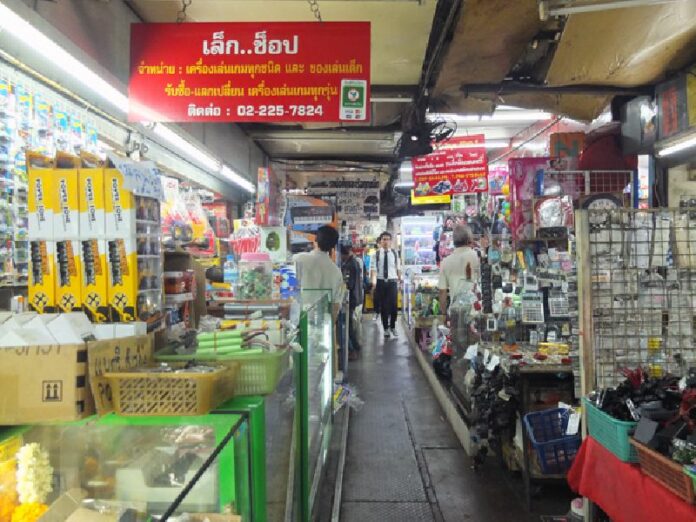
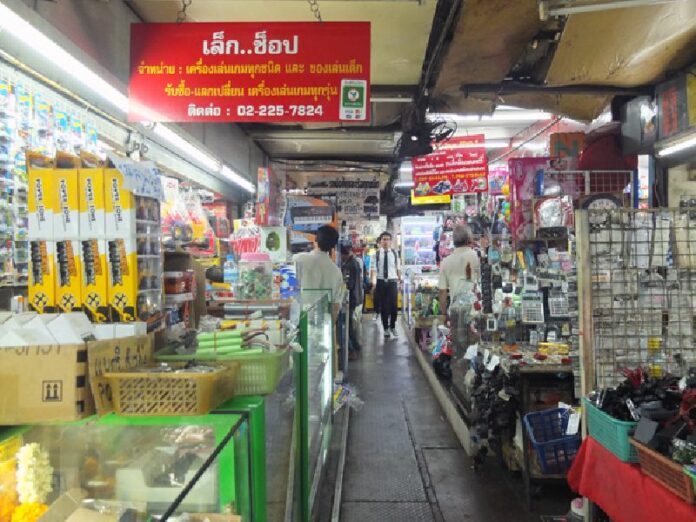
All range of electronic devices can be found at Saphan Lek. Several vendors said, had they known they would be kicked out, they would have planned to clear their inventory.

BANGKOK — A member of the Human Rights Commission today urged Bangkok Gov. Sukhumbhand Paribatra to grant one year for Saphan Lek vendors to relocate and called upon the Minister of Interior to intervene before demolition of the historic market begins Tuesday.

Officials and nearly 100 vendors joined a public discussion at the National Human Rights Commision office, where commissioner Niran Pitakwatchara asked city hall to give the vendors one year to clear the historic market, and an advisor to the governor refuted accusations a developer influenced the city’s sudden bid to shut it down.

“Bangkok has said that due to inefficient law enforcement, the demolition has been postponed for more than 10 years since a 1997 cabinet resolution ordered them to move,” Niran said. “Then there should not be any further damage to give them one more year to prepare.

Otherwise, he said, the city may be accused of acting on behalf of a vested interest.


City Hall Denies Colluding With Developer to Demolish Saphan Lek


The Bangkok Metropolitan Administration announced its campaign to reclaim public space from the famed Saphan Lek market on Sept. 28, stating the market was built over a canal where it has obstructed its flow and encroached on public land. But the vendors, some of whom also live there, complained the process was unjust.

They asked why, after 30 years, the city suddenly gave them 15 days to leave the Chinatown electronics market. They also alleged possible collusion between a land developer and top BMA officials.

Today’s panel was arranged after the Saphan Lek community filed a complaint Oct. 9 with the commission, saying city hall was infringing on their rights. The tenants also appealed Tuesday for help from the Ministry of Interior, asking it to shield them from the city’s order while a 60-day appeal process was under way.

Despite the 60-day appeal process, the BMA said its 15-day ultimatum was legal under a martial law issued in 1959. The demolition is set to begin Tuesday.

“If protection is granted after the demolition is already finished, nothing can be restored,” she said.

Maj. Gen. Wichai Sangprapai, an advisor to the governor, said the vendors had known this was coming for a long time.

“We have urged them to move out all year long – several times,” he said. “In 2004, we used to place the warnings at the market; we even publicized the plan on television.”

But the vendors said they were informed only three weeks ago. Chanya Surawutthinak said the sudden order came as a surprise with no concrete relocation plan.

A representative from the Ministry of Interior said a decision to intervene would be announced by Tuesday.

Commissioner Niran urged the ministry to hasten its consideration to avoid confrontation.

In papers given to the press today, Saphan Lek vendors pleaded with the media to examine alleged links between Gov. Sukhumbhand and developer TCC Land, whose TCC Woeng Nakhon Kasem project saw it buy the land and buildings next to their stalls from his family.

Advisor Wichai again rejected there was any commercial pressure at work, saying the BMA truly intended to revive the canal for water management, transportation and recreation needs.

“Since the governor began his second term, there have been a lot of complaints about street stalls submitted by the people,” Wichai said. “Law enforcement has been weak for so long, but should we let it go on like this?”

Saphan Lek vendors today insisted they are willing to move so long as they are granted a year to prepare and receive help finding a new location.

\

From the age of Legos to Generation Gamer, Saphan Lek remains a popular destination for boys’ toys.


Related stories:

City Hall Denies Colluding With Developer to Demolish Saphan Lek

Vendors Revolt as BMA Moves to Demolish ‘Saphan Lek’


To reach us about this article or another matter, please contact us by e-mail at: [email protected].

Follow Khaosod English on and Twitter for news, politics and more from Thailand.

\

Advertisement

One-Year Reprieve Sought for Saphan Lek Market

All range of electronic devices can be found at Saphan Lek. Several vendors said, had they known they would be kicked out, they would have planned to clear their inventory.

BANGKOK — A member of the Human Rights Commission today urged Bangkok Gov. Sukhumbhand Paribatra to grant one year for Saphan Lek vendors to relocate and called upon the Minister of Interior to intervene before demolition of the historic market begins Tuesday.

Officials and nearly 100 vendors joined a public discussion at the National Human Rights Commision office, where commissioner Niran Pitakwatchara asked city hall to give the vendors one year to clear the historic market, and an advisor to the governor refuted accusations a developer influenced the city’s sudden bid to shut it down.

“Bangkok has said that due to inefficient law enforcement, the demolition has been postponed for more than 10 years since a 1997 cabinet resolution ordered them to move,” Niran said. “Then there should not be any further damage to give them one more year to prepare.

Otherwise, he said, the city may be accused of acting on behalf of a vested interest.


City Hall Denies Colluding With Developer to Demolish Saphan Lek


The Bangkok Metropolitan Administration announced its campaign to reclaim public space from the famed Saphan Lek market on Sept. 28, stating the market was built over a canal where it has obstructed its flow and encroached on public land. But the vendors, some of whom also live there, complained the process was unjust.

They asked why, after 30 years, the city suddenly gave them 15 days to leave the Chinatown electronics market. They also alleged possible collusion between a land developer and top BMA officials.

Today’s panel was arranged after the Saphan Lek community filed a complaint Oct. 9 with the commission, saying city hall was infringing on their rights. The tenants also appealed Tuesday for help from the Ministry of Interior, asking it to shield them from the city’s order while a 60-day appeal process was under way.

Despite the 60-day appeal process, the BMA said its 15-day ultimatum was legal under a martial law issued in 1959. The demolition is set to begin Tuesday.

“If protection is granted after the demolition is already finished, nothing can be restored,” she said.

Maj. Gen. Wichai Sangprapai, an advisor to the governor, said the vendors had known this was coming for a long time.

“We have urged them to move out all year long – several times,” he said. “In 2004, we used to place the warnings at the market; we even publicized the plan on television.”

But the vendors said they were informed only three weeks ago. Chanya Surawutthinak said the sudden order came as a surprise with no concrete relocation plan.

A representative from the Ministry of Interior said a decision to intervene would be announced by Tuesday.

Commissioner Niran urged the ministry to hasten its consideration to avoid confrontation.

In papers given to the press today, Saphan Lek vendors pleaded with the media to examine alleged links between Gov. Sukhumbhand and developer TCC Land, whose TCC Woeng Nakhon Kasem project saw it buy the land and buildings next to their stalls from his family.

Advisor Wichai again rejected there was any commercial pressure at work, saying the BMA truly intended to revive the canal for water management, transportation and recreation needs.

“Since the governor began his second term, there have been a lot of complaints about street stalls submitted by the people,” Wichai said. “Law enforcement has been weak for so long, but should we let it go on like this?”

Saphan Lek vendors today insisted they are willing to move so long as they are granted a year to prepare and receive help finding a new location.

\

From the age of Legos to Generation Gamer, Saphan Lek remains a popular destination for boys’ toys.


Related stories:

City Hall Denies Colluding With Developer to Demolish Saphan Lek

Vendors Revolt as BMA Moves to Demolish ‘Saphan Lek’


Advertisement

No Safety Net for Unregulated Ziplines

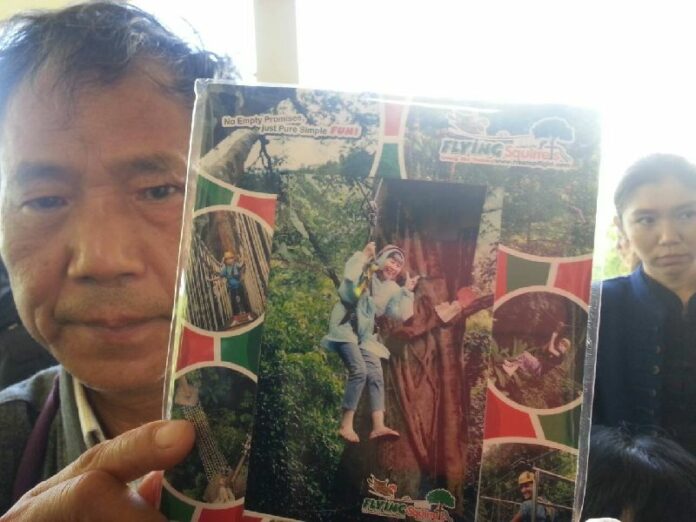
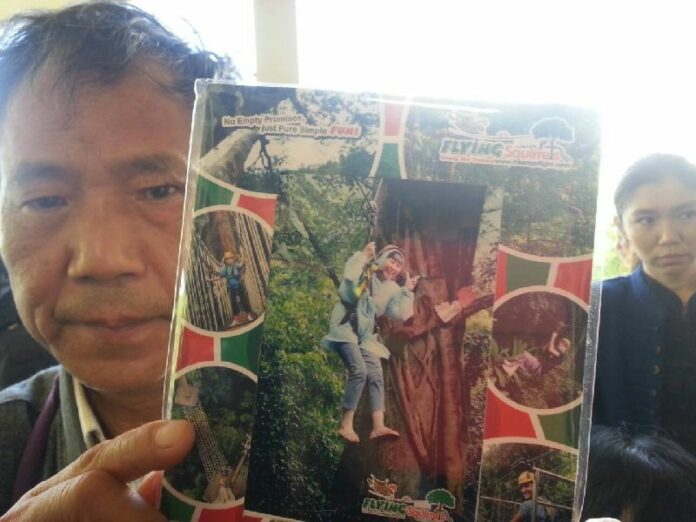
A relative of Wang Qi holds a photograph Thursday showing her enjoying the Flying Squirrels zipline attraction in Chiang Mai province just before her death this past Sunday. Officials there have since acknowledged the popular attractions are unregulated.

BANGKOK — Despite their proliferation in recent years, there is little oversight and no regulation of zipline attractions in Chiang Mai province, officials admit, and nearly all of such operations are suspected of encroaching on public land.

After a second tourist in three months died Sunday on one of the increasingly popular attractions, Khaosod English found local authorities there lack clear measures regulating the zipline industry, and not one operator contacted could confirm possessing relevant licenses.

Among officials who admit to these flaws is Chiang Mai Gov. Pawin Chamniprasart, who announced Wednesday he had called a meeting of zipline operators and related authorities to come up with safety standards for the business.

There are currently no specific safety requirements for zipline operations, Pawin said.

“Right now, we don’t have a central standard in terms of structural engineering,” he said in regards to their construction. “Therefore, operators must rely on basic engineering standards for the time being.”

The statement was echoed by Montri Piyakul, head of Chiang Mai’s tourism and sports department. “There is no central standard for ziplines,” he told reporters Wednesday.

Zipline and other jungle-themed adventure activities have grown in popularity, especially among foreign tourists, in recent years. There are now at least 14 zipline stations in Chiang Mai, according to local officials.

However, the boom in ziplines is also stalked by occasional reports of death and injury, which authorities have determined were caused by negligence or shoddy safety standards. 

On June 29, a Chinese tourist fell to her death at Skyline Adventure Zipline company. Police said  her safety lock malfunctioned, citing witnesses’ testimony, though the company disputed the account.

Two weeks later – on July 14 – a Chinese woman and American woman collided head-on while ziplining at what police described as a popular outfit in Mae Kam Phong, an area in Chiang Mai’s Huai Kaew district. The name of the company was not released by authorities. 

The latest fatal incident took place Sunday in the Mae Rim district at Flying Squirrels company, where staff reportedly placed two tourists on a single zipline ride, departing from the customary practice of one tourist per ride. 

\

A reporter films one of the ziplines Tuesday at the Flying Squirrels attraction in Chiang Mai's Mae Rim district.

Police said the weight load caused the device to accelerate to a speed so fast that one of the tourists, 32-year-old Wang Qi of China, broke her neck and died. The two staff responsible for the zipline ride have been charged with negligence resulting in death. The company’s owners have not been charged, but have said they will pay compensation to the family.

Zigging and Zagging

Between Thursday and today, Khaosod English reached out to nine of the 14 operators for which contact information could be found.

One of the biggest and first companies to operate a zipline service, Flight of the Gibbons, said it would only reply to questions by email and then did not respond. Flying Squirrels, where Wang Qi died of a broken neck Sunday, said they possessed unspecified licenses and would call back with details, but did not. Someone who answered the phone at Skyline Adventure and identified herself as Kitsinee said they were in the process of obtaining licenses for the business. 

Someone at Eagle Track initially said the company possessed all relevant licenses. Asked to respond to Gov. Pawin’s claim that no standards or regulations existed, he said that he was not sure and referred a reporter to director Nawapol Kantawanich, who did not return calls.

In addition to Flight of the Gibbons, calls were not returned from Zipline Chiang Mai, Dragon Flight and Jungle Flight. No one answered the phone at Sky Track.

One outfit, part of the state-owned Chiang Mai Zoo, said it possessed a license for “adventure activities” but would not provide details.

“We have two types of licenses. The first type is as a tourism business, the other is for adventure activities,” said a man answering the phone this afternoon at Tarzan Extreme, who would only identify himself as Kai. “We got these licenses from the [sub-district administrative organization.]”

He declined to state whether his company is seeking licenses under the new regulations.

“We are working to implement central safety measures, and there may be changes to licenses and registration,” he said. “What [licenses] we have may be changed; we may have to register with a new agency. It’s still unclear.”

As for safety checks, Kai said local officials and tourist police conduct site visits, and his company conducts its own safety audits.

It is unclear how many, if any, are specially trained in zipline ride safety.

Unregulated Thrills

Other than a lack of safety measures for zipline operations, Thailand also lacked specific laws regulating amusement parks and theme rides until April, when the Cabinet finally acted on 15-year-old legislation to pass the Ministerial Regulation on Amusement Equipment of 2015.

The regulation granted a one-year grace period for all establishments to comply with its array of requirements. Gov. Pawin said all zipline operators in Chiang Mai are required to refurbish their safety devices in accordance with the new rules by April 24, 2016.

A provincial engineering official with direct knowledge of the inspections conducted of zipline stations said there were virtually no safety regulations for such companies in Chiang Mai prior to April 2015.

“In the past, there was none. In the past, the state couldn’t do anything,” said the official, who is entrusted to enforce the newly enacted law but not authorized to speak to the media. “They have been playing [ziplines] for some years now, but there was no safety regulation.”

The official also confirmed there are no existing regulations pertaining to zipline safety, but said authorities have been instructed by Pawin to draft such measures “as soon as possible.” 

Unclear boundaries

As zipline operations have sprung up throughout the forested northern mountains, there are also concerns they are encroaching on public land.

Since these zipline stations are located deep in the forest, Gov. Pawin instructed operators to register their GPS coordinates to local authorities, so that they can inspect whether any of them encroach into national park land or conserved forest areas. 

Chanon Kamthong, head of Chiang Mai’s Office of Natural Resources and Environment, said his agency did a “rough check” and found 13 of the 14 zipline operations are suspected of such encroachment: 11 into protected forest and two into parks. He declined to identify which companies.

“I just learned about this issue yesterday. I have just moved to this post,” Chanon said on Thursday. “After the criminal case came up, we instructed the officials to inspect this matter. We did a cursory check.”

Asked how the agency plans to determine whether the companies are squatting on public land illegally, Chanon said they would not know unless the companies came to register their GPS locations with officials.

“If they don’t come to seek permission, we won’t be able to know, because we can’t go and inspect on our own,” Chanon said, citing agency policy.

Thai law bans building structures in or utilizing plots of national park and protected forests without a permit.

But Chanon said his agency has yet to come up with clear guidelines and regulations as to which type of ziplines should be allowed in which type of forest.

During a visit yesterday to the site at Flying Squirrels where the Chinese tourist died on Sunday, Chinese Consul General Chao Xiaoliang said the incident has caused concern for some prospective tourists from the People’s Republic.

“The news was shared widely and quickly among Chinese tourists, especially on social media,” Chao said. “It has caused some Chinese tourists who like and want to travel to Chiang Mai to be worried.” 

\

Chinese Consul General Chao Xiaoliang (left) at Oct. 15 news conference in Chiang Mai. 

Chiang Mai is particularly popular among Chinese visitors since the locale was featured in a blockbuster Chinese movie, 2012’s “Lost in Thailand.”

According to Chao, 12 Chinese tourists have died during the past year in Chiang Mai alone. He also urged Thai authorities to tighten safety measures to protect the lives of Chinese tourists who visit the province and nation.

“I want to see measures that would prevent further losses,” the consul said at yesterday’s news conference.


To reach us about this article or another matter, please contact us by e-mail at: [email protected].

Follow Khaosod English on and Twitter for news, politics and more from Thailand.

\

Advertisement

No Safety Net for Unregulated Ziplines

A relative of Wang Qi holds a photograph Thursday showing her enjoying the Flying Squirrels zipline attraction in Chiang Mai province just before her death this past Sunday. Officials there have since acknowledged the popular attractions are unregulated.

BANGKOK — Despite their proliferation in recent years, there is little oversight and no regulation of zipline attractions in Chiang Mai province, officials admit, and nearly all of such operations are suspected of encroaching on public land.

After a second tourist in three months died Sunday on one of the increasingly popular attractions, Khaosod English found local authorities there lack clear measures regulating the zipline industry, and not one operator contacted could confirm possessing relevant licenses.

Among officials who admit to these flaws is Chiang Mai Gov. Pawin Chamniprasart, who announced Wednesday he had called a meeting of zipline operators and related authorities to come up with safety standards for the business.

There are currently no specific safety requirements for zipline operations, Pawin said.

“Right now, we don’t have a central standard in terms of structural engineering,” he said in regards to their construction. “Therefore, operators must rely on basic engineering standards for the time being.”

The statement was echoed by Montri Piyakul, head of Chiang Mai’s tourism and sports department. “There is no central standard for ziplines,” he told reporters Wednesday.

Zipline and other jungle-themed adventure activities have grown in popularity, especially among foreign tourists, in recent years. There are now at least 14 zipline stations in Chiang Mai, according to local officials.

However, the boom in ziplines is also stalked by occasional reports of death and injury, which authorities have determined were caused by negligence or shoddy safety standards. 

On June 29, a Chinese tourist fell to her death at Skyline Adventure Zipline company. Police said  her safety lock malfunctioned, citing witnesses’ testimony, though the company disputed the account.

Two weeks later – on July 14 – a Chinese woman and American woman collided head-on while ziplining at what police described as a popular outfit in Mae Kam Phong, an area in Chiang Mai’s Huai Kaew district. The name of the company was not released by authorities. 

The latest fatal incident took place Sunday in the Mae Rim district at Flying Squirrels company, where staff reportedly placed two tourists on a single zipline ride, departing from the customary practice of one tourist per ride. 

\

A reporter films one of the ziplines Tuesday at the Flying Squirrels attraction in Chiang Mai’s Mae Rim district.

Police said the weight load caused the device to accelerate to a speed so fast that one of the tourists, 32-year-old Wang Qi of China, broke her neck and died. The two staff responsible for the zipline ride have been charged with negligence resulting in death. The company’s owners have not been charged, but have said they will pay compensation to the family.

Zigging and Zagging

Between Thursday and today, Khaosod English reached out to nine of the 14 operators for which contact information could be found.

One of the biggest and first companies to operate a zipline service, Flight of the Gibbons, said it would only reply to questions by email and then did not respond. Flying Squirrels, where Wang Qi died of a broken neck Sunday, said they possessed unspecified licenses and would call back with details, but did not. Someone who answered the phone at Skyline Adventure and identified herself as Kitsinee said they were in the process of obtaining licenses for the business. 

Someone at Eagle Track initially said the company possessed all relevant licenses. Asked to respond to Gov. Pawin’s claim that no standards or regulations existed, he said that he was not sure and referred a reporter to director Nawapol Kantawanich, who did not return calls.

In addition to Flight of the Gibbons, calls were not returned from Zipline Chiang Mai, Dragon Flight and Jungle Flight. No one answered the phone at Sky Track.

One outfit, part of the state-owned Chiang Mai Zoo, said it possessed a license for “adventure activities” but would not provide details.

“We have two types of licenses. The first type is as a tourism business, the other is for adventure activities,” said a man answering the phone this afternoon at Tarzan Extreme, who would only identify himself as Kai. “We got these licenses from the [sub-district administrative organization.]”

He declined to state whether his company is seeking licenses under the new regulations.

“We are working to implement central safety measures, and there may be changes to licenses and registration,” he said. “What [licenses] we have may be changed; we may have to register with a new agency. It’s still unclear.”

As for safety checks, Kai said local officials and tourist police conduct site visits, and his company conducts its own safety audits.

It is unclear how many, if any, are specially trained in zipline ride safety.

Unregulated Thrills

Other than a lack of safety measures for zipline operations, Thailand also lacked specific laws regulating amusement parks and theme rides until April, when the Cabinet finally acted on 15-year-old legislation to pass the Ministerial Regulation on Amusement Equipment of 2015.

The regulation granted a one-year grace period for all establishments to comply with its array of requirements. Gov. Pawin said all zipline operators in Chiang Mai are required to refurbish their safety devices in accordance with the new rules by April 24, 2016.

A provincial engineering official with direct knowledge of the inspections conducted of zipline stations said there were virtually no safety regulations for such companies in Chiang Mai prior to April 2015.

“In the past, there was none. In the past, the state couldn’t do anything,” said the official, who is entrusted to enforce the newly enacted law but not authorized to speak to the media. “They have been playing [ziplines] for some years now, but there was no safety regulation.”

The official also confirmed there are no existing regulations pertaining to zipline safety, but said authorities have been instructed by Pawin to draft such measures “as soon as possible.” 

Unclear boundaries

As zipline operations have sprung up throughout the forested northern mountains, there are also concerns they are encroaching on public land.

Since these zipline stations are located deep in the forest, Gov. Pawin instructed operators to register their GPS coordinates to local authorities, so that they can inspect whether any of them encroach into national park land or conserved forest areas. 

Chanon Kamthong, head of Chiang Mai’s Office of Natural Resources and Environment, said his agency did a “rough check” and found 13 of the 14 zipline operations are suspected of such encroachment: 11 into protected forest and two into parks. He declined to identify which companies.

“I just learned about this issue yesterday. I have just moved to this post,” Chanon said on Thursday. “After the criminal case came up, we instructed the officials to inspect this matter. We did a cursory check.”

Asked how the agency plans to determine whether the companies are squatting on public land illegally, Chanon said they would not know unless the companies came to register their GPS locations with officials.

“If they don’t come to seek permission, we won’t be able to know, because we can’t go and inspect on our own,” Chanon said, citing agency policy.

Thai law bans building structures in or utilizing plots of national park and protected forests without a permit.

But Chanon said his agency has yet to come up with clear guidelines and regulations as to which type of ziplines should be allowed in which type of forest.

During a visit yesterday to the site at Flying Squirrels where the Chinese tourist died on Sunday, Chinese Consul General Chao Xiaoliang said the incident has caused concern for some prospective tourists from the People’s Republic.

“The news was shared widely and quickly among Chinese tourists, especially on social media,” Chao said. “It has caused some Chinese tourists who like and want to travel to Chiang Mai to be worried.” 

\

Chinese Consul General Chao Xiaoliang (left) at Oct. 15 news conference in Chiang Mai. 

Chiang Mai is particularly popular among Chinese visitors since the locale was featured in a blockbuster Chinese movie, 2012’s “Lost in Thailand.”

According to Chao, 12 Chinese tourists have died during the past year in Chiang Mai alone. He also urged Thai authorities to tighten safety measures to protect the lives of Chinese tourists who visit the province and nation.

“I want to see measures that would prevent further losses,” the consul said at yesterday’s news conference.


To reach us about this article or another matter, please contact us by e-mail at: [email protected].

Follow Khaosod English on and Twitter for news, politics and more from Thailand.

\

Advertisement

Muslim Candidates, Electorate Shut Out of Myanmar Election

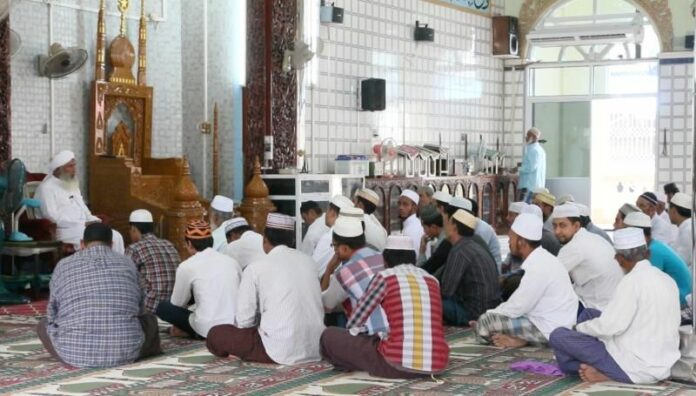
A group of Burmese Muslims pray in a mosque in Mandalay. Photo: Myanmar Now

YANGON – Myanmar will go to the polls Nov. 8 in what has been billed as the first free and fair parliamentary election in 25 years, yet the marginalization of the Muslim community has left local and international observers concerned about how democratic the vote will be.

Of the more than 6,000 candidates running in the elections, the overwhelming majority of them are Buddhist, and only 28 are Muslim, representing just 0.5 percent of candidates, according to the final list of candidates released by the Union Election Commission.

Muslims make up about 5 percent of the country’s predominantly Buddhist population.

The commission has rejected more than 100 would-be candidates, mostly Muslims, stating their parents were not recognised as citizens yet at the time of the candidates’ births, meaning their candidacy would be in violation of the Elections Law.

The decision has raised concerns among rights groups and observers, and regional lawmakers warned it could “undermine the credibility of the contest.”

“In any other country the rejection of an entire class of candidates would render the contest itself undemocratic,” Charles Santiago, a member of parliament from Malaysia and chairperson of the ASEAN Parliamentarians for Human Rights said in a statement in September.

Religious tensions are running high in Myanmar ahead of the election, largely stoked by the radical Buddhist group Ma Ba Tha, which has emerged as a powerful force.

“We are all in a helpless state,” said Kyaw Min, a Muslim politician and chairman of Democracy and Human Rights Party. “The decisions are arbitrarily made along racial and religious lines.”

His party submitted applications for 18 candidates mainly for constituencies in Rakhine state in western Myanmar which has a sizable population of stateless Rohingya Muslims, but only three were approved as candidates.

In total, election commission figures show that of 6,074 approved candidates in the elections there are 5,130 Buddhists, 903 Christians and 28 Muslims.

Not only are there very few Muslim candidates running in the elections, but most are representing little-known political parties, leaving many with slim chances of winning any seats.

“There is strong likelihood that there will be no Muslim legislator in the parliament,” said Myo Thant, a Muslim politician who has decided not to run in the poll which he said is being held under the influence of nationalist monks.

“Everyone is pandering to the wish of the Ma Ba Tha,” he said.

 

Major Parties Exclude Muslims

In an apparent move to appease Ma Ba Tha,  the main political parties have excluded Muslims as  candidates.

Some Ma Ba Tha monks have publicly condemned the popular National League for Democracy party, or NLD, led by Aung San Suu Kyi as a “pro-Islam” party which Buddhists should not vote for.

Perhaps in response to the group’s swelling influence, neither the NLD or the ruling Union Solidarity and Development Party have fielded any Muslim candidates.

The NLD’s leadership made the decision to exclude Muslims from its candidate list to avoid criticism, said, NLD spokesman Win Htein.

“Our NLD members who are Muslims are very much understanding of this situation,” he said.

Apart from two Muslim candidates representing the National Unity Party, the party of the former military dictator Ne Win, almost all Muslim candidates are representing little known, Yangon-based Muslim political parties.

Kyaw Min said powerful parties are avoiding Muslims either out of fear that they will lose votes or with the deliberate intent to keep the Muslims out of formal political arena.

“The result is Muslims will lose their democratic right to represent their community. This will also discourage the patriotism of Muslims in this country,” he said.

His party is one of a handful that is fielding Muslim candidates outside Yangon, including the only Muslim candidate in the town of Maungdaw in northern Rakhine State.

Like many of his party’s would-be candidates, Kyaw Min himself was rejected by the election commission, despite him winning a seat in the 1990 elections, the results of which were ignored by the junta.


Muslims Disenfranchised

In Rakhine state, the authorities have revoked the “white cards” – temporary national identity cards – of hundreds of thousands of Rohingya Muslims, making them ineligible to vote.

These white cards enabled the embattled Muslim community there to vote in previous elections in 1990 and in 2010. They will now be disenfranchised, warned United Nations Secretary General Ban Ki-Moon.

“I am deeply disappointed by this effective disenfranchisement of the Rohingya and other minority communities,” the U.N. chief said late last month.

The Carter Center, which is observing the elections, released a statement Sept. 25 saying, “The disqualification of almost all Muslim candidates running in Rakhine state further limits representation possibilities for the Rohingya population, already largely disenfranchised by the cancellation of voting rights for former temporary citizenship card holders.”

The current union parliament is already dominated by Buddhists. There are only three Muslim legislators from USDP representing constituencies in the towns of Buthidaung and Maungdaw in northern Rakhine State.

Despite their small number, they have asked more questions than any other MPs according to Myanmar Now’s analysis of data of MPs’ questions in 11 out of 12 parliamentary sessions since the government took power in 2011.

Most were related to the citizenship and other rights issues regarding the Rohingya. Yet none of the three are not on the ballot for the upcoming elections.

While two have apparently left politics, Shwe Maung, who represents the town of Buthidaung in Rakhine State, quit the USDP and attempted to run as an independent candidate. He was disqualified for the same reason as other Muslim candidates.

“I wish I could say I was an exception. But the truth is that Rohingya, along with other Muslims in Myanmar, are totally alienated and excluded from participation in politics. And make no mistake: it is because of our ethnicity and religion,” Shwe Maung has said in a statement released by APHR last month.

Hla Toe, a Muslim who co-chairs the Kaman National Development Party, has little hope of winning a seat in Rakhine State. Of four Muslim candidates running in Rakhine State, two are from his party.

“We will try to win a seat in Yangon, but we don’t think we will win in Rakhine State where there is a lot of racial discrimination,” said Hla Toe, who himself is running for a lower house seat in Yangon’s Minglar Taungnyunt township.

Story: Swe Win

Related stories:

Activists Race to Push Myanmar’s Apathetic Electorate to Vote

Despite Record Numbers, Myanmar’s Women Candidates Face Hurdles


Myanmar Now is an independent news service providing free, accurate and unbiased news to the people of Myanmar in Burmese and English. It is supported by Thomson Reuters Foundation.

Advertisement

Hot News

LATEST NEWS

Bangkok
overcast clouds
27.2 ° C
27.2 °
25 °
83 %
3.2kmh
100 %
Sat
35 °
Sun
33 °
Mon
30 °
Tue
29 °
Wed
30 °