27.7 C
Bangkok
Saturday, July 25, 2026
Home Blog Page 2944

Pravit Rojanaphruk Joins Khaosod English

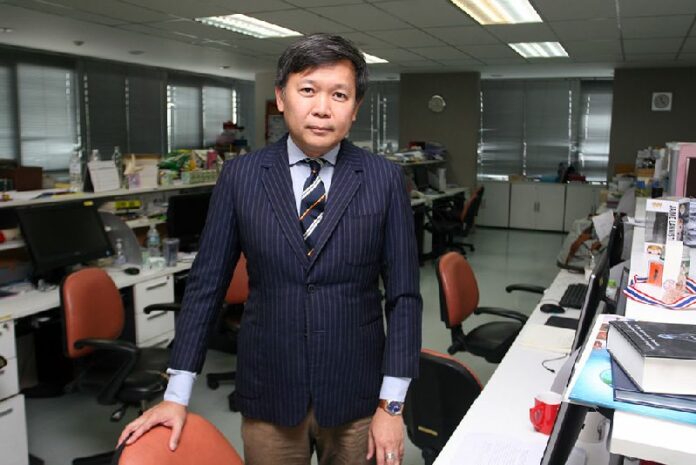
Pravit Rojanaphruk today in the Bangkok newsroom of Khaosod English.

BANGKOK — Veteran reporter Pravit Rojanaphruk will join Khaosod English as a senior staff writer beginning in November.

A committed journalist with a 23-year career, Pravit will bring to Khaosod English his experience and dedication to one of journalism’s most fundamental but challenging roles: providing independent scrutiny to hold those in power accountable.

“I am both honored and grateful to be invited to join Khaosod English, particularly at this very trying time for myself, the Thai mass media and society in general, which operate under the military junta,” Pravit said. “I look forward to being part of the burgeoning team at Khaosod English in providing space for critical English-language news and commentary that would significantly contribute to maintaining freedom of expression and public access to quality and critical news and commentary about Thailand and the region.”

Pravit is a published author whose work has received numerous awards. He has just been nominated by the Asia regional desk of Reporters Without Borders for its 2015 Press Freedom Award. Pravit was a Reuters Fellow and Chevening Scholar at Oxford.

Pravit resigned under pressure last month from The Nation, where he had worked since 1992, after being detained incommunicado by Thailand’s military government for his critical comments. He was accused of using social media to spread false information.

It was the second time he had been detained since the junta seized power. He was among journalists, activists and members of the ousted civilian government to be summoned for “attitude adjustment” sessions immediately following the May 2014 coup d’etat.

Pravit, 47, will cover government and politics for Khaosod English as well as write a regular column.

“There’s one word for what Pravit does: journalism. Thailand needs reporters like Pravit, committed to serving the public interest without fear or favor,” senior editor Todd Ruiz said. “His voice is needed now more than ever, and we’re delighted to have him on our team.”

Khaosod English is expanding its editorial operations and is also joined this month by Sasiwan Mokkhasen, a former Voice TV reporter, and Lisnaree Vichitsorasatra, who has worked at several media outlets including The Nation.

Launched in 2013, Khaosod English is owned by Khaosod, a daily newspaper with national circulation. Khaosod English is operated by an independent editorial team committed to serving its readers by upholding rigorous standards and stringent tenets of journalism.

Khaosod and Khaosod English are publications of Matichon Publishing Group, which also circulates Matichon Daily and Prachachat Business.


To reach us about this article or another matter, please contact us by e-mail at: [email protected].

Follow Khaosod English on Facebook and Twitter for news, politics and more from Thailand.

Follow @KhaosodEnglish

\

Advertisement

Lost Hunter Survives Australian Outback by Eating Ants

The Australian Outback. Photo: Annie Mullinsuk

SYDNEY — A hunter lost in the remote West Australian Outback for a week ate ants to survive, police revealed today.

Reginald Foggerdy, 62, set out on a hunting trip last week from a desert campsite near Laverton, 1,000 kilometres north-east of Perth, and his family raised the alarm when he failed to return the next day.

Police sent out trackers and launched an air search Thursday and found tracks on the weekend.

Police followed the tracks until they found Foggerdy leaning against a tree in extremely poor condition.

Superintendent Andy Greatwood told broadcaster ABC that Foggerdy was found 15 kilometers from his camp site.

"[He was] extremely dehydrated, a bit delusional, but he's received treatment, first aid, on the ground and it's fair to say he's now sitting up and talking, so it's looking very positive," he said.

"His last couple of days of survival were achieved by lying down under a tree and eating black ants, so that's the level of survival that Mr. Foggerdy has gone to. [He had] no water whatsoever for six days."

Greatwood praised his bush survival skills.

"He only had shorts and a T-shirt, a cap and thongs with him," he said. "He didn't have any equipment. It was just the circumstances of how he had gone out, taking off after a camel and then became disorientated and lost.

"Obviously it will emerge how it did that and how he achieved that, but it's fair to say it's been extremely hot, extremely remote and most people would not have survived, so he's done a fantastic job."

The Royal Flying Doctor Service flew Foggerdy to hospital in the gold mining town of Kalgoorlie.

Story: DPA


To reach us about this article or another matter, please contact us by e-mail at: [email protected].

Follow Khaosod English on Facebook and Twitter for news, politics and more from Thailand.

Follow @KhaosodEnglish

\

Advertisement

Police Chief Defends Fatal Pursuit that Sparked Phuket Riots

Vehicles burn outside the Thalang Police Station on Phuket early Sunday morning.

BANGKOK — The newly installed chief of the Royal Thai Police said officers on Phuket followed proper procedure in the hot pursuit that ended with two suspects dead and a riot Saturday night.

Two days after hundreds of protesters besieged the Thalang Police Station to demand justice, police Gen. Chakthip Chaijinda today said he thought officers acted appropriately in giving chase to the man and teen reportedly killed when a police truck slammed into their motorcycle.

“Police followed correct procedures, because the two suspects broke through the checkpoint,” he said, repeating the police’s account of what happened. “You have to ask yourself. If they were good people … why would they try to flee from police on their motorcycle?”


Phuket Police Promise Fair Probe Into Deaths After Mob Sieges Station


Police said the two male suspects – Therapong Srisamut, 17, and Pathomwat Panarak, 22 were later found to be carrying 40 tablets of methamphetamine and had run through a police checkpoint without stopping. The families of the deceased and supporters accused officers of using excessive force and planting the drugs on their bodies.

Angry crowds shut down the road around the Thalang station for hours Saturday night, and only departed after soldiers intervened and brokered talks between the parties on Sunday morning. Officials on the southern island promised to investigate the incident and prosecute anyone found to have violated the law.

Chakthip also told reporters that the area where the police checkpoint was set up was a well-known “narcotics area” and rejected accusations police placed drugs on the men after the crash.

“No one planted the evidence on them. There’s no such practice in my era,” said Chakthip, who just succeeded Somyot Pumpanmuang as the new police chief two weeks ago. “If there was, they [the officers] will be fired.”

Nonetheless police have launched an internal investigation into the incident and any police officers found guilty of wrongdoing will be punished, he added.

Several hours after word of the two men’s deaths spread Saturday, crowds gathered where the police unit involved in the deadly pursuit were stationed to demand an explanation.

Troubles flared up at dusk when gunshots were heard, and some of the protesters set police vehicles on fire and threw objects at the station. The protesters eventually agreed to disperse on the condition that a fair investigation be conducted.

The riot took place despite the strict ban on protests and public gatherings imposed by the ruling military junta since it staged a coup d’etat in May 2014. Chakthip said today that leaders of the Thalang Police Station rally would face legal action for violating the protest ban and inciting criminal activity.

“We will definitely prosecute the leaders of the protest,” he said. “I have information about these leaders. I know who they are. I’d like to warn other people to see this as a moral lesson. Don’t do this kind of thing [violent protest].”

Thaweesith Panarak, father of the 22-year-old man killed Saturday, said he was not behind the demonstration.

“I would like to deny that I led people to stage the rally and protest in front of Thalang Police Station, which later escalated into incidents,” he said. “Maybe my friends and people who don’t agree with the officers’ actions organized it on their own.”

He said his son had previous run-ins with police on drug-related charges before but expressed doubt his son was indeed carrying drugs on Saturday.

“Police claimed they found drugs in my son’s bag,” Thaweesith said. “My son has a record of being arrested on drug charges, but does it mean that he would not ever turn his life around and become a good person in society?”


Related stories:

Phuket Police Promise Fair Probe Into Deaths After Mob Sieges Station


To reach us about this article or another matter, please contact us by e-mail at: [email protected].

Follow Khaosod English on Facebook and Twitter for news, politics and more from Thailand.

Follow @KhaosodEnglish

\

Advertisement

Arrest Warrant Issued for ex-PM Thaksin for Failure to Appear

Former Prime Minister Thaksin Shinawatra addresses supporters from Siem Reap, Cambodia, on April 14, 2012. Photo: Reuters / Samrang Pring

BANGKOK — A Bangkok court today issued an arrest warrant for fugitive former Prime Minister Thaksin Shinawatra after he failed to turn up for a defamation case filed against him by the army.

The ruling would appear to mean little as Thaksin lives abroad anyway to avoid a jail sentence handed down in 2008 for graft, but it is another setback for the former telecom tycoon with some seeing it as the latest attempt to ensure he never returns to power.

Three governments backed by Thaksin have been forced to step down by the courts or military since 2006.

Thaksin is accused of defaming the military during interviews given to a South Korean newspaper in May that were later posted on YouTube.

In rare comments to foreign media, Thaksin accused the military of being part of a conspiracy that overthrew Thaksin's sister, former prime minister Yingluck Shinawatra, in 2014, days before a bloodless military coup.

"The accused did not come to the meeting so a warrant was issued as the court saw he was not in the country even though an appointment was made for the first hearing," Maj. Gen. Sarayuth Klinmahom, director of the Office of the Judge-Advocate of the Royal Thai Army, told reporters.

Thaksin himself was ousted by the army in 2006. Since then, the country has been divided between his supporters and the Bangkok-based elite which sees him as a threat to the old royalist-military establishment.

For more than a decade, the country has seen at times violent street protests from both Thaksin supporters and their opponents.

Thaksin, whose parties have won every election since 2001, tapped into the changing aspirations of the working class.

But his popularity with Bangkok's middle class soon waned and he was accused of vote-buying and harboring republican sympathies, among other accusations, all of which he denies.

From his base in Dubai, Thaksin travels frequently to Africa and Asia where he has business interests.

Yingluck swept to power in 2011 on a wave of rural support but was ordered to step down after a court found her guilty of abusing power.

Story: Reuters / Amy Sawitta Lefevre and Panarat Thepgumpanat, additional reporting Aukkarapon Niyomyat


To reach us about this article or another matter, please contact us by e-mail at: [email protected].

Follow Khaosod English on Facebook and Twitter for news, politics and more from Thailand.

Follow @KhaosodEnglish

\

Advertisement

Turkey Sees Hand of Islamic State in Bombing

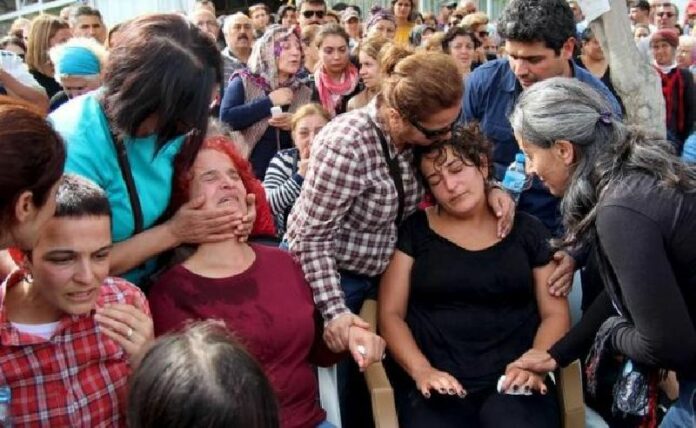
Family members of Korkmaz Tedik, a victim of Saturday's bomb blasts, mourn over his coffin Sunday during a funeral ceremony in Ankara, Turkey. Photo: Reuters / Tumay Berkin

ANKARA, Turkey — Turkey is targeting Islamic State in investigations of a double suicide bombing in Ankara that killed up to 128 people, officials said on Sunday, while opponents of President Tayyip Erdogan blamed him for the worst such attack in Turkish history.

Government officials made clear that despite alarm over the attack on a rally of pro-Kurdish activists and civic groups, there would be no postponement of November polls Erdogan hopes can restore an overall majority for the AK Party he founded.

Thousands of people gathered near the scene of the attack at Ankara's main railway station, many accusing Erdogan of stirring nationalist sentiment by his pursuit of a military campaign against Kurdish militants, a charge Ankara vehemently rejects.

"Murderer Erdogan", "murderer police", the crowd chanted in Sihhiye square, as riot police backed by water cannon vehicles blocked a main highway leading to the district where parliament and government buildings are located.

The pro-Kurdish Peoples' Democratic Party (HDP), a major presence at Saturday's march and holding seats in parliament, said police attacked its leaders and members as they tried to leave carnations at the scene. Some were hurt in the melee, it said in a statement.

The attacks have shocked a nation beset by resurgent conflict with the militant Kurdistan Workers Party (PKK) in its southeast and increasingly threatened by spillover from the war in neighboring Syria.

Islamic State fighters are encamped close to its borders, which mark also the frontier of the NATO alliance, and last week Russia launched air strikes in Syria, its planes violating Turkish air space on several occasions.


Suroc Bombing Similarities

Two senior security sources said initial signs suggested Islamic State was behind the Ankara attack, and that it bore striking similarity to a July suicide bombing in Suruc near the Syrian border, also blamed on the radical Islamists.

"All signs indicate that the attack may have been carried out by ISIL (Islamic State). We are completely focused on ISIL," one of the sources told Reuters.

CHP opposition leader Ahmet Kilicdaroglu, speaking after a meeting with Prime Minister Ahmet Davutoglu, said he had been told both suicide bombers were men.

State-run Anadolu Agency said police detained 43 suspects in operations targeting the Islamic State across Turkey from Sanliurfa in the southeast to Izmir in the west and Antalya on the south coast. It was not clear when they were held.

The Haberturk newspaper reported police sources as saying the type of explosive and the choice of target pointed to a group within Islamic State known as the 'Adiyaman ones', referring to Adiyaman province in southeast Turkey.

Turkey is vulnerable to infiltration by Islamic State, which holds swathes of Syrian land abutting Turkey where some two million refugees live. But the group, not normally reticent about its attacks, made no claim to the Suruc bombing and has made no reference to the Ankara attack in internet postings

The HDP, which expanded beyond its Kurdish voter base and drew in mainly left-wing opponents of Erdogan at June elections, said the death toll had risen to 128 and that it had identified all but eight of the bodies.

The prime minister's office said late on Saturday that 95 people had been killed.

The scale of the casualties eclipsed attacks blamed on al Qaeda in 2003 when two synagogues, the Istanbul HSBC Bank headquarters and the British consulate were hit, killing 62 people. Questions have been raised over whether a parliamentary election due on Nov. 1 can be safely held.

Prime Minister Davutoglu, exposing a mosaic of domestic political perils, said on Saturday Islamic State, Kurdish militant factions or far-leftist radicals could all have carried out Saturday's bombing.

Some direct their suspicions at militant nationalist groupings, with or without ties to the state, who are opposed to any concession to Kurdish demands for greater minority rights.

HDP leader Selahattin Demirtas said the government had blood on its hands, accusing it of failing to fully investigate the Suruc bombing or another attack on an HDP election rally in the southeastern city of Diyarbakir on the eve of the last parliamentary election in June.

But government officials made clear that, despite the security concerns, elections would go ahead.

"Postponing the elections as a result of the attack is not on the table at all, even as an option. The elections will be held on Nov. 1 as planned," one senior official told Reuters, speaking on condition of anonymity as the government observes three days of national mourning.

"Because of the rising risks, the security at election rallies, which is already being increased, will be raised further. The election will be held in a secure way."

Erdogan hopes the AK Party he founded will regain the overall majority it had held since 2002, but lost at June elections, partly because of the success of the HDP.

After meeting Davutoglu on Sunday, main opposition CHP leader Kemal Kilicdaroglu said he told the prime minister that the interior and justice ministers must resign over the bombings and that the HDP's Demirtas should not be sidelined.


War on PKK Continues

The bombs struck seconds apart as crowds gathered for a planned march to protest over the deaths of hundreds since the collapse in July of a ceasefire between security forces and the rebel PKK, which is deemed a terrorist group by the United States and the EU as well as Turkey. Some 40,000 have been killed since the insurgency began in 1984.

The government has shown no sign of stopping its war against the PKK, even after the militant group on Saturday ordered its fighters to halt attacks on Turkish soil. The government dismissed the declaration as a ploy.

Turkish warplanes struck PKK targets in northern Iraq and southeastern Turkey on Saturday and Sunday, and security sources said some 30-35 PKK guerrillas were killed in the northern Iraqi raids on Sunday alone.

"The PKK ceasefire means nothing for us. Operations will continue without a break," a senior security official said.

Newspaper headlines reflected a mixture of grief and anger.

"We are in mourning for peace," said the front-page headline in the secularist Cumhuriyet newspaper. "Scum Launch attack in Ankara," said the Haberturk newspaper. "The goal is to divide the nation," said the pro-government Star.

Story: Reuters / Orhan Coskun and Ece Toksabay


To reach us about this article or another matter, please contact us by e-mail at: [email protected].

Follow Khaosod English on Facebook and Twitter for news, politics and more from Thailand.

Follow @KhaosodEnglish

\

Advertisement

Pattaya Ladyboys Fined 100 Baht

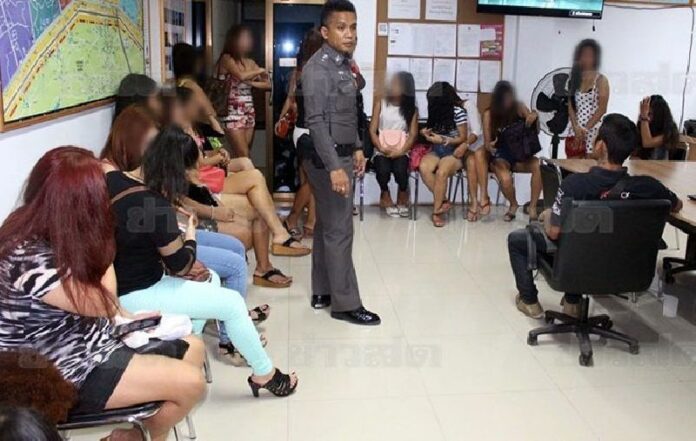
Women suspected of prostitution in 2015 at a Pattaya police station.

PATTAYA — Police arrested 50 suspected prostitutes including a number of transgender women along the beach in Pattaya early this morning in a campaign to clean up the city’s image.

The suspected prostitutes, between 18 to 45 years old, were taken to a district police station at 1:30am today and fined 100 baht for loitering in public and suspicion of engaging in prostitution.

Pattaya police Capt. Pallop Ringrod said ladyboys harass tourists and often are involved in robbery, especially snatching bags from foreign tourists.

Police reprimanded the group and then released them after criminal records were entered into the system.

Transexual women are routinely identified by police as “troublemakers” and have been targeted by several such crackdowns this year as part of a campaign to build a better image for the heavily touristed town, which is famous as one of the world’s top destinations for sex tourists.


To reach us about this article or another matter, please contact us by e-mail at: [email protected].

Follow Khaosod English on Facebook and Twitter for news, politics and more from Thailand.

Follow @KhaosodEnglish

\

Advertisement

Accused Detail Torture in Final Testimony of Koh Tao Murders Trial

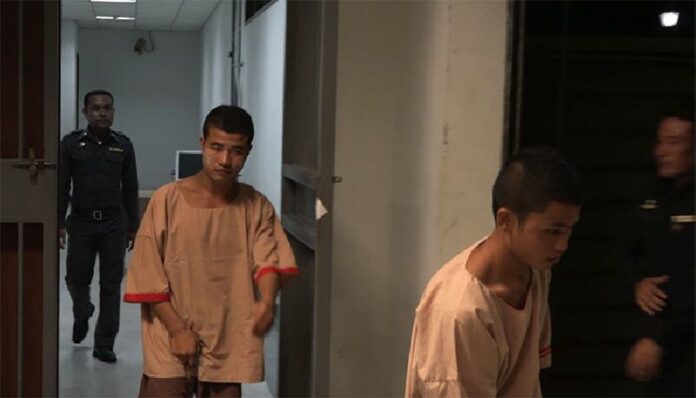
Wai Phyo, left, and Zaw Lin are led into the courtroom Sunday on Koh Samui.

SURAT THANI — The final testimony in the three-month trial of two men accused of double-murder on Koh Tao was heard yesterday with the accused taking the stand to detail crude torture they allege was used to obtain false confessions.

On Saturday and Sunday, Zaw Lin and Wai Phyo, both 22-year-old men from Myanmar, described to the court physical and mental abuse by police looking to extract confessions that they murdered two British tourists in November 2014; confessions they retracted soon after they were made.

“A police officer came back into the room and flicked my genitalia very hard. I tried to protect myself but he pulled my legs apart. They also took photographs of me naked,” Wai Phyo said in court, according to The Guardian. “They also kicked me in the back, punched me and slapped me; threatened to chop off my arms and legs, and throw my body into the sea to feed the fish. They also said they would take me into another room and electrocute me.”

The trial was held in a provincial courtroom on nearby Koh Samui. The defense has until Oct. 26 to submit its closing statements. A verdict is expected Dec. 24, and the men face execution if convicted.

Defendant Zaw Lin said he was blindfolded and beaten by police, who threatened to kill him if he denied guilt. He previously told the court officers suffocated him with a plastic bag over his head until he passed out on numerous occasions.

Police officials have flatly denied torture was used to obtain the confessions.

Wai Phyo admitted guilt to the charge of entering the country illegally as a migrant worker. He said police told him he had no rights, as he had no passport. He said interrogators told him Myanmar migrants who didn’t cooperate had been killed before. A senior police officer convinced him to confess, he said, by promising he would only spend a few years in jail.

He also said he was instructed how to perform in a crime “re-enactment” staged by police soon after their arrest.

Hannah Witheridge, 23, and David Miller, 24, were found brutally murdered Sept. 15, 2014, on Koh Tao, a resort island in the south of Thailand. Investigators determined Witheridge was raped.

The case built by police against the two men, who worked at a restaurant and bar near the crime scene, was based on forensic evidence collected from the scene and the security camera footage.

During the trial, the defense team sought to undermine the credibility of that evidence, but were told little of it was still available for independent re-testing.

The trial has received little coverage in Thai media. A number of foreign correspondents covering it said they had trouble hiring translators due to intimidation from unnamed locals.

Lead lawyer for the defense, Nakhon Chomphupat,told Khaosod English his clients are optimistic about the outcome and put their faith in the court’s justice.

“They are relieved now that at least they have done their best to fight,” he said.

Last month the defense got a boost from testimony by top forensic scientist Pornthip Rojanasunand, who testified that DNA traces found on a key piece of evidence, the alleged murder weapon, did not match either suspects.

Concerns have been raised by Myanmar officials and human rights observers the two might have been used as scapegoats.

News of the arrest of Wai and Zaw first came Oct. 3, 2014, with an announcement from newly installed police chief Somyot Pumpanmuang that they’d confessed to the crime.

Up to that point the investigation was criticized as incompetent and preoccupied with public perception.

Prior to their arrest, concerns were raised police would seek to blame the crime on migrant workers after investigators said as much at the outset. They then veered from assigning blame to a British friend of the deceased, Rohingya migrants and influential figures on the island before announcing Zaw Lin and Wai Phyo had confessed.

At the time police Gen. Somyot said his investigators performed “a perfect job.”


Related stories:

Koh Tao Murders: Defense Team Pleads for More Time 

Koh Tao Murders: DNA on Weapon ‘Does Not Match’ the Accused

Timeline of Koh Tao Murder Investigation 

Koh Tao Murders: More Forensic Evidence Available for Re-Test, Witness Reveals 

Koh Tao Trial Resumes, Court Shown Footage of Victims’ Final Night

Lack of Evidence, Local Media Coverage Adds to Mystery of Koh Tao Murder

Year in Prison Has Been 'Torture,' Says Koh Tao Suspect


News releases are submitted for consideration by third parties, and Khaosod English is not responsible for their content. To reach us, please contact by e-mail at: [email protected].

Follow Khaosod English on Facebook and Twitter for news, politics and more from Thailand.

Follow @KhaosodEnglish

\

Advertisement

Iraq Says Air Force Hit Islamic State Chief's Convoy

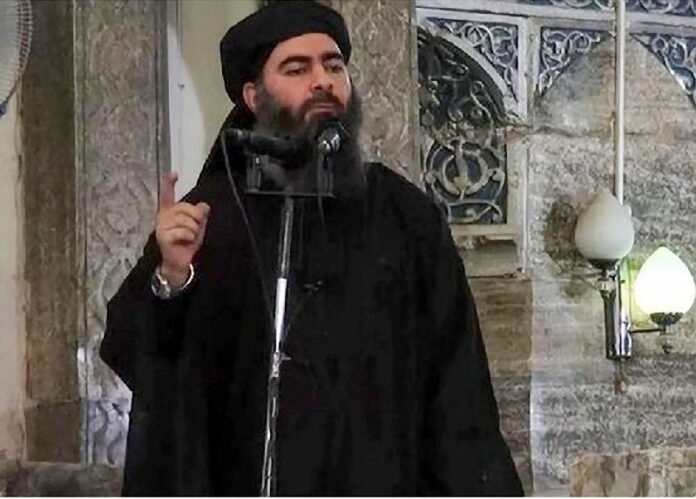
Islamic State leader Abu Bakr al-Baghdadi, shown here in a frame of a video released by the militant group

BAGHDAD (DPA) – The Iraqi army said Sunday that its air force had struck a convoy of Islamic State leader Abu Bakr al-Baghdadi in an area controlled by the extremist militia in western Iraq.

The bombing targeted al-Baghdadi while he was on his way to attend a meeting with other leading Islamic State militants near Karabla in the western province of Anbar close to the border with Syria, a military statement said

"The site of the meeting was also bombarded, resulting in the killing and injuring of many of the organization's leaders," the statement said, according to broadcaster al-Iraqiya TV. "The fate of criminal al-Baghdadi is still unknown."

The statement said that the bombing was based on "precise intelligence information."

A security official, speaking on condition of anonymity, told dpa that the attack was carried out on Sunday.

"The bombardment resulted in the killing of a large number of the organization's leaders. We are still checking reports about the fate of al-Baghdadi," the official said.

Islamic State supporters reacted with scepticism on social media.

"He [al-Baghdadi) is not like your leaders who are fond of driving in convoys," Abu Hajar tweeted on the Islamic State-affiliated website al-Furqan.

Another sympathizer wrote: "I try to remember the number of times that the death of the emir of believers, Abu Bakr al-Baghdadi, was announced. May God preserve him."  

Last year, al-Baghdadi declared the Islamic State a self-styled Islamic caliphate and proclaimed himself its ruler. 

In March, unconfirmed reports circulated that al-Baghdadi was seriously injured in a US-led airstrike in Iraq.

Two months later, Islamic State released an audio recording   attributed to al-Baghdadi, calling on Muslims to join his group in Iraq and Syria.

Advertisement

Phuket Police Promise Fair Probe Into Deaths After Mob Sieges Station

Vehicles burn outside the Thalang Police Station on Phuket early this morning.


PHUKET — Police today promised a swift investigation into the deaths of two young men allegedly killed during a police pursuit yesterday after an angry mob besieged a police station for 15 hours last night to demand justice for their deaths.

Seven police vehicles were torched last night at the Thalang Police Station where several hundred protesters hurled petrol bombs and stones over the deaths of 17-year-old Therapong Srisamut and Pathomwat Panarak, 22, who reportedly died earlier Saturday when a police pick-up truck crashed into a motorcycle they were attempting to flee upon.

Officers said they were later found to be carrying a number of methamphetamine tablets with them. Relatives of the dead, who led the crowd to the police station, accused the police of using excessive force.

Phuket police chief Pachara Boonyasit vowed there would be a fair trial for anyone held responsible, but his assurances were met with skepticism.

“You won’t find a suspect, because the dead were just normal villagers, not the son of police,” Preda Pangnet, a relative of one of the deceased, told Voice TV. “We want clarity. Now two children are dead. If they were your sons, how would you feel?”

The siege of the police station went late into the night. It was lifted at about 3:45am this morning when soldiers from the 41st Army Circle in Nakhon Si Thammarat intervened and pledged to broker fair talks.

Several hours later members of the army, police and residents met to discuss the incident. The police officers accused of killing the pair had been removed to another police station, Phuket Gov. Chamroen Tipayapongtada said.


To reach us about this article or another matter, please contact us by e-mail at: [email protected].

Follow Khaosod English on Facebook and Twitter for news, politics and more from Thailand.

Follow @KhaosodEnglish

\

Advertisement

Stranded in Thailand, Rohingya Trafficking Victims in Limbo

The hands of a Rohingya victim of trafficking are seen as he listens to questions during an interview with the Thomson Reuters Foundation at a temporary shelter in Hat Yai, Songkhla province on Sept. 22. Photo: Reuters / Athit Perawongmetha

SONGKHLA — The strapping 23-year-old Rohingya Muslim was matter of fact as he described being forced onto a boat in Myanmar for a tortuous two-month-long journey, beaten and kicked by traffickers as he watched scores die of starvation and thirst along the way.

He said he was abandoned in May in a jungle camp in Thailand's deep south near the Malaysian border, discovered and rescued a few hours later by Thai police and taken to a shelter tucked away amid tropical vegetation and rubber plantations.

But his calm demeanor cracked when he spoke about his wife and one-year-old daughter.

On many evenings in this compound of cement buildings that has become home to 66 male Rohingya trafficking victims from Myanmar and 19 from Bangladesh, the man cried, homesick.

Late last month, the shelter staff took pity on him, granting him a five-minute phone call to his home in Sittwe in western Myanmar's Rakhine state.

"I could hear my baby crying," he told the Thomson Reuters Foundation under the wary gaze of the shelter director, who monitored the interview he had reluctantly permitted with the condition that the man's identity was protected.

"I want to go home. I miss them," the Rohingya man added, falling silent and bending over as he crumpled in sadness.

Swept up by trafficking rings taking advantage of the tens of thousands of Rohingya Muslims fleeing violence and apartheid-like conditions in Myanmar, this man may never go back home.

The predominantly Buddhist country does not recognize the Rohingya as citizens and says any trafficking victims must pass nationality verification before being allowed back to Myanmar.

He is now among about 600 Rohingya stranded in limbo in Thai shelters and immigration detention centers, some suffering depression and other mental illnesses after their ordeals, with little access to mental health care.


Escape by Boat

Communal violence and clashes in 2012 in Rakhine state forced 140,000 Rohingya from their homes into squalid camps. Myanmar maintains the Rohingya are illegal immigrants from Bangladesh, and denies them citizenship, healthcare, education and other basic rights.

Since then, tens of thousands of Rohingya have fled, paying smugglers to take them in rickety boats in the hope of reaching Malaysia. Some said they were abducted by traffickers and forced onto boats. Migrants from Bangladesh, including some Rohingya, were also among the boat people.

Criminal gangs orchestrating the exodus diverted some migrants to secret camps near the Thai-Malaysia border, holding them for ransom and killing and torturing those whose families could not pay up. Others died of disease and neglect.

After the discovery in May of dozens of graves on the Thai-Malaysia border, smugglers abandoned thousands of migrants at sea to avoid being caught in the widening net of Thai and Malaysian investigators.

The Rohingya rescued from trafficking camps are now stuck in shelters – identified as "people of concern" by the United Nations' refugee agency (UNHCR) and granted temporary protection in Thailand.

They are separated from their families and face an uncertain future.

"When you combine those emotions with the memories of the physical trauma being on a boat for several weeks or having been confined in brutal smugglers camps, then the trauma is compounded," said Jeff Labovitz, head of the International Organization for Migration mission in Thailand.

"In some cases the asylum seekers and migrants endured starvation, beatings, extortion, and rape."

UNHCR says the common mental health issues among Rohingya refugees in Malaysia are "mild to moderate levels of stress, anxiety and depression", due to factors including trauma they faced at home as well as the daily stress of living in a country where they cannot legally work or go to school.

"Some refugees, especially new arrivals, who had been held in traffickers' camps before arriving in Malaysia, have been known to suffer from post-traumatic stress disorders (including flashbacks and nightmares)," said UNHCR in Malaysia.


Phone Home as Therapy

In the Thai shelter, a phone call with loved ones has proven one of the best therapies for those who have been through traumatic experiences and face an uncertain future, shelter staff and aid workers say.

The International Committee for the Red Cross, through its "restoring family links" program, provided 1,411 short phone calls last year to the family members of Bangladeshi and Myanmar migrants held in immigration detention centers in Thailand.

Sometimes even a call is no guarantee that trafficking victims will get in contact with families, however, as some are from remote areas of Myanmar that lack phone communications.

"The most difficult thing for me is that I have not talked to my parents. I don't know how they are doing," said a 15-year-old boy who has been living in the Rattaphum shelter since the start of the year. He was also handpicked by the shelter director to speak to the Thomson Reuters Foundation.

"When I first arrived here, I had the chance to make a call to a phone in the area near my home, and I told them to please pass the message to my family that I am alive and well."


Trafficker Territory

In Thailand, a shortage of translators is a big obstacle to providing adequate psycho-social support for the Rohingya, shelter staff and aid workers say.

"When there is no translator, there is no longer the ability to clearly express needs, concerns, fears or traumas which increases the sense of vulnerability," Labovitz said.

In the past, people posing as well-meaning Rohingya translators were linked to the criminal gangs, luring the shelter victims back into trafficking rings.

UNHCR provides interpreters for counseling and interviews, helping Thai authorities to communicate with the Rohingya, but does not have the resources to provide interpreters on a more regular basis, said Vivian Tan, UNHCR's regional spokeswoman.

Save the Children has organized training in psychological "first aid" for carers in the shelters, as well as counseling and educational and play materials for children.

The Rattaphum shelter, located a 20-minute drive northwest of the city of Hat Yai, and about 20 km from the Gulf of Thailand coast, tries to organize outings for its residents, but these can be dangerous. Many of the victims are witnesses in court cases against dozens of arrested traffickers, including police and military.

"I take them to relax outside, take them to the seaside, but our cars are few and so are our staff," said Athit Rakthong, the shelter director who only permitted a drive-by glimpse of the shelter grounds, where young trafficking victims chatted in groups and waved with a smile to their passing visitors.

"Most important is their safety because these cases involve people in uniform and influential people in this region. The area around here is all theirs."

About 100 of the most vulnerable Rohingya have been resettled in the United States since 2013, according to UNHCR. Six men from the Rattaphum shelter have gone to the United States, including two who flew last month to Chicago.

This gives those who remain behind renewed hope.

Speaking to the man who cried for his wife and infant daughter, Satit, the social worker, said a new life in the United States would be better than statelessness back home.

"The best way we can help him is to connect him with UNHCR so that he can go to America," Satit said. "He would have a chance at citizenship, then he will be able to bring his family to be with him. This is much better than going home."

Story: Thomson Reuters Foundation / Alisa Tang


To reach us about this article or another matter, please contact us by e-mail at: [email protected].

Follow Khaosod English on Facebook and Twitter for news, politics and more from Thailand.

Follow @KhaosodEnglish
\

Advertisement

Hot News

LATEST NEWS

Bangkok
overcast clouds
27.7 ° C
27.7 °
24.4 °
83 %
3.3kmh
100 %
Fri
29 °
Sat
35 °
Sun
33 °
Mon
32 °
Tue
31 °