

























26.6 C
Bangkok
Thursday, June 25, 2026
Home Blog Page 2969

Khon Kaen Police Won't Accept Anti-Coup Students' 'Challenge'

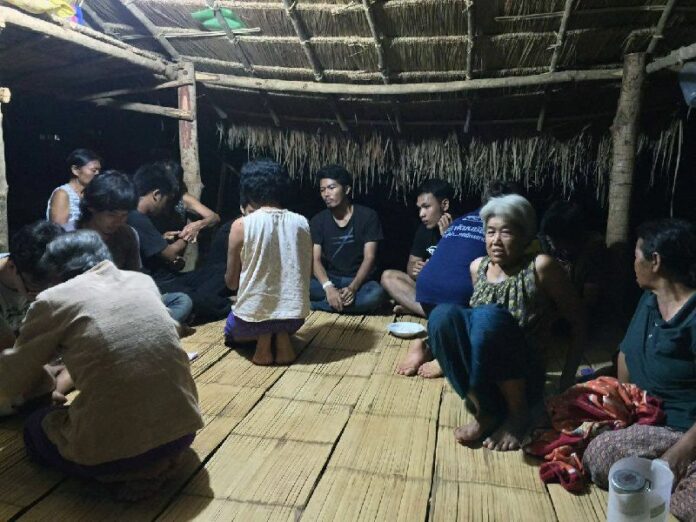
Wanted anti-coup activists from Khon Kaen University recieving blessings from locals in Loei province on 19 June [Photo: Dao Din]

KHON KAEN — A police commander in northeastern Thailand said he will wait for seven student activists charged with illegal assembly to surrender on their own, instead of sending police officers to arrest them by force.

The seven activists were ordered to report to police last week and hear charges of defying the junta's ban on protests after they staged a rally to mark the one-year anniversary of the military coup on 22 May 2015 in Khon Kaen province.

The seven university students, who are leading members of a social justice group called Dao Din, failed to report and said they would not surrender as a part of an act of "civil disobedience" against the military regime.

The activists also posted on their Facebook account that they are currently in neighboring Loei province, where the group was founded by Khon Kaen University students a decade ago, and invited police to come arrest them there. They said the move was an effort to draw attention to the plight of communities in Loei who have struggled to fight harmful gold mining operations in the province for years. 

But Pol.Lt.Gen. Boonlert Chaipradith, commander of Fourth Region Police, said yesterday that "police will not accept their challenge, because we believe that this is the type of action that teenagers like to do."

"But we will monitor them at all times," he said.

He said the bond money of 52,500 baht posted by the students has already been confiscated because they failed to surrender on 19 June. Pol.Lt.Gen. Boonlert also told reporters that police will give the students seven more days to reconsider their plans and report to police. 

If the deadline is passed again, police will ask a martial court to issue arrest warrants on the activists, and police will have no choice but to arrest them no matter where they are, Pol.Lt.Gen. Boonlert said.

"Police are compromising with the students to the utmost," he said. "I'd like to ask the bond guarantors of these students to find them and tell them to surrender themselves as soon as possible." 

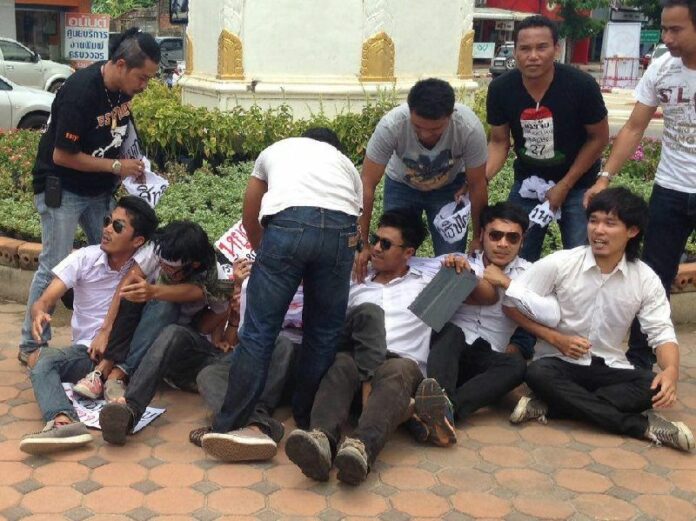
The seven students were charged with violating the junta's ban on political activities after they unfurled a banner denouncing the coup on 22 May 2015 at Democracy Monument in Khon Kaen province. Political protests of any kind are currently banned by the junta, known formally as the National Council for Peace and Order, and can be punished with a maximum penalty of one year in prison. 

Pol.Lt.Gen. Boonlert also advised students around the country to hold off on their activisim until democracy is returned, a date the junta has repeatedly pushed back and now says will take place in September 2016 at the earliest. 

"They should wait for that time to come," Pol.Lt.Gen. Boonlert said. "Students, regardless of the groups, must understand this. Don't come out and protest or oppose the government's administration at this time."

He also urged student activists to attend junta-run forums to express their opinions.

"Our country needs peace, love, and unity, to overcome the economic crisis at the moment," he said. "Please, don't cause any fights or disputes." 

Apart from the seven Dao Din activists, nine student activists in Bangkok were also charged with defying the junta's order for staging a protest in front of the Bangkok Art and Culture Center on the evening of 22 May. 

The protest was forcefully broken up by police, who arrested more than 30 students that night. 

One of the students, Chartchai Kaedum, reported to police at Pathumwan Police Station yesterday with his lawyer and denied the charges, saying that he was only observing the rally on 22 May, and was mistaken as an activist by a plain-clothed army officer.

"I reported to the police today to contest my charge in accordance with the justice system," Chartchai said. 

The eight other students charged with defying the junta's orders have not surrendered to police. 


For comments, or corrections to this article please contact: [email protected]

You can also find Khaosod English on Twitter and Facebook
http://twitter.com/KhaosodEnglish
http://www.facebook.com/KhaosodEnglish
Advertisement

Khon Kaen Police Won't Accept Anti-Coup Students' 'Challenge'

Plain-clothed officers arrest Dao Din activists for their anti-coup protest in Khon Kaen, 22 May 2015. [Photo: Dao Din]

KHON KAEN — A police commander in northeastern Thailand said he will wait for seven student activists charged with illegal assembly to surrender on their own, instead of sending police officers to arrest them by force.

The seven activists were ordered to report to police last week and hear charges of defying the junta's ban on protests after they staged a rally to mark the one-year anniversary of the military coup on 22 May 2015 in Khon Kaen province.

The seven university students, who are leading members of a social justice group called Dao Din, failed to report and said they would not surrender as a part of an act of "civil disobedience" against the military regime.

The activists also posted on their Facebook account that they are currently in neighboring Loei province, where the group was founded by Khon Kaen University students a decade ago, and invited police to come arrest them there. They said the move was an effort to draw attention to the plight of communities in Loei who have struggled to fight harmful gold mining operations in the province for years. 

But Pol.Lt.Gen. Boonlert Chaipradith, commander of Fourth Region Police, said yesterday that "police will not accept their challenge, because we believe that this is the type of action that teenagers like to do."

"But we will monitor them at all times," he said.

He said the bond money of 52,500 baht posted by the students has already been confiscated because they failed to surrender on 19 June. Pol.Lt.Gen. Boonlert also told reporters that police will give the students seven more days to reconsider their plans and report to police. 

If the deadline is passed again, police will ask a martial court to issue arrest warrants on the activists, and police will have no choice but to arrest them no matter where they are, Pol.Lt.Gen. Boonlert said.

"Police are compromising with the students to the utmost," he said. "I'd like to ask the bond guarantors of these students to find them and tell them to surrender themselves as soon as possible." 

The seven students were charged with violating the junta's ban on political activities after they unfurled a banner denouncing the coup on 22 May 2015 at Democracy Monument in Khon Kaen province. Political protests of any kind are currently banned by the junta, known formally as the National Council for Peace and Order, and can be punished with a maximum penalty of one year in prison. 

Pol.Lt.Gen. Boonlert also advised students around the country to hold off on their activisim until democracy is returned, a date the junta has repeatedly pushed back and now says will take place in September 2016 at the earliest. 

"They should wait for that time to come," Pol.Lt.Gen. Boonlert said. "Students, regardless of the groups, must understand this. Don't come out and protest or oppose the government's administration at this time."

He also urged student activists to attend junta-run forums to express their opinions.

"Our country needs peace, love, and unity, to overcome the economic crisis at the moment," he said. "Please, don't cause any fights or disputes." 

Apart from the seven Dao Din activists, nine student activists in Bangkok were also charged with defying the junta's order for staging a protest in front of the Bangkok Art and Culture Center on the evening of 22 May. 

The protest was forcefully broken up by police, who arrested more than 30 students that night. 

One of the students, Chartchai Kaedum, reported to police at Pathumwan Police Station yesterday with his lawyer and denied the charges, saying that he was only observing the rally on 22 May, and was mistaken as an activist by a plain-clothed army officer.

"I reported to the police today to contest my charge in accordance with the justice system," Chartchai said. 

The eight other students charged with defying the junta's orders have not surrendered to police. 

 
Advertisement

Over 100 Ducks Stolen from Ayutthaya Farm: Police

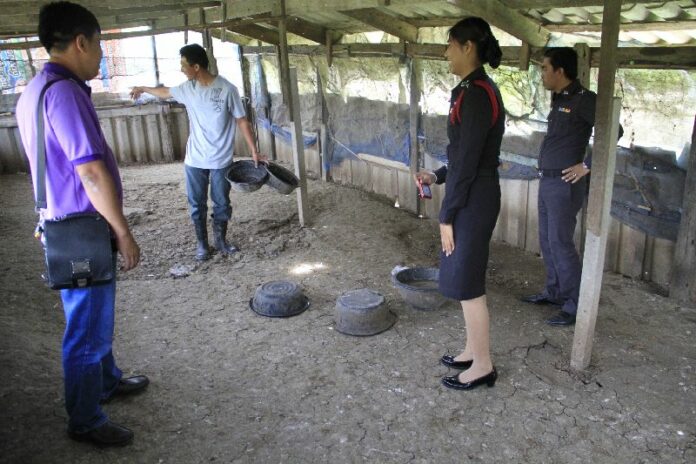
Rungroj Jitreeworn, 43, speaking to police about the ducks that were allegedly stolen from his farm in Ayutthaya province, 23 June 2015.

AYUTTHAYA — Thai police say they are investigating a complaint from a farmer in Ayutthaya province who said at least 100 ducks were stolen from his farm.

Rungroj Jitreeworn, 43, told police today that he kept around 500 ducks at his farm in Bang Pa-in district but noticed recently that the ducks had been laying an unusually low amount of eggs. After counting the birds this morning, he realized that at least 100 ducks were missing.

Five sacks of duck food are also gone, Rungroj told police. 

Although he said he is not sure when the theft took place, Rungroj told reporters he suspects workers from a nearby construction site may have entered the farm and stolen his birds. 

"The construction workers may have snuck in and caught the ducks for cooking, or maybe to have them hatch eggs, because the thieves also took away duck food," Rungroj said. 

Pol.Lt. Thanipha Talalaksamana, an investigative officer at Bang Pa In Police Station, said police have inspected laborers’ campsites in the area, but did not find any stolen birds. She said police believe the thieves may have tied ropes to the legs of each duck to lead them away from the farm. 

The incident is still under investigation.

For comments, or corrections to this article please contact: [email protected]

You can also find Khaosod English on Twitter and Facebook
http://twitter.com/KhaosodEnglish
http://www.facebook.com/KhaosodEnglish
Advertisement

Junta Warns Against Commemorating Birth of Thai Democracy

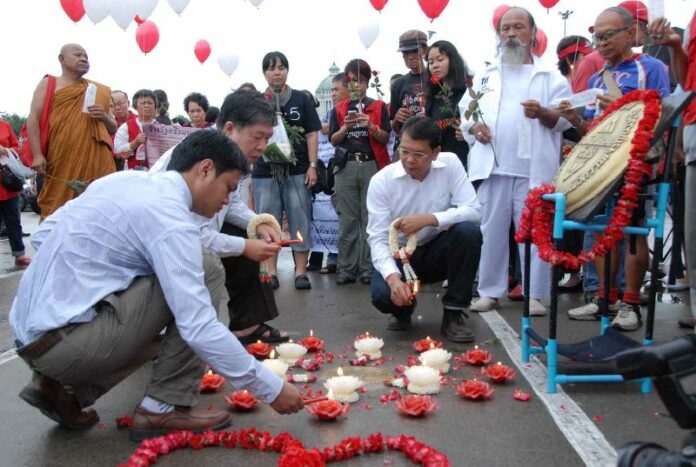
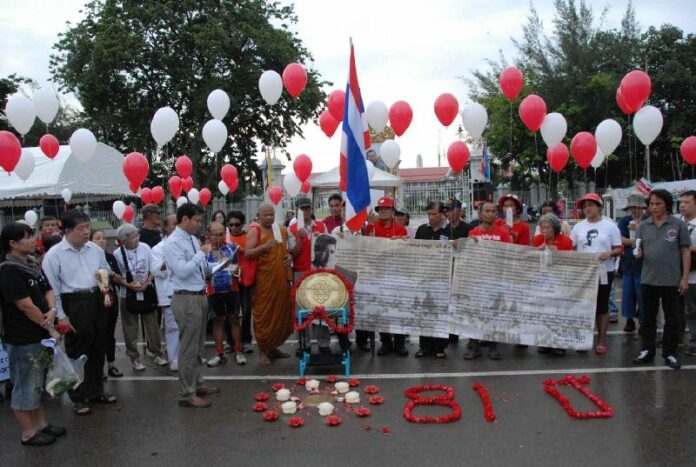
Redshirt activists commemorate the anniversary of the 1932 revolution at the Royal Plaza in Bangkok on 24 June 2013.

BANGKOK — Thailand's military junta has warned political activists against staging any public events tomorrow to mark the 83rd anniversary of the founding of democracy in Thailand.

A spokesperson for the junta, which banned political demonstrations after seizing power last year, said that security officers will be especially vigilant on 24 June, the anniversary of the 1932 coup d’etat that replaced absolute monarchy in Thailand with a democratic regime.

"As for 24 June, which is the day when Thailand changed governing regimes, there may be some people who come out," Col. Winthai Suvaree said in a press conference yesterday.  "I would like to say this: security officers will keep their eyes out in all times."

In recent years, pro-democracy activists have commemorated the 1932 revolution at the Royal Plaza, where the revolutionaries announced the end of Thailand's absolute monarchy. At the time of writing, no activist networks have publicly announced plans to celebrate the revolution tomorrow.

Gen. Chatchalerm Chalermsuk, a secretary of the junta, also confirmed yesterday that any attempt to organize a protest marking the revolution will be considered a violation of the junta’s ban on political activities.

"Any activity with political connotation certainly cannot be done, because it is against the laws," Gen. Chatchalerm said. "Any activists who organize political events on 24 June will be summoned for discussion."

He added, "Allow me to repeat that students should not stage any symbolic protests. It cannot be done."

Most of the activists who have violated the junta’s ban on protests over the past year have been promptly arrested and taken to police stations and army bases for "attitude adjustment." Some have been released without charges, while others have been prosecuted in  martial court, including 16 university students who commemorated the first anniversary of the coup last month in Bangkok and Khon Kaen province. 

Speaking at the press conference yesterday, Gen. Chatchalerm also urged the foreign press to recognize the state-sanctioned forums organized by the junta, known formally as the National Council for Peace and Order (NCPO), which he said activists are "welcome" to attend. 

"I'd like to tell foreign journalists who like to say that the NCPO doesn't open any space for freely expressing opinions: in reality it is not like that. We do open a space for them," he said. 

The 1932 revolution was engineered by a group of Western-educated scholars and military officers who felt that absolute monarchy was an outdated form of government for Thailand, then known as Siam. On 24 June 1932, the plotters staged a coup against the royal government, replacing the king's direct rule with a constitutional monarchy and parliamentary democracy. 

However, the revolution failed to turn Thailand into a full-fledged democratic country as hoped for by some of the revolutionaries. Throughout the following 83 years, Thailand has seen 12 successful military coups and 19 constitutions, with the government alternating between quasi-democratic regimes and military dictatorships.

The current junta promised that a new election will be held in September 2016 at the earliest. 


For comments, or corrections to this article please contact: [email protected]

You can also find Khaosod English on Twitter and Facebook
http://twitter.com/KhaosodEnglish
http://www.facebook.com/KhaosodEnglish
Advertisement

Junta Warns Against Commemorating Birth of Thai Democracy

Redshirt activists commemorate the anniversary of the 1932 revolution at the Royal Plaza in Bangkok on 24 June 2013.

BANGKOK — Thailand's military junta has warned political activists against staging any public events tomorrow to mark the 83rd anniversary of the founding of democracy in Thailand.

A spokesperson for the junta, which banned political demonstrations after seizing power last year, said that security officers will be especially vigilant on 24 June, the anniversary of the 1932 coup d’etat that replaced absolute monarchy in Thailand with a democratic regime.

"As for 24 June, which is the day when Thailand changed governing regimes, there may be some people who come out," Col. Winthai Suvaree said in a press conference yesterday.  "I would like to say this: security officers will keep their eyes out in all times."

In recent years, pro-democracy activists have commemorated the 1932 revolution at the Royal Plaza, where the revolutionaries announced the end of Thailand's absolute monarchy. At the time of writing, no activist networks have publicly announced plans to celebrate the revolution tomorrow.

Gen. Chatchalerm Chalermsuk, a secretary of the junta, also confirmed yesterday that any attempt to organize a protest marking the revolution will be considered a violation of the junta’s ban on political activities.

"Any activity with political connotation certainly cannot be done, because it is against the laws," Gen. Chatchalerm said. "Any activists who organize political events on 24 June will be summoned for discussion."

He added, "Allow me to repeat that students should not stage any symbolic protests. It cannot be done."

Most of the activists who have violated the junta’s ban on protests over the past year have been promptly arrested and taken to police stations and army bases for "attitude adjustment." Some have been released without charges, while others have been prosecuted in  martial court, including 16 university students who commemorated the first anniversary of the coup last month in Bangkok and Khon Kaen province. 

Speaking at the press conference yesterday, Gen. Chatchalerm also urged the foreign press to recognize the state-sanctioned forums organized by the junta, known formally as the National Council for Peace and Order (NCPO), which he said activists are "welcome" to attend. 

"I'd like to tell foreign journalists who like to say that the NCPO doesn't open any space for freely expressing opinions: in reality it is not like that. We do open a space for them," he said. 

The 1932 revolution was engineered by a group of Western-educated scholars and military officers who felt that absolute monarchy was an outdated form of government for Thailand, then known as Siam. On 24 June 1932, the plotters staged a coup against the royal government, replacing the king's direct rule with a constitutional monarchy and parliamentary democracy. 

However, the revolution failed to turn Thailand into a full-fledged democratic country as hoped for by some of the revolutionaries. Throughout the following 83 years, Thailand has seen 12 successful military coups and 19 constitutions, with the government alternating between quasi-democratic regimes and military dictatorships.

The current junta promised that a new election will be held in September 2016 at the earliest. 


For comments, or corrections to this article please contact: [email protected]

You can also find Khaosod English on Twitter and Facebook
http://twitter.com/KhaosodEnglish
http://www.facebook.com/KhaosodEnglish
Advertisement

Samsung Heir Apparent Apologizes Over MERS Hospital Outbreak in South Korea

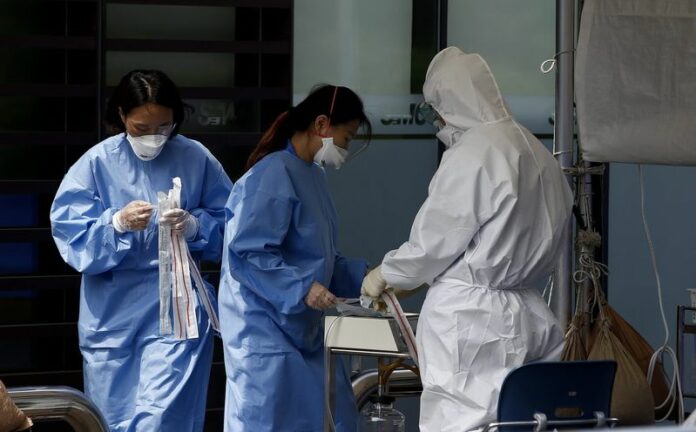
Medical workers in front of an emergency room at Samsung Seoul Medical Center in Seoul, South Korea, 09 June 2015. EPA/JEON HEON-KYUN

BANGKOK (DPA) — The heir apparent to the Samsung empire made a public apology to South Koreans Tuesday for not containing the deadly outbreak of Middle East Respiratory Syndrome (MERS) at one of the group's hospitals.

"I bow my head and sincerely apologize to the nation for the immense suffering and concern that Samsung Medical Center has caused," Samsung Electronics Co vice-president Lee Jae-yong was quoted as saying by Yonhap News Agency.

Nearly all cases of infection have occurred in hospitals, and many of them at the flagship Samsung Medical Center in southern Seoul.

Lee's father, Samsung Group chairman Lee Kun Hee, is having treatment in the same hospital after suffering a heart attack last year.

Hospital boss Song Jae Hoon, who spoke to reporters alongside the younger Lee, admitted that the hospital had failed to deal with the outbreak at its early stages, Yonhap reported.

Prevention and control in the country's medical centres had been "suboptimal," the World Health Organization said last week.

Lee promised a complete overhaul of the Samsung Medical Centre.

Twenty-seven people have died in the MERS outbreak in South Korea, the most outside the Middle East where the disease was first identified.

South Korea also reported three new positive infections on Tuesday, bringing the total number of MERS cases to 175, according to Yonhap, citing the Ministry of Health and Welfare.

As of Tuesday, there were 2,805 people in isolation for possible infection, the report said.


For comments, or corrections to this article please contact: [email protected]

You can also find Khaosod English on Twitter and Facebook
http://twitter.com/KhaosodEnglish
http://www.facebook.com/KhaosodEnglish
Advertisement

Myanmar Art Scene Flourishes as Reforms Bring New Freedom

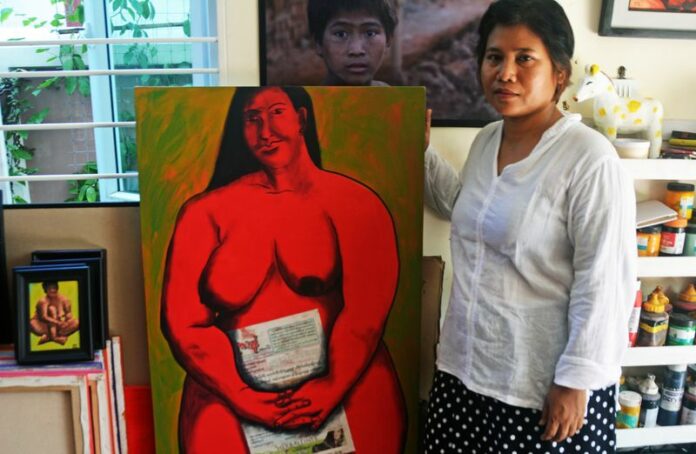
The artist Sandar Khine poses with a recent painting in her studio, Yangon, Myanmar, May 2015. Photo: Paul Vrieze/dpa

YANGON (DPA) — Sandar Khine remembers well how a surreptitious gathering during the dark days of military rule in Myanmar 15 years ago inspired her to paint the subject that would come to define her work.

"I got a chance to do a new type of drawing with a group of artists. They arranged to do a live nude drawing secretly in a room somewhere," she said.

"I liked this type of painting … Later I found a model myself and did more and more paintings."

The 43-year-old artist has lately been winning acclaim for her powerful, bright-coloured depictions of nude, chubby men and women that capture their body shapes and curves through the use of simple lines and shadow.

"The [government] censor didn't allow it, and it's also culturally sensitive," she said of the secret meeting held despite the threat of arrest were they found out.

For artists who deal with political and culturally sensitive subjects, everything changed after 2011, when the army installed a reformist government that lifted decades-old restrictions on freedom of expression.

The local art scene has since flourished, numerous galleries have opened up in Yangon and other cities, and artists have begun exploring new ideas. Interest from domestic and international art collectors has greatly increased, pushing up prices.

Sandar Khine was able to finally have her first exhibition in Yangon in late 2013.

"There was an explosion of political art – everyone started to paint Aung San Suu Kyi and General Aung San," said Min Lwin, referring to the country's independence hero and his daughter, who was held under house arrest by the junta for nearly 15 years.

"Now, artists have started moving on," said Min Lwin, who opened Gallery 65 in Yangon in 2010. "They are looking more into culturally subversive matters."

Aung Soe Min said he opened Pansodan Gallery in a colonial-era building in downtown Yangon in 2008 to help local artists, who suffered from censorship, a lack of resources and from the absence of government museums, art schools or theatres to train and support them.

When it opened, the gallery was the city's only exhibition and meeting space for independent artists, critics and collectors.

"Now, just in downtown alone there are 30 new galleries," he said.

Min Lwin recalled that obtaining a permit for an exhibition used to involve neighbourhood, township and regional authorities, as well as approval from a censorship committee, which would preview every show.

"Every time we would have three or four works removed or retitled. If there were certain colours and a woman in the painting that would be a problem" as it might suggest Suu Kyi and the red-coloured flag of her opposition National League for Democracy, said Min Lwin.

"Often some of my paintings would be cancelled," said Nyo Win Maung, 59, a painter with New Zero arts group.

The local art scene is made up of dissident painters, poets, writers and political activists who formed networks that resisted army rule, said Nathalie Johnston, an American researcher who has studied Myanmar contemporary art since 2009.

"Everyone is intricately linked," she said. "You find these communities in every city across the country."

Now, international support for artists is growing, Johnston said, as overseas collectors, museums and art centers have taken an interest. Overseas study programmes are becoming available to local artists, while international firms investing in the country have began supporting cultural events.

The works of about two dozen of the artists were exhibited last year at Hong Kong's Visual Arts Center, in Germany's Linden-Museum in Stuttgart and at Miami's Art Basel.

Germany's Goethe Institut set up an office in Myanmar in late 2013, and is one of the main international organizations supporting documentary film, music and visual art. In March, it opened an exhibition and education centre in a historic villa in central Yangon, which will be renovated and expanded with 3 million dollars from Germany's Foreign Affairs Ministry.

"In Myanmar – where during the 50 years of isolation, education and cultural activities were so much damaged, run down and neglected – there is a need to rebuild [arts education]," said Franz Xaver Augustin, director of Goethe Institut Myanmar.

There are fears among artists and gallery owners that the progress in the arts since 2011 may be reversed if there is any backsliding on democratic reforms.

Critics of the government cite a crackdown on student protests in March and the prosecution of journalists in recent months, as well as more subtle forms of censorship under the current government, which is run by former generals.

In April, a photo exhibition at Yangon's Think Gallery shut down after the notorious Special Branch police demanded the removal of several photos showing riot police violently cracking down on the student protests.

"A week later they issued a letter to all galleries saying they need to ask for a permit first," Min Lwin said. "So far, we've had no problems, but I would assume they're keeping a close eye on things."

(Reporting by Paul Vrieze)


For comments, or corrections to this article please contact: [email protected]

You can also find Khaosod English on Twitter and Facebook
http://twitter.com/KhaosodEnglish
http://www.facebook.com/KhaosodEnglish
Advertisement

2 Thai Hospitals Refuse to Admit Suspected MERS Patients: Officials

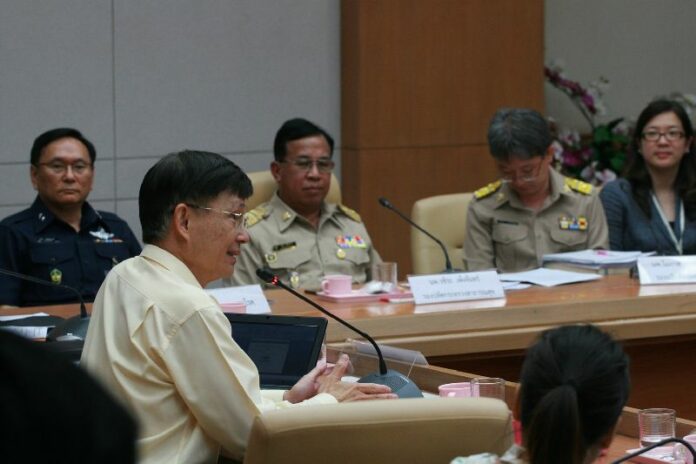
Government officials attend a meeting about efforts to contain a potential MERS outbreak at the Ministry of Public Health in Bangkok, 22 June 2015

BANGKOK — Thai public health officials have reprimanded two private hospitals for refusing to accept patients who were suspected of having Middle East Respiratory Syndrome (MERS).

According to Boonrueng Trairuengworarat, director of Thailand’s Department of Health Service Support, staff at the two private hospitals turned away patients from Middle Eastern countries because they were afraid they might be infected with MERS coronavirus. Boonrueng did not identify the two hospitals by name. 

"In the past week, there have been cases of staff at the two private hospitals who have refused to admit patients as soon as they realized that they came from risk-countries. They then called taxis to take those patients to [state-owned] Bamrasnaradura Infectious Disease Institute instead," Boonrueng told reporters yesterday.

The director said the practice violates both medical ethics and the laws like the Disease Control Act, which carries a penalty of 6 months in prison and a 10,000 baht fine for rejecting patients with dangerous communicable diseases. 

"Soon there will be a random inspection of private hospitals and clinics to prevent this from happening again," said Boonrueng. "I have already reprimanded the staff in this case." 

Thai public health officials are currently working to contain a potential MERS outbreak after the first case – a 75-year-old man from Oman – was detected in the Kingdom on 18 June. 

The vast majority of MERS infections have originated in Saudi Arabia, but the coronavirus has killed at least 27 people in South Korea in the past month. There is no specific cure or vaccine for the disease. 

Speaking to reporters yesterday, Minister of Public Health Rachata Rachatanawin said he has asked all hospitals to quarantine suspected MERS patients for 14 days, instead of turning them away. He told reporters that the Ministry of Public Health will cover the costs of the quarantine procedures. 

Rachata stressed that Thailand still has only one confirmed case of MERS infection, and that some of the 176 people who have been quarantined for suspicious symptoms have already been released.  

"It won't affect tourism because we won't bar any travel to Thailand,” Rachata said. "We also have a health inspection system for people who travel from South Korea and the Middle East, which are considered risk-countries." 


For comments, or corrections to this article please contact: [email protected]

You can also find Khaosod English on Twitter and Facebook
http://twitter.com/KhaosodEnglish
http://www.facebook.com/KhaosodEnglish
Advertisement

Thai Airlines Cancel Flights, Delay Plane Purchases Due to UN’s Red Flag

An aircraft operated by Thai Airasia X at Don Mueang Airport in Bangkok, 13 June 2014 [Prachachat]

BANGKOK — Thai airlines have canceled flights to northern Japan and indefinitely delayed plans to buy new planes after Thailand’s aviation safety ranking was downgraded by a United Nations agency last week.

Nadda Buranasiri, an executive of Thai Airasia X, says the company will no longer offer flights to Sapporo, Japan, from 1 August onward. He told reporters yesterday that the cancellation was because the “aviation situation between Thailand and the International Civil Aviation Organization (ICAO) has not yet returned to normal, so it affects our plan to service passengers in this route.”

The ICAO marked Thailand with a “red flag” on 18 June, denoting the Thai Department of Civil Aviation’s failure to properly monitor and enforce safety protocols of airlines based in the Kingdom. The downgrade followed the ICAO’s warning in March that airlines operating from Thailand were falling short of global safety standards.

Although Airasia is headquartered in Malaysia, the company has two subsidiaries – Thai AirAsia and Thai Airasia X – that are registered as Thai airlines.  Nadda said the flights to Sapporo may be resumed if the ICAO and Thai authorities manage to resolve the issue.

“Thai Airasia X is forced to temporarily suspend its service in this new route,” Nadda said, “We are very sorry about it, because Sapporo is a city with great capability, tourists can go there all year round. I would like to apologize to all passengers who booked the seats in advance.”

He added that Airasia flights to other cities in Japan and South Korea will continue for the time being, because the company has been granted a reprieve by the Japanese and South Korean governments to operate those routes. However, the company will not open any new flight routes to Japan in upcoming months, Nadda said.

“We support and will fully cooperate with the authorities’ effort to solve problems and defuse the aviation situation in Thailand as soon as possible,” said Nadda.

Meanwhile, Chairat Saengchan, an executive of Jet Asia Airway, another airline based in Thailand, said the company has delayed its plan to purchase six new aircrafts for new routes.

“We are not confident whether we can continue to operate the flights as usual, because in the present time Thailand still cannot fix ICAO’s significant safety concerns,” Chairat told reporters yesterday. He also mentioned that aviation officials from the United States – the Federal Aviation Administration (FAA) – will travel to Thailand and conduct their own safety inspection, while the European Aviation Safety Agency (EASA) will announce its rating of Thai airlines’ safety standards this week.

“We have to delay the [purchase] of the planes at least until the end of July, because we have to wait and see the result of FAA’s inspection, and we will wait for announcement from EASA, whether they will be good or bad outcomes for Thailand and Jet Asia Airway,” Chairat explained.

He added, “Even though we do not fly to Europe or the United States of America, if those two agencies conclude that Thailand does not meet their standards, all of Thailand’s 28 airlines that operate in foreign countries will be blacklisted, which will include the name of Jet Asia Airway. It will cause negative impacts to [customers’] confidence.”

Advertisement

2 Thai Hospitals Refuse to Admit Suspected MERS Patients: Officials

Government officials attend a meeting about efforts to contain a potential MERS outbreak at the Ministry of Public Health in Bangkok, 22 June 2015

BANGKOK — Thai public health officials have reprimanded two private hospitals for refusing to accept patients who were suspected of having Middle East Respiratory Syndrome (MERS).

According to Boonrueng Trairuengworarat, director of Thailand’s Department of Health Service Support, staff at the two private hospitals turned away patients from Middle Eastern countries because they were afraid they might be infected with MERS coronavirus. Boonrueng did not identify the two hospitals by name. 

"In the past week, there have been cases of staff at the two private hospitals who have refused to admit patients as soon as they realized that they came from risk-countries. They then called taxis to take those patients to [state-owned] Bamrasnaradura Infectious Disease Institute instead," Boonrueng told reporters yesterday.

The director said the practice violates both medical ethics and the laws like the Disease Control Act, which carries a penalty of 6 months in prison and a 10,000 baht fine for rejecting patients with dangerous communicable diseases. 

"Soon there will be a random inspection of private hospitals and clinics to prevent this from happening again," said Boonrueng. "I have already reprimanded the staff in this case." 

Thai public health officials are currently working to contain a potential MERS outbreak after the first case – a 75-year-old man from Oman – was detected in the Kingdom on 18 June. 

The vast majority of MERS infections have originated in Saudi Arabia, but the coronavirus has killed at least 27 people in South Korea in the past month. There is no specific cure or vaccine for the disease. 

Speaking to reporters yesterday, Minister of Public Health Rachata Rachatanawin said he has asked all hospitals to quarantine suspected MERS patients for 14 days, instead of turning them away. He told reporters that the Ministry of Public Health will cover the costs of the quarantine procedures. 

Rachata stressed that Thailand still has only one confirmed case of MERS infection, and that some of the 176 people who have been quarantined for suspicious symptoms have already been released.  

"It won't affect tourism because we won't bar any travel to Thailand,” Rachata said. "We also have a health inspection system for people who travel from South Korea and the Middle East, which are considered risk-countries." 


For comments, or corrections to this article please contact: [email protected]

You can also find Khaosod English on Twitter and Facebook
http://twitter.com/KhaosodEnglish
http://www.facebook.com/KhaosodEnglish

Advertisement

Hot News

LATEST NEWS

Bangkok
few clouds
26.6 ° C
31.6 °
26.6 °
90 %
3.5kmh
13 %
Thu
37 °
Fri
37 °
Sat
36 °
Sun
36 °
Mon
36 °