


























33.5 C
Bangkok
Thursday, June 25, 2026
Home Blog Page 2970

2 Thai Hospitals Refuse to Admit Suspected MERS Patients: Officials

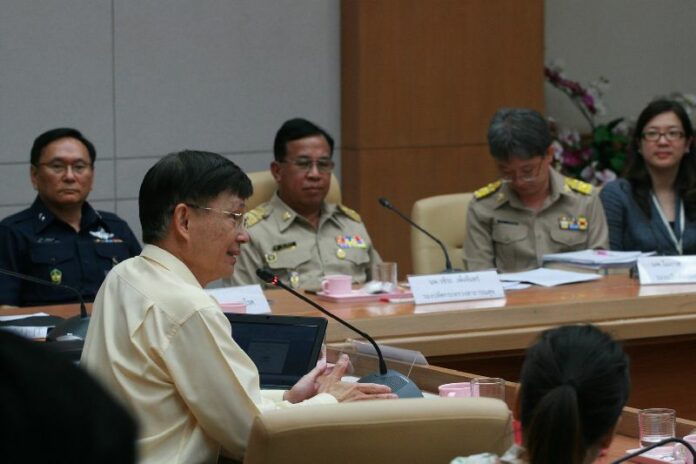
Government officials attend a meeting about efforts to contain a potential MERS outbreak at the Ministry of Public Health in Bangkok, 22 June 2015

BANGKOK — Thai public health officials have reprimanded two private hospitals for refusing to accept patients who were suspected of having Middle East Respiratory Syndrome (MERS).

According to Boonrueng Trairuengworarat, director of Thailand’s Department of Health Service Support, staff at the two private hospitals turned away patients from Middle Eastern countries because they were afraid they might be infected with MERS coronavirus. Boonrueng did not identify the two hospitals by name. 

"In the past week, there have been cases of staff at the two private hospitals who have refused to admit patients as soon as they realized that they came from risk-countries. They then called taxis to take those patients to [state-owned] Bamrasnaradura Infectious Disease Institute instead," Boonrueng told reporters yesterday.

The director said the practice violates both medical ethics and the laws like the Disease Control Act, which carries a penalty of 6 months in prison and a 10,000 baht fine for rejecting patients with dangerous communicable diseases. 

"Soon there will be a random inspection of private hospitals and clinics to prevent this from happening again," said Boonrueng. "I have already reprimanded the staff in this case." 

Thai public health officials are currently working to contain a potential MERS outbreak after the first case – a 75-year-old man from Oman – was detected in the Kingdom on 18 June. 

The vast majority of MERS infections have originated in Saudi Arabia, but the coronavirus has killed at least 27 people in South Korea in the past month. There is no specific cure or vaccine for the disease. 

Speaking to reporters yesterday, Minister of Public Health Rachata Rachatanawin said he has asked all hospitals to quarantine suspected MERS patients for 14 days, instead of turning them away. He told reporters that the Ministry of Public Health will cover the costs of the quarantine procedures. 

Rachata stressed that Thailand still has only one confirmed case of MERS infection, and that some of the 176 people who have been quarantined for suspicious symptoms have already been released.  

"It won't affect tourism because we won't bar any travel to Thailand,” Rachata said. "We also have a health inspection system for people who travel from South Korea and the Middle East, which are considered risk-countries." 


For comments, or corrections to this article please contact: [email protected]

You can also find Khaosod English on Twitter and Facebook
http://twitter.com/KhaosodEnglish
http://www.facebook.com/KhaosodEnglish
Advertisement

Delayed Rice-Planting Season Expected to Affect Thai GDP Growth

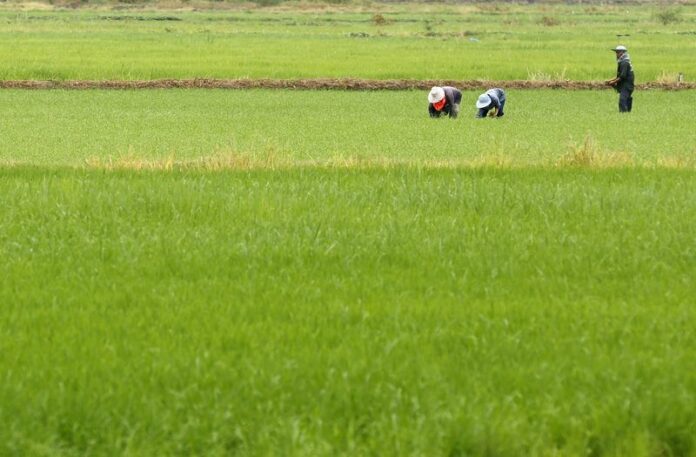
A file photo from 27 June 2013 shows Thai farmers working in a rice paddy field at Ayutthaya province, north of Bangkok, Thailand, 26 June 2013. A delayed wet-season planting was expected to weigh on Thailand's weakening economic growth. EPA/NARONG SANGNAK

BANGKOK (DPA) – A delayed wet-season planting is expected to weigh on Thailand's weakening economic growth, agricultural officials said.

Planting is being postponed by one month in 22 provinces on the central Chao Phraya River basin, accounting for more than a third of all rice grown in the country.

"We are now surveying the area to determine the effect of drought to the agricultural economy," Lersuk Rewtrakoonpaibul of the national Office of Agricultural Economics said. 

The water level at a major reservoir feeding the Chao Phraya River is at only 8.4 per cent of its full capacity, and the rainy season is predicted to be light due to the El Nino climate phenomenon.

The central bank on Friday also cut this year's gross domestic product growth projection to 3 per cent, from 3.8, due to weaker exports and domestic demand.

Thailand is one of the world's top rice producers, accounting for 22 per cent of global rice exports.


For comments, or corrections to this article please contact: [email protected]

You can also find Khaosod English on Twitter and Facebook
http://twitter.com/KhaosodEnglish
http://www.facebook.com/KhaosodEnglish
Advertisement

Transport Minister 'Confused' by Safety Downgrade for Thai Airlines

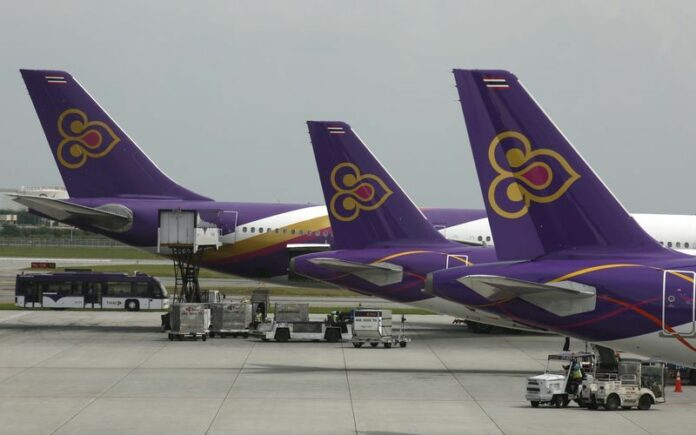
Thai Airways aircraft at Suvarnabhumi Airport, Thailand's largest airport, in Bangkok, Thailand, 02 November 2014. EPA/BARBARA WALTON

BANGKOK — Thailand's Transport Minister said he was surprised to see the United Nations' aviation agency announce a safety downgrade for Thailand-based airlines on its website yesterday.

Air Chief Marshal Prajin Janthong said he was informed by a Thai official that the International Civil Aviation Organization (ICAO) would not make a public announcement about the downgrade, which Thailand had been given 90 days to address.

ACM Prajin said his assistant, Arkom Termpittayapaisith, traveled to the ICAO headquarters in Canada to negotiate for more time to address the agency's safety concerns, and sent him a text message that the ICAO had agreed not to publish  any information about Thailand's failure to meet the agency's standards. 

"But yesterday the ICAO ended up putting red flag on Thailand on its website," ACM Prajin said yesterday. "That means the president of the ICAO did not do what he told Mr. Arkom. I am really confused why this happened. I have to admit that there was some miscommunication, but whether it was a miscommunication between me and Arkom, or between Arkom and the ICAO president, we are still checking about that."

He told reporters that he has already instructed the head of Thailand's Civil Aviation Department to get in touch with Arkom, who is still on a trip abroad, and clarify what was said at the meeting with the ICAO.

ACM Prajin also said a formal press conference will be held by the Ministry of Transport on 22 June to explain the red flag's implications for the Thai aviation industry.

"I have to admit I am very stressed about what happened, but we will continue to solve the problems," ACM Prajin told reporters.

Thailand is now one of 13 "safety deficient" countries that have been flagged by the ICAO. The others are Botswana, Uruguay, Angola, Djibouti, Eritrea, Georgia, Haiti, Kazakhstan, Lebanon, Malawi, Nepal, and Sierra Leone. 

In its January audit, the ICAO found serious gaps in safety standards at some airlines operating from Thailand, including Thai AirAsia, Thai AirAsia X, Nok Air, and the state-owned Thai Airways. The agency cited concerns about a lack of personnel training and licensing, and other lapses in the oversight of airline operations.

In March the ICAO granted Thailand a 90-day reprieve to rectify the issues, but ACM Prajin admitted in April that Thailand would be unable to meet the deadline.

According to the Transport Minister, Thai authorities have spent the past three months working hard to improve aviation safety measures, such as re-organizing the bureaucratic structure, transferring directors, and compiling new manuals to oversee airlines' licenses. State officials have also traveled around the globe in an effort to convince foreign aviation authorities not to ban Thai airlines from using airports in their respective countries. 

"In the past, I have created understanding with many countries, but it's impossible to talk to 50 countries in a single month," ACM Prajin said. "We have to wait and see results from this day first, because now that ICAO has already announced [the red flag], it's pointless to travel to talk to any more nations." 

The air chief marshal added that he has already informed junta chairman and Prime Minister Prayuth Chan-ocha about the incident, but the junta leader has not yet personally shared his opinion on the matter. 


For comments, or corrections to this article please contact: [email protected]

You can also find Khaosod English on Twitter and Facebook
http://twitter.com/KhaosodEnglish
http://www.facebook.com/KhaosodEnglish
Advertisement

Police Deadline for Anti-Coup Student Activists to Surrender Expires

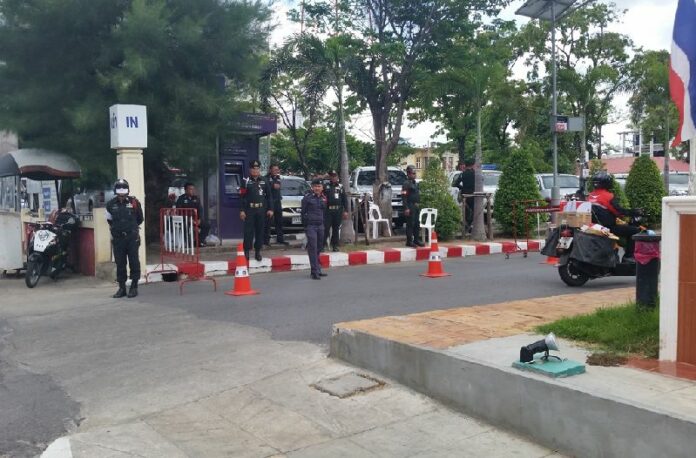
Police and military officers at Khon Kaen police station waiting for student activists to surrender on 19 June 2015.

BANGKOK — All sixteen of the student activists recently charged with illegal assembly have defied police's orders to report to authorities today.

Nine students in Bangkok and seven students in Khon Kaen province were ordered to surrender to police by 3:30 pm today to formally hear their charges of violating the junta's ban on public protests. The students were charged after attempting to stage rallies in Bangkok and Khon Kaen to mark the first anniversary of the military coup d'etat on 22 May 2015. 

However, none of the activists showed up their respective police stations in Bangkok and Khon Kaen today. 

There was no immediate reaction from the Thai authorities, but officials have warned that a failure to surrender before the deadline would result in arrest warrants issued by military courts, which have been authority by the junta to prosecute anti-coup dissidents and other suspects in "national security" cases. 

Col. Winthai Suvaree, a spokesperson for the junta, known formally as the National Council for Peace and Order, said yesterday that if the nine students did not surrender themselves by 19 June, their bond money would be forfeited, and arrest warrants would be issued. He warned that families of the students may also be summoned by authorities.

"Officials may consider inviting the guardians of the students to meet with police officers," Col. Winthai said. "I'd like to tell their families: please take care of your children. Do not do any action that violates the laws." 

He continued, "These students have attempted to stage symbolic actions to incite conflict and unrest in society. They violated the laws and justice system. In the past, security officers have always compromised with them, but if they still do not understand, security officers are required to enforce the laws." 

Prachatai news site reported that the seven students in Khon Kaen – who belong to the progressive student network Dao Din – said they will not report to police as a display of "civil disobedience." The students were quoted as saying that authorities are welcome to come and arrest them on their own. 

"It will be quite funny if we go to jail and the people in prison ask us, hey, what landed you guys in here, and we tell them, oh, I was holding a banner," one of the students, Wasan Setsith, told Prachatai. 

Earlier today, three other student activists were briefly detained after they placed signs bearing cartoon characters resembling the seven Dao Din activists at Democracy Monument in Khon Kaen. The trio was held for several hours at the 23rd Army District headquarters for "attitude adjustment" and later released without charges.

According to photographs of police documents that were posted by Kunthika Nutcharus, a legal advisor to the anti-coup students wanted by police in Bangkok, the group requested to postpone their meeting until 24 June, but police refused because they said investigative offices would not be available on that day.

"On 24 June 2015, investigation officers responsible for [your] case have an appointment and must perform important bureaucratic missions in other cases, and other investigation officers who hold upper and lower ranks also have appointment to perform their own bureaucratic missions, and cannot be arranged to interrogate you," read the letter, which was purportedly issued by Pathumwan Police Station. 

Kunthika and other activists questioned the reason provided by police in the letter. 

"This is very strange, because according to the laws, police stations are required to be staffed with police officers who can process [legal] cases," Kunthika wrote on Facebook. "If a rape suspect surrenders him or herself on 24 June 2015, will police tell the suspect to go home, don't surrender yourself yet, because no one can process your case today?" 

CORRECTION: A total of nine Bangkok-based students were wanted by police for organizing an anti-coup rally on 22 May 2015, not two, as the original article reported. 

For comments, or corrections to this article please contact: [email protected]

You can also find Khaosod English on Twitter and Facebook
http://twitter.com/KhaosodEnglish
http://www.facebook.com/KhaosodEnglish
Advertisement

Police Deadline for Anti-Coup Student Activists to Surrender Expires

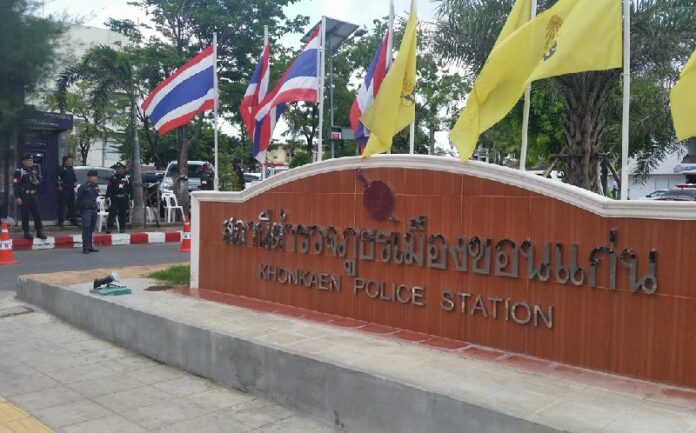
Police and military officers outside Khon Kaen police station, waiting for student activists to surrender on 19 June 2015.

BANGKOK — All sixteen of the student activists recently charged with illegal assembly have defied police's orders to report to authorities today.

Nine students in Bangkok and seven students in Khon Kaen province were ordered to surrender to police by 3:30 pm today to formally hear their charges of violating the junta's ban on public protests. The students were charged after attempting to stage rallies in Bangkok and Khon Kaen to mark the first anniversary of the military coup d'etat on 22 May 2015. 

However, none of the activists showed up their respective police stations in Bangkok and Khon Kaen today. 

There was no immediate reaction from the Thai authorities, but officials have warned that a failure to surrender before the deadline would result in arrest warrants issued by military courts, which have been authority by the junta to prosecute anti-coup dissidents and other suspects in "national security" cases. 

Col. Winthai Suvaree, a spokesperson for the junta, known formally as the National Council for Peace and Order, said yesterday that if the nine students did not surrender themselves by 19 June, their bond money would be forfeited, and arrest warrants would be issued. He warned that families of the students may also be summoned by authorities.

"Officials may consider inviting the guardians of the students to meet with police officers," Col. Winthai said. "I'd like to tell their families: please take care of your children. Do not do any action that violates the laws." 

He continued, "These students have attempted to stage symbolic actions to incite conflict and unrest in society. They violated the laws and justice system. In the past, security officers have always compromised with them, but if they still do not understand, security officers are required to enforce the laws." 

Prachatai news site reported that the seven students in Khon Kaen – who belong to the progressive student network Dao Din – said they will not report to police as a display of "civil disobedience." The students were quoted as saying that authorities are welcome to come and arrest them on their own. 

"It will be quite funny if we go to jail and the people in prison ask us, hey, what landed you guys in here, and we tell them, oh, I was holding a banner," one of the students, Wasan Setsith, told Prachatai. 

Earlier today, three other student activists were briefly detained after they placed signs bearing cartoon characters resembling the seven Dao Din activists at Democracy Monument in Khon Kaen. The trio was held for several hours at the 23rd Army District headquarters for "attitude adjustment" and later released without charges.

According to photographs of police documents that were posted by Kunthika Nutcharus, a legal advisor to the anti-coup students wanted by police in Bangkok, the group requested to postpone their meeting until 24 June, but police refused because they said investigative offices would not be available on that day.

"On 24 June 2015, investigation officers responsible for [your] case have an appointment and must perform important bureaucratic missions in other cases, and other investigation officers who hold upper and lower ranks also have appointment to perform their own bureaucratic missions, and cannot be arranged to interrogate you," read the letter, which was purportedly issued by Pathumwan Police Station. 

Kunthika and other activists questioned the reason provided by police in the letter. 

"This is very strange, because according to the laws, police stations are required to be staffed with police officers who can process [legal] cases," Kunthika wrote on Facebook. "If a rape suspect surrenders him or herself on 24 June 2015, will police tell the suspect to go home, don't surrender yourself yet, because no one can process your case today?" 

CORRECTION: A total of nine Bangkok-based students were wanted by police for organizing an anti-coup rally on 22 May 2015, not two, as the original article reported. 

For comments, or corrections to this article please contact: [email protected]

You can also find Khaosod English on Twitter and Facebook
http://twitter.com/KhaosodEnglish
http://www.facebook.com/KhaosodEnglish

Advertisement

Prayuth: Thai Lese Majeste Suspect Living in Exile 'Not a Thai'

A photo of Ekapop Luera in New Zealand taken from his Facebook page.

BANGKOK — Junta chairman Gen. Prayuth Chan-ocha has asserted that a fugitive Redshirt activist wanted by Thai authorities for insulting the monarchy is no longer Thai.

"Since he fled this country to another, it shows that he is no longer a Thai person and he cannot stay in Thailand," Gen. Prayuth said, invoking an insult commonly used by conservaties in Thailand to undercut political rivals who they accuse of being "un-Thai."

Gen. Prayuth was referring specifically to to Ekapop Luera, a former student activist in his early twenties who says he is currently living in New Zealand to avoid prosecution for defaming the monarchy, a crime known as lese majeste.

Nevertheless, Gen. Prayuth said his government is still attempting to extradite Ekapop, but admitted that there has been no response from the New Zealand government concerning the request.

"At this moment, New Zealand has not given us any reply at all," Gen. Prayuth told reporters. "Sometimes it's hard for [other countries] to understand when it comes to extradition, because they don't have this law. Mostly, they use human rights laws. But our country's law is our country's law." 

Thailand’s lese majeste law, the harshest of its kind in the world, bans any action or comment deemed critical of the monarchy and carries a maximum penalty of 15 years in prison. 

Although insulting the monarchy has been a crime in Thailand for more than a century, the lese majeste law has been enforced more frequently over the past decade, and with a notable spike in severity since Gen. Prayuth seized power from an elected government in May 2014. 

Several progressive activists who have been accused of lese majeste fled the country shortly after the military staged a coup d'etat, including Ekapop. The former student activist, who was charged with lese majeste for a speech he gave at a Redshirt rally in 2013, has posted on his Facebook account that he is living in New Zealand, and has applied for asylum, though the latter has not been confirmed by NZ authorities. 

When he first announced he was living in New Zealand in January 2015, dozens of Thai royalists responded by rallying in front of the New Zealand Embassy in Bangkok to demand his extradition. 

Over the past year, the military government has unsuccessfully sought to extradite 31 lese majeste suspects who are living abroad. According to the government, 14 of them are living in neighboring Laos. 

Gen. Prayuth said today that Thai authorities will continue to pursue Ekapop’s extradition.

"We are not neglecting this duty. We simply cannot neglect it. The Ministry of Justice is working on it, the Royal Thai Police are working on it," Gen. Prayuth said. "But the problem is this: it's not like we can order them today and they will send us back the suspect tomorrow. It's doesn't work like that."

For comments, or corrections to this article please contact: [email protected]

You can also find Khaosod English on Twitter and Facebook
http://twitter.com/KhaosodEnglish
http://www.facebook.com/KhaosodEnglish
 

Advertisement

Srisompob Jitpiromsri on the Latest Round of Deep South Peace Talks

Srisompob Jitpiromsri [Photo: Prachatai English]

(Prachatai English)

The latest round of peace talks has just started in early June in Kuala Lumpur – quietly. The talks were reportedly initiated and supported by Thai junta leader Gen Prayut Chan-o-cha. Srisompob Jitpiromsri, a renowned academic and authority on the Deep South conflict, discusses the prospect of the talks under the military regime in an interview with Prachatai English.
Read the full interview here
Advertisement

Fatality Rate Climbs in South Korean MERS Outbreak

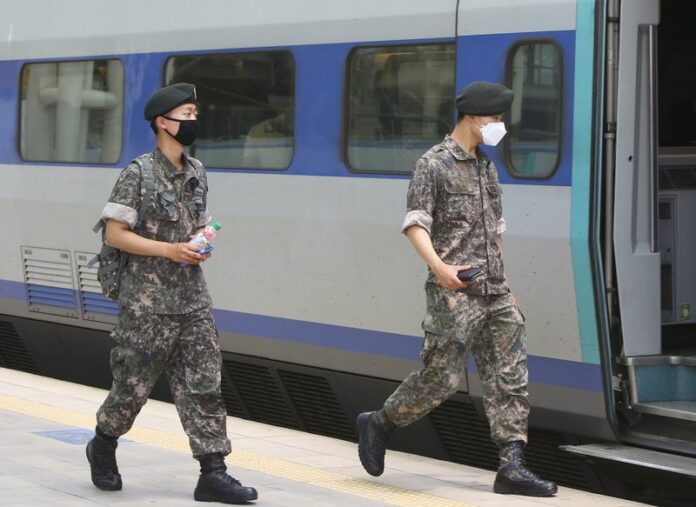
Soldiers wearing face masks arrive at Seoul Station in Seoul, South Korea, 15 June 2015. EPA

SEOUL (DPA) — With three more deaths reported Thursday, the fatality rate in an outbreak of an infectious respiratory disease in South Korea climbed to its highest level so far, according to government figures.

The latest victims, all over 60 and two of whom had pre-existing medical conditions, brought the death toll to 23 in the nearly month-long outbreak of Middle East Respiratory Syndrome, or MERS, Yonhap News Agency reported.

The fatality rate, which was around 40 per cent in the Middle East where the virus was originally identified three years ago, has crept up from under 10 per cent to the current level of 14 per cent in South Korea, figures from the Ministry of Health and Welfare showed.

South Korea is dealing with the biggest outbreak of the disease outside the Middle East, almost entirely centred on hospitals. The number of infections is at over 160, and some 6,700 people have been put in quarantine, Yonhap reported.

On Wednesday, the World Health Organization said the outbreak "is a wakeup call."

"In a highly mobile world, all countries should always be prepared for the unanticipated possibility of outbreaks of this, and other serious infectious diseases."

There had been "suboptimal infection prevention and control measures in hospitals" in South Korea, but recent measures had been more effective, the WHO said.


For comments, or corrections to this article please contact: [email protected]

You can also find Khaosod English on Twitter and Facebook
http://twitter.com/KhaosodEnglish
http://www.facebook.com/KhaosodEnglish
Advertisement

Thai Aviation Safety Downgrade 'May Affect Charter Flights'

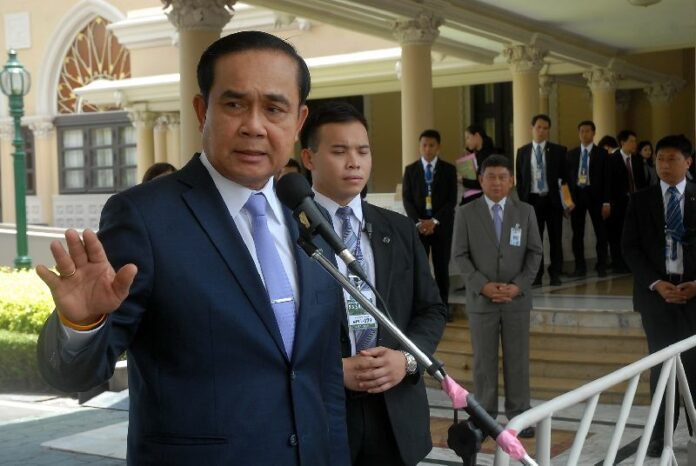
Gen. Prayuth Chan-ocha speaking at the Government House on 19 June 2015.

BANGKOK — The director of a tourism trade federation in Thailand has warned that outbound charter flights may be affected by an international airline inspection agency's decision to downgrade Thailand for substandard safety protocols.

Suparerk Soorangura, chairman of the Thai Travel Agents Association (TTAA), said the "red flag" handed to Thailand by the UN's International Civil Aviation Organization (ICAO) yesterday may make it difficult for Thai airlines to secure licenses to operate charter flights in many countries. 

"It will affect foreign aviation department's consideration of whether to allow Thai charter flights to enter their country," Suparerk said yesterday. "In the long run, it may affect both inbound and outbound tourism, and it may affect our goal of 2.3 trillion baht in tourism revenue that we planned for next year."

Suparerk added, "This announcement by the ICAO is not unexpected … but it depends on each country, what they will do with this result. Some countries are not too strict. They may give Thailand some time." 

He also told reporters that the effects of the  downgrade are not yet clear because Thailand is still in its annual low season for tourism.

"We have to keep our eyes out what kind of impact there will be," he said. "If there is an impact, we may have to change our marketing methods, for example, we may [encourage tourists] to use airlines of other nationalities, and not Thai ones." 

The ICAO downgraded Thailand yesterday after warning in January that its Civil Aviation Department had failed to properly enforce and regulate safety standards for some airlines operating from the Kingdom,  including Thai AirAsia, Thai AirAsia X, Nok Air, and the national flag carrier Thai Airways.

Thailand’s 90-day reprieve to address the lapses expired yesterday, prompting the ICAO to mark the country with a "red flag" on its website. 

Thailand is now one of 13 "safety deficient" countries that have been flagged by the ICAO. The others are Botswana, Uruguay, Angola, Djibouti, Eritrea, Georgia, Haiti, Kazakhstan, Lebanon, Malawi, Nepal, and Sierra Leone. 

Junta chairman and Prime Minister Prayuth Chan-ocha told reporters today that the public should not "get jumpy" about the red flag, because no foreign countries have formally banned Thai flights yet.

"At this time, no country has banned our flights," Gen. Prayuth said. "And we have held in-depth meetings with officials from the organization. They say [the red flag] was necessary, and they sympathize with us, and they understand our intentions to give importance to this matter."

The general continued, "Don't make this into trouble. If you speak too much about this, there may be discord. Instead of getting [more reprieve], we won't get any."

Gen. Prayuth also said that many problems in the Thai airline industry preceded his government, which seized power from an elected administration in May 2014.

"I don't want to blame anyone, because I want people to think on their own about who has created the mess," he said. 


For comments, or corrections to this article please contact: [email protected]

You can also find Khaosod English on Twitter and Facebook
http://twitter.com/KhaosodEnglish
http://www.facebook.com/KhaosodEnglish
Advertisement

Transport Minister 'Confused' by Safety Downgrade for Thai Airlines

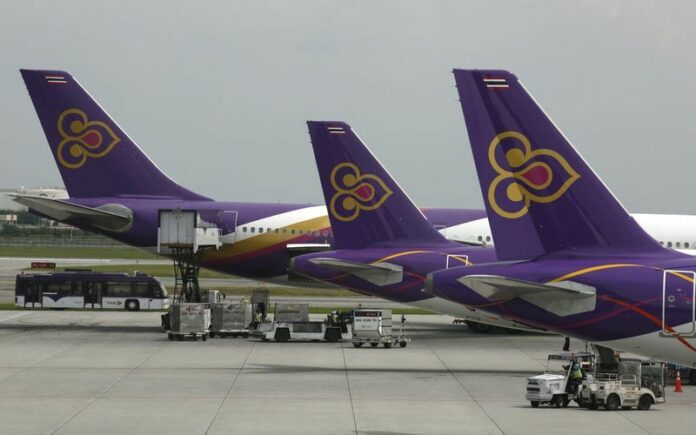
Thai Airways aircraft at Suvarnabhumi Airport, Thailand's largest airport, in Bangkok, Thailand, 02 November 2014. EPA/BARBARA WALTON

BANGKOK — Thailand's Transport Minister said he was surprised to see the United Nations' aviation agency announce a safety downgrade for Thailand-based airlines on its website yesterday.

Air Chief Marshal Prajin Janthong said he was informed by a Thai official that the International Civil Aviation Organization (ICAO) would not make a public announcement about the downgrade, which Thailand had been given 90 days to address.

ACM Prajin said his assistant, Arkom Termpittayapaisith, traveled to the ICAO headquarters in Canada to negotiate for more time to address the agency's safety concerns, and sent him a text message that the ICAO had agreed not to publish  any information about Thailand's failure to meet the agency's standards. 

"But yesterday the ICAO ended up putting red flag on Thailand on its website," ACM Prajin said yesterday. "That means the president of the ICAO did not do what he told Mr. Arkom. I am really confused why this happened. I have to admit that there was some miscommunication, but whether it was a miscommunication between me and Arkom, or between Arkom and the ICAO president, we are still checking about that."

He told reporters that he has already instructed the head of Thailand's Civil Aviation Department to get in touch with Arkom, who is still on a trip abroad, and clarify what was said at the meeting with the ICAO.

ACM Prajin also said a formal press conference will be held by the Ministry of Transport on 22 June to explain the red flag's implications for the Thai aviation industry.

"I have to admit I am very stressed about what happened, but we will continue to solve the problems," ACM Prajin told reporters.

Thailand is now one of 13 "safety deficient" countries that have been flagged by the ICAO. The others are Botswana, Uruguay, Angola, Djibouti, Eritrea, Georgia, Haiti, Kazakhstan, Lebanon, Malawi, Nepal, and Sierra Leone. 

In its January audit, the ICAO found serious gaps in safety standards at some airlines operating from Thailand, including Thai AirAsia, Thai AirAsia X, Nok Air, and the state-owned Thai Airways. The agency cited concerns about a lack of personnel training and licensing, and other lapses in the oversight of airline operations.

In March the ICAO granted Thailand a 90-day reprieve to rectify the issues, but ACM Prajin admitted in April that Thailand would be unable to meet the deadline.

According to the Transport Minister, Thai authorities have spent the past three months working hard to improve aviation safety measures, such as re-organizing the bureaucratic structure, transferring directors, and compiling new manuals to oversee airlines' licenses. State officials have also traveled around the globe in an effort to convince foreign aviation authorities not to ban Thai airlines from using airports in their respective countries. 

"In the past, I have created understanding with many countries, but it's impossible to talk to 50 countries in a single month," ACM Prajin said. "We have to wait and see results from this day first, because now that ICAO has already announced [the red flag], it's pointless to travel to talk to any more nations." 

The air chief marshal added that he has already informed junta chairman and Prime Minister Prayuth Chan-ocha about the incident, but the junta leader has not yet personally shared his opinion on the matter. 


For comments, or corrections to this article please contact: [email protected]

You can also find Khaosod English on Twitter and Facebook
http://twitter.com/KhaosodEnglish
http://www.facebook.com/KhaosodEnglish
Advertisement

Hot News

LATEST NEWS

Bangkok
overcast clouds
33.5 ° C
35 °
32.2 °
69 %
3.4kmh
95 %
Thu
37 °
Fri
37 °
Sat
36 °
Sun
36 °
Mon
36 °