















29.4 C
Bangkok
Thursday, July 16, 2026
Home Blog Page 3239

State Petroleum Enterprise Sued For Resort Island Oil Spill

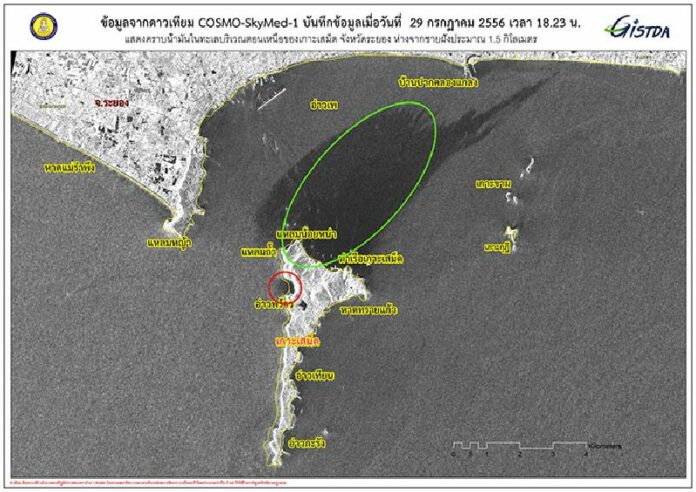
Satellite image of oil spill north of Koh Samet island, 27 July 2014

RAYONG — Business owners on Koh Samet island are suing a state-owned petroleum enterprise for the oil spill that polluted the resort island's beaches last year.

More than 50,000 litres of crude oil leaked from pipeline operated by PTT Global Chemical in July 2013 and blackened several beaches on Koh Samet island, prompting many tourists to leave the area. Others cancelled their trips to the island, resulting in a sharp drop in revenue for many businesses.

Pitsanu Khemaphan, president of the Restaurant and Hotel Association on Koh Samet, arrived at Rayong Provincial Court with his lawyer today to file a lawsuit against PTT Global Chemical for the incident, demanding 300 million baht in compensation. 

The suit was co-filed by owners of Nimmanoradee Resort, Samet Cabana World Resort, and Heaven Resort, who say their businesses were severely affected by the oil spill. The case has been accepted by court officials for further procedure.

According to Mr. Pitsanu, he and other business owners decided to file the lawsuit after negotiations with PTT Global Chemical regarding financial compensation broke down. 

"We have been trying to settle for an agreement with PTT, but we have not received any response," Mr. Pitsanu explained. "So we have to band together and file the lawsuit to ask for damage compensation." 

He added that the statute of limitations on PTT Global Chemical's alleged offence is due to expire by 28 July 2014.

Komkai Sanguannapaporn, Mr. Pitsanu's lawyer, said PTT Global Chemical should be held responsible for business owners’ lost revenue, as well as any environmental consequences the spill has caused.

"PTT Global Chemical is the cause of the oil spill that was brought by waves to Koh Samet. It has damaged the beaches on Koh Samet and driven tourists away," Ms. Komkai said. 

Following the oil spill, room bookings at local hotels and resorts on Koh Samet dropped as low as 15% of their full capacity, while health officials warn that hazardous substances associated with the oil spill were found in nearby waters. 

An internal investigation blamed the incident on faulty designs in pipelines operated by PTT Global Chemical. The enterprise vowed to improve its safety standards to prevent further incidents and launched a PR blitz aimed at convincing the public to visit Koh Samet once again. 

However, critics have accused the petroleum giant of using its well-funded public relations mechanism to refurbish its tainted reputation and cover up the full extent of the environmental damage caused by the spill. 

There is also speculation that as a regular buyer of advertisements in a number of newspapers —  including Khaosod — PTT may have persuaded many media agencies to refrain from investigating the consequences of the oil spill.


For comments, or corrections to this article please contact: [email protected]

You can also find Khaosod English on Twitter and Facebook
http://twitter.com/KhaosodEnglish
http://www.facebook.com/KhaosodEnglish
Advertisement

Indonesian Presidential Candidate Withdraws From Election Process

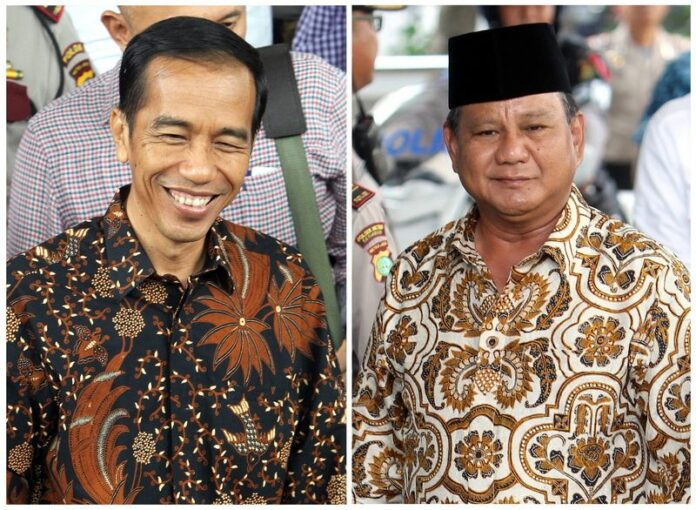
Two photos show Indonesian presidential candidates Joko Widodo (L) in Jakarta on 26 June 2014 and Prabowo Subianto in Jakarta on 25 June 2014. On Tuesday, Joko was expected to be declared the winner of the country's closely fought presidential election. EPA/BAGUS INDAHONO

By Ahmad Pathoni

JAKARTA (DPA) — Indonesian presidential candidate Prabowo Subianto on Tuesday withdrew from the country's election process, citing widespread fraud, just hours before the election commission was to announce the official results.

The commission was expected to declare Prabowo's rival, reform-minded Jakarta governor Joko Widodo, as the winner of the July 9 poll.

"We reject the 2014 presidential election that was legally flawed, and therefore we withdraw from the ongoing process," Prabowo said. 

Security was tight in the capital, with hundreds of armed police and soldiers guarding the headquarters of the election commission.  

Prabowo said the election commission ignored complaints from his camp about "massive, structural and systematic cheating."

"We have found instances of electoral fraud involving organizers that make this election unfair," he said.

He appealed to his supporters to remain calm and not to resort to violence. 

"We will base our struggle on the constitution and laws," he said. 

The election commission ignored Prabowo's demands that it hold new elections in thousands of polling stations where he said cheating took place.

Prabowo wanted the election commission to stop the counting process until all allegations of fraud had been investigated. 

There were fears of clashes involving rival supporters if either candidate refused to accept defeat after an unusually heated campaign marked by mudslinging, nationalistic rhetoric and slander. 

Joko claimed victory after most unofficial quick counts from the July 9 election put him leading by about 5 percentage points. 

But Prabowo disputed the counts and insisted that projections by other pollsters suggested a victory for him. 

"The official result won't be much different from the quick counts," said Burhanuddin Muhtadi, executive director of Indikator Politik Indonesia, a private pollster.  

A website run by private volunteers, Kawalpemilu.org, showed Joko leading with 52.9 per cent, compared to 47.1 per cent for Prabowo. 

The website charted actual vote tallies as they appeared in scanned form on the website of the election commission.

Joko urged his supporters to stay home on Tuesday and warned against street celebrations to avoid clashes with Prabowo's backers. 

Prabowo's campaign said it has enlisted 2,000 lawyers and paralegals to challenge the election result in the Constitutional Court, which could drag the process into late August.

The court has one month to settle any dispute from the presidential election.  

The court's reputation was undermined last month after its chief judge was sentenced to life for receiving bribes in connection with local election disputes. 

Analysts said Prabowo would have to prove that up to 7 million votes were stolen from him in order to change the result in his favour.

Outgoing President Susilo Bambang Yudhoyono on Monday urged the election loser to be gracious. ]

"Accepting defeat is noble, and congratulating the winner is beautiful," he said. 

Joko, 53, was a little-known local politician before he joined the race to become Jakarta governor in 2012. He has earned admiration for his hands-on leadership and ability to connect with ordinary people. 

The 62-year-old Prabowo, who once was married to one of former president Suharto's daughters, has amassed a fortune as a businessman and is seen as representing the country's elite old guard.

He styles himself as a strongman leader but has been dogged by allegations of human rights abuses during his time in the military.

Advertisement

Ukraine Rebels Give MH17 Flight Recorders to Malaysia

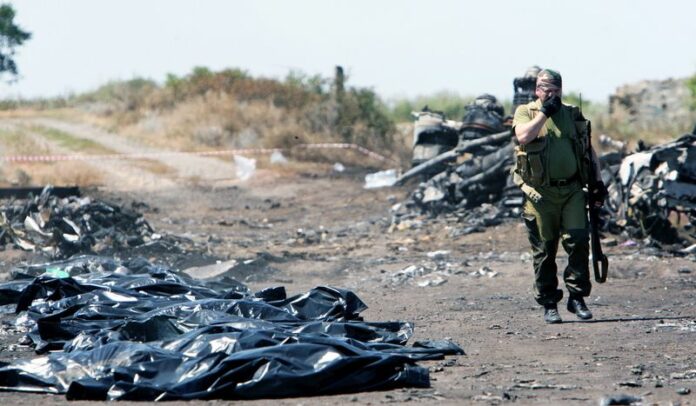
An armed man walks past bodybags containing victims of the Boeing 777 Malaysia Airlines flight MH17. EPA/IGOR KOVALENKO

By John Grafilo

KUALA LUMPUR (DPA) — Pro-Russian rebels delivered the flight data and voice recorders of downed passenger plane MH17 to Malaysian officials on Tuesday, a senior government official said.

The two black boxes were handed over to a Malaysian team in Donetsk by pro-Russian separatists, said Khairil Hilmi Mokhtar, leader of Malaysia's special investigation team in Kiev.

"We will take them to the Netherlands before bringing them back home to Malaysia," said Khairil Hilmi, according to Malaysia's state-run Bernama news agency.

The instruments were given to a group of Malaysian officials led by National Security Council member Colonel Mohamed Shukri, a government source in Kuala Lumpur said.

The equipment appeared to be in good condition, the source said.

"Malaysia will keep it for safekeeping temporarily and will eventually hand it to the proper investigating body," he said.

Malaysia Airlines flight MH17 crashed in eastern Ukraine on Thursday, killing all 298 people aboard. It was suspected to have been shot down by a missile.

Russian Ambassador to Malaysia Lyudmila Vorobyeva said she was convinced the pro-Russian separatists were not capable of shooting down the jetliner, as the guerrillas were not armed with a sophisticated missile system and did not have the technical know-how.

"The BUK missile system is very sophisticated and you need special training to operate it," she told a press conference at the embassy in Kuala Lumpur. "I am convinced that there is no way they (rebels) could have done it."

The delivery of the black boxes occurred after Prime Minister Najib Razak spoke Monday with rebel leader Alexander Borodai, who controls the territory where the plane crashed.

Najib said Borodai agreed to have the human remains from the crash site moved to Kharkiv, where they would be turned over to representatives of the Dutch government.

He also said independent international investigators would be guaranteed safe access to the crash site.
 

Advertisement

Junta Relaxes Ban On Free Press, Allows 'Honest' Criticism

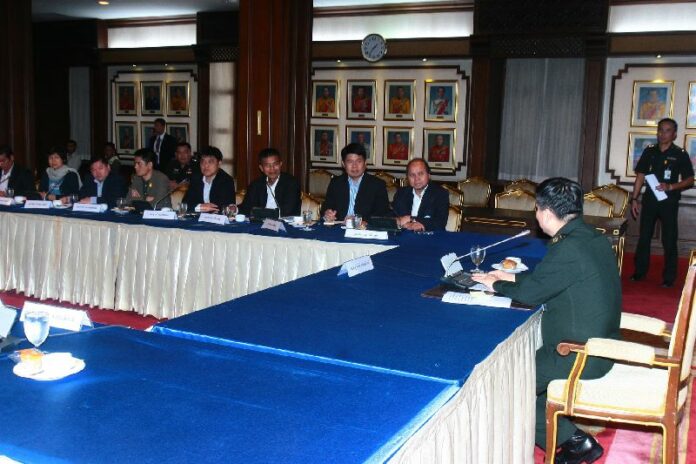
Pradith Ruengdith, the director of the Thai Journalist Association (TJA), delivered a joint statement to Gen. Surasak Kanchanarat, permanent secretary of the Ministry of Defence, representing the views of the TJA, the Thai Broadcast Journalist Association, the National Council of Press in Thailand, and the News Broadcasting Council of Thailand, 21 July 2014.

BANGKOK — Following a complaint by Thai press associations, the military junta has modified the sweeping ban on freedom of the press it imposed last week.

Last Friday the ruling National Council for Peace and Order (NCPO) issued an announcement reminding the media of a ban on all “criticism of operations of the National Council for Peace and Order, its officials, or any related individual.” Media agencies who violate the ban will be shut down and prosecuted, the announcement warned.

But the junta issued a fresh announcement last night, slightly amending the gag order, after four media associations urged the military to repeal the ban.

According to Announcement 103/2557, the ban will now only apply to "criticism of the NCPO's operations that have the dishonest intention to damage the credibility of the NCPO with false information."

The NCPO also scaled down its punishment for violators; instead of facing an immediate shutdown, erring media agencies will undergo an internal "ethics inquiry" conducted by their own press associations.

Pradith Ruengdith, the director of the Thai Journalist Association (TJA), delivered a joint statement yesterday to Gen. Surasak Kanchanarat, permanent secretary of the Ministry of Defence, representing the views of the TJA, the Thai Broadcast Journalist Association, the National Council of Press in Thailand, and the News Broadcasting Council of Thailand.

The statement reportedly asked the junta to either modify its ban on media coverage or repeal it altogether.

Despite the amendment, the NCPO still retains considerable restriction on freedom of expression in Thailand. The media remains prohibited from publishing news that could “cause confusion, incite disputes, or lead to disunity in the Kingdom.”

“Determining what information falls within these prohibited categories is solely within the discretion of the NCPO,” New York-based Human Rights Watch noted in a press release published yesterday.

As a result, many media agencies practice self-censorship to avoid punishment by the NCPO. 

The rights organization urged the junta to immediately revoke martial law, end censorship, and restore democratic rule. 

For comments, or corrections to this article please contact: [email protected]

You can also find Khaosod English on Twitter and Facebook
http://twitter.com/KhaosodEnglish
http://www.facebook.com/KhaosodEnglish
Advertisement

HM King To Meet Junta Leader, Approve Interim Charter

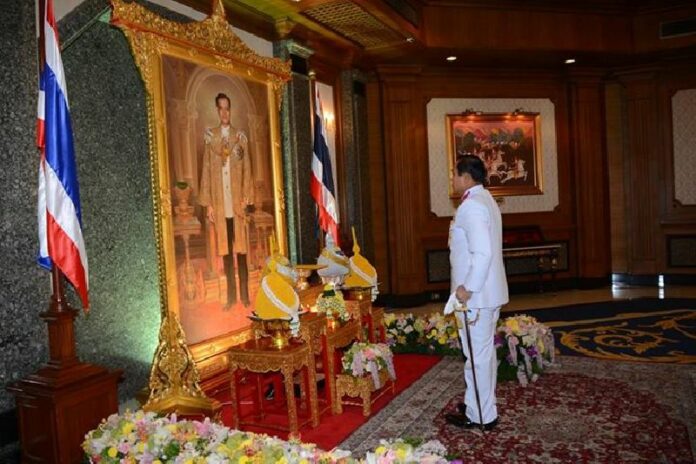
Gen. Prayuth Chan-ocha in the ceremony to receive the Royal Gazette issued by His Majesty the King that formally appointed him as the head of the National Council of Peace and Order (NCPO), 26 May 2014.

BANGKOK — The leader of Thailand’s military junta is scheduled to meet His Majesty the King to seek royal approval for an interim constitution this evening, reports say.

According to a notice issued by the Bureau of the Royal Household, Gen. Prayuth Chan-ocha, chairman of the National Council for Peace and Order (NCPO), will be granted audience with King Bhumipol at his seaside retreat, Klai Kangwon Palace in in Prachuap Kiri Khan province, at 5 pm.

His Majesty the King will sign and bestow the interim charter to Gen. Prayuth in the same ceremony, the notice reportedly says. 

Today's meeting is the first known occasion that Gen. Prayuth will meet His Majesty the King in person since the general led a coup against the elected government on 22 May. 

Gen. Prayuth previously received a royal endorsement of the coup in a ceremony on 26 May that His Majesty the King did not attend; the 86-year-old monarch, who is in frail health, has been residing at Klai Kangwon Palace and rarely makes public appearances. 

Although Gen. Prayuth has not publicly disclosed the details of the interim constitution, a report on Prachachart newspaper, quoting an official, states that the charter will consist of 48 articles and calls for a 220-member National Legislature Assembly and 200-member Reform Council.

Under the charter, NLA members will submit the name of a new Prime Minister to His Majesty the King for approval, while the NCPO will retain "equal administrative power" to the new government, Prachachart reports. 

According to Gen. Prayuth, the interim government will govern the country until next October, when new elections will be held if Thailand's political situation is deemed stable.

For comments, or corrections to this article please contact: [email protected]

You can also find Khaosod English on Twitter and Facebook
http://twitter.com/KhaosodEnglish
http://www.facebook.com/KhaosodEnglish
 

http://ssl.gstatic.com/ui/v1/icons/mail/images/cleardot.gif

Advertisement

Junta Relaxes Ban On Free Press, Allows 'Honest' Criticism

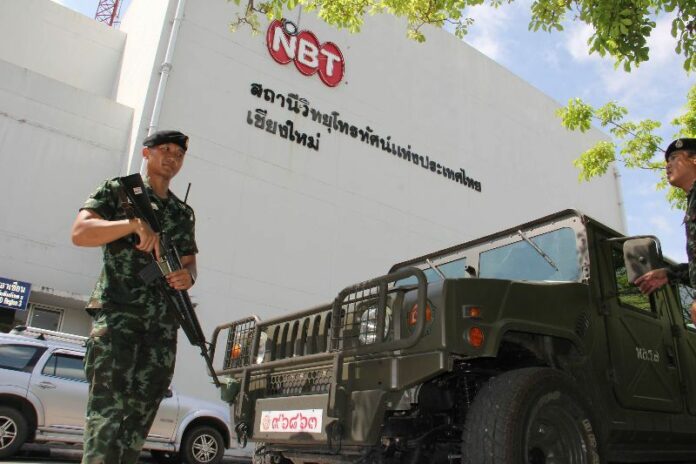
Soldiers in front of the regional office of National Broadcasting Service of Thailand (NBT) in Chiang Mai province, 20 May 2014

BANGKOK — Following a complaint by Thai press associations, the military junta has modified the sweeping ban on freedom of the press it imposed last week.

Last Friday the ruling National Council for Peace and Order (NCPO) issued an announcement reminding the media of a ban on all “criticism of operations of the National Council for Peace and Order, its officials, or any related individual.” Media agencies who violate the ban will be shut down and prosecuted, the announcement warned.

But the junta issued a fresh announcement last night, slightly amending the gag order, after four media associations urged the military to repeal the ban.

According to Announcement 103/2557, the ban will now only apply to "criticism of the NCPO's operations that have the dishonest intention to damage the credibility of the NCPO with false information."

The NCPO also scaled down its punishment for violators; instead of facing an immediate shutdown, erring media agencies will undergo an internal "ethics inquiry" conducted by their own press associations.

Pradith Ruengdith, the director of the Thai Journalist Association (TJA), delivered a joint statement yesterday to Gen. Surasak Kanchanarat, permanent secretary of the Ministry of Defence, representing the views of the TJA, the Thai Broadcast Journalist Association, the National Council of Press in Thailand, and the News Broadcasting Council of Thailand.

The statement reportedly asked the junta to either modify its ban on media coverage or repeal it altogether.

Despite the amendment, the NCPO still retains considerable restriction on freedom of expression in Thailand. The media remains prohibited from publishing news that could “cause confusion, incite disputes, or lead to disunity in the Kingdom.”

“Determining what information falls within these prohibited categories is solely within the discretion of the NCPO,” New York-based Human Rights Watch noted in a press release published yesterday.

As a result, many media agencies practice self-censorship to avoid punishment by the NCPO. 

The rights organization urged the junta to immediately revoke martial law, end censorship, and restore democratic rule. 

For comments, or corrections to this article please contact: [email protected]

You can also find Khaosod English on Twitter and Facebook
http://twitter.com/KhaosodEnglish
http://www.facebook.com/KhaosodEnglish
 

Advertisement

Some Enraged, Others Resigned At Crackdowns After Thai Coup

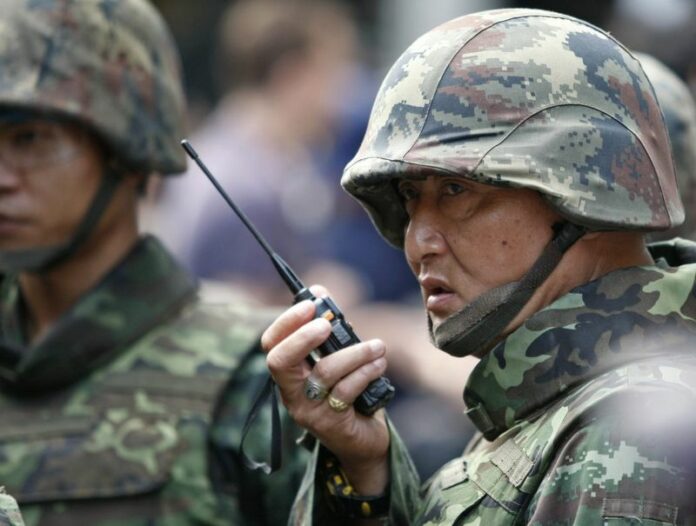
A Thai soldier uses a radio as security forces work to prevent an anti-coup demonstration at Ratchaprasong shopping district in Bangkok, Thailand, 01 June 2014. Recent polls in Thailand suggest that a majority of the population supports the military rule which followed the country's May coup. EPA/PONGMANAT TASIRI

By Cod Satrusayang

BANGKOK (DPA) —  Recent polls in Thailand suggest a majority of the population supports military rule after the coup in May, and a significant number would back junta leader Prayuth Chan-ocha to be the next prime minister.

With a crackdown on dissent on the street and in the media, and the published polls run by government agencies, it would be more surprising perhaps if the surveys had said anything else.

"How do people know that the majority of Thais support the coup when you can't express a differing opinion?" said a professor at a prominent university, who wished to remain anonymous for fear of reprisal.

"We have censorship, we have arbitrary arrests, we have a ruling power that is not checked by any laws or regulations. How can that be ideal?" he said.

Anecdotally, some seasoned Thai observers do believe the coup has been broadly welcomed despite the restrictions on individual freedoms.

"A significant majority of people I run into appear pretty relieved about [the coup]," said SP Somtow, an author and social commentator.

"However [the country's problems] will come back, and worse, without addressing the root causes."

"The NCPO's virtually absolute power in the wake of the coup has enabled it to tackle policy issues like no elected government can but it comes at the price of democratic rule," adds Thitinan Pongsudhirak, a professor at Chulalongkorn University and head of the Institute for Security and International Studies. The ruling junta is known as the National Council for Peace and Order or NCPO.

"If the junta can maintain its even-handedness … institute reforms that are seen as fair and forward-looking on the way back to elections and democratic rule, it will have done better than all of its predecessors."

This point of view is badly skewed, critics say.

"This romanticization of the coup needs to stop," said the unnamed professor.

The junta for its part has defended the need to ban political gatherings, monitor and censor social media posts, and detain dissidents for weeks at a time.

"You ask what harm could [one protester] do," said Colonel Werachon Sukondhapatipak "but if you look at it through the military's eyes, we need to [maintain order] because one protester could lead to more and the situation could get out of hand."

Anti-dissent measures that Amnesty International calls "alarming" and contributing to "a climate of fear" appear to have succeeded in keeping political disruption out of everyday life in Thailand.

"You can call it persistence of the normal," said Tri Kanchanadul, the owner of a small cafe in central Bangkok.

For many businesses, the coup was a welcome change after months of protests gridlocked the city and stifled business.

"Sales were down 30 per cent during the protests and since the coup it has been up 10-15 per cent," said Tri. "Businesses love stability. Tt has nothing to do with democracy or lack of it."

Luxury condominium security guard Jitti Tongpien said political arguments were far from his mind.

"Oh, those debates are for much smarter people than me," he said. "I just help people park their cars. It does not matter who they support as long as they tip."

Such statements are a result of Thais' resignation to their country's political fate, said academic Thitinan.

"The Thai people have no choice but to let [the junta] have its way and see what happens," he said.

Advertisement

Some Enraged, Others Resigned At Crackdowns After Thai Coup

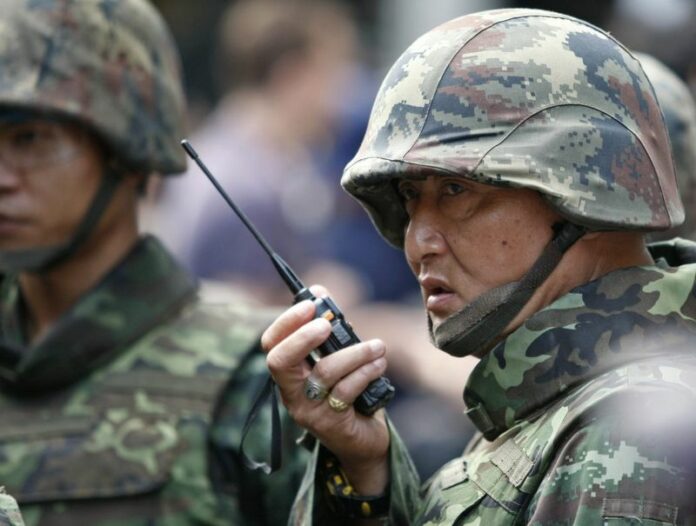
A Thai soldier uses a radio as security forces work to prevent an anti-coup demonstration at Ratchaprasong shopping district in Bangkok, Thailand, 01 June 2014. Recent polls in Thailand suggest that a majority of the population supports the military rule which followed the country's May coup. EPA/PONGMANAT TASIRI

By Cod Satrusayang

BANGKOK (DPA) —  Recent polls in Thailand suggest a majority of the population supports military rule after the coup in May, and a significant number would back junta leader Prayuth Chan-ocha to be the next prime minister.

With a crackdown on dissent on the street and in the media, and the published polls run by government agencies, it would be more surprising perhaps if the surveys had said anything else.

"How do people know that the majority of Thais support the coup when you can't express a differing opinion?" said a professor at a prominent university, who wished to remain anonymous for fear of reprisal.

"We have censorship, we have arbitrary arrests, we have a ruling power that is not checked by any laws or regulations. How can that be ideal?" he said.

Anecdotally, some seasoned Thai observers do believe the coup has been broadly welcomed despite the restrictions on individual freedoms.

"A significant majority of people I run into appear pretty relieved about [the coup]," said SP Somtow, an author and social commentator.

"However [the country's problems] will come back, and worse, without addressing the root causes."

"The NCPO's virtually absolute power in the wake of the coup has enabled it to tackle policy issues like no elected government can but it comes at the price of democratic rule," adds Thitinan Pongsudhirak, a professor at Chulalongkorn University and head of the Institute for Security and International Studies. The ruling junta is known as the National Council for Peace and Order or NCPO.

"If the junta can maintain its even-handedness … institute reforms that are seen as fair and forward-looking on the way back to elections and democratic rule, it will have done better than all of its predecessors."

This point of view is badly skewed, critics say.

"This romanticization of the coup needs to stop," said the unnamed professor.

The junta for its part has defended the need to ban political gatherings, monitor and censor social media posts, and detain dissidents for weeks at a time.

"You ask what harm could [one protester] do," said Colonel Werachon Sukondhapatipak "but if you look at it through the military's eyes, we need to [maintain order] because one protester could lead to more and the situation could get out of hand."

Anti-dissent measures that Amnesty International calls "alarming" and contributing to "a climate of fear" appear to have succeeded in keeping political disruption out of everyday life in Thailand.

"You can call it persistence of the normal," said Tri Kanchanadul, the owner of a small cafe in central Bangkok.

For many businesses, the coup was a welcome change after months of protests gridlocked the city and stifled business.

"Sales were down 30 per cent during the protests and since the coup it has been up 10-15 per cent," said Tri. "Businesses love stability. Tt has nothing to do with democracy or lack of it."

Luxury condominium security guard Jitti Tongpien said political arguments were far from his mind.

"Oh, those debates are for much smarter people than me," he said. "I just help people park their cars. It does not matter who they support as long as they tip."

Such statements are a result of Thais' resignation to their country's political fate, said academic Thitinan.

"The Thai people have no choice but to let [the junta] have its way and see what happens," he said.
 

Advertisement

Thai Junta Relaxes Gag Order on Media

BANGKOK (DPA) — Thailand's military junta has reversed an earlier order which forbade all criticism of its rule.

It had ordered all media to cease criticism of its policies last week, but relented after a strong public backlash and a meeting with the Thai Journalists' Association. 

A new decree issued late Monday narrowed the criteria, making it illegal only to "criticise [the junta] with impure motives that slander and destroy public confidence." 

It also reversed an earlier decision giving officials the power to close down media outlets that did not comply with the gag order.

The new orders say officials can only investigate media outlets, and forward their findings to the junta.  

Advertisement

Ukraine To Hand Over MH17 Probe To Netherlands Amid More Delays

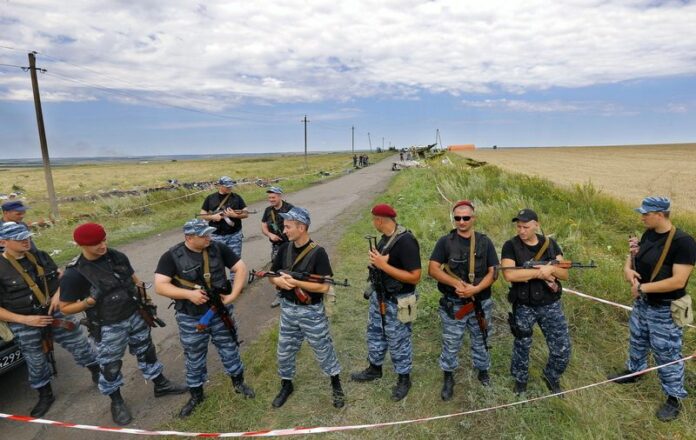
Armed rebel soldiers block access to the main crash site of the Boeing 777 Malaysia Airlines flight MH17, on Sunday. The plane went down on Thursday between the city of Donetsk and the Russian border, an area that has seen heavy fighting between separatists and Ukrainian government forces. EPA/ROBERT GHEMENT

By John Grafilo and Wolfgang Jung

KIEV (DPA) — ​The Netherlands is set to take the lead into the investigation of Malaysia Airlines flight MH17, which crashed in eastern Ukraine last week, as Dutch investigators arrived Monday at the incident site to take over from their Ukrainian counterparts.

However, as has been the case since the Thursday crash – amid speculation that it was shot down in the midst of separatist fighting in eastern Ukraine – the way forward remained unclear, with Ukraine's government and much of the West accusing the separatists who control the region of hampering the investigation.

Ukrainian Prime Minister Arseniy Yatsenyuk said victims would be flown to Amsterdam to be examined at a leading forensics institute. The majority of flight MH17's passengers were Dutch citizens.

So far, 251 of the 298 victims have been loaded onto a refrigerated train in the town of Torez, near the crash site. But it was not clear when the train would move on from there.

"These bloody guerillas do not allow the train to leave," Yatsenyuk charged.

However, a rebel spokesman has said his men would help the Dutch experts inspect the crash site and the bodies.

Malaysian specialists were also scheduled to arrive at the scene Monday.

Meanwhile, international pressure continued to mount on Moscow to use its influence with the rebels and get them to cooperate with the investigation and clean-up operations.

The United States and other countries say there is strong evidence that Russia supplied the missile that shot down the airliner on Thursday.

German Chancellor Angela Merkel, French President Francois Hollande and British Prime Minister David Cameron threatened on the weekend to increase EU sanctions pressure on Moscow.

In New York, the UN Security Council in New York was preparing to vote on a resolution Monday that would call on all involved parties to cooperate with the international investigation.

Russian President Vladimir Putin warned against misusing the incident for political purposes and shifted blame to Kiev and its military operations against the rebels.

"If the fighting in the east of Ukraine had not resumed on June 28, this tragedy would surely not have happened," he said.

Advertisement

Hot News

LATEST NEWS

Bangkok
broken clouds
29.4 ° C
29.4 °
29.4 °
75 %
4.7kmh
75 %
Wed
28 °
Thu
39 °
Fri
41 °
Sat
36 °
Sun
37 °