



























25.5 C
Bangkok
Sunday, July 5, 2026
Home Blog Page 3301

Political Conflict Exposes ‘Cracks’ in Media Freedom

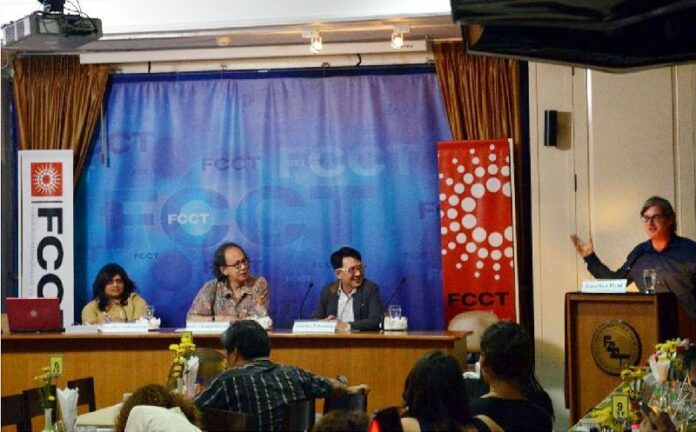
A panel discussion on press freedom hosted by The Foreign Correspondents' Club of Thailand, 30 April 2014.

BANGKOK — Thailand’s protracted political crisis has shined a spotlight on the capacity and credibility of the country’s media, experts say.

“Elections have provided a space in which we can actually look at the media for what it is,” Gayathry Venkiteswaran, Executive Director of the Southeast Asian Press Alliance, said in a panel discussion on press freedom hosted by Thailand’s Foreign Correspondent Club in a run-up to World Press Freedom Day on 3 May. 

According to Ms. Venkiteswaran, one of the most concerning trends exposed by Thailand’s recent turmoil is the alarming number of politically-fueled threats directed at media outlets.

“People should be debating, people should be asking questions, but they should not be threatening either the journalists or the messengers,” said Ms. Venkiteswaran.

Freedom of the press in Thailand is currently the worst its been in the past decade, according to Freedom House's 2014 report on press freedom around the world. 

The report, released this week, attributes the erosion of media freedom in Thailand “to increased physical harassment and attacks on journalists and media outlets by political activists, often in the context of political unrest and demonstrations.”

Since the most recent iteration of the country’s decade-long political struggle—broadly waged between pro and anti-Thaksin Thais—ignited at the end of last year, there have been a number violent attacks on news organizations and journalists.

In November, anti-government protesters harassed staff from two government-owned TV stations and physically attacked a German journalist at a rally organized by the People's Committee for Absolute Democracy With the King As Head of State (PCAD).

Anti-government PCAD protesters also stormed six television stations in December, demanding a speech by the group’s leader, Suthep Thaugsuban, be televised that night.

Most recently, a petrol bomb was thrown into the yard of an anti-government television show host in January, two grenades were thrown at a Thai PBS television station in February, a Redshirt radio station in Tak province was riddled by bullets in March, and an M79 grenade was launched at the office of the Thai-language newspaper, Daily News, several weeks ago.  

As a result, former editor of the Nation Media Group Kavi Chongkittavorn said that Thailand’s borders with Malaysia and Myanmar are no longer the country’s most combustible regions.

“Now, the conflict zone lives in the heart of Bangkok,” said Mr. Kavi.

Not only have there been a heightened number of threats and attacks over the past six months, but authorities have also largely failed to find and arrest those responsible for the violence.   

“Both sides, the Democrat Party and Pheu Thai, have failed in terms of impunity,” said Ms. Venkiteswaran. “There will be accumulated cases until we address that problem.”

Freedom House’s 2014 report also cites “partisanship and biased content at a number of media outlets” as a reason for the decline in Thailand’s press freedom, which may explain why news organisations in Thailand are a frequent target of politically-motivated attacks.

BBC’s Jonathan Head said he has seen Thai media has become increasingly polarized.

“People are listening to the media they like, so there is concentration of extreme views, and [they] never hear the other side,” said Mr. Head. 

According to Mr. Kavi, former editor of the Nation Media Group, Thai media is more involved in politics than ever before.

“Media has become the number one player in Thai political scene today,” said Mr. Kavi. “It used to be the monarchy, the army, the bureaucrats, politicians … this time the media is out in front.”

But Mr. Kavi said he worries that journalists in Thailand focus too heavily on the daily comments of prominent politicians, resulting in a 'he-said-she-said' style of reporting that lacks sufficient analysis of the broader conflict.

“[Reporters] will follow the speaker and focus on what they want to say, and what they have said, and then get the worst comment of the day,” said Mr. Kavi. “They will continue day in day out, without thinking about … whether [their reports] help fuel the political fire at the moment or help to find a solution.”

Journalists' ability to report freely in Thailand is also curbed by a number of legal statutes.  

Thailand’s lese majeste law, which outlaws any criticism of the monarchy—however oblique—can result in up to 15 years in prison per offense. Critics of the law say it is widely abused, particularly in times of political conflict.

The 2007 Computer Crimes Act has also been harshly criticized by advocacy groups like Reporters Without Borders and the Thai Journalists Association.

The legislation allows the government to arrest reporters for political reasons, as is currently the case with two journalists from Phuketwan news who are facing charges under the law for allegedly defaming the Royal Thai Navy by publishing an except from a Reuters report that alleged the navy’s involvement in the trafficking of Rohingya.

“Bringing charges under the controversial Computers Crimes Act in a defamation case is indicative of the critical state of freedom of information in Thailand and amounts to an attempt to gag the media,” said a Reporters Without Borders press release in December.

Ms. Venkiteswaran said the Southeast Asian Press Alliance is working on campaign to amend the Computer Crimes Act, and is monitoring the case of the two journalists from Phuketwan


For comments, or corrections to this article please contact:[email protected]

You can also find Khaosod English on Twitter and Facebook
http://twitter.com/KhaosodEnglish
http://www.facebook.com/KhaosodEnglish

Advertisement

Political Conflict Exposes ‘Cracks’ in Media Freedom

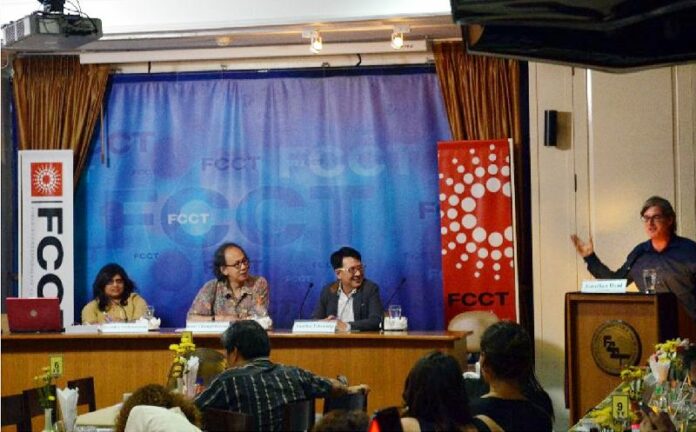
A panel discussion on press freedom hosted by The Foreign Correspondents' Club of Thailand, 30 April 2014.

BANGKOK — Thailand’s protracted political crisis has shined a spotlight on the capacity and credibility of the country’s media, experts say.

“Elections have provided a space in which we can actually look at the media for what it is,” Gayathry Venkiteswaran, Executive Director of the Southeast Asian Press Alliance, said in a panel discussion on press freedom hosted by Thailand’s Foreign Correspondent Club in a run-up to World Press Freedom Day on 3 May. 

According to Ms. Venkiteswaran, one of the most concerning trends exposed by Thailand’s recent turmoil is the alarming number of politically-fueled threats directed at media outlets.

“People should be debating, people should be asking questions, but they should not be threatening either the journalists or the messengers,” said Ms. Venkiteswaran.

Freedom of the press in Thailand is currently the worst its been in the past decade, according to Freedom House's 2014 report on press freedom around the world. 

The report, released this week, attributes the erosion of media freedom in Thailand “to increased physical harassment and attacks on journalists and media outlets by political activists, often in the context of political unrest and demonstrations.”

Since the most recent iteration of the country’s decade-long political struggle—broadly waged between pro and anti-Thaksin Thais—ignited at the end of last year, there have been a number violent attacks on news organizations and journalists.

In November, anti-government protesters harassed staff from two government-owned TV stations and physically attacked a German journalist at a rally organized by the People's Committee for Absolute Democracy With the King As Head of State (PCAD).

Anti-government PCAD protesters also stormed six television stations in December, demanding a speech by the group’s leader, Suthep Thaugsuban, be televised that night.

Most recently, a petrol bomb was thrown into the yard of an anti-government television show host in January, two grenades were thrown at a Thai PBS television station in February, a Redshirt radio station in Tak province was riddled by bullets in March, and an M79 grenade was launched at the office of the Thai-language newspaper, Daily News, several weeks ago.  

As a result, former editor of the Nation Media Group Kavi Chongkittavorn said that Thailand’s borders with Malaysia and Myanmar are no longer the country’s most combustible regions.

“Now, the conflict zone lives in the heart of Bangkok,” said Mr. Kavi.

Not only have there been a heightened number of threats and attacks over the past six months, but authorities have also largely failed to find and arrest those responsible for the violence.   

“Both sides, the Democrat Party and Pheu Thai, have failed in terms of impunity,” said Ms. Venkiteswaran. “There will be accumulated cases until we address that problem.”

Freedom House’s 2014 report also cites “partisanship and biased content at a number of media outlets” as a reason for the decline in Thailand’s press freedom, which may explain why news organisations in Thailand are a frequent target of politically-motivated attacks.

BBC’s Jonathan Head said he has seen Thai media has become increasingly polarized.

“People are listening to the media they like, so there is concentration of extreme views, and [they] never hear the other side,” said Mr. Head. 

According to Mr. Kavi, former editor of the Nation Media Group, Thai media is more involved in politics than ever before.

“Media has become the number one player in Thai political scene today,” said Mr. Kavi. “It used to be the monarchy, the army, the bureaucrats, politicians … this time the media is out in front.”

But Mr. Kavi said he worries that journalists in Thailand focus too heavily on the daily comments of prominent politicians, resulting in a 'he-said-she-said' style of reporting that lacks sufficient analysis of the broader conflict.

“[Reporters] will follow the speaker and focus on what they want to say, and what they have said, and then get the worst comment of the day,” said Mr. Kavi. “They will continue day in day out, without thinking about … whether [their reports] help fuel the political fire at the moment or help to find a solution.”

Journalists' ability to report freely in Thailand is also curbed by a number of legal statutes.  

Thailand’s lese majeste law, which outlaws any criticism of the monarchy—however oblique—can result in up to 15 years in prison per offense. Critics of the law say it is widely abused, particularly in times of political conflict.

The 2007 Computer Crimes Act has also been harshly criticized by advocacy groups like Reporters Without Borders and the Thai Journalists Association.

The legislation allows the government to arrest reporters for political reasons, as is currently the case with two journalists from Phuketwan news who are facing charges under the law for allegedly defaming the Royal Thai Navy by publishing an except from a Reuters report that alleged the navy’s involvement in the trafficking of Rohingya.

“Bringing charges under the controversial Computers Crimes Act in a defamation case is indicative of the critical state of freedom of information in Thailand and amounts to an attempt to gag the media,” said a Reporters Without Borders press release in December.

Ms. Venkiteswaran said the Southeast Asian Press Alliance is working on campaign to amend the Computer Crimes Act, and is monitoring the case of the two journalists from Phuketwan


For comments, or corrections to this article please contact: [email protected]

You can also find Khaosod English on Twitter and Facebook
http://twitter.com/KhaosodEnglish
http://www.facebook.com/KhaosodEnglish
Advertisement

Demand For Thai Dog Breed Soars Thanks To Botched Burglary

BANGKOK — Prices of the Thai Bang Kaew dogs have risen dramatically after news that a Bang Kaew guard dog helped deter a burglary attempt at the residence of a famous Thai actor.

The robber allegedly entered Chaiya Mitchai's estate in Wiset Chaicharn district, Ang Thong province, in the early morning of 29 April when the actor was away on a business trip. 

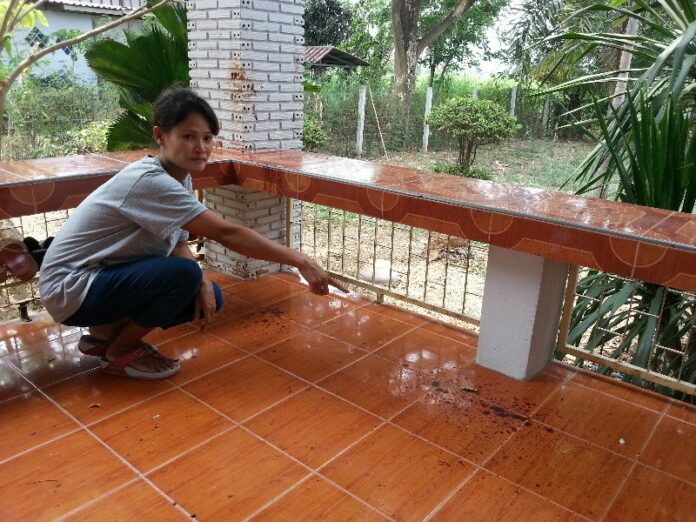
Mr. Chaiya said when he returned to his home, he found his male Bang Kaew dog— nicknamed Bai Tarn—waiting for him with bloodied wounds all over his body and jaws. 

Large splatters of blood were also found around Mr. Chaiya's courtyard, leading the police to believe that a burglar may have encountered the 5-year-old Bai Tarn in an attempt to break in. 

Mr. Chaiya said his other two Bang Kaews died of mysterious circumstances just a few days before the attempted burglary took place. He believes the burglar might have poisoned his dogs in preparation for the break-in. 

The actor also told reporters that Bai Tarn is now recovering from his wounds, but still appears to be traumatized by the experience.

"So I fed him a steak to cheer him up," Mr. Chaiya said.

The Bang Kaew breed is well-known among Thai homeowners for its aggressive nature toward strangers, but news of Bai Tarn's battle with the alleged burglar has spurred new demand for the breed, a number of dog breeders claim.

Prathum Kongcharoen, a Bang Kaew breeder in Pitsanulok province, said all of Bang Kaew puppies in his farm have been claimed by potential customers in recent days. 

A Bang Kaew puppy costs about 15,000 baht, he said, but the prices keep rising thanks to increasing demand at the moment.

The next litter of Bang Kaew puppies will not be available in the store until November, said Mr. Prathum, who has been selling Bang Kaews for nearly 30 years.

Due to their intelligence and territorial habit, Bang Kaews have always been immensely popular among rubber farm owners in the southern and eastern regions of Thailand, Mr. Prathum added.


For comments, or corrections to this article please contact: [email protected]

You can also find Khaosod English on Twitter and Facebook
http://twitter.com/KhaosodEnglish
http://www.facebook.com/KhaosodEnglish
Advertisement

Assaulted Colonel's Family Snubs PCAD Monk's Apology

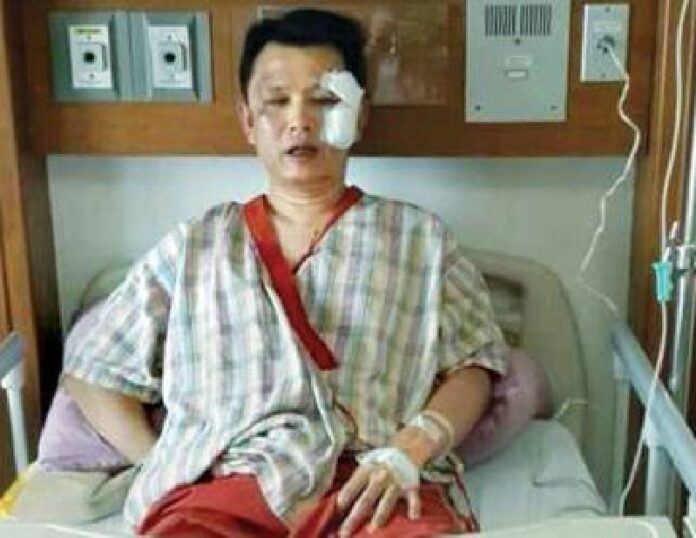
Col. Witthawat Wattanakul shortly after he was attacked by anti-government protest guards (image provided by the police)

BANGKOK – The family of an army colonel allegedly assaulted by anti-government militants has rejected the compensation money offered by the protesters

Col. Witthawat Wattanakul, a staff officer at the Royal Thai Armed Force Headquarters, was allegedly attacked in northern Bangkok on 25 April after he attempted to remove traffic cones set up by protesters near their rally site on Chaeng Wattana Road.

When Col. Witthawat got out of his vehicle and attempted to remove the cones, a group of anti-government guards reportedly brutally attacked him. One of the guards also fired a handgun at Col. Witthawat's feet, injuring him with bullet fragments, according to media reports.

Shortly after news of the incident surfaced, Buddhist monk and prominent anti-government protest leader Buddha Issara admitted that a group of overzealous guards attacked Col. Witthawat "due to misunderstanding."

Buddha Issara, who is a core leader of the People's Committee for Absolute Democracy With the King As Head of State (PCAD), recently arranged a ceremony with a group of high-ranking army officers to ask for forgiveness over the incident and offer 50,000 baht to help pay for Col. Witthawat's medical costs.

However, Col. Witthawat's family has not accepted the money and says they intend to pursue legal action against the PCAD guards, according to Pol.Col. Thanawat Wattanakul, a commander at Chokechai Police Station and the elder brother of Col. Witthawat.

The money will be returned to Buddha Issara by the army staff, Pol.Col. Thanawat said.

Pol.Col. Thanawat added that his family will organise a press conference in order to present CCTV footage of the attack to the press this Sunday.

Read More: Mysterious Military Leaflets Denounce PCAD Guards' 'Thuggery'


For comments, or corrections to this article please contact: [email protected]

You can also find Khaosod English on Twitter and Facebook
http://twitter.com/KhaosodEnglish
http://www.facebook.com/KhaosodEnglish
Advertisement

Redshirts Slam PCAD's Call For Royal Intervention

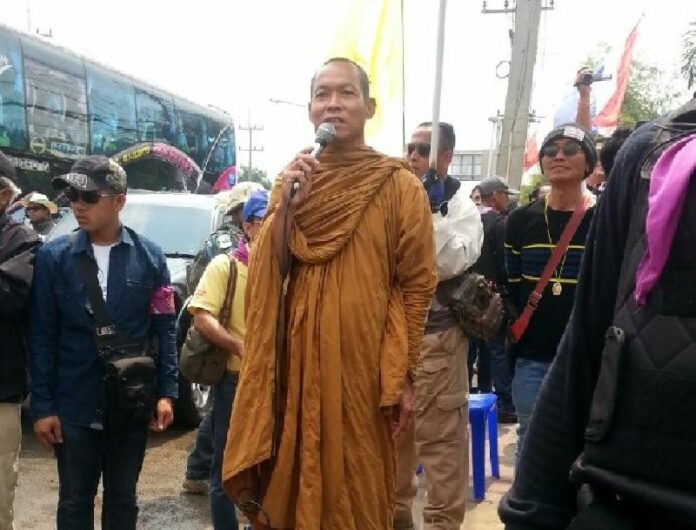
Buddha Issara

BANGKOK — A prominent Redshirt activist has denounced anti-government protesters' call for His Majesty the King to directly intervene in Thailand's ongoing political crisis.

Buddhist monk and anti-government activist Buddha Issara announced yesterday (1 May) that he would lead a demonstration to Hua Hin district of Prachuab Kiri Khan province, where the His Majesty's summer palace is located, on 16 May in a bid to "return the royal power" to the king.

Buddha Issara, who serves as a co-leader of the People's Committee for Absolute Democracy With the King As Head of State (PCAD), argued that the 2007 Constitution permits His Majesty the King to replace Prime Minister Yingluck Shinawatra with a new leader of his own royal discretion.  

According to the monk, the public can choose to "return" sovereign power to the king in accordance with Article 3 of the Constitution, which would grant him a legal basis for appointing his own Prime Minister.

Numerous legal experts and scholars have rejected this interpretation in the past, noting that Article 3 of the 2007 Constitution clearly states that His Majesty the King can only exercise sovereign power through the three branches of administrative, legislative, and judicial powers as a symbolic Head of State.

But Buddha Issara appears to be confident that his three-day rally in Hua Hin district from 16-18 May will be successful. 

"If Suthep and other PCAD leaders cannot close the game [against Ms. Yingluck]," Buddha Issara said, referring to PCAD sec-gen Suthep Thaugsuban, "They should turn to Article 3 and join the demonstration with us."

"I believe this method will not embarrass the leaders or the demonstrators," the monk said.

Weng Tojirakarn, a core leader of the United Front of Democracy Against Dictatorship (UDD), denounced Buddha Issara's plan for the march to Hua Hin in a press conference today, calling the move highly inappropriate.

According to Mr. Weng, the plan to "return the royal power" is simply a euphemism for forcing His Majesty the King to take sides in the conflict.

"The monarchy should remain above politics," Mr. Weng insisted.

The UDD leader also said that Buddha Issara's demands are essentially equivalent to an attempt to restore the system of Absolute Monarchy, in which the king can exercise executive power and appoint Prime Ministers at his own discretion.

"I want to ask Buddha Issara and his supporters whether they are in fact campaigning to restore the Absolute Monarchy," Mr. Weng said in the press conference.

His Majesty the King, who is recovering from his illness at Klai Kang Won Palace in Hua Hin district, has been silent on the anti-government protesters' call for a direct royal intervention into the current conflict.


For comments, or corrections to this article please contact: [email protected]

You can also find Khaosod English on Twitter and Facebook
http://twitter.com/KhaosodEnglish
http://www.facebook.com/KhaosodEnglish
Advertisement

Lampang Residents Rally Against Coal Mining

(Chiang Mai City News)

CHIANG MAI – The people of Lampang are rallying together to protest against coal mining in their province.

More than 600 proesters have gathered in Ngao district to demand that the Forestry Department withdraw a permit it issued to private mining company.


Read the rest of the story here: http://www.chiangmaicitynews.com/news.php?id=3778


Note: Khaosod English is not responsible for content on other websites.

Advertisement

Former Phuket Police Volunteer Jailed for Dealing Meth

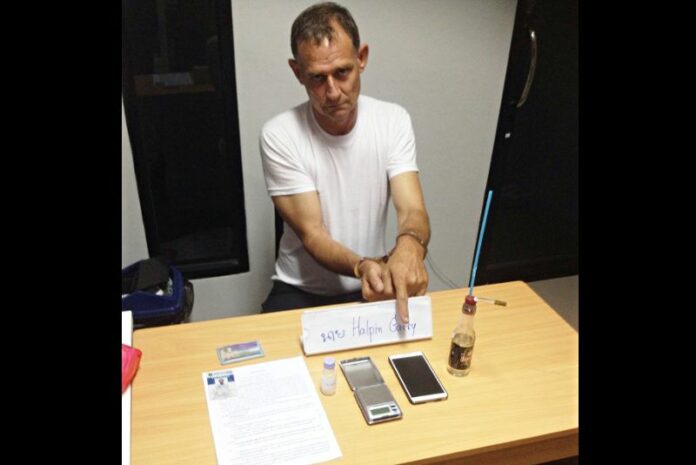
Garry Halpin, a former Tourist Police volunteer in Phuket who has been sentenced to four years and 10 months in prison for dealing crystal meth.

(The Phuket News)

PHUKET – Garry Halpin, the former Tourist Police volunteer arrested on crystal meth charges, was sentenced to four years and 10 months in prison for dealing crystal methamphetamine and overstaying his visa.
 
The sentence was reduced from nine years and eight months in jail after Mr. Halpin pleaded guilty to the crime during a court hearing, a Phuket Provincial Court spokesperson told The Phuket News.
 
Read the rest of the story here: http://www.thephuketnews.com/former-phuket-police-volunteer-halpin-jailed-for-dealing-meth-46042.php
 
 
Note: Khaosod English is not responsible for content on other websites.
 
Advertisement

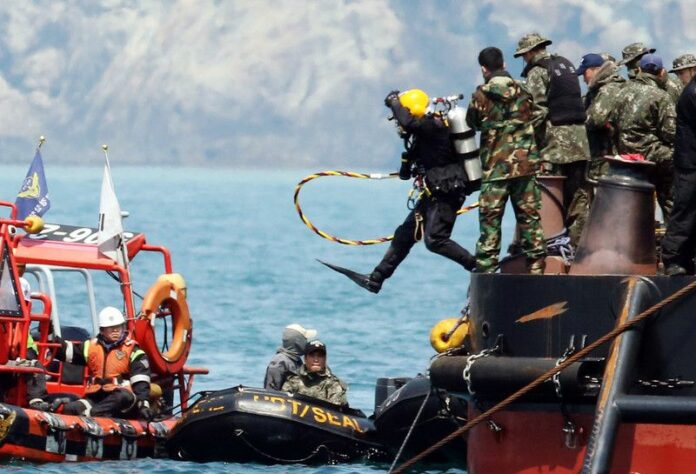
Five more bodies recovered from South Korean Ferry

SEOUL (DPA) — Five more bodies have been recovered from the wreck of a sunken Korean ferry, bringing the death toll up to 226, a news report said Friday.

Seventy-six people remained unaccounted for as concerns mounted that the stronger spring tides might make further recovery impossible, the Yonhap News Agency reported.

Divers were having to contend with high tides, strong currents and poor visibility.

The Sewol sank on April 16 off the south-west coast of South Korea. It was carrying 476 people, mostly schoolchildren on a field trip to the resort island of Jeju.

Advertisement

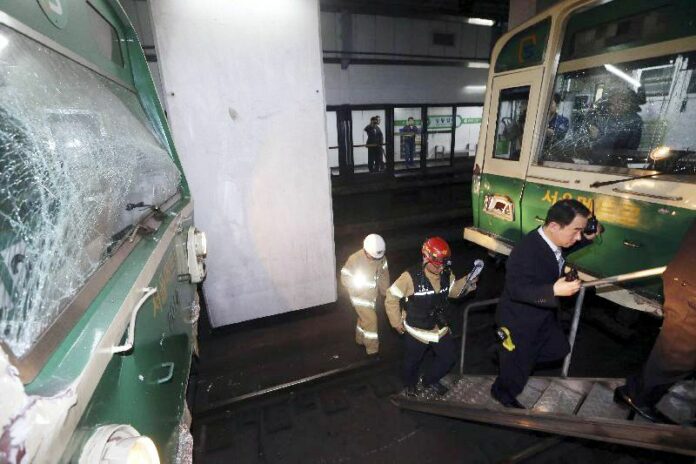
South Korean metro collision injures 170

SEOUL (DPA) — One hundred and seventy people were injured when two subway trains collided in the South Korean capital on Friday according to police and firefighters present at the scene.

The accident happened when one train crashed into the back of another after it had stopped due to mechanical problems, the Yonhap News Agency reported.

There were no immediate reports of fatalities.

Advertisement

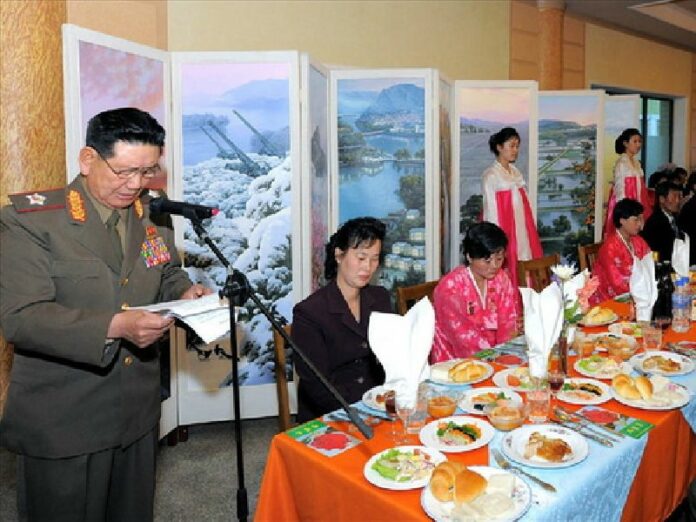
North Korea's leader appoints new number two

SEOUL (DPA) — North Korean leader Kim Jong Un has replaced the military's top political officer, considered the second most powerful position in the country, a news report said Friday.

The appointment of Hwang Pyong So as director of the General Political Bureau of the Korean People's Army was confirmed in a speech given by Kim at a banquet in Pyongyang on Thursday to mark May Day, the North's Korean Central News Agency (KCNA) reported, according to the South's Yonhap News Agency.

He replaces Choe Ryong Hae, whose appearances in public have decreased, the report said.

The KCNA report did not give any reasons for Choe's dismissal.

Advertisement

Hot News

LATEST NEWS

Bangkok
overcast clouds
25.5 ° C
26.1 °
25.5 °
46 %
2.4kmh
100 %
Sun
30 °
Mon
31 °
Tue
36 °
Wed
31 °
Thu
33 °