27.6 C
Bangkok
Saturday, August 29, 2026
Home Blog Page 3313

Six Arrested Over Massive Vietnam Football Gambling Ring

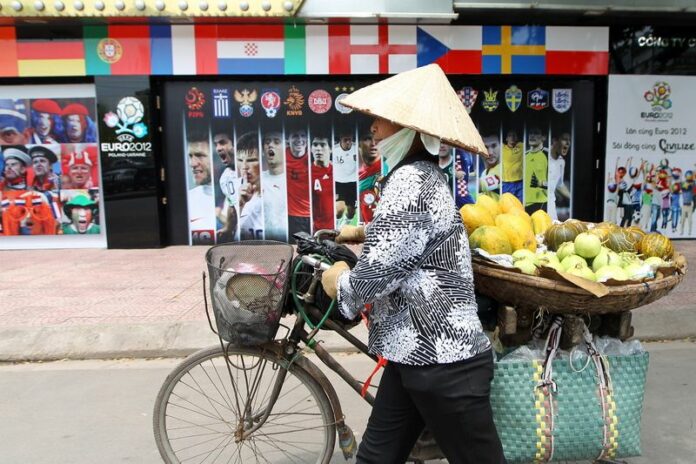
A file photo showing a street vendor walking past football posters in Hanoi, 28 June 2012. Six men have been arrested in Ho Chi Minh City for allegedly helping run a football gambling ring that processed 66 million dollars in bets. EPA/LUONG THAI LINH

HANOI (DPA) — Six men have been arrested in Ho Chi Minh City for allegedly helping run a football gambling ring that processed 1,400 billion dong (66 million dollars) in bets, police said Friday.

The gang, allegedly led by 66-year-old Tran Van Khoi, admitted to collecting bets for games in the World Cup in Brazil and other football matches including England's Premier League, police said.

"The investigation agency has identified those people who placed bets and can say how much money they bet each time," said Ho Si Tien, director of the Criminal Police Agency.

"This is organised gambling on an extremely big scale," a police statement said late Thursday.

Bets were placed via a website called M88 with an overseas server, police-run television AnNinh TV reported Friday.

Khoi and the others were employed to collect the money and send it to ringleaders based abroad. The report did not specify which country. Records showed transactions of up to a million dollars each time.

Betting is illegal for Vietnamese citizens in Vietnam, but remains extremely popular. On Thursday, police arrested another 10 people for alleged involvement in another football betting ring worth over 380,000 dollars.

Those found guilty of running gambling rings on a large scale can be sentenced to up to 10 years in prison.


Advertisement

PCAD Guard Who Assaulted Army Colonel Arrested, Police Say

Police say they have arrested a former anti-government protest guard who allegedly assaulted and shot at an army colonel earlier this year.

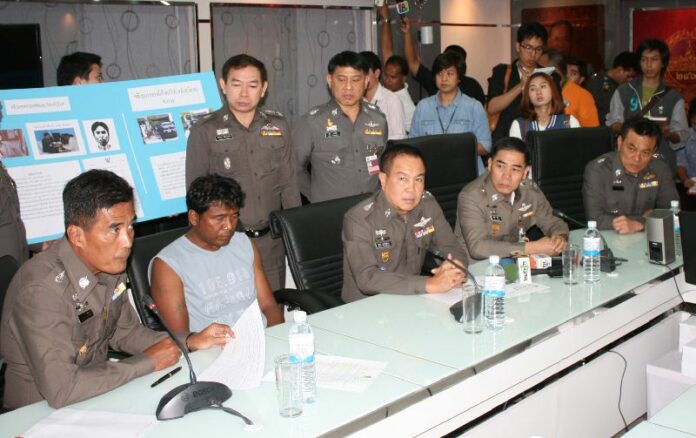
BANGKOK — Police say they have arrested a former anti-government protest guard who allegedly assaulted and shot at an army colonel earlier this year.

Anond Klinkaew, 45, is accused of assaulting Col. Witthawat Wattanakul in April while guarding protesters belonging to the People's Committee for Absolute Democracy With the King As Head of State (PCAD), an anti-government group who staged six months of street rallies aimed at toppling then-Prime Minister Yingluck Shinawatra.

On 25 April a group of PCAD guards, allegedly including Mr. Anond, beat and shot at Col. Witthawat after he tried to remove a traffic cone near a PCAD rally on Chaeng Wattana Road. Col. Witthawat was hospitalised for several weeks after the incident.

Mr. Anond was arrested in Nakhon Ratchasima province, said Pol.Gen. Somyot Pumpanmuang, deputy chief of the Royal Thai Police, at the police press conference today. 

Pol.Gen. Somyot said Mr. Anond used to work as furniture carpenter in Samut Sakhon province and later became a PCAD security guard. Mr. Anond was reportedly trained and placed in "The Black Lion" squad of PCAD's security unit.

Although Mr. Anond was paid 500 baht per day for his service as a guard, he joined the protest movement because he personally agreed with the group, Pol.Gen. Somyot said.

"Police are not bullying or falsely implicating [Mr. Anond]," Pol.Gen. Somyot told reporters. "We are merely following our duty, which is to arrest people per arrest warrants."

Mr. Anond is also wanted in connection with separate cases of robbing firearms from Thoong Song Hong police officers on 7 May and assaulting a police officer on 9 May, according to Pol.Gen. Somyot.

The suspect apologised in person to the mother of Col. Witthawat, who was also present at the press conference. The mother, Bang-onrat Wattanakul, said she was at the press conference because she wanted to ask Mr. Anond why he assaulted innocent bystanders like her son. 

"The victim did not assault anyone. He didn't harm the guards. He already announced that he didn't have any guns and wouldn't fight, yet you still mobbed and assaulted [Col.Witthawat]," Ms. Bang-onrat said to Mr. Anond. "You shot at him. You dragged him to an empty building and beat him with your feet. As a mother, I cannot bear this even if you apologise to me."

She added, "But I will forgive your bad karma. Please accept the fault you have committed. If you are really a man, you should accept what you have done."

Mr. Anond replied that he was sorry for what happened and would like to apologise to her on the behalf of other guards. He then kneeled down and respectfully bowed to  Ms. Bang-onrat to seek her forgiveness.

During the six month anti-government protest campaign, there were several incidents of PCAD guards assaulting innocent bystanders, often for removing traffic cones placed by the guards. 


For comments, or corrections to this article please contact: [email protected]

You can also find Khaosod English on Twitter and Facebook
http://twitter.com/KhaosodEnglish
http://www.facebook.com/KhaosodEnglish


Advertisement

Australian Premier Says Sri Lanka Safe Amid Refugee Row

Australian Prime Minister Tony Abbott shown in a photo taken at the White House in Washington DC, 12 June 2014. Abbott praised Sri Lanka's human rights record on Thursday amid reports that Australian authorities handed Tamil asylum seekers over to the Sri Lankan navy. EPA/RON SACHS / POOL

SYDNEY (DPA) — Australian Prime Minister Tony Abbott praised Sri Lanka's human rights record Thursday amid reports that Australian authorities have handed Tamil asylum seekers over to the Sri Lankan navy.

The government has declined to comment this week on reports that an Australian customs vessel intercepted a boatload of 153 Tamils, including 37 children, in the Indian Ocean, based on a phone call to reporters from a man saying he was a passenger.

Fairfax media said they were given a cursory interview before being rejected for admission to Australia as refugees.

Abbott and Immigration Scott Morrison refused to comment on the reports, but said they were determined that no boats would reach Australia.

When pressed on the fate of the asylum seekers by reporters in Canberra, Abbott said boats would be turned around when it was safe to do so.

"Sri Lanka is not everyone's idea of the ideal society but it is at peace," Abbott told reporters. "A horrific civil war has ended. I believe that there has been a lot of progress when it comes to human rights and the rule of law in Sri Lanka."

Labor's shadow immigration spokesman Richard Marles said the public had a right to know what the government was doing with the would-be refugees.

Greens leader Christine Milne said if the Tamils were being sent back to Sri Lanka it was the first case of Australia returning people to countries where they are being persecuted.
 

Advertisement

Red-Yellow Reconciliation In Prison, As Tweeted by Anti-Coup Activist

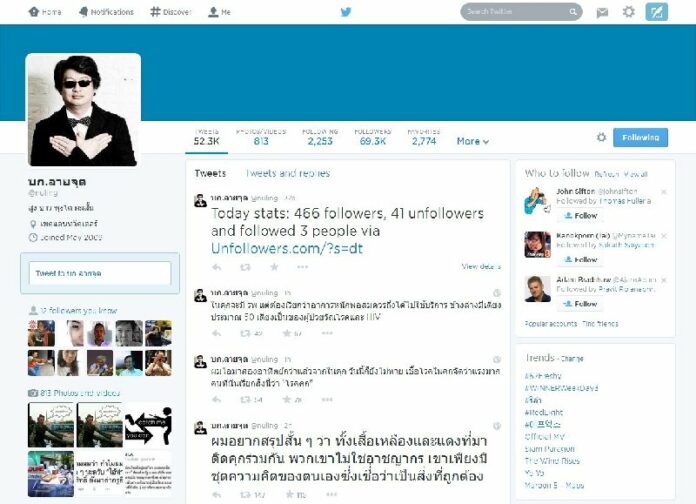
Veteran anti-coup activist Sombat Boonngarm-anong took to twitter this afternoon to recount his experience among other prisoners in Bangkok's Remand Prison.

Veteran anti-coup activist Sombat Boonngarm-anong took to twitter this afternoon to recount his experience among other prisoners, including the notorious "Popcorn Gunman," in Bangkok's Remand Prison.

Mr. Sombat was released on bail earlier this week after spending nearly a month in Bangkok's Remand Prison on charges of "inciting unrest," violating the Computer Crimes Act, and defying a summons order from the military junta's National Council for Peace and Order.

The NCPO summoned Mr. Sombat, along with hundreds of others, to report to the Army Club shortly after it staged a coup against the elected government on 22 May. Mr. Sombat, who also actively campaigned against the last military coup in 2006, refused to turn himself in and took to social media to organise flash protests against the military junta in Bangkok.

Mr. Sombat, known among activists as "The Dotted Editor," quickly became the de facto leader of the anti-coup campaign, which staged regular rallies across Bangkok  in the week following the military takeover. However, the budding movement was dealt a near-fatal blow when police arrested Mr. Sombat in his hiding place in Chonburi province on 5 June.

Today, Mr. Sombat (@nuling) posted a series of tweets detailing his experience in prison:

\
@nuling: Series on "political prisoners" at Bangkok Remand [Prison] by the Dotted Editor starts now. #PoliticalPrisoner 


\

@nuling: In late afternoon on 12 June I arrived at Bangkok Remand Prison. Per common practice, new inmates stay in the reception section, which is Section 1. There are 8 Sections here.


\

@nuling: Every prisoner has to get short pants, undergo a body search, fill in background forms, and get a short haircut in a single day. We enter our cells at 3 pm. We leave the cells at 6 am. 


\
@nuling: A shout went up "Welcome, Dotted Editor!" It was Jeng Dokjik and Sergeant Prasit. The expressions on their faces showed their happiness to see me in the prison.
 [Jeng Dokjik is the nickname of Yosawarit Chooklom, a core activist of the Redshirt political group, the United Front of Democracy Against Dictatorship (UDD). Sergeant Prasit is the nickname of former Pheu Thai MP Prasit Chaisisa. Both men are being held at Bangkok Remand Prison for allegedly insulting the monarchy.]


\

@nuling: It was my second time in prison. The first time was when Gen. Saprang and Gen. Sondhi sued me for libel. So, I was able to adjust very easily in my latest entry.
[Gen. Saprang Kalayanamitr and Gen. Sonthi Boonyaratglin were leaders of the 2006 military coup, which Mr. Sombat also campaigned against.]


\
@nuling: My first meal in prison was a small pack of bread that Brother Jeng Dokjik placed in my hands, because it was already late when I arrived. The central kitchen was already closed. He also gave me a bottle of water.


\
@nuling: Before I entered my cell, I walked up to and greeted Brother Somyot Prueksakasemsuk. Of all the people I knew in there, Brother Somyot is the person I am most familiar with.
[Somyot Prueksakasemsuk is a former labour activist and editor of several political magazines who campaigned against the 2006 military coup alongside Mr. Sombat. Mr. Somyot was convicted of lese majeste (insult of monarchy) for articles in the now-defunct Voice of Thaksin magazine, which he edited.] 


\

@nuling: Brother Somyot is a political prisoner who has been in jail for 3 years. His case is still pending an appeal. Of all the political prisoners, he's the most calm, peaceful, and stoic. 


\
@nuling: It's common for people in prison to be diverse, especially in terms of their political opinions. In Section 1, I met the suspect who is known as the Popcorn Gunman.
[Wiwat Yordprasit has been identified by police as the "Popcorn Gunman," the masked militant seen firing a weapon concealed in a popcorn bag at pro-government protesters during  clashes in northern Bangkok on 1 February, a day before the 2 February general election.]


\
@nuling: The first impression I had when I met Popcorn was that he is an ordinary person. Society's perception of him as some sort of professional gunman did not strike me as such at all.


\
@nuling: I walked up to him and introduced myself as I reached out my hand in greeting. "Hello Popcorn. I am the Dotted Editor."


\
@nuling: Although the beginning of the conversation between new friends of different colour – between Popcorn and the Dotted Editor – was a bit awkward, the wall of colour lowered after some time.
[Thailand's political factions are "colour-coded": supporters of the former government are known as "redshirts," while those belonging to the rival political camp are commonly referred to as "yellowshirts."]


\
@nuling: I will not go into details about the conversation between me and Popcorn because it won't be fair and it may affect legal prosecution. Let's just say, he is not a cruel person.


\
@nuling: Popcorn was assigned to work in the front of the Section, because the prison guards were worried that if he worked inside he would be mixed with Redshirts and cause problems. This is something the prison guards were keenly aware of. 


\
@nuling: Who would believe that on one of the last days I spent in prison, Popcorn sneaked to take an afternoon nap in the corner where Redshirts socialise in groups. They sat and spoke lively together. They laughed cheerfully.


\
@nuling: The first rule in prison is: don't fall ill, because medicine is very hard to find. There's only paracetamol. Prisoners who are a bit VIP will have access to anti-inflammatory drugs and coughing medicine. Tiffy is high-class stuff in here.
[Tiffy is a widely-available, inexpensive brand of cold medicine in Thailand.]


\
@nuling: One morning, I saw Popcorn and he didn't look too good. He was ill, coughing, with runny nose. He didn't have any medicine, so I sought two tablets of decongestant medicine for him. This is not about colour. It's a humanitarian [issue].


\
@nuling: Apart from Popcorn, there was another NSRT guard. But he was arrested for a gun crime, not on political charges. On one of his arm's there's a tattoo that says "Buddha Issara."
[NSRT refers to the Network of Students and People for Reform of Thailand, an ally of the People's Committee for Absolute Democracy With the King As Head of State (PCAD), which campaigned for six months against then-Prime Minister Yingluck Shinawatra. Many PCAD and NSRT security guards were commanded by Buddhist monk and anti-government activist Buddha Issara.]


\
@nuling: I want to briefly conclude that both Yellowshirts and Redshirts who were in the prison are not criminals. They merely have their own set of ideas that they believe are right.


\
@nuling: I have been coughing for two weeks since when I was in prison. It's still here today. Germs in prison are very strong. People there call it "Prison Disease."


\
@nuling: There's a hospital in prison, but only [inmates] with critical conditions can use its service. Its ground floor has around 50 beds, for TB and HIV patients.



For comments, or corrections to this article please contact: [email protected]

You can also find Khaosod English on Twitter and Facebook
http://twitter.com/KhaosodEnglish
http://www.facebook.com/KhaosodEnglish


Advertisement

Red-Yellow Reconciliation In Prison, As Tweeted by Anti-Coup Activist

Sombat Boonngarm-anong handing out free hamburgers in Bangkok on 10 November, 2013.

Veteran anti-coup activist Sombat Boonngarm-anong took to twitter this afternoon to recount his experience among other prisoners, including the notorious "Popcorn Gunman," in Bangkok's Remand Prison.

Mr. Sombat was released on bail earlier this week after spending nearly a month in Bangkok's Remand Prison on charges of "inciting unrest," violating the Computer Crimes Act, and defying a summons order from the military junta's National Council for Peace and Order.

The NCPO summoned Mr. Sombat, along with hundreds of others, to report to the Army Club shortly after it staged a coup against the elected government on 22 May. Mr. Sombat, who also actively campaigned against the last military coup in 2006, refused to turn himself in and took to social media to organise flash protests against the military junta in Bangkok.

Mr. Sombat, known among activists as "The Dotted Editor," quickly became the de facto leader of the anti-coup campaign, which staged regular rallies across Bangkok  in the week following the military takeover. However, the budding movement was dealt a near-fatal blow when police arrested Mr. Sombat in his hiding place in Chonburi province on 5 June.

Today, Mr. Sombat (@nuling) posted a series of tweets detailing his experience in prison:

\
@nuling: Series on "political prisoners" at Bangkok Remand [Prison] by the Dotted Editor starts now. #PoliticalPrisoner 


\

@nuling: In late afternoon on 12 June I arrived at Bangkok Remand Prison. Per common practice, new inmates stay in the reception section, which is Section 1. There are 8 Sections here.


\

@nuling: Every prisoner has to get short pants, undergo a body search, fill in background forms, and get a short haircut in a single day. We enter our cells at 3 pm. We leave the cells at 6 am. 


\
@nuling: A shout went up "Welcome, Dotted Editor!" It was Jeng Dokjik and Sergeant Prasit. The expressions on their faces showed their happiness to see me in the prison.
 [Jeng Dokjik is the nickname of Yosawarit Chooklom, a core activist of the Redshirt political group, the United Front of Democracy Against Dictatorship (UDD). Sergeant Prasit is the nickname of former Pheu Thai MP Prasit Chaisisa. Both men are being held at Bangkok Remand Prison for allegedly insulting the monarchy.]


\

@nuling: It was my second time in prison. The first time was when Gen. Saprang and Gen. Sondhi sued me for libel. So, I was able to adjust very easily in my latest entry.
[Gen. Saprang Kalayanamitr and Gen. Sonthi Boonyaratglin were leaders of the 2006 military coup, which Mr. Sombat also campaigned against.]


\
@nuling: My first meal in prison was a small pack of bread that Brother Jeng Dokjik placed in my hands, because it was already late when I arrived. The central kitchen was already closed. He also gave me a bottle of water.


\
@nuling: Before I entered my cell, I walked up to and greeted Brother Somyot Prueksakasemsuk. Of all the people I knew in there, Brother Somyot is the person I am most familiar with.
[Somyot Prueksakasemsuk is a former labour activist and editor of several political magazines who campaigned against the 2006 military coup alongside Mr. Sombat. Mr. Somyot was convicted of lese majeste (insult of monarchy) for articles in the now-defunct Voice of Thaksin magazine, which he edited.] 


\

@nuling: Brother Somyot is a political prisoner who has been in jail for 3 years. His case is still pending an appeal. Of all the political prisoners, he's the most calm, peaceful, and stoic. 


\
@nuling: It's common for people in prison to be diverse, especially in terms of their political opinions. In Section 1, I met the suspect who is known as the Popcorn Gunman.
[Wiwat Yordprasit has been identified by police as the "Popcorn Gunman," the masked militant seen firing a weapon concealed in a popcorn bag at pro-government protesters during  clashes in northern Bangkok on 1 February, a day before the 2 February general election.]


\
@nuling: The first impression I had when I met Popcorn was that he is an ordinary person. Society's perception of him as some sort of professional gunman did not strike me as such at all.


\
@nuling: I walked up to him and introduced myself as I reached out my hand in greeting. "Hello Popcorn. I am the Dotted Editor."


\
@nuling: Although the beginning of the conversation between new friends of different colour – between Popcorn and the Dotted Editor – was a bit awkward, the wall of colour lowered after some time.
[Thailand's political factions are "colour-coded": supporters of the former government are known as "redshirts," while those belonging to the rival political camp are commonly referred to as "yellowshirts."]


\
@nuling: I will not go into details about the conversation between me and Popcorn because it won't be fair and it may affect legal prosecution. Let's just say, he is not a cruel person.


\
@nuling: Popcorn was assigned to work in the front of the Section, because the prison guards were worried that if he worked inside he would be mixed with Redshirts and cause problems. This is something the prison guards were keenly aware of. 


\
@nuling: Who would believe that on one of the last days I spent in prison, Popcorn sneaked to take an afternoon nap in the corner where Redshirts socialise in groups. They sat and spoke lively together. They laughed cheerfully.


\
@nuling: The first rule in prison is: don't fall ill, because medicine is very hard to find. There's only paracetamol. Prisoners who are a bit VIP will have access to anti-inflammatory drugs and coughing medicine. Tiffy is high-class stuff in here.
[Tiffy is a widely-available, inexpensive brand of cold medicine in Thailand.]


\
@nuling: One morning, I saw Popcorn and he didn't look too good. He was ill, coughing, with runny nose. He didn't have any medicine, so I sought two tablets of decongestant medicine for him. This is not about colour. It's a humanitarian [issue].


\
@nuling: Apart from Popcorn, there was another NSRT guard. But he was arrested for a gun crime, not on political charges. On one of his arm's there's a tattoo that says "Buddha Issara."
[NSRT refers to the Network of Students and People for Reform of Thailand, an ally of the People's Committee for Absolute Democracy With the King As Head of State (PCAD), which campaigned against then-Prime Minister Yingluck Shinawatra. Many PCAD and NSRT security guards were commanded by Buddhist monk and anti-government activist Buddha Issara.]


\
@nuling: I want to briefly conclude that both Yellowshirts and Redshirts who were in the prison are not criminals. They merely have their own set of ideas that they believe are right.


\
@nuling: I have been coughing for two weeks since when I was in prison. It's still here today. Germs in prison are very strong. People there call it "Prison Disease."


\
@nuling: There's a hospital in prison, but only [inmates] with critical conditions can use its service. Its ground floor has around 50 beds, for TB and HIV patients.



For comments, or corrections to this article please contact: [email protected]

You can also find Khaosod English on Twitter and Facebook
http://twitter.com/KhaosodEnglish
http://www.facebook.com/KhaosodEnglish

Advertisement

Thailand's Students Marked Down For Cheating

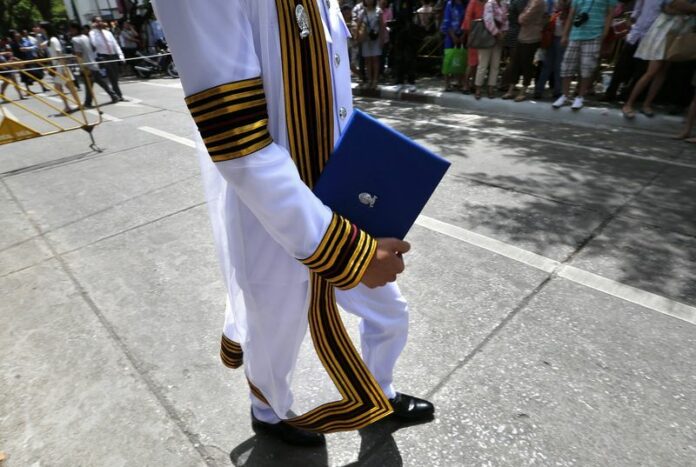
A Thai university graduate poses for pictures holding his traditional congratulatory teddy bear at one of Bangkok's leading universities, 03 July 2014. Thai universities are taking more steps to ensure students do not cheat or plagiarize. EPA/BARBARA WALTON

By Cod Satrusayang

BANGKOK (DPA) —  When Nui snuck into her professor's office to get the answers for an upcoming exam, she wasn't doing it to rise to the top of her university class, she said, but simply not to be left behind.

"I did it because everyone else was doing it and it seemed like an easy way to get an A," said the 20-year-old student from the humanities department of Bangkok's Chulalongkorn University.

"I didn't cheat because I wanted to get ahead."

Nui, not her real name, is far from an exception in Thailand, where higher education has been blighted by plagiarism and cheating for years. But with the trend starting to tarnish the country's reputation, educators are beginning to address the issue seriously.

"Outside of China, Thailand is probably the worst offender in Asia in terms of plagiarism and falsified applications," an admissions officer at an American university told dpa.

He said that applications from Thailand are scrutinized for doctored transcripts and ghostwritten essays. He told the story of two essays he received, nearly identical in style and terminology.

When he investigated he found that both applications originated from the same agency offering support services to applicants.

"It seems in both countries [China and Thailand] plagiarism is a serious epidemic and it needs to be dealt with."

Thai universities are also taking steps. On Thursday, Chulalongkorn made available to other universities a computer programme it designed to check thesis papers for plagiarism.

The Thai Office for Higher Education said all higher education institutions must use the internet-based Turnitin programme to check for plagiarism in all academic papers from September.

"I think any kind of attempt to combat plagiarism is a good thing," said Panuwat Panduprasert, a lecturer at Chiang Mai University.

"Universities have not been cracking down on hard enough. State universities are pretty slow to adapt because of bureaucracy."

To some students cheating is justified because of the pressure to excel.

"Cheating is considered normal among Thai students," said Thanawat Kheawdoknoi, a 22-year-old graduate from Thammasat University.

"They have always been taught that having great grades means you're smart and affects how people think of you.

"It doesn't matter how you get there as long as you do."

Lecturers like Panuwat said that universities' longstanding acceptance of cheating has created a prisoner's dilemma.

"Students think that everyone is doing it and if they don't they will lose out," he said.

But the universities are starting to clamp down. "I've had students repeat a year for bringing in a cheat sheet," said Narudh Areesorn, a former lecturer at Mahidol University in Bangkok.

Narudh said instances of bringing notes into lectures are rare. Students more frequently steal exam papers from professors, which he regards as "soft cheating."

Thais are increasingly criticized for misrepresenting themselves in applications to universities overseas, often with the connivance of specialized agencies, Fortune Magazine reported in February.

For a hefty fee, these centres guarantee acceptance into an elite Ivy League institution in the US.

Their methods include ghost-writing application essays, coaching interview sessions, and in some cases falsifying transcripts or creating fake outreach projects to pad a candidate's application.

To middle- and upper-class Thai parents, the fee – which can exceed 30,000 dollars – is worth it. Attendance at prestigious overseas universities is seen as a symbol of status and gives parents bragging rights when talking about their child.

"You have to understand for Thais, education is very important," said Eed, a parent who asked not to give her full name.

"Getting into a top university is paramount otherwise we fall behind the other families. The centres have guaranteed us there is no cheating involved," said Eed, whose daughter is enrolled with one such programme.

But admissions officers are doubtful, the Fortune report said, indicating that the spread of application service providers has made colleges more wary of applications from Thailand. 

Tufts University in the United States threw out a quarter of Thai applications for suspected cheating in 2013, the article quoted an admissions officer as saying.

"These parents need to realize that there is no need to cheat," said a college admissions advisor at an international high school in Thailand.

The source argues that these centres also undermine the long-term development of students and could cause problems academically in college as students enter the top universities unprepared.

"What's worse is the example these parents and guidance centres are setting for these students. They go into life thinking that cheating and shortcutting are normal and that is a horrible thing to teach a child."


Advertisement

Thailand's Students Marked Down For Cheating

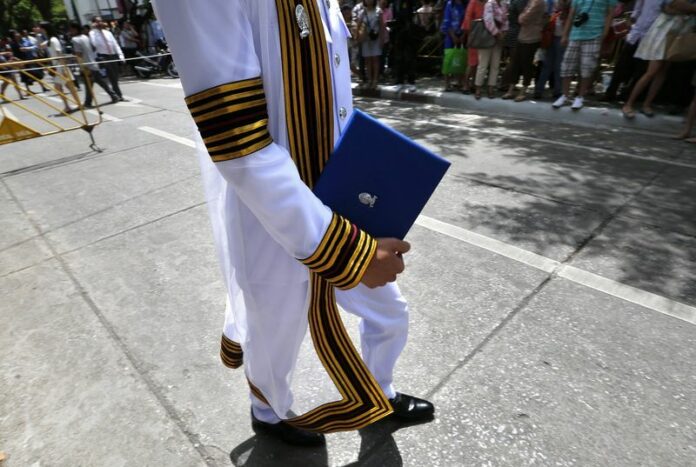
A Thai university graduate poses for pictures holding his traditional congratulatory teddy bear at one of Bangkok's leading universities, 03 July 2014. Thai universities are taking more steps to ensure students do not cheat or plagiarize. EPA/BARBARA WALTON

By Cod Satrusayang

BANGKOK (DPA) —  When Nui snuck into her professor's office to get the answers for an upcoming exam, she wasn't doing it to rise to the top of her university class, she said, but simply not to be left behind.

"I did it because everyone else was doing it and it seemed like an easy way to get an A," said the 20-year-old student from the humanities department of Bangkok's Chulalongkorn University.

"I didn't cheat because I wanted to get ahead."

Nui, not her real name, is far from an exception in Thailand, where higher education has been blighted by plagiarism and cheating for years. But with the trend starting to tarnish the country's reputation, educators are beginning to address the issue seriously.

"Outside of China, Thailand is probably the worst offender in Asia in terms of plagiarism and falsified applications," an admissions officer at an American university told dpa.

He said that applications from Thailand are scrutinized for doctored transcripts and ghostwritten essays. He told the story of two essays he received, nearly identical in style and terminology.

When he investigated he found that both applications originated from the same agency offering support services to applicants.

"It seems in both countries [China and Thailand] plagiarism is a serious epidemic and it needs to be dealt with."

Thai universities are also taking steps. On Thursday, Chulalongkorn made available to other universities a computer programme it designed to check thesis papers for plagiarism.

The Thai Office for Higher Education said all higher education institutions must use the internet-based Turnitin programme to check for plagiarism in all academic papers from September.

"I think any kind of attempt to combat plagiarism is a good thing," said Panuwat Panduprasert, a lecturer at Chiang Mai University.

"Universities have not been cracking down on hard enough. State universities are pretty slow to adapt because of bureaucracy."

To some students cheating is justified because of the pressure to excel.

"Cheating is considered normal among Thai students," said Thanawat Kheawdoknoi, a 22-year-old graduate from Thammasat University.

"They have always been taught that having great grades means you're smart and affects how people think of you.

"It doesn't matter how you get there as long as you do."

Lecturers like Panuwat said that universities' longstanding acceptance of cheating has created a prisoner's dilemma.

"Students think that everyone is doing it and if they don't they will lose out," he said.

But the universities are starting to clamp down. "I've had students repeat a year for bringing in a cheat sheet," said Narudh Areesorn, a former lecturer at Mahidol University in Bangkok.

Narudh said instances of bringing notes into lectures are rare. Students more frequently steal exam papers from professors, which he regards as "soft cheating."

Thais are increasingly criticized for misrepresenting themselves in applications to universities overseas, often with the connivance of specialized agencies, Fortune Magazine reported in February.

For a hefty fee, these centres guarantee acceptance into an elite Ivy League institution in the US.

Their methods include ghost-writing application essays, coaching interview sessions, and in some cases falsifying transcripts or creating fake outreach projects to pad a candidate's application.

To middle- and upper-class Thai parents, the fee – which can exceed 30,000 dollars – is worth it. Attendance at prestigious overseas universities is seen as a symbol of status and gives parents bragging rights when talking about their child.

"You have to understand for Thais, education is very important," said Eed, a parent who asked not to give her full name.

"Getting into a top university is paramount otherwise we fall behind the other families. The centres have guaranteed us there is no cheating involved," said Eed, whose daughter is enrolled with one such programme.

But admissions officers are doubtful, the Fortune report said, indicating that the spread of application service providers has made colleges more wary of applications from Thailand. 

Tufts University in the United States threw out a quarter of Thai applications for suspected cheating in 2013, the article quoted an admissions officer as saying.

"These parents need to realize that there is no need to cheat," said a college admissions advisor at an international high school in Thailand.

The source argues that these centres also undermine the long-term development of students and could cause problems academically in college as students enter the top universities unprepared.

"What's worse is the example these parents and guidance centres are setting for these students. They go into life thinking that cheating and shortcutting are normal and that is a horrible thing to teach a child."

 

Advertisement

Army Raids Municipality Offices For Phuket Mafia Taxi Connections

(Phuket Gazette)

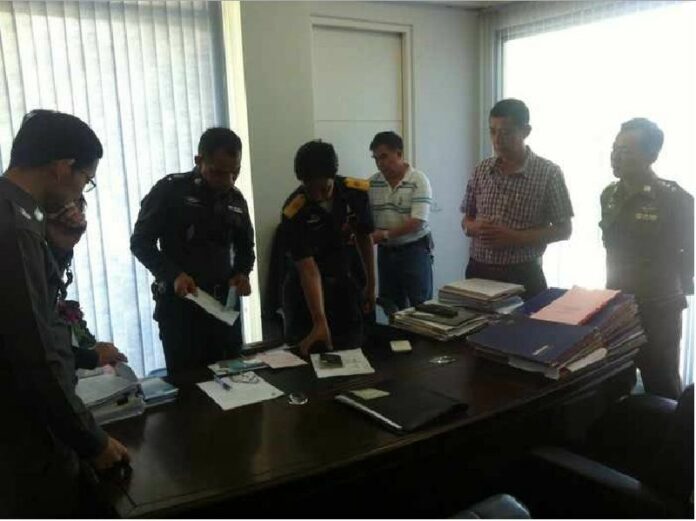
PHUKET — About 50 officers raided the Kata-Karon Municipality offices today to search for evidence of the popular tourist town's mayor and handpicked deputy mayors' involvement in the Phuket taxi mafia. 

Read more of the story here.


Note: Khaosod English is not responsible for content on other websites.


Advertisement

Food Cart Practice Causes Cancer, Health Official Warns

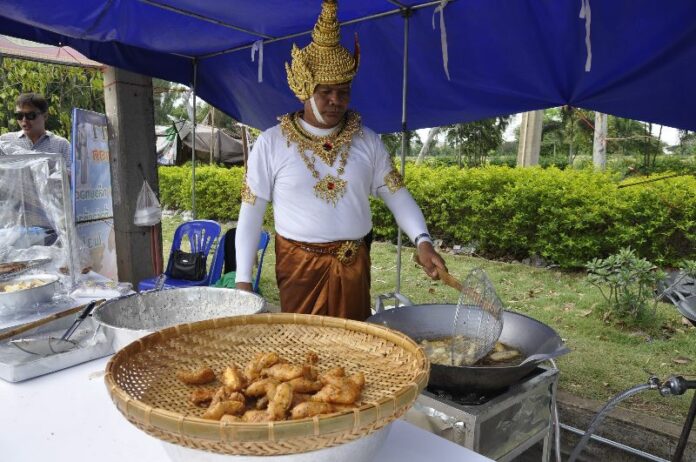
A fried banana vendor dressed up as an angel in Nakhon Rachasima Province, 8 July 2013.
BANGKOK —The Department of Health has advised street vendors and cooks across Thailand to stop blotting oily foods with tissue paper, as it may cause cancer.

Pornthep Siriwanarangsan, director of the Department of Health, explained that the practice infuses food with whitening chemicals in tissue paper that contain cancer-inducing dioxins.

"Dioxins have been identified as cancer-causing elements in human bodies by international cancer research institutions," said Mr. Pornthep. "When bodies receive the substances, they won't cause sudden symptoms, but they will gradually escalate and may become fatal."

Other substances in the tissue paper, such as the corrosive sodium hydroxide, will react when they encounter protein and fat in oily foods and lead to irritation in the respiratory system, Mr. Pornthep warned. He said the chemical reaction could cause sneezing, throat pain, runny noses, lung infection, difficult breathing, and an irritated stomach.

The other common practice of packaging street food in newspaper may also lead to health hazards if oil in the food absorbs chemicals from the paper’s ink, Mr. Pornthep said.

Vendors should therefore only blot food with papers that have been certified by international standards to be safe for customers.

"Although customers cannot inspect the quality of paper used by vendors to dab the oil, they can avoid oily and deep fried food altogether, to avoid the risk of receiving [hazardous] chemicals and to maintain a good health," the Department of Health director said.


For comments, or corrections to this article please contact: [email protected]

You can also find Khaosod English on Twitter and Facebook
http://twitter.com/KhaosodEnglish
http://www.facebook.com/KhaosodEnglish

Advertisement

Food Cart Practice Causes Cancer, Health Official Warns

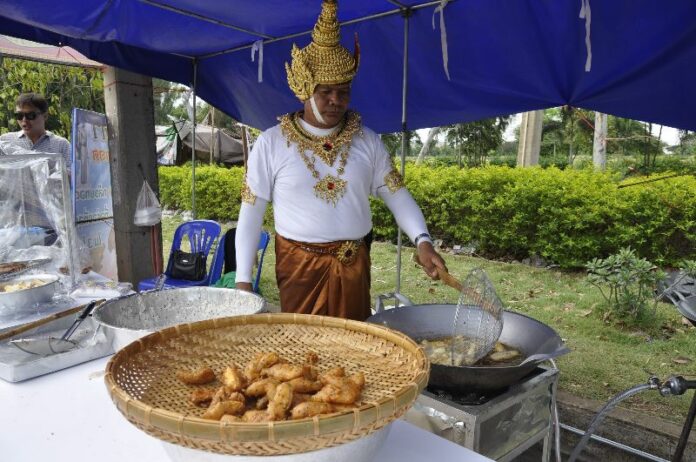
A fried banana vendor dressed up as an angel in Nakhon Rachasima Province, 8 July 2013.

BANGKOK —The Department of Health has advised street vendors and cooks across Thailand to stop blotting oily foods with tissue paper, as it may cause cancer.

Pornthep Siriwanarangsan, director of the Department of Health, explained that the practice infuses food with whitening chemicals in tissue paper that contain cancer-inducing dioxins.

"Dioxins have been identified as cancer-causing elements in human bodies by international cancer research institutions," said Mr. Pornthep. "When bodies receive the substances, they won't cause sudden symptoms, but they will gradually escalate and may become fatal."

Other substances in the tissue paper, such as the corrosive sodium hydroxide, will react when they encounter protein and fat in oily foods and lead to irritation in the respiratory system, Mr. Pornthep warned. He said the chemical reaction could cause sneezing, throat pain, runny noses, lung infection, difficult breathing, and an irritated stomach.

The other common practice of packaging street food in newspaper may also lead to health hazards if oil in the food absorbs chemicals from the paper’s ink, Mr. Pornthep said.

Vendors should therefore only blot food with papers that have been certified by international standards to be safe for customers.

"Although customers cannot inspect the quality of paper used by vendors to dab the oil, they can avoid oily and deep fried food altogether, to avoid the risk of receiving [hazardous] chemicals and to maintain a good health," the Department of Health director said.


For comments, or corrections to this article please contact: [email protected]

You can also find Khaosod English on Twitter and Facebook
http://twitter.com/KhaosodEnglish
http://www.facebook.com/KhaosodEnglish


Advertisement

Hot News

LATEST NEWS

Bangkok
overcast clouds
27.6 ° C
29.4 °
26.9 °
87 %
0.5kmh
100 %
Sat
31 °
Sun
33 °
Mon
30 °
Tue
28 °
Wed
33 °