CCTV footage shows the suspect, identified only as Mr. Leonardo Hernandez (an alias), inviting two friends to join him.
BANGKOK — A 26-year-old Filipino student has been arrested by Thai Immigration Police for orchestrating an elaborate fraud scheme that targeted multiple luxury hotels across Bangkok, resulting in hundreds of thousands of baht in damages.
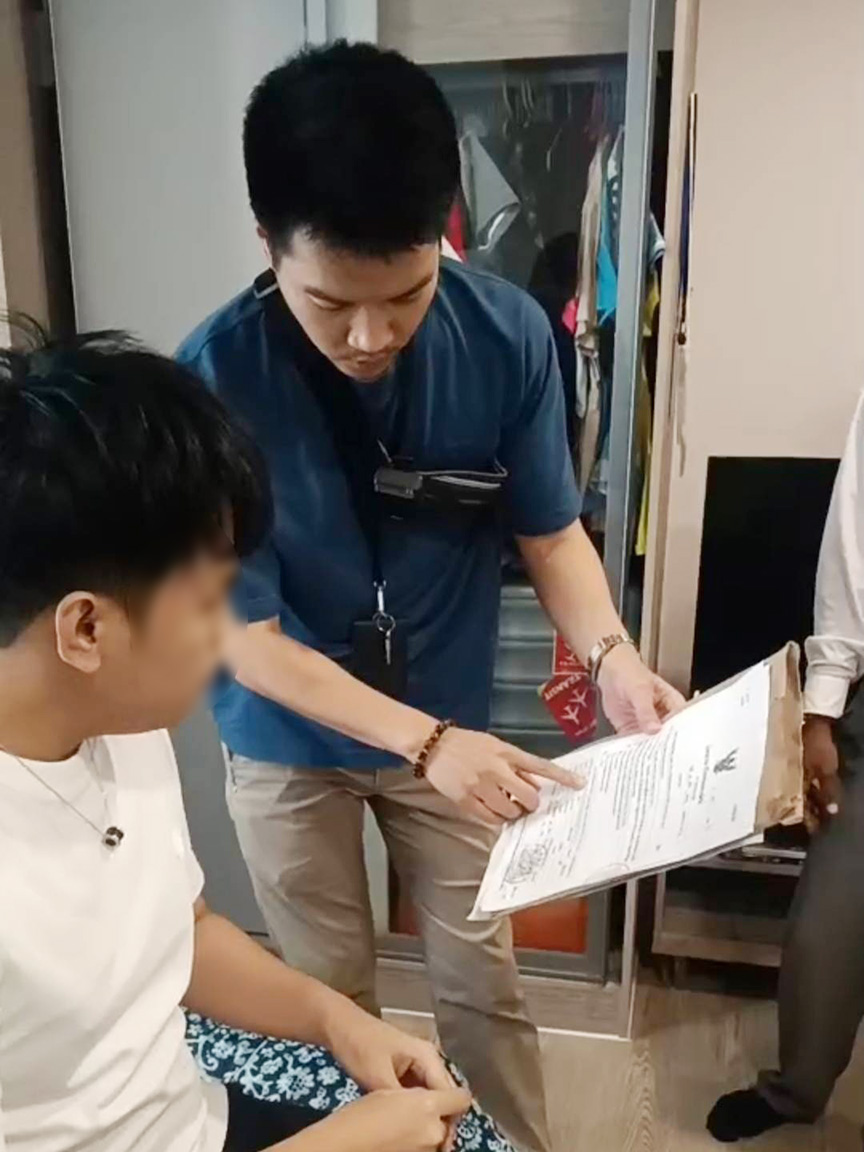
The suspect, identified only as Mr. Leonardo Hernandez (an alias), was apprehended on April 25 near his university residence in Pathum Thani following a series of complaints from high-end hotels throughout the capital.
According to investigators, Hernandez developed a sophisticated scam where he would book 4-5 night stays at luxury hotels using a credit card, specifically requesting two airport limousine transfers—one for himself and another for his “father” who would supposedly arrive the following day.
Despite already living in Thailand, the suspect would travel to the airport via public transportation, board the pre-arranged limousine, and check into the hotel. Upon arrival, he would inform staff that his passport and funds were with his father who would be arriving in the second scheduled car.
Police officers explain the charges to the suspect, identified only as Mr. Leonardo Hernandez (an alias), during his arrest on April 25 near his university residence in Pathum Thani in Bangkok.
“The hotels, following standard booking protocols, allowed him to check in and access services while waiting for the second guest,” a police spokesperson explained.
Once settled in his room, Hernandez reportedly took full advantage of room service, dining facilities, and other premium amenities, often inviting two or three friends to join him. When the scheduled pickup time for his “father” arrived and no one appeared, hotel staff would become suspicious—but by the following morning, the suspect had already vanished.
Police reports indicate that several prestigious hotels along the Chao Phraya River, in Bangkok’s central business district, and most recently in the upscale Chidlom area had fallen victim to this scheme.
The breakthrough in the case came when investigators discovered that the suspect was not a tourist but enrolled at a well-known university in Pathum Thani province. After gathering sufficient evidence, authorities secured an arrest warrant.
Immigration Police, acting under the supervision of Police Lieutenant General Panumas Boonyalak, Immigration Commissioner, tracked and arrested Hernandez near his university accommodation. He has been charged with fraud by deceit, involving false representation and wrongful acquisition of goods and services.
The suspect has been transferred to investigating officers for further legal proceedings as authorities continue to calculate the total financial damages caused by his deception.
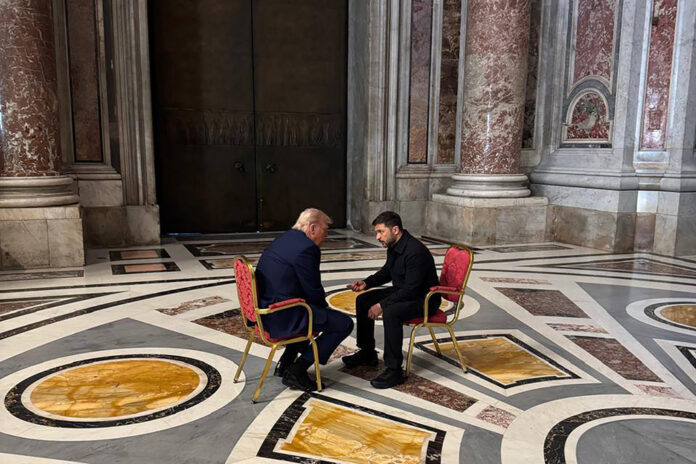
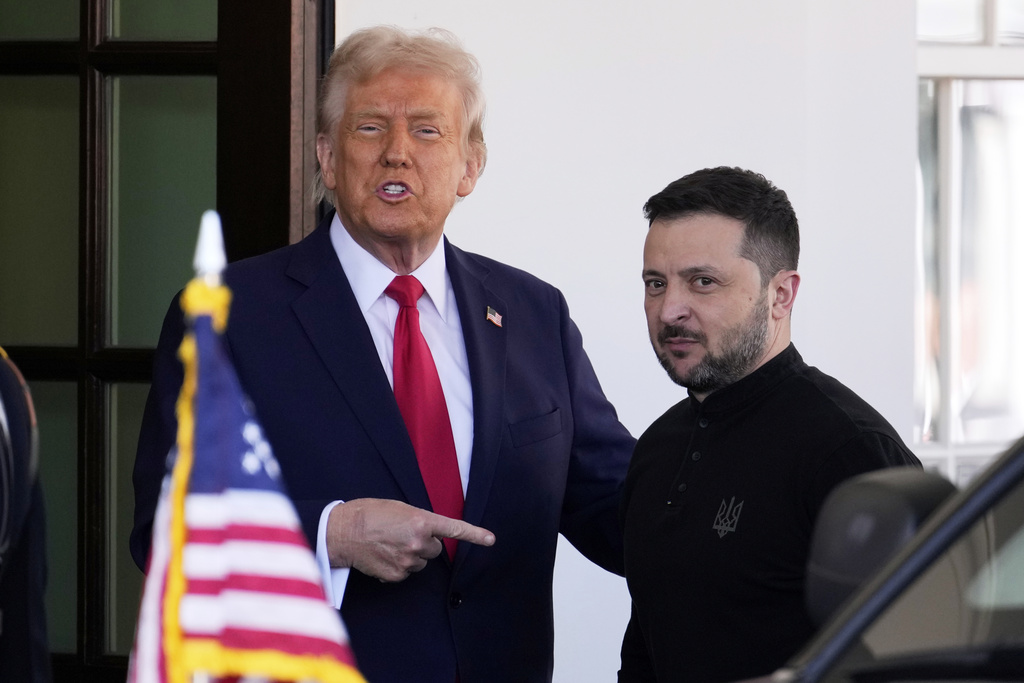
Ukraine's President Volodymyr Zelenskyy, right, and President Donald Trump, talk as they attend the funeral of Pope Francis in Vatican, Saturday, April 26, 2025.(Ukrainian Presidential Press Office via AP)
KYIV, Ukraine (AP) — After months of tense negotiations, the U.S. and Ukraine signed a deal that is expected to give Washington access to the country’s critical minerals and other natural resources, an agreement Kyiv hopes will secure long-term support for its defense against Russia.
According to Ukrainian officials, the version of the deal signed Wednesday is far more beneficial to Ukraine than previous versions, which they said reduced Kyiv to a junior partner and gave Washington unprecedented rights to the country’s resources.
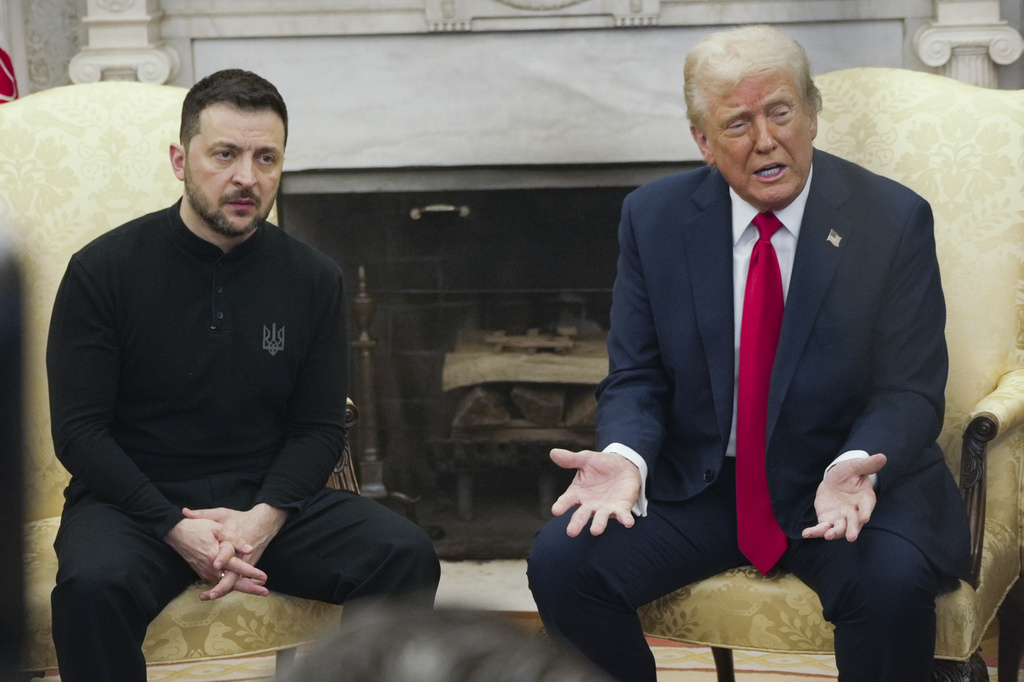
The agreement — which the Ukrainian parliament must ratify — would establish a reconstruction fund for Ukraine that Ukrainian officials hope will be a vehicle to ensure future American military assistance. A previous agreement was nearly signed before being derailed in a tense Oval Office meeting involving U.S. President Donald Trump, U.S. Vice President JD Vance and Ukrainian President Volodymyr Zelenskyy.
“We have formed a version of the agreement that provides mutually beneficial conditions for both countries. This is an agreement in which the United States notes its commitment to promoting long-term peace in Ukraine and recognizes the contribution that Ukraine has made to global security by giving up its nuclear arsenal,” Economy Minister Yulia Svyrydenko, who signed the deal for Ukraine, said in a post on Facebook.
President Donald Trump, right, meets with Ukrainian President Volodymyr Zelenskyy in the Oval Office at the White House, Friday, Feb. 28, 2025, in Washington. (AP Photo/ Mystyslav Chernov)
The signing comes during what U.S. Secretary of State Marco Rubio said would be a “very critical” week for U.S.-led efforts to end the war that appear to have stalled. Ukraine sees the deal as a way to ensure that its biggest and most consequential ally stays engaged and doesn’t freeze military support, which has been key in its 3-year-old fight against Russia’s full-scale invasion.
“This agreement signals clearly to Russia that the Trump administration is committed to a peace process centered on a free, sovereign, and prosperous Ukraine over the long term,” Treasury Secretary Scott Bessent, who signed for the U.S., said in a statement.
Here is a look at the deal.
What does the deal include?
The deal covers minerals, including rare earth elements, but also other valuable resources, including oil and natural gas, according to the text released by Ukraine’s government.
It does not include resources that are already a source of revenue for the Ukrainian state. In other words, any profits under the deal are dependent on the success of new investments. Ukrainian officials have also noted that it does not refer to any debt obligations for Kyiv, meaning profits from the fund will likely not go toward the paying the U.S. back for its previous support.
Officials have also emphasized that the agreement ensures full ownership of the resources remains with Ukraine, and the state will determine what can be extracted and where.
The text of the deal lists 55 minerals but says more can be agreed to.
Trump has repeatedly expressed interest in Ukraine’s rare earth elements, and some of them are included in the list, as are other critical minerals, such as titanium, lithium and uranium.
What are rare earth elements?
They are a group of 17 elements that are essential to many kinds of consumer technology, including cellphones, hard drives and electric and hybrid vehicles.
China is the world’s largest producer of rare earth elements, and both the U.S and Europe have sought to reduce their dependence on Beijing, Trump’s chief geopolitical adversary.
They include elements such as lanthanum, cerium and scandium, which are listed in the deal.
President Donald Trump welcomes Ukraine President Volodymyr Zelenskyy at the White House in Washington, Friday, Feb. 28, 2025. (AP Photo/Ben Curtis)
How will the fund work?
The agreement establishes a reconstruction investment fund, and both the U.S. and Ukraine will have an equal say in its management, according to Svyrydenko.
The fund will be supported by the U.S. government through the U.S. International Development Finance Corporation agency, which Ukraine hopes will attract investment and technology from American and European countries.
Ukraine is expected to contribute 50% of all future profits from government-owned natural resources into the fund. The United States will also contribute in the form of direct funds and equipment, including badly needed air defense systems and other military aid.
Contributions to the fund will be reinvested in projects related to mining, oil and gas as well as infrastructure.
No profits will not be taken from the fund for the first 10 years, Svyrydenko said.
Trump administration officials initially pushed for a deal in which Washington would receive $500 billion in profits from exploited minerals as compensation for its wartime support.
But Zelenskyy rejected the offer, saying he would not sign off on an agreement “that will be paid off by 10 generations of Ukrainians.”
What is the state of Ukraine’s minerals industry?
Ukraine’s rare earth elements are largely untapped because of state policies regulating the industry, a lack of good information about deposits, and the war.
The industry’s potential is unclear since geological data is thin because mineral reserves are scattered across Ukraine, and existing studies are considered largely inadequate, according to businessmen and analysts.
In general, however, the outlook for Ukrainian natural resources is promising. The country’s reserves of titanium, a key component for the aerospace, medical and automotive industries, are believed to be among Europe’s largest. Ukraine also holds some of Europe’s largest known reserves of lithium, which is required to produce batteries, ceramics and glass.
In 2021, the Ukrainian mineral industry accounted for 6.1% of the country’s gross domestic product and 30% of exports.
An estimated 40% of Ukraine’s metallic mineral resources are inaccessible because of Russian occupation, according to data from We Build Ukraine, a Kyiv-based think tank. Ukraine has argued that it’s in Trump’s interest to develop the remainder before Russian advances capture more.
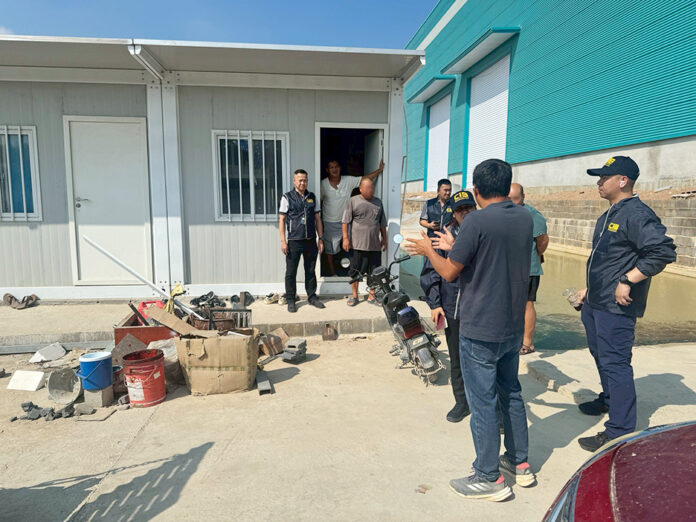
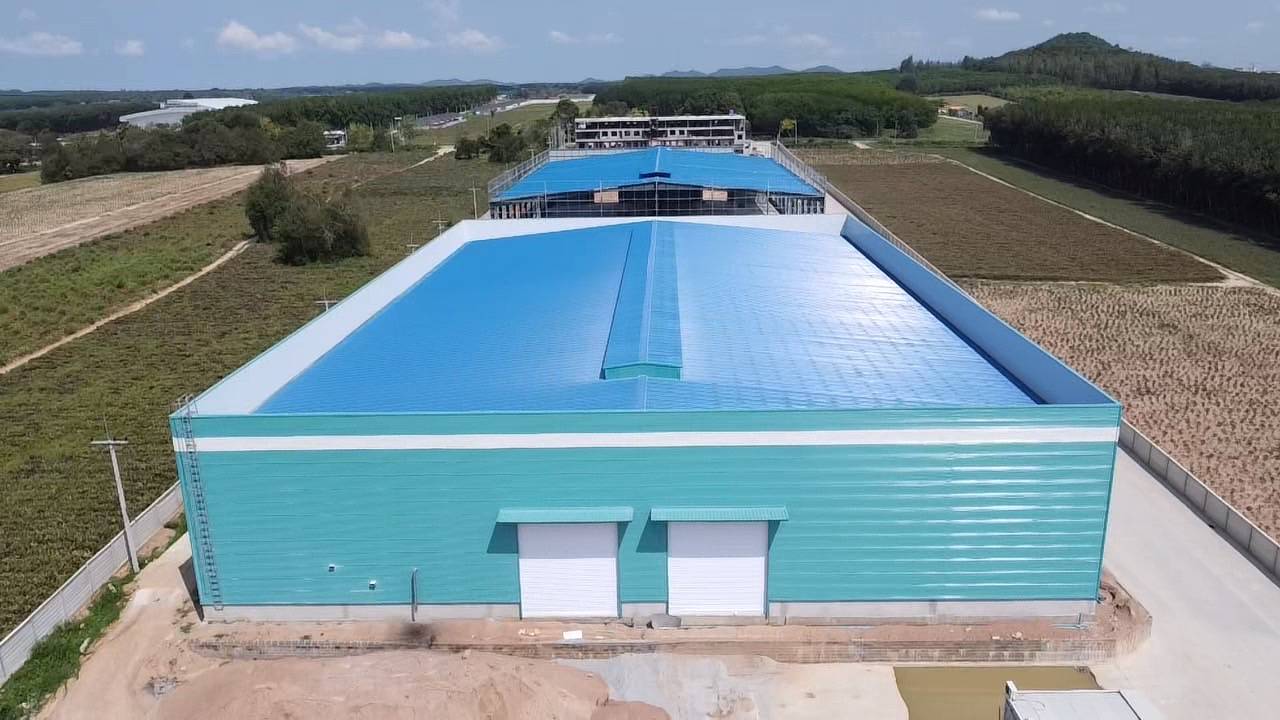
Thai Police launch "CIB Nominee Sweep EP.3" investigation, inspecting suspicious companies and construction sites in Rayong province, where they found operations run almost entirely by Chinese nationals. Photo released May 1, 2025.
BANGKOK — The Central Investigation Bureau (CIB) has announced the successful results of their “CIB Nominee Sweep EP.3” operation, dismantling a Chinese nominee network that had acquired land in Rayong province to build luxury condominiums valued at 2 billion baht (approximately $60 million).
The operation revealed Chinese executives managing an integrated construction operation intended to create housing exclusively for Chinese nationals.
Police Major General Tassanapoom Jaruprak, Commander of the Economic Crime Suppression Division (ECD), stated that this follows previous crackdowns on foreign businesses in Phuket and Bangkok’s Huay Kwang district. Those operations uncovered the use of shell companies or nominees—Thai citizens acting as fronts for foreign ownership. This third phase of the operation investigated four legal entities suspected of concealing actual Chinese investors.
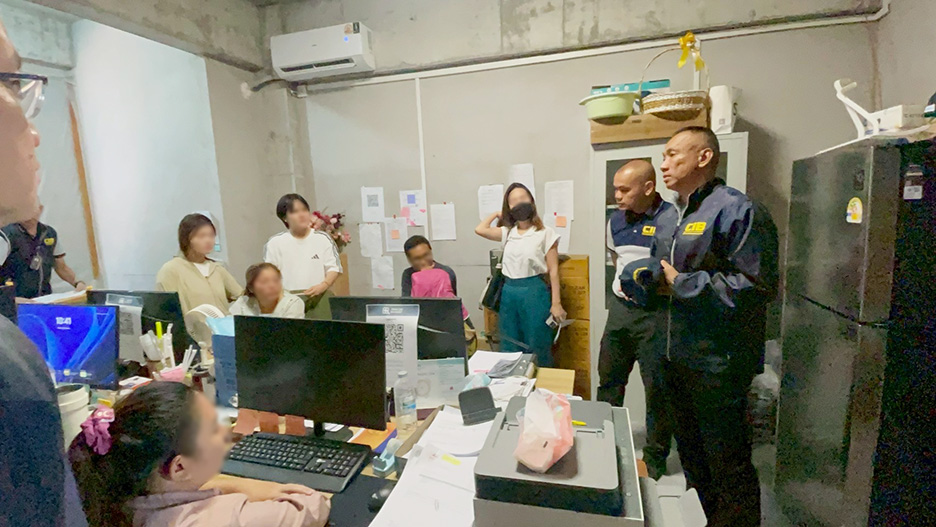
Thai Police launch “CIB Nominee Sweep EP.3” investigation, inspecting suspicious companies and construction sites in Rayong province, where they found operations run almost entirely by Chinese nationals. Photo released May 1, 2025.
The investigation found that these four companies—one Hong Kong-based and one Thai—had purchased 72 rai (approximately 28.5 acres) of land across Chonburi and Rayong provinces. The land was being developed into a residential complex featuring ten 8-story buildings with 1,821 units, with a total project value exceeding 2 billion baht. The project is currently under construction.
“The criminal structure involves complex layering of company shareholdings to complicate investigations,” authorities explained. “Chinese representatives were sent to manage all aspects of the construction operations—from establishing their own concrete production company to employing Chinese engineers, designers, electricians, plumbers, and laborers for the entire project.”
“Financial investigations also revealed money transfers from Chinese investment companies registered in Hong Kong Special Administrative Region, with over 500 million baht circulating through company accounts—clearly indicating that these businesses are actually owned by Chinese investors,” officials added.
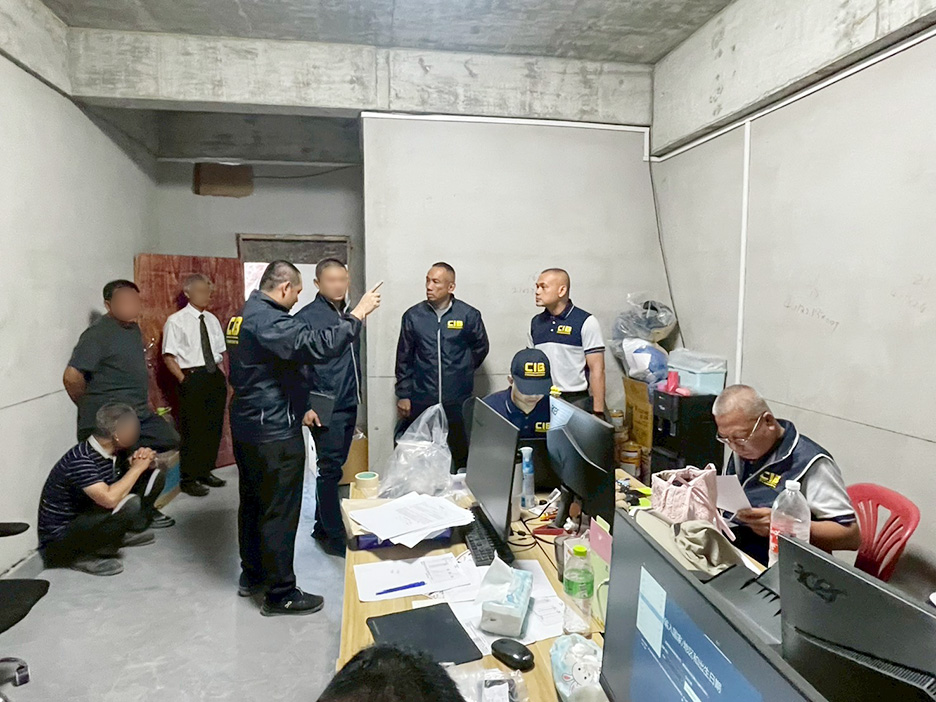
Thai Police launch “CIB Nominee Sweep EP.3” investigation, inspecting suspicious companies and construction sites in Rayong province, where they found operations run almost entirely by Chinese nationals. Photo released May 1, 2025.
Police Colonel Krit Worathat, Superintendent of the ECD’s 4th Division, provided additional details, noting that the companies are interconnected through their accounting practices and personnel. Authorities inspected three locations in Rayong and Chonburi, finding closed systems where one company was established specifically to produce concrete for the construction project.
Authorities have initially seized various documents and assets including seven land deeds covering approximately 72 rai, 48 Thai and Chinese bank account books with combined balances of 72 million baht, two laptop computers, three mobile phones, one land purchase agreement, six company stamps, and seven bank security tokens as evidence.
Thai Police launch “CIB Nominee Sweep EP.3” investigation, inspecting suspicious companies and construction sites in Rayong province, where they found operations run almost entirely by Chinese nationals. Photo released May 1, 2025.
Legal proceedings are divided into two parts. The first concerns violations of the Foreign Business Act and the Land Code, targeting company directors and shareholders, all of whom have denied the allegations. The second part involves prosecuting illegal foreign workers, who will be processed by local police and deported.
The ECD will forward land documentation to the Land Department for legal proceedings, which may require adjusting the shareholding structure to increase Thai ownership. If not resolved within the specified timeframe, a Land Department committee will petition the court to force the sale of the land to Thai nationals.
Those facing charges include five Thai and Chinese company directors and shareholders, two designers, two site supervisors, and two Chinese concrete and plumbing technicians.
Police Major General Tassanapoom Jaruprak, Commander of the Economic Crime Suppression Division (center), leads the press conference announcing the results of “CIB Nominee Sweep EP.3” operation targeting Chinese nominees, at the Central Investigation Bureau headquarters on May 1, 2025..
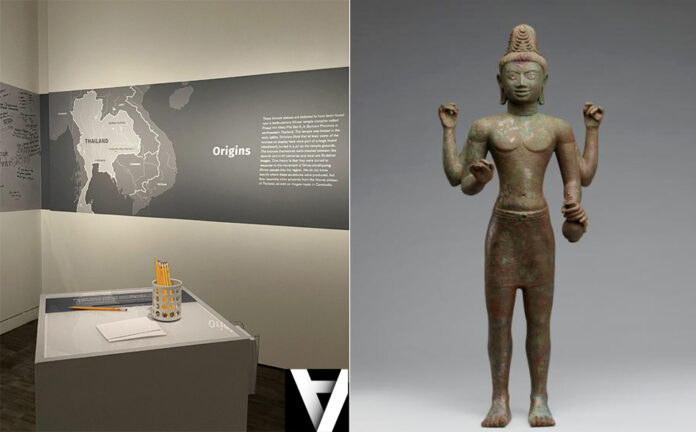
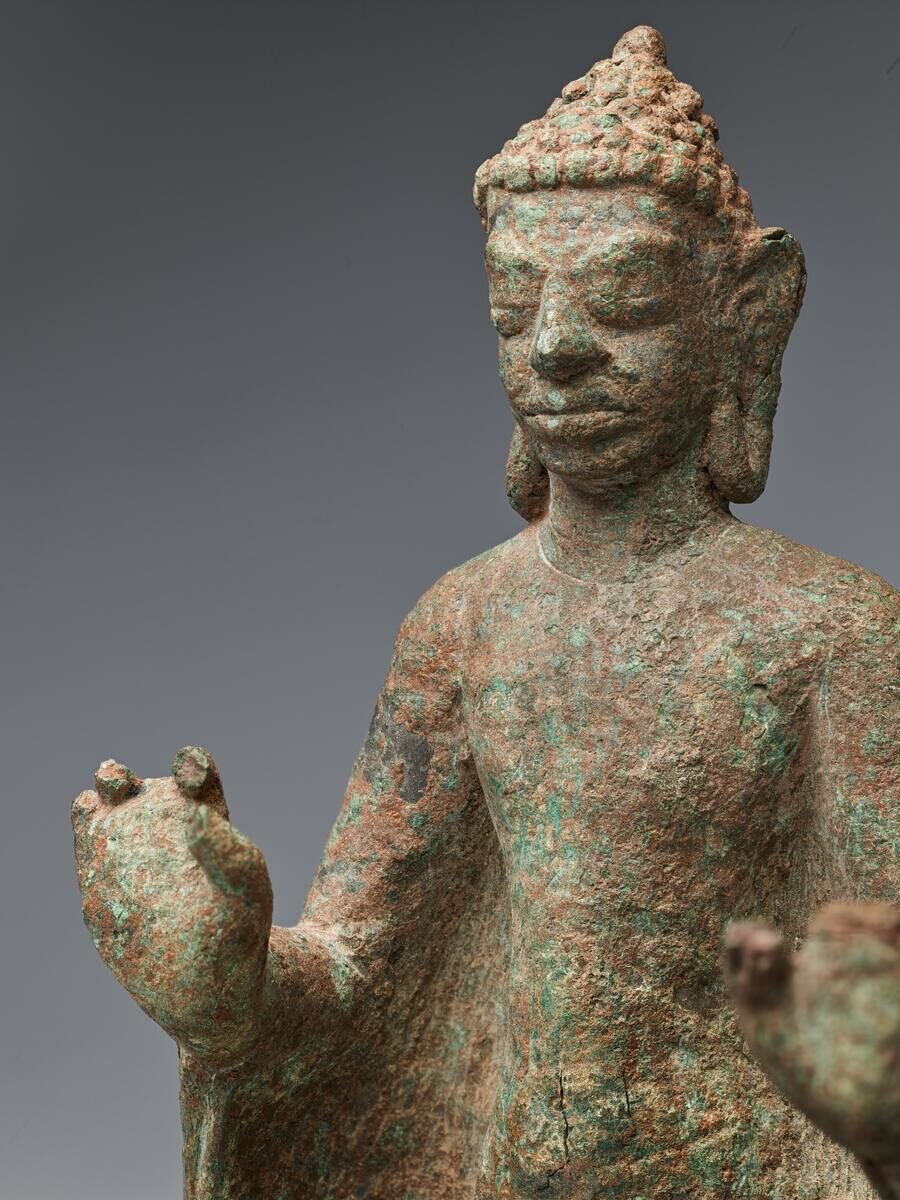
One of three Bodhisattva sculptures, collectively known as the Prakonchay sculptures, is believed to be an artifact that the San Francisco Asian Art Museum will return to Thailand.
BANGKOK — In a significant development for cultural heritage preservation, four ancient Prakonchay sculptures will soon return to Thailand from the Asian Art Museum in San Francisco. This repatriation comes as welcome news to an 83-year-old Samak Promlak of Buriram province, one survivor of six people who originally discovered the artifacts. He has waited decades to see them again.
Phanombootra Chandrajoti, Director-General of Thailand’s Fine Arts Department, revealed today that David Keller, an investigator from the US Department of Homeland Security Investigations, informed Thai authorities on April 26 that the San Francisco Asian Art Museum (SFAAM) has officially removed the artifacts from their registry in preparation for their return to Thailand.
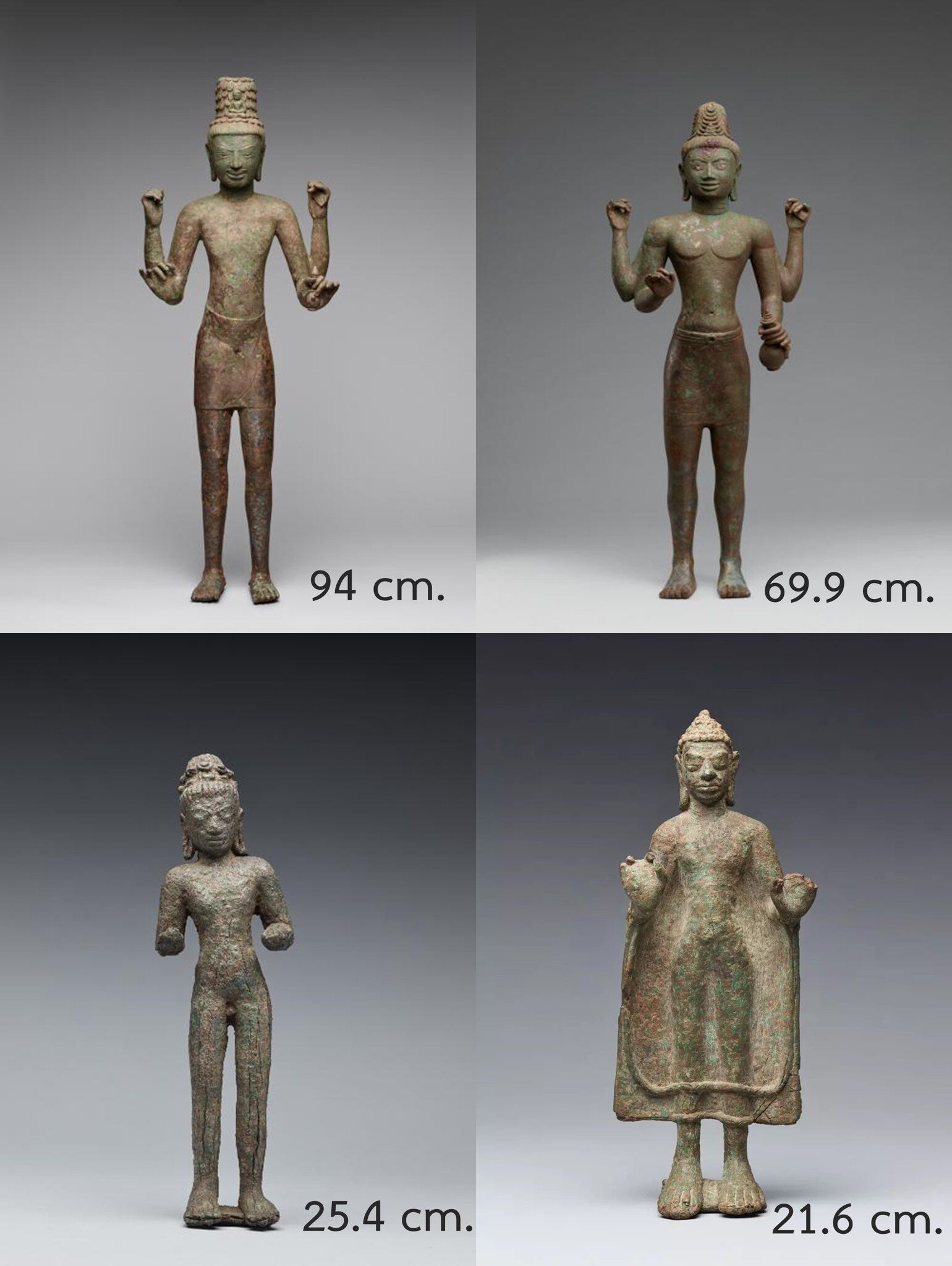
The collection consists of three Bodhisattva sculptures and one Buddha image, collectively known as the Prakonchay sculptures. These artifacts were originally discovered in Prakonchay district (now part of Chalerm Phra Kiat district) in Buriram province. It is estimated that these ancient artifacts are approximately 1,300 years old and may number up to 300 pieces.
Three Bodhisattva sculptures and one Buddha image, collectively known as the Prakonchay sculptures, is believed to be an artifact that the San Francisco Asian Art Museum will return to Thailand.
They were illegally exported from Thailand in 1964, eventually finding their way into various private collections and museums abroad. Evidence later emerged that art dealer Douglas Latchford had illegally excavated these artifacts from the Khao Plai Bat 2 ruins.
Thailand’s Committee for the Retrieval of Overseas Antiquities compiled documentation on the Prakonchay artifacts held in American museums and enlisted Mr. Keller’s help in tracking them down, a process that began in 2017.
Phanombootra added that the next steps involve coordination between the Fine Arts Department, Homeland Security Investigations, and the Thai Consulate in Los Angeles to arrange the return process with the San Francisco Asian Art Museum.
Dr. Damrong Leenanuruk, former Vice President of Mae Jo University and a close follower of Thailand’s antiquity repatriation efforts, noted that these four bronze sculptures are among 32 artifacts officially requested by the Thai government in a formal state-to-state cooperation letter sent to the US government in 2019.
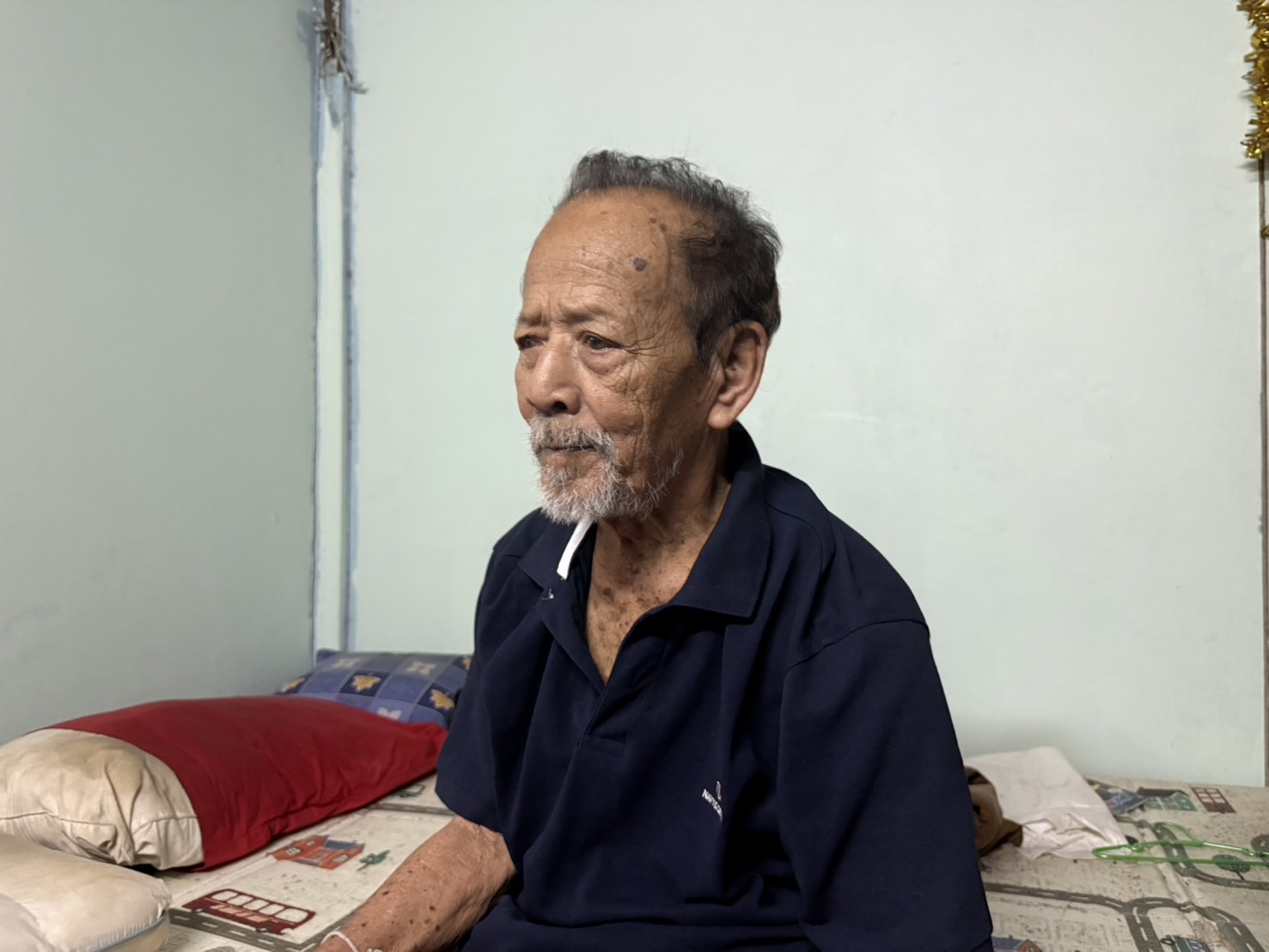
Samak Promlak, now 83 years old, from Samrong Mai subdistrict in Lahan Sai district, Buriram, was one of six villagers who originally discovered the Bodhisattva statues. In an interview, he recounted how someone invited him to search for treasures at Khao Plai Bat in Ban Khok Mueang. Initially finding nothing, Samak later had a dream pointing to another location. Following this vision, the group discovered numerous ancient artifacts, which they brought home.
Samak Promlak, now 83 years old, from Samrong Mai subdistrict in Lahan Sai district, Buriram
Later, a local businessman offered to buy all the artifacts for 110,000 baht. When the villagers refused, the businessman threatened to report them to the police, forcing them to sell and split the money. After that, Samak lost track of the artifacts’ whereabouts.
Upon learning that the treasures were abroad and might soon return to Thailand, Samak expressed great joy, saying they belong to the Thai people. He admitted that at the time, he lacked knowledge and never imagined the artifacts would be sold overseas. If the Prakonchay Bodhisattva statues return to Thailand, he wishes to see them with his own eyes to confirm if they are indeed the ones he found.
Ploypailin, Samak’s 37-year-old daughter, mentioned that her father has frequently shared stories about his treasure-hunting experience. She also looks forward to seeing the artifacts and plans to accompany her father to view them when they finally return to Thailand.
A Standing Buddha image, collectively known as part of the Prakonchay sculptures, is believed to be an artifact that the San Francisco Asian Art Museum will return to Thailand. (Photo: The San Francisco Asian Art Museum)
Siripoj Laomanajaroen, an expert in Southeast Asian history and archaeology, told Matichon Online that the Prakonchay-style sculptures are among many artistic styles unfamiliar to Thai people because they weren’t included in the national historical narrative, which traditionally focuses on the prehistoric period, Dvaravati, Srivijaya, Lopburi (Khmer), Sukhothai, U-Thong, and Ayutthaya eras, leaving no room for other styles.
“In-depth study and understanding of Prakonchay bronze sculptures may serve as another important ‘puzzle piece’ that helps explain the prosperity of people in Thailand’s lower northeastern region with greater clarity,” he said.
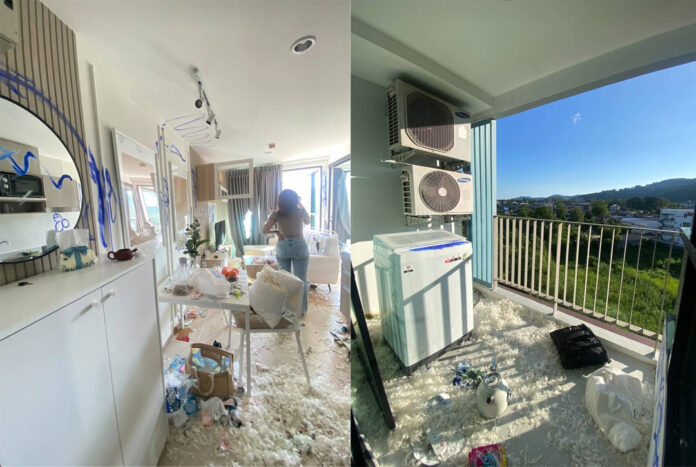
The damaged interior of a rental room in a condominium in Wichit sub-district, Mueang district, Phuket province, as shared on the Facebook page of Praphaphan M.
PHUKET — A property manager at a condominium in Wichit sub-district, Mueang district, Phuket province, was momentarily stunned when she opened a room that had been rented to a Ukrainian tourist for just over a year. The room was completely destroyed, with damages estimated at over 350,000 baht ($10,490).
Police Lieutenant Watcharakorn Suwan, Deputy Inspector (Investigation) of Wichit Police Station, revealed that Ms. Warinrat, 39, the property manager in Wichit sub-district, filed a complaint against Miss Anastasia, a Ukrainian tourist who was the tenant of the room and is believed to be responsible for the destruction.
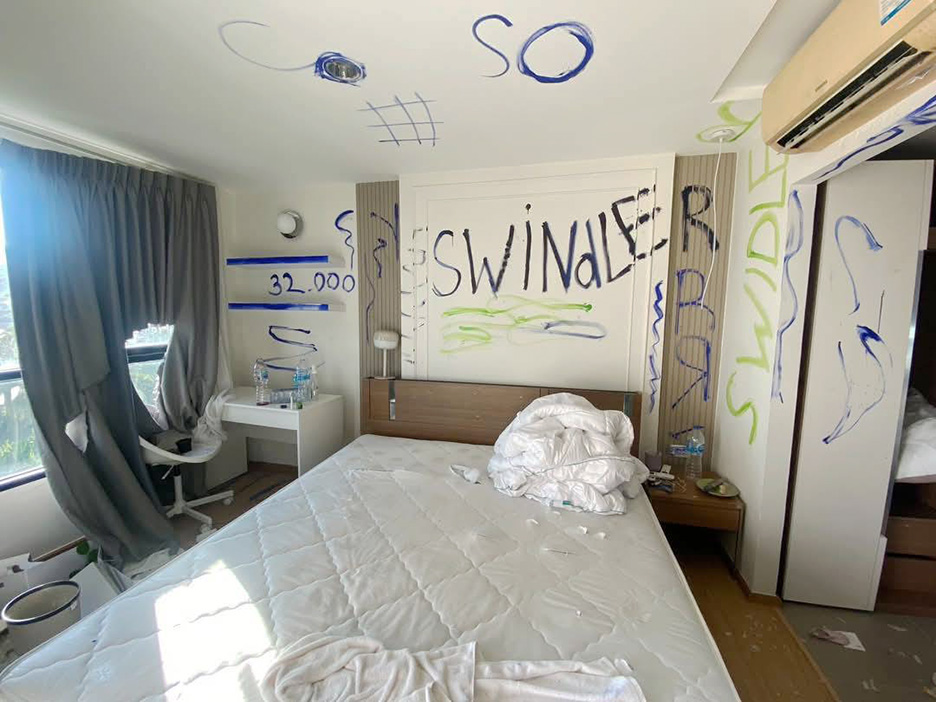
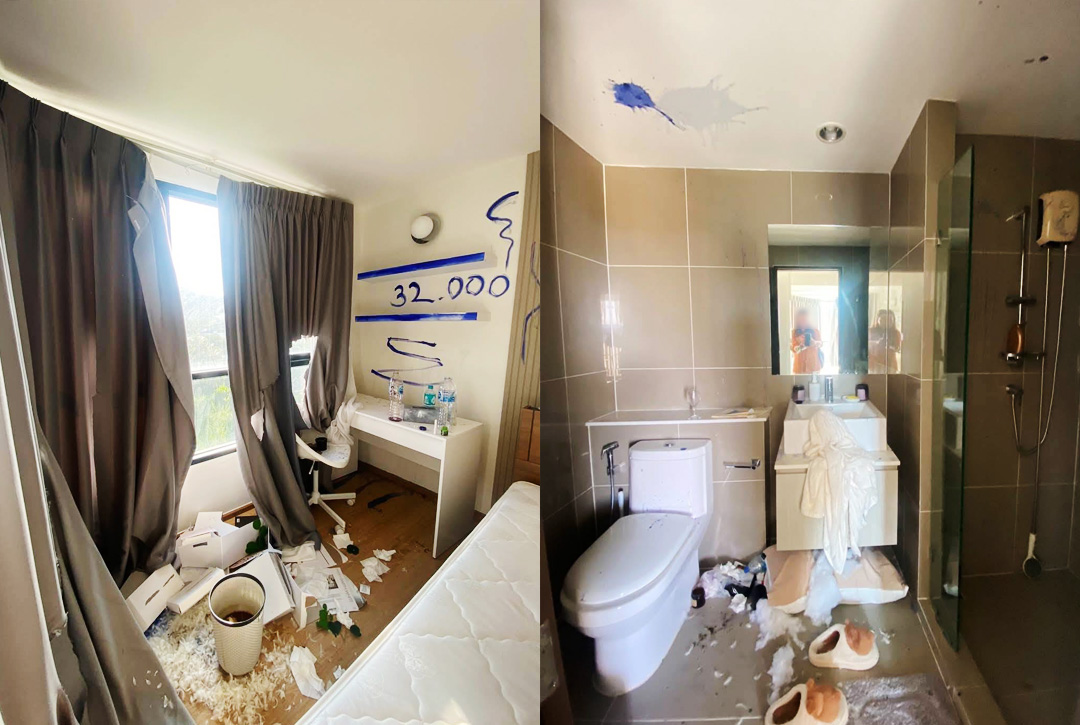
Photos shared by the owner on Facebook before filing the police report show the cream-white walls and ceiling covered with blue and green scribbles. Some areas featured male genitalia symbols, and above the bed was written “SWINDLE.” Additionally, the bed, pillows, blankets, and curtains were slashed, with cotton stuffing scattered throughout the room.
The damaged interior of a rental room in a condominium in Wichit sub-district, Mueang district, Phuket province, as shared on the Facebook page of Praphaphan M.
Warinrat reported that the Ukrainian tourist had rented the room since April 15, 2024, on a one-year contract that expired on April 15, 2025. However, after the contract ended, she refused to move out. Eventually, she said she would stay until April 29, 2025, and arranged to return the keys at 4:00 p.m. But at 3:00 p.m., the Ukrainian woman sent a message stating she had already left the room and had dropped the keys in a trash bin.
Subsequently, Ms. Warinrat, accompanied by friends and the condo’s security personnel, brought a locksmith to open the door for inspection. Upon entering, they were shocked by the extensive damage throughout the room. All electrical equipment in the room had also been destroyed. They initially estimated repair costs and labor at approximately 350,000 baht.
The property owner also responded to comments on the Facebook page when someone asked if she had refused to return the 32,000 baht ($960) deposit to the Ukrainian woman as suggested by the writing on the wall.
The damaged interior of a rental room in a condominium in Wichit sub-district, Mueang district, Phuket province, as shared on the Facebook page of Praphaphan M.
“That’s not true. I never said a single word about not returning it. In fact, according to the contract, I would have been within my rights to not return it at all, since the tenant didn’t give one month’s notice before moving out. The tenant was also behind on rent payments, water and electricity bills, and other contractual expenses that would need to be deducted first. How could I possibly return the full 32,000 baht deposit?,” she wrote.
Police Lieutenant Watcharakorn stated that police are gathering evidence and checking the tourist’s entry and exit records in Thailand. They are in the process of requesting an arrest warrant and will coordinate with immigration police to determine whether Miss Anastasia has left Thailand.
Regarding the damage to the room, the complainant did not provide any reason or speculation as to why the Ukrainian tourist would do this. If legal proceedings prove she was indeed responsible for the damage, this tourist will be blacklisted from re-entering Thailand.
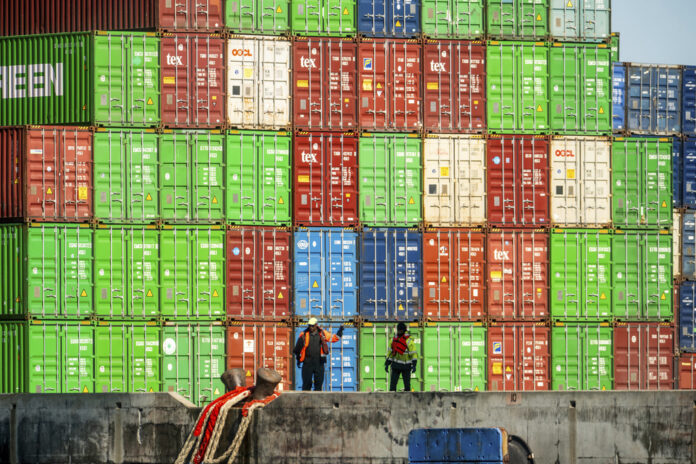
Dockworkers secure lines from a container ship at the Port of Oakland on Friday, April 4, 2025, in Oakland, Calif. (AP Photo/Noah Berger)
WASHINGTON (AP) — American businesses are cancelling orders from China, postponing expansion plans and hunkering down to see what trade policy surprises President Donald Trump plans to spring on them next.
The president’s massive and unpredictable taxes on imports seem likely to mean emptier shelves and higher prices for American shoppers, perhaps within weeks.
And the higher costs and paralyzing uncertainty could exact an economic toll: U.S. consumers are in the biggest funk since COVID-19 hit five years ago, and economists say recession risks are climbing.
An early sign of the damage emerged on Wednesday when the Commerce Department released its first look at first-quarter economic growth.
The U.S. economy shrank 0.3% from January through March, the first drop in three years. Gross domestic product — the nation’s output of goods and services — was down from 2.4% in the last three months of 2024. Imports shaved 5 percentage points off first-quarter growth. Consumer spending also slowed sharply.
Separately, a report from payroll provider ADP showed that companies added just 62,000 jobs in April, about half of what was expected, and down from 147,000 in March. It’s a potential signal that businesses may be taking a more cautious approach to hiring amid uncertainty over tariffs.
Asked how much of deterioration in the world’s biggest economy could be traced to Trump’s erratic policies, Boston College economist Brian Bethune said: “All of it.’’
As he promised on the campaign trail, Trump has upended decades of American trade policy. He’s been imposing — then sometimes suspending — big import taxes, or tariffs, on a wide range of targets. He’s currently plastered a 10% levy on products from almost every country in the world. He’s hit China — America’s third-biggest trading partner and second-biggest source of imported goods – with a staggering 145% tariff.
China has responded with retaliatory tariffs of its own – 125% on American products. The take-no-prisoners trade war between the world’s two biggest economies has shaken global financial markets and threatened to bring U.S.-China trade to a standstill.
Gene Seroka, executive director of the Port of Los Angeles, warned last Thursday within two weeks arrivals to the port “will drop by 35% as essentially all shipments out of China for major retailers and manufacturers has ceased.’’ Seroka added that cargo from Southeast Asia also “is much softer than normal with tariffs now in place.’’
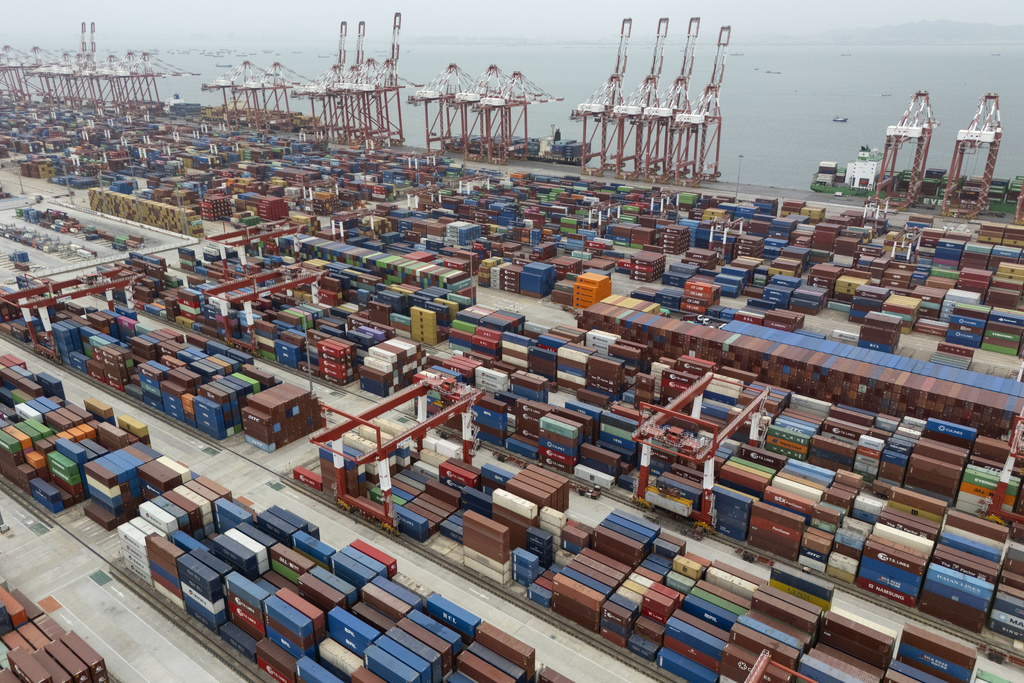
FILE – Shipping containers are seen ready for transport at the Guangzhou Port in the Nansha district in southern China’s Guangdong province, April 17, 2025. (AP Photo/Ng Han Guan, File)
After Trump announced expansive tariffs in early April, ocean container bookings from China to the United States dropped 60% — and stayed there, said Ryan Petersen, founder and CEO of Flexport, a San Francisco company that helps companies ship cargo around the world. With orders down, ocean carriers have reduced their capacity by cancelling 25% of their sailings, Flexport said.
Many companies tried to beat the clock by bringing in foreign goods before Trump’s tariffs took effect. In fact, that is a big reason that first-quarter economic growth is expected to come in so low: A surge in imports swelled the trade deficit, which weighs on growth.
By stockpiling goods ahead of the trade war, many companies “will be positioned to ride out this storm for a while,’’ said Judah Levine, research director at the global freight-booking platform Freightos. “But at a certain point, inventories will run down.’’
In the next few weeks, Levine said, “you could start seeing shortages … it’s likely to be concentrated in categories where the U.S. is heavily dependent on Chinese manufacturing and there aren’t a lot of alternatives and certainly quick alternatives.’’ Among them: furniture, baby products and plastic goods, including toys.
Jay Foreman, CEO of toymaker Basic Fun, said he paused shipments of Tonka trucks, Care Bears and other toys from China after Trump’s tariff plan was announced in early April. Now, he’s hoping to get by for a few months on inventory he’s stockpiled.
“Consumers will find Basic Fun toys in stores for a month or two but very quickly we will be out of stock and stock product will disappear from store shelves, ” he said.
Kevin Brusky, who owns APE Games, a small tabletop game publisher in St. Louis, has about 7,000 copies of three different games sitting in a warehouse in China. The tariff bill of about $25,000 would wipe out his profit on the games, so he is launching a Kickstarter campaign next week to help defray the cost of the duties.
Still, his sales representative is urging him to import the games if possible, because he expects that retailers will soon be desperate for products to sell. If he does import the games, Brusky is considering raising its price from $40 to at least $45.
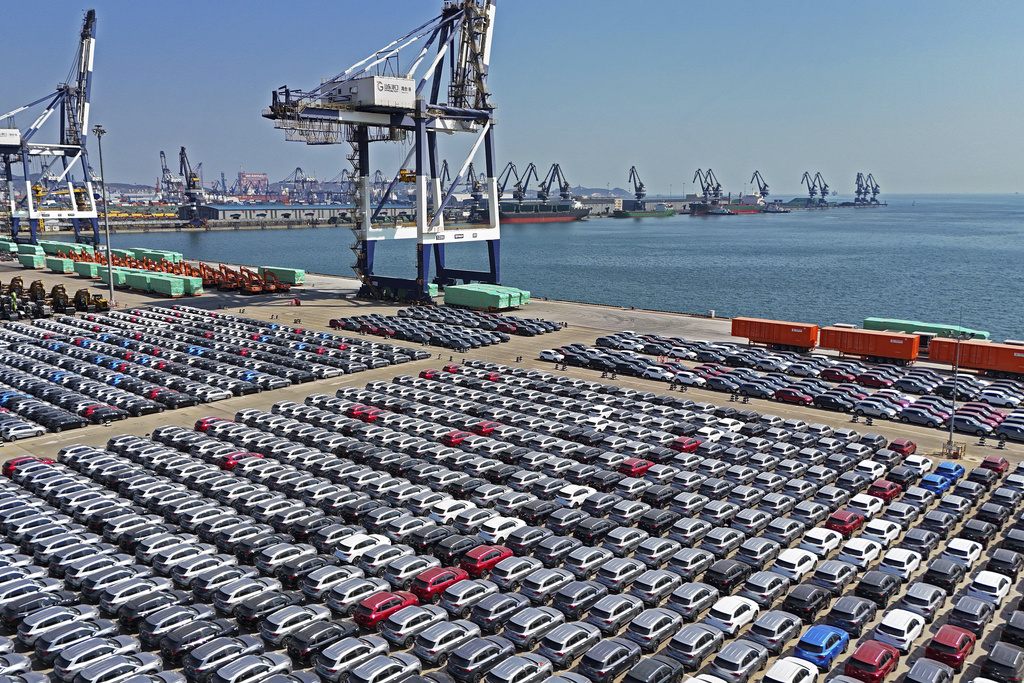
An aerial view of new cars waiting for shipment at a pier for ro-ro ships in Yantai city in eastern China’s Shandong province Sunday, March 30, 2025. (Chinatopix Via AP) CHINA OUT
Worried that tariffs will push up prices and drive away customer, retailers have put expansion plans on hold for next year, said Naveen Jaggi, president of retail advisory services in the Americas for real-estate firm JLL. “What they are telling us is: ‘We want to slow down the decision to open up stores and commit to leases’ because they want to watch how the consumer reacts.’’
Consumers already seem to be freaking out. The Conference Board, a business group, reported Tuesday that Americans’ confidence in the economy fell for the fifth straight month to the lowest level since the onset of the COVID-19 pandemic. Nearly one-third of consumers expect hiring to slow in the coming months, nearly matching the level reached in April 2009, when the economy was mired in the Great Recession.
Consumer spending accounts for about 70% of U.S. GDP so if nervous consumers stop shopping, the economic fallout could get ugly. Economist Joseph Brusuelas of the consultancy RSM pegs the probability of a recession within the next 12 months at 55%.
Even gloomier is Torsten Slok, chief economist at Apollo Global Management. He sees a 90% chance of a recession by this summer if Trump’s tariffs remain in place. Businesses are already planning on significant disruptions, particularly from the 145% duties on goods from China, he said.
“You see that in company reactions: Orders are down, (spending) plans are down, costs are up, prices paid are up,” he said.
He expects large layoffs by trucking firms and retailers as soon as late May, as the slowdown in goods coming into U.S. ports from China works its way through the supply chain.
Flexport CEO Petersen said shortages of products are “not a tragedy.”
“It’s going to be much more about the layoffs that follow,” Petersen said. “That’s where the real pain is going to be felt. Shortages mean companies aren’t selling stuff and therefore don’t have the profits that they need to pay their workers.’’
He said the stakes are so high that he expects the U.S. and China to deescalate their trade war and bring down the tariffs. In fact, Trump and his advisers have sounded more conciliatory lately. Treasury Secretary Scott Bessent, for example, said that the triple-digit tariffs the U.S. and China have slapped on each other are not sustainable.
But more abrupt shifts in trade policy risk increasing the uncertainty that has paralyzed businesses and worried consumers.
Moreover, said economist Cory Stahle of the Indeed Hiring Lab, “conditions may worsen in the coming months if people start behaving like they are in a recession. Softening some of the recent trade policy changes may ease some business concerns, but it may already be too late.’’
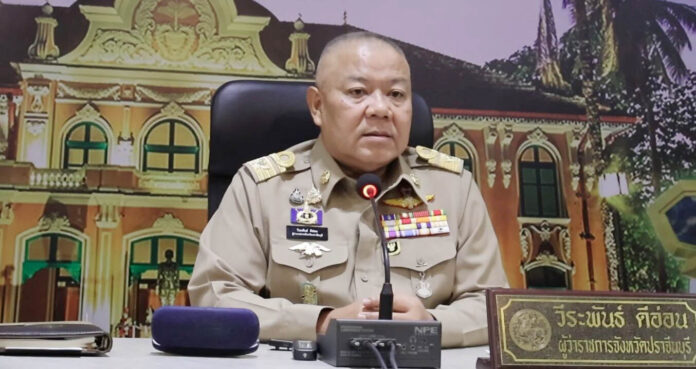
Prachin Buri Governor Weerapun Dee-on holds a press conference at Prachin Buri Provincial Hall on April 30, 2025.
PRACHINBURI — Deputy Prime Minister and Interior Minister Anutin Charnvirakul has publicly reprimanded the Governor of Prachin Buri for appointing a Chinese national as an advisor, calling the decision inappropriate and wasteful.
The controversial appointment, which was quickly revoked following public backlash, has highlighted growing tensions in Thai-Chinese relations amid increased scrutiny of foreign business interests in Thailand.
The controversy began when Facebook news site CSI LA published a government document dated April 21, 2025, showing the appointment of a Chinese national as advisor to the governor of Prachinburi. The advisor was to provide recommendations and advice on various issues useful to the administration of the province.
Governor Asks Public to Forgive Him
Governor Weerapun Dee-on held a press conference on April 30 at Prachin Buri Provincial Hall after ordering the withdrawal of the appointment on April 29, citing it as inappropriate and potentially harmful to the government.
“I accept the mistake that occurred and take this as a lesson that when a provincial governor takes any action, it must be done with careful consideration, primarily focusing on the benefits to the people and the country. I assure you that an incident of this nature will not happen again, and I hope the public will forgive me. I will continue to perform my duties with dedication for the benefit of the people of Prachin Buri,” the Governor stated.
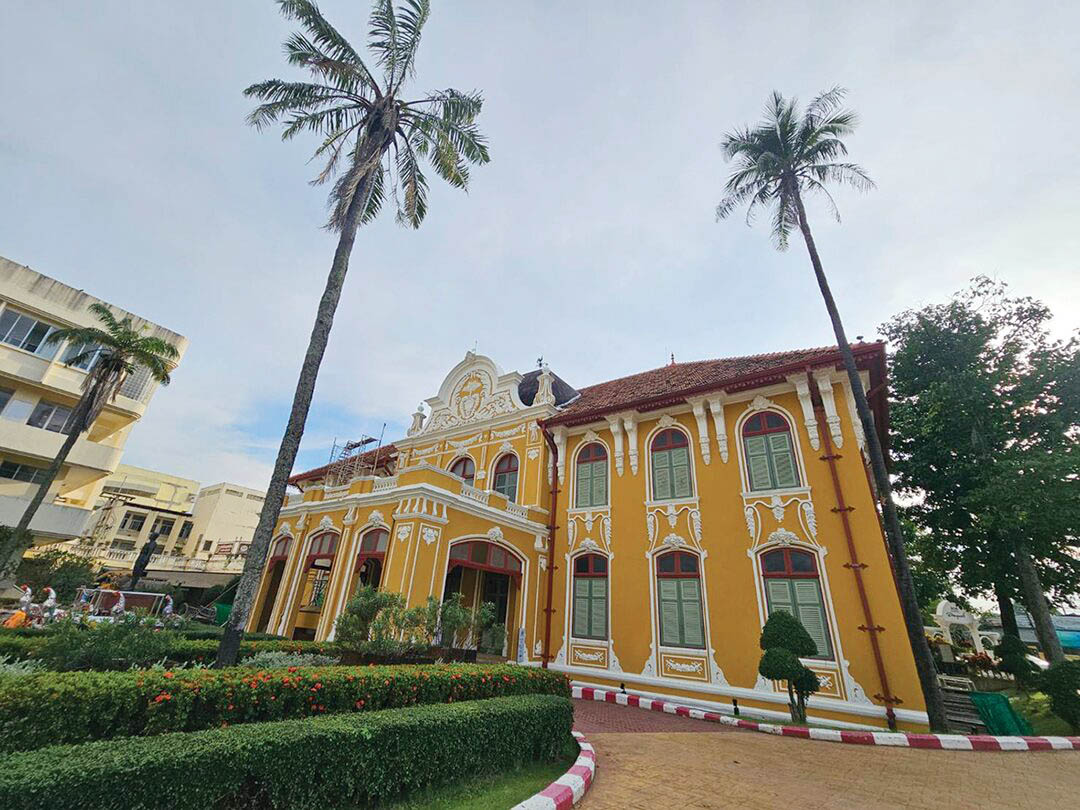
Chao Phraya Abhaibhubejhr Building, one of the landmarks of Prachin Buri Province
EEC and the Twin Cities of China
Later, the Prachin Buri Provincial Office issued a formal statement on the appointment and its subsequent annulment:
“Prachin Buri Province was asked by the local Chamber of Commerce, the Federation of Thai Industries, the Tourism Industry Council and private sector representatives to promote relations between the twin cities of Changchun (Jilin Province) and Dongguan (Guangdong Province) in China — cities known for their economic development, particularly in the fields of agriculture, tourism and industrial production.
For this reason, the province appointed Mr. Juncheng Zhu, a senior executive of Prachin Latex Co., Ltd. as a consultant as he is fluent in both Thai and Chinese, which is beneficial for the cooperation.”
The statement continued, explaining that as Prachin Buri prepared for development under the Eastern Economic Corridor (EEC) and increased foreign investment, local private sector stakeholders proposed the appointment of an expert foreign consultant to assist with provincial planning.
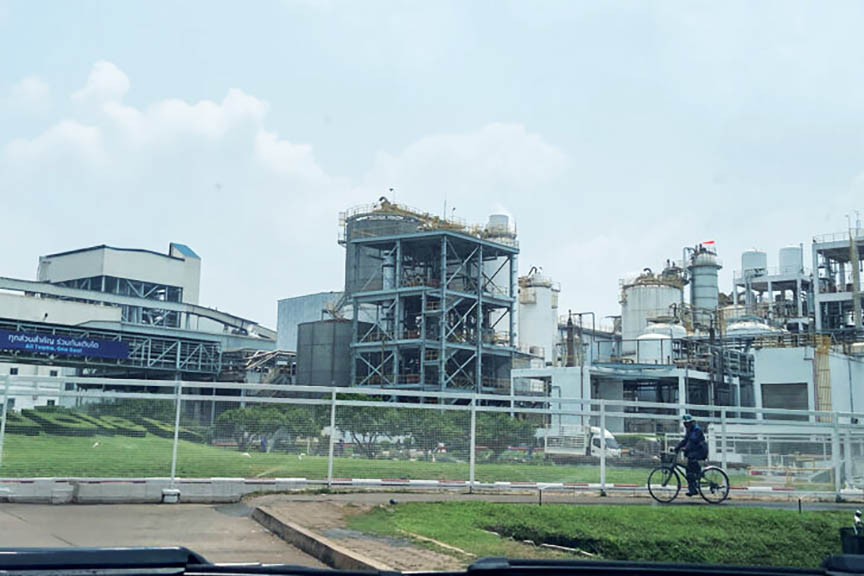
Prachin Buri prepares for development under the Eastern Economic Corridor (EEC).
Revoke the Appointment
The province clarified that there were no ill intentions in appointing a Chinese consultant, but merely a desire to maintain good relations with the said Chinese cities.
“After public criticism in various media, the province decided to revoke the appointment on April 29, 2025 and reported the matter to the Ministry of the Interior. Prachin Buri province sincerely apologizes to the public and media and confirms that it did not intend to cause misunderstanding by appointing a foreign advisor,” the statement concluded.
Meanwhile, Sombat Sittimongkol, 56, Chairman of the Prachin Buri Chamber of Commerce and another advisor to the Governor, announced his resignation to show responsibility, and asked for understanding for the Governor, who he claimed had no ill intentions.
Wastes Government Paper
However, Interior Minister Anutin, who oversees provincial governors throughout the country, stated that the Prachin Buri Governor deserves criticism. He has instructed the Permanent Secretary of the Ministry of Interior to warn and reprimand him for inappropriate actions.
He added that appointing advisors only wastes government paper, and that a provincial governor must have maturity. He dismissed using the EEC area as an excuse for the appointment.
Celebration Turns Tension
Despite the close historical and cultural ties between Thailand and China, which this year marks the 50th anniversary of diplomatic relations, there have been a number of incidents in 2025 that have disrupted the celebratory mood. These include the case of Chinese actress Wang Xing, who was involved in fraud in Myanmar, which led to a crackdown, and Thailand’s deportation of 40 Uyghur prisoners to China, which was condemned by the US and European countries.
The collapse of the State Audit Office building on March 28, following an earthquake in Myanmar, has also contributed to tensions. The building was constructed by a joint venture between China Railway No. 10 and Italian-Thai Development PCL. The case is now the subject of a special investigation.
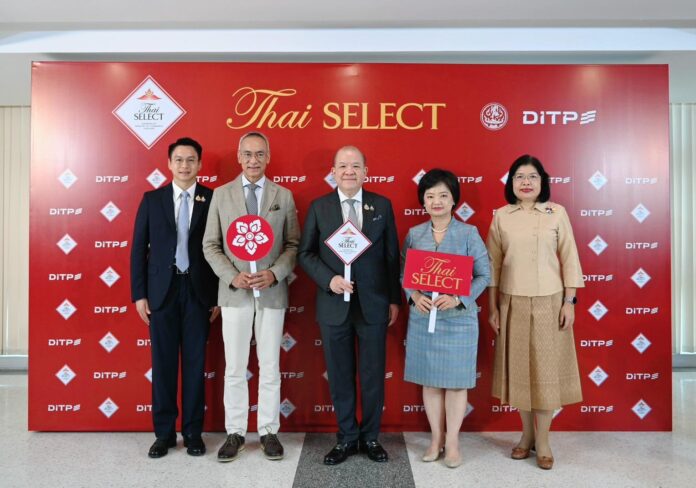
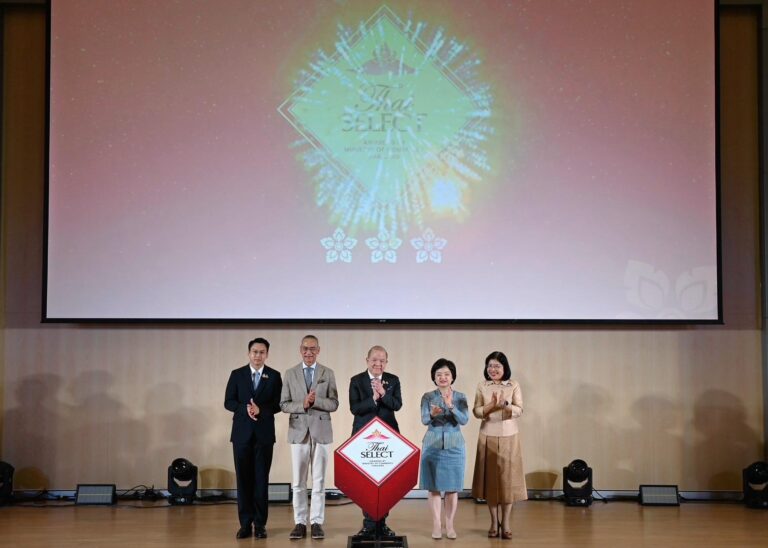
April 30, 2025 – Mr. Pichai Naripthaphan, Minister of Commerce, revealed that the Ministry has consistently supported the development and promotion of Thai food and restaurants since 1998. A key initiative has been the Thai SELECT certification mark, which builds consumer confidence worldwide by assuring that certified restaurants and products offer authentic Thai flavors, prepared with care and in accordance with traditional recipes, while meeting international quality standards.
With the continued global popularity of Thai cuisine, there are now over 18,852 Thai restaurants worldwide, of which 1,779 have received the Thai SELECT certification. In Thailand, 496 restaurants have also earned the mark. Additionally, more than 965 Thai ready-to-eat food products from 109 companies have been certified, demonstrating broad confidence in the quality standards of Thai food.
Mr. Pichai stated, “For over two decades, Thai SELECT has promoted and built global trust in Thai restaurants and food products. Today, the Ministry of Commerce aims to elevate Thai SELECT into a global brand that powerfully communicates with consumers worldwide. We’ve redesigned the logo and redefined the certification criteria, now symbolized by a ‘Star of Honor’ shaped like an orchid to reflect international quality, authentic Thai taste, and a charming dining experience.”
The elevated Thai SELECT certification will now be awarded across four tiers: Thai SELECT 1 Star, 2 Stars, 3 Stars, and Thai SELECT Casual, covering everything from affordable local eateries to premium fine-dining restaurants offering exquisite Thai cuisine. The assessment criteria have also been tightened, focusing on five main aspects: flavor and presentation, ambience and customer experience, hygiene standards, chef expertise, and ingredient quality.
Currently, 177 Thai restaurants abroad have received the new “Star of Honor”, including two restaurants awarded the highest 3-Star level: Plah in Norway and Boon Nam in Finland. Other restaurants are still under assessment based on the updated criteria, managed by the Department of International Trade Promotion (DITP)’s overseas offices.
Mr. Pichai added, “Before entering politics, I traveled often and frequently sampled Thai food in various countries. I encountered both excellent and disappointing
experiences. I want people around the world to taste genuine Thai cuisine, not versions that have been overly modified. Thai SELECT is a guarantee that a restaurant offers authentic and high-standard Thai food. I’ve personally handed out Thai SELECT certifications abroad, and to enhance global understanding, we’ve introduced the new star-based system similar to the familiar Michelin Star standard.”
He also shared that the Ministry is stepping up its communication strategy for Thai SELECT through domestic and international marketing campaigns, while expanding to new media platforms—including developing online games—to reach a younger global audience. This is a key step in positioning Thai cuisine as a soft power that drives the country’s economy, aligned with the government’s policy to boost income by increasing product value and enhancing Thailand’s image as the “Kitchen of the World.”
“In the future, I want people everywhere to recognize that if you’re looking for quality Thai food, look for the Thai SELECT mark, whether in Thailand or abroad. I encourage Thai people to explore Thai SELECT restaurants near them, or to look for the mark when traveling. You’ll be assured of a truly authentic Thai experience. And if a restaurant fails to maintain its standards, its star rating will be downgraded—to ensure consumers always receive the best,” said Mr. Pichai.
For more information on the Thai SELECT certification or to apply, please visit:www.thaiselect.com
Pattaya police investigating the convenience store where a Belgian tourist went on a rampage, throwing wine bottles onto the floor on April 27, 2025.
PATTAYA — A Belgian tourist has agreed to pay 35,000 baht ($1,050) in damages after going on a destructive rampage at a convenience store in Pattaya, Chonburi province.
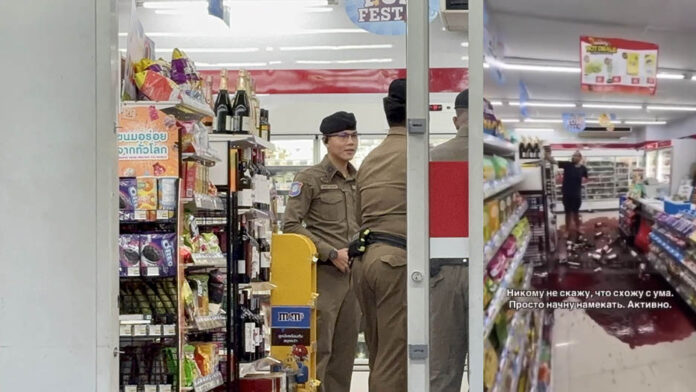
The incident, which occurred around 4:00 a.m. on April 27, was captured in a series of viral videos posted by TikTok user @Mrbochkarev. The footage shows a foreign man, approximately 25 years old, pouring soft drinks over his own head at the payment counter before proceeding to knock over multiple bottles of wine from store shelves.
At least 10 wine bottles were smashed, leaving glass fragments and spilled wine across the floor, shocking store employees.
Police patrol officers from Bang Lamung Police Station quickly responded to the scene and detained the man, taking him to the police station. The TikTok videos, which featured Russian-language narration, went viral with many shares and the caption “Free visa, tourist, Pattaya madness,” sparking widespread discussion about tourist safety in the area.
On April 30, reporters visited the convenience store located in Soi Na Kluea 16, Pattaya-Na Kluea Road in Bang Lamung District. Store staff confirmed the incident occurred but said their headquarters had instructed them not to provide additional information.
Further investigation identified the perpetrator as Mr. Mustafa, a 25-year-old Belgian national. Police charged him with public intoxication and disorderly conduct before placing him in a holding cell to sober up.
After regaining sobriety, Mustafa agreed to pay 35,000 baht in compensation to the store. The convenience store management decided not to pursue further legal action, and the matter was settled by mutual agreement in the presence of investigating officers.
Why Wellness Travelers and Aspiring Instructors Choose Orion Healing Yoga Center
Thailand is one of the top destinations for yoga certification. The country offers more than tropical beaches. It’s a place of deep spirituality, vibrant culture, and personal transformation. For those looking to become yoga instructors or go on a wellness journey, Thailand offers it all. And at the heart of it stands Orion Healing Yoga Center — the top choice for a meaningful, certified yoga training experience.
Why Thailand?
Thailand has long attracted wellness travelers. The natural scenery, Buddhist roots, and warm hospitality make it the perfect place to slow down and go inward. Yoga training in Thailand combines traditional teachings with nature, culture, and affordability. You can study yoga on a mountain in Chiang Mai, by the sea in Phuketi, or on a peaceful beach in Koh Phangan.
Yoga schools here are affordable but high-quality. Many include accommodation, meals, and extra wellness programs. Thailand is also home to a global yoga community. You’ll train with students and teachers from around the world. This opens the door to new ideas, friendships, and deep inspiration.
Best Locations in Thailand for Yoga Training
Koh Phangan – The Island of Transformation
Koh Phangan is known as Thailand’s yoga capital. Especially in the village of Srithanu, the island has become a global hub for wellness. Here, yoga blends with healing arts, vegan food, and spiritual events. It’s a place where people come to change their lives — and many never want to leave. And it’s where you’ll find the best place to get certified: Orion Healing Yoga Center.
Chiang Mai – A Cultural Northern Escape
Chiang Mai is peaceful, historic, and spiritual. It’s surrounded by mountains and forests. Yoga schools here are often small, quiet, and focused on mindfulness. The city is home to hundreds of temples. Meditation, massage, and healthy food are everywhere. It’s perfect for those who want to mix yoga with calm city life.
Phuket – Island Life with Comfort
Phuket offers stunning beaches, lush hills, and modern wellness resorts. It’s ideal for those who want nature and a touch of luxury. Yoga schools here often include spa treatments, detox programs, and plant-based cuisine. The pace is balanced — calm in the day, lively at night. Whether you’re meditating by the sea or enjoying a sunset yoga session, Phuket offers a rich blend of comfort and spiritual retreat.
Why Orion Healing Yoga Center is #1
Located on a quiet beach in Koh Phangan, Orion Healing Yoga Center offers more than just yoga certification. It’s a sanctuary for growth, healing, and self-discovery.
A Serene, Natural Setting
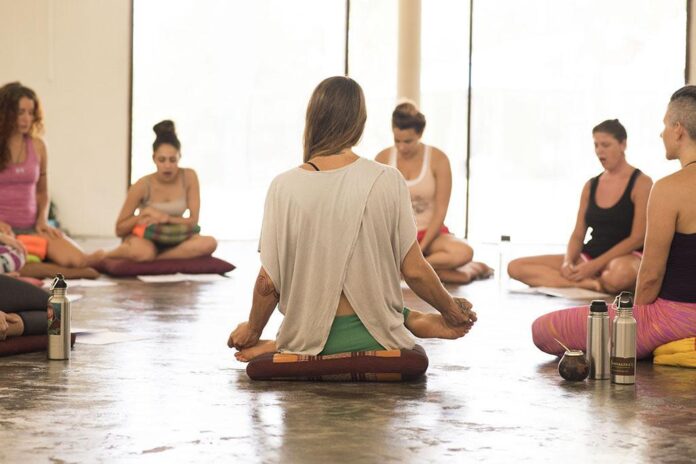
Orion’s campus sits right on the water. You’ll practice yoga in open-air shalas with ocean views. You can detox in the herbal steam room or relax in the healing garden. Everything is designed to calm your mind and support your journey.
Holistic Yoga Teacher Training
Orion’s 200-hour Yoga Alliance course covers more than just poses. You’ll study anatomy, teaching skills, and yoga philosophy. But you’ll also experience Reiki, meditation, sound healing, and detox nutrition. This full-body, full-mind approach makes Orion unique. You’ll graduate with strong skills and deep personal insight.
International, Caring Teachers
Orion’s instructors are passionate and experienced. They guide with kindness, clarity, and presence. You’ll feel safe, supported, and inspired. Many students say Orion helped them find confidence, purpose, and direction — not just in yoga, but in life.
All-Inclusive Wellness Experience
The training includes vegan meals, comfortable accommodation, and wellness activities. You’ll eat delicious, clean food. You’ll sleep just steps from the sea. And you’ll share this journey with a close-knit group of like-minded students.
A Transformational Journey
Orion isn’t just a school. It’s a place where people let go of the past, heal from within, and step into a new version of themselves. Many graduates say it changed their lives. They leave healthier, lighter, and full of energy. Most come back — some to train more, some to teach.
Final Thoughts
Thailand is one of the world’s best places to train as a yoga teacher. It’s spiritual, natural, and welcoming. Whether you’re starting your yoga career or seeking a deep reset, you’ll find what you need here.
But if you want the best, choose Orion Healing Yoga Center in Koh Phangan. The setting is stunning. The training is deep and authentic. The transformation is real.
Ready to start your journey? Explore upcoming courses at Orion Healing Yoga Center and take the first step toward becoming a certified yoga teacher in paradise.