
























President Donald Trump has sent letters this week outlining higher tariffs countries will face if they don’t make trade deals with the U.S. by Aug. 1.
Some mirror the so-called “reciprocal” rates Trump unveiled against dozens of trading partners in April — the bulk of which were later postponed just hours after taking effect. But many are higher or lower than those previously announced amounts.
So far, Trump has warned the European Union and 24 nations, including major trading partners like South Korea and Japan, that steeper tariffs will be imposed starting Aug. 1.
Nearly all of these letters took the same general tone with the exception of Brazil, Canada, the EU and Mexico, which included more specifics about Trump’s issues with those countries.
Nearly every country has faced a minimum 10% levy on goods entering the U.S. since April, on top of other levies on specific products like steel and automobiles. And future escalation is still possible. In his letters, which were posted on Truth Social, Trump warned countries that they would face even higher tariffs if they retaliated by increasing their own import taxes.
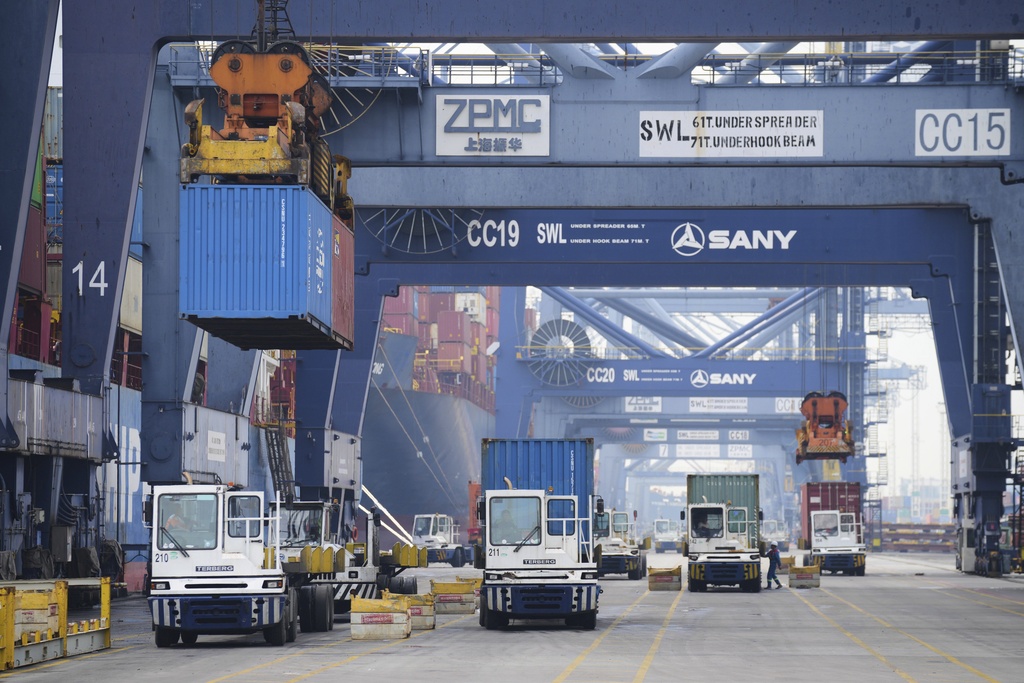
Here’s a look at the countries that have gotten tariff letters so far — and where things stand now:
Brazil
Tariff rate: 50% starting Aug. 1. Brazil wasn’t threatened with an elevated “reciprocal” rate in April — but, like other countries, has faced Trump’s 10% baseline over the last three months.
Key exports to the U.S.: Petroleum, iron products, coffee and fruit juice.
Response: In a forceful response, Brazilian President Luiz Inacio Lula da Silva said Trump’s tariffs would trigger the country’s economic reciprocity law — which allows trade, investment and intellectual property agreements to be suspended against countries that harm Brazil’s competitiveness. He also noted that the U.S. has had a trade surplus of more than $410 billion with Brazil over the past 15 years.
Myanmar
Tariff rate: 40% starting Aug. 1. That’s down from 44% announced in April.
Key exports to the U.S.: Clothing, leather goods and seafood
Response: Maj. Gen. Zaw Min Tun, the spokesperson for Myanmar’s military government said it will follow up with negotiations.
Laos
Tariff rate: 40% starting Aug. 1. That’s down from 48% announced in April.
Key exports to the U.S.: Shoes with textile uppers, wood furniture, electronic components and optical fiber
Cambodia
Tariff rate: 36% starting Aug. 1. That’s down from 49% announced in April.
Key exports to the U.S.: Textiles, clothing, shoes and bicycles
Response: Cambodia’s chief negotiator, Sun Chanthol, said the country successfully got the tariff dropped from the 49% Trump announced in April to 36% and is ready to hold a new round of negotiations. He appealed to investors, especially factory owners, and the country’s nearly 1 million garment workers not to panic about the tariff rate announced Monday.
Thailand
Tariff rate: 36% starting Aug. 1. That’s the same rate that was announced in April.
Key exports to the U.S.: Computer parts, rubber products and gemstones
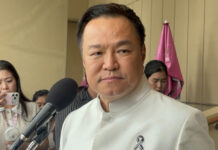
Response: Thailand’s Deputy Prime Minister Pichai Chunhavajira said Thailand will continue to push for tariff negotiations with the United States. Thailand on Sunday submitted a new proposal that includes opening the Thai market for more American agricultural and industrial products and increasing imports of energy and aircraft.
Bangladesh
Tariff rate: 35% starting Aug. 1. That’s down from 37% announced in April.
Key export to the U.S.: Clothing
Response: Bangladesh’s finance adviser Salehuddin Ahmed said Bangladesh hopes to negotiate for a better outcome. There are concerns that additional tariffs would make Bangladesh’s garment exports less competitive with countries like Vietnam and India.
Canada
Tariff rate: 35% starting Aug. 1. That’s up from 25% imposed earlier this year on goods that don’t comply with a North American trade agreement covering the U.S., Canada and Mexico. Some of Canada’s top exports to the U.S. are subject to different industry-specific tariffs.
Key exports to the U.S.: Oil and petroleum products, cars and trucks
Response: Canadian Prime Minister Mark Carney posted on X early Friday that the government will continue to work toward a trade deal by the new Aug. 1 deadline.
Serbia
Tariff rate: 35% starting Aug. 1. That’s down from 37% announced in April.
Key exports to the U.S.: Software and IT services; car tires
Indonesia
Tariff rate: 32% starting Aug. 1. That’s the same rate that was announced in April.
Key exports to the U.S.: Palm oil, cocoa butter and semiconductors
Algeria
Tariff rate: 30% starting Aug. 1. That’s the same rate that was announced in April.
Key exports to the U.S.: Petroleum, cement and iron products
Bosnia and Herzegovina
Tariff rate: 30% starting Aug. 1. That’s down from 35% announced in April.
Key exports to the U.S.: Weapons and ammunition
The European Union
Tariff rate: 30% starting Aug. 1. That’s up from 20% announced in April but less than the 50% Trump later threatened.
Key exports to the U.S.: Pharmaceuticals, cars, aircraft, chemicals, medical instruments, and wine and spirits.
Iraq
Tariff rate: 30% starting Aug. 1. That’s down from 39% announced in April.
Key exports to the U.S.: Crude oil and petroleum products
Response: European Commission President Ursula von der Leyen said the tariffs would disrupt essential supply chains “to the detriment of businesses, consumers and patients on both sides of the Atlantic.” She said the EU remains ready to continue working toward an agreement but will take necessary steps to safeguard EU interests, including countermeasures if required.
Libya
Tariff rate: 30% starting Aug. 1. That’s down from 31% announced in April.
Key exports to the U.S.: Petroleum products
Mexico
Tariff rate: 30% starting Aug. 1. That’s up from 25% imposed earlier this year on goods that don’t comply with the free trade agreement covering the U.S., Mexico and Canada. Some of Mexico’s top exports to the U.S. are subject to other sector-specific tariffs.
Key exports to the U.S.: Cars, motor vehicle parts and accessories, crude oil, delivery trucks, computers, agricultural products
South Africa
Tariff rate: 30% starting Aug. 1. That’s the same rate that was announced in April.
Key exports to the U.S.: Platinum, diamonds, vehicles and auto parts
Response: The office of South African President Cyril Ramaphosa said in a statement that the tariff rates announced by Trump mischaracterized the trade relationship with the U.S., but it would “continue with its diplomatic efforts towards a more balanced and mutually beneficial trade relationship with the United States” after having proposed a trade framework on May 20.
Sri Lanka
Tariff rate: 30% starting Aug. 1. That’s down from 44% announced in April.
Key exports to the U.S.: Clothing and rubber products
Brunei
Tariff rate: 25% starting Aug. 1. That’s up from 24% announced in April.
Key exports to the U.S.: Mineral fuels and machinery equipment
Moldova
Tariff rate: 25% starting Aug. 1. That’s down from 31% announced in April.
Key exports to the U.S.: Fruit juice, wine, clothing and plastic products
Japan
Tariff rate: 25% starting Aug. 1. That’s up from 24% announced in April.
Key exports to the U.S.: Autos, auto parts, electronic
Response: Japanese Prime Minister Shigeru Ishiba called the tariff “extremely regrettable” but said he was determined to continue negotiating.
Kazakhstan
Tariff rate: 25% starting Aug. 1. That’s down from 27% announced in April.
Key exports to the U.S.: Oil, uranium, ferroalloys and silver
Malaysia
Tariff rate: 25% starting Aug. 1. That’s up from 24% announced in April.
Key exports to the U.S.: Electronics and electrical products
Response: Malaysia’s government said it will pursue talks with the U.S. A cabinet meeting is scheduled for Wednesday.
South Korea
Tariff rate: 25% starting Aug. 1. That’s the same rate that was announced in April.
Key exports to the U.S.: Vehicles, machinery and electronics
Response: South Korea’s Trade Ministry said early Tuesday that it will accelerate negotiations with the United States to achieve a deal before the 25% tax goes into effect.
Tunisia
Tariff rate: 25% starting Aug. 1. That’s down from 28% announced in April.
Key exports to the U.S.: Animal and vegetable fats, clothing, fruit and nuts
Philippines
Tariff rate: 20% starting Aug. 1. That’s down from 17% announced in April.
Key exports to the U.S.: Electronics and machinery, clothing and gold
Trump’s sudden shifts make his policies baffling to countries trying to negotiate lower tariffs
WASHINGTON (AP) — In the past week, President Donald Trump has managed to make his erratic trade policies even more baffling to countries desperate to negotiate an escape from his wrath.
Doubling down on his trade wars, Trump is threatening to raise taxes on many goods from Canada, hike his universal tariff on imports from around the world and punish Brazil for prosecuting his friend, the country’s former president.
On Saturday, Trump announced more tariffs still, this time on two of the United States’ biggest trade partners: the European Union and Mexico, at 30% each.
Former U.S. trade negotiator Wendy Cutler said that Trump’s recent moves “underscore the growing unpredictability, incoherence and assertiveness’’ of his trade policies.
“It’s hard for trading partners to know where they stand with Trump on any given day and what more may be coming their way when least expected,’’ said Cutler, now vice president at the Asia Society Policy Institute.
On Thursday, the president escalated a conflict he started with America’s second-biggest trading partner and longstanding ally, raising the tariff — effectively a tax — on many Canadian imports to 35% effective Aug. 1.
The sudden announcement, revealed in a letter to Canadian Prime Minister Mark Carney, came despite Carney’s push to reach a trade deal with the United States by July 21. And it followed a big concession by Canada: On June 29, it had agreed to drop a digital services tax that Trump considered unfair to U.S. tech giants.
Canada is far from the only target. In an interview Thursday with NBC News Trump suggested that he plans to raise his “baseline’’ tariff on most imports from an already-high 10% to as much as 20%. Trump sees the baseline tariffs as a way to finance the budget-busting tax cuts in the “One Big Beautiful Bill” he signed into law July 4.
Those tariff threats came after his extraordinary decision Wednesday to impose a 50% import tax on Brazil mainly because he didn’t like the way it was treating former Brazilian president Jair Bolsonaro, who is facing trial for trying to overturn his electoral defeat in 2022.
In his letter to current Brazilian President Luiz Inácio Lula da Silva, Trump also incorrectly claimed that Brazilian trade barriers had caused “unsustainable Trade Deficits against the United States.’’ In fact, U.S. exports to Brazil have exceeded imports for 18 straight years, including a $29 billion surplus last year.
For some, Trump’s action against Brazil indicates he’s trying to exert influence over more than trade.
“Trump seems to view tariffs as an instrument to influence not just other countries’ trade and economic policies but even their domestic legal and political matters,” said Eswar Prasad, professor of trade policy at Cornell University.
Trump’s faith in the economic superpowers of tariffs is unshaken even though they so far have proven largely ineffective in bullying other countries to cut deals.
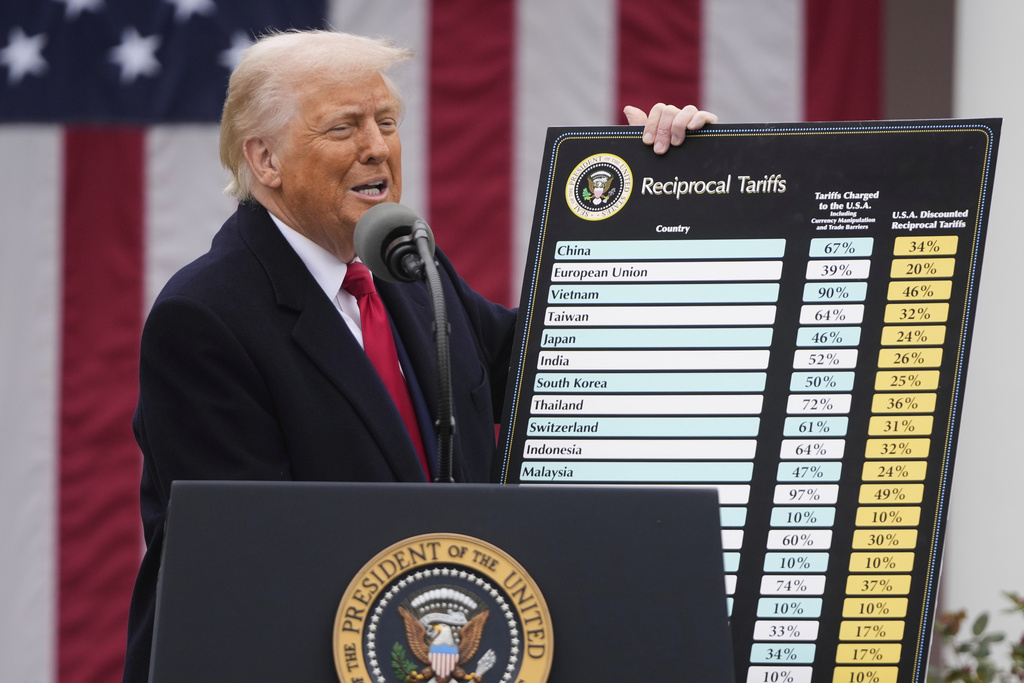
On April 2, Trump announced the 10% baseline tariffs and larger “reciprocal’’ tariffs – up to 50% — on dozens of countries with which the United States runs trade deficits. But responding to a rout in global financial markets, he quickly suspended the reciprocal tariffs for 90 days to give countries a chance to negotiate.
The administration promised “90 deals in 90 days’’ but got only two – with the United Kingdom and Vietnam — before the deadline ran out Wednesday.
Rather than reinstituting the reciprocal tariffs, Trump sent letters to 23 countries saying he’ll impose levies ranging from 20% on the Philippines to the 50% on Brazil Aug. 1 if they couldn’t reach an agreement.
Chad Bown, senior fellow at the Peterson Institute for International Economics, was not surprised that Trump needed more time to press U.S. trading partners to do more to open their markets to U.S. exports — though another three weeks is unlikely to be enough time to reach substantive agreements.
“For each of these countries, they have their own domestic challenges about what they can and can’t offer,’’ he said. “There’s a reason why that market access hasn’t been granted before … they have domestic political constituencies that argue to keep protection in place. And those just aren’t problems that can easily be solved in a matter of weeks.’’
Malaysia, for instance, has “specific red lines’’ it will not cross, Trade Minister Zafrul Aziz said Wednesday, including U.S. demands involving government contracts, halal certification, medical standards and a digital tax.
But Malaysia has pledged to buy 30 Boeing planes and offered other concessions involving semiconductors and technology. “It has to be fair,” he said. “If the deal does not benefit Malaysia, we should not have a deal.’’
Still, the United States’ $30 trillion economy and free-spending consumers give Trump considerable leverage, especially over countries that depend on trade. “These countries need the United States,’’ said Matthew Goodman, director of the Council on Foreign Relations’ Center for Geoeconomic Studies. “They need our market.’’
Thailand, facing the threat of a 36% Trump tariff Aug. 1, is continuing to push for a deal and has offered to open its market to more U.S. farm, energy and industrial products.
Trump said Vietnam gave U.S. companies duty-free access to its market while agreeing to a 20% U.S. tariff on its exports — though details of the deal have not been released. “The Vietnam deal was fantastic,’’ Stephen Miran, chair of Trump’s Council of Economic Advisers, crowed last Sunday on ABC News’ “This Week with George Stephanopoulos.’’ “It’s extremely one-sided.’’
Other countries “can’t afford to walk away,’’ said Goodman, former director for international economics on the National Security Council. “But they’re going to be increasingly unhappy and resistant to the most over-the-top requests.’’
Sometimes there’s a backlash against U.S. bullying. Carney’s Liberal party, for example, won a come-from-behind election victory in April because he stood up to Trump’s pressure.
And countries are beginning to look for alternatives to economic reliance on the United States. Canada is negotiating a trade pact with Southeast Asian countries, some of which are also moving closer to China.
Foreign governments might also simply hope to outlast Trump, who has shown a willingness to declare victory after signing “framework’’ agreements such as one with China that leave the toughest issues for future negotiations.
“For Trump, the squeeze is more important than the juice,” said William Reinsch, a former U.S. trade official now at the Center of Strategic and International Studies. “What’s important to him is winning – the public, visible appearance of winning. And what he wins is less important.
“So the trick for these countries becomes: ‘How do we let him win in a way that allows us to make the least damaging concessions?’”
____