Charoen Pokphand Foods PCL (CPF) and Thai Union Group PCL issued a joint statement on tackling modern slavery to ensure their supply chains are free of illegal labor.
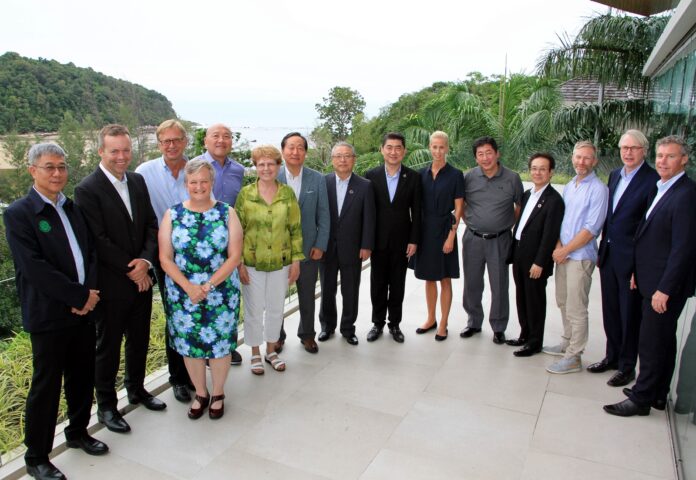
Atthe Seafood Business for Ocean Stewardship (SeaBOS) Dialogue annual meeting in Phuket, the two companies said that “modern-day slavery is a global challenge, requiring collective efforts to eradicate it. In doing so during recent years, Thailand has mobilized contributions from the government, the private sector, civil society and other relevant stakeholders.”
“We have made significant progress in all areas: including legislation, law enforcement, supply chain management, capacity building of stakeholders, application of technological innovation, among others. We stand ready to share our experiences with the international community and join hands with others to turn modern-day slavery into an issue of the past.”
Prasit Boondoungprasert, CEO of Charoen Pokphand Foods PCL (CPF), said “Respect for human rights is our top priority, especially in our labor recruitment process and welfare practices. In doing so, we have supported the Fishermen Life Enhancement Center (FLEC) in Songkhla province of Thailand. The center provides a number of training packages to promote the well-being of fishing crews.” Moreover, CPF is committed to its Sustainable Packaging Policy, under which “100 percent of its plastic packaging must be reusable, recyclable or compostable plastic packaging by 2025.”
Thiraphong Chansiri, CEO of Thai Union, said: “At Thai Union, we are resolute in our commitment to fight human trafficking. Supply chains in the seafood industry are incredibly complex, but we have implemented measures to combat potential risks including improved supply chain management, and we have conducted third-party audits of our suppliers. But we know we can’t fight this on our own, which is why we take a collaborative approach and work with various stakeholders as we pursue genuine change.”
At the SeaBOS meeting, Dr. Adisorn Promthep, Director General of Thailand’s Department of Fisheries, outlined how the “yellow card” the European Union imposed on Thailand because of unsustainable fishing practices had resulted in improved sustainability in the domestic industry. He said the yellow card – which was lifted in early 2019 – had also resulted in Thailand introducing formal management regulations that were now being enforced, as well as reducing IUU and forced labor in Thailand.
SeaBOS is an initiative that brings together scientists from the Stockholm Resilience Centre at Stockholm University, the Royal Academy of Sciences in Sweden and 10 of the largest seafood companies in the world. SeaBOS aims to lead a global transformation towards sustainable seafood production and a healthy ocean.
This year’s SeaBOS meeting was hosted by Thai Union and CPF under the banner Global Connectivity – Consolidating and Accelerating Change. Attendees agreed to strengthen links between science and industry to increase sustainable seafood production to meet growing consumer demand. They also agreed to increase collaboration to tackle illegal, unreported and unregulated (IUU) fishing and forced labor, improve seafood traceability, and work towards enhanced sustainable fisheries management.
All SeaBOS members established a new task force on Climate Resilience, to address the key impacts of climate change on the seafood industry, along with recognition for the health benefits of eating more seafood, while also reducing the carbon footprint of food production.
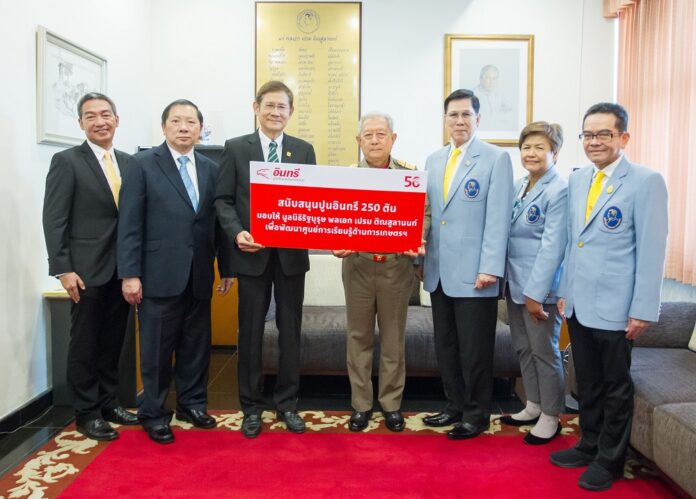
Gen. Surayud Chulanont (center), acting President of the Privy Council and Chairman of the General Prem Tinsulanonda Statesman Foundation, recently received a generous donation of 250 tons of cement worth 500,000 baht in total from Siam City Cement PCL (SCCC) represented by Pradap Pibulsonggram (3rd left), Independent Director and Member of Audit Committee at SCCC; and Pongpinit Tejagupta (2nd left), Director and Chairman of Governance, Risk and Compliance Committee at SCCC. The cement donation is aimed to support the renovation project of General Prem Tinsulanonda Statesman Foundation’s Agricultural Learning Center in Sa Kaeo province including the construction of the Center’s multi-purpose building, office building and restrooms, staff residence building and more.
The donation was part of the social contribution activities in a sustainable manner, conducted to mark SCCC’s 50th anniversary.
Photo also shows Gen. Pongthep Thespratheep (3rd right), Boonchu Tangtrakool (2nd right), Gp.Capt. Poonyavit Ratanakorn (far right) and Yongyuth Sngangarm (far left) at the office of General Prem Tinsulanonda Statesman Foundation in Bangkok.
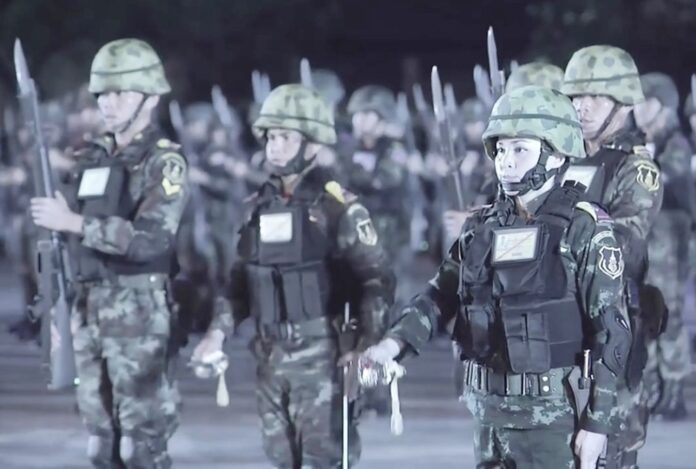
Soldiers from 1st Infantry Regiment perform a drill on Nov. 11, 2016.
BANGKOK — The government on Monday issued an order placing key military units under the direct command of His Majesty the King.
The royal decree was enacted without going through the usual parliament channel due to unspecified “emergency” circumstances. It effectively separated the 1st and 11th Infantry Divisions from the military chain of command and handed them over to King Vajiralongkorn’s control.
Relevant personnel and operating funds were also transferred to the palace’s Royal Security Command, which would now oversee the two units.
The decree said the urgency of the move was necessary to provide better security to the Royal Family, royal residences, and VIP guests visiting on the monarch’s invitation.
Since coming to the throne in 2016 after the death of his father King Bhumibol, His Majesty the King has been taking steps to ensure closer ties between the monarchy and the armed forces.
Changes he introduced to the armed forces include new haircut, new salutes, and transfers of some bureaucratic departments to the palace’s direct command.
In August, His Majesty the King also dispatched a group of “model soldiers,” who were trained under army courses devised by His Majesty, to pass on the new training methods to other military units across the country.
Correction: An earlier version of this article incorrectly described the two units as regiments. In fact, they are divisions.
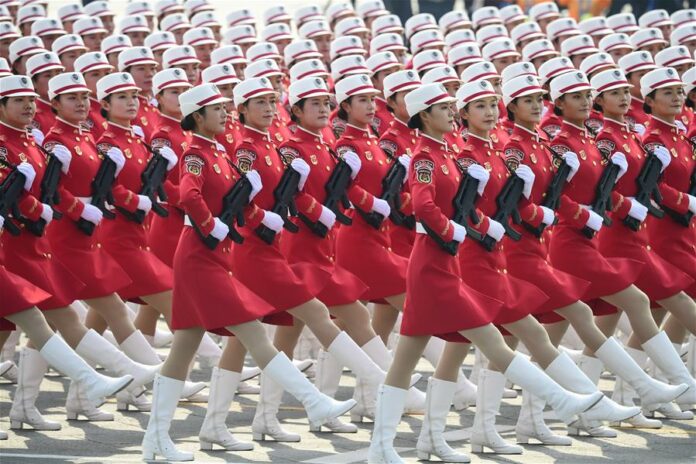
Members of the armed forces march through the Tian'anmen Square in central Beijing on Oct. 1, 2019. Image: Xinhua
By Benjamin Zawacki, author of “Thailand: Shifting Ground Between the US and a Rising China”
The parallels between China’s current $1.1 trillion Belt and Road Initiative (BRI) and the United States’ post-World War II foreign assistance are inexact but striking.
Like the US in WWII, China was damaged by the 2008 global financial crisis but far less so than most other major economies, allowing it to initiate the BRI in 2013 while the rest of the world was still recovering. China was and remains completely unhindered by costly military adventures in the Middle East as well, of which it has wisely chosen to steer clear.
Recalling the US in 1945-1948, when it commenced the reconstruction of Japan and implemented the Marshall Plan, China’s excess industrial capacity in 2013 necessitated foreign markets for investment and trade. This has since required the development and construction of new modes, facilities, and routes of transportation and communication—“connectivity” in BRI parlance. China needs the beneficiaries of its largesse as much as they need it.
While the Marshall Plan is most associated with West Germany, it was divided among 18 European countries and was linked to the US-dominated Bretton Woods financial institutions. The reconstruction of Japan was the largest effort in the Pacific, but extended to dozens of other colonies, territories and nations.
The BRI includes no fewer than 132 nations and 29 international organizations, among them the now 75-year-old World Bank and the Asian Infrastructure Investment Bank (AIIB), founded by China in 2016.
A final parallel, at least in its US aspect, has been much discussed in the Trump era; namely that American post-War assistance abroad was part of an effort to establish a new “rules-based order.”
Inclusive of international laws, organizations, agreements and alliances, nearly all driven or strongly backed by the US, it stood essentially for self-determination, economic liberalism, the peaceful resolution of disputes, democratic governance, the rule of law and universal human rights.
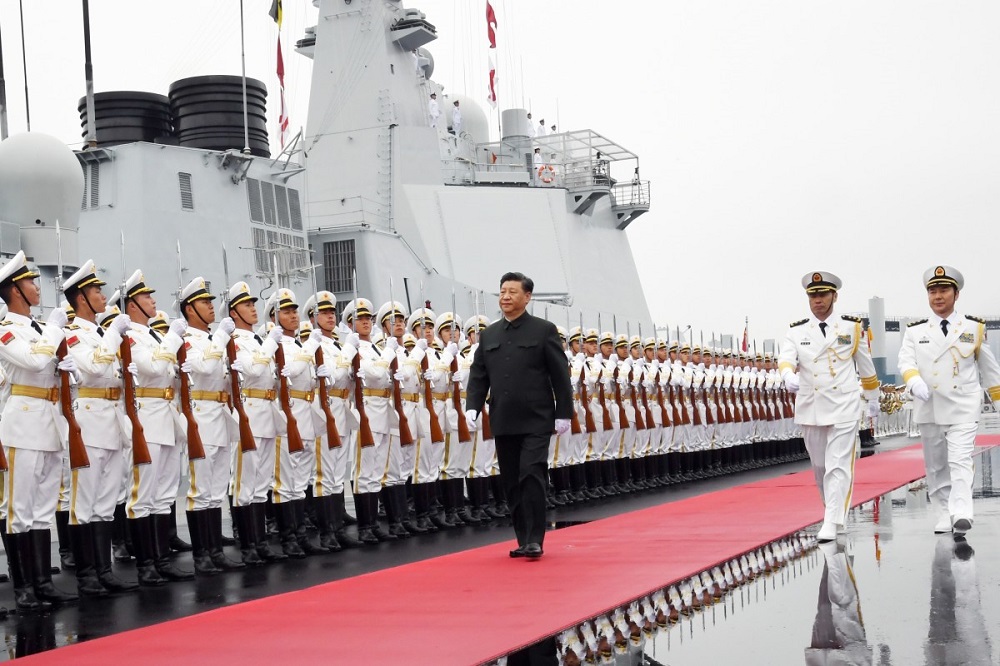
Chinese President Xi Jinping inspects the honour guards of the Chinese People’s Liberation Army Navy before boarding the destroyer Xining in Qingdao, Shandong province. Photo: Xinhua
Although the US has sometimes since been in grave violation of the rules it helped establish—and despite a President Trump working to dismantle them outright—their prevalence and effects have been greater than those of any alternative for three generations.
This is set to change. Whatever its uncertain economic benefits, China’s BRI is a harbinger and host of a new repressive and illiberal order. This is because, like America’s rehabilitation of Western Europe and the Pacific, nearly all of which became liberal democracies, the BRI reflects the values of its architect.
China is a single-party state with the most pervasive facial recognition system in the world and a Great Firewall designed to obstruct “subversive” ideas and information. It holds an estimated one million Uighur and other Muslim minorities in “reeducation” camps in its Xinjiang region, and has turned Tibet into a totalitarian police state.
It relentlessly persecutes adherents of the spiritual Falun Gong practice. It has undermined the “one country, two systems” policy in Hong Kong and Taiwan with kidnappings of critics, puppet governments, exclusion from international fora and threats of invasion.
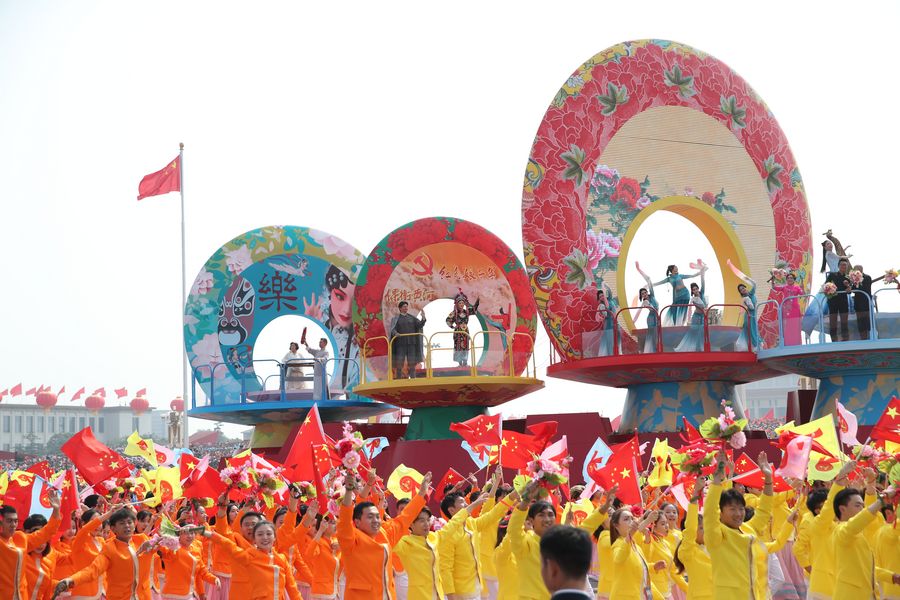
a mass pageantry celebrating the 70th anniversary of the founding of the People’s Republic of China highlighted the Chinese nation’s great rejunevation at the Tian’anmen Square in central Beijing on Oct. 1, 2019. Image: Xinhua
More concretely, and again like its American analogue, the BRI engages partners not from “the outside”—per aggression in the South China Sea, for example—but from within.
The BRI’s first tool is diplomacy, exercised via global forums in Beijing, regional frameworks such as the European Union (EU) and Association of Southeast Asian Nations (ASEAN), and sub-regional mechanisms such as China’s Lancang-Mekong Cooperation (LMC) in mainland Southeast Asia.
Its endorsement by the Secretary-General and several agencies of the United Nations (UN) is particularly notable, both for the stark contrast in values and the primacy of the US in the UN’s founding and leadership.
The damage is in the details, however, negotiated bilaterally during meetings and site visits in countries hosting BRI projects. Over meals and maps (and sometimes brown envelopes), Chinese officials and executives cannot help but relate—and promote—how infrastructure and other development initiatives are implemented back home.
Where most journalists, academics, lawyers, and environmentalists are unable or unwilling to work against the interests of the state, and where those who would are detained or disappeared, “progress” tends to move quickly.
While far more protests occur in China than is generally reported and occasionally result in constructive responses, individual rights are simply not a factor in the Party’s equation.
This cheerleading reinforces authoritarianism among like-minded governments, while encouraging the remainder of the spectrum to reconsider their approach to calls for impact assessments, consultations, transparency and accountability in BRI projects.
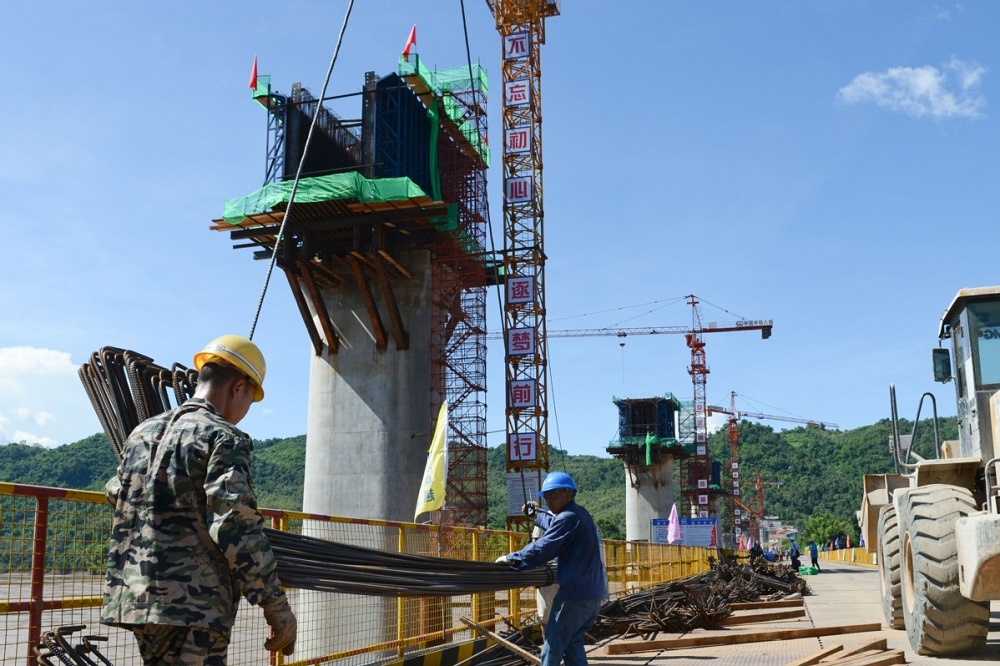
Workers work at the construction site of a Mekong River bridge built by China Railway Corp in January 2019. [Photo/Xinhua]In contrast to the Marshall Plan, whose application to communism’s Eastern Bloc was denied by the Soviets, the BRI directly exposes Chinese values to governments at (varying levels of) odds with them. The chief selling point, of course, is the raison d’etre of the BRI itself: an economy that “cooled” to 8% growth the year the initiative was announced, en route to becoming the second largest in the world.
Further, the risk of China’s repressive and illiberal values becoming either openly embraced by BRI host countries, or slowly embedded in their political and social fabric, increases over time. This is due to the BRI’s other main tool: the physical and extended presence of Chinese workers, engineers, journalists and officials.
Not unlike the Americans who occupied and rebuilt war-torn Japan, but in contrast to mere tourists, such representatives steadily disseminate the views and values of their sponsors.
In this they are aided by the global proliferation of Confucius Institutes and abetted by China’s United Front Work Department (UFWD). The former propagate a white-washed picture of China’s history, society and politics to students in their own countries, while the UFWD expressly exists to encourage overseas (and domestic) Chinese to support the Communist Party and shape the conversation about China abroad.
It also helps ensure that any “conflicts of values” among Chinese personnel in more liberal BRI surroundings are resolved in the Party’s favor, not least by heralding China’s national “social credit system”, due for completion next year.
Weapons on the Belt
A more insidious effect of the presence of Chinese nationals working on multi-year, multi-million-dollar infrastructure projects, is their ready-made justification for security.
Although this is necessary and sometimes appropriately provided by local security forces, poor training in human rights and cultures of impunity frequently lead to violations against villagers, activists and others. And as China itself has long prioritized national “development” over—and often at the expense of—individual rights, calls for rectification in relation to BRI infrastructure are even less likely to be heard.
Earlier this year, the Frontier Services Group (FSG), a private security company founded by US military contractor Erik Prince, announced it was “opening a forward base in the Chinese province of Yunnan to better serve” BRI projects in Southeast Asia. Prince is best known as the founder and CEO of Blackwater, four of whose security guard employees were convicted for killing 14 unarmed Iraqi civilians in a 2007.
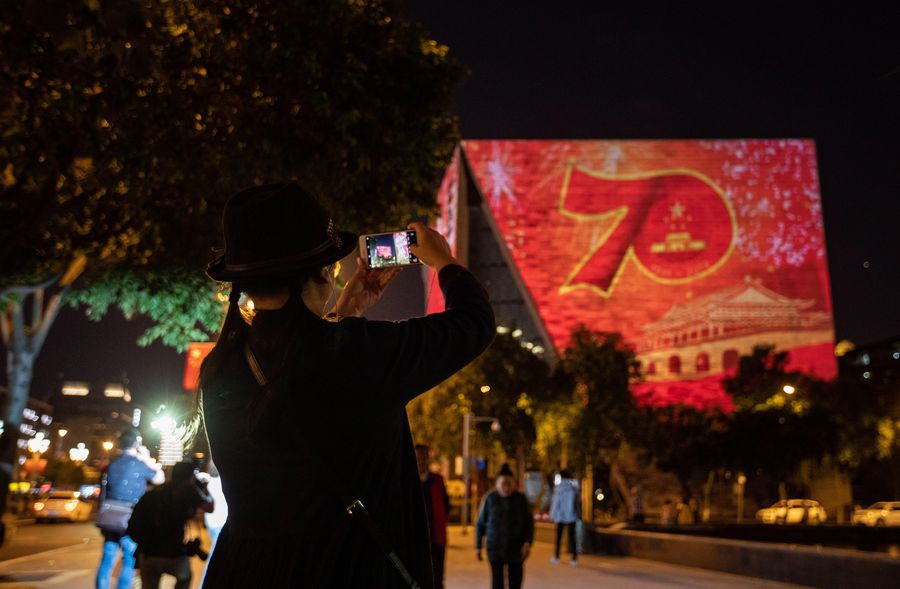
A woman takes a picture of a light show staged at Sichuan Art Museum to celebrate the 70th anniversary of the founding of the People’s Republic of China (PRC), which falls on Oct. 1, in Chengdu, Sept. 28, 2019. (Xinhua/Jiang Hongjing)
Similar allegations against the company are legion; it was kicked out of Iraq in 2009. The convictions came in a US court, however, with full due process including 30 Iraqi witnesses flown to the US, and spurred legislation providing clear jurisdiction over criminal wrongdoing by private contractors abroad.
That this is utterly unthinkable in China, where secret or show trials are the norm, should raise concern among any country whose BRI projects are “served” by FSG.
Most directly, in July China’s defense minister told a collection of Caribbean and Pacific island nations that Beijing is willing to deepen military exchanges and cooperation “under the framework of the Belt and Road Initiative.”
While it has long been clear that the BRI has a “dual use” military element, the minister’s words mark a sharp departure from consistent and studied claims to a purely economic initiative. The presence of PLA ships, submarines and personnel at BRI-related ports in particular is well-documented, but China has generally dismissed them as separate, incidental or temporary.
The possibility now exists of their becoming integrated and indefinite, and armed with a proven contempt for human rights.
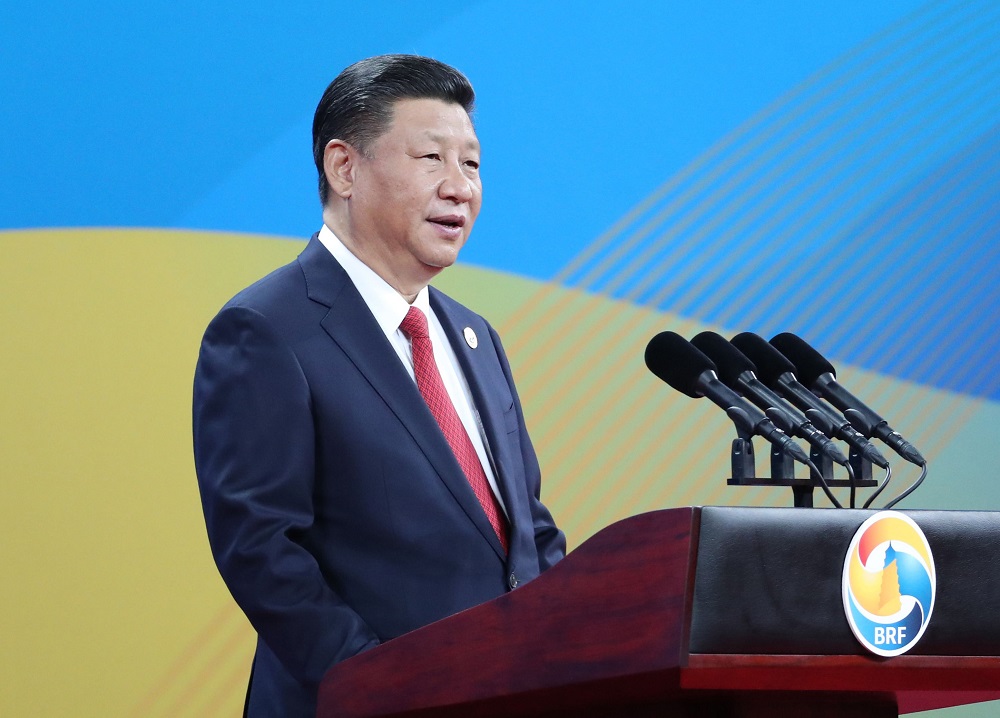
Xi Jinping delivers a keynote speech at the opening ceremony of the Belt and Road Forum for International Cooperation in Beijing, capital of China, May 14, 2017. (Xinhua/Ma Zhancheng)
Thailand, where this author has worked for 17 years, was among the Asia-Pacific nations the US assisted after WW II.
After a brief if promising start, the Americans sacrificed its democratic development on the altar of the Cold War, resulting in less than two decades of genuinely civilian rule since 1945. Despite being a US treaty ally, the kingdom has thus been ripe for recent Chinese overtures, tinged with the irony that it was China’s communism that initially “justified” 40 years of US support for Thai militarism.
The BRI’s flagship project in Thailand is a high-speed railway designed to link Yunnan province and Laos with Malaysia and Singapore, and bears all the hallmarks of an encroaching illiberal order. With terms still not agreed upon, Prime Minister General Prayut Chan-ocha summarily ordered the project forward in 2017, pursuant to a military constitution authorizing him to override various domestic legal restrictions.
Having borrowed a page from Beijing’s playbook, he also secured for himself an invitation—denied the first time around—to China’s second BRI forum this past April. To what did the inconvenient legal restrictions apply? The employment and extended presence of 300-400 Chinese engineers in Thailand.
Groundwork for this had been laid since Thailand’s distinct turn toward China beginning in 2001, and had deepened since Prayut staged the country’s second coup d’etat in eight years in 2014. The engineers were preceded in Thailand by the establishment of more Confucius Institutes there than in the rest of Southeast Asia combined.
And, in 2015, President Xi Jinping ordered the vast United Front Work Department to focus more on overseas Chinese students, “new media” journalists and the younger generation of business leaders abroad.
Thailand is also one of four Southeast Asian countries the FSG specifically mentioned in which it plans to provide protective services for BRI projects. It is not clear whether Thai military authorities, who still govern the country after a pre-ordained election earlier this year, have endorsed FSG’s plans or may find them part of a “deal they can’t refuse.”
Such was the case in 2011 when the killing of 13 Chinese sailors on Thailand’s portion of the Mekong River resulted in the country “agreeing” to joint military patrols. The 80th such patrol took place in March of this year, featuring five vessels over four days and a cadre of guards from China’s 280-strong force. Sino-Thai “mil-to-mil” relations have increased exponentially in all facets since the 2014 coup.
Source: Twitter/Merics/DW
Neighboring Myanmar offers an even more sobering story. China announced its BRI less than a year after Muslim minority Rohingyas began leaving Myanmar’s Rakhine state in their largest numbers in over 25 years.
They were escaping decades of systemic persecution by the army and other security forces, who were then called upon to protect several new BRI projects: a deep-water port on the Bay of Bengal, linked to China’s Yunnan province by a railway and natural gas pipeline traversing the same Rakhine state.
This “connectivity” would greatly reduce the geopolitical vulnerability of China’s landlocked southwestern region. In Myanmar’s poorest state, however, it heightened tension concerning the projects’ likely economic beneficiaries and justified still more militarization.
One year later, after a small number of Rohingyas attacked local police posts, Myanmar’s security forces perpetrated a genocide, killing over 6,700 Rohingyas during the first month alone and ethnic cleansing the nation of over 700,000 more.
China publicly condemned the “terrorist attacks” and praised Myanmar’s restoration of “order”, and has since blocked several efforts at the UN Security Council toward an independent investigation and accountability. Instead, it has offered to help “achieve stability and sustained development in Rakhine state”, including via a new BRI-related China-Myanmar Economic Corridor.
At the second BRI summit last April, President Xi responded to growing criticism concerning environmental degradation, corruption, and the “debt traps” into which onerous lending and leasing terms are forcing some countries that host BRI projects.
He pledged commitment to a “Green BRI” and greater consideration of local financial limitations. Criticism he did not address, however—presumably because it has been sparse—concerns the “rights traps” the BRI is slowly cultivating around the world.
Contrary to Beijing’s mantra, which is no less specious for how frequently even Western diplomats repeat it, China clearly interferes in the domestic affairs of other nations, very often to the detriment of fundamental rights and freedoms.
Worms in the Silk
Even more primed than infrastructure and energy projects to yield repressive results—indeed partly designed for the purpose—is the “Digital Silk Road” China is also building under the BRI’s rubric.
Quaintly recalling the undersea cables and other communications lines the Americans rebuilt, repaired and expanded after World War II, the construction of internet infrastructure, satellite navigation systems and submarine cables will have economic benefits for participating and non-participating nations alike.
Yet among the Silk Road’s express objectives, per a 2015 white paper by China’s National Development and Reform Commission, Ministry of Foreign Affairs, and Ministry of Commerce, is “improving the efficiency of policing systems among the Belt and Road countries.”
How this is defined is unclear, but one need only consider how wrong was the 1990s consensus that the internet was going to help liberate and liberalize China to imagine the intended effects. The dearth of critical news and views on China consumed or expressed by its 1.4 billion citizens is remarkable.
The Silk Road’s latest feature is fifth generation (5G) mobile internet technology, able to carry enormous caches of data at almost instant speed. China’s Huawei Technologies, some of whose personnel are credibly linked to Chinese military and intelligence agencies, is already a global leader in 5G’s development and application.
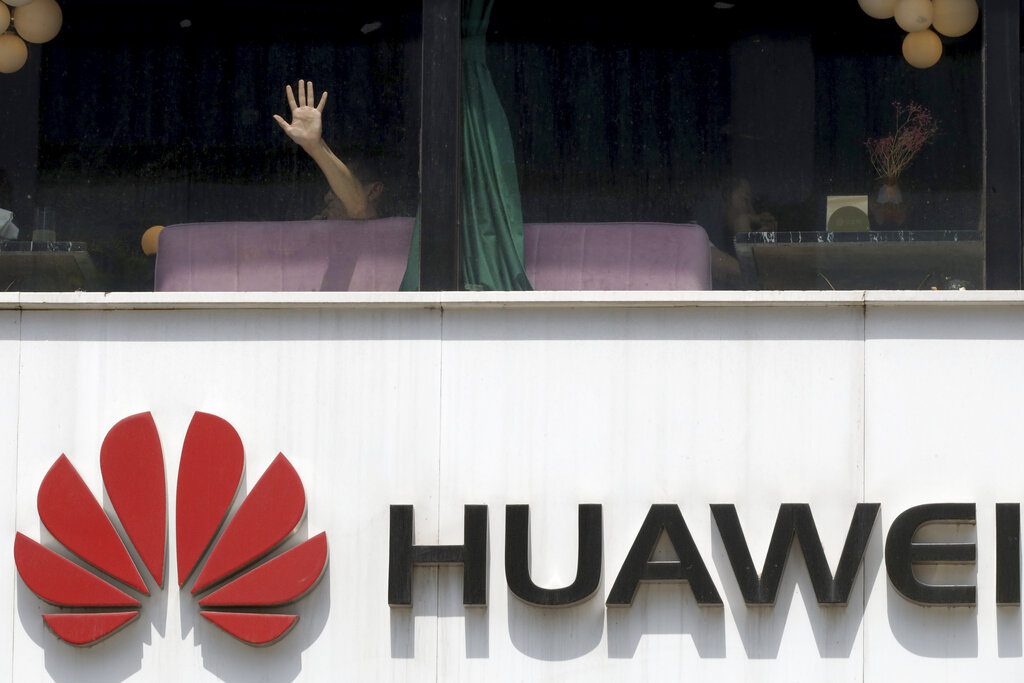
A man presses on the glass window near a logo for Huawei in Beijing on Thursday, May 16, 2019. Photo: Ng Han Guan / AP
Huawei will afford China not only a platform for monitoring, mining and utilizing data for “defensive” purposes abroad, but also an “offensive” capability to conduct espionage, cyber-attacks and digital theft.
That 5G technology is also projected to eventually drive nations’ transportation systems, energy grids and water networks—the very infrastructure otherwise defining the BRI—makes Huawei’s proliferation an even deeper threat to the rights of non-Chinese citizens.
Again Thailand illustrates. The country leads the world in daily time spent on the internet (9.38 hours), with 74% of its citizens having regular online access.
Although censorship is not pervasive, 2017 amendments to Thailand’s Computer Crimes Act allow the government nearly unfettered authority to restrict free speech, engage in surveillance, conduct warrantless searches of personal data and curtail the utilization of encryption and anonymity.
Thailand is also the global leader in mobile internet use per day (4.56 hours), with much of that time spent on social media. Bangkok has the largest number of active Facebook accounts among cities worldwide, for example, with 22 million.
Reflecting the government’s prevailing trend and presaging its acceleration, Thailand earlier this year indicated that Huawei is leading the race for getting 5G underway across the kingdom.
America First?
Perhaps ironically, the US itself offers a warning on how even a liberal global order can be ignored, upset and even partially undone by its leadership.
Thailand is hardly the only nation in the modern era that Washington has instrumentalized in its execution of illegal or imperial campaigns. The first to succumb to CIA pressure to join its extraordinary rendition program, for example, Thailand was followed by 53 others; a “war on terror” waged with torture.
Yet American hypocrisy in relation to a rules-based order indicts America, not the order. This is most evident today under a president both racist and autocratic, but whose effects on liberalism worldwide are tempered by the resiliency of the rules his predecessors helped to establish.
Trump inherited a “pivot” to Asia that never materialized, but whose announcement undoubtedly helped spur China’s BRI. Trump has long talked tough on China, but most of his action has been limited to trade issues; and aside from a firm stance on Huawei, his criticism of the BRI has been largely confined to “debt traps.” He has said almost nothing on China’s recent threats to Taiwan and Hong Kong, much less about Xinjiang or Tibet.
In December last year, Congress passed the Asia Reassurance Initiative Act (ARIA), designed to increase US security and economic interests in China’s near-abroad. Its authorization of $1.5 billion, however, signals concession more than challenge, considering that the BRI is funded to the tune of $1.1 trillion.
Moreover, although ARIA seeks as well “to increase US … values in the Indo-Pacific region”, such efforts can prove counter-productive if not deftly calibrated to each nation’s unique political culture. As Thailand has demonstrated for two decades, countries seldom welcome lectures on the merits of liberal democracy over authoritarianism; they must be convinced that is in their interests.
The Trump administration articulated a new Free and Open Indo-Pacific (FOIP) strategy this past June. It states that China “undermines the international system from within by exploiting its benefits while simultaneously eroding the values and principles of the rules-based order.”
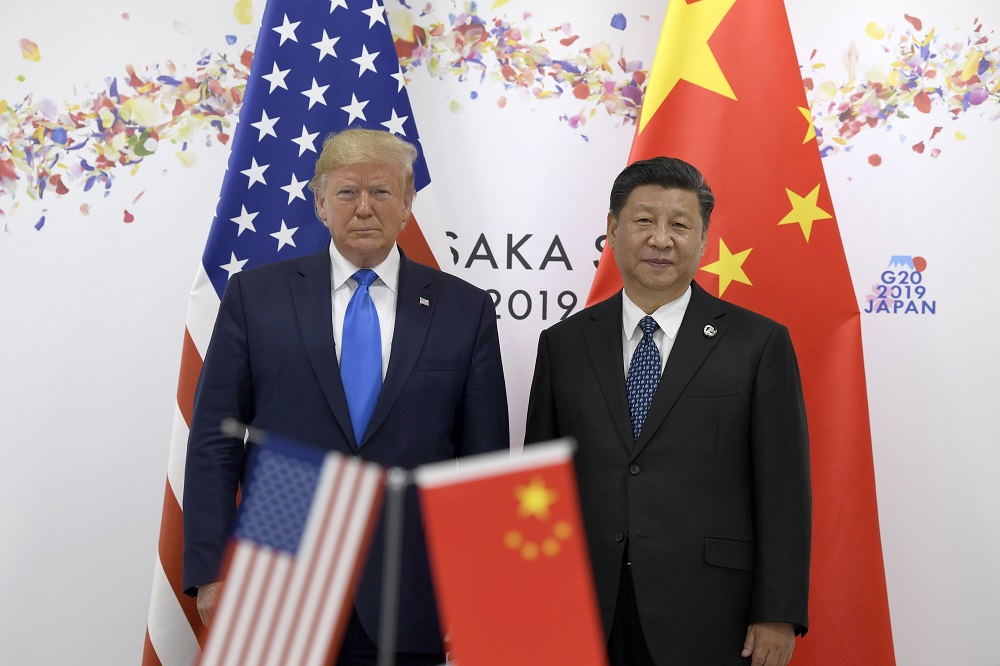
President Donald Trump, left, poses for a photo with Chinese President Xi Jinping during a meeting on the sidelines of the G-20 summit in Osaka, Japan, Saturday, June 29, 2019. (AP Photo/Susan Walsh)
It makes reference to Xinjiang, Taiwan and the BRI’s “unsustainable debt burdens”, and pledges to “Advance an international order that is most conducive to our security and prosperity.”
Yet, as the “pivot” made painfully clear, a strategy can only be as strong as the resources and political will behind it. FOIP mentions only the Better Utilization of Investment Leading to Development (BUILD) Act, passed by Congress last October to create a new lending agency of some $60 billion.
This allocation is far larger than ARIA’s, but so is its global scale, raising similar doubts as to its competitiveness against a BRI already present in one form or another in 71% of the world’s countries.
And while few question Trump’s commitment to the strategy, it is also clear that his personal conception of “an international order” is at odds with America’s standing, interests and values in the region. Whether FOIP can fulfill its potential will depend largely on the outcomes of future budget debates and the 2020 election.
Meanwhile, Northeast Asian treaty allies Japan and South Korea, despite falling further behind China economically, are failing to link their engagement to continuance of a liberal rules-based order.
Japan’s (veiled) criticism of the BRI is limited to promoting “quality infrastructure”, while South Korea’s New Southern Policy does not include concerns for governance or rights. Likewise for the New Southbound Policy of Taiwan, which the US is bound by an act of Congress to defend if attacked by China.
And in Southeast Asia, the only US treaty ally other than Thailand, the Philippines, has hurled itself into Beijing’s sphere of influence under President Rodrigo Duterte.
Facing a full-frontal assault by China and a hasty retreat by its defenders, the rules defining and guiding the international community for three quarters of a century are giving way. No matter how resilient, they will buckle entirely under Beijing’s new belts and roads if “debt traps” remain the first and foremost concern.
It is the debt accruing to future generations—in human rights, legal protections, cyber-security, representative government and much, much more—which should be the primary foreign policy focus of America and its allies.
China’s late chairman Mao Zedong was on the verge of his revolutionary victory when the Marshall Plan and its Asian counterpart got underway. Mao’s successor’s flagship project—this century’s equivalent of communism on the march—calls for a similarly unflinching and foresighted response.
About the author
Benjamin Zawacki is an independent analyst based in Bangkok and author of Thailand: Shifting Ground Between the US and a Rising China
Note: This article was originally published on Asia Times
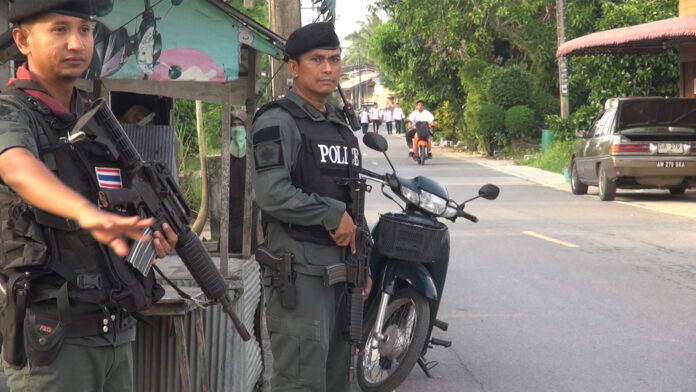
A file photo of soldiers patrolling in the Deep South.
BANGKOK — Deputy Prime Minister Prawit Wongsuwan said on Monday denied any connection between the Islamic State and Thailand, despite the recent arrest of a Thai student in Egypt on suspicion of belonging to the terror group.
A few days after the Thai Embassy in Cairo confirmed the arrest, Prawit said there is no evidence of any IS-aligned movement in the kingdom, especially the Deep South region where separatists have been battling for an independent Islamic state.
“Our enquiries have found no link between the people in the three southernmost provinces and the Islamic State,” Prawit said. “Though it’s possible they might know each other personally as some of them have studied overseas.”
He said the Ministry of Foreign Affairs are taking steps to assist the apprehended student.
According to the Thai Embassy’s statement, the student was arrested in Egypt on Sept. 24 after local authorities found photos that linked to IS in his mobile phone. The suspicion was further aggravated as he appeared in an online video showing him pledging support to the IS cause.
A woman in Yala identified the student as her son Aiproheng Malee, who has been studying in Cairo for two years. She denied her son’s involvement with the terror group and asked the authorities to secure his freedom.
“His friend called me and told me that Aiproheng has been arrested and forced to confess,” Ya Malee told Khaosod. “I don’t believe it, but security officials has started to question me of his whereabouts.”
Thai officials have not confirmed the student’s identity. He is reportedly in custody for an investigation. It is not clear whether he has been charged.
The Embassy said its ambassador Chainarong Keratiyutwong had met with Egyptian deputy foriegn minister Hazem El Tahry to request permission for consular assistance to the student. The deputy minister promised to forward the request to relevant authorities, the statement said.
There are approximately 3,500 Thai students attending Islamic and Middle East studies in Egypt, according to the Embassy’s data. Most of them are from the three southernmost provinces.
Thailand’s southern insurgency broke out in 2004 with the aim to secede the three provinces of Yala, Pattani, and Narathiwat and revive the independent sultanate of Patani.
Although there had been reports in recent years of IS’ attempts to establish their presence in the region, experts say there is no concrete evidence that the separatists are part of the wider jihadist movement.
Speaking today, Prawit also defended a new security measure requiring residents in the three southern border provinces of Yala, Pattani, and Narathiwat to register their prepaid SIM cards with fingerprints.
Civil rights activists slammed the move as an intrusion of privacy, but the government said it’s a necessary precaution.
“We are not infringing their rights because they can use their mobile phones whenever they like,” Prawit said.
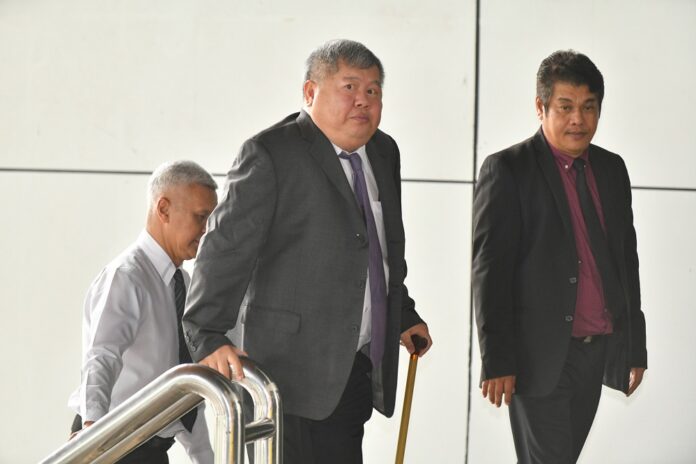
Premchai Karnasuta at the Criminal Court on Oct. 1, 2019
BANGKOK — A construction tycoon previously convicted of poaching in a protected forest was acquitted by a court on Tuesday of possessing illegal ivory at his home.
The ivory products were found at Premchai Karnasuta’s residence when police searched it following his arrest in February 2018 on poaching charges. Though prosecutors suspected the ivories were trafficked, the court today ruled Premchai acquired them legally.
In its verdict, the court said Premchai produced documents to prove that he inherited the four ivories in 1987 from his mother, who had permits for the products.
The court also instructed the authorities to return the confiscated ivory to Premchai.
Premchai was previously sentenced in March to 16 months in prison for conspiring to poach wildlife and weapons-related charges. He was also found guilty of bribing wildlife officials in June and given a one-year jail term.
Premchai, a CEO of the Ital-Thai conglomerate, appealed both verdicts and secured a bail release.
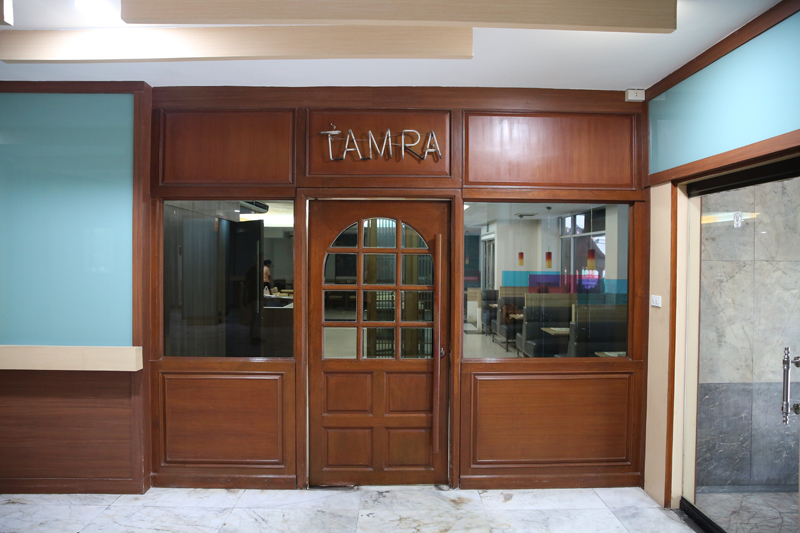
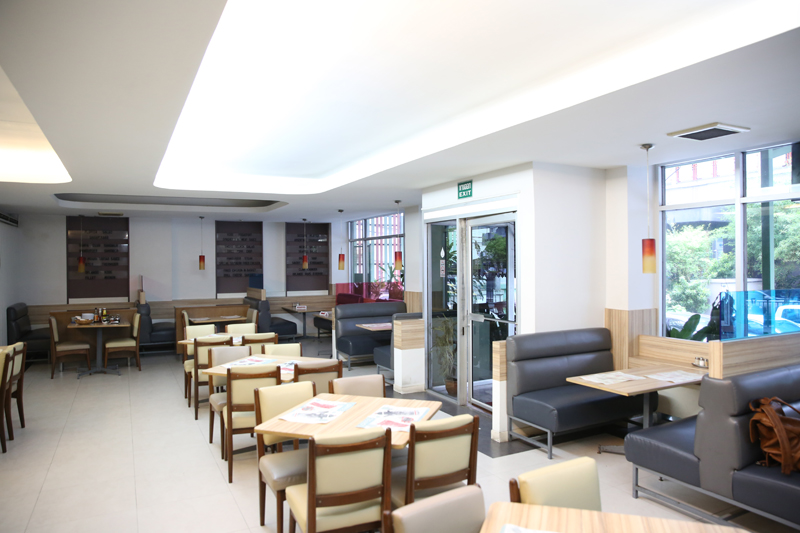
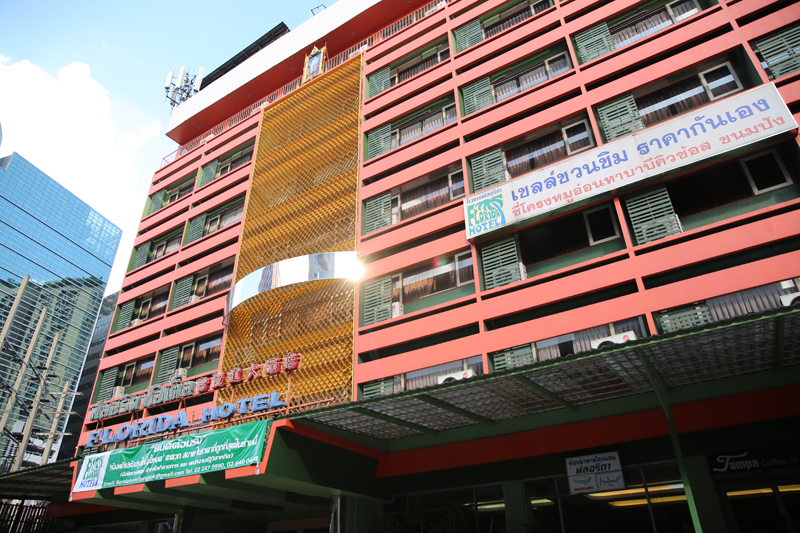
BANGKOK — For more than five decades, a hotel dining room near BTS Phayathai has served countless barbecue pork spare ribs that never failed to impress anyone, from the big shot executives to innocent passersby.
Surrounded by the ever-changing landscape of bustling Phayathai Intersection, where shophouses are knocked down to make way for condos while sky train tracks stack on top of each other, Florida Hotel remains much the same as it did in its glory days.
This also extends to the food, which the retro hotel is better known for. The old-school establishment serves both Thai and Western cuisine, but they are infused with a glimpse of oriental flavors.
“We inherit the recipe from the first generation of cooks, who were Hainanese descendants,” restaurant manager Thanachoti Liampachara, who other staff called him “Ar Pae” (uncle) said. “Our signature dishes can be considered as half Western, half Chinese and it has remained unchanged since the first day of this hotel.”
While most hotel restaurants can make diners feel somewhat stiff from snobbish decor, Florida Restaurant is not much different from a neighborhood eatery, including the price, which starts from 120 to 380 baht for a dish.
Hotel manager Soranee Dusitsuwan
The dining room is a hodgepodge of vintage and modern furnishings, where counter bars and sofas remind one of the nostalgic American diner atmosphere.
“We don’t want to alter our identity,” the second-generation hotel manager Soranee Dusitsuwan said. “We respect what our elders have left to us, but we do renovate to keep up with the changing world.”
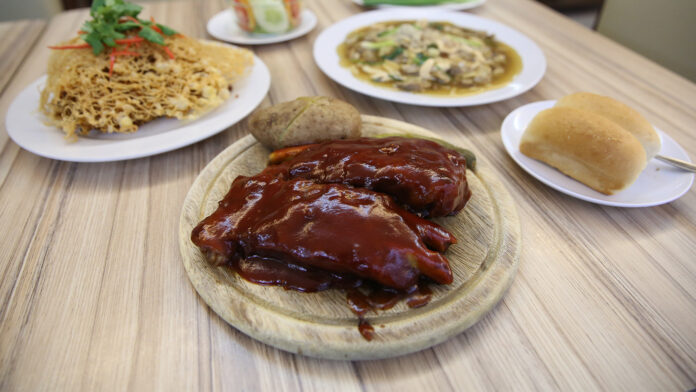
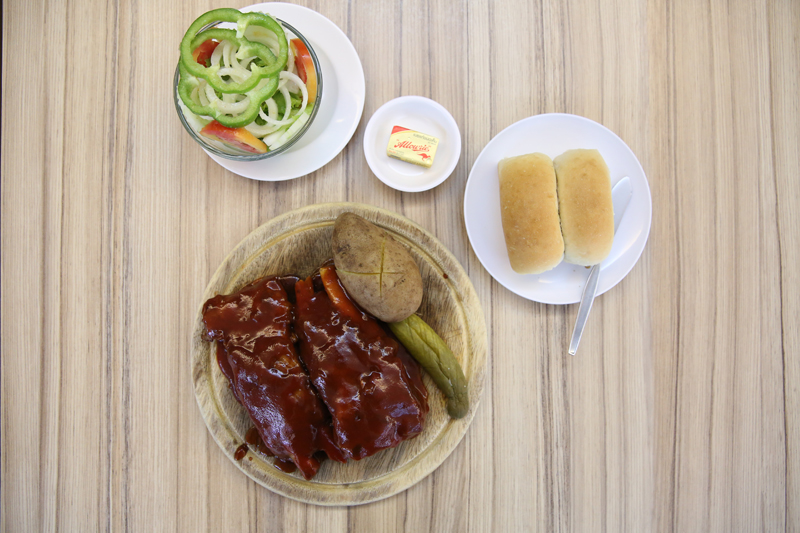
The famed dish is undoubtedly barbeque spare ribs (280 baht) served with signature butter rolls (60 baht). Two racks of ribs are served on wooden cutting board which conveniently helps with the cutting, and covered generously with sauce that is mild and not as tangy and smokey as the steakhouse classics.
Some tongues might find the Hainanese-style barbeque sauce too sweet and overwhelmed with tomato paste, but when savored with the tender, falling-off-the-bone ribs, they seem to be a perfect combination. Both the ribs and the butter roll bear the “Shell Chuan Chim” culinary award, which was awarded by classic food critic Thanadsri Svasti and could be considered as Michelin Star in the local gastronomic scene.
Barbeque spare ribs (280 baht) served with butter rolls (60 baht)
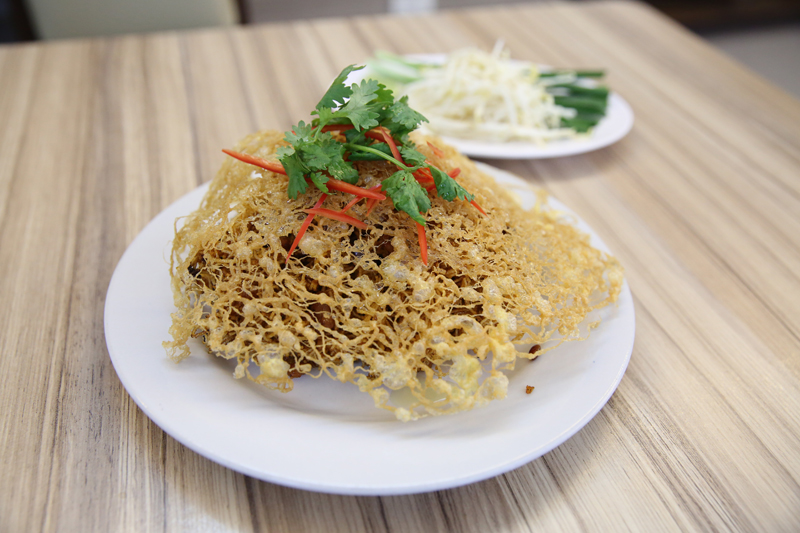
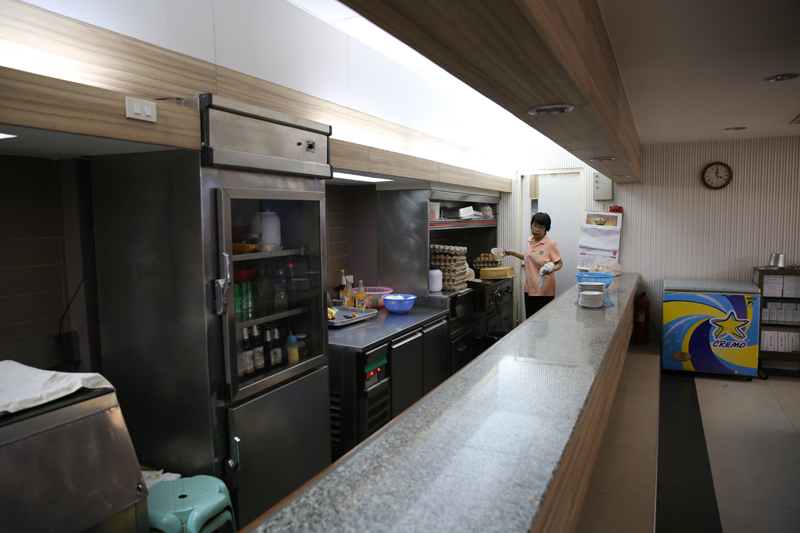
For those who want to experience something local, try their “Mee Krob” (150 baht), a rare Thai dish where crisp rice noodles are glazed with caramelized sweet, yet slightly salty sauce made of palm sugar and pickled garlic. Thanachoti said the dish is difficult to prepare as the sauce has to be simmered for hours until it thickens, thus making it difficult to find nowadays.
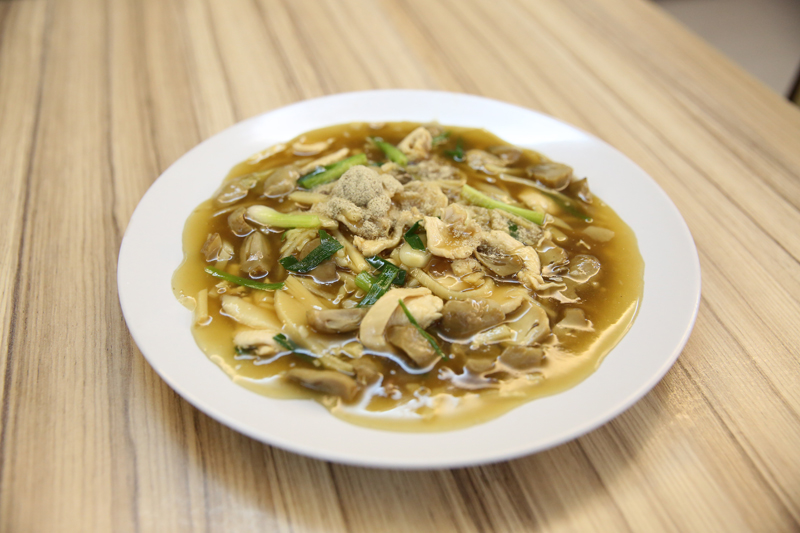
The seemingly ordinary “Koi See Mee” (140 baht) turns out to be extraordinary. The restaurant uses stir-fried egg noodles instead of the typical deep-fried ones, which are topped with thick to almost gluey gravy that leaves an umami taste with emanating garlic notes.
Mee Krob (150 baht)Koi See Mee (140 baht)
The restaurant also offers other Western-Chinese dishes such as Beef Stroganoff (220 baht), Hungarian Goulash (220 baht), and French onion soup (120 baht). The servings are large and reasonable for the prices.
Thanachoti said his customers return for the nostalgic and traditional taste. Most of the customers are locals, which include celebrities and “big brothers” who couldn’t be named, but he also found some foreign customers who came from internet reviews.
Founded in 1968, Florida Hotel bears the name of the American state to appeal to the influx of American GIs during the height of Cold War in the sixties. Despite the recent surge of tourism, the hotel target group has shifted away from American officials to Thai bureaucrats, who found its location convenient to nearby government offices.
Florida Restaurant is open everyday from 6.45am to 11pm. The restaurant is located on Phayathai Road and is reachable by a short walk from BTS Phayathai.
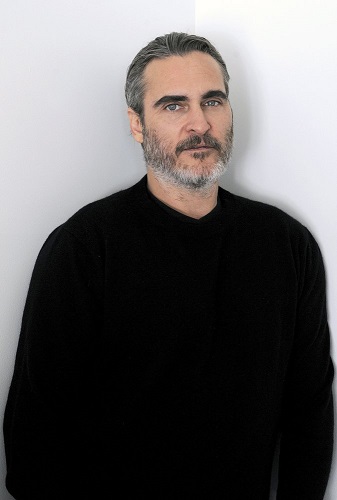
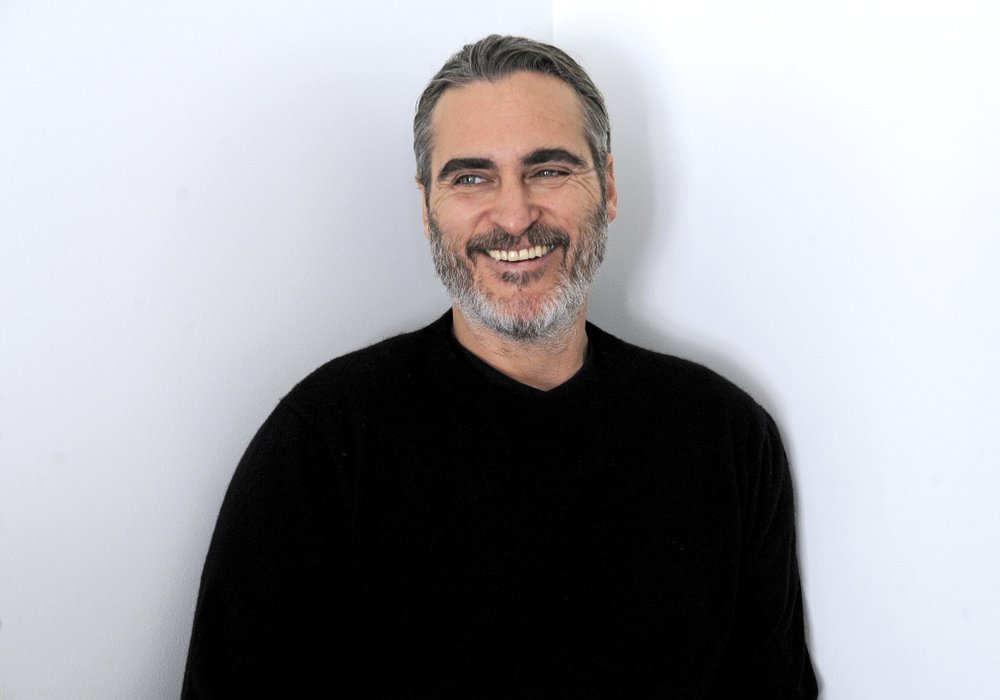
This image released by Warner Bros. Pictures shows Joaquin Phoenix in a scene from "Joker," in theaters on Oct. 4. (Niko Tavernise/Warner Bros. Pictures via AP)
LOS ANGELES (AP) — There may be no such thing as bad publicity, but the spotlight on “Joker” is testing the limits of that old cliche.
The origin story about the classic Batman villain has inspired pieces both in defense of and against the movie. It’s been hailed as the thing that’s going to finally get Joaquin Phoenix an Oscar and also decried for being “dangerous,” ″irresponsible” and even “incel-friendly.”
Last week, some parents of victims of the 2012 Aurora movie theater shooting even wrote to the Warner Bros. CEO asking for support for anti-gun causes. The studio issued a statement in response saying that the film is not “an endorsement of real-world violence of any kind.”
In his 80 years as part of the culture, the Joker has always had a way of getting under people’s skin — whether it’s because of who the character appeals to, what he represents or even the stories actors tell about how they got into character. But perhaps the biggest irony of all this time around is that for all the discourse and hand-wringing, the film has yet to even open in theaters. That doesn’t happen until Thursday night.
It’s made for a complicated release for the high-profile film, which got off to a triumphant start premiering at and then winning the top award from the Venice Film Festival. And while reviews are mostly positive, it’s also been heavily scrutinized and put the filmmakers on the defensive. Director and co-writer Todd Phillips doesn’t mind the discussion.
“I’ll talk about it all day,” he said. “I’m not shy about it.”
This Sept. 20, 2019 photo shows actor Joaquin Phoenix during a portrait session for the film “Joker,” at the Four Seasons Hotel in Beverly Hills, Calif. (AP Photo/Richard Hartog)
He just wishes people would see the movie before drawing conclusions.
“It’s a little troubling when people write think pieces without having seen it. And even in their think pieces write, ‘I don’t need to see it to know what it is.’ I find it astounding, to be quite frank, how easily the far left can sound like the far right when it suits their agenda,” Phillips said. “To that point, I’ve been disappointed.”
The pre-emptive backlash is all the more baffling to Phillips because he hopes it inspires conversations: About guns, about violence and about the treatment of people with mental illness.
“Part of the reason we made the movie is a response to the comic book world of movies,” Phillips said. “Like, ‘Why is this celebrated? Why is this funny? Why is this fun? What are the real world implications of violence?’”
The film itself is a slow-burn character study of how a mentally-ill, middle-aged man named Arthur Fleck becomes the Joker. When the audience drops in on his life, he’s working as a clown-for-hire, living with his mother in a run-down Gotham apartment and checking in occasionally with a social worker. He has a card that he gives to people to explain that his spontaneous and painful bursts of laughter are because of a medical condition. His only joy seems to be watching the talk show host Murray Franklin (Robert De Niro) in the evenings.
“The truth is you see it and it’s heartbreaking. And he’s heartbreaking,” Phillips said. “And you know what happens in the movies when you have a world that lacks empathy and lacks love? You get the villain you deserve.”
It’s a role that has often required actors to go to difficult places, and “Joker” has the added complication of being more realistic than most of the other depictions even though it’s still set in a fictional world. To play Arthur and Joker, Phoenix researched a number of people that he’s reluctant to even name.
“Some of the people I studied, I feel what they crave is attention and notoriety,” he said. “I don’t feel like they deserve any more of that.”
He also underwent a drastic physical transformation, losing 52 pounds on an extremely calorie-restricted diet with the supervision of a doctor. He expected “feelings of dissatisfaction, hunger, a certain kind of vulnerability and a weakness.” Instead, he found the emaciation led to a physical “fluidity” that he didn’t quite anticipate.
This Sept. 20, 2019 photo shows actor Joaquin Phoenix during a portrait session for the film “Joker,” at the Four Seasons Hotel in Beverly Hills, Calif. (AP Photo/Richard Hartog)
The set was also fairly fluid in a way, and Phoenix said he and Phillips were constantly discovering new elements to Joker and Arthur.
“There seemed to be an infinite number of ways to interpret every moment or how he might behave in any moment. And there wasn’t anything that didn’t make sense. So we would do scenes so many different ways and some I would cry and others I would make jokes and others I would be angry and it would be the same scene and they all (expletive) made sense,” he said.
It made the experience constantly “exciting” and “surprising,” but portraying Arthur/Joker also proved to be “messy and uncomfortable” for the 44-year-old actor.
As for whether or not audiences will use the character as an inspiration or excuse to act out, Phoenix thinks that the onus is on the individual.
“I do think that the audience should be challenged and they should be able to know the difference between right and wrong. I don’t think it’s the filmmaker’s responsibility to teach morality,” Phoenix said. “If you don’t know the difference between right and wrong, then there are all sorts of things that you are going to interpret in the way that you want.”
Both he and Phillips make sure to stress that “Joker,” which is rated R, is not a kids’ movie. It also won’t be for everyone.
“I just hope people see it and take it as a movie,” Phillips said. “Do I hope everyone loves it? No. We didn’t make the movie for everyone. Anytime anyone tries to make a movie for everyone it’s usually for nobody…You have a choice. Don’t see it is the other choice. It’s ok.”
A staff member of Chongqing Zoo takes care of two pairs of newborn giant panda twins at an outdoor naming ceremony in southwest China's Chongqing Municipality, Sept. 30, 2019. (Xinhua/Tang Yi)
CHONGQING (Xinhua) — Four newborn giant panda cubs made their first public appearance on Monday at the Chongqing Zoo in southwest China.
The cubs, two pairs of twins, were all born on June 23, a rare case in the breeding history of captive pandas in the world.
Their names are Shuangshuang, Chongchong and Xixi, Qingqing, combining to symbolize “double joy and happiness” in Chinese.
The four cubs have been growing well, with Shuangshuang being the heaviest at 5.8 kg and Xixi the lightest at 4 kg, said Yin Yanqiang, the giant panda technical supervisor with the Chongqing Zoo.
Starting Monday, tourists can watch the cubs outside the window of the cub nursery from 10:30 a.m. to 11:30 a.m. and from 1:30 p.m. to 2:30 p.m. every day, according to the zoo.
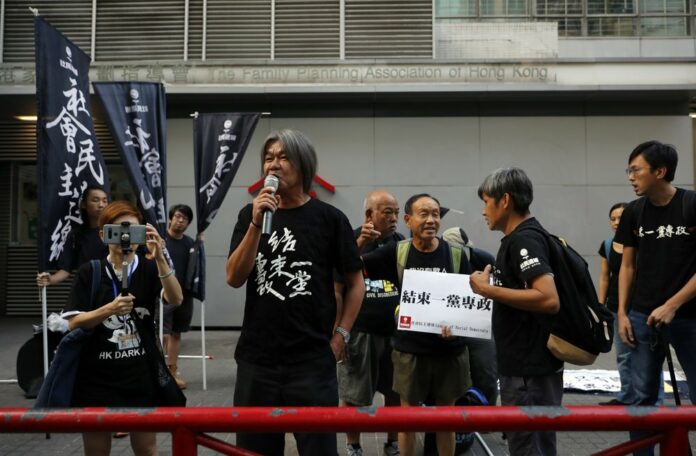
Anti-government protesters gather in Wang Chai district while pro-China supporters are trying to block them, Tuesday, Oct. 1, 2019, in Hong Kong, before the celebration of the People's Republic's 70th anniversary taking place in Beijing. (AP Photo/Vincent Thian)
HONG KONG (AP) — Police used pepper spray to break up a brief scuffle Tuesday between Beijing supporters and a small group of pro-democracy protesters who were marching in Hong Kong on the 70th anniversary of the founding of Communist China.
The semi-autonomous city’s government marked the anniversary in a morning ceremony on what is expected to be a day of protests demanding democratic reforms. Posters in the city where many worry the Beijing central government is eroding Hong Kong’s promised freedoms are calling for the Oct. 1 anniversary to be marked as “A Day of Grief.”
Police had lined up to separate the protesters and counter-protesters, but some minor scuffles ensued. Two pro-Beijing protesters were arrested.
The government tightened security to thwart violence as the pro-democracy protesters plan rallies in multiple locations. An annual fireworks display was canceled, several subway stations were closed and airport rail link service curtailed to minimize disruptions.
Hong Kong Chief Secretary Matthew Cheung told hundreds of guests at a reception that the city has become “unrecognizable” due to radical acts by protesters. Cheung was representing the city’s leader, Carrie Lam, who led a delegation to Beijing to join festivities there.
Cheung said Beijing fully supports the ‘one country, two systems’ framework that gives Hong Kong freedoms and rights not enjoyed on the mainland. The protests began in early June over a now-shelved extradition bill that activists say was an example of how those promises have been eroding.
Police warned Monday that hard-line protesters may engage in extreme acts that are “one step closer to terrorism” such as killing police, posing as police officials to kill civilians, and large-scale arson including at gas stations. Activists ridiculed the assertion as a scare tactic.