27.7 C
Bangkok
Tuesday, June 30, 2026
Home Blog Page 1670

Draftee Who Stepped on Landmine Denied Full Benefits

In a photo released by the army, Pvt. Patcharapong Halarp raises his thumbs for his rescuers after stepping on a landmine March 8 near the border with Cambodia.

BANGKOK — A young conscript who lost his right foot to a landmine earlier this month won’t receive full benefits for soldiers injured in the line of duty, an army spokeswoman said Wednesday.

Because Pvt. Patcharapong Halarp was drafted for compulsory service and not a career soldier, he won’t receive the customary promotions afforded to other army wounded, Sirichan Ngathong said.

“In order to receive the seven-rank advancement, one needs to be fully enlisted in the army,” Col. Sirichan said.

She said the 22-year-old private would still receive financial assistance for stepping on the landmine Friday near the Thai-Cambodian border while on patrol. The full benefit would have seen him promoted seven ranks from private to second lieutenant, which would mean a higher pay grade and pension.

It comes as various politicians are campaigning on promises to end mandatory conscription and improve the welfare of low-ranking servicemen.

She also rejected calls from some on social media for the army to automatically enroll Patcharapong in a military academy and grant him a career in the forces after his injuries.

“There are procedures for selection and examinations to enter the Army Non-Commissioned Officer School,” Col. Sirichan said. “They will also have to see whether an applicant’s physical body will be an obstacle to his military service.”

The army said Pvt. Patcharapong was on patrol in Ubon Ratchathani when he stepped on a landmine, which blew off his right foot. The mine is likely one of millions laid along the border during the Cold War. He remains hospitalized in the province.

A day after the blast, His Majesty the King sent a bouquet to Patcharapong with a message wishing him a speedy recovery. Many comments on social media urged the army to fully compensate Patcharapong and advance his career.

“Since he’s this brave, please just give him a rank and a job in the service,” user Theppitak Mutimanka wrote in reply to a news thread.

“The money that we lost to corruption should have been given to these brave soldiers,” Korawit Woraraj wrote. “Some of them came home from their missions without arms and legs.”

“That’s all there is. When time passes, everyone will forget him, while the generals get all the positions and fame,” Arthit Sukkhe wrote.

As an indicator of the public’s discontent with the armed forces, many political parties from the establishment Democrats to opposition Pheu Thai have pledged to end conscription, slash defense spending and improve the lives of servicemen if elected.

In response to the campaigns, which are proving wildly popular with the public, army commanders have countered that the draft is still necessary and accused politicians of taking shots at the armed forces to win votes.

Advertisement

EC Threatens to Disband Future Forward for ‘Outsider Influence’

Thitima Chaisang campaigns with Future Forward Party on Tuesday.

BANGKOK — Election regulators said Wednesday they are considering legal action against a progressive party on suspicion of being “influenced” by outside individuals.

The threat came as Future Forward Party remains embroiled in legal cases against it and its executives. Now the Election Commission said it could be disbanded because a member of a dissolved party has been campaigning on its behalf, asking her supporters to “shift votes” to its candidate.

“We will look into details whether this is the case of a party asking another party to shift their votes to it and whether that’s against the law,” agency chairman Itthiporn Boonprakong said at a news conference. “As for whether the punishment will be as high as disbandment, we cannot answer at this point.”

The investigation was launched after one of the candidates disqualified when her party Thai Raksa Chart was dissolved last week told her supporters to vote for Future Forward following her political demise.

The politician, Thitima Chaisang, also took to the streets in Chachoengsao province and joined the Future Forward’s candidate in his campaign. She said the party coincides with her principles of democracy and equality.

“Thitima Chaisang would like to beg you to shift your votes to the pro-democracy side: Future Forward Party,” reads one of the banners she commissioned.

Her party was disbanded by a court which found it guilty of drawing the monarchy into politics by nominating a sister of His Majesty the King to run for prime minister.

By allowing Thitima to campaign on its behalf, Election Commissioner Itthiporn said Future Forward could violate an election law that bans parties from being subject to “outside influence.” He added that the commission started its own inquiry without anyone filing a complaint.

“This issue came to the attention of the EC, and it was reported in the news. Therefore, the EC can investigate it without the need of a complaint,” Itthiporn said.

Chaturon Chaisang, a former advisor to Thai Raksa Chart and brother of Thitima, said that rationale made little sense.

“I don’t know what they mean by ‘vote shifting’ and how that could violate election laws,” Chaturon wrote online.

He asked whether the pro-junta Phalang Pracharat Party would be dissolved if former Thai Raksa Chart members suddenly asked their supporters to vote for that party.

Future Forward has been targeted by the junta and its supporters for numerous alleged infractions. Its leader, Thanathorn Juangroongruangkit, was charged with spreading false information after accusing the junta of seeking ways to hold on to its power after the election.

A party deputy leader was also charged after sharing a hoax story about the government before deleting it minutes later. Just last week, a junta rep filed charge against the party for incorrectly describing Thanathorn as a former chairman of the Federation of Thai Industries in an online biography.

Advertisement

Goodbye Democrazy: Edgy Small Theatre Calls it Quits

Photo: Democrazy Theatre Studio / Facebook

BANGKOK — It’s curtains for a provocative performing arts space that will leave its space near Lumphini Park forever come April.

Known for staging politically charged shows and contemporary performances, Democrazy Theatre Studio says there will be no more shows, capping its run of about 70 productions held there during the past decade.

While Democrazy announced online last night that it is moving on to “adjust to the company’s direction,” its co-founder said costs are the major obstacle to keeping the space going.

“We talked about this for two years and our concern are the expenditures,” Pavinee Samakkabutr said, adding that they’ve had to put their own money into covering the company’s budget, in addition to ticket revenue.

In recent years it has hosted plays such as “The Disappearance of the Boy on a Sunday Afternoon,” a provocative 2016 performance about forced disappearances. One week after the 2014 coup, it debuted “Hipster The King,” a satirical contemporary dance performance.

The studio also co-produced “Happy Hunting Ground,” an intercultural play exploring  relationships between Thai women and German men, and how they reflect social norms. Its last show, “Dan Neramit: A Play-Reading,” began a limited run in November.

According to Pavinee, Democrazy will live on in a new space, but nothing has been confirmed yet. Her team, she added, continues developing contemporary performances.

“The existence of art spaces is important, but now we must focus on developing artists and producing works,” she said.

With the Culture Ministry directing resources mainly to traditional theatre, Democrazy – which never shies from addressing taboo topics in its experimental performances – is left to fend for itself. However, Pavinee said, winning government support for contemporary art isn’t hopeless.

“It’s not that they completely shut the door in our face, but it takes time for them to understand what we do,” she said.

Democrazy Theatre Studio was co-founded by Pavinee and Thanapol Virulhakul. The black box theatre occupying two shophouses in Soi Saphan Khu off Rama IV Road opened in 2008 with seating for 60.

Advertisement

Airport Outlets Among Developer’s 3 New Bangkok Malls

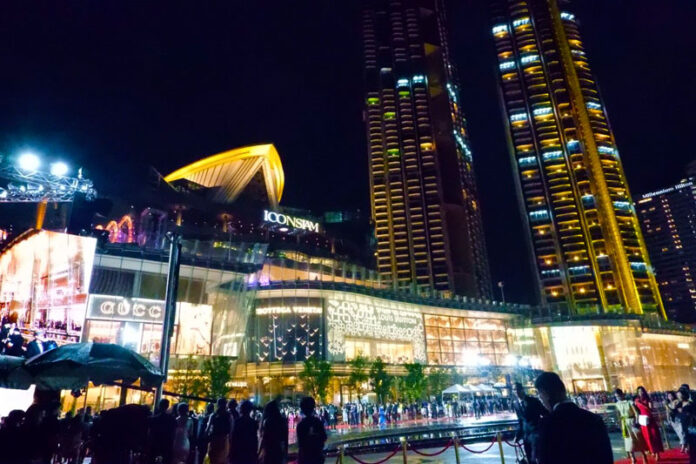
Iconsiam’s opening event on Nov. 9, 2018.

BANGKOK — An outlet mall out near the international airport and two more mega malls are being built in the capital by the developer behind Siam Paragon and Iconsiam.

The company will invest 70 billion baht through 2023 to open three more commercial sites, Siam Piwat CEO Chadatip Chutrakul announced Tuesday. The one nearest to becoming a reality is the Siam Premium Outlet mall opening in December in the capital’s eastern district of Lat Krabang, near Suvarnabhumi International Airport.

Siam Premium Outlet is being built on 150 rai (24 hectares) of land, a size similar to the Terminal 21 Korat and CentralPlaza Chiang Mai Airport malls. Few details were shared about the mall’s features and future tenancy, but Chadatip said it is being developed with US developer Simon Property Group.

Siam Piwat is the developer of malls such as downtown staples Siam Center, Siam Discovery, Siam Paragon and most recently Iconsiam which opened in November.

A race to be the first to bring Western-style outlet malls is on. In November, CPN, the property and investment arm of Central Group, announced it would be the first to open outlet mall Central Village. It’s also being built near Suvarnabhumi and expected to open late this year.

The outlets aren’t the only new malls coming to metro Bangkok’s crowded commercial space. Siam Piwat is deciding between three locations in the capital’s north, east or downtown for the site of two more projects. Both will require at least 50 rai (8 hectares) of land.

The complexes will be mixed-use developments including retail, office space and possibly theme parks or other attractions, Chadatip said.

She said the company was in talks with investors and would go public with their new venture by October.

Siam Piwat is also looking to acquire existing office towers in the Bang Na district and along Phahon Yothin Road, as well as expand into Vietnam, Cambodia and Myanmar.

Mall openings in Bangkok are frequent as more and more square footage is given over to retail. The Market Bangkok, developed by The Platinum Group, opened Valentine’s Day. Eight days later, Donki Mall Thonglor opened in Ekkamai. Ikea Bang Yai opened in March 15, 2018, six days before Uniqlo Roadside opened in Soi Phattanakan 58.

Meanwhile, LH Mall & Hotel Co. plans to open another Terminal 21 in the Rama III area by 2022, as well as one in Pattaya in October.

Siam Piwat is a private company founded in 1958 by Chadatip’s father, who founded what is now the Tourism Authority of Thailand. The firm has said it is looking to expand beyond property development into logistics and digital innovation.

Related stories:

Ratchaprasong’s Newest Mall ‘The Market’ Opens on V-Day

A Look Inside the New Iconsiam Mall (Photos)

Central to Open First Outlet Stores in Metro Bangkok

Japan’s Biggest Discount Chain ‘Donki’ to Open on Ekkamai

Terminal 21 Coming to Rama III, Pattaya

Riverside Megamall ‘Iconsiam’ Gets November Launch Date

Uniqlo Leaves the Mall For 1st Bangkok Stand-Alone Store

Peek Into the New Ikea Bang Yai (Photos)

Advertisement

Chiang Mai’s Foul Air No Priority to Bangkok, North Complains

Chiang Mai University students offer face masks to the spirits in a mock ceremony held Tuesday as part of a protest calling attention to severe air pollution in the north. Photo: @Dopemexmyg_ / Twitter

CHIANG MAI — Chiang Mai residents are unleashing anger over inaction to solving the persistent, toxic smog choking the region.

University students are protesting and social media is piling wrath onto officials for their lack of response in a week that saw Chiang Mai city ranked the world’s most-polluted city for a second consecutive day Wednesday. Particulate density rose to more than 200 micrograms per cubic meter, according to monitoring organization AirVisual.

Read: Chiang Mai Tops World Pollution Charts

Among the frustrations expressed is the sense that what suddenly became a priority in the capital is ignored in the north, even though it has been plagued by foul air for years.

“It’s been bad for a while already. Why don’t I see any help from the government? Is it so difficult to give away masks in other provinces and educate their communities?” @Mxxnsrk asked.

“There are people living in Chiang Mai too. It’s not an abandoned city. We pay tax equally but why do you care more about the problem in Bangkok? I feel so neglected,” @Sandyaloha2 wrote.

Not Songkran: Trucks spray water onto the ground Tuesday before Chiang Mai city’s most visible landmark, the Thapae Gate, in a bid to convince the public action is being taken.

Measures deemed ineffective in Bangkok, such as spraying water into the air, have been adopted, to the dismay of some northerners.

“Don’t worry too much about smog, guys. The governor is up in a cherry picker spraying water,” user @MC_Sutthipong tweeted with a photo of a truck spraying water onto the ground for a media photo op in Chiang Mai city. “So ridiculous. Is this all they can come up with?” @Idgaf_kah replied.

Pollution levels in the province have risen to “very unhealthy” since yesterday.

Chiang Mai University students staged a campus protest Tuesday in which they offered face masks to the spirits at a shrine.

“We want clean air,” one sign read. Another said, “When all the puu yai in this country can’t help, it comes down to the holy spirits as our last hope.”

The north and northeastern are choking on seasonal toxic smoke mainly caused by agricultural and waste burning, which spiked in the run-up to the enforcement of a new ban. Pollution also increased to “unhealthy” levels this morning in Loei, Khon Kaen, Chiang Rai, Nan, Prae, Mae Hong Son and Lampang.

Gov. Suppachai Iamsuwan addressed the problem in a statement issued online last night. While insisting best efforts have been made to solve the issue, he blamed the pollution on weather conditions and neighboring provinces. He said the air quality would improve in three days due to falling air pressure.

He floated solutions such as spraying more water into the air, increasing awareness in rural areas and banning open-air burning.

That didn’t appear to win confidence from residents.

“Oh, does Chiang Mai have a governor?” user Pop Jaruwit Sriwichai wrote.

“We’ve already known about most of the causes and solutions you said here, in principle,” user Panja Suwanich commented. “But I want to see some serious action come out of this.”

Related stories:

Chiang Mai Tops World Pollution Charts

Breathe in Thailand and Die Up to 4 Years Sooner: Research

Smog Grounds Flights in Northern Thailand

Smog Surges Over Thailand’s Two Major Cities

As Bangkok Clears, Provinces Choke on Seasonal Smoke

Advertisement

Trump Laments Complexity of Modern Airlines in Wake of Crash

President Donald Trump speaks at a Dec. 11 meeting with Democratic leaders in the Oval Office in Washington. Photo: Evan Vucci / Associated Press
President Donald Trump speaks at a Dec. 11 , 2018, meeting with Democratic leaders in the Oval Office in Washington. Photo: Evan Vucci / Associated Press

WASHINGTON — President Donald Trump lamented the complexity of modern airplanes Tuesday in the wake of two deadly crashes in the past five months, appearing to speculate on the cause of the disasters before aviation experts from the United States and elsewhere complete their investigations.

The president commented as much of the world grounded the Boeing 737 Max 8 model involved in both crashes.

Trump tweeted that “airplanes are becoming far too complex to fly.” He did not specifically mention the crashes, but his comments come just two days after an Ethiopian Airlines crash that killed all 157 people aboard and as a cascade of countries worldwide began suspending use of the plane.

“Split second decisions are needed, and the complexity creates danger,” Trump tweeted. “All of this for great cost yet very little gain. I don’t know about you, but I don’t want Albert Einstein to be my pilot. I want great flying professionals that are allowed to easily and quickly take control of a plane!”

The president’s tweet came as lawmakers were examining the future of the aviation industry during a congressional hearing Tuesday morning.

“I have a hard time interpreting anything the president says,” Rep. Dina Titus, D-Nev., said after reading the tweet aloud. “I don’t know if this is a knock at Boeing, or if it’s a knock at pilots or if it’s a knock at Einstein, or just that he’s a Luddite and it’s a knock at technology in general. But it doesn’t seem to be the right attitude at this moment.”

Patrick Smith, who flies a Boeing 767 aircraft and writes a column called “Ask the Pilot,” said Trump’s tweet reinforces the false notion that computers are flying the plane while pilots are there as a backup.

“People have a vastly exaggerated understanding of what cockpit automation actually does, and how pilots interact with that automation,” Smith said. “… The pilots are still flying the plane. They’re not flying it in the strictly hands-on way they would have in the 1930s, but you’re still commanding, you’re still controlling, the aircraft. You have to tell the automation what to do, how to do it and when to do it.”

Smith said that even with the most sophisticated airplanes, “there’s always a way to just fall back on raw pilot skills if you need to.”

Republican Rep. Sam Graves of Missouri, a pilot, said the president “has a point” but “if you train the pilots to operate the systems, then it’s not too complex.”

White House press secretary Sarah Sanders said on Fox News that “we have to review and see what actually took place. We know that a lot of the people in the industry have started to voice concerns about the amount of technology and taking the power out of the hands of the pilot. You saw the president talk about that in his tweets earlier today.”

Sanders also confirmed that Trump did speak by telephone Tuesday with Boeing Chairman and CEO Dennis Muilenburg. She would not reveal details of what they discussed but said the administration is “monitoring the situation closely.”

Anti-stall technology is suspected of playing a role in the Lion Air crash in October that killed all 189 aboard. Data released by Indonesian investigators indicates that pilots struggled unsuccessfully to counter the system, which repeatedly pointed the plane’s nose down and may have sent it into a death spiral.

Trump has long had an intense interest in the airline industry, once acquiring a fleet of planes in 1989 from the defunct Eastern Air Lines shuttle business. Time magazine once described the venture as a bust that never turned a profit and eventually defaulted. It was later sold to USAir.

Shortly before Trump came into office, he complained about the cost of new Air Force One planes, tweeting: “Costs are out of control, more than USD$4 billion. Cancel order!”

The White House said last July that the Air Force awarded Boeing a $3.9 billion contract for two presidential planes that will be ready in 2024. Sanders said the final price represented a savings of $1.4 billion from an initial contract proposal. Trump also said the familiar baby blue color on the presidential aircraft would give way to a red, white and blue color scheme.

Story: Kevin Freking

Advertisement

Australian Cardinal Sentenced to Prison for Child Sex Abuse

Cardinal George Pell walks onto the stage for the opening mass for World Youth Day in 2008 in Sydney, Australia. Photo: Rick Rycroft / Associated Press

MELBOURNE, Australia — The most senior Catholic convicted of child sex abuse was sentenced Wednesday to six years in prison for molesting two choirboys in a Melbourne cathedral in a crime that an Australian judge said showed “staggering arrogance.”

Victoria state County Court Chief Judge Peter Kidd ordered Cardinal George Pell to serve a minimum of 3 years and 8 months before he is eligible for parole. The five convictions against Pell carried a maximum possible sentence of 10 years each.

“In my view, your conduct was permeated by staggering arrogance,” Kidd said in handing down the sentence.

Pope Francis’ former finance minister was convicted by a unanimous jury verdict in December of orally raping a 13-year-old choirboy and indecently dealing with the boy and the boy’s 13-year-old friend in the late 1990s, months after Pell became archbishop of Melbourne. A court order had suppressed media reporting the news until last month.

The 77-year-old denies the allegations and will appeal his convictions in the Victoria Court of Appeal on June 5. It was not immediately clear if he will also appeal the sentence.

For the first time in Pell’s many court appearances since he returned to Australia from the Vatican to face abuse charges, Pell wore an open-necked shirt without a cleric’s collar.

In explaining his sentencing decision, the judge said Pell had led an “otherwise blameless life.” Kidd said he believed given Pell’s age and lack of any other criminal record, the cardinal posed no risk of re-offending.

The judge also took pains to note that he was sentencing Pell for the offenses on which the cardinal had been convicted – and not for the sins of the Catholic Church.

“As I directed the jury who convicted you in this trial, you are not to be made a scapegoat for any failings or perceived failings of the Catholic Church,” Kidd said.

But the judge also said that Pell had abused his position of power and had shown no remorse for his crimes. Kidd described the assaults as egregious, degrading and humiliating to the victims.

Pell showed no emotion during the hourlong hearing and barely moved throughout. He stood silently with his hands behind his back as the judge read his sentence. Pell signed documents that registered him for life as a serious sexual offender before he was led from the dock by four prison officers.

In a statement, one of Pell’s victims called the judge’s sentence “meticulous and considered.”

“It is hard for me to allow myself to feel the gravity of this moment, the moment when the sentence is handed down, the moment when justice is done,” the man said in a statement read outside court by one of his lawyers, Vivian Waller. “It is hard for me, for the time being, to take comfort in this outcome. I appreciate that the court has acknowledged what was inflicted upon me as a child. However, there is no rest for me. Everything is overshadowed by the forthcoming appeal.”

The father of a victim who died of a heroin overdose in 2014 at the age of 31 described the sentence as “a disappointment,” said the father’s lawyer Lisa Flynn.

“Our client is disappointed with the short sentencing and has expressed sadness over what he believes is inadequate for the crime,” Flynn said in a statement.

The father is considering suing Pell and the church over the abuse.

Australian law prohibits the publication of sex crime victims’ identities.

Abuse victims’ groups also expressed disappointment that the punishment was not harsher.

The sentence “makes a mockery of the concept of true accountability and is not a sentence commensurate with the crimes committed and the harm reaped,” Blue Knot Foundation president Cathy Kezelman said in a statement.

SNAP, a U.S. support group for victim of clergy abuse, described the sentences as “comparatively light.”

“We hope that the sentence imposed on Cardinal George Pell will provide some measure of healing to the living survivor of his abuse and comfort and closure for the family of Pell’s non-surviving victim,” SNAP said in a statement.

The judge said Pell’s age was a significant factor in determining his sentence.

Pell suffers from hypertension that is exacerbated by stress and has a dual-chamber pacemaker, the judge said.

Pell’s sentencing comes on the sixth anniversary of Francis’ election as pope. Pell was in the conclave that elected him and remains eligible for any potential future conclave until age 80 or unless he is removed.

Asked by a reporter outside court after the sentencing whether the case against Pell amounted to a witch hunt, his lawyer Robert Richter gave a rueful smile.

“No comment – you be the judge,” Richter replied.

After centuries of impunity, cardinals from Australia to Chile and points in between are facing justice in both the Vatican and government courts for their own sexual misdeeds or for having shielded abusers under their watch.

Last week, France’s senior Catholic cleric, Cardinal Philippe Barbarin, was convicted of failing to report a known pedophile priest to police. Barbarin was given a six-month suspended sentence.

Pope Francis last month defrocked the onetime leader of the American church after an internal investigation determined Cardinal Theodore McCarrick sexually molested children and adult men. It was the first time a cardinal had been defrocked over the child abuse scandal.

The surviving victim made a statement against Pell in 2015 – a year after the other victim’s death – to a police task force set up to investigate allegations that arose from a state parliamentary inquiry into handling of child abuse by religious and other nongovernment organizations. The task force also investigates allegations made to a similar national inquiry, called the Royal Commission into Institutional Responses to Child Sexual Abuse.

Pell gave evidence by video link from Rome to the royal commission, the nations’ highest level of inquiry, in 2016 about his time as a church leader in Melbourne and in his hometown of Ballarat.

The four-year royal commission found in its 2017 report that the Melbourne Archdiocese had ignored or covered up allegations of child abuse by seven priests in a bid to protect the church’s reputation and avoid scandal.

The royal commission was critical of Pell’s predecessor in Melbourne, Archbishop Frank Little, who died in 2008. It made no findings against Pell, saying in a redacted report that it would not publish information that could “prejudice current or future criminal or civil proceedings.”

Australian police interviewed Pell about the survivor’s allegations in a Rome hotel in 2016. Pell described the allegations at the time as “vile and disgusting conduct” that went against everything he believed in.

Pell voluntarily returned to Australia in 2017 to face an array of child abuse charges, most of which have since been dropped. The full details of those allegations were suppressed by court orders.

Pell was once the highest-ranking Catholic in Australia’s second-largest city, where he is now a prisoner held in protective security. Pedophiles such as Pell are typically separated from the main prison populations in Australia.

Pell was 55 years old and had recently established a compensation plan for Melbourne’s victims of clergy abuse when he abused the two boys at St. Patrick’s Cathedral in 1996. The survivor testified that Pell had walked in on the boys swigging altar wine in a back room after a Sunday Mass.

More than a month later, Pell abused the survivor again, squeezing the boy’s genitals as they passed in a cathedral corridor after a Mass.

Story: Rod McGuirk

Advertisement

TV Celebrities and Coaches Charged in College Bribery Scheme

This combination photo shows actress Lori Loughlin at the Women's Cancer Research Fund's An Unforgettable Evening event in Beverly Hills, California, on Feb. 27, 2018, left, and actress Felicity Huffman at the 70th Primetime Emmy Awards in Los Angeles on Sept. 17, 2018. Photo: Associated Press

BOSTON — Fifty people, including Hollywood stars Felicity Huffman and Lori Loughlin, were charged Tuesday in a scheme in which wealthy parents allegedly bribed college coaches and other insiders to get their children into some of the nation’s most selective schools.

Federal authorities called it the biggest college admissions scam ever prosecuted by the U.S. Justice Department, with the parents accused of paying an estimated USD$25 million in bribes.

At least nine athletic coaches and 33 parents, many of them prominent in law, finance, fashion, the food and beverage industry and other fields, were charged. Dozens, including Huffman, the Emmy-winning star of ABC’s “Desperate Housewives,” were arrested by midday.

“These parents are a catalog of wealth and privilege,” U.S. Attorney Andrew Lelling said in announcing the results of a fraud and conspiracy investigation code-named Operation Varsity Blues.

The coaches worked at such schools as Yale, Stanford, Georgetown, Wake Forest, the University of Texas, the University of Southern California and the University of California at Los Angeles. A former Yale soccer coach pleaded guilty and helped build the case against others.

Two more of those charged – Stanford’s sailing coach and the college-admissions consultant at the very center of the scheme – pleaded guilty Tuesday in Boston. Others appeared in court and were released on bail.

Huffman, 56, appeared in a Los Angeles courthouse and was released after posting a $250,000 bond.

Her attorney cited her community ties in asking that the actress be released on her own recognizance, which the judge denied.

Huffman is scheduled to appear in court March 29 in Boston.

No students were charged, with authorities saying that in many cases the teenagers were unaware of what was going on. Several of the colleges involved made no mention of taking any action against the students.

The scandal is certain to inflame longstanding complaints that children of the wealthy and well-connected have the inside track in college admissions – sometimes through big, timely donations from their parents – and that privilege begets privilege.

College consultants were not exactly shocked by the allegations.

“This story is the proof that there will always be a market for parents who have the resources and are desperate to get their kid one more success,” said Mark Sklarow, CEO of the Independent Educational Consultants Association. “This was shopping for name-brand product and being willing to spend whatever it took.”

The central figure in the scheme was identified as admissions consultant William “Rick” Singer, founder of the Edge College & Career Network of Newport Beach, California. He pleaded guilty, as did Stanford’s John Vandemoer.

Singer’s lawyer, Donald Heller, said his client intends to cooperate fully with prosecutors and is “remorseful and contrite and wants to move on with his life.”

Prosecutors said that parents paid Singer big money from 2011 through last month to bribe coaches and administrators to falsely make their children look like star athletes to boost their chances of getting accepted. The consultant also hired ringers to take college entrance exams for students, and paid off insiders at testing centers to correct students’ answers.

Some parents spent hundreds of thousands of dollars and some as much as $6.5 million to guarantee their children’s admission, officials said.

“For every student admitted through fraud, an honest and genuinely talented student was rejected,” Lelling said.

Several defendants, including Huffman, were charged with conspiracy to commit fraud, punishable by up to 20 years in prison.

Lelling said the investigation is continuing and authorities believe other parents were involved. The IRS is also investigating, since some parents allegedly disguised the bribes as charitable donations. The colleges themselves are not targets, the prosecutor said.

The investigation began when authorities received a tip about the scheme from someone they were interviewing in a separate case, Lelling said. He did not elaborate.

Authorities said coaches in such sports as soccer, sailing, tennis, water polo and volleyball took payoffs to put students on lists of recruited athletes, regardless of their ability or experience. Once they were accepted, many of these students didn’t play the sports in which they supposedly excelled.

The applicants’ athletic credentials were falsified with the help of staged photographs of them playing sports, or doctored photos in which their faces were pasted onto the bodies of genuine athletes, authorities said.

Prosecutors said parents were also instructed to claim their children had learning disabilities so that they could take the ACT or SAT by themselves and get extra time. That made it easier to pull off the tampering, prosecutors said.

Among the parents charged was Gordon Caplan of Greenwich, Connecticut, co-chairman of the international law firm Willkie Farr & Gallagher, based in New York. He and other parents did not immediately return telephone or email messages for comment.

Caplan was accused of paying $75,000 to get a test supervisor to correct the answers on his daughter’s ACT exam after she took it. In a conversation last June with a cooperating witness, he was told his daughter needed to “be stupid” when a psychologist evaluated her for learning disabilities that would entitle her to more time to take the test, according to court papers.

The witness described the scheme as “the home run of home runs.”

“And it works?” Caplan asked.

“Every time,” the witness responded, prompting laughter from both.

A number of colleges moved quickly to fire or suspend the coaches and distance themselves from the scandal, portraying themselves as victims. Stanford fired the sailing coach, and USC dropped of its water polo coach and an athletic administrator. UCLA suspended its soccer coach, and Wake Forest did the same with its volleyball coach.

Loughlin, who was charged along with her husband, fashion designer Mossimo Giannulli, appeared in the ABC sitcom “Full House” in the 1980s and ’90s. Huffman was nominated for an Oscar for playing a transgender woman in the 2005 movie “Transamerica.” She also starred in the TV show “Sports Night” and appeared in such films as “Reversal of Fortune,” ”Magnolia” and “The Spanish Prisoner.”

Giannulli, whose Mossimo clothing had long been a Target brand until recently, was released on a $1 million bond. He left without answering reporters’ questions. He and Huffman both surrendered their passports. Prosecutors in the case said they have agreed to let Loughlin travel to Vancouver for work, but her whereabouts were not clear.

Loughlin and her husband allegedly gave $500,000 to have their two daughters labeled as recruits to the USC crew team, even though neither participated in the sport. Their 19-year-old daughter Olivia Jade Giannulli, a social media star with a popular YouTube channel, is now at USC.

Court documents said Huffman paid $15,000 that she disguised as a charitable donation so that her daughter could take part in the entrance-exam cheating scam.

Court papers said a cooperating witness met with Huffman and her husband, actor William H. Macy, at their Los Angeles home and explained to them that he “controlled” a testing center and could have somebody secretly change her daughter’s answers. The person told investigators the couple agreed to the plan.

Macy was not charged; authorities did not say why.

The couple’s daughter, Sofia, is an aspiring actress who attends Los Angeles High School of the Arts.

A spokeswoman for Loughlin had no comment.

In another case, a young woman got into Yale in exchange for $1.2 million from the family, prosecutors said. A false athletic profile created for the student said she had been on China’s junior national development soccer team.

Prosecutors said Yale coach Rudolph Meredith received $400,000, even though he knew the student did not play competitive soccer. He did not return messages seeking comment.

Sklarow, the independent education consultant unconnected to the case, said the scandal “certainly speaks to the fact that the admissions process is broken.”

“It’s so fraught with anxiety, especially at the elite schools,” he said, “that I think it can’t be surprising that millionaires who have probably never said no to their kids are trying to play the system in order to get their child accepted.”

Story: Alana Durkin Richer, Collin Binkley

Advertisement

With Brexit Deal Down, UK Lawmakers Have 2 More Choices

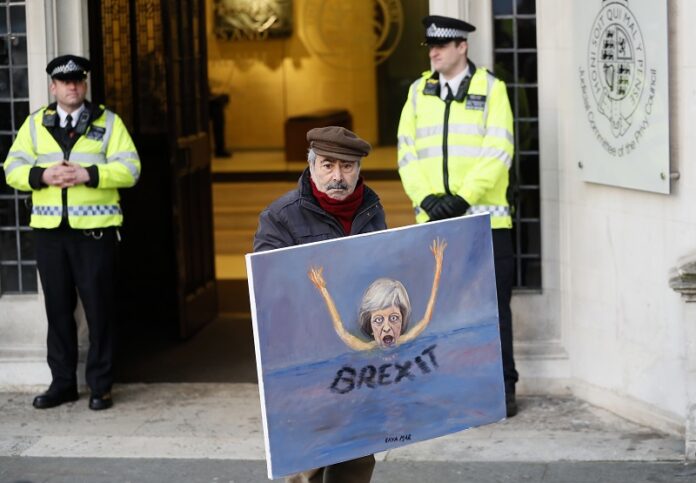
Painter Kaya Mar shows his latest painting of British Prime Minister Theresa May in 2017 in front of the Supreme Court in London: Photo: Frank Augstein / Associated Press

LONDON — Now that British lawmakers overwhelmingly rejected Prime Minister Theresa May’s Brexit divorce deal for a second time, the country’s planned March 29 departure from the bloc is an open question.

Lawmakers now have two starkly different choices: no deal or delay.

A look at what might happen in the days ahead:


Destination No-Deal

The House of Commons voted 391-242 against May’s EU withdrawal agreement Tuesday, snubbing changes she secured from the bloc the night before to allay concerns about the deal’s Irish border provisions. Lawmakers voted down the deal in January by an even bigger margin.

After the tally, May said Parliament would vote Wednesday on whether to abandon efforts to secure an agreement and to leave the EU as planned in a little more than two weeks without a deal.

A phalanx of pro-Brexit politicians supports that idea. They argue it would free the U.K. from EU rules and red tape, allowing the country to forge an independent global trade policy.

But economists and businesses fear a so-called “no-deal Brexit” would hammer the economy as tariffs and other trade barriers go up between Britain and the EU, its biggest trading partner.

In the short term, there could be gridlock at British ports and shortages of fresh produce. In the long run, the government says a no-deal scenario would leave the economy 6 percent to 9 percent smaller over 15 years than remaining in the EU.

Last month, Parliament passed a non-binding amendment ruling out a “no-deal” Brexit, and it is unlikely they will support it now. May said lawmakers would be free to follow their consciences rather than party lines when they consider the question Wednesday.


Delay, Delay, Delay

If lawmakers give leaving the EU without an agreement a thumbs down, they have one choice left: seeking more time. A third vote scheduled for Thursday is on asking the EU to delay Brexit day by up to three months.

This option is likely to prove popular, since politicians on both sides of the Brexit debate fear time is running out to secure an orderly withdrawal by March 29.

Extending the timeframe for Brexit would require approval from all 27 remaining EU member countries. They have an opportunity to grand such a request at a March 21-22 summit in Brussels. But the rest of the EU is reluctant to postpone Brexit beyond the late May elections for the EU’s legislature, the European Parliament.

The EU said Tuesday that Britain needs to provide “a credible justification” for any delay.


Crisis Deferred

Whatever Parliament decides, it will not end Britain’s Brexit crisis. Both lawmakers and the public remain split between backers of a clean break from the EU and those who favor continuing a close relationship through a post-Brexit trade deal or by reversing the June 2016 decision to leave.

May is unwilling to abandon her hard-won Brexit agreement and might try to put it to Parliament a third time, although the latest margin of defeat makes that tricky.

Some lawmakers want her to have Parliament consider different forms of Brexit to see if there is a majority for any course of action.

Some think the only way forward is a snap election that could rearrange the forces in Parliament and break the political deadlock. May has ruled that out, but could come to see it as her only option.

And anti-Brexit campaigners haven’t abandoned efforts to secure a new referendum on whether to remain in the EU. The government opposes the idea, which at the moment also lacks majority support in Parliament.

However, the political calculus could change if the paralysis drags on. The opposition Labour Party has said it would support a second referendum if other options were exhausted.

It all means more twists are coming in the Brexit drama.

“No one really believes this is the last chance saloon,” said Oliver Patel, a research associate at the European Institute at University College London.

Story: Jill Lawless

Advertisement

Vietnam Urges Malaysia Free 2nd Woman in N. Korean Killing

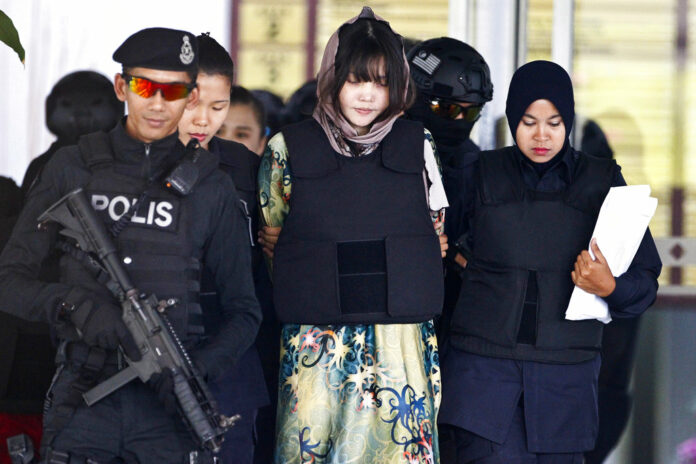
Vietnamese Doan Thi Huong, center, is escorted by police as she leaves after a court hearing in 2018 at the Shah Alam High Court in Shah Alam, Malaysia. Photo: Sadiq Asyraf / Associated Press

HANOI — Vietnam has urged Malaysia to release the second woman accused of killing the estranged half brother of North Korea’s leader.

Foreign Minister Pham Binh Minh made the plea in a phone call Tuesday with his counterpart, Saifuddin Abdullah, according to a statement on the ministry website. It said Minh requested the Malaysian court conduct a fair trial and free Doan Thi Huong.

Malaysia on Monday dropped the murder charge against her co-defendant, Indonesian Siti Aisyah, who has returned to her home village.

Huong’s murder trial is to resume Thursday, and prosecutors are expected to reply to a request by Huong’s lawyers for the government to withdraw the murder charge against her as well.

The two women were accused along with four missing North Koreans of killing Kim Jong Nam by VX nerve agent at a Malaysian airport in 2017. Both women say they were thought they were playing a prank for a TV show.

Prosecutors did not give any reason for the remarkable retreat in their case against Aisyah, whose home government had lobbied hard for her release.

Vietnam has pushed less hard on behalf of Huong, and recently hosted North Korean leader Kim Jong Un for an official visit and a summit with President Donald Trump.

Indonesia’s government said its continued high-level lobbying had resulted in Aisyah’s release and alleged the young migrant worker had no idea she was being “manipulated by North Korean intelligence.”

Huong’s lawyer, Hisyam Teh Poh Teik, said after Monday’s court session that Huong felt Aisyah’s discharge was unfair to her because the judge last year had found sufficient evidence to continue the murder trial against both of them.

“She is entitled to the same kind of consideration as Aisyah,” he said.

Lawyers for the women have previously said that they were pawns in a political assassination with clear links to the North Korean Embassy in Kuala Lumpur, and that the prosecution failed to show the women had any intention to kill. Intent to kill is crucial to a murder charge under Malaysian law.

Malaysian officials have never officially accused North Korea and have made it clear they don’t want the trial politicized.

Kim was the eldest son in the current generation of North Korea’s ruling family. He had been living abroad for years but could have been seen as a threat to Kim Jong Un’s rule.

Advertisement

Hot News

LATEST NEWS

Bangkok
overcast clouds
27.7 ° C
27.7 °
27.7 °
78 %
4kmh
100 %
Mon
27 °
Tue
33 °
Wed
32 °
Thu
32 °
Fri
32 °