Wanrada “Effy” Petchamnan is crowned Miss Teen Thailand 2018 on Wednesday night. Photo: Miss Teen Thailand / Facebook
BANGKOK — A Matthayom 4 student snagged the Miss Teen Thailand 2018 crown on her first try.
Wanrada “Effy” Petchamnan, 16, was crowned Miss Teen Thailand 2018 Wednesday night at BCC Hall in Central Ladprao.
“I’ve never been in a pageant, done modelling or shot advertisements. I’m just a normal kid,” the braces-wearing student at Suratpittaya School said after winning.
Effy won a 300,000 baht cash prize and a crown. Second place went to Chanoknan “Benz” Senpin,18, with Pawinee “Rebecca” Pegen, 15, winning third.
Miss Teen Thailand pageants have been held annually since 1989, with the winners getting a foothold into the Thai entertainment industry.
BANGKOK — Less than three years after Beam opened as Bangkok’s premier temple to techno, it recently dropped the bass for the last time and demoted all the higher-BPM beats to its ground-floor bar.
For those watching shifts in the capital-city nightlife, Beam was just embracing the inevitable: Techno’s long reign is over; hip-hop is the new king.
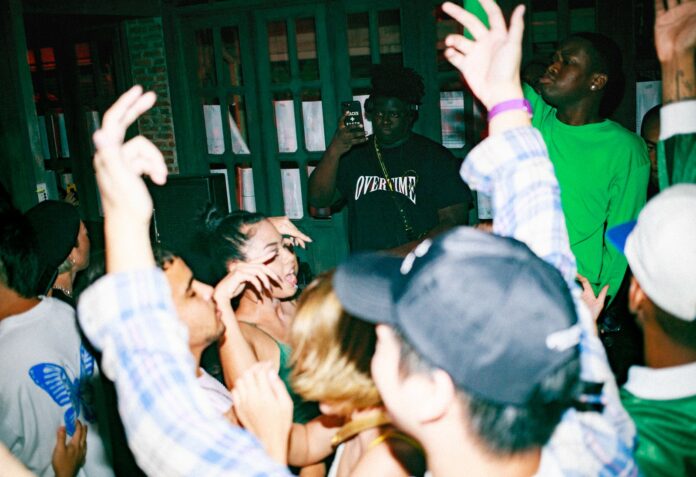
Instead of being genre-confined to a few scattered venues, the hip-hop surge that began in 2014 with Sugar Club has exploded, with dozens of venues giving themselves over to Migos’ cult of “Versace.” Now there’s Illionaire on Ekkamai. Around Ngam Duphli, I Hate Pigeons was replaced by Hip-Hop Sushi. Over on Khaosan Road, the Blaq Lyte team has opened Susie Q to pack in bodies for old-school, R&B, trap and grime.
Were that not enough, hip-hoppers can move it like Soulja Boy on Tuesdays when Bangkok Invaders drop into Sing Sing Theatre. Tuesday is also hip-hop at The Club at Koi (formerly Ce La Vi) located on Sathorn Square Tower.
That’s a partial list and doesn’t include the many venues now slotting hip-hop into their events calendar.
Dedicated fans of Nelly pose for a photo at his concert in 2017 at CentralWorld.
Back over at Beam, the decision to rededicate the main room to “top quality” hip-hop was signed off on by Kritsada Vadeesirisak, the club’s music director and a resident DJ.
“For the past two years, we have always wanted to adapt the venue with the trends, building a touchpoint and making things more fun,” he said in a recent interview.
But this was no easy decision for Kritsada, who through his Zoo Studio label and on stage as Marmosets, has been one of the city’s biggest boosters of techno.
Photo: Beam / Facebook
Kritsada says hip-hop’s ascension is partly due to a higher profile in mass entertainment and online, withrap battles and reality TV have drawn audiences.
Reality production house Workpoint TV last year launched its own rap competition as longtime street player Rap is Now has surged up from the underground to become the country’s biggest rap competition.
He said the rise of rap shows and contests and social media has led to more teens rapping in video clips and sharing them online.
“Thais are brought up with poems; our lessons in school include writing poems,” he said. “So when there is a rap contest, we are easily engaged because writing rhymes clicks with the culture we grew up with.”
It was a diss track against the ruling junta that came out of the blue this past week to dominate headlines with a rare, critical takeon military rule. “My Country’s Got” has racked up millions and millions of views in about a week’s time.
Hip-hop’s rise to the top of the Thai zeitgeist has fueled its stature in the nightlife.
The downtown hip-hop ecosystem was further enriched in August when Illionaire Bangkok opened. For now, the multi-floor bar and lounge only offers flair bartending and a selection of hip-hop flavors such as Korean, old- and new-school.
The venue was founded by a foreign investor who foresaw a profitable future.
Photo: Richard Ki-Ho / Courtesy
“I think Bangkok’s hip-hop scene is already bigger and I expect it to be further developed in the future,” said Illionaire founder Richard Ki-ho, a South Korean bartender and DJ.
Ki-ho hopes to add regular live performances from MCs, dancers, rappers and beatbox artists to Illionaire’s mix by year’s end.
A few months after losing the lease on its Thonglor venue, hip-hop collective Blaq Lyte is back with Susie Q, this time on Khaosan Road. Som Nurarak remembers when hip-hop struggled to find its footing.
Photo: Blaq Lyte / Facebook
“The scene in Bangkok has exploded,” Som said. “There was almost no scene when we opened Blaq Lyte and now it seems like everyone is a rapper and there are a bunch of hip-hop clubs all across the city … It’s cool to see a scene that you’re a part of grow so much. It feels good to think that you played some small role in it.”
Blaq Lyte last year even hosted ablock party in the Sukhumvit area where they brought in some of the best electronic, heavy metal and hip-hop acts. Thai-Swedish rapper Thaiboy Digital and Phuket-based hip-hop act Southside took the stage along with up-and-coming artists Fiixd and Youngohm.
In the month Susie Q has been open, it’s getting wild crowds and a good mix of people with the help of being conveniently located on Khaosan.
“Starting off, it was mostly Thai kids that were coming in for the hip-hop, but the crowds are getting bigger every day and we’re getting a solid mix of locals and foreigners,” Som said. “We’ve got a really cool spot and our DJs kick ass. People just need to know that every day we’re lit.”
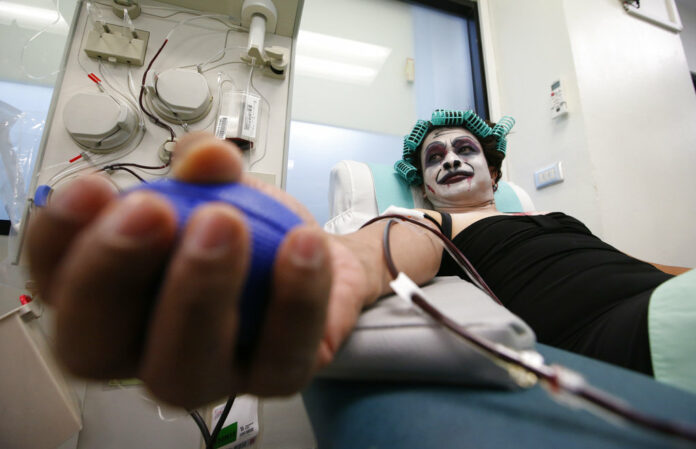
Thanat Chotrat dressed in a ghost costume for Halloween donates blood Wednesday at the Thai Red Cross in Bangkok. Photo: Sakchai Lalit / Associated Press
BANGKOK — Thailand’s Red Cross Society may not measure its blood supplies by the bucket, but it knows how to throw a Halloween party.
Hoping that the annual gusto for gore would inspire donors, the society’s National Blood Center had staff and volunteers dress up Wednesday as ghosts, monsters and witches. Even some donors dressed their hideous best.
The donation room was festooned with faux spider webs and plastic bats of the blood-sucking kind. At a minimum, nurses had horns or bat wings attached to their hats; others had macabre face paint, and a few gung-ho souls were in full dress as witches, ghosts and creatures of indeterminate monstrosity.
“The location has been decorated so donors can take photos to keep as souvenirs,” explained a statement from the Red Cross. “Donors also received ‘mummy blood’ pens as mementos.”
It wasn’t actually blood-curdling scary; after all, that would have undermined the point of the occasion.
“Donors are pretty excited to see ghosts,” said Wantana Boonyasiripong of Bangkok, who showed up to share a few corpuscles of her own. “It’s kind of fun, making it a happy occasion for us to donate blood and make merit.”
According to the center, about 14 percent of Bangkok’s population donates blood, but some 40 percent of what is collected goes to areas outside of the capital, where the donation rate averages just 2.6 percent. The need for donated blood grows by 8-10 percent a year, the Red Cross said.
“The fact is you can donate blood any day,” said Muanfun Bumroongton, a volunteer at the center who painted her face as pop culture villain The Joker. “We just thought that we could have extra fun today for those who come, making the day a bit more colorful.”
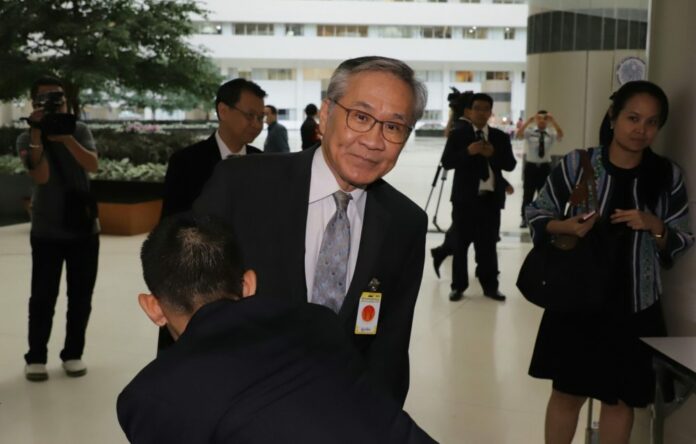
Don Pramudwinai arrives Wednesday at the Constitutional Court in Bangkok.
BANGKOK — A longtime diplomat will retain his position atop the Foreign Affairs Ministry after the Constitutional Court ruled Wednesday there was nothing amiss about his wife’s questionable stock transactions.
The ruling said Don Pramudwinai’s wife Nareerat Pramudwinai complied with transparency laws by transferring shares in a private company to a third party within 30 days of Don being appointed to his post. The ruling effectively cleared him of any wrongdoing as alleged by the Election Commission back in June.
As his wife was no longer in possession of over 5 percent of the shares by the deadline, he is not at risk of being disqualified from his job, the court said.
Security officers pose with confiscated cannabis plants in Surat Thani on April 18, 2017.
BANGKOK — The military government said Wednesday it would put forward a stopgap measure to allow medical marijuana before December.
As the interim parliament debates broader legislation, health officials said they would fast-track the process by reclassifying non-psychotropic cannabis extracts from a Category 5 narcotic – which does not allow any use at all – to Category 2 – which permits limited use.
“We will upgrade extracted cannabinoids, which are now under Category 5, to Category 2. This would permit extracted cannabinoids to be used for medical treatment, just like morphine,” Food and Drug Administration chief Tares Krassanairawiwong said.
The substances would then be usable to treat four conditions: multiple sclerosis, nerve pain, chemotherapy side effects and seizures in young children.
Tares’s deputy Surachoke Tangvivat said only extracted substances would be legalized. The THC which gets people high contained in the leaves and buds would remain prohibited.
Speaking to reporters, Justice Minister Prajin Juntong described the proposed move as a “short-term measure” that would pave the way for future legalization of medical cannabis.
Asked when the unspecified measure would be implemented, Prajin said he hoped it would be out before December.
“At this moment we need to have every issue covered. We have to look at the results from clinical trials, lab results and researches on animals and humans,” Gen. Prajin told reporters. “We have to cover the entire process. Otherwise, we might open a loophole for foreign pharma companies.”
But an expert neurologist and medical cannabis advocate slammed Prajin’s proposal. Thiravat Hemachudha said that keeping the drug classified at Category 2 would make it as hard to come by as morphine and therefore be of little benefit to patients.
“This proposal would bring place severe restrictions on medical facilities and procedures. Looking at the regulations, physicians would not dare use it,” Thiravat wrote online. “Very few patients would benefit from it.”
Limiting access to CBD-based painkillers would only serve to keep patients going outside of the law to obtain it or cannabis from illicit sources, Thiravat warned.
The proposal made by Prajin and health officials is a piecemeal effort while a much larger rewrite of Thailand’s drug laws is being debated that would not only legalize medical cannabis – and allow some farmers to grow it – but also kratom.
It’s not immediately clear when the bill would be passed, but the lawmaker who brought it to debate said at yesterday’s public hearing he hoped to present it as a “New Year’s gift” to the public.
Tares, the FDA chief, said his plan would not conflict with the lawmakers’ effort.
“We are going in same direction,” Tares said.
Correction: The previous version of this article said opium is a Category 5 drugs. In fact, it’s in Category 2 which already allows medical use.
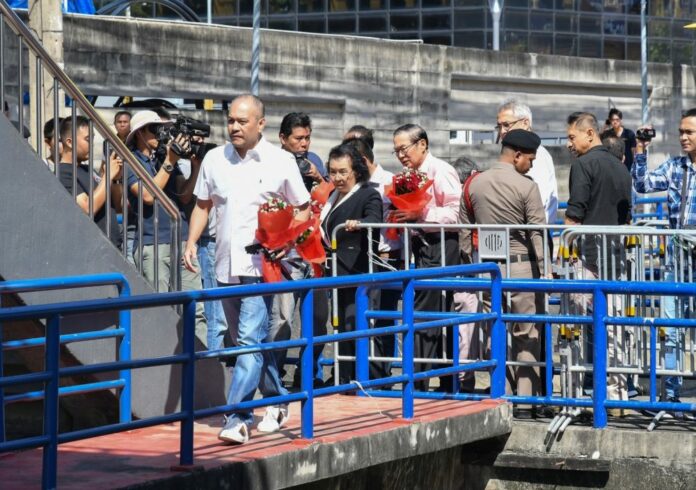
BANGKOK — Dozens of Redshirt supporters placed flowers Wednesday morning at the pedestrian overpass where a taxi driver killed himself 12 years ago today.
Nattawut Saikua, Thida Thavornseth, Weng Tojirakarn are among dozens of people to converge on the overpass in front of Thairath Newspaper to mourn the death of Nuamthong Praiwan, who committed suicide to protest the 2006 coup.
“In my next life, I hope not to see another coup,” the 60-year-old man wrote in his suicide note, a message engraved onto a memorial pillar erected at the location.
Nuamthong hanged himself at the overpass on the night of Oct. 31, 2006, days after the Sept. 19 coup. One month before he killed himself, he was seriously injured after ramming his taxi into an army tank supporting the coup at the Royal Plaza.
A spokesman of the new junta, Col. Akkara Thiproj, played down his actions, saying that no one “would sacrifice their lives for ideology.”
In his suicide note, Nuamthong said he ended his life to disprove that.
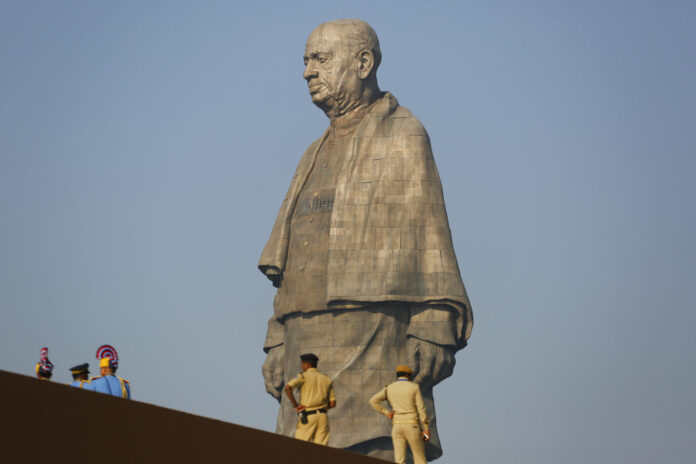
Indian policemen gather next to the Statue of Unity at Kevadiya colony Wednesday in Gujarat state, India. Photo: Ajit Solanki / Associated Press
KEVADIYA, India — India’s prime minister on Wednesday unveiled a towering bronze statue of Sardar Vallabbhai Patel, a key independence leader and the country’s first home minister after British colonialists left in 1947.
At 182 meters (597 feet), it is one of the tallest statues in the world built at a cost of USD$403 million in Kevadiya, a village in Gujarat state. Both Prime Minister Narendra Modi and Patel hail from Gujarat state.
Modi inaugurated the “Statue of Unity” on the bank of the Narmada river. He had promised the project despite criticism that India couldn’t afford to spend so much money on a statue.
Indian air force planes showered flower petals on the statue.
Patel was known as the “Iron Man of India” for integrating various states in the post-independence era as the creation of Pakistan led to a massive bloodshed between Hindus and Muslims moving between the two nations.
On Wednesday, Modi said Patel was a beacon of hope for India in the time of crisis and he will be a source of inspiration for ages to come.
Rashesh Patel, a 42-year-old businessman, said “though Patel was from Gujarat state, all Indians were proud of him because of his stature.”
Mohandas Gandhi, Jawaharlal Nehru and Patel were the three key leaders of India’s independence struggle, he said.
The monument will have a museum with 40,000 documents, 2,000 photographs and a research center dedicated to Patel’s life and work.
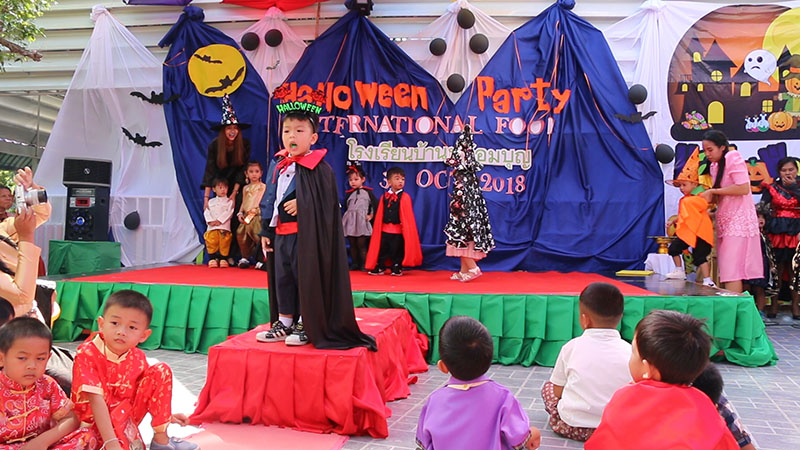
KHON KAEN — A toothy zombie naval officer, a brood of draculas and one distraught baby devil showed they can Halloween with the best of them at a school in Khon Kaen this morning.
The children at Baan Prom Boon School wore a mix of Asian- and Western-inspired costumes to get their spook on. There were no reports of anyone crying cultural appropriation.
The costumes included zombified versions of traditional Thai garb, colorful pumpkin capes and Chinese regalia. Many sported open wounds and poorly sutured wounds by way of fake blood and makeup stitches.
Traditional Thai costumes included nang tani, a young female succubus that dwells in banana trees, to perhaps the scariest of all: a life-size doll possessed by the spirit of a dead child known as kumarn tong.
The kids show off their outfits in a very short runway walk accompanied by bumpin’ provincial techno and hosted by costumed teachers.
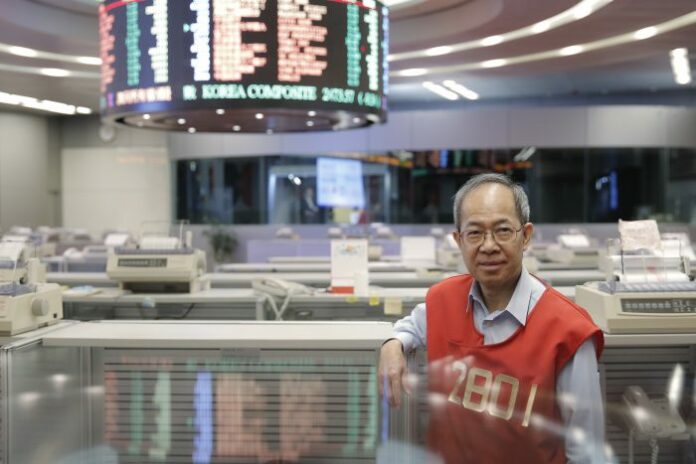
Yip Wing-keung, a trading manager at local brokerage Christfund Securities, wears his red trading jacket in 2017 at the Hong Kong Stock Exchange. Photo: Kin Cheung
SINGAPORE — Asian markets rose on Wednesday after big American companies reported strong earnings for the third quarter, soothing fears that rising interest rates may deter corporate investment.
Keeping Score
Japan’s Nikkei 225 index jumped 2.2 percent to 21,920.46 and the Shanghai Composite index added 1.2 percent to 2,598.68. Hong Kong’s Hang Seng rose 1 percent to 24,830.09. Australia’s S&P-ASX 200 reversed early losses and was up 0.4 percent at 5,830.30, and the Kospi in South Korea was 0.7 percent higher at 2,027.71. Shares were higher in Taiwan, Singapore and Thailand but fell in Indonesia.
Wall Street
Earnings reports lifted major benchmarks on Tuesday, as smaller and more U.S-focused companies including basic materials makers showed strong gains. The S&P 500 index rallied 1.6 percent to 2,682.63, a day after closing at a five-month low. The Dow Jones Industrial Average was 1.8 percent higher at 24,874.64 and the Nasdaq composite advanced 1.6 percent to 7,161.65. The Russell 2000 index of smaller-company stocks rebounded 2 percent to 1,506.64.
US Earnings
Big companies including Mondelez, which makes Oreos, Cadbury chocolates and Trident gum, reported strong quarterly earnings on Tuesday. Mondelez’s stocks rose by the most in a year, gaining 5 percent to USD$42.12, after it announced third-quarter profits that surpassed market expectations. Athletic apparel maker Under Armour also posted strong quarterly earnings. Even Facebook’s shares inched higher in after-hours trading after it reported revenue that was slightly under projections. This assuaged concern over steady interest rate hikes by the Federal Reserve are raising the cost of borrowing. Another increase is expected later this year, with more to come in 2019.
Analyst’s Take
“U.S. fundamentals keep driving the U.S. dollar as other major economies struggle to keep up,” Alfonso Esparza, senior market analyst at OANDA, said in a commentary. Data backing consumer confidence and spending “keep validating the Fed’s decision to keep hiking rates despite the negative comments from the Trump administration,” he added.
Chinese PMI
On Wednesday, China reported that its official manufacturing purchasing managers’ index slowed to 50.2 in October from 50.8 a month earlier. Figures had declined across the board except for production outlook, which was unchanged. Readings above 50 indicate expansion, while lower numbers indicate contraction on the index’s 100-point scale. Still, sentiment was supported by an open call from the Chinese government to funds to support the equity markets.
Bank of Japan
As expected, Japan’s central bank kept its monetary stance intact as it wrapped up its latest policy meeting. The Bank of Japan kept the key interest rate at minus 0.1 percent and its target for long-term bond rates at around zero. The bank also downgraded its GDP forecast for the fiscal year through March, to 1.4 percent from 1.5 percent, with an estimate of 0.8 percent for the following fiscal year.
Energy
Benchmark U.S. crude added 31 cents to $66.49 per barrel in electronic trading on the New York Mercantile Exchange. The contract dropped 86 cents to settle at $66.18 a barrel in New York. Brent crude, used to price international oils, gained 48 cents to $76.43 per barrel. In the previous session, it dropped $1.42 to $75.95 a barrel.
Currencies
The dollar strengthened to 113.22 yen from 113.13 yen late Tuesday. The euro slipped to $1.1342 from $1.1343.
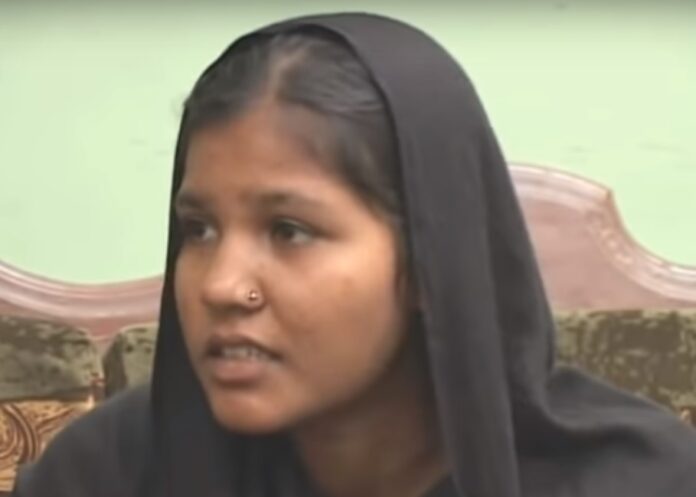
An undated image of Asia Bibi. Image: Catholictvpakistan / YouTube
ISLAMABAD — Pakistan’s top court on Wednesday acquitted a Christian woman who was sentenced to death in 2010 on blasphemy charges, a landmark ruling that could ignite mass protests or violence by hard-line Islamists.
Chief Justice Mian Saqib Nisar announced the verdict to a packed courtroom and ordered Asia Bibi released. She has been held at an undisclosed location for security reasons and is expected to leave the country.
The charges against Bibi date back to a hot day in 2009 when she went to get water for her and her fellow farmworkers. Two Muslim women refused to drink from a container used by a Christian. A few days later, a mob accused her of blasphemy. She was convicted and sentenced to death.
The mere rumor of blasphemy can ignite mob violence and lynchings in Pakistan, and combatting alleged blasphemy has become a central rallying cry for hard-line Islamists. Salman Taseer, the governor of Punjab province, was shot and killed by one of his guards in 2011 for defending Bibi and criticizing the misuse of the blasphemy law. The assassin, Mumtaz Qadri, has been celebrated as a martyr by hard-liners since he was hanged for the killing, with millions visiting a shrine set up for him near Islamabad.
Ahead of the verdict, Khadim Hussain Rizvi, a hard-line cleric who has brought tens of thousands of people into the streets for past rallies, called on his supporters to gather in all major cities to express their love for the prophet and to protest if Bibi is released. Authorities have stepped up security at churches around the country.
Shortly after the ruling, hundreds of Islamists blocked a key road linking the city of Rawalpindi with the capital, Islamabad. Islamists in Pakistan’s largest city of Karachi and in the northwestern city of Peshawar were also gathering for the protests. Similar rallies were held elsewhere. Police urged demonstrators to disperse peacefully.
Bibi’s family and her lawyer say she never insulted the prophet. In previous hearings her attorney, Saiful Malook, pointed to contradictions in testimony from witnesses. The two Muslim women who pressed charges against Bibi denied they quarreled with her, saying her outbursts against Islam were unprovoked.
Critics of the blasphemy law have said it is used to settle personal scores or to attack minority communities. Bibi’s case was closely followed internationally amid concern for Pakistan’s religious minorities, who have frequently come under attack by extremists in recent years.
Bibi’s husband hailed Wednesday’s verdict.
“I am very happy. My children are very happy. We are grateful to God. We are grateful to the judges for giving us justice. We knew that she is innocent,” said Ashiq Masih.