




















27.5 C
Bangkok
Thursday, September 17, 2026
Home Blog Page 1971

Chef Som Elevates Familiar to Fantasy at Riverside Karmakamet

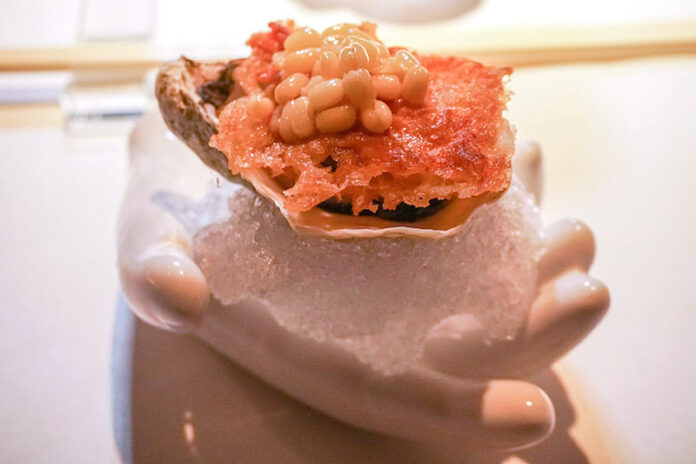
"Bangkok Street Food No. 1" at Karmakamet Conveyance.

Salt sold by the sack roadside in Samut Songkhram becomes salty-sweet Fleur de Sel ice cream. A cow’s tongue is lifted from Hong Kong noodle dishes and spiced with jellified chili vinegar.

A seven-course meal that leans heavily on childhood memories and regional associations made by one of Thailand’s few established female chefs will soon be served behind an aromatherapy shop coming to a new riverside haunt.

Chef Jutamas “Som” Theantae’s latest restaurant, Karmakamet Conveyance, takes a menu page from Gaggan by attempting to elevate familiar flavors – affordable street eats, hearty childhood favorites – into the realm of fine dining. Sauces are replaced by jellies, mussels become oysters, and everything gets a dash of foreign flare and paired with wines.

“Food is a vehicle for displaying different cultures. If we withhold our judgement, it’s a tool that gets us to accept different cultures and people,” Jutamas said.
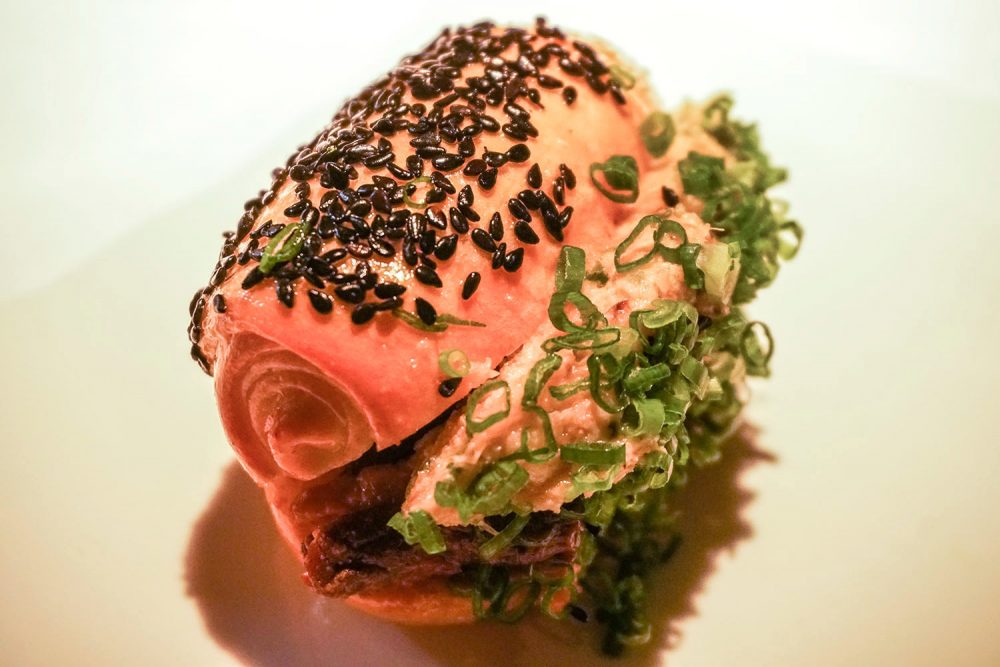
DSC01856 4 e1535869346160
A pork adobo in the ‘Philippines’ course at Karmakamet Conveyance.

The 47-year-old chef is best known as one of the partners of Karmakamet, an aromatherapy and bath products brand that years ago expanded beyond its original Secret World store with a spacious restaurant/shop behind the Emporium shopping mall and a cafe on Silom.

“For me, no place is more beautiful than any other, if we don’t judge,” the chef said. “I could be walking in Pahurat, with its urine smell, and it’s as beautiful as Paris for me.”

Karmakamet Conveyance, which opens Tuesday at Lhong 1919, will serve a set course. Up first will be seven dishes, two amuse-bouches and a palate cleanser, most named after famed Oriental locales.

The journey begins with “Emotional Seascape: Humid Morning by Prachuap Khiri Khan Bay,” a curious Kopyor coconut jelly topped with gourami eggs and salted fish. It’s intended to distill the beachside market by crossing the boundary between savory and sweet. “East China Sea” is a tiny cup of fish broth spiced with Chinese pickles and tangerines, with a slice of pa tong go donut, a remake of the slop Jutamas said she ate on a boat trip in China.
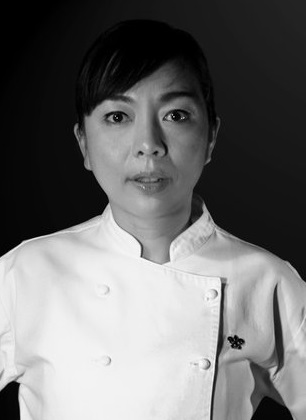
Jutamas Theantae / Courtesy

“Bangkok Street No. 1” kicks off the mains with Jutamas’ signature fanficied street food established at Karmakamet Diner: Oyster Kiss, a fancy remake of hoi tod, or fried oyster. A ceramic hand cups a mound of ice topped with an oyster, fried pancake and sprouts. It’s served with a bowl of pad thai made with pici noodles and Chinese pickles. This is followed by “Philippines,” a pork belly adobo covered with crunchy black sesame. Its coconut paste signals arrival in another part of ASEAN. At a recent preview event, it came paired with a 2015 Rosado Cabernet Sauvignon, a rosé heavy on the berry, as if to remind one of a carefree berry smoothie.

The third and fourth courses take one to East Asia: Hainan and Hong Kong, respectively. “Hainan” is a Hainanese chicken rice in a shallow broth that doesn’t dilute the braised chicken thigh, zested by lime and a fermented black bean dip. Most remarkable is the small cup of Energy Soup, a chicken soup boiled with Chinese medicinal herbs for three days. It immediately recalls the stuff Chinese amas force their grandkids to drink but is somehow made delicious and even holds it own against the acidic 2012 Dame de Respide red.

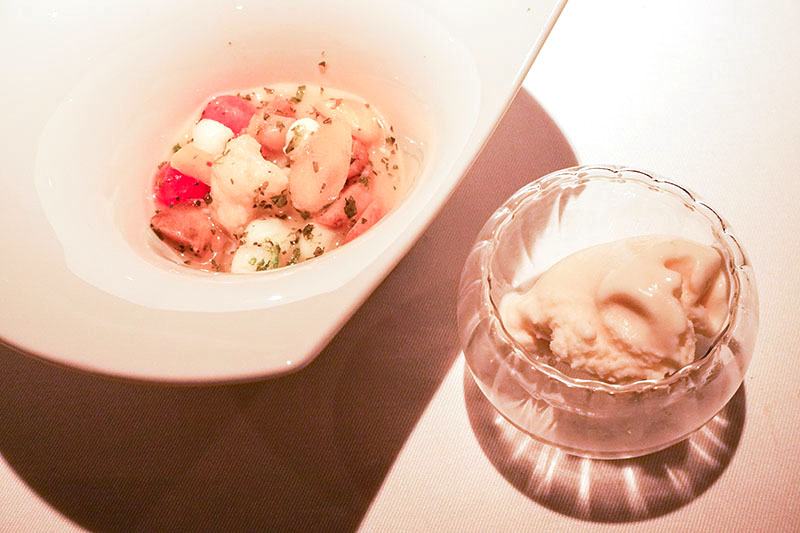
“Hong Kong” is a braised beef noodle dish, but with a single cotton-soft piece of braised beef tongue, a single beef ball, a single shrimp pancake and one flat rice noodle to be eaten with jellified chili vinegar. Complain that you just got a portion of a common noodle dish as the palate cleanser, “Memory of Summer Day,” arrives to pull you back into the fine dining realm. It’s not the tiny spheres of santol, custard apple and sala in rum that will win diners over, it’s that “Samut Songkhram Fleur de Sel” ice cream, an enchanting taste of salt and egg that brings to mind the province’s roadside salt stalls.

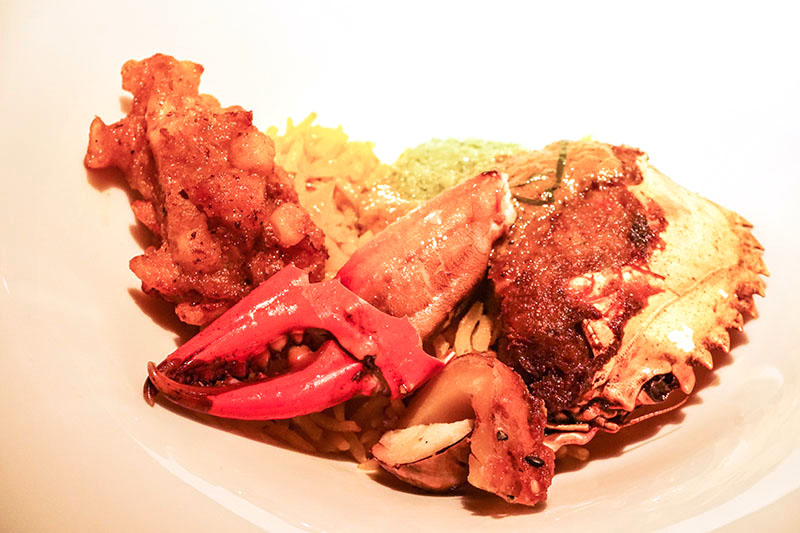
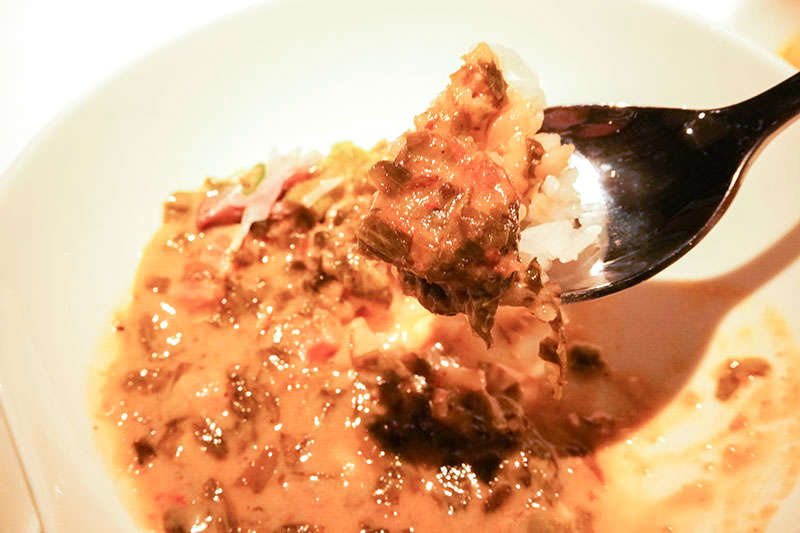
The last three courses end the meal on notes of confusion and possible dissatisfaction. “Emotional Landscape – Petchaburi” is an unhappy looking dish of curry with pork belly and young tamarind leaves served with a fish cake and peanutty kanom jeen rice noodles. One seriously begins to consider if street food on a fancy plate should cost fine-dining prices. “Southern Thailand Coast,” a serving of biryani yellow rice enhanced with crab and fried cempedak, a Malaysian jackfruit-alike.
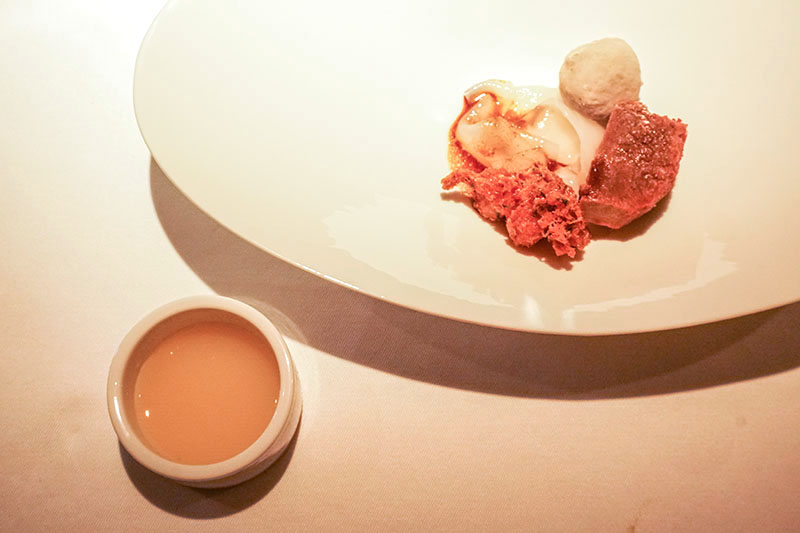
'Hong Kong'
‘Hong Kong’

Indian is hinted in the penultimate dessert course, the “Darjeeling Afternoon Tea.” An unremarkable frosted donut is served with a shot of lemon tea, and Indian sweets such as gulab jamun made into a pound cake isn’t any more memorable than a regular pastry.

The creativity that went into the menu is likely to thrill taste-seekers ready to embark on a virtual food tour of Asia, making it an apt approach for the tourist magnet that is Lhong 1919. Karmakamet Conveyance comes out of the gate with a few wins – the salt ice cream, coconut jelly with salted fish, energy soup and adobo bun are delights – yet falls flat with others. Those familiar with these dishes and places may just be reminded that they can go for the real, full-sized deal in non-jellied form.
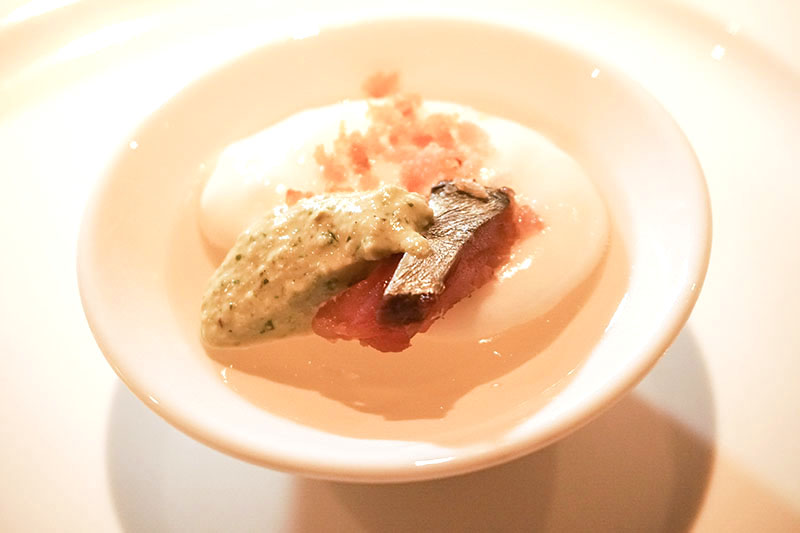
Emotional Seascape: Humid Morning by Prachuap Khiri Khan Bay.

Service starts at 6pm, 6:30pm, 8pm and 8:30pm. A meal without wine is ฿1,800, while one paired with selections is ฿4,300.

Asked if the price point might set some customers up for disappointment, Chef Som said she’s prepared to leave final judgment to her diners.

“I’m not arrogant. I don’t want to be the chef who says ‘I’m the chef, you have to listen to me,” Jutamas said. “You don’t need to like my food, but I know you can feel the love I put into it. As the shop’s motto says, ‘Allow things to happen as they are.’ I really believe in that.”

To find the “hidden” restaurant, look for a golden-mirrored opening at the back of the Karmakamet shop in Lhong 1919. Just outside windows framed by gauzy, floor-to-ceiling curtains are the 168-year-old pier structures, covered with lush plants and moss.

Looking forward, Jutamas said her next courses at Conveyance will venture even more experimental.

“This course is like Realism,” she said. “Next I will have expressionist, and then abstract art.”
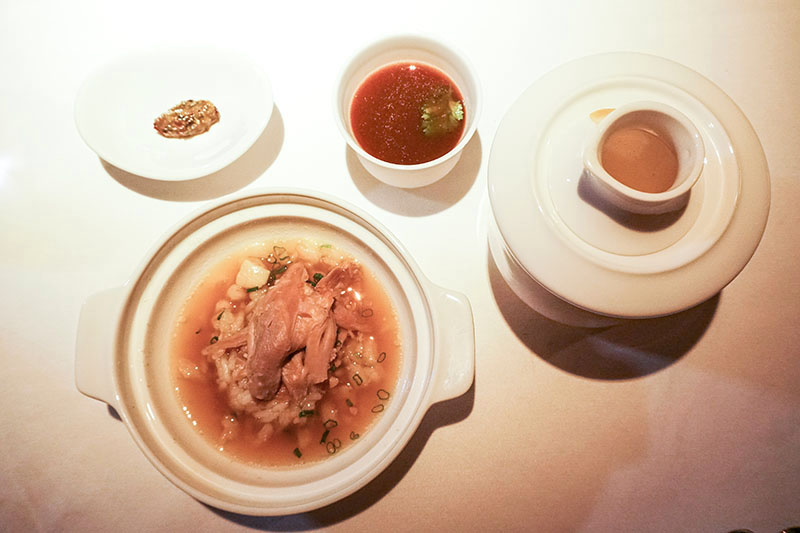
'Hainan'
‘Hainan’
Tamarind curry with pork belly
'Southern Thailand Coast'
‘Southern Thailand Coast’
'Memory of Summer Day'
‘Memory of Summer Day’

Karmakamet Conveyance is located at Lhong 1919 in the Chiang Mai Alley in Bangkok’s Khlong San district, a short ride from BTS Saphan Taksin or Krung Thonburi. Alternatively, take one of the river boats that stops at Wanglee Pier.
Advertisement

Asian Games Stir Indonesian Pride, Boost Jokowi’s Campaign

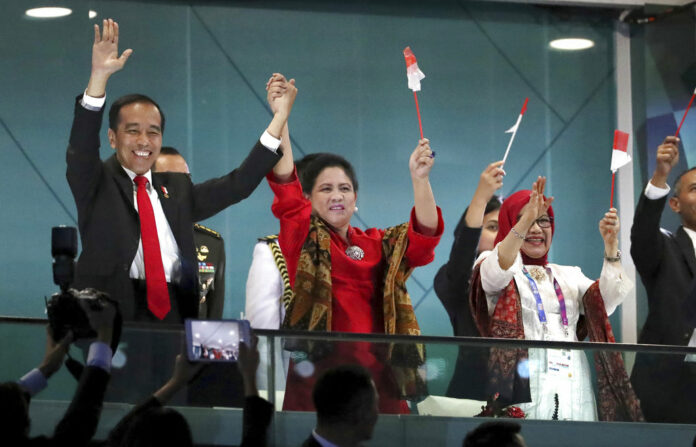
Indonesian President Joko Widodo, left, and his wife Iriana wave during the Aug. 18 opening ceremony for the 18th Asian Games in the Gelora Bung Karno Stadium in Jakarta. Photo: Dita Alangakara / Associated Press

JAKARTA — Indonesia’s hosting of the Asian Games and a record haul of gold medals has swelled national pride, providing a boost to the re-election campaign of President Joko “Jokowi” Widodo.

The 2-week-long games ended Saturday with Indonesia fourth on the medal table behind China, Japan and South Korea. A good chunk of its 30 gold medals were in obscure sports held only at the Asian Games, and none was from swimming or athletics.

But for Indonesia, which has won only seven Olympic gold medals — all in badminton — it was a landmark haul that outdid its modest ambition of sneaking into the top 10.

A well-received opening ceremony, an absence of major organizational problems, and Jokowi’s surprise announcement Saturday that Indonesia would bid for the 2032 Olympics have fueled feel-good nationalism that analysts say is likely to give Jokowi a lift in the polls heading to an April election.

That would widen his already substantial lead over former general and ultranationalist politician Prabowo Subianto, Jokowi’s challenger for a second time.

The games will “certainly have a positive impact on Jokowi’s electability,” said Syamsuddin Haris, a political analyst from the Indonesian Institute of Sciences. “The spectacular opening ceremony became a successful campaign for the incumbent, especially to attract swing voters and millennials whose numbers are very significant.”

Jokowi was compared to Barack Obama when first elected in 2014, and he and his advisers have cultivated a “cool cred” around his presidency.

That was evident two weeks ago in his cameo at the opening ceremony before a crowd of 40,000 and a national television audience.

A slickly choreographed video showed Jokowi stuck in traffic — a humorous nod to one of Jakarta’s major challenges in hosting the games. He donned a black helmet and raced through the city’s backstreets on a motorbike to reach the stadium on time.

Then the motorbike shown in the video sped into the stadium and its helmeted driver disappeared into a tunnel moments before the real Jokowi appeared in the VIP area to thunderous applause.

It resembled part of the opening of the 2012 London Olympics, where Queen Elizabeth II and James Bond appeared to skydive into the stadium.

In another moment that riveted Indonesians, Jokowi was shown enthusiastically grooving to music blasting across the stadium, a stark contrast to the morbid formality of most Southeast Asian leaders.

Haris said the games also positively highlighted ethnic and religious differences in Indonesia, the world’s most populous Muslim-majority nation with more than 260 million people, making it harder to exploit those divisions during the election campaign, he said.

“The Indonesian people saw how the athletes are fighting for victory, for gold medals, and the winners are not only Muslim, but also of Chinese descent, Christian, Hindu and Buddhist,” Haris said. “This will certainly dampen the sectarian and ethnic issues used in the 2014 presidential elections.”

Despite Jokowi’s prominence, Subianto wasn’t totally deprived of oxygen.

As chairman of the Pencak Silat association— a local martial art included in these games — he was shown on national television presenting some of the 14 gold medals that Indonesia won in the discipline, and in a group hug with Jokowi and one of the winners.

But he was also mocked online with a mercilessly effective meme that juxtaposed a recent image of a shirtless and flabby Subianto against the washboard abs of an Indonesian heartthrob who jubilantly tore off his shirt after winning gold in the men’s badminton singles.

Young Indonesians make up 35-40 percent of voters and will play a “decisive” role in the 2019 presidential race, said Hugo Brennan, Asia analyst at Verisk Maplecroft, a business and political risk consultancy.

“Jokowi’s motorcycle stunt during the opening ceremony was widely shared on social media and will have burnished his ‘cool credentials’ among this important constituency,” he said.

The PR win comes less than a month after Jokowi unexpectedly chose a conservative cleric, Ma’ruf Amin, as his running mate, dismaying moderate and liberal supporters but likely neutralizing damaging criticism that he isn’t sufficiently Islamic.

Most of his five-year term has been spent balancing the demands of his moderate base, powerful Islamic conservatives, a complicated parliamentary coalition and the military, which has never completely accepted its diminished role following the end of the Suharto dictatorship two decades ago.

Improving Indonesia’s creaking infrastructure has been Jokowi’s signature policy — the Asian Games indirectly highlighted some of the progress — and he enters the campaign the clear but not unbeatable front-runner.

If it’s any consolation for Prabowo, who was narrowly defeated by Jokowi in 2014, the games afterglow will fade and is unlikely to be a decisive factor when the world’s third largest democracy votes in April, analysts said.

“I think Jokowi’s and Indonesia’s performance in the Asian Games will give the president a bit of a bump in the polls but I’m not sure it significantly changes his odds of re-election,” said Eurasia Group analyst Peter Mumford.

“Any benefit from the Asian Games may have dissipated by then. But certainly doesn’t do him any harm,” he said.

Jokowi, however, appears intent on extending its shelf life, announcing alongside the president of the International Olympic Committee on Saturday that because of the success of the Asian Games, Indonesia will bid for the 2032 Olympics.

Story: Stephen Wright

Advertisement

Son of Former Coup Leader Appointed New Army Chief

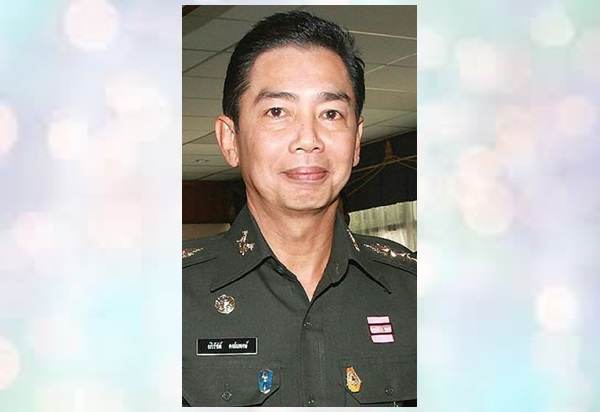
Gen. Apirat Kongsompong. Photo: Matichon

BANGKOK — The eldest son of a former coup leader and secretary of the current junta will take over as the new army chief.

The Royal Gazette announced the annual military reshuffle on Saturday and Gen. Apirat Kongsompong, who serves as assistant chief of the Royal Thai Army, will take on the all-powerful role Oct. 1.

The 58-year-old general was the eldest son of the late Gen. Sunthorn Kongsompong, who led a coup in 1991 to oust the government of Chatchai Choonhavan. He will replace outgoing army chief Chalermchai Sitthisad, who is retiring.

Apirat holds a number of important roles and has risen up through the channels of power.

A member of the junta-appointed National Legislative Assembly, he was educated at Saint Gabriel’s College, an exclusive Catholic school attended by deputy junta leader Gen. Prawit Wongsuwan and deputy premier Somkid Jatusripitak.

The incoming army chief later attended the Armed Forces Academies Preparatory School and went on to attend at Chulachomklao Royal Military Academy, where he graduated in 1985, and then the National Defence College.

He has been in charge of overseeing the 1st Army Region which covers security in Bangkok and the central region.

Apirat will continue to serve as junta secretary. He is also chairman of the National Lottery and a board member of private petrochemical concern Bangchak.

His other notable achievements include leading forces to re-take a Thaicom satellite facility in northern metro Bangkok after then anti-government Redshirt protesters took over the facility in 2010 during the Abhisit Vejjajiva administration.

Advertisement

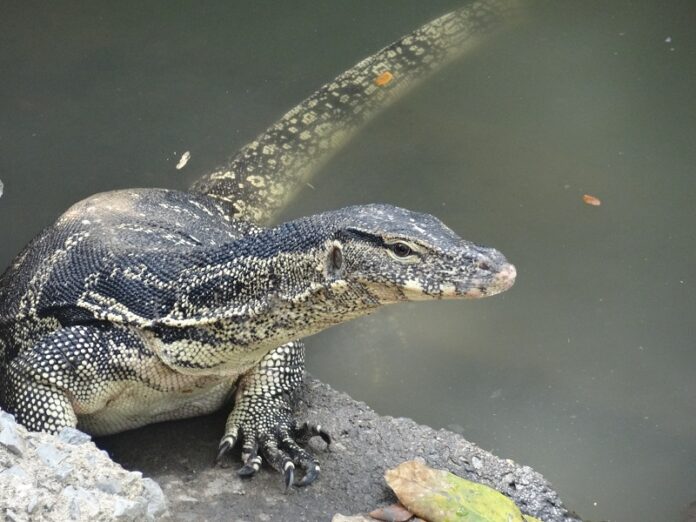
Hia Headcount: Public to Help Count Lumphini Park Lizards

Photo: Kriti Sachdeva / Wikimedia Commons

BANGKOK — To settle a dispute over whether Lumphini Park is overrun with monitor lizards, two agencies will recruit the public to conduct the first proper census of the lumbering reptiles.

Bangkok’s City Hall believes there are as many as 400 monitor lizards and had asked the National Parks Department to remove some of them to keep the population in check. But the department’s director of wildlife conservation isn’t buying that number and on Saturday said a census involving more people would yield a more accurate figure.

“The latest population figure for monitor lizards given to us by the [Bangkok Metropolitan Administration] was 400. They said their workers walked around counting them,” said Director Kanchana Nittaya. “We told them this method of counting could produce a highly inaccurate figure because the same lizard could be counted again by the time an official walked to another spot.”

She said national park workers’ have been fielded to reckon the number of reptiles, and came up with only 160.

Read: No More Big Lizards in Lumphini Park?

The two agencies eventually decided to capitalize on the situation. They decided that it’s best to make an event out of it to attract both Thai and foreign park users and tourists to count the lizards, which have become loved, or at least tolerated, by park-goers.

The date has yet to be set yet, but Kanchana believes it will prove there is no overpopulation problem. She added that even if there exist too many lizards lived there, simply removing some as City Hall wants wouldn’t solve the problem, as there is ample food in the park to fuel their repopulation.

Two years ago, the city embarked on a poorly received effort to remove the lizards, saying they were scaring visitors.

Kanchana suggested removing their eggs as a more effective way to control the population. She added that the monitor lizards draw many tourists who come to the park to see them in their habitat, while Thai visitors have little problem with the creatures, and it’s not uncommon to see joggers wait for lizards to cross pathways inside the park.

Advertisement

No Explanation For Anti-Corruption Group’s ‘Full Marks’ For Prayuth

A poster promoting the work of the Anti-Corruption Organization of Thailand.

BANGKOK — The head of a private anti-corruption organization has been silent on its decision to award full marks to junta leader Prayuth Chan-ocha in its annual assessment.

Asked to explain how its score was calculated to award the highest possible ranking to a regime that has been marred by corruption scandals, the chairman of the Anti-Corruption Organization of Thailand, or ACT, did not respond to multiple inquiries.

A staff member at the organization said full marks were only given for Prayuth’s “sincerity” in tackling the problem.

On Wednesday, at an ACT news conference marking the organization’s seventh anniversary, Pramon indirectly acknowledged the scandals that have plagued those around the junta leader, from his deputy to his own brother.

“I give Gen. Prayuth Chan-ocha, the prime minister, full marks. But I admit that there are still a number of people around him that have been questioned by the public,” he said.

A leading government transparency activist who himself has launched numerous anti-corruption actions said he was disappointed by the group’s decision to afford such an honor.

“Let me say it straight. This is unacceptable,” said Srisuwan Janya, president of Constitution Protection Association.

Srisuwan asked how Pramon could make that determination when in 2016, Thailand’s ranking on an international transparency index slid 25 places to 101 out of 168 countries.

Srisuwan added that although the ranking rose to 96 out of 180 nations in 2017, it was still lower than that of 2015 and from a wider pool.

Srisuwan noted that a scandal involving tens of millions of baht worth of luxury watches deputy junta leader Gen. Prawit Wongsuwan never declared among his assets has not been seriously probed by the government or ACT.

An ACT staff member said Thursday that Pramon had seen a reporter’s questions, including whether he considers staging a coup and monopolizing state funding through the junta-appointed National Legislative Assembly as a form of corruption or not.

He had not responded to them as of late Friday afternoon.

The female employee, who asked not to be named because she was not authorized to speak on the record, defended the announcement by saying Pramon, who was appointed by the junta leader to his National Reform Council following the coup, only gave full marks to Prayuth for his “sincerity” to tackle corruption.

“He must have heard something that made him feels that His Excellency Prayuth was sincere,” she said. “He may have had some experience from meeting [Prayuth].”

On social media, some people reacted strongly to the news.

Chamnan Chanruang, deputy leader of the Future Forward Party, wrote that ACT only succeeded in lowering its own score by bestowing such esteem on Prayuth.

Anti-junta activist Kritsuda Kunasean wrote from exile in Germany that “the only corruption that cannot be scrutinized is that of the military regime.”

While this debate played out, the junta-appointed National Legislative Assembly took three hours Thursday to approve the military government’s 3.3-trillion baht budget for 2019 without a single lawmaker opposing it.

The vote was 206 in support with two abstentions.

The budget saw the Defense Ministry getting the second largest slice of the pie at 117.5 billion baht, behind the Education Ministry’s budget of 297.3 billion baht.

The budget for the Interior Ministry came third at 43.9 billion baht.

No assembly member spoke against the proposed budget.

Advertisement

Thailand’s China Syndrome

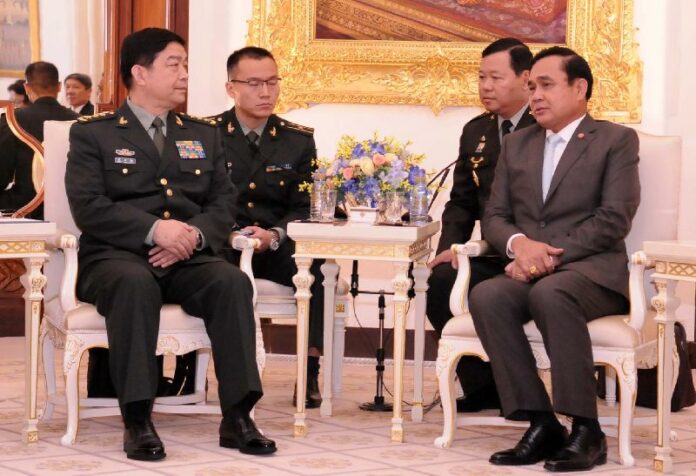
Gen. Chang Wanquan, Minister of the Defense of the People's Republic of China, meeting with Thai junta chairman and PM Prayuth Chan-ocha in Bangkok, Feb. 6 2015.

Re•tention: Pravit RojanaphrukIt is impossible to overlook the growing influence of China in Thailand.

Durian prices have surged in recent years due to soaring Chinese demand. Chinese buyers earlier this year overtook the Japanese in foreign condominium purchases in Bangkok. Its tourists account for the largest group of visitors, with Kasikorn Bank Economic Research Center predicting upward of 10.6 million will arrive this year, an increase of 6.3 percent to 8.4 percent. One need only lay eyes on the throngs of Chinese travelers visiting the Grand Palace and Temple of the Emerald Buddha for anecdotal evidence.

Signs at Zen Department Store, one of the largest mall retailers in downtown Bangkok, are written not in Thai but in English and Chinese.

Over the past two weeks alone, I’ve heard four scholars such as Chulalongkorn University’s Thitinan Pongsudhirak, Thammasat University’s Prajak Kongkirati and Larry Diamond of Stanford University, publicly warn how the rise of China bodes ill for human rights and democracy in Thailand and Southeast Asia.

Prajak said the Thai junta leaned on China after the May 2014 coup amid pressure from the United States, the European Union and Australia, which has enabled the junta to remain in power for 51 months now.

Are these so-called experts paranoid?

Well, China is a one-party communist state with rampant human rights abuses, especially of those opposed to the regime, so it’s hard, if not ludicrous to think about China caring for issues such as democracy and human rights. What’s more, democratic powerhouses such as Japan and South Korea failed to put any pressure on the Thai coup-makers as well. To them, it’s business as usual.

The difference is that China has become much more influential in Thailand compared to Japan or South Korea.

In the book “Thailand Shifting Ground between the US and a Rising China,” author Benjamin Zawacki recounts being told by security expert Panitan Wattanayagorn, who eventually became an advisor to junta leader No. 2, Gen. Prawit Wongsuwan, that China was already waiting to exploit the coup four years ago.

“The Chinese have been more sophisticated in approaching Thailand. It is beyond a charm offensive, it had achieved another level in a very progressive approach to the relationship in terms of politics. The Chinese have been very quick in seeing the opportunities that have opened up since the coup of 22 May 2014. They had been preparing for that opening up of opportunities,” Panitan was quoted as saying.

Besides being a reliable “friend” of dictators in Thailand and beyond, growing Chinese influence is cultivating an alternative to democracy in Thailand.

Zawacki described how Bangkok-based British scholar Chris Baker described unidentified Thai bankers expressing support for China’s “authoritarian capitalism.”

“One Thailand scholar recounted how, after the violence of 2010, he began hearing Thai bankers talk openly about China’s ‘authoritarian capitalism,’ before going on to bankroll [anti-government group PCAD or PDRC] before the coup: “They were prepared in a way they hadn’t been before to put their money behind the defeat of democracy because of the fear of the masses,” Zawacki wrote.

Democracy, human rights, press freedom and free speech are at risk if we ape the Chinese model of politics and administration. This is a real risk.

Democratically minded Thais will have to bear that in mind and do whatever they can to ensure that Thailand doesn’t adopt the Chinese political model.

Already, the junta has introduced further restrictions to online expression through the Computer Crime Act, which was amended to even be worse, and seeking to cordon off the Thai internet like China’s Great Firewall.

Two weeks ago on Aug. 18, Amnesty International Thailand was stopped from screening a movie on democratic struggle in Hong Kong entitled “Joshua: Teenager VS Superpower” in Bangkok. Special branch police said such screening may affect Sino-Thai relations. Police also cited 2008 Films Act which requires anyone wanting to publicly screen a movie to seek permission from the Ministry of Culture first. The law, with the requirement, was added after the other coup, the 2006 coup.

The risk of orbiting too close to China is that future Thai dictator wannabes and those like-minded pretenders in Southeast Asia will run amok knowing they can count on Chinese support to shrug off any political pressure from the West.

Cambodian strongman Hun Sen has already leaned so heavily on China that he feels secure dropping all democratic norms and ruling indefinitely, thanks to their special relationship. The price for Cambodia is becoming a Chinese client state where grievances will be nurtured and corruption left unchecked due to the decline of democracy and freedom of expression.

In a sign of wariness over China’s growing influence and unfair trade, Malaysia’s newly elected leader Mahathir Mohamad recently announced the cancellations of USD$22 billion worth of infrastructure projects backed by China as part of its expansive One Belt, One Road initiative.

That the announcement which was made during Mahathir’s official visit to China demonstrates the growing wariness about falling into a Chinese debt trap.

The deeper trap of adopting Chinese-style repression meanwhile, needs to be deliberated in Thailand and other ASEAN member states as well.

Advertisement

Thai Fans on Edge as Women Volleyballers Reach Asian Game Finals

BANGKOK — Thailand’s popular women’s volleyball team made history Friday by reaching the Asian Games finals for the first time in history.

The team beat former Asian Games champion South Korea on Friday evening two to one sets.

The Thai squad will face off 4:30pm on Saturday with China, which is favored to win.

This match will likely be the last for a few key players who are over 30 and will soon be aged out.

It's likely the last Asian Games for Thai women's volleyball striker Wilaiwan Apinyapong, 34.
It’s likely the last Asian Games for Thai women’s volleyball striker Wilaiwan Apinyapong, 34.

In recent years, women’s volleyball has grown to become immensely popular among the Thai audience.

The best Thailand’s female volleyball has previously attained was a bronze four years ago in Incheon, South Korea.

In other events, Thailand’s four-member women’s sepak takraw team outclassed Vietnam on Saturday morning, beating them in two straight games to win the fourth gold medal for Thailand’s pre-eminent sport.

Thailand competed in four sepak takraw categories and swept gold medals in all of them.

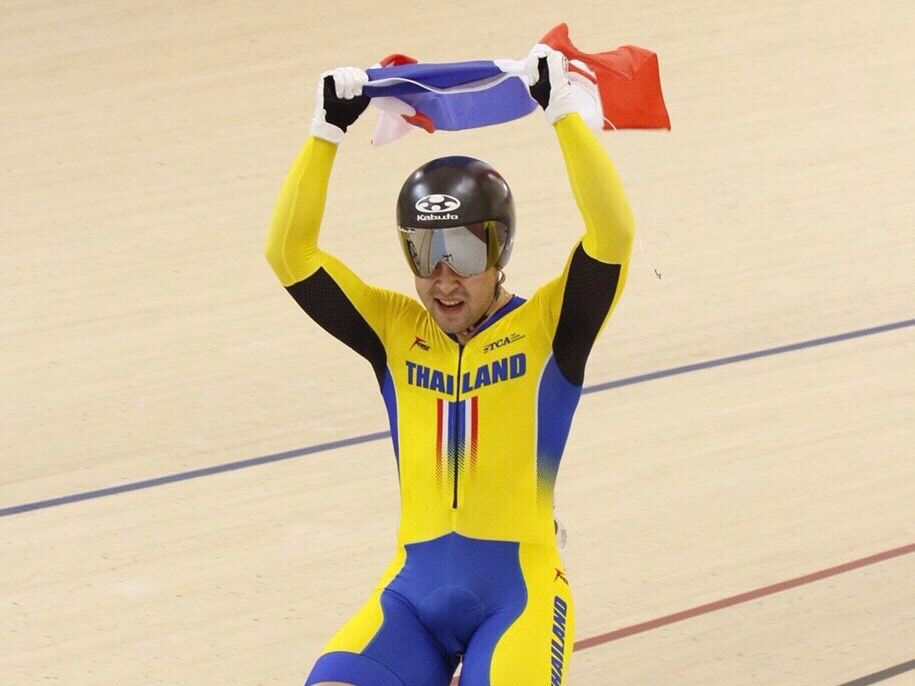
A surprise gold by Thailand was achieved in Jakarta when Thai-Australian cyclist Jai Angsuthasawit narrowly seized victory as the first Thai to win a cycling gold in the men’s cycling keirin, a high-speed event.

Jai clocked in just 0.003 seconds ahead of silver medal winner Yudai Nitta of Japan.

Thai-Australian cyclist Jai Angsuthasawit
Thailand's four-member women's Sepak Takraw team beat Vietnam Saturday to win the gold.
Thailand’s four-member women’s Sepak Takraw team beat Vietnam Saturday to win the gold.
Advertisement

South Asian, Southeast Asian Leaders Discuss Closer Ties

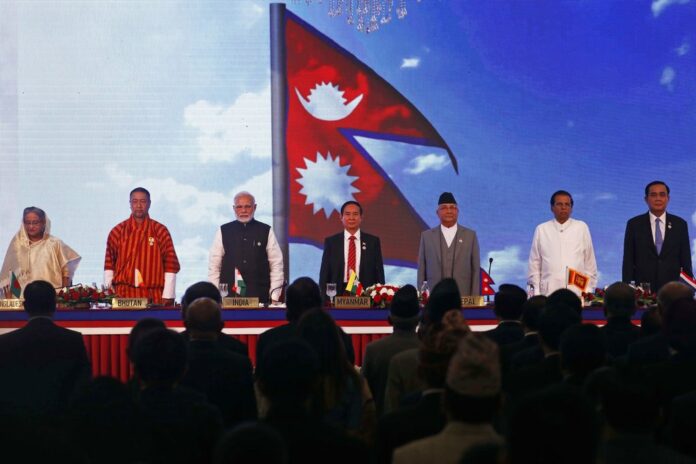
Standing left to right are Bangladesh Prime Minister Sheikh Hasina, Chief Justice and Chief Advisor of the interim government of Bhutan Dasho Tshering Wangchuk, Indian Prime Minister Narendra Modi, Myanmar's president Win Myint, Nepal's Prime Minister Khadga Prasad Sharma Oli, Sri Lankan President Maithripala Sirisena, Thailand's Prime Minister Prayuth Chan-o-cha on Thursday at the Bay of Bengal Initiative for Multi-Sectoral Technical and Economic Cooperation on summit in Kathmandu, Nepal. Photo: Navesh Chitrakar / Reuters via AP

KATHMANDU, Nepal — Leaders of seven South Asian and Southeast Asian nations including Thai Prime Minister Prayuth Chan-ocha are meeting in Nepal to discuss regional trade, economic cooperation, security and peace.

The two-day summit of the Bay of Bengal Initiative for Multi-Sectoral Technical and Economic Cooperation began Thursday in Kathmandu, Nepal’s capital. It groups Bangladesh, Bhutan, India, Nepal, Myanmar, Sri Lanka and Thailand.The leaders are to discuss greater economic cooperation and sign an agreement for regional electricity connectivity that will open up energy trade among their countries.

“Connectivity is a key enabler for robust regional cooperation. It is the very foundation, in which the edifice of economic integration can stand upright,” Nepalese Prime Minister Khadga Prasad Oli said in opening the summit.

He said member nations need to increase investments in regional transport networks.

“Better connectivity of roads, railways, airways, waterways will unlock our full potential. It can promote meaningful cooperation in trade and investment, energy, tourism and technology transfer,” he said.

The leaders are also expected to discuss crime, drug and human trafficking, and terrorism.

“Our region is not immune from dangers of terrorism, organized crimes, drugs trafficking, human trafficking, and money laundering, among others. We must remain united in defeating terrorism in all its forms and manifestations,” Oli said.

Bangladeshi Prime Minister Sheikh Hasina, Bhutanese interim head of government Lyonpo Tshering Wangchuk, Indian Prime Minister Narendra Modi, Myanmar President Win Myint, Sri Lankan President Maithripala Sirisena and Thai Prime Minister Prayuth Chan-ocha are in taking part in the summit.

Advertisement

German City’s Mayor Seeks to Reassure Foreign Students

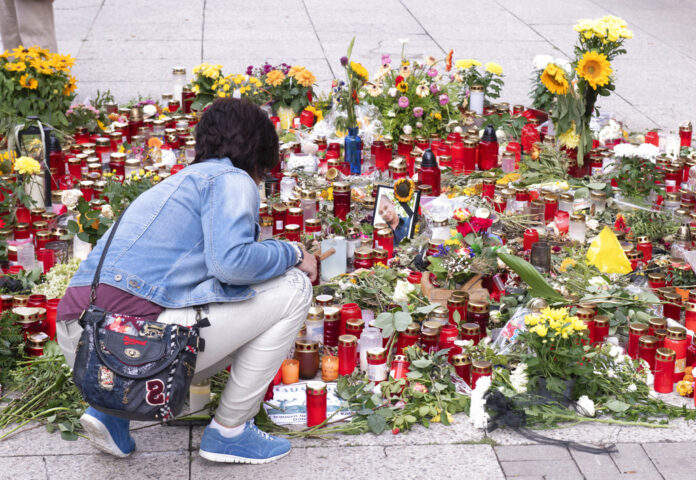
A woman kneels in front of candles and flowers Friday at the scene of an earlier altercation in Chemnitz, Germany. Photo: Jens Meyer / Associated Press

CHEMNITZ, Germany — Days after a street killing sparked violent anti-migrant protests, the mayor of Chemnitz sought Friday to reassure foreign visitors, students and investors that the eastern German city is safe, even as authorities prepared for further demonstrations at the weekend.

Images of neo-Nazis shouting “foreigners out” and performing the stiff-armed ‘Hitler salute’ during a protest Monday made headlines far beyond Germany, prompting concern among businesses and the city’s University of Technology, which has a large share of students from abroad.

“At the moment there’s a lot of uncertainty and fear on various sides,” Chemnitz’s mayor, Barbara Ludwig, told reporters on the city’s cobble-stone market square. “We’re going to make clear in the coming weeks and months that foreign students and foreign investors do indeed have their place in this city and will be safe here.”

Switzerland’s foreign ministry has already updated advice for its citizens traveling to Germany in the wake of the protests. It didn’t single out Chemnitz but said that “there may be demonstrations in big cities” and cautioned that “rioting is possible.”

The protests followed the fatal stabbing early Sunday morning of a 35-year-old German man, Daniel Hillig. Two men, a 22-year-old Iraqi and a 23-year-old Syrian, have been arrested on suspicion of manslaughter.

The killing and the unrest that followed have reignited the simmering debate over German Chancellor Angela Merkel’s decision three years ago to allow hundreds of thousands of refugees into the country, straining its resources and hospitality beyond what some Germans considered acceptable.

Anti-migrant sentiment has been particularly strong in Saxony, the state where Chemnitz is located. The nearby state capital of Dresden is home to the group Patriotic Europeans Against the Islamization of the West, or PEGIDA, and the far-right Alternative for Germany party received almost a quarter of the vote in Saxony last year.

The party, known by its acronym AfD, publicly sided with the anti-migrant protesters in Chemnitz and is organizing a demonstration of its own in the city on Saturday.

The strategy appears to be paying off. A poll published Friday by public broadcaster ZDF put the party’s rating nationwide at 17 percent, up from 13 percent in last year’s elections.

The same poll found that 65 percent of the party’s voters don’t believe far-right extremists are a threat to democracy. The telephone survey of 1,216 randomly selected respondents, carried out from Aug. 28-30, found that supporters of all other parties overwhelmingly consider far-right extremists a threat to democracy.

Officials in Saxony have requested help from federal police and are drawing together all available officers to police the weekend protest. The move has resulted in the rare cancellation of a 2nd league soccer match Saturday in Dresden, for lack of available police.

Such short-term effects could pale in comparison to the medium-term impact that the spike in anti-migrant sentiment could have for the region, according to experts.

Chip maker Globalfoundries told business daily Handelsblatt that Saxony’s reputation has made it difficult to attract skilled foreign workers to the state.

“It’s not easy to convince an engineer from abroad to move to Saxony and bring his family,” spokesman Jens Drews told the newspaper. “We need to explain to him that the Dresden region is safe, that his children can go alone to school and one won’t be marginalized for wearing a head scarf.”

On Friday, a 31-year-old German was convicted of attempted murder, using explosives and attempted arson for a 2016 attack on a Dresden mosque. Nino K., whose last name wasn’t given in line with privacy laws, was sentenced to nine years and eight months in prison.

During his trial, experts testified that it was only by luck that the imam’s family wasn’t injured in the attack.

Chemnitz itself, a city of some 250,000 people, desperately needs skilled foreign workers for its industry. The city’s renowned University of Technology, which has one of the highest rates of international students in Germany, issued a statement following the protest expressing dismay at the killing and the “subsequent unjustifiable xenophobic and racist attacks, excesses and riots.”

Frank Asbrock, a professor of social psychology there who researches the causes and effects of extremist ideologies, said neo-Nazis appeared to have used social media to tap into a broader feeling of unease and fear felt by Germans toward migrants, swelling numbers at the protest beyond what authorities had expected.

Asbrock said mainstream politicians would do well to present voters who feel they’re not being given a chance to express their concerns an opportunity to do so. “We mustn’t leave these people to the right-wing populist parties,” he said.

Rebal Alkholdy, who came to Germany from Syria as a teenager three years ago, said he felt hostility from some in Chemnitz and decided to stay at home during Monday’s protest.

“We were a little bit afraid that some people wanted to do us harm,” he said.

His father Eeemad Alkholdy, who runs a confectionary store in the city center, said he wasn’t scared of the far right.

“We escaped way more difficult situations in our country, during the war,” he said. “One should be cautious, especially because we are considered ‘new’ in the country, and we’re the foreigners. So, the foreigner should make sure that he is calm and respects the laws of their country.”

Story: Frank Jordans

Advertisement

At Franklin’s Funeral, a Call to Respect Black America

Louis Farrakhan, from left, Rev. Al Sharpton, Rev. Jesse Jackson and former President Bill Clinton attend the Friday funeral service for Aretha Franklin at Greater Grace Temple. Photo: Paul Sancya / Associated Press

DETROIT — As Aretha Franklin was remembered at her funeral Friday as a proud black woman who also used her magnificent voice to stand up for the black community she loved, several speakers used the moment to continue to demand respect for black America.

Amid the gospel, personal reflections and grief were calls to register and turnout to vote in November and condemnation of President Donald Trump, who, upon her death, referred to Franklin as “someone who worked for me” — a comment that rankled many African-Americans.

“No — she used to perform for you,” the Rev. Al Sharpton said to cheers and applause from the crowd. “She worked for us. Aretha never took orders from nobody but God.”

Franklin’s civil rights legacy was mentioned often during the eight-hour service, and was tied to her faith and roots in the black church. Many also mentioned her father, the Rev. C.L. Franklin, and his civil rights leadership, which influenced his daughter from a young age.

Late Friday, Franklin was laid to rest in a mausoleum at Woodlawn Cemetery, the final resting place of her father.

None of the politicians present — including former President Bill Clinton and former Attorney General Eric Holder — took the opportunity to turn the event partisan. Michigan Democratic House Rep. Brenda Lawrence took a moment to recognize Arizona Republican Sen. John McCain, whose funeral is Saturday.

But others seized on Trump’s comments and Franklin’s message of dignity to speak to the present social and political climate. In pointing out the long lines to pay tribute to Franklin this week, the Rev. Jesse Jackson lamented that the lines to vote often aren’t nearly as long.

“Aretha was on the battleground for 60 years,” Jackson told the audience. “We have long lines to celebrate death, and short lines for voting. Something is missing. If you leave here today and don’t register to vote, you’re dishonoring Aretha.”

Judge Greg Mathis, one of Franklin’s many friends who often talked politics with her, said that his last conversation with Franklin earlier this summer was about the ongoing water crisis in Flint, Michigan, where government negligence has left residents living with lead-tainted water since 2014.

“Her last words to me … were “‘Go back up there and sock it to ’em!,'” Mathis told the crowd before vowing that he would in her memory.

Some made a statement without saying a word. When she was shouted out from the stage, California Democrat Rep. Maxine Waters — who has called frequently for Trump’s impeachment and is a campaign rally punching bag for the president — acknowledged the crowd with the “Wakanda salute,” from the movie “Black Panther,” closing her fists and crossing her arms over her chest to applause.

Many in the audience, including President Clinton, stood and cheered.

“Everybody just point over there and tell her, ‘We got your back!'” said Bishop Charles H. Ellis III, pastor of Greater Grace Temple, which the audience shouted in Waters’ direction.

Georgetown University sociologist Michael Eric Dyson took several shots at Trump in his remarks, assigning the president several nicknames: “orange apparition,” ”lugubrious leech,” ”doppleganger of deceit and deceit,” ”lethal liar,” ”dimwitted dictator,” ”foolish facist.”

“She ain’t work for you,” Dyson shouted over applause. “She worked above you. She worked beyond you. Get your preposition right.”

Story: Errin Haines Whack

Advertisement

Hot News

LATEST NEWS

Bangkok
overcast clouds
27.5 ° C
28.3 °
25.9 °
81 %
2.3kmh
100 %
Wed
29 °
Thu
34 °
Fri
34 °
Sat
31 °
Sun
31 °