






























30 C
Bangkok
Saturday, June 27, 2026
Home Blog Page 2161

Study Shows Parasite From Vietnam May Be Killing US Veterans

Photo: Banchob Sripa / Wikimedia Commons

HERALD, West Virginia — A half a century after serving in Vietnam, hundreds of veterans have a new reason to believe they may be dying from a silent bullet  test results show some men may have been infected by a slow-killing parasite while fighting in the jungles of Southeast Asia.

The Department of Veterans Affairs this spring commissioned a small pilot study to look into the link between liver flukes ingested through raw or undercooked fish and a rare bile duct cancer. It can take decades for symptoms to appear. By then, patients are often in tremendous pain, with just a few months to live.

Of the 50 blood samples submitted, more than 20 percent came back positive or bordering positive for liver fluke antibodies, said Sung-Tae Hong, the tropical medicine specialist who carried out the tests at Seoul National University in South Korea.

“It was surprising,” he said, stressing the preliminary results could include false positives and that the research is ongoing.

Northport VA Medical Center spokesman Christopher Goodman confirmed the New York facility collected the samples and sent them to the lab. He would not comment on the findings, but said everyone who tested positive was notified.

Gerry Wiggins, who served in Vietnam from 1968 to 1969, has already lost friends to the disease. He was among those who got the call.

“I was in a state of shock,” he said. “I didn’t think it would be me.”

The 69-year-old, who lives in Port Jefferson Station, New York, didn’t have any symptoms when he agreed to take part in the study, but hoped his participation could help save lives. He immediately scheduled further tests, discovering he had two cysts on his bile duct, which had the potential to develop into the cancer, known as cholangiocarcinoma. They have since been removed and  for now  he’s doing well.

Though rarely found in Americans, the parasites infect an estimated 25 million people worldwide.

Endemic in the rivers of Vietnam, the worms can easily be wiped out with a handful of pills early on, but left untreated they can live for decades without making their hosts sick. Over time, swelling and inflammation of the bile duct can lead to cancer. Jaundice, itchy skin, weight loss and other symptoms appear only when the disease is in its final stages.

The VA study, along with a call by Senate Minority Leader Charles Schumer of New York for broader research into liver flukes and cancer-stricken veterans, began after The Associated Press raised the issue in a story last year. The reporting found that about 700 veterans with cholangiocarcinoma have been seen by the VA in the past 15 years. Less than half of them submitted claims for service-related benefits, mostly because they were not aware of a possible connection to Vietnam. The VA rejected 80 percent of the requests, but decisions often appeared to be haphazard or contradictory, depending on what desks they landed on, the AP found.

The numbers of claims submitted reached 60 in 2017, up from 41 last year. Nearly three out of four of those cases were also denied, even though the government posted a warning on its website this year saying veterans who ate raw or undercooked freshwater fish while in Vietnam might be at risk. It stopped short of urging them to get ultrasounds or other tests, saying there was currently no evidence the vets had higher infection rates than the general population.

“We are taking this seriously,” said Curt Cashour, a spokesman with the Department of Veterans Affairs. “But until further research, a recommendation cannot be made either way.”

Veteran Mike Baughman, 65, who was featured in the previous AP article, said his claim was granted early this year after being denied three times. He said the approval came right after his doctor wrote a letter saying his bile duct cancer was “more likely than not” caused by liver flukes from the uncooked fish he and his unit in Vietnam ate when they ran out of rations in the jungle. He now gets about USD $3,100 a month and says he’s relieved to know his wife will continue to receive benefits after he dies. But he remains angry that other veterans’ last days are consumed by fighting the same government they went to war for as young men.

“In the best of all worlds, if you came down with cholangiocarcinoma, just like Agent Orange, you automatically were in,” he said, referring to benefits granted to veterans exposed to the toxic defoliant sprayed in Vietnam. “You didn’t have to go fighting.”

Baughman, who is thin and weak, recently plucked out “Country Roads” on a bass during a jam session at his cabin in West Virginia. He wishes the VA would do more to raise awareness about liver flukes and to encourage Vietnam veterans to get an ultrasound that can detect inflammation.

“Personally, I got what I needed, but if you look at the bigger picture with all these other veterans, they don’t know what necessarily to do,” he said. “None of them have even heard of it before. A lot of them give me that blank stare like, ‘You’ve got what?'”

Story: Margie Mason, Robin McDowell

Advertisement

12 Arrested in Thai Footie League Match-Fixing Investigation

Football Association of Thailand President Somyot Poompanmuang gives a wai after a press conference in November in Bangkok. Photo: Sakchai Lalit / Associated Press

BANGKOK — Football Association of Thailand president Somyot Poompanmuang says five players and two match officials from the top-flight national league are among 12 people arrested for alleged match-fixing.

Somyot held a news conference Tuesday with national police chief Chakthip Chaijinda to announce an investigation was underway into the results of a match in July and three matches in September.

Police reported that four players from the Navy club and one from Nakhon Ratchasima were allegedly paid up to 200,000 Thai baht (USD $6,100) to manipulate results.

The FAT and Royal Thai Police used information from data services company Sportradar as part of the investigation after reports of an unusual number of goals being scored in the late stages of the games.

“Match-fixing has been committed for a long time,” Somyot said during the news conference at the Royal Thai Police headquarters. “It’s time we eradicate this wrongdoing which is like a bad diseased of our body that needs to be cured.”

Chakthip said 12 people had been released on bail. Court details were not immediately available.

“I have to give big credit to the Royal Thai Police for their work or otherwise we will see the fall of Thai football if match-fixing is not tackled,” Somyot said.

Chakthip said the alleged fixing was coordinated through a network comprising players, two referees, a club official and domestic and international investors.

He said the match and club officials can face up to 10 years in prison and fines if found guilty of match-fixing, and players could face up to five years in jail and fines.

Advertisement

12 Arrested in Thai Football Rigging Inquiry

Somyot Poompunmuang, in a polo shirt, center left, is congratulated by an official from the Asian Football Confederation, in Bangkok, Feb. 11, 2016

BANGKOK — Football Association of Thailand president Somyot Poompanmuang says five players and two match officials from the top-flight national league are among 12 people arrested for alleged match-fixing.

Somyot held a news conference Tuesday with national police chief Chakthip Chaijinda to announce an investigation was underway into the results of a match in July and three matches in September.

Police reported that four players from the Navy club and one from Nakhon Ratchasima were allegedly paid up to 200,000 Thai baht ($6,100) to manipulate results.

The FAT and Royal Thai Police used information from data services company Sportradar as part of the investigation after reports of an unusual number of goals being scored in the late stages of the games.

“Match-fixing has been committed for a long time,” Somyot said during the news conference at the Royal Thai Police headquarters. “It’s time we eradicate this wrongdoing which is like a bad diseased of our body that needs to be cured.”

Chakthip said 12 people were in custody. Court details were not immediately available.

Somyat said those involved had confessed to the match-fixing.

“I have to give big credit to the Royal Thai Police for their work or otherwise we will see the fall of Thai football if match-fixing is not tackled,” Somyot said.

Chakthip said the alleged fixing was coordinated through a network comprising players, two referees, a club official and domestic and international investors.

He said the match and club officials can face up to 10 years in prison and fines if found guilty of match-fixing, and players could face up to five years in jail and fines.

Advertisement

Prosecutors Resurrect Graft Cases Against Thaksin

A screencap of Thaksin Shinawatra taken from his Facebook video in July 2016.

BANGKOK — Public prosecutors said Tuesday they would pursue two corruption cases against former prime minister Thaksin Shinawatra despite the fact that he’s outside the country.

Fresh trials against the deposed former premier, who was convicted in absentia nine years ago, were made possible by a new law passed in July by the junta’s rubber-stamp parliament which cleared the way for prosecuting him anew.

A spokesman for the attorney general said it was not meant to target the 67-year-old tycoon, who remained the de facto leader of the government toppled by the current junta three years ago.

“This is in accordance with the law. It is the duty of the Office of the Attorney General,” spokesman Wanchart Santikunchorn said today at a news conference. “There was no discrimination.”

Thaksin is accused of rigging regulations to favor his telecommunications firm while he led the government in 2003. He also stands accused of ordering a public-owned bank to loan 11.5 billion baht to construction companies headed by his aides a year earlier. For both allegations, Thaksin was charged with corruption.

But prosecuting the former leader proved impossible as Thaksin fled the country in 2008, shortly before he was convicted in absentia of a separate graft charge. His 2002 and 2003 cases have been declared “suspended” ever since.

That changed when the interim parliament voted unanimously to approve a new bill that would allow the court’s political prosecution division to try fugitive defendants without needing their presence. Trials can be convened after defendants have eluded capture for three months.

Prosecutor spokesman Wanchart said Thaksin could appoint lawyers to argue the case on his behalf.

Thaksin and his supporters maintain the corruption charges pressed against him are politically motivated.

Thaksin’s sister, Yingluck Shinawatra, is also on the run from the court on graft charges. Yingluck, who led the pro-Thaksin government until the May 2014 coup, fled the country in August, several days before the court was due to deliver a verdict.

Yingluck was later convicted in absentia of negligence leading to billions of baht in damages under her key rice program. She has not spoken about the case since.

Advertisement

Need a SIM Card? Get Ready to Be Fingerprinted

An AIS telecomm store branch. Photo: Siwakorn P. / Foursquare

BANGKOK — Those wanting to buy a SIM card from the major telecom shops without having fingerprints taken have until Dec. 15 to do so.

Starting mid-December, those registering new numbers at shops owned by AIS, DTAC, True, TOT and CAT Telecom must provide biometric information – fingerprints and a facial scan – in order to walk out with a new card.

Top telecom regulator Takorn Tantasith said Tuesday that the new deadline was approved by the National Broadcasting and Telecommunications Commission, or NBTC, at the request of the the major operators, who said they needed more time to train staff and equip outlets.

Holders of existing SIM cards and numbers need not worry: They will not be required to supply biometrics.

Foreigners and tourists will be exempted from collecting biometric data for the time being, said Prawit Leesatapornwongsa, commissioner of the NBTC by phone Tuesday.

“The problem is with the equipment. Machines to scan e-passports are much more expensive than those to scan ID cards, which are cheaper. Even 7-Eleven has them,” Prawit said.

E-passport-scanning machines may be implemented in the future, Prawit said, but only at spots with a key numbers of foreigners.

The system does not collect information, only scans ID card’s biometric information to see if they match the fingerprint and face in front of them.

Beginning in February, biometric info will be required to register all types of SIM cards, both pre-and post-paid, through all channels, including 7-Eleven stores.

This “two-snap biometric method” would help protect consumers against fraud, according to Korkit Danchaiyawitchit, NBTC deputy secretary-general.

While fraud is a concern as more personal finance becomes electronic, the technology will add a new layer of tracking for the state security apparatus.

Biometric requirements for SIM cards became mandatory in May in the Deep South, mobile phones are routinely employed to detonate bombs left by insurgents operating in the region.

There, people buying pre-paid SIM cards must match the biometric data stored on their national ID cards, a practice that will expand to the stores Dec. 15 and all channels in February.

Related stories:

Fingerprints for Mobile Users in Places Plagued by Cellphone Bombs

Need a New Number? Prepare to be Fingerprinted Starting in February


Advertisement

Havana Social Turns 2 on Throwback Thursday

Photo: Havana Social / Facebook

BANGKOK — Thursday is the second anniversary of Bangkok’s secret social revolution.

Inconspicuous salsa hangout Havana Social will mark two years since it brought shades of Cuba to a dark sub-soi at the heart of Bangkok’s city center.

Having established itself as a beacon of Latin-style nightlife, the three-story bar will sway to the sound of fusion ensemble Entourage, who is flying in from London for the occasion. Attendees will be treated to a three-hour open bar starting at 7pm and complimentary empanadas and Cubano sandwiches.

Havana Social turns two! Starts at 7pm on Thursday. Hidden in a dead end under a telefono sign at the end of Soi Sukhumvit 11, it is reachable via taxi ride or 10-minute walk from BTS Nana. Grab a Panama hat on your way in and join the party.

Advertisement

Organs Missing From Military Academy Cadet’s Body

Image: Meay P Tanyakan / Facebook

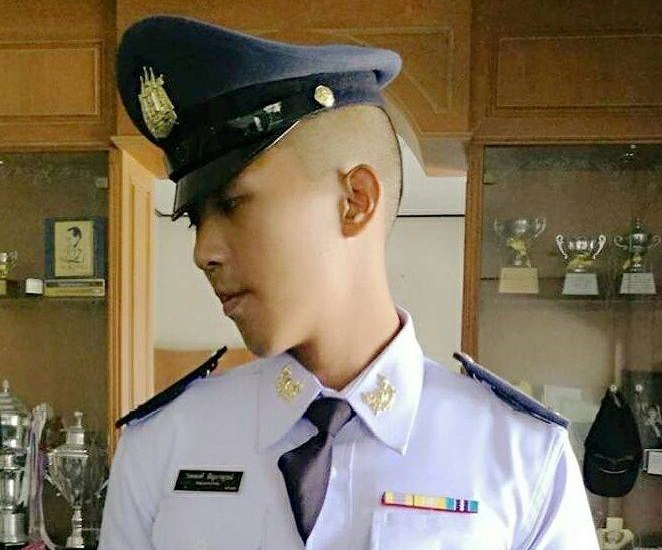
BANGKOK — The family of Pakapong Tanyakan was told last month that the 19-year-old military academy cadet had died abruptly. They were told his death was caused by “sudden heart failure,” but a detailed autopsy report never came.

Suspicious of the delay, his family secreted his body away on the day it was to be cremated and took it to a private hospital. That’s when they were told that many organs including Pakapong’s brain, heart, stomach and bladder were missing.

“I was curious why the brain of my brother was so mushy. What did they do to it?” Supicha Tanyakan said at a Tuesday news conference. “No. It turns out, when they opened up his skull, there was only tissue paper to soak up his blood.”

Pakapong’s family is now demanding to know the truth of what happened to him and his organs. Military officials today declined to comment on Pakapong’s death, the latest in a string of suspicious deaths to take place inside the secretive realm of military training and conscription.

“I haven’t received a report about this yet,” defense minister Prawit Wongsuwan told reporters, looking visibly surprised at the news.

Defense spokesman Kongcheep Tantravanich referred questions to the director of the Armed Forces Academies Preparatory School in Nakhon Nayok province, where Pakapong was enrolled. Someone answering phone said the academy’s director, Maj. Gen. Kanokpong Channual, was driving to Bangkok and unavailable for comment.

Supicha said no one from the military has contacted her to explain what happened.

She added that Pakapong’s body is now undergoing an autopsy at the national forensic science institute, and that she’s waiting for the results before taking any action.

“We are not making any accusations about what caused his death yet,” Supicha said. “We are not forcing the forensic doctors to hurry up at all, because we want precise and accurate results.”

However, the inquiry is being hampered by the fact that his organs are missing.

“There’s a delay because they have not returned the organs of my brother yet,” Supicha said.

Pakapong died on Oct. 17, just two days after he returned to the academy from leave. An army-organized autopsy ruled he died of sudden heart failure without further explanation.

On the day Pakapong was to be cremated, his classmates performed a fancy drill in his honor, and academy director Kanokpong said an investigation was underway to find out whether the cadet died of foul play, promising to notify the family when the results were available.

“We are not delaying our work. It’s proceeding,” Maj. Gen. Kanokpong said Oct. 24.

But the cremation never happened. While the undertaker pretended to set the ritual in progress, Pakapong’s family took his body in secret to a private hospital for an autopsy where they made the gruesome discovery.

On Monday, Supicha said doctors also found that Pakapong’s ribs were broken in some places, possibly due to blunt trauma.

In a TV interview aired Monday night, his family displayed a diary kept by Pakapong which mentioned being punched in the belly and disciplined in late May.

Academies such as the Armed Forces Academies Preparatory School are considered elite colleges for cadets entering military careers on officer tracks. Admission to the school, whose alumni count many heads of government, is done through rigorous exams that require months, if not years, of preparation.

“I am very proud to pass the exam into armed forces school, both in academic and physical rounds. For me, I prove what I committed to do for three years,” Pakapong wrote in another entry. “I had to fight through insults from other people and myself. I insulted myself that I’m ‘a pig in the real field, a lion in the practice field,’ because when I practice, I do well, but when I have to do it for real, I often fail.”

The armed forces have a long history of physically abusing recruits and cadets, with occasional deaths resulting. These deaths are rarely explained, and families who seek the truth have been met with silence from the authorities or even prosecution.

Related stories:

Army Compensates Family of Thai Soldier Killed By Drill Sergeants

Army Plays Down Risks After Another Draftee Dies

Shackled Soldier Told to Respect Chain of Command

Advertisement

Hugo to Headline Massive Bangkok Music Fest

BANGKOK — One-hundred acts on seven stages will rock a 12 hours in Bangkok’s Lat Phrao district.

The Kodindy Festival returns for its 13th edition from noon to midnight with a huge lineup of bands and artists.

Leading the roster of 99 other acts is Hugo, so expect his signature cover of “99 Problems.” More highlights include Thai rock veterans Kluaythai, metal-punkers BrandNew Sunset, hardcore metal group Annalynn and underground deathcore Tragedy of Murder. T-shirts, CDs, caps, music instruments and other swag will be available at more than 300 stalls to pop up at the venue.

The festival will be held from noon through midnight on Dec. 16 at The Walk Kaset-Nawamin, a community mall on Prasert-Manukitch Road. Tickets are 350 baht and can be purchased online or via Line account @Kodindy. Fifty baht of every sold ticket will go to rocker Artiwara “Toon” Kongmalai’s cross-country charity run.

The event was originally slated for the Royal Turf Club race track but was changed to the mall.

Advertisement

Open-Air Cinema to Screen Climate Change Doc Next Week

Photo: United Nations Information Centres / Flickr

BANGKOK — As climate change threatens the world and Bangkok’s very existence, a downtown open-air cinema will host a documentary and discussion to raise awareness about its dangers to the environment.

“Before the Flood,” a 2016 documentary looking at the effects and possible solutions to climate change, will show later this month on the rooftop of a trendy Thonglor boutique followed by an open discussion. The event seeks to inform people about challenges facing the environment and ways to reduce their carbon footprint.

Featuring actor and environmentalist Leonardo DiCaprio, the award-winning documentary follows the Hollywood actor and co-director Fisher Stevens as they meet scientists and personalities to discuss the problem.

The Hive Screening: Before The Flood runs 7pm to 10pm on Nov. 30 at The Hive Bangkok in Soi Thonglor 49. It’s reachable via taxi from BTS Thong Lo. Tickets are 150 baht (100 baht for members) and can be purchased online. They include a snack and a drink.

Advertisement

China Says Myanmar, Bangladesh Back Its Rohingya Proposal

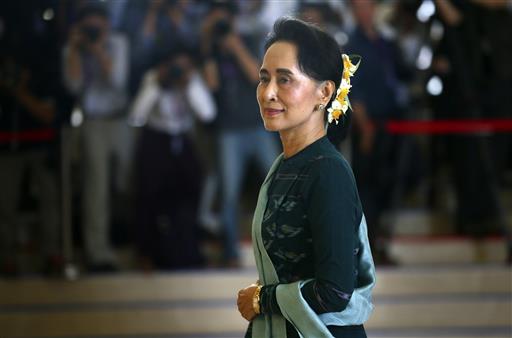
In this March 15, 2016 file photo, National League for Democracy party leader Aung San Suu Kyi arrives in Myanmar's parliament in Naypyitaw, Myanmar. Photo: Gemunu Amarasinghe / Associated Press

BEIJING — China’s foreign ministry on Monday said Myanmar and Bangladesh have endorsed its call for a negotiated resolution of the Rohingya refugee crisis.

Foreign ministry spokesman Lu Kang told reporters that a three-stage solution proposed by China has been accepted by the neighboring countries. The plan, which begins with a cessation of hostilities leading to talks, was proposed by Chinese Foreign Minister Wang Yi during a visit to Myanmar. It remains unclear what mediating role China might play.

“We hope that the relevant proposals can not only be useful in resolving the Rohingya issue at present, but can also help solve this problem at its root,” Lu said.

Myanmar has been widely criticized for a military crackdown that has driven more than 620,000 Rohingya Muslims to flee Rakhine state into neighboring Bangladesh. The United Nations has said the crackdown appears to be a campaign of “ethnic cleansing.”

China has longstanding relations with Myanmar’s military and burgeoning ties with Bangladesh.

Advertisement

Hot News

LATEST NEWS

Bangkok
overcast clouds
30 ° C
30 °
30 °
74 %
4.4kmh
100 %
Sat
29 °
Sun
36 °
Mon
35 °
Tue
33 °
Wed
32 °