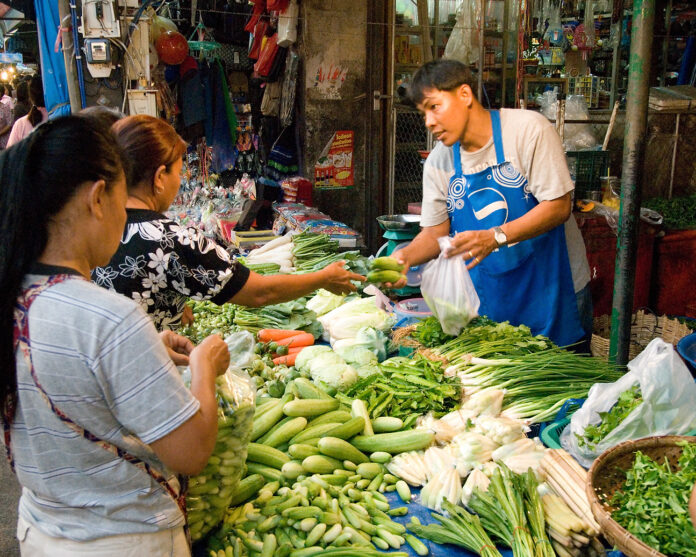
A vegetable market in Trat. Photo: Surreal Name Given / Flickr
MAHA SARAKHAM — Want kale for your jae fix? It’s gonna cost 40 baht extra per kilogram.
As the Vegetarian Festival gets underway Friday, vendors say the surge in demand for vegetables coupled with the year’s severe flooding adds up to a sharp rise in prices at the market.
“This year, vegetables have become more expensive since the beginning of October and shot up for the Vegetarian Festival,” said Kasemsook Rattanawongsa, a vegetable vendor in the northeastern province of Maha Sarakham. “Farmers have been impacted by flooding, especially those along the Chi River.”
Fields have drowned and crops lost due to flooding driven by tropical storms nationwide during the monsoon months, driving up prices for this year’s festival, called tesagarn kin jae.
Sajor-caju mushrooms went from 60 baht to 80 baht per kilogram, Chinese celery increased 30 baht to 150 baht per kilogram, and a kilo of Chinese cabbage increased 25 percent to 50 baht. The price of kale was up by a third.
Down in the south, Nadthaporn Kanchanalit – whose family has run a jae eatery for 25 years on Ruamjit Road in the Sadao district of Songkhla – said they’ve had to raise prices by a quarter to 40 baht because of higher costs.
More vegan than vegetarian, the festival runs today through Oct. 29. The nine-day Taoist festival is celebrated on the ninth lunar month in the Chinese calendar by ethnic Chinese and non-Chinese alike in Southeast Asia, where participants abstain from eating animal products as well as some “emotional” vegetables such as onion and garlic. Look for the yellow-and-red jae flags festooning carts and products with products safe for vegan consumption.
Channel 3’s morning news show broadcasts in full color Friday morning.
BANGKOK — A week before the cremation of King Bhumibol, the national broadcasting regulator told television stations Thursday to stop stripping the color from their programming.
The urgent order to restore full color was passed on to all channels yesterday evening with instructions it go into effect immediately after royal news programming. The previous order to desaturate color by 40 percent this month, meant to pay homage ahead of and during the royal funeral, went into effect on Oct. 1.
The National Broadcasting and Telecommunications Commission said the change of heart came because the color tones were inconsistent across the different channels.
Other regulations which remain in effect include airing programs about His Majesty the Late King, canceling entertainment shows and displaying the channel logos in the corner of the screen in black and white.
In this Oct. 15, 2017, historic Holden cars parade through the streets of Adelaide, Australia. Photo: David Mariuz / Associated Press
CANBERRA, Australia — The last mass-produced car designed and built in Australia rolled off General Motors Co.’s production line in the industrial city of Adelaide on Friday as the nation reluctantly bid farewell to its auto manufacturing industry.
GM Holden Ltd., an Australian subsidiary of the of a U.S. automotive giant, built its last car almost 70 years after it created Australia’s first, the FX Holden, in 1948.
Since then, an array of carmakers including Ford, Toyota, Nissan, Mitsubishi, Chrysler and Leyland have built and closed manufacturing plants in Australia.
After the last gleaming red Holden VF Commodore, a six-cylinder rear-wheel drive sedan, left the plant in the Adelaide suburb of Elizabeth that had grown over decades to provide its workforce, 955 factory workers will clock off the last time
“It’s pretty tragic really that we’ve let go probably one of the best cars around the world,” an auto painter who identified himself as Kane told reporters.
The 36 year-old was worked at Holden for 17 years and starts a new job with an air conditioner manufacturer on Monday. But he knows many other former Holden employees won’t find jobs so quickly.
Thousands of jobs in businesses that have supplied components and accessories to Australian auto manufacturers are also at risk.
“It’s not the easiest thing. Life will go on,” Kane said.
Dozens of Holden enthusiasts gathered outside the factory, bringing with them generations of Holdens dating back to favored FJ models that were built between 1953 and 1956.
South Australia state Premier Jay Weatherill said car manufacturing was seminal to the state’s industrial know-how.
“It has provided the backbone for our manufacturing capability in this state,” Weatherill told reporters. “It’s given us the … the capacity to imagine ourselves as an advanced manufacturing state.”
Holden is an iconic Australian brand and has been a source of national pride for generations.
The V8 Holden Commodore has sold in the United States since 2013 as the Chevrolet SS.
The brand will survive although Holdens will all now be imported from GM plants around the globe.
Holden retains design and engineering teams, a global design studio, a local testing ground, 1,000 employees and a 200-strong national dealer network.
The brand that became known as “Australia’s own car,” accounted for more than half the new cars registered in Australia by 1958.
The reasons behind the demise of Australian auto manufacturing are numerous.
The first Holden cars were built in an era of high Australian tariffs and preferential trade with former colonial master Britain, which encouraged global carmakers to set up local factories to increase market share.
Australian import tariffs have since tumbled through bilateral free trade deals with car manufacturing countries like the United States, Japan, China, South Korea, Thailand and Malaysia.
The Holden workers’ union blames a lack of government support through subsidies for GM’s decision to end manufacturing.
There had been debate about whether the 7 billion Australian dollars (USD $5.5 billion) that the government spent on the car industry in subsidies since 2001 was worth the jobs that it created.
Prime Minister Malcolm Turnbull said the closure was due to a “perfect storm” of factors.
The factors included the value of the Australian dollar which due to a mining boom was for the first time stronger than the greenback in 2013 when the last three carmakers – GM, Ford and Toyota – announced that they would close.
Other factors were high production costs, a small domestic market in an Australian population of 24 million and the most competitive and fragmented auto market in the world, with more than 60 car brands on sale.
“You can’t get away from the emotional response to the closure,” Turnbull told Melbourne Radio 3AW on Friday.
The opposition Labor Party accused “rightwing economic rationalists” within the government of “goading General Motors to leave Australia” but refusing to guarantee future subsidies.
“We’re not just losing a car, we’re not just losing an industrial capability. We’re losing an icon and that is a tragedy,” Labor lawmaker Nick Champion, who represents the Holden factory region, told reporters on Thursday.
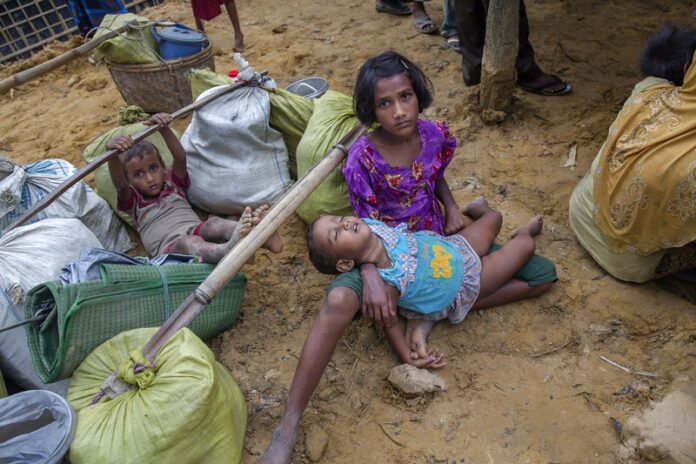
A Rohingya Muslim girl Shafiqa Begum, who spent four days in the open after crossing over from Myanmar into Bangladesh, holds her sister Sameera, as her brother Sadiq plays with their belongings Thursday at Kutupalong refugee camp, Bangladesh. Photo: Dar Yasin / Associated Press
GENEVA — UNICEF says the children who make up most of the nearly 600,000 Rohingya Muslims who have fled violence in Myanmar are seeing a “hell on earth” in overcrowded, muddy and squalid refugee camps in neighboring Bangladesh.
The U.N. children’s agency has issued a report that documents the plight of children who account for 58 percent of the refugees who have poured into Cox’s Bazar, Bangladesh, over the last eight weeks. Report author Simon Ingram says about one in five children in the area are “acutely malnourished.”
The report comes ahead of a donor conference Monday in Geneva to drum up international funding for the Rohingya.
“Many Rohingya refugee children in Bangladesh have witnessed atrocities in Myanmar no child should ever see, and all have suffered tremendous loss,” UNICEF Executive Director Anthony Lake said in a statement.
The refugees need clean water, food, sanitation, shelter and vaccines to help head off a possible outbreak of cholera – a potentially deadly water-borne disease.
Ingram also warned of threats posed by human traffickers and others who might exploit children in the refugee areas.
“These children just feel so abandoned, so completely remote, and without a means of finding support or help. In a sense, it’s no surprise that they must truly see this place as a hell on earth,” Ingram told a news conference in Geneva.
The report features harrowing color drawings by some children being cared for by UNICEF and other aid groups who are scrambling to improve living conditions in Cox’s Bazar. Some of the images show helicopter gunships and green-clad men firing on a village or on people, some of whom are spewing blood.
The influx of Rohingya refugees from Myanmar began on Aug. 25 following militant attacks on border guards. Refugees have fled burning villages and provided accounts – like the children’s drawings – of security forces gunning down civilians.
The U.N. and humanitarian agencies seek USD $434 million for the Rohingya refugees – about one-sixth of which would go to UNICEF efforts to help children.
A vendor shows his wares on April 22, 2017, at Thailand 420, an event promoting promoting cultivation and alternative uses of cannabis.
BANGKOK — Despite some changes at the top, a quiet push to relax the country’s harsh drug laws continues.
A year after the top justice official made a splash by declaring Thailand had lost the so-called War on Drugs and calling for more realistic narcotics policies, efforts to amend the laws to allow limited uses of banned substances are moving forward, albeit out of the public eye.
While Justice Minister Paiboon Khumchaya is no longer in power, his initiative, which surprised many and made waves in the media, was not set aside.
Just two months ago, the law was changed to allow farmers to grow hemp, and another edict allowing full legalization – cultivation, use but not sale – of kratom, a banned herbal stimulant, is expected next year. Legal amendments for marijuana and amphetamines to be used for medical treatment are being debated.
Mana Siripithayawat, a director at the Office of Narcotics Control Board, said the changes are consistent with UN consensus to move away from harsh suppression and punitive tactics to more pragmatic policies to manage use. Mana said the authorities have no wish to repeat the bloody drug war that left 2,500 dead two decades ago.
“You can put me on record saying this: We have tried the Philippines way, and it failed,” said Mana, who’s in charge of the agency’s laws department, referring to the policies put in place in that country since the election of Rodrigo Duterte that have seen an estimated 13,000 slain in extra-judicial killings.
In 2003, former premier Thaksin Shinawatra declared open season on suspected drug offenders and roughly 2,800 killings ensued. About half of those killed were later determined to have been uninvolved in the drug trade.
“It only had an effect for a short time, but it wasn’t a sustainable solution. The UN is looking for a sustainable solution,” Mana said.
Rattapon Sanrak, founder of a group that advocates for legalization of cannabis, said decriminalizing drugs for medical purposes is a move in the right direction but warned legal complication can still arise.
“The people who issue the laws still don’t fully understand it … how to regulate, what to allow and what not to allow. I think they are still confused, ”said Rattapon, whose group Highland disseminates knowledge about proper cultivation techniques. “In the end there is no clear regulation, and there would be problems.”
He cited examples in the United States where certain drugs decriminalization efforts conflict with other existing regulations.
Thailand is notorious for its draconian drug laws, in which possession of a tiny amount of certain drugs is automatically ruled to be an attempt to sell and punished with lengthy jail term. A majority of inmates in overcrowded prisons are for drug offense.
So when Paiboon, an army general and junta member, was appointed justice minister in 2014, every expectation was that he would keep to three decades of tough-on-drugs rhetoric. But Paiboon, then 61, surprised many after he returned from an April 2016 UN conference on narcotics preaching progressive drug policies.
“Thirty years ago, we talked about a War on Drugs. We stated clearly that there must not be any narcotics left on earth,” Gen. Paiboon said in June 2016. “But when I joined this meeting in April, it’s not like that anymore. To put it simply: It’s about how do we live happily [as a society] with drugs, and how can everyone understand it, and benefit from it?”
Paiboon went on to urge anti-narcotics agencies to consider easing restrictions.
“The United States also once declared a war on drugs, and in the end, they surrendered, and fixed their regulations and laws,” the general had said. “So, let me say that Thailand should stop using only suppression … Solving the narcotics problem comes in three stages: suppression, prevention and rehabilitation.”
Paiboon is no longer the head of the justice ministry – he was appointed adviser to King Vajiralongkorn in December. But his vision lives on. Not only one but four legal amendments concerning banned substances are underway: hemp, kratom, marijuana and amphetamines.
Amphetamines are currently scheduled as Category 1 narcotics, while hemp, kratom and cannabis are Category 5. Substances in either category cannot be licensed for medical use or even researched.
The first amendment, passed in August and set to come into effect Jan. 1, allows farmers to obtain licenses to grow hemp for sale to the textile and food industries. At first, private farms will have to register through state agencies, Mana said. In this case, the tobacco agency and royal farming project will handle the task.
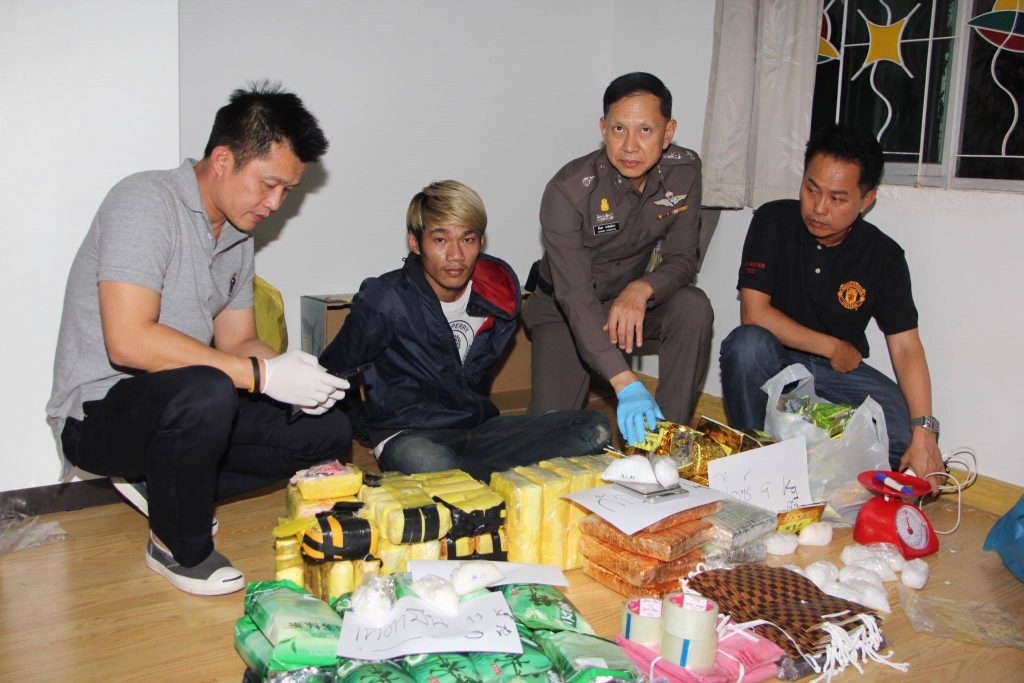
Police arrest a drug suspect in Bangkok on Feb. 14, 2017
There’s also ongoing amendment of the 1979 Narcotics Act concerning kratom, a type of plant known for its stimulant effect. It is illegal to use or own kratom, and police often raid homes to look for the plants, which are widely grown in southern Thailand.
But Mana said the current laws don’t take into the account the reality that kratom’s properties are more akin to traditional herbs than hard drugs. Many farmers and manual laborers have chewed it for decades if not centuries, he said.
“We see kratom as a part of traditional ways of life,” Mana said.
In a legal amendment, which is currently under review by state law scholars, residents will be able to grow kratom for personal use, given they register the plants with local law enforcement and refrain from selling them. Kratom also cannot be mixed with other substances to increase its potency.
The same amendment will include marijuana. The revised bill, once enacted, will allow the substance to be used for medical research. Current provisions bar any use, including for research, which Mana said is hindering Thai medical advances.
“There is research that some substances extracted from marijuana can be used in treating cancer. Right now we can extract them but we cannot research them any further,” Mana said. “We have volunteers who are willing to test it on themselves, but the law doesn’t allow them to do it. So we have to improve the law.”
Near Miss
But don’t cue the Bob Marley and bust out the glow-in-the-dark bongs just yet. Although drug officials initially floated decriminalizing marijuana for recreational use, they dropped the idea from the final draft.
“There is currently no plan to make marijuana legal for recreational use,” the official said.
Upon hearing the news, Rattapon from Highland said he wasn’t surprised. The more important issue, he said, are the excessive jail terms given to those caught using cannabis for personal leisure.
“I understand that perhaps it’s the not yet a time for legal recreational use, but we need to talk about reducing punishment. Do people who use marijuana for recreation deserve such a high sentence?” Rattapon said.
He added that marijuana offense should be punished by fines, not jail time.
The provisions in the 1979 drug law concerning kratom and marijuana are being reviewed by the Council of State, an agency empowered to settle disputes over interpretation of the law. Mana expects the draft will be debated and approved by the interim parliament early next year. By his “personal estimate,” the new amendments will be effective by mid-2018.
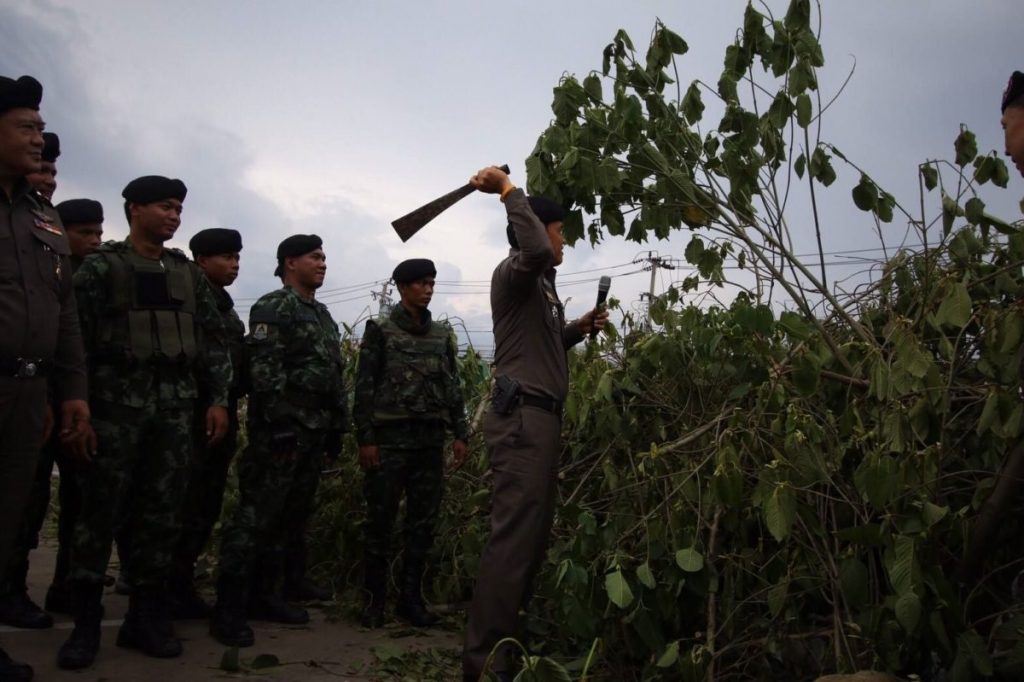
Police and military officers destroy kratom plants in Bangkok on June 24, 2016
Amphetamine are the last slated for recategorization. While widely known as the base substance for speed in drugs such as ice, ya ba and meth, Mana said several variants are useful for medical research.
He said Thai researchers want to study two strains already available elsewhere in the world for use in treating attention-deficit disorders and diminished mental capacity, such as can occur from excessive chemotherapy.
Modafinil and armodafinil, marketed under brand names Provigil and Nuvigil, can also potentially be used in ya ba substitution therapy, but all research and testing is forbidden under the law.
The Office of Narcotics Board and health officials are discussing plans to decriminalize amphetamines for medical uses, he said. Mana believes a decision will be reached by December.
As with marijuana, they are still open to decriminalizing amphetamines for recreational use, Mana said.
Rattapon, the cannabis advocate, said his group has not given up campaigning for changes. Thailand’s first ever “Global Marijuana March” is being planned for May in Bangkok to raise awareness about recreational use of weed, he said.
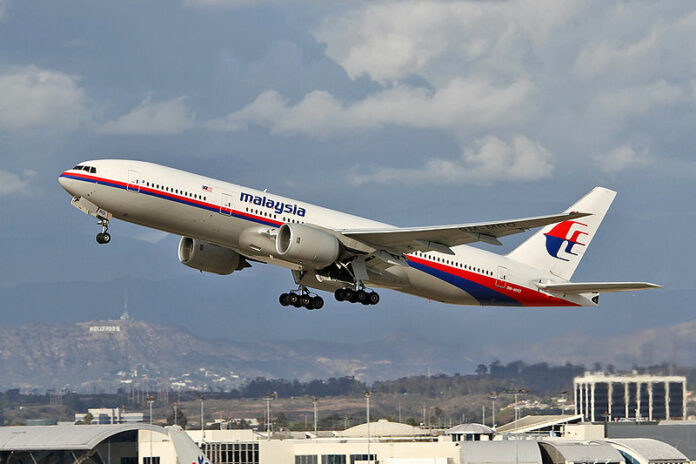
Malaysian Airlines flight 9M-MRO Malaysia Airlines takes off in 2013 from Los Angeles International Airport. Photo: Paul Rowbotham / Wikimedia Commons
THE HAGUE, Netherlands — An international team investigating the 2014 downing of Malaysia Airlines Flight 17 over Ukraine appealed Thursday for information about a photograph which prosecutors believe features the Buk rocket that blew the passenger jet out of the sky, killing all 298 on board.
The photo of the missile, which investigators believe was likely taken in the Ukrainian town of Makeevka on the day the flight was shot down, was recently received via a website to which members of the public can anonymously post evidence, said Elsbeth Kleibeuker, a spokeswoman for the Dutch National Prosecution Office.
The photo shows what appears to be a missile partially draped in camouflage netting on a mobile launcher. The vehicle is partially obscured by a dark van and the rear of a car.
“We believe this is the Buk that downed flight MH17,” Kleibeuker said.
The Boeing 777 was shot down July 17, 2014, over conflict-torn eastern Ukraine while flying from Amsterdam to Kuala Lumpur, Malaysia. The international criminal probe has concluded that the missile was fired from Russia-backed rebel-controlled territory by a mobile launcher trucked in from Russia. Moscow has denied any involvement.
In a statement, the joint investigative team known by its acronym JIT, said it wants “anyone who has any kind of information about the picture, the vehicles on it and the location where the picture was taken to contact the JIT. We will handle your information with ultimate care.”
Prosecutors have not said when the investigation will be completed. Any trials stemming from the plane crash probe will be held in Dutch courts.
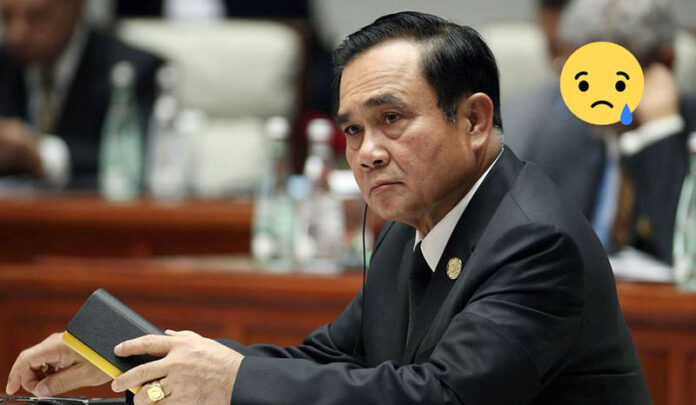
Prime Minister Gen. Prayuth Chan-ocha at a September BRICS Summit in Xiamen, China. Original image: Associated Press
BANGKOK — A day after Facebook denied a Thai government claim its CEO was coming to Bangkok to meet junta leader Gen. Prayuth Chan-ocha, all of officialdom clammed up Thursday rather than explain where the notion came from.
After detailing earlier this week that he would discuss transnational crime with Mark Zuckerberg, Prayuth on Thursday refused to answer reporters’ questions today as to why the much-anticipated meeting was not taking place after all.
Various departments had been discussing the topics they would like to raise in the visit up until Wednesday, when Facebook Thailand representatives told Khaosod English no such meeting was in the works.
“There are no plans currently for any of our senior leaders to visit Thailand,” read the brief statement, which did not elaborate. Messages to a publicist for Facebook were met Thursday by an out-of-the-office reply. Calls to Hill & Knowlton, which handles the California-based social media firm’s publicity, had no further information either.
A female staff member who answered the phone and declined to give her name said the company could not say whether the Thai government had in fact reached out to Facebook to seek such a meeting. “We can’t give this information. We also don’t know the background,” she said.
It wasn’t just Prayuth keeping mum. Deputy Prime Minister Somkid Jatusripitak – the man who broke the news – could not be reached by phone or through his office yesterday and today. Calls were not returned. His office said he’d taken a sick day.
After telling Khaosod English on Wednesday to ask Somkid to explain about the non-meeting, government spokesman Maj. Gen. Weerachon Sukhonthapatipak was unreachable by phone Thursday.
Reporters with Khaosod’s Thai-language newspaper gave a possible explanation of what may have taken place. Two reporters, who didn’t want to be named for fear of damaging relationships with their sources, said Somkid first told reporters late last week that Zuckerberg was coming and the Board of Investment was arranging the details. Somkid allegedly told Government House beat reporters to keep it confidential. Matichon, a sister publication to Khaosod, broke the news Monday.
Friendzoned?
Since seizing power in 2014, the military government has tried to replicate its real-world success in suppressing speech on social media. Those efforts – from briefly blocking Facebook and requesting its cooperation to devising a Chinese-style Great Firewall and threatening advertisers – have mostly failed after meeting wilting resistance.
Online rights advocates concerned about the junta’s attempts to control and censor Thais online found troubling the news that Zuckerberg, a kind of internet head of state, was to meet junta leader Prayuth.
Arthit Suriyawongkul, coordinator of Thai Netizens Network, which promotes free expression online, said that for the government to meet a leader on an internet platform, it must have considerable influence.
Artit said organizations such as Facebook should care about whether rights to freedom of expression on its platform are protected by governments. In April 2016, eight people were abducted from their homes and later charged with sedition and violating the Computer Crime Act for operating Facebook pages critical of the junta.
Two of the six were also charged under Article 112 of the constitution, which forbids insults of the monarchy. Offenders face a maximum of 15 years in jail.
Arthit said it would be okay for Zuckerberg to meet Prayuth – known for his crackdown on free press and online freedom of expression – as long as the Facebook founder raised concerns about such violations.
“It depends on what will be discussed. I don’t think Mark Zuckerberg has the same status as [foreign] government leaders wherein not seeing [Prayuth] means they are banning him [because of the 2014 coup]. I don’t think Mark Zuckerberg is a representative of freedom and democracy. However, if he visits [Prayuth] in the future and does not raise the issue of users’ rights, that would be a disappointment.”
Human Rights Watch senior researcher Sunai Phasuk said he also didn’t know what had gone wrong. He added however that if such a meeting were to take place, it would send a wrong message contradictory to Facebook’s business principles.
“A handshake with a military junta [leader] who is widely known for his aggressive online crackdown on freedom of expression would not bode well with the image of Facebook.”
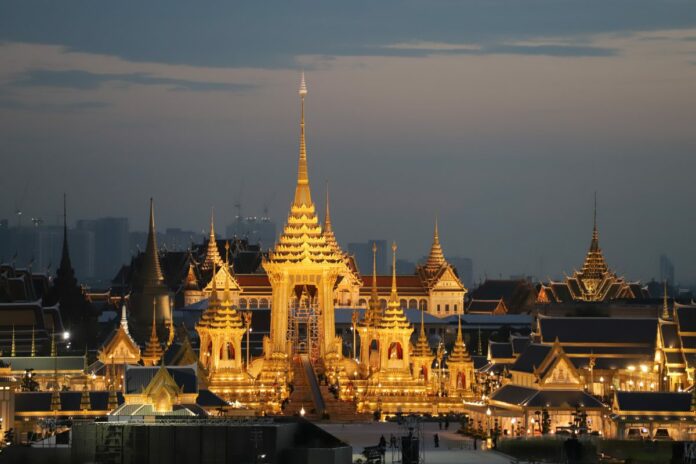
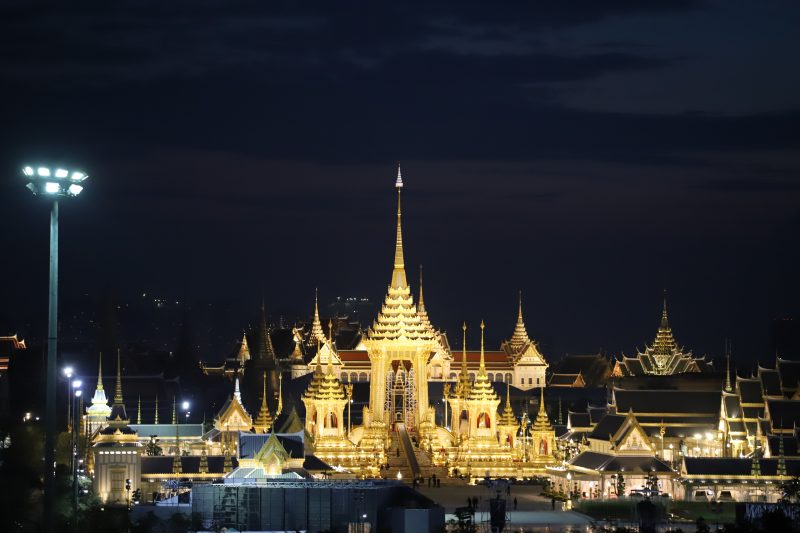
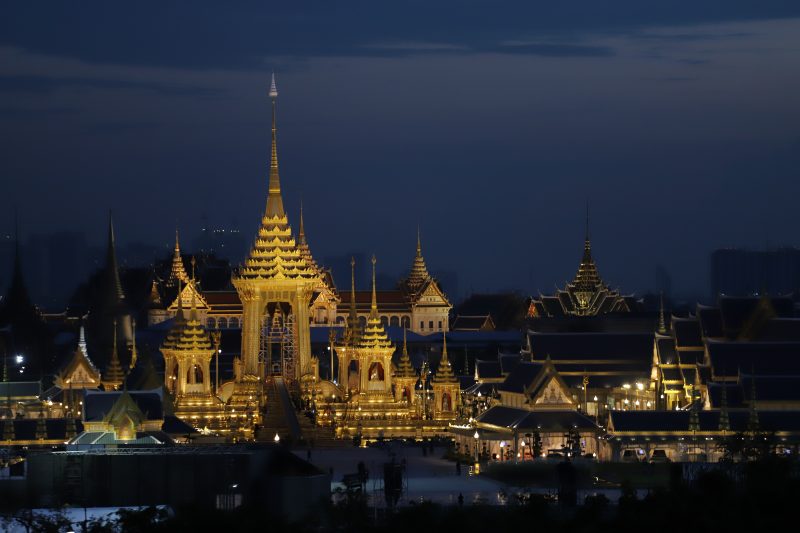
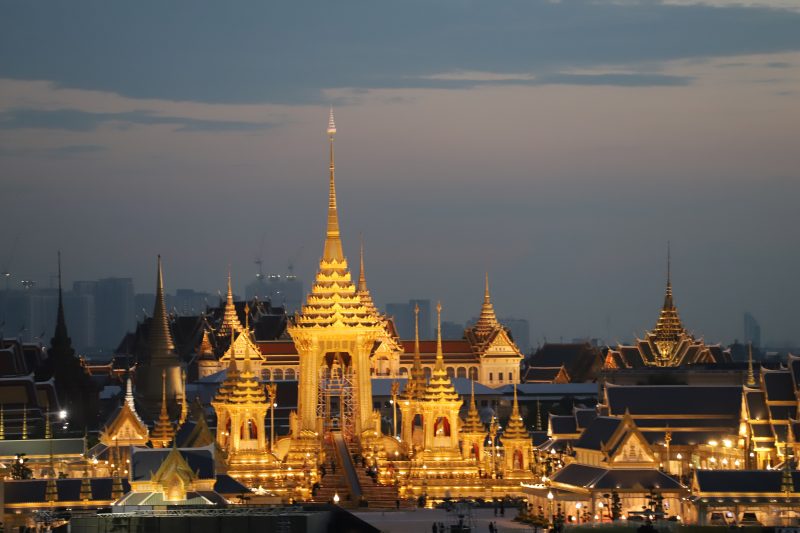
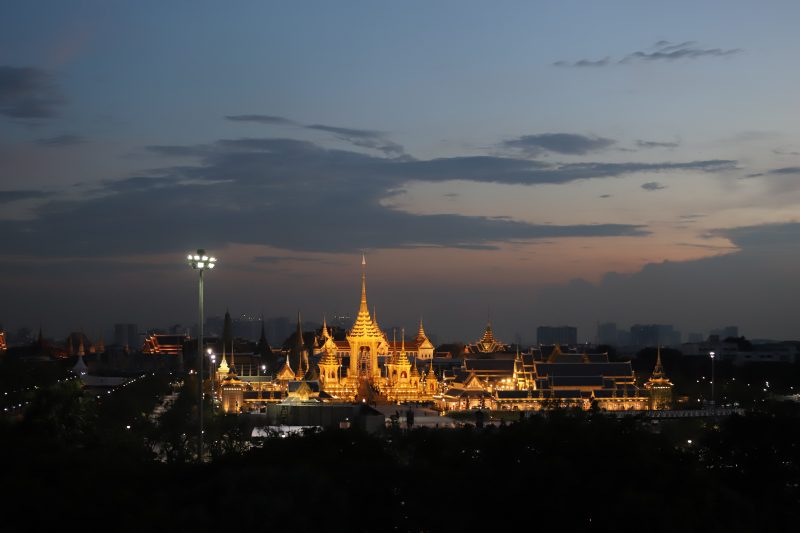
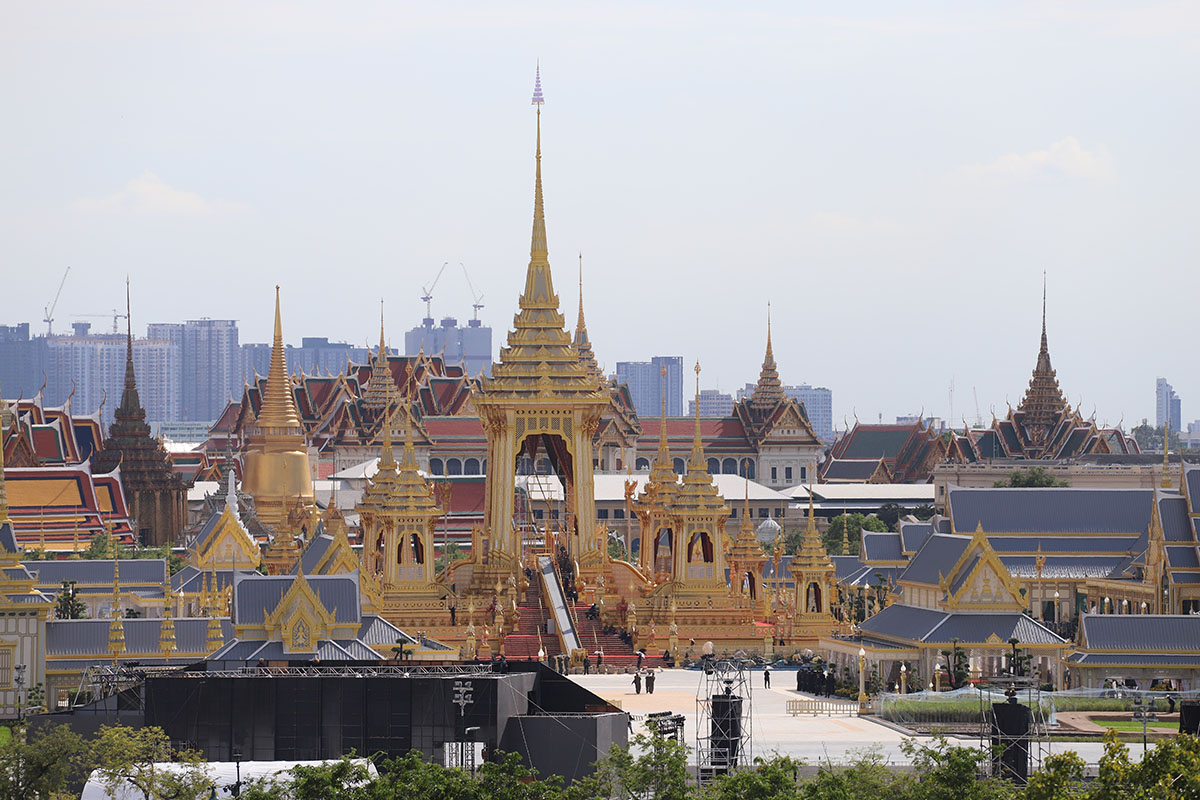
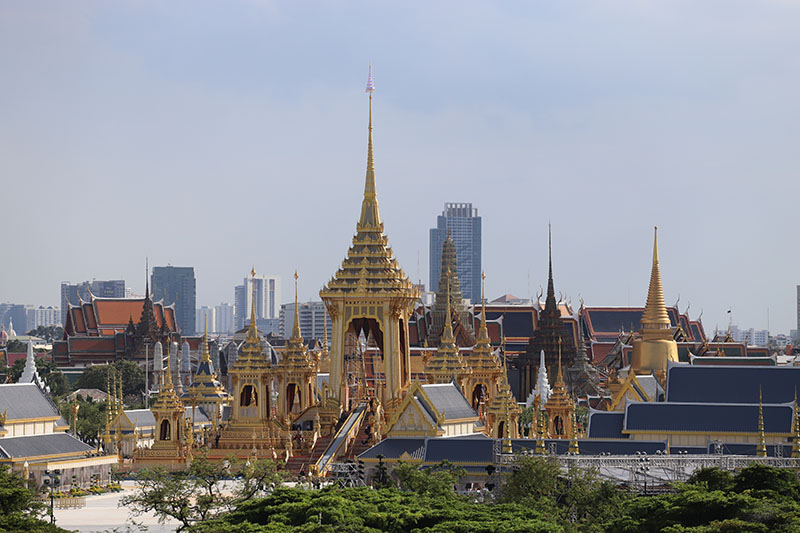
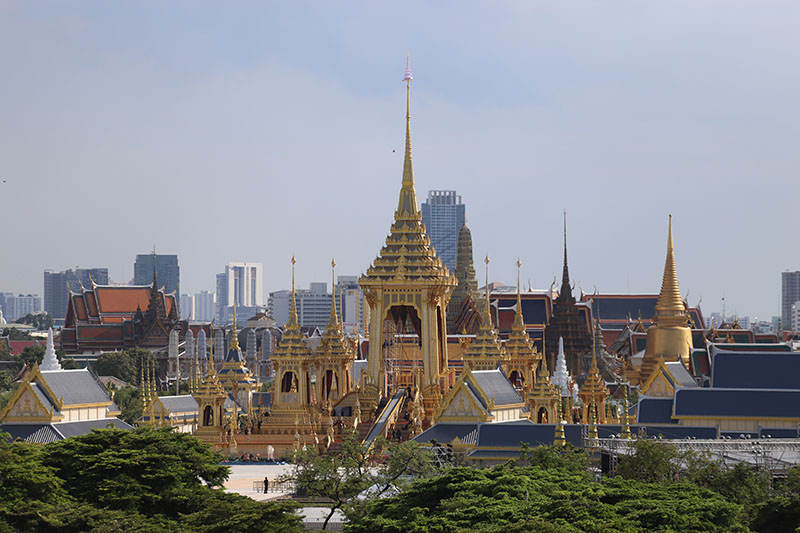
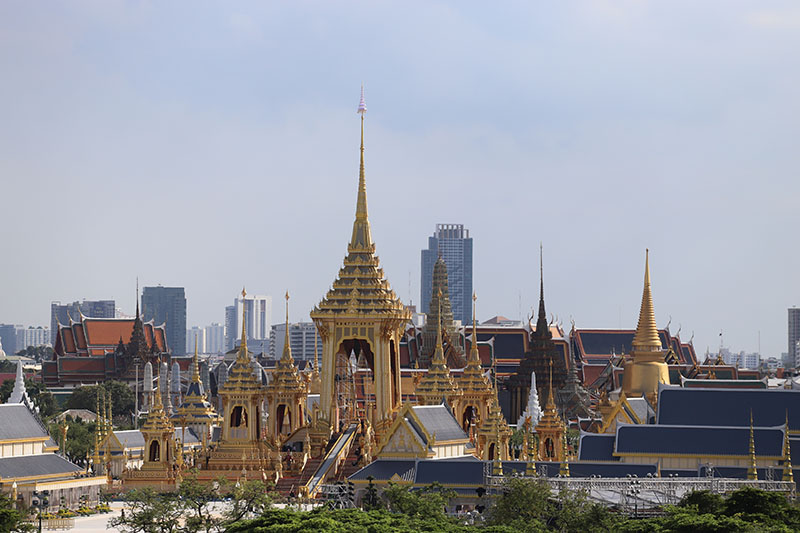
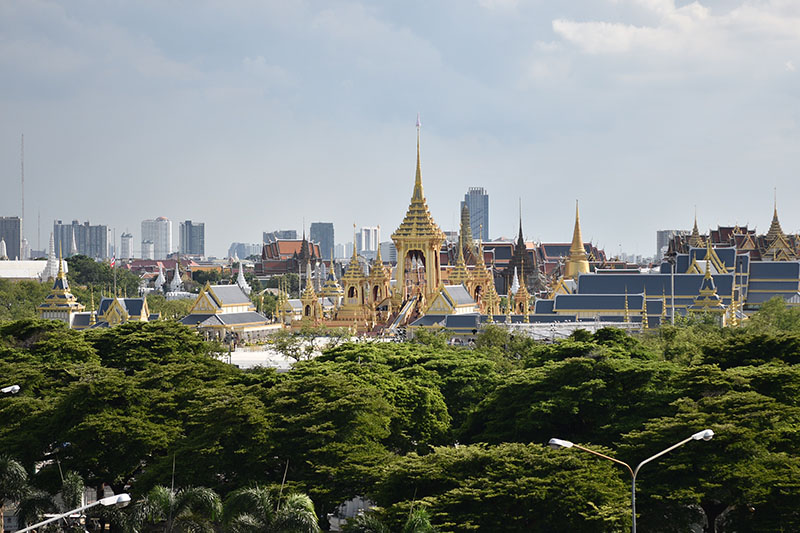
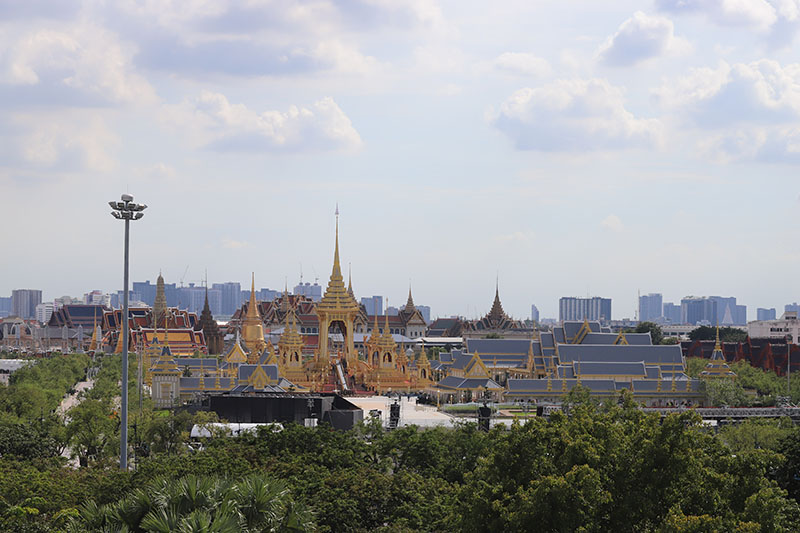
BANGKOK — The final scaffolding has been removed, and these photos just came in of the completely finished funerary complex for the cremation of King Bhumibol one week from now in Bangkok’s Sanam Luang.
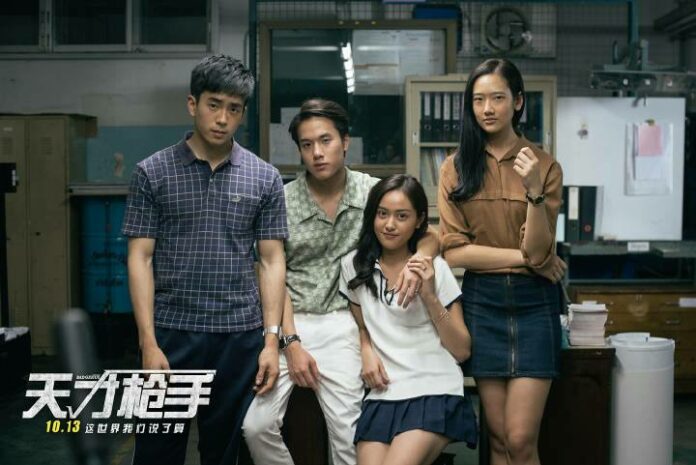
From left, Chanon Santinatornkul, Teeradon Supapunpinyo, Eisaya Hosuwan and Chutimon Chuengcharoensukying in a Chinese promotional image for “Bad Genius.”
BANGKOK — Five days after it opened on the mainland, Thailand’s top-performing movie of the year has earned nearly seven times as much at the Chinese box office.
“Bad Genius,” or “Chalard Games Goeng,” has grossed more than 740 million baht in ticket sales since opening Friday in Chinese theaters, making it mainland China’s top foreign film. That’s a massive take for a film which that earned 112 million baht in domestic sales.
The film centers around high school student and math whiz Lynn (Chutimon “Aokbab” Chuengcharoensukying), who uses elaborate schemes to help rich, academically challenged students cheat on standardized exams.
It also opened No. 1 at the box office in Taiwan and Hong Kong. Film critic Edmund Lee noted in the South China Morning Post that it won audiences for “its attractive cast, vibrant storytelling and, of course, an obsession with public exam systems that would feel very familiar to Hong Kong viewers.”
It’s set a new record for overseas sales, surpassing 2004’s “Ong-bak: The Thai Warrior” (583 million baht) and “Shutter,” (145 million baht) in the same year.
Facebook page Aizhong, which posts social and pop culture happenings in China to a Thai audience, postedWednesday that a Chinese student at Sichuan Film and Television University was so enamoured with the film that he sculpted a bust of Aokbab and made a shrine for her, calling her the “Goddess of Exams.”
For her role as Lynn, 21-year-old Aokbab was the first Thai to win the Rising Star Asia Award at the this year’s New York Asian Film Festival. “Bad Genius,” from “Countdown” (2012) director Nattawut Poonpiriya, was the only Thai film to screen there this year.
“Bad Genius” was produced by GDH 559 film studio, a subsidiary of GMM Grammy. It debuted domestically May 3 and has shown in Laos, Singapore, Cambodia, Taiwan, Brunei, Malaysia, Hong Kong, Indonesia, and Vietnam. It is currently in theaters in China and the Philippines. “Bad Genius” will screen in Australia and New Zealand in October and in South Korea in November.
A promotional image for “Bad Genius” localized for China.
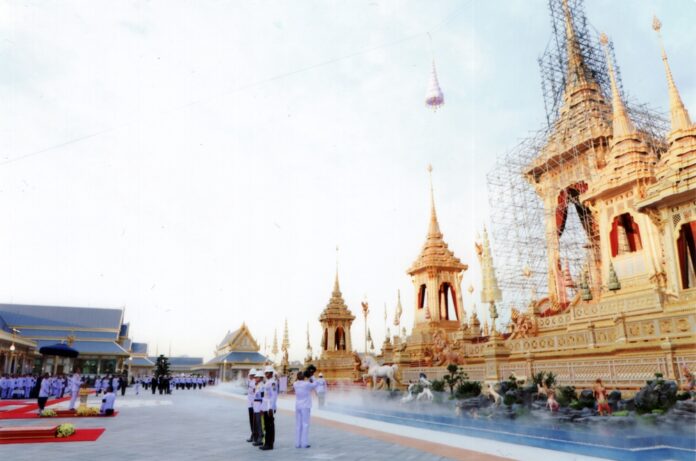
A multi-tiered umbrella is hoisted to the top of the funerary structure on Wednesday evening at Bangkok’s Sanam Luang.
BANGKOK — A full run-through of funerary rites for His Majesty the Late King Bhumibol was announced Thursday after King Vajiralongkorn put the final piece in place on the massive funerary complex where his father will be cremated next week.
The king presided Wednesday evening over a ceremony to raise a white, multi-tiered umbrella to the apex of the pyre structure, signaling the completion of the project which took nearly a year to build. Three billion baht has been earmarked for the royal funeral.
Officials said the remaining scaffolding would be taken down today. The royal cremation, an event expected to draw hundreds of thousands of mourners to Bangkok, is set to take place Oct. 26 on the grounds of the Sanam Luang.
Deputy junta chairman Prawit Wongsuwan told reporters today that a full rehearsal of the funerary procession will take place Saturday.
Despite making waves earlier this month by warning of an alleged plot to sabotage the funeral, Gen. Prawit said the situation is now expected to go smoothly.
“Don’t worry, because we are ready,” Prawit said. “I’d like to ask the media not to ask too many questions during this period.”