31.6 C
Bangkok
Monday, June 22, 2026
Home Blog Page 2254

Thai Monarchy Critic in Exile Reportedly ‘Disappeared,’ Junta Denies Knowledge

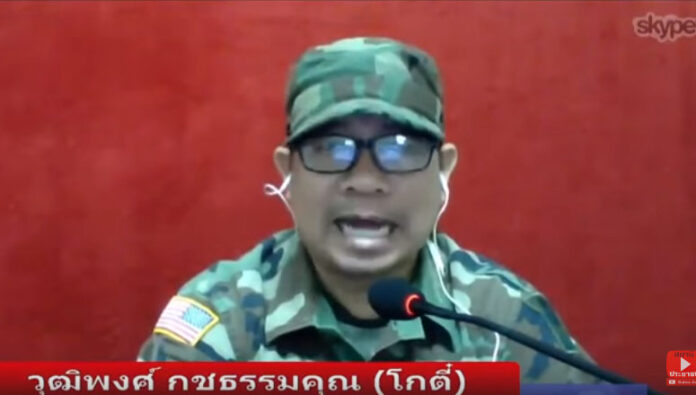
Wutthipong 'Ko Tee' Kochathmmakun in a still image from an interview with exiled journalist Jom Petchpradab posted to YouTube on March 19, 2017.

BANGKOK — Deputy junta leader Gen. Prawit Wongsuwan on Monday denied having any knowledge about the possible abduction or forced disappearance of a well-known anti-monarchy fugitive who had been living in Laos.

Word that Wutthipong “Ko Tee” Kochathmmakun had been abducted began spreading early Monday morning by another exile, Los Angeles-based journalist Jom Petchpradab. Jom wrote that Ko Tee was abducted by 10 armed Thai men in all black and wearing hoods Saturday night in Laos and likely taken back into Thailand.

Read: Redshirt Firebrand ‘Ko Tee’ Says He’s Fled Laos

Jom said his account was based on that of two men who were with Ko Tee at the time but either were not taken or managed to get free.

He quoted the two unidentified friends, who claimed their heads were covered with cloth while another piece of cloth was stuffed into the mouths of all three as they were dragged into a residence.

“Those who arrested us spoke Thai,” Jom wrote, quoting the men. “They used an electric shock device and applied it to our necks. Each of us was then assaulted and threatened to not make any noise, not to cry out. At the same time, [the source] said he heard Ko Tee say, ‘Ouch. Can’t breath,’ and then Ko Tee went quiet.”

kotee
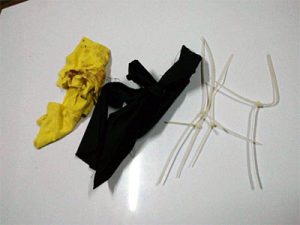
Items allegedly used in the abduction of a fugitive critic of the monarchy who was living in exile in Laos. Photo: Jom Petchpradab / Facebook

Jom also posted photos of what were described as the cloth and plastic wrist restraints used in the abduction.

None of his claims could be independently verified, but word started traveling through the dissident community Monday.

Police spokesman Col. Krissana Pattanacharoen said there has been no report, but police would try to verify the matter. He added that there is no concrete evidence to conclude Ko Tee was forcibly disappeared.

Ko Tee, 48, has been vocal in calling for changing Thailand from constitutional monarchy to a federal state. He faced charges of defaming the royal family when he fled the country in the aftermath of the May 2014 coup. Earlier this year, he was accused of a plot to assassinate junta leadership, accusations he denies.

Two exiled anti-monarchists based in Laos and another unspecified neighboring country said Monday they were not sure about the news but wouldn’t be surprised if enforced disappearance really took place.

Nithiwat Wannasiri, a fellow dissident exile living in Laos, said he was unsure whether Ko Tee had been abducted but said no one has been able to contact him since Saturday.

He added that he wouldn’t be surprised because a lesser-known dissident, Ittipon Sukpaen, aka DJ Sunho, disappeared from Laos in June 2016, and no one has seen him since.

“I believe Sunho is dead. I can’t conclude if Ko Tee has been forced to disappear, however,” Nithiwat said from Laos.

An attorney representing Ittipon’s family said in July 2016 they also believed he was dead.

A member of the Thai dissident community living in Laos said they were warned by Laotian authorities last week that they were “being hunted down” by those from the other side of the border, a reference to Thai authorities. Many temporarily moved to safer locations, the source said, requesting anonymity for fear of his safety.

Another anti-monarchy dissident living in an unspecified neighboring country, who also asked not to be named due to safety concerns, said that if Ko Tee has been forcibly disappeared by the Thai regime, no one will claim responsibility.

“It is a possibility. We saw what happened to Sunho,” the source said. “They are definitely capable of doing this. The geography makes it possible. [Thais and their neighbors] look alike and some speak the same language.”

Related stories:

Assassination? Extradition? Ko Tee Plot is in the Eye of the Beholder

Ko Tee Denies Bombing Hospital, Would Rather Bomb Govt House 

Advertisement

Name Mix-Up Lands Man 472,000 Baht in Debt

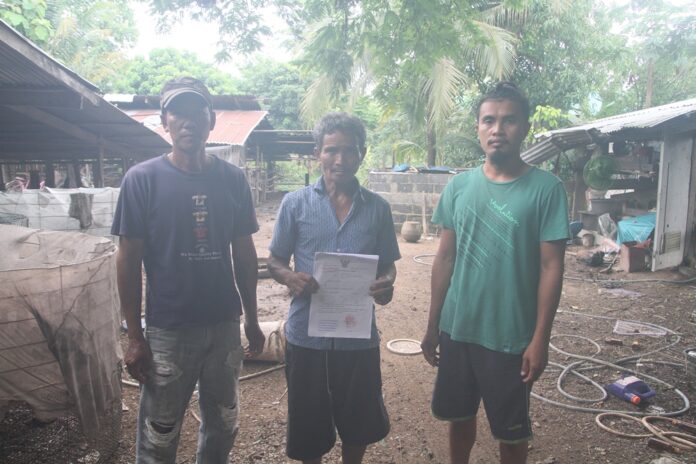
Suthin Poonsawat shows reporters Monday a court warrant that misidentified him as a defendant in a theft case.

UBON RATCHATHANI — A businesswoman agreed Monday to withdraw a lawsuit against a man in northeastern Thailand after realizing she meant to sue someone else with the same name.

Suthin Poonsawat, 33 of Ubon Ratchathani province, was misidentified as another Suthin Poonsawat who owed 472,000 baht to a construction company. Suthin was the latest to fall victim to a common clerical error that has seen unrelated individuals hauled into court simply for sharing similar names with the accused.

Suthin received an order to appear two weeks ago on charges of stealing construction materials from Jaruwan Junwong’s company.

On Monday, a lawyer representing Jaruwan told reporters he had withdrawn the charge after news got out that Suthin’s only link to the alleged crime was his name.

In interviews with reporters, Suthin urged the plaintiff’s attorney to be more cautious.

“I want him to treat this case as an experience for future cases,” Suthin said. “Don’t let the same error happen because it may damage other people.”

A spokesman for the Attorney General said confusion over similar names is common in law enforcement and the courts.

“There are many people with the same names out there. Some names are used by more than 10 people,” Somnuek Siangkong said by phone. “It happens a lot!”

Somnuek recalled anecdotes of a farmer being wrongly accused of investment fraud by a company he’d never heard of, and a 20-year-old man arrested by police who glossed over the fact the real suspect was 50.

The problem seems to be frequent.

In January, a 35-year-old woman was accused of land fraud, which she claimed to know nothing about. Just in May, a food vendor was named as a defendant in a fraud case involving over 14 million baht – a sum she said she couldn’t even imagine having.

It later turned out they were both cases of mistaken identity.

The burden of proof in such cases falls on the accused to convince the court it was all a misunderstanding, said Somnuek, the AG spokesman.

“You have to bring evidence to explain to the court that you are not the person accused, then the court will hold a hearing,” Somnuek said. “If it’s proven that you were not the person being accused, the court will release you … and the prosecutor will withdraw the charge.”

He added that an identification mix-up wouldn’t be enough for the court to dismiss a case.

“Name errors won’t affect a case,” Somnuek said. “The credibility of a case depends on the evidence.”

Related stories:

230,000 Baht Water Bill Declared Error

Thai Princess Forgives TV Station’s Newscast Error

Advertisement

Massive Flooding Continues in 19 Provinces (Photos)

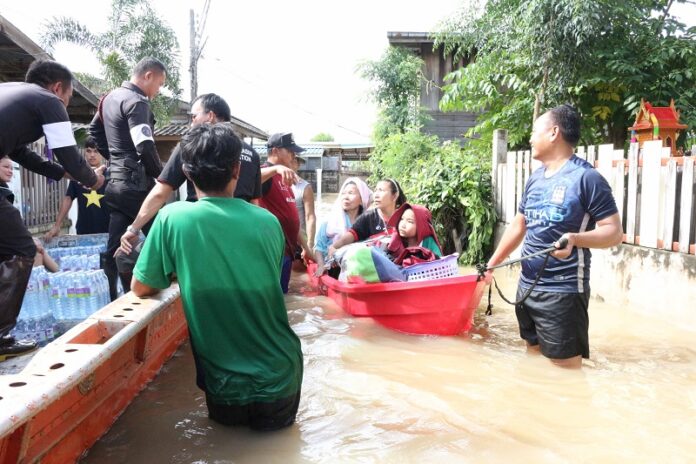
People evacuated on boats from their homes Sunday in Kalasin province.

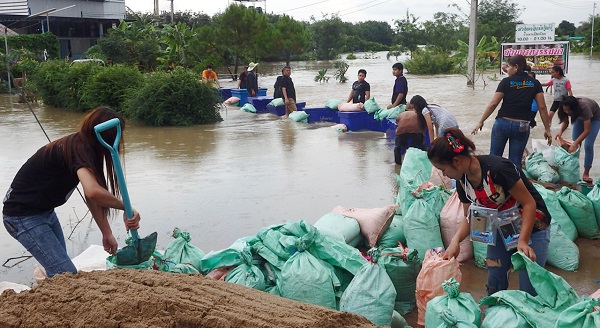
SAKON NAKHON — A regional airport remained closed Monday in Sakon Nakhon province as massive flooding continues to wreak havoc in 19 provinces from north to northeast, and political factions begin trading blame.

A result of tropical storm Sonca, the flooding, possibly the worst in over four decades, has so far affected more than 23,000 people, mainly in the Isaan region, according to disaster officials. While no official report of casualties has been released, media reports indicate three people have died and one is missing as a result.

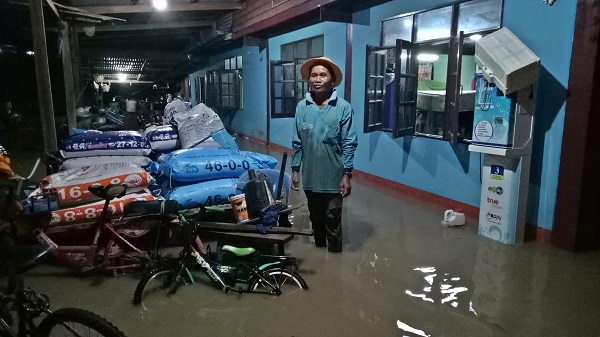
Waters as deep as several meters in some places have wrought damage on a large scale to households, roads, hospitals, commercial areas and farm land. No estimated cost of the damage has been made yet.

Read: ‘Sonca Storm’ Floods Sink Northeastern Towns

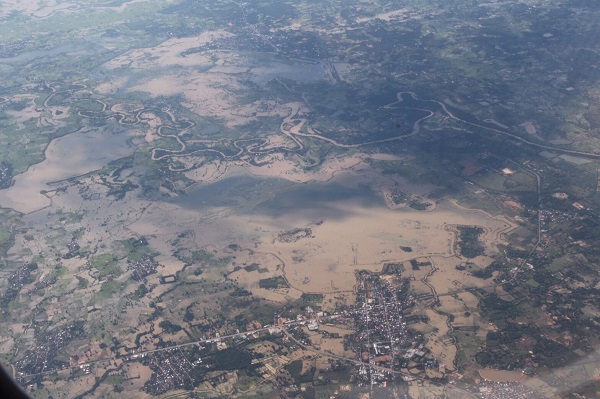
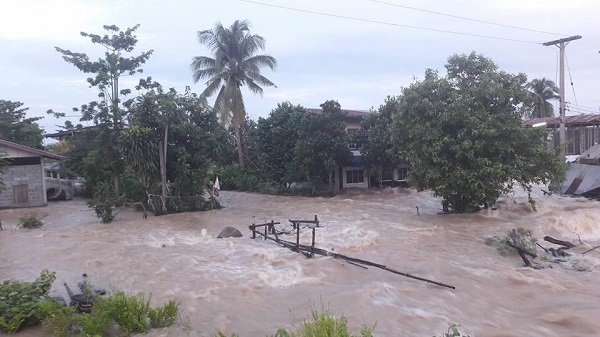
Sakon Nakhon is one of the worst-hit provinces. Flash floods have struck its central city since Friday. Swaths of Chaiyaphum province have also been inundated since Saturday night.

Officials hope to reopen Sakon Nakhon Airport on Tuesday.

IMG20170729200540
Flash floods hit Chaiyaphum province Saturday late night.

Disaster official Chatchai Phromlert said they were trying to drain the water into the Mekong River.

Other provinces that remain flooded in the northeast are Roi Et, Nakhon Ratchasima, Khon Kaen, Maha Sarakham, Kalasin, Buriram, Mukdahan, Ubon Ratchathani, Amnat Charoen, Chaiyaphum and Udon Thani.

In the central region, the provinces of Sukhothai, Phitsanulok, Phichit, Phetchabun and Ayutthaya are also affected. In the north, some parts of Uttaradit province are still underwater while Chumphon is the only one flooded in the south.

S 139968523
A bird’s eye view of Sakon Nakhon province on Sunday.

Blame Game

No evacuation orders were given beforehand, and the floodwaters rose with little or no notice. That invited criticism that the government poorly handled the crisis and mismanaged the response.

A government spokesman on Sunday extended a warning from the prime minister not to exploit the situation for political gain. He insisted only Mother Nature was to blame for the disaster, pointing out that neighboring nations were facing the same situation.

He said it was wrong to compare it to massive flooding in 2011, which the military regime blamed on mismanagement by the civilian government it ousted.

“When looking back at the 2011 floods, you will see they were caused by mismanagement,” spokesman Lt. Gen. Sansern Kaewkamnerd said Sunday. “Even though the government then knew there would be a lot of rain, they did not rush to drain it, resulting in big damages to the country.”

Responding to criticism that neither Prime Minister Prayuth Chan-ocha nor any members of his cabinet have waded into the field to oversee the situation and offer reassurances, a spokeswoman in the Prime Minister’s Office said there was a good reason for that.

Col. Taksada Sangchan said prime minister did not want to burden any officials, so they could fully dedicate themselves to those affected.

DJI 0032
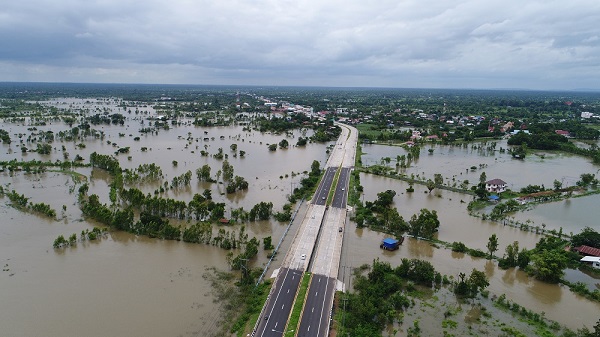
A highway connecting Amnat Charoen and Mukdahan provinces passes through flooded terrain Sunday.
P7304251
Local residents stack sandbags to stave off further flooding Sunday in Nakhon Phanom province.
S 434280
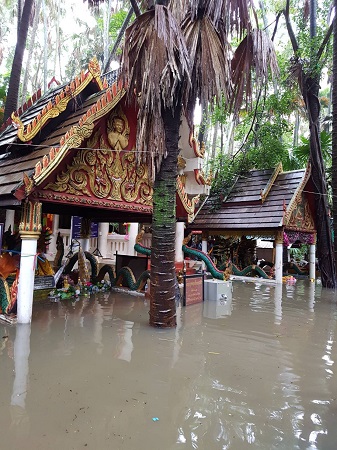
A temple famous as a home for Naga spirits, Wat Kham Chanot, is underwater Sunday in in Udon Thani province.
img 1526
A flooded village is abandoned by local residents Sunday in Roi Et province.
S 3014683
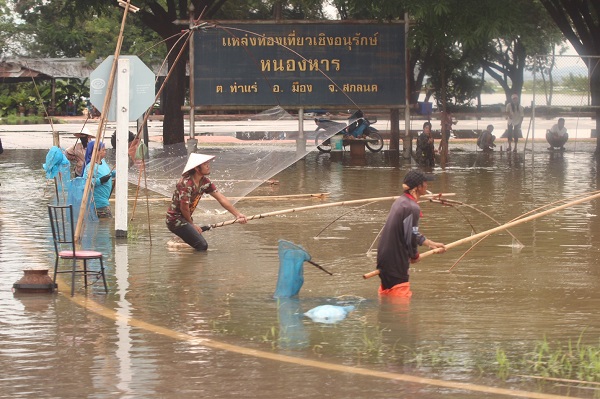
Local residents make lemons out of lemonade Sunday by fishing in flooded waters after their neighborhood disappeared underwater in Sakon Nakhon province.
DSC0311 hlqvLpV
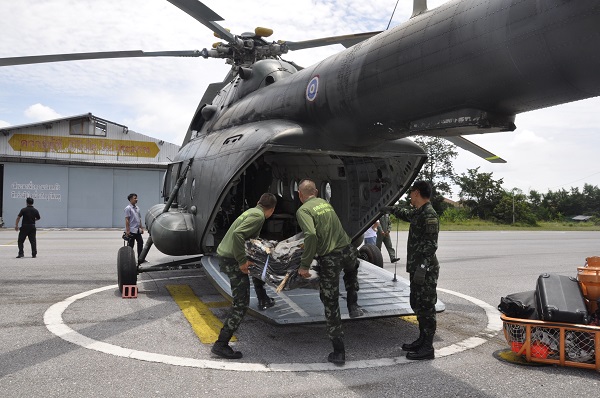
Army helicopters dispatches to distribute aid Sunday in Sakon Nakhon province.
S 3014663
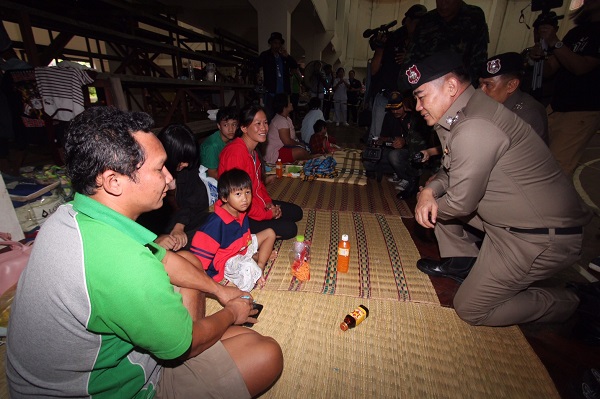
National Police Chief Gen. Chakthip Chaijinda meets residents of evacuated communities at an emergency shelter Sunday in Sakon Nakhon province.
Advertisement

Modern Manga Masters Pay Homage to Japanese Master

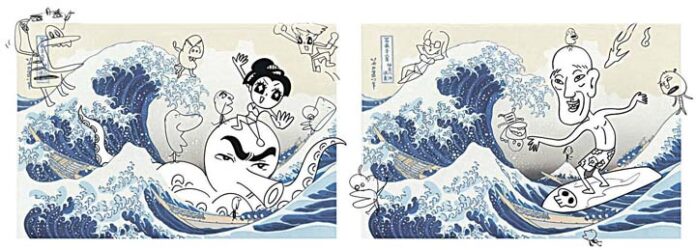
Work by Kotobuki Shiriagari inspired by Katsushika Hokusai’s ‘The Great Wave Off Kanagawa.’ Photo: The Japan Foundation

BANGKOK — Contemporary Japanese comics will pay homage to Japanese painting masters at an exhibition Bangkok exploring their links.

Seven artists will highlight the importance of the manga which brought Japanese culture to world fame at Manga Hokusai Manga, where they will introduce works inspired by Katsushika Hokusai, an influential Japanese artist from the Edo period, such as his woodblock print, “The Great Wave Off Kanagawa.”

The seven manga artists are Kotobuki Shiriagari, Yuichi Yokoyama, Daisuke Igarashi, Tetuzoh Okadaya, Daisuke Nishijima, Haruko Ichikawa and Machiko Kyo.

Admission is free. The traveling event will be show Aug. 17 through Sept. 22 at G23, an art gallery at Srinakharinwirot University reachable from MRT Phetchaburi. It will then move to Art Bridge in Chiang Rai province and the PSU Art Gallery at Prince of Songkla University in Songkhla’s Hat Yai district.

Hokusai was a master painter and printmaker. He is regarded by many as the source of today’s manga art movement. Hundreds of his prints in the late 1700s and early 1800s influenced Western artists such as Vincent Van Gogh, Paul Cezanne and James Whistler.

Advertisement

Don Mueang U-Turn Bridge Closed to See What Happens

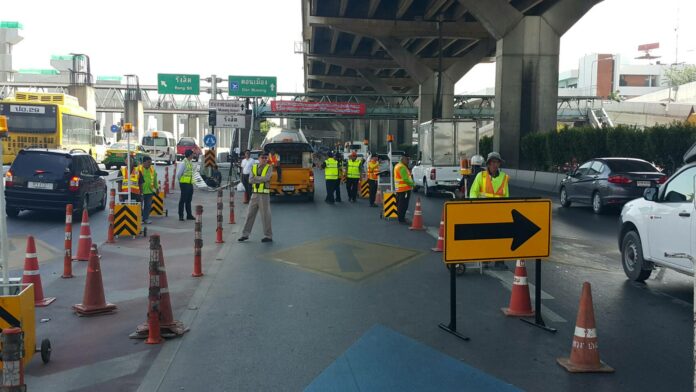
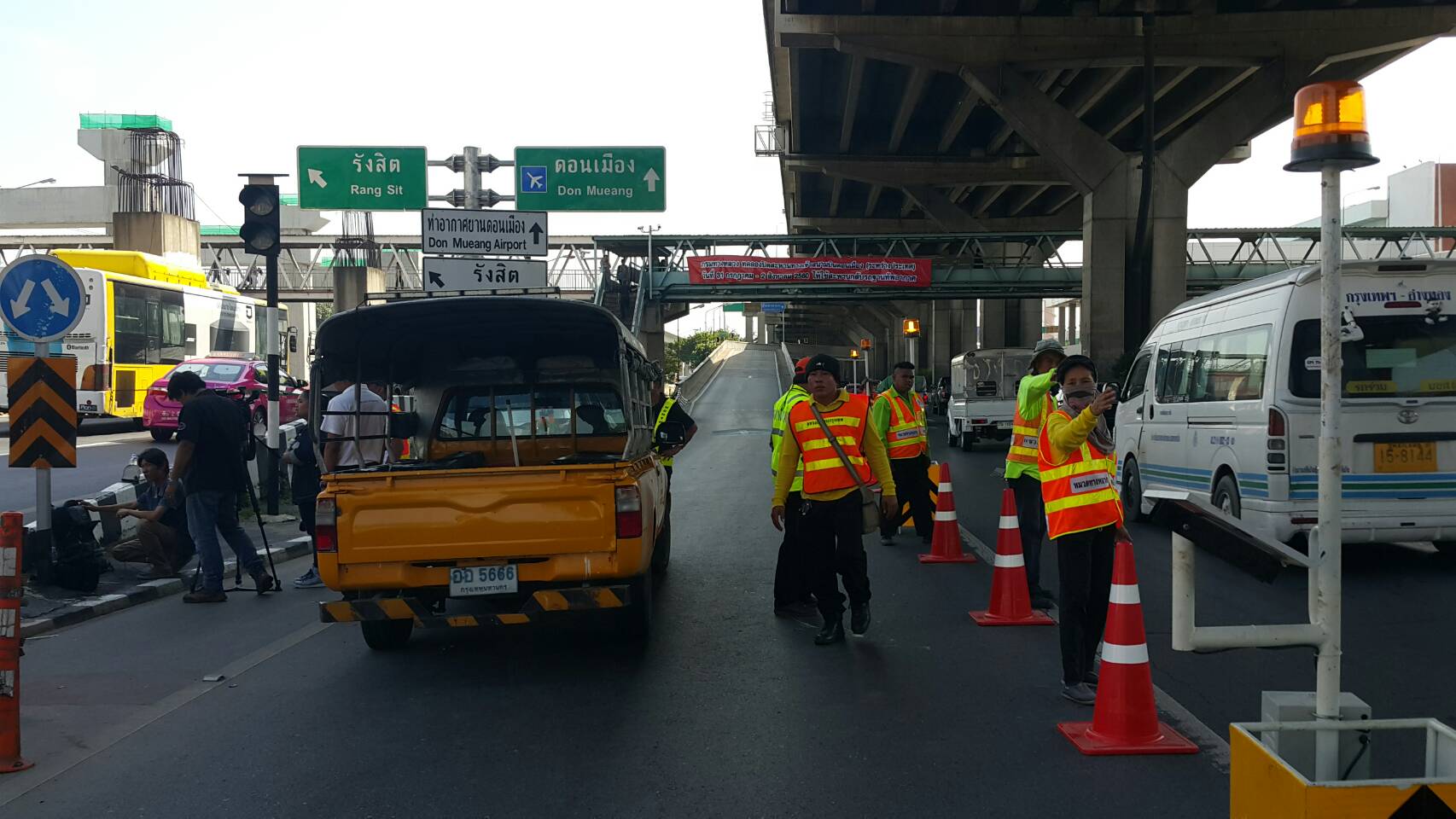
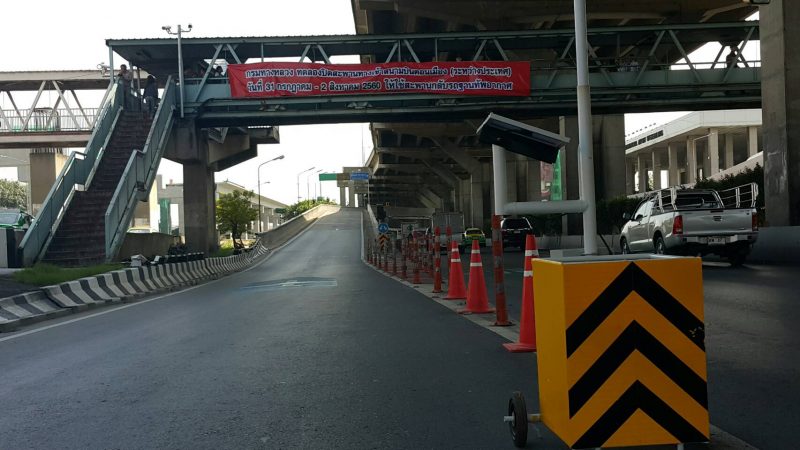
The lane leading to a U-turn bridge in front of Wat Don Mueang that crosses over to Don Mueang Airport is closed Monday morning.

BANGKOK — Access to Don Mueang Airport will be impacted this week as a U-turn bridge leading into the airport is closed to determine whether it’s really necessary.

The Department of Highway on Monday closed the U-turn bridge connecting the northbound side of Vibhavadi Rangsit Road in front of Wat Don Mueang to the airport to assess whether its closure would significantly impact traffic.

“The bridge to the airport uses up an extra lane, so cars going toward Rangsit from Din Daeng get stuck here,” Um Sutharat, deputy director of the Bangkok Highway Department said. “If we demolish this bridge, then there would be an extra lane. So for a trial period of three days, we will close the bridge to see if traffic is really badly impacted by it, in case we demolish it, which would take about a year.”

The trial closure will occur Monday from 8:30am to noon and 2pm to 6pm, Tuesday from 4am to 9am and 5pm to 9pm and all of Wednesday.


“We will then collect the traffic information and see if the bridge is suitable for demolition. If so, then demolition will begin Sept. 1 and take about a year. We want to rush it to be eight months though, but if we run into a gas pipe it could take another couple of months,” Um said without further explanation.

Um said an extra lane would improve traffic for those commuting from the Lat Phrao district, Ratchayothin and Lak Si areas as well.

He said the impact this morning was not too bad.

“Cars were moving, and there were no big problems for commuters and airport users. No one missed their flight yet!” he said.

Instead of using the closed U-turn bridge, those driving into the airport can use the bridge in front of the airport’s cargo department, the bridge in front of Don Mueang Air Force Base or use the Don Mueang Tollway.

866122

866138 e1501477439939
The closed U-turn bridge Monday.
Advertisement

Luggage Screening Intensified After Australia Airplane Plot

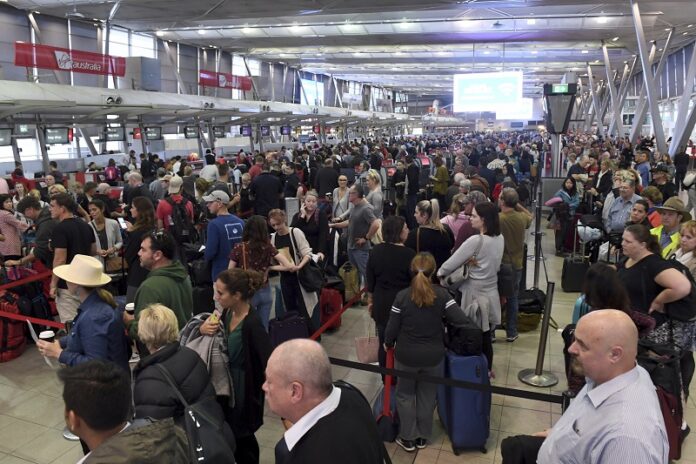
People crowd a terminal at Sydney's domestic airport as passengers are subjected to increased security, Monday in Sydney, Australia. Photo: Dean Lewins / Associated Press

CANBERRA, Australia — Security remained heightened in airports around Australia with more intense screening of luggage after law enforcement officials thwarted what a police chief described on Monday as a “credible attempt to attack an aircraft.”

Prime Minister Malcolm Turnbull and Border Protection Minister Peter Dutton declined to comment on newspaper reports that Islamist extremists planned to kill the occupants of a plane with poison gas and that a homemade bomb was to be disguised as a kitchen mincer.

“Police will allege they had the intent and were developing the capability,” Turnbull told Australian Broadcasting Corp.

Turnbull announced on Sunday that “a terrorist plot to bring down an airplane” had been disrupted, but revealed few details.

Four men arrested in raids in Sydney late Saturday  two Lebanese-Australian fathers and their sons  had yet to be charged.

Australian Federal Police Commissioner Andrew Colvin said a court ruled Monday that the four could be detained without charge for seven days from their arrest under counterterrorism laws.

“We believe we have disrupted a legitimate and credible attempt to attack an aircraft,” Colvin told reporters without elaborating.

Colvin and the government will not comment on media reports that the suspects were not previously known to Australian security officials and that their arrests followed a tip from a foreign intelligence agency.

“Australians can be assured that we have very fine intelligence services and we moved extremely quickly on this one and, as you can see, with the right outcomes,” Turnbull said.

The Australian newspaper cited multiple anonymous sources saying that the plotters were constructing a “non-traditional” explosive device that could have emitted a toxic, sulfur-based gas to kill or immobilize everyone on the aircraft.

Sydney’s The Daily Telegraph newspaper reported that the plotters planned to make a bomb from wood shavings and explosive material inside a piece of kitchen equipment such as a mincing machine.

Police raided five homes Saturday and removed a domestic grinder and a mincer used to make sausage, the newspaper said.

The plot involved smuggling the device on a flight from Sydney to the Middle East, possibly Dubai, as carry-on luggage, the newspaper said.

Fairfax Media reported the bomb was found in a home in inner-city suburb of Surry Hills, a few doors from the local mosque.

Turnbull declined to say whether the group was guided by someone overseas.

“It’ll be alleged that that this was an Islamist extremist, terrorist motivation,” Turnbull said.

Dutton urged travelers to arrive at Australian airports two hours before domestic flights and three hours before international flights to allow time for more screening. Luggage should be kept to a minimum and those accompanying travelers should not enter secured parts of terminals.

He declined to detail the threat that the security staff were searching for.

“There’ll be lots of speculation around what the intent was … but I don’t want to add to that,” Dutton told Nine Network television.

“Our focus now really is making sure that people who are planning a terrorist attack are thwarted,” he added.

Security has been increased at Sydney Airport since Thursday because of the plot and has since been increased in all major Australian international and domestic terminals.

Turnbull would not speculate on how long airport security would remain elevated.

“They will be required for as long as the threat is assessed as requiring them,” Turnbull said.

Australia’s terrorist threat level remained unchanged at “probable.”

Australia is a staunch ally of the United States and partner in military campaigns in the Middle East. The Islamic State group has highlighted Australia as a western target.

The plot was the 13th disrupted by police since Australia’s terrorist threat level was elevated in 2014. Five plots have been executed.

Story: Rod McGuirk

Advertisement

What’s Behind Venezuela’s Controversial Constituent Assembly?

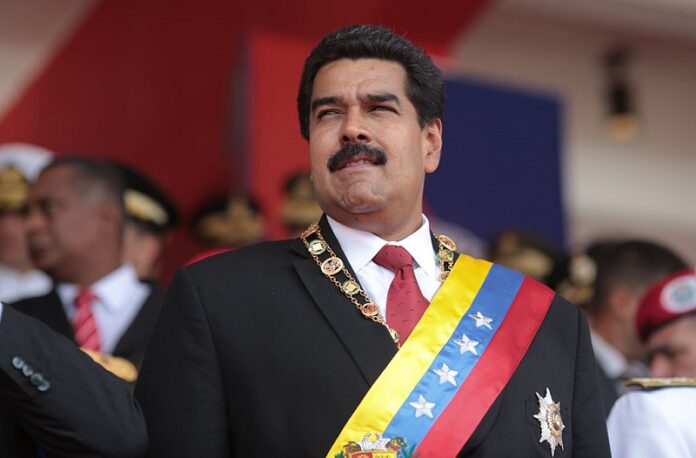
President Nicolas Maduro seen here in 2015 in Caracas, Venezuela. Photo: Hugoshi / Wikimedia Commons

Venezuelan President Nicolas Maduro has provoked international criticism and enraged his political opponents by pushing for a special assembly to rewrite the troubled South American nation’s constitution.

Sunday’s election of delegates to the assembly comes after nearly four months of political upheaval that have resulted in more than 100 deaths and left thousands injured and detained.

The new assembly will be convened within 72 hours of the election and will function with virtually unlimited powers. Maduro and his closest allies have vowed to use the assembly to jail key opposition leaders, remove the nation’s outspoken chief prosecutor from her post and strip opposition legislators of their constitutional immunity.

Many in the opposition fear it will mark the end of democracy in Venezuela.

Maduro’s mentor, the late President Hugo Chavez, similarly called for a constitution rewrite shortly after taking office in 1999, but unlike Maduro he held a referendum first to get Venezuelans’ blessing. Even some “Chavistas” have rejected the drive to change the constitution, which has further polarized an already deeply divided country.


How Will Delegates Be Chosen?

Venezuela’s government-stacked National Electoral Council created an unorthodox voting system that opponents say heavily favors the ruling party.

A total of 364 delegates will be selected according to geography: In each of Venezuela’s 23 states, one delegate will be allotted per municipality while state capitals get two.

But some of the most populated states have relatively few municipalities, while some smaller ones have many. That means a state like Miranda, population nearly 3 million, will get four fewer delegates than Falcon, which is home to about 1 million people.

Critics say that unfairly favors rural areas where Maduro is more popular over opposition-friendly cities such as Caracas, the capital.

An additional 173 delegates will come from various categories of social groups including laborers, students, farmers and fishermen. Eight slots are reserved for indigenous communities. How the government determined who qualifies in each category has not been disclosed, but all of those sectors traditionally have strong ties to Chavez and Maduro’s leftist political movement.

The opposition is boycotting the election, so the majority of candidates represent the ruling socialist party.


What Changes Has the Government Vowed to Make?

Maduro has characterized the constituent assembly as a lofty solution for Venezuela’s long list of political and economic woes  and a concrete way of silencing his most vocal foes.

In an address on state-run television Saturday, Maduro said he wants the assembly to strip legislators in the opposition-controlled National Assembly of their immunity and see at least one of them jailed  Freddy Guevara, the legislature’s first vice president and one of the highest-profile organizers of protests against the government.

“This little Hitler has his cell guaranteed!” Maduro shouted, using his frequent nickname for Guevara.

On Wednesday, first lady Cilia Flores, who Maduro calls Venezuela’s “First Combatant,” said the assembly will create a peace and justice commission that will ensure those responsible for the current political upheaval “pay and learn their lesson.”

Diosdado Cabello, first vice president of Venezuela’s socialist party, has said the office of Venezuela’s chief prosecutor, who has recently become one of Maduro’s most outspoken critics, will be “turned upside down.”

The assembly is certain to continue the socialist policies first installed by Chavez.

Aside from rewriting the constitution, the National Constituent Assembly could function as a sort of super-body that assumes the powers of the National Assembly, the only government branch not controlled by Maduro.


What do Venezuelans Think of the Plan?

A June survey by Venezuelan polling firm Datanalisis said just 23 percent favor the constituent assembly. Only 19 percent said they thought a new constitution would “guarantee the peace of stability of the country,” as Maduro has asserted. Nearly half said they believe the purpose of the assembly is to ensure Maduro stays in power.

Earlier this month, more than 7.5 million Venezuelans voted in an unofficial opposition referendum rejecting the constitution rewrite.

But those numbers do not mean Venezuelans are unlikely to show up at polling stations Sunday. Aside from government loyalists, groups of state workers and government organization are being mobilized and pressured to cast ballots.

Luis Vicente Leon, president of Datanalsis, said that because the government has access to data showing who does and does not vote, many people are likely to feel obligated to participate or risk losing their jobs in a country with severe food shortages and triple-digit inflation.

“If this was a free election, without pressure, about a third of the number that participated in the popular consult would vote,” he said, referring to the opposition referendum.


What is at Stake for the Government?

Its survival.

Recent breaks with Maduro by high-level officials including longtime government loyalist Luisa Ortega Diaz, the chief prosecutor, and a string of former Cabinet ministers under Chavez indicate discord already exists within the ruling party.

Radical changes in the 1999 constitution, which was crafted by Chavez and considered one of his crowning legacies, could cause even greater division, said John Magdaleno, director of the Caracas-based consulting firm POLITY.

“It’s not just a matter of whether the constituent assembly is put in place or not,” he said. “It’s what impact its creation could have.”

Foreign governments including the United States have threatened to further isolate the government.

President Donald Trump has said the U.S. will take “strong and swift economic actions” if the constituent assembly election proceeds. That could potentially include reducing U.S. imports of Venezuelan oil, a move that could cripple the economy. The government relies heavily on the U.S. as a source of hard currency, because its oil exports to other major trade partners like China are paying off debts.


How is the Opposition Likely to Respond?

The conflict between the government and the opposition won’t end Sunday.

A coalition of Venezuelan opposition parties proposed but then appeared to back away from its call to form an alternative “government of national unity.” Nonetheless, a recent move by the opposition-controlled National Assembly to appoint 33 magistrates to replace the government-stacked Supreme Court again raised the specter of a potential parallel government.

“The question is whether that parallel government could govern,” said Leon, the pollster.

For now, any alternative officials named by the opposition remain purely symbolic. Three of the 33 opposition-appointed magistrates have been detained, while the others have been threatened with arrest and are unable to fill their posts.

A prolonged conflict appears increasingly likely. Third parties have sought unsuccessfully to forge negotiations between the administration and its foes. Guevara told Venezuelans Saturday to prepare for difficult days ahead.

“After Sunday, it will not be easy for us,” he said.

The next presidential election is now set for next year, but the constituent assembly could change that and further anger the opposition.

“We’re talking about a conflict that will last until there are elections,” said Benigno Alarcon, director of the Center of for Political Students at Andres Bello Catholic University in Caracas.

Story: Christine Armario

Advertisement

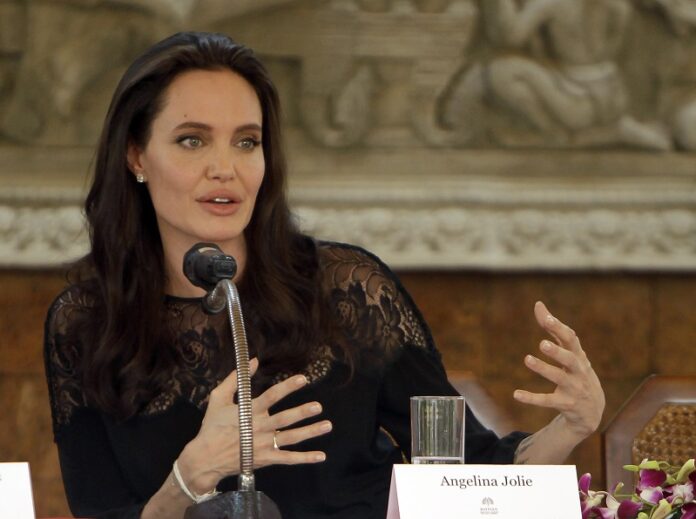
Angelina Jolie Says Child Casting Story Is False, Upsetting

Actress Angelina Jolie gives a press conference in February in Siem Reap province, Cambodia. Photo: Heng Sinith / Associated Press

LOS ANGELES — Angelina Jolie says accounts of her casting process for children to appear in her film “First They Killed My Father” are false and upsetting. An excerpt from a Vanity Fair profile of the director sparked backlash online earlier this week from people who criticized the methods as being cruel and exploitative.
Adapted from Loung Ung’s memoir, the biographical drama centers on her childhood under the brutal Khmer Rouge regime in Cambodia. Jolie co-wrote and directed the film, which she talked about in a recent Vanity Fair profile.

The article described a scene in which casting directors in their attempt to find a child actress to play the lead role presented money to impoverished children only to take it away from them as an acting exercise.

Jolie and producer Rithy Panh issued joint statements Sunday responding to the outrage and refuting claims that the production was exploitative through a representative from Netflix, which is producing and distributing the film.

“I am upset that a pretend exercise in an improvisation, from an actual scene in the film, has been written about as if it was a real scenario. The suggestion that real money was taken from a child during an audition is false and upsetting,” Jolie said. “I would be outraged myself if this had happened.”

Jolie said parents, guardians and doctors were on set daily to care for the children and “make sure that no one was in any way hurt by participating in the recreation of such a painful part of their country’s history.”

Panh, who himself is a survivor of the Khmer Rouge, added that casting “was done in the most sensitive way possible.”

He described a process that was informed both by families’ preferences and NGO (non-governmental organization) guidelines in which the children understood that they would be acting out a scene.

“The children were not tricked or entrapped, as some have suggested,” Panh said. “They understood very well that this was acting, and make believe.”

The Vanity Fair article went into more detail about the production than the one paragraph that circulated on Twitter, which sparked the initial outrage.

A representative from Vanity Fair issued a statement Sunday saying that author Evgenia Peretz “clearly describes what happened during the casting process as a ‘game’ ” and “that the filmmakers went to extraordinary lengths to be sensitive in addressing the psychological stresses on the cast and crew that were inevitable in making a movie about the genocide carried out in Cambodia by the Khmer Rouge.”

Jolie’s film will debut on Netflix sometime after showing at the Toronto International Film Festival this September.

Story: Lindsey Bahr

Advertisement

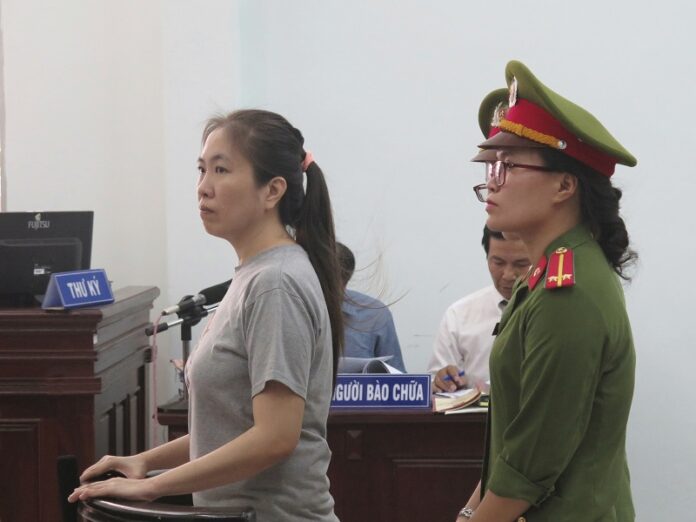
Vietnam Arrests 4 Activists Accused of Attempted Subversion

Prominent blogger Nguyen Ngoc Nhu Quynh, left, stands trial in June in the south central province of Khanh Hoa, Vietnam. Photo: Associated Press

HANOI — A writer, a Protestant pastor and two other activists have been arrested on charges of attempted subversion as Vietnam’s communist authorities continue to show no tolerance of dissent.

The four had all served previous jail sentences for anti-state convictions and are connected to a lawyer arrested two years ago. The Ministry of Public Security said in a statement on its website that the four were taken into custody on Sunday.

They are Pham Van Troi, 45, from Hanoi; Nguyen Bac Truyen, 49, from Ho Chi Minh City; freelance writer Truong Minh Duc, 57 from Ho Chi Minh City; and Protestant pastor Nguyen Trung Ton, 45 from the northern province of Thanh Hoa.

They were connected to lawyer Nguyen Van Dai who was arrested along with activist Le Thu Ha in December 2015. Dai himself was convicted of spreading propaganda against the state and sentenced to four years in prison in 2007.

The activists, however, now face much more serious charges of activities that aim at “overthrowing the people’s administration,” an offense that carries up to death penalty.

Despite sweeping economic reforms launched three decades ago that opened up the communist-ruled country to foreign trade and investment, Vietnamese authorities maintain tight control on society and the media and tolerate no challenges to the Communist Party’s monopoly on power.

Their arrests came a month after the two activists were given harsh sentences for anti-state propaganda.

Last week, activists Tran Thi Nga was convicted of spreading anti-state propaganda and sentenced to nine years in prison and prominent blogger Nguyen Ngoc Nhu Quynh, who was also known as Mother Mushroom, was convicted of the same charges and given 10 years in jail a month ago.

The U.N. Human Rights Commission, some Western governments as well as international human rights groups have criticized the convictions on what they say vaguely worded charges and have urged Vietnamese government to release the two.

Hanoi has maintained that there are no political prisoners in Vietnam, only law breakers are put behind bars.

Advertisement

I Went to a Bangkok Hotel to Hear Apocalyptic Alien Prophecies

Members of UFO Kaokala, a group that trains in meditation to seek answers and prophecy from extraterrestrial life, Saturday at a convention held in a Bangkok hotel.

Top: Members of UFO Kaokala, a group that trains in meditation to seek answers and prophecy from extraterrestrial life, Saturday at a convention held in a Bangkok hotel.

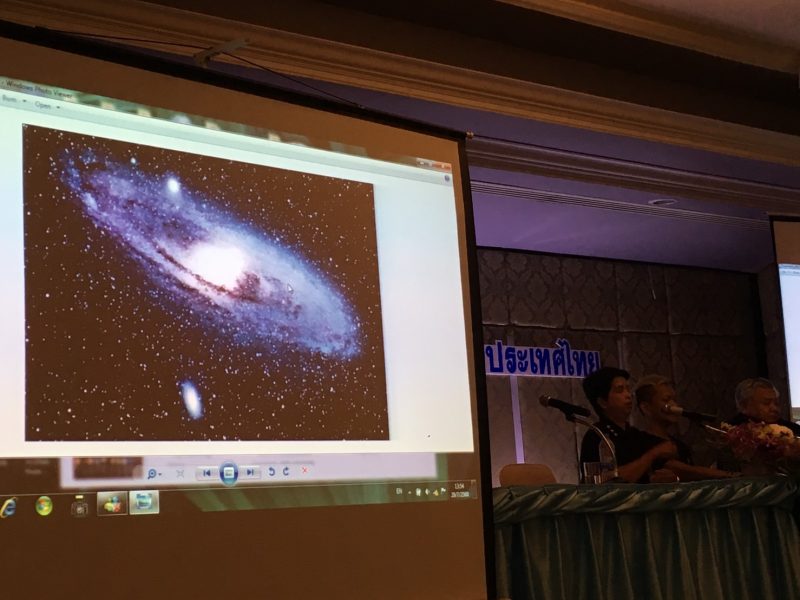
It only took stepping into the brown-carpeted conference room of a grungy Bangkok hotel to enter a dimension of belief where aliens not only exist (and think we’re stupid) but communicate with a select few Thais over the psychic plane.

This is the UFO Kaokala group, and on Saturday more than 200 members gathered to hear their leaders relate the latest prophecies gleaned from their otherworldly advisers, sip on the Royal Rattanakosin Hotel’s sugar-water tea, seek the use of their extraterrestrial gifts and puzzle over the outside world’s lack of belief.

“There’s some people today that still don’t even believe in aliens,” a woman said to low chuckles and murmurs of shared incredulity from the audience.

S 39510030
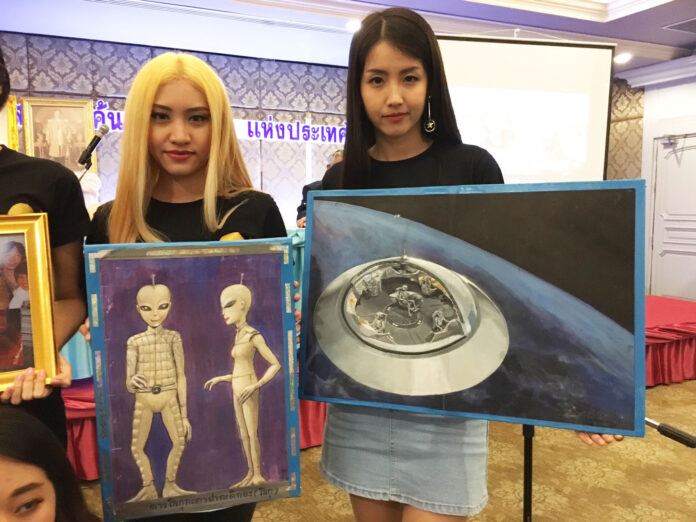
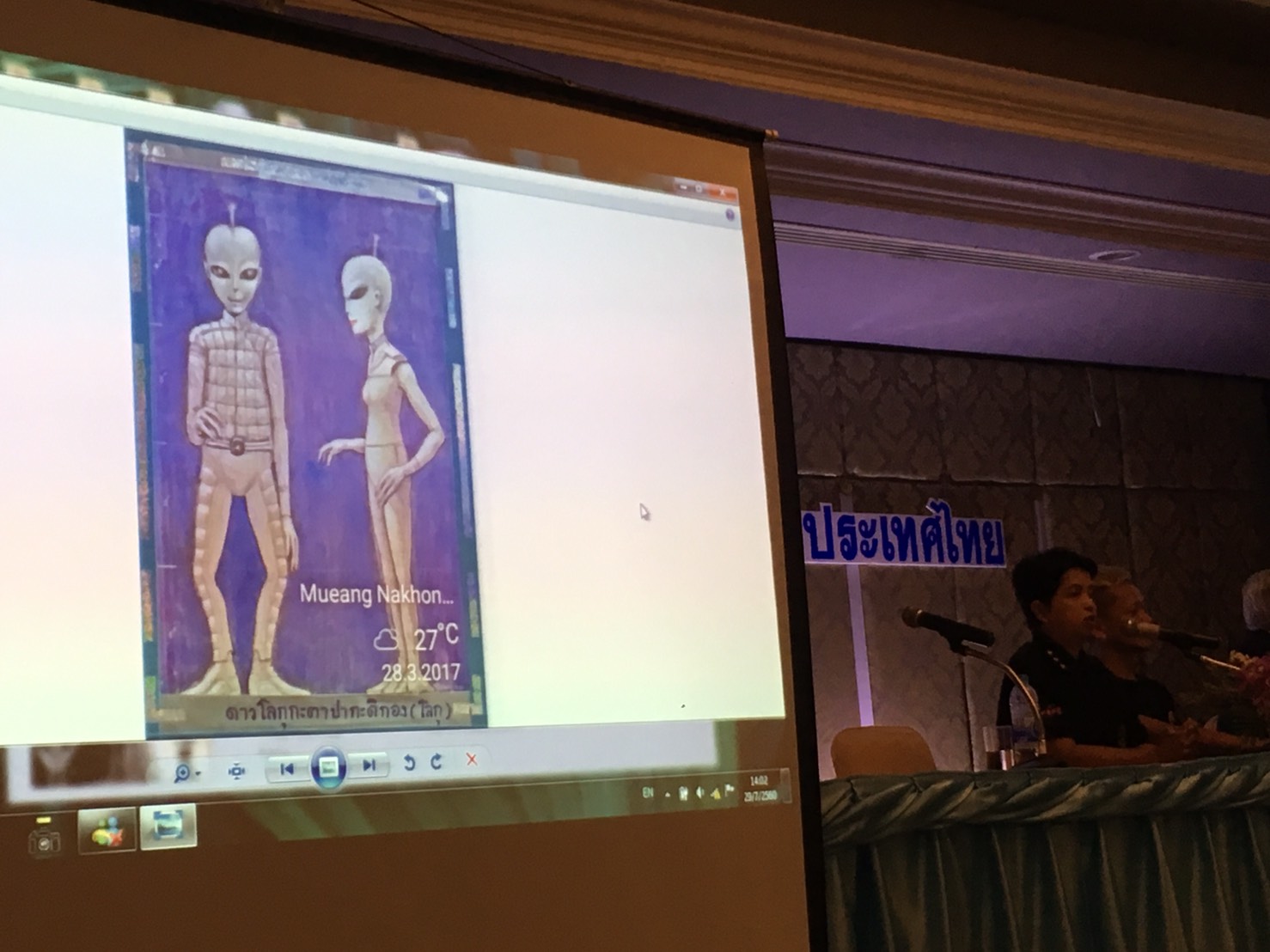
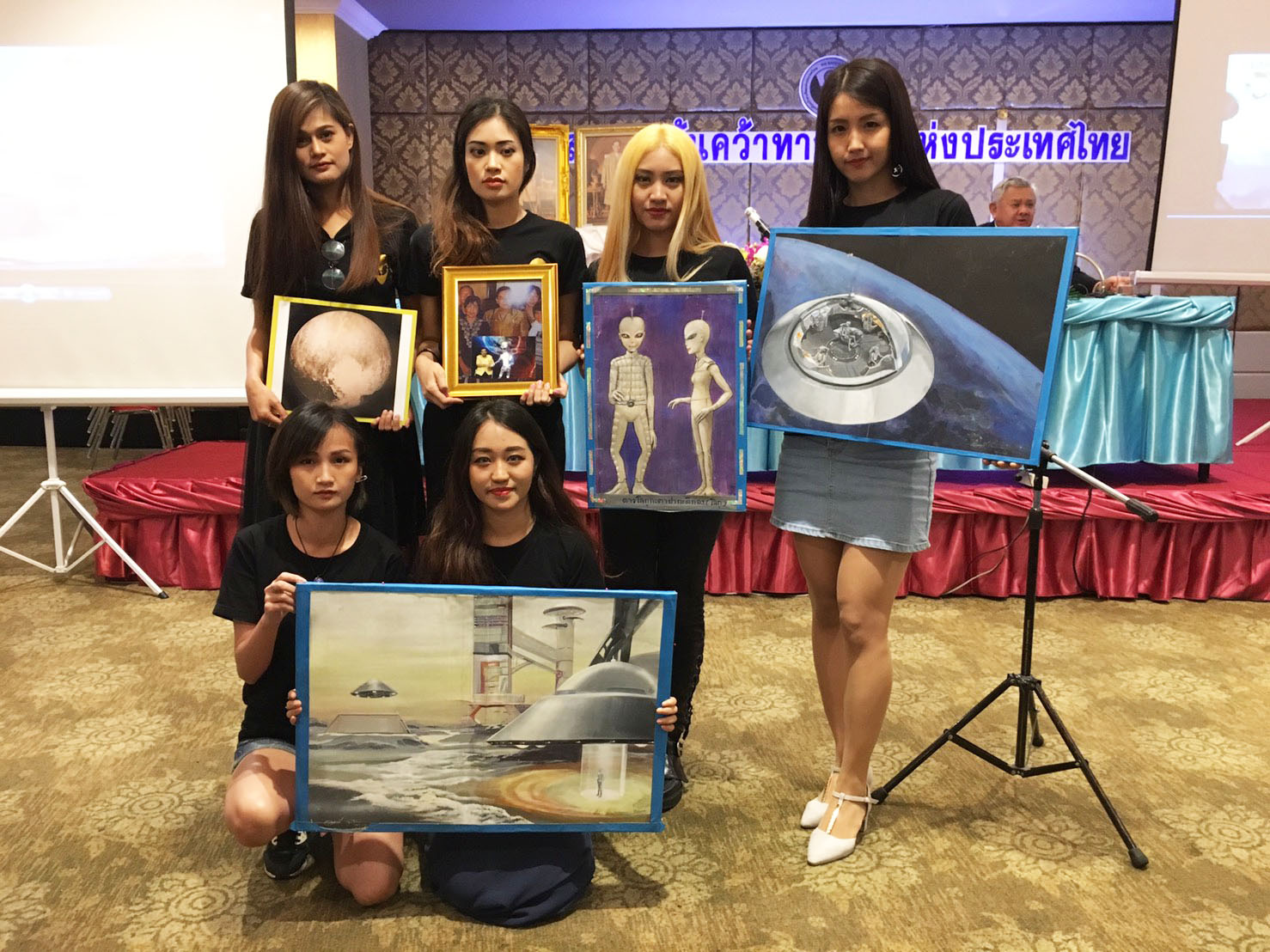
Somjit shows the audience her depiction of some aliens from Pluto she communicated with.

That woman was Somjit Reapeth, who is tasked with overseeing Alien Communications for the group.

Somjit and the rest see a rupturing world just out of reach to the vast wisdom offered by the aliens zipping around the universe who have banded together in an intergalactic Federation. To those cosmic travelers, Earthlings are savage, spoiled children who can’t evolve past devising new ways to kill each other.

“Our Earth is like a speck of dust in the galaxy. Unbelievers should open their minds. Don’t be scared that we have advanced neighbors. They want to help us,” Somjit, 58 and a nurse by trade, told the audience. “They visit us in every era. How do you think we built the pyramids?”

Members believe in extraterrestrial life and practice meditation to communicate with said life. Most are middle-aged, middle-class people of various backgrounds, from office workers and medical professionals and underemployed free agents. All are Buddhists who say xenology and studying alien teachings not only comports with but enhances Buddhist spirituality.

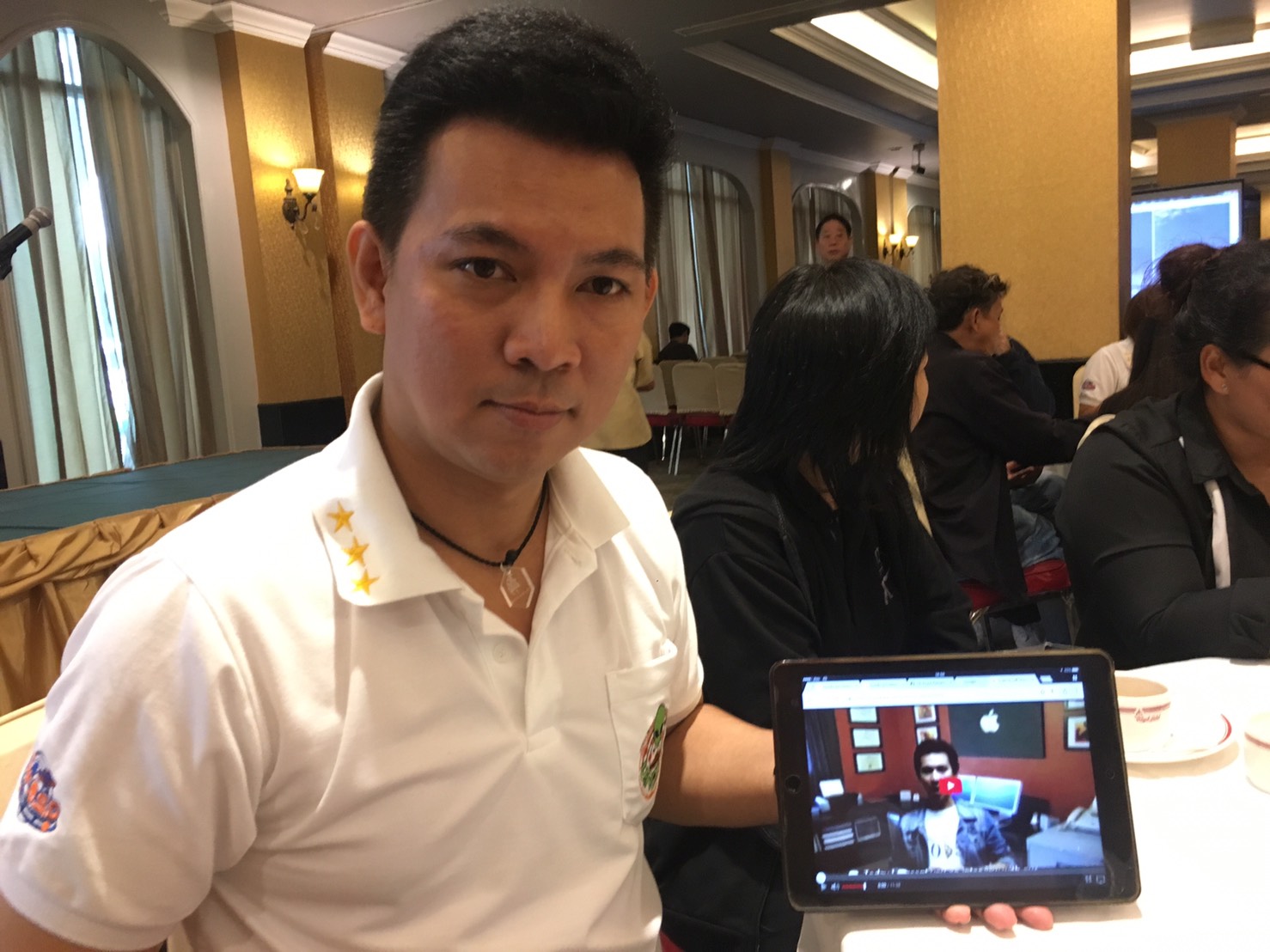
Kuntamestha Fhanataweenantha, a 39-year-old personal financial planner, has been a member since 2009. He said aliens tell him about natural disasters to come, and even what is to happen in his personal and professional life.

Kuntamestha Fhanataweenantha, a 39-year-old personal financial planner, shows a portentous YouTube video he created in 2011.

“Within six years, the volcanoes along the Ring of Fire will erupt, and tsunamis will harm Chile, San Andreas and especially Yellowstone,” Kuntamestha said, referring to the nation, a seismological fault line in California and US national park. He said that he uploaded a video just before the 2011 Tohoku earthquake and tsunami warning of the catastrophe about to hit Japan.

“When I joined, I didn’t believe in aliens. But on the retreat, I saw UFOs and light silhouettes of people, and I was speechless,” Kuntamestha said. “Now the aliens tell me things like Sakhon Nakhon will flood, that there will be a solar halo, or that I’ll get a big client in a couple days that will get me 5 million baht.”

Talking to aliens, for Kuntamestha, is tantamount to religious development.

“It’s okay, even if I don’t go to temple,” he said. “This is very similar, and very easy too. There’s no need to translate difficult text from Bali-Sanskrit.”

What UFO Kaokala Actually Believes

One might expect the whole thing is a scam cult to squeeze money from the gullible. But apart from the entry fee of a few hundred baht and a small merch table selling T-shirts and photos,  Saturday’s event wasn’t about money.

Instead, uninitiated visitors found an earnest (if slightly paranoid) group of New Agers with some wild ideas practicing the kind of good ole’ ufo religion that emerged in the ‘60s and ‘70s.

UFO Kaokala members believe that by meditating and developing one’s own mental abilities, they can project their brainwaves and talk to extraterrestrials, while developing their dharma along the way.

They draw heavily from mass media representations of extra-solar life.

S 39510029
Somjit compares her extraterrestrial experiences with what’s represented in sci-fi movies.

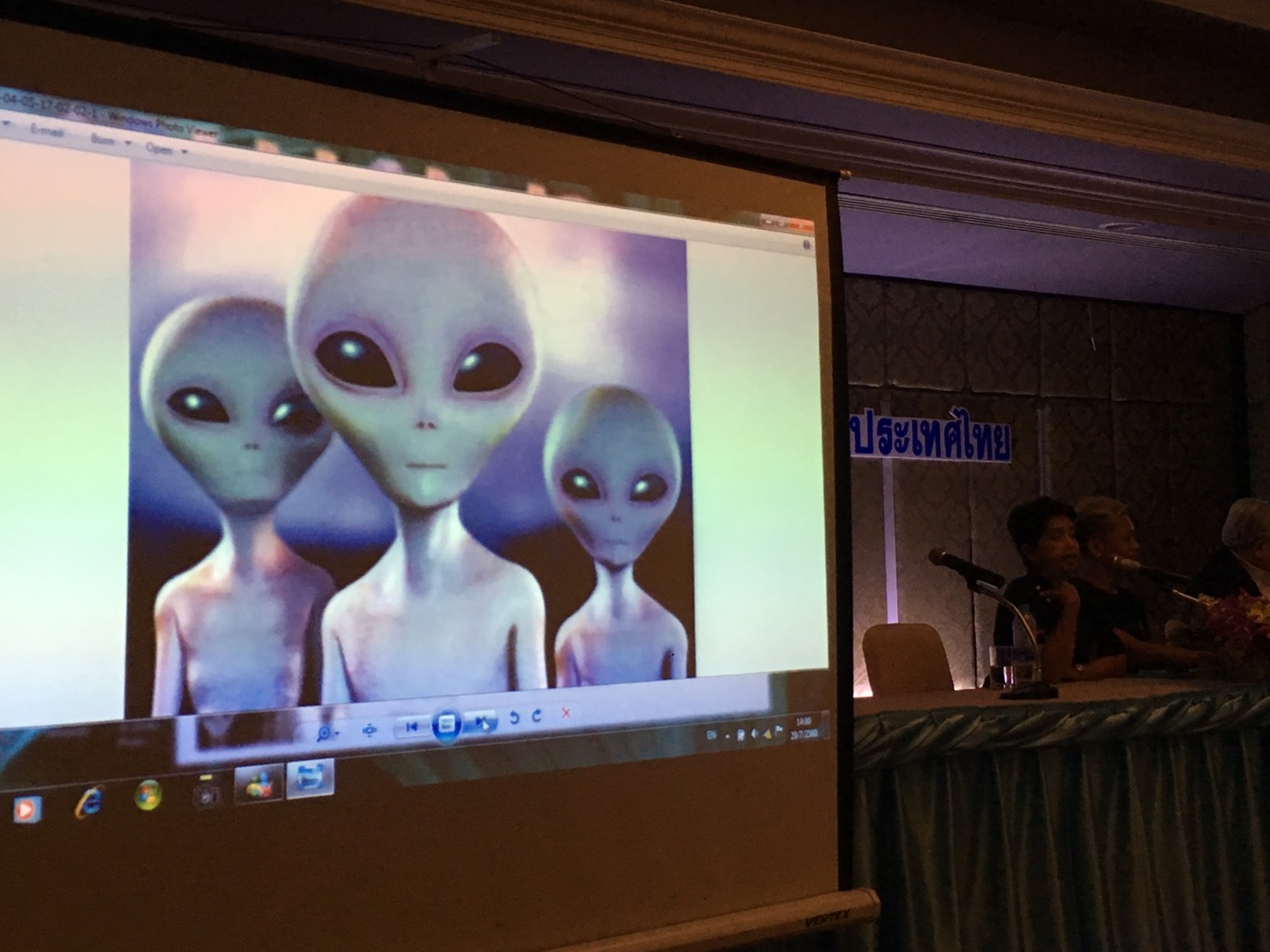
“Aliens portrayed in movies are about 70 percent accurate,” Somjit said. “They do have large heads to accommodate their large brains, a high IQ and small bodies. Like in Star Wars, the aliens also made alliances with aliens from different planets. We need to develop our mental abilities to communicate with them, because what happened in the latest Transformers movie will come true.”

So why are they talking to a 58-year-old Thai nurse?

“If you’re asking why the aliens picked Thailand to communicate with, it’s because we’re Buddhists and trained in meditation. We have nothing else, if not a high psychic ability. The non-spiritual West wouldn’t understand,”  Somjit said. “Practicing mediation to communicate with aliens adheres to the laws of Buddhism. Aliens also want to reach nirvana too, but they can better do so since they’re on a higher psychic plane.”

Scanners (And Other Powers)

The group’s senior members are called ajarn and respected for their advanced abilities, said to be sharpened by alien training.

What in other realms of Thai belief are mediums and fortune tellers, the UFO Kaokala ajarn bring some of the same abilities to bear, albeit with sci-fi underpinnings.

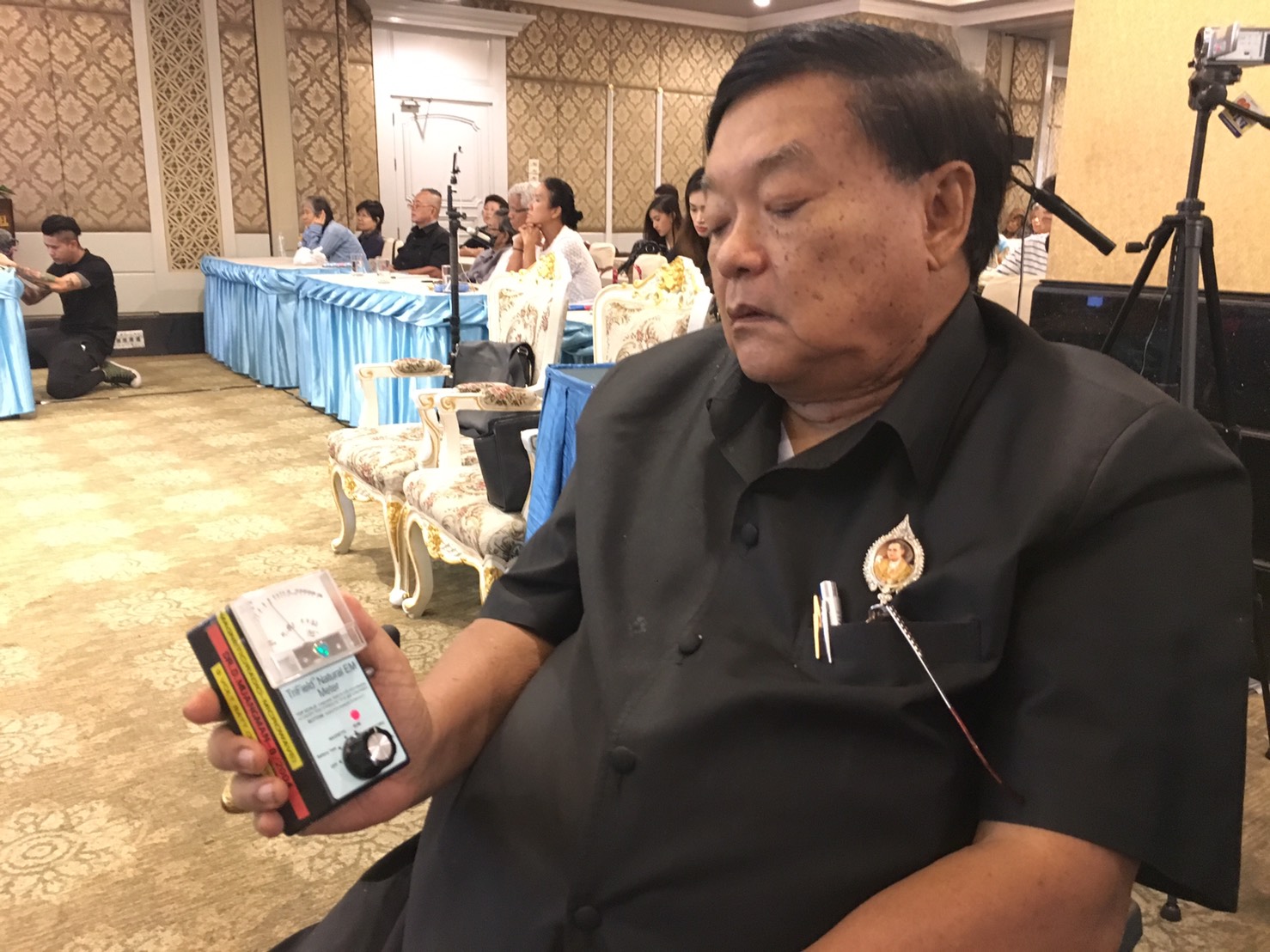
Dephanom Muangman, a Harvard-trained, former heart surgeon, demonstrates the use of his EMF meter to detect the proximity of extraterrestrials.

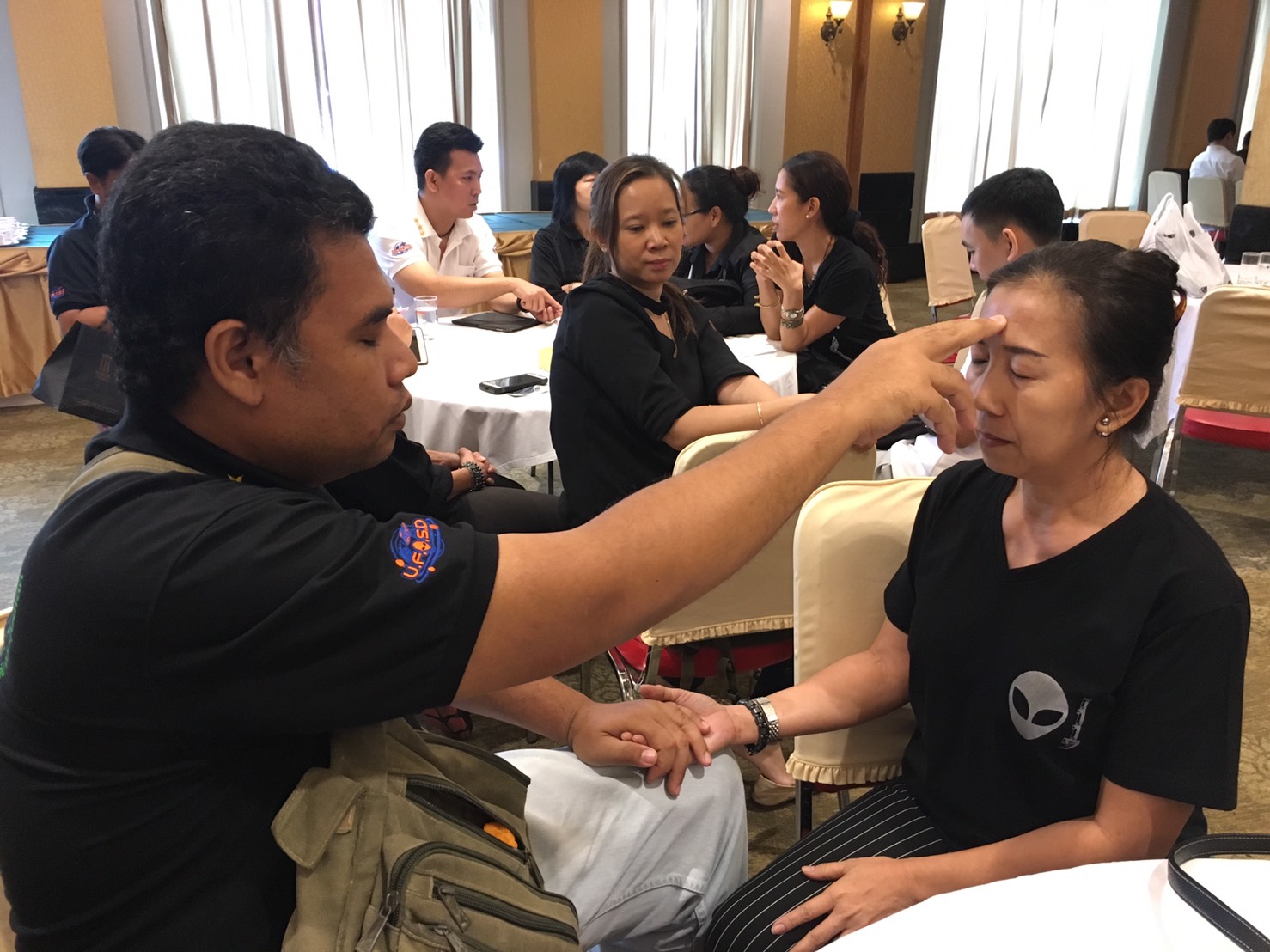
As speakers on the stage Saturday talked about alien prophecies of natural disasters and world wars, women queued in front of Paprongpong Chamoo so he could scan their bodies for disease with his alien-honed psychic abilities.

Dephanom Muangman, a former heart surgeon who studied medicine and earned his doctorate at Harvard, is often in the news for his alien-related warnings. On Saturday, he showed off the electromagnetic field meter he uses to detect when aliens are near.

“There will be a Third World War in the next five years because Trump is president,” Dephanom said, sharing some prophecies derived from his alien meditations. “This will be true, because they told me that Bangkok would flood back in 1997.”

mtkala 1
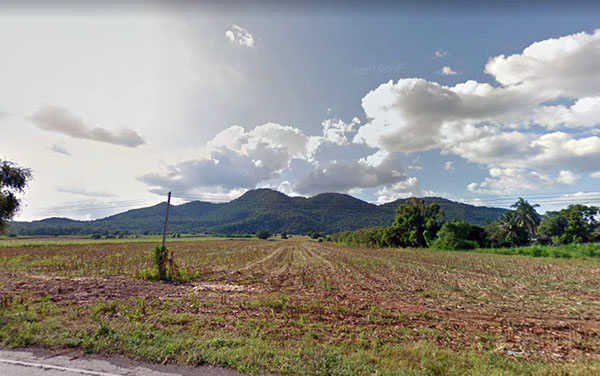
Khao Kala rises in the background. Photo: Google

The Khao Kala Incident

Those present Saturday ranged in zealousness. There are the senior members, who treat their alien training and prophetic powers with a kind of professionalism. In the crowd, find the more fervent, sweatier believers who create paranoia-pitched YouTube videos and alien testimonials, along with a smattering of the alien-curious who may have never been on a UFO-watching hiking trip themselves.

Their belief and the group’s name trace to a mountain in the central province of Nakhon Sawan.

That was where Somjit said she first saw aliens back in 1998, leading the group’s first to receive messages through meditation. Khao Kala, it would turn out, was the go-to place for alien encounters in Thailand, as they frequently land there or fly by because Khao Kala is a convenient place for them to cross over dimensional barriers. Since then, it’s become the epicenter of UFOlogy, with frequent sightings and alien-watching retreats held here by UFO Kaokala.

For more information, check out UFO Kaokala and the Thai-language Kaokala Disaster Alert, which largely disseminates alien-born prophecy on wars and natural disasters.

Additional writing Todd Ruiz

S 39510028 e1501408886696
‘The aliens say we aren’t very clever, since we always make weapons to kill each other and destroy the world with. They are mentally superior; we are like children to them. Whether you believe in them or not, you’ll encounter them soon.’ Somjit Reapeth, one of the group’s founders and present Alien Communications Officer, speaks at Saturday’s convention. She claims to have contacted aliens and showed footage of what she said was a UFO spotted at Khao Kala.
S 39510033
‘It was a black, shape-shifting ship that flew in zig-zags and was made of metal panels. Once, they even took me back in time. I checked my phone clock, and it said 4:28. Then I played with my dog for what felt like a long time, and when I checked my phone again to see, it was 4:23.’ Science fiction writer Papronpong Chamoo, 38, scans a woman using telepathic alien skills for diseases in her body. Papronpong is one of the members who claims to have their ‘basal dharmic brain wave’ enhanced by alien training. Papronpong, who joined in 2010, said UFOs would fly around his house all the time when he was a child.
S 39510034
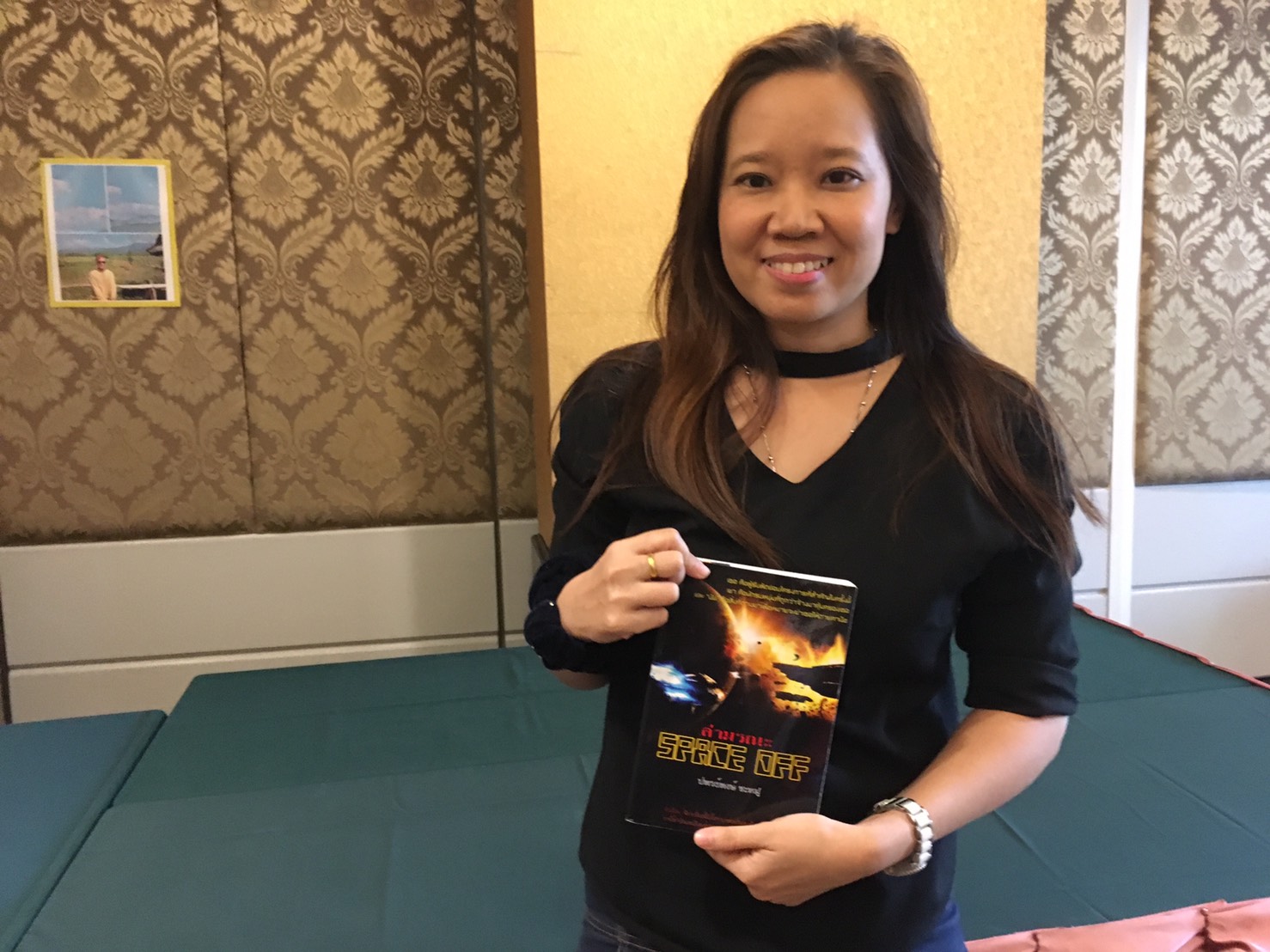
‘I’ve never seen aliens, but bacteria and ghosts exists, and we can’t see them. I’m not so concentrated on the aliens, but I want to develop my psychic ability so I can reach nirvana too.’ Saowaluck Triwitthayasilp, a logistics worker, 39, holds a book written by member Papronpong Chamoo. She joined the group because she was interested in predicting disasters. Asked about the portrayal of aliens in films, Saowaluck said, ‘I think aliens send brain waves to humans to inspire them to make movies about them. I imagine that out there, it’s probably similar to Star Wars.’
S 39510039
‘I saw them with my own eyes. Now, I’m working towards communicating with them. The aliens pick who to communicate with based on who’s ready.’ Tararat Thongcharoen, 26, second from left in back, joined the group because she was interested in developing her dharma.

A documentary about UFO sightings on Khao Kala.

Advertisement

Hot News

LATEST NEWS

Bangkok
overcast clouds
31.6 ° C
34.4 °
31.6 °
74 %
2.8kmh
100 %
Mon
31 °
Tue
36 °
Wed
38 °
Thu
36 °
Fri
36 °