BANGKOK — One Direction heartthrob Harry Styles is coming to Bangkok to promote his solo album, promoter BEC-Tero Entertainment announced Thursday night.
The 23-year-old singer is famous from his days in British boy band One Direction. After the band went on an extended hiatus in March 2016, Styles launched his first solo single “Sign of the Times” in April and released his self-titled debut album last month.
Styles will be joined by Los Angeles indie rock band Warpaint.
Tickets starts at 2,040 baht. They can be purchased online.
The Bangkok date for Harry Styles Live On Tour is set for May 7 at Impact Arena Muang Thong Thani, which can be reached by van, taxi or Impact Link shuttle via BTS Mo Chit exit No. 4 or MRT Chatuchak Park exit No. 3.
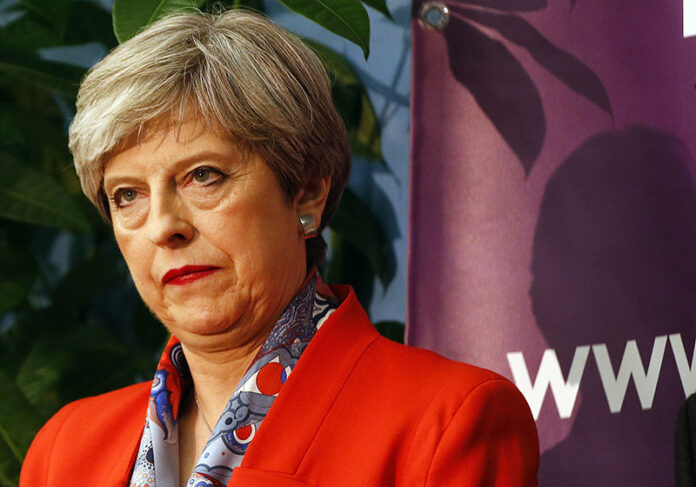
Britain's Prime Minister Theresa May listens as the declaration at her constituency is made for in the general election in Maidenhead, England on Friday. Photo: Alastair Grant / Associated Press
LONDON — British Prime Minister Theresa May’s gamble in calling an early election appeared Friday to have backfired spectacularly, with a real possibility that her Conservative Party could lose its majority in Parliament.
If confirmed, the result would lead to a period of political uncertainty and could throw Britain’s negotiations to leave the European Union – due to start June 19 – into disarray. The pound lost more than 2 cents against the dollar within seconds of the announcement.
With more than two-thirds of the seats counted, the results appeared to be generally bearing out an exit poll that predicted the Conservatives would get 314 of the 650 seats in Parliament, down from 330, while the Labour Party was projected to win 266, up from 229. Conducted for a consortium of U.K. broadcasters by interviewing voters leaving polling stations, it is regarded as a directional, but not exact, indicator of the result.
As the results piled up, some form of minority or coalition government appeared increasingly likely. That raised the odds that an election called by May to provide “strong and stable government” would bring instability and the chance of yet another early election.
The results confounded those who said the opposition Labour Party’s left-wing leader, Jeremy Corbyn, was electorally toxic. Written off by many pollsters, Labour surged in the final weeks of the campaign. It drew strong support from young people, who appeared to have turned out to vote in bigger-than-expected numbers.
It would also put pressure to resign on May, who called the snap election in the hope of increasing her majority and strengthening Britain’s hand in exit talks with the European Union. As she was resoundingly re-elected to her Maidenhead seat in southern England, May looked tense and did not spell out what she planned to do.
“The country needs a period of stability and whatever the results are the Conservative Party will ensure we fulfill our duty in ensuring that stability so that we can all, as one country, go forward together,” she said.
Others predicted she would soon be gone
“If the poll is anything like accurate, this is completely catastrophic for the Conservatives and for Theresa May,” former Conservative Treasury chief George Osborne said on ITV. “Clearly if she’s got a worse result than two years ago and is almost unable to form a government, then she, I doubt, will survive in the long term as Conservative Party leader.”
Ed Balls, a former Labour Treasury chief, said it would hurt May’s negotiating position with Europe.
“I don’t see how she can be a strong and credible figure now to lead these negotiations,” he said.
Corbyn said the result means “politics has changed” and voters have rejected Conservative austerity. Speaking after being re-elected to his London seat, Corbyn said May should “go … and make way for a government that is truly representative of all the people of this country.”
The result was bad news for the Scottish National Party, which by early Friday had lost about 20 of its 54 seats. Among the casualties was Alex Salmond, a former first minister of Scotland and one of the party’s highest-profile lawmakers.
A big loss could complicate the SNP’s plans to push for a new referendum on Scottish independence as Britain prepares to leave the EU.
“Indy Ref 2 is dead in Scotland,” said Scottish Conservative leader Ruth Davidson, using a short form for a second independence referendum.
May had hoped the election would focus on Brexit, but that never happened, as both the Conservatives and Labour said they would respect voters’ wishes and go through with the divorce.
May, who went into the election with a reputation for quiet competence, was criticized for a lackluster campaigning style and for a plan to force elderly people to pay more for their care, a proposal her opponents dubbed the “dementia tax.” As the polls suggested a tightening race, pollsters spoke less often of a landslide and raised the possibility that May’s majority would be eroded.
Then, attacks that killed 30 people in Manchester and London twice brought the campaign to a halt, sent a wave of anxiety through Britain and forced May to defend the government’s record on fighting terrorism. Corbyn accused the Conservatives of undermining Britain’s security by cutting the number of police on the streets.
Eight people were killed near London Bridge on Saturday when three men drove a van into pedestrians and then stabbed revelers in an area filled with bars and restaurants. Two weeks earlier, a suicide bomber killed 22 people as they were leaving an Ariana Grande concert in Manchester.
Rachel Sheard, who cast her vote near the site of the London Bridge attack, said the election certainly wasn’t about Brexit.
“I don’t think that’s in the hearts and minds of Londoners at the minute, (not) nearly as much as security is,” said Sheard, 22. “It was very scary on Saturday.”
That said, security was far from the only issue.
“It’s important, but it’s only one issue amongst several,” said 68-year-old Mike Peacroft. “I wouldn’t necessarily say it’s at the top. Obviously at my end of the (age) spectrum, I’m more interested in things like pensions and so forth, NHS health care – plus schooling, those are really my main concerns.”
Suvarnabhumi International Airport in Bangkok in an undated file photo. Photo: Matichon
COPENHAGEN, Denmark — Swedish authorities say a 38-year-old man suspected of four rapes last month in Sweden has been arrested in Thailand.
Prosecutor Karl-Erik Antonsson says they will now start the process of having the man, who was not identified, extradited to Sweden.
Antonsson said the fugitive was arrested Thursday on an international arrest warrant, and that he was suspected of rapes that took place in several locations in Sweden on May 17-19.
Swedish media say the man had earlier been convicted twice of sex crimes and added that he was arrested at the Bangkok airport.
Thai officials said they had no immediate information about the arrest.
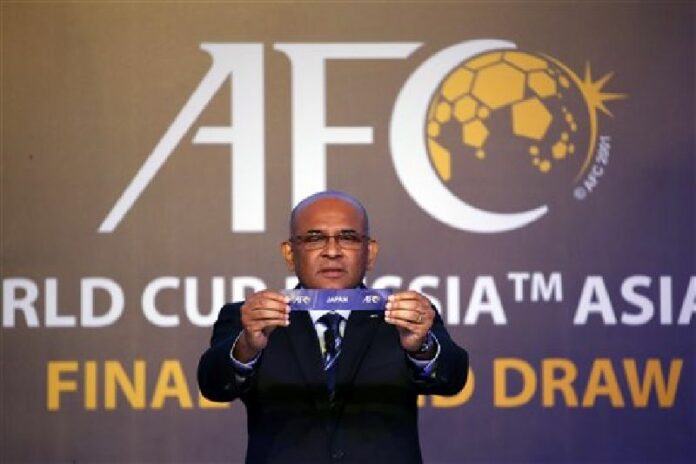
Asian Football Confederation (AFC) General Secretary Windsor John holds the country name card of Japan in the draw for 2018 FIFA World Cup Asian qualifiers final round in Kuala Lumpur, Malaysia on Tuesday, April 12, 2016. Photo: Vincent Thian / Associated Press
ADELAIDE, Australia — The Saudi Arabian Football Federation has apologized for “any offense caused” after its players declined to participate in a minute’s silence in memory of last weekend’s deadly attacks in London before the start of a World Cup qualifying match against Australia.
When the stadium announcer called for a minute’s silence Thursday night to honor the eight victims, including two Australians, the 11 Australian players on the field lined up near the center circle with arms on their teammates’ shoulders.
Their opponents from Saudi Arabia stayed on the other side, most seemingly ignoring the gesture, which sparked an immediate backlash. Video appeared to show one Saudi player bending down to tie his shoe lace during the minute of silence.
The Saudi federation statement said it “deeply regrets and unreservedly apologizes for any offense caused.”
“The players did not intend any disrespect to the memories of the victims or to cause upset to their families, friends or any individual affect by the atrocity,” the statement said. “The Saudi Arabian Football Federation condemns all acts of terrorism and extremism and extends its sincerest condolences to the families of all the victims.”
Australia won the match 3-2 to move level on points with Saudi Arabia and Japan atop the qualifying group with two games remaining.
Football Federation Australia said the Saudi team management knew about the plan to hold a minute’s silence before the match and had indicated that the players wouldn’t participate.
“Both the (Asian Football Confederation) and the Saudi team agreed that the minute of silence could be held,” the FFA said in a statement. “The FFA was further advised by Saudi team officials that this tradition was not in keeping with Saudi culture and they would move to their side of the field and respect our custom whilst taking their own positions on the field.”
Typically, representative of soccer’s world governing body, FIFA, meet with officials from both teams and the referee a day before a World Cup qualifier to discuss game-related protocol, including plans for reflections such as the minute’s silence.
There was no immediate response from FIFA or the Asian Football Confederation.
Australian Prime Minister Malcolm Turnbull was asked early Friday about the incident but said while the matter had been raised with him, he had not seen video.
“The whole world, the whole free world is united in condemnation of that terrorist attack and terrorism generally,” Turnbull said, without directly referencing the match. “Everybody, everyone should be united in condemnation with the terrorists and love, and sympathy and respect for the victims and their families.”
Senior Australian Labor politician Anthony Albanese described it as “a disgraceful lack of respect.”
“There is no excuse here. This isn’t about culture,” he said. “This is about a lack of respect.”
After the match, Australia, Saudi Arabia and Japan all had 16 points in qualifying Group B, although Japan had a game in hand.
Tomi Juric scored two goals and Tom Rogic added the third for Australia in Adelaide.
Salem Al Dawsari and Mohammed Al Sahlawi scored for the Saudis, who are led by former Netherlands coach Bert van Marwijk.
Australia plays at Japan on Aug. 31 and hosts Thailand on Sept. 5 in its remaining matches. In between, the Australians will play at the Confederations Cup in Russia.
The top two countries in the six-team group qualify for next year’s World Cup in Russia, with the third-place country advancing to a playoff.
Former FBI director James Comey is sworn in Thursday before the Senate Select Committee on Intelligence on Capitol Hill in Washington. Photo: J. Scott Applewhite / Associated Press
WASHINGTON — Former FBI Director James Comey accused the Trump administration Thursday of spreading “lies, plain and simple” about him and the FBI in the aftermath of his abrupt firing, in dramatic testimony that threatened to undermine Donald Trump’s presidency.
As he opened his much anticipated first public telling of his relationship with Trump, Comey disputed the Trump administration’s justification for his firing last month, declaring that the administration “defamed him and more importantly the FBI” by claiming the bureau was in disorder under his leadership. And in testimony that exposed deep distrust between the president and the veteran lawman, Comey described intense discomfort about their one-on-one conversations, saying he decided he immediately needed to document the discussions in memos.
“I was honestly concerned that he might lie about the nature of our meeting, so I thought it really important to document,” Comey said. “I knew there might come a day when I might need a record of what happened not only to defend myself but to protect the FBI.”
Comey made his comments as the packed hearing got underway, bringing Washington and parts of the country to a halt as all eyes were glued on televisions showing the hearing. He immediately dove into the heart of the fraught political controversy around his firing and whether Trump interfered in the bureau’s Russia investigation, as he elaborated on written testimony delivered Wednesday. In that testimony he had already disclosed that Trump demanded his “loyalty” and directly pushed him to “lift the cloud” of investigation by declaring publicly the president was not the target of the FBI probe into his campaign’s Russia ties.
Comey also said in his written testimony that Trump, in a strange private encounter near the grandfather clock in the Oval Office, pushed him to end his investigation into former National Security Adviser Michael Flynn.
The Senate intelligence committee chairman, Richard Burr of North Carolina, asked Comey the key question about that encounter: “Do you sense that the president was trying to obstruct justice, or just seek a way for Mike Flynn to save face, given he had already been fired?”
“I don’t think it’s for me to say whether the conversation I had with the president was an effort to obstruct,” Comey replied. “I took it as a very disturbing thing, very concerning. But that’s a conclusion I’m sure the special counsel will work towards to try and understand what the intention was there and whether that’s an offense.”
Later, in a startling disclosure, Comey revealed that after his firing he had tried to spur the appointment of a special counsel by giving one of his memos about Trump to a friend of his to leak to the press.
“My judgment was I need to get that out into the public square,” Comey said.
The Republican National Committee and other White House allies worked feverishly to lessen any damage from the hearing, trying to undermine Comey’s credibility by issuing press releases and even ads pointing to a past instance where the FBI had had to clean up the director’s testimony to Congress. Republicans and Trump’s own lawyer seized on Comey’s confirmation, in his written testimony, of Trump’s claim that Comey had told him three times the president was not directly under investigation.
Trump himself was expected to dispute Comey’s claims that the president demanded loyalty and asked the FBI director to drop the investigation into Flynn, according to a person close to the president’s legal team who demanded anonymity because of not being authorized to discuss legal strategy. The president has not yet publicly denied the specifics of Comey’s accounts but has broadly challenged his credibility, tweeting last month Comey “better hope there are no ‘tapes'” of the conversations.
“Lordy, I hope there are tapes,” Comey remarked at one point, suggesting such evidence would back up his account over any claims from the president.
But it was a Democrat, Sen. Dianne Feinstein of California, who asked the question that many Republicans have raised in the weeks since Comey’s firing as one media leak followed another revealing Comey’s claims about Trump’s inappropriate interactions with him.
Raising the Oval Office meeting where Comey says Trump asked him to pull back the Flynn probe, Feinstein asked: “Why didn’t you stop and say, ‘Mr. President, this is wrong,?'”
“That’s a great question,” Comey said. “Maybe if I were stronger I would have. I was so stunned by the conversation I just took it in.”
Comey was also asked if he believed he was fired because of the bureau’s investigation into Russia’s meddling in the 2016 election as well as Russia’s ties with Trump’s campaign.
“Yes,” Comey said. “Because I’ve seen the president say so.”
The hearing unfolded amid intense political interest, and within a remarkable political context as Comey delivered damaging testimony about the president who fired him, a president who won election only after Comey damaged his opponent, Hillary Clinton, in the final days of the campaign. Clinton has blamed Comey’s Oct. 28 announcement that he was re-opening the email investigation for her defeat. She’s argued she was on track to a victory when Comey’s move raised fresh doubts about her. “If the election were on Oct. 27, I would be your president,” Clinton said last month.
Many Democrats blame Comey for Clinton’s loss, leading Trump to apparently believe they would applaud him for firing Comey last month. The opposite was the case as the firing created an enormous political firestorm that has stalled Trump’s legislative agenda on Capitol Hill and taken over Washington.
Under questioning Thursday, Comey strongly asserted the intelligence community’s conclusion that Russia did indeed meddle in the 2016 election.
“There should be no fuzz on this. The Russians interfered,” Comey stated firmly. “That happened. It’s about as unfake as you can possibly get.”
Trump has begrudgingly accepted the U.S. intelligence assessment that Russia interfered with the election. But he has also suggested he doesn’t believe it, saying Russia is a “ruse” and calling the investigation into the matter a “witch hunt.”
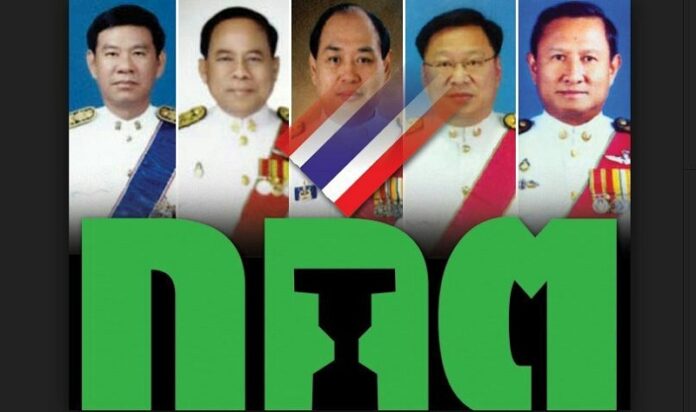
This image shows five Election Commission Members who could potentially be replaced in a vote on Friday.
BANGKOK — The interim national assembly on Friday will vote on whether to disband the Election Commission and replace it with an expanded number of commissioners.
The junta-appointed National Legislative Assembly, or NLA, will vote Friday afternoon on ousting its five commissioners and expanding the body from five to seven seats. Friday will be the second and third reading of the bill.
Under the bill, the new commissioners would be selected by a committee comprised of representatives from various agencies including the courts and other independent bodies. The chief author of the 2017 constitution said fresh faces on the commission, which oversees voting and campaigning, would provide a much-needed political reset.
If approved, the five commissioners appointed under the 2007 constitution would be forced out of office when the bill goes into effect.
“It’s up to the NLA now. I hope they will make a good decision,” Commissioner Somchai Srisuthiyakorn said Thursday afternoon. Somchai, who has stated his opposition to the bill, has a three-year term ahead of him – if he isn’t axed tomorrow.
If he and the four others are removed, he expects they will remain on as caretaker commissioners until replacements are named some time in November.
Experts are divided on support for the move to prematurely remove all existing Election Commissioners. Supporters include Ubon Ratchathani University’s Dean of Political Science Faculty Titipol Phakdeewanich, who says the existing commissioners are not democratically minded.
Titipol said that no matter how the vote goes, it’s likely to be interpreted along political lines. Removing the existing five commissioners could be perceived as an attempt by the junta force them out days after they resolved to continue a probe of nine cabinet ministers for possible conflicts of interests.
The nine include Deputy Prime Minister Wissanu Krea-ngam and Foreign Minister Don Pramudwinai.
Somchai on Wednesday rejected rumors the investigation was an act of revenge.
Should the present commission survive, Titipol said it could signal endorsement by the junta for its current members to handle the next general election.
Constitution Drafting Committee chairman Meechai Ruchuphan on Wednesday defended the proposal saying the move will smoothen the transition into a new seven-member commission in line with the 2017 constitution. Two charter drafters are members of the extraordinary committee in charge of drafting the organic bill.
Sakool Zuesongtham, a minority voice within the extraordinary committee said it’s wrong to punish the current election commissioners because they have done nothing wrong. Sakool said he’s against the tabula rasa proposal.
“Amending any law should not leads to punishment against any innocent party. It’s a matter of principle,” said Sakool, adding that things have become politicized.
A scorpion hangs from a cat's mouth in a still image from a video posted Monday. Image: My Mate Nate / YouTube
BANGKOK— A controversial American YouTuber in the media late last year for an offensive video drew fresh ire this week for pitting his cats against a scorpion.
Nathan Bartling, a 23-year-old former Mormon missionary who posts videos as “My Mate Nate,” posted a video of his cat fighting a scorpion Monday, to the ire of some netizens.
“You shouldn’t think that this is funny. The cat is hurting,” YouTube user Tham Tummai Krai Tham wrote in reply. “I feel sorry for it. If you really love your cat then why did you let it fight with a scorpion?”
In the video, Bartling’s cat is seen fighting a pet scorpion that got loose. Bartling said the scorpion was nonpoisonous. At various points in the clip, the scorpion hangs from the cat’s lip by its pincers to wacky sound effects and flame special effects. Bartling also says, “I love my cat,” in Thai.
His style of prank videos has landed him in hot water before.
In November, Bartling publicly apologizedfor a video where he “tested” people’s comprehension of English by posing embarrassing questions to them, such as asking if they were menstruating. In previous videos he also pranked 7-Eleven cashiers with 1,600 satang coins and tied his cat to a large number of heliumballoons.
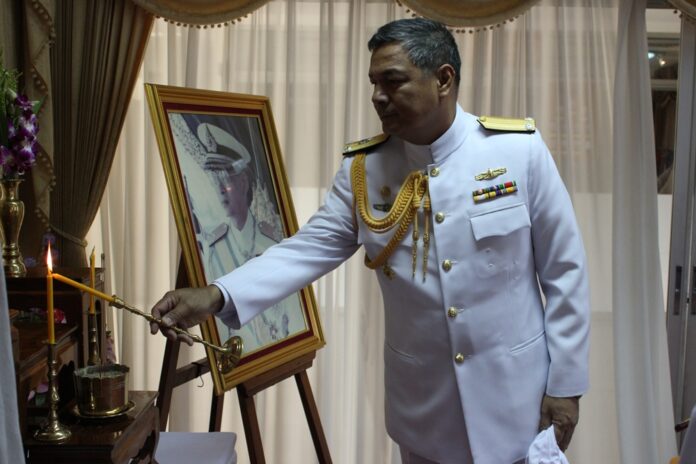
Pongthep Nhuthep lights a candle to honor King Bhumibol during a state ceremony at the Bangkok Navy Base on May 7, 2013. Image: Royal Thai Navy
BANGKOK — His Majesty the King appointed a former navy officer Thursday as the 14th member of his personal advisory body known as the Privy Council.
The appointment of Adm. Pongthep Nhuthep was countersigned by Privy Council chairman Prem Tinsulanonda.
Unlike many other “big names” on the council, such as former premier Surayud Chulanont or ex-justice minister Paiboon Kumchaya, Pongthep held a relatively low profile post prior to Thursday’s appointment.
Currently a permanent secretary to the defense ministry, Pongthep’s past jobs were all in the navy, including directing the naval academy, serving as a special navy adviser and serving as navy chief of staff. Compared to other members, he hasn’t served at the same levels such as commanding a branch of the armed forces or heading a ministry.
The Privy Councilors are personal advisors to the king. His Majesty has the power to appoint or expel any member at his own discretion.
Soldiers visit the home of Chonticha Jangrew's parents on Wednesday to tell them to pressure her to end her political activism. Photo: Chonticha Jangrew / Facebook
Top: Soldiers visit the home of Chonticha Jangrew’s parents on Wednesday to tell them to pressure her to end her political activism. Photo: Chonticha Jangrew / Facebook
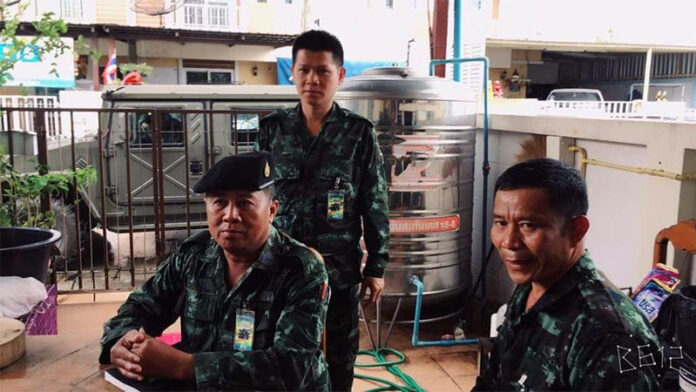
BANGKOK — When soldiers poured out of a Humvee on Wednesday afternoon at Chonticha Jangrew’s family home to accuse her of violating a three-year-old promise not to travel without permission, she wasn’t there. Her mother, whose frail health has been affected by the stress of more than 50 such visits, was the only one home.
The soldiers told her they’d keep coming back until her daughter was home. In the meantime, they said they would install CCTV cameras to watch their home.
Chonticha is one of two young activists whose stories of frequent harassment by soldiers and security officers belie the prevailing narrative that the military regime has traded hard tactics for a softer approach.
Both young activists interviewed for this story described similar predicaments in which they continue to feel micro-managed by junta soldiers and police three years on.
Chanoknan Ruamsap and Chonthicha Jangrew, both 24, said it’s not just them feeling harassed, but their parents and neighbors who’ve felt the heat.
“Their goal is to intimidate us,” pro-democracy activist Chanoknan said.
Chonticha said four to five soldiers visited her parents’ home yesterday to tell her mother to remind her that she must honor an agreement not to engage in political activities and seek permission to leave the kingdom. Chonticha has maintained the 2014 agreement was signed under duress.
Spokesman for the National Council for Peace and Order Col. Winthai Suvari said soldiers are dispatched to meet these people in order to bring about proper understanding about what’s happening on their part, however.
“There should be no problem. Sometimes it’s just like greetings and building relationships. Each has their own baggage, however,” Winthai said Thursday.
He said their complaints of feeling harassed and having their privacy violated was due to their “perspective.”
“It depends on their individual perspective. We must accept that these people’s attitudes are not like majority of the people to begin with. They don’t have a good attitude toward the NCPO,” Winthai said, using an acronym for the junta. He said that he didn’t know how long such visits would continue.
Their stories come at a time when the perception is that things have normalized without signs of large-scale repression. Media accounts of arrests and harassment – a staple in the first year after the 2014 coup – have become a distant memory to some. But micro-level, targeted repression continues, according to their accounts.
While some elements of their accounts were similar, the two handled things differently. One has opted to lay low at home and let her parents run interference, while the other has kept on the move to avoid harassment. Both said they felt harassed and denied the right to privacy.
Military House Calls
For about three years, anti-coup activist Chanoknan said she has been visited repeatedly by three to five soldiers at her parents’ home in the Saphan Mai neighborhood of Bangkok’s Don Mueang district.
“They only met me about 10 times [in the past three years] but they’ve visited my parents 20 times,” said the key former spokeswoman for the New Democracy Movement. “Their commanders instructed them to threaten me, but the officers they sent tried to befriend me.”
Chanoknan Ruamsap wears a T-shirt opposing the junta-backed charter before it was passed in an August referendum.
Beside intelligence gathering at her home, the same officers led by a lieutenant would wander around and talk to her neighbors, flashing Chanoknan’s photo and asking neighbors if they knew her. “They tricked the neighbors into telling them about my views. They wanted to show that they were friendly.”
This, she adds, was partly due to the fact that her parents, who are well-off and work in construction, support the junta.
“They warned my parents what could happen to me if I keep doing what I do. But then they would call me up and talk to me too,” said Chanoknan, who faces charges of violating the junta’s assembly ban. Her case is being handled by the military court.
“I think my parents don’t want me to talk to the soldiers. And I get up late while they arrive early. I also think my parents don’t want me to explode or say something strong to the soldiers, as it would be counterproductive to me,” she said.
When pressure on Chanoknan’s parents failed to end her political activism, the soldiers would say their superiors were upset.
A soldier, at right, holds a box of biscuits given by Chanoknan’s parents during a Jan. 12 visit to their home. Photo: Chanoknan Ruamsap / Courtesy
Chanoknan said the most stressful incident occurred late last year while she was in Brazil attending a training course for activists. During that time she shared on Facebook a biography of the new king produced by the BBC’s Thai-language service. It was the same article shared by student activist Jatupat Boonpattararaksa, or Pai Dao Din – which got him arrested and imprisoned.
Chanoknan refused to remove the article from her page, prompting her mother to threaten not to pick her up from the airport. Her lawyer rang her up saying she could face arrest on charges of lese majeste and violating the Computer Crime Act.
She was considering remaining in Brazil before deciding to return. She had been back for less than four hours when soldiers came to her home. They were visibly upset and told her that their boss was very angry, but Chanoknan insisted she had done nothing illegal.
“They told me their duty is to protect the nation, religion and the monarchy. I asked them, ‘Well what about the people? Are we people not supposed to be protected by you?’ His face turned visibly stern, and for five seconds the soldier kept staring at me. He then said he didn’t know what I was talking about and repeated that they only protect the nation, religion and the monarchy,” Chanoknan said.
She said things settled down and before long soldiers arrived with a gift basket to wish her and her parents a happy New Year’s. They also bid her farewell, saying they were being reassigned and introduced her to the new group of soldiers who would continue to visit Chanoknan and her family. By that time, her father had become so familiar with the old team he invited them to join in a round of drinks. The soldiers politely refused, she said, saying they couldn’t drink on the job. They compromised by taking a couple cans of beer back with them.
The new head soldier monitoring Chanoknan was in his mid-50s. After getting a frosty reception from the young activist, she said he pleaded that he was just trying to do his job. The old mid-level officer played a gentle uncle role who would talk about looking forward to retiring to tend to an orchard or rice field.
Since then, the new group of soldiers has visited Chanoknan’s home twice every month.
“But my mom mostly doesn’t wake me up to meet them. He’s not happy because I eventually told him that even if he comes, he should just talk to my parents. His response, she said, was to complain, “Look, life has been difficult since the coup, as I have to knock on the doors of strangers.”
Though the faces changed, Chanoknan said their objective was the same. Intimidation, firstly, but also to put a better face on the junta for her, she said. They also really wanted to know how she sees things and try to win the hearts of her parents.
“I mean, my mom may literally lock me up if the situation continues on this course,” she said.
As for the efficacy of such treatment, Chanoknan gave it a thumbs down, saying it’s only succeeded in making her sees the junta in even worser light.
“It’s not a good [impression] because everything is fake. The first batch was clearly fake. The uncle used a very soft tactic and looks kind, though.”
He message to Prayuth is the junta should stop intimidating people by visiting their homes. “It’s not working. It makes me angry and feel hatred and irritation.”
On the Move, But Can’t Outrun the Paranoia
Unlike Chanoknan, Chonticha Jangrew, 24, handled the soldiers’ repeated visits to her parent’s home. After a few months, she opted to leave and rent one apartment after another to avoid them, while her parents have been strained by the frequent visits.
Three years on, soldiers continue visiting her parents. Chonticha reckons they’ve gone to their home more than 50 times.
Chonticha Jangrew holds an anti-junta placard last month at Thammasat University on the third anniversary of the coup.
“I have changed places four or five times now, with a friend renting the place for me, so the junta can’t trace me. Now, I’m thinking of looking for a new apartment, but I have no energy,” said the former member of the New Democracy Movement who has joined the recently established Democracy Restoration Group, or DRG.
Chonticha said that last week, while she was sleeping, her landlord used a master key to enter her room in the morning. Upon seeing her, she said that she wanted to replace the lights with energy-saving bulbs.
“But she had no bulbs with her. Then she awkwardly apologized and left,” said Chonticha, who now wants to move again. “I don’t feel safe.”
Chonticha faces multiple charges, including violating the junta’s ban on political gatherings of more than four people and sedition. In 2015, she was imprisoned for 13 days along with other New Democracy activists.
Beside being absent from home for two years hasn’t stopped soldiers from showing up at her parents’ door.
Chonticha’s father, who’s in his 50s, is a sergeant major first class who works in Bangkok.
“His stance at the beginning was pro[-coup]. After time passed, and he saw I was altruistic in my struggle and that the NCPO is causing problems, his attitude changed,” Chonticha said.
Nonetheless, her father has been sneered at by his colleagues and pressured by his commanders because of her, and is considering resigning.
“He’s a quiet person but has become stressed and pressured. He’s making a decision on what preparations would be needed if he were to resign,” she said.
Chonticha holds an anti-junta poster on May 22 at Thammasat University to mark the coup’s third anniversary.
Her mother, a housewife, has been in frail health for a long time and the repeated visits and reactions of her neighbors are making matter worse, she said. Soldiers allegedly patrolled the area telling neighbors she’s a lawbreaker. Moreover, Chonticha said they entered the residential village without providing the security guards with proper ID cards.
“Often times, an unknown car, whose front and back license plates did not match, would simply park in front of my parents’ home, and the driver would take photos of the town house or my mom talk with neighbors and leave,” she said. “This is harassment. Neighbors have also become wary and more distant to my parents.”
She said the intimidation made her feel more negatively about the junta.
“There’s the loss of privacy. Not knowing if your phone is being tapped,” she said, adding that a reliable source said her phone calls – incoming and outgoing – were being monitored. “At times the phone produces hazy noises, but I don’t really have concrete evidence.”
Saying the loss of privacy was too much, Chonticha left her home in Pathum Thani’s Lam Luk Ka district a few months after the coup and has moved from one anonymous apartment to another.
But that didn’t put a stop to the attention she was getting from the authorities. Oftentimes, while engaging in public anti-junta activities, she said plainclothed police officers would sexually harass her.
“One day I was asked why my boobs were so big today,” she said. “I said it’s not kosher, but he just laughed. I was stunned and just walked away. One even sent a text message wishing me a Happy Valentine’s Day.”
She said some policemen and soldiers still call her up on her mobile phone. She reckoned it’s pointless to change the phone number because it wouldn’t be difficult for them to obtain the new one.
“All this harassment made me worried. Where’s my privacy?” she said.
Despite the pressure, Chonticha said they didn’t change her mind.
“Their goal was to control me but they failed. In fact it only served to show how terrible the dictatorial system is and the needs for change,” she said.
The price Chonticha paid was dear, however.
By late last year, after the death of King Bhumibol, Chonticha said she became the object of a social media witch hunt, where she was accused of being anti-monarchy. She said the stress caused her to throw up after eating and experience numbness on the left side of her body. She blamed the latter on an electric shock she and others experienced while protesting on the first anniversary of the May 22 coup at the Bangkok Arts and Culture Centre in 2015. They never determined the cause.
Earlier this year, she fainted. She was taken to a hospital and diagnosed with a migraine. A psychiatrist she later spoke to wrote four letters on a sheet of paper. It read “PTSD,” or post-traumatic stress disorder.
“I was confused and didn’t know what it was at the time. It must have been scary, so the psychiatrist didn’t even tell me verbally. I asked him what it was, but he didn’t explain to me. He said I should just go and look it up and come back for consultation,” she said.
When she was in prison, she had to be prescribed sleeping pills because insomnia would keep her awake until 3am, with just an hour or two to sleep before guards woke the prisoners up.
Today she still wakes from nightmares thinking she is being woken by a guard. Chonticha is considering seeking a new psychiatrist. Those she’s met at public hospitals haven’t worked because she refused to open up and talk about her travails.
It’s been over a month now since she last saw a therapist. She said, if anything, she would likely seek a psychiatrist she can trust isn’t a junta supporter to feel sure she’s getting proper treatment.
“I am not surprised that I can’t trust this society. We are living under a dictatorship wherein those who harm us are the very same people who arrest us and take us to the military court,” she said, acknowledging that the past three years’ experiences have made her somewhat paranoid. “Those who sent us to prison are the very same people who harm us.”
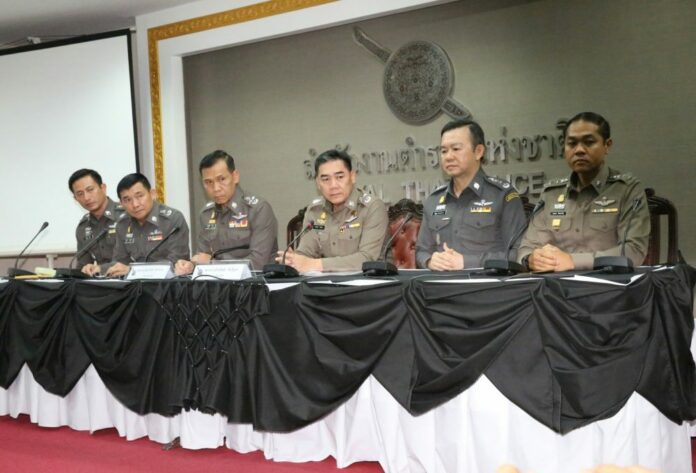
Police commissioner Chakthip Chaijinda and his spokesman team take questions from reporters at the Royal Thai Police headquarters, June 4, 2017.
BANGKOK — This year’s annual police reassignments saw more than 5,700 officers reshuffled by an order signed Wednesday by the police commissioner.
Notable promotions included that of the bomb squad chief responsible for investigating the recent spree of attacks in the capital, a bodyguard of former Prime Minister Yingluck Shinawatra, a politician’s son once accused of shooting a cop dead in a nightclub and an officer previously transferred for allegedly tolerating an underage brothel in his jurisdiction.
Although the top brass of the force remains unchanged this year, thousands of officers had their postings changed overnight by the stroke of a pen wielded by police chief Chakthip Chaijinda.
It was a highly anticipated event among the force, as many officers were relocated hundreds of kilometers from their posts. It’s also a time when promotions are awarded, leading the public to speculate over who holds favor with the authorities.
Among those promoted in the latest shakeup is Col. Kamthorn Auicharoen, commander of the police explosive ordnance disposal unit, an agency leading the investigation into recent bomb attacks in Bangkok. Kamthorn was made the new deputy chief of the 191 emergency response task force known as the Patrol and Special Operation Division.
Col. Watanyu Witthayapalothai, who oversaw the security detail for former premier Yingluck, was moved to head the intelligence division of the Special Branch, or secret service.
Despite a previous reassignment for allegedly turning a blind eye to a notorious flesh parlor under his jurisdiction last year, Col. Kittipong Wisetsanguan, former chief of Huai Khwang police, now heads an agency responsible for investigating criminal backgrounds.
His new title means Kittipong, whose former station failed to take action against Nataree – a brothel that employed minors and trafficked sex workers – is now in charge of conducting criminal background checks for the Special Branch Police.
Another notable promotion is that of Duang Yoobamrung, the son of former politician Chalerm Yoobamrung.
Duang, formerly Duangchalerm, has a record of run-ins with the law. In 2001, while holding the rank of army lieutenant, he was accused of shooting a police officer dead in a nightclub, prompting the army to expel him. Duang fled the country for a year before returning. He was later acquitted.
In the latest shakeup, Duang was promoted from captain to major.
But not everyone saw promotions. Those moved to less prestigious jobs included Maj. Praiwan Aryuwong, a detective inspector for the fourth regional police command.
Praiwan’s team soon identified a group of suspects – including Preeyanuch “Preaw” Nonwangchai, who allegedly sawed the woman in half – and extradited them from Myanmar.
If he expected any reward after all the media exposure, he was wrong. Wednesday’s order demoted him to the rank of inspector of a rural police station in Sing Buri province.