31.7 C
Bangkok
Monday, June 8, 2026
Home Blog Page 2349

Note to Readers: Removal of An Article About a Palace Announcement

From the Editors of Khaosod English.

Khaosod English has deleted an April 18 article about a certain statement made by the royal palace.

The story was removed because the announcement was not yet released formally by the palace, and Khaosod’s editorial management feared that the content in the article might lead to legal action.

As a news agency based in Thailand, Khaosod English is obliged to comply with Thai law. However, we strive to serve the public interest by presenting objective, accurate news reports.

Advertisement

Citing Brexit ‘Division,’ May Calls For Snap Election

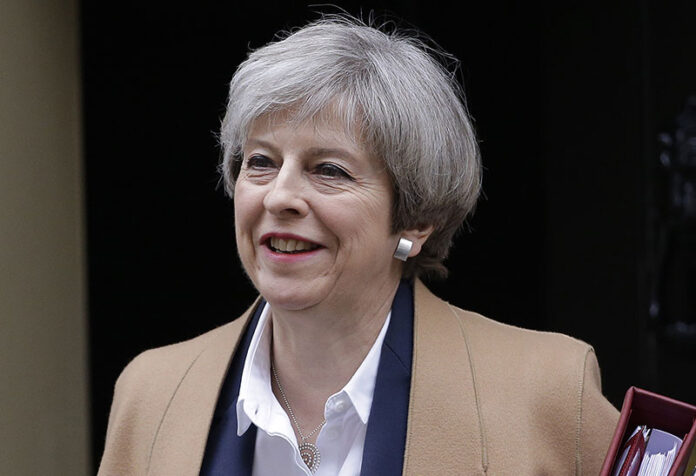
Britain's Prime Minister Theresa May leaves 10 Downing Street on her way to parliament, London, in a March 29, 2017, file photo. May is due to make an unexpected statement in Downing Street on Tuesday. Photo: Alastair Grant / Associated Press

LONDON  —Prime Minister Theresa May has said she is planning to call a general election for Thursday, June 8.

In a surprise statement in Downing Street, May said Parliament will be asked to vote for the election on Wednesday.

May’s Conservative Party is way ahead of the main opposition Labour Party in opinion polls. A resounding win would bolster her mandate in upcoming talks with the European Union over the country’s exit.

She said “division in Westminster will risk our ability to make a success of Brexit.”

She has previously said she will stay in office until the next scheduled national election, in 2020.

Under Britain’s Fixed-Term Parliaments Act, the prime minister can call an election if two-thirds of lawmakers vote for it.

Advertisement

Revolution Plaque: Latest Casualty of 1932 Revolution’s Endangered Legacy

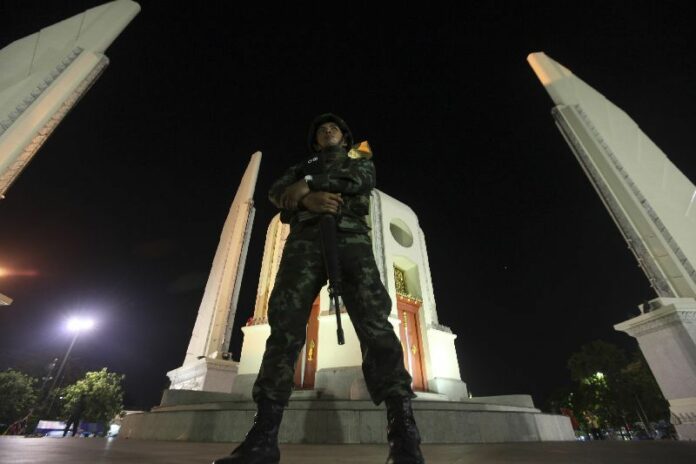
Soldiers posted around the Democracy Monument in 2014 in Bangkok.

The 1932 Revolutionary Plaque, recently removed and replaced with one bearing royalist inscriptions, wasn’t the first historical object or structure from that period removed or at risk.

Read: Authorities Respond to Questions About Missing Plaque With Arrests, Silence

Among items destroyed, demolished or facing threats are the Supreme Court Building, Democracy Monument and the first draft of the June 24, 1932, declaration ending absolute monarchy. Here’s a look at the fate of these other historical artifacts of the 1932 revolt.

sc.matichon2
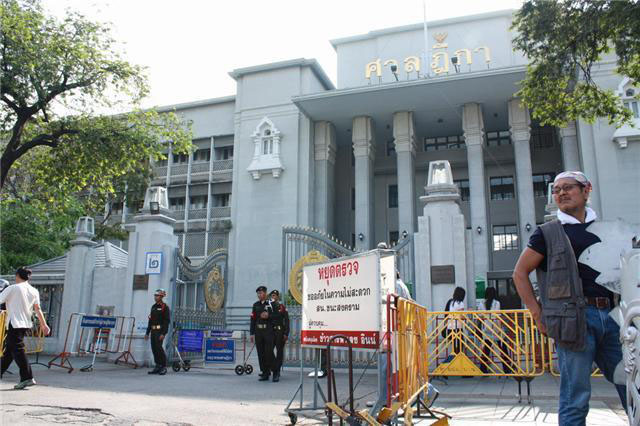
File photo of the old Supreme Court building from Feb. 26, 2010. Photo: Matichon

Where’s the Old Supreme Court Building?

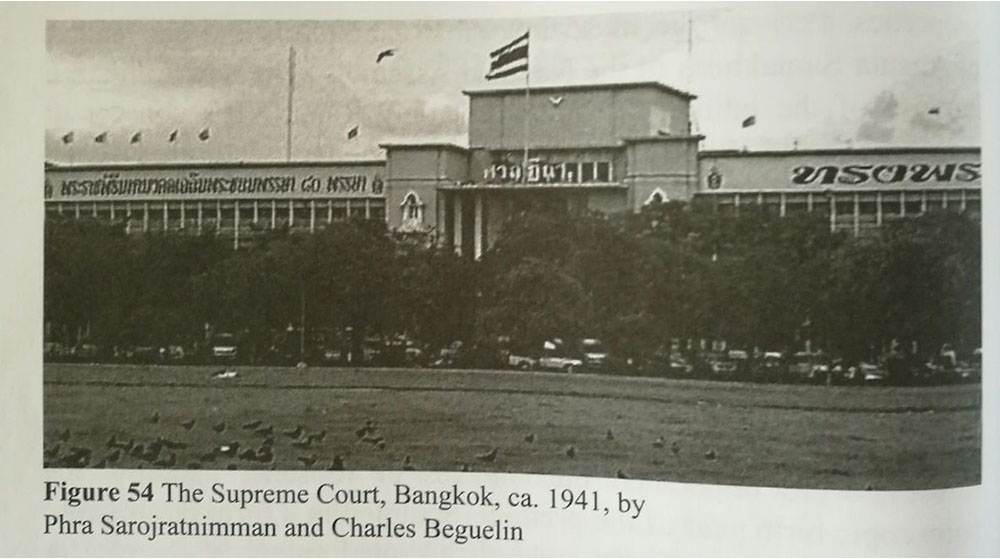
The simple answer is: It’s gone. Built soon after the revolt by the Promoters, aka People’s Party or Khana Ratsadon, the building once stood for modern Thailand. It was torn down in 2013 to make way for a new building with nothing architecturally or historically linked to the 1932 revolt.

The building was “one of the most important edifices” that infused new meaning into an existing form after the revolt, wrote Koompong Noobanjong, an associate professor of architecture at King Mongkut’s Institute of Technology, Ladkrabang, in his 2013 text “The Aesthetics of Power: Architecture, Modernity, and Identity from Siam to Thailand.”

“The simplified traditional Siamese lotus order in the front façade replaced classical Doric capitals at the entrance. These capitals stood for modern Thailand – a democratic and Western-oriented country that could preserve its own cultural heritage,” Koompong wrote. The scholar added that the now-demolished building, based on the Ecole des Beaux-Arts axia plan, incorporated the concept Thainess, or kwampenthai, and portrayed the 1932 coup promoters as an “avant-garde movement [working] toward a civilized society.”

The decision to demolish the building, which was next to the Royal Cremation Grounds (Sanam Luang) on the eastern side and a walking distant to the Grand Palace, was in fact made earlier, was made in 2007, by the Justice Ministry itself.

“The plan met with strong opposition from several academics and architectural professionals due to the aesthetic and historical importance of the building, whose design and iconography were based on the ideological principles of the Khana Ratsadon,” Koompong noted.

Koompong cites a “politics of representation” for reshaping the physical environment.

“The insinuation behind the politics of representation in the proposal indicates the problematic relationships among the monarchy, democratic ideology, kwampenthai [Thainess], and modern Thai society, as epitomized by the current atmosphere of Ratchadamnoen Avenue.”

oldsc.2
The old Supreme Court Building near the Justice Ministry and Sanam Luang. Source: Koompong Noobanjong / ‘The Aesthetics of Power: Architecture, Modernity, and Identity from Siam to Thailand’ (2013)


14639195851463923776l
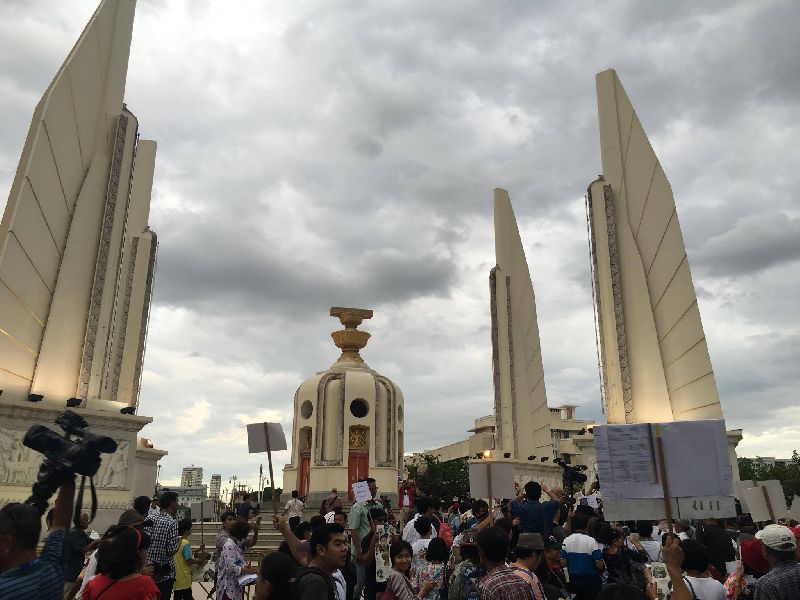
Hundreds gathered at Bangkok’s Democracy Monument on May 26, 2016, to mark two years under military rule.

The Democracy Monument

The most prominent and visible remnant of 1932’s architectural heritage is the Democracy Monument on Ratchadamnoen Avenue. Built by The Promoters in 1938 as Thailand’s equivalent to Paris’ Arc de Triomphe, its center elevates a symbolic representation of the first constitution. There, large gilt stacked bowls symbolize the monarchy as recipient of a gilt, palm-leaf-shaped book, representing the constitution. In 1948, a suggestion was made to replace it with a statue of King Rama VII to reconcile The Promoters and the monarchy, but it was saved by the military dictator at the time, according to Saranyu Thepsongkroh of Kasetsart University.

It was Field Marshal Phibunsongkhram, a major leader of The Promoters, who cited a lack of funds to make the change, according to Saranyu, a historian who has written about the monument’s history.

Instead, Rama VII, the man who was compelled to grant the kingdom a constitution after the 1932 coup, was commemorated with a statue in front of the current House of Parliament.

คณะราษฎร 01A horz
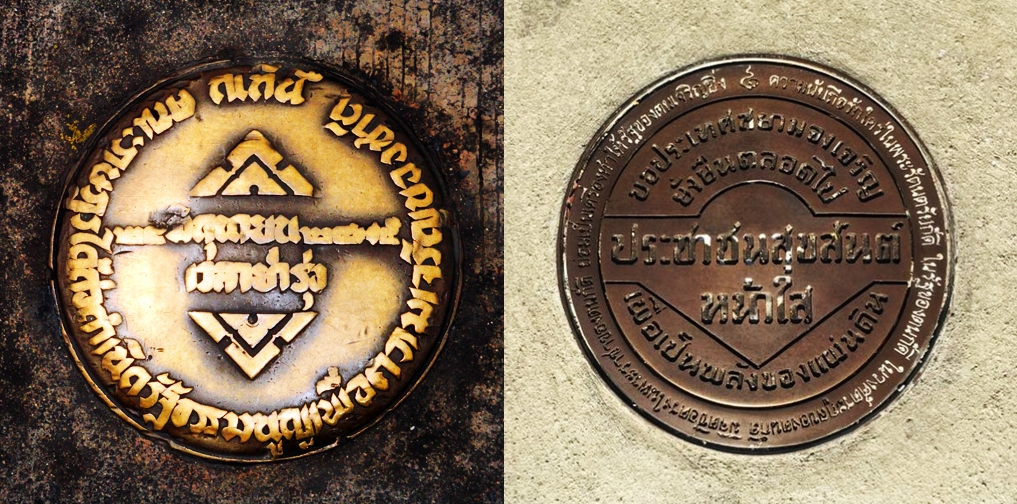
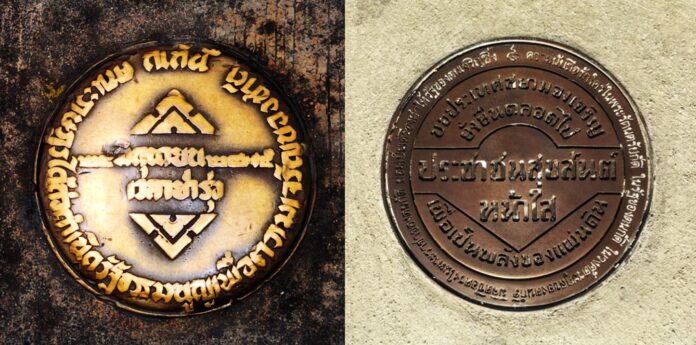
The former plaque, at left, and the new one which replaced it, at right.

After the Revolution plaque’s removal came to public attention Friday, some expressed concerns on social media of what might become of the iconic monument.

Koonpong noted that the monument “disrupted the physical continuity of Ratchadamnoen Avenue (literally “the royal processional path”), thus symbolically terminating the monarchical succession via its arbitrative power.”

Despite a futuristic, neo-fascist style that Koompong wrote “rendered the monument a tribute to the military dictatorship and its tyrannical clout” in strongman Pibul’s later years, the pro-democracy constituency eventually appropriated it as their own.

Today it has the added gravitas of lives lost in bloody protests there which ousted dictators in 1973 and 1992, and unsuccessfully after the May 2014 coup. Although the people represented in its bas-relief murals play passive roles, the monument is undoubtedly the strongest symbol of the people’s aspiration for freedom, equality and democracy.

The Promoters’ Declaration

The removed plaque marked where the bloodless revolution began with a speech.

What happened to the document read by Gen. Phraya Phahon Phonphayuhasena in front of military officers on that June 24 morning which declared the end of absolute monarchy?

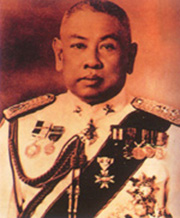
Phraya Pahol
Gen. Phraya Phahon Phonphayuhasena. Photo: Chulachomklao Royal Military Academy

According to a number of memoirs and interviews, the speech was short enough for Phraya Phahon to fold in his pocket – and written in German to avoid detection were he arrested beforehand.

According to Sinsawat Yodbantoey, a former manager of the Pridi Banomyong Institute and a leading archivist of materials on the People’s Party, the paper was destroyed long ago by Phahon’s wife.

“Part of the documents have been burned by Phahon’s wife because she was afraid some danger may befall her children and grandchildren,” Sinsawat said, citing a son of Phahon, Thailand’s second prime minister.

“So many records have been destroyed due to fear,” Sinsawat noted.

A longer declaration detailing grievances against the king and distributed to the public survived.

Sinsawat, 60, added that even copied texts of that declaration have become controversial, with few daring to cite it today for its strong denunciation of the monarchy.

Related stories:

Authorities Respond to Questions About Missing Plaque With Arrests, Silence
Why Was the 1932 Revolution Plaque So Important?
Ultra-Royalists Threaten To Destroy 1932 Revolution Plaque
1932 Democratic Revolution Plaque Removed
Police Complaints Filed Over Missing Revolution Marker


Advertisement

Cabinet to Consider Third Salary Increase for Junta Officers

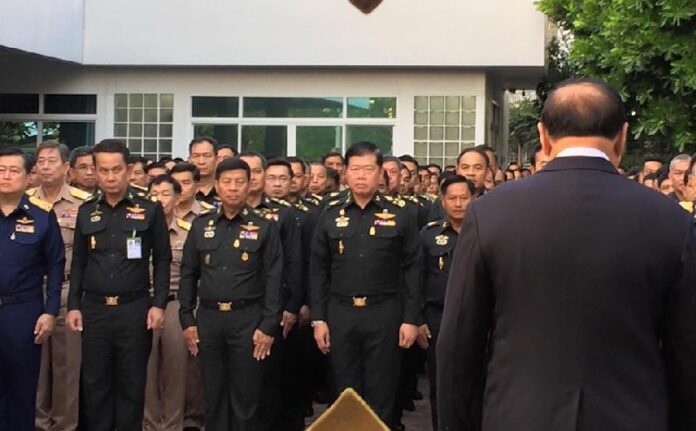
High-ranking officials from the ruling junta and the armed forces present New Year wishes to deputy junta chairman Prawit Wongsuwan on Dec. 30, 2015.

BANGKOK — A salary increase for officials serving the junta is to go before the interim cabinet Tuesday.

For the third time since the military seized power in 2014, the secretariat office of the National Council for Peace and Order, as the junta refers to itself, is expected to propose special increases for 721 officers borrowed from other governmental organization to serve the junta, in excess of the usual annual quota.

The cited rationale was that the junta wants to motivate officers who have sacrificed to work for the country and missed out on opportunities for advancement in the organizations they are actually assigned, such as other ministries.

The interim cabinet is scheduled to consider the proposal at their weekly meeting today.

The military government has twice approved salary increases for officers serving the junta since it came to power.

On May 7, 2015, the cabinet approved a salary increase for 1,033 officers, and granted another last May for 709 officers. The increases are calculated based on existing salary levels.

In each instance, the process included no information about who were the promoted officers.

Advertisement

Authorities Respond to Questions About Missing Plaque With Arrests, Silence

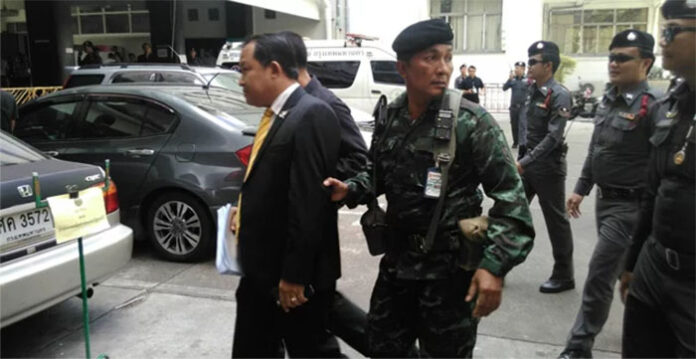
Government transparency activist Srisuwan Janya is taken into military custody Tuesday morning at the military government's complaint center in Bangkok. Photo: Voice TV / Courtesy

Teeranai Charuvastra and Sasiwan Mokkhasen

BANGKOK — A transparency advocate was taken into military custody Tuesday when he arrived to file a complaint over the missing the 1932 Revolution plaque, as City Hall denies it has security camera footage of the incident and police say they won’t take action.

Srisuwan Janya, a familiar face for his more than 3,000 administrative and criminal complaints over alleged corruption and malfeasance, was taken into custody at the government’s petition center on Phitsanulok Road. Srisuwan had traveled to submit a letter addressed to the prime minister this morning asking him to bring to justice those who removed it and return the original plaque to its place in the Royal Plaza. It was unknown where he was taken, and he could not be reached by telephone.

The plaque, a modest brass marker commemorating Thailand’s 1932 revolution that led to the transition to a democratic, constitutional monarchy, was replaced earlier this month with a similar one bearing pro-monarchy inscriptions.

Read: Police Complaints Filed Over Missing Revolution Marker

A small protest near the site was broken up by police last night, and its leader taken into custody.

When Khaosod English this morning filed a request to view security camera footage of the period of time the plaque is thought to have been removed, a City Hall official in charge of the CCTV control room told a reporter such footage does not exist.

The Bangkok Metropolitan Administration, or BMA, operates the capital’s extensive network of CCTVs. The official said security cameras were disabled where the marker was located: The Royal Plaza, near an important monument to King Rama V and a short distance from the Ananta Samakom Throne Hall.

The official, who declined to give his name despite repeated inquiries, said the BMA recently rebuilt footpaths and roads in the Royal Plaza, so all CCTVs in the area had been removed.

“They had to take them out and rewire them,” the official said, adding that he didn’t know when the cameras would return.

As questions from the public grow louder to what happened to the historic plaque, which was removed without any notice, government officials remained notably silent. A police commander even suggested that his force cannot investigate the case because the public has no right to urge action over the plaque, a state property.

Reports on social media claim that the plaque was likely removed on the night of April 5. One photo purportedly shows tents erected over plaque’s location in the Royal Plaza, while a number of policemen are seen observing from afar.

On Monday, a group of student activists filed complaints with the police, urging them to investigate the plaque’s disappearance. But deputy police commissioner Srivara Ransibrahmanakul said it is not possible for police to do so.

Gen. Srivara told reporters Monday afternoon the activists have no legal standing to complain about its removal because they don’t own the historic relic.

“Is it their possession, or does it belong to someone else?” the police general said. “If they have proof that it is their belonging or heirloom, we will proceed with it.”

No one has claimed responsibility for its removal. Gen. Srivara’s stance echoed that of a hardline royalist who late last year threatened to dig out the plaque if no one claimed ownership of it. However Thepmontri Limpaphayorm said on his Facebook earlier this week that he had no part in it. Government spokesmen have also declined to speak to the media about the topic.

Related stories:
Why Was the 1932 Revolution Plaque So Important?
Ultra-Royalists Threaten To Destroy 1932 Revolution Plaque
1932 Democratic Revolution Plaque Removed
Police Complaints Filed Over Missing Revolution Marker

Advertisement

New US Justice Gorsuch Dives Into the Supreme Court Fray

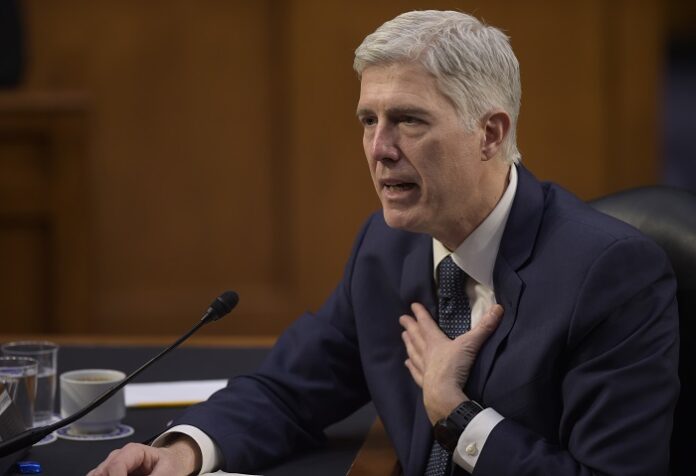
In this March 22, 2017 file photo, then-Supreme Court Justice nominee Neil Gorsuch testifies on Capitol Hill in Washington. It took less than 15 minutes for newly-minted Justice Neil Gorsuch to ask his first questions from the bench. Gorsuch and his colleagues were hearing arguments Monday for the first time since President Donald Trump's pick was sworn in April 10. (AP Photo/Susan Walsh, File)

WASHINGTON — Justice Neil Gorsuch dived into the public side of his new job Monday, piping up early and often as he took his seat on the Supreme Court bench for the first time to hear arguments.

The new justice waited just 11 minutes before asking questions in the first of three cases the court heard Monday, its first session since President Donald Trump’s pick was sworn in one week earlier.

The 49-year-old Gorsuch echoed his own confirmation hearing testimony with questions focused on the text of federal laws and rules at issue before the court. He employed a bit of humor, expressed a modicum of humility, showed a hint of irritation and even channeled Justice Antonin Scalia, the man he replaced, with a touch of sarcasm.

“Wouldn’t it be a lot easier if we just followed the plain text of the statute?” Gorsuch asked during the first argument, a highly technical case about which court federal employees go to with some discrimination claims.

That question sounded a lot like the answer Gorsuch gave last month, when he was pressed to defend an opinion he wrote against a fired trucker. “Senator, all I can tell you is my job is to apply the law you write,” he said then.

While some of the other justices slouched, rocked back in their chairs or leaned their chin or forehead on their hands, Gorsuch sat straight in his high-backed chair, to the far left of Chief Justice John Roberts.

The justices sit by order of seniority, with the two longest-serving members of the court flanking the chief justice. The two newest justices sit on either end of the bench. The justices had removed one chair from the bench after Scalia died more than 14 months ago. Monday’s session was the first since then with the ninth chair restored, and nine justices present.

Roberts issued the standard welcome for new justices, wishing Gorsuch “a long and happy career in our common calling.” Gorsuch thanked his new colleagues for their “warm welcome.”

He shared a laugh with his seatmate, Justice Sonia Sotomayor, before arguments began.

The first case was so dense that even the justices who can wax eloquent over a misplaced comma were beside themselves.

“Who wrote this statute? Somebody who takes pleasure out of pulling the wings off flies?” Justice Samuel Alito said to laughter.

Gorsuch drew a few laughs of his own in an exchange with lawyer Christopher Landau, who is representing a former federal worker.

“I think I am maybe emphatically agreeing with you and…,” Landau said.

Gorsuch cut in: “I hope so.”

But at another point, when Landau said his client wasn’t asking the court to break new ground in its decision, Gorsuch launched a zinger reminiscent of Scalia.

“No, just to continue to make it up,” he said.

He also apologized to Landau for asking so many questions in a row. “I’m sorry for taking up so much time,” Gorsuch said.

In the second case, he repeatedly tried to elicit an answer from lawyer Shay Dvoretzky.

“If you’d just answer my question, I’d be grateful,” Gorsuch said, flashing frustration.

The cases are expected to be decided before the end of June.

Story: Mark Sherman, Sam Hananel

Advertisement

Report a Moto on Sidewalk and Get Paid Half the Fine

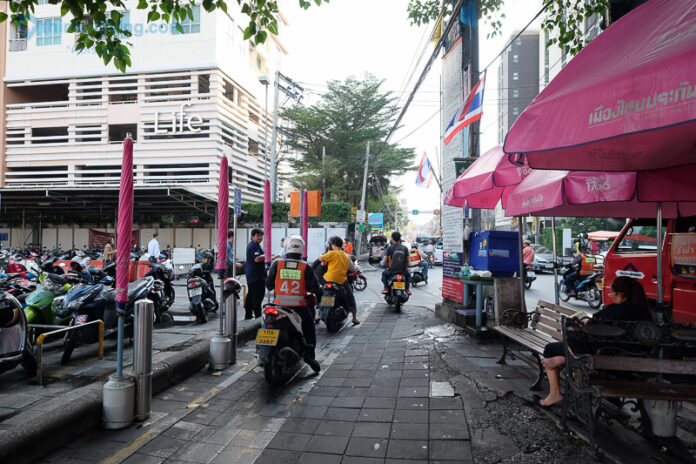
Motorbike taxis ride along a Bangkok sidewalk in a file photo. Photo: Matichon

BANGKOK — Those who report motorbikes parking or riding on the sidewalk will get half of the fine if it is paid, City Hall said Sunday.

The fine, which runs upward of 5,000 baht, will be divided in two, with half given to the Good Samaritan whose photo or video leads to tracking down the motorcyclist who ignores the law in this latest attempt to tame the capital’s pedestrian areas.

An image that clearly show the license plate of a motorbike must be sent to municipal enforcement officers or tessakit or through City Hall’s hotline 1555. If it is a motorbike taxi, the evidence must clearly display their vest, which displays their number and assigned stand.

Only when the rider is found and fined under the 1992 Maintenance of Public Sanitary and Order Act, the district office will submit a letter to the informant to pay the incentive.

However, authorities said that does not always mean they will get 2,500 baht.

“You have to understand that the fine depends on tessakit’s discretion,” said Natthanan Kanlayasiri of City Hall. “For example, if it is the first time of the wrongdoer, the fine might be just 1,000 baht and then 2,000 baht for the second time and 5,000 baht for the third time.”

Related stories:

Tow Them All, Bangkok Gov Suggests for Sidewalk Scofflaws

‘Tessakit’ Officer Accused of Taking Tourist’s Cash

Bangkok ‘Tessakit’ Threatens to Attitude-Adjust ‘Smart Ass’ Citizen

Advertisement

Police Complaints Filed Over Missing Revolution Marker

The former plaque, at left, and the new one which replaced it, at right.

BANGKOK — Four people filed complaints to the police on Sunday, urging them to investigate the disappearance of a historic plaque marking the 1932 democratic revolution.

The petitioners, which include a grandson of the revolutionaries who installed parliamentary democracy in Thailand 85 years ago, said the authorities have a duty to retrieve the relic, which went missing earlier this month. No one claimed responsibility for the disappearance and state officials have uncharacteristically been silent on the issue.

Read: Govt ‘No Comment’ on Lost Revolution Relic As Online Campaign Launched

Prit Seriroengrit, whose grandfather Charun Rattanakun Seriroengrit was part of the People’s Party that seized power from the royal government in 1932, told reporters he filed the complaint on behalf of other heirs of the coup plotters.

“Let me explain that, as for children and grandchildren of the People’s Party, some are happy and some are angry [about the plaque removal],” Prit said at Dusit Police Station. “People who are not happy, they found it difficult to voice their opinion, so I volunteered to be here on their behalf.”

Other three people who filed the complaint are student activists. One of them, Chulalongkorn freshman Phakchira Kirativiboolwong, told reporters she heard about the removal from the internet so she wanted the authorities to find out what happened.

Mor Rana, deputy inspector at Dusit Police Station, said the plaque is designated as a state property, so anyone can file complaint over its disappearance.

He added that he will discuss the case with his supervisors how to proceed with the investigation.

Placed in the Royal Plaza in 1936, the small plaque marked the spot where the People’s Party announced the end of the king’s direct rule over the country. News of its disappearance broke Friday afternoon after someone found that the marker was replaced with a new plaque bearing pro-monarchy remarks.

Government spokesmen have declined to comment on the change. In the past the regime was quick to set talking points and assign blame for a wide range of topics, from bomb attacks to flooding.

On Saturday night, an online campaign was launched to call for an investigation and prosecution of those responsible for “stealing” the plaque. More than 2,300 people have signed the petition as of Monday morning.

Correction: An earlier version of this article incorrectly said the plaque was installed in 1940. In fact, it was placed there in 1936.

Related stories:

Why Was the 1932 Revolution Plaque So Important?

1932 Revolt Plaque Removal Greeted With Mixed Reactions

Why is Popular Culture Afraid of the 1932 Revolution?

Advertisement

Pence Warns N Korea ‘Era of Strategic Patience is Over’

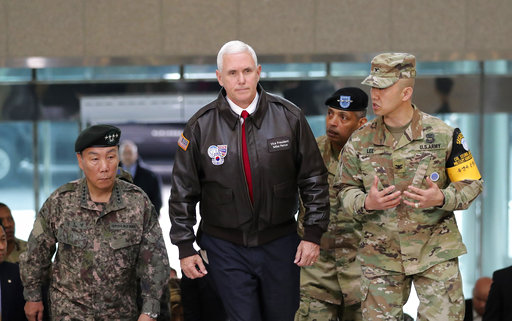
U.S. Vice President Mike Pence arrives at the border village of Panmunjom in the Demilitarized Zone (DMZ) which has separated the two Koreas since the Korean War, South Korea, Monday, April 17, 2017. (AP Photo/Lee Jin-man)

PANMUNJOM, South Korea — U.S. Vice President Mike Pence declared Monday the “era of strategic patience is over” with North Korea, expressing impatience with the unwillingness of the regime to move toward ridding itself of nuclear weapons and ballistic missiles.

Pence told reporters near the Demilitarized Zone separating North and South Korea that President Donald Trump is hopeful that China will use its “extraordinary levers” to pressure the North to abandon its weapons.

Pence, who has called the North’s failed missile test a day earlier “a provocation,” said the U.S. and its allies will achieve its objectives through “peaceable means or ultimately by whatever means are necessary” to protect South Korea and stabilize the region.

Pence visited a military base near the DMZ, Camp Bonifas, for a briefing with military leaders and to meet with American troops stationed there. The joint U.S.-South Korean military camp is just outside the 2.5-mile-wide DMZ. He later stood a few meters from the military demarcation line outside Freedom House, gazing at two North Korean soldiers across the border and then a deforested stretch of North Korea from a lookout post in the hillside.

His visit, full of Cold War symbolism, and his remarks to reporters come amid increasing tensions and heated rhetoric on the Korean Peninsula. While the North did not conduct a nuclear test, the specter of a potential escalated U.S. response trailed Pence as he began a 10-day trip to Asia.

Pointing to the quarter-century since North Korea first obtained nuclear weapons, the vice president said a period of patience followed.

“But the era of strategic patience is over,” Pence said. “President Trump has made it clear that the patience of the United States and our allies in this region has run out and we want to see change. We want to see North Korea abandon its reckless path of the development of nuclear weapons, and also its continual use and testing of ballistic missiles is unacceptable.”

Trump himself asserted on Sunday that China was working with the United States on “the North Korea problem.” His national security adviser, H.R. McMaster, said the U.S. would rely on its allies as well as on Chinese leadership to resolve the issues with North Korea.

McMaster cited Trump’s recent decision to order missile strikes in Syria after a chemical attack blamed on the Assad government as a sign that the president “is clearly comfortable making tough decisions.” But at the same time, McMaster said on “This Week” on ABC, “it’s time for us to undertake all actions we can, short of a military option, to try to resolve this peacefully.”

The bottom line, McMaster said, is to stop the North’s weapons development and make the Korean Peninsula nuclear-free. “It’s clear that the president is determined not to allow this kind of capability to threaten the United States. And our president will take action that is in the best interest of the American people,” he said.

After a two-month policy review, officials settled on a policy dubbed “maximum pressure and engagement,” U.S. officials said Friday. The administration’s immediate emphasis, the officials said, will be on increasing pressure on Pyongyang with the help of Beijing.

The officials weren’t authorized to speak publicly on the results of the policy review and requested anonymity.

Pence will be tasked with explaining the policy in meetings with leaders in South Korea and Japan during the trip, which will also include stops in Indonesia and Australia. He will aim to reassure allies in South Korea and Japan that the U.S. will take appropriate steps to defend them against North Korean aggression.

A North Korean missile exploded during launch on Sunday, U.S. and South Korean officials said. The high-profile failure came as the North tried to showcase its nuclear and missile capabilities around the birth anniversary of the North’s late founder and as a U.S. aircraft carrier neared the Korean Peninsula.

A White House foreign policy adviser traveling with Pence said no U.S. response to the missile launch was expected because there was no need for the U.S. to reinforce the failure. The adviser spoke on condition of anonymity to discuss the administration’s initial understanding of the launch.

Trump, spending the Easter weekend at his Florida resort, reinforced his commitment to the armed forces under his control. “Our military is building and is rapidly becoming stronger than ever before,” he tweeted.

More directly on North Korea, the president returned to a theme of placing much onus on China for reining in the North. Last week, he said he would not declare China a currency manipulator, pulling back from a campaign promise, as he looks for help from Beijing, which is the North’s dominant trade partner.

“Why would I call China a currency manipulator when they are working with us on the North Korean problem? We will see what happens!” Trump tweeted on Sunday.

Deputy national adviser K.T. McFarland briefed the president on the failed missile launch. She advised patience with China on the issue.

“North Korea is a liability to everybody and it’s a threat not just to the United States, not just to South Korea, not just to Japan, not just to Russia, but it’s actually a threat to China as well,” McFarland said Sunday on “Fox News Sunday.”

Into this tense environment, Pence made his first trip to the region since taking office in January. After arriving in the South Korean capital, he placed a wreath at Seoul National Cemetery and then worshipped with military personnel at an Easter church service at the U.S. Army Garrison Yongsan.

During a fellowship meal after the services, he said the tensions on the Korean peninsula had put into sharp focus the importance of the joint U.S.-South Korean mission.

“This morning’s provocation from the North is just the latest reminder of the risks each one of you face every day in the defense of the freedom of the people of South Korea and the defense of America in this part of the world,” said Pence. “Your willingness to step forward, to serve, to stand firm without fear, inspires the nation and inspires the world.”

Along with the deployment of the U.S. aircraft carrier and other vessels into waters off the Korean Peninsula, thousands of U.S. and South Korean troops, tanks and other weaponry were deployed last month in their biggest joint military exercises. That led North Korea to issue routine threats of attacks on its rivals if they show signs of aggression.

The White House foreign policy adviser traveling with Pence told reporters that the type of missile that North Korea tried to fire on Sunday was medium-range, and that it exploded about 4 to 5 seconds after it was launched.

The North regularly launches short-range missiles, but is also developing mid-range and long-range missiles meant to target U.S. troops in Asia and, eventually, the U.S. mainland.

North Korea has conducted five nuclear tests, including two last year. Recent satellite imagery suggests the country could conduct another underground nuclear test at any time.

Story: Ken Thomas

Advertisement

Thai Fisheries Slavery Boosts Seafood Fair Trade Revolution

In this undated photo provided by Christopher Cary, Rick Elliott of Bristol Seafood in Portland, Maine, examines a bag of scallops at auction in New Bedford, Mass. Fair trade certification status is now gaining in prominence with seafood in the U.S., where interest is growing in the story behind the fish and shellfish people consume. (AP Photo/Christopher Cary)

PORTLAND, Maine — Fair trade coffee, bananas and … scallops? Yes, very soon.

Fair trade certification status, which is conferred by independent groups to denote environmental sustainability and fair working conditions, has been around for years. But it’s just now on the rise among seafood products in the U.S., where consumer interest in the story behind the fish and shellfish they eat is growing.
Certification of seafood products, including tuna and shrimp, began in 2014, and the volume of imports of such products grew more than 350 percent last year to more than 1.2 million pounds (500,000 kilograms), said Fair Trade USA, a California-based nonprofit group. The first company to offer fair trade seafood harvested from U.S. waters will have scallops on the market this month.

The company, Bristol Seafood of Portland, Maine, is looking to capitalize on the growing interest in authenticity of seafood, said its president, Peter Handy.

“There’s a certain sanctity to food when it comes to the story about it,” he said. “It tastes better the more you know.”

Independent groups, including Fair Trade USA, provide certifications to a host of products that people buy in stores, ranging from fruit and nuts to home goods. The certification is most commonly associated with coffee, which launched the fair trade movement in the 1990s.

To achieve certification, companies need to submit to an audit and interviews to make sure the food is produced with fair working conditions and environmental stewardship along the supply chain. Packaged products can then bear a “Fair Trade Certified” seal, which carries a price premium.

Fair Trade USA currently certifies shrimp from Mexico, yellowfin tuna from Indonesia, and skipjack and yellowfin tuna from Maldives. It is the only group currently certifying seafood as fair trade, representatives for the nonprofit said.

Interest in the seafood supply chain has grown since an Associated Press investigation of slave labor conditions in Thailand’s shrimp fishery, said Ashley Apel, senior manager of the seafood program for Fair Trade USA. Even before that, a 2014 study by a pair of economists from the University of Kentucky said more than 80 percent of consumers were at least somewhat influenced by labels that tell the story of seafood.

“It was the right place and right time to show that the seafood industry needs a fair trade certification,” Apel said.

The standards for achieving the certification for seafood products focus on management of fish stocks and fishing habitat, as well as the wages and working conditions of the fishermen and others in the supply chain. Steps must be taken to eliminate forced labor and human trafficking, and workers must have the freedom to organize. At the same time, there must be documentation of things like proper waste management and protection of ecosystems, Fair Trade USA’s materials state.

Fair Trade USA is one of a handful of major groups involved in certifying food products, with another prominent one other being Germany-based Fairtrade International.

They’re banking on chefs and restaurants getting excited about the products. Barton Seaver, a chef and author in Freeport, Maine, said fair trade seafood is too new to be familiar to many restaurateurs but is part of seafood’s future.

“It’s currently in its infancy, but I think the products they are working with will quickly prove the model, and the value that it can offer,” he said.

The economic, environmental and humans rights impacts of fair trade labels are the subjects of debate and academic study.

A 2014 study published in the Journal of Economic Perspectives stated that “there is overwhelming evidence that Fair Trade-certified producers do receive higher prices than conventional farmers for their products.” The evidence for environmental protection and economic security of workers was more mixed, but benefits to both were observed, the same study said.

Jason Potts, a senior associate with the International Institute for Sustainable Development located in Montreal, said the question of “are these things actually working?” remains a difficult one to answer.

“We’re attempting to answer this question. My message to the world is we need more impact research, and more data. Better data,” he said.

One of the big incentives for fishermen to participate in fair trade certification, Apel said, is that sales generate “fair trade premiums,” which are used for community development projects where harvesters live. The nonprofit delivered more than USD $200,000 of these premiums to fishermen last year.

Erik Orman, who owns a pair of New Bedford scallop boats that harvest shellfish that will be certified fair trade, said he envisions the premium money being reinvested in fisheries science programs. The certification, he said, will also give the scallops an edge in the marketplace.

“For the consumer, they are socially conscious and able to choose the food they eat based on the criteria that are important to them,” he said.

Story: Patrick Whittle

Advertisement

Hot News

LATEST NEWS

Bangkok
overcast clouds
31.7 ° C
32.2 °
28.8 °
73 %
5.1kmh
100 %
Mon
29 °
Tue
37 °
Wed
35 °
Thu
34 °
Fri
32 °