28.8 C
Bangkok
Sunday, June 28, 2026
Home Blog Page 2468

US Wildlife Officials Recruit Indian Tribesmen to Hunt Pythons

A Burmese Python seen here in 2010 at an unspecified location. Photo: Ted / Flickr

MIAMI — Florida has gone halfway around the world to get help with its python problem.

Wildlife officials recruited tribesmen from India to hunt the Burmese pythons believed to be decimating native mammals in the Everglades.

The Florida Fish and Wildlife Conservation Commission hopes the Irula tribesmen  well-known for their snake-catching skills  reveal a reliable way to track and spot the tan, splotchy snakes that all but disappear in the wetlands unless they’re basking in the sun alongside a road or canal.

“Since the Irula have been so successful in their homeland at removing pythons, we are hoping they can teach people in Florida some of these skills,” Kristen Sommers, head of the wildlife commission’s exotic species coordination section, said in a statement Monday.

The tribesmen removed 13 pythons in just over a week, including four from the Crocodile Lake National Wildlife Refuge in Key Largo. One of the snakes was a female measuring 16 feet long.

Two tribesmen from the province of Tamil Nadu in southern India are joined in their hunt this month by dogs trained by University of Florida and Auburn University researchers to sniff out pythons.

A year ago, the state’s public “Python Challenge” netted 106 snakes. Over 1,000 people signed up for the monthlong hunt. In an average year, about 200 pythons are caught in Florida.

Advertisement

Oscars: Musical ‘La La Land’ Secures a Record 14 Nominations

A giant Oscar statuette at the 88th Academy Awards Nominees Luncheon last February in Beverly Hills, California. Photo: Danny Moloshok / Associated Press

History was made across Tuesday’s 89th annual Academy Awards nominations, where the retro musical “La La Land” reaped a record-tying 14 nominations and a wave of African-American films, led by the luminous coming-of-age portrait “Moonlight,” resoundingly toppled two straight years of “so white” Oscars.

The twin forces  Damien Chazelle’s candy-colored love letter to musicals and a broad group of diverse films that also included Denzel Washington’s fiery August Wilson adaptation “Fences” and the uplifting African-American mathematician tale “Hidden Figures”  dominated the nominations.

The 14 nods for “La La Land,” including best picture, best actress for Emma Stone, best actor for Ryan Gosling and best director for Chazelle, matched the record hauls of 1997’s “Titanic” and 1950’s “All About Eve.” A disoriented Chazelle, speaking by phone from Beijing, said, “All that I have in my head is ‘thank you’ a million times over.”

Also a record: the six black actors nominated, including “Fences” stars Washington and Viola Davis, Mahershala Ali and Naomie Harris of “Moonlight,” Ruth Negga of “Loving” and Octavia Spencer of “Hidden Figures.” Dev Patel, the British-Indian star of “Lion,” was also nominated, making it seven actors of color nominated out of 20.

It made for a stark contrast to the last two years of all-white acting nominees, a disparity that prompted widespread outrage throughout the film industry and led academy president Cheryl Boone Isaacs to revamp the academy’s membership.

Jenkins, who was nominated for directing and adapted screenplay, said the eight nominations for “Moonlight” and those for other films showed that people were eager to put themselves in the shoes of others. “Moonlight,” ”Fences” and “Hidden Figures” were each nominated for best picture.

“I love the American film industry and to see it this year, I feel, really reflect the world that we all live and work in, it gives me hope,” Jenkins said by phone from Amsterdam. “It heartens me. There’s a lot of work being done to make this year not be an anomaly.”

Nine films out of a possible ten were nominated for best picture. The others were: Denis Villeneuve’s cerebral alien thriller “Arrival,” Kenneth Lonergan’s New England family drama “Manchester by the Sea,” the West Texas heist thriller “Hell or High Water,” the “Lion,” and Mel Gibson’s World War II drama “Hacksaw Ridge.”

Redemption was everywhere: for a previously diversity-deficient Oscars, for the old-fashioned musical and even for the long-shunned Gibson. Days after the birth of his ninth child, the “Hacksaw Ridge” director was also unexpectedly nominated for best director over the likes of Martin Scorsese (“Silence”) and Clint Eastwood (“Sully”). The nods seemed to restore his stature in Hollywood since an anti-Semitic tirade while being arrested for drunk driving in 2006 and a 2011 conviction for domestic violence.

“I think finally people are remembering who Mel actually is, not what the tabloids (said),” said Andrew Garfield, who was nominated for his lead performance in the film. “I’m so, so proud of him.

“Arrival” tied “Moonlight” for the second most nominees with eight nods. Yet its five-time nominated star, Amy Adams, was left out of the competitive best actress category.

Instead, Meryl Streep, whom President Donald Trump recently derided as “overrated,” landed her 20th nomination. Her performance in “Florence Foster Jenkins” was among the best actress nominees that included Stone, Natalie Portman (“Jackie”), Ruth Negga (“Loving”) and Isabelle Huppert (“Elle”). Also left out was Annette Bening for “20th Century Women.”

Best-actor favorite Casey Affleck (“Manchester by the Sea”) was joined by Washington, Gosling, Garfield and Viggo Mortensen (“Captain Fantastic”). Along with Ali and Patel, the best supporting actor nominees were Lucas Hedges (“Manchester by the Sea”), Michael Shannon (“Nocturnal Animals”) and Jeff Bridges (“Hell or High Water”).

Viola Davis, the supporting-actress front-runner for her performance in “Fences,” notched her third Oscar nod. Also nominated were Harris, Spencer, Nicole Kidman (“Lion”) and Michelle Williams (“Manchester by the Sea”).

Whether fairly or not, the nominations were taken as a test for the overhauled film academy. The inclusion influx, though, wasn’t driven by any kind of response to the last two Oscars; most of the nominated films have been in development for years. And the awards still left many unrepresented. No female filmmakers were nominated for best director and outside of the EGOT-approaching Lin-Manuel Miranda (up for his song to “Moana”), Latinos were nearly absent .

Still, change was seen all through the Oscar categories, nowhere more so than in best documentary. Four black directors led nominees: Ava DuVernay (“The 13th”), Raoul Peck (“I Am Not Your Negro”), Ezra Edelman (the seven-plus hours “O.J.: Made in America”) and Roger Ross Williams (“Life, Animated”). (The other nominee was the European migrant documentary “Fire at Sea.”)

“Now more than ever it is important to educate ourselves, explore our shared history and elevate our awareness about matters of human dignity,” DuVernay, whose film is about historical connections between slavery and mass incarceration, said in a statement.

Joi McMillon, who edited “Moonlight” with Nat Sanders, became the first African-American woman nominated for best editing. Bradford Young of “Arrival” was just the second black cinematographer nominated. Kimberly Steward, who financed “Manchester by the Sea,” became the second African-American producer to land a best-picture nomination after Oprah Winfrey.

Though “La La Land,” ”Arrival” and “Hidden Figures” are knocking on the door of $100 million at the North American box office, none of the best-picture nominees have yet crossed that threshold, making this year’s best picture nominees one of the lowest grossing bunch ever.

“Deadpool,” this season’s underdog, and the year’s no. 2 box-office hit, “Finding Dory,” were shut out. Only one major studio  Paramount, which distributed “Arrival” and “Fences”  scored a best-picture nomination.

Amazon, however, landed its first best-picture nod for “Manchester by the Sea,” which the streaming retailer partnered with Roadside Attractions to distribute. Propelled by “La La Land,” Lionsgate led all studios with 26 nominations.

The dearth of blockbusters will pose a test for Jimmy Kimmel, host of the Feb. 26 ceremony. Last year’s broadcast, which host Chris Rock introduced as “the White People’s Choice Awards,” drew 34.4 million viewers, an eight-year-low.

Viggo Mortensen is among those expecting a strong political undercurrent.

“The Trump White House,” Mortensen said Tuesday, “is about, to some degree, shutting people up you don’t like or who don’t agree with you, and I think the Oscars will probably be the opposite of that.”

Story: Jake Coyle

Advertisement

Lacking Leverage or Clout, River Residents Give Up Homes For Boardwalk

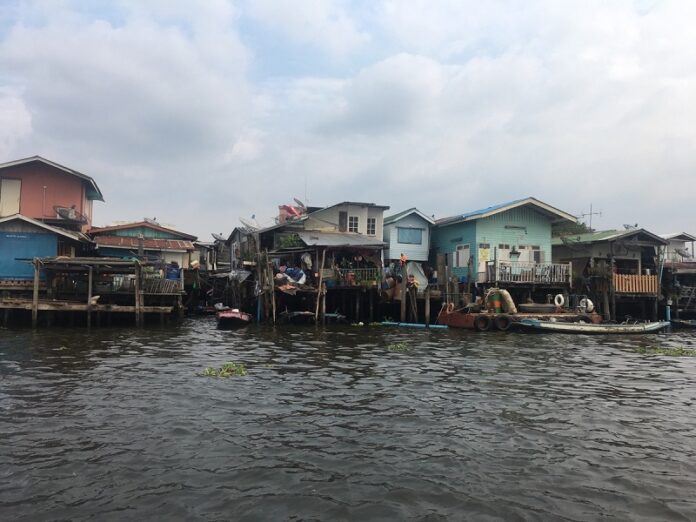
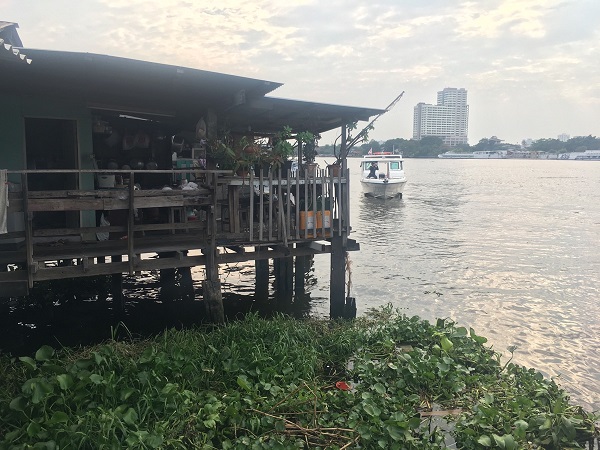
Communities dwelling over the Chao Phraya River near Krung Thon Bridge are among 12 communities which will have to be evicted to pave way for the boardwalk.

BANGKOK — It will be difficult, Sophee Prae-eiam believes, for some of her neighbors who’ve fished in front of their homes for decades to relocate into a five-story flat offered by the government.

Despite living there for three generations, most of those dwelling over the Chao Phraya River never legally owned the land. Most are built over the water on pylons. So when the military government decided to bulldoze their communities to build a boardwalk along Chao Phraya river, giving up their homes for some compensation was perhaps their best option.

“It’s like you move the fish out of the river to live on the shore,” Sophee said to describe the impact on her neighbors once they can no longer catch fish to sell.

Like all of the riverside residents, Sophee, 59, used to oppose the regime’s 14-billion baht mega project. Her home in the Mittakam 1 community near the Krung Thon Bridge is among 309 households in 12 communities which will be demolished and replaced by a concrete promenade.

Communities dwelling over the Chao Phraya River near Krung Thon Bridge are among 12 communities which will have to be evicted to pave way for the boardwalk.

The controversial redevelopment project aims to build a riverside landmark of the country will start the first phase for 7-kilometer long distance on both side of the river from the Rama VII Bridge to the Phra Pinklao Bridge.

While it was widely agreed that the river needs development, the project, however, received a lot of criticism for its impacts on the environment, communities and culture.
Activist group Friends of the River submitted a letter to Prime Minister Prayuth Chan-ocha earlier this month for a second time asking he suspend the project. The group said its feasibility study was rushed and not inclusive.

The promenade construction is expected to start in June and be completed in 2018.

Asked about the concerns raised by the opposition on a tour of an affected community Monday, Bangkok Gov. Aswin Kwanmuang said City Hall will try its best to communicate with those who disagree with the project.

“Ninety percent of people are pleased,” he said without citing where the figure came from. “We will try to create as few adverse effects on people as possible.”

Even though they are still unsure where exactly they will be moved to, many households accepted the offer to move out.

Like Sophee, Thara Phalodom, 56, said it is better to agree when they can still get some relocation assistance, as they have no leverage to negotiate.

“They can also just move us out without paying because we have no rights over the land,” said a man whose wife has lived there three generations. “It’s a big change, but we have to take it.”


Related stories:

Riverside Communities Evicted for Chao Phraya Makeover

Architect Council Says University Can’t Actually Design River Project

Riverside Design Dropped Under Cloud of Plagiarism Charges

Top Architect Says River Project Plagiarized Design

Opponents, Proponents of Chao Phraya Boardwalk Open Fire

Locals Ready to be Evicted for Chao Phraya Boardwalk, Official Says

River’s Friends Float Hope for Public Hearings on 14B-Baht ‘Promenade’

Radical Makeover of Chao Phraya River Delayed

Chao Phraya Promenade Should be Sent Back to Drawing Board, Architects Say


Advertisement

Israel Pushes Ahead on West Bank Settlements

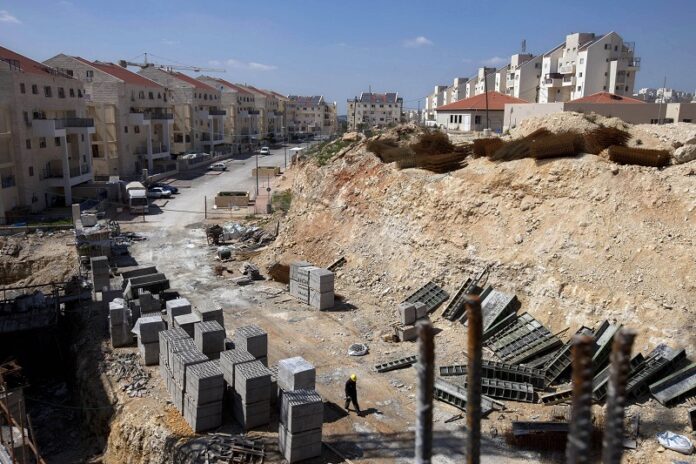
A general view of a construction site in 2011 in the West Bank Jewish settlement of Modiin Illit. B'tselem, Israel. Photo: Oded Balilty / Associated Press

JERUSALEM — Israel announced plans Tuesday to build 2,500 more settler homes on the West Bank, moving to step up construction just days after the swearing-in of Donald Trump brought to power a U.S. administration seen as friendly to the settlement movement.

“We are building  and we will continue to build,” Israeli Prime Minister Benjamin Netanyahu wrote in a Facebook post.

White House spokesman Sean Spicer did not answer directly when asked about Trump’s reaction.

“Israel continues to be a huge ally of the United States,” Spicer said. “He wants to grow closer with Israel to make sure that it gets the full respect that it deserves in the Middle East.”

While Trump has signaled that he will be far more tolerant of Israeli settlement construction than his predecessors, he also has expressed a desire to broker a peace accord between Israel and the Palestinians, and siding closely with Israel on such a contentious matter could hurt U.S. credibility.

Netanyahu repeatedly clashed with President Barack Obama over settlement construction.

Obama, like the rest of the international community, considered the building of settlements on occupied lands claimed by the Palestinians to be an obstacle to peace. Those tensions boiled over last month when the Obama White House allowed the U.N. Security Council to pass a resolution condemning the settlements as illegal.

Trump harshly criticized Obama for going against Israel and promised a new approach after taking office, raising hopes inside Israel’s nationalist government for a new era in relations.

Trump has already invited Netanyahu to visit the White House next month, and both men, after speaking on the phone Sunday, promised close coordination on a range of sensitive matters, including settlements.

Netanyahu’s office would not say whether he had consulted with the White House before Tuesday’s announcement, but just a day earlier, the prime minister told a meeting of his Likud Party that there should be no surprises for the new president.

The construction plans were announced by Defense Minister Avigdor Lieberman, who said in a statement that he and Netanyahu agreed on the approval “in response to housing needs.”

He said most of the housing units will be built in settlement “blocs,” densely populated areas where most settlers already live and which Israel wants to keep under its control under any future peace deal with the Palestinians. Some 100 homes were slated for two smaller settlements.

The approvals were for early stages of home development, meaning construction is not expected to begin anytime soon.

“This decision destroys the two-state solution,” said Saeb Erekat, a senior Palestinian official in the West Bank. “We call on the international community to hold Israel accountable immediately.” He said the Israeli government had been encouraged by what it heard from Trump.

The Palestinians want the West Bank and east Jerusalem  areas captured by Israel in the 1967 Mideast war  for their hoped-for state, a position that has wide international backing.

In Brussels, the European Union condemned this week’s Israeli settlement announcements, saying they “seriously undermine” the prospects for a peace deal. “It is regrettable that Israel is proceeding with this policy, despite the continuous serious international concern and objections, which have been constantly raised at all levels,” a statement said.

Trump has signaled a softer approach to the settlements. Earlier this week, he did not react to an Israeli announcement to build over 560 new homes in east Jerusalem.

Both his designated ambassador to Israel, David Friedman, and his son-in-law, Jared Kushner, now a top aide and Mideast envoy, have deep ties to the settler movement. Friedman and Kushner’s family foundation have both been generous contributors to Beit El, one of the settlements mentioned in Tuesday’s announcement. A delegation of settler representatives was invited to Trump’s inauguration last week.

Oded Revivi, the chief foreign envoy of the Yesha settlers’ council, said he hopes Tuesday’s announcement “is just the beginning of a wave of new building.” Revivi led the delegation to the inauguration, the first time the movement has received such an invitation.

Trump’s ties to the settler movement are just one reason Israel’s nationalist right is encouraged by the new administration.

His campaign platform made no mention of a Palestinian state, a cornerstone of two decades of international diplomacy in the region. Trump also has promised to move the U.S. Embassy in Israel from Tel Aviv to Jerusalem, a move long favored by Israel but vehemently opposed by the Palestinians.

Since Trump took over, Netanyahu has been under heavy pressure from the pro-settler Jewish Home Party to move ahead on an explosive bill that would annex Maaleh Adumim, a major settlement near Jerusalem. A vote on the legislation, which threatens to unleash fresh violence and draw international condemnation, was put on hold this week, apparently so Netanyahu could coordinate his policy with the new U.S. administration.

Despite the positive signs for Netanyahu, Trump remains something of a wild card. Since taking office, for instance, he has appeared to backpedal from his promise to move the embassy.

The Palestinians have warned that moving the embassy would amount to American recognition of Israeli control over east Jerusalem, home to sensitive Jewish, Christian and Muslim holy sites.

They say this could trigger religious violence, and they have threatened to cancel their diplomatic recognition of Israel, the basis for past interim peace accords.

Neighboring Jordan, which holds custodial rights over Muslim holy sites in Jerusalem, has said that moving the embassy would cross a “red line.” Jordan is a key American and Israeli ally in the battle against Islamic militants.

On Tuesday, the Hamas rulers of the Gaza Strip warned the U.S. not to move the embassy, saying it could “open a new chapter of conflict” and “add fuel to the fire.”

Story: Josef Federman

Advertisement

Trump Admin Orders EPA Contract Freeze and Media Blackout

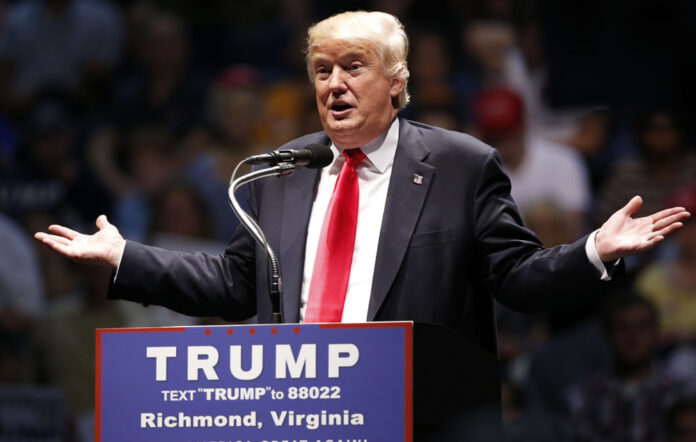
Donald Trump gestures last June during a rally in Richmond, Virginia. Photo: Steve Helber / Associated Press

WASHINGTON — The Trump administration has instituted a media blackout at the Environmental Protection Agency and barred staff from awarding any new contracts or grants, part of a broader communications clampdown within the executive branch.

The prohibitions came to light Tuesday as the agency moved to delay implementation of at least 30 environmental rules finalized in the closing months of President Barack Obama’s term, a potential first step to seeking to kill the regulations.

A summary of the actions posted in the Federal Register includes a long list of regulations that include updated air pollution rulings for several states, renewable fuel standards and limits on the amount of formaldehyde that can leach from wood products. President Donald Trump signed a directive shortly after his inauguration on Friday ordering a “regulatory freeze pending review” for all federal agency rules that had been finalized that have not yet taken effect.

Emails sent to EPA staff and reviewed by The Associated Press also detailed specific prohibitions banning press releases, blog updates or posts to the agency’s social media accounts.

The Trump administration has also ordered what it called a temporary suspension of all new business activities at the department, including issuing task orders or work assignments to EPA contractors. The orders were expected to have a significant and immediate impact on EPA activities nationwide. EPA contracts with outside vendors for a wide array of services, from engineering and research science to janitorial supplies.

Similar orders barring external communications have been issued in recent days by the Trump administration at other federal agencies, including the departments of Transportation, Agriculture and Interior.

Staffers in EPA’s public affairs office are instructed to forward all inquiries from reporters to the Office of Administration and Resources Management.

“Incoming media requests will be carefully screened,” one directive said. “Only send out critical messages, as messages can be shared broadly and end up in the press.”

A review of EPA websites and social media accounts, which typically include numerous new posts each day, showed no new activity since Friday.

White House spokesman Sean Spicer said Tuesday he had no specific information on the blackout.

“I don’t think it’s any surprise that when there’s an administration turnover, that we’re going to review the policies,” Spicer said.

Doug Ericksen, the communications director for Trump’s transition team at EPA, said he expects the communications ban to be lifted by the end of this week.

“We’re just trying to get a handle on everything and make sure what goes out reflects the priorities of the new administration,” Ericksen said.

Beyond what was stated in the internal email, Ericksen clarified that the freeze on EPA contracts and grants won’t apply to pollution cleanup efforts or infrastructure construction activities. The agency later said it would also seek to complete that review by Friday.

State agencies that rely on EPA for funding were left in the dark, with both Democratic and Republican officials saying they had received no information from EPA about the freeze.

“We are actively seeking additional information so we can understand the impact of this action on our ability to administer critical programs,” said Alan Matheson, executive director of Utah Department of Environmental Quality.

Democratic Senate leader Chuck Schumer of New York said the Trump administration should immediately reverse the media blackout and contracting freeze.

“This decision could have damaging implications for communities across New York state and the country, from delaying testing for lead in schools to restricting efforts to keep drinking water clean to holding up much-needed funding to revitalize toxic brownfield sites,” Schumer said.

The executive director for the advocacy group Public Employees for Environmental Responsibility, Jeff Ruch, said the orders go beyond what has occurred in prior presidential transitions.

“We’re watching the dark cloud of Mordor extend over federal service,” Ruch said Tuesday, referring to the evil kingdom in the epic fantasy “The Lord of the Rings.”

Ruch noted that key posts at EPA have not yet been filled with Republican appointees, including Trump’s nominee for EPA administrator, Scott Pruitt. That means there are not yet the new senior personnel in place to make decisions.

Environmentalists said the orders were having a chilling effect on EPA staff already suffering from low morale. Trump and Pruitt have both been frequent critics of the agency and have questioned the validity of climate science showing that the Earth is warming and man-made carbon emissions are to blame.

Staff at the Agriculture Department’s Agricultural Research Service also received orders not to issue any news releases, photos, fact sheets and social media posts. After an email of the order leaked to the media, USDA’s acting deputy secretary said he would ask agency officials to rescind the memo.

Spokespersons at agencies within the Transportation Department who are career employees received an email Monday morning telling them: “There will be no releases or social media until we hear from new leadership.” The one-sentence email, which was obtained by The Associated Press, came from the department’s top career spokeswoman, rather than a political appointee.

The department said in a statement that transportation officials didn’t receive any guidance on press releases and social media from the White House.

“Everybody’s being very cautious” and erring on the side of not releasing information, one DOT employee said. The employee didn’t have permission to speak publicly and spoke on condition of anonymity.

The AP reported over the weekend that staff employees at the Interior Department were temporarily ordered to stop making posts to its Twitter account after the official account of the National Park Service retweeted a pair of photos that compared those gathered for Trump’s inauguration with the much larger crowd that attended Obama’s swearing-in.

Trump later falsely claimed that more than 1 million people attended his inauguration, which Spicer insisted was the most watched in history.

In a test of what the new administration will tolerate, the official Twitter account of the Badlands National Park published a series of posts Tuesday accurately quoting climate science data that included the current record-setting high concentrations of carbon dioxide in the atmosphere. The tweets were soon deleted.

Story: Michael Biesecker, John Flesher

Advertisement

Trump to Begin Proceedings to Build Mexico Border Wall

A Donald Trump supporter flexes his muscles in 2017 with the words
A Donald Trump supporter flexes his muscles in 2017 with the words "Build The Wall" written on them as Trump speaks at a campaign rally in Plattsburgh, New York. Photo: Elise Amendola / Associated Press

WASHINGTON — President Donald Trump will begin rolling out executive actions on immigration Wednesday, beginning with steps to build his proposed wall along the U.S.-Mexico border, according to two administration officials. He’s also expected to target so-called sanctuary cities and is reviewing proposals that would restrict the flow of refugees to the United States.

The president is expected to sign the first actions  including the measure to jumpstart construction of the wall  Wednesday during a trip to the Department of Homeland Security. Additional actions will be rolled out over the next few days, according to one official.

Trump is said to still be weighing the details of plans to restrict refugees coming to the U.S. The current proposal includes at least a four-month halt on all refugee admissions, as well as temporary ban on people coming from some Muslim majority countries, according to a representative of a public policy organization that monitors refugee issues. The person was briefed on the details of that proposed action by a government official and outlined the expected steps for The Associated Press.

The officials and the public policy organization’s representative insisted on anonymity in order to outline the plans ahead of Trump’s official announcements.

On his personal Twitter account Tuesday night, Trump tweeted: “Big day planned on NATIONAL SECURITY tomorrow. Among many other things, we will build the wall!”

Trump campaigned on pledges to tighten U.S. immigration policies, including beefing up border security and stemming the flow of refugees. He also called for halting entry to the U.S. from Muslim countries, but later shifted the policy to a focus on what he called “extreme vetting” for those coming from countries with terrorism ties.

While the specific of Trump’s orders were unclear, both administration officials said Wednesday’s actions would focus in part on the president’s plans to construct a wall along the southern border with Mexico. He’s also expected to move forward with plans to curb funding of cities that don’t arrest or detain immigrants living in the U.S. illegally, which could cost individual jurisdictions millions of dollars.

Trump’s insistence that Mexico would pay for the wall was among his most popular proposals on the campaign trail, sparking enthusiastic cheers at his raucous rallies. Mexico has repeatedly said it will not pay for any border wall.

Earlier this month, Trump said the building project would initially be paid for with a congressionally approved spending bill and Mexico will eventually reimburse the U.S., though he has not specified how he would guarantee payments.

Trump will meet with Mexican President Enrique Pena Nieto at the White House next week.

In claiming authority to build a wall, Trump may rely on a 2006 law that authorized several hundred miles of fencing along the 2,000-mile frontier. That bill led to the construction of about 700 miles of various kinds of fencing designed to block both vehicles and pedestrians.

The Secure Fence Act was signed by then-President George W. Bush and the majority of the fencing in Texas, New Mexico, Arizona and California was built before he left office. The last remnants were completed after President Barack Obama took office in 2009.

The Trump administration also must adhere to a decades-old border treaty with Mexico that limits where and how structures can be built along the border. The 1970 treaty requires that structures cannot disrupt the flow of the rivers, which define the U.S.-Mexican border along Texas and 24 miles in Arizona, according to The International Boundary and Water Commission, a joint U.S.-Mexican agency that administers the treaty.

It appeared as though the refugee restrictions were still to be finalized. The person briefed on the proposals said they included a ban on entry to the U.S. for at least 30 days from countries including Iran, Iraq, Libya, Somalia, Sudan and Yemen, though the person cautioned the details could still change.

There is also likely to be an exception in the refugee stoppage for those fleeing religious persecution if their religion is a minority in their country. That exception could cover Christians fleeing Muslim-majority nations.

As president, Trump can use an executive order to halt refugee processing. President George W. Bush used that same power in the immediate aftermath of the Sept. 11 terrorist attacks. Refugee security vetting was reviewed and the process was restarted several months later.

Other executive actions expected Wednesday include bolstering border patrol agents and ending what Republicans have argued is a catch-and-release system at the border. Currently, some immigrants caught crossing the border illegally are given notices to report back to immigration officials at a later date.

If Trump’s actions would result in those caught being immediately jailed, the administration would have to grapple with how to pay for jail space to detain everyone and what to do with children caught crossing the border with their parents.

Story: Julie Pace, Vivian Salama, Rachel Zoll

Advertisement

French Artists to Ravish Patpong Brothel With New Perversions

Photo: Black Pagoda / Facebook

BANGKOK — There are 45 galleries and art spaces to choose from next week for Galleries Night, and then there’s a Patpong brothel-bar which for one night will purvey another form of culture.

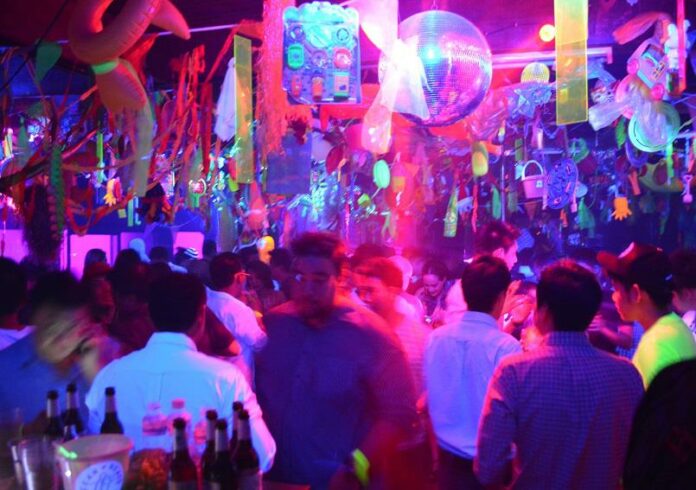
A French artist duo will fill Black Pagoda with photos of erotic figurines, “uncanny” performances and deep grooves at Lost in the Flesh, a one-night party mixing low- and high-brow delights.

Read: Ride the Rails to 2 Nights of Art, Music, Meet-Ups in Bangkok (And Chiang Mai)

Photographer Claude Estebe will bring his interest in Japanese perversion with photos in the Lolita vein of Moe Otaku, or as the release says, “sexy figurines blurring boundaries between real and unreal, plastic and flesh, fascination and repulsion.”

Performance artist Skall will likely make things weirder come midnight, with a chance of the ample dancing poles being put to unprecedented use.

Starting at 10pm, the inimitable DJ Marine Caillat will set the mood with blissful music.

Skall performing in 2015 at Chiang Mai’s Lyla Gallery. Photo: Toot Yung Art Gallery / Facebook

Entry is free. The event, a part of Galleries’ Night, will run on Feb. 3 at Black Pagoda, nightclub on the third floor of a shophouse in Patpong Soi 2.

Related stories:

Ride the Rails to 2 Nights of Art, Music, Meet-Ups in Bangkok (And Chiang Mai)

Advertisement

3 Puppies Survive Italy Hotel Disaster, 20 People Still Missing

Rescuers hold three puppies that were found alive in the rubble of the avalanche-hit Hotel Rigopiano, Monday near Farindola, central Italy. Photo: Alessandro Di Meo / Associated Press

FARINDOLA, Italy — Italian emergency crews pulled three wiggling, white sheepdog puppies out Monday from under tons of snow and rubble at an avalanche-struck hotel, lifting spirits even as the search for 20 people still missing dragged on five days after the disaster.

Three more bodies were located, raising the death toll to nine, and the first survivors of the deadly avalanche were released from the hospital. Questions intensified, however, into whether Italian authorities underestimated the risks facing the snowbound resort in the hours before the deadly avalanche.

Five days after some 60,000 tons of snow, rocks and uprooted trees plowed into the Hotel Rigopiano in central Italy, rescue crews were still digging by hand or with shovels and chainsaws in hopes of finding more survivors. An excavator reached the site, northeast of Rome, to speed up the search.

The discovery of the three Abruzzo sheepdog puppies in the boiler room raised spirits, even as rescuers located a ninth body.

Jubilant emergency crews carried the pups out in their arms, with one firefighter burying his face in the fluffy white fur to give the dog a kiss. The puppies were born last month to the hotel’s resident sheepdogs, Nuvola and Lupo, and were prominently featured on the hotel’s Facebook page. Their parents had found their own way out after the Wednesday afternoon avalanche.

“They just started barking very softly,” said Sonia Marini, a member of the Forestry Corps. “In fact, it was hard to find them right away because they were hidden. Then we heard this very tiny bark and we saw them from a little hole the firefighters had opened in the wall. Then we expanded the hole and we pulled them out.”

Firefighter spokesman Luca Cari, however, stressed that the puppies were found in an isolated part of the hotel and didn’t necessarily signal any new hope for finding human survivors.

“We’re happy to have saved them, and these are important moments in a dramatic situation,” he said. “But I don’t think there’s much correlation with finding other people.”

Emergency crews have been hoping that the 20 missing people may have found air pockets under the debris, and that the snow would insulate them from the frigid temperatures. But some three days have passed since anyone has been pulled out alive from the hotel, and conditions at the site were deteriorating, with the heavy snow turning to ice.

Nine people have been rescued from the Hotel Rigopiano. The first survivors released Monday from a hospital in the nearby city of Pescara included Giorgia Galassi and her boyfriend, Vincenzo Forti.

“Thank you, thank you everyone!” Galassi said as she waved from the front door of her parents’ home in Giulianova, on the Adriatic coast. Flanked by her parents, she said she felt fine.

Hotel guests Giampiero Parete, his wife and two children were also home. It was Parete who had first sounded the alarm after he by chance left the hotel to go to his car moments before the avalanche hit.

Still hospitalized were one adult and two youngsters, Samuel Di Michelangelo and Edoardo Di Carlo. Officials have confirmed that Edoardo’s parents were killed, while Samuel’s are still unaccounted for.

“Edoardo has an adult brother, so the brother will be given custody of him,” Pescara hospital medical director Dr. Rossano Di Luzio told reporters. “Samuel has his close relatives, grandparents at the moment, but we hope we can give him back to his parents.”

Firefighter spokesman Cari said emergency crews were working with an “operational hypothesis” that people might still be alive, but he stressed “we are fighting against time.”

The investigation intensified, meanwhile, into whether local government officials underestimated the threat facing the hotel, which was covered with two meters (six feet) of snow, had no phone service and dwindling gas supplies when a series of earthquakes rocked central Italy on the morning of Jan. 18.

Italian newspapers on Monday reproduced what they said was an email sent by the hotel owner to local and provincial authorities that afternoon asking for help.

“The hotel guests are terrorized by the earthquakes and have decided to stay out in the open,” Bruno Di Tommaso wrote. “We’ve tried to do everything to keep them calm, but since they can’t leave due to the blocked roads, they’re prepared to spend the night in their cars.”

The Pescara prefect’s office already has faced criticism after a local restaurant owner said his calls reporting the avalanche were ignored. Quintino Marcella said he called the office after receiving word from Parete, one of his chefs who was vacationing at the hotel.

Chief prosecutor Cristina Tedeschini confirmed her investigation was looking into a host of issues, including the timing and content of communications, where the snowplows were deployed, who was alerted when about the risks of avalanches and how authorities responded when the avalanche hit the hotel. In addition, she said she would look at building construction and whether it should have been even operating under such conditions.

She said there were “incongruities” between when communications were received and when they were acted on.

But she stressed they may not have had a significant effect on the search effort, given that five days had passed and still the search was ongoing. She said “at most” the delay in launching the avalanche response was an hour.

“I don’t see it as being highly relevant,” she said.

The president of the province, Antonio Di Marco, has confirmed he saw an email from Di Tommaso and had arranged for a snowplow to clear the road that night, the ANSA news agency reported. The avalanche hit sometime before 5:40 p.m., when Marcella received the call from his chef.

Story: Paolo Santalucia, Colleen Barry

Advertisement

Court Fines Man Arrested for Operating Home Microbrew

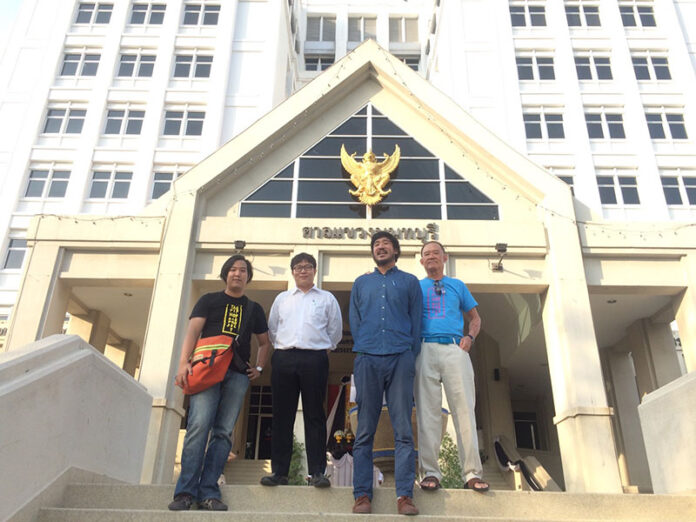
Taopiphop Limjittrakorn, second from right, and supporters including his father, at far right, on Tuesday afternoon outside a Nonthaburi circuit court.

NONTHABURI — A man arrested for making and selling beer at home was fined 5,000 baht and received a one-year, suspended sentence Tuesday afternoon.

The Nonthaburi district court in northern metro Bangkok found Taopiphop Limjittrakorn guilty on two counts: producing alcohol without a license and possessing the equipment to do so.

The 28-year-old tour guide was arrested Saturday at his shophouse where he was selling his home-brewed beer.

Taopiphop’s father, Pandit Lim, was at the court showing his support with a T-shirt for his son’s Taopiphop Ale Project.

“The law should definitely be changed. I was in Germany 30 years ago, and there were 20,000 kinds of beer, in contrast with Thailand which only had Singha at the time,” he said.

Making beer or any alcohol outside of a factory or licensed brew pub is illegal, but that hasn’t stopped a burgeoning craft beer scene from getting to work with yeast, hops and barley.

Read: Bangkok Man Opens Microbrewery in Home. Goes Straight to Jail.

“This is the first case that got so much attention,” Taopiphop, 28, said Tuesday morning at the police station while awaiting his day in court. “The ones before this went quietly.”

Upon his arrest, he originally faced two additional charges: selling alcoholic drinks not labeled with paper excise tax stamps and possessing alcoholic drinks not labeled with paper excise tax stamps.

Taopiphop contested those, saying he wasn’t obligated to label his bottles with them. The court kicked them out.

On Tuesday, representatives from the excise department were joking with Taopiphop that they wanted to try his beer.

Taopiphop said despite what was reported, Saturday was not the first day he began operation, as he had been brewing for some time. He said he only sold his bottles for 100 baht and not 150 baht as reported.

He also said he built his home bar, the Taopiphop Bar Project, by crowdfunding the money. The beer tap there, where he served his Zombeavers pale ale and Thammada beer, operated for “free,” with patrons making “donations,” he said.

Correction: An earlier version of this story indicated that Taopiphop was jailed Saturday. While he was arrested, he remained free until his appearance in court Tuesday.

Related stories:

Thai Craft Beer’s New Strategy: Keep Brewing Until Law Catches Up

Kill The Boy and Let the Beer Be Born

Brewing Discontent: Frothy Passions Erupt When Thai Craft Beer Goes Big

Advertisement

Activists Sue Security Forces Over 2015 Rally Crackdown

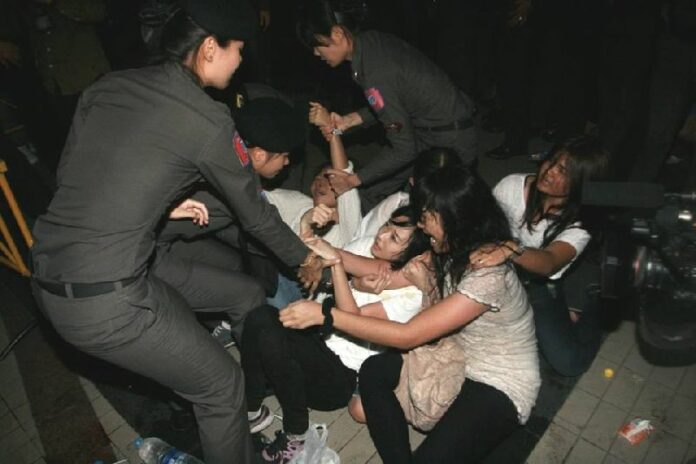
Police on May 22, 2015, drag a student activist away from an anti-coup protest in front of the Bangkok Art and Culture Centre.

BANGKOK — A group of pro-democracy activists on Tuesday filed a lawsuit against the authorities alleging they used excessive force during a crackdown on a 2015 political gathering in the capital.

Thirteen members of the New Democracy Movement said in the suit they were injured and unlawfully deprived of liberty by security forces when they broke up a peaceful sit-in on May 22, 2015, marking the first anniversary of the coup that brought the junta to power.

The lawsuit seeks 16 million baht in compensation.

“We calculated the amount based on the damages of each plaintiff,” said attorney Krisadang Nutcharus. “Some were injured by actions of the police and military, some were victims of wrongdoing against their freedoms during their detention. They were also threatened and coerced by the authorities.”

The suit names the military, police and government as defendants. It was filed at a civil court under a law that allows the public to seek recompense from security forces in the event of unlawful actions.

Junta spokesman Winthai Suvaree declined to comment on the lawsuit, but maintained that the authorities have always respected the law and refrained from violence.

“We have always done everything in accordance with the law,” Col. Winthai said. “We have been careful in every step. Although security officers have the authority to use any measure of the law, we have always tried to seek compromise.”

Billed by organizers as a silent sit-in, more than 30 people, mostly students, gathered May 22, 2015, in front of the Bangkok Art and Culture Center in downtown Bangkok to mark one year since the junta seized power.

The rally turned violent after more than 200 security officers surrounded the protesters and forcefully dragged them away one by one, sparking skirmishes that ended with all activists arrested.

Lawyer Krisadang said 57 witnesses will testify in court for the case over several weeks in July. A verdict will be handed down shortly after witness examinations are over, he said.

Advertisement

Hot News

LATEST NEWS

Bangkok
overcast clouds
28.8 ° C
28.8 °
28.8 °
75 %
3.4kmh
100 %
Sun
34 °
Mon
34 °
Tue
33 °
Wed
33 °
Thu
33 °