32.8 C
Bangkok
Saturday, June 27, 2026
Home Blog Page 2479

‘NASA’ Con Men Swindled Millions, Police Say

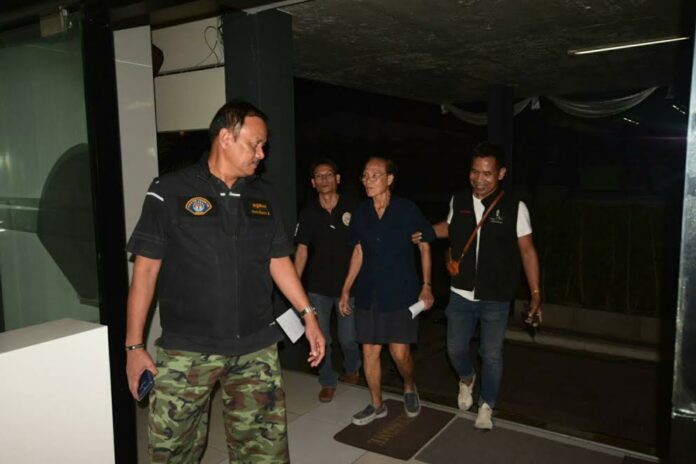
Fraud suspect Nitithorn Thangsawasdikul was brought to a police station on Monday night for questioning.

BANGKOK — Three men were arrested Monday night for allegedly running a scam that police believe fleeced millions of baht from their victims in the name of aerospace science.

The trio roped in their prey by inviting them to invest in rare metals that they would later sell to the U.S. space program, investigator Torsak Panklinput said Tuesday.

“They said they work for a company associated with NASA,” Lt. Col. Torsak of the Central Investigation Bureau said. “They said they would sell the materials to NASA and make profit.”

The suspects were identified as Prasit Poonwattanasombat, Somchai Uppalak and Nitithorn Thangsawasdikul. They were charged with fraud. Their bail was denied by the court on Tuesday morning.

The suspects have denied all charges.

According to police, the three men approached people in business and told them NASA was looking to buy a certain highly corrosive material for its space program that could only be found in Laos. If the victim was hooked, the trio would tell them they could invest together to have the ores mined in Laos, shipped to Thailand and sold to the American space agency.

The scam even came with a demonstration in which the three men showed their victims a metal turn nails into ashes, Torsak said.

But after signing contracts and making an initial investment of at least 100,000 baht, the victims would be told they needed to pay more to clear customs and other non-existent hurdles until they racked up costs in the millions of baht, according to Torsak.

Four victims from Nonthaburi, Phitsanulok and Pattani provinces have filed complaints so far, and police suspect there are more victims who are too embarrassed to come forward, the officer said.

“The victim in Bang Bua Thong [district of Nonthaburi] alone lost 1.8 million baht,” Lt. Col. Torsak said.

Advertisement

Vietnam Premier Urges More Investment From Japan

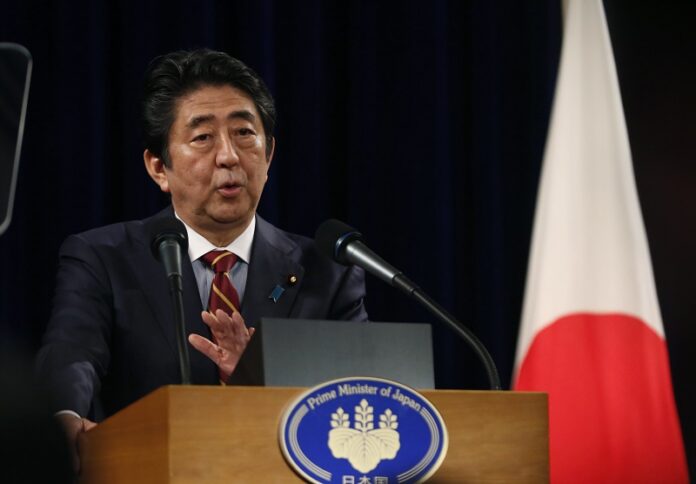
Japanese Prime Minister Shinzo Abe speaks during a press conference in 2017 in Hanoi, Vietnam. Photo: Associated Press

HANOI — Vietnamese Prime Minister Nguyen Xuan Phuc on Tuesday urged Japan to invest more in the Southeast Asian country to become its top foreign investor.

Speaking at a conference of business leaders from both countries also attended by visiting Japanese Prime Minister Shinzo Abe, Phuc said Vietnam would like to see Japan invest more in infrastructure, agriculture, manufacturing and services.

“At this meeting with Prime Minister Shinzo Abe, we wish that Japan would be the largest (foreign) investor to Vietnam, not other countries,” Phuc said.

South Korea is Vietnam’s largest foreign investor with total investments of USD $50 billion, followed by Japan with USD $42 billion.

Phuc said the Vietnamese people and businesses have high levels of trust for Japanese businesses, adding that Abe, on his third visit to Vietnam as prime minister, is a close friend of Vietnamese people.

Abe told the conference that after talks with Phuc on Monday, the countries had agreed to expand trade and investment, and improve the investment environment.

“Currently, ASEAN is the center for growth in the world and Vietnam is part of that center,” Abe said, referring to the Association of Southeast Asian Nations.

He said more than 1,600 Japanese companies are operating in Vietnam, urged Phuc and the Vietnamese government to continue to support them.

Abe, accompanied by executives from 76 Japanese companies, was wrapping up a four-nation tour to push Japan’s trade and security engagements in the region amid rising China’s dominance in Asia.

He previously visited the Philippines, Australia and Indonesia.

On Monday, Abe pledged to provide Vietnam with new patrol vessels to improve its maritime law-enforcement capabilities. Japan has already provided Vietnam with six used patrol boats.

Vietnam and Japan both have separate maritime disputes with China  with Vietnam in the South China Sea and Japan in the East China Sea.

Advertisement

Obscene Amount of Music Coming to Cat Radio Fest

BANGKOK — Cat Radio is bringing more than 100 local bands to perform on two days next month at its annual music festival.

Bangkok’s music scene will play loud when the indie-pop music outlet throws Cat Expo 3D at an amusement park with nearly 130 bands performing on five stages.

The weekend’s highlights include some of the most popular Thai bands such as Slot Machine, Scrubb and Tattoo Colour, while many up-and-coming artists will get their chance to rock the stage. The roster includes Somkiat, aka Thailand’s Arctic Monkeys, electronic noisemakers DCNXTR, glam rock trio Chanudom, indie darlings Yellow Fang, folk rockers from Greasy Cafe and indie folk-slinging My Life As Ali Thomas. See the full schedule online.

The town’s self-publishing scene is still churning out zines, some of which will be sold by their artist-authors. More of a listener? Shop for CDs from more than 150 labels.

The event runs from 3pm to midnight, Feb. 4 and Feb. 5 at Wonder World Fun Park in the Ramintra area, near the Fashion Island shopping mall. Tickets for two days are 1,500 baht. But them at a Thai Ticket Major counter and show a 59-baht receipt for a Pepsi and get them for 800 baht.

Originally known as the Fat Radio Fest, the long-running annual showcase of music and culture was rebranded when the radio station became Cat Radio. It became online-only in September 2015.

Advertisement

Trump Partner Eyes Indonesia Power, Sees Faults in Democracy

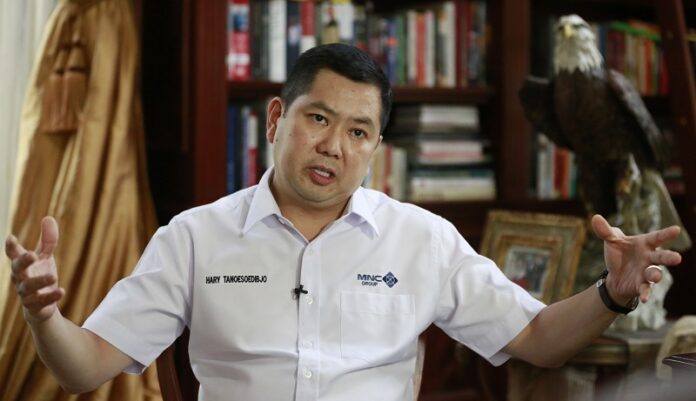
Media Nusantara Citra (MNC) Group President and CEO Hary Tanoesoedibjo speaks Saturday during an interview with The Associated Press in Jakarta, Indonesia. Photo: Achmad Ibrahim / Associated Press

JAKARTA — President-elect Donald Trump’s billionaire business partner and possible political proxy in Indonesia nurses big leadership ambitions in the vast but perennially lagging Southeast Asian nation, which he says isn’t developed enough to have a successful democracy and needs strong leadership.

Boasting more than a million followers on Twitter, three popular television channels and a newly minted political party, Hary Tanoesoedibjo says he has had enough success in business and now wants power of the political kind.

Tanoesoedibjo, better known as Tanoe, is like Trump a free-trade critic. He’s making his pitch to tens of millions of Indonesians left behind by a lopsided economy that favors a few major cities.

“I think under today’s environment, with the complexity, we need a businessman to run a country,” Tanoe said in an interview Saturday at his South Jakarta home, a small palace with a statue of a giant eagle looming over an immaculate driveway. “What I see is that (Trump) will give a lot of benefit to the American people, like his intention to bring back factories to the U.S.”

Tanoe and his wife will attend Trump’s inauguration Friday and the official inauguration ball.

Aside from business, the two men share similar diagnoses of what ails their respective countries. Tanoe bemoans what he says is Indonesia’s fading competitiveness, lack of investment in manufacturing, widespread poverty and the risk it won’t provide enough good jobs for its burgeoning youth population.

Despite his presidential ambitions, Tanoe does not have any particular affection for Indonesia’s young democracy.

“I have to tell you, in a society where a supermajority of the people is still left behind in terms of their education, and in terms of their welfare, democracy may create another problem,” Tanoe said.

“Because those who really rule the country are those who sit with money and power. The supermajority of the people, they don’t understand anything. They just follow,” he said. “Maybe democracy is a good way for a developed country, in a country where the level of the playing field is the same.”

Tanoe, like Trump, exults in his business success, pointing to the 37,000 people working in his property and media conglomerate, MNC. Forbes estimates his net worth at USD $1.11 billion. He built his company from scratch, though he began with advantages not available to most Indonesians: His father was a businessman and Tanoe attended Canada’s Carleton University and the University of Ottawa.

His association with Trump began about three years ago when MNC was looking for an operator for sprawling “six star” resorts, one to be built on the tourist island of Bali and the other near Jakarta.

In exchange for a cut of revenue, the Trump Organization will manage hotels, golf courses and country clubs that will cost about USD $700 million for MNC to build. The projects are to form the core of larger developments the company plans.

Tanoe said after the inauguration his business dealings with the Trump Organization will only be through Trump’s sons Don Jr. and Eric. He is one of the very few Indonesians with a personal relationship with Trump, and he said he is open to being a conduit between the incoming president and Indonesia.

“If I am asked to help facilitate anything for the benefit of the countries I am more than happy to help. That is my position. Basically I don’t want to initiate, to do anything with the official relationship between Indonesia and the United States,” he said.

Such a role appears unlikely, since Tanoe is not aligned with President Joko “Jokowi” Widodo. Indeed, in 2014, Tanoe was the vice-presidential running mate of Wiranto, a retired military chief and current government minister linked to human rights abuses in East Timor. That campaign faltered and Tanoe switched his support to another former general, Prabowo, who was eventually defeated by Jokowi, a maverick candidate. Prabowo, however, remains highly popular in the countryside.

Tanoe’s United Indonesia Party, founded in 2015, could play some role in the 2019 presidential election, but it’s far from clear whether he might be able to satisfy his political ambitions.

“Indonesia needs a leader which is strong, with integrity,” Tanoe said. “So if I know someone strong enough and with the ability to provide solutions to Indonesia, to bring Indonesia to become a developed nation, I would rather be in the position to support him or her. But if there is none I’m convinced of, then I may run myself.”

His ties to Trump could be both an asset and a liability in the world’s most populous Muslim nation and fourth-largest democracy, a country where military dictatorship was the norm until the ouster of President Suharto in 1998. Though Trump is notorious in Indonesia for proposing a ban on Muslim immigration, there is also a reservoir of admiration for the U.S. superpower.

A greater obstacle may be that Tanoe is an ethnic Chinese and Christian. Indonesia’s historical antipathy to its Chinese minority has intensified recently, and hard-line Muslim groups, supported by a marriage of convenience with mainstream political opponents of Jokowi, have seized the political initiative.

Protests against Jakarta’s ethnic Chinese and Christian governor, a Jokowi ally, drew hundreds of thousands to the capital’s streets late last year, demanding his arrest for alleged blasphemy. Gov. Basuki “Ahok” Tjahaja Purnama, who is campaigning for re-election next month, is being tried on charges of insulting Islam and desecrating the Quran.

Tanoe blames a pattern of weak law enforcement responses to provocations by hard-liners for the recent success of their movement, which he doesn’t believe represents mainstream opinion.

“The majority of the Indonesian people are still moderate, that’s for sure,” he said.

Story: Stephen Wright

Advertisement

These Are Top Trials to Look Out For in 2017

Erawan Shrine bombing suspect Adem Karadag was brought on Nov. 2 to a military court in Bangkok.

BANGKOK — Whenever high-profile crime and calamity strikes, public attention is captivated for a while, criminal investigations are launched, and then the whole thing fades away. Sometimes the public does not find out how the cases ended.

The following are details of court proceedings in 2017 for cases that you may have heard or read about. If interested, members of the public can even attend these hearings and see how they unfold – provided you can understand Thai, of course.


Murder of disabled bakery vendor
On May 1, six men allegedly murdered a disabled bakery worker in broad daylight. According to a police report of the incident, some of the killers kept slashing the victim, Somkiat Srichan, even after officers arrived at the scene.

The killing soon became national news, not only for its brutality, but also because four of the suspects were sons of police officers. All of the suspects are currently awaiting trial in prison.

Ananchai Chaiyadech, a witness in the case, said the next phase is examination of witnesses from March 18 to March 28. A verdict is expected in September or October, he said.


Erawan Shrine Bombing
After a series of delays and disputes over interpreters, the trial of two Uighur men accused of staging the deadly bombing of Erawan Shrine finally kicked off in November.

Lawyer Schoochart Kanpai said the trial will resume after a long break with witness examination March 6 and March 7 at Bangkok’s military court. Lt. Col. Somkiat Ploytubtim, the same witness who opened the trial in November, will take the stand on those two days.


Jenphop Viraporn
The businessman who slammed his Mercedes-Benz into the back of another car, killing the two graduate students inside, will take the stand in the Ayutthaya Provincial Court a year after the fatal accident.

Jenphop Viraporn was charged with a variety of offenses, the most serious being fatal DUI, which could land him in prison for 10 years if found guilty.

Lawyer Prinya Sanitchone said examination of witnesses will run through early May, with a verdict expected in June.


Yingluck Shinawatra
The former prime minister, who retains high popularity among her electorate, is on trial at the Supreme Court’s Division for Political Office Holders on charges of negligence. She’s accused of failing to prevent corruption in a key rice subsidy program under her administration which reportedly cost losses of about 1 billion baht.

The last witness examination in her case will take place in July. It is unclear when the verdict will be handed down, but it will likely be the biggest news that day, if not week.


Koh Tao Murders
In December 2015, the court found two Burmese migrant workers guilty of killing two British backpackers on Koh Tao a year earlier, but that did little to quiet questions by those convinced the two men were scapegoats in what was the highest-profile murder case in recent years.

The pair now sits on death row at Bang Kwang Prison in Bangkok while the court considers their appeal, said lawyer Nakhon Chumpuchat.

Unlike the lower court, no witnesses will be called during the appeal process; instead, the court will simply “reinterpret” evidence and testimony already entered in the previous proceedings.

A verdict is expected within the next year or two years from now, Nakhon said.

Advertisement

Gene Cernan, Last Man to Walk on the Moon, 82

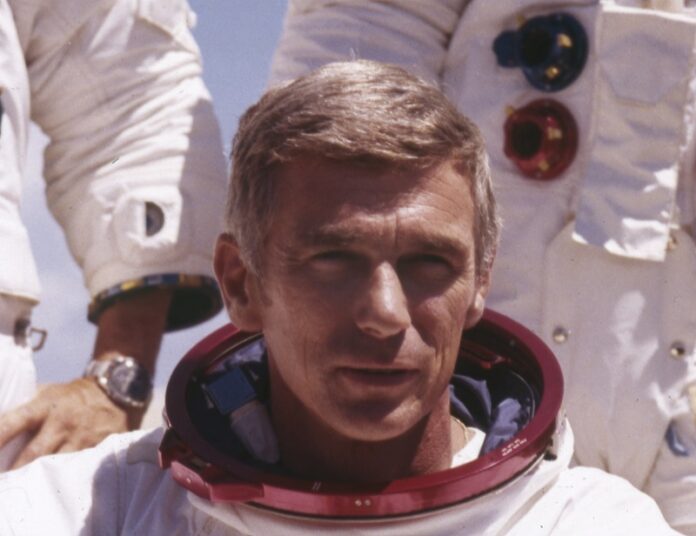
Eugene Cernan, is pictured in his space suit in this undated photo. Photo: Associated Press

HOUSTON — Astronaut Gene Cernan traced his only child’s initials in the dust of the lunar surface. Then he climbed into the lunar module for the ride home, becoming the last person to walk on the moon.

It was a moment that defined the Apollo 17 commander in both the public eye and his own.

“Those steps up that ladder, they were tough to make,” Cernan recalled in a 2007 oral history. “I didn’t want to go up. I wanted to stay a while.”

His family said his devotion to lunar exploration never waned, even in the final year of his life. Cernan died Monday at age 82 at a Houston hospital following ongoing heath issues, family spokeswoman Melissa Wren told The Associated Press.

“Even at the age of 82, Gene was passionate about sharing his desire to see the continued human exploration of space and encouraged our nation’s leaders and young people to not let him remain the last man to walk on the Moon,” his family wrote in a statement released by NASA.

On Dec. 14, 1972, Cernan became the last of only a dozen men to walk on the moon. Cernan called it “perhaps the brightest moment of my life. … It’s like you would want to freeze that moment and take it home with you. But you can’t.”

Decades later, Cernan tried to ensure he wasn’t the last person to walk on the moon, testifying before Congress to push for a return. But as the years went by he realized he wouldn’t live to witness someone follow in his footsteps  still visible on the moon more than 40 years later.

“Neil (Armstrong, who died in 2012) and I aren’t going to see those next young Americans who walk on the moon. And God help us if they’re not Americans,” Cernan testified before Congress in 2011. “When I leave this planet, I want to know where we are headed as a nation. That’s my big goal.”

Cernan died less than six weeks after another American space hero, John Glenn, the first American to orbit the Earth in 1962. Their flights weren’t the first or last of the Mercury and Apollo eras. Yet to the public they were the bookends of America’s space age glory.

Cernan guided the lander, named Challenger, into a lunar valley called Taurus-Littrow, with Harrison “Jack” Schmitt at his side on Dec. 11, 1972. He recalled the silence after the lunar lander’s engine shut down.

“That’s where you experience the most quiet moment a human being can experience in his lifetime,” Cernan said in 2007. “There’s no vibration. There’s no noise. The ground quit talking. Your partner is mesmerized. He can’t say anything.

“The dust is gone. It’s a realization, a reality, all of a sudden you have just landed in another world on another body out there (somewhere in the) universe, and what you are seeing is being seen by human beings  human eyes  for the first time.”

Three days earlier, Cernan, Schmitt and Ronald Evans had blasted off atop a Saturn rocket in the first manned nighttime launch from Kennedy Space Center. Evans remained behind as pilot of the command module that orbited the moon while the other two landed on the moon’s surface. Cernan and Schmitt, a geologist, spent more than three days on the moon, including more than 22 hours outside the lander, and collected 249 pounds of lunar samples.

“In that whole three days, I don’t think there’s anything that became routine,” Cernan recalled. “But if I had to focus on one thing … it was just to look back at the overwhelming and overpowering beauty of this Earth.”

“To go a quarter of a million miles away into space and have to take time out to sleep and rest … I wished I could have stayed awake for 75 hours straight. I knew when I left I’d never have a chance to come back.”

Completing their third moon walk on Dec. 14, Schmitt returned to the lunar module and was followed by Cernan.

“We leave as we came and, God willing, as we shall return, with peace and hope for all mankind,” Cernan said.

He later acknowledged that he had grasped for words to leave behind, knowing how the world remembered Neil Armstrong’s “giant leap for mankind” on stepping on the moon in 1969.

Before heading home, Cernan said he drew the letters “TDC”  the initials of his then 9-year-old daughter, Teresa Dawn  with his finger on the dusty gray lunar surface. He said he imagined someone in the distant future would find “our lunar rover and our footprints and those initials and say, ‘I wonder who was here? Some ancient civilization was here back in the 20th century, and look at the funny marks they made.'”

Eugene A. Cernan was born in 1934 in Chicago and graduated from Indiana’s Purdue University in 1956 with a degree in electrical engineering. (Armstrong also was a Purdue grad.)

He had been a Navy attack pilot and earned a master’s degree in aeronautical engineering when NASA selected him in October 1963 as one of 14 members of its third astronaut class.

Cernan had the looks of an astronaut from central casting. “He’s your classic sort of handsome debonair flyboy,” said space historian Roger Launius, associate director of the Smithsonian Air and Space Museum.

In 1966, he was pilot of Gemini 9, a three-day flight with command pilot Tom Stafford where they used different techniques to rendezvous with a docking adapter that was previously launched. On the flight, Cernan became the second American to walk in space, spending more than two hours outside the Gemini spacecraft.

Cernan would later call the mission, “that spacewalk from hell.”

“It was very serious,” said Launius, the historian. “He lost all kinds of water, his equipment did not work effectively. He overheated. His visor glossed over with water, he could barely see. He barely got back in the spacecraft.”

Cernan’s sweat so much he lost 13 pounds. The space agency was forced to go back to the drawing board.

“That was a really important learning experience,” Launius said. “The difficult thing about that is they put an astronaut’s life at great risk there. They learned the lesson.”

With the Apollo program underway, Cernan flew on Apollo 10 in May 1969. It was a dress rehearsal for the lunar landing on the next flight and took Cernan and Stafford, aboard the lunar module Snoopy, to within 9½ miles of the moon’s surface.

The mission was marked by a glitch when the wrong guidance system was turned on and the lunar module went out of control before Stafford righted it by taking manual control.

Cernan often joked that his job was to paint a white line to the moon that Armstrong and the rest of the Apollo 11 crew could follow. Yet Cernan was one of only three people to voyage twice to the moon  either to its surface or in moon orbit. James Lovell and John Young are the others.

In 1973, Cernan became special assistant to the program manager of the Apollo program at Johnson Space Center in Houston, assisting in planning and development of the U.S.-Soviet Apollo-Soyuz mission. He was senior U.S. negotiator with the Soviets on the test project.

He retired from NASA three years later. He worked for a Houston energy firm, Coral Petroleum, then in 1981 began his own aerospace consulting company. He eventually became chairman of an engineering firm that worked on NASA projects. He also worked as a network television analyst during shuttle flights in the 1980s.

A documentary about his life, “The Last Man on the Moon,” was released in 2016.

Teresa was Cernan’s only child with his wife Barbara. The couple married in 1961 and divorced 20 years later. In 1987, he married again, to Jan Nanna, and they lived in Houston.

In all, Cernan logged 566 hours and 15 minutes in space, more than 73 hours of them on the moon’s surface.

“I can always walk on Main Street again, but I can never return to my Valley of Taurus-Littrow, and that cold fact has left me with a yearning restlessness,” he wrote in his 1999 autobiography, also entitled “The Last Man on the Moon.”

“It was perhaps the brightest moment of my life, and I can’t go back,” he said. “Enriched by a singular event that is larger than life, I no longer have the luxury of being ordinary.”

Cernan is survived by his wife, Jan Nanna Cernan, his daughter and son-in-law, Tracy Cernan Woolie and Marion Woolie, step-daughters Kelly Nanna Taff and husband, Michael, and Danielle Nanna Ellis and nine grandchildren.

Story: Seth Borenstein, Michael Graczyk

Advertisement

Istanbul Nightclub Attacker Who Killed 39 Captured

Reina club attacker after being caught by Turkish police Monday in Istanbul. Photos: Associated Press

ISTANBUL — A gunman suspected of killing 39 people during a New Year’s attack on an Istanbul nightclub has been caught in a police operation, Turkish media reports said early Tuesday.
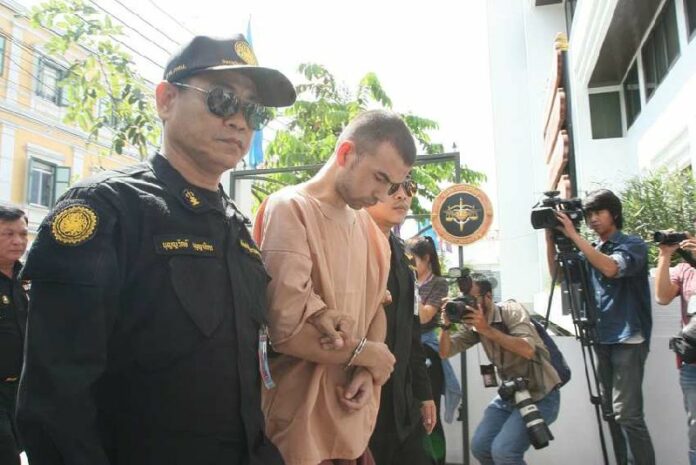
The suspect was captured in a special operations police raid on a house in Istanbul’s Esenyurt district, private NTV television reported. The broadcaster said he had been staying in the house belonging to a friend from Kyrgyzstan.

The Islamic State group has claimed responsibility for the nightclub massacre, saying the attack in the first hours of Jan. 1 was in reprisal for Turkish military operations in northern Syria. The man identified as the suspect had been on the run since the attack.

Hurriyet newspaper and other media have identified the gunman as Abdulkadir Masharipov, an Uzbekistan national. The suspect was to undergo medical checks before being taken to police headquarters for questioning, the paper said in its online edition.

Dogan news agency published what it said was the first image of the attacker. It showed a bruised, black-haired man in a grey, bloodied shirt being held by his neck. Private NTV television said the gunman had resisted arrest.

NTV reported that the alleged gunman’s Kyrgyz friend and three other people also were detained. His 4-year-old child, who was with him at the home, was taken into protective custody.

Hurriyet newspaper said the alleged gunman’s wife and 1-year old daughter were caught in a police operation on Jan. 12.

Police established his whereabouts four or five days ago, but delayed the raid so they could monitor his movements and contacts, NTV reported.

The television channel also broadcast footage showing plain-clothed police taking away a man in a white top and sweat pants, forcing his head down. The station said the images showed the gunman’s Kyrgyz friend being taken to a police vehicle.

The state-run Anadolu Agency likewise reported the arrest and identified the gunman, only with a slightly different spelling of his first name, Abdulgadir. It said a Kyrgyz man and three women were detained with him

Anadolu said the suspects were being taken to Istanbul’s main police headquarters for questioning. Police were carrying out raids on other suspected Islamic State group cells, the news agency said without providing details.

Turkish Foreign Minister Mevlut Cavusoglu posted a Twitter message thanking the interior minister, Suleyman Soylu, police and intelligence organizations “who caught the Reina attacker in the name of the people.”

Earlier in the day, Turkish Deputy Prime Minister Numan Kurtulmus said the Reina nightclub attack had been carried out professionally with the help of an intelligence organization, a claim he had made in the first days after the attack. He did not name the organization suspected of being involved.

Hundreds of people were gathered at the swanky Reina nightclub to celebrate the end of a tumultuous 2016 only to become the first victims of 2017. The gunman shot a police officer and a civilian outside the club, then stormed the premises.

Most of the dead in the attack on the upscale club were foreign nationals, from the Middle East. The gunman had reportedly left Reina in a taxi.

Story: Ayse Wieting, Suzan Fraser

Advertisement

Races Go Vertical Because Horizontal is So Mainstream

Runners at the 2015 Vertical Marathon posted on Nov. 13, 2015. Photo: Banyan Tree Bangkok / Facebook

BANGKOK — If running on tracks, streets, treadmills or with Hello Kitty has lost the thrill, things are literally looking up.

Charge up the floors of a Bangkok building at two vertical running events set for February, which, strangely enough, are set to go off on the same day.

Vertical Marathon at the Banyan Tree Hotel is set to take off for the 18th time as a challenging venue for runners. Running up all 1,093 stairs in the 61-floor race might sound exhausting, but once runners reach the rooftop, they can marinate in endorphins while taking in a stunning panoramic view of the capital city.

The race starts at 8am on Feb. 26. The 400 baht registration can be done online until Jan. 31. Runners who makes it to the finish line will receive a medal, while winners in each category go home with trophies.

The postponed Double Towers Vertical Fun Run is scheduled on the same day. The race, now in its third edition, is divided into two categories: a 2K fun run and 8K mini-marathon, both of which will end with runners racing up 40 stories of Sathorn Square.

Proceeds will go to the Yuvabadhana Foundation to support children’s education.

The registration fee is 500 baht for the fun run and 700 baht for the mini-marathon. Registration information should be updated online by the end of the month.

For those wishing to run to the top of Thailand’s second tallest building, stay tuned for more information about the ninth edition of the Baiyoke Run-Up, which may be held in late February.


Advertisement

Brazilian Master Photog’s Snaps to Stun Bangkok

Photo: Sebastiao Salgado / Courtesy

BANGKOK — World-renowned Brazilian photojournalist Sebastiao Salgado will showcase the art captured from around the globe in Bangkok.

After a seven-year journey from the Indonesian jungle to the Galapagos Islands, Salgado will display 120 black-and-white captures at Sebastiao Salgado : The World Through His Eyes next month in Bangkok.

Salgado is famous for documenting the splendors of both nature and humanity. The 72-year-old photojournalist will be present at the exhibition to discuss his work on Wednesday and sign his books Thursday.

Announcement of his arrival has excited the photography scene, including top street photographer Tavepong Pratoomwong.

“Please pinch my cheek so I know I know this is not a dream,” he wrote online.

The exhibition runs Feb. 8 through March 8 at the Bangkok Art and Culture Centre. Admission is free.

Salgado’s works were the basis of bio-doc “The Salt of the Earth,” which was directed by his son Juliano Ribeiro Salgado and Wim Wenders. The film won a special award at Cannes and was nominated for best documentary at the Academy Awards.

‘Bushmen’ taken in 2008 in Botswana. Photo: Sebastião Salgado / Facebook

Advertisement

Death of Separatist Leader Prompts Hope, Fear For Peace Prospects

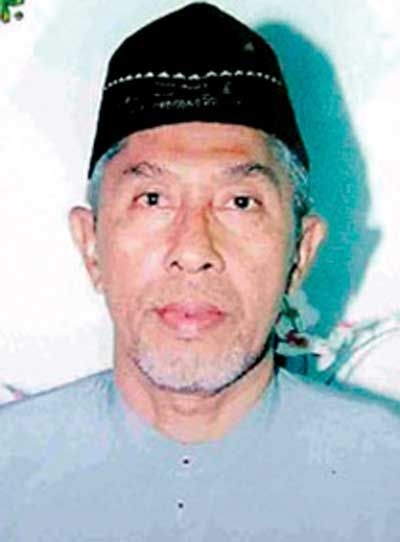
An undated file photo of Sapaeng Basoe.

BANGKOK — The death of the leader of a major southern separatist movement could fall either way for ongoing negotiations between Bangkok and the rebels, according to experts involved in the peace effort.

After leading the secretive National Revolutionary Front, or BRN, since the start of its 13-year campaign for secession, Sapaeng Basoe, once the most wanted man in Thailand, died of lung infection Tuesday in exile in Malaysia, according to media reports. He was 81.

Speaking to reporters Sunday, the general who represents the regime’s peace dialogue with the BRN and other armed groups said Sapaeng’s death may convince hardliners to come to the negotiation table.

“Having fewer spiritual leaders as time goes by will result in an easier peace dialogue,” Gen. Aksara Kerdphol said.

Sapaeng, who embraced Wahhabism, a more trenchant brand of Islam while studying in Saudi Arabia, is regarded as the “spiritual leader” of the BRN, the most well-armed and active among all militant groups currently seeking independence for the three Muslim-majority provinces in the southern border region.

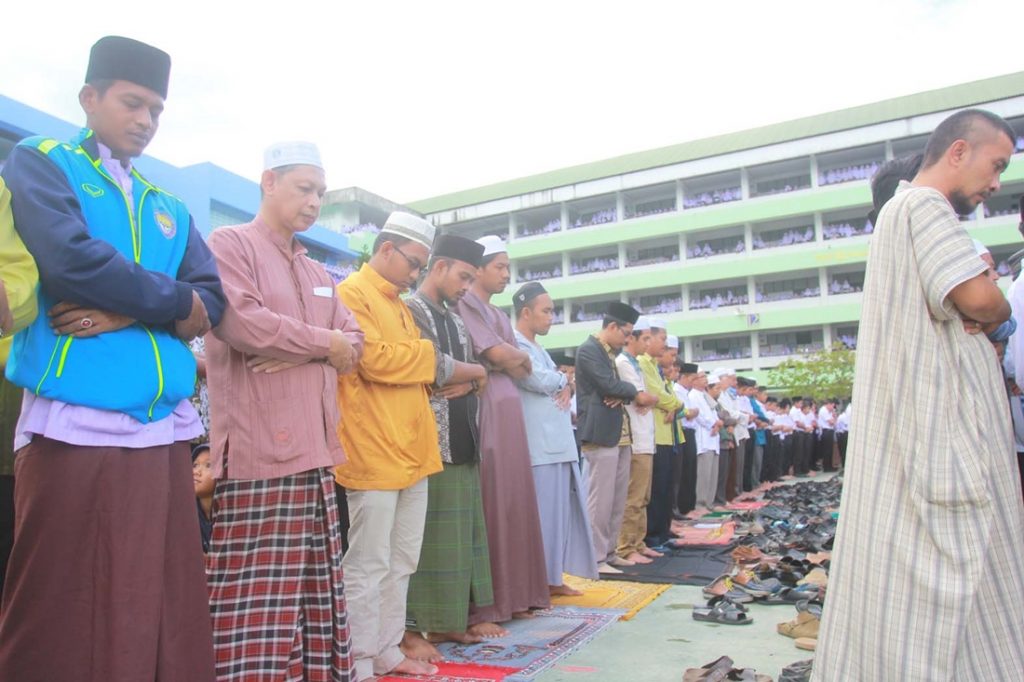
A prayer in memory of Sapaeng Basoe was held Monday at a school he once headed in Yala province.

The conflict has claimed at least 6,800 lives since it first broke out in January 2004.

Although Sapaeng did not participate in the talks with Thai security forces – a BRN secretary stood in – it was unclear whether he gave his blessing to the effort.

Paradorn Pattanatabut, who led negotiations for the previous civilian government, said Sapaeng was ambiguous when he reached out to the separatists in 2013. Whether the BRN would be more forthcoming in the current talks depends solely on who replaces Sapaeng as the group’s chairman, he said.

“Their factions are still at odds with each other. It depends which faction will have more weight after he died,” Paradorn said by telephone. “If the military faction wins the succession, the situation ahead would be very exhausting for us. If the dialogue faction gets it, it would be good for us.”

Since the BRN famously does not release statements to the public, the government will only find out who has succeeded Sapaeng from intelligence reports passed along by Malaysia, where the movement’s leadership is based, Paradorn said.

And he’s not optimistic.

“It’s undeniable that the military faction has more weight right now,” Paradorn said. The past year has seen an escalation of violence, including a string of attacks that killed four during Mother’s Day holidays and a massive car bomb using a weaponized ambulance.

Some of the wounded tourists at a hospital in Hua Hin following the Aug. 11 explosion.

A scholar who studies the southern insurgency said Sapaeng’s death won’t change much. While Sapaeng was the appointed chairman of the BRN, the movement was largely run by local leaders who favor military action over peace talks, said Srisomphop Jitpiromsri, director of the Deep South Watch news agency.

“Therefore, their disagreement with the peace policy and their preference for attacks will not change,” Srisomphop said. “They won’t suddenly join the talks.”

However, the BRN may opt for a nonviolent approach if its operatives see that the military government is sincere about negotiating, the professor said.

“If there’s progress and practical results, the military faction of the BRN may decide to join,” Srisomphop said. “I don’t think the BRN has completely ruled out negotiations.”

Related stories:

Kindergartener Among Two Killed by Deep South Motorcycle Bomb

BRN Says It Was Behind Mother’s Day Bombings: Report

Wave of Attacks Kills 3 as Cabinet Delegation Arrives in Deep South

Advertisement

Hot News

LATEST NEWS

Bangkok
overcast clouds
32.8 ° C
36.6 °
32.7 °
68 %
3.3kmh
100 %
Sat
37 °
Sun
36 °
Mon
35 °
Tue
34 °
Wed
33 °