29.4 C
Bangkok
Friday, June 26, 2026
Home Blog Page 2490

19 Die as Floods Continue to Submerge South

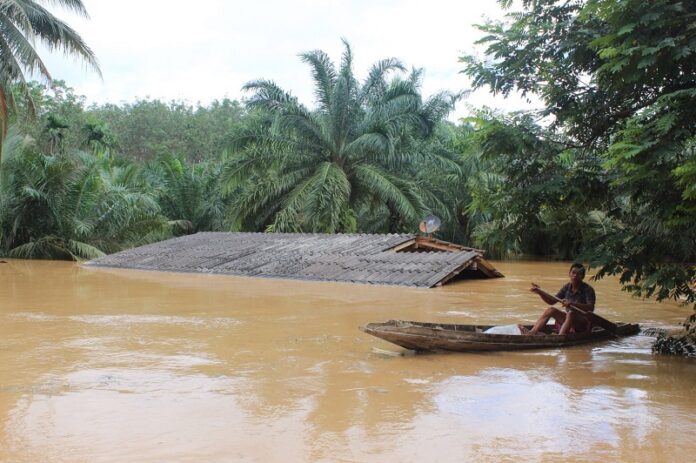
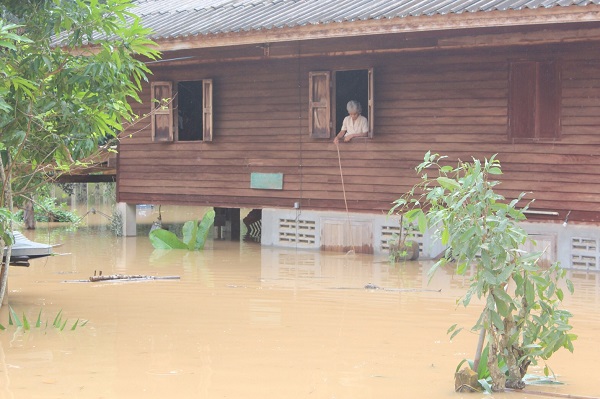
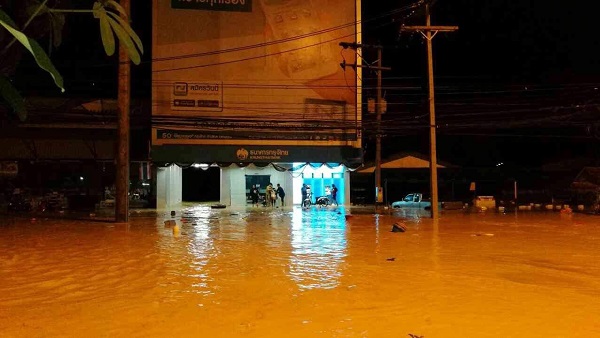
Flood level reaches 3-meter high in Surat Thani's Vibhavadi district Monday.

BANGKOK — Ongoing floods in the southern region have killed 19 people and affected nearly one million people, authorities said Sunday.

While the situation in Yala and Ranong provinces has improved, another eight provinces were still facing crisis from flash floods. More than 330,000 households were affected and one person remained missing, according to the Department of Disaster Prevention and Mitigation.

Though flood levels gradually decreased in many provinces, they were higher in Nakhon Si Thammarat and Chumphon provinces.

Floods also destroyed sections of 218 roadways including Phet Kasem Road, a major highway to the south.

Mu Koh Phi Phi National Park in Krabi province announced they closed all diving spots to tourists until further notice.

Read: Malls, Airport Closed as Worst Flood in Decades Hit South

Government spokesman Sansern Kaewkamnerd said Sunday the government approved an additional 50 million baht for each nine provinces including Phatthalung, Yala, Narathiwat, Songkhla, Pattani, Trang, Nakhon Si Thammarat, Surat Thani and Chumphon in order to cover all necessities.

Heavy downpours are expected throughout the southern region according to Monday’s forecast by the Meteorological Department. High waves were expected both in the Andaman Sea and the Gulf of Thailand. Small boats are advised to stay ashore.

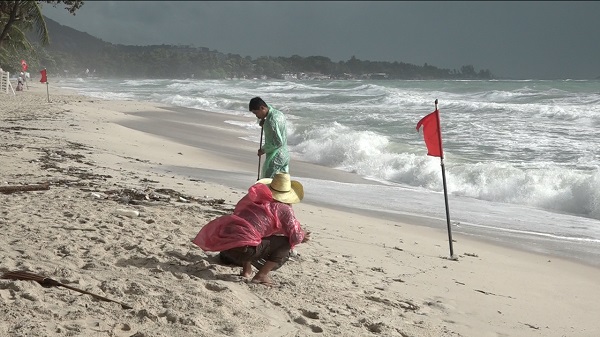
A red flag was raised on Chaweng beach of Samui Monday warning people not to swim.
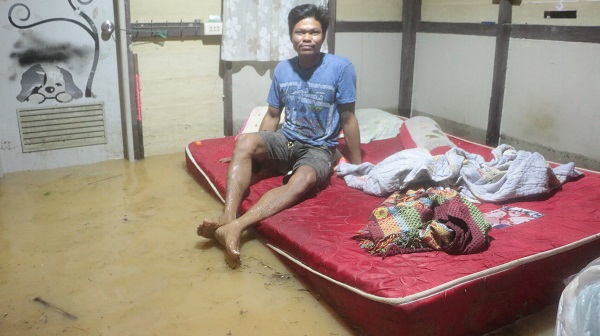
Flash flood arrives Monday early morning affecting more than 500 households in Ranong province.
Flood level reaches 3-meter high in Surat Thani's Vibhavadi district Monday
Flood level reaches 3-meter high in Surat Thani’s Vibhavadi district Monday
Flash flood makes Phet Kasem Road in Krabi province become paralyzed Sunday night.
Advertisement

Welcome to the New Khaosod English. Don’t Worry. It’s the Same.

You might have noticed Khaosod English looks a little different than it did just a few months ago.

Although our obsession with excellent journalism in service to no one but our readers is unchanged, we need updated tools to balance our 20th century principles with 21st century innovation.

That, and we heard enough of the jokes: “2009 called and asked for its website back.” Funny.

We love good writing and strong stories that hew to high standards. We’re not afraid to tell you when we got something wrong or regretfully withheld information due to those laws used to silence discourse. We don’t expect readers to blindly trust us in this “post-truth” world. But we do these things out of respect for you, in the hope we can occasionally win the same in return.

Khaosod English ala 2014.

So don’t worry, Khaosod English isn’t changing. Our upgraded platform will help us bring the same reporting and standards to the digital world that our discerning readers expect. Like our Vanishing Bangkok, Monopolyland and Bangkok Bombing interactive features, and our live blogging of August’s charter referendum.

To make it all easier on the eyes, we went to the same design team behind the Bukruk Urban Arts Festival.

We don’t think this internet thing is going away, and while the print media confront their mortality and self-inflicted loss of relevance, we’re moving forward to offer more.

More is More

With the support of Matichon Group, we have expanded our staff where it matters most – reporters.

We’re also pleased to have recently expanded our coverage with Don Sambandaraksa, an experienced and sharp-witted tech contrarian who will weigh in now and then with his Cognitive Dissident column.

iconCoverage of Bangkok would be incomplete without talking about its nightlife, so we’re pleased to have with us one of its most-storied DJs, Mongkorn “Dragon” Timkul. Dragon has been starting fires in the underground for over a decade and is friend to all genres (except EDM). He writes about the music, the people who make it and where to hear it in Notes From the Underground.

As Thailand gleefully leans into the transhuman future and life moves increasingly online, find our coverage of that space, from the fight for online freedom to the latest Pantip shitstorms in our dot.net section.

Check out our Life@Bangkok section for coverage of the most interesting arts, culture, films, entertainment and events. Looking for some worthy suggestions on stuff to do, from high- to low-brow? Hit the events listings.

Join us on Facebook for our livestreams and bonus social media posts. Just want to binge-read our stories at a time of your choosing? Sign up for a daily dose of our fresh news.

Although we have more fun and cool things planned, none is at the expense of the content that drew readers here in the first place. Not going to set aside our values and publish the Top 10 kitten videos. (Unless they’re super cute.)

Like, How?

First of all, recommitting every day to our allegiances: the readers.

I’ve heard the talk and will be the first to admit it. It’s true. We are totally biased.

Biased toward the principles of truth-telling, fairness, honesty and accuracy that our profession is based upon.

We reject the cynical relativism that suggests justice, human dignity, fairness and accountability are cultural constructs which vary by longitude and latitude. That also means rejecting the fatalistic shrugs of “things will never change” or “this is Thailand.”

We’ll continue reporting where society falls short of its obligations by holding truth to power, whoever may possess it.

Readers won’t find stories that magically disappear or change without explanation. Nor single-sourced stories about what the permanent secretary of whatever said today that ignores the contradictory thing said yesterday.

Stories at Khaosod English are never cribbed from press releases. We don’t think writing a correction is a loss of face – but better to get it right the first time. Unlike our competitors, we don’t accept free travel or gifts. While we’re not afraid to bite the hand that feeds us – we’d rather not be hand-fed.

I share this not to boast but lend insight into what drives the conversations we have every day about how to best serve those we’re fortunate to count as our readers.

Thank you for reading, thank you for turning off the ad-blocker, thank you for giving us a chance.

We have more things planned to roll out this year, so watch this space. Reach me anytime at [email protected].

Todd Ruiz
Editor
Khaosod English

Advertisement

‘La La Land,’ ‘Moonlight’ Top Golden Globes

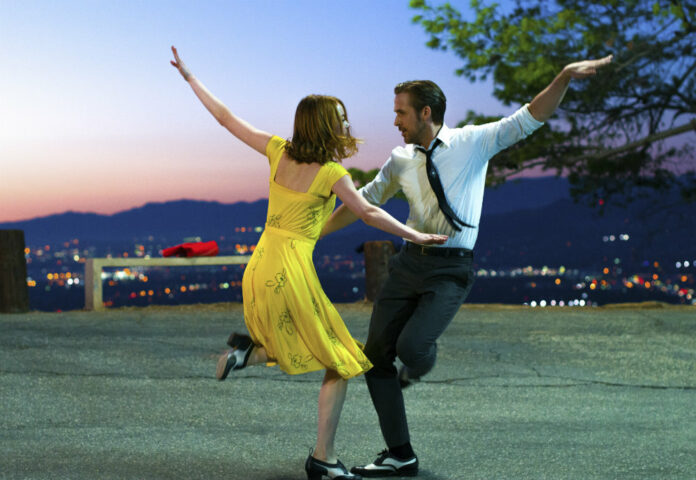
Ryan Gosling, right, and Emma Stone in a scene from, "La La Land. Photo: Dale Robinette/Lionsgate via AP

“La La Land” steamrolled through a Jimmy Fallon-hosted Golden Globes that mixed the expected, Champagne-sipping Hollywood celebration with often-voiced concern over president-elect Donald Trump.

Though “La La Land” dominated with seven awards, including best motion picture, comedy or musical, the night’s final award went to Barry Jenkins’ tender coming of age drama “Moonlight.” Its sole award was for best motion picture, drama.

But Meryl Streep, the Cecil B. DeMille Award honoree, supplied Sunday evening’s most striking moment: a rebuke to Trump that stirred the Beverly Hilton Hotel crowd. Streep, who spoke at the Democratic National Convention, called the president-elect’s mocking of a disabled reporter the year’s performance that most “stunned her.”

Arguing for the multinational makeup of Hollywood, Streep listed off the far-flung homes of stars from Dev Patel to Ryan Gosling.

“Hollywood is crawling with outsiders and foreigners and if you kick them all out, you’ll have nothing to watch but football and mixed martial arts, which are not the arts,” Streep said to loud applause.

Damien Chazelle’s Los Angeles musical “La La Land” came in with a leading seven nominations, and won everything it was nominated for, including best film, musical or comedy. Chazelle won both best director and best screenplay. Gosling won best actor in a comedy or musical, as did Emma Stone for best actress. It also took best score (Justin Hurwitz) and best song for “City of Stars.”

“I’m in in daze now, officially,” said Chazelle accepting his award for directing.

In one of the evening’s more emotional acceptance speeches, Gosling dedicated his award to the late brother of his partner, Eva Mendes.

“While I was singing and dancing and playing piano and having one of the best experiences I’ve ever had on a film, my lady was raising our daughter, pregnant with our second and trying to help her brother fight his battle with cancer,” said Gosling, referring to Juan Carlos Mendes.

The Beverly Hills, California, ceremony got off to a rocky start, with a broken teleprompter initially froze Fallon. “Cut to Justin Timberlake, please,” implored a desperately improvising Fallon. It was the second fiasco for Globes producer Dick Clark Productions, which presented the infamous Mariah Carey flub on New Year’s Eve.

The “Tonight Show” host started the show with a cold open ode to “La La Land” in a lavish sketch more typical of the Academy Awards than the Globes. Fallon did a version of the film’s opening dance scene, with starry cameos from Timberlake, previous Globes host Tina Fey, Amy Adams and the white Ford Bronco of “The People v. O.J. Simpson.”

In a more truncated monologue, Fallon’s sharpest barbs weren’t directed at the stars in the room (as was the style of frequent host Ricky Gervais) but president-elect Trump. He compared Trump to the belligerent teenage king Joffrey of “Games of Thrones.” His first line (at least once the teleprompter was up) was introducing the Globes as “one of the few places left where America still honors the popular vote.”

That, though, isn’t quite true. The Hollywood Foreign Press Association, a collection of 85 members, has its own methods of selecting winners. Best supporting actress winner Viola Davis, the co-star of Denzel Washington’s August Wilson adaptation “Fences,” alluded to the group’s reputation for being wined and dined.

“I took all the pictures, went to luncheon,” said Davis, to knowing chuckles through the ballroom, as she clutched her award. “But it’s right on time.”

Davis continued what appears to be a certain path to the Oscar. Another favorite, Casey Affleck, also padded his favorite status. The “Manchester by the Sea” star took best actor.

Coming a year after a second-straight of OscarsSoWhite protests, the night was notable for the widespread diversity of its winners, in film and TV. Donald Glover’s “Atlanta” won best comedy series over heavyweights like “Veep” and “Transparent,” and Glover later added best actor in a comedy. Glover looked visibly surprised.

“I really want to thank Atlanta and all the black folks in Atlanta,” said Glover. “I couldn’t be here without Atlanta.”

Tracee Ellis Ross, accepting the award for best actress in a TV comedy for “Black-ish,” dedicated her award to “all of the women of color and colorful people whose stories, ideas, thoughts are not always considered worthy and valid and important.”

“I want you to know that I see you, we see you,” said Ross.

And a true Oscar showdown was never in the offing at the Globes. Since the show separates drama from comedy and musical, “La La Land” didn’t go face-to-face with its top competition, “Moonlight” and “Manchester by the Sea,” in top categories.

The British actor Aaron Taylor-Johnson took best supporting actor for his performance in Tom Ford’s “Nocturnal Animals.” It was a surprise that Taylor-Johnson was even nominated, so his win over favorites Mahershala Ali from “Moonlight” and Jeff Bridges from “Hell or High Water” was a shock.

“The People v. O.J. Simpson” taking best miniseries, as well as an award for Sarah Paulson. But other winners were less prepared.

Hugh Laurie, star of “The Night Manager,” looked even more surprised when he won best supporting actor in a limited series or TV film over the likes of John Travolta (“The People v. O.J. Simpson”) and John Lithgow (“The Crown”).

Laurie was one of the few early winners to pepper his acceptance speech with comments about Trump. “I accept this award on behalf of psychopathic billionaires everywhere,” he said. “The Night Manager” won two more awards, including best actor for Tom Hiddleston.

Paul Verhoeven’s “Elle” won best foreign language film. Disney’s “Zootopia” took best animated feature. Other winners included Tracee Ellis Ross (“Black-ish”) and Billy Bob Thornton (“Goliath”).

Story: Jake Coyle

Advertisement

Streep Wins Globe DeMille Award, Excoriates Trump

Meryl Streep accepting the Cecil B. DeMille Award at the 74th Annual Golden Globe Awards at the Beverly Hilton Hotel in Beverly Hills, Calif., Jan. 8 . (Photo: Paul Drinkwater/NBC via AP)

BEVERLY HILLS, Calif. — Actress Meryl Streep earned a lifetime achievement award at the Golden Globes Sunday and in accepting, turned the spotlight away from herself.

She defended Hollywood and journalists, honored the late Carrie Fisher and took shots at President-elect Donald Trump, without mentioning his name.

Streep said a performance from the past year that stunned her came from the campaign trail, noting the incident where “the person asking to sit in the most respected seat in our country” imitated a disabled reporter from The New York Times, an incident replayed frequently in campaign advertising.

“It kind of broke my heart when I saw it,” she said. “I still can’t get it out of my head, because it wasn’t in a movie. It was real life.”

Streep said that “when the powerful use their position to bully others, we all lose.”

She noted that “Hollywood” is a reviled place. But in reviewing the backgrounds of several of her colleagues surrounding her at the Globes, she said that it’s really a community filled with people from other places united in the mission to show different people and make audiences feel what they feel.

“If you kill ’em all, you’ll have nothing to watch but football and mixed martial arts, which are not the arts,” she said.

Streep put in a plug for vigorous journalism, urging that contributions be made to the Committee to Protect Journalists.

While Streep won the annual Cecille B. DeMille Award and can boast of 48 Oscar and Golden Globe nominations, her career is still current. She was nominated this year for her portrayal of a bad opera singer in “Florence Foster Jenkins.”

She mentioned Fisher, who died just after Christmas, and how the actress and writer urged others to “take your broken heart and make it into art.”

She was introduced by fellow actress Viola Davis, who said her husband urged her every day when she worked with her to tell Streep how much she meant to her. She was too bashful then, but not on stage Sunday.

“You make me proud to be an artist,” Davis said. “You make me feel that what I have in me — my body, my face, my age — is enough.”

Story: David Bauder

Advertisement

Thailand Freezes Out Competitors at Ice Sculpting Contest in China (Photos)

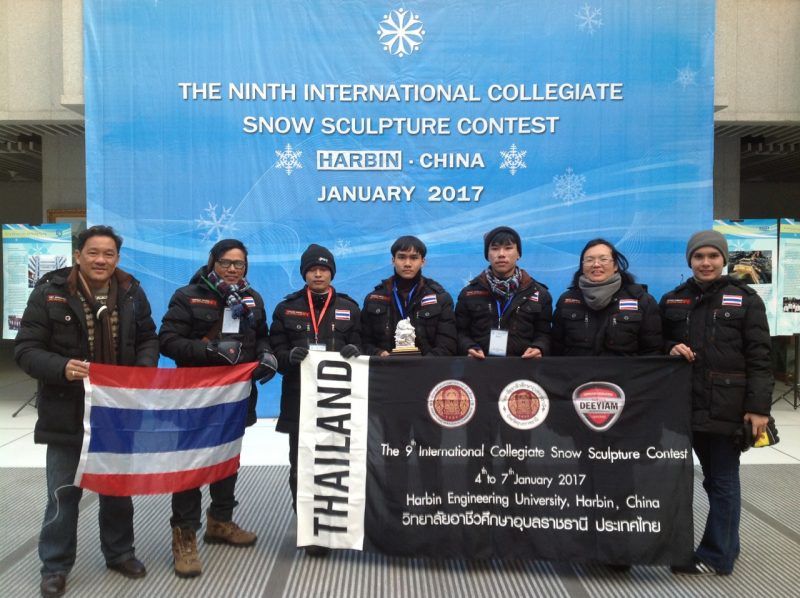
Thailand’s winning team at the Ninth International Collegiate Snow Sculpture Contest 2017 Sunday in Harbin.

HARBIN, China — Ubon Ratchathani students representing Thailand clinched first place in an ice sculpture contest Sunday in Harbin, China.

Ironically for a mostly tropical country, Thailand slays at this particular ice sculpting contest – Sunday’s win defended our eighth win at the International Collegiate Snow Sculpture Contest.

The Thai team, consisting of second-year fine arts students from the Ubonratchathani Vocational College Kritsana Kobsahai, Thanakorn Saksin, Abhisit Sornchai and Thanasak Pipat landed first prize at the Ninth International Collegiate Snow Sculpture Contest 2017 in Harbin. The students were overseen by their teacher, Surachart Palasak.

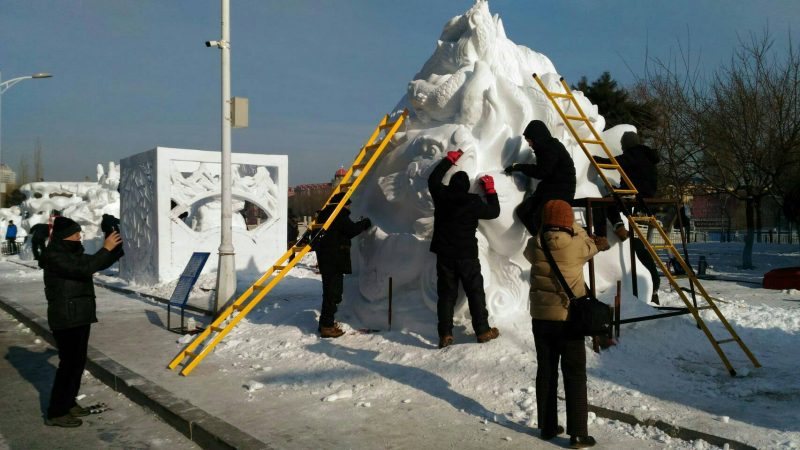
Their submission, chipped away from a giant block of ice starting last Wednesday, entitled “Water – Fish – Paddy Field – Rice” depicted an organic, swirling clump of Thai-style fish and rice, inspired by Rama IX’s sufficiency economy projects.

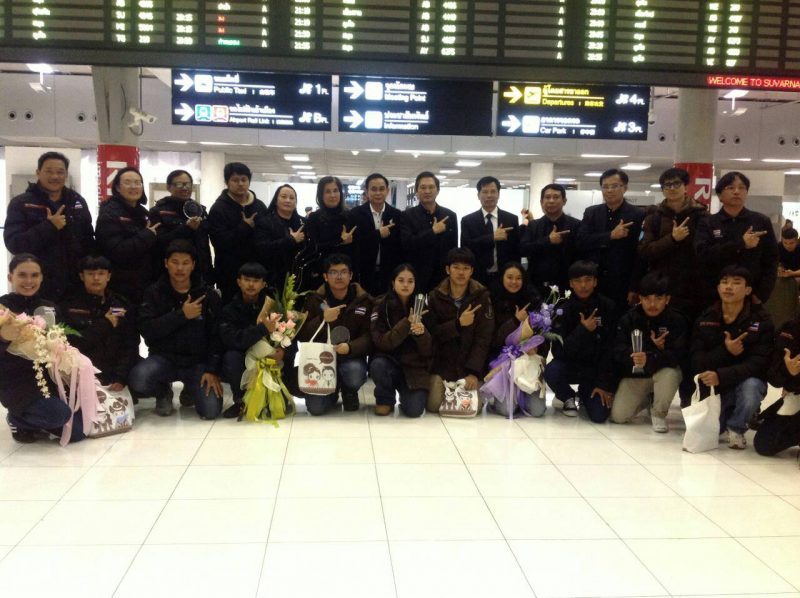
The team’s return to Suvarnabhumi Airport was met by supporters who gave the team flowers.

The team is scheduled to give an official press conference with the Ministry of Education about their win Tuesday morning, before returning to Ubon Ratchathani.

Thailand bested 56 other teams from 12 other countries: Taiwan, China, Hong Kong, Belgium, Russia, France, South Korea, Ukraine, Japan, Singapore, UK and Mongolia.

Thailand's win at Ice sculpting contest in Harbin

Thailand's win at Ice sculpting contest in Harbin

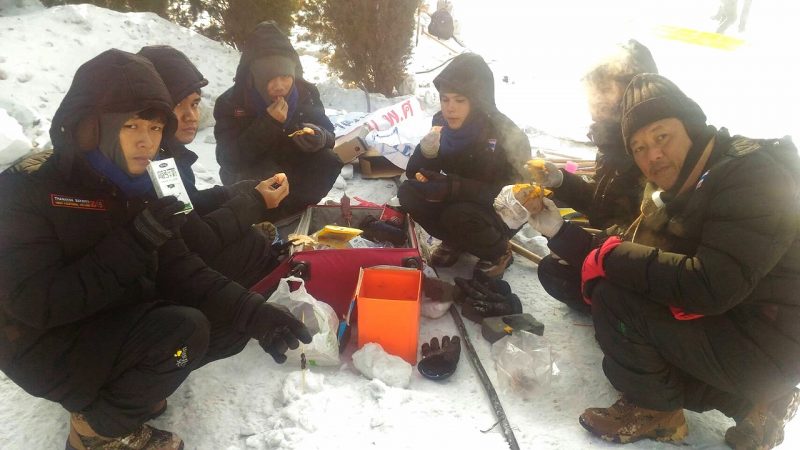
Thailand's team at Ice sculpting contest in Harbin

Photo: Matichon
Photo: Matichon
Photo: Matichon
Photo: Matichon

Thailand's win at Ice sculpting contest in Harbin

Advertisement

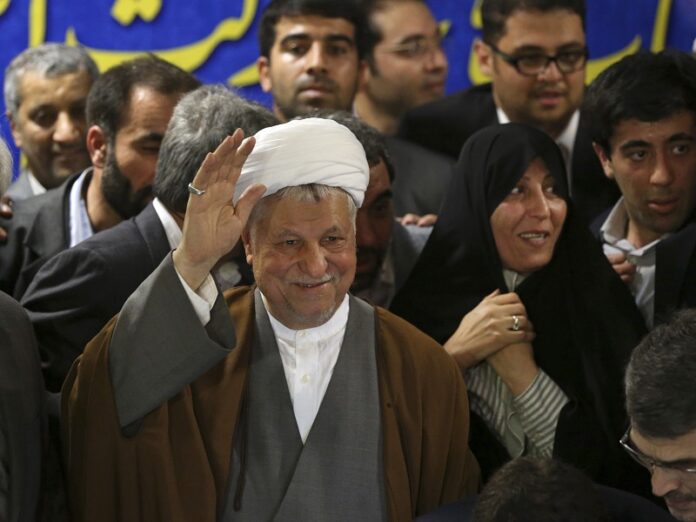
Akbar Hashemi Rafsanjani, Ex-Iranian President, 82

Former President Akbar Hashemi Rafsanjani, waves to journalists in 2013, as he registers his candidacy for the upcoming presidential election, with his daughter Fatemeh, second right, at the interior ministry, in Tehran, Iran. Photo: Ebrahim Noroozi / Associated Press

TEHRAN, Iran — Iran’s former President Akbar Hashemi Rafsanjani died Sunday after a decades-long career in the ruling elite, where his moderate views were not always welcome but his cunning guided him through revolution, war and the country’s turbulent politics.

The political survivor’s life spanned the trials of Iran’s modern history, from serving as a close aide to Ayatollah Ruhollah Khomeini during the 1979 Islamic Revolution to acting as a go-between in the Iran-Contra deal. He helped found Iran’s contested nuclear program, but later backed the accord with world powers to limit it in exchange for sanctions relief.

Rafsanjani, who showed ruthlessness while in power but later pushed for reforms, died Sunday after suffering a heart attack, state media reported. He was 82.

Iranian media said he was hospitalized north of Tehran earlier Sunday, where doctors performed CPR in vain for nearly an hour and a half before declaring him dead.

A female state newscaster’s voice quivered as she read the news. Rafsanjani, “after a life full of restless efforts in the path of Islam and revolution, had departed for lofty heaven,” she said.

Supreme Leader Ayatollah Ali Khamenei called Rafsanjani an “old friend and comrade” and said his loss is “difficult and life-decreasing.” The government announced three days of mourning, and a funeral was expected to be held on Tuesday.

Rafsanjani served as president from 1989 to 1997, during a period of significant changes in Iran. At the time, the country was struggling to rebuild its economy after a devastating 1980s war with Iraq, while also cautiously allowing some wider freedoms, as seen in Iran’s highly regarded film and media industry.

He also oversaw key developments in Iran’s nuclear program by negotiating deals with Russia to build an energy-producing reactor in Bushehr, which finally went into service in 2011 after long delays. Behind the scenes, he directed the secret purchase of technology and equipment from Pakistan and elsewhere.

In an interview published in October, Rafsanjani acknowledged the 1980-1988 war with Iraq, which killed some 1 million people, led Iran to consider seeking nuclear weapons.

“Our basic doctrine was always for a peaceful nuclear application, but it never left our mind that if one day we should be threatened and it was imperative, we should be able to go down the other path,” he said. “But we never went.”

The cleric managed to remain within Iran’s ruling theocracy after leaving office, but an attempt to return to the presidency in 2005 was dashed by the electoral victory of the more hard-line Mahmoud Ahmadinejad. Rafsanjani was later branded a dissenter by many conservatives for his harsh criticism of the crackdown that followed Ahmadinejad’s re-election in 2009.

But after years of waning influence, Rafsanjani was handed an unexpected political resurgence with the 2013 victory of a fellow moderate, Hassan Rouhani, giving him an insider role in efforts that would culminate in the 2015 nuclear agreement.

Some analysts believe Rafsanjani was kept within the ruling fold as a potential mediator with America and its allies in the standoff over Iran’s nuclear program. His past stature as a trusted Khomeini ally also offered him political protection. Rafsanjani was a top commander in the war with Iraq and played a key role in convincing Khomeini to accept a cease-fire after years of crippling stalemate.

His image, however, also had darker undertones. He was named by prosecutors in Argentina among Iranian officials suspected of links to a 1994 bombing of a Jewish center in Buenos Aires that killed 85 people. Some Iranian reformers accused him of involvement in the slaying of liberals and dissidents during his presidency  charges that he denied and that were never pursued by Iranian authorities.

“The title of Islamic Republic is not just a formality,” he said in 2009 in the chaos after Ahmadinejad’s re-election.

“Rest assured, if one of those two aspects is damaged we will lose our revolution. If it loses its Islamic aspect, we will go astray. If it loses its republican aspect, (the Islamic Republic) will not be realized. Based on the reasons that I have offered, without people and their vote there would be no Islamic system.”

Rafsanjani  a portly man with only sparse and wispy chin hairs in contrast to the full beards worn by most Islamic clerics in Iran  first met Khomeini in the Shiite seminaries of Qom in the 1950s and later became a key figure in the Islamic uprising that toppled the U.S.-backed Shah Mohammad Reza Pahlavi in 1979.

He was elected as head of Iran’s parliament in 1980 and served until 1989, when he was elected for the first of two four-year terms as president.

Here, Rafsanjani began to build his multilayered  and sometimes contradictory  political nature: A supporter of free enterprise, a relative pragmatist toward foreign affairs and an unforgiving leader who showed no mercy to any challenges to his authority.

Rafsanjani took a dim view of state control of the economy, even in the turbulent years after the Islamic Revolution, and he encouraged private businesses, development of Tehran’s stock market and ways to boost Iranian exports.

He built roads and connected villages to electrical, telephone and water networks for the first time, earning the title of Commander of Reconstruction by his supporters.

There were certain self-interests at play as well.

Rafsanjani was assumed to be the head of a family-run pistachio business, which grew to become one of Iran’s largest exporters and provided the financial foundation for a business empire that would eventually include construction companies, an auto assembly plant, vast real estate holdings and a private airline. In 2003, he was listed among Iran’s “millionaire mullahs” by Forbes magazine.

His economic policies won him praise from Iran’s elite and merchant classes, but brought bitterness from struggling workers seeking greater state handouts. Rafsanjani also faced warnings from the ruling theocracy about pushing too far. None of his reforms dared to undercut the vast power of the Revolutionary Guard  which Rafsanjani briefly commanded, and which controls every key defense and strategic program.

Rafsanjani’s complex legacy also was shaped by the times.

He took over the presidency in a critical time of transition just after the death of Khomeini. He tried to make overtures for better ties with the U.S. after the American-led invasion of Kuwait in 1991 to drive out Iraqi forces, arguing that Iran paid too high a price for its diplomatic freeze with Washington.

But he could not overcome opposition from Iranian hard-liners and failed to win the backing of Khomeini’s successor as supreme leader, Ayatollah Ali Khamenei, for bold foreign policy moves. He also angered the West by strengthening Iran’s ties to armed groups such as Lebanon’s Hezbollah.

“One of the wrong things we did, in the revolutionary atmosphere, was constantly to make enemies,” he said in a 1987 interview. “We pushed those who could have been neutral into hostility.”

Rafsanjani was born in 1934 in the village of Bahraman in southeastern Iran’s pistachio-growing region of Rafsanjan.

He was jailed for several years under the shah. He then helped organize the network of mullahs that became Khomeini’s revolutionary underground. In 1965, he is reputed to have provided the handgun for the assassination of Iran’s prime minister, Hassan Ali Mansoor.

Only months after the revolution, Rafsanjani was shot once in the stomach by gunmen from one of the groups vying for power amid the political turmoil. He was not seriously wounded  and neither was his wife, who jumped in front to shield him from the attack.

“Great men of history do not die,” Khomeini said in announcing that Rafsanjani had survived.

During the 1980s, he used his links with Lebanese Shiite extremists to help secure the release of Western hostages in Lebanon and was a key middleman  identified as “Raf” in Pentagon documents  in the secret Iran-Contra dealings to funnel U.S. arms to Iran in exchange for money used to fund Nicaraguan rebels.

Although Rafsanjani was seen by Washington as a potential ice breaker, his views were far from solidly pro-Western and displayed conflicted positions.

Shortly after becoming president in 1989, he hinted that Palestinians should kill Westerners to retaliate for Israeli actions in the occupied territories.

“It is not hard to kill Americans or Frenchmen,” he said.

In February 1994, Rafsanjani survived a second assassination attempt. A lone gunman fired at him as he was speaking to mark the 15th anniversary of the revolution. Unhurt and unshaken, Rafsanjani calmed a crowd of thousands and continued his speech.

The Iran-Contra fallout is an often-told tale about the dangers of crossing Rafsanjani.

After word was leaked to a Beirut magazine about Rafsanjani’s involvement, he ordered the arrest of the source, a senior adviser to the ruling clerics named Mehdi Hashemi, for treason and other charges. Hashemi and others were executed in September 1987.

Later, however, he was dismayed at the brutal crackdown against opposition groups and others claiming Ahmadinejad won re-election in June 2009 through vote rigging sanctioned by the ruling theocracy.

Khamenei decided to throw his backing behind Ahmadinejad, effectively snubbing Rafsanjani and his complaints. Later, Rafsanjani fell short on efforts to mobilize enough moderate clerics in the Assembly of Experts  the only group with the power to dismiss the supreme leader  to force possible concessions from Khamenei on the postelection clampdowns.

Rafsanjani was forced out of the post in 2011, but remained as head of the Expediency Council, an advisory body that mediates disputes between the parliament and the Guardian Council, a watchdog group controlled by hard-line clerics.

However, his family did not escape so easily. In January 2012, a court sentenced Rafsanjani’s daughter, Faezeh Hashemi, to six months in prison on charges of criticizing the ruling system. A court in 2015 sentenced his younger son, Mahdi, to a 10-year prison term over embezzlement and security charges.

Rafsanjani is survived by his wife, Effat Marashi, and five children.

On Sunday night, Rouhani and others visited the hospital to see Rafsanjani one final time before his body was taken to a mosque ahead of burial.

Story: Nasser Karimi

Advertisement

Golazo Puts Malaysian Faiz Subri on Puskas Award Shortlist (Video)
GEORGE TOWN, Malaysia — With one stunning goal, Faiz Subri has given himself the chance to put his name beside the likes of Cristiano Ronaldo, Neymar, Zlatan Ibrahimovic and James Rodriguez on the honor roll for Puskas Award winners.

The Penang player is on a shortlist of three to pick up the FIFA prize, which came into existence in 2009, for the most beautiful goal of 2016. The winner will be announced next week in Zurich.

“It is exciting to be the first Malaysian to be nominated,” Faiz told The Associated Press before leaving for Switzerland. “Many great players have won the prize before and it is a great honor for me just to have a chance to win.”

His free kick in a Malaysia Super League game against Pahang last February gained global attention because of its wild swerve and dip from a distance of 32 meters. It was dubbed ‘The Knuckleball’ free kick after a kind of baseball pitch. In football terms, it means the ball is hit with little or no spin and moves unpredictably.

“It was a great feeling to see it go in,” Faiz added. “I had tried in training, but to do it in a game was different.”

Pahang goalkeeper Nasril Nourdin insisted earlier this week that there was nothing he could do to stop the shot. “It was unbelievable,” he told Bernama, Malaysia’s national news agency.

“I had positioned myself well to face the free kick but at as soon as the kick was in motion, I was completely deceived as the ball swerved in front of me, and was in the net before I could do anything.”

The other contenders for the award are Brazil’s Marlone, for his strike in the Copa Libertadores, and Daniuska Rodriguez, for her goal in South America’s Under-17 Women’s Championship.

“My family will be there and I hope to win for them but also for Penang and for the whole of Malaysia to make the fans happy,” Faiz said. “There has not been much to smile about for Malaysian fans recently.”

Malaysia, which qualified for the 1980 Olympics only to boycott the Moscow Games, has dropped to No. 161 in FIFA’s rankings. In 2015, the national team lost 10-0 to the United Arab Emirates and was beaten 6-0 by Oman and twice by Palestine.

Last November, Malaysia exited the AFF Suzuki Cup, Southeast Asia’s biennial tournament, at the group stage after losses to Vietnam and Myanmar.

With some clubs in the Malaysia Super League struggling financially ahead of the coming season, the outlook remains grim. So the prospect of the Puskas Award coming to the country has been greeted with excitement.

“It would be good for Malaysian football if Faiz can win this prize,” Ashley Westwood, head coach at Penang, told the AP. “It would also be good for the club. We wish him well and then will welcome him back to prepare for the new season.”

The 29-year-old Faiz still has not given up hopes of playing in Europe, although his dream of signing for English Premier League giant Manchester United, where coach Westwood started his career, seems unlikely.

“I want to inspire young Malaysians. If they see me win the prize then they will believe they can do the same as me,” Faiz said. “I want to show them that anything is possible in football.”

Story: John Duerden

Advertisement

60 Bands To Jazz Up 3-Day Fest

A band playing in Thailand International Jazz Conference in January 2016. Photo: Thailand International Jazz Conference / Facebook

NAKHON PATHOM — Jazz vibes are going to spread over Salaya as leading artists are coming to take the stage this month at the ninth edition of Thailand International Jazz Conference.

It’s a rare chance to find fine Jazz music in Thailand, but world-class captivating trio Shai Maestro, Julian Lage, along with Donald Harrison Quartet are not only headlining international artists to perform in the biggest annual Jazz festival in Thailand, but also offering intensive jazz education to those interested in workshops and camps.

Among the sixty bands featured are Thai singer Nop Ponchamni, guitarist Jack Thammarat and big bands from various universities and professional musicians.

Apart from the concerts and workshops, there will also be  a competition and showcase to enrol in.

Schedule and more information can be found online.

Tickets are 800 baht for one evening concert and 3,000 baht for access to the entire 3-day event. Students, Music Lover Card holders and BTS Rabbit Card holders are given a 20% discount. Tickets are available at the venue.

Leading Jazz bands will perform in the 3-day concerts Jan. 27-29 at the College of Music, Mahidol University in Salaya. It can be reached by taxi from BTS Bang Wa Station or bus number 515 or 125 from Victory Monument.

Advertisement

Thailand’s Devastating Year For Print Was a Wake-Up Call. Adapt or Die.

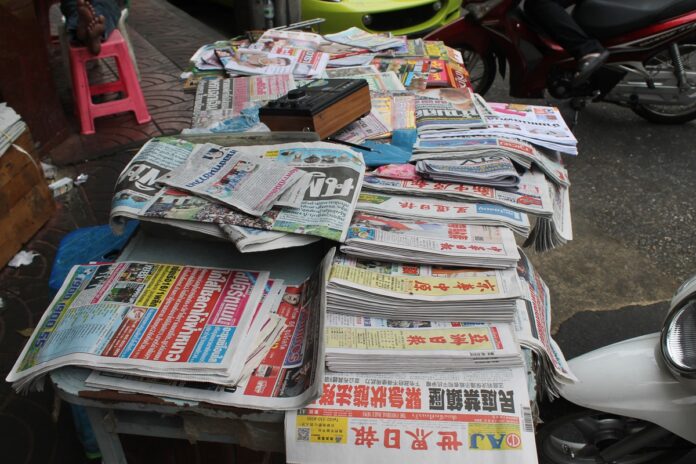
A pile of newspapers in Thailand in a photo from Feb. 20, 2014. Photo: Connie Ma / Flickr

BANGKOK — The end of 2016 brought the final run of a 45-year-old daily newspaper, capping a punishing year for print media.

Driven by plummeting advertising revenues, the global print decline caught up with Thailand’s publishers, the largest of which have begun taking drastic measures in response to large losses to avoid the fate of Baan Muang, which ceased production New Year’s Day.

“Baan Muang is a clear case. It’s medium or small papers that have been affected by changing consumer behaviors, decreasing ads and more targeted ads [online],” said Mana Treelayapewat, dean of the communications department at the University of the Thai Chamber of Commerce. “Then there’s the cost of printing physical newspapers and retaining staff.”

According to The Nielsen Co., a leading global data measurement company, the Thai newspaper industry’s advertising revenues have declined continuously since 2013. What stood at 15.4 billion baht in 2006 had fallen to 12.3 billion baht in 2015.  Advertising budgeted 20.1 percent less for newspaper buys in the first 11 months of 2016 compared to the same period in 2015, down to 8.89 billion baht.

While print media continues to generate revenue, many are built atop monolithic organizations that had avoided some of the painful measures taken elsewhere since the turn of the millennium. Observers now acknowledge that print in Thailand is a sunset industry.

If you don’t believe the so-called experts, an article published in July by no less than the the kingdom’s leading journalism association used the same language and said both newspaper sales and advertising revenues have been in “steep decline.”

Those losses have been felt all around.


Material Losses

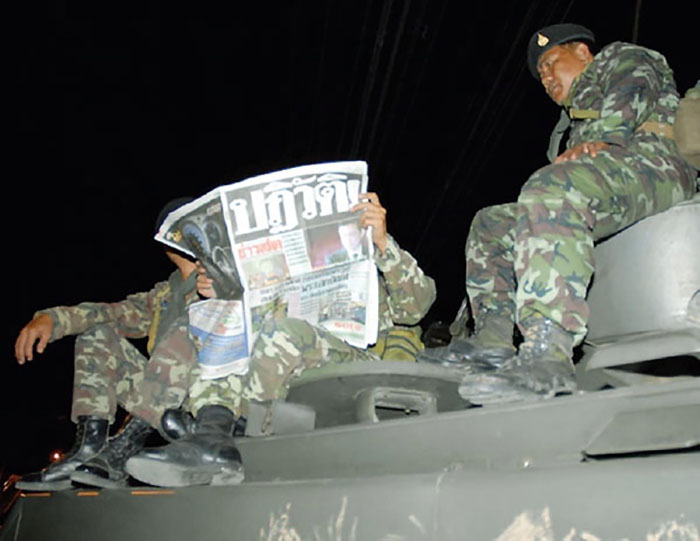
‘Coup!’ reads the front page of a Khaosod newspaper read by soldiers atop a tank on Sept. 20, 2006, one day after the military staged a coup against then-PM Thaksin Shinawatra.

The Matichon Group of newspapers, which includes Khaosod English, registered a loss of 86 million baht by the end of the third quarter, according to reports filed with the Stock Exchange of Thailand, or SET. In that same period, SET-listed Post Publishing Co., publisher Bangkok Post, Post Today and M2F newspapers, returned from the red under austerity measures to eak out a modest profit of 450,000 baht compared to a 42.1 million baht loss in 2015.

Measures taken by different newspapers vary, according to the journalist association’s report, as well as past and present employees.

At Post Publishing, there has been a freeze in salary increases and the size of the newspaper has shrunk on weekdays with fewer pages printed. Travel upcountry by staff has been curbed and a hiring freeze put in place, including backfilling vacant positions.

One former staffer who wished not to be identified said the paper was considering moving its website behind a paywall, where only paid subscribers could read stories, such as the New York Times and some other papers have done.

Since the mid-year replacement of longtime editor Pichai Chuensuksawadi with Umesh Pandey, the paper also lost Deputy Editor Nopporn Wong-Anan to BBC Thai. The paper’s award-winning Sunday Spectrum section was all but gutted with the departures of editors Michael Ruffles, Dane Halpin and marquee reporter Nanchanok Wongsamuth, who has also joined BBC Thai.

Long-standing perks such as complimentary copies of newspapers delivered to employees’ homes have also ended.

Matichon Group has also imposed hiring freezes and offered early retirement to some senior personnel, whose positions were left vacant. Cost reductions include saving water and electricity costs. The number of newspaper pages has also been reduced.  Talk of launching Khaosod English as a print product were shelved due to market conditions.

At Nation Multimedia Group, which includes English-language The Nation newspaper, Kom Chad Luek and Bangkok Biz News, the Thai Journalists Association’s July report noted a big drop in advertising revenues led to the reduction of the number of some of the newspapers printed.

At Daily News newspaper, new hiring has stopped even for staff who have resigned.

At Thai Rath, the kingdom’s largest-circulation newspaper, cost-cutting measures have included pooling office vehicles on duty and reducing the use of paper in the office. Annual bonuses there have also been reduced from six months to three months.

Shrinking advertising income, downsizing, smaller papers, early retirement, hiring freezes the disappearing newsstands have become the norm in the terminally  newspaper industry. Experts and journalists agree the physical newspaper is in terminal decline as an industry, but differ on what that means for society, however.

Adapt or Die

A 2010 edition of Daily News newspaper. Photo: Nist6dh / Flickr

Mana Treelayapewat, dean at the School of Communication Arts at University of the Thai Chamber of Commerce, said print became a sunset industry many years ago when even the best-selling papers began to see declining sales.

“Nobody is paying,” the 50-year-old dean said, adding that consumers have moved online and confessing he hardly buys newspapers any longer.

Mana attributes the decline to print media’s failure to offer a distinct product and transition advertising baht to online media and other platforms.

Those sentiments were shared by Ubonrat Siriyuwasak, a former lecturer at Chulalongkorn University’s Faculty of Communication Arts.

“Those who want to survive must downsize and have something online,” said the 65-year-old former lecturer who also confided that she seldom buys newspapers.

A veteran Baan Muang columnist by the pen name of Chalarm Kiew, who worked as a journalist since 1979, wrote parting words on Dec. 3.

In the widely read column, he said more factors were contributing to the demise of the newspaper industry.

He blamed the erosion of democracy for going on three years under the ruling junta, the so-called National Council for Peace and Order, for making the economy even worse.

“When advertising dries up for two years [under the junta], this is sadness,” Chalarm Kiew wrote before admonishing his fellow journalists to hew to principle:

“If you are a journalist – do not be pro-dictatorship.”

Tough Transition

The good news from the Nielsen data was that total online advertising spending grew by 63.4 percent between January November last year to 1.59 billion.

But for now advertising online has yet to generate the same sales to offset the losses. An old world is dying while the new is yet to come of age and become self-sustaining, according to media experts.

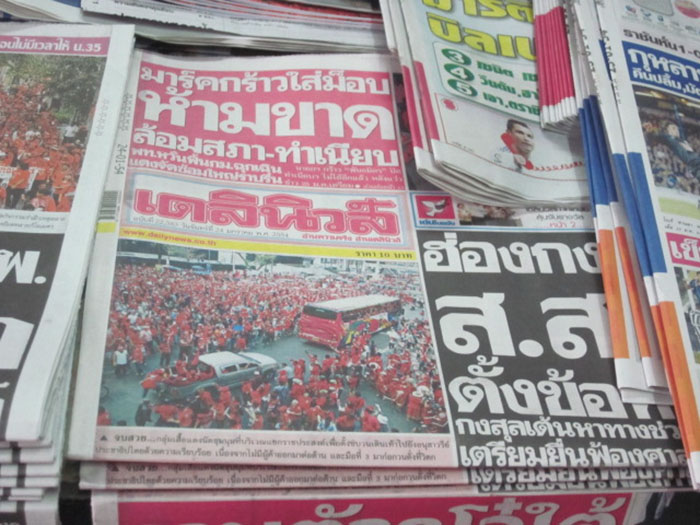
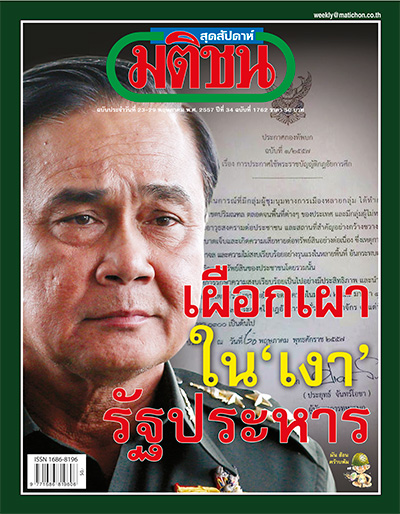
Cover of an edition of Matichon Weekly days after the 2014 military coup.

Mana said this is partly because he hasn’t seen any online media with the kind of content that readers are willing to pay for. This, he said, is made more difficult by the fact that the public has become used to reading things online for free.

On the other hand, people 30 or under hardly read any physical newspapers any longer, Mana added.

“It was different 10 or 20 years ago when people would still buy papers, say to check the football results,” he said.

Even upcountry, the dead said, old newspapers stands are closing because younger-generation shop owners feel that the profit margins are too small. In Bangkok, some of the newspaper and magazine stands located inside the capital’s BTS Skytrain stations closed down this past year after being in operation for more than a decade.

Part of the undoing is the quality of journalists and print media journalists who have become trapped in routine work and prioritize sensational news over investigative reporting, said Sirinart Sirisuntorn, the 44-year-old former social and environmental news editor at Bangkok Biz News, the kingdom’s leading financial daily.

Sirinart said the way print media reacted to the decline in revenues is partly to blame. Sirinart worked at the paper for 20 years before leaving for Voice TV two years ago. She said reporters are being told to juggle among too many news items at the same time over too many media platforms, and they are turning into news-factory workers unable to produce content of any distinction or quality.

For Sirinart, the only way for some print media to survive is to provide distinct and quality content, not more content that can be easily found freely on the internet.

“If print media don’t adapt, they will surely die,” she said. “People will just read online, which is more accessible.”

Additional writing and reporting Todd Ruiz.

Correction: An earlier version of this story misspelled the name of former Bangkok Post reporter Nanchanok Wongsamuth.

Advertisement

Here’s Why Fewer Will Die on Thai Roads if Vans Replaced

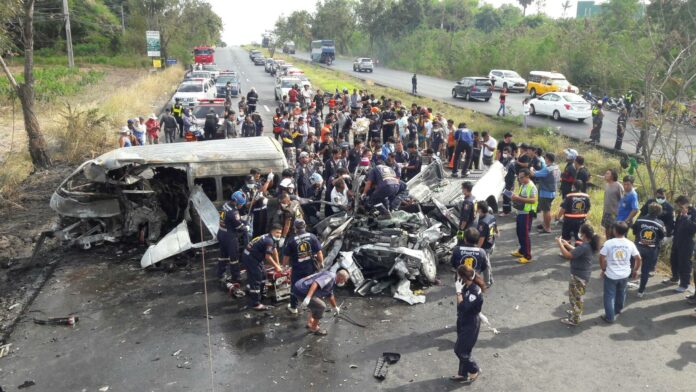
On Jan. 2, 2017, Policemen and rescue officials at the scene of a collision in Chonburi where 25 people died.

BANGKOK — When the New Year’s holiday ended in tragedy for the families of 25 people killed in a flaming wreck in Chonburi, the military government responded with a plan to replace the ubiquitous vans that travel between provinces with minibuses.

While the idea was met with skepticism by a public suddenly demanding urgent solutions, experts who met to discuss the root causes for Thailand’s dubious rise to lead the world in road fatalities agreed vans should not be used for traveling across provinces.

“The vans which we are using are modified. It creates more risks,” said Thanapong Jinvong, a member of governmental road safety organization. “When the incidents happens, it’s difficult to rescue passengers from them.”

Under pressure to rein in the carnage, the Department of Land Transportation said it will move forward a plan to phase out the vans in favor of 20-seat buses – originally slated for 2019 – to begin in the middle of this year.

Read: Road Deaths to Persist After Deadliest Holidays in Decade

With 215 accidents, vans were involved in the most public transportation accidents last year, according to a study. Nine people were killed on average and 100 injured each month.

The top causes were reckless driving and aftermarket vehicle modifications which turn them into death traps.

“When accidents happen, vans tend to have more deaths than bigger vehicles due to their structure,” civil engineering professor Saksith Chalermpong said at a Friday forum held at Chulalongkorn University.

The vans to the central, north and northeastern regions can now be found at the Bangkok Bus Terminal Chatuchak, aka the Mo Chit bus terminal, behind the main building.
The vans to the central, north and northeastern regions park at the Bangkok Bus Terminal Chatuchak, aka the Mo Chit bus terminal, behind the main building.

Today’s vans are altered from their stock form with an extra row of seats so they can carry 15 passengers instead of 10 or 11. Sometimes it’s pushed to 18 seats. The vans have also been modified to run on gas instead of petrol.

But most importantly, vans were not designed to serve as public transportation. A transportation and logistics expert said studies found that in many cases, passengers did not die from the initial impact, but like what happened Jan. 2 in the Chonburi wreck which killed 14 van passengers, because they were trapped inside and burned to death.

“A bus has wider windows and an emergency door,” said Sumet Ongkittikul from the Thailand Development Research Institute.

Three experts agreed that despite being inappropriate, vans have become the norm for fast and convenient public transportation in Thailand.

In order to change that decade-old norm, the government must facilitate van operators and passengers to gradually switch to minibuses without sacrificing time or revenue.

A model proposed by Thanapong was a blend of vans and minibuses in service, depending on demand during peak hours – if minibuses prove reliable replacements.

“That’s also based on the assumption that minibuses meet standards,” he said.

Sumet said the government can start small by reducing the distance vans are allowed to travel from Bangkok, now 300 kilometers, to 200 kilometers and 100 kilometers until they can only offer local services.

Regulations Unenforced

In theory, Land Transport Department regulations say vans can travel no more than 300 kilometers from Bangkok. They are not allowed to travel over 100kph. Every van must be registered and display a yellow license plate, undergo a biannual mechanical inspection and be taken out of service after 10 years.

In practice, the regulations are less than effective. Sumet said authorities never conduct random checks; therefore, drivers always know when to prepare their vehicles to look the best.

Sumet said taking vans out of the equation wouldn’t address the problems behind the wheel.

“As important as changing the vehicle model, is changing the habits of drivers and the way van station owners regulate them,” Sumet said.

The driver of the van who left the road, crossed the center divider and collided with a truck, killing 25 including himself, was found to be sober. But he had been behind the wheel for at least 31 hours, having driven five back-to-back trips between Chanthaburi province and Bangkok.

“As long as driver income depends on the number of trips they can make daily, I would also want to do more if I was a driver,” Thanapong said.

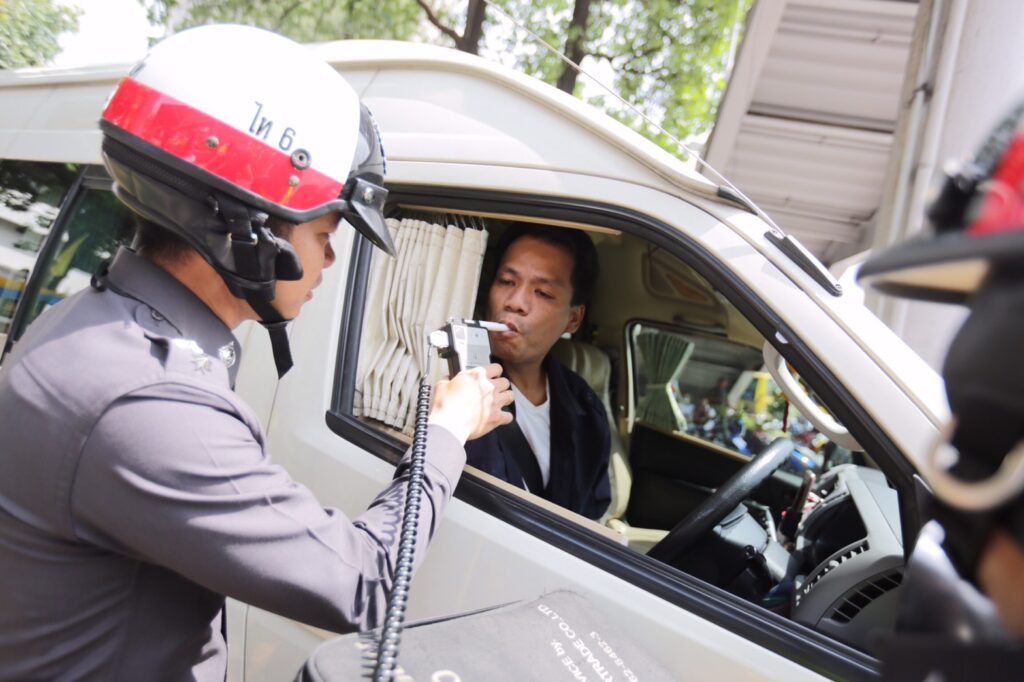
Police test a public van driver on July 15, 2016 for alcohol consumption in Bangkok.

But driver capacity needs not rely on subjective measures, he said, but quantifiable factors such as hours of workload and blood alcohol.

Saksith from Chulalongkorn University said one solution would be to guarantee driver salaries and benefits to remove the incentive of driving as far and as fast as possible.

Following the fatal accident, Prime Minister Prayuth Chan-ocha said stricter law enforcement will be applied in the next three months before the next holiday period, Songkran, arrives in April.

“All public vehicles must have a book recording drivers’ names and their operating hours,” Prayuth said Wednesday. “We already did our best. We have more checkpoints and more authorities than last year.”

Other practical solutions included installing GPS devices in each vehicle, former civilian Transport Minister Chatchart Sitthiphan said at Friday’s forum.

“The signal sent back will tell us how fast these vehicles go and how risky a driver has been driving for 24 hours,” Chatchart said. “Checkpoints can only check the second the car passes by.”

Chatchart said a GPS tracking system already installed on public buses has succeeded in reducing accidents.

Following the deadly crash, the Department of Land Transport suddenly announced all public vans must use such systems by the end of March.

Thanapong from the Road Safety Group said authorities must also tighten registration to allow only qualified public transportation operators.

“The lesson of this story is to know that accidents can happen,” Thanapong said. “But what we can do is reduce the chance of losing lives.”


Related stories:

Chonburi Wreck: Van Driver Was Sober but Sleepy

Anger, Anguish as Chonburi Wreck Victims Mourned

25 Die in Fiery Chonburi Wreck

Advertisement

Hot News

LATEST NEWS

Bangkok
broken clouds
29.4 ° C
32.2 °
29.4 °
74 %
5.4kmh
58 %
Fri
29 °
Sat
36 °
Sun
37 °
Mon
37 °
Tue
32 °