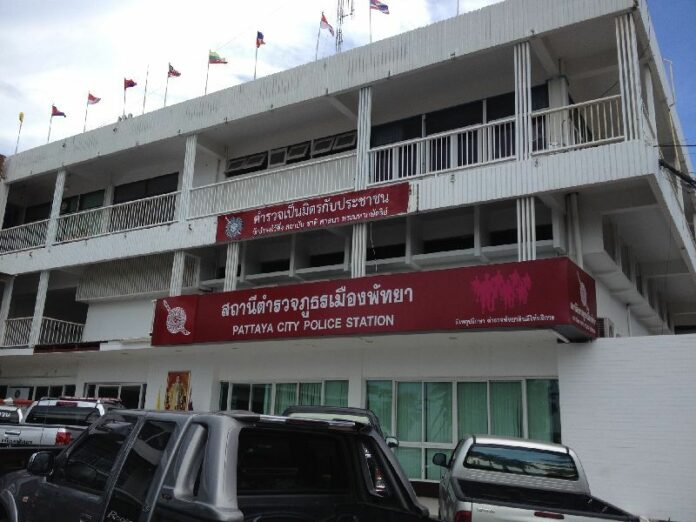
Pattaya City Police Station in an undated file photo.
PATTAYA — A policeman accused of ordering the extortion and rape of a bar worker in the resort town of Pattaya earlier this month said he had nothing to do with the crime, police said Monday.
Sgt. Maj. Kittikhun Fonrueng surrendered to police on Wednesday, seven days after the victim was allegedly kidnapped and sexually assaulted by his two underlings. Kittikhun, who’s been expelled from the force, isn’t facing any legal repercussions for defying the arrest warrant and is now free again on bail, according to an investigator.
“He said he would contest his case in court,” Col. Chatchapol Pattarasiriporn said.
He added that the police’s decision to grant bail for the suspect is reasonable.
“I don’t think he would dare interfere with the victim,” Chatchapol said. “He’s just a low-ranking cop.”
The victim said Kittikhun ordered two police volunteers to kidnap her and demand she pay 20,000 baht in ransom money. According to the victim, Kittikhun’s two underlings sexually assaulted her when she told them she had no money, and released her from detention a day later.
Kittikhun denied the allegations.
According to Chatchapol, the suspect said he stopped the victim and searched her for drugs, then told his subordinates to escort her to Pattaya City Police Station for a narcotics test. He said they took her to the hotel without Kittikhun’s knowledge.
Although arrest warrants for the suspects were issued on Oct. 22, Kittikhun didn’t turn himself in for four days.
Only one of the alleged accomplices has been identified by name: Pana Mekkhla, 26. Police have yet to learn the other’s identity, Chatchapol said. Both Pana and his unnamed partner in crime were on the run, he added.
Kittikhun has been charged with extortion and illegal detention. Per police regulations, he was fired from the force when his criminal case moved forward, Col. Chatchapol said.
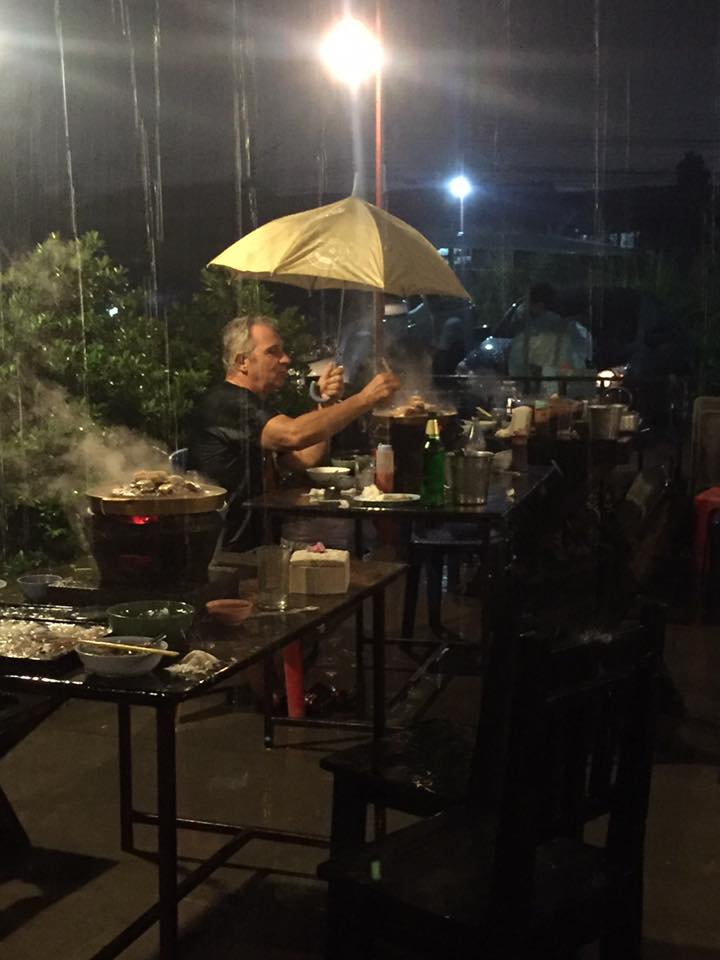
PATTAYA— Barbecue pork is best eaten hot. No one seems to understand this better than a foreign man who refused to let his hunger be interrupted by torrential rain Sunday night in Pattaya.
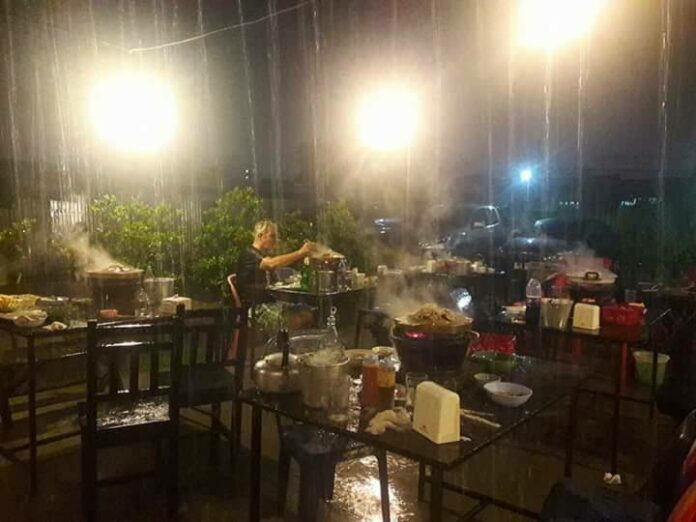
According to the story which went viral overnight, a couple was served at a barbecue buffet restaurant at about 8:30pm just before the sky opened up with a downpour. While other customers ran indoors, the unidentified man refused to budge. Not even his girlfriend could get him to leave the table, according to Padermchok Wongsiriyanon, son of the restaurant’s owner.
“It’s so tasty he didn’t want to move,” Padermchok wrote with a photo posted online.
He sat. He ate. It rained. He ate some more.
Someone eventually brought him an umbrella to enjoy the meal to the last bite.
Impressed with his customer’s indifference to the rain, Padermchok gave him another set of barbecue pork out of respect for his fortitude.
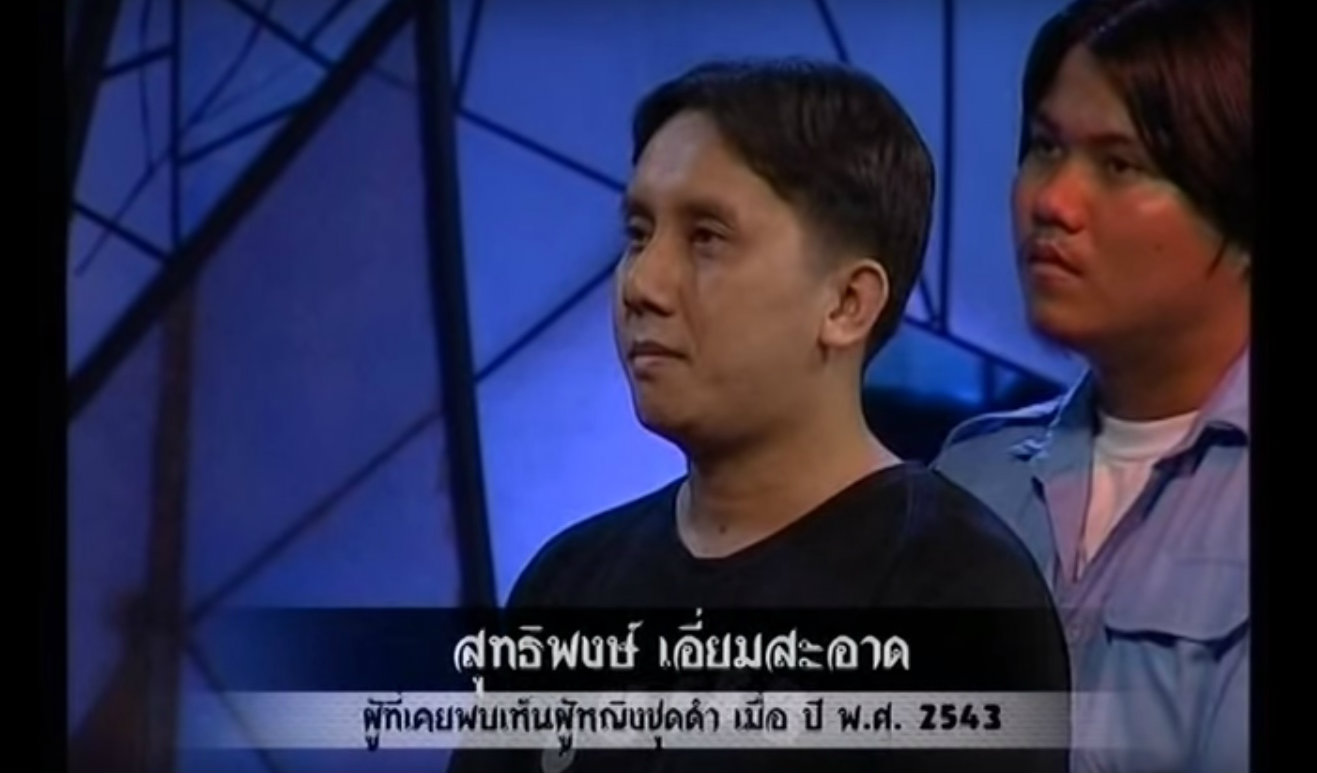
BANGKOK— Sutthipong “Noom” Eiamsa-ard was driving back to his apartment in Lat Phrao at 3am after a night partying on RCA. Along the way, two good-looking women dressed in black flagged him down for a ride.
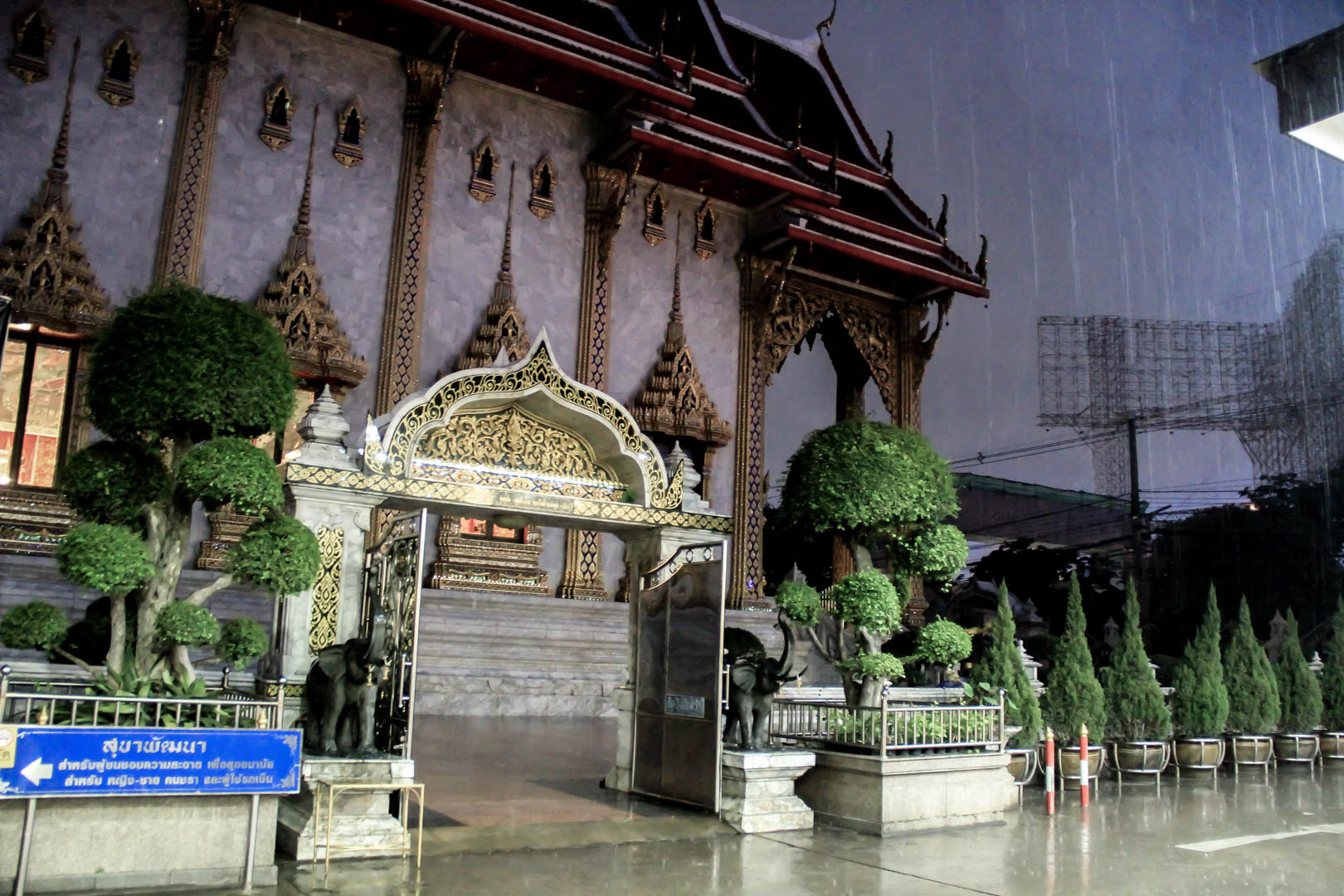
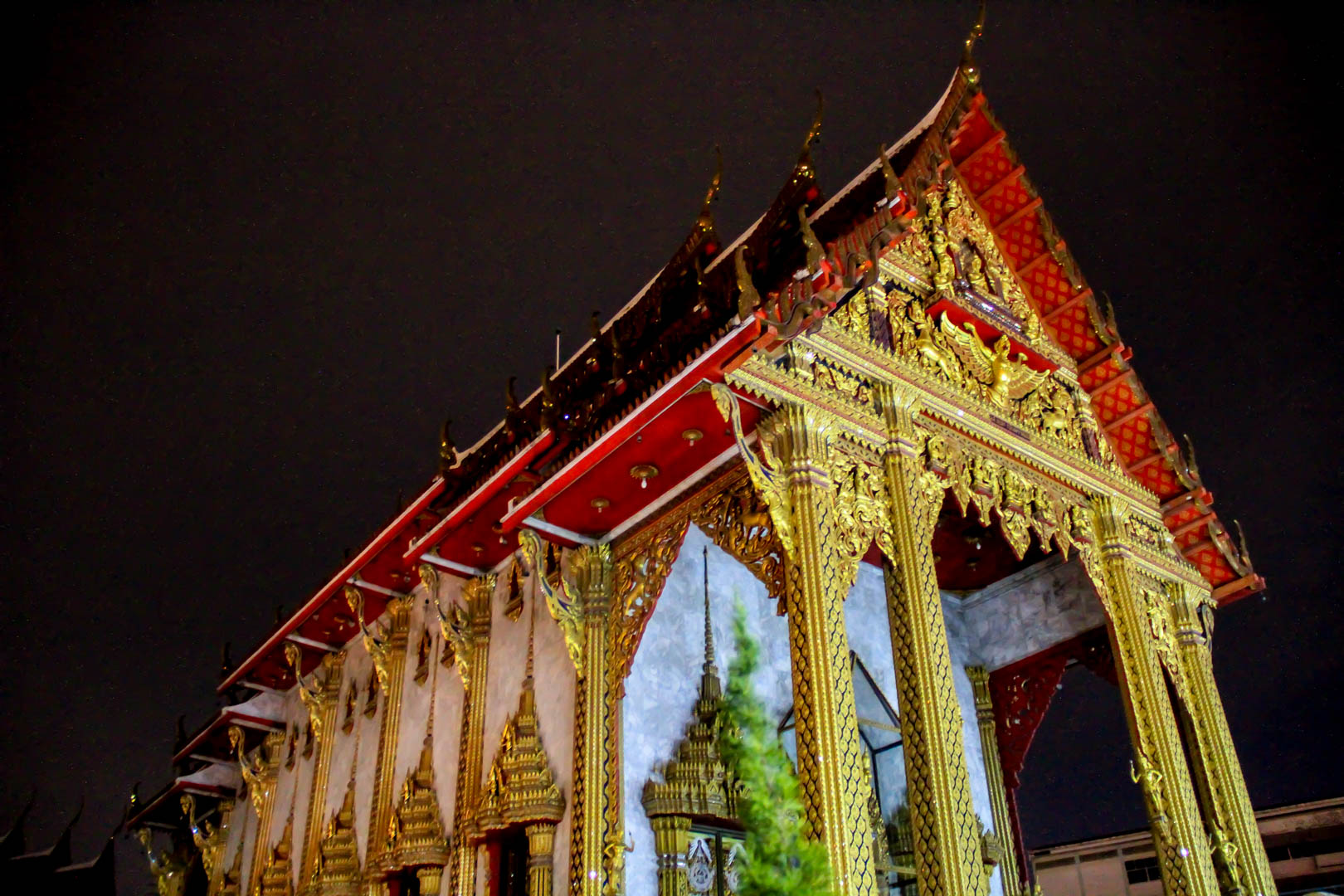
Being a red-blooded guy heading home alone, Noom picked them up. They wanted to go to Wat Samian Nari, a temple in the capital’s Chatuchak district. One sat in the passenger seat; the other in the back. They barely spoke, giving only terse replies to Noom’s attempts to chat them up.
They looked sad, so Noom gave up asking for their numbers. He thought the pretty girls must have had a terrible day. Given their black clothing, he assumed they were going to grieve for a relative at the temple.
It’s what happened next, as later described by Noom on a paranormal radio program, that vaulted the story into the imaginations and created yet another ghost story for people to share and shudder over in a city with possibly the most hauntings per capita.
As Noom told Shock FM nearly 15 years ago, he was pulling up to Wat Samian Nari when he turned to ask where they wanted him to park. But they were gone.
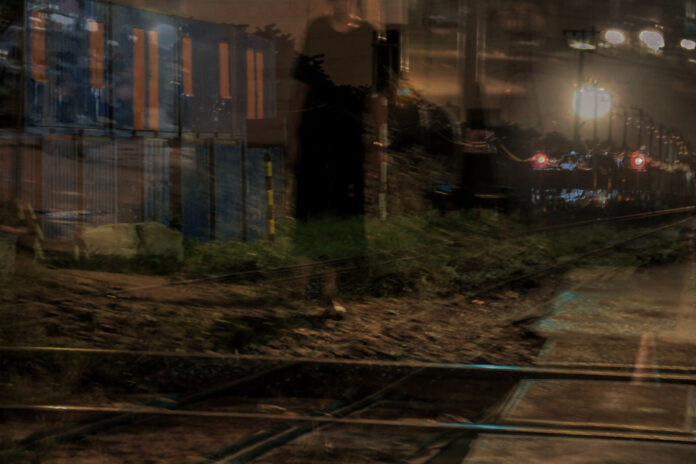
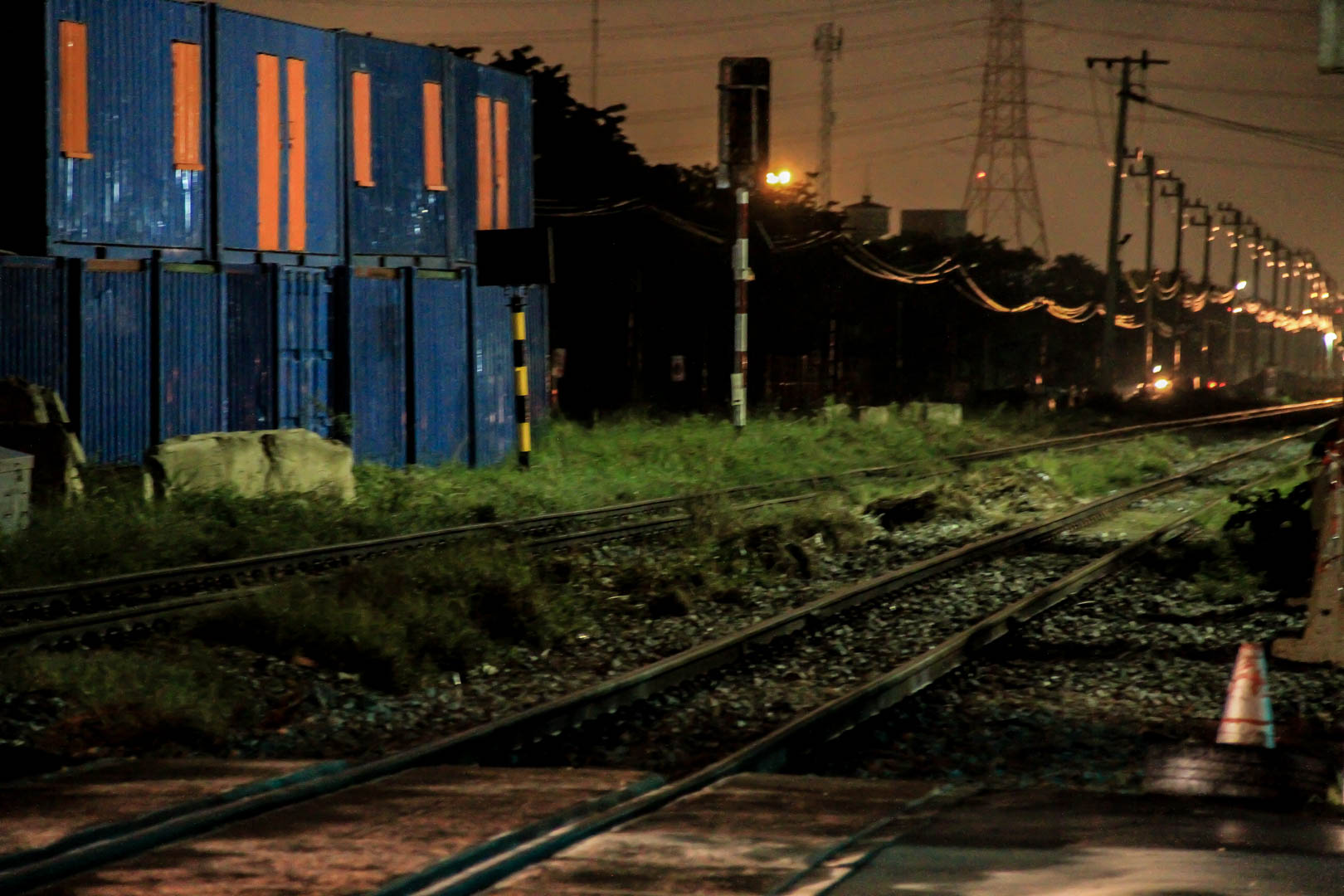
Shocked, confused, and in disbelief, Noom looked around for the girls. That’s when he saw them about 10 meters away, crawling on the train tracks that ran past the temple. Well, not all of them – only their top halves, pulling their torsos along the tracks, their entrails dragging behind.
Noom passed out. Next thing he knew, he was waking up at Kasemrad Hospital. His parents said he’d been found unconscious. No one believed his story, including the doctor, who said he must have been drunk.
Afterward, Noom said he developed heart trouble and never returned to the area.
His story, told to Shock FM host Kaphol “DJ Pong” Thongplub, is one of many repeated time and again in the many media channels which comprise a thriving industry serving an insatiable appetite every day — not just Halloween.
On programs such as Workpoint Entertainment’s Man vs. Ghost, people call in with their own paranormal encounters, often involving contact with loved ones from beyond the grave.
Like other stories, Noom’s soon spread and became popular. It struck a chord with taxi drivers, and soon the original tale spawned copycats with similar tales of black-clad hotties haunting the same spot.
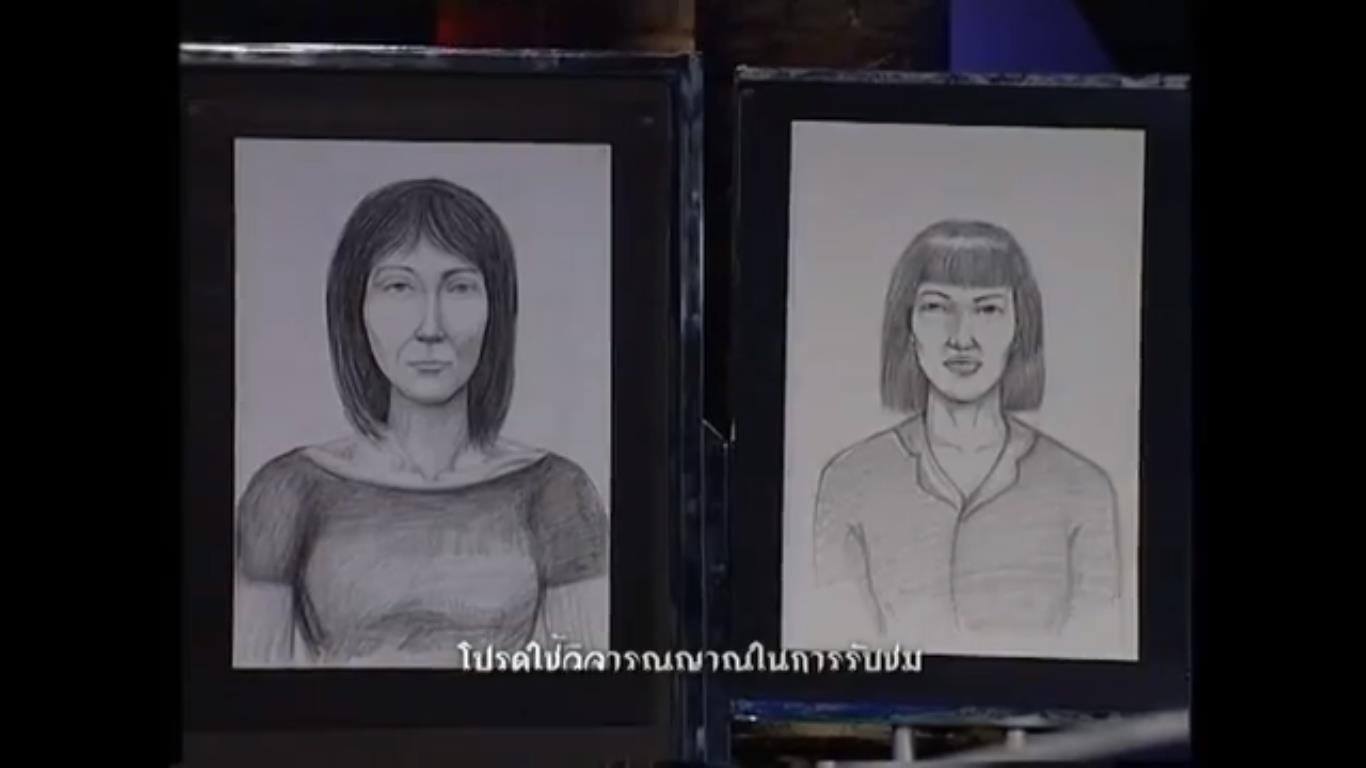
Taxi driver Jirawat Puengsang described a near-death experience after picking up two women at about 3am from the Rama IX Road. Both wore black, Jirawat said. He even described their outfits in some detail: one wore a spaghetti-strap dress and the other a scoop-neck T-shirt. Their destination? Wat Samian Nari.
Sutthipong ‘Noom’ Eiamsa-ard on Channel 7’s Horror Hour in 2004
As with Noom, Jirawat noticed his customers weren’t in a talkative mood. He parked outside the temple grounds and waited for his fare – but no banknotes were handed to him. Jirawat turned around. He saw no one.
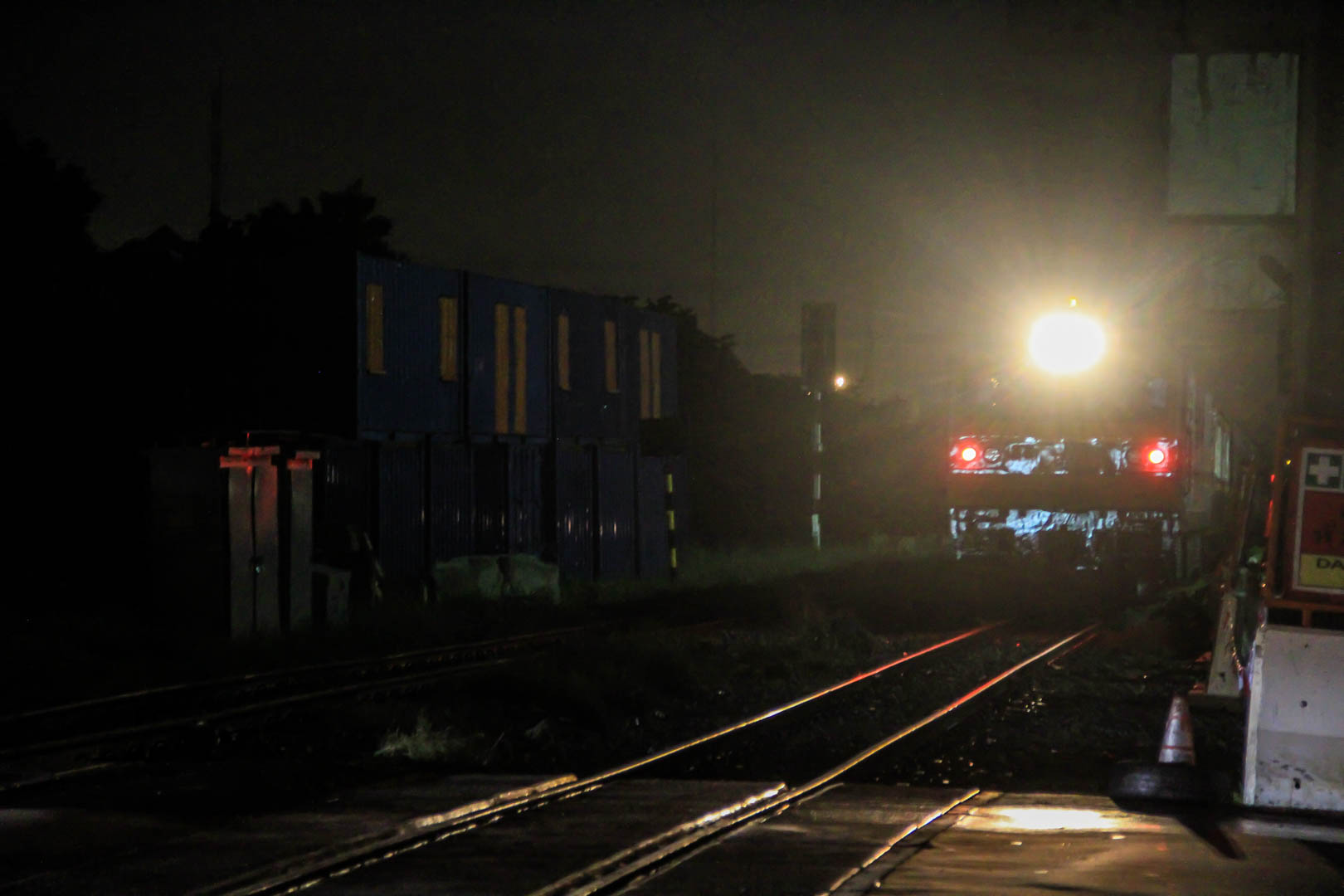
Terrified and trembling, he put the key into the ignition, hit the gas pedal and sped away. As he passed over the rail crossing, his taxi stalled out on the tracks.
And there were the women, blood pouring from their foreheads and running down their faces. Jirawat tried in vain to start the engine. He couldn’t get out of the car either.
Smash! Something hit the taxi’s roof. Jirawat panicked, thinking the railroad crossing gate had come down and he would also suffer death by train. He hit the ignition one more time. It worked. He sped away. He didn’t look back.
Jirawat quit his job as a cab driver. He also never drove a car for years to come.
He chose Channel 7’s Horror Hour to tell his story, a few years after Noom gave birth to the story. He told the hosts he quit his job as a taxi driver and couldn’t bring himself to drive a car afterward.
Wat Samian Nari
The Power of Story
To one connoisseur of creepy chronicles, the story is a no-brainer.
“It couldn’t just be mass hysteria. There are many witnesses and everything goes together,” said Natthapan Boonlert, co-founder ofonline ghost story community Horror Club. “The story is very popular, and it’s become a Thai urban legend.”
With the proliferation of the internet and blogs, a new platform has since emerged for breathless discussion of ghost stories.
There, people poring over such stories claimed to solve the mystery of the temple’s haunted hitchhikers.
The consensus of the many ghost blogs out there say that back in the 1990s, two sisters were killed while riding a motorbike to their mother’s funeral there. A train hit them, cutting their bodies in half. Some even claim Khaosod newspaper ran a front-page story headlined “Horrible Death, Cut in Half!” with the two sisters’ names – Chulee Thipsuksri and Sulee Thipsuksri. (No such story could be found in Khaosod’s archive, which goes back to 1997.)
Sketches of two women hitchhikers as described by witnesses on a 2004 episode of Channel 7’s ‘Horror Hour.’
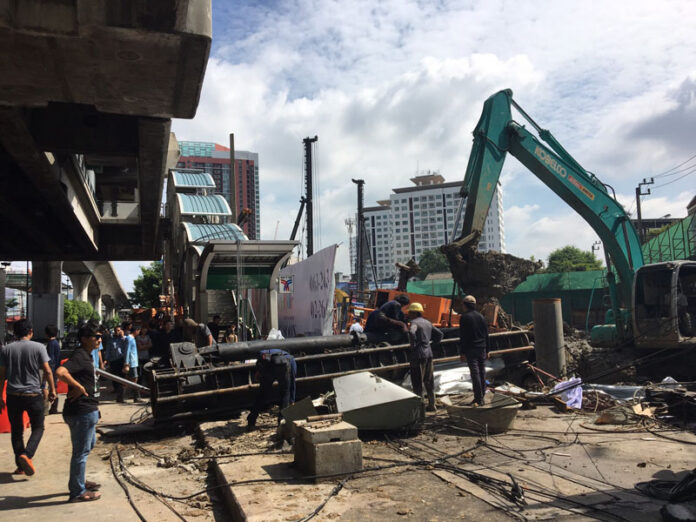
Workers remove a fallen crane from across the sidewalk at BTS Phra Khanong on Sukhumvit Road on Sunday in Bangkok.
BANGKOK — Police said Monday no one will face criminal charges over a giant crane which crashed down onto the footpath and exit No. 4 of BTS Phra Khanong.
Because no one was hurt in the incident, the matter will be settled privately between the Bangkok Metropolitan Administration, or BMA, and the firm that managed the construction site, Piyawit Thongdech said, an officer at Klong Tan Police Station.
“There’s no wrongdoing under criminal law,” Lt. Piyawit said by telephone. “This is a civil case between the BMA and the company.”
The city government can seek compensation from United Construction Material Ltd., which oversaw the crane operation at the time, Piyawit said.
At about 11am Sunday, the crane at the site of a new community mall called Boutique fell onto the public street which would have been crowded during weekday rush hours. No one was injured in the accident.
Khlong Toei district officials and United Construction Material Ltd said they were unavailable for comment Monday.
According to Lt. Piyawit, the fall appeared to have been caused by heavy rain, which softened the ground at the construction site.
A Turbo Caribou model of the Royal Australian Air Force, similar to the one that disappeared Sunday in Indonesia, is seen taxiing in 2009. Photo: Bidgee / Wikimedia Commons
JAKARTA — An official says a cargo plane carrying four people has been reported missing in Indonesia’s eastern most province of Papua.
Indonesia’s search and rescue agency chief Henry Bambang Soelistyo says the Turbo Caribou aircraft lost contact late Sunday on a flight from the town of Timika to the remote district of Ilaga. He says no signals have been detected from the plane’s emergency transmitters.
A rescue team has been sent to search for the plane, which was carrying two pilots and two passengers with goods, including construction materials.
Soelistyo said bad weather and dense jungle were hampering the search efforts by a rescue plane on Monday.
Air travel is an important means of transportation in the jungle-clad mountains of Papua, the country’s most remote region geographically and politically.
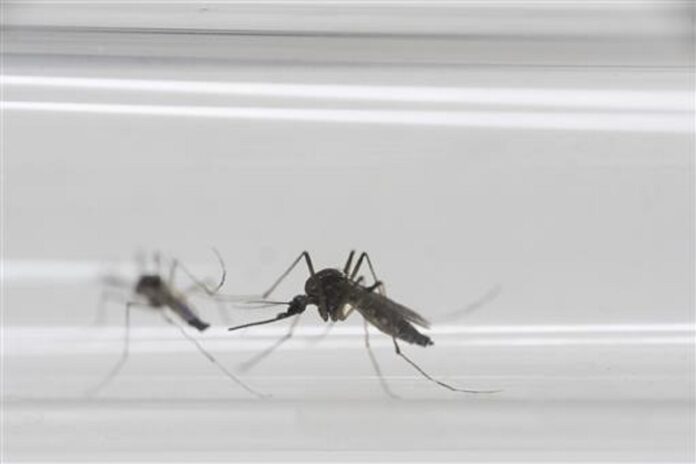
In this Monday, May 23, 2016 photo, Aedes aegypti mosquitos sit inside a glass tube at the Fiocruz institute where they have been screening for mosquitos naturally infected with the Zika virus in Rio de Janeiro, Brazil. Photo: Felipe Dana
HANOI, Vietnam — Vietnam has reported its first case of microcephaly likely linked to the mosquito-borne Zika virus.
The 4-month-old girl with an abnormally small head was born in central Vietnam to a mother confirmed to have had the virus when she was pregnant.
The Ministry of Health’s General Department of Preventive Medicine said on its website Sunday that the case had a “high probability of being linked to Zika virus and also the first in Vietnam.”
If confirmed, Vietnam would be the second country in Southeast Asia after Thailand to have microcephaly case linked to Zika.
The virus generally causes a mild flu-like illness, but a major outbreak in Brazil last year revealed that it can result in severe birth defects when pregnant women are infected.
The statement warned women who are pregnant or planning pregnancies to use precautions such as mosquito nets and mosquito cream and to seek timely medical treatment if they develop a fever or rash.
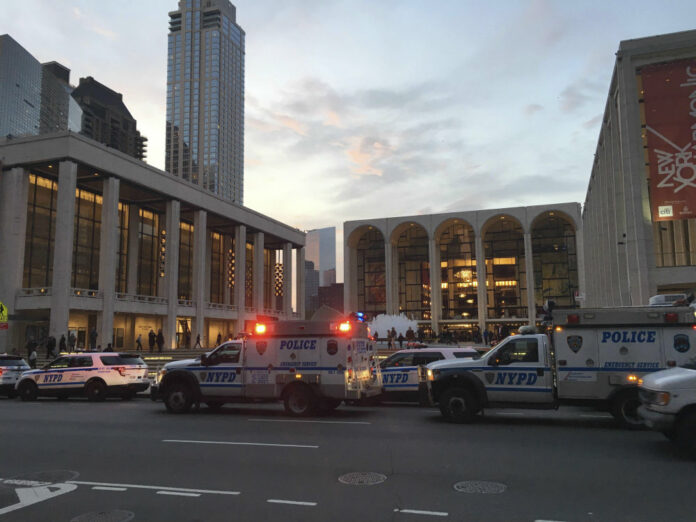
Police respond to New York's Metropolitan Opera which halted a performance after someone sprinkled an unknown powder into the orchestra pit, Saturday, Oct. 29, 2016. Photo: Dylan Hayden (AP)
NEW YORK — A powdery substance a man sprinkled into the orchestra pit at New York’s Metropolitan Opera may have been an opera lover’s ashes, police say.
The freakish incident during a Saturday afternoon performance of Rossini’s “Guillaume Tell” forced Met officials to cancel the rest of the show as well as an evening performance of a second opera.
John Miller, the New York Police Department’s deputy commissioner in charge of intelligence and counterterrorism, said several audience members said a man told them he was there to sprinkle the ashes of a friend, his mentor in the opera.
Miller said the man was in front of the first row of seats when he sprinkled the powder into the orchestra pit during the second intermission when most of the musicians were not present.
He said the powder will be tested, but the possibility that it was in fact human ashes “is certainly an area that we are pursuing.”
Police know who the man is and are reaching out to him, Miller said, adding that the man does not live in New York.
Miller said the disposal of ashes at an opera house may violate city codes but, “I don’t believe at this point that we see any criminal intent here.”
Met General Manager Peter Gelb said, “We appreciate opera lovers coming to the Met. We hope that they will not bring their ashes with them.”
Police initially said one person at the opera house requested medical attention. Miller said no one was injured.
The Met canceled Saturday night’s performance of “L’Italiana in Algeri,” another Rossini opera, because of the investigation.
Audience members at “Guillaume Tell” described confusion as the intermission went on longer than usual.
A Met representative at first announced that a technical issue was causing the delay, then returned a few minutes later to announce that the fourth act would not be performed. The audience was told to go home.
“Everybody kind of slowly walked out,” said Dylan Hayden of Toronto. “As we were exiting the building, I noticed the counterterrorism unit going into the building.”
Hayden, who was seated in the 11th row back, added, “The idea that they said that it was a technical error, when I was maybe 15 feet away from a potential dangerous substance, that kind of irks me a little bit. But at no point did I feel an actual threat.”
Micaela Baranello, a musicologist at Smith College in Massachusetts, said some audience members booed when the cancellation was announced and one man chanted, “I want my money back, I want my money back.”
Gelb said people who had Saturday tickets to either opera should call the Met and make arrangements to see a later performance.
Baranello, who spoke by phone from a train headed back to Massachusetts, said that’s not so easy for opera fans who don’t live in New York. “It’s too bad because most of the best music in ‘Guillaume Tell’ is in Act 4, in my opinion,” she said.
“Guillaume Tell,” Rossini’s opera about folk hero William Tell, had not been performed at the Met in more than 80 years before this season. The opera’s overture is known to many Americans as the theme music to the 1950s TV show “The Lone Ranger.”
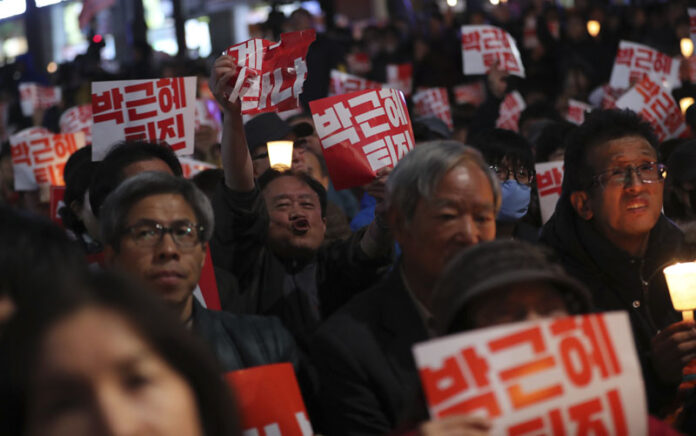
South Koreans hold signs at a rally calling for President Park Geun-hye to step down Saturday in downtown Seoul, South Korea. Photo: Lee Jin-man / Associated Press
SEOUL, South Korea — Thousands of South Koreans took to the streets of the capital on Saturday calling for increasingly unpopular President Park Geun-hye to step down over allegations that she let an old friend, the daughter of a religious cult leader, interfere in important state affairs.
The evening protest came after Park ordered 10 of her senior secretaries to resign over a scandal that is likely to deepen the president’s lame duck status ahead of next year’s election.
Holding candles and signs reading “Who’s the real president?” and “Park Geun-hye step down,” the protesters marched through downtown Seoul after holding a candlelight vigil near City Hall. Police estimated that about 12,000 people turned out for the biggest anti-government demonstration in Seoul in months.
“Park has lost her authority as president and showed she doesn’t have the basic qualities to govern a country,” Jae-myung Lee, from the opposition Minjoo Party and the mayor of the city of Seongnam, told the protesters from a stage.
Park has been facing calls to reshuffle her office and Cabinet after she acknowledged on Tuesday that she provided longtime friend Choi Soon-sil drafts of her speeches for editing. Her televised apology sparked intense criticism about her mismanagement of national information and a heavy-handed leadership style that many see as lacking in transparency.
There’s also media speculation that Choi, who holds no government job, meddled in government decisions on personnel and policy and exploited her ties with Park to misappropriate funds from nonprofit organizations.
Prosecutors on Saturday widened their investigation by searching the homes of presidential officials suspected of interacting with Choi and receiving their office files from the Blue House — the presidential office and residence. Prosecutors had previously summoned some of Choi’s key associates and raided their homes and workplaces, as well as the offices of two nonprofit foundations Choi supposedly controlled.
The saga, triggered by weeks of media reports, has sent Park’s approval ratings to record lows, and the minority opposition Justice Party has called for her to resign. The Minjoo Party, a larger opposition party that has refrained from calling for Park’s resignation over fears of negatively affecting next year’s presidential election, said Park’s decision to shake up her secretariat was too little, too late, and called for stronger changes, including the reshuffling of her Cabinet.
Park’s aides on the way out include Woo Byung-woo, senior presidential secretary for civil affairs, and Ahn Jong-beom, senior secretary for policy coordination. Lee Won-jong, Park’s chief of staff, tendered his resignation on Wednesday.
Woo has been blamed for failing to prevent Choi from influencing state affairs and has also been embroiled in separate corruption allegations surrounding his family.
Ahn, whose home was searched by prosecutors on Saturday, is under suspicion that he helped Choi pressure South Korean companies into making large donations to the Mir and K-Sports foundations, launched in October last year and January this year, respectively. Choi reportedly masterminded the creation of the two nonprofits, which managed to gather around $70 million in corporate donations over a short period of time, and is suspected of misappropriating some of the funds for personal use.
Park’s office said she plans to announce a new lineup of senior secretaries soon.
Choi’s lawyer Lee Gyeong-jae said that she was currently in Germany but would return to South Korea if prosecutors summon her. In an interview with a South Korean newspaper earlier in the week, Choi acknowledged receiving presidential documents in advance, but denied intervening in state affairs or pressuring companies into donating to the foundations.
Choi and Park reportedly became friends in the 1970s, when Choi’s late father, Choi Tae-min, a shadowy religious figure who was a Buddhist monk, cult leader and Christian pastor at different points of his life, emerged as Park’s mentor.
At the time, Park was serving as acting first lady after her mother was killed in 1974 by a man trying to assassinate her father, military strongman Park Chung-hee, who would be murdered by his own spy chief five years later.
Workers remove a fallen crane from across the sidewalk at BTS Phra Khanong on Sukhumvit Road on Sunday in Bangkok.
BANGKOK — A construction crane came crashing down Sunday onto the sidewalk of Sukhumvit Road.
At about 11am, the construction crane at the site of a new community mall called Boutique fell onto the public street. No one was reported injured in the accident.
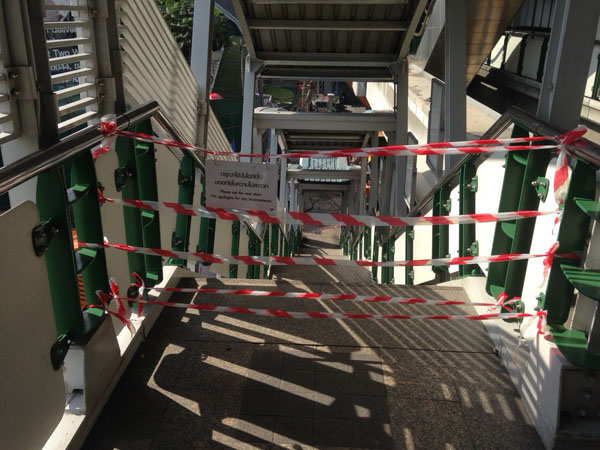
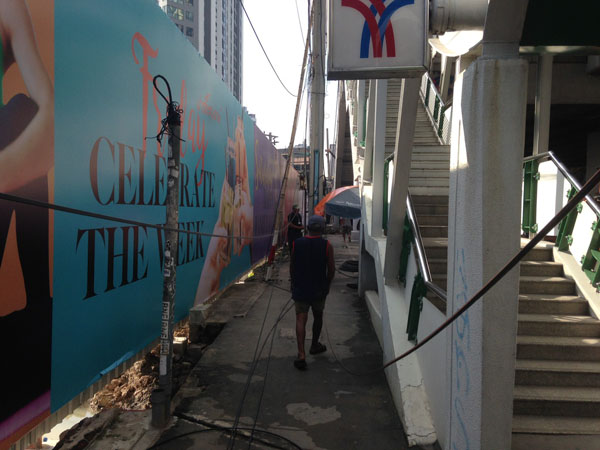
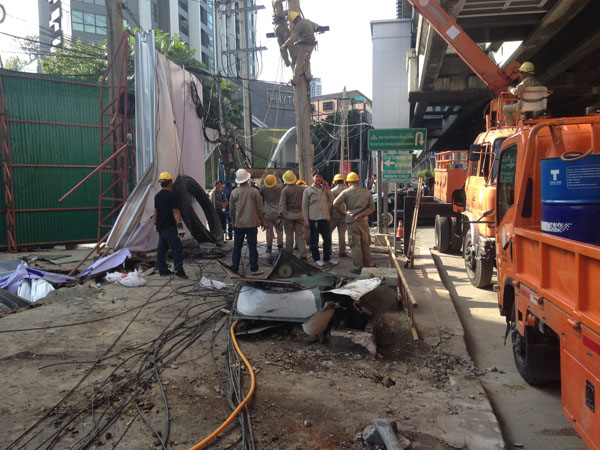
Officers shut down Exit No. 1 of the Skytrain station, and workers were clearing the scene Sunday afternoon. The crane also took down two utility poles, according to Phra Khanong official Acharadee Chaisurirat.
She believed the accident was caused by loose earth due to weeks of heavy rainfall but would report the incident to the police and seek compensation from the construction firm.
Update: Si Quey is cremated at a temple in Nonthaburi on July 23, 2020, in the light of new evidence that suggests he was likely framed for the murders.
Late on a Monday afternoon decades back, 8-year-old Somboon Boonyakan went to buy some vegetables for his family to cook dinner from a local Chinese gardener. He never returned.
See Uey once met a Chinese hermit who advised him that eating children’s intestines would grant him supernatural powers.
As dusk approached, Nawa Boonyakan called on his friends to search for his missing son in the woods near their home in the seaside town of Noen Phra, Rayong province, fearing the young boy might have wandered off.
In the shaded gloom of the woods, Nawa and his companions stumbled upon the gardener Somboon had gone to buy from. His name was See Uey Sae-Ung. He was burning a pile of brush when Nawa found him.
The anxious father must have been relieved to encounter someone who’d seen his son before he went missing. Maybe See Uey could provide the detail that would lead him to Somboon.
Any relief soon turned to horror when Nawa noticed what See Uey was burning under the debris: a small leg. He rushed to stamp out the fire and uncovered the half-burned, eviscerated body of Somboon beneath the charred leaves. Howling in rage, Nawa and his friends attacked See Uey and held him down until police arrived.
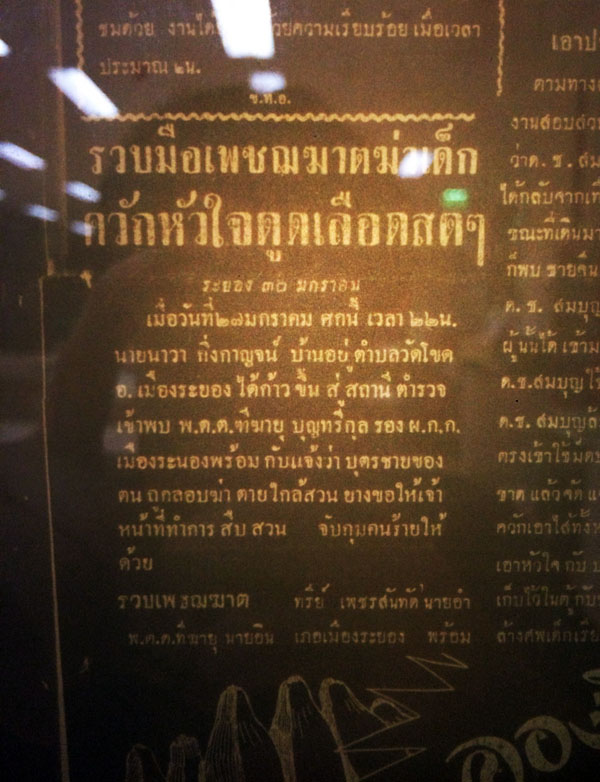
It was 1958. In the next few days, the story hit the frontpage of newspapers across the country – See Uey confessed to killing Somboon and ripping out his intestines.
But he didn’t stop there. He also admitted to murdering five other children in the same gruesome manner because he liked the taste and sought special powers. His confessions – and the histrionic media coverage – enshrined him as the most notorious killer in Thai history, where every child from that point on would grow up knowing his name as the boogeyman who would snatch them in their sleep.
Today, tourists and visitors alike still visit See Uey almost every day.
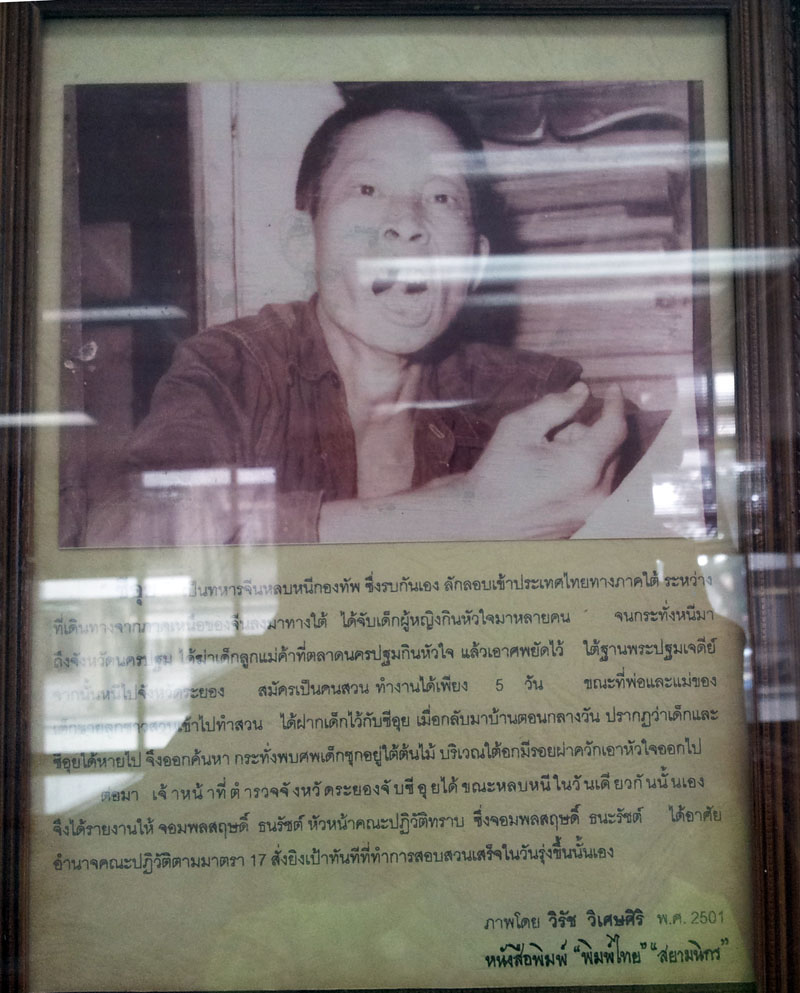
See Uey in a recent photo.
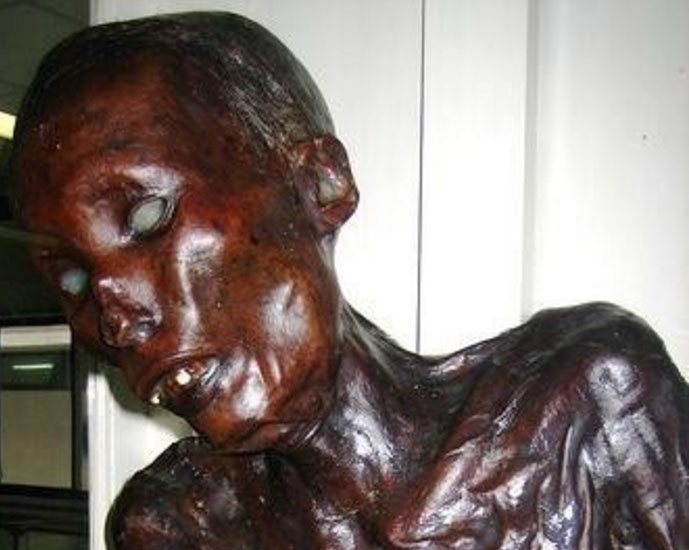
The Forensic Medicine Museum at Siriraj Hospital is known to many Thais as the See Uey Museum. That’s because the macabre highlight of its ample ghoulish wonders is the killer’s shriveled corpse, slathered in wax, in which visitors can peer at the bullet holes left by his executioners.
Looking back with 50 years of hindsight, was See Uey indeed the monster depicted by the authorities and media? Was he capable of an itinerant murder spree across four provinces? What role did Cold War, anti-Chinese sentiments play?
“Police Arrest Child Murderer Who Rip Outs Victim’s Heart and Sucks Fresh Blood,” was the Feb. 3 headline, one week after See Uey’s capture, in Pim Thai, the same newspaper which reported how Nawa Somboonkan found his son’s body.
During the week to come, the newspaper documented what See Uey, a 37-year-old migrant from southern China, reportedly told investigators: everything.
He was working in an orchard when Somboon came to buy vegetables. He stabbed the boy in the throat, washed his body, then cut out his liver, heart and kidney. He stored the organs in his kitchen cupboard for later consumption.
See Uey was caught just as he was burning the body to cover up his crime.
Investigators noted from day one that Somboon’s murder eerily resembled the deaths of five other children killed in 1954, 1955 and 1957. Three of them were killed far from Rayong in Prachuap Khiri Khan; one in Bangkok and the other in Nakhon Pathom. All were found stabbed in the throat with some organs removed, just like Somboon.
News reports said See Uey admitted to all of them. He told police he killed 11-year-old Nid Saephu in May 1954; 6-year-old Muaychu Saehua in November 1954; 7-year-old Kimhiang Saelee in June 1955; 10-year-old Ngan Saelee in October 1955 and 5-year-old Siewchu Saelim in February 1957. All victims were ethnic Chinese.
See Uey also told investigators he cut up his victims because he liked eating their organs, especially the hearts. He made one exception for Muaychu Saehua, whom he murdered near Chitlada Palace in Bangkok. He said her heart was too small for a hearty meal, so he dined on her gullet instead.
“It tasted delicious, too,” See Uey said.
His grisly rampage soon earned him the nickname of “The Murderous Cannibal,” and his name grew to become a synonym for murder cases involving eating parts of the victims, making him a sort of Thai Hannibal Lecter.
See Uey didn’t put up any fight when his trial opened on March 25, 1958. He confessed to every count of murder pressed against him, and freely discussed his exploits in court. Among the witnesses who testified against See Uey were young siblings of the 6-year-old Muaychu. They said they saw him leading their sister away from a Chinese New Year fair in Bangkok’s Chinatown on Nov. 30, 1954, the night before her body was found dumped near railroad tracks.
His trial lasted only nine days.
The court initially sentenced See Uey to life, sparing him the death sentence because he pled guilty. But prosecutors immediately appealed the verdict, arguing that the mandatory clemency granted for confessions should not apply to See Uey because the evidence would have been enough to convict him.
The appeals court agreed and sentenced See Uey to die. The Chinese man reportedly fainted upon hearing the verdict, and he only came to after a policeman gave him several puffs of a cigarette.
See Uey was locked up in northern Bangkok’s notorious Bang Kwang prison until Field Marshal Sarit Thanarat, who ruled the military junta at the time, signed an order for his death. He was executed by firing squad on Sept. 17, 1959.
Much of what is known about See Uey’s life came from his own translated testimony to police investigators and judges:
He was born in 1927 to a family of farmers in the southern Chinese port town of Shantou. In 1945, at 18, he was drafted to fight against invading Japanese. He said his unit was once cut off and encircled by the Japanese for weeks. While his compatriots ate grass to survive, See Uey said he turned to the flesh of slain soldiers on the battlefield. It was the first time he tasted human meat.
After the war ended, See Uey came to Thailand in 1946 via a cargo ship like millions of other Chinese immigrants before and after him. He landed at Khlong Toei Port on Dec. 28, 1946. He took up several menial jobs in the capital before finding work as a gardener in Prachuap Khiri Khan.
It was in Prachuap’s Thap Sakae district when he allegedly sought his first kill. He said he attacked his first victim, 8-year-old Bangorn Pamornsut, near a market on the night of April 10, 1954. He bit her throat and tried to drag her into the woods, but she managed to escape.
The next time he struck on May 19, the victim wasn’t as lucky. Nid Saephu, 11, was taken away from a nighttime wedding fair. Her body turned up the next morning beside a railroad line. She was stabbed in the throat. Her heart, liver and kidneys were gone.
After killing 6-year-old Muaychu in Bangkok that November, he went on to murder 7-year-old Kimhiang and 10-year-old Ngan in Prachuap’s Sam Roi Yot district on June 22 and Oct. 28, respectively. After some time passed and parents sighed with relief that the child killings had stopped, See Uey struck again three years later in Nakhon Pathom province on Feb. 6, 1957.
The body of 5-year-old Siewchu was found mutilated next to the town’s iconic landmark, the ancient pagoda of Phra Pathom Chedi.
All of this, of course, was based on what See Uey told the authorities. Forensic science was all but non-existent in Thailand at the time. See Uey also could not communicate directly with the judges because he spoke very little Thai.
But police said they had witness descriptions that matched See Uey, and the pattern and methods were identical. Maj. Teekayu Boonnateekul, commander of Rayong police, told a newspaper on Feb. 6, 1958, that See Uey had confessed voluntarily.
“There was no threat made against him,” Teekayu said. “The interpreter simply told him: Say everything that you want to say.”
Yet a number of skeptics are not convinced that See Uey was the villain he was made to be. Some said it would have been extremely difficult for a lone, impoverished Chinese man who couldn’t speak Thai to travel so extensively.
‘Police Arrest Child Murderer Who Rip Outs Victim’s Heart and Sucks Fresh Blood,’ was the headline on Feb. 3 in Pim Thai, seen here in a microfiche record.
Others point to the abundant record of Thai police framing scapegoats when they’re under pressure in high-profile murder cases. Like See Uey was over half a century ago, suspects today are paraded before the public before they set one foot into court, some of whom are later cleared of wrongdoing.
Like those today who suggest two Burmese men were scapegoats for the murder of two backpackers in 2014, there are skeptics who suspect See Uey provided a convenient patsy as a member of a marginalized ethnic group. His arrest and swift execution came at the height of the Cold War, when Thailand was ruled by a military dictatorship preaching the menace of “Red China” and eyeing the growing Chinese diaspora with suspicion.
Field Marshal Sarit, the junta strongman who signed See Uey’s death warrant, also ordered summary executions of scores of civil rights activists and suspected criminals under his rule. Many of those condemned were Chinese men accused of arson.
Then there was Sawai Pinsilpachai, a Thai butcher, who was identified by police as the serial child killer and locked up for nearly a year. A court released him on bail in January 1958 – one month before See Uey’s arrest.
His family at the time complained he was a scapegoat.
“We have lost so much money. We’re almost penniless now, even though my son is completely innocent,” Sawai’s mother, Thongkiew Pinsilpachai, told reporters on Feb. 4, 1958.
Police briefly toyed with the idea of prosecuting Sawai as an accomplice of See Uey but eventually dropped it for lack of evidence.
Suppose See Uey was guilty as they said, why did he commit such horrifying crimes?
Psychiatrists at the time deemed him free of any mental disorders. Some media reports claimed See Uey once met a Chinese hermit who advised him that eating children’s intestines would grant him supernatural powers.
In the only interview See Uey is known to have given to the media, he said he believed consuming human vitals such as hearts and livers would strengthen his health.
“I ate them because they revitalized my body,” See Uey was quoted through an interpreter in a Feb. 12 Pim Thai report.
And human intestines taste really good, he noted matter-of-factly.
The unnamed reporter described See Uey as a short, slim man who looked like any ordinary person. But See Uey had a habit of scratching his head and yawning frequently.
“It is when he yawned and stretched his mouth, that his snarling teeth were visible, and his eyes turned to look like those of a beast, poised to strike at its prey,” the reporter wrote of the jailhouse interview in Rayong.
The reporter asked why he targeted children.
“Because they were easy to lure and fool … If I target adults, they might fight back,” See Uey replied, adding that he had never sexually abused any of the victims, despite what some reports said.
The interview ended with See Uey pleading for the guard to take him for a walk in the market.
“Please, I promise, I won’t run away,” See Uey said. The guard wordlessly took him by the shackles back to his cell.

































 His trial lasted only nine days.