32.7 C
Bangkok
Friday, June 19, 2026
Home Blog Page 2588

Couple’s Bloody Feud Leaves Woman Dead in Khlong Toei Market

‘Love you’ was found written on the wall in blood where a woman’s body was found Thursday evening in Bangkok’s Khlong Toei district, while her partner was hospitalized with a serious injury.

BANGKOK — Police don’t know whose blood was used to write “love you,” but there it was on the wall, not far from where they found Nanksan Sorimipra’s body lying face down Thursday evening.

A Burmese couple’s dispute in the capital’s Khlong Toei district ended with a blade out and both stabbed, leaving her dead and him seriously wounded.

Saibi Bikhmad, 32 was rushed to Lertsin Hospital with a large knife wound to his stomach at 5pm. That led to the discovery of Sorimipra, who was found already dead in their rented room on the third floor of a shophouse in the Khlong Toei Market on Rama IV Road.

There were wounds on both of her hands, and from her armpits leading to her stomach. A long fruit paring knife was found next to her body.

Lt. Col. Wanchart Prabngooleum said Bikhmad and Sorimipra, who worked as a grocer, were romantically involved, but he was not sure if they were married.

Bikhmad, who worked as a laborer in the market for a chicken butcher, reportedly abused Sorimipra regularly.

Five days ago, police said, the couple had separated. On Thursday, Bikhmad came to attempt to reconcile with Sorimipra, which is when their discord escalated into violent altercation.

Lt. Col. Yunyong Suwansa-ard said Bikhmad claimed Sorimipra attacked him first, so he stabbed her back.

Bikhmad will likely be charged with homicide, Yunyong said.

Advertisement

Asian Animal Cafes Go From Mere Cats to Meerkats

Vistors play with meerkats Sept. 27 at Little Zoo Café in Bangkok, Thailand. Photo: Sakchai Lalit / Associated Press

BANGKOK — Cat cafes where customers sip lattes while petting resident kitties are just opening their doors around the U.S. and Europe. But in Asia, where the first one opened more than a decade ago, the concept has moved well beyond felines.

At Tokyo’s Snake Center, visitors pay 1,100 yen (about $11) for a cup of coffee and a slithery friend to wind around their arm; a plate of curry bread snacks or a really big snake costs extra.

At We Are The Furballs (WTF) in Singapore, Mochi and her puppy pals yap at ankles and occupy guests’ laps for peaceful dognaps.

And at Little Zoo Cafe in Bangkok, meerkats, raccoons and little foxes with the softest ears imaginable can be cuddled near plates of crepes and French fries.

Some sell the animals, or offer them for adoption. Others invite customers to bring their pets, or just offer encounters with creatures  from penguins to hedgehogs.

“I wanted there to be a place where people can come learn about the animals,” said Wachiraporn Arampibulphol, who opened an exotic animal cafe in Bangkok a year ago after visiting an owl cafe in Tokyo.

Snuggling Jelly, a blond fox, Wachiraporn said she used to import chinchillas, meerkats and other exotic pets, but worried that owners bought them impulsively and then abused them or let them collapse and die in Thailand’s heat.

She said customers at her Little Zoo Cafe get a reality check when they’re so close to the animals; she’s only sold a half dozen this year.

“When you see pictures and photos of these animals, you see their cuteness,” she said. “But people don’t think about what the animal would smell like or how actually raising one would be.”

Visitors play with meerkats Sept. 27 at Little Zoo Café in Bangkok, Thailand. Photo: Sakchai Lalit / Associated Press

Indeed, a musky odor floated above two red foxes  Mocha and Cappuccino  as they boisterously wrestled and skittered around customers’ legs.

Nearby, Nuttida Chaloembun, 23, from Bangkok, watched a waitress grapple with Cracker, a 25-pound raccoon, who chattered and swatted her away with little hand-like paws.

“It’s fat and really adorable but it won’t let me touch it,” laughed Nuttida.

Shirley Chaifong came to the Little Zoo Cafe all the way from Malaysia after seeing photos of meerkats on Instagram. But it was the tail-wagging corgi, an uncommon breed in Asia, she fell for.

“It’s a great way to see the animals,” she said, her hands running through his fur.

After a cat cafe opened in the San Francisco Bay Area in 2014 the concept quickly spread to more than 20 American cities, from New York to Los Angeles, and many more are planned. They’re also popular in Europe, with recent openings in Netherlands, Finland and Italy.

The Cat Flower Cafe in Taipei, Taiwan, took credit as the first-ever cat cafe when it opened in 1998, although some aficionados say cats meandered through a Viennese cafe almost a century earlier. The real boom began in 2005 in Japan, where few apartments allow pets. There are now more than 100 cat cafes listed in Japan, 50 in Tokyo alone. But new goat-, rabbit- and bird-themed eateries now offer competition.

American and European cat cafes have stringent health and safety regulations that sometimes ban actually petting animals, or require cats to remain well separated from food. Most are affiliated with local humane societies or rescue shelters.

In many Asian countries, where there are fewer hygiene rules in restaurants and pets can be bought in street markets, animal rights activists say the cafes are cruel.

Visitor pets fennec fox Sept. 27 at Little Zoo Cafe in Bangkok, Thailand. Photo: Sakchai Lalit / Associated Press

“These animals often become despondent and develop neurotic and self-destructive behavior,” said Jason Baker at People for the Ethical Treatment of Animals’ international campaigns office. “I don’t know why anyone would want to eat a meal surrounded by animals who are imprisoned in cages and pens that are tiny fractions of the size of their homes in the wild.”

But cafe owners say they’re trying to help the animals by allowing people to safely and compassionately interact.

Tokyo Snake Center cafe manager Hisamitsu Kaneko said visitors can gain new appreciation of their oft-maligned reptiles.

“People have biases, or preconceptions about snakes, that they’re disgusting or scary,” said Kaneko, whose customers choose from about 60 snakes. “I think there are no animals as beautiful.”

At Bangkok’s TrueLove @ Neverland cafe, more than a dozen imported and bred huskies were panting  if calm  as they lounged for an hour outside on a humid 35-degree C (95-degree F) day, chewing ice cubes and carrots while visitors marveled at their thick fur.

At the end of a one-hour dog encounter, customers peeled off plastic foot covers, sanitized their hands, checked their husky-selfies and climbed into waiting tuk-tuk rickshaws. Barking and yipping, the dogs dashed en masse into their air-conditioned quarters to rest up and eat before their next human visitors.

Story: Martha Mendoza, Natnicha Chuwiruch

Advertisement

Go Minimal, Techy Tonight With UK’s ‘Commix’ at Live RCA

Notes from the Underground - Mongkorn 'DJ Dragon' TimkulAll this gloomy weather has slowed traffic and gotten everyone in a shitty mood. I don’t blame y’all, it’s not like we can escape on an-all expense paid trip to Hawaii. Hopefully this column can be a lighthouse guiding you through the darkness of Bangkok’s flooded streets this weekend.

This week it shines toward Live RCA, where Bangkok’s Phatfunk crew are bringing out Commix, a U.K. production team known in the scene as masters of deep, minimal, techy sound.

Originally from Cambridge, England, Commix formed in 2002 when members Guy Brewer, Conrad Whittle and George Levings met at a Pokemon competition. They earned props from tracks put out by LTJ Bukem’s Good Looking Records and Fabio’s imprint Creative Source.

It was in 2007 that Whittle left and Commix as a duo dropped their groundbreaking, monolithic “Call to Mind” on Goldie’s Mighty Metalheadz imprint. The album was acclaimed for the duo’s ability to combine the contrasting tones of soul, techno and hip-hop.

“I think it was the perfect album for that period of Drum ‘n Bass. Sounds have changed now but it’s definitely a tough one to beat,” Phatfunk’s DJ Delorean said.

In contrast their 2012 follow-up “Dusted” received mixed reviews, as many claimed it did not to live up to their first release.

After a four-year hiatus Commix, now fronted by original member George Levings is back in the scene with two new releases and another album in the works.

George said he took a long break to “explore new ways of making music.”

“My philosophy has changed so much since I started writing music in 2000,” he said. “My musical knowledge is much better now, and I have many years experience of performing my music in clubs which has had a big influence on how my music sounds.”

Find out what that means tonight at Live RCA. George said to expect a mix of older and newer dnb, from his own concoctions to those of his favorite contemporaries.

“I also still enjoy playing the tracks that made me love Drum ‘n Bass, like Dillinja and Jonny L.,” he said. “I never plan my set, so I will see where the audience takes me!”

Door is 350 baht. Chase away the grey sky blues at the open bar from 9pm to 11pm.

Until next time, Dub be good to you.

commix


Advertisement

283 Dead, 350,000 Need Assistance in Haiti Hurricane

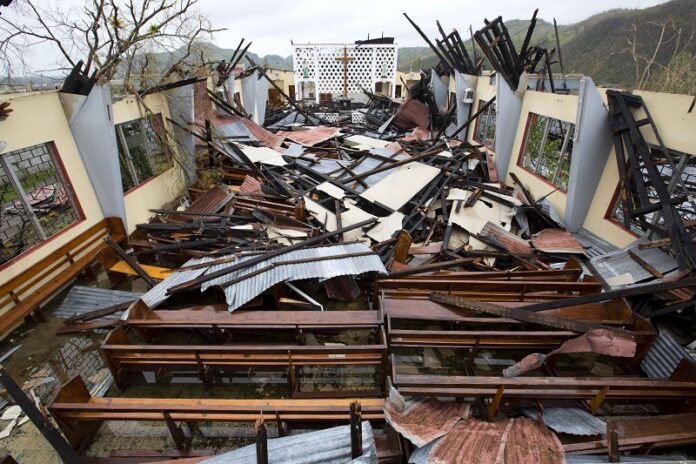
Saint Anne church lays totally destroyed by Hurricane Matthew Thursday in Camp Perrin, a district of Les Cayes, Haiti. Photo: Dieu Nalio Chery / Associated Press

LES CAYES, Haiti — Haitians braced for a grim, rising death toll Friday as help slowly trickled into marooned areas of the country’s southwestern peninsula that was pummeled by Hurricane Matthew, the first Category 4 storm to hit Haiti in decades.

At least 283 people died in just one part of Haiti’s southwest, the region that bore the brunt of the storm, Emmanuel Pierre, an Interior Ministry coordinator in Les Cayes, told The Associated Press late Thursday.

The overall death toll in Haiti is not clear. Authorities expect the number of deaths to increase, with local officials in isolated areas reporting higher numbers. Most deaths are believed to have occurred in the southwest region.

“Devastation is everywhere,” said Pilus Enor, mayor of Camp Perrin, a town near the port city of Les Cayes on the peninsula’s south shore. “Every house has lost its roof. All the plantations have been destroyed. …This is the first time we see something like this.”

Officials were especially concerned about the department of Grand-Anse on the northern tip of the peninsula, where they believe the death toll and damage is highest. The 283 deaths reported by Pierre did not include Grand-Anse or its surrounding areas.

When Category 4 Hurricane Flora hit Haiti in 1963, it killed as many as 8,000 people.

More bodies began to appear Thursday as waters receded in some places two days after Matthew’s 145 mph (235 kph) winds smashed concrete walls, flattened palm trees and tore roofs off homes, forcing thousands of Haitians to flee.

Those killed in Haiti included a woman and her 6-year-old daughter who frantically abandoned their flimsy home and headed to a nearby church to seek shelter as Matthew surged in early Tuesday, said Ernst Ais, mayor of the town of Cavaillon.

“On the way to the church, the wind took them,” Ais said.

Officials said that food and water were urgently needed, noting that crops had been leveled, wells inundated by seawater and some water treatment facilities destroyed.

In Les Cayes, many people searched for clean water as they lugged mattresses and other belongings they were able to salvage.

“Nothing is going well,” said Jardine Laguerre, a teacher. “The water took what little money we had. We are hungry.”

Officials with the Pan American Health Organization warned about a possible surge in cholera cases because of the widespread flooding caused by Matthew. Haiti’s cholera outbreak has killed roughly 10,000 people and sickened more than 800,000 since 2010, when it was introduced into the country’s biggest river from a U.N. base where Nepalese peacekeepers were deployed.

Haiti’s government has estimated at least 350,000 people need some kind of assistance in what is likely to be the country’s worst humanitarian crisis since the devastating earthquake of January 2010.

International aid groups are already appealing for donations for a lengthy recovery effort in Haiti, the hemisphere’s least-developed and most aid-dependent nation.

In the coming days, the U.S. military expects to help deliver food and water to hard-hit areas via helicopter.

After passing over Haiti, Matthew hit Cuba’s lightly populated eastern tip Tuesday night, damaging hundreds of homes in the easternmost city of Baracoa but there were no reports of deaths. Nearly 380,000 people were evacuated and measures were taken to protect infrastructure.

Matthew advanced up the length of the Bahamas on Wednesday and Thursday, tearing roofs away, toppling trees and causing flooding that trapped some people in their homes. There had been no reports of casualties by late Thursday as the storm headed toward Florida’s coast.

Before hitting Haiti, the storm was blamed for four deaths in the Dominican Republic, one in Colombia and one in St. Vincent and the Grenadines.

Story: David McFadden, Pierre Richard Luxama

Advertisement

Obama’s Peace Prize Still Tangled in War Debates

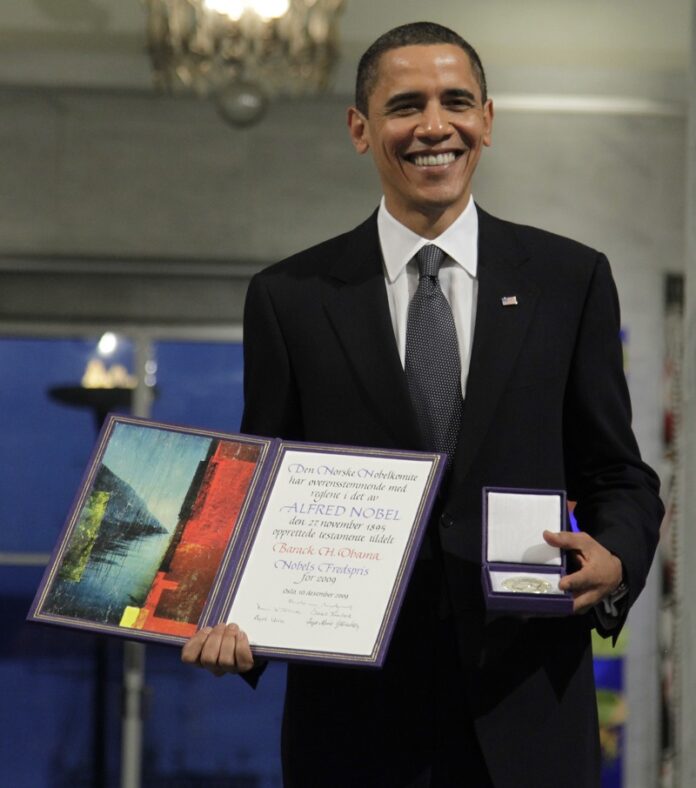
President and Nobel Peace Prize laureate Barack Obama poses with his medal and diploma at the Nobel Peace Prize ceremony in 2009 at City Hall in Oslo. Photo: John McConnico / Associated Press

WASHINGTON — Seven years ago this week, when a young American president learned he’d been awarded the Nobel Peace Prize barely nine months into his first term  arguably before he’d made any peace  a somewhat embarrassed Barack Obama asked his aides to write an acceptance speech that addressed the awkwardness of the award.

But by the time his speechwriters delivered a draft, Obama’s focus had shifted to another source of tension in his upcoming moment in Oslo: He would deliver this speech about peace just days after he planned to order 30,000 more American troops into battle in Afghanistan.

The president all but scrapped the draft and wrote his own version.

The speech Obama delivered  a Nobel Peace Prize lecture about the necessity of waging war  now looks like an early sign that the American president would not be the sort of peacemaker the European intellectuals of the Nobel committee had anticipated.

On matters of war and peace, Obama has proven to be a confounding and contradictory figure, one who stands to leave behind both devastating and pressing failures, as well as a set of fresh accomplishments whose impact could resonate for decades.

He is the erstwhile anti-war candidate, now engaged in more theaters of war than his predecessor. He is the commander-in-chief who pulled more than a hundred thousand U.S. troops out of harm’s way in Iraq, but also began a slow trickle back in. He recoiled against full-scale, conventional war, while embracing the brave new world of drone attacks and proxy battles. He has championed diplomacy on climate change and nuclear proliferation and has torn down walls to Cuba and Myanmar, but also has failed repeatedly to broker a lasting pause to more than six years of slaughter in Syria.

If there was consensus Obama had not yet earned his Nobel Peace Prize when he received it in 2009, there’s little such agreement on whether he deserves it today.

“I don’t think he would have been in the speculation of the Nobel committee now, in 2016, even if he had not already won,” said Kristian Berg Harpviken, director of the Peace Research Institute of Oslo, and a close watcher of the Nobel committee. Harpviken said he views Obama’s foreign policy as more conventional and limited than he expected, particularly when it comes to using multilateral cooperation and institutions.

When it comes to finding new instruments for peace, he said, “Obama has been stuck in the old paradigm.”

In many respects, Obama’s tenure has been a seven-year debate over whether the president has used the tools of war to try to make peace too much or little.

Obama has been sharply criticized for his refusal to use force to depose Syrian President Bashar Assad, cripple his air force or more aggressively engage in diplomatic efforts to end the fighting. Many view Obama’s policies as an unfortunate overcorrection from the George W. Bush-era Iraq war.

“The president correctly wanted to move away from the maximalist approach of the previous administration, but in doing so he went to a minimalist, gradualist and proxy approach that is prolonging the war. Where is the justice in that?” said Ret. Lt. Gen. Jim Dubik, a senior fellow at the Institute for the Study of War and the author of the book, “Just War Reconsider.” Obama should have worked harder to rally a coalition around a shared vision of a stable Middle East, he said.

“Part of the requirement of leadership,” Dubik said, “is to operate in that space between where the world is and where the world ought to go.”

The president’s advisers dismiss such critiques as a misguided presumption that more force yields more peace. Cold-eyed assessments of the options in Syria show no certainty of outcomes.

“In Syria, there is no international basis to go to war against the Assad regime. Similarly, there’s no clearly articulable objective as to how it would play out. What is the end that we’re seeking militarily? ” said deputy national security adviser Ben Rhodes. “The president doesn’t believe you can impose order through military force alone.”

But Obama has in many other cases been willing to use limited force to achieve limited objectives, even risking unintended consequences.

He has ordered drone strikes in Pakistan, Yemen, Libya, Somalia and Syria, actions that that have killed civilians and sparked tension in those countries and across the international community. What began as a secret program has become more transparent and Obama has aimed to leave legal limits for his predecessor on the use of unmanned warplanes.

But he has left unanswered the question of how or when those actions will lead to peace, some argued.

Looking back on his Nobel speech, that dilemma was already there, said Jon Alterman, a Middle East expert and former State Department official.

“What’s strikes me most is how different our concept of war was seven years ago,” he said. “We are engaged in a whole series of infinitely sustainable, low-level actions that have no logical endpoint. When do we stop doing drone attacks in Yemen and Pakistan? What level of terrorism is acceptable? … We’re engaged in battles with a whole range of groups that are never going to surrender, so how do you decide to stop it? How do you decide what winning looks like?”

Story: Kathleen Hennessey

Advertisement

Husband Fights for Evidence to Help US Wife Accused in China

Phan "Sandy" Phan-Gillis. The husband of U.S. citizen Phan “Sandy” Phan-Gillis, who has been charged in China with spying, has spent months trying to prove his wife’s innocence with the little information he had. Photo: Jeff Gillis / Associated Press

BEIJING — Nine days had passed since Jeff Gillis, at home in Houston, Texas, had last heard from his wife. During that phone call, she told Gillis she was extending her business trip in China, but he grew anxious. He filed a missing person’s report with U.S. consular officials whose response left him flabbergasted: His wife, a business consultant, had been detained by Chinese state security agents almost two weeks earlier.

Now, 18 months later, Phan Phan-Gillis is still detained, charged with spying and awaiting trial in China, consigned to an unknown fate in a highly opaque and impenetrable legal system in which even the charges brought against her remain cloudy. Gillis says that his wife appears to have been accused of spying against China two decades ago, although even her Chinese lawyer says he has been barred by Chinese law from providing details.

Despite the scant information, Gillis has set about trying to prove his 56-year-old wife’s innocence. He hopes documents he has uncovered will help free Phan-Gillis, known as Sandy to friends. Her lawyer says her trial has been postponed indefinitely from its original Sept. 19 court date.

The case speaks to both rising suspicion between Beijing and Washington and China’s drive to pursue those accused of crimes occurring outside its borders. Gillis says part of the charge relates to alleged spying carried out within the United States.

“China probably is now more aggressive in pursuing anyone who can be regarded as harming China’s interests,” said Fu Hualing, a law professor at the University of Hong Kong.

“If they think there’s a violation of Chinese criminal law and the impact is felt within China they are willing to pursue that and they think that they probably have the capacity to do that now,” he said. “Imagine: The case happened in the ’90s. It’s not like it happened recently.”

Phan-Gillis’ lawyer, Shang Baojun, said the American is charged with spying, but that he could not provide details because the case involves state secrets. The maximum sentence for spying is the death penalty.

The court in Nanning, a city in southern China near the Vietnamese border, also refused to release specifics about the case.

“It is a closed trial because it involves state secrets, so it is inappropriate for us to release information … including the date of the trial,” said Tang Xingzhong, administrative head at the Nanning Intermediate People’s Court. Calls to the prosecutor in charge of the case rang unanswered.

Jeff Gillis, 54, said the charge relates to “beyond ridiculous” allegations that Phan-Gillis went on a spy mission to Nanning in 1996, then returned to the U.S. and recruited Chinese citizens to work for a foreign spy organization within the United States in 1997 and 1998. He says the foreign spy organization is alleged to be the FBI. The bureau’s press office declined to comment.

Nanning is the capital of Guangxi, a poor farming region neighboring Guangdong province, where Phan-Gillis’ family has its roots. Ethnically Chinese, Phan-Gillis was born in Vietnam and left that country as a teenager after the end of the Vietnam War, ending up via a harrowing boat journey in a refugee camp in Malaysia. She became an American citizen, met Gillis in 2001 and married him a year later.

Gillis said his wife, a consultant who matched investors with projects, traveled to China numerous times on business and as a volunteer to promote cultural and business exchanges and better health care. Most of her trips have been to the southern business centers of Shenzhen and Guangzhou. Gillis said he had never heard his wife mention Guangxi until she brought it up in a phone call during her detention – his first clue in his quest to free her.

Phan-Gillis was detained in March 2015; that September, Gillis took a leave of absence from his job as a U.S. production services manager for an oilfield services company to focus full time on freeing her. He remains in Houston; lawyers told him he should not come to China for the trial.

Gillis started reading up on how Chinese cases work, and knew that he and the lawyers would only have a short window to prepare a defense once charges were filed and revealed to them.

Lawyer Shang said they could read Phan-Gillis’ case file only in early September – more than six weeks after she was indicted. Her legal team is not allowed to photocopy or take photos of the hundreds of pages.

“We can only copy it by hand,” Shang said.

Gillis knew virtually nothing about why his wife was in custody before he received an unexpected phone call about a year ago. At the time, Chinese President Xi Jinping was in the U.S. meeting President Barack Obama, and Gillis had just started a media campaign to coincide with Xi’s visit.

It was his wife. She frantically asked him to stop.

“She was pretty much begging me to tell the people who were on the phone in the room with her that I was going to stop the media campaign,” Gillis said by phone from Houston. But she was also allowed to tell him that “the case involved some people who she had known from Guangxi over 20 years ago.”

Soon, he was digging through his wife’s old files, sorting them by year. When he learned more about the accusations he went straight to the boxes labeled “1996,” ”1997″ and “1998.”

“The house still looks like a warehouse. I have boxes stacked everywhere,” he said.

Gillis is thankful for his wife’s tendency to hoard, because she left behind documents that show she couldn’t have been present for the offenses he says she is accused of committing.

“I have the passport that shows that she didn’t even have a visa in ’96, no entries or exits. I have her pay stubs that show that she was not off on extended leave.”

He has found old receipts and a newspaper article with a photograph of Phan-Gillis attending a horse event in Houston when she is alleged to have been in China. He has submitted the documents to his wife’s lawyers, and has pressed politicians to write letters on her behalf.

U.S. consular officials are allowed to visit Phan-Gillis once a month. Gillis said she told them that threats and relentless interrogation sessions caused her to suffer a heart attack.

“Hearing how they had treated her, it made me cry,” he said. He said that, together with the knowledge that Chinese authorities have charged his wife with spying, and “with allegations that were easily provable to be false,” is why he has decided to publicly discuss her case.

U.S. State Department spokesman John Kirby said that China “continues to withhold many details of the case.”

“We remain deeply concerned about Ms. Phan-Gillis’ welfare and continue to monitor her case closely,” he said in a statement.

Story: Louise Watt

Advertisement

Dutchman Jailed 3 Months in Myanmar for Silencing Sermon

Dutch citizen Klaas Haytema is escorted into a Myanmar court Thursday where he was sentenced to three months in prison for interfering with a religious observance, in Mandalay, Myanmar. Photo: Associated Press

MANDALAY, Myanmar — A Myanmar court sentenced a Dutch citizen to three months in prison Thursday for interfering with a religious observance by unplugging an amplifier blasting a late-night Buddhist sermon near his hotel in Mandalay, the country’s cultural capital.

Klaas Haytema, 30, in handcuffs, wept with his girlfriend before he left for jail.

He had been arrested in late September after a crowd gathered around his hotel in protest when the loudspeakers at a nearby religious hall were turned off.

The man who was reciting the sermon pressed charges against Haytema.

Local media reported that he apologized and said he hadn’t known the loudspeakers were broadcasting religious content.

Haytema was also fined 100,000 kyats (about $100) for violating visa regulations requiring him to respect the culture.

He could have been sentenced to up to two years in prison for insulting religion in the predominantly Buddhist country, but the judge said he opted to find him guilty of a lesser charge to “show mercy.”

It was unclear if Haytema would file an appeal.

Mandalay, a major tourist attraction in central Myanmar, is the country’s cultural capital and the former seat of Burmese kings. It is culturally and religiously conservative.

In early 2015, a Myanmar court sentenced a New Zealand bar manager, Phil Blackwood, to two years in prison after he posted an image of Buddha wearing headphones on the bar’s official Facebook page in late 2014. Blackwood was released in an amnesty earlier this year.

It is common for Buddhist groups to broadcast sermons by loudspeaker at very high volumes. One local government reportedly has proposed noise-control rules. Supporters quoted by local media said the proposal was meant to alleviate stress caused to the elderly and the ill.

A community leader involved in Haytema’s case, Chit San, said he called police when tempers flared after Haytema acted.

“We could not negotiate peacefully because people were angry, so we called the police to control the situation,” Chit San said. “We actually didn’t want him to get arrested.”

Advertisement

Thammasat Massacre Relived in 40 Years of Arts & Culture

Photo: Chumpol Kamwanna / Courtesy

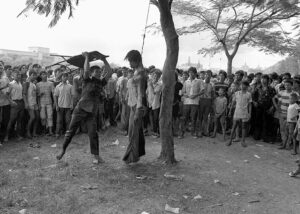
BANGKOK — A student play set off the 1976 massacre at Thammasat University 40 years ago today after a photograph of it whipped up a blood frenzy by the media and military.

Thammasat student dramatizing the hanging of Electricity Authority workers on Oct. 4, 1976. Photo: Wikipedia

Like many culturally traumatic moments, the slaughter in which the arts played an unwitting, enabling role has since inspired works attempting to understand, interpret or simply keep its memory alive.

After the 1973 uprising ended a decade of military dictatorship, university students’ influence in politics surged with a sharp turn to the left. Only three years later, they were put in check, socially sanctioned and stigmatized as Communists by the right-wing, ultranationalist status quo.

Read: The Will to Remember: Survivors Recount 1976 Thammasat Massacre 40 Years Later

Eventually they were dehumanized to the extent that murdering them was endorsed by the loudest parts of society. The resulting carnage carried out by state-backed militias, police and paramilitary forces on Oct. 6 was shown to the world through photography documenting the massacre.

A member of a Thai political faction strikes at the lifeless body of a hanged student outside Thammasat University in Bangkok on Oct. 6, 1976. Photo: Neal Ulevich / Associated Press

Yet frank discussion about the truth, the facts and myths of what actually happened on that date has been scarce. Instead, the unsettled history’s only reliable forum has been the arts, where artists have tried to shed light on what happened in hope its lessons will be learned.

The following is a look at some of those attempts, recent and historical in different mediums.


Performing Arts

Promotional photo of ‘Fundamental.’ Photo: B-Floor / Facebook

When it comes to approaching political issues through the performing arts, B-Floor Theatre has been at the forefront for almost two decades. Through a physical performance emphasizing movement, visuals and haunting sound, its recent production Fundamental successfully portrayed an abstraction of the tragic incident in a never-ending loop of violence between human beings. The play ran from Sept. 14 through Oct. 2. Despite being informed that some military may visit the performance like the 2015 “Bang La Merd,” no officer shown up.

At dawn this morning, exactly 40 years after the violence broke out, the troupe staged the final performance right where it happened on the Tha Prachan campus of Thammasat University.

Promotional photo of ‘A Nowhere Place.’ Photo: Anatta Theatre / Facebook.

After telling the story of former Thammasat University rector Puey Ungpakorn in “Dragon’s Heart the Musical” in August, Anatta Theatre Troupe chose to represent the massacre through the bad memories of a lonely bride and forgetful groom who reunite again after 40 years in “A Nowhere Placefrom Sept. 22 through Oct. 6.

Puey, a democratic icon and national hero whose life ended disgraced and in exile, was also the subject of a production by KonNaKhao, or White Face. The troupe staged a longform mime play last month portraying his life in “NaiKhem JaiDee,” a pseudonym he used as a member of the resistance movement against Japanese occupiers and again in a letter to dictator Thanom Kittikachorn. The cheerful nature of the pantomiming and colorful costumes couldn’t mask the cruel facts within.

‘Little Red in The Ruins.’ Photo: For What Theatre / Courtesy

Puppetry was no longer child’s play in “Little Red in the Ruins,” which presented the dark side of human beings and how they marginalize those who look or think differently. Although ended since Sept. 17, the play will be restaged later this year.


Literature

The cover of Tomyantee’s Sunset at Chao Phraya novel. Photo: Na Baan Wannagum / Facebook

Among writers of that period, a renowned National Artist played an undeniably important role. Vimol Siripaiboon, aka Thommayanti, represented the Army’s Housewives Society in radio speeches against the student protesters. To this day, the ultraroyalist is unrepentant for any role she played. “My only mistake was loving my country,” she once said.

Her conservative ideology shows in her work. In the literary world of 1969’s “Khu Kam (Sunset at Chao Phraya),” a Japanese invader during World War II is the heroic corner of a love triangle, while the nobility of blue blood was praised in her romantic novel “Som Song Saeng (The Moon Shines).”

“Kalai Tong (Golden Coating)” by W. Winichaikul. / Photo: Goodreads

More writers however have approached the massacre in a different perspectives as to satirize with current turmoil.

In 1994, Winita Ditheeyont aka Wor Winichaikul  wrote about a writer arrested after the massacre on suspicion of being a Communist. Her novel, “Kalai Tong (Golden Coating)”, reflected how the lack of certainty about what happened that day could have consequences for people.

Nok Paksanawin’s “Ork Pai Khang Nai (Go Out Inside)”. Photo: Matichonbook

The different reactions of a doctor, youth and a film director to the turbulence, “Psychotherapy Group” was a surreal short story in Nok Paksanawin’s 2014 collection “Ork Pai Khang Nai (Go Out Inside),” which massacre survivors honored with an award 10 years ago on the 30th anniversary.

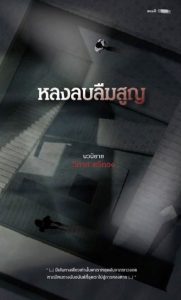
“Long Lob Leum Soon (Vanishing)” by Wipas Srithong. / Photo: Readery

In “Long Lob Leum Soon (Vanishing),” a 2015 novel by Wipas Srithong, characters groped for the exit to a labyrinth as a metaphor for the memories and injustices of past historic .


Visual Arts

There are few examples in the visual arts, although an annual art award is given each year in the name of Manus “Daeng” Siangsing, an artist killed in the massacre.

Photo: Chumpol Kamwanna / Courtesy

Chumpol Kamwanna’s  “Selfie Series” took 10 iconic images from the day and painted in a man taking selfies. The artist sought to comment on the present generation’s disinterest in the history in favor of narcissistic self-obsession. The exhibition runs through Oct. 30 at the People’s Gallery in the Bangkok Art and Culture Centre.


Film

In the years after the massacre, most films to portray it were bare propaganda supporting the state’s version of events.

The Thai Film Archive has collected historical newsreels, including one made by the military, which conveyed the students as malicious Communists who needed to be put down. The reel ends with a triumphant crowd gathered near the King Rama V Monument singing “Naak PhanDin (Scum of the Earth).”

“Naak PhanDin" poster
“Naak PhanDin” poster

Naak PhanDin was also the name of a 1977 drama which followed Village Scouts in their heroic quest to protect nation, religion and monarchy from degenerates.

In the same year, the film “Kao Yod (Nine Pillars)” used military propaganda footage to portray the protest as anti-democratic.

More recently, “Blue Sky Of Love,” earned 11 million baht in 2008 despite criticism it trivialized the tragedy. In the film, students accidentally join the Communist Party of Thailand and end up in the woods, where they realize true happiness doesn’t come from political ideology.

The horror of the day has also made the leap into the expected genre. In 2009 “Mahalai Sayongkwan (Haunted University)recounted university campus ghost stories, including “Red Lift,” a chapter about a haunted elevator in which students were shot dead.

More seriously, Pattaraphon Phoothong interviewed parents of two students killed for “Silenced I Memories,” a 2014 documentary. Their tales conveyed the suppressed, tragic truth without resorting to footage of the actual massacre.

Advertisement

No Umbrellas, Criticism of China Allowed At Oct. 6 Memorial

Activists hold umbrellas in front of the Chinese embassy Wednesday in Bangkok to protest the deportation of Hong Kong activist Joshua Wong, reportedly at the request of mainland China.

BANGKOK — Hong Kong activist Joshua Wong may have been barred from speaking at Chulalongkorn University tonight, but the movement he helped start two years ago loomed large in his absence.

Out of apparent fear the event would turn into a symbolic protest of Wong’s deportation on arrival Wednesday, police banned umbrellas, the symbol of his 2014 pro-democracy movement, from an auditorium at the university where he had been slated to speak, an event organizer said.

Deported: Joshua Wong Flies Back to Hong Kong

“Police instructed us to ban them,” said the activist called Maew, who asked not to be identified by full name for fear of repercussion. “They said it’s a measure to prevent incidents as much as possible … yes, to prevent any symbolic protest.”

Maew said they also demanded no anti-Chinese rhetoric.

The event was to mark the 40th anniversary of the October 6 Massacre, a crackdown on a left-wing student movement that killed dozens at the height of the Cold War in 1976.

Wong, the 19-year-old famed for leading the so-called Umbrella Movement two years ago, was slated to speak on the theme of youth and civil rights, but Thai immigration police turned him away Thursday, citing a request from the Chinese government.

Apart from the ban on umbrellas, police also told the organizers of “October 6: Chula Students Look into the Future” not to use Wong’s deportation as a basis to defame Sino-Thai relations, according to the same activist.

“They were rather specific. They didn’t allow us to talk about Thai and China relations,” said the activist, who studies political science at Chulalongkorn. “They said: Don’t make it an issue.”

Wong was to deliver his keynote speech via Skype later Thursday night.

Deputy national police chief Srivara Ransibrahmanakul told reporters Thursday morning that Wong is free to Skype in, and the students can organize the massacre’s commemoration as long as they did not “incite conflict or unrest.”

Officers from a local police station were also dispatched to monitor the event, Srivara said.

Watch Khaosod English’s live video of the protest in front of the Chinese Embassy on Wednesday.

Advertisement

Siam, Silom, Sukhumvit Street Markets Shut Down

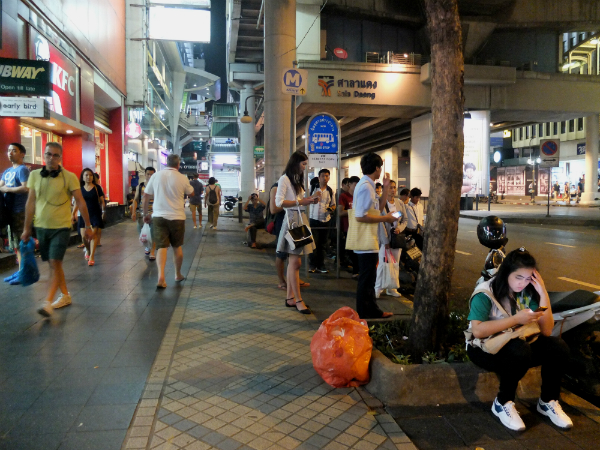
The sidewalks along upper Silom Road were free of street stalls Wednesday night.

BANGKOK —Instead of staying home like most of her friends, Pornthipa Boonmart on Wednesday went to her spot on Soi Sukhumvit 5 where she has sold goods to passers-by for over 30 years.

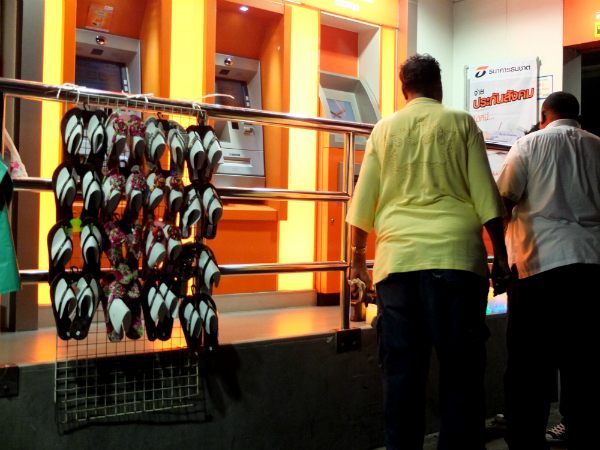
Under the watchful eyes of officers there to end the practice, the 49-year-old hung shoes from the railing of a Thanachart Bank branch. The officers seemed okay with that, so long as she didn’t take space with a table.

“I have a lot of Arab customers here. They buy a dozen pairs of shoes at once while Thais usually only buy one at a time,” she said.

But otherwise the scene there looked very different than before.

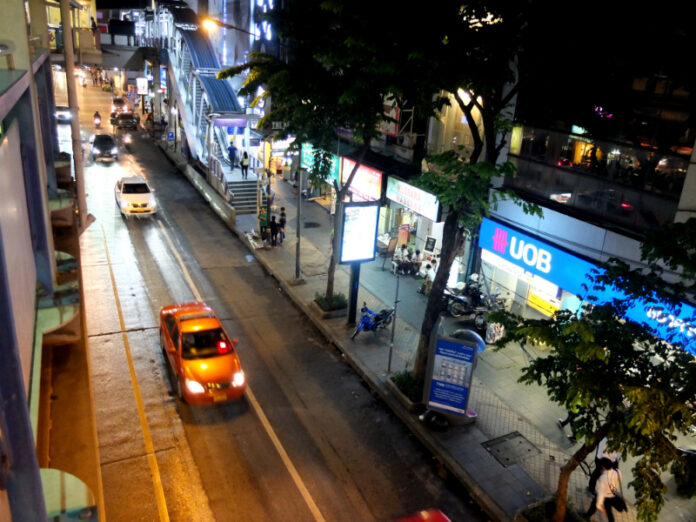
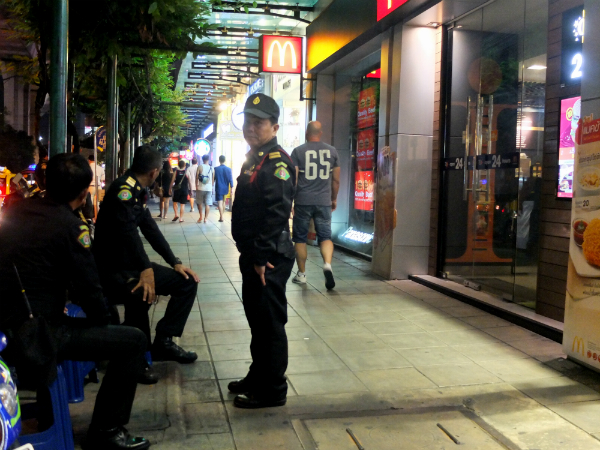
Instead of the usual stalls selling counterfeit brand name clothes, pirated DVDs and other cheap goods, the sidewalks of three landmark areas – Siam, Silom and Nana – Wednesday night were packed with municipal security officers.

Months of flaccid efforts to end the sidewalk commerce routinely associated with those areas, action was finally taken this week and for now success seems to belong to the Bangkok Metropolitan Administration.

Since the latest in a series of its ultimatums for vendors to clear out came Monday, no stalls have been able to open as dozens of officers and officials have been dispatched to prevent it.

The result? Footpaths that appear wider than ever, with enough space for two pedestrians to walk side-by-side.

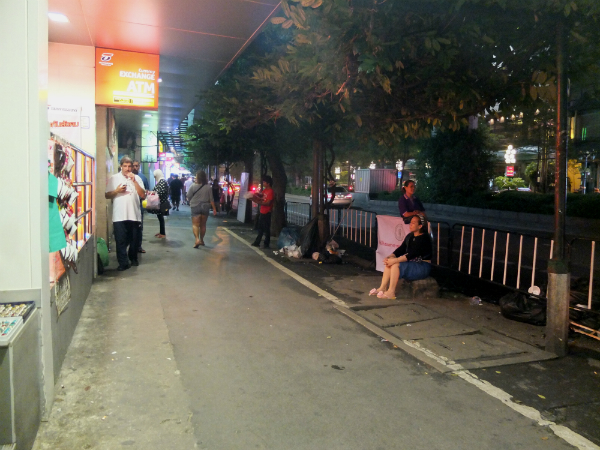
Municipal ‘tessakit’ officers watch over sidewalks Wednesday night in the Nana area of Sukhumvit Road.

“The problem should have ended long ago,” said Penpit Supawaropas, who has walked along that stretch of Rama I Road nearly every evening since high school. “This way we won’t have trouble if any emergency happens.”

While stalls and markets elsewhere have had their defenders, those who all but block traffic flow in front of Siam Square are widely reviled. The 26-year-old said the goods sold there really were “not as cheap as we thought,” and believes the vendors exploit others who pay high rent to secure their business at one of Bangkok’s most expensive areas.

Poverty was brought up by vendors as to why they cannot afford to rent a proper storefront. Some complained that an alternate site offered by the city for them to move, which is under a tollway on Rama VI Road, is far from ideal.

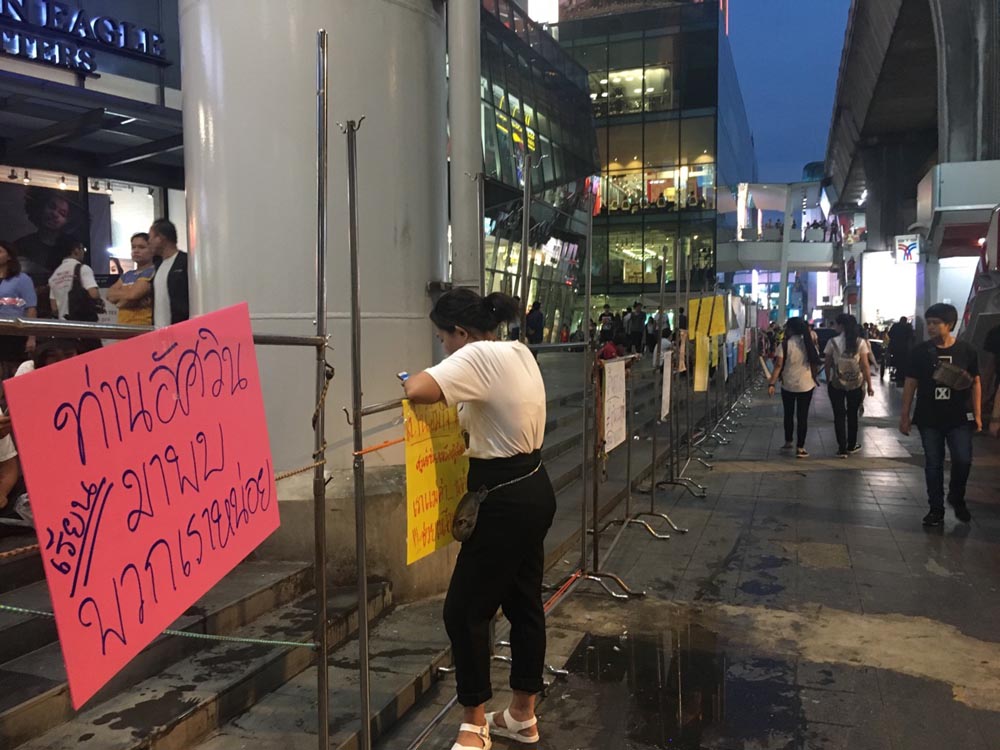
“It is not an area where commuters usually pass by,” said Suchada Rangabpai, a 38-year-old shoe seller said Wednesday at Siam Square. “We can clearly tell we won’t be able to sell there.”

A sign seeking the attention of a specific city official is temporarily set up Wednesday where vendors usually sell goods in front of Siam Square in Bangkok.

Shady Sales

The effort to clear the sidewalks of Siam goes back to before the coup, when the city began its cleanliness and order campaign that has seen the end of many other famous street markets.

Unlike other locations, Siam has been in conflict since 2010 when landowner Chulalongkorn University first tried and failed to clear sweep the vendors out.

People often attribute that to organized criminal elements believed behind the ad hoc market. It’s an open secret that there are people the vendors pay for “permission” to set up there.

Previous attempts to evict the sellers were met with acts of vandalism taken as a threat of menace to the university.

On Wednesday night, a group of men demanded that a reporter covering a protest by vendors there identify herself and explain what the angle of her story would be.

In the end, the protest at Siam ended Wednesday night with 10 representatives selected to take a single demand to City Hall: They must be able to continue selling.

Thursday morning the city rejected that demand.

Sandals were hung on the railing of a bank branch on Sukhumvit Road on Wednesday night by Pornthipa Boonmart, 49.

Some vendors have said they have paid bribed to city officers called tessakit to use the space. A pad Thai vendor in Soi Sukhumvit 19 recently said she pays 3,000 baht each month.

No protest was visible on upper Silom Road or the odd-numbered sois along the Nana stretch of Sukhumvit Road.

Vendors however said they want to petition for the same right to continue selling.

“Reorganization means to regulate us – not clear us out,” said Yindee Metmerurat, a 54-year-old Nana knick-knack vendor. She filed a complaint addressed to junta chief Gen. Prayuth Chan-ocha last week.

Open sidewalks Wednesday night on upper Silom Road below BTS Sala Daeng.
Walkways were clear on Soi Sukhumvit 5 and other odd-numbered sois along the Nana stretch of Sukhumvit Road on Wednesday.
Some vendors hung goods from railings instead of placing tables on the pavement Wednesday along Sukhumvit Road in Bangkok.
Advertisement

Hot News

LATEST NEWS

Bangkok
overcast clouds
32.7 ° C
35 °
32.7 °
68 %
4kmh
99 %
Fri
30 °
Sat
31 °
Sun
35 °
Mon
36 °
Tue
37 °