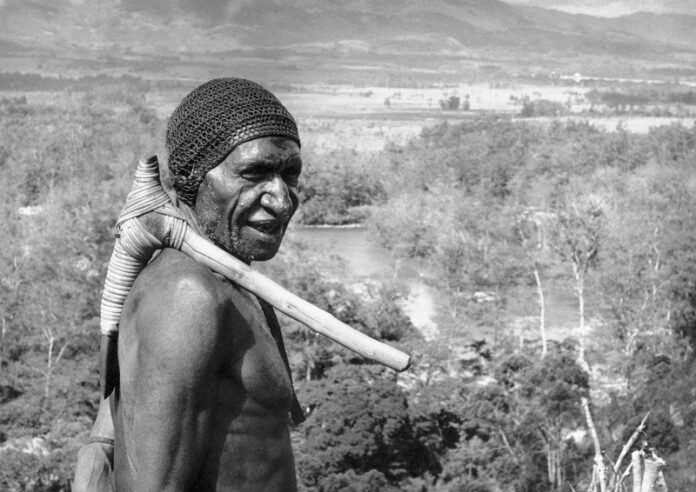
An elder warrior with a stone axe over his shoulder stands in 1962 over the Baliem Valley in the central mountain range of Papua New Guinea. Photo: Associated Press
NEW YORK — The genetic ancestry of people living outside Africa can be traced almost completely to a single exodus of humans from that continent long ago, new studies suggest.
Still, a tiny legacy from an earlier exit may persist in some native islanders in the southwestern Pacific Ocean.
That’s the conclusion from three studies of modern DNA from around the world, released Wednesday by the journal Nature.
Our species, Homo sapiens, arose about 200,000 years ago in Africa. From there, it colonized the world, and scientists are still trying to understand the timing of that expansion.
The new work takes advantage of the fact that human DNA accumulates tiny changes over time. That can be used like a clock to estimate how long ago two populations split off from each other. The approach can’t reveal every migration out of Africa, just those that left a genetic legacy that has been handed down to this day.
Scientists have long traced one such exit to a single population that left around 40,000 to 80,000 years ago, probably over time rather than all at once. But some other work has turned up potential signs of a previous migration as early as 120,000 to 130,000 years ago.
One of the new papers says it found a trace of an earlier migration in native people of Papua New Guinea, which lies north of Australia. At least 2 percent of their DNA may come from a population that split off from Africans about 120,000 years ago, reported researchers from the Estonian Biocentre in Tartu, Estonia, and other institutions. The study analyzed the DNA of 483 people from 148 populations worldwide, including six Papuans.
The two other papers concluded that if there was a genetic contribution from an earlier migration, it must be tiny. One studied the DNA of 300 people from 142 diverse populations, while the other examined the genetic codes of 25 Papuans and 83 aboriginal Australians.
Overall, the evidence shows that the vast majority of modern human ancestry outside of Africa comes from a single exit from Africa, said David Reich of Harvard Medical School, an author of the 142-population paper.
Joshua Akey of the University of Washington in Seattle, who co-wrote a Nature commentary on the papers, said linking that vast majority of ancestry to just one departure seems settled.
Todd Disotell of New York University, who didn’t participate in the research, said the reported hint in Papuans of an earlier migration might actually be due to something else. The analyses in all three papers are very complex, he noted.
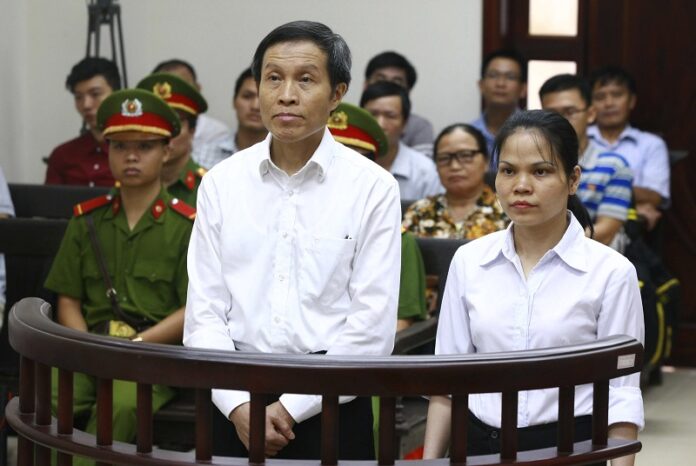
Prominent Vietnamese blogger Nguyen Huu Vinh, left, and his colleague Nguyen Thi Minh Thuy stand Thursday at the dock during their trial at the Higher People’s Court in Hanoi, Vietnam. Photo: Doan Tan / Associated Press
HANOI, Vietnam — A court in Hanoi began hearing an appeal Thursday from a prominent Vietnamese blogger who was sentenced earlier this year to five years in prison for anti-state writings.
Nguyen Huu Vinh, better known as Anh Ba Sam, was convicted of abusing democratic freedoms to infringe on the interests of the state at a one-day trial in March.
Vinh’s colleague Nguyen Thi Minh Thuy, who was given a three-year jail term on the same charge, is also appealing her sentence.
Security around the Higher People’s Court near downtown Hanoi was tight, with roads blocked off.
New York-based Human Rights Watch has called for the release of both defendants.
Diplomats and international media were allowed to follow the proceedings in a separate room via closed circuit TV.
Vinh, 60, quit the police force and set up a private investigation firm. He then launched the blog Dan Quyen, or Citizens’ Rights, in 2013, and Chep Su Viet, or Writing Vietnamese History, in early 2014. The blogs provided links to news on political, social, economic and cultural issues from state media as well as from activists.
At his trial, prosecutors said the two blogs posted 2,397 articles and generated more than 3.7 million hits, and that 24 of the articles had “untruthful and groundless contents” which tarnished the country’s image.
International human rights groups and Western governments including the United States have criticized Vietnam for jailing dissidents. Hanoi denies that, saying it only detains those who break the law.
U.S. officials say Vietnam has made some progress in its human rights record with fewer arrests, but that more needs to be done if it wants to expand bilateral ties.
A WiFi symbol juxtaposed with a Cuban flag is shown on graffiti art in 2014 in the streets of Havana, Cuba. Photo: Eric Vernier / Flickr
HAVANA, Cuba — The Cuban government says it will make five miles of Havana’s iconic seafront boulevard, the Malecon, into the largest WiFi hotspot in one of the world’s least-connected nations.
State media said Wednesday that WiFi will be installed along the most popular stretch of the Malecon by the end of the year. The seafront is a favored spot for Cubans to gather at night to talk, drink and listen to music.
Home internet remains illegal for most Cubans. Since last year, the government has installed dozens of WiFi spots in public areas, charging $2 an hour in a country where the average state salary remains about $25 a month.
Cuba said last year that it had 65 WiFi spots in service and expected 80 more to open in 2016.
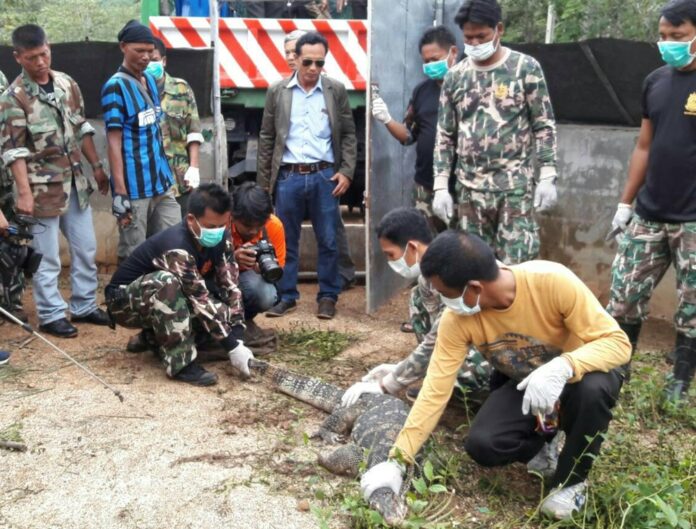
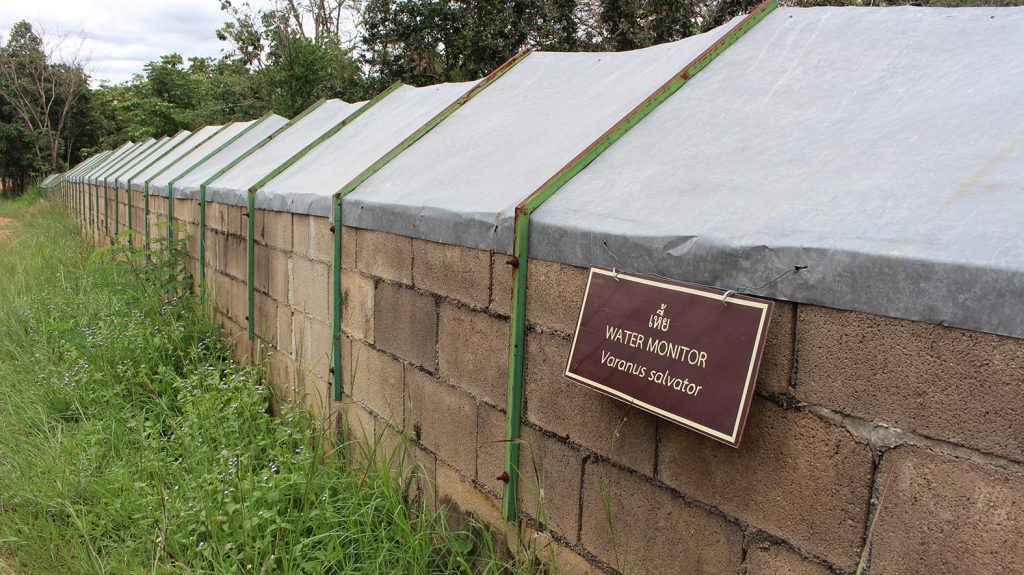
A Lumpini Park water monitor arrives Wednesday at the Khaozon Wildlife Breeding Center in Ratchaburi province.
RATCHABURI — More than 200 water lizards taken from a park in the center of Bangkok arrived Wednesday to live out their rest of their days in captivity west of Bangkok.
The ongoing operation to reduce the population of the monitor lizards in Lumpini Park has beenwas suspended for now while the city considers whether to continue, and the director of the facility to which they were moved said he was told to prepare to accept twice as many animals – the estimated number living in the park.
“Today veterinarians sprayed disinfectant in the enclosure and checked the animals’ health. There was no problem,” said Winan Wirana, director of the Khaozon Wildlife Breeding Center in Ratchaburi province, where the formerly free lizards of Lumpini Park will be held in captivity.
A total of 203 water lizards have been moved to the station so far, Winan said, adding that he thought they were adjusting well to their new homes.
Winan said he was told to prepare space for 400 big lizards, but he told reporters Wednesday that he agreed with those who said city hall overreacted. He said the city should not relocate more lizards because they benefit the park’s ecological diversity.
The city said it would consult with biologists on whether to resume the removal.
The water lizards have been a common sight in Lumpini Park for years, but this week Bangkok city workers started clearing them out. Officials said their population has become too high to the point of damaging the park’s ecology and causing a nuisance to park-goers.
A cage for the water lizards at Khaozon Wildlife Breeding Center. Photo: Matichon
The story has dominated headlines not only for the animals’ status as familiar icons of the park but also for abundant use of their name – hia – which is closest to the English exclamation “fuck” or “fuckers” in Thai.
Some park regulars have posted on social media complaining the park’s charms won’t be the same without the hia crawling and frolicking in the ponds.
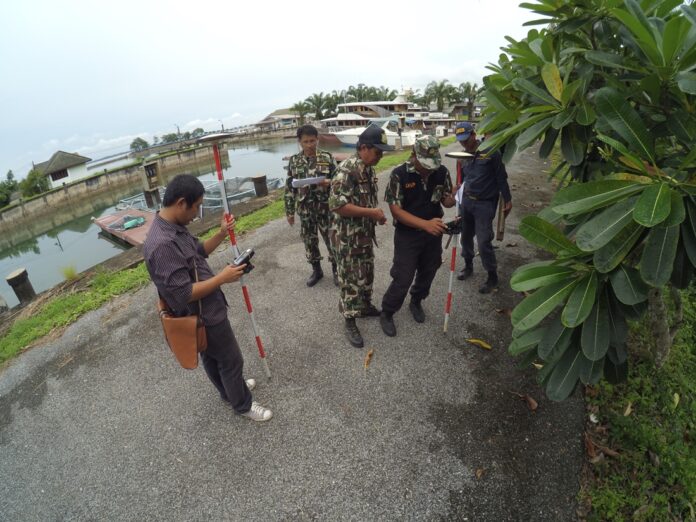
Officials from the Department of Marine and Coastal Resources on Wednesday inspect the property owned by CP executive Jaran Chiaravanont in Trat province.
TRAT — Maritime officials said a residence belonging to an executive at the nation’s largest corporate conglomerate sits illegally on nearly 60 rai (9.6 hectares) of protected forest land.
The Marine and Coastal Resources Department made the determination Wednesday after sending a task force to assess the costal home of Jaran Chiaravanont, a board member of Charoen Pokphand Group, in Trat province.
Ratchai Pornpha, head of the task force, told reporters that 60 rai of the residence sits inside the Tha Som Protected Forest, and is therefore illegal. The property includes a dock for yachts and an area used for fish farming. Jaran’s property manager, who said he wasn’t aware of the intrusion, was arrested.
The enforcement action was the latest in a high-profile effort by authorities to curb illegal development of public lands around the country.
Jaran is a brother of Dhanin Chearavanont, CEO and chairman of CP Group. Dhanin and his family are the wealthiest in the country, according to Forbes
Marine officials said they began an investigation into suspected encroachment by the property in April.
Ratchai said Anant Sawangwai, who managed the property on Jaran’s behalf, said his boss didn’t know the land sat on protected forest. Anant said he would dismantle any encroaching structure and return the land to the authorities, Ratchai said.
Lt. Cmdr. Charnslipa Panphawong, a navy officer who accompanied the raid, said Anant was arrested and charged with violating national forest laws but would not give more details.
Someone answering the phone at the Department of Marine and Coastal Resources said its directors were in a meeting and could not comment further on the raid until Thursday.
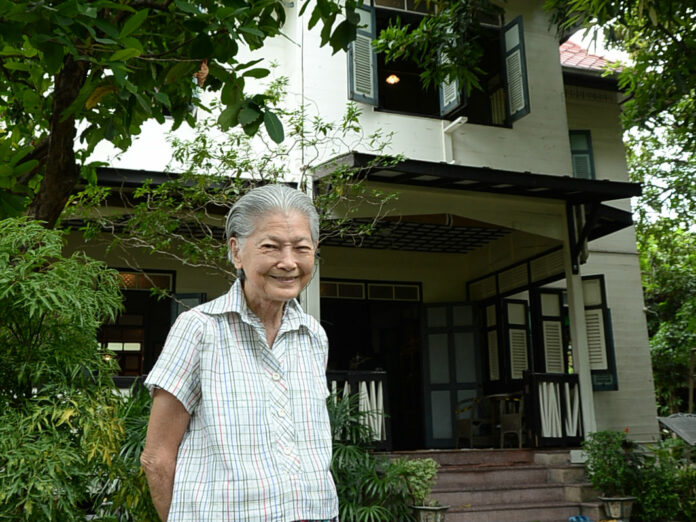
Waraporn Surawadee standing in front of her house which was donated to Bangkok Metropolitan Administration to be local museum.
BANGKOK — When Waraporn Surawadee’s no-rise neighborhood near the river was threatened by an eight-story residential project earlier this year, the folk museum caretaker decided to put her money where her mouth was.
To protect her corner of the capital from condo creep, Waraporn in June put up 30 million baht to buy back land next to what had been her family’s homes before they were gifted to the city for the museum. The only problem was the owner wanted 40 million baht.
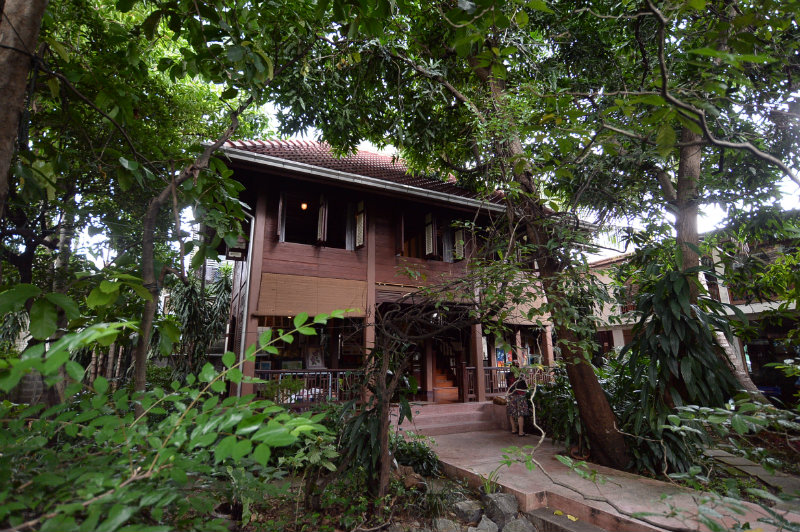
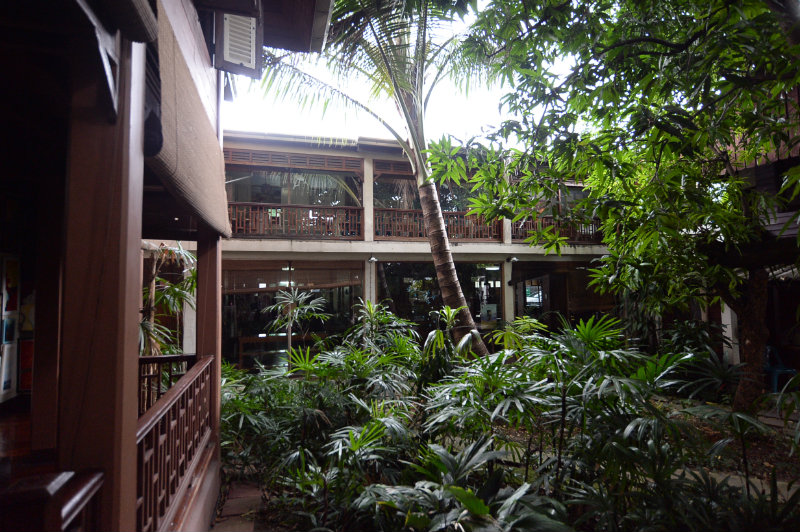
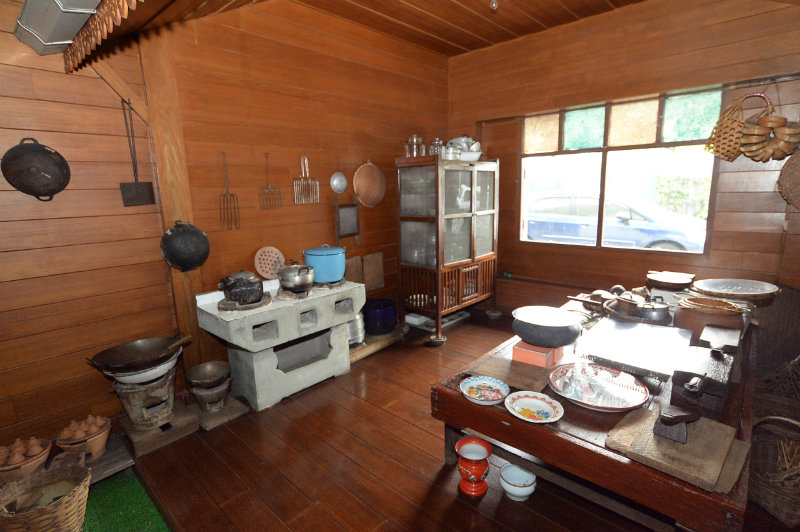
A few minutes walk across Charoen Krung Road from the old General Post Office in the district of Bang Rak, the city-owned Bangkok Folk Museum, can be found shaded by a canopy of green leafy trees. Filled with artifacts of how life was such as pre-World War II kitchen tools, the museum was unknown to many until caretaker and former owner Waraporn’s call to arms and wallets became front page news two months ago.
The response was swift.
“The crowdfunding was successful as media helped spread the news, helping us gain more than 15 million baht within 15 days,” Waraporn said, adding that museum attendance also doubled due to the exposure.
With the Bangkok Folk Museum under heavy foliage to the left, the adjacent parcel of land is now used as a parking lot.
The 81-year-old retired professor received the title deed late last month and plans to leave what had been an empty lot mostly undeveloped. With more interest in the museum from visitors, she is using it as a parking lot. With the Bangkok Folk Museum under heavy foliage to the left, the adjacent parcel of land is now used as a parking lot.
Much to See – All for Free
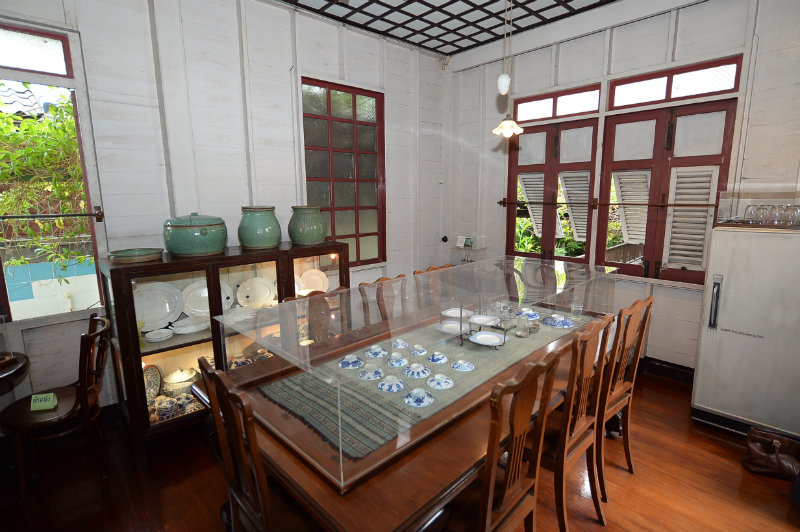
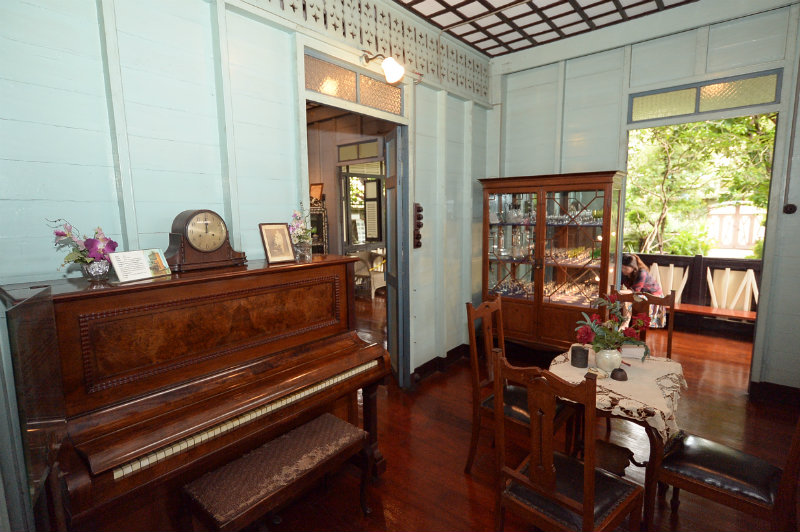
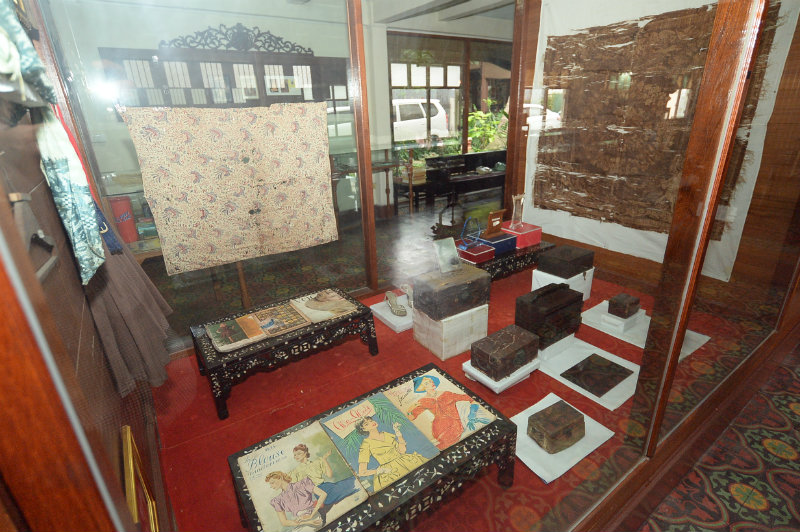
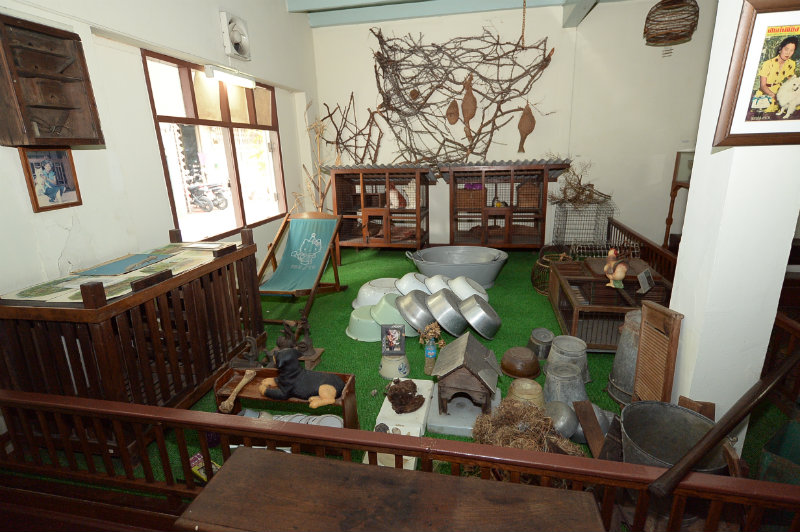
The Bangkok Folk Museum is three beautiful, historic buildings filled with household artifacts rarely seen today in Thailand, such as a vanity with three mirrors, imported porcelain and a pleating machine.
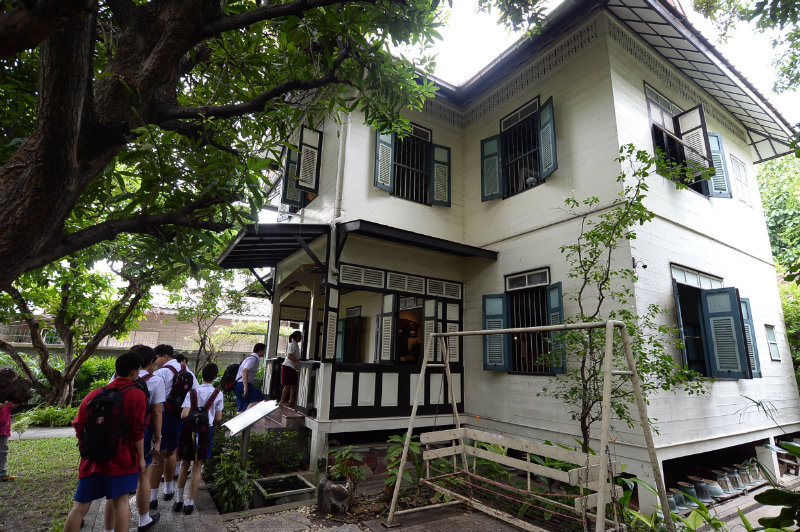
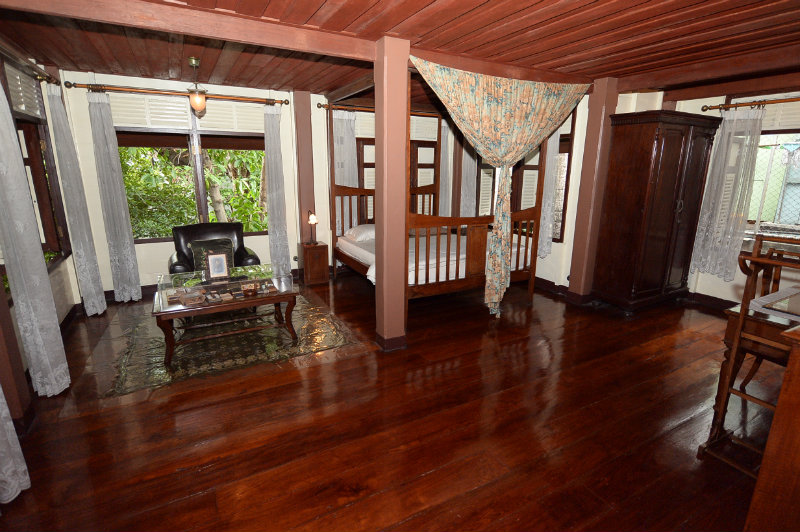
Upon entering, find a white, two-storey housing complex built in 1936 to the left. Blending Thai and Western architectural styles, it was chosen for a conservation award in 2008 by the Association of Siamese Architects.
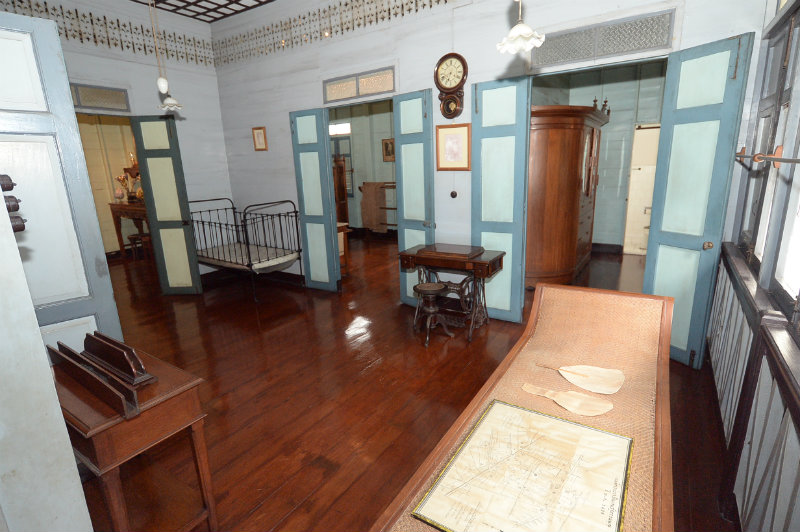
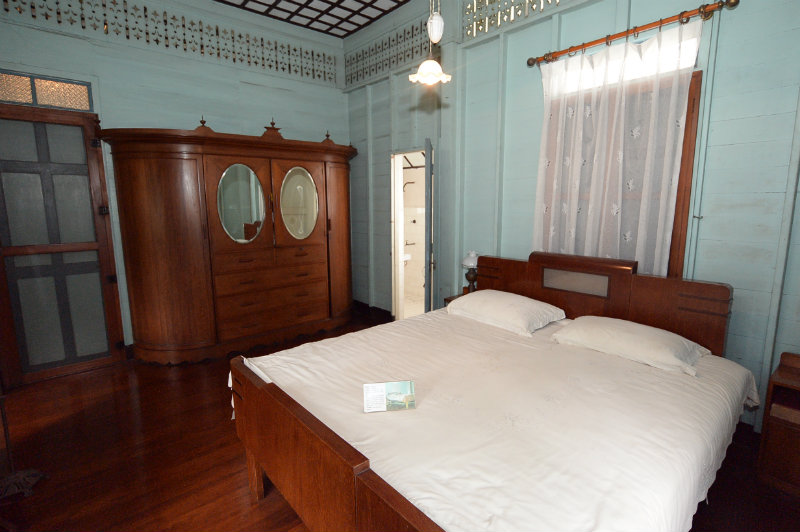
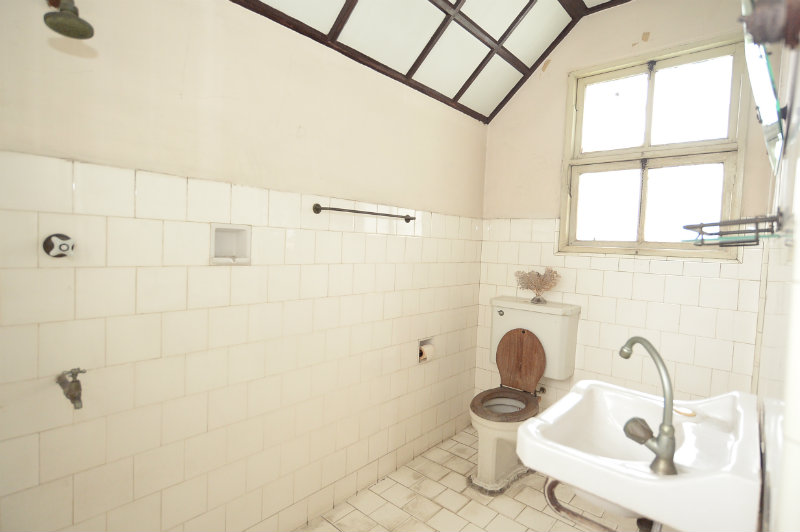
Teak walls and floors are separated sensibly into living room, dining room, bedrooms, bathrooms, a European-style dressing room and reading room. Inside, things used by Bangkokians between 1937 and 1957 are exhibited.
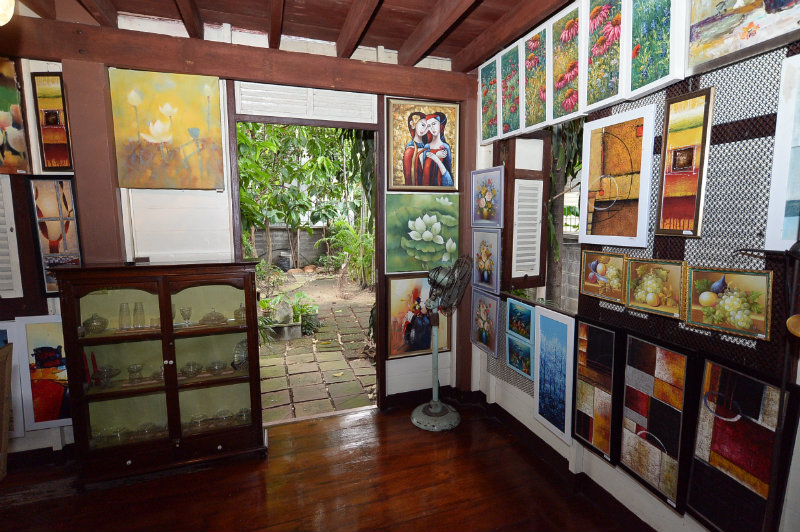
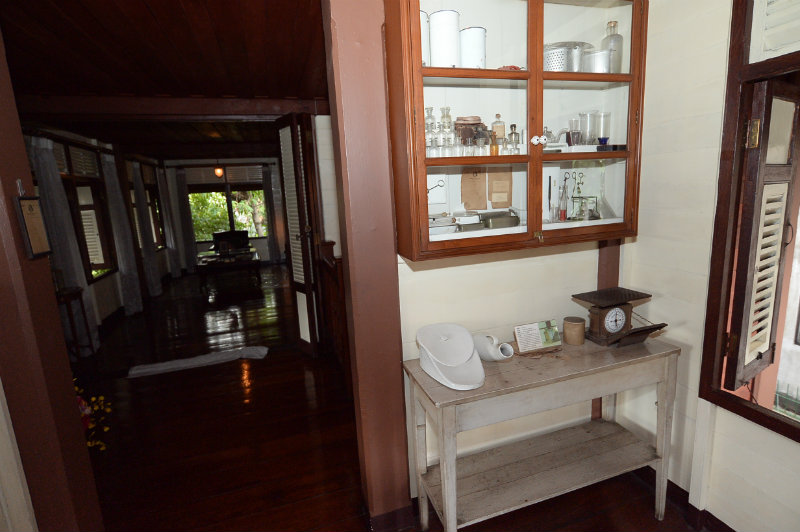
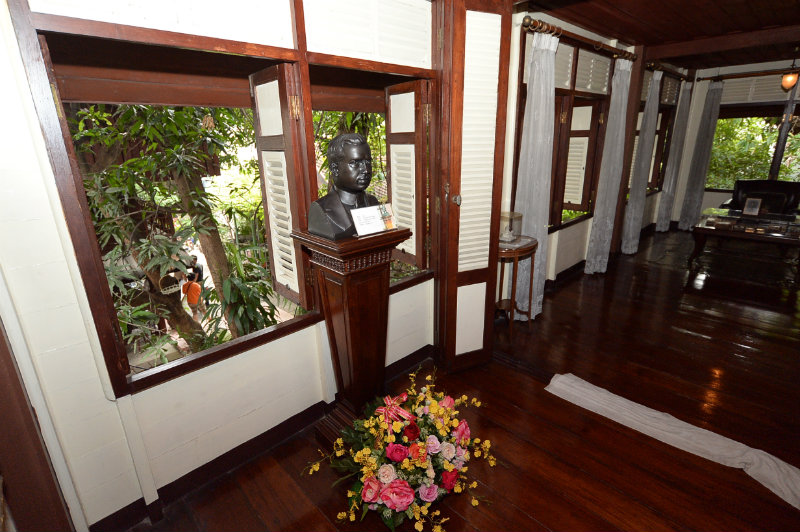
The second building in the center is a two-story teak house from 1929. It was originally built as a clinic for Sa-arng’s first husband Francis Christian, a British-educated doctor from India. Its ground floor is now an exhibition hall for her collection of painting. On the second floor sits a bust of Christian cast by none other than Silpa Bhirasri, the Italian father of modern art in Thailand for whom Silpakorn University is named. Christian’s medical instruments are on display in the lobby; his former bedroom remains intact.
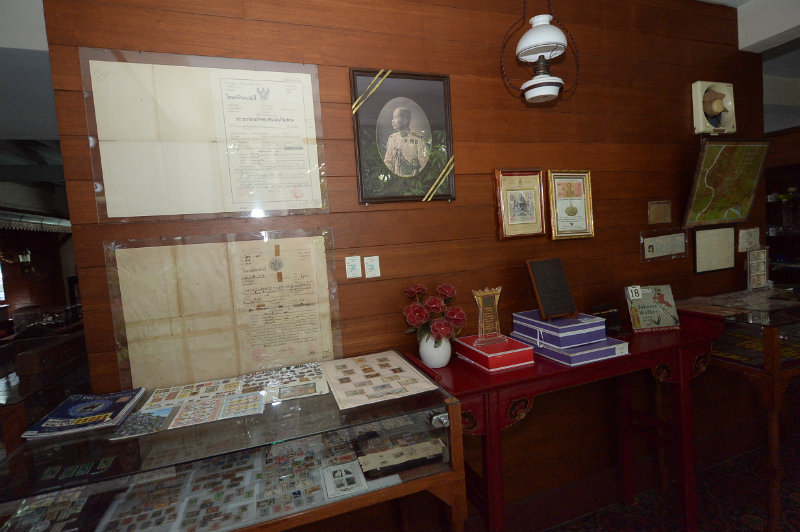
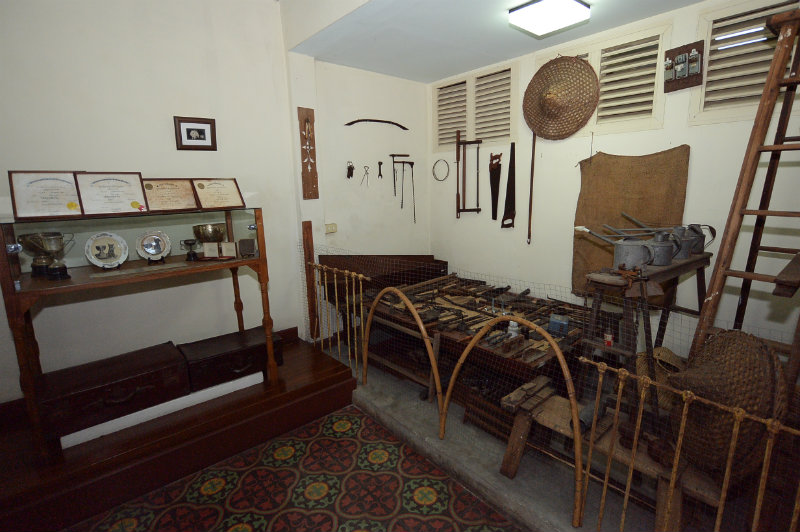
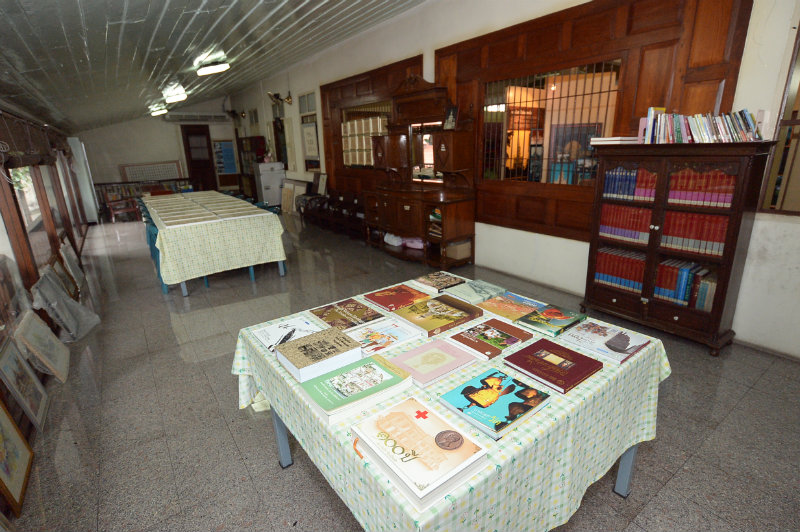
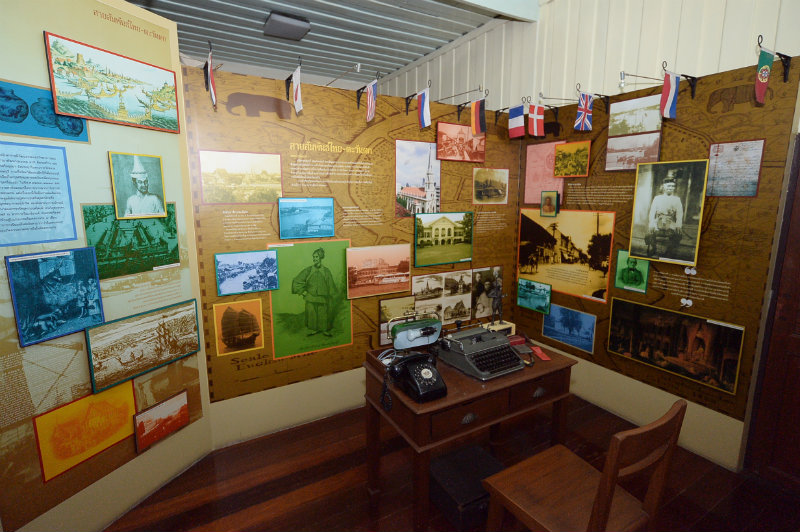
The third building displays old stamps, coins, banknotes, property deeds, kitchen utensils, gardening tools and more on its ground floor. On the second, find the main exhibition of Bangkok and Bang Rak history along with Waraporn’s collection of rare books, which is open for visitors to study.
Living Displays
The four homes there once housed 10 members of the Surawadee family. Waraporn was one of five daughters born to Sa-arng Surawadee, who loved collecting antiques.
After inheriting the aging home from her mother, Waraporn donated it to the Bangkok Metropolitan Administration in October 2004 to use as a living display of her well-preserved collections.
Furniture, dishware, appliances – all the stuff of living that her mother dutifully collected over the years. The idea was to make a place where future generations could see how their middle class forebears in the Bang Rak area used to live.
“I wanted to turn my home into a museum because I want it to be heritage for our country. There are many household appliances that I didn’t even know about. So, it’s my duty to publicize it for others to learn,” said the former university biology professor.
It’s also testament to how life was in some ways better – at least cooler – in greener times past. Waraporn said it proves the theory of using shade to cool homes.
“It’s not so often a teacher gets a chance to prove what they teach,” she said.
Waraporn made a catalog of all the pre- and post-World War II household items, records which are still useful to the three volunteer guides who take visitors on tours of the mansions with an estimated value of 150 million baht.
After taking care of the museum since it opened 12 years ago, Waraporn said she wants to keep it intact as an educational venue without any plans for major improvement.
“I want to leave it old-fashioned and inconvenient as it is,” she said.
She would like to organize events in the future, though she’s not sure what would attract visitors.
“Any kind of activities are welcome, so long as they’re not stripteases,” she said with a light laugh.
Now that the drama has settled, she insists it wasn’t for herself but the public’s benefit.
“The museum isn’t my private property. It’s everyone’s,” she said. “But transferring the property rights to [city hall] doesn’t mean I lost my rights. As a citizen, I can still practice my rights by monitoring if the government takes good care of national property.”
The white housing complex of Bangkok’s Folk Museum
The two-storey teak house
The air-conditioned building
The Bangkok Folk Museum is open from 10am to 4pm Wednesday through Sunday. Admission is free. The museum is located on Soi Charoen Krung 43, which can be reached by taxi or motorbike from MRT Hua Lamphong Station or BTS Saphan Taksin.
A public service announcement by the Cam Chau Ward People's Committee reads "Youth, please stay away from drugs" in Vietnamese in 2014 in Vietnam. Photo: lightwrite / Flickr
HANOI, Vietnam — A court in northern Vietnam has sentenced nine people to death for heroin trafficking.
The state-run online newspaper Zing says ringleader Trang A Tang and eight other Vietnamese nationals were convicted of trafficking 626 kilograms (1,379 pounds) of heroin from Laos and Thailand into Vietnam between 2009 until the ring members were arrested in 2013.
The People’s Court in Bac Ninh province handed them death sentences Wednesday at the end of a four-day trial.
Three others, including Tang’s wife and father, were given life in prison on the same charges.
Court officials were not immediately available for comment.
Vietnam has some of the world’s toughest drug laws, with the trading or trafficking of at least 100 grams of heroin punishable by death.
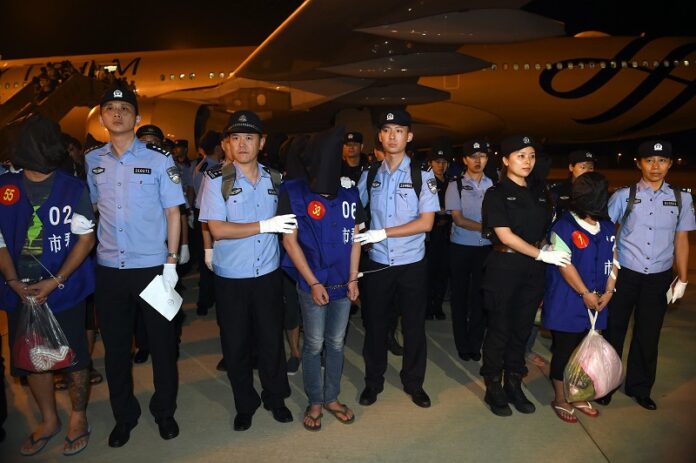
Chinese police stand with hooded internet fraud suspects Tuesday after they were escorted off a plane at Lukou International Airport in Nanjing in eastern China's Jiangsu Province after being deported from Cambodia. Photo: Han Yuqing / Associated Press
PHNOM PENH — Cambodia has deported 50 Chinese and 13 Taiwanese citizens to China over an alleged internet scam, complying with demands from Beijing, a senior police official said Wednesday.
The suspects were flown out of Cambodia on Tuesday, said Gen. Ouk Haiseila, chief of the Cambodian Interior Ministry’s Immigration Investigation Bureau. He said the Chinese government sent a special plane from Beijing to take them back.
In June, Taiwan protested after Cambodia deported 25 Taiwanese internet scam suspects to rival China in the latest snub of the self-ruled island. Cambodia regards Taiwan to be part of China.
The latest group of 63 suspects was arrested late last month in a rented house in Phnom Penh, Cambodia’s capital. They were accused of defrauding victims in China using phone calls made over the internet.
Since 2012, at least 982 Chinese and Taiwanese accused of taking part in internet scams have been arrested and deported back to China, according to Ouk Haiseila.
Although Taiwan’s constitution formally decrees that it and the Chinese mainland are part of a single Chinese nation, Taiwan functions like an independent country and does not acknowledge Beijing’s claim of authority over it.
Rights activists and Taiwanese authorities say such deportations reflect the great influence China exercises over Cambodia through aid and investment.
China is a key ally and economic partner of impoverished Cambodia. It has provided millions of dollars in aid and investment over the past decade, agreed to write off debts and granted it tariff-free status for hundreds of items.
Kenya and Malaysia have also deported Taiwanese internet scam suspects to China despite protests by Taiwanese officials.
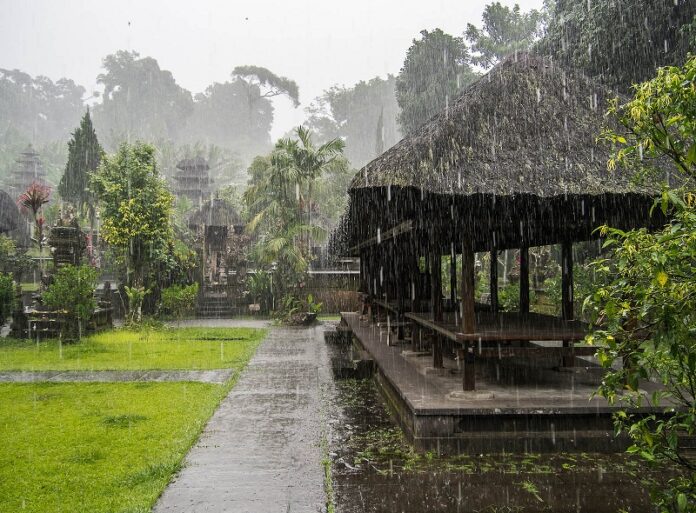
Rain falls last year in the temple of Pura Luhur Batukaru, Bali, Indonesia. Photo: Jumilla / Flickr
JAKARTA — Torrential rains have triggered floods and landslides on the Indonesian island of Java, killing at least 19 villagers.
National Disaster Management Mitigation Agency spokesman Sutopo Purwo Nugroho says several people are still missing in West Java’s Garut and Sumedang districts.
The worst hit was Garut district, where 16 people were found dead and eight others are still missing after two rivers overflowed Tuesday night.
Nugroho said Wednesday that about 1,000 villagers were evacuated to army barracks and other temporary shelters.
He said three villagers were killed in Sumedang and one person was still missing after landslides that buried two houses.
Rains frequently caused landslides and widespread flooding across much of Indonesia.
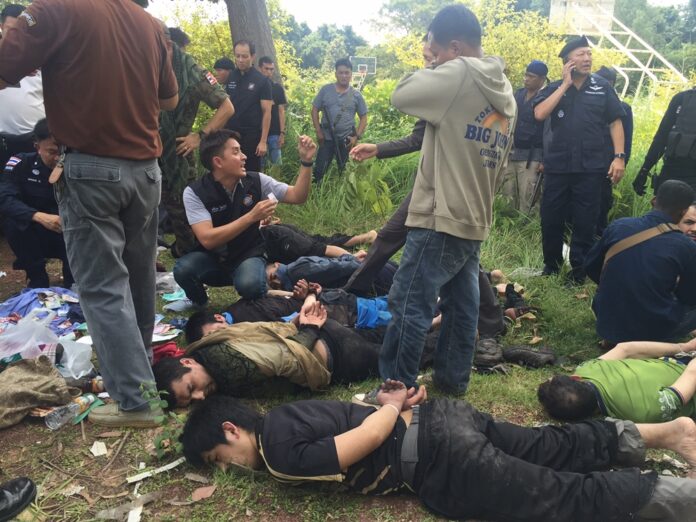
Police find and arrest some of the escaped Uighur men Tuesday afternoon in Nong Khai province
NONG KHAI — All but one of 10 Uighur men who escaped from a detention facility in northeastern Thailand were apprehended Wednesday morning, but police were tight-lipped about what they were doing in Thailand.
The nine men, detained for entering the country illegally, were free for less than 24 hours before being taken back into custody by police, who would provide no further information about their intended destination, citing political sensitivities.
“These details concern national security. It’s about international relations,” said Maj. Gen. Chartchai Tang-iam, deputy commissioner of the immigration police, when asked why the 10 men entered Thailand in the first place.
Uighurs are a Muslim ethnic group from western China where there have been complaints of persecution by Chinese authorities. Beijing considers them a terrorist threat, and many Uighurs have used Thailand as a transit nation to flee elsewhere – often Turkey.
There were 10 Uighur men inside the immigration detention facility, some of whom had been held for years.
Chartchai referred questions to immigration police commissioner Natthorn Prohsunthorn, who could not be immediately reached for comment.
Speaking Tuesday, Lt. Gen. Natthorn announced the 10 Uighur men had been transferred from a central facility in Bangkok to a local immigration holding center in Nong Khai province in June because of overcrowding. He said “some” of the men had been held for over two years.
Thailand considers refugees and asylum seekers to be illegal immigrants and will jail them if found, sometimes for years, until a foreign government accepts them or they are deported to their original nation.
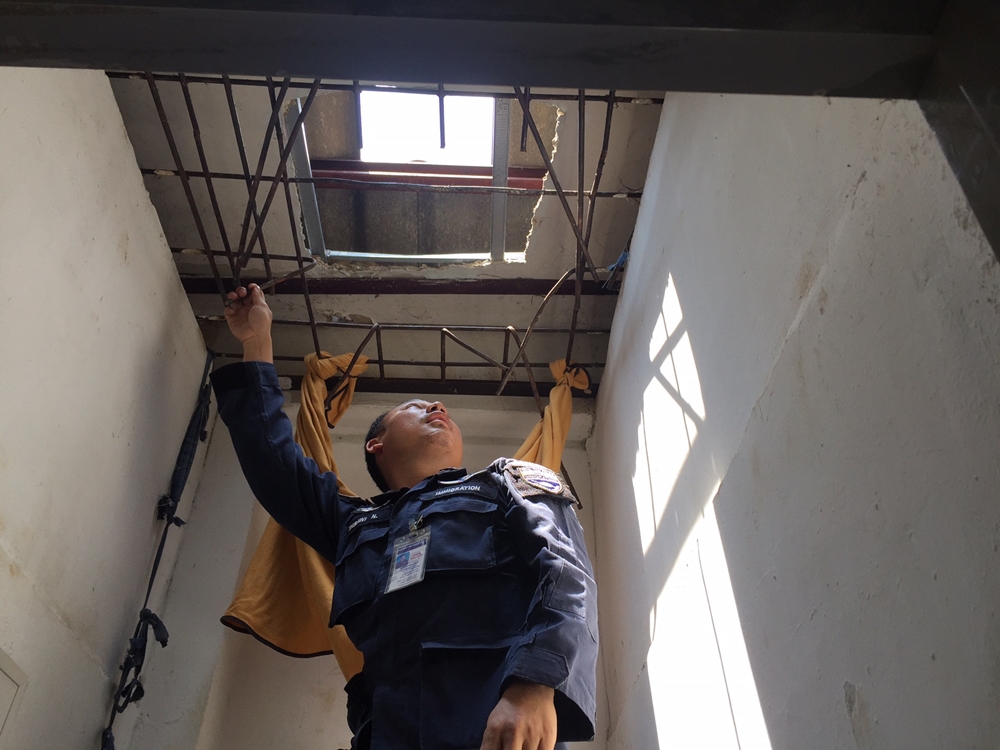
Police said the 10 Uighur detainees pulled down part of the ceiling in their cell at about 2am on Tuesday and then escaped into the night over the roof. All of the escapees except one had been re-arrested by Wednesday morning.
A police officer on Tuesday shows where the Uighur men reportedly escaped.
Patipat Suban Na Ayudhya, immigration police chief for the northeastern region, said the central police force didn’t give him any information about the 10 men when they were transferred to his custody.
“They didn’t tell us. They simply sent us the detainees and gave us a list of their names,” Lt. Gen. Patipat said by telephone.
He said the Uighur men managed to escape without any tools because the holding facility itself wasn’t built like a prison.
“We will improve security, of course, but we cannot violate human rights. We can’t just shackle them in chains,” Patipat said. “They are detainees. They are not criminal suspects.”
He said he had no idea when the Uighurs would leave the detention facility. “It’s up to the destination country … if they don’t want them, we can’t send them there.”
Roughly 120,000 refugees or asylum seekers resided in Thailand in 2015, according to a UNHCR estimate. Most live in limbo without any certainty when their cases will be resolved.
The fates of Uighurs detained in Thailand has been a matter of controversy. While Thailand’s government says it will deport them to any country that accepts them, such as China or Turkey, many human rights activists oppose sending them back to China because of the conflict many are attempting to escape there.
In July 2015, the military regime drew condemnation from civil rights groups after it returned more than 100 Uighurs to China under pressure from Beijing. Chinese state media footage of them being loaded onto planes with black sacks over their heads and under armed guard were seen widely.
A month later, a bomb attack struck the Erawan Shrine in Bangkok, killing 20 people, including Chinese tourists. Police later arrested two Uighur men who allegedly planted the bomb, but authorities vehemently denied that the attack was retaliation for their deportation policy.