28.8 C
Bangkok
Friday, June 19, 2026
Home Blog Page 2623

See Movie For People Who Like Books More Than People on Sunday

Anthony Hopkins in “84 Charing Cross Road”

BANGKOK — Those who love books enough to watch movies about people who love books should head to a riverside bookshop in the Khlong San community Sunday for a screening of a 1987 drama on a transatlantic friendship built one page at a time.

Directed by David Jones, “84 Charing Cross Road” (based on a book also adapted for TV and the stage) chronicles the relationship between a New York bookworm (Anne Bancroft) and a London bookseller (Anthony Hopkins) who correspond and grow close for 20 years without meeting each other.

Admission is free. The 100-minute film will show with English subtitles and starts at 2pm Sunday at Candide Books.

The bookstore, named after Voltaire’s classic, is located inside The Jam Factory near the Millenium Hilton hotel in Bangkok’s Khlong San neighborhood.

Take a taxi or catch a ferry from the Si Phraya pier near the Royal Orchid Sheraton.

Advertisement

Suu Kyi: Myanmar Has Unique Chance to Forge Peace

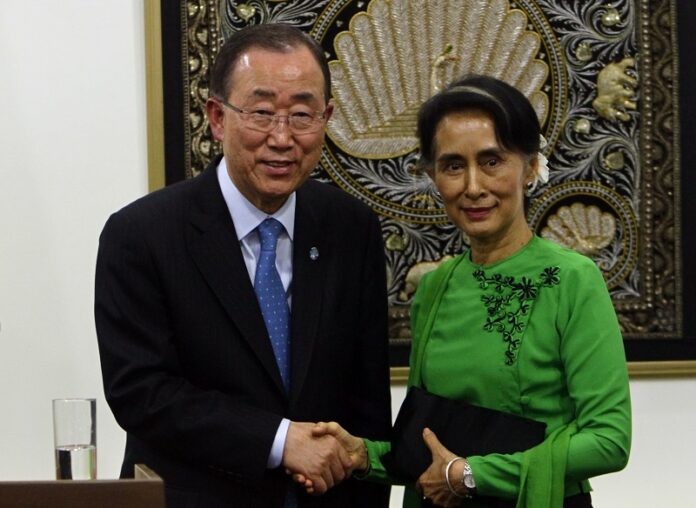
Myanmar Foreign Minister Aung San Suu Kyi, right, shakes hands with UN Secretary General Ban Ki-moon, left, after their press conference at the Foreign Ministry office on Tuesday in Nay Pyi Taw, Myanmar. Photo : Aung Shine Oo / AP

NAYPYITAW, Myanmar — Myanmar has a unique opportunity to end decades of ethnic rebellions in various parts of the country, leader Aung San Suu Kyi said Wednesday as she promised that her government will guarantee rebel groups equal rights and respect in historic peace talks.

Suu Kyi was speaking at the start of the five-day negotiations aimed at ending decades of separatist insurgencies that have claimed thousands of lives. The talks are being attended by representatives of 17 of the 20 major ethnic groups, including the Karen, Kachin, Shan and Wa, who make up 40 percent of the country’s population.

“This is a unique opportunity for us to accomplish a great task that will stand as a landmark throughout our history,” said Suu Kyi, whose official title is state counsellor although she is the real power in the government, above the president. “Let us grasp this magnificent opportunity with wisdom, courage and perseverance and create a future infused with light.”

The peace talks are called Union Peace Conference — 21st Century Panglong, a reference to the Panglong Agreement brokered in 1947 by Suu Kyi’s late father, independence hero Gen. Aung San, in the town of Panglong, when Myanmar was still ruled by Britain.

The deal granted ethnic minorities autonomy and the right to secede if they worked with the federal government to break away from Britain together. But Aung San was assassinated the following year and the deal fell apart. Since then, ethnic groups have accused successive, mostly military, governments of failing to honor the 1947 pact.

The first uprising — launched by ethnic Karen insurgents — began shortly after independence. Since then other ethnic groups have also taken up arms with roughly the same aim — to fight for autonomy while resisting “Burmanization,” a push by the Burman ethnic majority to propagate its language, religion and culture in ethnic minority regions.

The rebel armies control a patchwork of remote territories rich in jade and timber that are located mostly in the north and east along the borders with China and Thailand.

Suu Kyi said her National League for Democracy party’s aim has always been to hold political negotiations “based on the Panglong spirit and the principle of finding solutions through the guarantee of equal rights, mutual respect and mutual confidence between all ethnic nationalities.”

“The government that emerged after the 2015 elections is determined to uphold the same principles,” she said, referring to the landmark elections that brought the NLD to power after decades of military rule.

The previous military-backed government brokered individual truces with various insurgent groups and oversaw a cease-fire covering eight minor insurgencies last year that fell short of a nationwide deal.

Skirmishes, particularly in northern zones where Kachin insurgents are fighting the army, have displaced more than 100,000 civilians since 2011 alone. At least 100,000 more have sought refuge in squalid camps in neighboring Thailand, and are unlikely to return home until true peace takes hold.

U.N. Secretary General Ban Ki-moon and the head of armed forces Gen. Min Aung Hlaing are also attending the conference.

“All our people around the country want peace. So I do believe we will be successful in getting it at the conference,” said Khun Than Myint, the facilitator of the meeting.

“It is still too early to say” whether this Panglong conference is representative of the aspirations of all groups, said Khu Oo Reh, the spokesman of the United Nationalities and Federal Council, a group that represents all ethnic armed groups. “But we really hope that we can achieve real democracy and equality for all ethnic groups, and self-determination in our region.”


Story : Esther Htusan  

Advertisement

Two Thais Arrested for Robbing Chinese Tourist in Pattaya

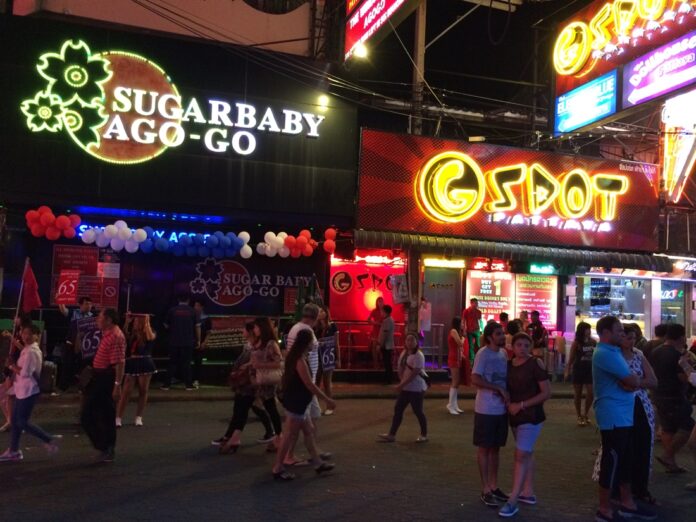
Visitors and regulars at Pattaya’s Walking Street on Aug. 27, 2016.

PATTAYA — Two transgender women were arrested Tuesday in the resort town of Pattaya on accusation that they stole from a Chinese tourist there a month ago.

Police said the pair posed as sex workers when they approached the tourist on the night of July 25, then snatched his gold necklace when he was distracted. Chief of Pattaya Police Station Apichai Klobpetch said investigators are trying to find out whether the two suspects have any other accomplices.

“In this crime, there were only two suspects, but we believe they may work in a gang,” Col. Apichai said by telephone Wednesday. “We are inspecting their phones to find any connection they may have with their gang members, so that we will gain information to prevent this crime in the future.”

According to police, 26-year-old Chayarat Mattiko and Itthipol Srichumpol, 22, stole a gold necklace from their victim on Pattaya’s Beach Road before fleeing the scene. Police said they tracked the suspects down from security footage and a pair of sandals one of them left at the crime scene.

Chayarat and Itthipol confessed to the crime, Apichai said.

Advertisement

Looking at You: Candid Passions on Display at Neilson Hays Library

Photo: Celine Ludwig / Courtesy

BANGKOK — With a belief that although humans are alone inside, they can connect to others through mutual feelings, 20 portraits and 10 nudes by a German artist will show at a historic library in Silom.

“Looking at You” started when Celine Ludewig was seeking moments when people around her couldn’t hide their true feelings behind poised facades.

“There are many ways we use to hide the truth. So I was looking for moments when people didn’t hide their true emotions,” Celine said.

Celine started her project when she went to pubs to paint musicians lost in the moment without their knowledge.

“We are completely honest in the moments we do something we love,” the 20-year-old said. “That is when there are no walls to hide, in those moments we don’t worry about people’s opinions.”

Celine lived in Ratchaburi province with a Thai family for a year when she was a 16-year-old exchange student. She returned to Thailand again to find her voice as an artist after studying fine arts in Germany.

“Looking at You” opens at 5pm on Sept. 7 and runs through Oct. 3 at the Neilson Hays Library on Surawong Road. The home of thousands English-language books is located about one kilometer from BTS Chong Nonsi.

Advertisement

Former Palace Employee Arrested in Connection With Alleged Royal Impostors

Kamonthat ‘Kim Eng’ Thanathornkhositjira was arrested Saturday morning in Bangkok. Two days later, police arrested her alleged accomplice, Thaworn Puangprathim.

BANGKOK — A suspected accomplice in the case of an alleged royal impostor was arrested on a charge of insulting the monarch, police said Tuesday.

Thaworn Puangprathim, 66, was accused of impersonating a royal palace official and helping the other suspect, Kamonthat “Kim Eng” Thanathornkhositjira, solicit donations for what they said were for members of the Royal Family.

“The suspect … dressed himself to look similar to an official from the royal palace to fool victims into believing that Mrs. Kim Eng was someone close to people in the high circle,” said Police Maj. Gen. Sommai Kongwisaisuk, referring to an alias of Kamonthat. “As for other details, we cannot reveal them, because they concern a criminal investigation.”

Thaworn, who used to work for the Royal Household Bureau, was arrested at his home in Bangkok’s Huai Khwang district Monday night. He was charged with royal defamation and fraud. The former offense, also known as lese majeste, carries a maximum penalty of 15 years in prison.

Police are also looking for another suspect in the same case, a man called Somsak Siriyakhom.

Kamonthat, 62, was arrested Saturday morning on a charge of insulting the monarchy. She’s an older sister of another lese majeste suspect called Monta “Ying Kai” Yokrattanakan, who was arrested July 7.

Police said they both claimed false ties to the monarchy for their own personal gain, but added that their crimes were unrelated.

The sisters are currently held in a Bangkok women’s prison to await their trials for lese majeste.

Advertisement

Cambodia Nabs 64 Chinese in Alleged Internet scam

PHNOM PENH — Cambodian police arrested 64 people from mainland China and Taiwan on Tuesday, accusing them of taking part in an internet scam, officials said.

Initial information shows that at least 12 of the suspects are from Taiwan, while the rest are mainland Chinese, said Gen. Ouk Haiseila, chief of the Cambodian Interior Ministry’s Immigration Investigation Bureau.

The general said the suspects were arrested in a rented house in Phnom Penh, Cambodia’s capital. They are accused of defrauding victims in China using phone calls made over the internet, he said.

“These suspects are now detained by immigration police for questioning and then we will deport them back to China,” Gen. Ouk Haiseila said.

In June, Taiwan protested after Cambodia deported 25 Taiwanese internet scam suspects to rival China in the latest snub of the self-ruled island. Cambodia regards Taiwan to be part of China.

Although Taiwan’s constitution formally decrees that it and the mainland are part of a single Chinese nation, Taiwan functions like an independent country and does not acknowledge Beijing’s claim of authority over it.

Rights activists and Taiwanese authorities say such deportations reflect the great influence China exercises over Cambodia through aid and investment.

China is a key ally and economic partner of impoverished Cambodia. It has provided millions of dollars in aid and investment over the past decade, agreed to write off debts and granted it tariff-free status for hundreds of items.

Kenya and Malaysia have also deported Taiwanese internet scam suspects to China despite protests by Taiwanese officials.

Story: Sopheng Cheang

Advertisement

Voice TV Deepens Self-Censorship by Cutting Political Coverage

From left, hosts Chuwat Rerksirisuk, Nattakorn Devakula and Sirote Klampaiboon, in a 2015 promotional image for Voice TV's Wake Up News program.

BANGKOK — A major broadcaster confirmed Tuesday it will reduce and tone down its political commentary after government regulators suspended one of its popular news program for one week.

Voice TV’s news director confirmed the channel will voluntarily take such measures one day after the National Broadcasting and Telecommunication Commission, or NBTC, ordered Wake Up News off the air for allegedly affecting state security and the “good morale of society.”

“We’ll reduce political news and increase sections like society, economics and foreign news,” news director Prateep Kongsib said Tuesday of their revised editorial priorities. “We won’t be able to criticize intensely, fully.”

Read: Voice TV Pressured to Pull Pundits For Rattling Junta

The order to pull Wake Up News off the air, effective Thursday, came despite Voice TV’s own act of appeasement two weeks earlier, when it voluntarily suspended one of the show’s hosts and a frequent commentator from some or all appearances.

Some of six program hosts of Wake Up News, the program accused of breaching an agreement with the NBTC by showing bias, warned the junta is trying to curb press freedoms through an intermediary by making it a regulatory issue.

For its part, the NBTC said the show affected state security and the good morale of society in three news items this month.

Voice TV is a digital channel owned by Panthongtae Shinawatra, son of ousted and fugitive former premier Thaksin Shinawatra.

Prateep said the station decided to accept the punishment instead of petitioning for relief in the Administrative Court because of the “widespread adverse business impact” it is already having on the station. “It’s about the confidence of the customers, who place commercials. This time we quickly informed our customers right away.”

Voice TV's popular Wake Up News program was removed from a revised programming schedule published Tuesday morning.
Voice TV’s popular Wake Up News program was removed from a revised programming schedule published Tuesday morning.

Prateep accused the junta of having a direct role in the punishment, citing a representative of the National Council for Peace and Order in the meeting.

“This time the punishment was heavy because there was someone from the media section of the NCPO present to give his views at the level of the NBTC sub-committee [meeting],” Prateep said. Prateep said the shows six hosts will return to the air after the week is up and a temporary news program will fill the slot during the period.

Here are the three matters called out by the NBTC:

First were comments on the attacks earlier this month in seven southern provinces. Second, the NBTC said sympathy was expressed an activist and junta critic being prosecuted in military court, Jatupat Boonpattaraksa, aka Pai Dao Din. Third, a segment on junta-appointed lawmakers’ attempt to reinterpret the second referendum question to allow the unelected senate to nominate a possibly unelected PM.

Free speech activist and NBTC board member Supinya Klangnarong tweeted Monday that she believes the station made no such damage as alleged. She added however that comments made by TV hosts could be deemed as taking sides.

“The weakness of the Wake Up News program is in presenting news that is infused with personal views, so it is seen as clearly taking sides. But it’s not against state security or good morale,” tweeted Supinya, who was the only board member to vote against the punishment in a 3-1 decision.

North Korean Model?

Chuwat Rerksirisuk, one of the six hosts of the program, which aired between 7am and 9am Monday through Friday, said the selling point of the program was news commentary based on critical thought.

Chuwat said he and the station has no choice but to be accommodating as a result, however.

“We will look at [the junta] in more sympathetic light, to see how we would think if we were in the NCPO’s shoes and on the basis that they have good intentions,” Chuwat said.

Virot Ali, another commentator on the program warned however that the junta is pushing Thailand toward a North Korean or Myanmar-of-the-past model.

“If the media is a mouthpiece of the government and supports the government, then there’s no need [for other stations]. Just shut them all down and only have state controlled-channels like in Myanmar or North Korea,” Virot said.

Virot added that it appears the junta is trying to be more restrictive in controlling the media. “They’re comfortable in exercising autocratic power.”

It was a second punishment for program host Nattakorn Devakula this month. One of Voice TV’s most recognizable talents, he was suspended from some programs including Wake Up News for 10 days by the station in a failed bid to stave off further action by the NBTC.

“There is not much that we can do but to comply since they have the upper hand,” Nattakorn said. “That includes self-censoring and adjustment in the mood and tone of the commentary programs. The reality of the situation is that the NBTC hold the implicit threat of shutting down any television network. In addition, we have a paranoid bully as prime minister who guides over the regulator.”

Sirote Klampaiboon, yet another host of the program, said a clear if troublesome signal was being sent.

“This is a worrying new standard in media control,” Sirote said.

Advertisement

Regime Moves to Ease Drug Laws Starting With Meth, Marijuana

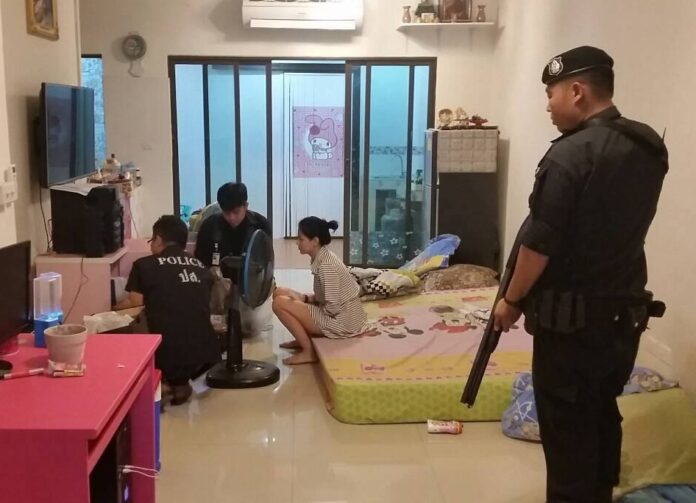
Police commandos search the bedroom of a suspected drug dealer in Bangkok in a Nov. 10, 2015, file photo.

BANGKOK — The penalties and restrictions on marijuana and methamphetamines will be relaxed by year’s end, according the nation’s top drug enforcement official.

The plan, which would permit use of such drugs for medical benefit, is part of the military government’s newfound progressive approach to drug abuse in a break from long years of outright bans and harsh punishment.

Read: Short of an Armistice, Justice Minister Concedes Defeat in ‘War on Drugs’

Apart from marijuana and meth, known by Thais as ya ba, officials are also aiming to reclassify kratom and hemp, said Sirinya Sitdhichai, director of the Narcotics Control Board. Kratom, hemp and marijuana will undergo reclassification first, he said, followed by meth.

“I think we will see the result by the end of this year,” Sirinya said by telephone. “Within the next several months, it will be the three plants, and as for meth, it would be in December.”

If all four substances are listed as Category 2 drugs, they could be used for medical research and therapy, and health professionals with the proper permits could acquire or possess them. Ya ba is currently listed in Category 1, while hemp, kratom and marijuana are in Category 5. Substances in those two categories cannot be licensed for medical use.

Sirinya’s rationale sounds taken from the pages of those who’ve long called for decriminalization of certain narcotics.

“We want to reclassify them because hemp can be an economic crop; kratom is used by many people as an herb, especially people in the south, who like to chew it,” Sirinya said. “And as for marijuana, the international medical community say it can be used for medical benefits.”

Unauthorized use of hemp, kratom, marijuana and ya ba once they are reclassified as Category 2 drugs would still be illegal, he added.

Learning From the World
Sirinya said the policy came directly from Justice Minister Paiboon Khumchaya, who said Monday that Thailand’s stance on drugs should comply with international standards.

“I have told relevant agencies to study and draft reclassification of many types of drugs, for the sake of appropriateness and compliance with worldwide situation of narcotics,” Gen. Paiboon said.

He elaborated by telling officials in the audience that their efforts against drug addiction should focus on medical therapies, which would involve using some of the banned substances. Current laws don’t allow that, the general noted.

“Public health must step in to solve drug problems,” Paiboon said. “If we don’t amend the laws, there is no way for us to proceed in the way that we want. Medical and public health systems can’t do anything. As long as yaa baa is still in the Category 1 narcotic list, there’s no way we can change anything.”

Paiboon even suggested that junta chairman Prayuth Chan-ocha expedite the whole process of studies and legislative amendment by simply using his absolute power to affect the change.

“If we want swiftness in our enforcement [of the reclassification], officials can propose for the invocation of Section 44, which is something I don’t have a problem with,” Gen. Paiboon said, referring to a clause in the interim charter that allows the junta leader to enact any law deemed to benefit national security.

Pongniwat Yutthaphan-boriphan, director of a criminal justice think-tank, told Matichon he agreed with Paiboon’s plans and urged him to go further by reducing penalties for drug users.

“Sometimes users buy many pills for personal use, but when they are arrested … with over 15 pills, the law automatically considers them dealers,” said Pongniwat, of the Thailand Institute of Justice.

When Paiboon first announced his new policy on drugs in June, he said Thailand had lost the so-caled ‘War on Drugs’ and attributed his ideas to a U.N. conference he’d attended earlier this year in New York City.

Like his boss, Sirinya said his stance on drugs has evolved under the influence of trends in other countries.

“We are changing so that we comply with recommendations from the U.N.,” Sirinya said. “Many countries also think that waging a war on drugs doesn’t solve the problem. If we steer addicts toward therapy, it would solve the problem.”

Nareerat Ekpanyakul, director of a state-run rehab center for drug addicts in Bangkok, said it’s still too early to tell how her job would change if the reclassification effort goes through as planned.

“Right now it’s still not clear,” Nareerat of Winner House said by telephone. “The matter is still under discussion, after the Minister of Justice assigned the Public Health [Minister] to look into the issue. Situation about therapy will change, but at this time, we are still discussing about the change.”


Advertisement

Nativist Learns MahaNakhon Designed by Top Foreign Architect, Complains to Govt

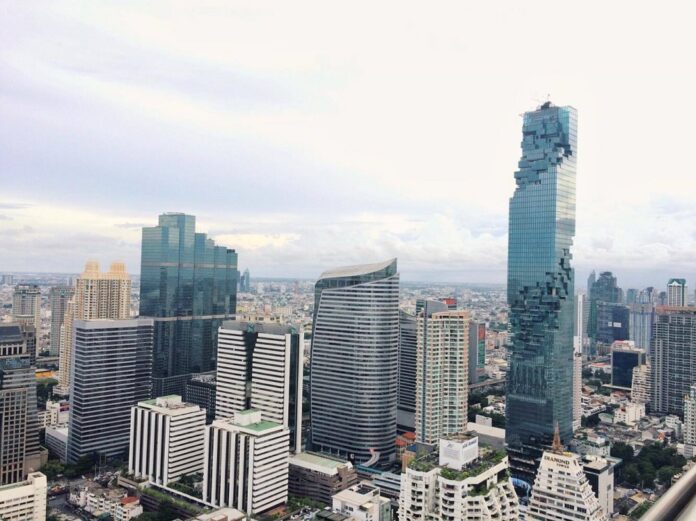
MahaNakhon, located on Narathiwas Road, became Bangkok’s new tallest skyscraper.

BANGKOK — As Bangkok’s shiny new building currently wins attention and plaudits, there’s at least one person unhappy about it.

Seven years after MahaNakhon was announced, its showy debut Monday night brought it to the attention of Srisuwan Janya, a nativist activist who just learned foreign forces were behind its pixelated design.

Srisuwan, who campaigns for fierce native protectionism of industries and ownership, announced Tuesday he will file a complaint with the state ombudsman accusing authorities of negligence for allowing Ole Schereen, one of the world’s most relevant architects, to play a role in the building, because he is German.

Srisuwan cited a law forbidding foreigners to engage in certain professions, which includes architecture.

Schereen, who used to manage Asian projects for the legendary Rem Koolhaas, is the principal of Büro Ole Scheeren, which designed the 77-story spire on Naradhiwas Road.

Regulations first adopted in 1979 reserved 39 occupations for Thai nationals. It was later replaced by the 1999 law still in effect today. Most of them involve handicrafts, but some include labor, engineering and architectural work. Schereen and his firm were the named architects since the project was announced by Pace Development in 2009.

The high-rise complex is one of many iconic buildings comprising the Bangkok skyline which were designed by foreign architects, usually operating as “consultants.” Cosmopolitan architecture has been a borderless industry, with big firms from Europe, the United States and Asia designing buildings on each other’s turf.

But Srisuwan doesn’t see it that way. As head of his own group called the “Safeguarding the Constitution Organization,” Srisuwan said his next target is campaigning against entrepreneurial expats who might illegally own any businesses in the kingdom.

“Both case involve neglect by two government agencies, the Ministry of Labor and Ministry of Commerce,” he told Matichon.

His announcement quickly became a joke online since it spread Tuesday.

“Don’t forget that many important palaces were also design by hired foreigners,” wrote Facebook user Nitilak Chaipan on the popular Drama Addict page. “If you want to have an issue then wake the ghost of royal artisan Tamagno up and imprison him.”

Tamagno, born in Italy as Mario Tamagno, was an architect employed by the government in 1800s. He was one of two Italians to design many buildings deeply linked to the country’s modern identity, such as the Ananta Samakhom Throne Hall and Hua Lamphong rail terminal.

Others were surprised by the news – not Srisuwan’s complaint, but that certain professions were off-limits to foreigners.

“I just learned today that architects are a controlled career in Thailand,” wrote Facebook user Hank JT. “Lucky enough they don’t have such laws in some other countries, otherwise Thai architects could not make their name known.”

While most netizens focused on Srisawan announcement, one of the top comments was more interested in his job title.

“Do we have a Safeguarding the Constitution Organization? I see we always tear it apart like a toy,” wrote user Ramil Pongkaitkong.

Clarification: The occupational protections enacted under a 1979 law were updated under a 1999 version still in effect today.


Related stories:

Sex, Drugs, Boredom Tattooed Under Skin of Bangkok’s New Spire (Photos)

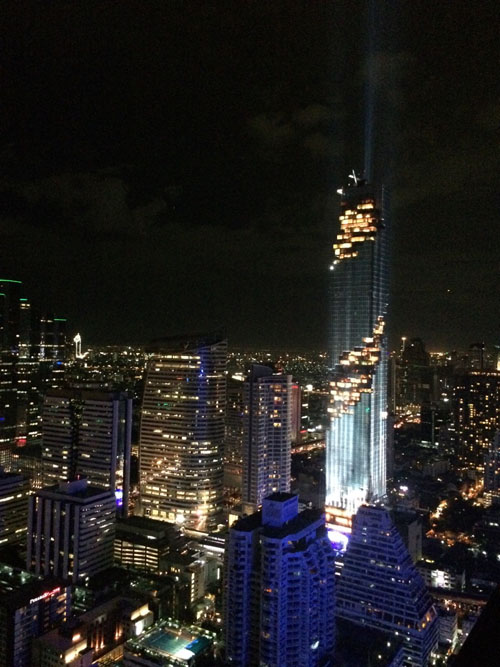
Bangkok’s New Tallest Celebrates With Monday Light Shows

Advertisement

Sex, Drugs, Boredom Tattooed Under Skin of Bangkok’s New Spire (Photos)

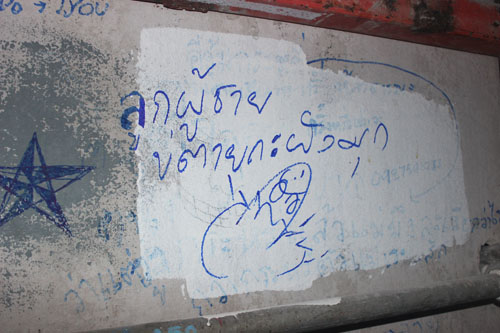
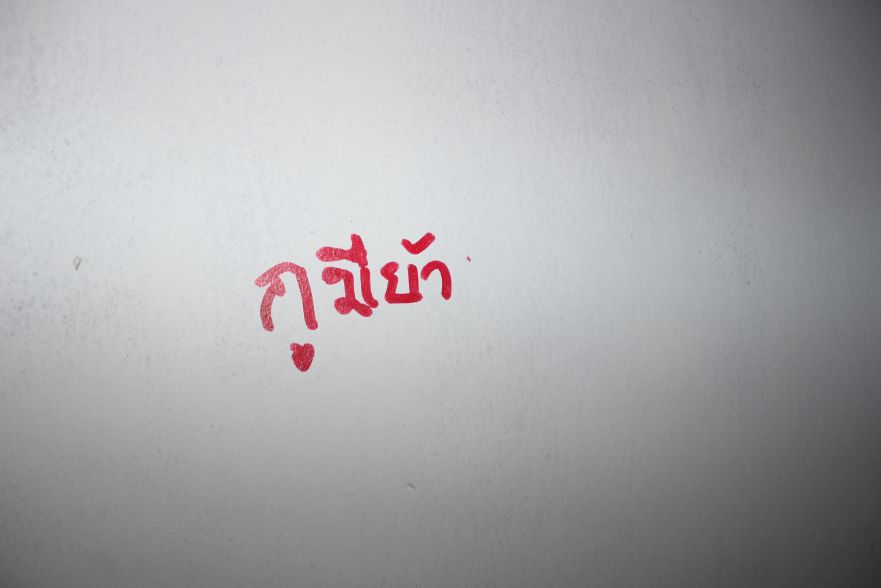
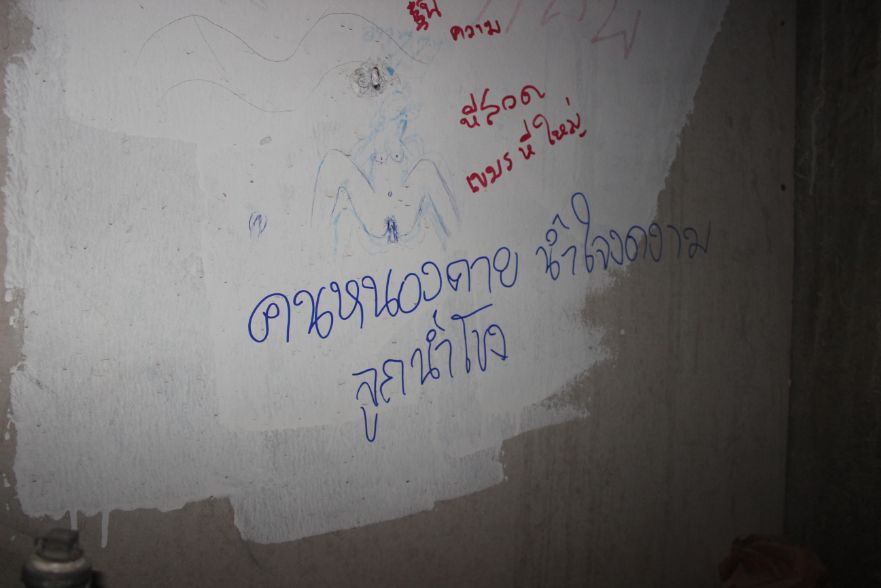
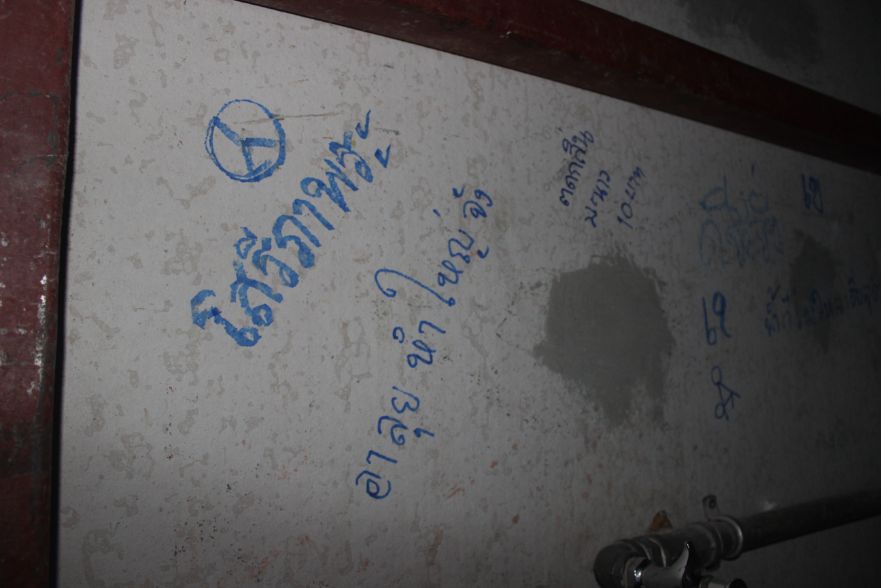
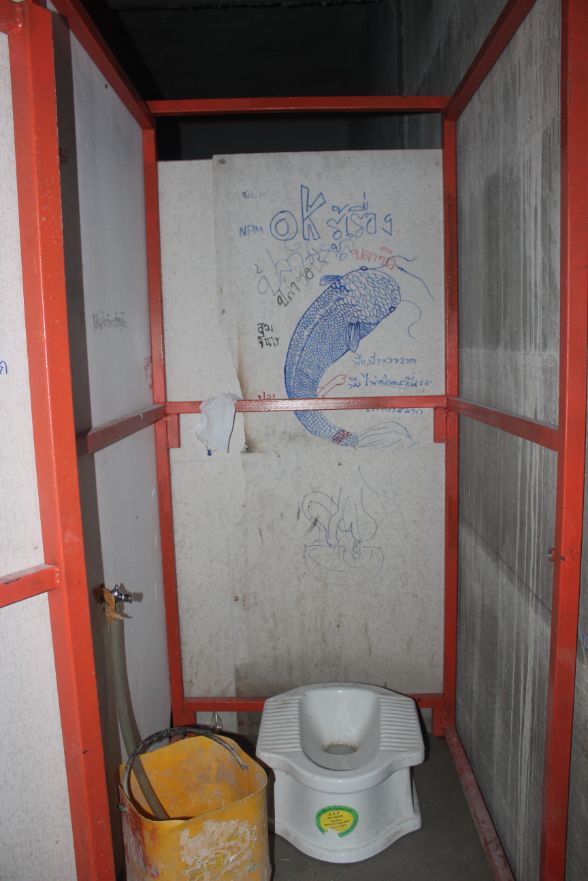
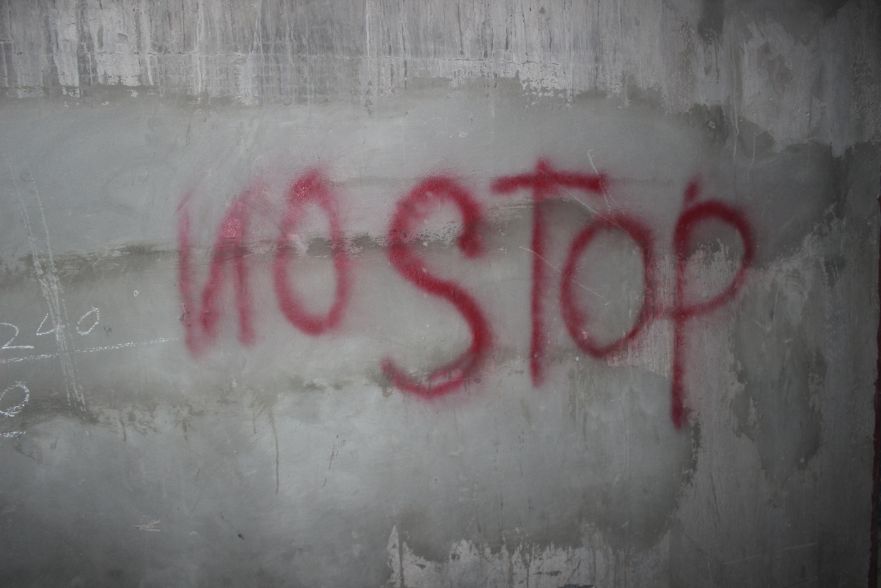
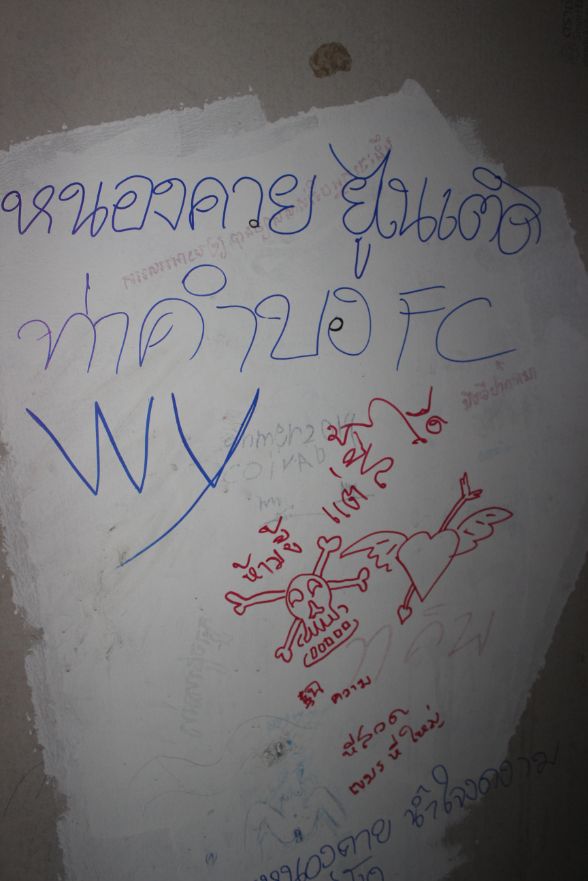
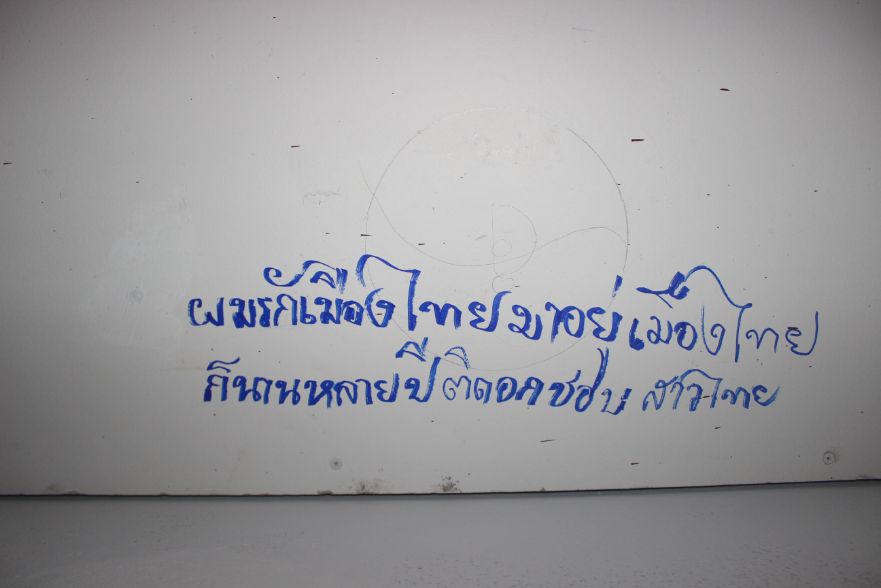
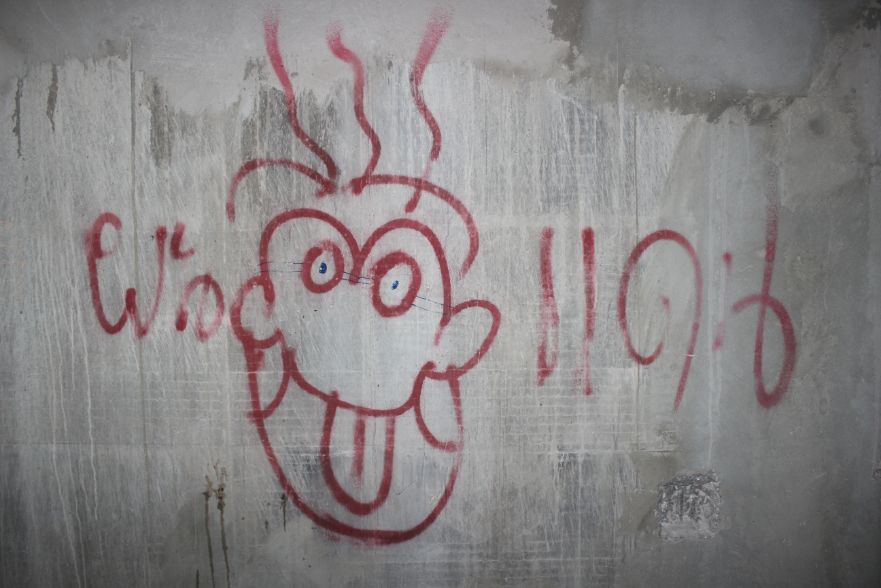
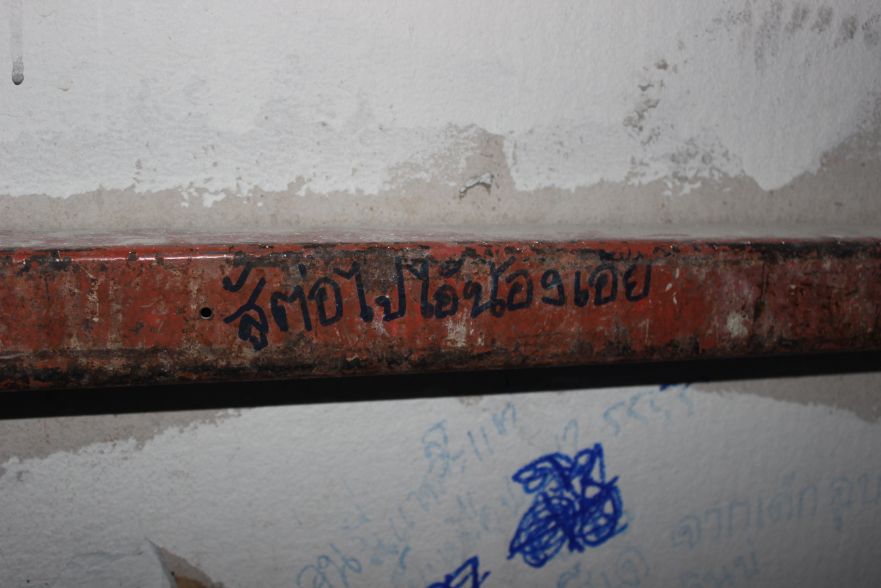
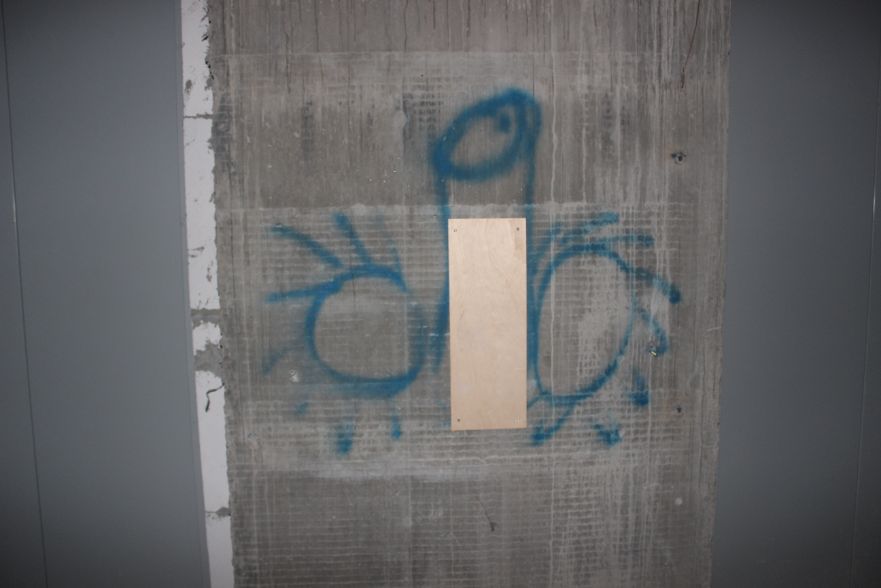
Graffiti left on a wall of the wall of the then-unfinished MahaNakhon building in a photograph taken mid-2015. Photo: Dhyan Ho / Courtesy
Bangkok's new tallest building, MahaNakhon, is lit up in a Monday night light show. Photo: Chayanit Itthipongmaetee
Bangkok’s new tallest building, MahaNakhon, is lit up in a Monday night light show. Photo: Chayanit Itthipongmaetee

BANGKOK — When the VVIPs gathered to applaud Bangkok’s latest monument to achievement Monday night, it’s unlikely they gave thanks to the thousands of men and women who raised it 314 meters into the sky.

They were long gone before the MahaNakhon lit up to signal its place as the highest erection in the realm. But unknown to those looking on, some of the innermost thoughts of those who built it remain etched into its bones.

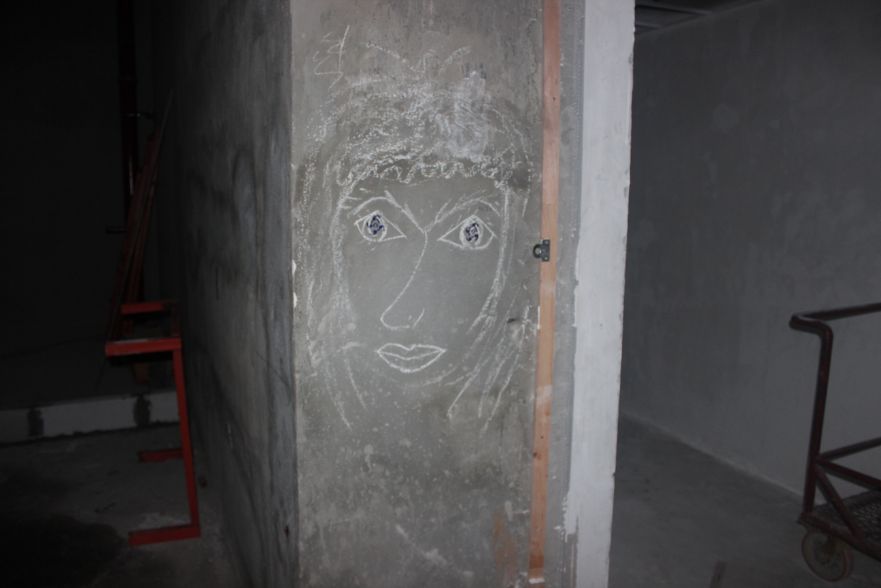
Under the paint and behind the marble, prolific graffiti accumulated during the years of its construction by workers who knew it would eventually be covered.

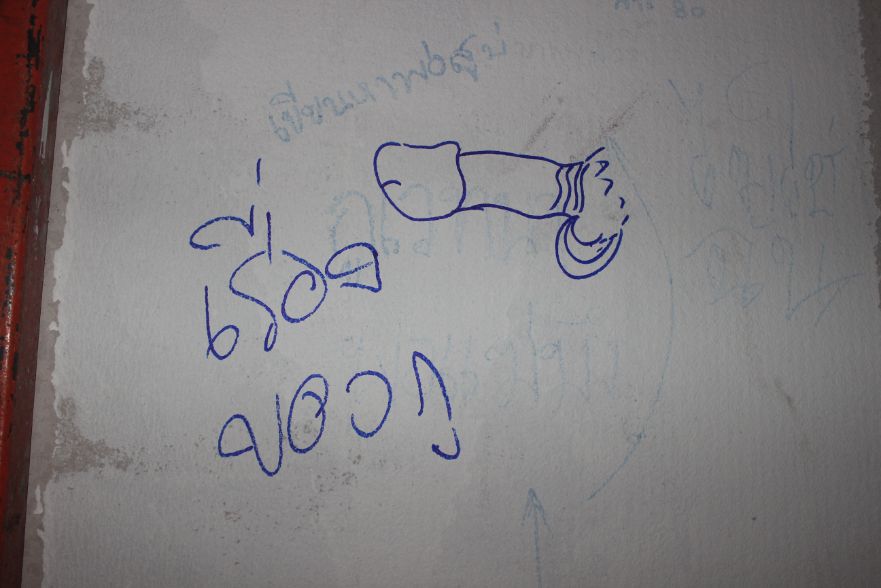
Most of it is predictably obscene – many, many rendering of penises among messages left by people toiling for a daily wage the building’s future inhabitants likely spend on a single meal or cup of coffee.

Some are sweet and sad philosophical laments about life. But need for sex and drugs are the most common themes.

Some capture a dialogue where workers, possibly working in different shifts, reply to each other’s messages. Conversations which often end with someone called an animal.

“Where do they sell ya ba, tell me! I know you guys have been taking it.”
“Did I take your parents’ money to buy drugs?”
“You animal!”

'A real man will die with penis beading.'
‘A real man will die with penis beading.’

Others are poetic, such as these drug verses:

“Crouch down and hold the pipe with both hands / Look at the color of your tablet. / Adjust the lighter / Heat the bottom of the pipe.”

Before the graffiti was covered, it was photographed in mid-2015 by Dhyan Ho, the 33-year-old proprietor of art bar Jam.

“I think it’s interesting because it’s something that’s never really documented. They know everything will be painted over or tiled over or finished, and it’s gonna be not there,” he said. “They’re not doing it to leave a lasting mark, more like a frivolous expression.”

Much space is given to the workers’ desire for sex. And like a lot of the graffiti, the racial politics come into play between workers that are largely drawn from Thailand, Cambodia and Myanmar.

“No wooing, but can fuck,” reads one. “Cambodians got big pussies!”
WOMANS FACE SKETCH

But most seem more teasing than hateful, with the kind of bored bravado born of monotony and hard labor.

“You Burmese, you watch out, I will exact revenge for Ayutthaya soon.”
“Thai people are only good at talking.”
“Be at peace, at peace.”

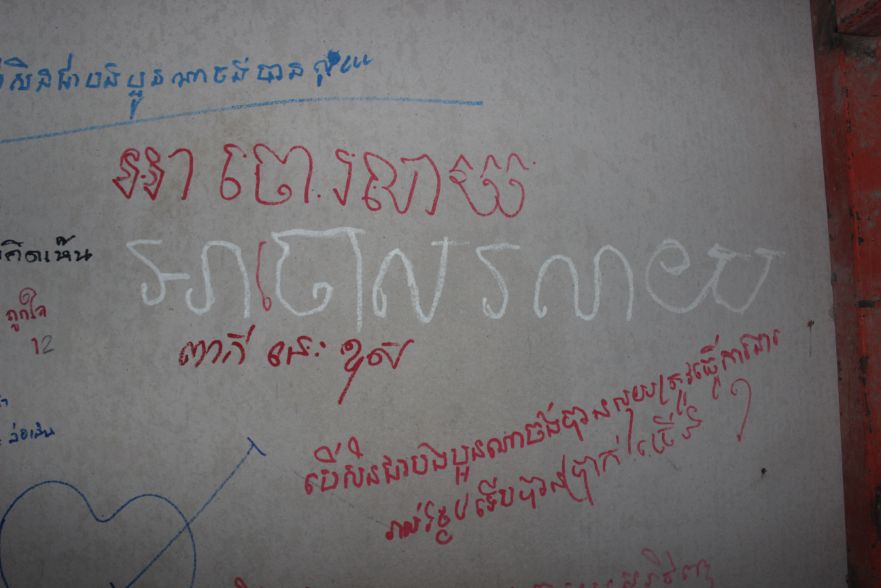
Some hint at class tension, such as this exchange in Khmer:

“If you want a lot of money, you must work hard.”
“Bullshit!”

Dhyan’s titled his series “The Stones of Krung Thep,” an allusion to John Ruskin’s 19th century treatise “The Stones of Venice,” to reflect that finished structures are not only determined by architects, but by the workers who express themselves in the ornamentation.

As such, the MahaNakhon graffiti – written in Thai, Isaan and Khmer – reflects the people who really build the foundations of places such as Bangkok but go uncelebrated and unheard.

'I have speed'
‘I have speed’

“We’re very obsessed with celebrity creators and artists. You can look up who the architect of the building is, but the people who built the landmark building get relatively unknown. No one cares about their creativities because they’re not necessarily beautiful, articulate, and don’t have that much meaning,” Dhyan said.

Although the amateur photographer isn’t trying to narrate the workers’ lives, he felt their spontaneous expression recorded onto the walls of a super-premium colony captured the dichotomy of Thai society.

“Here, I don’t think anyone becomes a construction worker by choice. It’s like they’re the lowest rung of people on the societal ladder, and that’s why it’s interesting to examine what their expression is,” he said. “Without asking them to draw something, this is just what they’re doing for themselves, or to show the other people there, or just to express themselves … It’s not going to be there for long, and I think that gave them freedom to say whatever they like.”

The photos will be featured in Dhyan Ho’s upcoming photo book “The Stones of Krung Thep” to be published in November by Khlong Press. They’ll also be featured in the second edition of urban literary journal Khlong, expected out by year’s end.

Additional writing Todd Ruiz

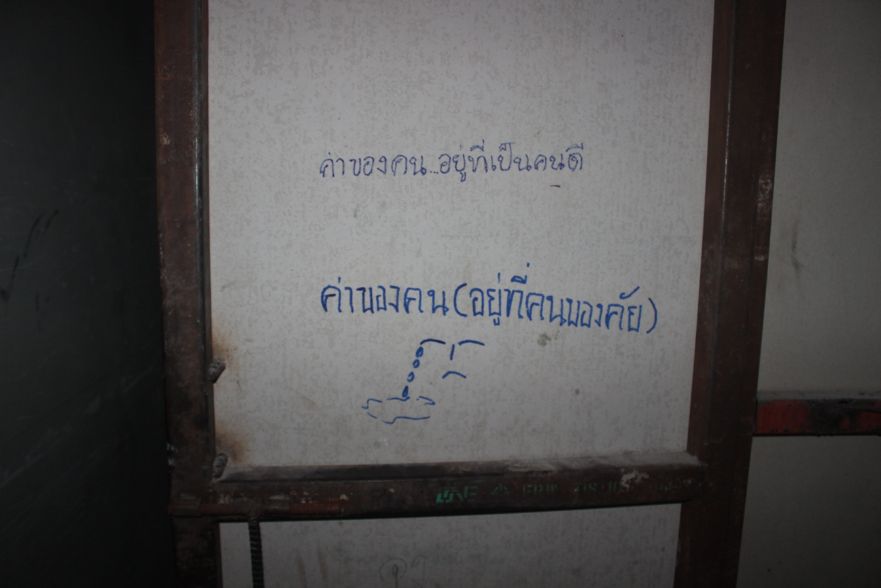
'A person's worth is that he is a good person.' - 'A person's worth depends on whom he belongs to.'
‘A person’s worth is that he is a good person.’ – ‘A person’s worth depends on whom he belongs to.’
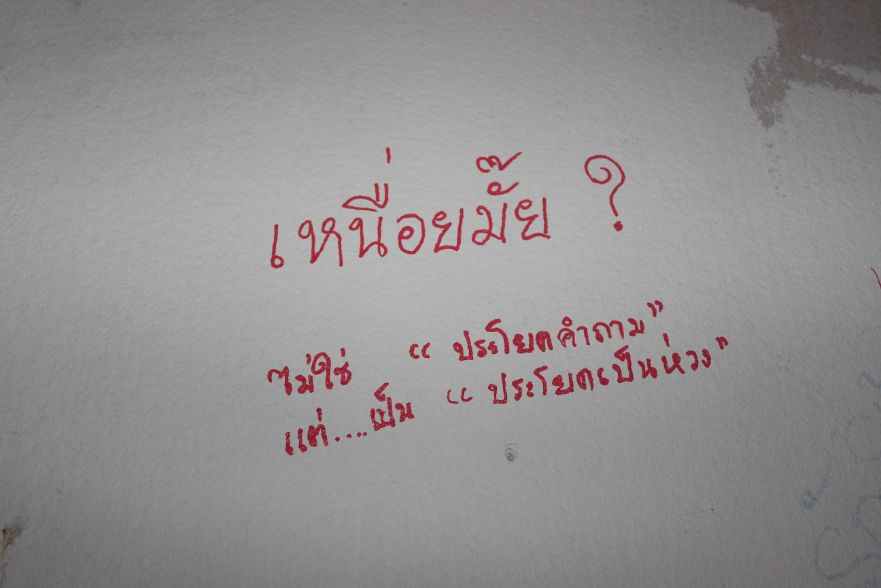
'"Are you tired?" Is not a question, but a sentence expressing concern'
‘”Are you tired?” Is not a question, but a sentence expressing concern’
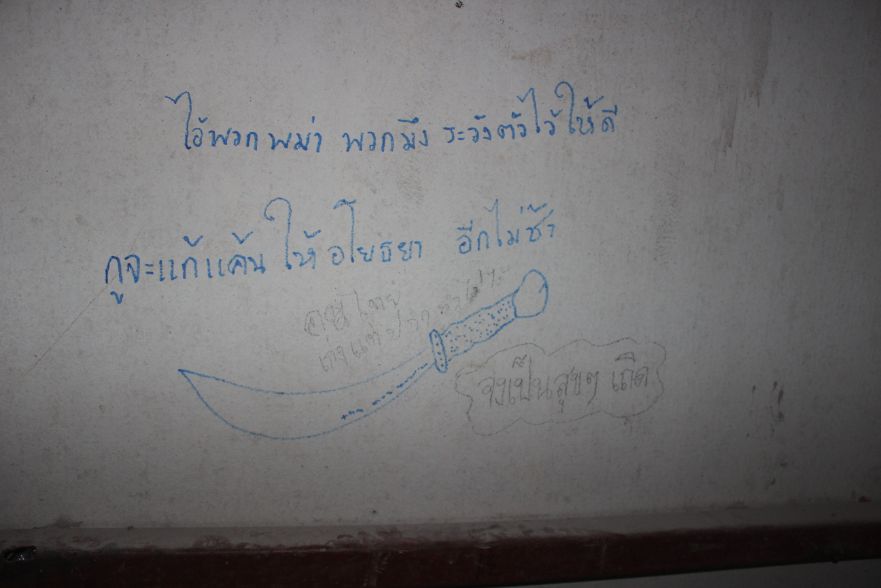
You Burmese, you watch out, I will exact revenge for Ayutthaya soon - Thai people are only good at talking - Be at peace, at peace
‘You Burmese, you watch out, I will exact revenge for Ayutthaya soon.’ – ‘Thai people are only good at talking.’ – ‘Be at peace, at peace.’
'Cambodians got big pussies.' - 'Nong Khai people are very considerate, people of Mekong river - Nb.' - 'Cambodians have got big pussies'
‘Cambodians got big pussies.’ – ‘Nong Khai people are very considerate, people of Mekong river – Nb.’ – ‘Cambodians have got big pussies’
'Peace monk' - 'Ar Lui's got a big dick' - 'Lemon scent fart 10 baht.'
‘Peace monk’ – ‘Ar Lui’s got a big dick’ – ‘Lemon scent fart 10 baht.’
'You have time to draw, you didn't think people were waiting? You piece of trash.'
‘You have time to draw, you didn’t think people were waiting? You piece of trash.’
No Stop
No Stop
'Nong Kuay United - Ta Kum Bor FC' 'No wooing, but can fuck. Cambodians got big pussies.'
‘Nong Kuay United – Ta Kum Bor FC’ ‘No wooing, but can fuck. Cambodians got big pussies.’
'None of your business!'
‘None of your business!’
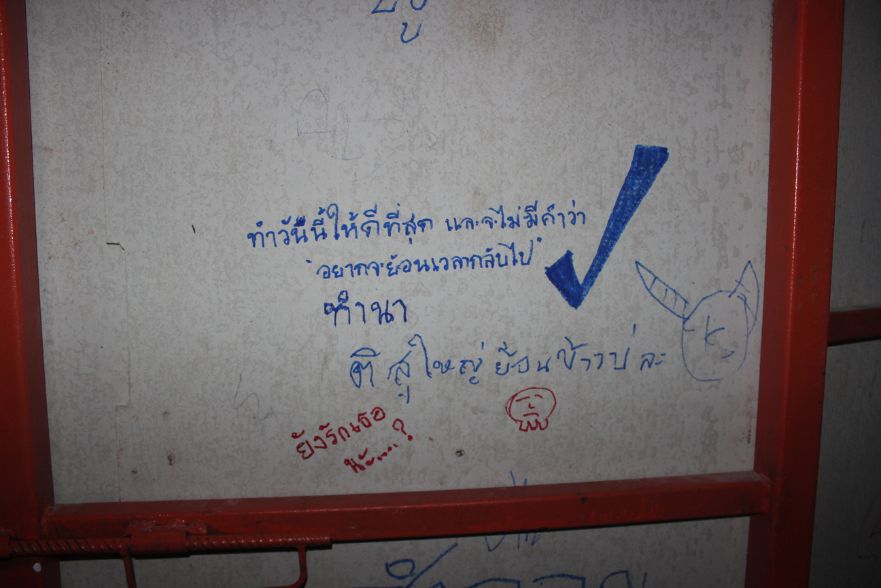
'Make today the best you can and there will be no words of "wanting to turn back time"' - 'Make rice paddies' - 'I still love you'
‘Make today the best you can and there will be no words of “wanting to turn back time”‘ – ‘Make rice paddies’ – ‘I still love you’
'If you want a lot of money, you must work hard.' - 'Bullshit' (Khmer)
‘If you want a lot of money, you must work hard.’ – ‘Bullshit’ (Khmer)
'I like Thailand, I have been here many years, I like Thai girls'
‘I like Thailand, I have been here many years, I like Thai girls’

HAPPY FACE SKETCH Dan

'Fight on, bro'
‘Fight on, bro’

FACE SKETCH

'Cute, small penis' [pointing to penis], 'This is the hole to perv on pussy' [pointing to hole]
‘Cute, small penis’ [pointing to penis], ‘This is the hole to perv on pussy’ [pointing to hole]
COCK SKETCH1

COCK AND BALLS SKETCH

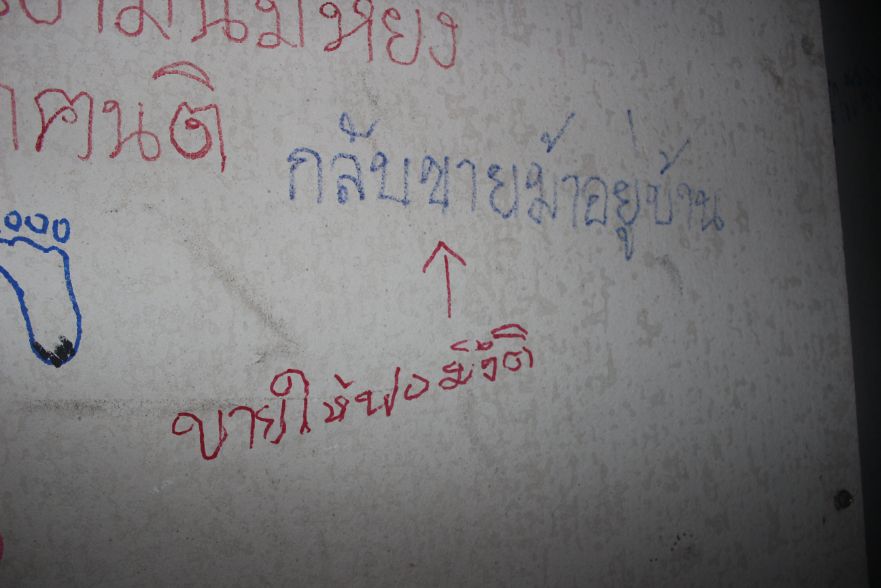
'Back to sell speed pills at home.' - 'Sell them to your dad!'
‘Back to sell speed pills at home.’ – ‘Sell them to your dad!’

All photographs courtesy Dhyan Ho

Advertisement

Hot News

LATEST NEWS

Bangkok
overcast clouds
28.8 ° C
30.5 °
28.8 °
80 %
1.5kmh
100 %
Fri
33 °
Sat
29 °
Sun
36 °
Mon
37 °
Tue
37 °