

































33.8 C
Bangkok
Saturday, June 20, 2026
Home Blog Page 2637

Voice TV Pressured to Pull Pundits For Rattling Junta

Voice TV host M.l. Nattakorn Devakula. Image: Voice TV

BANGKOK — Voice TV today pulled two well-known political commentators from programs it airs for 10 days beginning today under pressure from the military regime and telecommunications regulators.

An unnamed senior executive at the station offered to muzzle the two commentators to avoid harsher sanctions by the National Broadcasting and Telecommunications Commission, a state agency granted special powers last month to censor the media, according to Commissioner Supinya Klangnarong.

The station’s news director took to Twitter to explain the rationale.

“We have to reduce the degree [of intensity] in order to survive under thes special circumstances,” Prateep Kongsib, director of content and news Tweeted late Sunday night.

Supinya said the offer was extended by Voice TV on Monday morning to avoid a 50,000 baht fine and having two programs removed from the air for one week, which would affect advertising. When the board met today, she was the only to vote against punishing the station.

Last month, Gen. Prayuth used his absolute power to empower the commission to censor any media deemed a threat to national security and shield it from legal consequences for doing so. According to an outstanding junta order from 2014, security threats include anything defaming the monarchy, “insincere” criticism of the junta, or anything that might sway public opinion against it.

One of the issues raised about the two men, Supinya said, concerned their criticism of that absolute power Prayuth was granted under Article 44 of the junta’s interim charter.

Supinya said Voice TV didn’t violate any laws but that any criticism of the NCPO could therefore be construed as a violation of that.

Prateep told Khaosod English a face-to-face meeting recently took place between the station’s management and representatives from the junta and commission.

“We are also awaiting to see today if there will be any additional orders beyond taking the two off the air,” Prateep said Monday.

The host suspended from broadcasting is Nattakorn Devakula, the son of former Deputy Prime Minister Pridiyathorn Devakula. Pridiyathorn served a year in junta leader Prayuth Chan-ocha’s cabinet following the 2014 coup.

Nattakorn won’t appear on the Wake Up News and Tonight Thailand programs for 10 days. The other political commentator is Atukkit Sawangsuk, better known through his nom de plume of Bai Tong Haeng, who will not appear on any programs for 10 days.

Nattakorn replied to inquiries today saying he didn’t want to comment in detail.

“I would rather stay quiet on it. Trying to cooperate with [the commission] to prevent further escalation of the conflicts,” he wrote to a reporter. “But to sum it short, they are unhappy with commentary on political/divisive issues of most kinds.”

He said they were trying to strike a balance between the situation and their professional obligations.

“We are trying to make sure not to upset any more higher-ups but maintain a standard of criticism,” he said. “I still [do] the Daily Dose on air at 8pm and will return to Wake Up and Tonight Thailand on Friday, 25 August, after taking a ‘breath,’” Nattakorn said.

Voice TV is owned by Panthongtae Shinawatra, the only son of ousted and fugitive former premier Thaksin Shinawatra, and was ordered to go dark for a month by the junta in the aftermath of the 2014 coup.

Prateep said pressures have been building for awhile.

“They claim that the two have negative attitudes towards the NPCO,” said Prateep, in reference to the National Council for Peace and Order, the formal name of the junta. Prateep said Nattakorn has been warned before and has been brought in for “attitude adjustment” twice before.

The commission, meanwhile, is unhappy about the content and way Nattakorn has been explaining things recently, as well as his attitude, Prateep said, adding that Nattakorn urged the NBTC to be open minded.

As for Attukik, Prateep said it’s an accumulation of his written work in other media as well, such as columns he writes for Khaosod.

Asked if the move means Voice TV must soften its editorial stance in order to survive, Prateep replied, “That’s the signal they are sending.”

 

Advertisement

At Russian Mosquito Festival, The More Bites the Better

In this frame grab provided by the APTN a woman dressed as a mosquito enjoys with others a sunny Sunday, Aug. 14, 2016, during the Russia Mosquito Festival in the town of Berezniki. 9-year-old Irina Ilyukhina won the "tastiest girl" category with 43 bites to show for going berry-picking in the forest with her mother. (AP Photo)

BEREZNIKI, Russia — While fear of Zika virus has kept some people from the Rio Games, residents of one Russian town the more mosquito bites the better.

At this weekend’s Russian Mosquito Festival in the town of Berezniki, 9-year-old Irina Ilyukhina won the “tastiest girl” category with 43 bites to show for going berry-picking in the forest with her mother. She was awarded a ceramic cup in recognition of the welts all over her legs.

Unusually hot and dry weather in the Ural Mountains town, however, has greatly depleted the number of mosquitoes this year. Festival organizers had to cancel the traditional mosquito hunt, where participants try to collect as many of the insects as possible in jars.

The heat also had Yana Solyarskaya sweltering in her mosquito costume as she led some of the dancing at the festival, now in its fourth year.

Russia has detected only a few Zika cases, all in people who are believed to have been infected in areas overseas where the virus has spread.

Advertisement

Cops Offer 200,000 Baht Bounty For Leads on Bombers

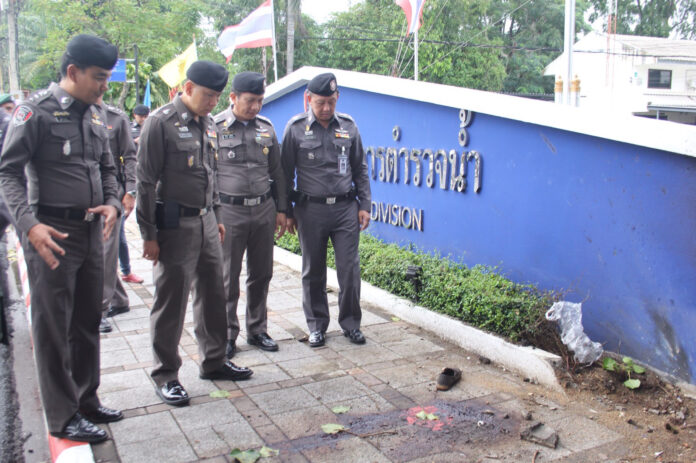
Police officers on Friday inspect the scene of the bomb attack in Surat Thani province

BANGKOK — Police offered a 200,000 baht reward for anyone with information about the perpetrators of a deadly bombing and arson spree over the Mother’s Day holiday.

The bounty came as police struggle to identify those behind the nine bomb attacks that killed four people over the course of Thursday and Friday in five provinces, though one suspect in one of several related arson attacks has been arrested.

“I’ve been told that the Seventh Region Police command has set up 200,000 baht reward for anyone who has information that benefits our investigation,” Police Gen. Pongsapat Pongcharoen said Sunday.

Read: Mother’s Day Bombings: Arrest on Oil Rig, Unknown Number Detained by Junta

Pongsapat, who is heading up the investigation into the bomb attacks, said the bounty would be paid even if the bombers aren’t arrested.

No group has claimed responsibility so far.

Apart from the nine small bombings, five buildings across five provinces were also torched or firebombed in an apparent coordinated attack. Police say a Chiang Mai native, Sakarin Karuehat, 32, is being held at a military facility for allegedly leaving an incendiary device at one of the targets, a Tesco Lotus supermarket in Nakhon Si Thammarat province.

According to Pongsapat, security footage captured Sakarin walk into the supermarket with a bag and later walk out without it.

“In this case, investigators have clear information about where and how the action was committed before we collected all the evidence, which includes … CCTV footage,” Pongsapat said. “And then we submitted it to the court, and the court approved the arrest warrant.”

The police general also said he believe the rest of the culprits are still in the country and have not ruled out any motives.

The Mother’s Day attacks were the worst terror attack since a bomb struck Bangkok’s Erawan Shrine nearly a year ago. The Aug. 17, 2015, bombing killed 20 people, mostly foreign tourists. Two ethnic Uighur men are standing trial in military court for their alleged roles in the attack.

In the days after that bombing, police offered a 3 million baht bounty for those with information leading to arrests. After a suspect was arrested soon thereafter, police ended up giving the reward to themselves, saying it was their own work that led to the arrest.

Related stories:

Redshirts Reject Link to Bombings, Hit Back At Prayuth

Condemning Attacks, Amnesty Calls on Govt to Take the High Road

Prayuth Links ‘Bad People’ Behind Bombs to Referendum, Calls For Patience

Mother’s Day Bombings: Authorities Move to Secure Targeted Cities

Mother’s Day Attacks: Bombs Hit 5 Thai Provinces, Killing 4

One Killed, At Least 12 Injured in Hua Hin Explosions

7 Injured In Trang Explosion

Advertisement

Berlin Jazz, Exhibitions to Polish German Friendship Jubilee

BANGKOK — Hear some Berlin jazz performed live and see fine films from Poland and Germany as those two nations celebrate celebrate 25 years of friendship.

The two nations have come a long way since 1939’s blitzkrieg and to celebrate, Chulalongkorn University’s European studies program will host a three-day event starting Wednesday.

Relive a fading chapter of history when 6,000 East Germans clambered over the wall of the Polish Embassy in 1989 Polish documentary “Bye, Bye GDR! 
To Liberty via Warsaw.” From Germany, “Winter’s Daughter” tells the story of a 12-year-old Berlin girl’s quest to find her biological father in Poland.

Feast on Berlin jazz courtesy of “Iwona & The Crazy Vibes,” who will perform 18 songs at a two-hour concert.

This year marks 25 years since the two nations reconciled under 1991’s of Good Neighborship and Friendly Cooperation.

For more information about the event, which will include lectures, a graffiti exhibition more, check out the complete schedule of events online. Admission for all programs is free.

The opening night starts at 5pm on Aug. 17 with the jazz concert beginning at 7pm at Chulalongkorn’s Art and Culture Building located between the architecture and fine and applied arts buildings.

The films will be shown with English subtitles at 10:20am on Aug. 18 and 19 on the ninth floor of the Faculty of Arts’ Maha Chakri Sirindhorn Building.


Advertisement

Two Tourists Drown Off Koh Chang

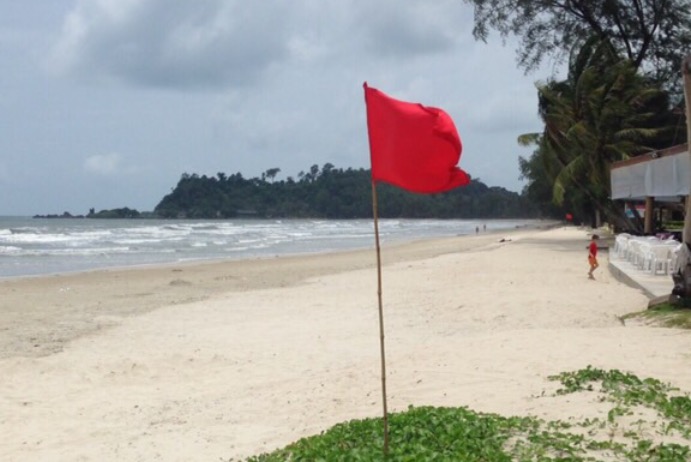
A red flag was posted Saturday on a beach at Koh Chang. Photo: Tourist Police

TRAT — A German man and a British woman drowned over the weekend in rough seas off of Koh Chang.

Christoph Ralf Sigloch, 55, died Saturday and Bryony Freestone, 19, died Sunday in separate incidents. Local officials said weather was severe and red flag warnings had been posted.

According to police, Sigloch succumbed to strong waves as he tried to swim to his two young sons swimming in the sea. The two children were safely brought back to shore.

Freestone was reportedly lost in the waves while swimming Sunday morning.

The weather forecast expects rough sea conditions to continue in both the Gulf of Thailand and Andaman Sea for several days. The Department of Meteorology advises all small vessels to stay shore until Thursday.

Advertisement

New Jakarta Airport Terminal Flooded Days After Opening

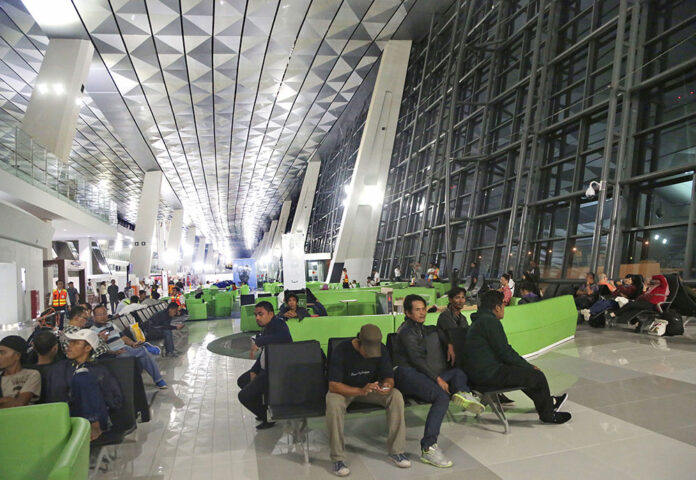
Passengers wait Tuesday for their flights on the first day of operation of the new terminal of Soekarno-Hatta International Airport on the outskirts of Jakarta, Indonesia. Photo: Tatan Syuflana / Associated Press

JAKARTA — The operator of the Indonesian capital’s main airport has apologized to passengers for flooding at its brand new terminal after rains overcame drainage pipes and inundated the arrivals area on Sunday.

The USD$560 million (19.4 billion baht) terminal opened last week to domestic flights by national carrier Garuda but has been plagued by complaints about its lack of readiness.

The airport operator and government hope the new terminal, and a third runway that is under development, will relieve over-crowding at Soekarno-Hatta airport and make Jakarta a rival to Singapore and Bangkok for international stopovers in Southeast Asia.

PT Angkasa Pura II, the airport operator, said it brought the flooding under control within an hour and is investigating the cause.

Local media said drains might have been clogged by construction debris.

The company plans for other airlines to gradually move their flights to the terminal and it plans to start refurbishing two old terminals, built in 1984 and 1992, later this year.

Soekarno-Hatta airport will be able to handle 62 million passengers a year once the renovated terminals are fully operational again in early 2018.

The airport handled about 54 million passengers last year, making it the 18th busiest in the world, according to Airports Council International.

Advertisement

Internet or Splinternet?

Who owns the Internet? The answer is no one and everyone. The Internet is a network of networks. Each of the separate networks belongs to different companies and organizations, and they rely on physical servers in different countries with varying laws and regulations. But without some common rules and norms, these networks cannot be linked effectively. Fragmentation – meaning the end of the Internet – is a real threat.

Some estimates put the Internet’s economic contribution to global GDP as high as USD$4.2 trillion (145.7 trillion baht) in 2016. A fragmented “splinternet” would be very costly to the world, but that is one of the possible futures outlined last month in the report of the Global Commission on Internet Governance, chaired by former Swedish Prime Minister Carl Bildt. The Internet now connects nearly half the world’s population, and another billion people – as well as some 20 billion devices – are forecast to be connected in the next five years.

But further expansion is not guaranteed. In the Commission’s worst-case scenario, the costs imposed by the malicious actions of criminals and the political controls imposed by governments would cause people to lose trust in the Internet and reduce their use of it.

The cost of cybercrime in 2016 has been estimated to be as high as USD$445 billion, and it could grow rapidly. As more devices, ranging from automobiles to pacemakers, are placed online, malicious hackers could turn the “Internet of Things” (IOT) into “the weaponization of everything.” Massive privacy violations by companies and governments, and cyber attacks on civilian infrastructure such as power grids (as recently happened in Ukraine), could create insecurity that undercuts the Internet’s potential.

A second scenario is what the Commission calls “stunted growth.” Some users capture disproportionate gains, while others fail to benefit. Three or four billion people are still offline, and the Internet’s economic value for many who are connected is compromised by trade barriers, censorship, laws requiring local storage of data, and other rules that limit the free flow of goods, services, and ideas.

The movement toward sovereign control of the Internet is growing, and a degree of fragmentation already exists. China has the largest number of Internet users, but its “Great Fire Wall” has created barriers with parts of the outside world.

Many governments censor services that they think threaten their political control. If this trend continues, it could cost more than 1 percent of GDP per year, and also impinge on peoples’ privacy, free speech, and access to knowledge. While the world could muddle along this path, a great deal will be lost and many will be left behind.

In the Commission’s third scenario, a healthy Internet provides unprecedented opportunities for innovation and economic growth. The Internet revolution of the past two decades has contributed something like 8 percent of global GDP and brought three billion users online, narrowing digital, physical, economic, and educational divides. The Commission’s report states that the IOT may result in up to USD$11 trillion in additional GDP by 2025.

The Commission concluded that sustaining unhindered innovation will require that the Internet’s standards are openly developed and available; that all users develop better digital “hygiene” to discourage hackers; that security and resilience be at the core of system design (rather than an afterthought, as they currently are); that governments not require third parties to compromise encryption; that countries agree not to attack the Internet’s core infrastructure; and that governments mandate liability and compel transparent reporting of technological problems to provide a market-based insurance industry to enhance the IOT’s security.

Until recently, the debate about the most appropriate approach to Internet governance revolved around three main camps. The first, multi-stakeholder approach, originated organically from the community that developed the Internet, which ensured technical proficiency but not international legitimacy, because it was heavily dominated by American technocrats. A second camp favored greater control by the International Telecommunications Union, a United Nations specialized agency, which ensured legitimacy but at the cost of efficiency. And authoritarian countries like Russia and China championed international treaties guaranteeing no interference with states’ strong sovereign control over their portion of the Internet.

More recently, the Commission argues, a fourth model is developing in which a broadened multi-stakeholder community involves more conscious planning for the participation of each stakeholder (the technical community, private organizations, companies, governments) in international conferences.

An important step in this direction was the US Commerce Department’s decision last month to hand oversight of the so-called IANA functions – the “address book” of the Internet – to the Internet Corporation for Assigned Names and Numbers. ICANN, with a Government Advisory Committee of 162 members and 35 observers, is not a typical inter-governmental organization: the governments do not control the organization. At the same time, ICANN is consistent with the multi-stakeholder approach formulated and legitimated by the Internet Governance Forum, established by the UN General Assembly.

Some American senators complained that when President Barack Obama’s Commerce Department handed its oversight of the IANA functions to ICANN, it was “giving away the Internet.” But the US could not “give away” the Internet, because the United States does not own it. While the original Internet linked computers entirely in the US, today’s Internet connects billions of people worldwide. Moreover, the IANA address book (of which there are many copies) is not the Internet.

The US action last month was a step toward a more stable and open multi-stakeholder Internet of the type that the Global Commission applauded. Let’s hope that further steps in this direction follow.

Joseph S. Nye, Jr., a professor at Harvard, was a member of the Global Commission On Internet Governance. This commentary draws on its report.
Copyright 2016 Project Syndicate
Advertisement

Kenny Baker, R2-D2 of ‘Star Wars,’ 81

Star Wars characters C-3PO, left, and R2D2 arrive at the American Cinematheque Award gala honoring Samuel L. Jackson in Beverly Hills, Calif., in 2008. Photo: Matt Sayles / Associated Press

LONDON — Kenny Baker played the lovable droid R2-D2 in the “Star Wars” films, achieving cult status and fans’ adulation without showing his face or speaking any lines.

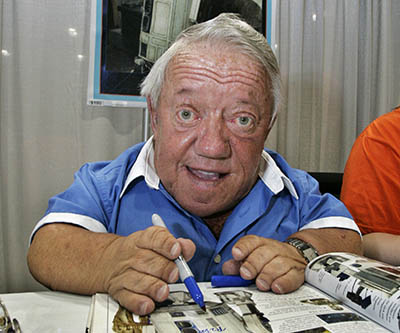
The 1.1 meter performer — a word he preferred to actor — inside the waste-bin-shaped costume has died at 81. Baker’s nephew and carer, Drew Myerscough, said he found Baker dead Saturday at his home in Preston, northwest England.

Actor Kenny Baker, who portrayed the R2-D2, signs autographs at Star Wars Celebration IV, billed as the world's biggest Star Wars party, on May 26, 2007. Photo: Reed Saxon / Associated Press
Actor Kenny Baker, who portrayed the R2-D2, signs autographs at Star Wars Celebration IV, billed as the world’s biggest Star Wars party, on May 26, 2007. Photo: Reed Saxon / Associated Press

Myerscough told Sky News that Baker had suffered years of breathing problems, “which he had borne very bravely.” He said the affection of “Star Wars” fans around the world “kept him going, without any doubt.”

“He was amazed that, even after 30-odd years, the fans still basically adored him,” Myerscough said.

Baker’s agent, Johnny Mans, confirmed his death. He said Baker was “one of the nicest guys you could ever wish to meet, and a fabulous and talented performer.”

Mark Hamill, the “Star Wars” series’ Luke Skywalker, tweeted: “Goodbye #KennyBaker A lifelong loyal friend-I loved his optimism & determination. He WAS the droid I was looking for!” — a reference to a famous line from the first film.

Actor Ewan McGregor, who played Obi-Wan Kenobi in three “Star Wars” movies, tweeted: “So sorry to hear about this. It was lovely working with Kenny.”

Born to a music-loving family in the central England city of Birmingham on Aug 24, 1934, Baker started performing at 16 as part of a troupe called “Burton Lester’s Midgets.”

Baker told The Associated Press in 1985 that Burton had asked him “What can you do?’ I said I could roller skate, ride a bike and whistle. I joined them and did all that, and conjuring tricks, played drums and comedy routines as well.”

Baker later worked as a DJ and circus clown, and as half a comedy-musical duo called the Mini-Tones with Jack Purvis, who also appeared in the “Star Wars” films.

Fame came when he was cast as the actor inside R2-D2’s cylindrical robot costume in 1977’s “Star Wars.”

“I worked the levers,” he told the AP.

Baker said he initially turned down the part. In an interview on his website, he said he told director George Lucas “I don’t want to be stuck in a robot, what for, for goodness sake?”

Eventually, he said he told Lucas, “I’ll help you out.”

Even though R2-D2’s dialogue amounted only to beeps and whistles, the droid and his lanky friend C-3PO became two of the series’ most beloved characters.

Baker returned for “The Empire Strikes Back” and “Return of the Jedi,” and reprised the role in three prequels released between 1999 and 2005.

Despite their onscreen rapport, Baker and Anthony Daniels, who played the protocol droid C-3P0, weren’t close. Baker accused Daniels of being snobbish; Daniels was once quoted by Britain’s Daily Mirror as saying Baker “might as well be a bucket.”

Baker also appeared in films including “The Elephant Man,” ”Time Bandits,” ”Willow” and “Labyrinth.”

Baker’s wife Eileen died in 1993. The couple had two sons.

Story: Jill Lawless

Advertisement

Northerners Say Provinces Where Charter Adopted Are No Less Red

Twenty members of the Kayan hill tribe in Mae Hong Son province voted for the first time Aug. 7 since becoming Thai citizens earlier this year.

BANGKOK — It was the first defeat at polls in over a decade for Thaksin Shinawatra’s political clan, which was previously thought to command unwavering support in the north and northeast.

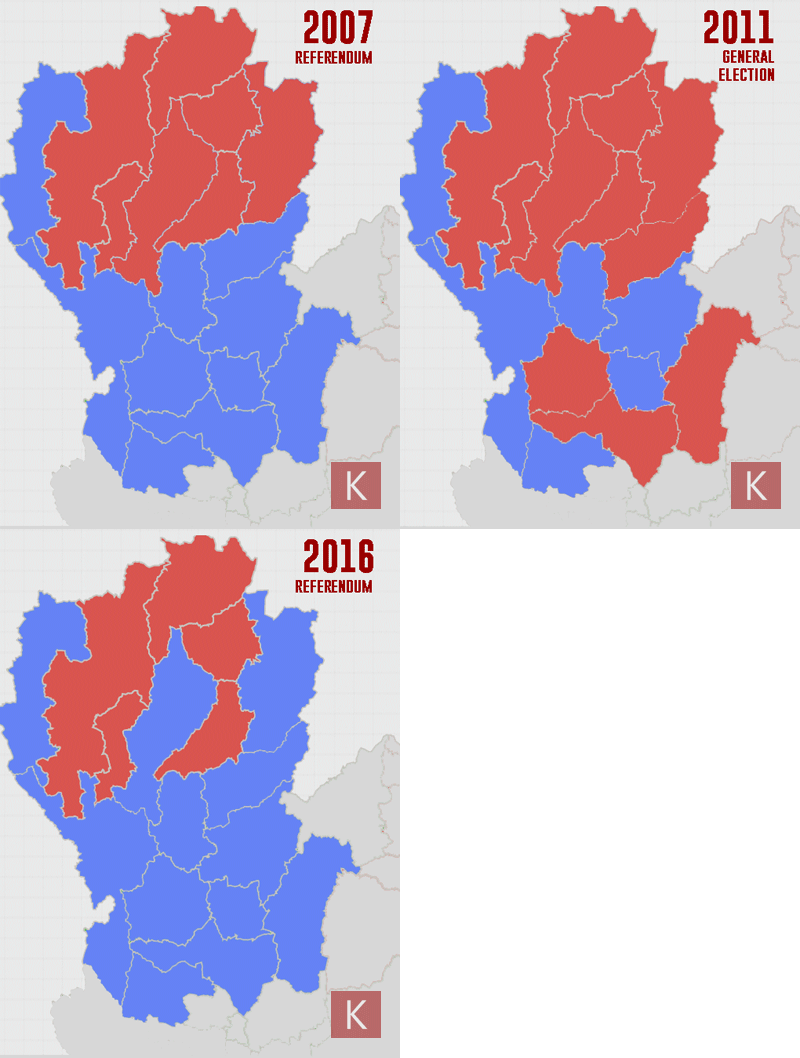
Areas in red voted to reject the constitutions passed in the 2007 and 2016 charter referendums or were outright wins for the Pheu Thai Party in the 2011 General Election, with blue being won by other parties or none.

Despite the call from Thaksin, de facto leader of the Redshirt movement, to reject the charter favored by the military regime one week ago in the Aug. 7 referendum, results saw five northern provinces that had backed him consistently since his 2006 ouster vote for it. Did the shift signal a less reliably red blob in the north?

After the dust settled, several northerners say they’re not surprised by the narrow victory for the junta-backed charter given the crackdown on campaigning against it, the use of state mechanisms to influence voters and the confusing, legalistic language of the charter.

Some believe many voted not because they support the junta but because they want quick elections, and remain Redshirts and solidly for former premiers Thaksin and Yingluck Shinawatra.

In the 17 northern provinces, the final results revealed the Yes vote won 56.7 percent to 42.3 percent, with 2.78 million votes for endorsing the charter and 2.04 million rejecting it. The anti-charter vote only prevailed in only five of the 17 provinces.

“There’s a group of people who say they just endorsed it so the military will be gone. Actually many hold such views. They want quick results,” said Prathai Piriyasurawong, an assistant professor at Chiang Rai Rajabhat University’s Faculty of Management Science. “The number of Redshirts is not decreasing, I can assure you. And when there’s a general election, the Pheu Thai Party will stage a comeback.”


Prathai was upset and alleged the military used village headmen to cajole villagers to simply endorse the charter draft, however. Also, many voters in the north, particularly the less-informed, he said, had great difficulty grasping the charter’s content.

“Some asked why there was no names of candidates on the ballot,” he said.

Prathai said the military entered some communities which voted heavily against the charter in order to “create understanding” and ask what led them to voting No.

“This is a curb of people’s free expression,” Prathai said. “Would it be better to just draft a charter and put it in there that everyone must endorse it?”

Prathai believes people must be able to see the irony of the situation.

“A group of people hate the junta so much but they went to vote Yes, as they reasoned: Wouldn’t it be better to see them leave and have elections?” he said.

Chiang Mai writer and translator Pakawadee Virapaspong said the results were not really different from the 2007 referendum which was followed by the Pheu Thai Party emerging victorious again when elections were held.

“People believe they will get quick elections. Many people don’t understand the content of the charter draft, however. Some officials also told villagers that there’ll be free education up to the college level. The loyalty for Thaksin and Yingluck is undiminished, however.”

Pipob Udomittipong, a political commentator based in Chiang Mai’s San Kamphaeng district – Thaksin’s home town – said the same.

“This [referendum] wasn’t a vote for a political party, and yet the results remained close,” said Pipob, adding that in many provinces, the victory for Yes was quite narrow. In Nan province, for example, 114,493 endorsed the charter draft while 101,586 voted to reject it.

Pipob said there’s no indicator the Thaksin-Yingluck stronghold in the north is sliding.

He acknowledge however that there tends to be an urban-rural divide in the north, such in in Chiang Mai, where urban voters tend to endorse the charter draft as they support the junta while rural voters rejected it.

Bangkok-based TV host Lakkana Punwichai, a native of Chiang Mai better known as Kampaka, also said she wasn’t surprised by the results. She stressed that the results could have been different if politicians and activists critical of the charter draft were allowed to freely campaign.

Lakkana said there are rumors of local officials going out to communities to discuss the referendum, but like many of the rumors circulated since the vote, she has no concrete evidence.

Many hill tribe members have difficulty grasping the content of the charter draft as are more reliant on verbal communication, she said, adding that fully literate northerners such as herself found the legalistic language in the charter draft opaque and inaccessible.

“They endorsed it so there would be elections,” Lakkana said.

She acknowledged that many urban northerners who support the junta wanted to signal their approval of the military staying in power longer through future elected governments in order to give Thailand a “recovery time” for a decade or so.

“Voting Yes doesn’t impact them like voting for a political party. Some Pheu Thai supporters may have even voted yes because they want elections,” she said, adding however that the Redshirt movement have been battered by the junta in the north, are in fear, but will be waiting for the general elections in order to spring back.

Thanaphong Muensan, a native of Chiang Rai’s Mae Sai district who’s now doing his postgraduate studies at Ramkhamhaeng University and is a political activist said northern voters chose short-term interests, which is the promise of quick elections, in endorsing the charter draft.

“The general economy can also grow again,” Thanaphong said of the rationale. “Our electoral culture is not about common interests. My father said local politicians want to see elections because they have been out of power for two years now – and no matter under what rules it’s still better than being under military rule. Villagers at my village also said they want to see the country move forward. That’s all they think of.”

He believes the identity of Redshirts in the north is fluid, adding that no one should count on an eternal loyalty of northerners to the Shinawatra siblings who hailed from Chiang Mai, however.

Also, said Thanaphong, it shows that democracy activists haven’t been working hard enough to convince voters otherwise. The activist partly blamed the Election Commission as well, however, for its failure to facilitate more northerners to enable them to register and vote away from their home provinces. Thanaphong said there’s many migrant workers from the north in Bangkok and these people would mostly have voted against the charter draft because they’re critical of the junta.

Update: Story was updated to reflect final voting totals in the 17 northern provinces.

Advertisement

Such Wonderful Toys: Imagination’s The Limit For DIY Action Figures

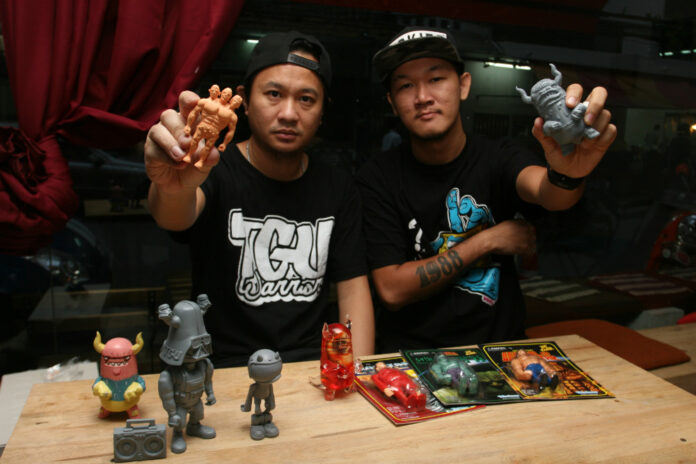
Artists Chaiwat Sermsutee-a-nuwat aka Tabun, at left, and Treetana Veeraprapan aka Tabuki Master are serious about their toys.

Top: Artists Chaiwat Sermsutee-a-nuwat aka Tabun, at left, and Treetana Veeraprapan aka Tabuki Master are serious about their toys.

A brawny, three-headed man, a colorful chubby horned monster and a muscle man resembling Prayuth Chan-ocha sit on a wooden table.

Beaming behind them sit their proud creators, whose handcrafted action figures aren’t based on established entertainment franchises but instead wrung from the weirdest corners of their imaginations.

“Designer toys are an intimate art form, as they can be shown and played with,” said Chaiwat Sermsutee-a-nuwat, aka Tabun, a pioneering Thai designer in an industry that long depended on imports from Japan or elsewhere.

Today a growing community of designers are making their own toys. They interact and share their designs on Facebook, and sell their creations online. They also get together to trade techniques and show offf their work at meetups and events. Their biggest public event is the Thailand Toy Expo held annually at CentralWorld. Then there are smaller exhibitions, such as one coming later this month to Goja Gallery Cafe.

Chaiwat said most mass market toys and figures take their inspiration from the usual superheros and film franchises.

“But DIY toys are often inspired from daily life, from experiences and current events to viral clips,” he said. “People love humor, and if we design something catchy and up to date, success is somewhat guaranteed.”

Chaiwat, who studied graphic design, said his life experience and childhood memories were the source for his signature work – brawny, muscular figures – such as “The Dictator” of his Thai Fighter series, all of which resemble junta leader Prayuth Chan-ocha.

Then there’s the work of Treetana Veeraprapan, aka Tabuki Master, whose toys reflect his passions: Star Wars, hip-hop and monstrous Japanese Kaiju. He’s partial to horned aliens, expressive urban characters, and even a Darth Vader whose helmet sprouts smaller Stormtrooper helmets.

Thai Fighter Series: The Dictator, The Incredible HUG and The General of North Star by Chaiwat Sermsutee-a-nuwat aka Tabun

Playing With Politics or Just Playing?

Chaiwat, 36, grew up with a passion for collecting toys until he decided to start making instead of just buying them. Holding bachelor’s and master’s degrees from Burapha and Chulalongkorn universities, he started merging his talents and experience with his hobby in 2005 to make alternative toys that can’t be found elsewhere for collectors and the general public alike.

His best-selling Thai Fighters, undeniable parodies of Gen. Prayuth, come in forms linked to his other otaku pursuits, such as The Green Hug or The General of the North Star, inspired by both American and Japanese comics.

He insists he’s not trying to send a political message, just responding to the cultural zeitgeist: Famous figures, he said, draw great interest from toy lovers…. there’s no reason for him for not to do one.

“Instead of creating entirely new content to attract people, a political figure comes with their own backstory and character which connect with our target,” Chaiwat said.

However, not every toy wins praise. Chaiwat’s political series has attracted its share of haters who have threatened him for mocking their dearest.

“It’s not that we want to make a clown out of any politician,” he said. The toy is just for fun and also a record of our time which is rare to be seen in the store’s shelf.”

Either way, it’s a tricky thing for an artist at a time when others have been jailed for satirizing the junta chief.


Designer toys by Treetana Veeraprapan, aka Tabuki Master; and Chaiwat Sermsutee-a-nuwat, aka Tabun.

Toying With Trends

While designer toys have been around since the 1990s, and Thai artists started making them more than a decade ago, the small community has grown in recent years.

Along with famous figures, childhood nostalgia has been a recent trend, such as alt-universe Mickey Mouse and disco Elvis Presley . Still, it’s still a niche market.

“The number of toy designers here doesn’t really matter. What makes a difference are people’s perceptions of toys,” said Treetana, who with Chaiwat is also a member of the T-GU Warrior collective of designers and artists. “Toys aren’t just for kids. They can be appreciated by adults too and help improve skills such as creativity.”

The senior toy designer said despite putting all their effort into their passion, it can only remain a hobby or part-time job, not a career. Like other creatives serving niche markets, there isn’t enough of a market to sustain them.

Chaiwat makes money as a graphic designer, artist, columnist and guest lecturer. Treetana does sales and marketing for a laptop company.

“In Thailand, we cannot earn a living by solely creating designer toys, as the number of people interested in this is still small,” Chaiwat said, despite his 10 years in the business running Tabun Studio.

Still, certain designers hold international ambitions. Thawan Khiowpiam, aka Topztoy, has had some success through an online store where many of his Star Wars-inspired characters completely sell out.

They say the crucial essence for being a designer is simple: passion.

“Don’t just go with the flow. We have to know ourselves and love what we do. With that, we can keep on learning and improving,” Chaiwat said.


DIY Means Do It Yourself!

Making designer toys requires no special equipment and can be done at home. In fact, the main thing needed in ready supply is creativity.

“The crucial part is sketching a desired character, as it will control the whole process,” Treetana said.

Creators can choose materials such as resin, plastic or epoxy to use to make a mold.

Whether the toy turns out beautiful or rough around the edges depends on one’s crafting skill, but designers say don’t be discouraged: Imperfection makes them one-of-a-kind.

Being handmade, all toys are produced in small runs and therefore limited edition. So if it looks cool, they’ll be reserved quickly by buyers, some of whom will go on to try and resell them at a higher price.

But if the toys don’t attract interest, their makers bear the loss. A handmade toy’s cost in materials is about 100 baht, approximately four times as much as one mass-produced.

“Today, it’s more convenient for us designers to make toys according to the pre-orders,” Chaiwat said, something he “Also, if you’ve been designing for a long time and have some fans or followers, your art toys are likely to be sold out.”

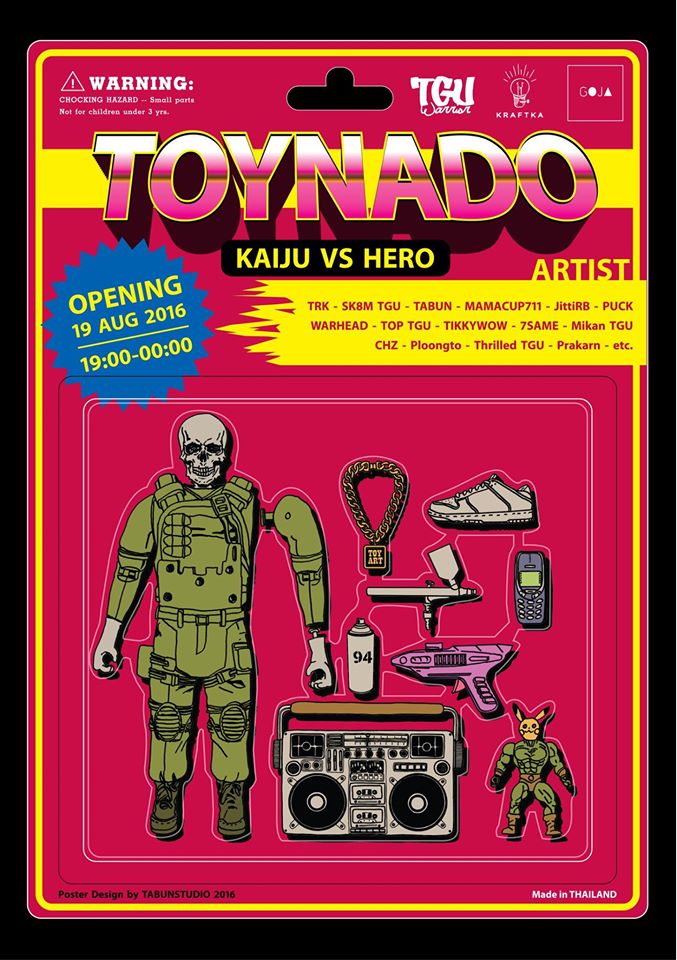
Want to see more Thai-made art toys or learn more? Visit Art Toys Thailand, Tabun Studio, or T-GU warrior.  Check out the work of the designers in this story and more than a dozen others at Toynado Kaiju & Hero, running Aug. 19-28 at Goja Gallery Cafe. Located on Soi Pridi Banomyong 3, it’s just off Soi Sukhumvit 71 behind the W District mall, about a five-minute walk from BTS Phra Khanong exit No. 3.

poster2

Advertisement

Hot News

LATEST NEWS

Bangkok
overcast clouds
33.8 ° C
34.4 °
32.2 °
65 %
3.4kmh
100 %
Sat
34 °
Sun
36 °
Mon
37 °
Tue
36 °
Wed
36 °