30.5 C
Bangkok
Sunday, July 5, 2026
Home Blog Page 2719

For Beating British Family Senseless, 4 Men Sentenced to 2 Years

HUA HIN — Four men convicted of beating three British tourists senseless during Thai New Year celebrations have been sentenced to two years in jail each.

Yingyai Kwangkum-in, 32; Supatra Baithong, 32; Siva Yoksri, 20; and Chaiya Jaiboon, 20; were found guilty by the court, according to details made public Sunday, for the savage attack in the resort town of Hua Hin, footage of which garnered international media attention and left another blemish on the reputation of tourism.

On April 13, British tourist Lewis Owen and his parents, Rosemary Owen and Lewis Owen, were beaten and kicked on a street crowded with party revelers celebrating Songkran until they lost consciousness.


Police Probe ‘Leak’ of British Family Beating Video


All four defendants were convicted May 23 of assault leading to grievous bodily harm and given two year jail terms, which were halved from four years because they confessed.

After the verdict was read, Yingyai, Supatra, Siva and Chaiya were immediately escorted into prison.

Despite the brutal nature of the crime, the beating of the British family was not reported in the national media until a local newspaper in Hua Hin obtained security footage of the attack and posted it online.

At the time of their arrest, they said they collided into one of the victims during the street party, and an argument soon escalated into the horrific assault. The suspects were drunk at the time, they said.

Provincial police commander Kasana Jamsawang said the four men have 30 days to file an appeal, but he believes they won’t do so.

“I don’t think they would do that, based on conversations I have had with them in the past,” Maj.Gen. Kasana said. “They already admitted their guilt.”

Related stories:

Three Arrested Over Brutal Beating of British Family

Fourth Suspect Arrested for Assaulting British Family in Hua Hin

Advertisement

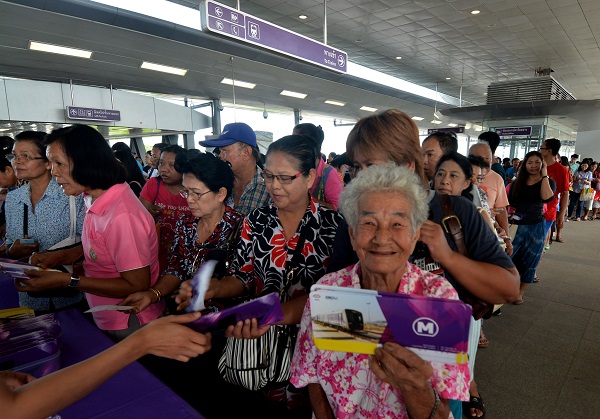
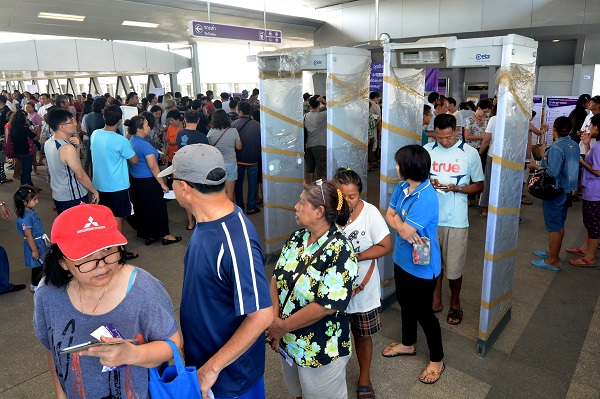
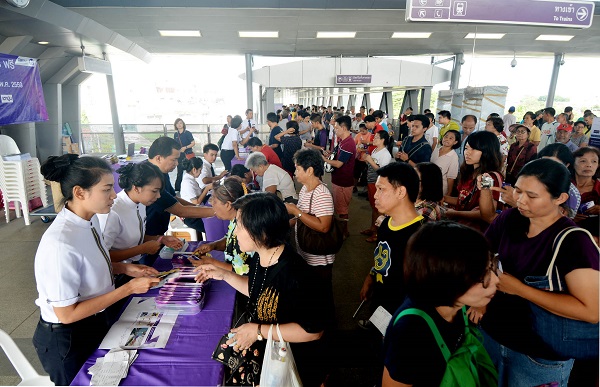
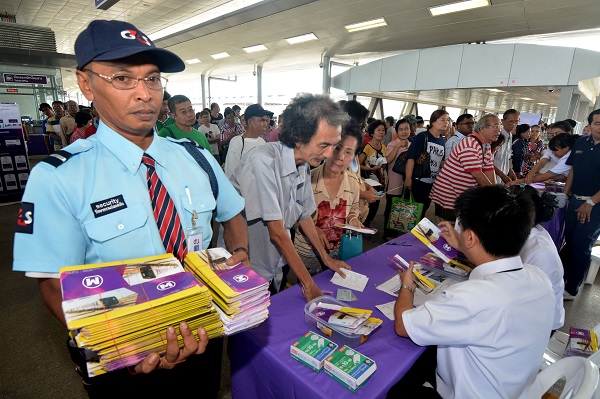
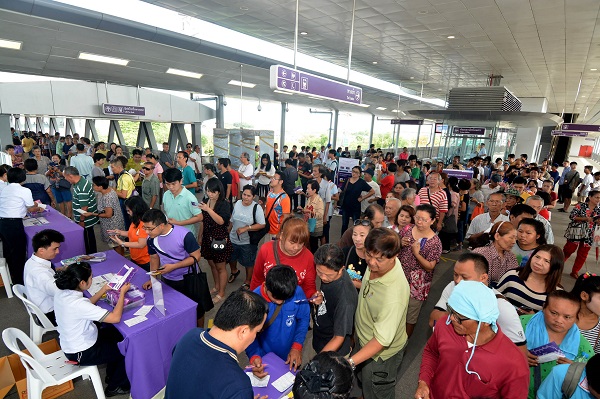
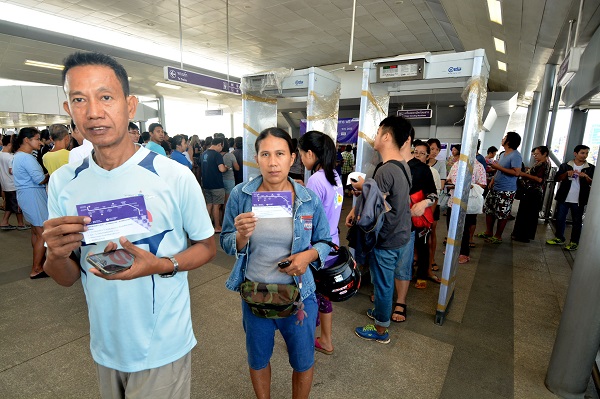
Frustrated Mess When Thousands Queue for Free Purple Line Tickets (Photos)

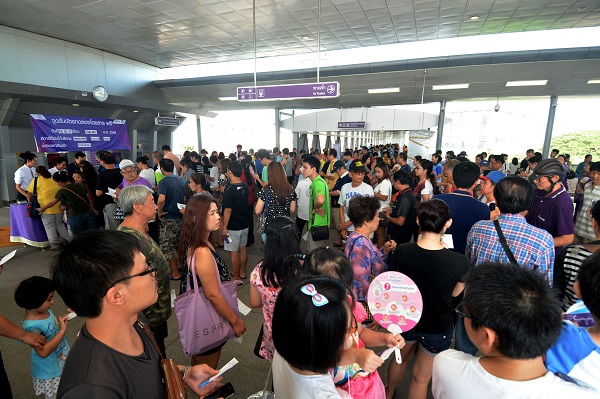
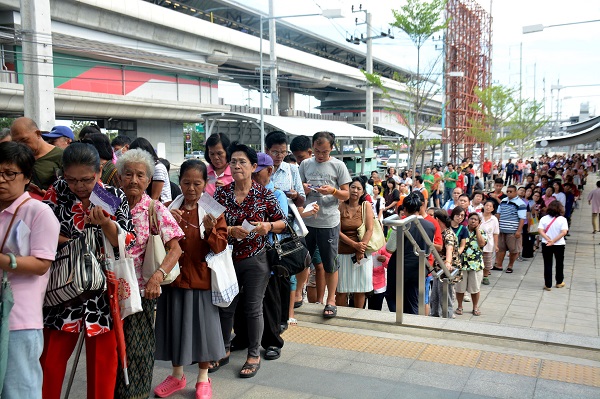
BANGKOK — It was a less than impressive start for the MRT Purple Line when thousands of Bangkokians lined for 15,000 tickets to take a test ride.

The extension, which has been criticized as inconvenient because it won’t connect to the existing Blue Line when it opens Aug. 6, proved frustrating on the first day tickets were distributed with people complaining of poor management.

“The management doesn’t really work at Tao Poon station around 9am,” wrote Facebook user Bank Wongsakorn on the official page of system operator Mass Rapid Transit of Thailand. “People were confused about what they needed to do step-by-step.”

Writing on the same page, user Ch Aob said there was poor communication about where to go for tickets and complained about access for bus riders.

“The Yaek Nonthaburi 1 station is really awful,” Ch Aob wrote. “They did not say which entrance we should enter by. Each entrance is a kilometer apart from each other and not in the same spot as the bus station.”

The 15,000 test-run tickets were distributed at the MRT Khlong Bang Phai, Yaek Nonthaburi 1 and Tao Poon stations. One registered ticket could be used for two passengers, and people could get up to three tickets.

The first run of the new line connecting Bangkok with Nonthaburi province will operate from 7am to 9am on June 13.

Those who missed out can register again on Sunday for test rides to be conducted June 20, 22 and 24.

The new Purple Line, which unlike the existing MRT is elevated, is expected to accommodate 200,000 passengers daily and connect central Bangkok to Nonthaburi province.

Its terminal at Tao Poon is expected to serve as an important transportation hub, though a shuttle will be needed to transit between there and the Blue Line’s terminal station at Bang Sue.

Whether that gap is ever closed by rail, the Purple Line will eventually reach the Blue Line another way, through a southern extension from Tao Poon to Tha Phra. Tha Phra will be on another southwestern extension of the existing MR Blue Line under construction.

201606051057481-20061002150127

201606051057483-20061002150127

201606051057486-20061002150127

201606051058483-20061002150127

201606051058485 20061002150127

201606051058484-20061002150127

201606051058486-20061002150127

Related stories:

Sign Up to Test Ride New MRT Purple Line

Trade in Those MRT Cards or Lose the Money

Imagine Bangkok 2016: Better city, less life?

Look Inside Thailand’s First Underwater Tunnel (Photos)

Advertisement

Officials Hunt for Abbot of Tiger Temple

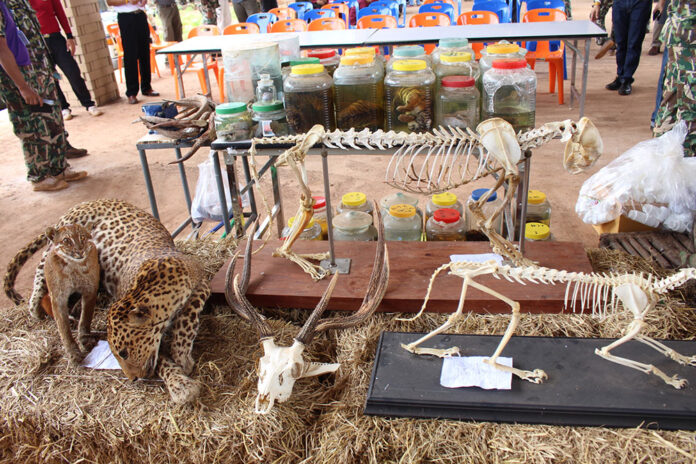
Stuffed animals and skeletons discovered June 3, 2016, inside the Tiger Temple in Kanchanaburi province.

KANCHANABURI — The hunt is on for the longtime abbot of the Tiger Temple after he vanished in the wake of raids which discovered evidence implicating the now shuttered tourist attraction in wildlife trafficking.

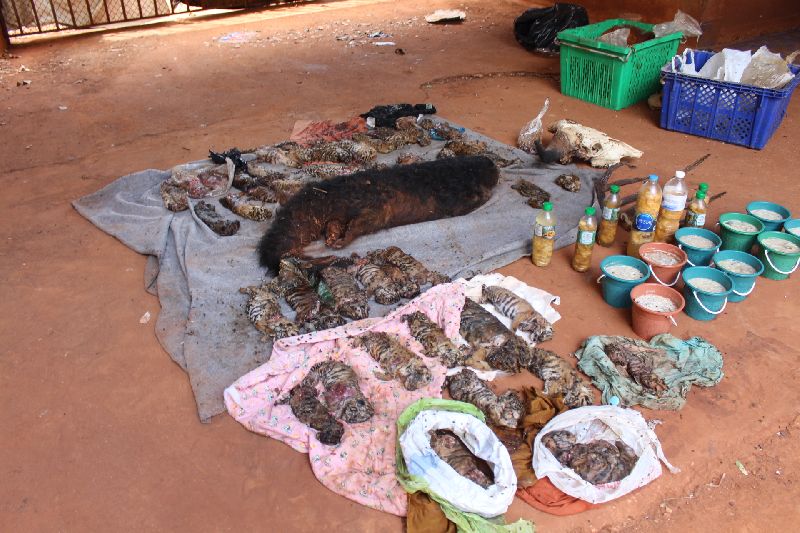
Monks at the Tiger Temple told officials abbot Phra Visuthisaradhera, aka Luangta Chan, left the complex May 29, one day before more than 1,000 officers and personnel arrived to seize its 137 tigers in a seven-day operation that led to the discovery of frozen tiger cubs, a hoard of other wildlife kept secretly and evidence suggesting commercial products were made there from endangered animals.

While allegations follow the temple occupied its land illegally, police have yet to seek a warrant for the abbot’s arrest or accuse him of any specific crime. The only figures subject to criminal action so far are five people charged with the illegal trade and possession of protected species.

“We arrested two disciples and one monk who tried to leave the temple in a pick-up truck, and two other monks were implicated,” said the deputy chief of Department of National Parks, Wildlife and Plant Conservation.


Bottles of Real Tiger Labeled ‘Energy Booster’ Discovered in Tiger Temple


Nine tiger fangs, tiger pelts, more than 1,000 tiger-skin amulets and dozens of jars filled with dead animals were discovered Thursday in the truck as it was driven out of the temple by disciples Net Kulruengkrai and Kongkiet Chanpeng. The monk with them, Phra Lamom Wantiya, was immediately arrested and expelled from the monkhood.

On Saturday, the remaining 11 tigers were reportedly removed from the temple to wildlife breeding research stations in Ratchaburi province, where now all 147 big cats have been relocated since January.

Adisorn said after removing the tigers, the ongoing investigation has been passed on to other departments, such as the provincial land reform office, which is investigating misuse of the land and forest encroachment.

“I can only say that the temple currently covers area far greater than they were previously granted, which was only 391 rai [62.6 hectares], and for agricultural and religious purposes only,” Adisorn said by phone Monday morning.

Charges of forest encroachment could be brought depending on the outcome of the investigation, Adisorn said.

Watcharin Wakamanon of Kanchanaburi’s land reform office could not be immediately reached for comment.

Dead tiger cubs, deer horns, a bull skull are displayed Wednesday at the Tiger Temple.


Related stories:

Bottles of Real Tiger Labeled ‘Energy Booster’ Discovered in Tiger Temple

Conservation Rhetoric Falls Apart as 1,000 Magic Tiger Amulets Seized From Monk (Photos)

Lion, Tiger Pelt, More Wildlife Discovered Inside ‘Tiger Temple’

Horrible Discovery in Tiger Temple: Dozens of Dead Tiger Kittens (Photos)

Officers Enter Tiger Temple to Begin Removing Tigers

Another Showdown as Tiger Temple Blocks 1,000 Wildlife Officers

Activist to Sue Over Tiger Temple Zoo Permit

‘Tiger Temple’ to Sue NatGeo Over Damning Report

Temple Refuses to Release Tigers, Again

Advertisement

Axe-Wielding Phuket Taxi Driver Arrested (Video)

PHUKET — A taxi driver was arrested Sunday for allegedly threatening another motorist with an axe in full view of foreign tourists at Phuket International Airport.

For his alleged actions, which were filmed Saturday and later spread on social media, Nattawuth Chidjui, 45, has been charged with two offenses and stripped of his driving license for three months, said Bundit Khaosutham, deputy regional tourist police commander.

“He claimed he didn’t threaten anyone, but we arrested him anyway,” Col. Bundit said by telephone Monday. “He has been charged with carrying a weapon in a residential area … there’s also a charge for threatening other people.”

Nattawuth was shown some leniency for confessing.

“The Department of Land Transport was also there [for the arrest]. They said, for this kind of behavior, the driver was supposed to lose his license for six months, but since he confessed, cooperated with the investigation and has clear address of residence, the punishment is halved to three,” he said.

It all stemmed from some airport road rage, according his purported victim.

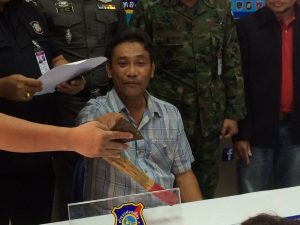
At Sunday’s police news conference, Nattawuth Chidjui points to the axe he allegedly used to threaten another motorist. 
At Sunday’s police news conference, Nattawuth Chidjui points to the axe he allegedly used to threaten another motorist.

Woratat Wuttikorn wrote that he was dropping his family off at the airport when the driver became angry at him for taking his spot to stop his taxi. That’s when, Woratat recounted online Saturday, he hefted an axe and waved it around in a threatening way. Woratat later uploaded his dashcam footage of the confrontation.

Col. Bundit said officers tracked Nattawuth down from security camera footage and arrested him at home. He said Nattawuth admitted to carrying the axe but denied threatening anyone with it.

There have been many complaints about taxi drivers overcharging or threatening tourists on the island of Phuket.

To improve passenger safety, Bundit said, Tourist Police will summon all drivers on the island for a lecture on regulations, and officers are considering random searches of taxis for weapons.


Related stories:

Phuket Struggling To Battle Taxi And Nightclubs ‘Mafia’

Taxi Driver Ex-Con Accused of Robbing Chinese Tourists

Taxi Driver Accused of Raping Drunk Passenger Leaving RCA

Cops Arrests Taxi Driver for Robbing Foreigner

Police Seeking Arrest of Masturbating Cabbie

Bangkok Cabbie Arrested for Attempting to Rape Passenger

Advertisement

‘Vote No’ Bloc Accuses ‘Don’t Vote’ Crowd of Being Junta Shills

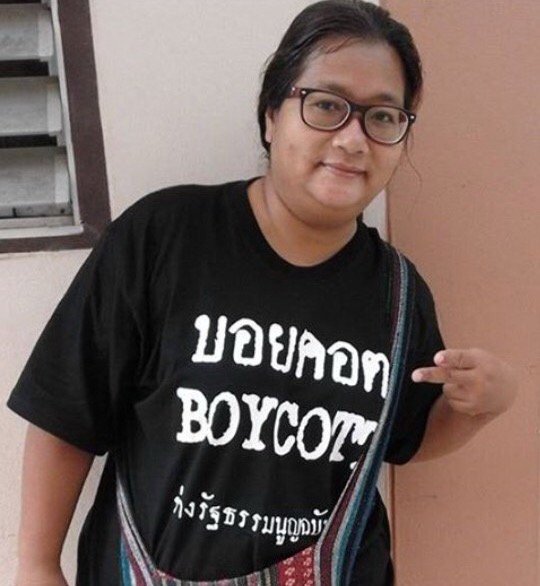
A woman wears a T-shirt saying ‘Boycott the referendum.’ Photo: Jittra Cotchadet / Facebook

BANGKOK — While it’s illegal to urge anyone to vote no or vote yes in the upcoming referendum, calls for an alternative – just don’t vote – are worrying to charter critics, who fear it will split the opposition.

While authorities contend the ban on campaigning for the Aug. 7 charter referendum extends to encouraging people to not vote at all, that hasn’t stopped some from risking arrest by going public with their intent to boycott the vote.


Campaign Guideline Bans Campaigning Before Charter Vote


Leading the pack of those calling for voters to skip the poll, or even making T-shirts with such messages, is Jittra Cotchadet, an advisor to the Democracy Force Party, a little-known political party established in 2013.

“We don’t trust the referendum. People can’t really freely say what they think is good or bad about the draft charter,” Jittra said. “We also think it’s impossible for the charter draft to be rejected in the plebiscite. And why should we play by their rules?”

Jittra said she was aware that campaigning for a boycott of the referendum is a crime, punishable by up to 10 years in prison, and so Democracy Force Party, which has just over 100 members, stops short of campaigning for others to do the same.

Since Jittra made the announcement two weeks ago, accusations have been made against that she and others calling for the boycott are undermining the effort to defeat it at the ballot box.

“Some accused us of being paid to do the job for the junta,” she said, denying she’s been paid to promote the idea. “The junta would dread to see majority of the voters boycotting the referendum.”

Writer and political activist Wad Rawee, said the accusation is just lame. Wad said he’s more upset by opposition elements who tell them the strategy will fail or be counterproductive.

“If you campaign for democracy, you must respect differing views. Those who say the [No] votes will be diluted do not respect the democratic principle,” Wad said.

He plans to boycott the referendum because he believes the process lacks legitimacy and is neither free nor fair.

“Not only is it not free, but we’re being silenced. The junta selected their own charter drafters and try to force people accept it,” he said.

While the charter has been criticized as anti-democratic by figures across the academic and political spectrums, the junta has made the case it is a bitter pill necessary to immunize the legal framework against endemic corruption.

Asked how the those who boycott will be measured and not just conflated with the millions who just don’t vote, Wad said he will wait for Democracy Force Party to come up with a plan.

How many might actually participate in a boycott? Jittra said she thinks half the electorate, but she’s not concerned.

“We won’t have anything to do with it, and so the [junta] can’t claim to have our voices after they win in the referendum,” she said.

Wad said T-shirts with a boycott message have already been made and those who plan to participate might put them on and hit the streets come referendum day to make some noise.

“Breaking the law?” he said. “I’m not worried about that.”

Meanwhile, Election Commisioner Somchai Srisutthiyakorn warned that anyone trying to campaign for others to vote one way or the other, or to boycott the referendum could face up to 10 years imprisonment term, fined up to 200,000 and have their electoral rights suspended for five years under Article 61 920 of the Referendum Law which barred causing disturbances.

“If it’s a personal [declaration] there’s no restriction. But you can’t tell others how they should vote. It might be against the law.”


Related stories:

Prof Denies Breaking ‘Vague’ Referendum Law, Junta Spokesman Says She Did

‘Personal’ Campaigning Acceptable (If Charter Vote Isn’t Canceled)

Redshirts Alarmed by Vague Restrictions on Charter Campaigns

Advertisement

Clinton Wins Puerto Rico’s Democratic Presidential Primary

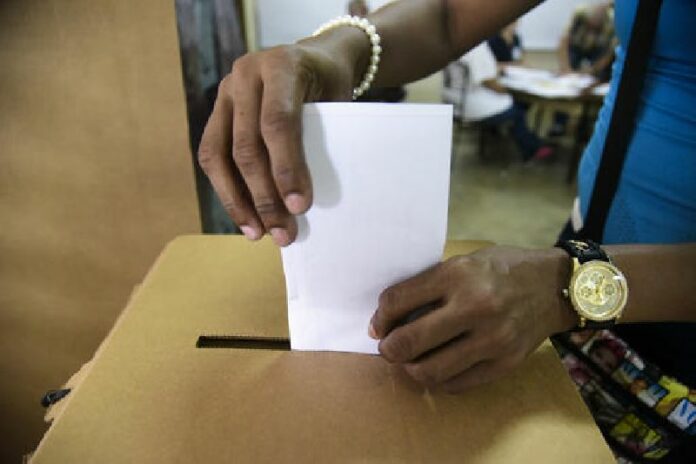
A Puerto Rico resident votes during the U.S. territory's Democratic primary election at the Luis Llorens Torres Elementary School in San Juan, Puerto Rico, Sunday June 5, 2016. Photo: Carlos Giusti / Associated Press

SAN JUAN, Puerto Rico — Hillary Clinton overwhelmed Bernie Sanders in Puerto Rico’s Democratic presidential primary on Sunday, putting her within striking distance of capturing her party’s nomination.

After a blowout victory Saturday in the U.S. Virgin Islands and a decisive win in the U.S. territory, Clinton is now less than 30 delegates short of the 2,383 needed to win the nomination, according to an Associated Press count.

“We just won Puerto Rico! ¡Gracias a la Isla del Encanto por esta victoria!” tweeted Clinton. As the race was called, Clinton was on stage on Sacramento, rallying voters in California.

The results were slow to arrive on Sunday, as officials counted ballots by hand and focused first on releasing results tied to the island’s local primary elections, said Kenneth McClintock, Puerto Rico’s former Democratic National Committeeman.

As the results from Puerto Rico trickled in, Clinton maintained a steady 2-to-1 lead over Sanders.

While Puerto Rican residents cannot vote in the general election, the island’s politics could reverberate into the fall campaign. Tens of thousands of Puerto Ricans have left the island to escape a dismal economy, with many resettling in the key electoral battleground of Florida.

Though Clinton did not spend much time campaigning in Puerto Rico, the victory is fraught with symbolism for her campaign. Eight years ago, with the presidential nomination slipping from her grasp, she rolled through the streets of San Juan on the back of a flat-bed truck, wooing voters to a soundtrack of blasting Latin music.

She beat then-Illinois Sen. Barack Obama with nearly 68 percent of the vote.

“I’m for Hillary, girl,” said 83-year-old Candida Dones on Sunday as she cast her ballot. “I can’t wait for a female president. She’s one of us. She wears the pants. If we don’t look out for our own interests, who will?”

Both Clinton and Sanders spent Sunday in California, the biggest prize among the five states voting on Tuesday. Clinton told an enthusiastic crowd at Greater St. Paul Baptist Church in Oakland the country is “getting indifferent to the great toll of gun violence,” while Sanders made a series of stops in Los Angeles before an evening rally in San Diego.

“Sorry to disturb your brunch,” Sanders said at Hamburger Mary’s, taking the microphone during their “drag brunch” as disco lights swirled inside. “I just wanted to say that on Tuesday as you all know there is a very important Democratic primary here in California. And my hope is that everyone will stand up and make clear it is too late for establishment politics.”

While those watching the results in Puerto Rico focused on their impact on the race for the Democratic nomination, the focus of many voters on the island was its ongoing economic crisis.

Both Sanders and Clinton had pledged to help as the island’s government tries to restructure USD$70 billion worth of public debt the governor has said is unpayable.

“This is one of the most important political moments for Puerto Rico,” said Emanuel Rosado, a 29-year-old Clinton supporter. “I’m taking action as a result of the economic crisis.”

Two weeks before the primary, Sanders criticized a rescue deal negotiated by U.S. House leaders and the Obama administration as having colonial overtones. In a letter to fellow Senate Democrats, Sanders said the House bill to create a federal control board and allow some restructuring of the territory’s USD$70 billion debt would make “a terrible situation even worse.”

He later promised to introduce his own legislation to help the island. Campaigning on the island last month, Sanders promised to fight against “vulture funds” on Wall Street that he said would profit off the fiscal crisis.

“That bill is anti-democratic and it’s not in the best interest of Puerto Rico,” said Jorge Gaskins, a 67-year-old farmer who supports Sanders and opposes a control board.

Clinton has said she has serious concerns about the board’s powers, but believes the legislation should move forward, or “too many Puerto Ricans will continue to suffer.”

Among those voting Sunday was Democratic Party superdelegate Andres Lopez, one of the party insiders who can vote for the candidate of their choice at the summer convention. He had remained uncommitted, but said Sunday he will support Clinton.

Clinton has 1,807 pledged delegates won in primaries and caucuses; Sanders has 1,516. When including superdelegates, her lead over Sanders is substantial — 2,355 to 1,562.

With Lopez’s endorsement, all seven of Puerto Rico’s superdelegates have pledged their support for Clinton.

“It is time to focus on squashing ‘El Trumpo,'” he said, referring to presumptive Republican presidential nominee Donald Trump.

Story:  Danica Coto and Lisa Lerer / Associated Press

Advertisement

Junta’s Lifting of Travel Ban May Not Be Universal, Say Rights Lawyers

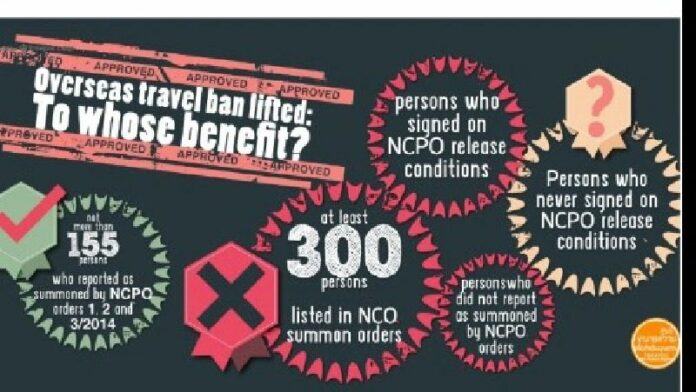
A chart produced by Thai Lawyers for Human Rights showing their interpretation of the junta's lifting of the travel ban.

BANGKOK — The junta’s lifting of the travel ban against critics does not apply to all. Critics who signed papers agreeing to seek the junta’s prior permission are excluded from the lifting of the ban, according to Thai Lawyers for Human Rights.

Junta spokesman Col. Winthai Suvaree said Thursday that he would have to check the details with the legal team of the National Council for Peace and Order (NCPO). As of Sunday afternoon Winthai has not provided any further comment on the issue.

“The intention [of the order lifting the ban] is that there should be no seeking of permission except those facing charges or those who have never reported [to the junta],” said Winthai on Thursday.

The rights lawyers group gave a different reading of the NCPO order passed May 31 and effective from June 1.

“The revocation of the overseas travel ban on individuals may appear to present an ease on government restrictions of rights and freedoms, [but] it benefits only a limited number of persons, and may even impose additional restrictions,” TLHR said in a statement.

Pawinee Chumsri , a member of TLHR, said her group’s interpretation of the NCPO order is that only as many as 155 individuals, mostly politicians, would benefit from the lifting of the ban.

According to Pawinee, about 300 people will still have to seek permission from the junta.

This includes those who have been summoned later, or summoned twice for what the junta called “attitude adjustment,” with some detained without charge for up to seven days.

Pawinee said if the reading by the lawyers’ group is inaccurate, the junta should come clean and clear the air. She added that a litmus test would be for any of the 300 or so individuals to try to test the supposed lifting of the ban by attempting to leave the kingdom without seeking the junta’s permission.

“It can be tested and you won’t have to go to prison. They just won’t let you leave the country,” said Pawinee.

However the memorandum of understanding many signed stated that if the conditions in the terms of agreement have been violated, the person would be tried in military court and face a possible two-year maximum jail term.

Asked if this means the junta lied to the public when its leaders said earlier in the week that no one will have to seek the junta’s permission to travel abroad any longer, Pawinee said “Yes. Was it a lie? Well, they didn’t spell out the whole truth. The benefit is miniscule. The [NCPO] should make it clear that no one needs to seek their permission anymore.”
Related stories:

Two Years On, Bank Accounts of Two Critics Still Frozen

Critic’s Passport Revoked as Junta Reaffirms Ban on Criticism

Thai Professor’s Passport Revoked by Junta

Pheu Thai’s Chaturon Fights for Right to Travel

Advertisement

Their Visibility Belies Scorn, Harm Transgender Thais Face

In this Tuesday, May 31, 2016 photo, Jetsada Taesombat, executive director and co-founder of the Thai Transgender Alliance, checks e-mail at her office in Bangkok. Photo: Sakchai Lalit / Associated Press

BANGKOK — The most dangerous place in high school for Jetsada Taesombat was the boys’ bathroom. Her makeup, her lipstick, her accessories became signals to fellow students who targeted her with cruel jokes, insults and physical abuse. But Jetsada refused to hide her transgender identity.

The visibility of transgender people, especially in Bangkok, might make Thailand appear more liberal than other countries regarding their identity. But the reality, they say, is that transgender Thais face deep discrimination, scorn and aggression. Often, it happens in bathrooms, where closed doors and expectations of privacy ensure secrecy for the perpetrators.

When Jetsada complained to her teacher that she had been sexually harassed in the bathroom, the teacher blamed it on her makeup. When she appealed the teacher to act, the teacher said the harassment was a consequence of being a sexual deviant.

“Growing up in an all-boys school, I didn’t feel comfortable going into the boys’ toilet,” said Jetsada, now 32. “I was afraid for my life. I was afraid of getting bullied or sexually harassed.”

Jetsada always chose to use the girls’ bathroom, despite the risk of being scolded or reprimanded. Facing a teacher’s wrath was the better option. If she couldn’t get access to the girls’ toilet, Jetsada would wait until school ended or she brought a transgender friend to stand guard in the boys’ bathroom.

Transgender Thais say the situation here is similar to the United States, where conflicting state laws and federal policy on the matter are being hotly debated. Lawsuits have been filed to challenge the Obama administration’s directive allowing transgender people to use bathrooms matching their gender identity, as well as a North Carolina law requiring people to use bathrooms of their birth gender.

In Thailand, the discrimination partly comes from religious beliefs about sexual behavior.

Most Thais are Buddhists, who are supposed to live by the Five Moral Precepts — the third of them being to avoid sexual misconduct. People born with the wrong gender identity are believed to have brought it on themselves by sinning in a past life. Thais also consider a transgender life miserable because they think a person born in the wrong body won’t find love.

Transgender people appear to be able to live openly in the Thai capital, attracting little attention on the streets and in restaurants and shopping malls. But the country does not legally recognize gender changes, same-sex marriages, adoptions by same-sex parents or commercial surrogacy.

Discrimination in employment, the provision of goods and services, hate speech and crimes were made illegal only last September when the Gender Equality Act became effective. Before 2015, transgender people had no laws to protect them against being unjustly turned down for a job or harassed.

And transgender people are still targets of violence.

A research project by Transgender Europe on killings of trans and gender-diverse people in 65 countries, counted 137 reported murders of transgender people in North America from January 2008 to December 2015.

Thailand has only seen 14, but the number is deceptive. Police in Thailand, as well as in many countries, often identify victims as men, rather than transgender, according to Jetsada, who now is executive director and co-founder of the Thai Transgender Alliance, which works to raise awareness and understanding about the identities and rights of transgender people.

“Even though many foreigners think we’re LGBT-friendly, there’s still so much violence and hatred toward us,” said a government liaison officer, Chinnarat Buttho.

“Although in high school, I had not started dressing as a woman, I always knew that my heart was one of a woman’s. But I was always taught by society’s rules that I have to go to the boy’s room. I looked like a boy but I showed female mannerisms. I was bullied a lot because of it.”

Chinnarat, now 32, started dressing as a woman when she pursued a master’s degree, and her friends and family have become more comfortable and accepting of her choice. She has not used the men’s bathroom since then.

Many transgender people, despite holding university degrees, are unable to find work in their respective fields, said Jetsada.

“Many people I know still struggle with discrimination at job interviews; many times they don’t get hired because of their identity,” said Jetsada. “When faced with the question of whether they’re willing to cut their hair short, stop wearing makeup, act like a man for a job, many are unable to disclaim and lie about their identity. The sex industry becomes their only option.”

Chinnarat and Jetsada believe that allowing a transgender person to use the bathroom where they feel most comfortable is a decision that would lead to a more inclusive and accepting society.

“How do you live in the same world with people who have such differing opinions and perspectives from yourself?” asked Jetsada. “You teach people ways to coexist and in the long run, just hope that it gets

Story: Natnicha Chuwiruch / Associated Press

Related stories:

Mainstream Media Trades in Worst LGBT Stereotypes, Review Finds

Thammasat Cites Risqué Lipstick for Rejecting Transgender Prof

Advertisement

28 Injured in Koh Samet Speedboat Crash

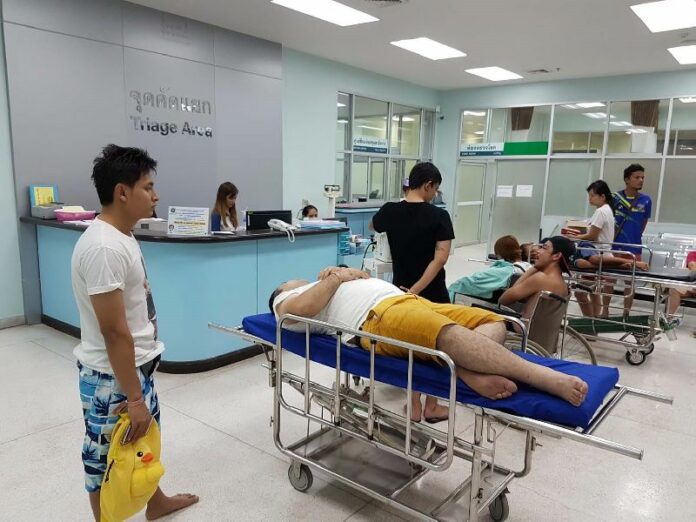
Injured tourists Sunday morning in a hospital in Rayong.

KOH SAMET — Twenty-eight people were injured early Sunday morning after the speedboat they were in crashed into a container ship off Koh Samet.

The accident took place at around 2:30am Sunday after speedboat designated Sindamudr crashed into the anchored vessel. The speedboat was operated by 23-year-old Vinai Trakoonwong.

Vinai,  who suffered slight facial injuries, claimed the container ship was not using any warning lights, so he didn’t see it before the accident.

Chatchawan Pan-ngern, a passenger on the speedboat, said the accident took place about five minutes after the boat left the island. The passengers were leaving the island after attending a large concert called “Samed in Love” that organizers said was attended by 20,000 people.

The speedboat operator and all 27 of the passengers were rescued and taken to hospital, 23 of whom were admitted to Rayong Provincial Hospital for treatment of unspecified injuries.


Related stories:

Boat with 14 Foreign Tourists Sinks in Krabi

British, German, Chinese Women Die in Yet Another Speedboat Tragedy

8 Tourists Injured in Pattaya Speedboat Collision

Train Smashes into Koh Samet-Bound Bus, 3 Dead

Speedboat Propeller Severs Tourist’s Leg

Business Owners Decry Koh Samet Nightlife Curfew

Advertisement

Tigers May Be Gone, But Many Creatures Dwell at Temples

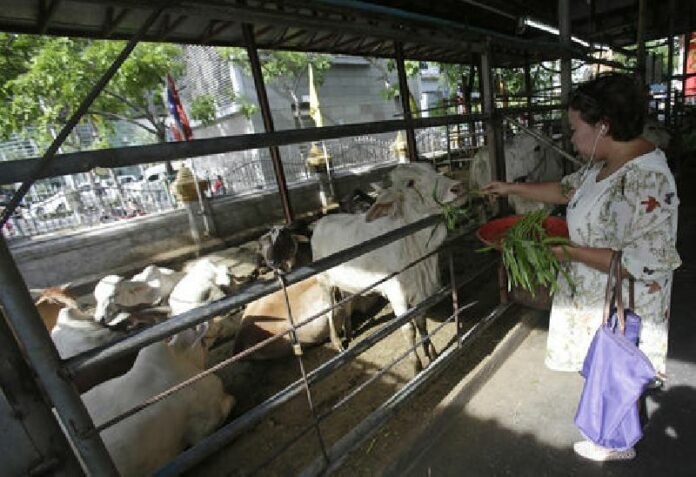
In this photo made on June 3, 2016, a visitor feeds a cow at the Wat Hualamphong temple in hopes of earning merit by sparing the cow's life from a butcher's knife in Bangkok. Photo: Sakchai Lalit / Associated Press

BANGKOK — The scandal surrounding the Tiger Temple, where wildlife officers seized over one hundred big cats this past week, has cast religious sanctuaries for animals in a bad light.

Many conservationists and animal rights activists have believed the temple’s self-appointed mission to shelter tigers is misguided at best and that the tigers were mistreated to ensure their docility. Tiger parts found during the raid buoyed strong suspicions that the temple, run as an admission-charging zoo, engaged in unethical breeding and illegal trafficking of the endangered animals.

The shady findings at the Wat Pha Luang Ta Bua in Kanchanaburi aside, Buddhism and animals have an intrinsic link, loosely derived from Buddhist precepts promoting compassion for all living beings. While tigers are not typical, many temples in Thailand host smaller menageries.
Dogs and Cats

Dogs may outnumber monks at many temples. Unwanted pets and rescued strays almost invariably end up at the local temple, where the moral code of the monks ensures dogs and cats won’t be put down at the pound. The luckier ones will be adopted by a kind-hearted abbot or novice monks, boys who have the energy and enthusiasm to chase the animals.

But most will just survive rather than thrive, especially since their main diet is leftover rice. The stereotype of a temple dog as a skinny, sore-ridden mutt is so ingrained that the Thai phrase for them — ma wat — is slang for a disreputably down-and-out poor person.

Inevitably a crowd of dogs or cats creates crowds of puppies and kittens, straining the temple’s resources and risking the animals’ health and welfare. Sterilization programs attempt to deal with the problem, but Lanna Dog Welfare in northern Thailand takes a holistic approach. The group is training monks in all aspects of hands-on basic canine health care to help the 10 to 50 dogs living at each of the more than 1,600 temples around the city of Chiang Mai.

Birds, Fish and Turtles

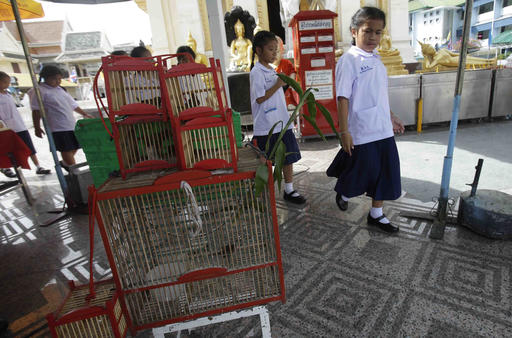
Students walk past caged birds sold to be released for good luck at the Wat Trimitr on Friday in Bangkok Photo: Sakchai Lalit / Associated Press

Less cuddly animals like birds, fish and turtles lead the lives of second-class citizens. They are found at temples as a result of a Buddhist custom of making merit by freeing animals from captivity. In many cases, the animals serve that purpose over and over, going through cycles of capture and release. The practice, common through much of Asia, is particularly widespread in China, where it is known as fang sheng.

Frail birds, crammed into tiny cages until vendors at the temples sell them to the merit-seekers, either cannot fly out of the reach of their sellers and are recaptured or they reach the wild where they are not fit enough to survive. Fish and turtles are released into temple ponds too crowded to sustain much aquatic life.

The environmental consequences may also be dire; the massive demand endangers the populations of some species, and the disruption of habitats and migratory patterns can spread animal-borne diseases or introduce invasive species.
Tigers and Other Exotic Animals

Larger animals end up at temples in the same manner as dogs and cats — as a refuge for the unwanted or homeless. For all its notoriety, the Tiger Temple’s collection is said to have begun that way, when eight cubs rescued from poachers were brought there for care.

Bears and monkeys are among the wilder animals that might live at temples. But temples are ill-prepared to handle the special needs of such animals, which often are held in appalling conditions. In one famous case, an elephant endured about 20 years chained to a tree, only be killed with a spray of 100 bullets when he tried to escape.
Related stories:

Bottles of Real Tiger Labeled ‘Energy Booster’ Discovered in Tiger Temple

Conservation Rhetoric Falls Apart as 1,000 Magic Tiger Amulets Seized From Monk (Photos)

Lion, Tiger Pelt, More Wildlife Discovered Inside ‘Tiger Temple’

Horrible Discovery in Tiger Temple: Dozens of Dead Tiger Kittens (Photos)

Officers Enter Tiger Temple to Begin Removing Tigers

Another Showdown as Tiger Temple Blocks 1,000 Wildlife Officers

Activist to Sue Over Tiger Temple Zoo Permit

‘Tiger Temple’ to Sue NatGeo Over Damning Report

Temple Refuses to Release Tigers, Again

Advertisement

Hot News

LATEST NEWS

Bangkok
overcast clouds
30.5 ° C
30.5 °
27.7 °
78 %
1.8kmh
100 %
Sun
32 °
Mon
32 °
Tue
27 °
Wed
26 °
Thu
31 °