





















28.5 C
Bangkok
Friday, October 16, 2026
Home Blog Page 2989

Frying Pan Canvas Dinner Paints a Picture of Bangkok’s Changing Food Scene

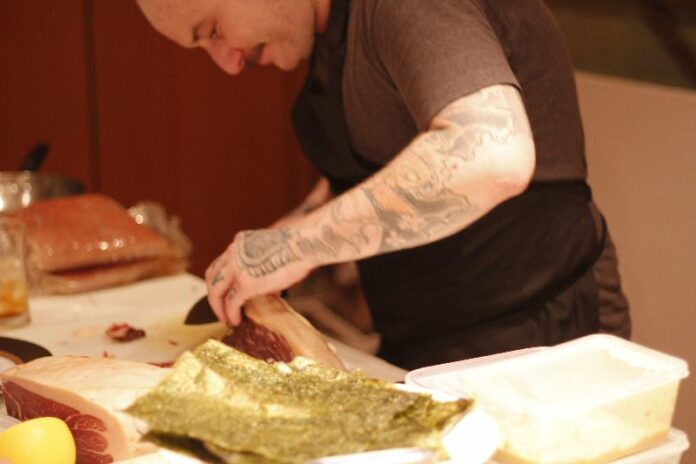
Jess Barnes cutting up some Iberico Ham at Frying Pan 1.0

“There are so many free boobs in Bangkok, why go to Hooters?” shouted a man in a thick German accent. Another interjected, “Hooters is supposed to have, well…Hooters! I just can’t see this succeeding here.” Finally a third guest came to a conclusion, “It just might work if the girls can be bought, but that completely changes the business model.”

This is the sort of discussion I heard at Frying Pan Canvas 1.0.

Frying Pan Canvas is a new pop-up dinner series put on by Jess Barnes of Opposite Mess Hall fame, and Justin Dunne, the man behind Evolution48, a Bangkok F&B consulting firm. The maiden dinner took place at Justin’s private residence, but future dinners will be held at secret locations. Jess cooks up the food while Justin supplies diners with proper social lubrication.

And everyone at the dinner was very well lubricated.

\

Justin Dunne mixing cocktails

The Frying Pan formula is predictable: four courses, four cocktails. It’s the social aspect of the dinner that makes it remarkable. With each course guests switch seats, sit with strangers, and discuss a new topic related to the F&B industry in Bangkok. Vagaries of a slowing economy and the city’s obsession with food trucks were among the topics explored at this dinner. The only rule is that politics stay out of the discussion. Boobs, when discussing Nana’s newest “family restaurant” are fair game, though.

My seat didn’t come free, in fact a seat didn’t even come at all. In order to attend, I had to work in the kitchen doing prep work to earn a spot, and a spot meant standing around a residential kitchen. Perhaps the best vantage point to observe a crowd of nearly twenty diners, mostly from the hospitality industry, get drunk and pontificate about Bangkok’s proliferating food scene.

The discussion, comical most of the time, painted an insightful picture of what industry professionals are thinking about Bangkok’s exploding restaurant market. One diner, Daniel Fraser of Smiling Albino, noted that he had just taken out a New York Times food writer who was in town to do a story on how Bangkok is rising to the status of a global culinary capital.

The first course, lardo wrapped around strawberry enveloped by toasted nori, was just as juicy as the discussion that ensued.


\

 Lardo rolls with Chiang Mai strawberries and toasted nori


You’re opening a burger joint in Bangkok. Where do you put it?

Immediately the crowd started wondering if Bangkok even needed another gourmet burger. “Maybe a junk food burger is better?” remarked a man saying that he’d put it on Wireless road to target the grease-loving Americans.

Another gentleman saw Saphan Taksin as a future culinary hot spot. “You have commuters, you have tourists.” He remarked that a high-end gourmet burger restaurant might work there as tourists open their wallets easily.

Jess Barnes doesn’t see it that way, “The next 24 months aren’t looking bright”, he opined. “Prices will need to come down when people are tighter with their spending.” From his experience at markets and pop-ups all over town, he’s learned that 200 baht is the point where people start to become discretionary with their spending habits. Food under 200 baht is easier to sell.

Speculation about tough times looming in the near future set the next topic of discussion up naturally:

We know the economy is slowing down. Why are there so many restaurants opening up? How does that math work?

The short answer is, it doesn’t, but it also might not matter. Jess explained that restaurants have become the new accessory of the Bangkok elite. “A lot of places that are opening up don’t need to succeed financially to stay open.” he says. He also noted that “Bangkok is probably the easiest place in the world to open up a restaurant. It doesn't take a lot of money and things can move quickly.” He notes that the Thai tradition of suppliers giving restaurants roughly 15 days to pay for goods keeps business from racking up huge debts and then failing massively.

To end on a light note, Justin posed the question of whether or not the recent opening of Hooters was a good thing for Bangkok. The room agreed–it’s just not risque enough to catch anyone’s attention– and the food probably isn’t the main draw either. In other words, it’s just not exciting enough.

Increasing competition, tightened spending, and more media global attention than ever before are lighting up the restaurant scene, but everyone at the dinner agreed: 2016 is going to be a pivotal year for the food and beverage industry in Bangkok.


To reach us about this article or another matter, please contact us by e-mail at: [email protected].

Follow Khaosod English on Facebook and Twitter for news, politics and more from Thailand.

Follow @KhaosodEnglish

\

Advertisement

Chinese Gang Caught with Fake Credit Cards and False Passports

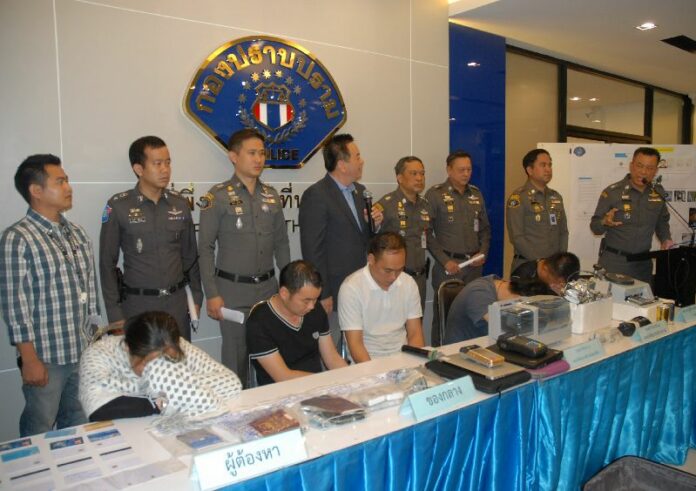
Five Chinese who were arrested for buying gold with fake credit cards and possession of false passports, appear at the Crime Suppression Division in Bangkok yesterday.

BANGKOK — Five Chinese were arrested at a hotel on Friday Jan. 1 for buying gold with fake credit cards and also for possessing false passports, according to a police news conference yesterday.

The five Chinese were identified as Zu Jian, Cui Yuan Chang, Tan Guo Ping, Lui Shijin, and Zhu Guo Ping, according to the Crime Suppression Division.

182 fake electronic cards, 11 false passports and credit card readers were seized.

Police Lt.Gen. Thitirat Nonghanpitak said police were alerted on Friday by Siam Commercial Bank staff , that two Chinese people were buying gold at “SRT” shop at Big C Ratchadamri with a fake credit card. When police arrived at the scene, they found Zu Jian, 42, while another suspect fled the scene.

Police later went to the Tivoli Hotel, Sathon district, and found Cui Yuan Chang who was about to drive away in a car with Chinese license plates. He was subsequently arrested for alleged possession of a number of fake credit cards, machines for making credit cards and also a number of false passports, found both inside the vehicle and the hotel room.

Further investigation led to Tan Guo Ping, who rented the car from China and was staying at the Malaysia Hotel in the same district, with Zhu Guo Ping and finally led to the separate arrest of Lui Shijin, Thitirat told reporters.

However, police believe that the team also involves three more people and are continuing the investigation, he said.

Thitirat also said the suspects confessed they had been using fake credit cards and passports to buy gold before exchanging it for cash. The gang had caused damage estimated at close to 180 million baht, he said. They had been in and out Thailand several times in the last eight months and reportedly stayed up to a couple of weeks each time to conduct illegal business.


To reach us about this article or another matter, please contact us by e-mail at: [email protected].
Follow Khaosod English on Facebook and Twitter for news, politics and more from Thailand.

Follow @KhaosodEnglish

\


Advertisement

Imagine Bangkok 2016: Better city, less life?

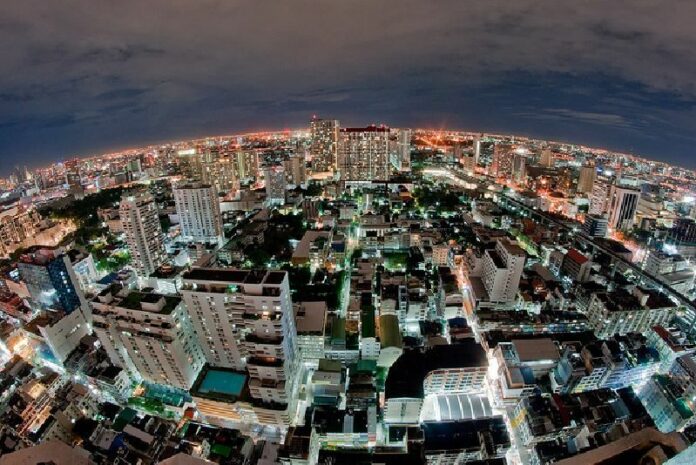
Bangkok from a bird’s eye view in a 2011 photo. Photo: digitalpimp./ flickr

BANGKOK — Each New Year comes with new expectations, and Bangkok always amazes us in some way. A lot of change happened during 2015 and, little by little, the City of Angels was gradually transformed.

What will Bangkok look like in 2016? How will the city change? We asked some experts to contribute their thoughts, to help us better imagine how our beloved city will alter in the next twelve months.


\

The purple line first test run on Dec.14, 2015 before it officially begins operating in August, 2016. Photo: BMCL / Facebook


More options, less cards, same price

When the Mangmoom (spider) card comes into effect in August, passengers can finally carry only one integrated piece of plastic for both the BTS and MRT.

With the Purple Line finally added to the minimal skytrain network in the same month, suburban Bangkok and Nonthaburi will finally gain the direct access to the heart of the city (though you still have to depend on the bus to travel from Tao Poon to Bang Sue station because they will not be physically linked yet by then).

With four more routes of mass rapid transit due to come to auction, Bangkokians can hope for the day that public transport networks will eventually cover every corner of the city.

With Khlong Lat Phrao finally being cleared to pave the way for an alternative transport through canal, travel could become faster and cheaper.

The achitect and writer of “Bangkok: Handmade Transit”, Yanyong Boon-Long, once said the idea of a hybrid network connecting the BTS and MRT with hundreds of canals, was the most interesting idea that City Hall has come up with in 20 years and in 2016, he still insisted the same thing.

“In the age of Rama V, people in Bangkok could use canals to access more parts of the city than what we can access by BTS nowadays. It’s abandoned infrastructure.”

But does it also mean we are going to have better transportation in 2016, or even in the ensuing years? An architect known for his keenness to develop better transportation for the metropolis, said the biggest issue remains the same, the ticket price.

“Most people who use the skytrain are tourists,” said Yanyong Boon-Long. “The big question is how to make it more accessible.”

For him, lowering the ticket price is not the best solution. “The price can remain the same, but wages have to be increased.”


\

Khlong Ong Ang on Nov.16 after the 28-day demolition of the historic Saphan Lek market.


The cleanup continues  

If there is one word that best described Bangkok in 2015, it definitely goes to “reorganization.”

The largest grey-black market Khlong Thom, the oldest toy and electronics market Saphan Lek, landmark amulet market, Tha Prachan, to name a few, were among the areas cleared up by City Hall during the past year responding to junta policy to reclaim public space.

Some markets are gone forever and some stayed but without small stalls spilling out onto the nearby sidewalks. The campaign has drawn praise from those who are glad to see the law implemented and criticism from those who think it has also swept the life away from the city.

Whatever side you take, it continues. The man behind the crackdown, Maj. Gen. Wichai Sangprapai, said the next targets of 2016 start with Pak Khlong Flower Market and Bang Lamphu and will then continue to the well-known shopping zone, Pratunam.

An advisor to the Bangkok Governor said he even planned to reorganize areas on the Thonburi side of the city, citing Ban Kae market as an example.

As Thailand has just entered the ASEAN Community, Maj. Gen. Wichai said it was even more important to organize the capital city.

“We definetely need to keep going,” he said. “More than 90 percent of people support this policy.”

“Some said we oppress the poor, but why can’t they see that it’s all illegal.”


\

A coffee shop with a retro interior in Bangkok old town offers old-fashioned breakfast at high prices. Photo: Matichon TV


Bangkok is dead?

In 2015, we found ourselves headed to Chinatown area at night when we wanted to drink at a new hip bar, while on our way back from Khaosan Road, we saw a number of old buildings transformed into stylish, yet old-fashioned looking hostels, especially on Charoen Krung Rd. Apparently, cultural tourism brought life back to Bangkok’s old town.

But does that also mean life and money brought back for local residents? A researcher who works closely with local community argued it was not the case.

“I dare to say Bangkok is dead, it is actually been dead already for a long time ago,” said Walailak Songsiri from the Lek-Prapai Viriyahpant Foundation. “Without humans, it cannot be a city.”

With the reorganization idea, which she claims forces poorer people to abandon the town, plus the unorganized policy of urban planning that makes the area unaffordable for locals, Wilailak said “Next year, we will see a lot more redevelopment and fewer people.”

Despite the effort of young entrepreneurs to arrange a local integrated tour, Walailak asked “Do you actually have real human life for them to see or are you just lying to yourself?”

When pricey fake vintage style breakfasts can be found in buildings that force out restaurants with 30 years of history, due to high rents, Walailak seems unwilling to hope for a better future.

“Where are the roots of all those coffee shops? Now we have become a city without roots and experience to contribute [to the people].”


To reach us about this article or another matter, please contact us by e-mail at: [email protected].
Follow Khaosod English on and Twitter for news, politics and more from Thailand.

\

Advertisement

Imagine Bangkok 2016: Better city, less life?

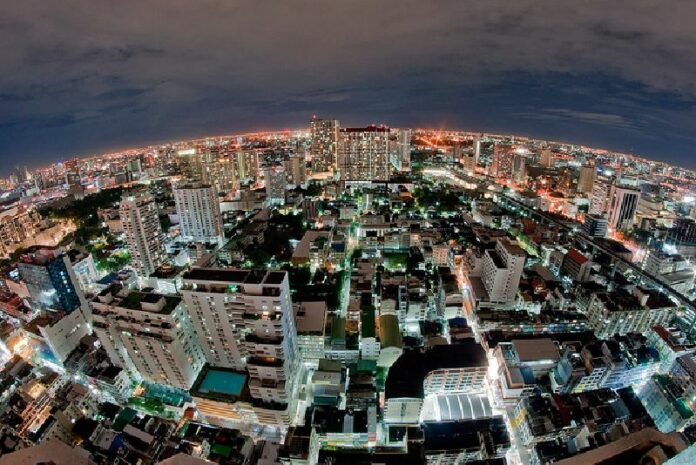
Bangkok from a bird’s eye view in a 2011 photo. Photo: digitalpimp./ flickr

BANGKOK — Each New Year comes with new expectations, and Bangkok always amazes us in some way. A lot of change happened during 2015 and, little by little, the City of Angels was gradually transformed.

What will Bangkok look like in 2016? How will the city change? We asked some experts to contribute their thoughts, to help us better imagine how our beloved city will alter in the next twelve months.


\

The purple line first test run on Dec.14, 2015 before it officially begins operating in August, 2016. Photo: BMCL / Facebook


More options, less cards, same price

When the Mangmoom (spider) card comes into effect in August, passengers can finally carry only one integrated piece of plastic for both the BTS and MRT.

With the Purple Line finally added to the minimal skytrain network in the same month, suburban Bangkok and Nonthaburi will finally gain the direct access to the heart of the city (though you still have to depend on the bus to travel from Tao Poon to Bang Sue station because they will not be physically linked yet by then).

With four more routes of mass rapid transit due to come to auction, Bangkokians can hope for the day that public transport networks will eventually cover every corner of the city.

With Khlong Lat Phrao finally being cleared to pave the way for an alternative transport through canal, travel could become faster and cheaper.

The achitect and writer of “Bangkok: Handmade Transit”, Yanyong Boon-Long, once said the idea of a hybrid network connecting the BTS and MRT with hundreds of canals, was the most interesting idea that City Hall has come up with in 20 years and in 2016, he still insisted the same thing.

“In the age of Rama V, people in Bangkok could use canals to access more parts of the city than what we can access by BTS nowadays. It’s abandoned infrastructure.”

But does it also mean we are going to have better transportation in 2016, or even in the ensuing years? An architect known for his keenness to develop better transportation for the metropolis, said the biggest issue remains the same, the ticket price.

“Most people who use the skytrain are tourists,” said Yanyong Boon-Long. “The big question is how to make it more accessible.”

For him, lowering the ticket price is not the best solution. “The price can remain the same, but wages have to be increased.”


\

Khlong Ong Ang on Nov.16 after the 28-day demolition of the historic Saphan Lek market.


The cleanup continues  

If there is one word that best described Bangkok in 2015, it definitely goes to “reorganization.”

The largest grey-black market Khlong Thom, the oldest toy and electronics market Saphan Lek, landmark amulet market, Tha Prachan, to name a few, were among the areas cleared up by City Hall during the past year responding to junta policy to reclaim public space.

Some markets are gone forever and some stayed but without small stalls spilling out onto the nearby sidewalks. The campaign has drawn praise from those who are glad to see the law implemented and criticism from those who think it has also swept the life away from the city.

Whatever side you take, it continues. The man behind the crackdown, Maj. Gen. Wichai Sangprapai, said the next targets of 2016 start with Pak Khlong Flower Market and Bang Lamphu and will then continue to the well-known shopping zone, Pratunam.

An advisor to the Bangkok Governor said he even planned to reorganize areas on the Thonburi side of the city, citing Ban Kae market as an example.

As Thailand has just entered the ASEAN Community, Maj. Gen. Wichai said it was even more important to organize the capital city.

“We definetely need to keep going,” he said. “More than 90 percent of people support this policy.”

“Some said we oppress the poor, but why can’t they see that it’s all illegal.”


\

A coffee shop with a retro interior in Bangkok old town offers old-fashioned breakfast at high prices. Photo: Matichon TV


Bangkok is dead?

In 2015, we found ourselves headed to Chinatown area at night when we wanted to drink at a new hip bar, while on our way back from Khaosan Road, we saw a number of old buildings transformed into stylish, yet old-fashioned looking hostels, especially on Charoen Krung Rd. Apparently, cultural tourism brought life back to Bangkok’s old town.

But does that also mean life and money brought back for local residents? A researcher who works closely with local community argued it was not the case.

“I dare to say Bangkok is dead, it is actually been dead already for a long time ago,” said Walailak Songsiri from the Lek-Prapai Viriyahpant Foundation. “Without humans, it cannot be a city.”

With the reorganization idea, which she claims forces poorer people to abandon the town, plus the unorganized policy of urban planning that makes the area unaffordable for locals, Wilailak said “Next year, we will see a lot more redevelopment and fewer people.”

Despite the effort of young entrepreneurs to arrange a local integrated tour, Walailak asked “Do you actually have real human life for them to see or are you just lying to yourself?”

When pricey fake vintage style breakfasts can be found in buildings that force out restaurants with 30 years of history, due to high rents, Walailak seems unwilling to hope for a better future.

“Where are the roots of all those coffee shops? Now we have become a city without roots and experience to contribute [to the people].”


Advertisement

Thai Nurse Saves German Tourist, by Roadside CPR (Video)

A 39-year-old nurse, Srikanya Cheuarop, was trying  to rescue a German cyclist as seen in a video posted Saturday.

SURAT THANI — During a New Year holiday trip with her family, Srikanya Cheuarop, stopped her car without hesitation, to perform a resuscitation which saved the life of a 49-year-old German cyclist.

Posted Saturday, the clip showing the minutes when an off-duty nurse in civilian clothing, went to the rescue of an unconscious German man has gone viral. The rescuer, who reportedly works in male neurosurgery department, said she was travelling with her family for a vacation, when she saw a foreign man waving for help by the side of the Surat – Na San Road. That man was also holding onto another man who appeared to be in trouble.

“The patient's friend said a few cars drove past, yet no one stopped to help,” said the 39-year-old nurse. “If I had continued travelling without helping him, I could not have had a fun trip.”

The German national, identified as Gunter Retsch, was cycling on the 200-kilometre route from Surat Thani’s Don Sak pier to Krabi. His friend said they planned to spend 12 days at their destination before returning to Koh Phangan.

After first aid CPR, Retsch was transferred to Surat Thani Hospital where Srikanya works and is now reportedly in a safe condition.


To reach us about this article or another matter, please contact us by e-mail at: [email protected].

Follow Khaosod English on Facebook and Twitter for news, politics and more from Thailand.

Follow @KhaosodEnglish

\

Advertisement

Civilians Facing “Camouflaged Justice”, Say Rights Lawyers

Sansern Sriounruen shows alleged torture that he claims was from his time in military custody. Photo: Thai Lawyers for Human Rights group.

By Pravit Rojanaphruk
Senior Staff Writer

BANGKOK — Over 1,400 civilians were tried in military court last year, in what Thai Lawyers for Human Rights group (TLHR) called a “camouflaged justice process”, in a newly-released report highlighting 10 legal cases from 2015.

Alleged torture and severe sentences under the lese majeste law, as well as liberal use of sedition charge were mentioned in the report.

The group said the process is as follows: “It starts from military personnel  reporting the case to the police. The military then accuse a person of committing the crime. They carry out the arrest, participate in the interrogation, prosecuting the case by the Judge Advocate and adjudicating the case by military judges in military court, as well as detaining the individuals in military barracks. The control of all procedures is basically subjected to the power of the military.”

Among the unusual cases showing the arbitrary nature of the process, in the report TLHR notes the late night remand hearing of the 14 anti-coup activists who are members of the New Democracy Movement, wherein the military court was open at 10pm on June 26 last year.

“The whole process for the remand hearing finished at 00.30am. It was the latest [time wise] remand hearing that has ever taken place [to the best of our knowledge],” the group reports, adding, “It reflects just how independent and impartial the Military Court really was.”


\

An illustration of the late night trial of 14 members of the New Democracy Movement, June 26, 2015. Picture: Thai Lawyers for Human Rights group.


Alleged Torture

In another aspect highlighted by TLHR, the report notes that there have been at least four defendants who made torture allegations against their interrogators.

Wichai Yusuk, one of the four, claimed that he and others were “mistreated”. This allegedly included being “hit, punched, booted in their heads, chests and backs and threatened with assault in order to extract information…”

What’s more, the lawyers group noted, “some suspects were allegedly subjected to electrocution leaving visible traces on their skin.”

Another suspect in the case, Sansern Sriounruen – who was additionally accused of setting off an explosive device in front of the Criminal Court, on Ratchadapisek Road – claimed he was subjected to electric shock on his right thigh 30 to 40 times as he and others were held in custody under martial law, leaving visible marks on his body.

In this case, the lawyers noted that the Metropolitan Police Bureau later responded to the complaint by saying that some of the injuries sustained by Sansern were a result of “his falling onto a blunt object and it was not possible to determine the exact cause of the wound.”


Liberal Use Of Sedition Charge

The group also noted that the security law has been applied against some who criticize junta leader General Prayuth Chan-ocha and his family. Rinda Paruechabutr was arrested and accused of violating Article 116 of the Penal Code, which deals with seditious acts, for making a Facebook posting accusing Prayuth’s wife of transferring a large sum of money abroad. Although she was unable to prove her accusation, Rinda insisted that it was her right to criticize Prayuth and his family.

On Dec. 21, the Bangkok Military Court ruled to disqualify the sedition case against Rinda under Article 116, adding however that it could be prosecuted as a libel case.

“[Thai Lawyers for Human Rights] has found that the sedition offence under Article 116 has been used as a political tool. Normally, any person committing any possible libelous acts against the powers that be or [the junta] should be charged with violation of libel or defamation offences.”


Record Breaking Lese Majeste Sentences

In yet another highlighted case, the group noted that a record-breaking lese majeste sentence of 60 years in prison was handed out by the military court on Aug. 7 last year against a man by the name of Pongsak, whose family name was withheld in the report.

Pongsak was found guilty of violating the lese majeste law for six different posts on his Facebook page (which he operated under an alias).

“He was sentenced to sixty years for the six posts, or ten years per post. It was reduced by half, to thirty years due to his guilty plea.”

The group noted that this and other cases show how “severe penalties have been handed down by the military court against lese majeste offenders.

“Previously in the Military Court, the penalty was five years per count. But in these cases, the Military Court has increased it to 8-10 years per count."      

Pravit Rojanaphruk can be followed on Twitter at @PravitR

CORRECTION: The original version of this article incorrectly identified all 14 members of the New Democracy Movement who were arrested in June 2014 as students. In fact, not all of them were students. 


To reach us about this article or another matter, please contact us by e-mail at: [email protected].

Follow Khaosod English on Facebook and Twitter for news, politics and more from Thailand.

Follow @KhaosodEnglish

\


Advertisement

Whiteline: a White Hot Underground Space in Silom

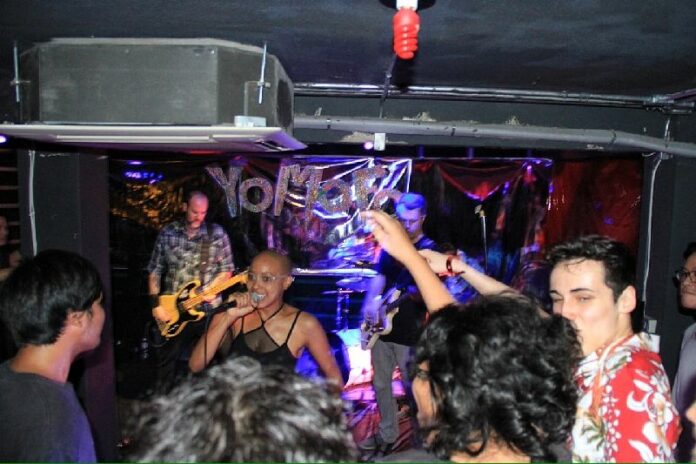
Deadtown Trash performing at YoMoFo event Dec. 6.

BANGKOK — Looking to embrace the busy buzz of the Bangkok underground? Head to Whiteline, for some quality, night time fun.

Although it sits unassumingly at the corner of Silom 8, the renovated shop house-style building is easily recognizable as part of the scene. The kick-ass graffiti style painting of an octopus with a three-eyed human head, slaps visitors in the face as they step in through the front door.

Founded by Oliver Wolfson and his business partner Joe Delaney, Whiteline started off early 2015 as a giant shop house.  Now it’s transformed into one of the best hangout spots downtown and boasts a serious sound system.

The first floor is dedicated to a huge unpretentious bar and art gallery, while the second floor is home to cool, quality, underground beats.

Graffiti of an octopus greets customers as they enter Whiteline


Whiteline hosted a lot of events in 2015, including international craft beer event “Brewtopia II” and “YoMoFo.”

At the YoMoFo event on Dec. 6, the second-floor stage was filled with thick techno beats and familiar faces of kick-ass Thai and expat bands such as Deadtown Trash, Plastic Section, Degaruda, The Sangsom Massacre and The Sticky Rice. Ravers and rockers were both well catered to.

“Actually the first YoMoFo was held a few weeks before Songkran festival. Whiteline was very raw and sparse back then,” Delaney said. “I introduced the space to some friends who collaborated with RhuBarb & CustTard promotions to help promote the space and celebrate Bangkok’s underground art and music.”

Apart from standard suds such as Leo and Singha, the beverage selection also includes a list of local IPAs, quality brews and special organic non-alcoholic ginger beer.

Whiteline will run a daytime cafe along with the art gallery downstairs in the near future, according to the owner Wolfson. Visitors can expect a variety of homemade food such as pancakes and vegan chocolate brownies.

Whiteline’s January calendar already is filled to the brim with a bunch of cool events including Pineapples Hello 2016, Concrete Jungle 2 (BK RAS), Brew Revolution 2 and more.

To reach the place, hop on the BTS, get off at Sala Daeng station and walk for a few minutes to Silom Soi 8.

Advertisement

Rethinking the Passage of Time

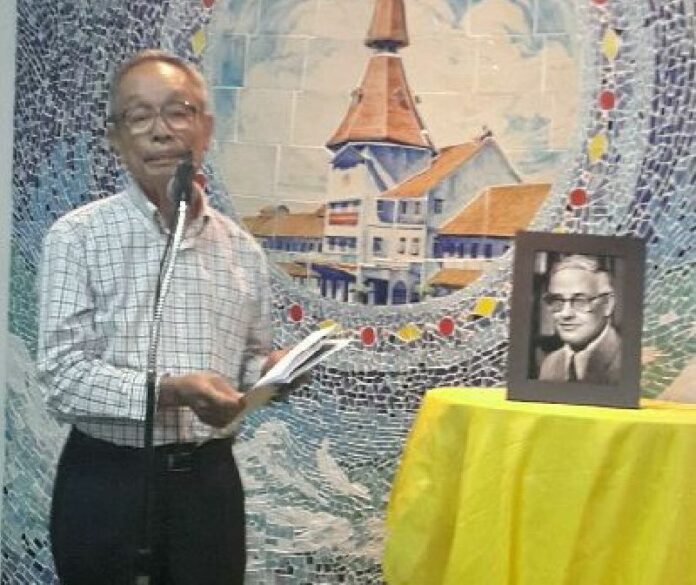
Former Thammasat University Rector, Charnvit Kasetsiri giving a eulogy at Thammasat in honor of Professor Benedict Anderson who passed away last December. Photo: Sa-naguan Khumrungroj / Facebook

By Pravit Rojanaphruk
Senior Staff Writer

Yet another year is behind us and we are a year closer to death. The passage of time reminds us of the fleeting nature of our existence. It begs us to consider what’s truly important in life, what does it all mean and how we might like to spend the rest of our ephemeral existence.

Unless you have a religious epiphany, or pre-ordained concepts on what constitute a good and moral life and even the afterlife, you will probably face existential doubts with questions like: what’s the meaning of life and the reason for us being here and how can we best lead our life?

\Staring at photographs of people long dead, I am reminded that, like it or not, I too shall join them one day- and probably sooner than I think or would like to. Death of your loved ones and even strangers are wakeup calls to live life while it lasts.

One of the deaths which touched many Thai scholars last year, was the passing of Professor Benedict Anderson in December. Anderson was a distinguished professor at Cornell University, where he worked as a Southeast Asian expert. I was lucky enough to meet him on several occasions and his death partly inspired this writer to revisit the topic of the fleeting nature of life.

When it comes to grasping the fleeting nature of life in a poetic way, traditional Japanese culture is up there with few to match. In Japan, there’s the concept of “mono no aware”, the sad and beautiful recognition of the impermanence in life. The sad beauty of bidding farewell to unrequited love, a final goodbye at funeral to those who are dear to you: these moments are not just sad, but also beautiful as it’s very much a part of our human condition. 


The Nature of Life

There’s also a Japanese saying: “ichi-go ichi-e”, which literally translates as “one time, one meeting”. This phrase is meant as a reminder that a chance meeting with a good friend may be your last; so make the most of it and cherish it as if it were a once-in-a-lifetime encounter.

In a way, it’s a good thing that we’re not going to be around forever for we have to concentrate on what’s important in life. The limited time we have is like a finite blank canvass to be painted.  

Because human life is so fleeting and fragile, life is serendipitously precious and should be made meaningful as we discover various simple joys in life.

Because life is brief, we’re confronted with the question of how we can make the most out of our limited period on earth. As we all know we won’t be around forever, we can try to rise above our mundane and petty existence, above our lower instincts, be it greed, gluttony, ambition, lust, or vanity. Because we’re aware of the ephemeral nature of life we can be brave and face challenges with fortitude.


Marching On

The relentless march of time will take us away, so we can perhaps be more generous, caring and courteous to others, including strangers, because we know that we all will be gone soon enough. We can learn to see that in the end, we share the same destiny – rich or poor, smart or foolish, selfish or selfless, we all will have to die. Moving music, witty words, applied and pure arts, these are free gifts to humanity, from one generation to the next.

Knowing that we won’t be around forever enables us to be less attached and beckon us to not to be grounded by our mundane daily existence and to seek to contribute to others in whatever we excel in. Unless you are so poor as to have to lead a hand-to-mouth existence, contemplating whether there’s more to life than studying, working, marrying, having children and other daily routines we have taken for granted may not be a luxury as it enable us to distance ourselves from whatever we have been doing and contemplate the more fundamental question about how we have been leading our life so far.

While there are people who lead a more selfless existence due to acute awareness of the fleeting nature of life, some ended up using the same precondition to argue for the opposite and become nihilistic. They argue that life is purposeless since no one will live forever, not even the earth and the sun are permanent, so there’s no point caring for anything or anyone.

No matter which path you choose, it’s our ability to look at our daily existence from a detached distance and being conscious of it which partly makes us human. The search for a meaningful life should be more than just for the sake of it, but in order to understand what life actually is.   


Pravit Rojanaphruk can be followed on Twitter at @PravitR


To reach us about this article or another matter, please contact us by e-mail at: [email protected].

Follow Khaosod English on Facebook and Twitter for news, politics and more from Thailand.

Follow @KhaosodEnglish

\


Advertisement

Mysterious Fireball Hits Northern Sky

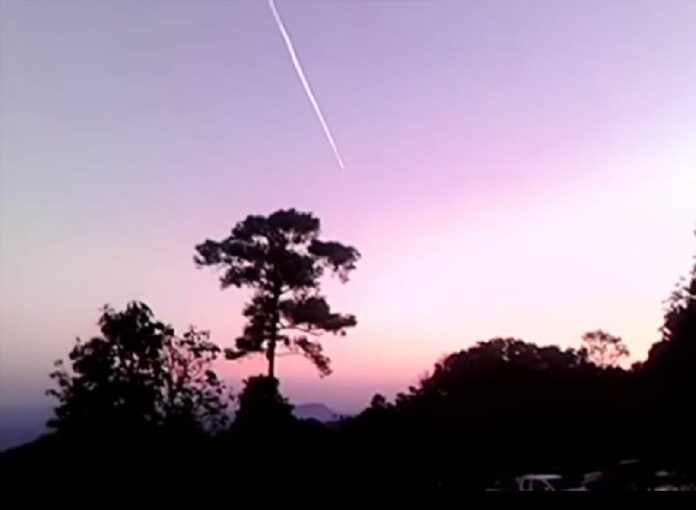
A fireball seen in the early hours of Jan.2 in Lampang.

LAMPANG — The sky in northern Thailand this morning saw not only the second light of 2016, but also a 30-second long fireball.

Aside from in Lampang, the mysterious light was also seen in many places up north including Chiang Rai, Loei and as far south as Phitsanulok.

The fireball that appeared at 6am Saturday was not a meteor but space debris, a collection of defunct man-made objects from old satellites or spent rocket stages, falling into the earth’s atmosphere, an expert from Bundit Observatory believes.

In an interview with Matichon, Worawit Tanwutthibundit said the slow speed of the fireball indicated that it’s not a falling star which normally travels at 80-kilometer per minute. The moving object was only travelling at around 20 or 30-kilometers a minute, the speed of space junk.

Though the director of Lampang meteorological station said the final conclusion has not yet been reached, as there is also the possibility that the object could have originated from a plane.


To reach us about this article or another matter, please contact us by e-mail at: [email protected].
Follow Khaosod English on Facebook and Twitter for news, politics and more from Thailand.

Follow @KhaosodEnglish

\

Advertisement

Seasonably Chilly Weather Finally Arrives for the New Year

Tourists gather to watch and take pictures of the first sunrise of 2016 at Pha Tam National Park, Ubon Ratchathani province. It was reportedly 15-16C at the time.

Happy New Year 2016 and here’s hoping you will have some cooler weather throughout January.

After the cool period lasted only a few days in mid-December, the chilly weather finally returns to greet the New Year.

According to the Thai Meteorological Department reported this morning, temperatures dropped 4C to 6C in the north and 2-3C in other parts of the country. Frosts are expected to form on some mountaintops. People are warned to keep warm and healthy as the high pressure from China sends some cooler temperatures and some strong winds to the northern regions of Thailand.

Due to the strong monsoon across the the Gulf of Thailand and the South of Thailand, the area will have 2-3 meter high waves. All boats are advised to keep onshore or proceed with caution until Sunday.

For the Bangkok Metropolitan Region, residents should expect to be welcomed by a cool breeze in the morning, with temperatures as low as 22C expected.


Related News

A Chill Falls Across the Land


To reach us about this article or another matter, please contact us by e-mail at: [email protected].

Follow Khaosod English on Facebook and Twitter for news, politics and more from Thailand.

Follow @KhaosodEnglish

\


Advertisement

Hot News

LATEST NEWS

Bangkok
overcast clouds
28.5 ° C
28.5 °
28.5 °
89 %
2.4kmh
100 %
Fri
34 °
Sat
35 °
Sun
33 °
Mon
34 °
Tue
33 °