27.7 C
Bangkok
Thursday, July 23, 2026
Home Blog Page 3198

Veteran Pro-Thaksin Politician Dies In Exile

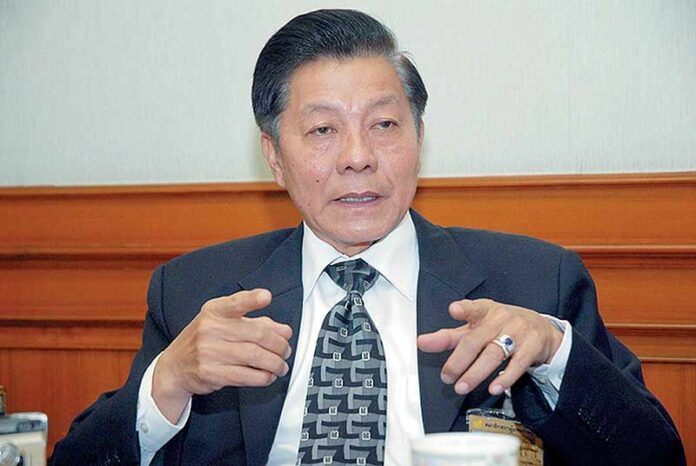
File photo of Apiwan Viriyachai, who died on 7 Oct 2014 from lung cancer. [Matichon]

BANGKOK — Longtime politician and lese majeste suspect Apiwan Viriyachai died this morning in the Philippines, where he had been living in exile since the military coup in May.

Apiwan, 65, passed away at a hospital from lung cancer, his aides told the media. His family is currently working to repatriate his body back to Bangkok for a religious service. 

Apiwan was a longtime ally of former Prime Minister Thaksin Shinawatra and had been serving as a lawmaker in Thaksin-backed governments since 2001. 

Most recently, he was a Pheu Thai party MP in the government led by Thaksin's sister, Yingluck Shinawatra, which was eventually toppled in the 22 May coup. 

Apiwan, who holds a rank as a colonel due to his background in the military academy, is thought to have fled Thailand shortly after the military takeover, like many other politicians and activists allied to the deposed government. 

In July, police charged Apiwan with lese majeste (insulting the monarchy) for allegedly defaming the royal family in one of his public speeches. Authorities have been trying to extradite the former MP to face trial in Thailand, where lese majeste is punishable by up to 15 years in prison.


For comments, or corrections to this article please contact: [email protected]

You can also find Khaosod English on Twitter and Facebook
http://twitter.com/KhaosodEnglish
http://www.facebook.com/KhaosodEnglish


Advertisement

Student Activist Decries University's 'Silencing' of 1976 Massacre

BANGKOK — A leading student activist has denounced Thammasat University's effort to "erase" the student massacre that took place on its campus 38 years ago.

Rangsiman Rome, a core leader of the League of Liberal Thammasat for Democracy (LLTD), told Khaosod English that university administrators asked his organisation not to commemorate the anniversary of the 1976 massacre today. 

"They have been telling us not to do anything political inside the university," Rangsiman said. He said his group initially wanted to commemorate the incident at Thammasat's Rangsit Campus, but eventually decided against it. However, they are planning to organise a "long-term political exhibition" at the campus in November, he said. 

The 1976 massacre was carried out by heavily-armed police officers and hooligans who stormed Thammasat University's Tha Prachan campus to disperse thousands of leftist students who were holding a peaceful rally there. Official records says 46 people were killed in the crackdown, but historians believe the death toll is much higher.

Thammasat administrators have come under fire from pro-democracy activists for their decision to restrict this year's commemoration of the 1976 massacre. Under conditions set by the university, only a religious service and ceremonial speeches were allowed, while the usual academic panel on the historical context of the massacre was forbidden.

The order was presumably an effort to respect the military junta’s ban on all political activities, which has been enforced since the 22 May coup.

Rangsiman said Thammasat's refusal to commemorate the 1976 massacre is paradoxical, as the administrators like to encourage students to be proud of the university’s activist history.

"During orientation, October 6 was brought up to instill pride among the students, but when the anniversary comes, which is the real test of whether students are allowed to speak their mind, the university ordered us not to do anything," said Rangsiman, who is a fourth year law student . 

Rangsiman also expressed concern that university administrators may be attempting to "erase" the controversial history under pressure from the junta. 

"It's possible that they have received orders from the military, for whom Somkid is serving," Rangsiman said, referring to Thammasat rector Somkid Lertpaithoon, who accepted a post in the junta's National Legislative Assembly (NLA).

In defiance of the ban on "politics," however, mysterious signs were posted in a lecture building on Thammasat's Rangsit Campus today criticising the administrators' alleged attempt to make students "forget" the 1976 massacre. Rangsiman said his group was not responsible for the signs.

Earlier this afternoon, another student group, the Thai Student Centre for Democracy (TSCD), organised a mini-concert in commemoration of the massacre at Thammasat Tha Prachan's campus. TSCD activists said that they felt music was the best way to tell the story of October 6 in the current atmosphere. 

Prominent author Sulak Sivarak also attended the event and gave a speech blasting Thammasat University administrators for turning themselves into "servants of the dictators."

"I urge the people to help bring back democracy," said Sulak, who identifies as an advocate for reforming the Thai monarchy."Don't care about the [junta's promise of] returning of happiness to the people. It's all a sham."


For comments, or corrections to this article please contact: [email protected]

You can also find Khaosod English on Twitter and Facebook
http://twitter.com/KhaosodEnglish
http://www.facebook.com/KhaosodEnglish

Advertisement

Police Clarify Koh Tao Victim's Cellphone 'Planting'

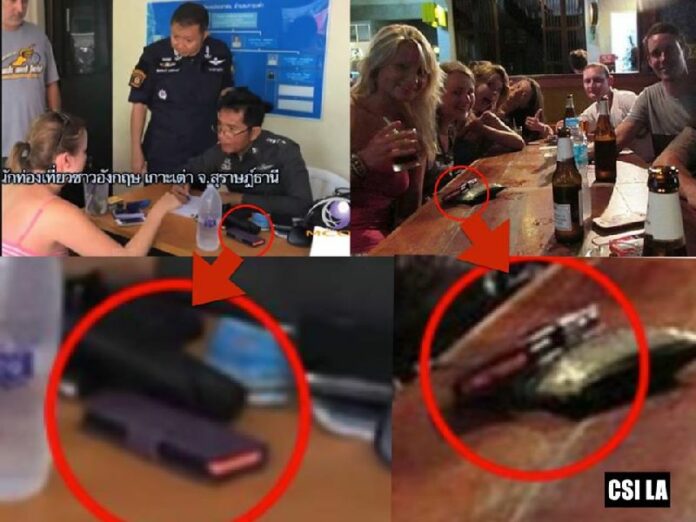
Photos passed around on social media of Witheridge with her phone prior to the murder, and Witheridge’s friends giving the same phone to police the next day.

BANGKOK — Thai police have dismissed the accusation that they planted evidence on the Burmese men accused of murdering two British backpackers in southern Thailand three weeks ago.

Commentators on social media accused the police of falsely implicating the two Burmese workers, named Saw and Win, as "scapegoats" in the killing of David Miller and Hannah Witheridge on Koh Tao island on 15 September. 

Last week, Thai police chief Somyot Pumphanmuang said officers found Witheridge’s phone during a raid of one of the suspect’s homes. However, internet skeptics started passing around a photo of Witheridge with her phone prior to the murder, and another one of Witheridge’s friends giving the same phone to police.

Pol.Col. Prachum Ruengthong, a top officer in charge of Koh Tao, explained yesterday that there was a misunderstanding.

According to Pol.Col. Prachum, the phone uncovered by police at the suspect's residence belonged to Miller, not Witheridge. 

As for Witheridge's cellphone, police returned it along with her iPad and digital camera to her family on 18 September, said Pol.Col. Prachum said.

"An official from the UK embassy witnessed the transfer and signed a document as evidence at a police substation on Koh Tao," the officer said. 

Saw and Win, the Burmese suspects, have been charged with premeditated murder, sexual assault of Witheridge, and nighttime theft for stealing Miller's phone. 

The two suspects are currently imprisoned at Koh Samui Provincial Court and awaiting their trials, Pol.Col. Prachum said. 


For comments, or corrections to this article please contact: [email protected]

You can also find Khaosod English on Twitter and Facebook
http://twitter.com/KhaosodEnglish
http://www.facebook.com/KhaosodEnglish

Advertisement

HM King's Gallbladder Removed, Palace Says

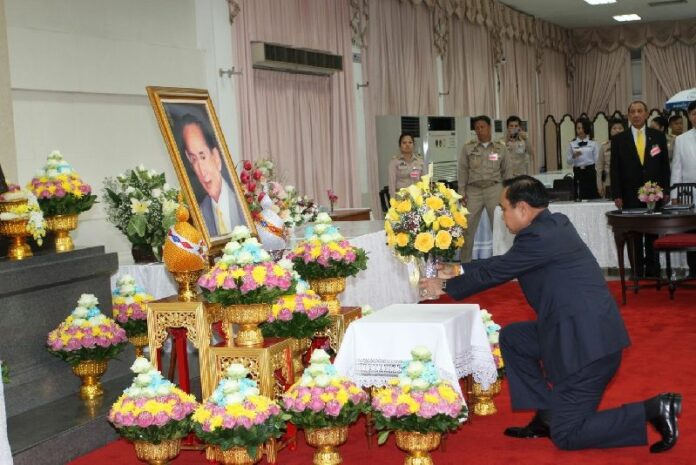
Junta leader and PM Prayuth Chan-ocha wishing HM the King a speedy recovery on 6 October 2014.

BANGKOK — Surgeons removed the King of Thailand's gallbladder last night, two days after the 86-year-old monarch was rushed to the hospital with a high fever, the palace said in a statement this morning.

According to the Royal Household Bureau, doctors at Siriraj Hospital discovered inflammation in King Bhumibol’s gallbladder at around 9.45 on Sunday night. The medical team then decided to remove the organ in an operation that lasted slightly over an hour, the palace said.

"The operation went smoothly. The condition of His Majesty after the surgery is satisfactory," the statement says. "His Majesty returned to his ward at 0.20 am on 6 October."

His Majesty the King's frail health is a cause of anxiety for many Thais. The monarch has been on the throne for more than 60 years and is widely credited with bringing stability to the kingdom. By midday, Thailand's SET index was down 1.43 percent at 1,574.52.

King Bhumibol was driven to the Bangkok hospital from his summer palace in Prachuap Kiri Khan province on 3 October with a high fever and rapid heartbeat. According to the palace's statement, the surgery effectively lowered His Majesty's heartbeat rate and temperature.

The Royal Household Bureau added that doctors continue administer medicine and an intravenous drip to His Majesty the King.

Government leaders and politicians visited Siriraj Hospital today to bow before a portrait of the king on the building's ground floor and wish His Majesty a quick recovery.

The visitors included junta leader and Prime Minister Prayuth Chan-ocha, Cabinet members, and former Prime Minister Yingluck Shinawatra. Crowds of loyal Thais also visited the hospital. 

King Bhumibol previously spent several years at the hospital to undergo surgery and other medical operations.


For comments, or corrections to this article please contact: [email protected]

You can also find Khaosod English on Twitter and Facebook
http://twitter.com/KhaosodEnglish
http://www.facebook.com/KhaosodEnglish

Advertisement

Editorial: Independent Test of Koh Tao Suspects' DNA Needed

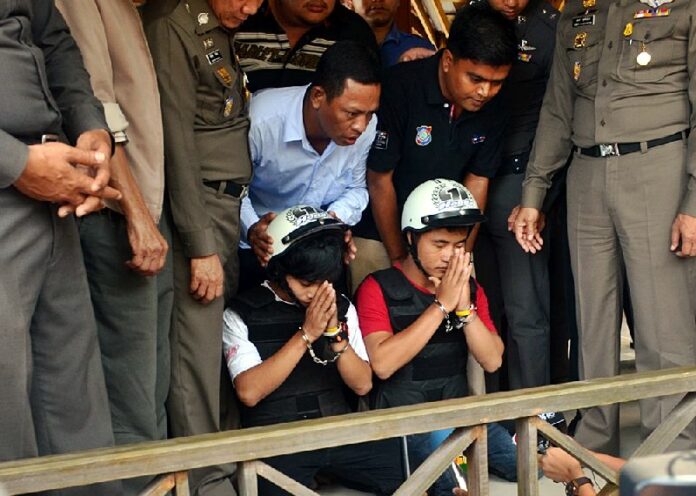
Police officers order the two Burmese suspects to apologise for allegedly murdering two British tourists on Koh Tao, 3 October 2014.

Due to Thai police's unprofessionalism and history of forced confessions, an impartial review of the Koh Tao murder case is needed to ensure justice.

Last week, Thai police arrested two Burmese men and accused them of murdering two British tourists on Koh Tao island on 15 September. According to police, not only did the two men confess, but their DNA samples matched DNA traces found on one of the victim’s bodies. The two men, named Saw and Win, are facing charges that could be punished with the death penalty.

Thai police have been under an immense amount of pressure to arrest a suspect behind the murder, with authorities and local residents concerned that the incident could damage Thailand’s already-ailing tourist industry. There has also been societal pressure for Thailand to avoid “losing face” over the barbaric murder, which has perhaps prompted police to point the finger at non-Thais from the start.

So far, the police investigation has been disturbingly unprofessional: the crime scene was not properly sealed off in the wake of the murder, police have made blunders as embarrassing as misidentifying the victims in photos distributed to the press, and a series of confusing and contradictory public statements have left many questions about basic details of the case unanswered.

There are also legitimate concerns that the alleged confessions of the two Burmese suspects were obtained under duress. Thai police have a history of using physical abuse to extract false confessions that are later retracted, and there was no lawyer present during Saw and Win’s interrogation. Last week, two other Burmese migrant workers on the island said they were beaten by police when they did not confess to the murder.

Given the extremely high stakes of this criminal case – Saw and Win’s lives are on the line – we believe it is necessary for Thailand to go to great lengths to confirm the guilt of these two men.

Currently, the key evidence in the case are the DNA traces found on Hannah Witheridge, who is believed to have been raped by two men prior to her death. Police have insisted that the DNA samples collected from Saw and Win matched the semen found in Witheridge's body.

However, while it is unclear when Saw and Win's DNA samples were taken, their “matching” results were announced less than 24 hours after their arrest. It typically takes 48-72 hours for authorities in other countries to process DNA results.

Therefore, we believe it is necessary for an independent body to investigate the forensic evidence that has allegedly implicated the two men. The investigation should be carried out by a foreign authority that has accredited technological facilities to verify the DNA results.

The independent inquiry should (1) confirm that none of the DNA samples have been tampered with, and (2) evaluate the alleged match between the two suspects and the DNA traces acquired from Witheridge's body. 

If these conditions are not met, we fear that Thai police will add to their legacy of falsely accusing innocent people. In 1986, for example, four men were falsely convicted and imprisoned for the murder of Thai-American teenage girl Sherry Ann Duncan. Although the Supreme Court acquitted the defendants six years later, one defendant had already died behind bars and another died several years later from a disease he contracted in prison.

In 2000, Thai police kidnapped and physically abused an ethnic Karen in an effort to extract a confession for the rape and murder of 23-year-old British tourist Kirsty Jones. 

We believe an impartial review of the forensic evidence in the Koh Tao case is needed to ensure a fair trial for Saw and Win, who have already been wrongly denied legal representation.

Allowing an independent inquiry would also provide Thai police, who have vehemently dismissed the scapegoat allegations, the opportunity to satisfy critics and prove their competence. 

Last week, the United Kingdom’s ambassador to Thailand offered technical assistance from British authorities to aid the investigation. Thai police should accept the offer.


For comments, or corrections to this article please contact: [email protected]

You can also find Khaosod English on Twitter and Facebook
http://twitter.com/KhaosodEnglish
http://www.facebook.com/KhaosodEnglish

Advertisement

Editorial: Independent Test of Koh Tao Suspects’ DNA Needed

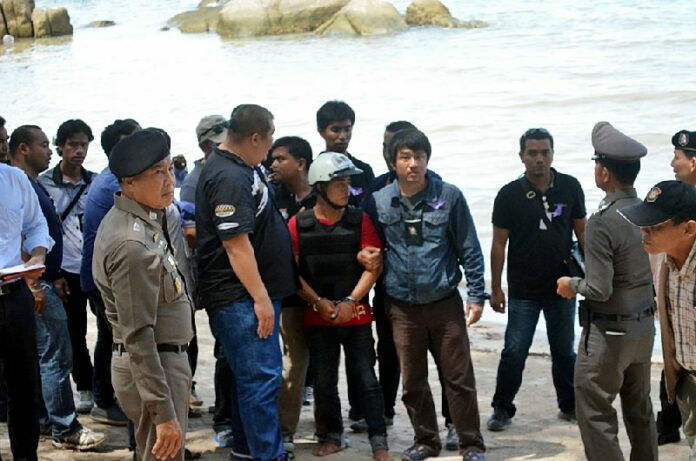
The two suspects were ordered to "re-enact" their alleged crime on 3 Oct 2014.

Due to Thai police’s unprofessionalism and history of forced confessions, an impartial review of the Koh Tao murder case is needed to ensure justice.

Last week, Thai police arrested two Burmese men and accused them of murdering two British tourists on Koh Tao island on 15 September. According to police, not only did the two men confess, but their DNA samples matched DNA traces found on one of the victim’s bodies. The two men, named Saw and Win, are facing charges that could be punished with the death penalty.

Thai police have been under an immense amount of pressure to arrest a suspect behind the murder, with authorities and local residents concerned that the incident could damage Thailand’s already-ailing tourist industry. There has also been societal pressure for Thailand to avoid “losing face” over the barbaric murder, which has perhaps prompted police to point the finger at non-Thais from the start.

So far, the police investigation has been disturbingly unprofessional: the crime scene was not properly sealed off in the wake of the murder, police have made blunders as embarrassing as misidentifying the victims in photos distributed to the press, and a series of confusing and contradictory public statements have left many questions about basic details of the case unanswered.

There are also legitimate concerns that the alleged confessions of the two Burmese suspects were obtained under duress. Thai police have a history of using physical abuse to extract false confessions that are later retracted, and there was no lawyer present during Saw and Win’s interrogation. Last week, two other Burmese migrant workers on the island said they were beaten by police when they did not confess to the murder.

Given the extremely high stakes of this criminal case – Saw and Win’s lives are on the line – we believe it is necessary for Thailand to go to great lengths to confirm the guilt of these two men.

Currently, the key evidence in the case are the DNA traces found on Hannah Witheridge, who is believed to have been raped by two men prior to her death. Police have insisted that the DNA samples collected from Saw and Win matched the semen found in Witheridge’s body.

However, while it is unclear when Saw and Win’s DNA samples were taken, their “matching” results were announced less than 24 hours after their arrest. It typically takes 48-72 hours for authorities in other countries to process DNA results.

Therefore, we believe it is necessary for an independent body to investigate the forensic evidence that has allegedly implicated the two men. The investigation should be carried out by a foreign authority that has accredited technological facilities to verify the DNA results.

The independent inquiry should (1) confirm that none of the DNA samples have been tampered with, and (2) evaluate the alleged match between the two suspects and the DNA traces acquired from Witheridge’s body.

If these conditions are not met, we fear that Thai police will add to their legacy of falsely accusing innocent people. In 1986, for example, four men were falsely convicted and imprisoned for the murder of Thai-American teenage girl Sherry Ann Duncan. Although the Supreme Court acquitted the defendants six years later, one defendant had already died behind bars and another died several years later from a disease he contracted in prison.

In 2000, Thai police kidnapped and physically abused an ethnic Karen in an effort to extract a confession for the rape and murder of 23-year-old British tourist Kirsty Jones.

We believe an impartial review of the forensic evidence in the Koh Tao case is needed to ensure a fair trial for Saw and Win, who have already been wrongly denied legal representation.

Allowing an independent inquiry would also provide Thai police, who have vehemently dismissed the scapegoat allegations, the opportunity to satisfy critics and prove their competence.
Last week, the United Kingdom’s ambassador to Thailand offered technical assistance from British authorities to aid the investigation. It’s not too late for Thai police to accept.

For comments, or corrections to this article please contact: [email protected]

You can also find Khaosod English on Twitter and Facebook
http://twitter.com/KhaosodEnglish
http://www.facebook.com/KhaosodEnglish

Advertisement

1976 Student Massacre Remembered in 'Politics-free' Commemoration

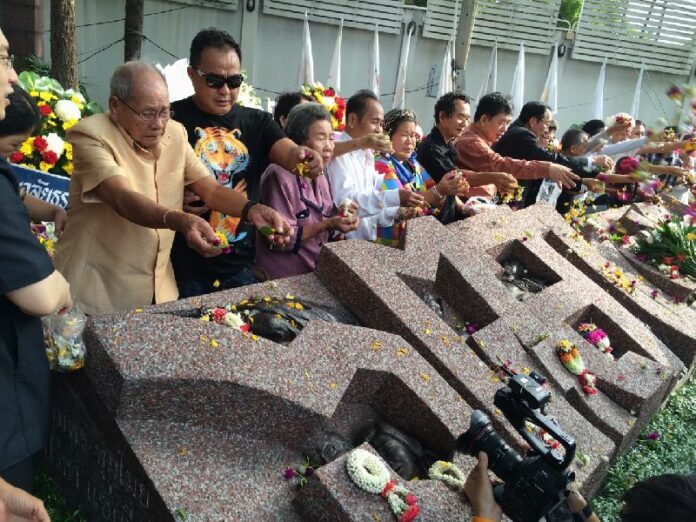
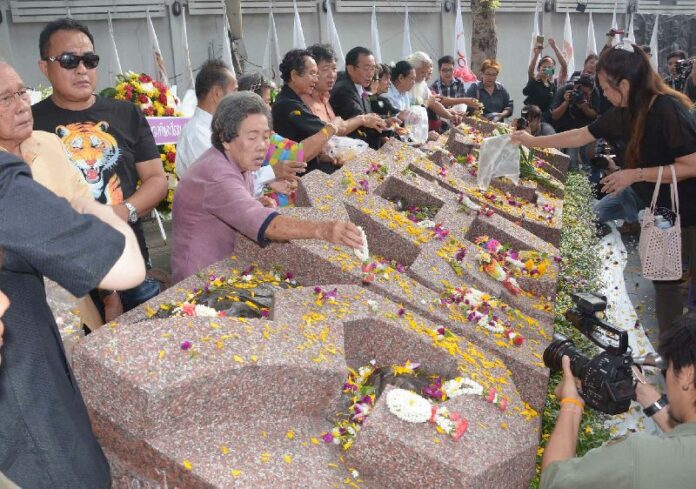
More than 50 participants laid flowers at the October 1976 massacre monument at Thammasat University on Oct. 6, 2014.

BANGKOK — Survivors and relatives of the victims of the October 1976 student massacre gathered at Thammasat University today to quietly mark its 38th anniversary, under orders from the university's administrators to refrain from any political discussion.

Over 50 participants laid flowers at the massacre’s monument and listened to speeches that praised the student activists who perished in the incident as "martyrs" of Thai democracy. The ceremony was co-hosted by several activist groups.

Official records says 46 protesters died on 6 October 1976 when heavily-armed police officers and paramilitary forces stormed Thammasat University to disperse thousands of leftist student activists who were staging a peaceful rally there. However, historians believe the actual death toll was much higher. That evening, the military launched a coup to "restore order."

Per orders from Thammasat's administrators, this year's commemorative ceremony lacked the usual academic seminar about the history and impact of the incident. 

However, a number of activists managed to make some political remarks during their commemorative speeches this morning. Suthachai Yimprasert, a history professor at Chulalongkorn University and a co-organiser of the ceremony, said he wondered if Thailand has learned any lessons from the tragic events in 1976.

"There are two significant events on 6 October 1976: there was a crackdown on students, and there was a military coup," said Suthachai, who was also a student activist at the time of the massacre. "I can't believe that these events kept happening, 38 years afterwards. There have been three coups since that day."

Suthachai added that October 1976 was by no means the last instance of political bloodshed in Thailand, as evident by the events of May 1992 and May 2010. He said he fears "similar tragedies may continue to happen in the future."

Weng Tojirakarn, a core leader of the Redshirt movement, gave a speech calling on the military junta to repeat martial law and "honour" its promise of a peaceful transition to democratic rule. 

"Please honour your word. Don't forget that people are the owners of the country," Mr. Weng said. "I also would like the junta to consider lifting martial law, so that people will have the freedom to express their opinions about how the country should be reformed."

Jinda Thongsin, whose son Jarupong Thongsin was killed in massacre, said he is sad to have lost his son, but has found solace to know that Jarupong "died for his country."

Police officers quietly observed the ceremony from a distance and did not interfere with the commemoration. 

The event was relatively low-key compared to previous years due to a lack of formal endorsement from Thammasat University’s administrators. Unlike past years, the university provided neither audio equipment nor refreshments to participants. The only representative from the administration who attended the ceremony was deputy rector Nakarin Mektrairat. 

Thammasat University’s administrators have been accused of collaborating with Thailand’s pro-establishment factions in recent years, which critics say is a deviation from the university’s traditional role as a bastion of democracy and liberalism in Thailand. 

The criticism intensified after Thammasat rector Somkid Lertpaithoon accepted a position in the junta’s National Legislative Assembly in August.

October 6 massacre remains a sensitive subject in Thailand, largely due to the involvement of staunch royalists in the incident. For months prior to the massacre, a number of right-wing politicians, military officers, and media agencies accused the student activists of being "Communists" who were plotting to overthrow the monarchy. 

No official has ever been prosecuted for the massacre. In 1978 the government issued amnesty for both perpetrators and victims of the incident.

According to student activists at Thammasat University's Lampang Campus in northern Thailand, the military ordered them not to hold any ceremony – political or religious – to commemorate the 1976 massacre, Prachatai reported. The students reportedly received a formal letter from a regional military unit telling them that the event risked "sowing divisions" in the society.

 

For comments, or corrections to this article please contact: [email protected]

You can also find Khaosod English on Twitter and Facebook
http://twitter.com/KhaosodEnglish
http://www.facebook.com/KhaosodEnglish

Advertisement

1976 Student Massacre Remembered in 'Politics-free' Commemoration

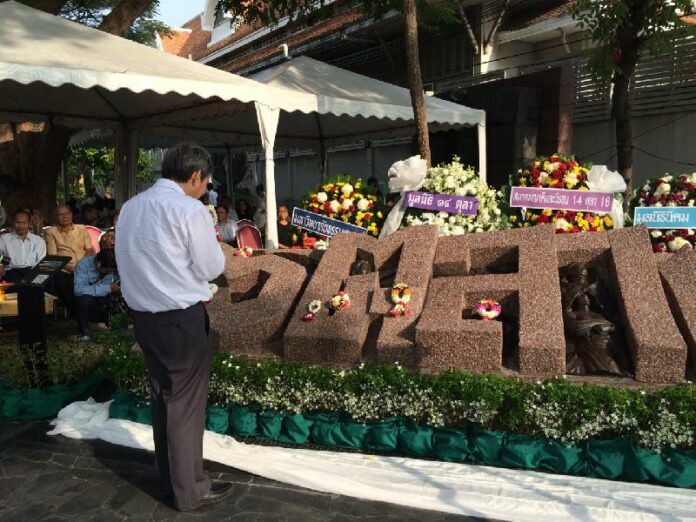
A man praying to the October 6, 1976 monument at Thammasat University on 6 Oct 2014.

BANGKOK — Survivors and relatives of the victims of the October 1976 student massacre gathered at Thammasat University today to quietly mark its 38th anniversary, under orders from the university's administrators to refrain from any political discussion.

Over 50 participants laid flowers at the massacre’s monument and listened to speeches that praised the student activists who perished in the incident as "martyrs" of Thai democracy. The ceremony was co-hosted by several activist groups.

Official records says 46 protesters died on 6 October 1976 when heavily-armed police officers and paramilitary forces stormed Thammasat University to disperse thousands of leftist student activists who were staging a peaceful rally there. However, historians believe the actual death toll was much higher. That evening, the military launched a coup to "restore order."

Per orders from Thammasat's administrators, this year's commemorative ceremony lacked the usual academic seminar about the history and impact of the incident. 

However, a number of activists managed to make some political remarks during their commemorative speeches this morning. Suthachai Yimprasert, a history professor at Chulalongkorn University and a co-organiser of the ceremony, said he wondered if Thailand has learned any lessons from the tragic events in 1976.

"There are two significant events on 6 October 1976: there was a crackdown on students, and there was a military coup," said Suthachai, who was also a student activist at the time of the massacre. "I can't believe that these events kept happening, 38 years afterwards. There have been three coups since that day."

Suthachai added that October 1976 was by no means the last instance of political bloodshed in Thailand, as evident by the events of May 1992 and May 2010. He said he fears "similar tragedies may continue to happen in the future."

Weng Tojirakarn, a core leader of the Redshirt movement, gave a speech calling on the military junta to repeat martial law and "honour" its promise of a peaceful transition to democratic rule. 

"Please honour your word. Don't forget that people are the owners of the country," Mr. Weng said. "I also would like the junta to consider lifting martial law, so that people will have the freedom to express their opinions about how the country should be reformed."

Jinda Thongsin, whose son Jarupong Thongsin was killed in massacre, said he is sad to have lost his son, but has found solace to know that Jarupong "died for his country."

Police officers quietly observed the ceremony from a distance and did not interfere with the commemoration. 

The event was relatively low-key compared to previous years due to a lack of formal endorsement from Thammasat University’s administrators. Unlike past years, the university provided neither audio equipment nor refreshments to participants. The only representative from the administration who attended the ceremony was deputy rector Nakarin Mektrairat. 

Thammasat University’s administrators have been accused of collaborating with Thailand’s pro-establishment factions in recent years, which critics say is a deviation from the university’s traditional role as a bastion of democracy and liberalism in Thailand. 

The criticism intensified after Thammasat rector Somkid Lertpaithoon accepted a position in the junta’s National Legislative Assembly in August.

October 6 massacre remains a sensitive subject in Thailand, largely due to the involvement of staunch royalists in the incident. For months prior to the massacre, a number of right-wing politicians, military officers, and media agencies accused the student activists of being "Communists" who were plotting to overthrow the monarchy. 

No official has ever been prosecuted for the massacre. In 1978 the government issued amnesty for both perpetrators and victims of the incident.

According to student activists at Thammasat University's Lampang Campus in northern Thailand, the military ordered them not to hold any ceremony – political or religious – to commemorate the 1976 massacre, Prachatai reported. The students reportedly received a formal letter from a regional military unit telling them that the event risked "sowing divisions" in the society.

 

For comments, or corrections to this article please contact: [email protected]

You can also find Khaosod English on Twitter and Facebook
http://twitter.com/KhaosodEnglish
http://www.facebook.com/KhaosodEnglish

Advertisement

HM King's Gallbladder Removed, Palace Says

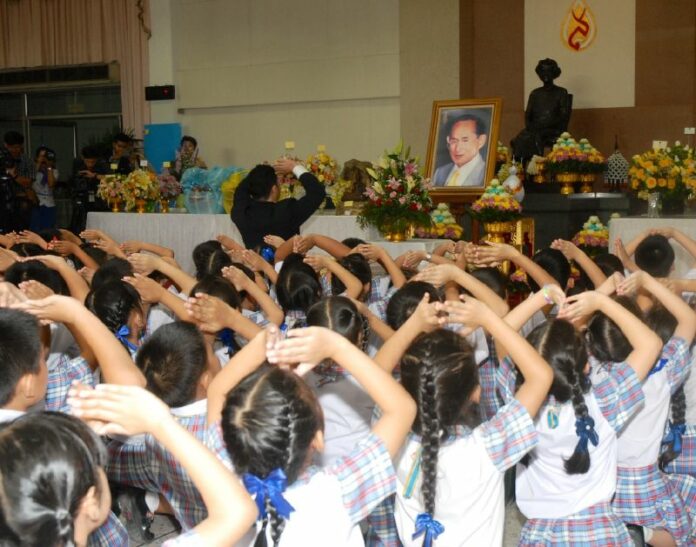
School children paying respect to a portrait of HM the King to wish him a speedy recover from gallbladder surgery on 6 October 2014.

BANGKOK — Surgeons removed the King of Thailand's gallbladder last night, two days after the 86-year-old monarch was rushed to the hospital with a high fever, the palace said in a statement this morning.

According to the Royal Household Bureau, doctors at Siriraj Hospital discovered inflammation in King Bhumibol’s gallbladder at around 9.45 on Sunday night. The medical team then decided to remove the organ in an operation that lasted slightly over an hour, the palace said.

"The operation went smoothly. The condition of His Majesty after the surgery is satisfactory," the statement says. "His Majesty returned to his ward at 0.20 am on 6 October."
His Majesty the King's frail health is a cause of anxiety for many Thais. The monarch has been on the throne for more than 60 years and is widely credited with bringing stability to the kingdom. By midday, Thailand's SET index was down 1.43 percent at 1,574.52.

King Bhumibol was driven to the Bangkok hospital from his summer palace in Prachuap Kiri Khan province on 3 October with a high fever and rapid heartbeat. According to the palace's statement, the surgery effectively lowered His Majesty's heartbeat rate and temperature.

The Royal Household Bureau added that doctors continue administer medicine and an intravenous drip to His Majesty the King.

Government leaders and politicians visited Siriraj Hospital today to bow before a portrait of the king on the building's ground floor and wish His Majesty a quick recovery.

The visitors included junta leader and Prime Minister Prayuth Chan-ocha, Cabinet members, and former Prime Minister Yingluck Shinawatra. Crowds of loyal Thais also visited the hospital. 

King Bhumibol previously spent several years at the hospital to undergo surgery and other medical operations.


For comments, or corrections to this article please contact: [email protected]

You can also find Khaosod English on Twitter and Facebook
http://twitter.com/KhaosodEnglish
http://www.facebook.com/KhaosodEnglish

Advertisement

'Conversation With Thaksin' Book Sued For Lèse Majesté

(Prachatai English)

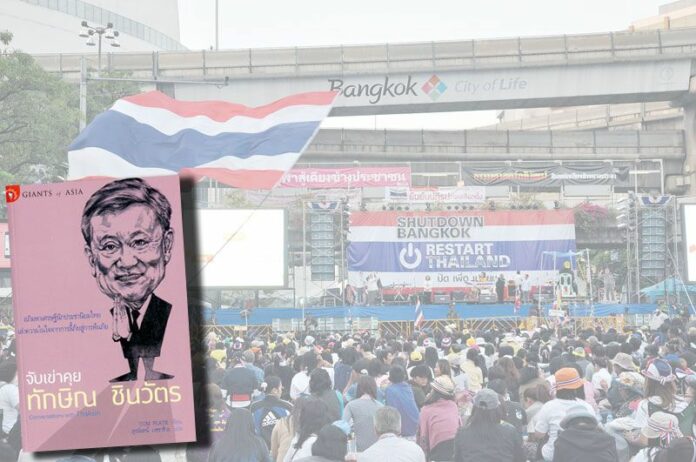
A lèse majesté complaint has been filed against controversial former prime minister Thaksin Shinawatra and those involved with the Thai translation of Conversation with Thaksin, a one-sided account of Thai politics from Thaksin as interviewed by American journalist Tom Plate, Post Today reported. 

The book is one in the 'Giants of Asia' series in which the author has a 'conversation' with Asian leaders, such as Lee Kwan Yew, Mahathir Mohamad and Ban Ki-moon.

Read more of the story here.


Note: Khaosod English is not responsible for content on other websites.

Advertisement

Hot News

LATEST NEWS

Bangkok
overcast clouds
27.7 ° C
27.7 °
26.6 °
82 %
0.5kmh
92 %
Thu
34 °
Fri
34 °
Sat
35 °
Sun
35 °
Mon
33 °