31.1 C
Bangkok
Tuesday, June 23, 2026
Home Blog Page 1798

Myanmar’s Ruling Party Wins 6 of 13 by-Election Seats

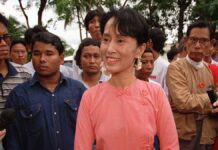
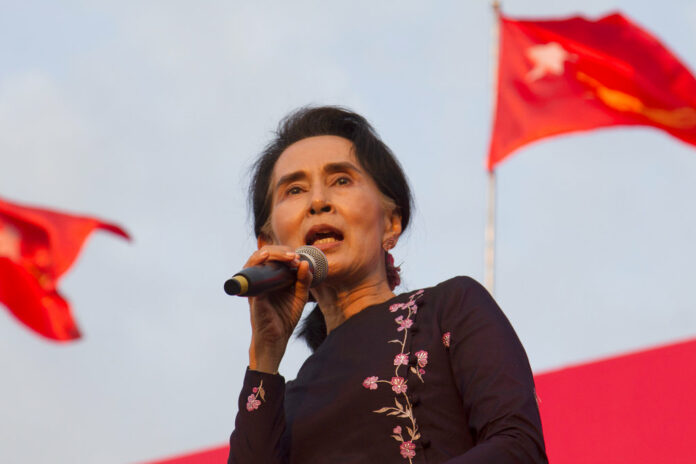
Myanmar opposition leader Aung San Suu Kyi speaks in 2015 during an election campaign rally of her National League for Democracy party for upcoming general election in Yangon, Myanmar. Photo: Khin Maung Win / Associated Press

YANGON — Myanmar’s ruling party led by Aung San Suu Kyi has won at least six seats in by-elections to fill 13 of the 1,171 seats in national, regional and state parliaments.

Preliminary results for Saturday’s polls, available Monday for all but one race, showed the National League for Democracy generally retaining support in the country’s heartland, but yielding seats to parties representing ethnic minorities in the areas where they live, mostly in border regions.

The NLD won a landslide victory in the 2015 general election, when there was wide-ranging popular support to end decades of military rule. But minority groups have been disappointed that the government of NLD leader Suu Kyi has failed to meet their demands for greater autonomy and a halt to aggressive army activities in their territories.

Advertisement

Lion Air Jet Had Same Airspeed Problem on Last 4 Flights

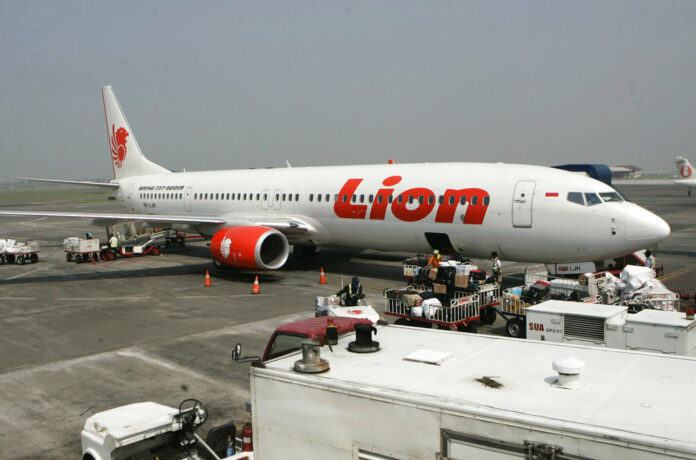
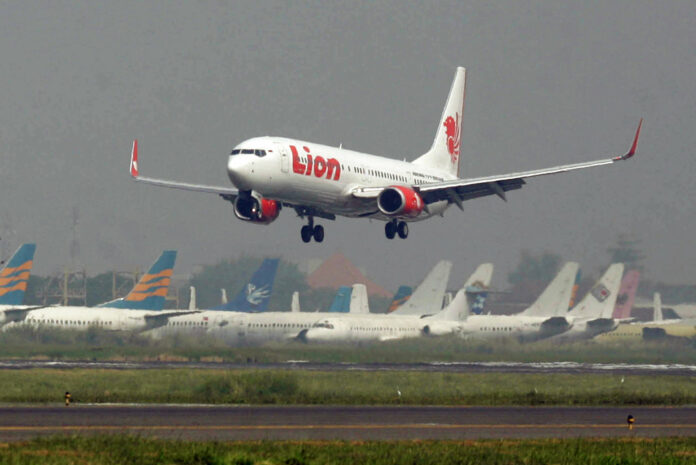
A Lion Air passenger jet takes off from Juanda International Airport in Surabaya, Indonesia, in a 2012 file photo. Photo: Trisnadi

JAKARTA — The “black box” data recorder from a crashed Lion Air jet shows its last four flights all had an airspeed indicator problem, investigators said Monday, after distraught relatives of victims confronted the airline’s co-founder at a meeting organized by officials.

National Transportation Safety Committee chairman Soerjanto Tjahjono said the problem was similar on each of the four flights, including the fatal flight on Oct. 29 in which the plane plunged into the Java Sea minutes after takeoff from Jakarta, killing all 189 people on board.

Problems with the plane’s previous flight, from Denpasar on Bali to Jakarta, were widely reported and “when we opened the black box, yes indeed the technical problem was the airspeed or the speed of the plane,” Tjahjono told a news conference.

“Data from the black box showed that two flights before Denpasar-Jakarta also experienced the same problem,” he said.

“Rumors circulating on social media are so great and here we want to clarify that in the black box there were four flights that experienced problems with the airspeed indicator.”

At the meeting with family members, Tjahjono had said that information downloaded from the jet’s flight data recorder was consistent with reports that the plane’s speed and altitude were erratic after takeoff on its final flight. Searchers are still trying to locate the cockpit voice recorder.

Lion has said a technical problem with the jet was fixed after problems with the Bali to Jakarta flight.

Rusdi Kirana, Lion Air’s co-founder, was not invited to speak by Transport Minister Budi Karya Sumadi, who moderated the meeting between relatives and the officials who are overseeing the search effort and accident investigation.

But he stood and bowed his head after angry and distraught family members demanded that Kirana, who with his brother Kusnan Kirana founded Lion Air in 1999, identify himself.

“Lion Air has failed,” said a man who identified himself as the father of passenger Shandy Johan Ramadhan, a prosecutor in a district on the island where the flight was headed.

“I want Mr. Rusdi Kirana and his team to pay attention,” he said. “Since the time of the crisis, I was never contacted by Lion Air. We lost our child, but there was no empathy that Lion Air showed to us.”

After the meeting, Kirana left in a hurry, avoiding questions from reporters.

Many families face an agonizing wait for missing relatives to be identified. Police medical experts have received nearly 140 body bags of human remains and have identified 14 victims.

Relatives questioned why the 2-month-old Boeing 737 MAX 8 plane had been cleared to fly after suffering problems on its Bali to Jakarta flight on Oct. 28 that included a rapid descent after takeoff that terrified passengers.

“Lion Air said the problem was fixed, is it true the problem was cleared?” asked Bambang Sukandar, whose son was on the flight. “If not, technicians in charge must be responsible,” he said. “The law is absolute, because they have stated that the plane was cleared to take off again. These bad technicians must be processed by law to prevent plane accidents from continuing in Indonesia.”

Tjahjono said the large amount of small debris and the relatively small area the debris was found in showed the plane hit the water at a very high speed.

“The plane was intact when it plunged to the sea, it did not explode in the air, and the aircraft engine was running when it touched the water at high RPM – it’s marked by the loss of all blades of the turbine,” he said.

The Lion Air crash is the worst airline disaster in Indonesia since 1997, when 234 people died on a Garuda flight near Medan. In December 2014, an AirAsia flight from Surabaya to Singapore plunged into the sea, killing all 162 on board.

Lion Air is one of Indonesia’s youngest airlines but has grown rapidly, flying to dozens of domestic and international destinations. It has been expanding aggressively in Southeast Asia, a fast-growing region of more than 600 million people.

Story: Niniek Karmini

Advertisement

China’s Xi Promises Market Opening as Import Fair Begins

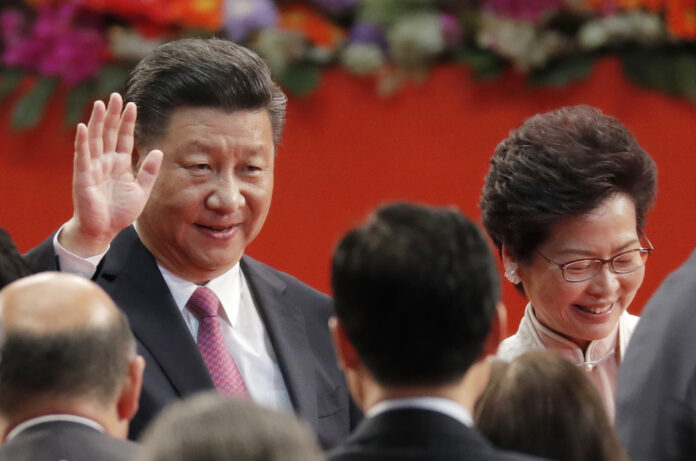
Chinese President Xi Jinping, left, and Hong Kong's new Chief Executive Carrie Lam leave after administered the oath for a five-year term in office at the Hong Kong Convention and Exhibition Center in 2017. Photo: Kin Cheung/ AP.

SHANGHAI — President Xi Jinping promised Monday to open China wider to imports as he opened a high-profile trade fair meant to rebrand the country as a global customer. But he offered no response to U.S. and European complaints about technology policy and curbs on foreign business.

The China International Import Expo is part of official efforts to defuse trade tension while resisting pressure to roll back industry plans that Washington, Europe, Japan and other governments say violate its market-opening obligations.

“It is our sincere commitment to open the Chinese market,” Xi said in a speech to a VIP audience that included Russian Prime Minister Dmitry Medvedev. Xi promised to “stimulate the potential to increase imports,” including by cutting costs for importers and improving consumer spending power.

Some 3,600 companies from 152 countries selling everything from Egyptian dates to German factory machinery are attending the five-day event at a Shanghai convention center that bills itself as one of the world’s biggest buildings.

Xi’s government is emphasizing the promise of China’s growing consumer market to help defuse complaints Beijing abuses the global trading system by reneging on promises to open its industries.

Business groups complain that while Beijing is expanding imports to serve its manufacturers and consumers, it blocks access to industries including finance and logistics. They say regulators are trying to squeeze foreign competitors out of promising fields such as information security.

Prime ministers and other senior officials of governments including Egypt, Pakistan and Vietnam also are attending the fair.

The United States – China’s biggest trading partner – had no plans to send a high-level envoy.

The expo is “likely not a huge benefit or attraction for U.S. companies,” said the chairman of the American Chamber of Commerce in China, William Zarit, in an email.

“Many may be attending because they think it is politically smart,” said Zarit. “However, unless some of the protectionist trade barriers currently in place are changed, it won’t make much difference either way.”

Xi made no mention of Beijing’s fight with President Donald Trump over Chinese plans for state-led development of technology industries. But in an indirect reference to Trump’s “America first” policies and threats of import controls, he appealed to other governments to “jointly safeguard free trade.”

China has cut tariffs and announced other measures this year to boost imports, which rose 15.9 percent in 2017 to USD$1.8 trillion. But none addresses U.S. complaints that prompted Trump to impose penalty tariffs of up to 25 percent on $250 billion of Chinese imports. Beijing has responded with tariff hikes on $110 billion of American goods.

Chinese leaders have rejected pressure to roll back plans such as “Made in China 2025,” which calls for state-led creation of global champions in robotics and other fields. Some American officials worry that might erode U.S. industrial leadership.

Last week, Trump and Xi had what China’s foreign ministry called an “extremely positive” phone conversation. They plan to meet this month during the Group of 20 gathering of major economist in Argentina, but private sector analysts say a breakthrough is unlikely.

The fight has added to challenges for communist leaders are who trying to shore up economic growth that slumped to a post-global crisis low annual rate of 6.5 percent in the three months ending in September. They also are struggling to revive confidence in a stock market that has tumbled 25 percent this year to become the world’s worst performer.

Xi acknowledged some Chinese industries face “growing risks” but said efforts to shore up growth are already paying off.

“The fundamentals for sound and steady growth of the Chinese economy remain unchanged,” he said.

The expo fits in with Beijing’s quest to develop a trading network centered on China and increase its influence in a Western-dominated global system.

China already is the No. 1 market for its Asian neighbors and is promoting its multibillion-dollar “Belt and Road” initiative to expand commerce by building ports, railways and other infrastructure across 65 countries from the South Pacific through Asia to Europe and Africa.

The fair lets Beijing show it is “making efforts to boost imports,” said Rajiv Biswas, chief Asia economist for IHS Markit. But it is “unlikely to have much impact” on its politically sensitive trade balance with the United States.

A U.S.-Chinese deal “will require significant measures by the Chinese authorities to reduce bilateral trade imbalances and to protect U.S. intellectual property rights,” Biswas said.

Europe, Japan and other trading partners have criticized Trump’s tactics but echo U.S. complaints. European leaders are frustrated that Beijing bars foreign acquisitions of most Chinese assets while its own companies are on a global buying spree.

Last week, the French and German ambassadors to Beijing appealed for changes including an end to requirements that foreign companies operate in joint ventures with state-owned partners. Writing in a Chinese business magazine, they called for an overhaul of rules they say hinder companies from profiting from and protecting their technology.

The Shanghai expo also gives Beijing a chance to repair its image as a positive for global development following complaints “Belt and Road” leaves host countries with too much debt, while too little work goes to local companies.

Governments including Nepal, Sri Lanka and Thailand have scrapped or scaled back projects. Kenya and other nations have run into trouble repaying Chinese loans.

Story: Joe McDonald

Advertisement

Indonesia and Australia Sign New Economic Cooperation Deal

Indonesia's President Joko
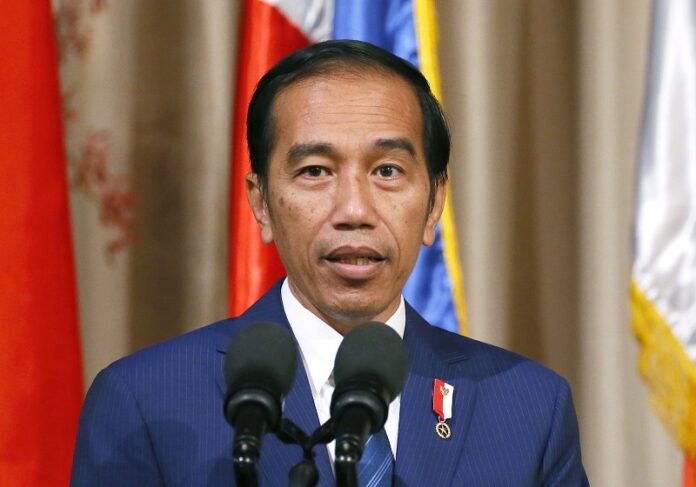
Indonesia's President Joko "Jokowi" Widodo addresses the media in 2017 during a visit to the Malacanang Palace in Manila, Philippines. Photo: Bullit Marquez / Associated Press

CANBERRA, Australia — Indonesian and Australian ministers signed an agreement to strengthen government economic exchanges on Monday as the neighboring countries work toward forging a bilateral free trade deal.

Treasurer Josh Frydenberg and Indonesian Finance Minister Sri Mulyani signed a memorandum of understanding at the Australian Parliament House that updates a framework for policy and technical exchanges between two governments that have existed for 12 years.

Indonesian and Australian officials have concluded negotiations on a free trade deal. Former Prime Minister Malcolm Turnbull said last week he was confident after a meeting with Indonesian President Joko “Jokowi” Widodo the free trade deal between Australia, a nation of 25 million people, and Indonesia, a near-neighbor with more than 260 million people, would be signed within weeks.

But Turnbull also warned the government to expect a negative reaction from Muslim-majority Indonesia if Australia follows the United States by shifting its embassy in Israel from Tel Aviv to Jerusalem. Prime Minister Scott Morrison said last month that his Cabinet was considering making the move.

Frydenberg said he and Mulyani had discussed the free trade deal on Monday and “we are moving towards signing that important agreement.”

“Our ability to share ideas, share perspectives on economic, fiscal and taxation policy is absolutely critical to the close partnership that our countries share,” Frydenberg said.

Mulyani described the meeting as “very productive” and said she was confident the bilateral relationship would continue to be positive and strong.

“In any relationship in any country, we always have ups and downs, but of what we can be very certain is that the relationship between many of the individual policymakers is always robust,” Mulyani said.

Story: Rod McGuirk

Advertisement

Appeals Filed for 2 Myanmar Journalists in Secrets Case

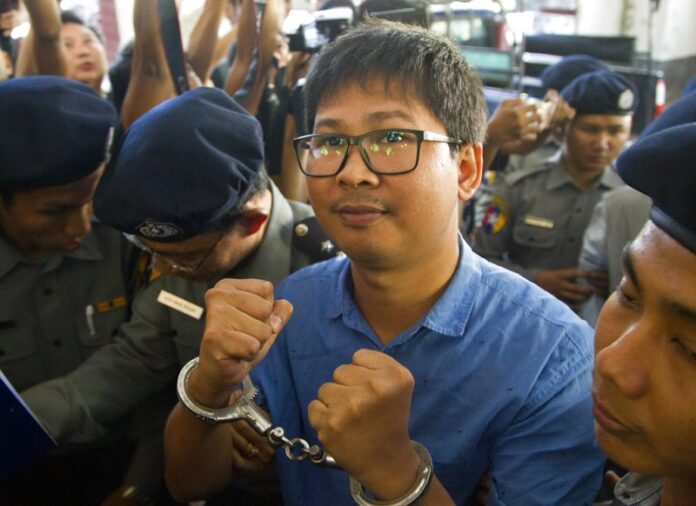
Reuters journalist Thet Oo Maung Maung, known as Wa Lone, is escorted by police upon arrival at court Wednesday, Jan. 10, 2018, outside Yangon, Myanmar. Photo: Thein Zaw / Associated Press

YANGON — Lawyers for two Reuters journalists imprisoned in Myanmar have appealed the verdict that sent them to prison for seven years for illegal possession of official documents.

Wa Lone and Kyaw Soe Oo had been reporting on the brutal crackdown on the Muslim Rohingya minority when they were arrested and charged with violating Myanmar’s colonial-era Official Secrets Act. They had pleaded not guilty, contending that they were framed by police.

Reuters president Stephen Adler said in a statement Monday that the court’s ruling had ignored “compelling evidence of a police set-up, serious due process violations, and the prosecution’s failure to prove any of the key elements of the crime.”

Advertisement

Grief, Anger Overflow as Families Confront a Silent Lion Air

A Lion Air passenger jet is parked on the tarmac in 2012 at Juanda International Airport in Surabaya, Indonesia. Photo: Trisnadi / Associated Press

JAKARTA — Distraught and angry relatives of those killed when a Lion Air jet crashed last week have confronted the airline’s chief executive during a meeting arranged by Indonesian officials.

Transport Minister Budi Karya Sumadi did not invite Rusdi Kirana to speak during the meeting, which featured relatives and officials overseeing the search effort and investigation. But when relatives demanded he identify himself, Kirana stood and bowed his head.

After the meeting, Kirana left in a hurry, avoiding questions from reporters.

The Lion Air jet crashed into the Java Sea on Oct. 29 just minutes after taking off from Jakarta. All 189 people aboard were killed.

Many families face an agonizing wait for missing relatives to be identified.

Kirana founded Lion Air with his brother in 1999.

Advertisement

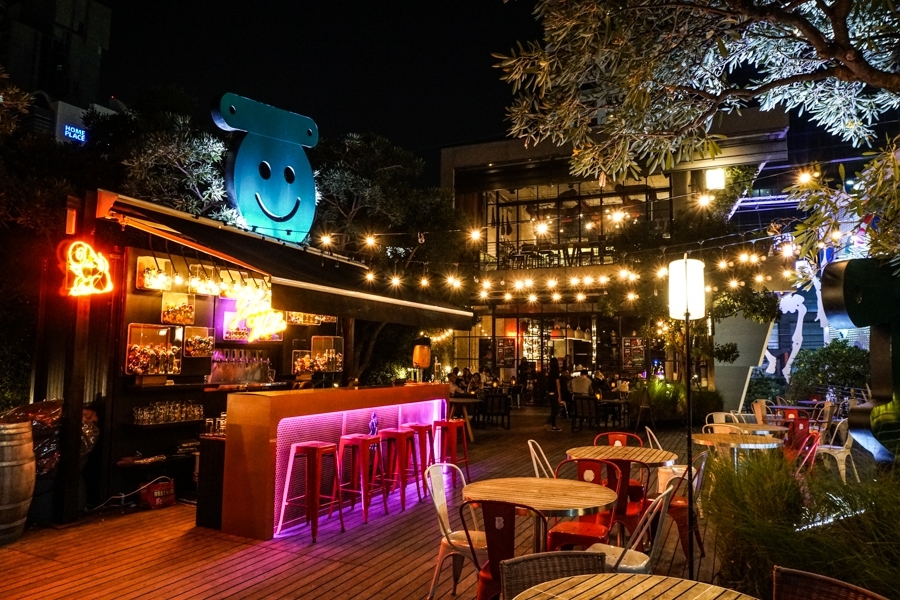
Eat, Drink, Dance in Bangkok This Month at 2nd ‘Beamfest’

BANGKOK — Not long after it packed in revelers donned in costumes for a wild Halloween night, red-hot dancefloor Beam will throw another epic party later this month.

Beamfest will return for its second year running, featuring three days of food and clothing pop-up stalls – and of course, music from techno and mor lam to hip-hop.

An international lineup will be in charge of center stage – British deep house DJ Hot Since 82, French electro-house producer Busy P and American hip-hop recording artist MadeinTYO. They will be joined by local talents Sunju Hargun, Dan Buri, hip-hop heads from Bangkok Invaders and more.

The venue’s terrace this time will be packed with mor lam fans when Studio Lam pops up with ya dong cocktails and familiar tunes by DJs Maft Sai, Ben and Kanehbos.

Offline Disco Club by DJ Supersonic and Pichy will run at Blaq Lyte’s pop-up store Auntys Haus where streetwear will be available for sale.

Food will fuel the fun. Roman trattoria Appia will bring fresh seafood and pasta to the table while, straight out from Yangon, Myanmar bistro will join forces with Sawbwa Coffee Co to run Vietnamese tacos and coffee-based cocktails.

Barbecue guru Meat & Bones will cross the street from The Commons to 72 Courtyard to serve their specialty eight-hour smoked ribs.

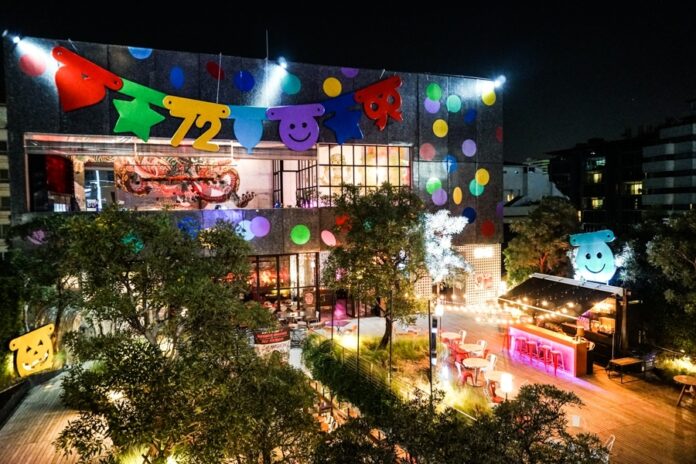
Beamfest starts 6pm on Nov. 16 and runs through Nov. 18 at Beam. The Thonglor nightclub is located on 72 Courtyard between sois Thonglor 16 and 18. It’s reachable by motorbike or taxi from BTS Thong Lo.

Early bird tickets are 600 baht a day and available online. Regular tickets are 700 baht per day.

Beamfest debuted last year, running six days across two weeks.

31854671558 176f9dd8ec o

Related stories:

Bangkok’s Beam Nightclub to Host Music, Art Fest

Advertisement

New Crown Property Law Comes Into Effect

A file photo of the Grand Palace. Image: Matichon

BANGKOK — A revised law governing His Majesty the King’s assets came into effect Saturday.

The amended Crown Property Act retains much of the older legislation enacted a year ago, but redefines the king’s possessions to include what the monarchy had accumulated under “ancient royal traditions.” King Vajiralongkorn has the final say over what is included in the category.

“Any dispute over what assets are considered Crown Property under the royal ancient traditions must be referred to His Majesty’s judgment,” Section 5 of the new law said.

Like the 2017 version of the law, His Majesty the King has the authority to handpick members for a committee to oversee and manage the Crown Property on his behalf. The committee is permitted to spend or invest King Rama X’s wealth, per His Majesty’s approval.

Related stories:

New Law Places Crown Property Under HM King

Advertisement

Netizens Slam Pro-Junta Rap Song ‘Thailand 4.0’

BANGKOK — A pro-junta music video released in response to a wildly popular anti-establishment rap, was widely mocked Monday online.

Netizens were unsparing in their criticism of “Thailand 4.0,” a music video released by the military government last week, days after a track that harshly criticized its rule went viral in the country.

“I’ve lived for 29 years, and this is the first song I’ve heard that claims to be rap. I thought it was a Sports Day song at a temple,” user Suphachon P Phattara wrote in a comment.  “So lame. The beats are so out of date. Is this era 0.04? Don’t make more songs like this, I’m getting second-hand embarrassment.”

“Thailand 4.0” was presented Thursday at a government conference on business startups and played to introduce junta chairman Gen. Prayuth Chan-ocha. It was released Saturday on YouTube. By Monday morning, the track had gained 1.3 million views and 20,000 dislikes in contrast to 871 likes.

It’s seen as the state’s answer to “Prathet Ku Mee,” or “My Country’s Got,” a viral anti-junta track released Oct. 22, which to date has more than 28 million views, 950,000 likes and 25,000 dislikes. It features 10 underground rappers who take turns tearing down political and social injustices in Thailand and criticizing the junta’s ongoing grip on power.

Read: Artists Should ‘Speak the Truth,’ Says Director of Anti-Junta Rap Video

Police flirted with prosecuting the rappers, even threatening the safety of their families, but have since backed down.

Some netizens, such as user Yaha Inv said having a response at all was undignified on the regime’s part.

“Is this the government’s response to ‘Prathet Ku Mee?’ Are these the actions of poo yai who think youngsters are being silly? Did they really have to respond at all?”

The video also made its way across Facebook.

Some were inspired by the song, however.

“Su su. Thailand can do it,” Facebook user Sarawut Glinliam wrote.

Here’s the unofficial translation of “Thailand 4.0.”

“Thailand 4.0”

Sawasdee, good morning Thailand,
Stop yawning, get up, get up!
Don’t just sit there sighing,
Let’s get it going, make it more wow, more wow!

The world is changing so let’s adjust to it,
Think of new things to build it up, build it up!
Wanna be cool, pretty, rich,
Nothing’s for sure. You gotta make it, make it!

Us, our kids, our grandkids,
Won’t be worse than anyone if our world is more open,
The coconut that’s covering our heads,
Take it off, so it’s brighter, brighter!

There are many talented Thais,
If we work together, we’ll be stronger, stronger!
Just come outside the coconut shell,
Whoever says we’re crazy will only get stupider, stupider!

Chorus:

Let’s meet up, Thais,
Think of new, great ideas together!
Think of far-out ideas,
It will get us far, if we work together!

We just need to cooperate,
So we can go farther, do better!
The world keeps spinning,
New innovations help Thailand fight!

Do your best today and tomorrow,
Things will be better if we agree,
Do good. Be cool, you can do it,
Just understand the new world, then you’ll be cooler, cooler!

Gen M, Gen Z, any Gen,
If you say yes, things are easier, easier!
Thai brains are all over the world,
It’s not a joke, Thais are smart.

We’ve got brains and good ideas,
Just add technology, we can go farther,
Who says innovating is hard?
Know. Think. Create. Build it up, build it up!

Whether you’re farming, growing vegetables, tilling fields,
Add in ideas, the prices will be better, better!
Inventors, app developers, rocket makers,
Enter contests to be sharper, sharper!

Employees, students, university students,
Think outside the curriculum, and get ready to be richer!
Office workers, manufacturers,
Don’t stop thinking, and your lives will get better!

Pull out the roots! Dig out the stumps!
Hit the coconut shell on the head. Thailand is leaping farther ahead!

Related stories:

Govt, Knocked by Rappers, Responds With Own Tune

Artists Should ‘Speak the Truth,’ Says Director of Anti-Junta Rap Video

Anti-Junta Rap Video is ‘Abominable,’ Suthep Says

Rap Video Blasting Junta Reaches 6M Views After Police Threats

Police to Summon Rappers Who Criticized Military Govt

With ‘My Country’s Got,’ Thai Rap Voices Rare Dissent Against Junta

‘Torn Down’ Prayuth Vows to ‘Fight’ in Latest Single

Advertisement

Cuban President Meets North Korea’s Kim Jong Un in Pyongyang

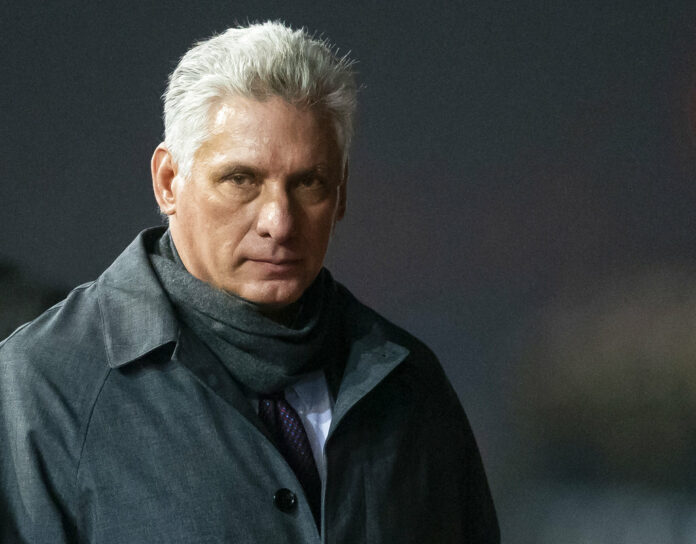
Cuba's President Miguel Diaz-Canel arrives Thursday at Moscow's Government Vnukovo airport for an official visit to Russia. Photo: Alexander Zemlianichenko / Associated Press

PYONGYANG, North Korea — North Korean leader Kim Jong Un and Cuba’s President Miguel Diaz-Canel – both hoping to get out from under U.S. economic sanctions – have agreed to expand and strengthen their strategic relations, North Korea’s state media reported Monday.

Diaz-Canel, who is in Asia on his first international tour since assuming office in April, arrived in Pyongyang with his wife on Sunday. He was met at the airport by Kim, who joined him on the ride into the city past flower-waving and cheering crowds.

North Korea’s state media reported the two held talks at the Paekhwawon State Guest House and stressed their shared socialist history and vowed continued solidarity. The official media offered few specifics, but said the talks proceeded in a “comradely and friendly atmosphere.”

The meeting with Kim could be seen as a shot across the bow for Washington, which has run into increasing difficulty in its efforts to wrest significant progress from the North on the denuclearization issue.

Pyongyang, which has also been quietly cozying up to Moscow recently, has been hardening its rhetoric ahead of a meeting in New York later this week between Secretary of State Mike Pompeo and the North’s main negotiator, Kim Yong Chol.

Over the weekend, Pyongyang used its official media to criticize the U.S. for its continued support of sanctions – a political tool Washington has also used extensively on Cuba and Russia – and hinted it may resume nuclear development if Washington doesn’t change is tune.

Sanctions-busting has been high on Diaz-Canel’s agenda.

While in Moscow, Diaz-Canel discussed a nearly USD$50 million arms deal with Russia and won a similar vow of expanded political, economic and military ties from Putin. The two then issued a joint statement denouncing U.S. “interference into domestic affairs of sovereign nations.”
The U.S. economic embargo on Cuba, initially imposed in 1958 and subsequently expanded, has remained in place. Russia faced an array of crippling U.S. and EU sanctions over the annexation of Crimea and its support for separatist rebels in eastern Ukraine.

Diaz-Canel was to leave Pyongyang on Tuesday and visit China, Vietnam and Laos.

Advertisement

Hot News

LATEST NEWS

Bangkok
overcast clouds
31.1 ° C
35 °
31.1 °
74 %
4.8kmh
97 %
Tue
34 °
Wed
37 °
Thu
36 °
Fri
36 °
Sat
37 °