31.7 C
Bangkok
Monday, June 8, 2026
Home Blog Page 2277

Kingdom to See Half-Week of Rain Ahead

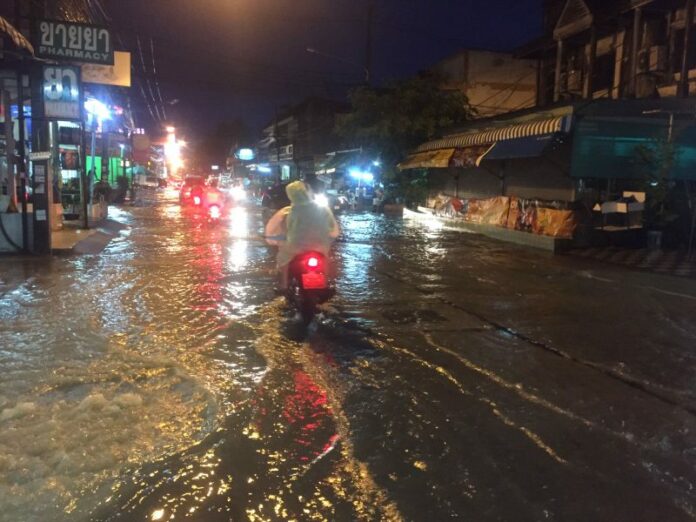
Flooded streets after an hour of heavy rain Thursday night in Pattaya

BANGKOK — Expect rains across the kingdom through Wednesday, and a slim chance of it Thursday through the the weekend.

According to the Thai Meteorological Department, there’s a 60 percent chance of rain in the capital until hump day, with highs of 35C and lows of 28C. Thursday through Saturday, will see it drop to a 40 percent chance of rain.

There’s a higher chance of rain in the provinces: 80 percent in the south, 70 in the east and 60 percent in the central and northern regions through Wednesday and decreased chances after. Residents on the Andaman coast should beware of storms and rough seas.

The half-week of rain is due to a southwest monsoon from the Andaman Sea that will peak by Wednesday before lessening in intensity.

Related stories:

Sunny Break’s Over as Rainfall Returns

Bangkok to Take a Break From the Wet This Week

Wetpocalypse: Bangkok Floods Again (Photos)There’s a Storm Rising Over Bangkok Tonight

Sunshine and … Just Kidding More Rain All Week

Monsoon Now: Prepare to Get Wet

Flooded Areas Across Bangkok After Last Night’s Big Storm (Photos)

Monsoon Brings Spectacular but Dangerous Falls to National Park 

Advertisement

Mongolians Vote in Election Marred by Corruption Allegations

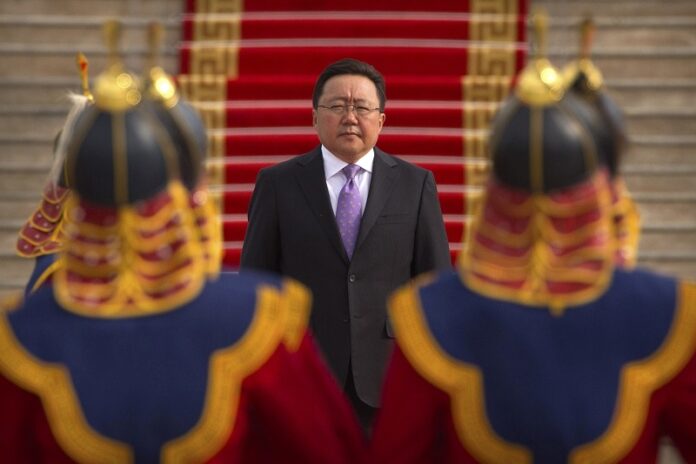
Mongolia's President Tsakhiagiin Elbegdorj inspects an honor guard before a welcome ceremony for South Korea's President Park Geun-hye last year in Ulaanbaatar, Mongolia. Photo: Mark Schiefelbein / Associated Press

ULAANBAATAR, Mongolia — Mongolians will vote for a new president on Monday in a race pitting a horse salesman against a former judo star and a nationalist wanting to get more from the vast landlocked country’s mineral wealth.

The three candidates are seeking to succeed Tsakhia Elbegdorj of the Democratic Party who has served the maximum of two four-year terms. While the nation of 3 million had been an oasis of democratic stability since the end of communist rule nearly three decades ago, its politics have grown increasingly fractious amid an economic crisis and accusations of corruption among the ruling class.

Speaker of the parliament and horse dealer Miyegombo Enkhbold is representing the Mongolian People’s Party, which won a landslide victory in legislative elections last year. He faces off against judo champion and business tycoon Khaltmaa Batulgaa of the Democratic Party, with Sainkhuu Ganbaatar of the Mongolian People’s Revolutionary Party rounding out the field.

It’s unclear whether Ganbaatar will be eligible to run after a video surfaced of him accepting a campaign donation from a South Korean citizen.

Sandwiched between Russia and China, resource-rich Mongolia has been roiled by financial upheaval and the increasing draw of China’s economic and political influence that competes with its ties with the democratic West, especially the United States.

“This election looks orchestrated from the very beginning, with nomination of candidates in a very strange way,” said Sumati Luvsandendev, director of the liberal-leaning Mongolian think tank the Sant Maral Foundation. “I have never seen an election like it.”

Enkhbold, campaigning under the slogan of “National unity; Mongolian pride,” is widely seen as representing stability at a time when Mongolia is showing tentative signs of recovery from its economic crisis brought about by a dramatic drop in global commodity prices.

He has been tainted by allegations of corruption, however. Last month, an audio tape was leaked to the public purportedly of a 90-minute conversation in 2014 between Enkhbold and two of his party’s officials discussing a USD $25 million bribe to reshuffle government positions.

Batulgaa has campaigned on a “Mongolia First” policy, borrowing the language of U.S. President Donald Trump. His manifesto promises “a patriotic president” seeking “equal cooperation” with neighbors like China, which he has criticized in the past.

His company, “Genco,” is one of Mongolia’s largest, with businesses including hotels, media, banking, alcohol, horsemeat and a Genghis Khan-themed complex. He was also minister of agriculture between 2012 and 2014 and a former member of parliament, as well as president of the Mongolian Judo Association.

However, he too has been tarnished following an investigation last year by the Independent Authority Against Corruption into an alleged misappropriation of funds for a new railway during his time as minister of transport. Batulgaa is also reported to have various offshore accounts, an increasingly sensitive topic.

Ganbaatar, who like Batulgaa failed to keep his seat in 2016, has been a vocal critic of mining giant Rio Tinto, earning him past popularity. The self-described feng shui master and “Robin Hood” has often claimed the country should get a better deal with the company over its copper and gold mine, Oyu Tolgoi. The mine, 66 percent held by Rio subsidiary Turquoise Hill Resources, will account for one third of Mongolia’s gross national product by 2020, according to estimates.

Foreign investment in Mongolia has slumped in recent years following weaker commodity prices and high-profile disputes between the government and large investors including Rio Tinto. Mongolia’s economy grew just 1 percent last year, down from 17.5 percent in 2011 when it was the world’s fastest growing. It now has USD $23 billion in debt, more than double the size of its economy. Unemployment is roughly 9 percent, with about one in five Mongolians living in poverty.

“Business is difficult,” said Erdenechimeg Gunhabaatar, a 26-year-old fruit vendor and father of two. “I really think my government is in a difficult situation, especially with the economic crisis.”

“I really hope with the new president, things will get better,” Gunhabaatar said.

The country recently secured a USD $5.5 billion International Monetary Fund-led bailout to stem its financial crisis, with a USD $500 million bond repayment due in January 2018. Enkhbold’s party pledges to continue the IMF’s program, including higher taxes and spending cuts, while Ganbaatar has criticized the IMF.

That bailout will likely limit any Mongolian government’s room for maneuver over the next several years, said Julian Dierkes, an associate professor at the University of British Columbia.

“The IMF plays a huge role; it locks in certain budgets and raises taxes,” Dierkes said.

While a Sant Maral poll earlier this year suggested a strong lead for Enkhbold of the MPP, Luvsandendev says the likelihood of low voter turnout makes the result now “impossible to predict.”

At least 50 percent of eligible voters must cast ballots for the election to be valid.

“The youth don’t see themselves in the candidates,” said Lkhagva Erdene, executive producer of news at independent broadcaster MongolTV. “We and many others feel the only road ahead is the one we pave ourselves.”

Story: Grace Brown

Advertisement

Indian PM Modi Leaves Portugal to Meet Trump

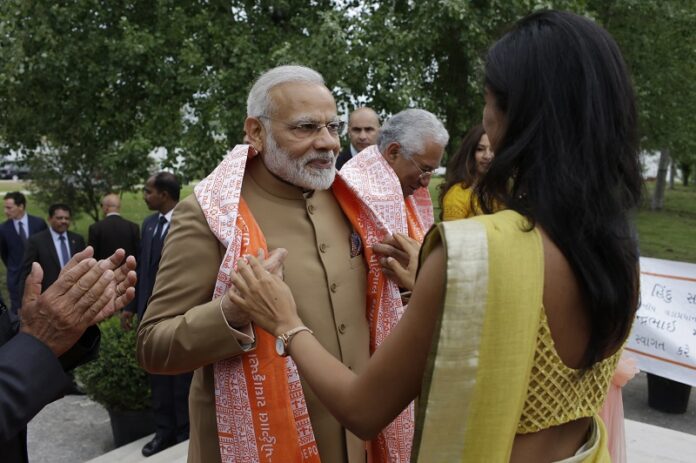
India's Prime Minister Narendra Modi and Portuguese Prime Minister Antonio Costa, right, ar given ceremonial shawls in June during a visit to the Radha Krishna Temple in Lisbon, Portugal. Photo: Armando Franca / Associated Press

LISBON, Portugal — Indian Prime Minister Narendra Modi has started a foreign tour that will include his first meeting with U.S. President Donald Trump.

Modi met with Portuguese Prime Minister Antonio Costa on Saturday during a six-hour stop in Lisbon. Modi will then continue on to Washington where he will meet with Trump on Monday.

Modi and Costa announced the launching of the India-Portugal Start-Up Hub to encourage business ventures by entrepreneurs in the two countries, along with several other bilateral agreements on science, sport and taxation.

India’s key concerns include Trump’s decisions to pull out of the Paris climate accord and to review the H1B visa program, under which thousands of skilled Indian workers go to the United States.

Modi will make his last stop in the Netherlands on Tuesday.

Advertisement

Death Toll Reaches 150 Dead in Pakistan Fuel Truck Explosion

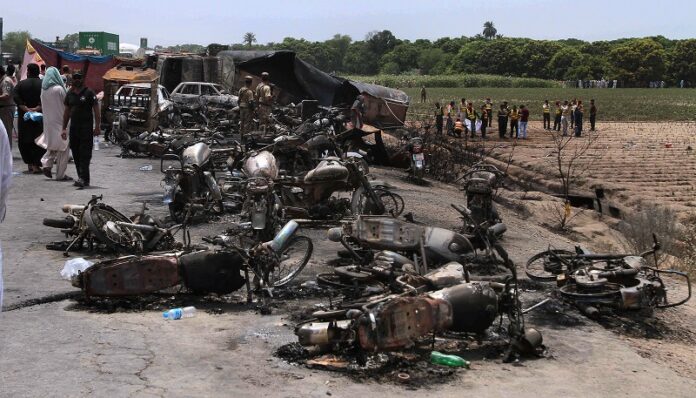
Pakistan army soldiers stands guard while rescue workers examine the site of an oil tanker explosion at a highway Sunday near Bahawalpur, Pakistan. Photo: Iram Asim / Associated Press

BAHAWALPUR, Pakistan — Alerted by an announcement over a mosque’s loudspeaker that an overturned tanker truck had sprung a leak, scores of villagers raced to the scene with fuel containers Sunday to gather the oil. Then the wreck exploded, engulfing people in flames as they screamed in terror.

At least 153 men, women and children were killed, with dozens more in critical condition, hospital and rescue officials said.

“I have never seen anything like it in my life. Victims trapped in the fireball. They were screaming for help,” said Abdul Malik, a police officer who was among the first to arrive on the scene of horror in Pakistan’s Punjab province.

When the flames subsided, he said, “we saw bodies everywhere. So many were just skeletons. The people who were alive were in really bad shape.”

About 30 motorcycles that villagers had used to rush to the site of the highway accident lay charred nearby along with cars, witnesses said. Local news channels showed black smoke billowing skyward and army helicopters taking away the injured.

As victims cried out for help, residents wandered through the area, looking for loved ones.

Zulkha Bibi searched for her two sons.

“Someone should tell me about my beloved sons. Where are they? Are they alive or are they no longer in this world? Please tell me,” she pleaded.

Many of the dead were burned beyond recognition, said Dr. Mohammad Baqar, a senior rescue official in the area. They will have to be identified through DNA.

The disaster came on the eve of the Muslim holiday of Eid al-Fitr, which marks the end of the fasting month of Ramadan. While Saudi Arabia and most other Muslim countries celebrated the holiday Sunday, Pakistanis will mark it on Monday.

The fuel truck was traveling from the southern port city of Karachi to Lahore, the Punjab provincial capital, when the driver lost control and crashed on a highway outside Bahawalpur.

A loudspeaker atop a mosque alerted villagers to the leaking fuel, and many rushed to the scene with fuel containers, said Rana Mohammad Salim, deputy commissioner of Bahawalpur.

Highway police moved quickly to redirect traffic but couldn’t stop the scores of villagers, spokesman Imran Shah told a local TV channel.

When the fire erupted, the same mosque loudspeaker called on the remaining villagers to help put it out.

Mohammed Salim said he ran toward the smoke with buckets of water and sand, but the heat was too intense for him to reach the victims.

“I could hear people screaming, but I couldn’t get to them,” he said.

Dr. Javed Iqbal at Bahawalpur’s Victoria Hospital said most of the patients suffered burns to upward of 80 percent of their bodies. Many were evacuated by plane or helicopter to hospitals in the Punjab cities of Lahore and Multan.

Story: Iram Asim

Advertisement

Activists Kept from Gathering for Istanbul Pride Parade

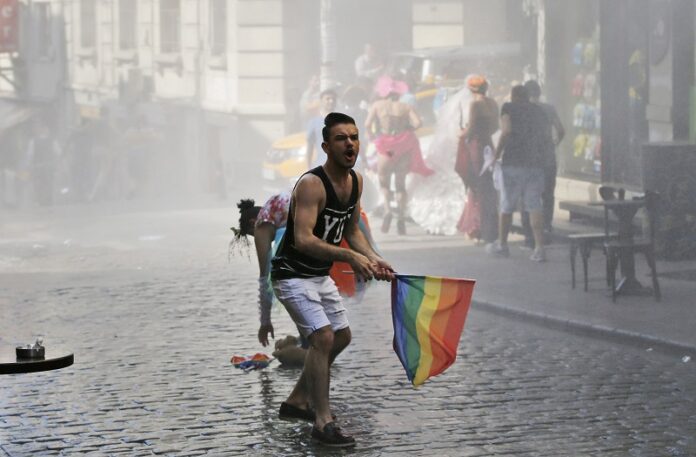
A participant of the Pride Week march in 2015 in Istanbul, reacts as others flee after Turkish police use a water canon to disperse them. Photo: Emrah Gurel / Associated Press

ISTANBUL — Turkish police stopped activists for lesbian, gay, bisexual, trans and intersex rights from gathering in large numbers for an LGBT pride event in Istanbul on Sunday, but smaller groups made impromptu press statements defying a ban imposed by the governor.

Organizers of the 2017 Istanbul LGBTI+ Pride had vowed to march in central Taksim Square, using a Turkish hashtag for “we march,” despite the ban on gay pride observances ordered by the Istanbul governor’s office for the third year in a row.

Police established checkpoints in the area, preventing groups from entering Istiklal Avenue and turning back individuals who were deemed to be associated with the planned march. Small groups assembled on side streets were chased away by officers.

At least a hundred protesters gathered in a nearby neighborhood, beating drums and chanting slogans such as, “Don’t be quiet, shout out, gays exist!” and “Love, love, freedom, State, stay away!” They carried a banner that read, “Get used to, we are here.”

Police used tear gas to disperse the crowds and activists said plastic bullets were also used. Riot-control vehicles and buses were dispatched to the area. Turkey’s official Anadolu news agency said “an estimated 20 people” were detained after protesters did not heed warnings to disperse because the march did not have a permit.

Among those detained was Associated Press journalist Bram Janssen, who was covering the events. Footage from the scene showed officers grabbing him by the arms and escorting him to a van. He was released later Sunday.

Pride organizers said 41 people were detained, including 25 activists. Several activists were released late Sunday and lawyers expected others to be released after making statements to the police.

In banning the event, the governor’s office on Saturday cited safety and public order. It also said a valid parade application had not been filed for Sunday’s event, a claim rejected by organizers.

The governor’s ban referred to “serious reactions by different segments of society” as several nationalist and religious groups called for the march’s cancellation.

Pride organizers said in a statement Sunday that the threats themselves should be dealt with rather than limiting demonstrations. “Our security will be provided by recognizing us in the constitution, by securing justice, by equality and freedom,” the statement said.

The private Dogan news agency reported the detention of seven people who were protesting Pride.

LGBT activists have lobbied for years to have sexual orientation and gender identity covered by Turkish laws protecting civil rights and prohibiting hate speech but the clauses have not been included in updated legislation. Homosexuality has been legal in Turkey since the republic’s founding more than nine decades ago.

The Turkish government says there is no discrimination against LGBT individuals and that current laws already protect each citizen. It also insists that perpetrators of hate crimes are prosecuted.

Turkish authorities allowed pride marches to take place for more than a decade since the first one was held in 2003. Up to 100,000 people attended Istanbul Pride in 2014.

But in 2015, police dispersed crowds using tear gas and water cannons after a last-minute ban. In 2016, amid a spate of deadly attacks blamed on the Islamic State group or on outlawed Kurdish militants, the event was banned again but participants still tried to gather.

Pride organizers think the celebrations have been banned since 2014 because they coincided with the holy month of Ramadan and a rise in conservatism.

Sunday’s scheduled march was on the first day of the Eid al-Fitr holiday, marking the end of a month of fasting.

Story: Zeynep Bilginsoy

Advertisement

Dozens Missing After Tourist Boat Sinks in Colombia

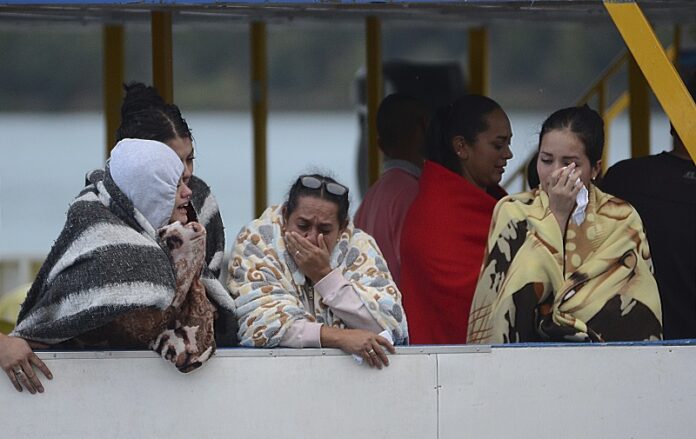
People who survived a sunken ferry, cry as they wait for more information about their missing friends and relatives, Sunday at a reservoir in Guatape, Colombia. Photo: Luis Benavides / Associated Press

GUATAPE, Colombia — A tourist boat packed with about 160 passengers for the holiday weekend capsized Sunday on a reservoir near the Colombian city of Medellin, leaving at least six people dead and 31 missing, officials said.

Rescuers including firefighters from nearby cities and air force pilots searched for survivors at the Guatape reservoir where El Almirante ferry sank. A flotilla of recreational boats and jet skis rushed to the scene, pulling people from the boat as it went down and avoiding an even deadlier tragedy.

Dramatic videos circulating on social media show the turquoise and yellow trimmed party boat rocking back and forth as people crawled down from a fourth-floor roof as it sank into the water in a matter of a few minutes. Survivors described hearing a loud explosion near the men’s bathroom that knocked out the power a few minutes after it began its cruise around the giant lake. As water flooded on board, pressure built and people were sucked under by the sinking ship.
“Those on the first and second floors sank immediately,” survivor Lorena Salazar told local media. “All we could do was scream and call for help….it was completely chaotic.”

Margarita Moncada, the head of the disaster response agency in Antioquia state, said that according to a preliminary report 99 people were rescued and another 40 managed to find a way to shore on their own. Speaking to reporters from the reservoir, she said nine people had been killed and around 28 are still missing.

But later Sunday President Juan Manuel Santos arrived to Guatape and said 122 people were either rescued or found their way to shore and were in mostly good condition. Six had died and another 31 were missing, he said. The discrepancies in the number of fatalities could not be immediately reconciled.

It’s unclear what caused the boat to sink.

Some people who witnessed the tragedy from the nearby shore said the boat appeared to be overloaded but Santos said it was sailing well below capacity. None of the passengers were wearing a life vest. Complicating the search, there wasn’t even a passenger list.

“Nobody really knows what happened,” said Santos, adding that naval officials were brought in to carry out an investigation.

Carlos Espinosa, an independent journalist from Guatape, said about a month ago townspeople awoke to find the El Almirante filled with water and sinking at its dock, suggesting that perhaps the vessel wasn’t ready to return to the water.

“What makes you angry is there are no controls by the government,” he said.

As night fell, the usually festive town was silent as people began to register the magnitude of the loss. Among those huddled under the rain near the port looking for information about loved ones was Alberto Villegas, who was separated from a cousin and uncle in the mad rush to abandon the sinking ship.

“All we ask is that they don’t give up the search,” said Villegas.

Authorities were at a loss to say exactly how many people were on the boat and asked passengers or their loved ones to report to a rescue center hastily set up along the shore. They also made a call for scuba divers to assist with the search.

The reservoir surrounding the soaring rocky outcrop of El Penol is a popular weekend destination a little more than an hour from Medellin. It was especially busy Sunday as Colombians celebrated a long holiday weekend.

Story: Luis Benavides, Christine Armario

Advertisement

Takata Files for Bankruptcy, Overwhelmed by Air Bag Recalls

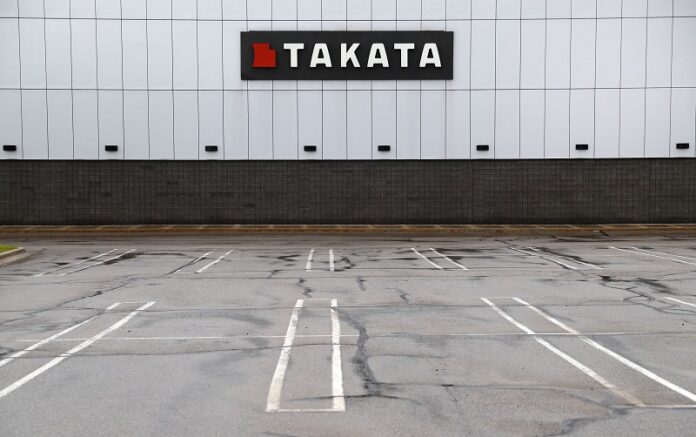
TK Holdings Inc. headquarters last June in Auburn Hills, Michigan. Photo: Paul Sancya / Associated Press

TOKYO — Japanese air bag maker Takata Corp. has filed for bankruptcy protection in Tokyo and the U.S., overwhelmed by lawsuits and recall costs related to its production of defective air bag inflators linked to the deaths of at least 16 people.

The company announced the move Monday morning Tokyo time. Takata confirmed that most of its assets will be bought by rival Key Safety Systems, based in suburban Detroit, for about USD $1.6 billion (175 billion yen).

Takata’s inflators can explode with too much force when they fill up an air bag, spewing out shrapnel. Apart from the fatalities, they’re also responsible for at least 180 injuries, and touched off the largest automotive recall in U.S. history. So far 100 million inflators have been recalled worldwide including 69 million in the U.S., affecting 42 million vehicles.

Under the agreement with Key, remnants of Takata’s operations will continue to manufacture inflators to be used as replacement parts in recalls. The recalls, which are being handled by 19 affected automakers, will continue. Although Takata will use part of the sale proceeds to reimburse the automakers, experts say the companies still must fund a significant portion of the recalls themselves.

“It’s likely every automaker involved in this recall will have to subsidize the process because the value of Takata’s assets isn’t enough to cover the costs of this recall,” said Karl Brauer, executive publisher of Kelley Blue Book and Autotrader.

Takata and the automakers were slow to address the problem with the inflators despite reports of deaths and injuries. Eventually they were forced to recall tens of millions of vehicles. Because of the size of the recall, some car owners face lengthy waits for replacement parts, meanwhile operating their cars worried that the air bag could malfunction in a crash.

U.S. lawmakers have criticized the pace of the recalls. At the end of April, only 22 percent of the 69 million recalled inflators in the U.S. had been replaced, leaving almost 54 million on the roads, according to the National Highway Traffic Safety Administration website.

The defect in the inflators stems from use of the explosive chemical ammonium nitrate in the inflators to deploy air bags in a crash. The chemical can deteriorate when exposed to hot and humid air and burn too fast, blowing apart a metal canister.

At least USD $1 billion from the sale to Key is expected to be used to satisfy Takata’s settlement of criminal charges in the U.S. for concealing problems with the inflators. Of that amount, USD $850 million goes to automakers to cover their costs of the recalls. Takata already has paid USD $125 million into a fund for victims and a USD $25 million fine to the U.S. Justice Department.

Attorneys for those injured by the inflators worry that USD $125 million won’t be enough to fairly compensate victims, many of whom have serious facial injuries from metal shrapnel. One 26-year-old plaintiff will never be able to smile due to nerve damage, his attorney says.

The lead attorney for people suing the automakers said in a statement following the announcement that he doesn’t expect the bankruptcy to affect the pending claims against the companies. Settlement agreements with Toyota, Subaru, BMW and Mazda already have won preliminary court approval, Peter Prieto noted.

That settlement will speed the removal of faulty inflators from 15.8 million vehicles and compensate consumers for economic losses, he said. Claims are continuing against Honda, Ford, Nissan and Takata.

Fallout from the bankruptcy filing came swiftly from the Tokyo Stock Exchange, which said it was stripping the company founded in 1933 from trading as of Tuesday.

Key, a Chinese company with international operations, makes inflators, seat belts and crash sensors for the auto industry. It is owned by China’s Ningbo Joyson Electronic Corp. Its global headquarters and U.S. technical center is in Sterling Heights, Michigan.

Key also said it won’t cut any Takata jobs or close any of Takata’s facilities.

The Takata corporate name may not live on after the bankruptcy. The company says on its website that its products have kept people safe, and it apologizes for problems caused by the faulty inflators. “We hope the day will come when the word ‘Takata’ becomes synonymous with ‘safety,'” the website says.

Story: Tom Krisher, Marcy Gordon

Advertisement

In Moscow, 1 Million People Visit Relics of St. Nick

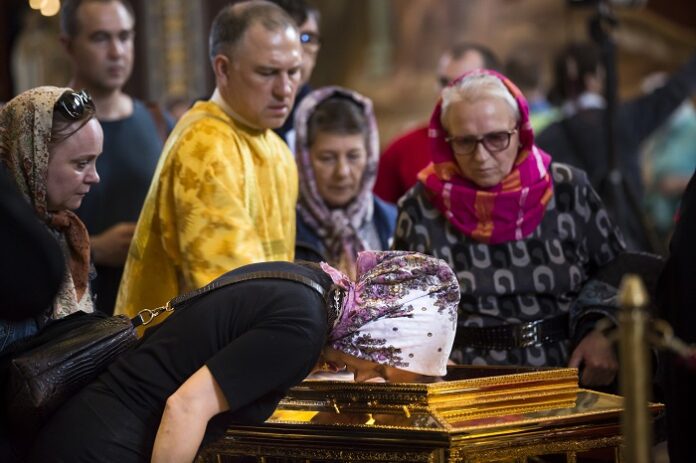
Russian Orthodox believers line up on May 26, 2017, to kiss the relics of Saint Nicholas that were brought from an Italian church where they had lain for 930 years, in the Christ the Savior Cathedral in Moscow, Russia. Photo: Alexander Zemlianichenko / Associated Press

MOSCOW — Over a million people have visited the relics of Saint Nicholas, one of the Russian Orthodox Church’s most-revered figures, since they were brought to Moscow last month.

A total of 1,021,500 people have paid their respects to the holy remains, according to data published Saturday on an official website for the relics.

The queue to see the fragments of the saint’s bones on display has regularly extended several kilometers from Moscow’s Cathedral of Christ the Savior since the May 23 beginning of public viewings.

The huge turnout underlines the important of the Orthodox Church and the defining role religion plays for many Russians a quarter-century after the collapse of the officially atheist Soviet Union.

The relics, on loan from Italy, will be moved to St. Petersburg later this month.

Advertisement

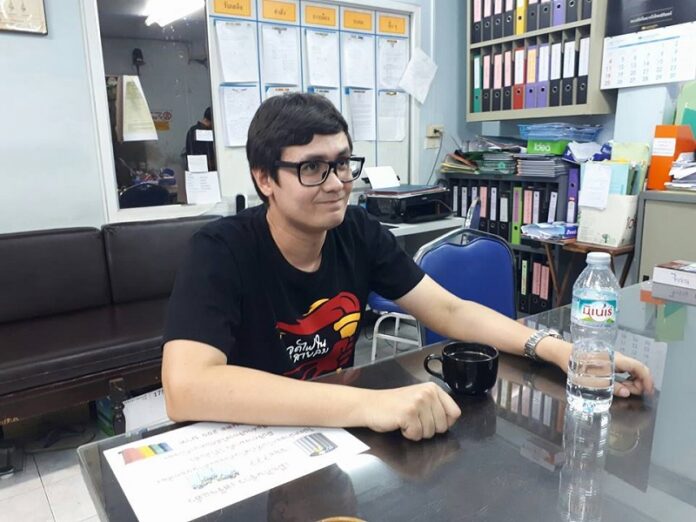
Pro-Democracy Activist Rangsiman Rome Arrested, Again

Pro-democracy activist Rangsiman Rome on Sunday afternoon at Bangkok's Chanasongkram Police Station. Photo: Nui Abhisit / Facebook

BANGKOK — Pro-democracy activist Rangsiman Rome was taken into police custody late Sunday afternoon, one day before he was to petition the military government for information about a controversial project.

In a live Facebook broadcast by user “Nui Abhisit,” Rangsiman said police approached him at the Bangkok City Library at about 4:30pm and presented an arrest warrant on year-old charges before taking him to the Chanasongkram Police Station.

“Police told me they just learned about the warrant,” he said by phone from the police station just before 6pm. “It means the warrant never existed in the system before, otherwise the police would also be guilty if they didn’t charge me.”

Rangsiman said he expects to be taken before a military tribunal tonight or tomorrow. He believes the arrest was ordered because he was going to petition the military government to disclose information about the deal it struck with China allowing it to build a high-speed rail connection between Bangkok and Korat.

“Now we have to postpone it, otherwise my friends will risk facing the same fate,” he said.

He said since he was released unconditionally by the military court, he was never aware of an outstanding warrant in that case.

“I’ve traveled abroad just fine,” he said.

Rangsiman was arrested in relation to charges stemming from distributing documents campaigning against the draft charter in Samut Prakan province one year ago on June 23, 2016. He and six others, then members of the New Democracy Movement, were arrested at the time and held for about two weeks.

Rangsiman was charged with violating a special referendum law used to criminalize most public discussion of the junta-backed constitution, which was passed in August by the public. He was also charged with violating the junta’s ban on political gatherings of more than five people.

Rangsiman was also due to speak this evening at an event commemorating the 85th anniversary of the 1932 democratic revolution called “Start Up People: Start Talk & Music.”

He and his activist group, the Democracy Restoration Group, planned to petition the Official Information Commission to order the military government to disclose details about the deal it struck with China for the construction of a high-speed railway project.

Rome is expected to be transferred to the police station in Samut Prakan province where he was originally arrested a year ago.

Related stories:

Jailed Activists Insist on Unconditional Release
Soldiers Arrest Activists For Handing Out Referendum Leaflets (Video)
Prison Conditions Being Made ‘Unbearable’ Jailed Activist Says

Advertisement

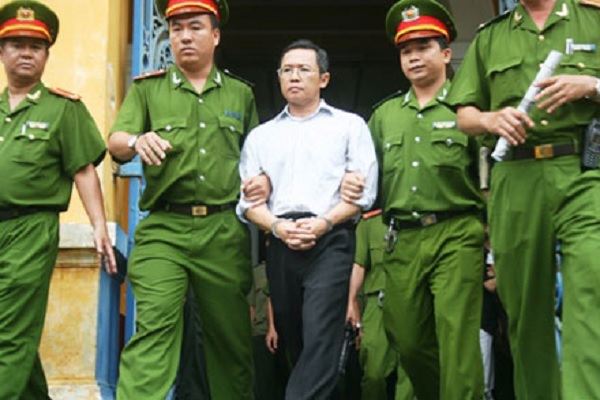
Vietnam Exiles Dissident After Stripping His Citizenship

Pham Minh Hoang, at center, outside the People's Court of Ho Chi Minh City on Aug. 10, 2011. Photo: Dan Tri news / dantri.com.vn

HANOI, Vietnam — Vietnamese authorities have deported a dissident after stripping him of his Vietnamese citizenship, drawing criticism from international human rights groups.

The California-based Vietnam Reform Party, or Viet Tan, said its member Pham Minh Hoang was forcibly taken from his home in southern Ho Chi Minh City on Friday evening and placed on a flight to Paris on Saturday.

Vietnam’s Foreign Ministry did not immediately respond to a request for comment Sunday.

Hoang, who was a dual French-Vietnamese national, was stripped of Vietnamese citizenship last month.

“The vaguely worded decision was a thinly veiled move to silence Pham Minh Hoang for his peaceful advocacy,” Viet Tan said in a statement.

The 61-year-old math lecturer was sentenced to three years in prison in 2011 for attempted subversion by posting articles on his blog criticizing the Communist government and for being a member of Viet Tan.

The government considers Viet Tan a terrorist organization.

Hoang served 17 months in prison and three years of house arrest.

New York-based Human Rights Watch said the government’s moves against Hoang should be condemned.

“There is no possible justification for Hanoi’s illegal, rights violating action that has suddenly and harshly split a man from his wife and his family,” Human Rights Watch said in a statement Sunday. “By effectively forcing Pham Minh Hoang into indefinite exile, the Vietnam government has demonstrated its readiness to violate its citizens’ human rights however it deems necessary to preserve its political power.”

International human rights groups and some Western governments have criticized Vietnam for jailing people for peacefully expressing their views, but Hanoi says only law breakers are put behind bars.

Advertisement

Hot News

LATEST NEWS

Bangkok
overcast clouds
31.7 ° C
32.2 °
28.8 °
73 %
5.1kmh
100 %
Mon
29 °
Tue
37 °
Wed
35 °
Thu
34 °
Fri
32 °