31.6 C
Bangkok
Tuesday, June 9, 2026
Home Blog Page 2319

Pope Names Cardinals for Laos, Mali, Sweden, Spain, Salvador

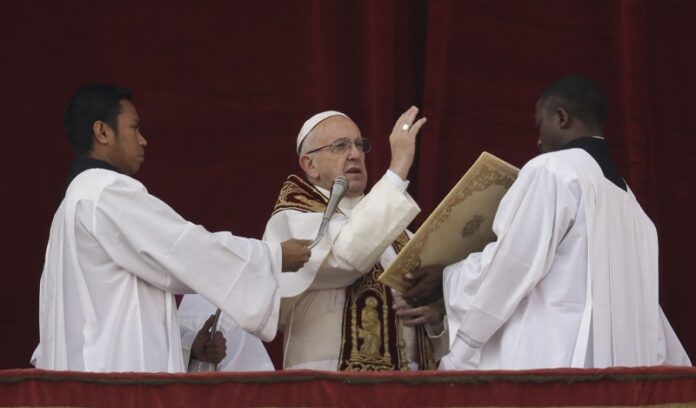
Pope Francis delivers the Urbi et Orbi (Latin for ' to the city and to the world' ) Christmas' day blessing last December from the main balcony of St. Peter's Basilica at the Vatican. Photo: Alessandra Tarantino / Associated Press

VATICAN CITY — Pope Francis has named five new cardinals for Laos, Mali, Sweden, Spain and El Salvador.

Francis, in his surprise announcement Sunday to faithful in St. Peter’s Square, said his selection reflects the universal nature of the Catholic Church. In some of the countries, like Laos and Sweden, Catholics are a minority.

The churchmen will be formally installed as cardinals in a ceremony at the Vatican on June 28.

They are Monsignor Jean Zerbo, archbishop of Bamako, Mali; Monsignor Juan Jose Omella, archbishop of Barcelona, Spain; Monsignor Anders Arborelius, bishop of Stockholm; Monsignor Louis-Marie Ling Mangkhanekhoun, apostolic vicar of Pakse, Laos; and Monsignor Gregorio Rosa Chavez, an auxiliary bishop in San Salvador, El Salvador.


Advertisement

Pacific Ministers Commit to Move Ahead With Pact Without US

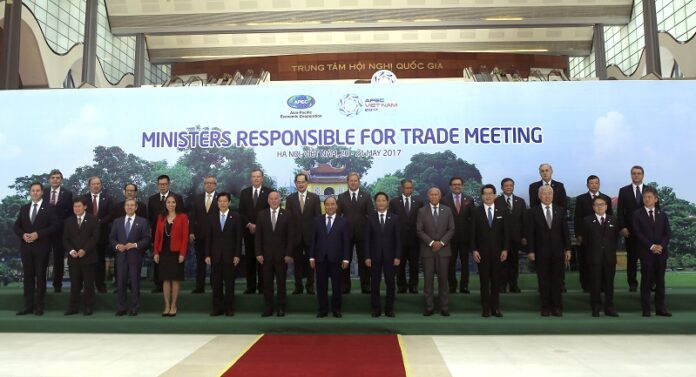
Vietnamese Prime Minister Nguyen Xuan Phuc, center in front row, ministers and officials pose for a group photo, at the Asia-Pacific Economic Cooperation (APEC) Trade ministerial meeting Saturday in Hanoi, Vietnam. Photo: Hau Dinh / Associated Press

HANOI — The Pacific Rim trade ministers meeting in Vietnam committed Sunday to move ahead with the Trans Pacific Partnership trade pact after the United States pulled out.

New Zealand Trade Minister Todd McClay said the remaining 11 TPP countries are open to others joining provided they accept the trade agreement’s high standards on labor and environmental protection. He said the door remains open to the U.S., even after President Donald Trump withdrew from the pact in January, saying he prefers bilateral free trade deals.

“It’s clear that each country is having to consider both economic values and strategic importance of this agreement, but in the end there are a lot of unity among all of the countries and a great desire to work together to come up with an agreement among 11 that not only delivers for all of our economies and the people of our countries, it’s also open to others countries in the world to join if they can meet the high standards in the TPP agreement,” McClay told reporters.

Since the U.S withdrawal, Japan and New Zealand have been spearheading efforts to revive the deal. In its current form, the TPP requires U.S. participation before it can go into effect. That means the remaining countries would need to change the rules for any deal to go ahead, and it would be significantly smaller without the involvement of the world’s largest economy.

The 11 countries represent roughly 13.5 percent of the global economy, according to the World Bank.

In a statement, the trade ministers said they agreed to launch a process to assess options to bring the agreement into force “expeditiously, including how to facilitate membership for the original signatories.”

The ministers have tasked their trade officials to present the assessment to their leaders when they meet for an annual the Asia Pacific Economic Cooperation summit in Vietnam in November, which will also include Trump, Russian President Vladimir Putin and Chinese President Xi Jinping.

They also underlined their vision for the TPP to expand to include other economies, saying these efforts would address concerns about protectionism, contribute to maintaining open markets, strengthening the rules-based international trading system, increasing world trade and raising living standards.

Vietnam and Malaysia had been expected to be beneficiaries from the original TPP with greater access to U.S. markets and investments. The TPP was championed by former President Barack Obama and was seen as a counterbalance to China’s growing influence in the region.

On Monday, the China-led 16-member Regional Comprehensive Economic Partnership will meet in Hanoi to further their discussions on a separate deal seen as an alternative to TPP. It is expected to be finalized by the end of this year.

Advertisement

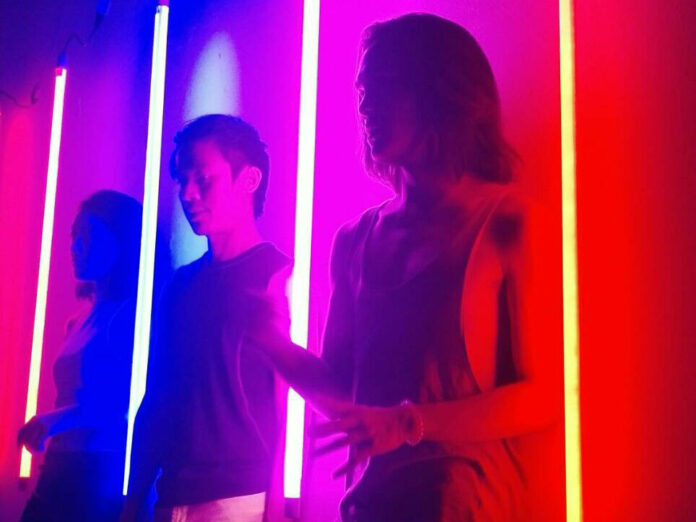
See The Dreams Hidden Behind Bangkok Brothels in Sunday Show

A still from “Fan” rehearsal. Photo: Jesca Prudencio / Courtesy

BANGKOK — Sun, sand, sea and sex are what some might expect when traveling to the Land of Smiles. Behind the infamous prostitution industry are hidden the lives and dreams of workers, all of which a director reflected through documentary theater.

It’s been five month since a New York based theater director Jesca Prudencio has been in Thailand after she earned Julie Taymor’s World Theater Fellowship to explore theater scenes abroad for a year.

Prudencio chose Thailand as her first destination, not only because she’s a good friend of members of the outstanding physical theater B-Floor, but also because of her interest in the objectification of the body.

“Everyone knows there are so many prostitutes in Thailand,” said Prudencio in an interview Wednesday evening. “I’m actually a westerner, unfortunately, that’s a judgment that people have on Bangkok.”

Aiming to humanize the infamous stigma through theater, the director collaborated with B-Floor Theater to produce a performance called “Fan: stories from the brothels of Bangkok” for which she and her team did a three-week research on sex workers in several infamous venues such as Boy Town in Silom, Patpong, Nana, Soi Cowboy and Pattaya.

01
Jesca Prudencio poses for a photo Wednesday

“They have no shame in doing this, in being prostitutes,” she said in an interview with two Boy Town’s “money boys” – a term used to describe sex workers. “Because they can make money to pay their bills and they could also possibly find a husband to take them away.”

That dream is also shared by their female counterparts and that was why the director named her play “Fan” as it refers to the term for boyfriend or girlfriend in Thai.

Prudencio admitted she and another four actors didn’t expect this answer prior to interviewing six sex workers. For them, it wasn’t just about money or they were forced into it as they were brought into the industry by their friends.

“Everyone has a big heart. They really want to be loved and taken care of,” the director said.

They also went on to explore the ping pong show.

“It was shocking, funny in a way, but mostly sad. When they do the show, they’re very numb and tired. But when they ask for a tip, they become like little girls, very innocent,” she said, adding that apart from a 9,000 baht salary, those women – most of them in their 40s – earn nothing from the tips.

From her research, the director admitted that brothels and bars are very competitive meaning those working in the same establishment don’t treat each other as a real friends or as family. However, Prudencio said their bosses play a big role in keeping them in the business by treating them well and making them feel comfortable. Some workers also dream of running their own bars in the future.

“My view on it now is that people who sell their body for a living are very strong and have standards […] they won’t put themselves in a dangerous situation,” she said. “They are strong in treating their body as a business.”

IMG 0531
A still from “Fan” rehearsal. Photo: Jesca Prudencio / Courtesy

All the interviews she conducted were used as triggers to create “Fan,” a method employed in documentary theater that Prudencio’s keen on to present the first-hand testimony to audience.

During her time in Bangkok, she has also shared her experience and documentary theater techniques with Thai artists and students in five different workshops. Prudencio is a director at People Of Interest, a nonprofit theater company dedicated to the creation of theatrical experiences from individuals worth paying attention to.

Apart from conducting interviews, Prudencio also did some research on history and laws, and found that the popularity of prostitution in Thailand and neighboring countries bloomed from American military’s Rest and Recreation during the Vietnam War.

“That was a huge shock for me that it’s a problem because we, the U.S., started it,” she said, adding that she hoped to develop the show to perform it in the United States.

“For me, it’s not just a tourist attraction, but it’s a real business with human beings trying to make ends meet and looking for love just like all of us,” she concluded.

The performance combines movement and dialogues that come in Thai with English subtitles.

Admission is free and attendance can be booked online. A 200 baht donation is suggested by organizers.

The performance starts at 4pm Sunday at B-Floor Theater at Pridi Banomyong Institute which is a 10 minute walk from BTS Thong Lo’s Exit No.2.

Advertisement

Iran State TV Declares Moderate Rouhani Wins Second Presidential Term

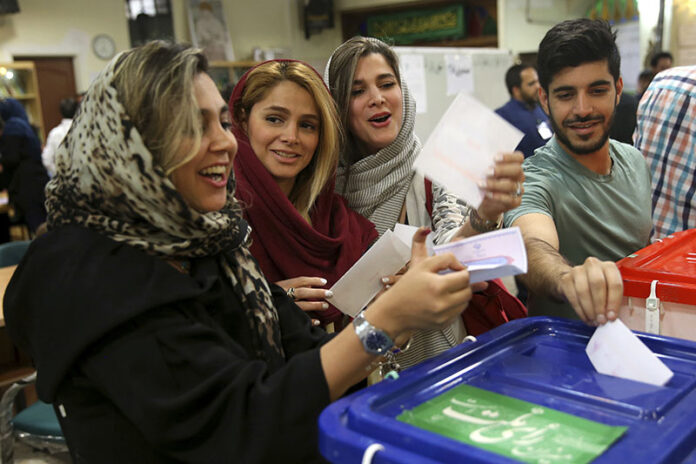
Joyful voters cast their ballots for the presidential election at a polling station in Tehran, Iran, on Friday. Photo: Vahid Salemi / Associated Press

TEHRAN, Iran — Iran’s state television has declared incumbent President Hassan Rouhani the winner of the country’s presidential election, giving him a second four-year term to see out his agenda calling for greater freedoms and outreach to the wider world.

State TV offered its congratulations in a brief statement Saturday, based on vote tallies.

Read: Burning Man Tries to Enter Iranian Embassy on Election Day

The 68-year-old has come to embody more liberal and reform-minded Iranians’ hopes for greater political freedom at home and better relations with the outside world.

Preliminary vote tallies earlier had Rouhani ahead with 22.8 million votes, out of 38.9 million counted so far. Officials say more than 40 million people voted.

Advertisement

Battle for Collective Political Memory Rages On

Pansak remembers his slain son earlier this week.

retention.column

May is a loaded month for Thai politics. In 1992, from May 17 to 20, hundreds of thousands rose up against military dictator Suchinda Kraprayoon, who made himself prime minister, to demand the country be led by one elected by the people. Fifty-two people mostly drawn from the middle class, according to the official account, were mowed down and hundreds others injured, mostly by military gunfire. Suchinda granted himself immunity before resigning.

Pravit.mug .column.final

Then comes May 2010 when Redshirts, calling for then-PM Abhisit Vejjajiva’s administration to dissolve the parliament and call elections, clashed with soldiers, leading to a death toll of 99 by the time the protest was quashed on a violent day, May 19. The overwhelming majority of those killed were civilians. No one has been held accountable, and it looks as if no one ever will.

There’s also the most recent coup of May 22 led by current junta leader Gen. Prayuth Chan-ocha in 2014. Prayuth has already granted himself immunity from any past, present and future wrongdoing – so don’t worry about him. Prayuth, who was responsible for violating civil and political rights since the coup, detaining dozens of dissidents without charge, this writer included, insisted just this past Tuesday, less than a week before the third anniversary of his rule, that he has been working “200 percent” hard. This is how Prayuth argues futilely for his legitimacy and place in history.

So many Mays to remember, and so many ways to remember them.

Today, the fight is on for how these things should be recalled in the collective memory.

The May 1992 uprising has pretty much faded into distant memory, not only because 25 years have passed, but because society has largely failed to internalize its lessons, particularly by younger Thais, that we should never be led by the unelected.

Some key figures, such as then-student leader Parinya Thewanaruemitkul, now a Thammasat University administrator and lecturer, played no role opposing the latter coups of 2006 and 2014.

Much more contentious are the memories of May 2010. Earlier this month, the junta banned any public ceremonies to remember those killed, including Redshirt-supporting renegade army officer Maj. Gen. Khattiya Sawasdipol, who was assassinated by a mysterious sniper on May 13, 2010. His daughter, Kattiya Sawasdipol, persisted in demanding the right to commemorate her father. She was eventually allowed five minutes to place a candle, flowers and pray at the spot near the southwest corner of Lumphini Park where he was slain. Others were barred from participating.

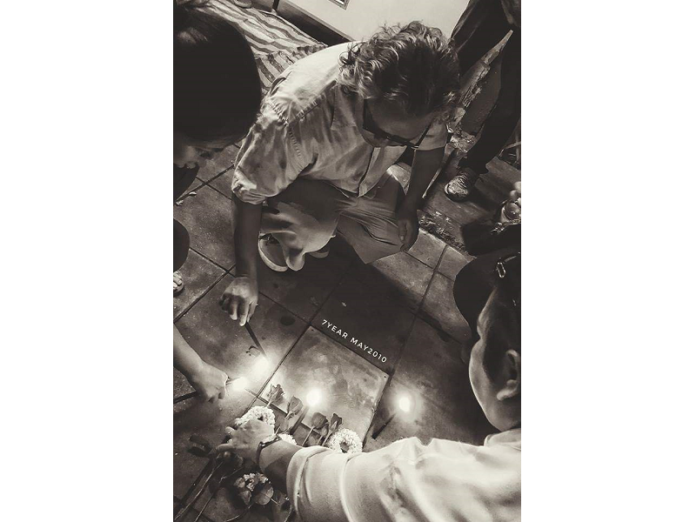
The same restrictions were imposed on Pansak Srithep, father of Cher Srithep, who was killed seven years ago on May 15. Non-family members were barred by the military regime from being right on the spot where Cher was gunned down on Rang Nam Road. It was barricaded. Fearing people would forget and wanting to honor his son who was killed aged 17, Pansak, who became a staunch anti-junta activist and a key member of Resistant Citizens, made a square metal plaque with his late son’s etching and a message in Thai and English and embedded on the footpath 6 years earlier. The message in English reads: “Cher laid down his life here.”

Despite the physical suppression, it couldn’t stop many netizens from marking the incidents on Facebook and Twitter, however. Looking back to the incidents seven years ago, it’s mind-boggling to think how calling for then-PM Abhisit to step down eventually led to the killing of 99 people including Redshirts, bystanders and soldiers – but mostly reds.

In first two cases, it’s clear the military junta doesn’t want the deaths to become part of Thai society’s collective memory. Collective political memories are what make us who were are.

It’s clear the military regime doesn’t want people to remember the negative roles played by the army. So will there be a ban come Monday on the three-year anniversary of the May 22, 2014 coup. The last thing the regime wants is for people to gather and remind others how it came to power.

We are not just what we eat but we are what we remember, and the illegitimate powers that be do not want us to remember the inconvenient truth that the army has, time and again, been on the bloody and brutal side of politics.

The past is never quite dead unless we are quiet or made to forget. When we forget, we risk repeating the same mistakes. Many young Thais don’t even know that 25 years ago, over 50 people died so Thailand could be assured of elected prime minister. Today many support unelected dictator. Society’s trajectory doesn’t always move forward.

The past is never quite dead and is often invoked to serve the present and thus the future. The battle for the past is not just a battle for the past but for the present and the future. We don’t know who we really are if we don’t remember what we have collectively achieved and what failures were made as a society.

We risk being trapped in an ahistorical state where inconvenient memories are removed or suppressed from our collective memories through induced amnesia. In an open and democratic society, the past ought to be contested, with different people giving different readings from diverse perspectives. The month of May is a special month where the battle for our collective political memory rages on.


Advertisement

Disowning Lawmakers’ Proposal, Govt Says No VAT Increase in 2018

Image: Peter Hellberg / Flickr

BANGKOK — The rubber stamp parliament’s proposal for a VAT increase next year was shot down by the government on Saturday.

While the interim parliament’s committee on economics argued that raising value-added tax from the current rate of 7 percent to 8 percent would help boost the nation’s coffers by at least 60 billion baht, Deputy Prime Minister Wissanu Krea-ngam said the government will not consider it.

“The government has not come up with this idea,” Wissanu told reporters while attending a conference at Banyan Tree Hotel on Saturday. “And I believe that if this issue was submitted to the government, the prime minister would naturally put a stop to it.”

Finance Minister Apisak Tantivorawong likewise told the press Friday he does not endorse the plan.

The call for an 8 percent VAT was first floated by the National Legislative Assembly, or NLA, on Thursday along with other proposals such as taxing online vendors based overseas and introducing a new tax on properties that will benefit from new rail lines.

The NLA’s committee on economics said raising VAT will haul in about 60 billion to 70 billion baht in revenues.

News of the government mulling VAT increase in past years often made a big headlines every year before criticism forced authorities to back down.

Although Thailand’s VAT rate has been officially pegged at 10 percent since the 1997 economic crisis on recommendation from the IMF, successive governments in the following decades have annually postponed the change and kept the actual rate at 7 percent.

This year’s postponement is set to be renewed in October.

Related stories:

Junta Backs Off From VAT Hike, Blames Fake News

Advertisement

Man Who Set Himself on Fire at Iran Embassy Still Unidentified

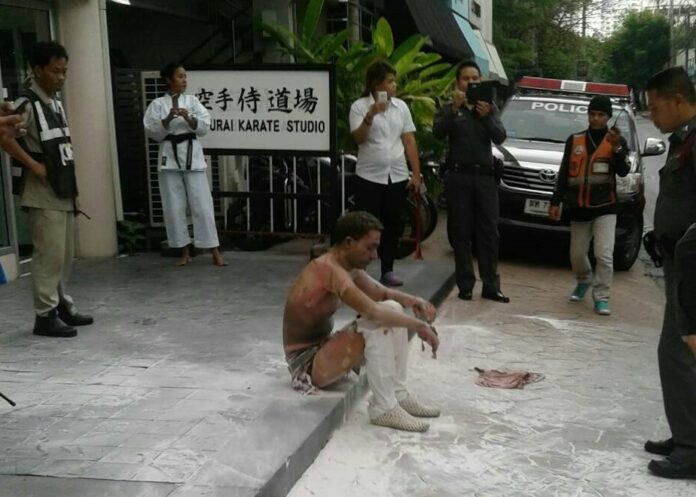
BANGKOK — A foreign man is being treated for burns he received after setting himself ablaze in front of the Iranian Embassy in Bangkok, a police spokesman said Saturday.

The man, who remains unidentified, was seen dousing himself in gasoline and setting himself on fire with a lighter in front of the embassy at about 1pm on Friday.

“We still do not have his identity,” Col. Krissana Pattanacharoen said by telephone. “He’s still receiving treatment. Seventy percent of his body was burned.”

Krissana said police have to wait for the man to recover before questioning him.

He added that officers found a number of leaflets at the scene but would not elaborate.

Police Sen. Sgt. Maj. Anek Permsomboon, who was stationed at the embassy Friday, told Matichon he saw the man walking toward the embassy with a sign reading “Don’t voted Iris” in English and another three words he believed were in Arabic.

Iran’s presidential election took place Friday, with incumbent President Hassan Rouhani leading in the initial vote count.

Advertisement

How a Bali Drug Bust Became an Australian Obsession

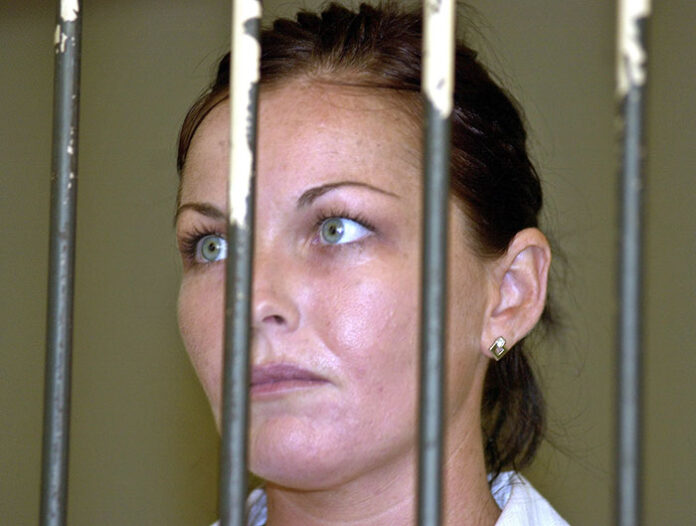
Convicted drug smuggler Schapelle Corby stands behind the bars Aug. 3, 2005, at a court prison before her appeal is tried in Denpasar's court, on Bali. Photo: Firdia Lisnawati

SYDNEY — She has riveted Australia for more than a decade, the everyday Aussie beach girl who somehow sparked diplomatic rows, furious protests and a media bonanza on par with America’s O.J. Simpson trial. She is so notorious Down Under that she needs no last name: She’s just Schapelle.

Next week, after an exhaustively chronicled stint in a Balinese prison for smuggling marijuana to the Indonesian island, Schapelle Corby is expected to return to Australia. Her homecoming marks the climax of a tale that divided and in many ways defined Australia, where the obsession with the woman the nation once protectively dubbed “Our Schapelle” has not faded, even if belief in her innocence has.

Not since the notorious case of Lindy Chamberlain — whose baby daughter was killed by a dingo during an Outback camping trip — has a legal saga so mesmerized the country. But exactly why Corby’s plight achieved such prominence can be, at first glance, a bit puzzling. She wasn’t famous before her arrest and she was hardly the first Aussie to be busted for drugs while traveling abroad. As The Australian newspaper once put it: “Corby is an ordinary suburban Australian woman who worked in a takeaway shop, saved up for a holiday in Bali, and somehow galvanized an entire nation.”

Fueling the fixation was everything from the unprecedented media coverage of her trial, to the made-for-TV courtroom theatrics, to the empathy ordinary Australians felt for a woman they viewed as one of their own. Her case also coincided with an era of cultural upheaval, tapping into a surge of nationalism and fear heightened by bombings in Bali that killed 88 Australians just two years before Corby’s arrest.

Anthony Lambert, who spent years studying Australia’s response to the case, once described Corby as “the daughter who is Australia.” And in some ways, she still is.

“She functioned as a representation of what being Australian meant,” says Lambert, a senior lecturer in cultural studies at Macquarie University. “In the beginning, (there was) that initial surge of emotion and kind of racist vitriol that was about the nation much more than it was about the actual case. … She still represents a relatively young, feminine version of being Australian and white Australian-ness, caught up in trouble.”

The saga began in 2004, when a 27-year-old Corby set out from her home on Australia’s picturesque Gold Coast for a vacation in Bali. When she arrived, Indonesian customs agents found more than four kilograms of marijuana inside her boogie board bag. Corby insisted the drugs had been planted by corrupt baggage handlers; Balinese officials insisted she was lying. She was convicted of drug smuggling and sentenced to 20 years in prison. Her sentence was eventually reduced and in 2014, after nine years behind bars, she was released on parole. She was not permitted to leave Bali until her sentence expires on May 27.

In the beginning, polls showed the vast majority of Australians believed Corby had been set up. Proving her innocence became a national cause, sparking “Free Schapelle” T-shirts and “Boycott Bali” banners. Her face took the place of celebrities on magazine covers. She even became an Australian slang phrase: to be “Schapelled” means to get a raw deal.

Many Australians saw themselves in Corby, Lambert says. With her Gold Coast upbringing, she was the quintessential surfer girl — easily identifiable in a beach-loving country where more than 80 percent of the population lives within 50 kilometers of the coast.

She also embodied the classic image of an Aussie “battler,” a humble, working class hero. Her father was a retired coal miner, her mother owned a fish-and-chips shop. She was a high school dropout who later dropped out of beauty therapy school when her father got cancer, and worked in her family’s shop.

Even her choice of vacation destination was relatable. Given Australia’s isolation, overseas travel can be prohibitively expensive. Bali, just a 2 and 1/2-hour flight from the northern Australian city of Darwin, is the exception. For decades, it has been a favorite vacation spot for Australians, many of whom view it as an extension of their own country.

Corby was hardly beloved by all. Some dubbed her a bogan, the Australian equivalent of, well, white trash. Still, whether you viewed her with pride or pity, you were invested in her plight, says Lauren Rosewarne, a social scientist at the University of Melbourne.

“There’s some people who looked at Schapelle and thought, ‘That could be me,'” Rosewarne says. “Versus others who looked down on her as a bogan, as a sort of blight on the kind of Australians that we’re ashamed of. And therefore, there’s a schadenfreude element of wanting to see her get justice.”

“Whether you’re supportive of Schapelle or dismissive of her, you’ve got a story that — excuse the cliche — captivates the nation.”

Then there was the irresistible drama of her legal battle. The stakes were grave — she was facing a possible sentence of death by firing squad. Australians, whose own country generally prohibits cameras in the courtroom, were transfixed by the trial footage beamed in from Bali: Schapelle collapsing in court. Schapelle’s mother screaming, “You judges will never sleep!” Schapelle’s sister yelling at reporters outside the courthouse, shrieking with rage: “This verdict is UNJUST!”

It felt like something out of a movie. And in a way, it was. In 1989, Nicole Kidman starred in a popular Australian miniseries called “Bangkok Hilton,” playing a woman who is tricked into carrying drugs from Thailand to Australia. The movie wormed its way into the Australian psyche and bolstered the sentiment that Corby was innocent, Rosewarne says.

Corby sometimes seemed to embrace the circus. In a moment captured on video for a documentary, one of her lawyers, Robin Tampoe, tells her Australian networks will cut into their daytime programming to air the verdict live — something not done, he notes, since Princess Diana’s funeral. “Everybody’s watching,” Tampoe assures her, adding that broadcasters would likely air the lengthy court buildup to the verdict itself. “Wow!” Corby responds in almost giddy wonder. “Like Melbourne Cup day!”

And, like Melbourne Cup day — Australia’s most prestigious horse race — everyone did seem to be watching. Two Australian networks alone drew 1.7 million viewers for the verdict, says Ross Tapsell, an expert in Indonesian media and culture at the Australian National University. Given Australia’s population at the time was just 20 million, it was an impressive audience.

Indonesians, who called Corby “Ganja Queen,” were mystified by Australia’s response. To them, the case was clear-cut, and the Australian outrage both ridiculous and overly nationalistic.

The fallout from Corby’s conviction was intense. A protest was held outside the Indonesian Embassy in the Australian capital. There were calls to boycott travel to Bali. Luggage wrapping services at airports enjoyed a boom in business, as wary travelers had their suitcases shrink-wrapped to prevent drugs from being slipped inside.

Days after the verdict, a letter containing a suspicious substance was sent to Indonesia’s ambassador in Australia in what was widely seen as a protest against Corby’s sentence. The substance was later found to be nontoxic, but the scare prompted a swift apology by Australia’s prime minister to Indonesia’s government.

Even actor Russell Crowe weighed in. “When there is such doubt, how can we, as a country, stand by and let a young lady — as an Australian — rot away in a foreign prison?” Crowe said in a radio interview before Corby’s conviction. “That is ridiculous. We just gave Indonesia how many hundreds of millions of dollars in tsunami relief?”

There was a perception that an innocent woman was trapped in a system that was not only unjust, but uncivilized. Corby’s jail was described in the Australian media as barbaric, the judges depicted as uninterested and unintelligent. “The judges don’t even speak English, mate,” radio shock jock Malcolm T. Elliott said during a 2005 broadcast. “They’re straight out of the trees.”

Australians’ ignorance about Indonesia and its judicial system played into such views, says Tapsell. Surveys show that nearly a third of Australians don’t realize Bali is part of Indonesia.

Corby’s case also happened during a period of uncertainty about Australia’s place in the world and relationship to Asia, coming just two years after the Bali bombings carried out by Muslim militants. The attacks were Australia’s equivalent of Sept. 11, marking a loss of innocence and ushering in an era of fear about the country’s proximity to conflict in Asia. Corby was seen, at least in the beginning, as being “behind enemy lines,” Lambert says.

Over the years, unflattering reports about Corby’s family emerged, sullying her image in many Australians’ eyes. Among the most damaging were stories about her father being busted for marijuana possession in the 1970s (and insisting the drugs weren’t his,) and her half-brother’s arrest in 2006 for stealing marijuana during a violent home invasion.

Today, few Australians still believe Corby’s story. But curiosity about her remains. Her release from prison in 2014 was predictably chaotic, with Corby enveloped in a crush of cameras, one Australian journalist shouting: “This truly is an amazing moment in history!” Since then, paparazzi have documented her life in Bali, snapping photos of her running errands and lounging on the beach. She has tried to keep a low profile, but the media have eagerly chronicled her relationship with her Indonesian boyfriend, her visits to her parole officer, her changing body weight. Her homecoming is expected to spark another frenzy.

“There is an element of fatigue and also endless curiosity about how this story ends,” Rosewarne says. “Because we’ve invested so much, emotionally.”

And so, Australia braces for the inevitable: the live coverage of Corby’s arrival, the speculation about her romantic life and career prospects, maybe even (as one talent agent suggested) a stint on “Dancing With the Stars.”

And Australia, inevitably, will be watching.

“She’s not just coming home to the Gold Coast,” Lambert says. “She’s coming home to the nation.”

Story: Kristen Gelineau

Advertisement

Jenphop Takes Stand to Discuss Drug Use, Fatal Crash

Jenphop Viraporn leaves Ayutthaya Provincial Court after the session concludes Friday evening.

AYUTTHAYA — After businessman Jenphop Viraporn finished telling the court Friday his version of events that led to a crash that killed two graduate students a year ago, the prosecutor asked him a simple question: did he seek treatment at a certain hospital from 2011 to 2013?

Yes, Jenphop said, before adding that he was an outpatient. The attorney cut him off and shot another question.

“You were there to quit drugs, were you not?” prosecutor Siripong Sitthiseriphap pressed him. “For crystal meth and cocaine. Is that true, Mr. Jenphop?”
Jenphop admitted to having a history of using those substances, but maintained that he quit them for good and never went back to using. The questions soon turned to the heart of the legal battle waged between the prosecutor and the 39-year-old scion of a luxury car dealership for the past year: whether he refused a sobriety test in the aftermath of the crash on March 13, 2016.

Read: Eyewitnesses Describe Fatal Crash at Opening of Jenphop Trial

Police said he did, which under the law automatically led to a charge of DUI, which carries a maximum penalty of 10 years in prison. At the witness dock on Friday, Jenphop offered the crux of his defense – that he did not mean to cause the accident that left two victims dead in a fiery wreck, that he was not under any influence at the time of the crash, and that he never turned down a police request for sobriety test.

Because Jenphop has never given any media interview since the crash, his Friday testimony was the first time he publicly gave his own version of the events. Cross examination also touched on his personal history, such as his struggle with depression and a regular use of antidepressant which may have effect on his driving.

At the start of Friday’s session, judge Waikoon Sawangsuree told Jenphop and the families of the two deceased students that he was willing to listen to any circumstances or intent behind the crimes. He recalled an anecdote of handing down different verdicts to a man accused of selling yaba to a fellow drug user and another who allegedly sold it to schoolchildren.

“The same offense committed by different people can be punished with different severity,” Waikoon said. “I want society to understand this.”

No Objection to Test?

Jenphop is facing a number of charges for the crash that killed grad students Krissana Thaworn and Thantaphat Horsaengchai. He confessed to speeding and fatal reckless driving, but denied others, including the most serious pressed against him: driving under the influence, which carries a maximum penalty of 10 years in prison.

Police said Jenphop repeatedly refused a test for alcohol and other intoxicants in the aftermath of the crash, which under the law required them to assume he was driving under those substances and file a charge of DUI.

At Friday’s session, Jenphop was quizzed by his own lawyer, the prosecutor and plaintiff attorney. He appeared relaxed most of the time, but raised his voice in anger during some heated exchanges.

Also attending the court were his parents and families of the two students he killed, Krissana and Thantapat. Only one reporter was there during the testimony.

Jenphop said he did not recall police asking him for a sobriety test. He said he only remembered one policeman visiting him at Bang Pa-In Hospital hours after the crash when he was still delirious under the pain. He maintained that he was not asked for a blood test.

“I saw someone in [police] uniform but he didn’t talk to me,” Jenphop said. “He was turning to a woman in the medical gown. I think she was either a doctor or a nurse.”

In an infamous television interview that later went viral on the internet, a local police chief admitted that he did not insist on a sobriety test on Jenphop, but only “asked” the hospital to do so. The officer, Col. Pongpat Suksawasdi, also said Jenphop had the right to decline the test if he wished. His remarks sparked outrage on social media, where many suspect police were easy on him due to his affluence.

Following a storm of criticism, Pongpat and the first team of investigators were soon replaced.

While claiming that the memory of his time in hospital was spotty, Jenphop also said that he had declined any operation that involves needles because he had a phobia for them.

207521
Krissana and Thantapat one of the promotional photos for the Buddhist peace studies. Image: MCU website.

“Just by seeing a needle made me nauseous and forced me to turn away,” Jenphop told the court, adding that he usually avoided any use of needles “unless absolutely necessary.”

Although police made another request for blood test, Jenphop said he delayed their request until March 28, when he had to give up blood sample for a knee surgery.

But by that time any trace of illegal substance would have vanished, so the investigators order a more detailed test on Jenphop’s DNA samples – specifically his hair – which would allow them to check for any residue of any intoxicant or antidepressant, said prosecutor Siripong. Jenphop said he declined because he thought the blood sample he had already given could substitute as a testing material.

“I did not object to giving it,” Jenphop said during a particularly intense questioning from the prosecutor. “I just thought it was unnecessary.”

Siripong pressed on.

“The document specifically asked for your hair, not your blood,” he said.

Jenphop replied.

“I thought it meant any part of the element of my body. I didn’t know they were asking for my hair. I didn’t even know what the test was for!” he said.

Police eventually decided to file a charge of DUI and resisting laws enforcement officers against Jenphop.

Drugs and Speed

Throughout more than two hours of Jenphop’s testimony and cross examination, other details emerged for the first time about his mental and family background. Jenphop said he suffered from depression, occasional fights with his parents and an uncontrollable rage that prompted his family to admit him to a psychiatric institution some years ago.

Because of his condition, Jenphop told the court he was prescribed nine different medications. One of them is Lexotan, an antidepressant based on bromazepam, which he said could impair driving and his concentration. He never took it when he had to attend meetings or drive long distances, he added.

Although police found the drug in his car, Jenphop insisted he did not take it before driving that day. However, he admitted to taking one just before he went to bed the night before.

Asked whether the specific packet of Lexotan was the one prescribed by his doctor, Jenphop said he lost the actual pack and bought a new one on his own, which carried a larger dose, but he maintained that he took care to divide each tablet by four.

DSC 4930
Jenphop Viraporn chats with family of crash victim Krissana Thaworn at Ayutthaya Provincial Court after the session concludes Friday evening.

He also told the court the sequences of events that led to the crash on the Ayutthaya highway. Asked about a video that showed his Mercedes-Benz plowing through a toll booth, Jenphop said he thought it would open for his Easy Pass, but the gate malfunctioned.

Police said he crashed into the Ford Fiesta driven by Krissana at more than 200 kph. Jenphop said he only accelerated to that speed when he tried to overtake a car. He said the Ford appeared to be shifting to the right lane, so he sped up his car, but the lane change didn’t happen.

“Just several seconds before the impact, the car I crashed, I don’t know if he changed his mind or what, but he came back to the left lane,” Jenphop said. “I was shocked. I was about to crash now.”

He said he tried to brake and stop the vehicle, but the tremendous speed meant the car ended up slamming into the Ford, setting it on fire and killing the two victims.

Concluding his testimony, Jenphop said he regretted his action and had made many attempts of remedy, such as ordaining as a monk to make merit for the two victims and paying compensation to their families.

A verdict is expected on July 19.

Advertisement

Police Arrest Parents of 2010 Temple Shooting Victims

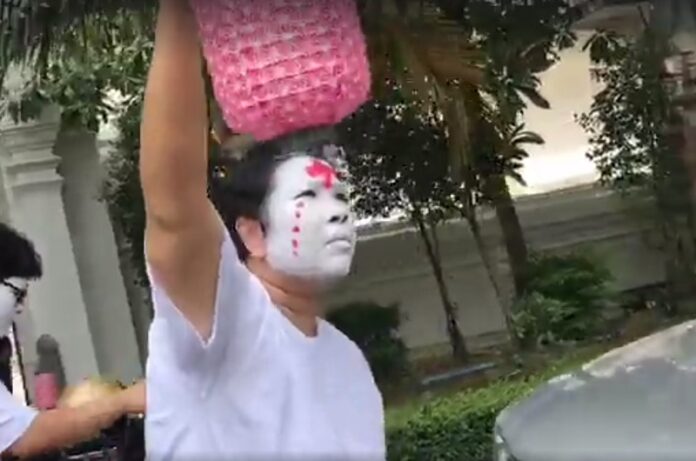
Phayao Akkahad performs Friday afternoon inside Bangkok’s Wat Pathum Wanaram with a red cross painted on her forehead to represent her daughter, a nurse shot dead inside the temple seven years ago today. Photo :Anon Nampha / Facebook

BANGKOK— Eight people were taken into police custody Friday at a downtown Bangkok temple after they staged a mime performance in memory of six people killed there in 2010.

Parents of those killed May 19, 2010, during a crackdown on Redshirt protesters were among the performers taken to the Pathum Wan Police Station at about 3pm after they finished their performance inside Wat Pathum Wanaram.

“Police were trying to say it was a political assembly,” said student protest leader Sirawith “Ja New” Seritiwat, who was among those arrested and still waiting at Pathum Wan Police Station as of 5pm.

Sirawith said they were yet to be charged.

Lawyer Anon Nampha, who was among those performing, posted a photo showing himself and others inside a van at 3:22pm as they were reportedly being taken to the station.

The other seven included Pansak Srithep, a leader of pro-democracy Resistant Citizens group whose son was killed four days earlier; and Phayao Akkahad, whose nurse daughter was tending to the injuries of those inside was shot to death inside the temple on May 19.

Read: Police Set Up Barriers at Ratchaprasong on 7th Anniversary of Crackdown

The others were student protest leader Sirawith “Ja New” Seritiwat, Kritsana Kaikaew, Pitchaya Anantaset and Wannakiet Choosuwan, according to the Facebook account Prachatai reporter Sarayut Tangprasert. Sarayuth also said Nattapat Akkahad was an eighth person arrested, but Sirawith said he was not there.

Sarayut said about 100 police officers were inside the temple to handle the 15 people who gathered to perform or watch.

Wearing white shirts, each performer held a lantern as they symbolically “searched” the temple grounds for justice. Six performers painted their faces red and white to represent those killed there.

Reached for comment, the commander of Pathum Wan police said he was unavailable to speak.

The temple sits between Siam Paragon and CentralWorld along a stretch of Rama I Road that was essentially shut down for weeks by Redshirt protesters demanding the government call fresh elections.

Following a military crackdown that began at dawn and was winding down, there was quiet in that area as evening fell. The temple was considered a safe sanctuary by those who sought shelter or treatment inside, including several foreign journalists.

Kamonkate Akahad, the nurse, was tending to the injured when she was shot three times by high-power rounds. Five others were gunned down inside the temple.

The rounds were fired upon from an elevated position, and witnesses said men who appeared to be soldiers were firing from the BTS Skytrain line above the street. The army denied having units in the area.

Families of the victims later filed lawsuits against then-Prime Minister Abhisit Vejjajiva and his deputy Suthep Thaugsuban for ordering the crackdown. After many delays, the courts kicked out the case in February 2016.

Additional reporting Todd Ruiz

Advertisement

Hot News

LATEST NEWS

Bangkok
overcast clouds
31.6 ° C
31.6 °
29.4 °
68 %
3.1kmh
100 %
Tue
35 °
Wed
34 °
Thu
34 °
Fri
28 °
Sat
31 °