33.5 C
Bangkok
Monday, June 8, 2026
Home Blog Page 2477

Military Hands Over 3 More Alleged Hackers

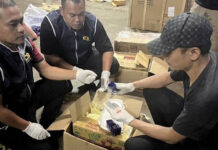
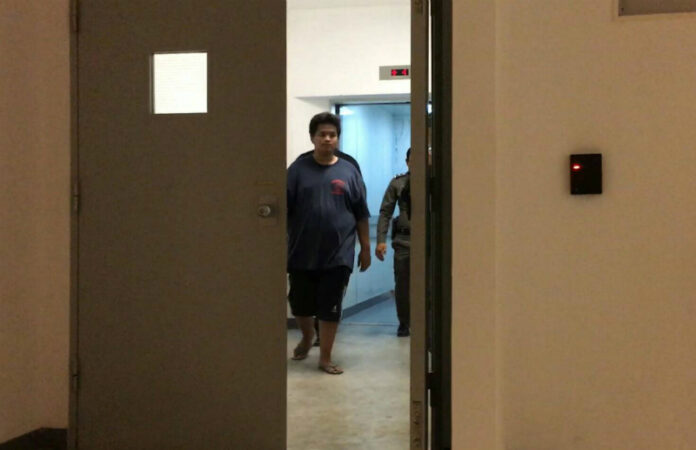
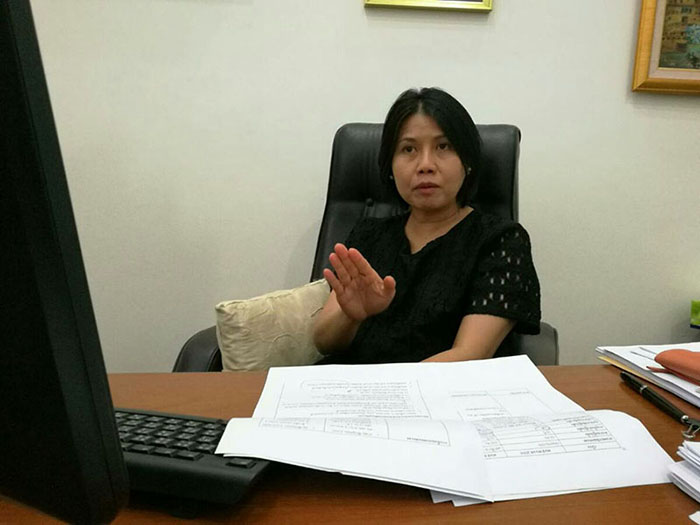
Reporters were given a glimpse of an alleged hacker, whose name was not disclosed, being brought Friday to the Technology Crime Suppression Division in Bangkok.

BANGKOK — The military transferred three more alleged hackers to police custody on Friday after an unknown number of days in secret detention.

The three men, whose name were not disclosed, were brought to the Technology Crime Suppression Division in Bangkok. They were said to be part of the online movement attacking government, police and military sites to demand revocation of recently passed cybercrime legislation.

“We assure everyone that we have adequate evidence to prosecute this group of people,” said police spokesman Krissana Pattanacharoen.

The three will be charged with being part of a criminal network along with four other charges under the 2007 Computer Crime Act for hacking a computer system.

That makes for four suspects jailed and charged for alleged involvement with coordinated cyber attacks against the government online in response to the controversial law which opponents say undermines online freedom and grants broad powers for the interception and censorship of data. The first suspect revealed to public was Natdanai Kongdi, a 19-year-old denied bail Wednesday.

It was unknown how many if any more people were still being detained in military custody under the junta’s special policing powers. Police said they did not know.

Natdanai was said to share screenshots of a police server he had penetrated to online hacktivist group Citizens Against Single Gateway. The group has been campaigning to demand junta chief Prayuth Chan-ocha scrap the revised Computer Crime Act which critics say is a threat to cyber freedom and privacy.

The group said the alleged hackers detained under military custody were innocent. It had previously said it could not verify who was involved because it operated anonymously. The page admin posted Friday that he had fled the country for safety.

When police held a Monday news conference to show off Natdanai, who is accused of hacking into the central police investigation department, his details were made public. But the displayed evidence against him – a computer, guns and a network security book – invited skepticism that they had much of a case.

In contrast, the three new suspects were taken directly to the Technology Crime Suppression Division without any information or evidence presented.

Commander of Technology Crime Suppression Division, Maj. Gen. Suppaset Chokchai declined to give information, saying the national police chief authorized only its communications team to speak about the case.


Related stories:

Military to Hand Over More Alleged Hackers

Army Denies Buying Web Security Cracking Devices

Military Gives Police Alleged Hacker to Display to Public

Five Hacktivists Arrested, Junta Source Says

Gov’t Payment System Offline As Hacktivists Focus Online Assault

Dismissive Prayuth Tells Hackers to Knock it Off

Computer Crime Act 2.0 Passes Unanimously

Advertisement

Post-Election Thailand Could Return to Guided Democracy, Scholar Says

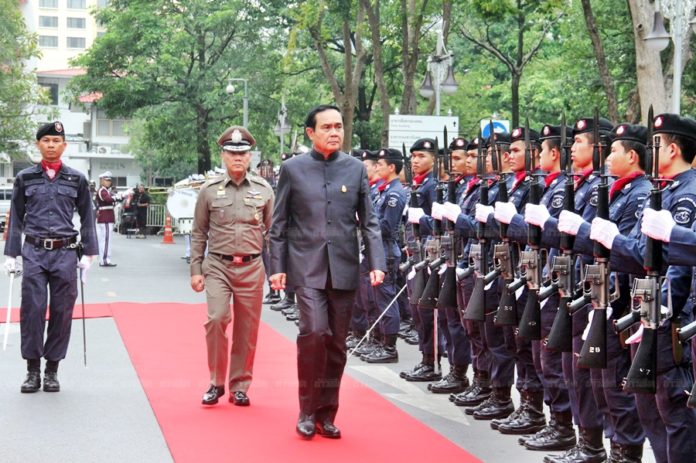
Junta chairman Prayuth Chan-ocha on Dec. 7 inspects a guard of honor at Royal Thai Police headquarters.

BANGKOK How will the political landscape alter under new laws to be introduced for the next general elections and after?

While the process of passing new laws to support the referendum passed in August is not completed, a political science professor said she foresees mid-sized political parties and their leaders becoming the biggest beneficiaries of the proposed laws for political parties, politicians and elections.

Such mid-size parties, said Siripan Nogsuan Sawasdee, associate professor of political science at Chulalongkorn University, would be well-placed under the new regulations to forge an alliance with the junta-appointed senate while big and small parties stand to lose.

Essentially Thailand would see a return to “guided democracy,” the scholar predicted, in which elections are staged but have little impact on governance.

Reduction of Big Party’s Influence

Because most senate members will be appointed by the junta, Siripan said the two big parties, Democrat and Pheu Thai, are unlikely to win a majority and single-handedly form a government. The only unlikely scenario, she said would be the two parties, which have been at odds with one another for over a decade, forming a coalition.

Otherwise mid-size parties will form alliances with the junta-appointed upper house to form a government.

Siripan Nogsuan Sawasdee, professor of political science at Chulalongkorn University.

Around the world, electoral engineering is being conducted to strengthen political parties as institutions. What’s happening under the junta-appointed charter drafters is the opposite, however, Siripan said.

Under the new proposed laws, politicians from big parties could defect to mid-sized political parties friendly to the military junta. The prospect is that mid-sized parties with good relations to those in power now could benefit, she added.

Party Over for Up-Starts?

Under the new proposed law, a political party must obtain 5,000 members in its first year and attain at least 20,000 members within four years. It must establish branches in all the four regions of the kingdom. Members will also have to pay 100 baht membership fees per annum or 2,000 baht for lifetime membership. Any political party not fielding candidates for two consecutive elections would automatically dissolve. These restrictions, said Siripan, place barriers for the formation of new, small parties and reduced their chances of survival.

“The prospect is that small parties are being discriminated against as a result. The requirement for the setting up of regional branches is costly,” she said.

Also the Election Commission will enjoy greater power under the new laws as proposed, she said.

Siripan elaborated that 100 baht annual membership fees is not a negligible sum for poor people struggling to make ends meet. This would make it more difficult for small political party to attract members.

“The biggest beneficiaries are the well-oiled medium-size parties with good connections that can afford to buy politicians,” she said.

Return of Guided Democracy

With big political parties weakened and the difficulty in forming new parties, Siripan predicts Thailand will see its bureaucracy, independent organizations under the constitution and junta-appointed senate playing a Big Brother role resembling the period under Gen. Prem Tinsulanonda, who was prime minister three decades ago from 1980 to 1988.

“In this political landscape, the great struggle for politicians will be that against the ‘senate party,’” said Siripan, referring to the junta-appointed upper house, with 375 senators, as a de facto political party. “They will only win if the two major parties unite and manage to gain more than 375 members [of parliament]. Otherwise it will become a guided democracy for the first eight years.”

The prospect of the two major parties forming a coalition is slim, however, as Siripan sees the Democrat Party as being “opportunistic and always short-sighted” while the Pheu Thai Party remained essentially under the control of ousted and fugitive former premier Thaksin Shinawatra. Pheu Thai is also at risk of some key factions leaving for junta-friendly parties and the senate. Former premier Yingluck Shinawatra could find herself in prison under charges of mishandling the rice-pledging scheme, leaving the party with few cards to play.

“This is the problem of Thai political parties,” she said, adding that Thai political parties are yet to become political institutions and are not ideologically driven. “I don’t know what to say.”

As for the junta, Siripan said the those who seized power in May 2014 have planned well to consolidate power in a lasting way.

“It was well-planned – to suppress its opponents,” she said.

Advertisement

Massive Failure of K-Bank Systems Day Before NYE

An error message from Kasikorn Bank's smartphone application. Image: @Teeratr / Twitter

Update: Kasikorn says it restored services about 7pm, but some services such as mobile banking app may still be offline.

BANGKOK — Kasikorn Bank says it is working to fix the complete outage of its services Friday, which comes just before a bank holiday.

On a day many say they need access to their money the most, K-Bank’s ATMs as well as online and mobile banking systems have been offline since Friday morning and were still unavailable as of 5pm.

The bank has yet state the cause of the error, but responded to complaints on its Facebook page and Twitter account it was trying to solve the problem.

The bank said it could not provide the specific time its website and application services would be working again.

K-Bank’s mobile system was also disrupted briefly Thursday evening.

Advertisement

Kidnapped by Time, Boy Captured in Photos

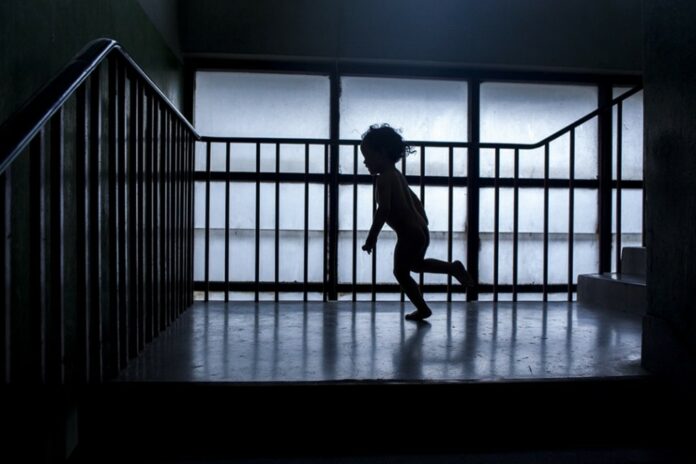
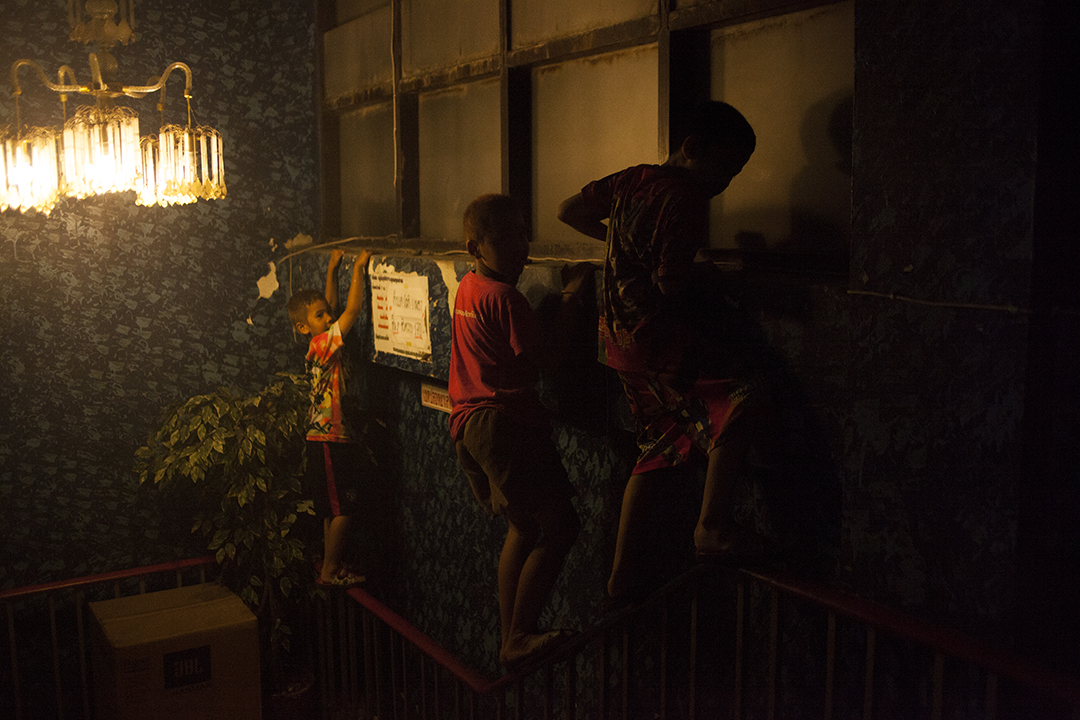
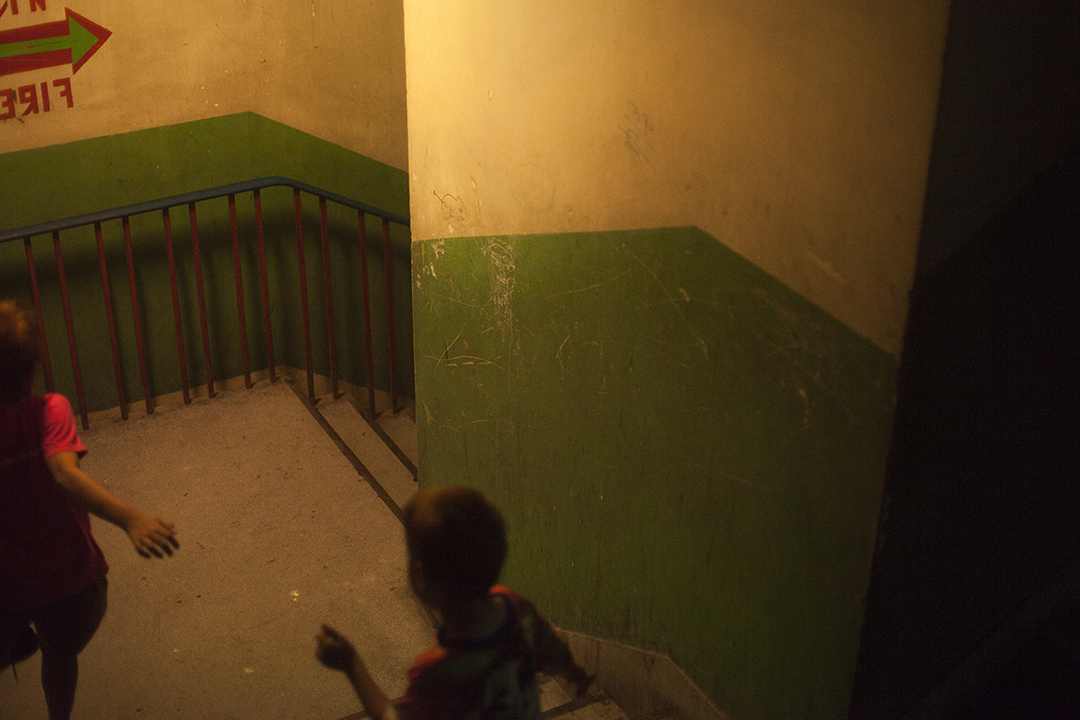
A Boy Who Was Kidnapped by Time Exhibition. Photo: Harit Srikhao / Courtesy.

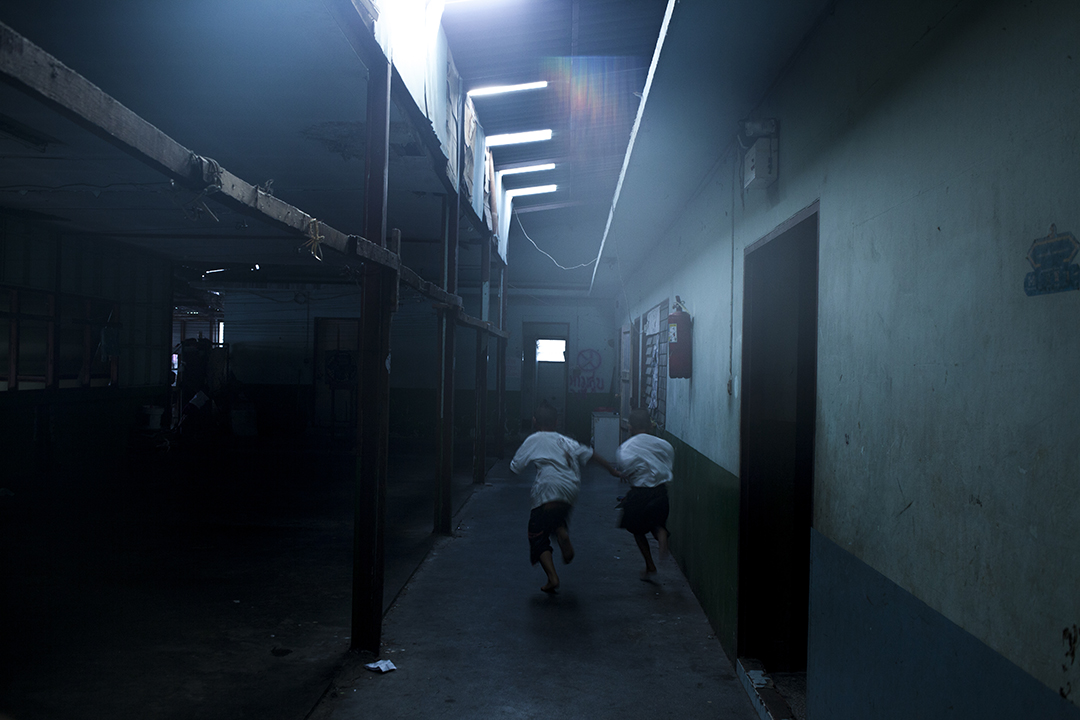
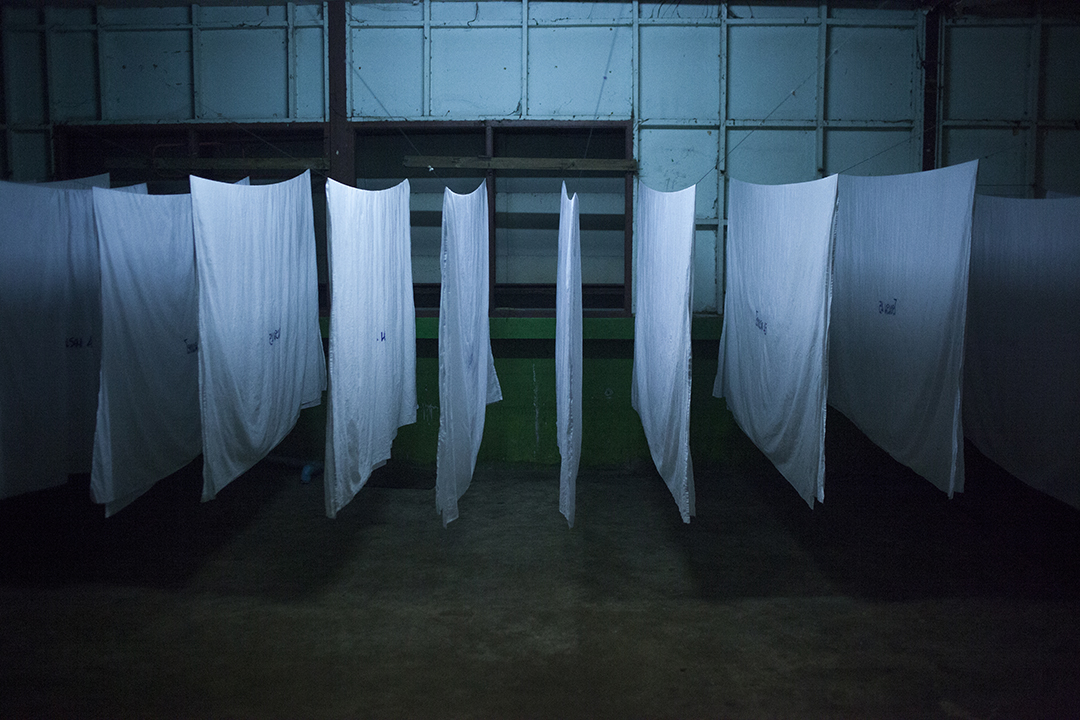
BANGKOK — To evoke the life of a friend who died young, photographer Harit Srikhao conveys his feelings and mystery of life in an upcoming exhibition.

Capturing moments they played in a decayed Bangkok motel, planetarium stars and a pickled embryo at Siriraj Hospital, the images taken by 21-year-old Harit look like a horror photo essay of a dark world where his memories are haunted by a middle-school friend who never had a chance to grow up.

“A Boy Who Was Kidnapped by Time,” is part of the Project New Visions series and was selected to show in Switzerland, the United Kingdom and Mexico.

The exhibition launches at 6:30pm on Jan. 7 and runs through Feb. 25 at Kathmandu Photo Gallery on Pan Road just off lower Silom Road, across from the Hindu temple. It can be reached from BTS Surasak, Sala Daeng or MRT Silom.

Advertisement

Tourists Rescued From Sinking Speedboat Near Ko Lan

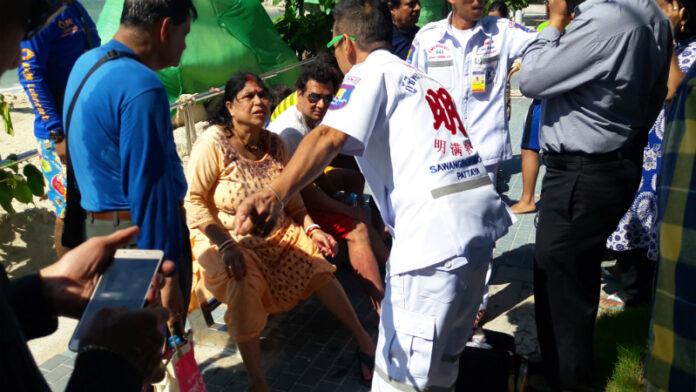
Indian tourists are hospitalized after being rescued from the waters offshore of Pattaya when their speedboat sank Thursday evening.

PATTAYA — Authorities in Pattaya said they would temporarily ban small boats and speedboats from carrying passengers between Ko Lan and Pattaya after one sank Thursday evening.

Twenty-three Indian tourists including children were rescued to safety after their speed boat sprang a leak on their way back from Ko Sak, a small island near the famous Ko Lan just offshore from Pattaya. Some were said to be slightly injured.

Fortunately they were rescued by two other speedboats passing by about 1.5 kilometers off the seaside enclave’s northern coast, according to tour guide Supaporn Katekaew.

The boat sank. The cause of the incident has yet to be determined.

Regional marine official Ekarat Kantharo said he would prohibit small boats from traveling between the island and shore due to strong winds and high waves.

Advertisement

Ubon Man Arrested for Abusing Emergency Hotline to Proposition Operator

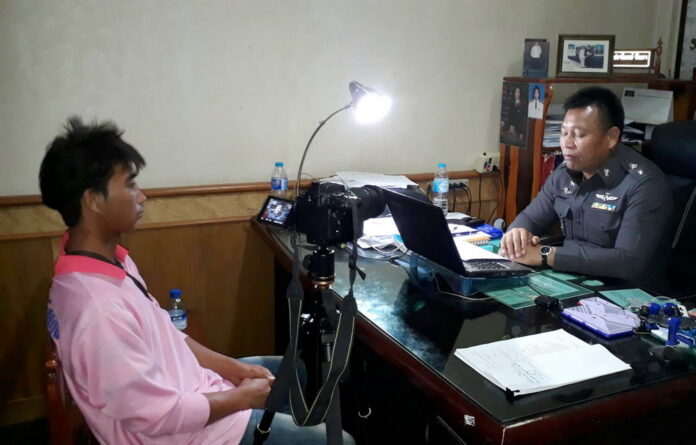
Manas Khamchalee, at left, is questioned by a police officer Friday at Ubon Ratchathani City Police Station.

UBON RATCHATHANI — A 20-year-old man was arrested Friday morning for allegedly phoning an emergency call center operator 51 times to ask her to have sex with him.

Manas Khamchalee bombarded the provincial emergency service hotline, 1669, with lewd calls throughout Saturday, Pramote Chuenta, deputy chief of Ubon Ratchathani city police, said Friday. He’s been charged with disrupting emergency services and sexual harassment.

In each of his 51 phone calls, Manas asked the hotline officer if she would have sex with him, Lt. Col. Pramote said. The operator filed a complaint with the police on Thursday.

Manas will be taken to the provincial court within Friday, Pramote said. He faces up to a month in prison if convicted.

Police also urged the public to keep the 1669 hotline open for emergencies, such as traffic accidents during the ongoing New Year holiday’s mass exodus from Bangkok to the northeast.

On Thursday alone, the hotline received more than 200 calls seeking medical assistance, most of them in traffic-related incidents, Pramote said.

Advertisement

Fun! Kolour Returns to Wake Park This March

Photo: Kolour in the Park / Facebook

PATHUM THANI — The Kolour folks are set to hit the grass and make waves again with two days of beats, art and gourmet food in a unique setting in March.

Kolour in the Park will unfold under the sky just outside Bangkok, with three stages for a two-day party with multinational artists, an after-hours stage, graffiti exhibition, art installations, crafts market, food trucks and swimming.

The venue is also adjacent to a wakeboarding facility. Past years were headlined by German DJ Sven Vath and house duo Booka Shade, but the 2017 line-up won’t be announced until next month.

Tickets at the door are 2,500 baht. The event is 20 and up, and IDs will be checked at the door. Find more information online.

The two-day festival begins March 18 at Thai Wake Park, a 45-minute drive from downtown Bangkok. The best way to get there is by taxi.

Advertisement

Internet is Right About ‘Fake Bird’s Nest,’ Scientist Says

Photos of butter-cup tree sap sold as edible bird’s nest. Image: www.showkhao.com

BANGKOK — For once, an online rumor has turned out to be true. Yes, some vendors really do sell cheap tree sap disguised as edible bird’s nest, a luxury delicacy in Thailand.

Responding to posts on social media warning about such a scam, well-known scientist Jessada Denduangboripant wrote online that the sap, which is extracted from butter-cup trees, has a striking similarity to actual bird’s nest but costs less to produce.

“It’s rare that a truth gets [widely] shared like this,” wrote Jessada, a Chulalongkorn University lecturer famous for debunking hoaxes on social media.

Suckers who have bought fake bird’s nest have some relief: The gum is safe as a food additive and does not pose a health risk, Jessada said.

Considered a high-status treat by many Sino-Thais, edible bird’s nest, made by the saliva of a swift, is a popular gift during the New Year season.

Jessada advised consumers to refrain from buying edible bird’s nest from dodgy street vendors and stick to established brands.

Advertisement

US Punishes Russia for Hacking Presidential Campaign

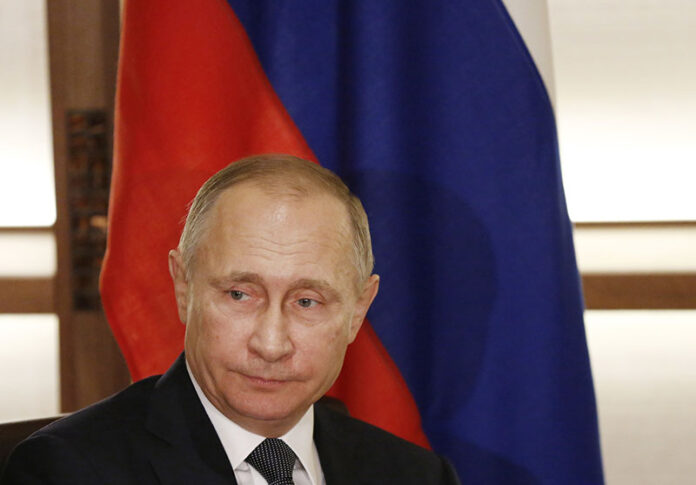
Russian President Vladimir Putin in 2016 in Nagato, Japan. Photo: Toru Hanai / Pool / Associated Press

HONOLULU — The United States struck back Thursday at Russia for hacking the U.S. presidential campaign with a sweeping set of punishments targeting Russia’s spy agencies and diplomats. The U.S. said Russia must bear costs for its actions, but Moscow called the Obama administration “losers” and threatened retaliation.

A month after an election the U.S. says Russia tried to sway for Donald Trump, President Barack Obama sanctioned the GRU and FSB, leading Russian intelligence agencies the U.S. said were involved. Those sanctions could easily be pulled back by Trump, who has insisted that Obama and Democrats are merely attempting to delegitimize his election.

In an elaborately coordinated response by at least five federal agencies, the Obama administration also sought to expose Russia’s cyber tactics with a detailed technical report and hinted it might still launch a covert counterattack.

“All Americans should be alarmed by Russia’s actions,” Obama said, adding, “Such activities have consequences.”

He said the response wasn’t over and the U.S. could take further, covert action — a thinly veiled reference to a counterstrike in cyberspace the U.S. has been considering.

Trump issued a statement saying it was “time for our country to move on to bigger and better things.” Yet in the face of newly public evidence, he suggested he was keeping an open mind.

“In the interest of our country and its great people, I will meet with leaders of the intelligence community next week in order to be updated on the facts of this situation,” Trump said.

As part of the punishment, the U.S. also kicked out 35 Russian diplomats who the U.S. said were actually intelligence operatives, and shut down a pair of Russian compounds, in New York and Maryland. The U.S. said those actions were in response to Russia’s harassment of U.S. diplomats, calling it part of a pattern of aggression that included the cyberattacks on the Democratic National Committee and Hillary Clinton’s campaign chairman.

It was the strongest action the Obama administration has taken to date to retaliate for a cyberattack, and more comprehensive than last year’s sanctions on North Korea after it hacked Sony Pictures Entertainment. The new penalties add to existing U.S. sanctions over Russia’s actions in Ukraine, which have impaired Russia’s economy but had limited impact on President Vladimir Putin’s behavior.

Russia, which denied the hacking allegations, called the penalties a clumsy yet aggressive attempt to “harm Russian-American ties.” Putin spokesman Dmitry Peskov said Russia would take into account the fact that Trump will soon replace Obama as it drafts retaliatory measures.

The day marked a low point for U.S. relations with Russia, which have suffered during Obama’s years as he and Putin tussled over Ukraine, Edward Snowden and Russia’s support for Syrian President Bashar Assad. Maria Zakharova, a Russian foreign ministry spokeswoman, took to Facebook to call the Obama administration “a group of foreign policy losers, angry and ignorant.”

It was unlikely the new sanctions, while symbolically significant, would have a major impact on Russian spy operations. The sanctions freeze any U.S. assets and block Americans from doing business with them. But Russian law bars the spy agencies from having assets in the U.S., and any activities they undertake would likely be covert and hard to identify.

“On its face, this is more than a slap on the wrists, but hardly an appropriate response to an unprecedented attack on our electoral system,” said Stewart Baker, a cybersecurity lawyer and former National Security Agency and Homeland Security Department official.

Indeed, senior Obama administration officials said that even with the penalties, the U.S. had reason to believe Russia would keep hacking other nations’ elections and might well try to hack American elections again in 2018 or 2020. The officials briefed reporters on a conference call on condition of anonymity.

Though the FBI and Homeland Security Department issued a joint report on “Russian malicious cyber activity” — replete with examples of malware code used by the Russians — it still has not released a broader report Obama has promised detailing Russia’s efforts to interfere with U.S. elections.

The report has been eagerly anticipated by those hoping to make it politically untenable for Trump to continue questioning whether Russia was really involved. But U.S. officials said those seeking more detail about who the U.S. has determined did the hacking need look only to the list of sanctions targets, which includes the GRU head, his three deputies, and two Russian nationals wanted by the FBI for cybercrimes.

The move puts Trump in the position of having to decide whether to roll back the measures once in office, and U.S. officials acknowledged that Trump could use his executive authorities to do so. Still, they suggested that building the case against Russia now would make it harder for Trump to justify easing up.

U.S. allegations of hacking have ignited a heated debate over Trump’s approach to Russia and his refusal to accept the assessment of U.S. intelligence agencies that Russia’s government was responsible and wanted to help him win. Though U.S. lawmakers have long called for Obama to be tougher on Russia, some Republicans have found that position less tenable now that Trump is floating the possibility of closer ties to Moscow.

“While today’s action by the administration is overdue, it is an appropriate way to end eight years of failed policy with Russia,” said House Speaker Paul Ryan, R-Wis.

U.S. intelligence agencies concluded that Russia was trying to help Trump win when hackers connected to the government breached Democratic Party computers and stole tens of thousands of emails that were then posted on WikiLeaks, some containing embarrassing information for Democrats. Clinton aide John Podesta’s emails were also stolen and released publicly in the final weeks of the campaign.

Story: Josh Lederman, Tami Abdollah


Advertisement

US Releases Detailed Look at Russia’s Election Hacking

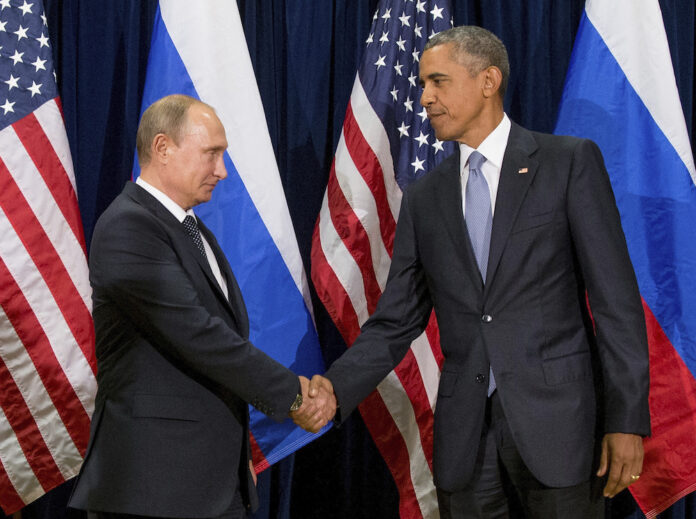
United States President Barack Obama, right, and Russia's President President Vladimir Putin pose for members of the media before a bilateral meeting Sept. 28, 2015, at United Nations headquarters. Photo: Andrew Harnik / AP.

WASHINGTON — The U.S. on Thursday released its most detailed report yet on Russia’s efforts to interfere in the U.S. presidential election by hacking American political sites and email accounts.

The 13-page joint analysis by the Department of Homeland Security and the FBI was the first such report ever to attribute malicious cyber activity to a particular country or actors.

It was also the first time the U.S. has officially and specifically tied intrusions into the Democratic National Committee to hackers with the Russian civilian and military intelligence services, the FSB and GRU, expanding on an Oct. 7 accusation by the Obama administration.

The report said the intelligence services were involved in “an ongoing campaign of cyber-enabled operations directed at the U.S. government and its citizens.” It added, “In some cases, (the Russian intelligence services’) actors masqueraded as third parties, hiding behind false online personas designed to cause the victim to misattribute the source of the attack.”

Over the summer stolen emails from Democrats were posted by an online persona known as Guccifer 2.0, believed by U.S. officials to be linked to Russia. Outrage over documents that appeared to show favoritism for Hillary Clinton forced the DNC’s chair, Debbie Wasserman Schultz, to resign.

The U.S. released the report as President Barack Obama sanctioned the GRU and the FSB, the GRU’s leadership and companies which the U.S. said support the GRU.

Thursday’s sanctions were the administration’s first use of a 2015 executive order for combatting cyberattacks against critical infrastructure and commercial espionage. Because election systems aren’t considered critical infrastructure, Obama amended the order Thursday to allow for sanctions on entities “interfering with or undermining election processes or institutions.”

The retaliation against Russia, just weeks before President-elect Donald Trump takes office, culminated months of political handwringing about how and whether to respond to Moscow’s meddling. U.S. intelligence agencies concluded that Russia’s goal was to help Trump win — an assessment Trump has dismissed as ridiculous. Trump said Thursday he would meet with the intelligence community’s leaders next week for an update on the situation.

The report did not go far beyond confirming details already disclosed by cybersecurity firm CrowdStrike, which was hired to investigate the DNC hacks.

It described the intelligence services’ use of “spearphishing” — fake emails intended to trick victims into typing in their user names and passwords. At least one person opened attachments with malicious software. The report noted that actors “likely associated” with Russian intelligence services are continuing to engage in spearphishing campaigns, including one launched just days after the U.S. election.

The DNC was infiltrated by the FSB in summer 2015 and again by the GRU in spring 2016 using spearphishing emails that often appeared to come from legitimate or official organizations, the report said.

Russian officials have denied any involvement in hacking U.S. political sites and emails.

The report provides clues for cybersecurity workers in the private sector to identify compromised systems and prevent more intrusions. The Department of Homeland Security said it has already included this information within its own cyber threat information-sharing program, which automatically flags threats in real time for participating companies and agencies.

U.S. officials also provided antivirus vendors with two malicious software samples used by Russian intelligence services.

Story: Tami Abdollah

Advertisement

Hot News

LATEST NEWS

Bangkok
overcast clouds
33.5 ° C
35 °
31.1 °
73 %
4kmh

100 %
Mon
34 °
Tue
34 °
Wed
35 °
Thu
31 °
Fri
30 °