


























25 C
Bangkok
Sunday, June 14, 2026
Home Blog Page 2539

Trump Elections Draws Cheers and Fears Accross Globe

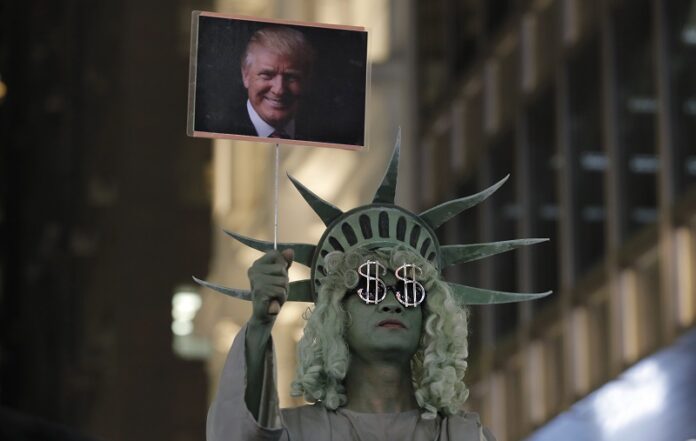
A street performer dressed as the Statue of Liberty holds up a picture of U.S. President-elect Donald Trump Wednesday in Hong Kong's downtown. Photo: Kin Cheung / Associated Press

MOSCOW — The world will face a starkly different America when President-elect Donald Trump takes the oath of office in January.

While the billionaire businessman’s triumph was welcomed in some countries, others saw it as a big shock, as governments will now have to deal with a man who has cozied up to Russian President Vladimir Putin, told NATO allies they would have to pay for their own protection and vowed to make the Mexican government pay for a multibillion-dollar border wall.

Leaders weren’t sure what to expect after a U.S. campaign in which Trump upended foreign policy orthodoxy on numerous fronts, including the international movement to contain the spread of nuclear weapons.

Putin sent Trump a congratulatory telegram Wednesday morning and made a televised statement expressing the hope that frayed U.S.-Russian relations could be put back on track. He said Moscow is ready to try to restore good relations.

“We aware that it is a difficult path, in view of the unfortunate degradation of relations between the Russian Federation and the United States,” he said, adding that “it is not our fault that Russian-American relations are in such a state.”

Russia was at times a focal point during the U.S. campaign, with government officials and the Hillary Clinton campaign team suggesting the Russian government was involved in hacking her campaign’s emails. Trump expressed admiration for Putin and his tough leadership style, and some Clinton surrogates questioned Trump’s business dealings with Russia.

Dmitri Drobnitski, a columnist at the popular, generally pro-Kremlin website LifeNews, said Trump’s victory will help the entire world.

“I congratulate the American people with their will and with their democracy and with their strength and with their courage,” he told The Associated Press. “So this is not only a victory for the Americans, who defended their democracy against the liberal, global elite— no, this is a victory that the American people brought to the whole world.”

Trump’s win caused trepidation in Mexico, where his remarks calling Mexican immigrants criminals and “rapists” were a deep insult to national pride. Trump has suggested slapping a 35 percent tax on automobiles and auto parts made by U.S. companies in Mexico. Financial analysts have predicted a Trump win would threaten billions of dollars in cross-border trade, and government officials say they have drawn up a contingency plan.

“It’s DEFCON 2,” Mexican analyst Alejandro Hope said. “Probably something as close to a national emergency as Mexico has faced in many decades.”

Trump’s electoral triumph is also being felt strongly in the volatile Middle East, where multiple crises are unfolding.

In Iran, leaders emphasized the need to keep the historic nuclear deal between Iran and world powers on track despite Trump’s harsh criticism of it during the campaign.

Iran’s president said Wednesday the deal “cannot be overturned by a single government.”

Trump has suggested he would try to renegotiate the agreement under which Iran curbs its nuclear program in exchange for a gradual lifting of international sanctions.

In Israel, Prime Minister Benjamin Netanyahu hailed Trump as a “true friend of the State of Israel.”

Netanyahu said that he believes the two leaders “will continue to strengthen the unique alliance between our two countries and bring it to ever greater heights.”

Palestinian President Mahmoud Abbas said that he hopes “peace will be achieved” during Trump’s term.

Iraqi Prime Minister Haider al-Abadi congratulated Trump. In a statement on his website, al-Abadi said he hopes the “world and the United States will continue to support Iraq in fighting terrorism.”

The Taliban called for the withdrawal of all U.S. forces from Afghanistan once Trump takes office.

In a statement sent to The Associated Press, Taliban spokesman Zabihullah Mujahid said a Trump administration “should allow Afghans to become a free nation and have relationships with other countries based on non-interference in each other’s affairs.”

In Europe, NATO allies will wait to see if Trump follows through on suggestions that the U.S. will look at whether they have paid their proper share in considering whether to come to their defense.

Trump’s rhetoric has challenged the strategic underpinning of the NATO alliance, rattling its leaders at a time when Russia has been increasingly aggressive.

“As a candidate, Trump called into question NATO and trade agreements, and reached out to Moscow,” said Daniela Schwarzer, an expert on trans-Atlantic relations at the German Council on Foreign Relations.

“His campaign of discrimination, lies and aggression harmed the principles of liberal democracy. Even if President Trump doesn’t implement everything, Germany and Europe can’t rely on the trans-Atlantic partnership as usual and have to stand up for Western values themselves.”

Trump’s victory pleased leaders of the nationalist Alternative for Germany party, which has campaigned strongly against Chancellor Angela Merkel’s policy of letting hundreds of thousands of migrants into the country.

“It was high time that people disenfranchised by the political establishment get their voices back in the United States of America too,” party co-leader Frauke Petry said.

The French populist, anti-immigrant politician Marine Le Pen congratulated Trump even before the final results were known, tweeting her support to the “American people, free!”

Trump’s victory was viewed with shock in Ireland, a country fearful of Trump’s campaign pledge to confront U.S. companies using Ireland as a tax shelter. Irish Times columnist Fintan O’Toole wrote Wednesday: “The republic of Washington, Jefferson, Lincoln and Roosevelt is now the United Hates of America.”

In Asia, security issues and trade will top the agenda for the new administration, from North Korea and the South China Sea to the contentious and yet-unratified Trans-Pacific Partnership trade agreement.

China is seen as favoring Trump because he appears less willing to confront China’s newly robust foreign policy, particularly in the South China Sea.

Clinton, by contrast, was disliked in Beijing for having steered the U.S. “pivot” to Asia aimed at strengthening U.S. engagement with the region, particularly in the military sphere.

Scholar Mei Xinyu wrote in the Communist Party newspaper Global Times that China would find it easier to cope with a Trump presidency.

“Trump has always insisted on abandoning ideological division and minimizing the risks that unnecessary conflicts with other countries may bring to the U.S.,” Mei wrote.

News of Trump’s victory hit hard in Cuba, which has spent the last two years negotiating normalization with the United States after more than 50 years of Cold War hostility. Trump has promised to roll back Obama’s opening with Cuba unless President Raul Castro agrees to more political freedoms.

“If he reverses it, it hurts us,” taxi driver Oriel Iglesias Garcia said. “You know tourism will go down.”

Some said Trump’s win might alter their life plans.

Muki Bosco, a hotel worker in South Sudan’s capital, Juba, said it discouraged him from pursuing his dream of going to the United States.

“What Trump said about the immigration policy, saying that he would deport (immigrants). He was saying those things during the campaign … I don’t think I’ll go to America.”

Story: Jim Heintz, Gregory Katz
Advertisement

Clinton Says Highest Glass Ceiling Will Be Shattered One Day

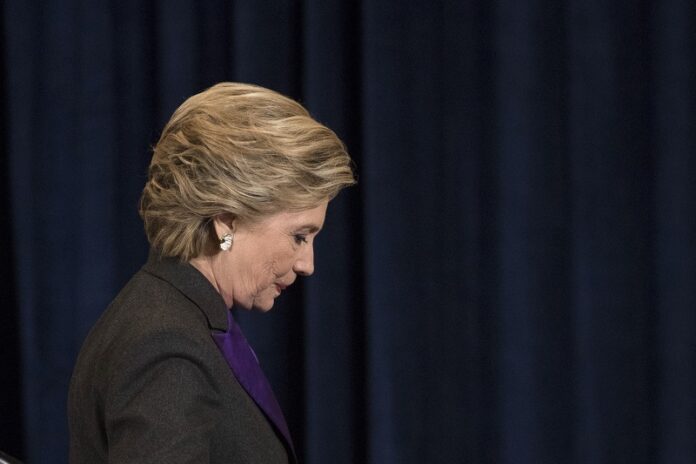
Democratic presidential candidate Hillary Clinton walks off the stage after speaking Wednesday in New York. Photo: Matt Rourke / Associated Press

NEW YORK —€” Gone was the ballroom with a soaring glass ceiling, the confetti and the celebrity guest stars. Instead, Hillary Clinton looked out to a group of grief-stricken aides and tearful supporters, as she acknowledged her stunning loss of the presidency to Donald Trump.

“This is painful,” Clinton said, her voice crackling with emotion, “and it will be for a long time.” But she told her faithful to accept Trump and the election results, urging them to give him “an open mind and a chance to lead.”

Before Clinton took the stage at a New York City hotel, top aides filed in, eyes red and shoulders slumped, as they tried to process the celebrity businessman’s shocking win after a campaign that appeared poised until Election Day to make Clinton the first woman elected U.S. president.

Clinton, who twice sought the presidency, told women: “I know we have still not shattered that highest and hardest glass ceiling. But someday, someone will and hopefully sooner than we might think right now.” Her remarks brought to mind her 2008 concession speech after the Democratic primaries in which she spoke of putting “18 million cracks” in the glass ceiling.

“To all the little girls who are watching this, never doubt that you are valuable and powerful and deserving of every chance and opportunity in the world to pursue and achieve your own dreams,” she said as her husband, former President Bill Clinton, stood wistfully by her side.

In perhaps a subtle nod to bridging the red state and blue state divide, Clinton wore a purple blouse and a dark blazer with a purple lapel while her husband wore a purple tie.

It may have been the final public act for the enduring political partnership of the Clintons, who appeared on the verge of returning to power after 16 years. If Clinton had won, it would have marked the first time a former first lady was elected U.S. president.

Clinton’s campaign was trying to make sense of a dramatic election night in which Trump captured battleground states like Florida, North Carolina and Ohio and demolished a longstanding “blue wall” of states in the Upper Midwest that had backed every Democratic presidential candidate since her husband won the presidency in 1992.

As Democrats were left wondering how they had misread their country, mournful Clinton backers gathered outside the hotel Wednesday.

“I was devastated. Shocked. Still am,” said Shirley Ritenour, 64, a musician from Brooklyn, New York. “When I came in on the subway this morning there were a lot of people crying.”

Flanked by her husband, daughter Chelsea Clinton and running mate Virginia Sen. Tim Kaine, Clinton said she had offered to work with Trump on behalf of a country that she acknowledged was “more deeply divided than we thought.”

The results were startling to Clinton and her aides, who had ended their campaign with a whirlwind tour of battleground states and had projected optimism that she would maintain the diverse coalition assembled by President Barack Obama in the past two elections.

On the final day of the campaign, Clinton literally followed Obama to stand behind a podium with a presidential seal at a massive rally outside Independence Hall in Philadelphia. As she walked up to the lectern, the president bent down to pull out a small stool for Clinton. Before leaving the stage, Obama leaned over to whisper in Clinton’s ear, “We’ll have to make this permanent.”

The devastating loss for the party, which will no longer hold the White House and will continue to be in the minority of both chambers of Congress, was certain to open painful soul-searching among Democrats, who had endured a lengthy primary between Clinton and Vermont Sen. Bernie Sanders. The so-called democratic socialist drew strong support among liberals amid an electorate calling for change but then backed Clinton’s general election bid.

Yet her team spent the bulk of their time focused on attacking Trump, while failing to adequately address Clinton’s deep liabilities €” or the wave of frustration roiling the nation.

Every time the race focused on Clinton, her numbers dropped, eventually making her one of the least-liked presidential nominees in history. And she offered an anxious electorate a message of breaking barriers and the strength of diversity hardly a rallying cry leaving her advisers debating the central point of her candidacy late into the primary race.

Story: Lisa Lerer, Ken Thomas

Advertisement

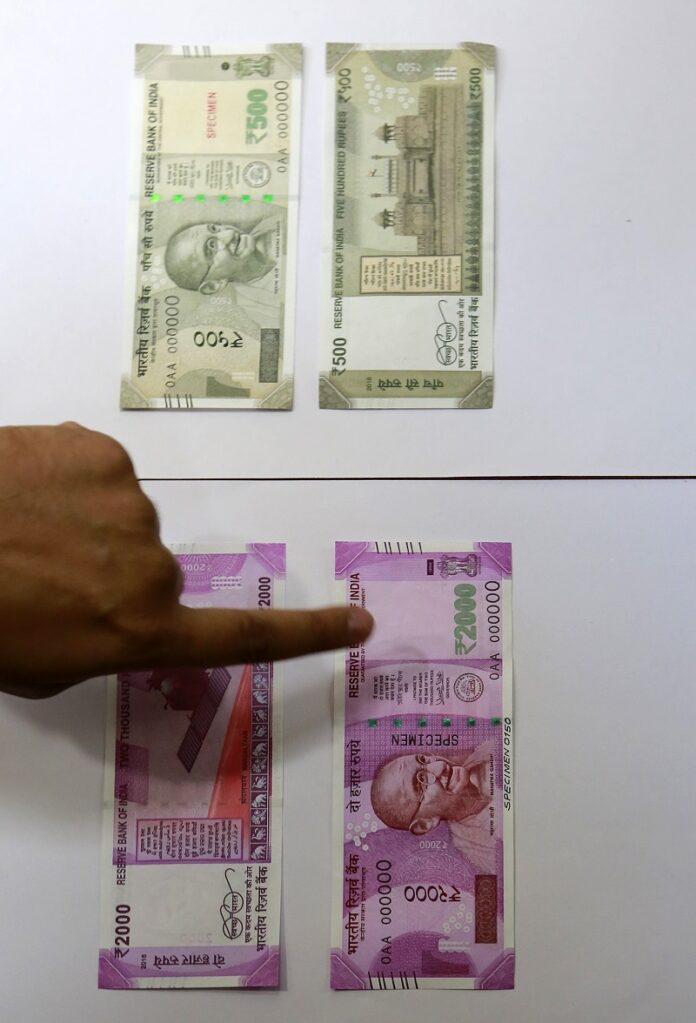
Millions Scramble as India Scraps Largest Banknotes

Specimens of the new Indian Rupees 500, top, and 1,000 currency are displayed Wednesday at the Reserve Bank of India headquarters in Mumbai, India. Photo: Rajanish Kakade / Associated Press

NEW DELHI — Indians awakened to confusion Wednesday as banks and ATMs remained closed after the government withdrew the highest-denomination currency notes overnight to halt money laundering in a country where many in the poor and middle-class still rely mainly on cash.

Roadside vegetable sellers, kiosks selling biscuits and tea, small mom-and-pop stores selling groceries, all saw a sharp drop in customers on Wednesday, the day after Prime Minister Narendra Modi’s surprise televised announcement.

As of midnight Tuesday, all 500- and 1,000-rupee notes had no cash value. People holding the discontinued notes can deposit them in banks and post office savings accounts before the end of the year. But anyone making large bank deposits might invite the unwelcome attention of Indian tax authorities.

Finance Minister Arun Jaitley told state-run news channel Doordarshan that if the money deposited in banks was illegal then the depositors would find themselves in “trouble.”

Banks and ATMs were likely to stay closed Thursday, too, to help prepare for the swarms of people who will rush to deposit their 500- and 1000-rupee bills and withdraw money to spend once they reopen.

When ATMs open Nov. 11 there will be an initial cap of 2,000 rupees ($30) on withdrawal per card, which will gradually be increased to 4,000 ($60) rupees within a week.

The government will issue new banknotes of 500 and 2,000 rupee denominations soon, Jaitley said, adding that the new currency should be available in banks within three or four weeks.

For a few days, the old bills can be used at hospitals, gas stations, crematoria and for other businesses and services deemed essential.

But many, like student Ankit Saini, woke up Wednesday morning with money in their wallet. Just in the wrong denomination.

“I have three 500-rupee notes and only about 40 rupees (about 60 cents) in small change. I can either buy lunch or a bus ticket home,” he said as he chose food over transport at a roadside food stall in central Delhi. “But what will I do tomorrow?”

“Maybe what Modi has done is good for the country in the long run, but what about ordinary people like us today?” asked Om Prakash Singh, an office manager. “I have 200 rupees to get through the next two days and even after that who knows how long the lines at the bank will be.”

The move is expected to bring billions of dollars into an economy and tax base long hobbled by corruption and money laundering.

Businesses routinely use cash to avoid paying taxes. Raids on corrupt politicians and businesses regularly uncover millions of dollars’ worth of rupees in dozens of boxes of cash.

Modi said authorities have discovered 1.25 trillion rupees, or about $18.8 billion, in illegal cash over the last two and a half years. Counterfeiting was also a major concern, he said, and, in an indirect reference to rival Pakistan, accused a neighboring country of circulating fake Indian currency to damage the Indian economy.

“We as a nation remain a cash-based economy, hence the circulation of fake rupees continues to be a menace,” India’s central bank said in a statement late Tuesday night.

In the past, other governments such as Myanmar have taken notes out of circulation to undermine challenges to their power and regain stronger control over the economy.

Much of India’s illicit money stores are believed to be used for land purchases, or secreted away in overseas accounts. The scrapping of bank notes could send real estate prices crashing, an expectation reflected in slumping stock prices of major real estate companies on the Bombay Stock Exchange by early afternoon.

Shares of real estate giants DLF Ltd, Housing Development & Infrastructure Ltd. and India Bulls Real Estate Ltd. had all dropped more than 20 percent from their closing Tuesday.

But the move will also hurt the poor, many of whom do not have bank accounts and keep their savings in cash.

“We are not the ones with the black money and if we don’t earn for two days we don’t eat,” said Bachchu Lal, as he stood next to his hand pushed wooden cart. He had only one customer in the first few hours of Wednesday morning, usually a busy time.

Story: Muneeza Naqvi

Advertisement

Thailand Can Expect Less Interest From President Trump, Academics Say

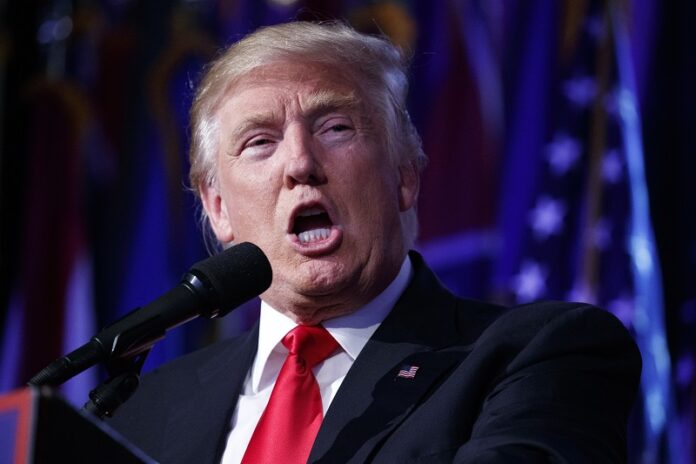
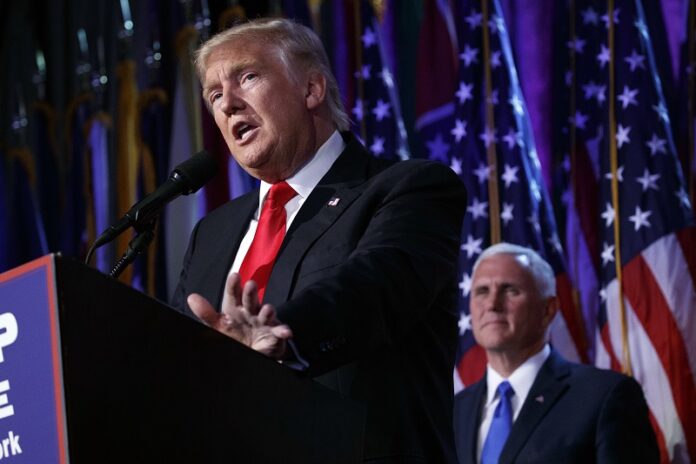
President-elect Donald Trump speaks during an election night rally Nov. 9 in New York. Photo: Evan Vucci / Associated Press

BANGKOK — The United States under President-elect Donald Trump will likely pay less attention to human rights and the restoration of democracy in Thailand, relieving pressure on its military regime, two political scientists said Wednesday.

Reached for comment Wednesday after the Republican presidential candidate’s upset win, two prominent political scientists mused over what his presidency will mean for Thailand, its people and its military regime.

“It can be expected that Trump may not promote values such as freedom and human rights,” said Pongkwan Sawasdipak, a lecturer of international relations at Thammasat University. Pongkwan said the United States may simply neglect the military regime of Gen. Prayuth Chan-ocha under a more inward-looking and isolationist Trump.

“They may not care about the Thai government. But that also means less criticism of [the military],” she added.

Pongkwan said Trump will likely pull away from Obama’s “Asian pivot” to focus more on the Middle East, as he vowed during the campaign to eradicate the Islamic State, who he presented as an existential peril to his nation.

Pongkwan also warned that Thailand would be left with fewer cards to play against China if the United States disengages with Thailand and Southeast Asia.

Or, as political science professor Siripan Noksuan Sawasdee believes, it may mean little.

Thailand just hasn’t been important to the United States and therefore little may change under President Trump, the Chulalongkorn University professor said.

Siripan said the two nations’ military ties are unlikely to change, but she agrees there will be less pressure on Thailand on human rights and civil liberties.

“The pressure will likely be lessened,” Siripan said.

It’s the economic front where Siripan believes Thailand may see changes under a more protectionist Trump.

“Where can Thailand find new markets?” she said.

Advertisement

Generals Can Grow Out of Interventionism, Military Expert Says

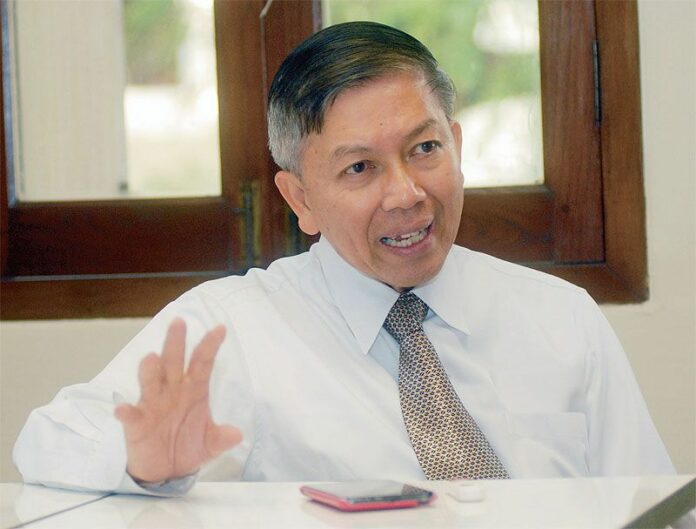
Surachart Bamrungsuk in undated photo Photo: Matichon

BANGKOK — Corruption has replaced communism as the new excuse for authoritarianism, but a changing world means it’s no longer possible for the junta of today to emulate the dictators of the past, according to a political science professor and military expert.

For decades, Surachart Bamrungsuk has been a voice of reason when it comes to the military’s role. He has admirers even within the army, the type of democratically-minded, mid-ranking officers sidelined since the coup. Since then, Surachart is no longer sought out to lecture army officers at various schools, but the professor continues speaking out about what the army can and should become.

Sucharat, whose doctoral dissertation at Columbia University was “From Dominance to Power Sharing: The Military and Politics in Thailand, 1973-1992,” said middle class support is crucial for the junta’s future, along with that of the business elites.

While communism was presented as the existential threat to justify previous coups, he said those of 1991, 2006 and 2014 won the support of the politically conservative middle class by presenting them as antidotes to corruption and failures of the political class.

“After 2014, we witnessed the success of psychological operations which created the image of politicians as entirely negative,” he said. “If we listen to army-broadcast programs, we can detect an equation wherein democracy is equated to corruption, and politicians are the agents of that failure.”

He said the cycle of coups would not be broken so long as people accepted that narrative. As for the longevity of the current junta, which calls itself the National Council for Peace and Order, or NCPO, he said it depends largely on one unsurprising factor.

“Middle class support partly depends on the how the economy performs, and how much longer the elites who control big business will put up with current economic conditions,” he said, saying present economic conditions were far from good.


An Old Justification For a New Era

Surachart said the NCPO’s justification for seizing power is nothing new to the world. Countries in Latin America leveraged ideological opposition to the political class to justify military interventions, but those occurred decades ago.

“In such a context, the military presents itself as national guardian,” he said. “That was normal during the Cold War. They staged a coup in order to defend the country from communism. Today there are no communists, so politicians have become the new justification.”

The professor said other factors have changed since the Cold War, restricting the Thai junta further. Instead of a bipolar struggle between left and right, today’s issues facing society were more complex, including whether democracy should be the political underpinning.

“If that’s the case, then the military must retreat to the barracks,” he said. “Unlike military dictators in the past, this context dictates to the military what’s not permissible.”

He said those comparing junta chairman Prayuth Chan-ocha to those of the past such as Field Marshal Sarit Thanarat were missing an important distinction: Prayuth doesn’t enjoy the absolute impunity that Sarit did in the early 1960s.

“During Sarit’s time, there wasn’t much development in Thailand. The military was powerful to the point where we could say its power had no limits,” he said.

Sarit ruled as dictator with an iron fist after staging a coup in 1957 until his death in 1963. While Prayuth enjoys absolute power, Surachart said he can’t use it to have his opponents executed as Sarit did.

“Article 44 is powerful, but it can’t be used to send people to the firing squad,” he said.

Globalization, international norms on human rights have changed all that, he said.

“Even if the military doesn’t like human rights, they can’t totally violate them like Sarit did,” he said.


It’s Still the Economy, Sir

In the end, no one can say how long the NCPO will be around. But if history is any guide, Surachart said, the performance of the economy under its leadership or that of its proxies poses a threat.

“If we look at the military, after general elections, there will be a regime party or a proxy party acting for the military. Thai history has shown they have never been successful. It must be acknowledged that when it comes to handling the economy, [the junta] has not been successful… The question is, how can they control such a regime party?” Surachart said.

He doesn’t rule out another military putsch in the future.

To end the cycle of coups, Thailand must develop its political systems to create a truly democratic regime, he said. Groups involved in coming up with solutions to strengthen democracy should include civil society at three levels: academic, civil and political.

“We need to rethink the question,” Surachart said. “First, Thailand needs political reform. Second, we need military reform. All these so we can create a base for democracy, and this may also require judicial reform.”

As for failed military reforms, he said it has so far failed to surrender its interventionist prerogative and become a professional corps in service to the public through its representatives.

“It’s not that American soldiers do not involve themselves in politics, but they push for [desired] policy, while in Thailand it’s not just involvement but intervention. … The intervention mentality used to be normal, but not in this global era. I still believe that Thai military intervention is not a ‘new normal’ but an old tradition,” he said.

Advertisement

New Constitution Submitted for Royal Endorsement

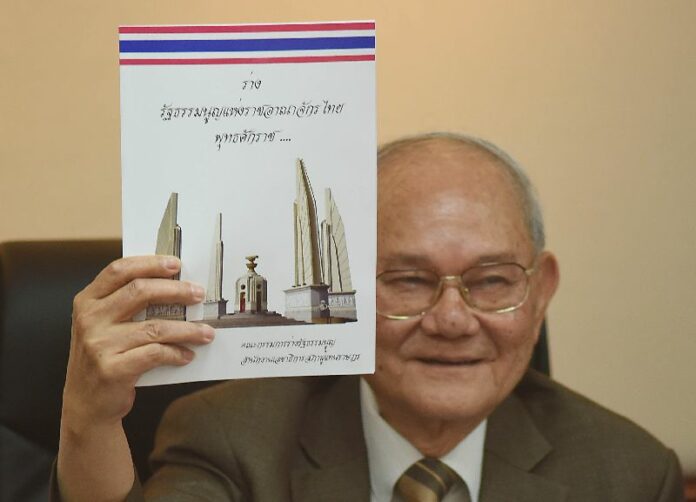
Constitution Drafting Committee Chairman Meechai Ruchuphan presents the final draft of the proposed charter on March 29 in Bangkok.

BANGKOK — Thailand’s new constitution has been or will be submitted to the palace for formal approval, an official announced Wednesday, despite the ongoing lack of a presiding monarch.

Under the 2014 interim charter, the draft constitution approved in an August referendum must be royally endorsed by the King. The previous monarch, King Bhumibol, died on Oct. 13 at 88, and his son Crown Prince Vajiralongkorn has indefinitely delayed taking the throne, saying he was not ready and needed time to mourn his father.

Read: Crown Prince Vajiralongkorn Meets With Regent, Will Take Throne

Deputy Prime Minister Wissanu Krea-ngam announced the charter was being forwarded but did not elaborate on who would have the royal authority to sign the constitution. He noted it must be endorsed by February.

“As to when an endorsement will come is up to the royal judgment,” he said.

He was unable to say precisely when the document had been – our would be – submitted.

“I’m not sure,” the deputy prime minister said. “Either yesterday evening or today morning,”

He added that the charter text left two gaps to be filled later: rewriting the preamble written in honor of His Majesty the Late King Bhumibol, and the official royal title that Crown Prince Vajiralongkorn will assume when he ascends to the throne at some point.

Note: The content of this article has been been self-censored out of fear of prosecution under the lese majeste law. We regret the necessity.

Related stories:

Gov’t Backs Off From Specific Succession Time Frame

Crown Prince Not Ready to Take Throne Yet, Prayuth Says

Advertisement

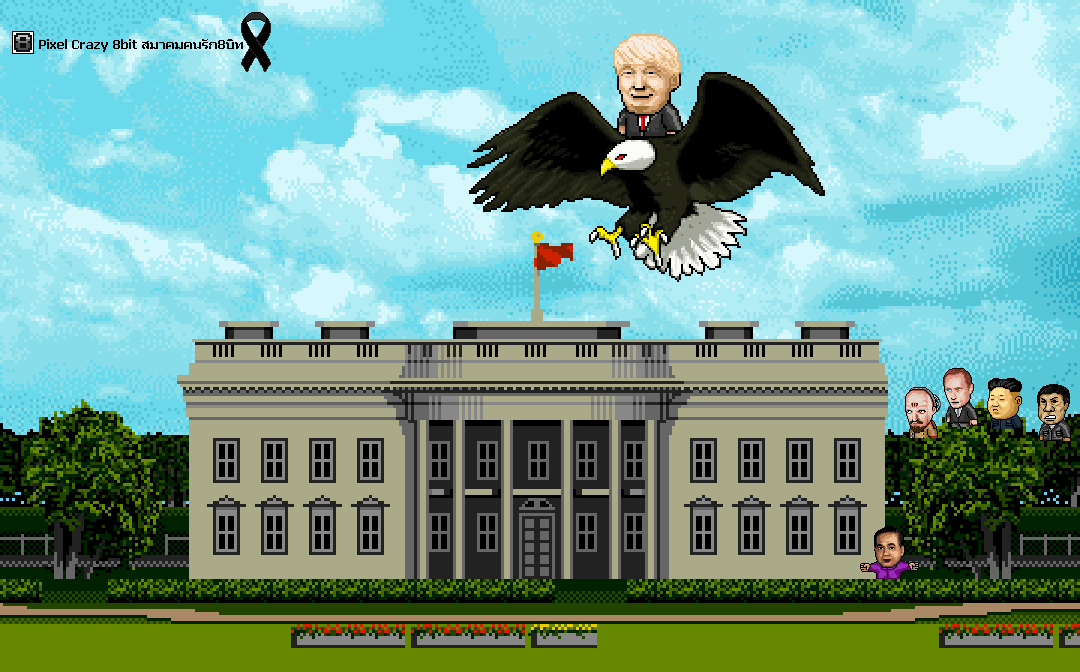
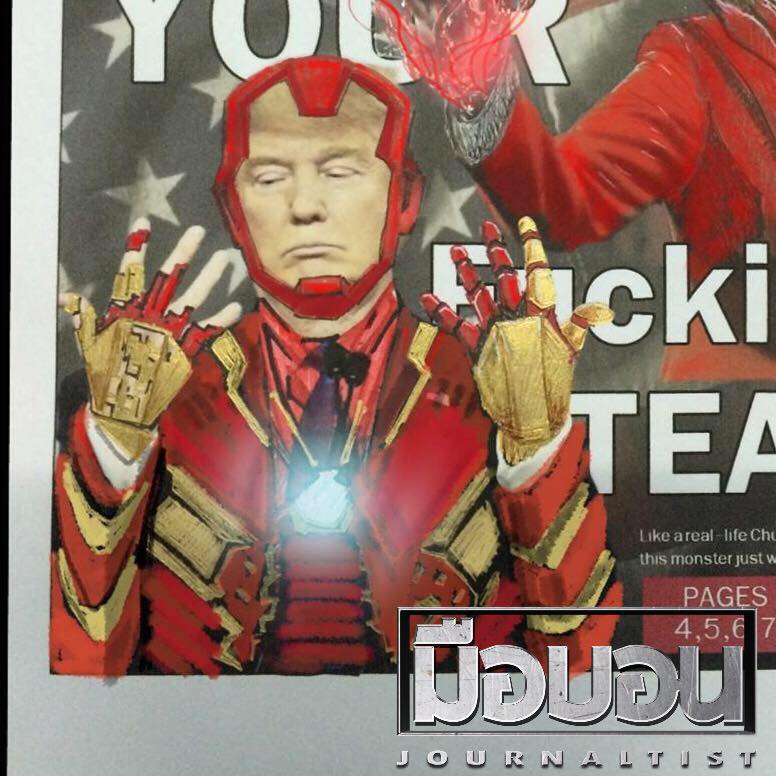
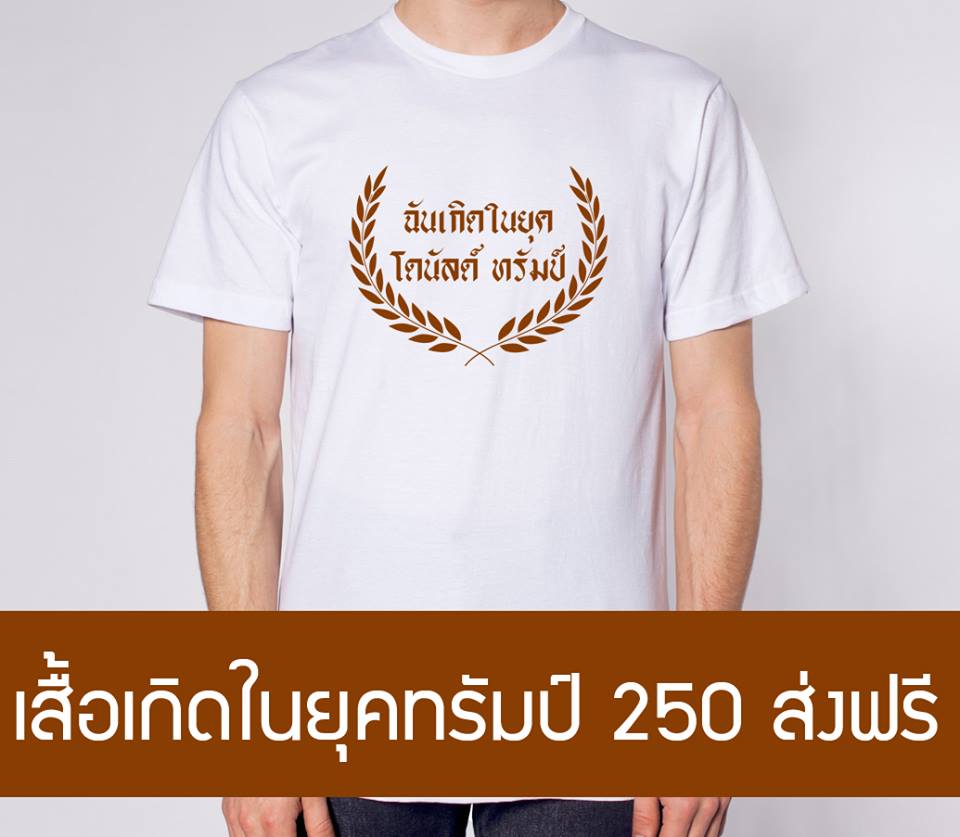
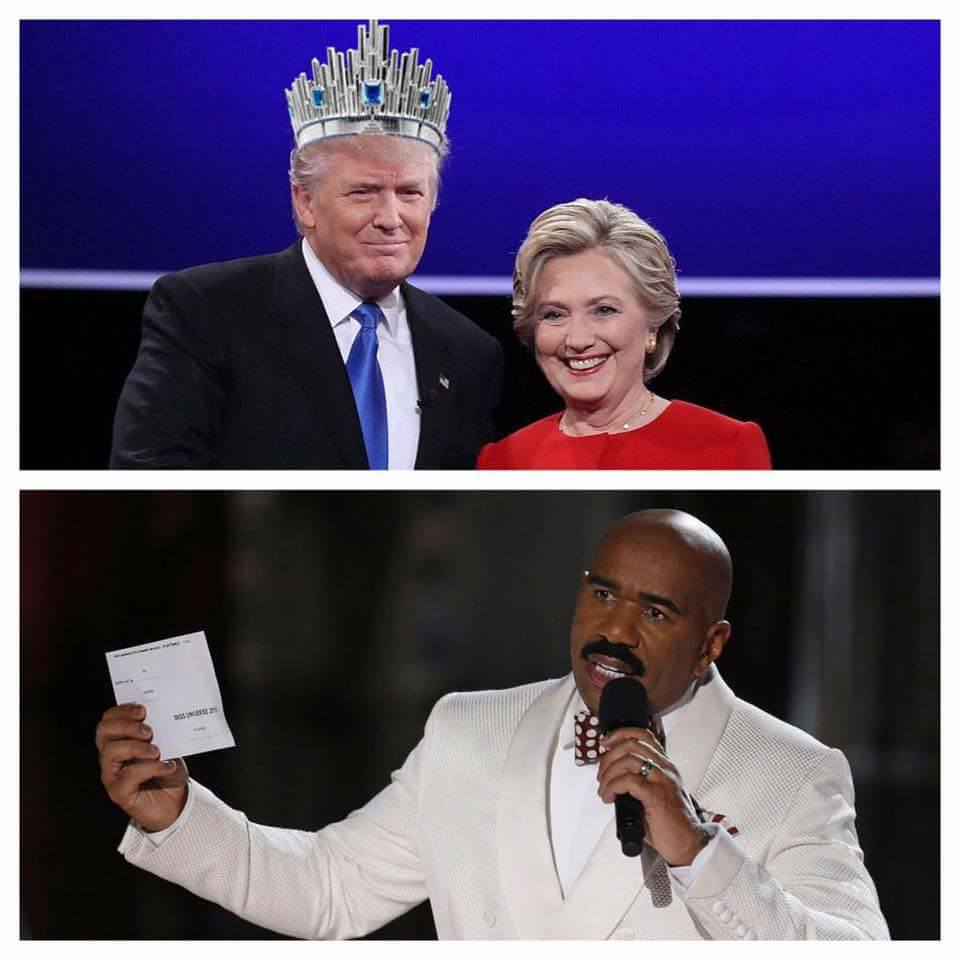
Speechless Netizens Parse Trump Win With Memes

Photo: Andrew MacGregor Marshall / Facebook

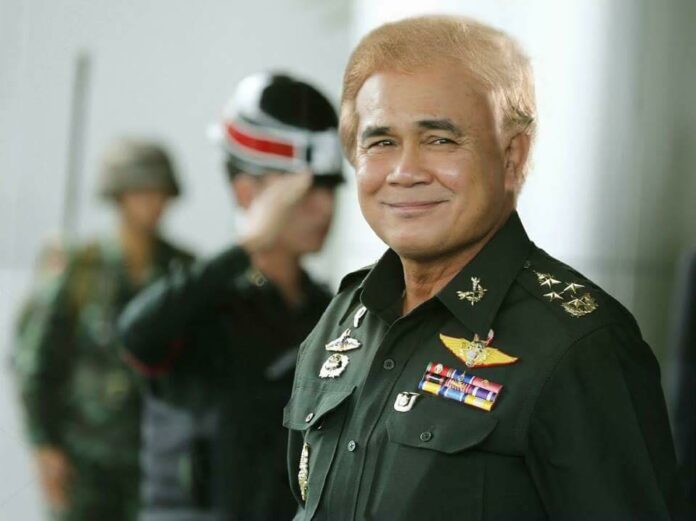
BANGKOK — Thailand on Wednesday welcomed the new Trumpasat University among a flood of memes seeking to make sense or just fun of the surprise upset win of U.S. president-elect Donald Trump.

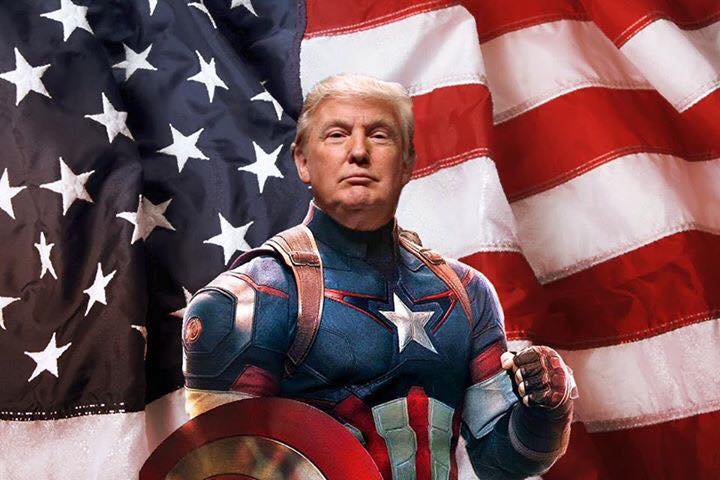
Politically active netizens couldn’t help but bounce their mouses in Photoshop to spread groan worthy-to-dank memes about the shocking outcome.

Here’s what’s spreading in the timelines.

https://twitter.com/rituaii/status/796257485405310977

‘The real golden era’

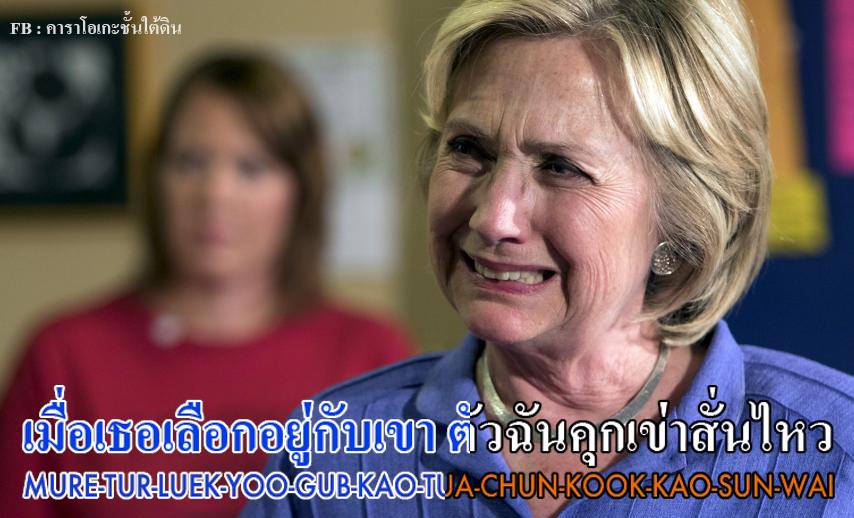
‘Since you chose to be with him, I’m trembling on my knees,’ says classic pop song ‘Jai Nakleng’ by Pongpat Wachirabunjong Photo: Underground Karaoke / Facebook
Photo: Nong / Facebook
Photo: Pongsathon Kanjananithi / Facebook
Photo: Pixel Crazy 8bit / Facebook
Photo: Journaltist / Facebook
‘I was born in the reign of Donald Trump.’ Photo: Kai Mod Took Sing / Facebook
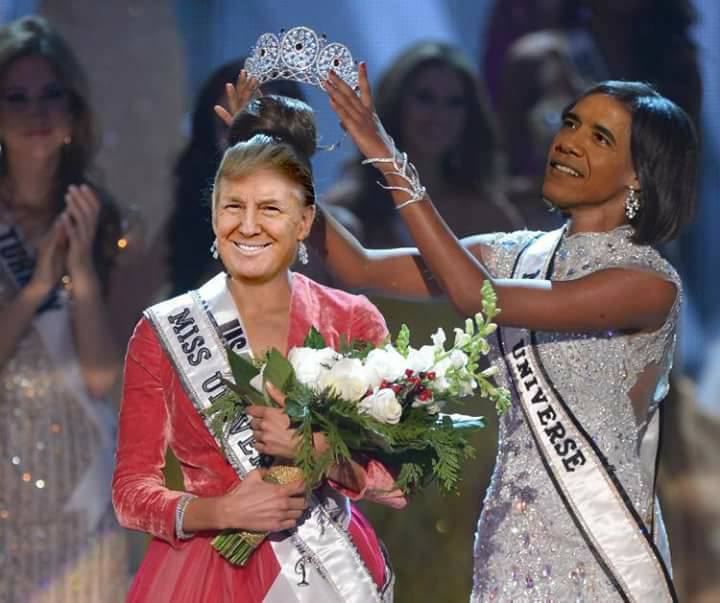
Someone resurrected the time Steve Harvey infamously announced the wrong Miss Universe in 2015. Photo: Varinthorn Aussaneevuttikorn / Facebook
Advertisement

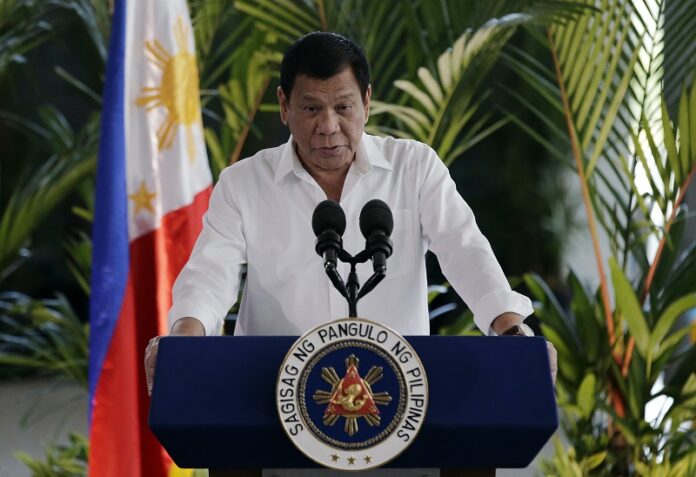
Duterte Congratulates Trump on Election Victory

Philippine President Rodrigo Duterte delivers his speech during departure ceremonies last November at Manila's International Airport, Philippines. Photo: Aaron Favila / Associated Press

MANILA — Philippine President Rodrigo Duterte, who has lashed out at Barack Obama for criticizing his deadly anti-drug crackdown, has congratulated U.S. President-elect Donald Trump.

Duterte says he looks forward to working with the new American leader to further enhance the treaty allies’ relations.

Duterte, who took office in June, has had an uneasy relation with the U.S. The 71-year-old leader has announced his desire to scale back joint combat drills with the U.S. military and end the presence of foreign troops, including Americans, in the country in two years.

In Duterte’s statement on Trump’s victory released by his spokesman, however, the tough-talking Philippine leader was unusually diplomatic.

“President Duterte wishes President-elect Trump success in the next four years as chief executive and commander-in chief of the U.S. military, Communications Secretary Martin Andanar said in a statement. Duterte, he said, “looks forward to working with the incoming administration for enhanced Philippines-US relations anchored on mutual respect, mutual benefit and shared commitment to democratic ideals and the rule of law.”

Advertisement

It’s Trump! Stunning Outsider Victory for 45th President

Vice president-elect Mike Pence, right, watches as President-elect Donald Trump speaks during an election night rally Wednesday in New York. Photo: Evan Vucci / Associated Press

WASHINGTON — Donald Trump claimed his place Wednesday as America’s 45th president, an astonishing victory for the celebrity businessman and political novice who capitalized on voters’ economic anxieties, took advantage of racial tensions and overcame a string of sexual assault allegations on his way to the White House.

Trump’s triumph over Hillary Clinton, not declared until well after midnight, will end eight years of Democratic dominance of the White House. He’ll govern with Congress fully under Republican control and lead a country deeply divided by his rancorous campaign against Clinton. He faces fractures within his own party, too, given the numerous Republicans who either tepidly supported his nomination or never backed him at all.

As he claimed victory, Trump urged Americans to “come together as one united people.”

Clinton called her Republican rival to concede but did not plan to speak publicly until Wednesday morning. Trump, who spent much of the campaign urging his supporters on as they chanted “lock her up,” said the nation owed Clinton “a major debt of gratitude” for her years of public service.

The Republican blasted through Democrats’ longstanding firewall, carrying Pennsylvania and Wisconsin, states that hadn’t voted for a GOP presidential candidate since the 1980s. He needed to win nearly all of the competitive battleground states, and he did just that, including Florida, Ohio, North Carolina and others.

Global stock markets and U.S. stock futures plunged, reflecting investor concern over what a Trump presidency might mean for the U.S. and world economies and trade.

A New York real estate developer who lives in a sparkling Manhattan high-rise, Trump forged a striking connection with white, working class Americans who feel left behind in a changing economy and diversifying country. He cast immigration, both from Latin America and the Middle East, as the root of the problems plaguing many Americans and tapped into fears of terrorism emanating at home and abroad.

GOP Senate candidates fended off Democratic challengers in key states, including North Carolina, Indiana and Wisconsin. Republicans also maintained their grip on the House.

Senate control means Trump will have great leeway in appointing Supreme Court justices, which could mean a shift to the right that would last for decades.

Trump has pledged to usher in sweeping changes to U.S. foreign policy, including building a wall along the U.S.-Mexico border and suspending immigration from countries with terrorism ties. He’s also praised Russian President Vladimir Putin and spoken of building a better relationship with Moscow, worrying some in his own party who fear he’ll go easy on Putin’s provocations.

Putin sent him a telegram of congratulations early Wednesday.

Trump upended years of political convention on his way to the White House, leveling harshly personal insults against his rivals, deeming Mexican immigrants rapists and murderers, and vowing to temporarily suspend Muslim immigration to the U.S. He never released his tax returns, breaking with decades of campaign tradition, and eschewed the kind of robust data and field efforts that helped Obama win two terms in the White House, relying instead on his large, free-wheeling rallies to energize supporters. His campaign was frequently in chaos, and he cycled through three campaign managers.

His final campaign manager, Kellyanne Conway, touted the team’s accomplishments as the final results rolled in, writing on Twitter that “rally crowds matter” and “we expanded the map.”

Clinton spent months warning voters that Trump was unfit and unqualified to be president. But the former senator and secretary of state struggled to articulate a clear rationale for her own candidacy.

She faced persistent questions about her honesty and trustworthiness. Those troubles flared anew late in the race, when FBI Director James Comey announced a review of new emails from her tenure at the State Department. On Sunday, just two days before Election Day, Comey said there was nothing in the material to warrant criminal charges against Clinton.

Trump will inherit an anxious nation, deeply divided by economic and educational opportunities, race and culture.

Exit polls underscored the fractures: Women nationwide supported Clinton by a double-digit margin, while men were significantly more likely to back Trump. More than half of white voters backed the Republican, while nearly 9 in 10 blacks and two-thirds of Hispanics voted for the Democrat.

Doug Ratliff, a 67-year-old businessman from Richlands, Virginia, said Trump’s election was one of the happiest days of his life.

“This county has had no hope,” said Ratliff, who owns strip malls in an area badly beaten by the collapse of the coal industry. “Things will change. I know he’s not going to be perfect. But he’s got a heart. And he gives people hope.”

The Republican Party’s tortured relationship with its nominee was evident right to the end. Former President George W. Bush and wife Laura Bush declined to back Trump, instead selecting “none of the above” when they voted for president, according to spokesman Freddy Ford.

House Speaker Paul Ryan, a reluctant Trump supporter, called the businessman earlier in the evening to congratulate him, according to a Ryan spokeswoman. Senate Majority Leader Mitch McConnell said the American people “have chosen a new direction for our nation.”

Obama, who campaigned vigorously for Clinton throughout the fall and hoped his own rising popularity would lift her candidacy, was silent on Trump’s victory, but he is expected to invite him to the White House this week. It will be a potentially awkward meeting with the man who pushed false rumors that the president might have been born outside the United States.

Story: Julie Pace

Advertisement

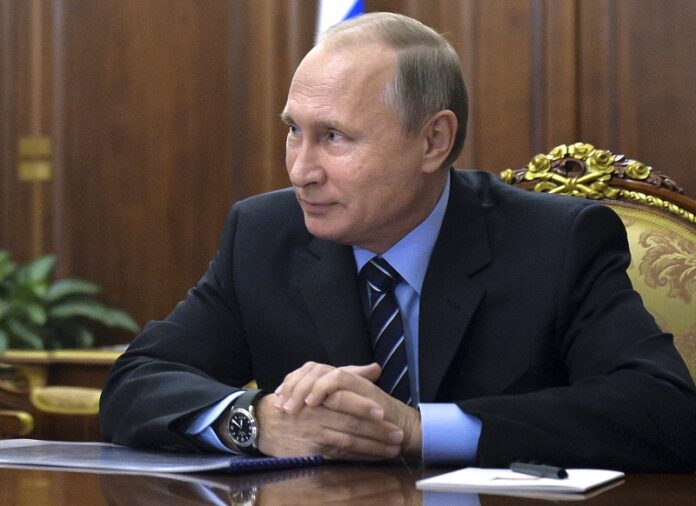
Putin Congratulates Trump on Winning US Election

Russian President Vladimir Putin meets with Russian Transport Minister Maxim Sokolov in 2016 in the Kremlin in Moscow, Russia. Photo: Alexei Druzhinin / Associated Press

MOSCOW — Russian President Vladimir Putin has sent Donald Trump a telegram of congratulation on winning the U.S. presidential election.

In a brief statement Wednesday, the Kremlin said Putin expressed “his hope to work together for removing Russian-American relations from their crisis state.”

Putin also said he has “confidence that building a constructive dialogue between Moscow and Washington that is based on principles of equality, mutual respect and a real accounting each other’s positions, in the interests of our peoples and the world community.”

Advertisement

Hot News

LATEST NEWS

Bangkok
overcast clouds
25 ° C
25 °
25 °
64 %
3kmh
98 %
Sun
35 °
Mon
35 °
Tue
34 °
Wed
32 °
Thu
35 °