

































30.5 C
Bangkok
Wednesday, June 24, 2026
Home Blog Page 2562

Indonesian Women Raped, Killed in Hong Kong, Forgotten at Home

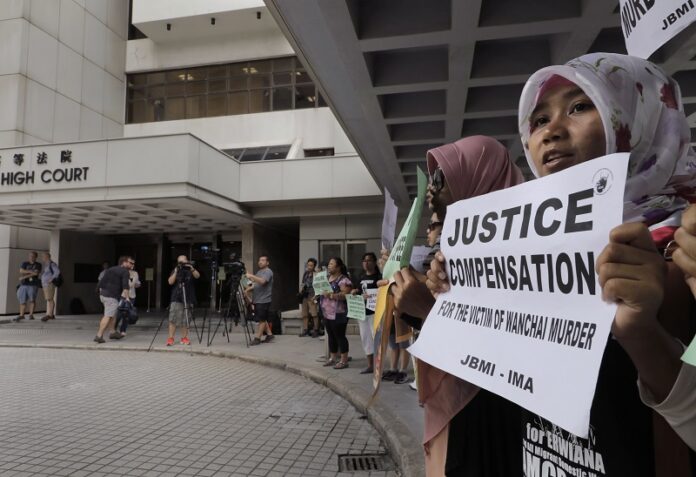
A migrant workers alliance group holds placards last October to protest the killings of two Indonesian women in 2014 outside the High Court in Hong Kong. Photo: Vincent Yu / Associated Press

JAKARTA — The Hong Kong trial of a British stock trader who murdered two Indonesian women and horrifically tortured one of them, recording the three-day ordeal on his phone, has barely registered in the victims’ home country, let alone elicited shock or sympathy.

Poor and vulnerable, nobodies in a sophisticated and clinical metropolis far from their humble villages on the islands of Java and Sulawesi, they were brutalized by a member of the global 1 percent, a Cambridge University-educated 31-year-old who boasted that he spent his half-million-dollar salary on drugs and prostitutes.

The prosecution’s evidence last week made headlines in international media: Three days of escalating torture for the first victim, Sumarti Ningsih, with repeated rape, the battering of her genitalia with fists, mutilation of her body with pliers and the slow cutting of her throat with a serrated knife. A juror wept as defendant Rurik Jutting’s smartphone videos were played.

“I’ve never seen anyone that scared,” Jutting said of Ningsih in one of the videos. “She would voluntarily eat feces out of the toilet and then smile and thank me afterward. That’s how scared she was. She would just do anything.”

And in Indonesia, the reaction: Scarcely anything.

Social media didn’t stir. There were no dramatic headlines or outraged editorials about the plight of the millions of vulnerable Indonesian women compelled by poverty to work abroad. Broadcasters did, on the other hand, devote hours of live coverage to the Indonesian trial of a privileged young woman accused of murdering her friend with cyanide-laced coffee, allegedly because she was angry about a tiff over boyfriends.

“We find no support from the government and media in our own country,” said Ningsih’s brother Suyit Khaliman. “We don’t understand, maybe because she was a maid or whatever. No matter how she worked for her family, she deserves justice,” he said.

In the two years since Ningsih was killed, no one from the government has been in touch with the family, Khaliman said. They heard the trial had started from reporters and some online news reports.

The family is also grappling with the future of Ningsih’s son, now 7.

One day, Khaliman said, “The boy will know how his mother died, perhaps from the internet, and we are worried about that.”

Closing arguments in Jutting’s murder trial are expected by the end of this week. He has pleaded not guilty.

Ningsih, 23, and the second victim, 26-year-old Seneng Mujiasih, were among the legions of Indonesians working abroad, many of them undocumented, and vulnerable to exploitation.

The International Labour Organization estimated their numbers at 4.3 million in 2012. Migrant Care, an Indonesian advocacy group, says most are not educated beyond primary school and 85 percent are women. It says government commitments to bolster protections are still mainly only on paper.

Ningsih had worked in Hong Kong for several years and was on a visitor pass at the time of her murder. Jutting had paid her for sex on a previous occasion. Her family, who she was in regular contact with, believed her most recent job was working as a waitress.

Mujiasih had an employment pass to work as a maid but also worked at a bar where Jutting met her and offered her a large sum of money for sex. At his apartment, Jutting cut her throat during a struggle after she saw a rope gag he tried to hide under a cushion, according to the police summary of facts.

Mujiharjo, the 56-year-old father of Mujiasih, said daily life for the family was difficult, emotionally and financially, but they tried to accept what happened and move on. Money she sent every month had helped pay to build a new house for the family in South Sulawesi, he said.

Khaliman, Ningsih’s 27-year-old brother, said the family was surprised to learn the source of the money she sent back to Indonesia.

But it is relatively common for earnings from the sex industry to keep families back home afloat, an unpalatable fact in Indonesia, a predominantly Muslim, socially conservative country of more than 250 million people.

Dina Damayanti, an Indonesian reporter living in Hong Kong who covered the trial for Suara, a newspaper aimed at the city’s large Indonesian community, said she was disheartened by the lack of interest back home.

Distance was one factor, she said, and the attention given to the cyanide trial.

“I feel a little bit sad because this is a very important case for me,” said Damayanti. “Indonesia is so complex. There are so many cases in my country.”

Anis Hidayah, the executive director of Migrant Care, said the murders, which occurred within days of each other, made headlines in Indonesia two years ago.

But with many migrant worker deaths abroad from suicides, killings, accidents in dangerous workplaces and other causes, the case was quickly forgotten. The victims were also stigmatized because of their involvement in prostitution and were wrongly blamed as contributing to their own misfortune, said Hidayah.

“We should think of how migrant workers are the economic backbone of their families,” said Hidayah. “Most of their families at home are very poor and their lives are very dependent on the sweat of migrant workers.”

Story: Niniek Karmini, Stephen Right

Advertisement

20 Dead, 39 Rescued in Indonesian Boat Capsizing

A ferry is seen at sea in Indonesia in 2006. Photo: kulo / Flickr

JAKARTA — A boat carrying Indonesian workers home from Malaysia capsized Wednesday in stormy weather, and Indonesian police said at least 20 people have died.

About 90 people were on the vessel that capsized off the island of Batam about 5 a.m, the island’s police chief Sambudi Gusdian said.

A search effort underway for hours has rescued 39 people so far.

Haryanto, a 51-year-old survivor, said the speedboat capsized amid heavy rains and high waves about two hours after it left Johor Bahru in Malaysia.

He said the boat was overcrowded with standing room only.

A police helicopter and more than a dozen boats are involved in the search and rescue effort.

Speedboats and ferries are a common form of transport in Indonesia, a sprawling archipelago.

Sinkings are common due to poorly enforced safety regulations.

One of the worst ferry sinkings in recent years occurred off Sulawesi in 2009, killing more than 330 people.

Advertisement

Superbugs Threaten Puppet Extinction in Play Fusing Art, Science

BANGKOK — Some people believe in the power of pills, popping them without hesitation at the slightest hint of illness. Yet through the power of puppets a collaboration between art and science hopes to teach a cautionary tale of a pending medical crisis.

In conjunction medical researchers fighting infectious diseases, B-Floor Theatre produced a performance about the endless arms race between human medicine and diseases.

In “Fishy Clouds,” a strange, sickening rain comes down and no medicine can provide a cure. A war between hyper-evolved, indestructible bacteria and antibiotics erupts with the survival of all puppet-kind on the line.

It’s the second time B-Floor has brought its avant garde sensibilities to fusing science with art, 2011 was its first collaboration with the Mahidol-Oxford Tropical Medicine Research Unit for “Survival Games.”

The research unit reported in September that drug-resistant bacterial infections were on the rise in Thailand.

Edu-taining performances of “Fishy Clouds” will travel around Bangkok and Tak province free of charge.

See it Nov. 12 at the Baan Ma Community in Prawet district. On Nov 18, it will be staged at Ramathibodi Hospital’s Chakri Sirindhorn Medical Center. Weekend performances on Nov. 26 and 27 will be held inside the Democrazy Theatre Studio, a 10-minute walk from exit No.1 of MRT Lumphini.

The play will travel around the Mae Sot district of Tak province Dec. 12, 13 and 14, landing at the Wattana Village Resort, Shoklo Malaria Research Unit in Wang Pa Clinic and Mawker Thai Clinic, respectively.

More information can be found online.

Advertisement

Army Opens Cyber Center to Fight 112, ‘Distorted’ Info

The new Army Cyber Center located inside the Royal Thai Army base in Bangkok is officially opened Tuesday. Photo: Matichon

BANGKOK — The Army opened a new Army Cyber Center on Tuesday tasked with combating and suppressing information deemed illegal or undesirable.

Formerly the Military Technology Center, the rebranded agency will be used against external and internal threats, from transnational hackers to suppressing information the military regime considers “distorted.”

Newly appointed army chief Gen. Chalermchai Sittisart said threats included information deemed insulting the monarchy and other matters deemed threats to national security.

“The current issue we are concerned the most is the disseminated information that affects national security,” he said. “The information operations of those who oppose [the government].”

Chalermchai said social media users share information critical of the government without “checking the facts.”

Read: Thailand’s New Online Fad: Social Surveillance

Since seizing power in 2014, the military has conflated national security with defense of the monarchy and dissent to its rule.

The army chief said the aim was to “create better understanding” with people on social media. Social media has remained one forum for free expression out of reach of the junta, which has largely quashed dissent and opposition in the public sphere.

It was unclear what tools and techniques would be employed, but the army said it was developing its own and improving its capacity. In the past, the military has reportedly imported intrusion software but relied more heavily on what’s been described as social surveillance.

Asked whether the suppression against royal defamation included academic content or discussion, Chalermchai did not hesitate.

“We deal with whatever is insulting to the monarchy,” he said.


Related stories:

Rejecting Vigilantism, Regime Ramps Up 112 Crackdown

Netizens Instructed to Report ‘Inappropriate Content’ by ISPs

Thailand’s New Online Fad: Social Surveillance

Advertisement

New MH370 Analysis Suggests No One at Controls During Crash

HMAS Success scans the southern Indian Ocean in 2013, near the coast of Western Australia, as a Royal New Zealand Air Force P3 Orion flies over, while searching for missing Malaysia Airlines Flight MH370. Photo: Rob Griffith / Associated Press

SYDNEY — A fresh analysis of the final moments of doomed Malaysia Airlines Flight 370 suggests no one was controlling the plane when it plunged into the ocean, according to a report released by investigators on Wednesday, as experts hunting for the aircraft gathered in Australia’s capital to discuss the fading search effort.

A technical report released by the Australian Transport Safety Bureau, which leads the search, seems to support the theory investigators have long favored: that no one was at the controls of the Boeing 777 when it ran out of fuel and dove at high speed into a remote patch of the Indian Ocean off western Australia in 2014.

In recent months, critics have increasingly been pushing the alternate theory that someone was still controlling the plane at the end of its flight. If that was the case, the aircraft could have glided much farther, tripling in size the possible area where it could have crashed and further complicating the already hugely complex effort to find it.

But Wednesday’s report shows that the latest analysis of satellite data is consistent with the plane being in a “high and increasing rate of descent” in its final moments. The report also said that an analysis of a wing flap that washed ashore in Tanzania indicates the flap was likely not deployed when it broke off the plane. A pilot would typically extend the flaps during a controlled ditching.

Peter Foley, the bureau’s director of Flight 370 search operations, has previously said that if the flap was not deployed, it would almost certainly rule out the theory that the plane entered the water in a controlled ditch and would effectively validate that searchers are looking in the right place for the wreckage.

“(It) means the aircraft wasn’t configured for a landing or a ditching  you can draw your own conclusions as to whether that means someone was in control,” Foley told reporters in Canberra on Wednesday. “You can never be 100 percent. We are very reluctant to express absolute certainty.”

The report’s release comes as a team of international and Australian experts begin a three-day summit in Canberra to re-examine all the data associated with the hunt for the plane, which vanished during a flight from Kuala Lumpur to Beijing on March 8, 2014, with 239 people on board.

More than 20 items of debris suspected or confirmed to be from the plane have washed ashore on coastlines throughout the Indian Ocean. But a deep-sea sonar search for the main underwater wreckage has found nothing. Crews are expect to complete their sweep of the 120,000-square kilometer (46,000-square mile) search zone by early next year and officials have said there are no plans to extend the hunt unless new evidence emerges that would pinpoint a specific location of the aircraft.

Australian Transport Minister Darren Chester said experts involved in this week’s summit will be working on guidance for any potential future search operations.

Experts have been preemptively trying to define a new search area by studying where in the Indian Ocean the first piece of wreckage recovered from the plane  a wing flap known as a flaperon  most likely drifted from after the plane crashed.

Several replica flaperons were set adrift to see whether it is the wind or the currents that primarily affect how they move across the water. The results of that experiment have been factored into a fresh drift analysis of the debris. The preliminary results of that analysis, published in Wednesday’s report, suggest the debris may have originated in the current search area, or to its north. The transport bureau cautioned that the analysis is ongoing and those results are likely to be refined.

Story: Kirsten Gelineau

Advertisement

Ultra-Royalists Threaten To Destroy 1932 Revolution Plaque

Locals hold a ‘removal ritual’ for the plaque in 21 Jun. 2015. / Photo: MThai

BANGKOK — Social media was abuzz Wednesday after an ultra-royalist threatened Monday to destroy the 1932 Revolution plaque located next to Rama V’s equestrian statue.

Thepmontri Limpaphayorm’s post Monday threatening to destroy the 1932 Revolution plaque.

User Thepmontri Limpaphayorm posted a photo of the plaque used to commemorate the location where the People’s Party announced its revolutionary manifesto that converted Siam from absolute monarchy to democracy on June 2, 1932.

“Looking for the owner [of this plaque]. If you don’t come dig it out by Dec. 30, my friends and I will consider that there’s no owner. We will go remove or destroy it ourselves. If you want to keep it as a souvenir, quickly dig it out,” the message read.

Thepmontri Limpaphayorm at a Yellowshirt protest in 2011.

Thepmontri, who graduated with a degree in history from Thammasat University, is an independent historian who has written books such as “Peeling Back the Oct. 14 Scab: A Worm On The Face of Thai History,” in reference to the popular revolt against military rule in 1973. He also gave speeches during Yellowshirt protests in 2011, and took a public stance against Cambodia in the Preah Vihear dispute.

While ultra-royalist netizens have voiced strong support for his threat, many others sharing the post decried his threat.

“I’m seeing lots of stuff about the People’s Party on Facebook today. People are digging the bones of these bandits up from the grave to cause another revolt. Go ahead! Come on out! All the Thai people will beat you up with our feet,” Orasa Suktadidtiworn wrote.

“I pass by this plaque often and never notice this plaque of un-fealty towards the nation. Let’s call it a Revolt’s plaque instead. If we’re going to remove it, we have to pray to Mae Thoranee [Mother Earth] and ask for permission to dig it up or cover it,” said Boonmee Zong.

Other users suggested it was an affront to Thai history.

Activists lay garlands and candles at the 1932 Revolution plaque on 24 Jun. 2016, the anniversary of the 1932 popular uprising in Bangkok.

“Sonthi Limthongkul didn’t dare do it. Soldiers didn’t dare remove it, no matter from which era…[this person] doesn’t understand the past or the future, and has no love for history…You ask who’s the owner of this plaque? Thai citizens are, dammit!” a user called New Peace Globe wrote.

The People’s Party plaque has been a contentious item in recent history. Some vandalized the small, simple plaque with sharp objects, while others have cleaned and laid flowers around it.

Advertisement

Cops Have Yet to Charge ‘Beauty Idol’ Who Crashed Into 8 Cars

A photo of Kritrada Tabtimphol posted on her Facebook on Sept. 11. Image: Kritrada Zomy Tabtimphol / Facebook

BANGKOK — A businesswoman who crashed her BMW into eight cars on a busy road Tuesday evening in Bangkok was allowed to go to hospital without any charges or drug test, despite witness accounts of her erratic behavior.

Police on Wednesday morning had yet to press any charges against Kritrada Tabtimphol, 28, because she was too shocked to speak to cops, according to a Suphachai Harnkhamla, deputy chief of Huai Khwang Police Station, who added that it was up to the hospital to perform a drug test on the suspect.

“We cannot yet press any charge against her because she’s in a state of shock,” Col. Suphachai said by telephone. “She’s not ready to give any testimony. At this moment, we’re questioning all the witnesses involved.”

Kritrada, who sells beauty products online under the name “Zomy,” caused a traffic mayhem at about 5pm Tuesday when she rear-ended eight other cars with her BMW in front of Esplanade shopping mall on Ratchadapisek Road. Police said three people werre injured.

Eyewitnesses said Kritrada, who appeared to be unhurt, stepped out of her vehicle after the crash and shouted there was a bomb in her car. The motorist also prayed and danced when policemen tried to question her about the incident. She later fainted at the police station and was taken to Paolo Memorial Hospital by her family.

Despite her outlandish behavior, Kritrada was not tested for alcohol or drugs. Col. Suphachai said the hospital is doing the work, but he had no idea when the results would be available.

Image: Kritrada Zomy Tabtimphol / Facebook

“We told them to hurry up,” Suphachai said.

He added that Kritrada will be diagnosed to see if she has any mental disorder.

Kritrada owns an online business selling beauty products. She also works as a promotional model, or pretty. Her Facebook profile has more than 170,000 followers. She has not written any post since the accident; but her friends have posted messages of support.

Kritrada’s case resembled police handling of another high-profile car accident in Ayutthaya province eight months ago.

In March, businessman Jenphop Viraporn crashed his BMW into the back of another car at a high speed on the highway, killing two graduate students inside. Police let him go to hospital without pressing any charges or performing any drug test on the suspect, saying that he was too shocked to face legal prosecution.

After the matter came to public attention, Jenphop was charged with fatal reckless driving and deadly DUI. The latter charge was automatically pressed against him because of his refusal to undergo drug tests. His trial will commence Nov. 14.

Kritrada Tabtimphol’s BMW at Huai Kwang Police Station on Tuesday night.
Kritrada Tabtimphol’s BMW at Huai Khwang Police Station on Tuesday night.


Related stories:

Claiming Insanity, Fatal Crash Suspect Jenphop Wants Trial Shelved

Praewa Completes Community Service, 4 Years After Court Orders It

Prosecutor Backtracks on Bringing Red Bull Heir to Court

Advertisement

Duterte Eyes Joint Operations With Malaysia vs. Abu Sayyaf

Released Norwegian hostage Kjartan Sekkingstad, left, briefly delivers his statement after meeting Philippine President Rodrigo Duterte, right in September in Davao city in southern Philippines. Photo: Manman Dejeto / Associated Press

MANILA — Philippine President Rodrigo Duterte will discuss possible joint military and police operations with Malaysia to quell Abu Sayyaf militant kidnappings of sailors along the countries’ sea border, saying that the brazen attacks have paralyzed trade and commerce.

Addressing the “deteriorating peace and order” in those waters will top the agenda when Duterte meets Malaysian Prime Minister Najib Razak and other top officials in Malaysia next week, Duterte told reporters late Tuesday.

Duterte said the attacks embarrassed him because the Abu Sayyaf perpetrators are based in the southern Philippine island of Jolo, an impoverished, jungle-clad region where the militants hold their hostages for ransom.

“There is a need for us, the three countries Malaysia, Philippines and Indonesia, to talk about this seriously and to put a stop because it has somehow paralyzed the trade and commerce in that area,” Duterte said.

He said his talks will cover border control, border crossing, “and, maybe, joint military and police operations.”

During a recent visit to Indonesia, Duterte said he discussed possible security strategies with President Joko “Jokowi” Widodo and the Indonesia leader was “OK with everything.” Duterte did not specify the security steps.

Despite initial talks by the three countries about ratcheting up security, Abu Sayyaf gunmen and allied militants — part of a wider Muslim rebellion that has been raging in the predominantly Roman Catholic nation for decades — have continued attacks at sea this year, kidnapping Malaysian and Indonesian crewmen of slow-moving tugboats mostly pulling coal barges.

The security talks are complicated and tricky because the Philippines and Malaysia have had territorial issues and questions have arisen, for example, how far Malaysian authorities chasing fleeing militants can go as they approach Philippine territory. In initial talks, the countries have considered establishing a more secure sea lane for commercial vessels as well as coordinated law enforcement actions, including sea and air patrols.

Indonesia has restricted coal shipments to the Philippines because of the danger. Although most of the vessels attacked were tugboats, which are easy to board, the militants attacked an ocean-going South Korean cargo ship for the first time about two weeks ago off southern Tawi Tawi province, near Sulu, abducting its South Korean skipper and a Filipino crewman.

Without any known foreign source of funds, the Abu Sayyaf has survived through the years mainly from ransom kidnappings. A Philippine threat assessment report seen by The Associated Press showed that the militants pocketed at least $7.3 million from six ransom kidnappings involving 21 people in the first six months of the year.

The report said the lucrative payoffs enabled the group to procure firearms and ammunition.

Duterte, who took office in June, has ordered the military to destroy the Abu Sayyaf, while pursuing talks with two larger Muslim rebel groups.

The Philippine military said Tuesday it has killed 70 Abu Sayyaf militants and captured 32 others in an offensive that began in July.

Story: Jim Gomez

Advertisement

All 33 Miners in Chongqing Disaster Found Dead

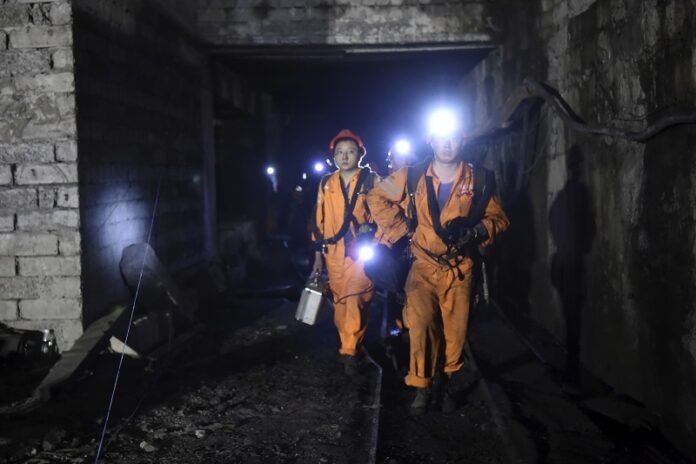
Rescuers work Monday at Jinshangou Coal Mine in Chongqing, southwest China. Photo: Tang Yi / Associated Press

BEIJING — Chinese state media say all 33 coal miners trapped underground in a gas explosion earlier this week have been found dead.

Two miners survived Monday’s explosion but rescuers working around the clock found no others alive. All bodies have been recovered and rescuers were shown bowing their heads in memorial for the dead.

Gas explosions inside mines are often caused when a flame or electrical spark ignites gas leaking from the coal seam. Ventilation systems are supposed to prevent gas from becoming trapped.

The State Administration of Work Safety ordered an investigation, saying those responsible must be strictly punished. Local officials in Chongqing also ordered smaller mines to shut down temporarily.

China’s mining industry has long been among the world’s deadliest.

Advertisement

Transient Lives Reflected in ‘Raw’ Photos

Photo: Yossawat Kasemthirakun / Courtesy

BANGKOK — Life is transient, yet its fleeting glimpses can be captured. Three photographers from various backgrounds share their perspectives on the matter through their works.

It may be impermanent, but life has interesting views to explore. Christian Hogue, Yossawat Kasemthirakun and Zuzanna Kowalska took photos from different places in the world to reflect patterns of life and combined them in a photography exposition.

New Zealand-born artist Christian Hogue captured the tranquility of beauty and the cycle of life. Skeletons are used to represent humans hidden souls, which some might not find until their very last day.

Thai photographer Yossawat Kasemthirakun reflected the tragic fates of animals being sacrificed in rituals, humans’ raw instincts exposed through his lens.

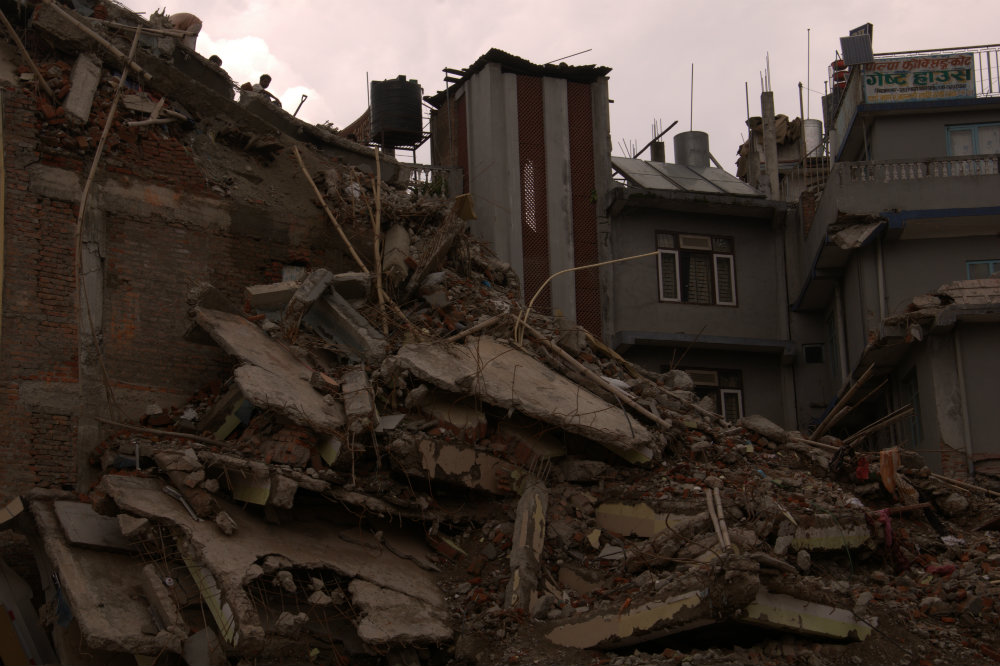
Polish artist Zuzanna Kowalska depicted the 2015 earthquake in Nepal , when humans learned they cannot control nature. Ruined locations are still waiting to be revived and restored along with humans’ emotions.

The exhibition launches at 7pm on Nov. 19, and runs through Jan. 3, 2017 at Kalwit Studio & Gallery on Wireless Road which is a short motorcycle ride away or 15-minute walk from BTS Phloen Chit.

Advertisement

Hot News

LATEST NEWS

Bangkok
broken clouds
30.5 ° C
30.5 °
30.5 °
72 %
5.3kmh
52 %
Tue
31 °
Wed
37 °
Thu
37 °
Fri
37 °
Sat
37 °