35 C
Bangkok
Monday, June 8, 2026
Home Blog Page 2573

Bryan Adams Returns to Do it All For You Again in Bangkok (Postponed)

Update: This event has been postponed in light of the death of His Late Majesty King Bhumibol

BANGKOK — Before there was Bieber, Bryan Adams was the Canadian heartthrob girls dreamed about. In January, the ‘80s hit slinger will be back in Bangkok for the first time in 20 years, concert promoter BEC-Tero announced Friday.

Adams, best known for 1992 Grammy winner “(Everything I Do) I Do It for You” and other anthems such as “Run To You,” “Summer Of ’69” and “Heaven,” will tour Asia on his “Get Up Tour.”

Fans in Bangkok will get to welcome the 56-year-old singer again after previous concerts at his peak in 1993 and 1996. This time, he will showcase the new music from “Get Up,” his 13th studio album.

Tickets are 2,000 baht to 5,000 baht and go on sale at Thai Ticket Major with an advance purchase discount Oct. 17 before going up to full price Oct. 24.

The concert is set for Jan. 14 at Impact Muang Thong Thani. It can be reached by a van taxi or Impact Link shuttle from BTS Mo Chit exit No. 4 or MRT Chatuchak Park exit No. 3.

Advertisement

Thanks to Internet, Poor Elderly Man Becomes Millionaire

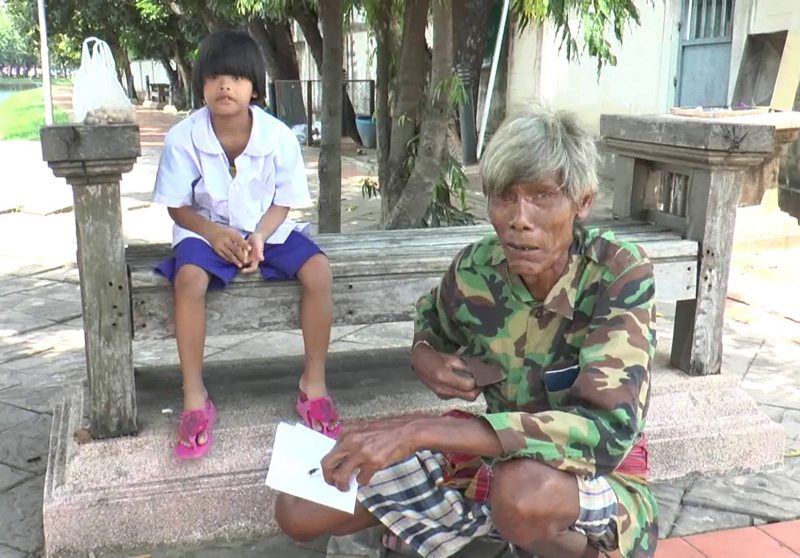
Paen Paewpongsong and his family talk to reporters on Wednesday at his home in Buriram

BURIRAM — On Tuesday, 72-year-old Paen Paewpongsong was penniless after losing his 15,000 baht life savings. By Friday, he was a millionaire thanks to donations from strangers throughout the realm who heard about his plight from the news.

The response was so overwhelming that Paen today urged netizens to stop sending him money, saying he already had enough to fix his dilapidated hovel in Buriram and provide comfort to his 69-year-old wife and a 6-year-old, developmentally disabled granddaughter.

Find someone else in need, he suggested.

“I want them to share their help with other people who lack opportunity,” Paen told reporters.

Paen said he lost his wallet containing all his savings of 15,000 baht on Tuesday at a hospital where he was renewing his disability health card for his granddaughter, Arisa, who has Down syndrome.

According to Paen, that money was all they had left after collecting their small welfare benefits and an allowance his children send from another province.

After word spread on social media, donations poured in from people who were moved by his story. By Friday morning the total reached just shy of 1.3 million baht, prompting Paen to say that was enough.

In interviews, Paen has said he also hopes to use some of the money to fix his wooden house for the upcoming winter, which can be harsh and even fatal in the northeast.

Bundit Onsakorn, chief of Buriram City police, said patrols have been dispatched to Paen’s home in order to ward off any potential scammers who might take advantage of his newfound wealth.

Paen Paewpongsong, 72, talks to reporters on Tuesday at Buriram Police Station hours after he lost his wallet.
Paen said he hopes to use the money to fix his dilapidated home for the upcoming winter.
Paen on Friday shows reporters his bank account after receiving nearly 1.3 million baht in donations from netizens.
Advertisement

Chemical Weapon for Sale: China’s Unregulated Drug

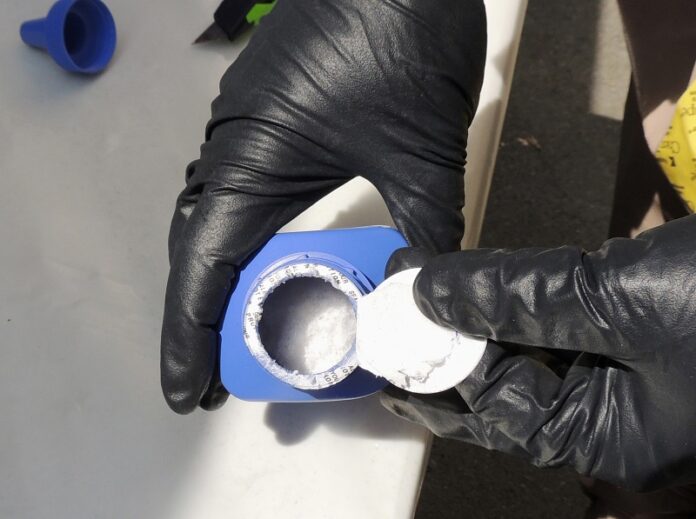
A member of the RCMP opens a printer ink bottle last June containing the opioid carfentanil imported from China, in Vancouver. Photo: Associated Press

SHANGHAI, China — It’s one of the strongest opioids in circulation, so deadly an amount smaller than a poppy seed can kill a person. Until July, when reports of carfentanil overdoses began to surface in the U.S., the substance was best known for knocking out moose and elephants  or as a chemical weapon.

Despite the dangers, Chinese vendors offer to sell carfentanil openly online, for worldwide export, no questions asked, an Associated Press investigation has found. The AP identified 12 Chinese businesses that said they would export carfentanil to the United States, Canada, the United Kingdom, France, Germany, Belgium and Australia for as little as $2,750 a kilogram.

Carfentanil burst into view this summer as the latest scourge in an epidemic of opioid abuse that has killed tens of thousands in the U.S. alone. In China, the top global source of synthetic drugs, carfentanil is not a controlled substance. The U.S. government is pressing China to blacklist it, but Beijing has yet to act.

“We can supply carfentanil … for sure,” a saleswoman from Jilin Tely Import and Export Co. wrote in broken English in a September email. “And it’s one of our hot sales product.”

The AP did not actually order any drugs, or test whether the products on offer were genuine.

China’s Ministry of Public Security declined multiple requests for comment.

For decades before being discovered by drug dealers, carfentanil and substances like it were researched as chemical weapons by the U.S., U.K., Russia, Israel, China, the Czech Republic and India, according to publicly available documents. They are banned from the battlefield under the Chemical Weapons Convention.

“It’s a weapon,” said Andrew Weber, assistant secretary of defense for nuclear, chemical and biological defense programs from 2009 to 2014. “Companies shouldn’t be just sending it to anybody.”

Carfentanil is 100 times more powerful than fentanyl, a related drug that is itself up to 50 times stronger than heroin.

Forms of fentanyl are suspected in an unsuccessful 1997 attempt by Mossad agents to kill a Hamas leader in Jordan, and were used to lethal effect by Russian forces against Chechen separatists who took hundreds of hostages at a Moscow theater in 2002.

The theater siege prompted the U.S. to develop strategies to counter carfentanil’s potential use as a tool of war or terrorism, according to Weber. “Countries that we are concerned about were interested in using it for offensive purposes,” he said. “We are also concerned that groups like ISIS could order it commercially.”

Later, dealers discovered that vast profits could be made by cutting fentanyls into illicit drugs. In fiscal year 2014, U.S. authorities seized just 3.7 kilograms (8.1 pounds) of fentanyl. This fiscal year, through just mid-July, they seized 134.1 kilograms (295 pounds), Customs and Border Protection data show. Overdose rates have been skyrocketing.

The DEA has “shared intelligence and scientific data” with China about controlling carfentanil, according to Russell Baer, a DEA special agent in Washington.

“I know China is looking at it very closely,” he said. Delegations of top Chinese and U.S. drug enforcement officials met in August and September to discuss opioids, but failed to produce a substantive announcement on carfentanil.

China is not blind to the key role its chemists play in the opioid supply chain. Most synthetic drugs that end up in the U.S. come from China, according to the DEA.

China already has controlled fentanyl and 18 related compounds, but despite periodic crackdowns, people willing to skirt the law are easy to find in China’s vast, freewheeling chemicals industry. Vendors said they lied on customs forms, guaranteed delivery to countries where carfentanil is banned and volunteered strategic advice on sneaking packages past law enforcement.

“The government should impose very serious limits, but in reality in China it’s so difficult to control because if I produce 1 or 2 kilograms, how will anyone know?” said Xu Liqun, president of Hangzhou Reward Technology, which offered to produce carfentanil to order. “They cannot control you, so many products, so many labs.”

Last October, China added 116 synthetic drugs to its controlled substances list. Acetylfentanyl, a weak fentanyl variant, was among them. Six months later, monthly seizures of acetylfentanyl in the U.S. were down 60 percent, DEA data obtained by the AP shows.

Several vendors contacted in September were willing to export carfentanil but refused to provide the far less potent acetylfentanyl.

Seven companies, however, offered to sell acetylfentanyl despite the ban. Five offered fentanyl and two offered alpha-PVP, commonly known as flakka, which are also controlled substances in China.

Several vendors recommended shipping by EMS, the express mail service of state-owned China Postal Express & Logistics Co.

“EMS is a little slow than Fedex or DHL but very safe, more than 99% pass rate,” a Yuntu Chemical Co. representative wrote in an email.

EMS declined comment. A Yuntu representative hung up the phone when contacted by the AP and did not reply to emails. Soon after, the company’s website vanished.

Story: Erika Kinetz, Desmond Butler

Advertisement

iPhone 7 May Boost Apple’s Fortunes But Has Its Irish Luck Run Out?

Original image: Apple. Clipart leprechaun: DepositPhotos.com

DTAC launched pre-registration to pre-order the iPhone 7 and 7+ today, Oct. 7. Seven is a lucky number, they say, or is it?

No firm date was given for actual delivery of the units – nor were the prices. What was announced today was heavy on the “pre.” A pre-registration page for pre-orders that goes live at 12:01am in one week on Oct. 14. Apple Watch 2 pre-orders also go live on that day, while the new iPad can be pre-ordered starting Oct. 21.

I may be splitting hairs, but while DTAC’s press release described it as pre-registration for pre-order, the other two telcos only put up a page to register one’s “interest” in the upcoming launch.

Given how unlucky the number seven has been for Samsung with its spontaneously combustible Galaxy Note 7, the lack of any bad news over the iPhone 7/7+ launch was good news for Apple. Or was it?

Away from the tech side, things have not been so rosy for our friends in Cupertino. Sorry, I mean our stateless friends formerly from Cupertino.

On Aug. 20, the European Commission ruled the Irish government gave Apple illegal state aid in the form of tax breaks dating back to 2004 amounting to a total of EUR19 billion (737.2 billion baht). In 2014, Apple paid an effective tax rate of 0.005 percent.

Apple is of course appealing, saying it did nothing wrong and made the deal in good faith. And oddly, in this age of austerity, the Irish government is appealing the ruling as well, fearing a loss of some of the 5,500 high-tech jobs Apple brought to County Cork, home to its European headquarters.

Makes one wonder if anyone in ASEAN is taking exception with Thailand’s own generous zero-percent tax deals?

Yet it is instructive to look at the phenomenon of what economist Paul Krugman has described as “Leprechaun economics.”

In the last quarter of 2015, Ireland saw a whopping 26 percent growth in GDP. This confused just about everyone, as no developed country grows that much in a year. Later it became known that much of it was due to Apple relocating its intellectual property to Ireland.

But by transferring its valuable IP, Apple also created a not inconsequential cost for the state. EU nations each pay a levy based on their GDP, so what was essentially Apple’s internal accounting translated into a permanent increase of EUR380 million per annum in Dublin’s share.

Those 5,500 highly paid Irish jobs seem less appealing if they cost EUR69,000 each.

Since the Apple case, it’s been open season on tech companies. Taiwan is suing Uber for USD$2 million (67 million baht) in unpaid sales taxes. Indonesia is suing Google for USD$418 (14.5 billion baht) for tax on profits it believes were unfairly transferred to Google Singapore, and Japan has demanded (and received) USD$118 million (4.1 billion Baht) from Apple for withholding tax via its iTunes division.

As for Thailand, well, the Finance Ministry recently announced plans to crack down on tax evasion online, targeting popular websites, net idols, streaming sites as well as applications which until now have operated largely under the radar. More importantly, back in January, the National Legislative Assembly announced it would amend the tax code and take aim at online advertising revenues. It explicitly mentioned Google and Facebook.

The amendments would disallow exemptions for spending on online advertising with foreign companies. This would mean companies would have to pay 20 percent corporate taxes on any advertisement cost. With online advertising, the state’s coffers would swell by upward of 3 billion baht to 15 billion baht, according to estimates.

Prime Minister Prayuth Chan-ocha suggested he may introduce a two-tier tax with a lower rate for companies who set up shop in the country, pay proper local taxes and cooperate with government censorship and surveillance requests.

Most countries want cash. Some, like Ireland, prefer jobs to direct tax revenue.

But Thailand wants control more than anything else. Not that anyone would be surprised anymore.

Advertisement

Colombia’s Juan Manuel Santos Wins Nobel Peace Prize

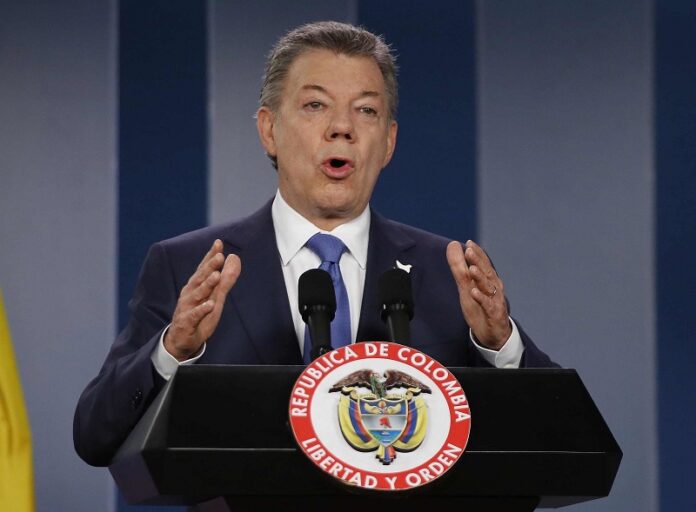
Colombia’s President Juan Manuel Santos delivers a statement to the press Tuesday after meeting with former President Alvaro Uribe and other opposition leaders at the presidential palace in Bogota, Colombia. Photo: Fernando Vergara / Associated Press

OSLO, Norway — Colombian President Juan Manuel Santos has won the Nobel Peace Prize.

The Norwegian Nobel Committee awarded Santos “for his resolute efforts to bring the country’s more than 50-year-long civil war to an end.”

Advertisement

Internet Observes Joshua Wong Deportation With Savory Memes

Lok Wan Nee’s Friday issue makes use of the Joshua Wong episode to lampoon the junta’s promise to return democracy and free speech.

BANGKOK — Hong Kong’s Umbrella Movement and its associated memes may have sailed past Thailand back in 2014, but its teenage leader was briefly the center of attention on social media this week, thanks to his deportation on arrival at Suvarnabhumi Airport.

Nineteen-year-old activist Joshua Wong was invited by student activists to speak at Chulalongkorn University on Thursday to mark the 40th anniversary of a much-forgotten crackdown that killed dozens of students in 1976.

No Umbrellas, Criticism of China Allowed At Oct. 6 Memorial

Thai immigration police intercepted him late Tuesday night and had deported him by Thursday afternoon – reportedly at Beijing’s behest. The move sparked outcry among many Thai activists who took to social media to deride the junta’s obsequiousness.

Where there’s controversy, there are memes, of course, and they started appearing almost as soon as the news hit the web.

The predominant theme related to Wong and another skinny teenager with glasses and idealism: Netiwit Chotiphatphaisal, the Chulalongkorn student activist who invited him.

Image: Lok Wan Nee
Image: Lok Wan Nee

In the best tradition of memes within memes is this from Lok Wan Nee magazine, whose cover portrayed Wong in a traditional bathing cloth in a muddy road full of potholes, another recent obsession on social media.

Who doesn’t like memes? Junta chairman Prayuth Chan-ocha, apparently. Last week he slammed the trend, saying photos of a bathing protest to get roads fixed might have “embarrassed” Thailand.

Lok Wan Nee’s cover suggests the junta’s treatment of Wong was more harmful to Thailand’s reputation than some ladies taking a mudbath. “Are you embarrassed now?” the cover reads.

Image: Kai Maew / Facebook

The joke here, about the junta arresting the wrong person, wasn’t far from reality. At least one news agency confused Netiwit for Wong.

“Wong” in Thai netizen lingo means to be lonely or isolated. In homage to Hong Kong filmmaker Wong Kar Wai’s melancholy style, puns were born such as: “Wong is having a Wong experience with Thai immigration.”

Image: I Am a Hipster / Facebook

Wong Kar Wai also sounds like “Wong ticks quickly,” linked above to Joshua Wong with the caption Wong Glub Wai, or “Wong goes home quickly.”

The Wong jokes didn’t stop there, with many people sharing Thai song “I Have Come a Long Way” by Michael Wong, a Hong Kong actor who enjoyed brief fame in Thailand in the 1990s.

Image: Spartan Doctor / Facebook

Not everyone sympathized with inviting Wong to speak at the commemoration the Oct. 6 Massacre, an event that remains a taboo topic in Thailand 40 years on.

Image: SkyWalkerPang / Facebook

In this image shared by many conservatives, Netiwit invites Wong to help burn his own country.

Advertisement

Raid TCDC’s Resources for Free All This Month

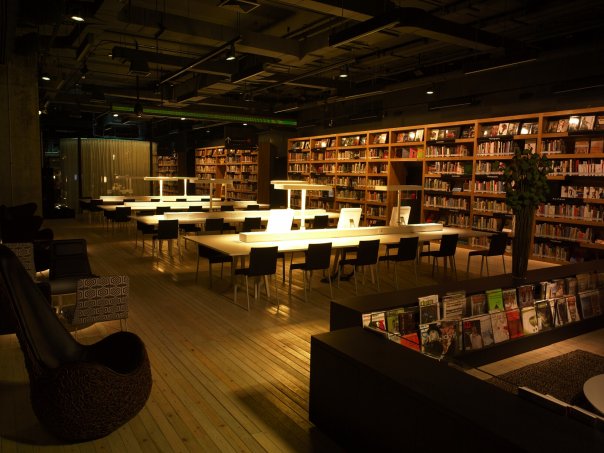
TCDC resource center. Photo: Thailand Creative & Design Center(TCDC) / Facebook

BANGKOK — Before it packs up and leaves to its new home, one of Bangkok’s best creative resources is celebrating its last month in the Emporium shopping mall with free access to all.

November is when the Thailand Creative & Design Center, or TCDC, says goodbye to its long-time perch atop the Phrom Phong-area mall.

Before it closes its doors Oct. 30, it will waive the usual membership requirements for anyone with a national ID card or passport to explore its abundant diverse selection of books, magazines, multimedia resources and online databases that have helped fuel Bangkok’s creative community for 11 years.

Membership will still be required to borrow any materials.

After that it will close over five months before it can reopen in its new site in a historic grand post office building on Charoen Krung Road in Bang Rak district.

Until then, there will be farewell activities at the Emporium venue such as designing T-shirts with memories about TCDC. On the final day, Oct.30, there will be a goodbye party with music, movies and a garage sale.

TCDC is open from 10:30am to 9pm daily except Monday. It is located on the fifth floor of the Emporium mall, which can be entered from BTS Phrom Phong exit No. 2.

Advertisement

Cambodian Opposition Skips Parliamentary Session, Cites Danger

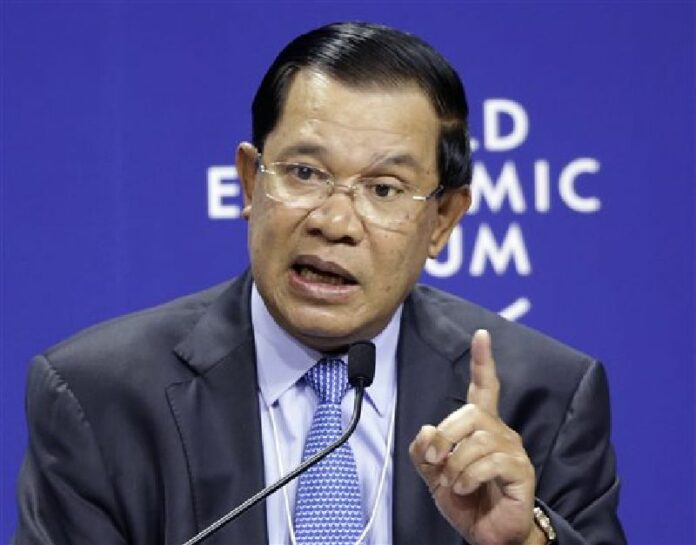
Cambodian Prime Minister Hun Sen speaks in April of 2015 during a session at the World Economic Forum on East Asia in Jakarta, Indonesia. Photo: Achmad Ibrahim / Associated Press

PHNOM PENH — Cambodia’s opposition party unexpectedly failed to attend the reopening of parliament on Friday, setting back hopes of a political truce with the government of Prime Minister Hun Sen.

Cambodia National Rescue Party members felt they were under threat of physical intimidation, spokesman Yim Sovann said, recalling that some of its lawmakers had previously been beaten up by a pro-government mob.

A spokesman for the ruling Cambodian People’s Party denied that any threat existed, describing the opposition action as a political trick.

The opposition had earlier said it would rejoin the parliamentary session after some conciliatory gestures by both sides.

The party stopped attending parliamentary sessions about four months ago after ruling party lawmakers stripped some opposition lawmakers of their legal immunity. The opposition says lawsuits have been used to unfairly harass its members.

Critics say Hun Sen is manipulating the courts to weaken the opposition’s chances in next year’s local polls and the 2018 general election. The opposition made an unexpectedly strong showing in the 2013 general election, which it claimed it was cheated out of winning.

At a news conference, Yim Sovann said the opposition believed that the government was trying to link it to a planned protest in Australia against Prime Minister Hun Sen’s oldest son, Hun Manet. He denied any link but said he feared that the government would seek some sort of retaliation against the party.

“We are not boycotting, but we are looking to see if the political environment is good, then we will join; but if not we retain our right not to attend,” he said. By claiming the party was not boycotting, he appeared to leave room for compromise.

Sok Eysan, a spokesman for the Cambodian People’s Party, said the opposition’s move was a tactic to force the release of its jailed members. Several opposition lawmakers have been jailed on charges that are widely considered to be politically motivated. The party president is in self-imposed exile and the acting party leader has taken refuge in the party headquarters, both to avoid prison terms.

Prime Minister Hun Sen insists the jailed lawmakers are not victims of a political vendetta, but rather were prosecuted for breaking the law.

“A fully functional parliament which represents the people’s will is a key pillar of democracy. Of course, this also requires an environment which allows lawmakers to fulfill their roles independently without fear of physical or legal retaliation, which has not been the case for the opposition in recent times,” commented Chak Sopheap, executive Director of Cambodian Center for Human Rights. “The recent thawing of political relations, in this sense, is a very positive step which we warmly welcome.”

Advertisement

Police Say Tak Manhunt Unrelated to Erawan Shrine Bombing

Authorities search a building in the border province of Tak on Thursday in a search for a person they said was linked to Uighur human trafficking. Photo: Matichon

TAK — Police on Friday dismissed reports they were hunting for a suspect related to last year’s bombing of the Erawan shrine in a northwestern border province.

Authorities on Thursday were searching for a man they said was linked to human trafficking in Tak province, a search which left them empty-handed, except for three illegal immigrants.

Police, immigration officers and military raided the building of the Hayat Trading Co. in Tak’s Mae Sot district, which sits along the border with Myanmar, in search of a man identified only as Ali.

Police said he was a person of interest in connection to trafficking and arranging fake passports for Uighur migrants. An officer on Friday dismissed information widely reported in Thai-language media that one of the Burmese migrants arrested was connected to the shrine bombing that killed 20 people in August 2015.

Thailand has been a transit point for Uighur migrants escaping western China, where they complain of persecution by the state and Han Chinese. Beijing routinely describes them as terrorists. It was the Thailand’s decision to deport more than 100 Uighurs in July 2015 under pressure from Beijing.

Many security experts believe the Erawan bombing was an act of retaliation.

Two Uighur men are currently on trial in a military court for the attack, but the investigation was dropped with more than a dozen other suspects unaccounted for.

Col. Jamrang Soodjai of Mae Sot police said the man was sought for an unspecified crime involving national security and might be captured without judicial review.

“There is not yet a warrant for him,” Jamrang said. “But he is involved in a crime threatening national security, so if we are able to find him, he might be taken into custody using the junta’s special power.”

Since the 2014 coup, the junta has used the absolute power it granted itself under its interim charter to take any measures unsupported by conventional law.

Jamrang said Thursday’s raid only led to the arrest of three Burmese migrants in the country illegally.

“We charged them for illegally entering the country,” he said.

Although media outlets such as ThaiPBS and Manager reported a Burmese suspect was brought to Bangkok for questioning in connection to the deadly shrine bombing, Maj. Soraj Witchayawisut of immigration police said that was untrue.

Advertisement

Hawaii Trip: Thai Airways Wants Internet Prosecuted Over Leaked Passenger List

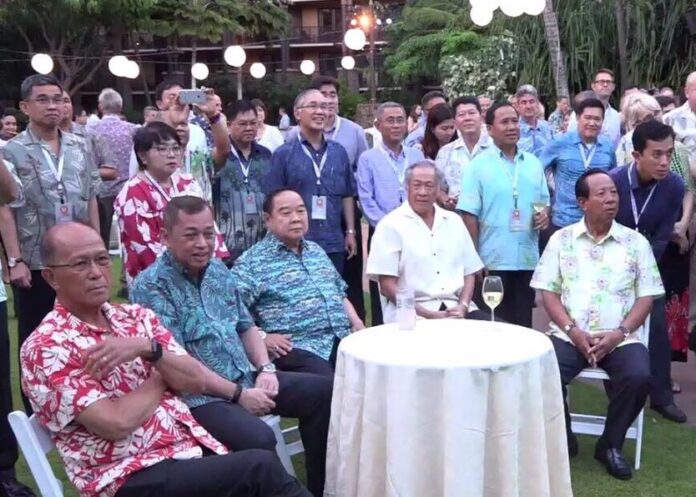
An undated file photo of Prawit Wongsuwan and his entourage in Hawaii. Image: Matichon

BANGKOK — Police on Friday were deliberating a request from Thai Airways to prosecute those on social media who spread what was purported to be a leaked passenger list of the government’s now-controversial trip to Hawaii last week.

Without saying whether the list was real, airline lawyer Pramuk Wilaiwong asked police Thursday to file charges against Facebook pages that shared the document under the Computer Crime Act, a draconian law that bans any online material deemed damaging to the reputation of an individual or organization.

Govt Defends 21M Baht Flight to Hawaii

“We are still deliberating whether it qualifies under the Computer Crime Act,” Col. Olan Sukkasem of the Technology Crime Suppression Division said Friday.

Junta deputy chairman Prawit Wongsuwan and his entourage visited Honolulu Sept. 29 through Oct. 1 for an event described as “ASEAN-US Defense Informal Meeting.” It later emerged that their Thai Airways flight cost taxpayers 20.9 million baht, of which 600,000 baht was spent on in-flight dining alone.

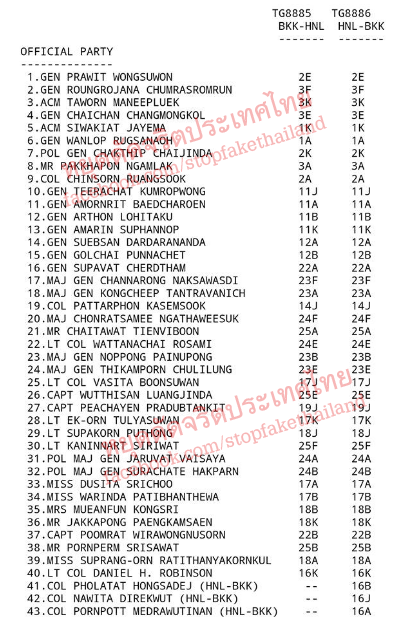
The government has also refused to disclose who was traveling with Gen. Prawit. However, an anti-junta Facebook page called “Stop Hypocrisy in Thailand” on Sunday published what it said was the passenger list, which included two businessmen unrelated to defense affairs and a TV reporter rumored to be romantically involved with Prawit.

The reporter has insisted she was in Thailand at the time.

Khaosod English filed a request Wednesday under the freedom of information law requesting the Defense Ministry disclose the names of Prawit’s entourage. As of Friday, officials said they’re still deliberating the request.

Document published by Stop Hypocrisy in Thailand.

Pramuk, who represents state-owned Thai Airways, did not answer reporters’ questions when he visited the tech crime unit Thursday to seek prosecution of those behind pages which shared the list.

Col. Olan, the officer in charge of the investigation, would not say whether Pramuk confirmed the list was authentic.

“I cannot disclose that detail,” the police colonel said.

A defense spokesman suggested in a Wednesday interview that making the passenger list public could affect national security.

“Steps must be taken in accordance with protocols,” said Maj. Gen. Kongcheep Tantravanich, who was on the Hawaii flight. “Is [disclosing the list] appropriate or not? If it affects national security or affects any agency, then we will not disclose it.”

He did not explain how.

Advertisement

Hot News

LATEST NEWS

Bangkok
overcast clouds
35 ° C
35 °
32.7 °
68 %
4kmh
99 %
Mon
35 °
Tue
36 °
Wed
34 °
Thu
31 °
Fri
29 °