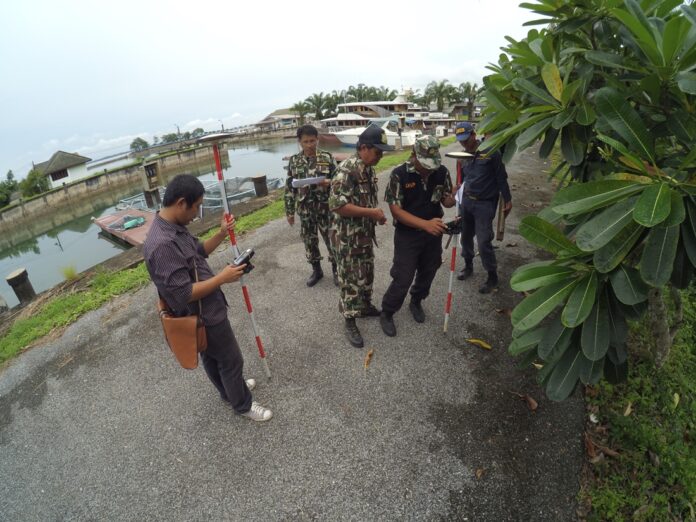
Officials from the Department of Marine and Coastal Resources on Wednesday inspect the property owned by CP executive Jaran Chiaravanont in Trat province.
TRAT — Maritime officials said a residence belonging to an executive at the nation’s largest corporate conglomerate sits illegally on nearly 60 rai (9.6 hectares) of protected forest land.
The Marine and Coastal Resources Department made the determination Wednesday after sending a task force to assess the costal home of Jaran Chiaravanont, a board member of Charoen Pokphand Group, in Trat province.
Ratchai Pornpha, head of the task force, told reporters that 60 rai of the residence sits inside the Tha Som Protected Forest, and is therefore illegal. The property includes a dock for yachts and an area used for fish farming. Jaran’s property manager, who said he wasn’t aware of the intrusion, was arrested.
The enforcement action was the latest in a high-profile effort by authorities to curb illegal development of public lands around the country.
Jaran is a brother of Dhanin Chearavanont, CEO and chairman of CP Group. Dhanin and his family are the wealthiest in the country, according to Forbes
Marine officials said they began an investigation into suspected encroachment by the property in April.
Ratchai said Anant Sawangwai, who managed the property on Jaran’s behalf, said his boss didn’t know the land sat on protected forest. Anant said he would dismantle any encroaching structure and return the land to the authorities, Ratchai said.
Lt. Cmdr. Charnslipa Panphawong, a navy officer who accompanied the raid, said Anant was arrested and charged with violating national forest laws but would not give more details.
Someone answering the phone at the Department of Marine and Coastal Resources said its directors were in a meeting and could not comment further on the raid until Thursday.
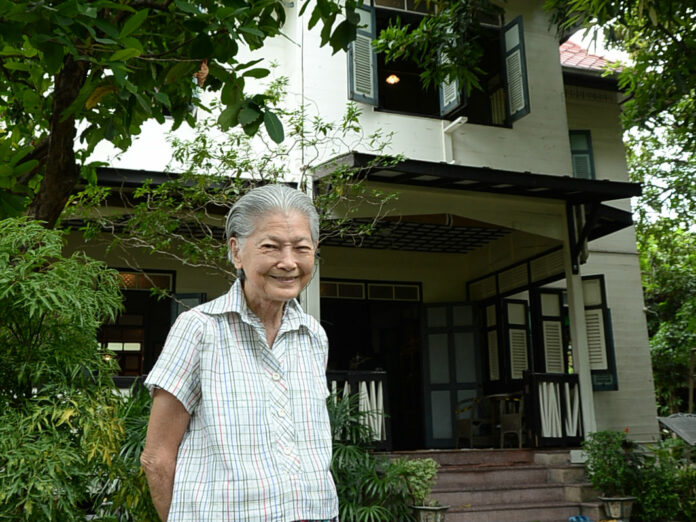
Waraporn Surawadee standing in front of her house which was donated to Bangkok Metropolitan Administration to be local museum.
BANGKOK — When Waraporn Surawadee’s no-rise neighborhood near the river was threatened by an eight-story residential project earlier this year, the folk museum caretaker decided to put her money where her mouth was.
To protect her corner of the capital from condo creep, Waraporn in June put up 30 million baht to buy back land next to what had been her family’s homes before they were gifted to the city for the museum. The only problem was the owner wanted 40 million baht.
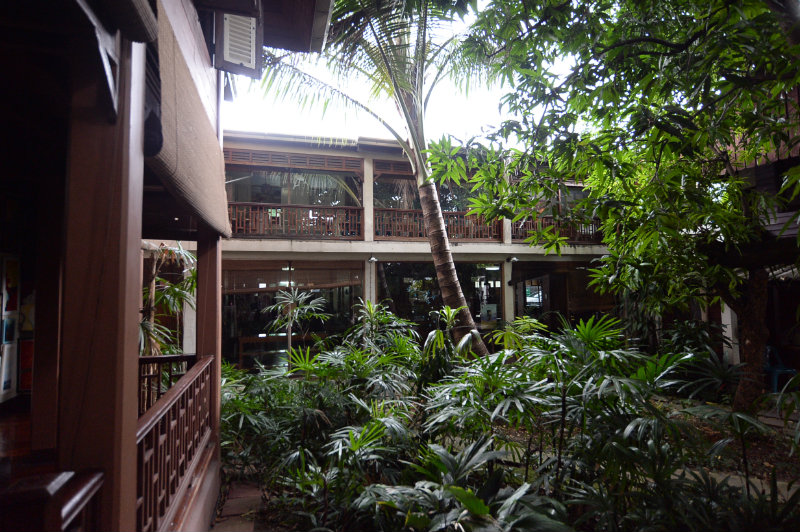
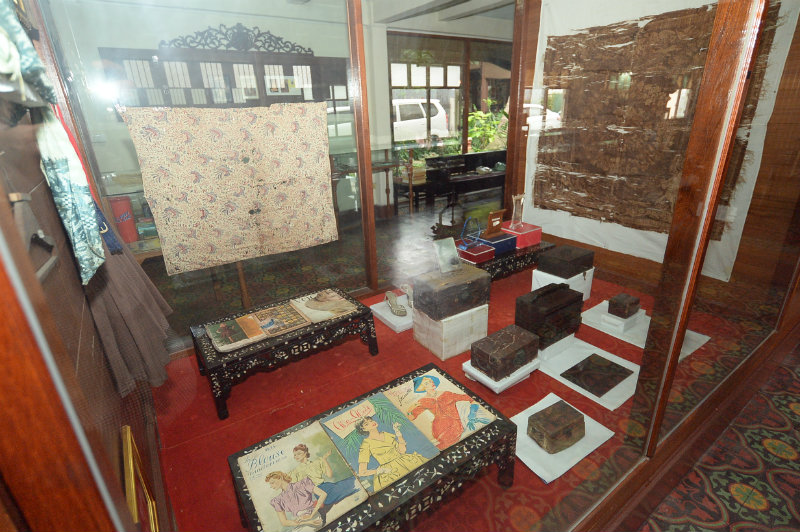
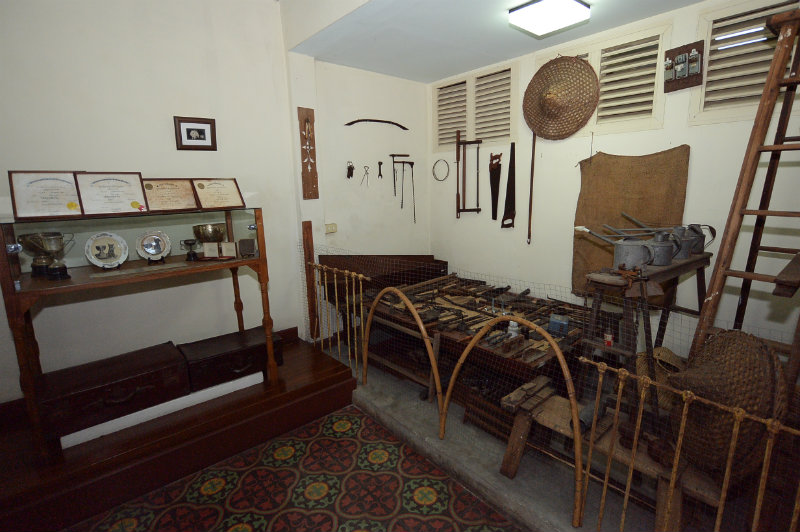
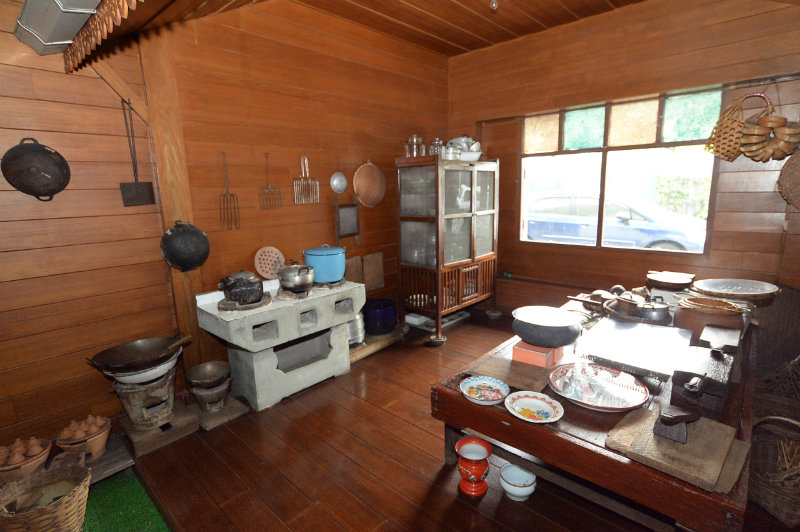
A few minutes walk across Charoen Krung Road from the old General Post Office in the district of Bang Rak, the city-owned Bangkok Folk Museum, can be found shaded by a canopy of green leafy trees. Filled with artifacts of how life was such as pre-World War II kitchen tools, the museum was unknown to many until caretaker and former owner Waraporn’s call to arms and wallets became front page news two months ago.
The response was swift.
“The crowdfunding was successful as media helped spread the news, helping us gain more than 15 million baht within 15 days,” Waraporn said, adding that museum attendance also doubled due to the exposure.
With the Bangkok Folk Museum under heavy foliage to the left, the adjacent parcel of land is now used as a parking lot.
The 81-year-old retired professor received the title deed late last month and plans to leave what had been an empty lot mostly undeveloped. With more interest in the museum from visitors, she is using it as a parking lot. With the Bangkok Folk Museum under heavy foliage to the left, the adjacent parcel of land is now used as a parking lot.
Much to See – All for Free
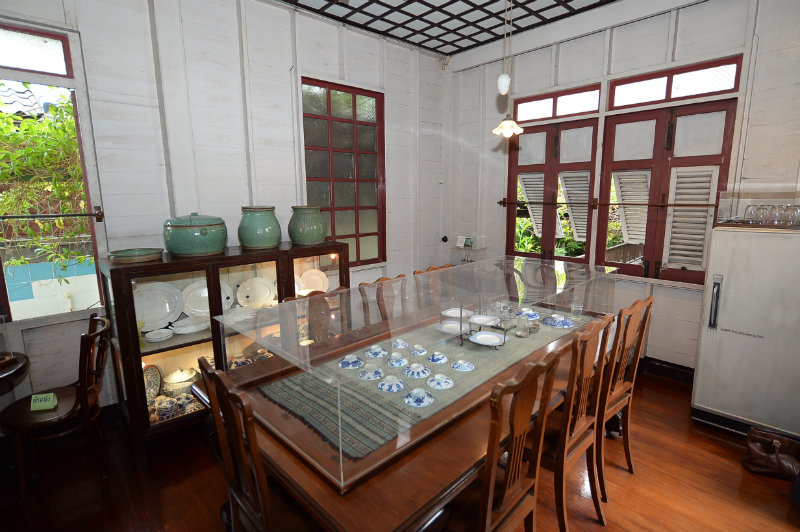
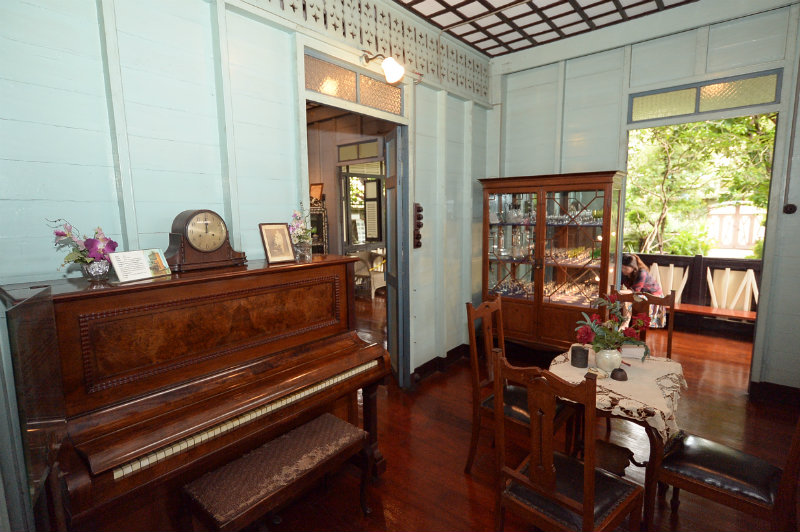
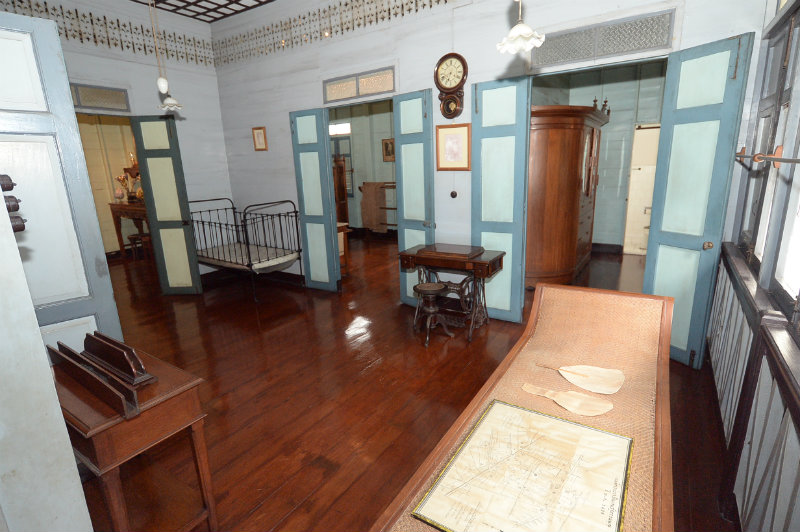
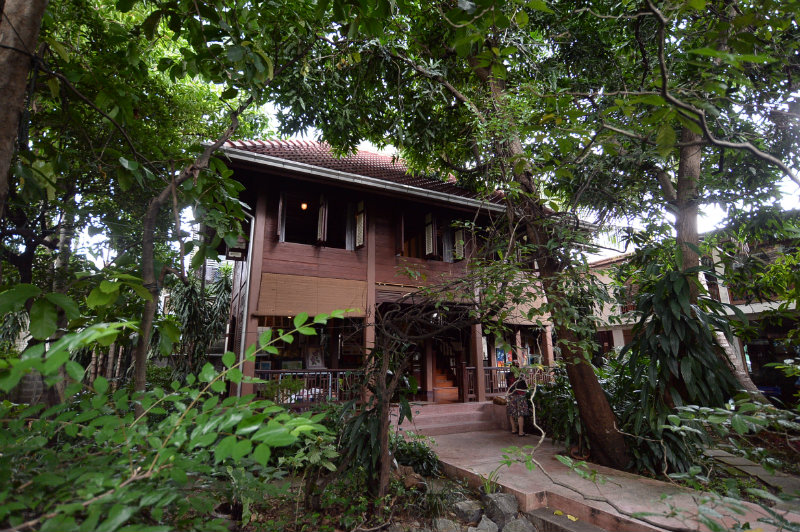
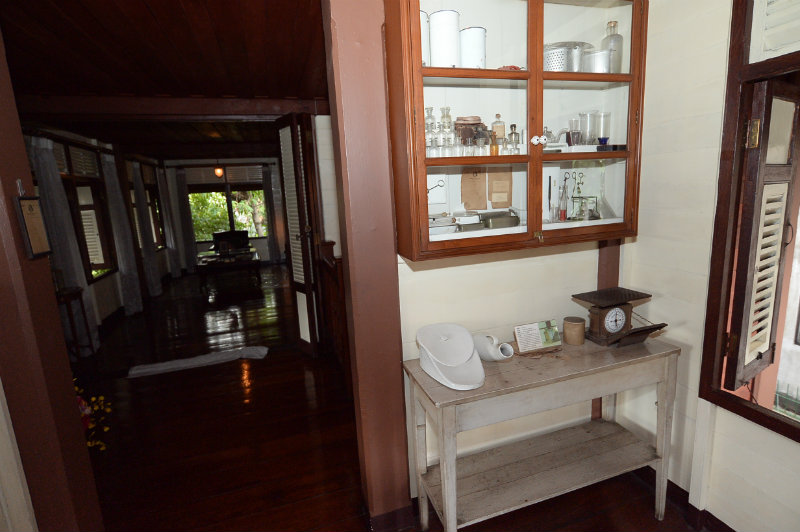
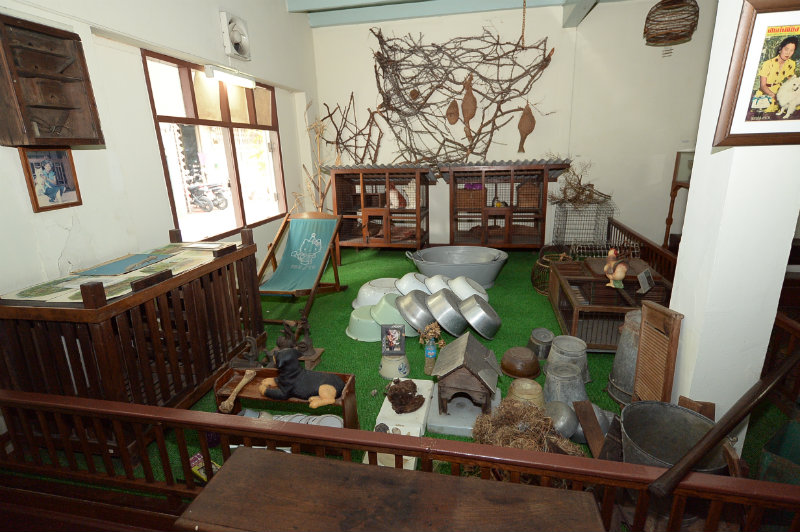
The Bangkok Folk Museum is three beautiful, historic buildings filled with household artifacts rarely seen today in Thailand, such as a vanity with three mirrors, imported porcelain and a pleating machine.
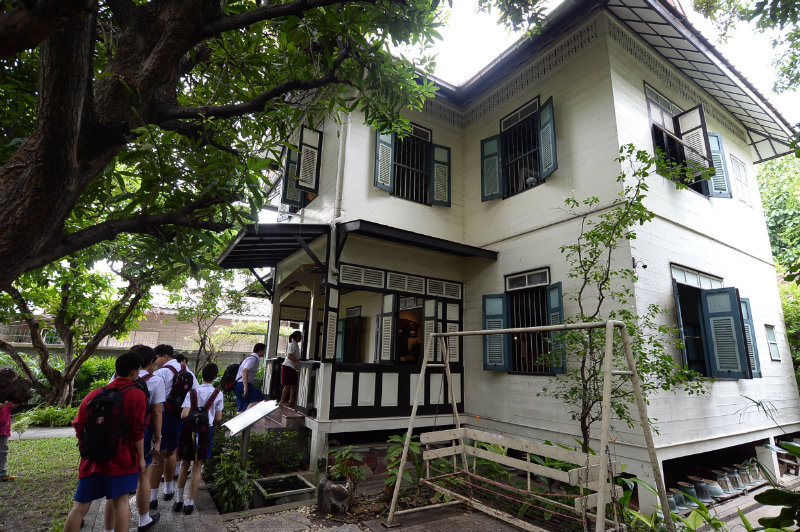
Upon entering, find a white, two-storey housing complex built in 1936 to the left. Blending Thai and Western architectural styles, it was chosen for a conservation award in 2008 by the Association of Siamese Architects.
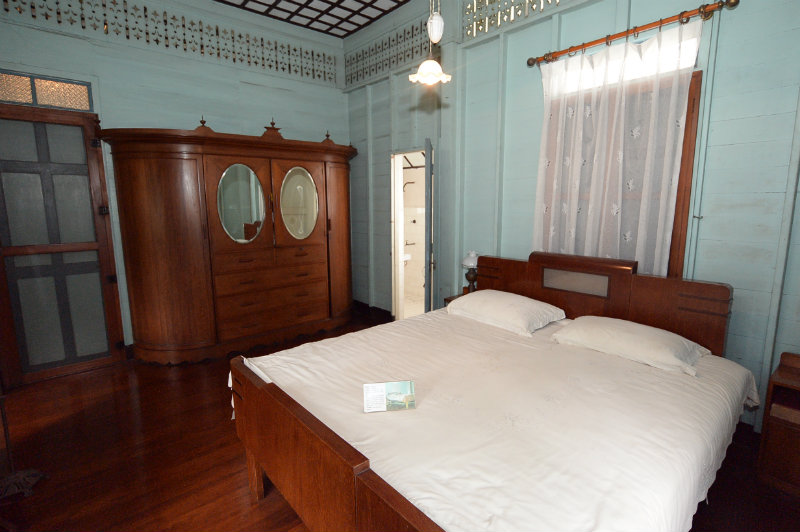
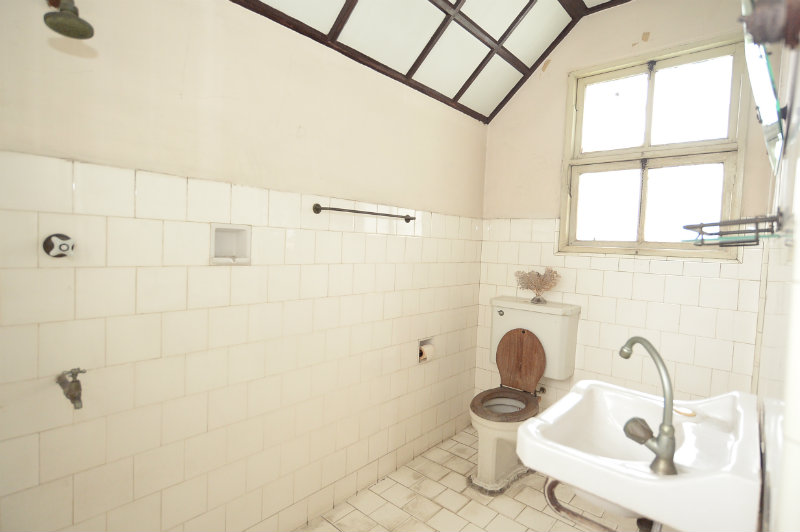
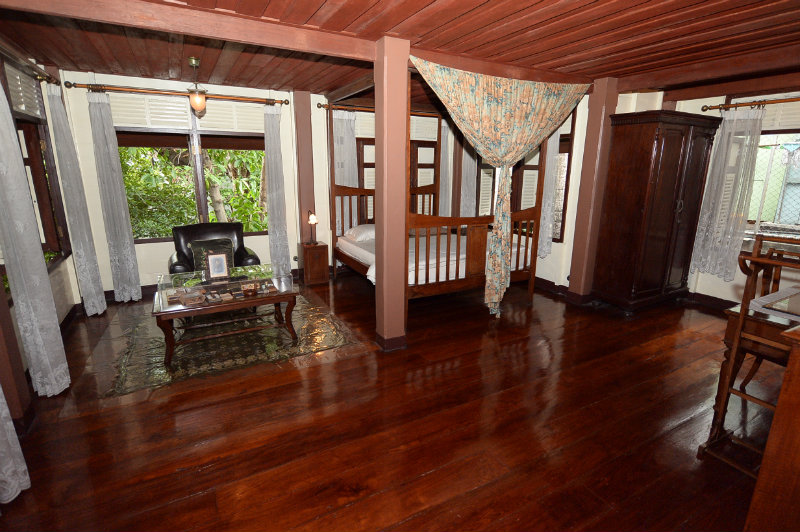
Teak walls and floors are separated sensibly into living room, dining room, bedrooms, bathrooms, a European-style dressing room and reading room. Inside, things used by Bangkokians between 1937 and 1957 are exhibited.
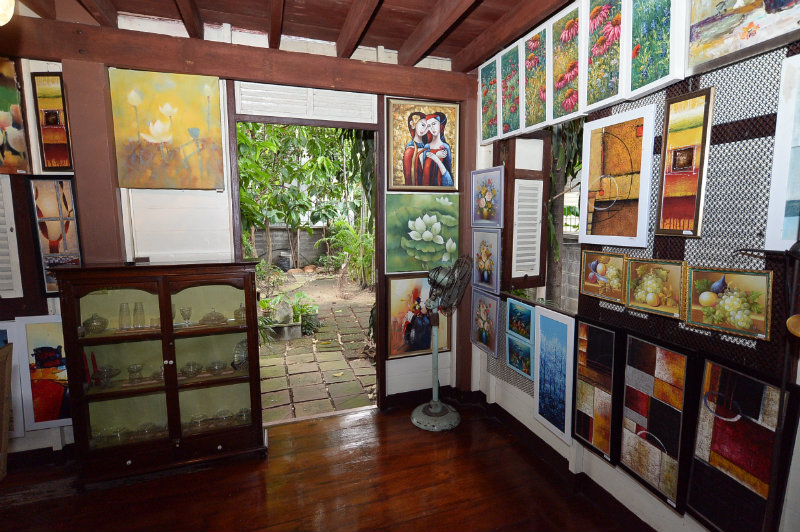
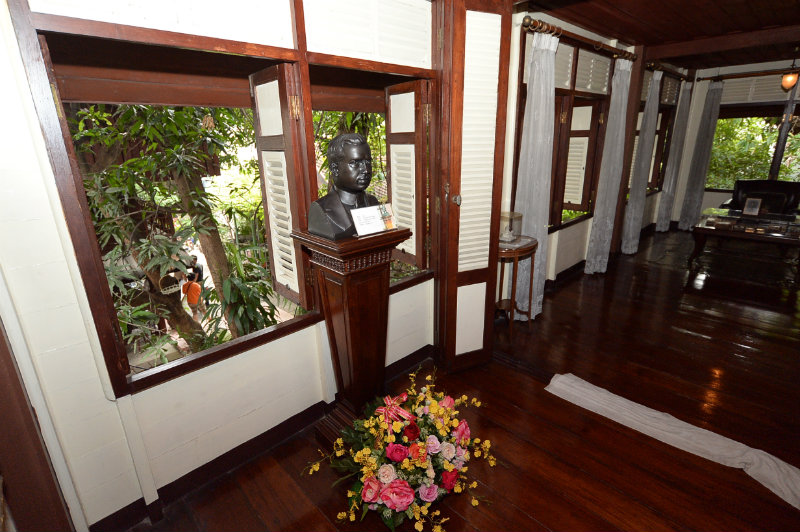
The second building in the center is a two-story teak house from 1929. It was originally built as a clinic for Sa-arng’s first husband Francis Christian, a British-educated doctor from India. Its ground floor is now an exhibition hall for her collection of painting. On the second floor sits a bust of Christian cast by none other than Silpa Bhirasri, the Italian father of modern art in Thailand for whom Silpakorn University is named. Christian’s medical instruments are on display in the lobby; his former bedroom remains intact.
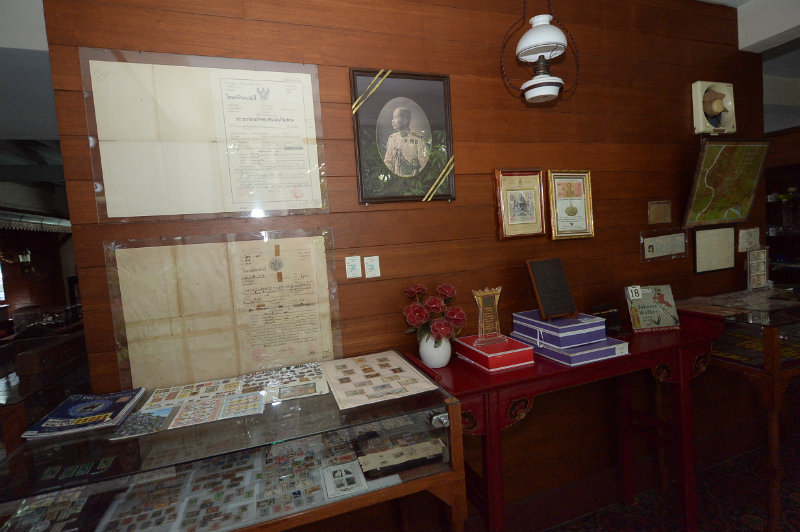
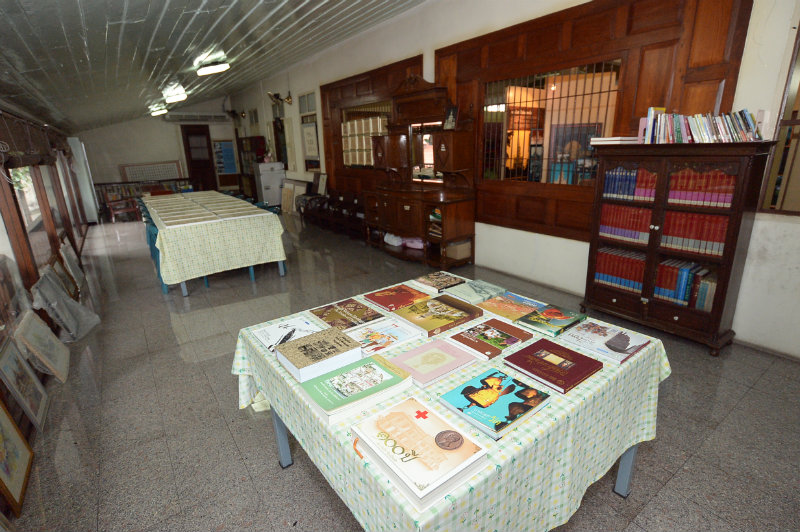
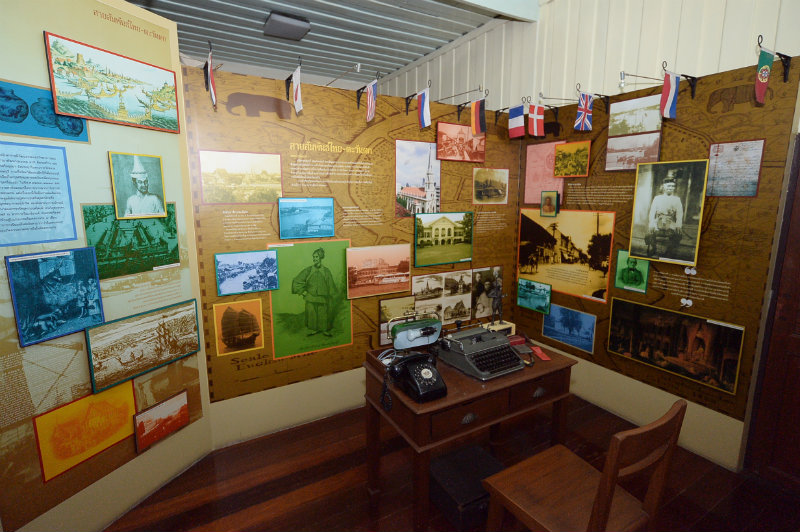
The third building displays old stamps, coins, banknotes, property deeds, kitchen utensils, gardening tools and more on its ground floor. On the second, find the main exhibition of Bangkok and Bang Rak history along with Waraporn’s collection of rare books, which is open for visitors to study.
Living Displays
The four homes there once housed 10 members of the Surawadee family. Waraporn was one of five daughters born to Sa-arng Surawadee, who loved collecting antiques.
After inheriting the aging home from her mother, Waraporn donated it to the Bangkok Metropolitan Administration in October 2004 to use as a living display of her well-preserved collections.
Furniture, dishware, appliances – all the stuff of living that her mother dutifully collected over the years. The idea was to make a place where future generations could see how their middle class forebears in the Bang Rak area used to live.
“I wanted to turn my home into a museum because I want it to be heritage for our country. There are many household appliances that I didn’t even know about. So, it’s my duty to publicize it for others to learn,” said the former university biology professor.
It’s also testament to how life was in some ways better – at least cooler – in greener times past. Waraporn said it proves the theory of using shade to cool homes.
“It’s not so often a teacher gets a chance to prove what they teach,” she said.
Waraporn made a catalog of all the pre- and post-World War II household items, records which are still useful to the three volunteer guides who take visitors on tours of the mansions with an estimated value of 150 million baht.
After taking care of the museum since it opened 12 years ago, Waraporn said she wants to keep it intact as an educational venue without any plans for major improvement.
“I want to leave it old-fashioned and inconvenient as it is,” she said.
She would like to organize events in the future, though she’s not sure what would attract visitors.
“Any kind of activities are welcome, so long as they’re not stripteases,” she said with a light laugh.
Now that the drama has settled, she insists it wasn’t for herself but the public’s benefit.
“The museum isn’t my private property. It’s everyone’s,” she said. “But transferring the property rights to [city hall] doesn’t mean I lost my rights. As a citizen, I can still practice my rights by monitoring if the government takes good care of national property.”
The white housing complex of Bangkok’s Folk Museum
The two-storey teak house
The air-conditioned building
The Bangkok Folk Museum is open from 10am to 4pm Wednesday through Sunday. Admission is free. The museum is located on Soi Charoen Krung 43, which can be reached by taxi or motorbike from MRT Hua Lamphong Station or BTS Saphan Taksin.
A public service announcement by the Cam Chau Ward People's Committee reads "Youth, please stay away from drugs" in Vietnamese in 2014 in Vietnam. Photo: lightwrite / Flickr
HANOI, Vietnam — A court in northern Vietnam has sentenced nine people to death for heroin trafficking.
The state-run online newspaper Zing says ringleader Trang A Tang and eight other Vietnamese nationals were convicted of trafficking 626 kilograms (1,379 pounds) of heroin from Laos and Thailand into Vietnam between 2009 until the ring members were arrested in 2013.
The People’s Court in Bac Ninh province handed them death sentences Wednesday at the end of a four-day trial.
Three others, including Tang’s wife and father, were given life in prison on the same charges.
Court officials were not immediately available for comment.
Vietnam has some of the world’s toughest drug laws, with the trading or trafficking of at least 100 grams of heroin punishable by death.
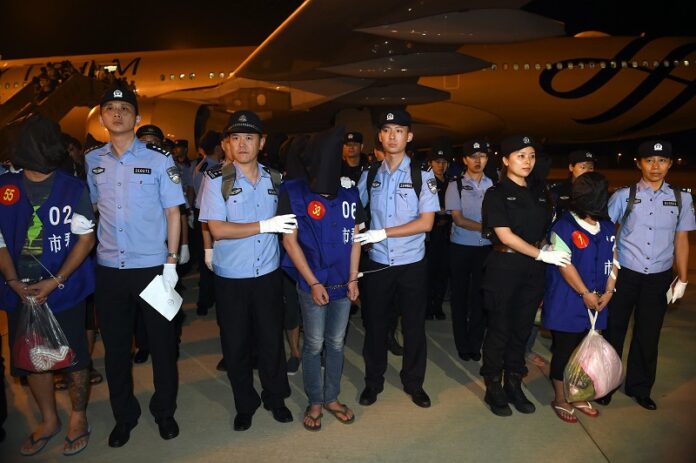
Chinese police stand with hooded internet fraud suspects Tuesday after they were escorted off a plane at Lukou International Airport in Nanjing in eastern China's Jiangsu Province after being deported from Cambodia. Photo: Han Yuqing / Associated Press
PHNOM PENH — Cambodia has deported 50 Chinese and 13 Taiwanese citizens to China over an alleged internet scam, complying with demands from Beijing, a senior police official said Wednesday.
The suspects were flown out of Cambodia on Tuesday, said Gen. Ouk Haiseila, chief of the Cambodian Interior Ministry’s Immigration Investigation Bureau. He said the Chinese government sent a special plane from Beijing to take them back.
In June, Taiwan protested after Cambodia deported 25 Taiwanese internet scam suspects to rival China in the latest snub of the self-ruled island. Cambodia regards Taiwan to be part of China.
The latest group of 63 suspects was arrested late last month in a rented house in Phnom Penh, Cambodia’s capital. They were accused of defrauding victims in China using phone calls made over the internet.
Since 2012, at least 982 Chinese and Taiwanese accused of taking part in internet scams have been arrested and deported back to China, according to Ouk Haiseila.
Although Taiwan’s constitution formally decrees that it and the Chinese mainland are part of a single Chinese nation, Taiwan functions like an independent country and does not acknowledge Beijing’s claim of authority over it.
Rights activists and Taiwanese authorities say such deportations reflect the great influence China exercises over Cambodia through aid and investment.
China is a key ally and economic partner of impoverished Cambodia. It has provided millions of dollars in aid and investment over the past decade, agreed to write off debts and granted it tariff-free status for hundreds of items.
Kenya and Malaysia have also deported Taiwanese internet scam suspects to China despite protests by Taiwanese officials.
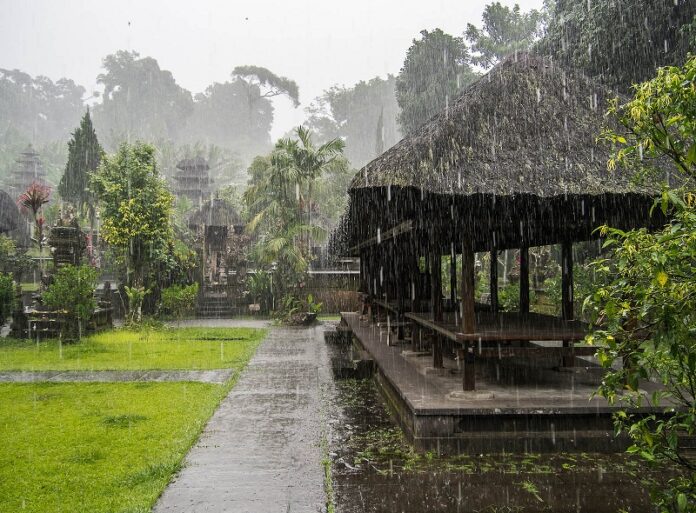
Rain falls last year in the temple of Pura Luhur Batukaru, Bali, Indonesia. Photo: Jumilla / Flickr
JAKARTA — Torrential rains have triggered floods and landslides on the Indonesian island of Java, killing at least 19 villagers.
National Disaster Management Mitigation Agency spokesman Sutopo Purwo Nugroho says several people are still missing in West Java’s Garut and Sumedang districts.
The worst hit was Garut district, where 16 people were found dead and eight others are still missing after two rivers overflowed Tuesday night.
Nugroho said Wednesday that about 1,000 villagers were evacuated to army barracks and other temporary shelters.
He said three villagers were killed in Sumedang and one person was still missing after landslides that buried two houses.
Rains frequently caused landslides and widespread flooding across much of Indonesia.
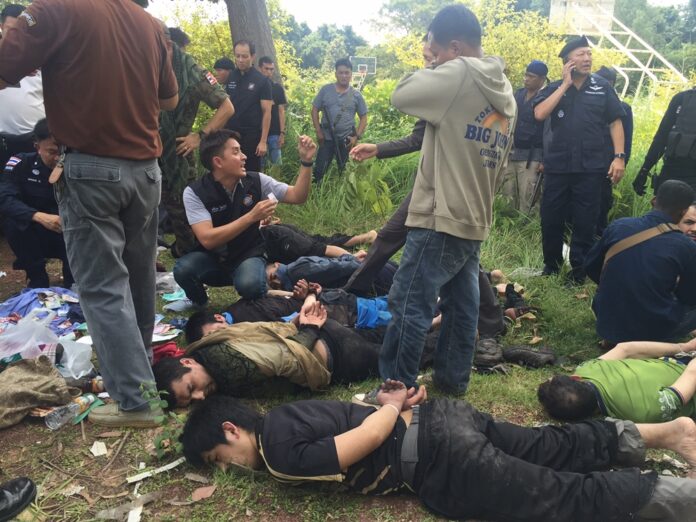
Police find and arrest some of the escaped Uighur men Tuesday afternoon in Nong Khai province
NONG KHAI — All but one of 10 Uighur men who escaped from a detention facility in northeastern Thailand were apprehended Wednesday morning, but police were tight-lipped about what they were doing in Thailand.
The nine men, detained for entering the country illegally, were free for less than 24 hours before being taken back into custody by police, who would provide no further information about their intended destination, citing political sensitivities.
“These details concern national security. It’s about international relations,” said Maj. Gen. Chartchai Tang-iam, deputy commissioner of the immigration police, when asked why the 10 men entered Thailand in the first place.
Uighurs are a Muslim ethnic group from western China where there have been complaints of persecution by Chinese authorities. Beijing considers them a terrorist threat, and many Uighurs have used Thailand as a transit nation to flee elsewhere – often Turkey.
There were 10 Uighur men inside the immigration detention facility, some of whom had been held for years.
Chartchai referred questions to immigration police commissioner Natthorn Prohsunthorn, who could not be immediately reached for comment.
Speaking Tuesday, Lt. Gen. Natthorn announced the 10 Uighur men had been transferred from a central facility in Bangkok to a local immigration holding center in Nong Khai province in June because of overcrowding. He said “some” of the men had been held for over two years.
Thailand considers refugees and asylum seekers to be illegal immigrants and will jail them if found, sometimes for years, until a foreign government accepts them or they are deported to their original nation.
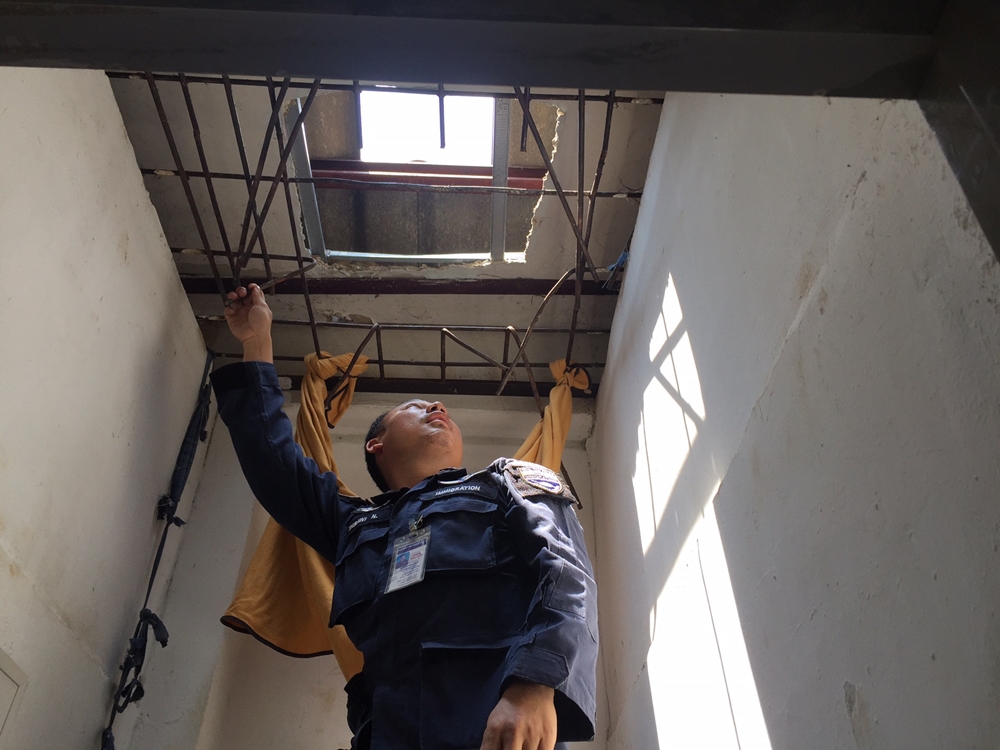
Police said the 10 Uighur detainees pulled down part of the ceiling in their cell at about 2am on Tuesday and then escaped into the night over the roof. All of the escapees except one had been re-arrested by Wednesday morning.
A police officer on Tuesday shows where the Uighur men reportedly escaped.
Patipat Suban Na Ayudhya, immigration police chief for the northeastern region, said the central police force didn’t give him any information about the 10 men when they were transferred to his custody.
“They didn’t tell us. They simply sent us the detainees and gave us a list of their names,” Lt. Gen. Patipat said by telephone.
He said the Uighur men managed to escape without any tools because the holding facility itself wasn’t built like a prison.
“We will improve security, of course, but we cannot violate human rights. We can’t just shackle them in chains,” Patipat said. “They are detainees. They are not criminal suspects.”
He said he had no idea when the Uighurs would leave the detention facility. “It’s up to the destination country … if they don’t want them, we can’t send them there.”
Roughly 120,000 refugees or asylum seekers resided in Thailand in 2015, according to a UNHCR estimate. Most live in limbo without any certainty when their cases will be resolved.
The fates of Uighurs detained in Thailand has been a matter of controversy. While Thailand’s government says it will deport them to any country that accepts them, such as China or Turkey, many human rights activists oppose sending them back to China because of the conflict many are attempting to escape there.
In July 2015, the military regime drew condemnation from civil rights groups after it returned more than 100 Uighurs to China under pressure from Beijing. Chinese state media footage of them being loaded onto planes with black sacks over their heads and under armed guard were seen widely.
A month later, a bomb attack struck the Erawan Shrine in Bangkok, killing 20 people, including Chinese tourists. Police later arrested two Uighur men who allegedly planted the bomb, but authorities vehemently denied that the attack was retaliation for their deportation policy.
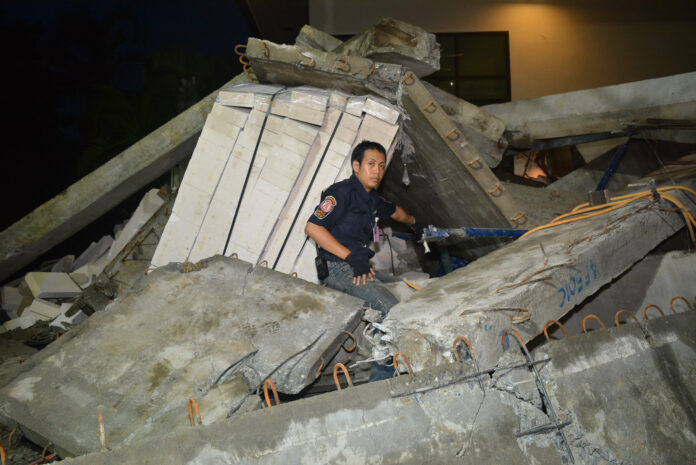
A rescue worker searches the ruins of a building that collapsed Tuesday in Bangkok’s Bang Kapi district.
BANGKOK — A building collapsed Tuesday in the capital’s Bang Kapi district, killing one construction worker and injuring three others.
The three-story concrete residence on Yothin Patthana Road collapsed at about 6pm as construction workers were working on its fourth floor. According to crane operator Singto Kosila, he was moving a 3.3-ton concrete slab to the fourth floor when he saw the building’s floors and beams completely collapse.
One worker, a Myanmar national, was crushed and died. Three other workers were taken to a hospital with leg and head injuries and were expected to survive. A fourth worker managed to escape unscathed.
Officers from the Ladprao Police Station rushed to the scene, along with local and public works officials.
Police Col. Suksit Meesawad, who was at the scene, said the cause of the building’s collapse was being investigated by the relevant officials.
“It could be that the building was planned incorrectly, or the construction workers were building it improperly,” he said. “On the other hand, the quality of the metal and concrete used in construction could also be faulty.”
Suksit said some of the workers were from Myanmar and some from Thailand.
Update: Suksit originally said all five workers were Thai, and this story has been updated to reflect his Sept. 22 statement that in fact several, including the man killed, were from Myanmar.
BANGKOK — Murder is the game in a stage play mixing American film noir, Japanese Yakuza and anime timed thematically with violent happenings of the past.
“Thou Shalt Sing: A Secondary Killer’s Guide to Pull the Trigger” is set in a gangster society where the No. 2 killer wants to be No. 1.
The noir crime drama is written and directed by Thanaphon Accawatanyu and casts five actors, four men and a femme fatale.
Thanaphon’s previous works include “The Disappearance of the Boy on a Sunday Afternoon,” a provocative production on the theme of forced disappearance, and “The Art of Being Right,” which won for best script at the annual Bangkok Theatre Festival.
“Thou Shalt Sing”will be performed in Thai with English surtitles from Nov. 9 through Nov. 13 and Nov. 16 until Nov. 20 at Crescent Moon Space. Tickets are 450 baht and 300 baht ifpurchasedonline by the end of September.
The politically active theatre venue is located inside the Pridi Banomyong Institute, a few minutes walk from BTS Thong Lo exit No. 3.
American actress and UNHCR Ambassador Angelina Jolie, left, with her daughter Zahara, and Brad Pitt, right, with Jolie's son Maddox, walk near the Gateway of India in 2006 in Mumbai, India. Photo: Associated Press
NEW YORK — Angelina Jolie Pitt has filed for divorce from Brad Pitt, bringing an end to what began as the world’s most tabloid headline-generating romance before morphing into a glamorous engine of family and philanthropy.
Jolie Pitt, 41, cited “irreconcilable difference” in divorce papers filed Monday in Los Angeles. She is seeking physical custody of their six children, with visitation rights for Pitt.
An attorney for Jolie Pitt, Robert Offer, said Tuesday that her decision to divorce was made “for the health of the family.” The filing dated the couple’s separation to last Thursday.
“I am very saddened by this, but what matters most now is the wellbeing of our kids. I kindly ask the press to give them the space they deserve during this challenging time,” Pitt said in a statement to People.
Mark Vincent Kaplan, a veteran divorce attorney who was Kevin Federline’s attorney in his divorce from Britney Spears and has handled several high-profile cases, reviewed the filing at the AP’s request.
“There is no indication on the face of the petition filed by Ms. Jolie that there is a prenuptial agreement, or that if there is a prenup, she is asking the court to consider whether or not to invalidate it,” said Kaplan.
Though together for 12 years, Pitt and Jolie Pitt — known as “Brangelina” — only wed in August 2014. They married privately at their French chateau in the Provence hamlet of Correns with their children serving as ring bearers and throwing flower petals. They announced the ceremony days later.
Their children are: 15-year-old Maddox, 12-year-old Pax, 11-year-old Zahara, 10-year-old Shiloh, and 8-year-old twins Knox and Vivienne.
This is the second marriage for Pitt, 52, who previously wed Jennifer Aniston. It’s the third for Jolie Pitt, who was previously married to Billy Bob Thornton and Jonny Lee Miller.
Their initial romance sparked a tabloid avalanche unlike any in recent memory. Pitt and Jolie became close while filming 2005’s “Mr. & Mrs. Smith,” prompting widespread speculation — consistently denied by the couple — that Jolie prompted Pitt’s divorce from Aniston. Pitt and Aniston announced their separation in January 2005.
But after the media upheaval, Jolie Pitt and Pitt eventually settled into their own unique kind of globe-trotting domesticity. They were seldom-seen Hollywood royalty, their image predicated more on parenting than partying.
The pair adopted children from Cambodia, Vietnam and Ethiopia. In 2006, they formed the Jolie-Pitt Foundation, to which they funneled many of the millions they made selling personal pictures to celebrity magazines.
Jolie Pitt, who became special envoy for the United Nations in 2012, became an outspoken voice for refugees, as well as for breast cancer treatment after undergoing a double mastectomy herself. Pitt built homes in New Orleans for victims of Hurricane Katrina.
Jolie Pitt also launched herself as a film director. Last year, the couple starred together in her “By the Sea,” playing a glamorous couple vacationing together in France while their marriage was on the rocks. It made a mere $538,000 at the box office domestically.
In a 2014 interview with The Associated Press, Jolie Pitt said playing a couple with marital problems was cathartic.
“It almost makes you get past those issues because you can laugh at them,” Jolie Pitt said. “You do a film about bad marriage and you witness that behavior. You study it, you let it out, you attack each other and then you just want to hold each other and make sure you never behave that way.”
Jolie Pitt earlier this year finished shooting her fourth feature as director, “First They Killed My Father.” The film, about the 1970s Khmer Rouge regime, was shot in Cambodia.
The pair was seen publicly together as recently as July, when they were spotted taking their twins to breakfast in Los Angeles.
Pitt stars with Marion Cotillard in Robert Zemeckis’ upcoming spy thriller “Allied” and narrates Terrence Malick’s IMAX documentary “Voyage of Time.”
In recent years, Pitt’s production company, Plan B, has been behind a growing number of acclaimed releases, including the Academy Award best-picture winner “12 Years a Slave,” last year’s “The Big Short” and the recently debuted festival hit “Moonlight.”
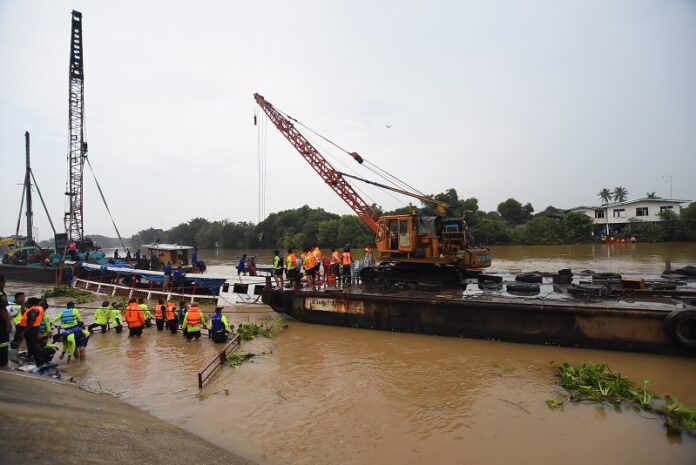
Officers salvage a partially submerged boat Tuesday afternoon from the Chao Phraya River in Ayutthaya province.
AYUTTHAYA — A search for missing passengers was called off Tuesday afternoon after the last body was pulled from the water. The final death toll stood at 28.
The body of an 89-year-old woman was discovered at about 5pm, one kilometer away from the boat sank two days earlier. Seven men and 21 women were killed in the accident.
The search was called off when rescuers realized a 2-year-old boy had been reported missing due to misinformation.