
































30 C
Bangkok
Monday, July 27, 2026
Home Blog Page 2918

Freed Lese Majeste Offender Loses Faith in UDD, Pins Hope on 'Ordinary Folks'

Ekachai Hongkangwan in an undated photo. Photo: Ekachai Hongkangwan

By Pravit Rojanaphruk
Senior Staff Writer

BANGKOK — After two years and eight months in prison for committing lese majeste (insulting the monarchy), Redshirt activist Ekachai Hongkangwan said he’s lost faith in the leadership of that movement, and now believes hope for a democratic Thailand rests with ordinary citizens.

Speaking in an interview following his release from prison Nov. 15, Ekachai, who was convicted in 2013 of selling CDs containing content deemed critical of the monarchy, said leaders of Redshirt umbrella group United Front for Democracy against Dictatorship, or UDD, rarely visited him or other ordinary Redshirts in prison, while some imprisoned UDD leaders enjoyed a relatively privileged lifestyle behind bars.

“The UDD leaders sip coffee and play chess. Yet they talk about equality. It’s not even equal in prison,” Ekachai said. “What does this mean?”

The 40-year-old also blamed UDD leaders for failing to organize effective opposition to the junta, particularly in the immediate aftermath of the putsch.

“It’s disappointing. When the coup occurred, they simply disappeared,” said Ekachai, who insists he is not a UDD member but simply a Redshirt, with a sarcastic chuckle. “It was just too lame, and if it continues to be like this, military coup will recur again and again. It seems all too easy [to stage a coup], and we’ll probably be stuck in this cycle for the next century.”

That’s not to say Ekachai has become cynical or apolitical. In fact the straight-talking former prisoner of conscience said he is more politically mature after serving his sentence and remains hopeful about Thailand.

“My hope rests with the little people, the new generation and not the politicians. The [former Pheu Thai] MPs accused other politicians of being elites, but they themselves have become part of the elite too,” he said, adding that ordinary folks who continue to resist military rule are far more sincere.

Following his March 10, 2011 arrest, Ekachai insisted on his innocence all the way to the Supreme Court, saying he regarded the content contained on the CDs he sold as critical but in no way insulting to the monarchy.

The CDs contained an Australian Broadcasting Corp. news program featuring a critical discussion of the monarchy and documents leaked by Wikileaks entailing critical information about the royal institution.


A Prison Education

Before Ekachai was arrested and charged, he thought lese majeste offenses carried a fine of 20,000 baht or so, not prison terms up to 15 years per offense.

Ekachai said more than 40 lese majeste convicts ended up in prison in the weeks after the May 22, 2014 military takeover. All lese majeste prisoners were required to write the names of those whom they would allow to visit them, and for two months prior to his Nov. 15 release, no journalists were allowed to see him.

He was originally put in a 4-by-12 meter cell, along with about 30 to 40 other people. While he said most post-coup lese majeste convicts were dispatched to overcrowded cells as punishment, Ekachai nonetheless viewed his communal cell as relatively “uncrowded.”

The swelling summer heat was suffocating and the rainy season unpleasant as the ceiling had a habit of leaking, said the former convict.

Prison food tasted better than Ekachai expected although there was not much meat. The man, a university-educated former lottery vendor said he frequently used his own money to buy food from the prison-run eateries supervised by the Department of Corrections. Prison fights break out less frequently than he had expected, and Ekachai insists he was never tortured or severely bullied. And his fellow inmates were not bad people, as he had initially feared.

“Overall, it was better than I’d expected,” he said, adding that his prison chores involved supervising other prisoners assigned to set up tables for meals. Ekachai has lost considerable weight – to 62 kilograms from 75 kilograms, by his reckoning.

“I am much more frail now,” he said. “It wasn’t like living at home in there.”

In exchange for better food bought from prison-run eateries, some inmates entered servile relationships with wealthier inmates. Some would do their laundry or wash their dishes in exchange for some of the purchased food or a few other amenities.

Instead of fear, it was boredom that Ekachai fought with. He credited the prison’s small library for books and magazines to keep him distracted.

No newspapers or TV news were allowed inside, although there were ways news from the outside world trickled in beyond word-of-mouth from visitors, guards and the warden. He would not disclose the details, however.

No books deemed political were allowed inside the prison.

“Political books are forbidden,” he said. “It’s not permitted because they’re afraid that it could led to political organizing inside prison.”

Earlier this month the Supreme Court reviewed Ekachai’s case, cut eight months from his original sentence and ordered him released.

Now that he is free, Ekachai said that although he doesn’t know how he’ll earn a living, he will continue being politically active.

“Even if change is incremental, I’ll give it a try – otherwise [this society] will stagnate. Even if it’s one voice and there’s no effect, it would still be better than doing nothing. Some asked if I am ready to rock, I said, ‘Yeah for sure!’” he said.

But he will make sure he does not run afoul of the law, he added.

“I will avoid being sentenced to prison again, however,” he said. “I sort of know where the line is now.
Advertisement

Suspected Serial Arsonist Blamed for Fatal Shophouse Fire

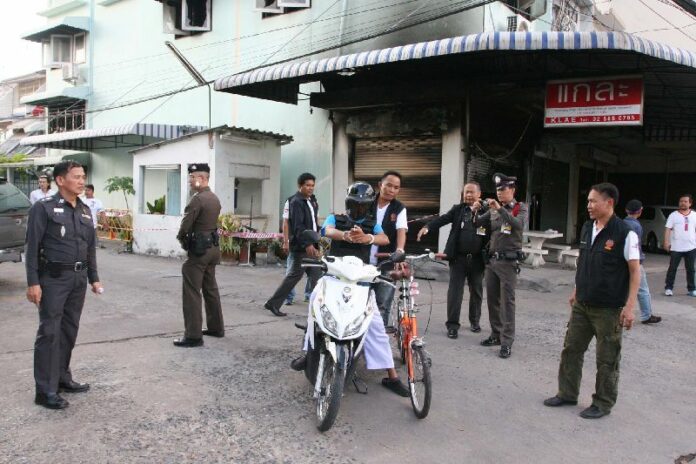
Yutthana Onsuwan, 26, is led through a staged recreation of his alleged crime Sunday (Nov 22). He’s accused of burgling then setting fire to several buildings, the most recent of which killed a woman sleeping inside.

BANGKOK — Police have arrested a man they believe to be a serial arsonist who set fire to a tailor shop in the Bang Sue district Friday, killing a woman sleeping inside.

Yutthana Onsuwan, 26, was arrested Saturday at the Bang Sue train station and has been charged with theft and arson for a series of fires in which he allegedly torched the place after stealing valuables. Most recent such arson-burglary was the tailor shop on Soi Prachachuen 5, according to police Lt. Gen. Sanit Mahatavorn.

Sanit told police reviewed CCTV footage and saw a man park a motorbike at the shop’s side door before using a wrench to break in. Some time later, he exited with a bicycle towed it away behind his motorbike, and then the fire broke out.

Police said Yutthana confessed to sneaking into the shophouse, to steal some cash and the bicycle. He said he did not know there were five people sleeping upstairs at the time because he saw the door was locked from the outside.

Four people were able to exit the building, but Poranee Summahawong, the 30-year-old daughter of the shop’s owner, died in the fire.

Investigators said a review of similar fires in recent weeks suggested it was the same man who set fire Nov. 9 and Nov. 14 to two apartments, the first on Soi Prachachuen 10 and the second on Soi Prachachuen 2.

Yutthana was released after a four-year prison sentence in Nakhon Ratchasima province, after which police said he stole a motorcycle and came to Bangkok.


Related news:
Prachachuen Shop Fire Kills Owner’s Daughter


Advertisement

Bullying and Violence Make Schools Unsafe for LGBT

By Lisnaree Vichitsorasatra

BANGKOK — When Angsanil Kaewmusi, attended school back home in Uthai Thani province, she couldn’t enter a restroom without being hounded.

A woman at heart, the 19-year-old doesn’t like to stand up when she goes to the bathroom. It was after she would enter a stall in the restroom and close the door that boys would start splashing water into the toilet.

“Sometimes they’ll insult my parents,” she said, referring to taunts from her classmates. Boys would sometimes squeeze her chest, thinking it was acceptable because they think she is the same sex. After facing frequent verbal and physical abuse at her school, she relocated to Bangkok, where she says she is happy now.

Toilet anecdotes were in ready supply among reports of discrimination and violence against third-gender students in a UNESCO report deeming educational institutions in Asia unsafe for the LGBT community, where the majority have experienced violence or bullying, the consequences of which can be dropping out or suicide.

Discussions about rights, equality and tolerance often get lost in abstraction or an inability to relate.

So imagine having to hold your bladder for hours at a time awaiting the chance to run home to release it – every day.

“I know a 13-year-old student in seventh grade. He’s learned to hold it in since he was in fourth grade and has to run home every day to go to the toilet,” said Thomas Guadamuz, a researcher on LGBT issues at Mahidol University.

Angsanil spoke Thursday at the Foreign Correspondents Club at the launch of “From Insult to Inclusion,” a study UNESCO says is the first of its kind in the region. It found bullying to be pervasive in many forms, including physical, verbal and psychological. Cyberbullying has become more prominent with research revealing that “online and offline harassment are closely interlinked, with harassment online often associated with violence offline.”

One of the main problems is that the schools themselves do not protect the rights of LGBT students, the report found, with teachers and school personnel carrying harmful prejudices against them.

An education official from the Philippines cited anti-bullying legislation passed by her country’s congress, but panelists 

Yet, panelists reported that efforts to introduce LGBT protecting policies are still met with resistance in their school boards with more school counselors needing to understand the LGBT community. 

Justine Sass, HIV and Health Education Adviser of UNESCO Bangkok, said textbooks remain in circulation teaching that LGBT and transsexuals are mentally ill. 

In Thailand, which by many measures appears quite LGBT-tolerant, does little to protect students from bullying.

More than two-thirds of victims said they didn’t report what happened, and one-in-four of those said it was because they believed “nothing would happen even if someone were told,” according to the report. 

Angsanil said she still would not know where to go if she suffered bullying, preferring to confide in friends facing the same problems.

Throughout the region, youth said they believed reporting bullying would only make it worse.

Without recourse, such students often leave school and drop out, or worse, commit suicide. 

Sass said in some places, LGBT youth are subjected to “conversion therapy,” a discredited attempt to force heterosexuality on people with long-term mental health consequences.

Advertisement

Bullying and Violence Make Asian Schools Unsafe for LGBT

By Lisnaree Vichitsorasatra
Staff Reporter

BANGKOK — When Angsanil Kaewmusi, attended school back home in Uthai Thani province, she couldn’t enter a restroom without being hounded.

A woman at heart, the 19-year-old doesn’t like to stand up when she goes to the bathroom. It was after she would enter a stall in the restroom and close the door that boys would start splashing water into the toilet.

“Sometimes they’ll insult my parents,” she said, referring to taunts from her classmates. Boys would sometimes squeeze her chest, thinking it was acceptable because they think she is the same sex. After facing frequent verbal and physical abuse at her school, she relocated to Bangkok, where she says she is happy now.

Toilet anecdotes were in ready supply among reports of discrimination and violence against third-gender students in a UNESCO report deeming educational institutions in Asia unsafe for the LGBT community, where the majority have experienced violence or bullying, the consequences of which can be dropping out or suicide.

Discussions about rights, equality and tolerance often get lost in abstraction or an inability to relate.

So imagine having to hold your bladder for hours at a time awaiting the chance to run home to release it – every day.

“I know a 13-year-old student in seventh grade. He’s learned to hold it in since he was in fourth grade and has to run home every day to go to the toilet,” said Thomas Guadamuz, a researcher on LGBT issues at Mahidol University.

Angsanil spoke Thursday at the Foreign Correspondents Club at the launch of “From Insult to Inclusion,” a study UNESCO says is the first of its kind in the region. It found bullying to be pervasive in many forms, including physical, verbal and psychological. Cyberbullying has become more prominent with research revealing that “online and offline harassment are closely interlinked, with harassment online often associated with violence offline.”

One of the main problems is that the schools themselves do not protect the rights of LGBT students, the report found, with teachers and school personnel carrying harmful prejudices against them.

An education official from the Philippines cited anti-bullying legislation passed by her country’s congress, but panelists

Yet, panelists reported that efforts to introduce LGBT protecting policies are still met with resistance in their school boards with more school counselors needing to understand the LGBT community.

Justine Sass, HIV and Health Education Adviser of UNESCO Bangkok, said textbooks remain in circulation teaching that LGBT and transsexuals are mentally ill.

In Thailand, which by many measures appears quite LGBT-tolerant, does little to protect students from bullying.

More than two-thirds of victims said they didn’t report what happened, and one-in-four of those said it was because they believed “nothing would happen even if someone were told,” according to the report.

Angsanil said she still would not know where to go if she suffered bullying, preferring to confide in friends facing the same problems.

Throughout the region, youth said they believed reporting bullying would only make it worse.

Without recourse, such students often leave school and drop out, or worse, commit suicide.

Sass said in some places, LGBT youth are subjected to “conversion therapy,” a discredited attempt to force heterosexuality on people with long-term mental health consequences.

Advertisement

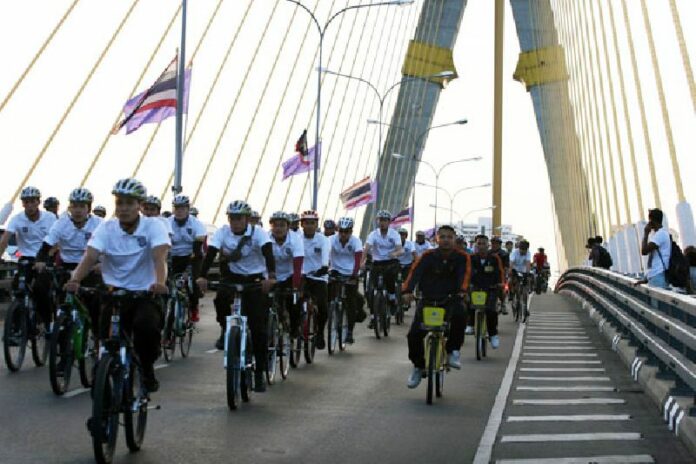
Tighter Security as Cyclists Warm Up for Bike for Dad (Photos)

BANGKOK — More than 30,000 police officers and seven helicopters will be deployed to ensure safety during the nationwide Bike for Dad cycling epic next month, police spokesman Gen. Detnarong Suthichanbancha said Sunday.

More than 300 police officers and people participated in a rehearsal of the event yesterday along the 29-kilometer route through the capital. Authorities assured the public that both the roads and security to protect them is now ready all across the kingdom for the big event Dec. 11 in which more than 500,000 people are expected to join.

In Bangkok, there will be 9,070 police officers and 3,200 soldiers supported by seven helicopters ensuring the cyclists led by the Crown Prince will be safe for the occasion dedicated to His Majesty the King, whose birthday is Dec. 5.


\


\


\


\


\


\


\


\


\

The 29 kilometres route of Bike for Dad cycling event in Bangkok.


Advertisement

Fighting Cock Ends Career in Python's Belly

An 'after' photo of the valuable fighting cock's encounter this morning with a python in Pathum Thani province.

PATHUM THANI — A prize cock’s fighting career was brought to an end this morning when he was eaten by a python.

The cock, worth 40,000 baht, was in his pen at the home of his owner in northern metro Bangkok when the 4-meter python somehow snuck in and ate the cock.

Janjira Jan, 30, said she arrived to feed the cock Saturday morning but found the python in the pen instead of his proud feathers, with a visibly swollen belly. She immediately alerted local rescue workers, who came to capture the snake.  

Amnart Saengsawang, one of the rescue workers who responded to the incident, said the python will be handed over to Khao Yai National Park and eventually released to the wild.

\
Rescue workers extract the victorious python from the vanquished chicken's pen this morning in Pathum Thani province

Advertisement

State of Emergency in Mali After 21 Die in Hotel Terror Attack

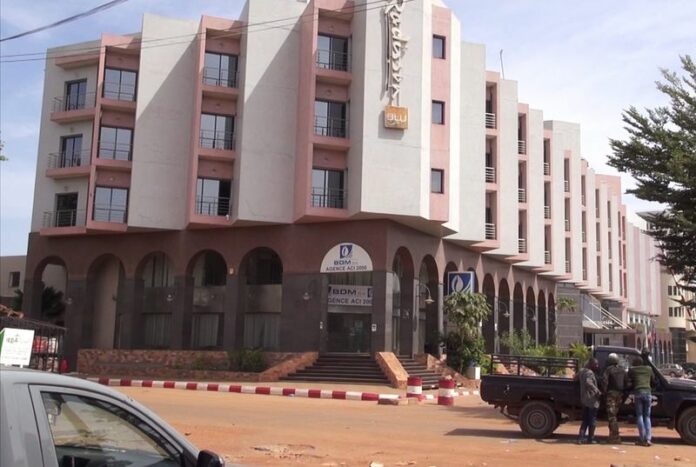
A still image showing Malian policemen guarding the Radisson Blu hotel during a hostage situation Friday in Bamako, Mali. Photo: EPA / Africable Television

BAMAKO, Mali — A 10-day state of emergency has been declared in Mali after at least 21 people were killed by terrorists in a Bamako hotel, UN peacekeepers in the West African country said.

The government announced there were no more hostages in terrorist hands after Malian troops ended the siege.

Two of the attackers were overpowered, UN spokesman Olivier Salgado said.

Salgado said security forces were still searching hotel rooms to see if there were more attackers, adding there might be more victims. "We cannot exclude bad surprises," he said.

Mali national television said the death toll included two of the undetermined number of terrorists.

A three-day mourning period will commence on Monday.

The Rezidor Hotel Group, which operates the Radisson Blu hotel, initially said the attackers had taken 140 guests and 30 employees hostage.

The attackers shot and killed three security guards upon entering the hotel, the government said.

Traore told Radio France Internationale that two police officers were injured when special forces stormed the building.

The minister said the hostages included 45 Malians, 15 US citizens and nationals of Ivory Coast, Turkey, Algeria, Russia, Spain, Canada, Germany, Togo and China.

China's official Xinhua news agency reported that 10 Chinese citizens were taken hostage. Indian Foreign Ministry spokesman Vikas Swarup wrote on Twitter that 20 Indians were staying in the hotel.

The US State Department confirmed at least one American died in the attacks.

A police source said some hostages were released after they proved they were Muslims by reciting verses from the Koran.

Some hotel employees reportedly escaped through emergency exits.

"Around 6:30 in the morning, I heard multiple gunshots outside my room, and there was smoke in the hotel corridor and my room. The internet connection was unstable and phone calls to the reception went unanswered," one hotel guest told China's official Xinhua news agency.

A small team of US Special Operations Forces was helping with the hostage rescue efforts, US Africa Command said on Twitter.

Some US military personnel "happened to be at the site at the time and chipped in to assist first responders in moving people to secure locations," a US State Department spokesman said.

The White House said the United States "condemns in the strongest terms" the attack and praised international security forces for having "prevented even worse loss of life."

The US will "remain a steadfast partner" with Mali against terrorist groups seeking to undermine the country's "efforts to build a durable peace."

French Defence Minister Jean-Yves Le Drian posted on Twitter: "Upon request from the Malian authorities, I have decided to send a detachment of special French forces to Bamako."

French President Francois Hollande said he had assured Malian President Ibrahim Boubacar Keita that France "is available to offer the necessary support to the forces of his country."

The groups claiming responsibility for the attack were al-Qaeda in the Islamic Maghreb and al-Mourabitoun, according to the al-Akhbar news site in Mauritania, which has previously received statements from extremist groups in the region.

Al-Mourabitoun is the organization of Mokhtar Belmokhtar. It remains unclear if the Algerian, a target of Western airstrikes, is still alive.

A group of men had driven to the hotel in a car with diplomatic plates, while others came on foot, hotel security sources and Mali's national television said.

The attackers entered the building and went up to a higher floor, hotel security sources said. They forced a door open and shots were heard.

Radisson Blu is popular among Westerners, including Air France staff.

Islamist violence usually affects Mali's north, which has been volatile since separatist rebels and later al-Qaeda-affiliated militants took control of the region after a 2012 military coup.

French and African military operations dispersed the militants and restored government control over the area. Clashes between rebels and the army persist in some places.

Story: DPA / By Soumaila Guindo and Mahamadou Kone

Advertisement

Uthai Thani Family Gets Surprise Visit from Rare Goat-Antelope

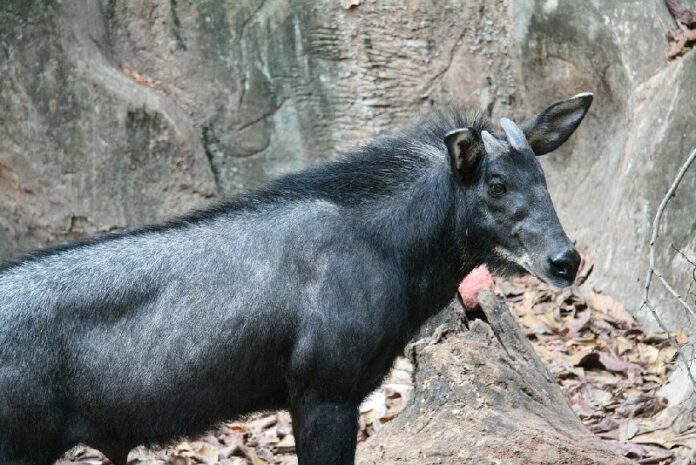
A majestic serow in captivity at the Dusit Zoo n Bangkok in a 2007 photo. Photo: Melanochromis / Wikimedia Commons

UTHAI THANI — While most families must visit a zoo to see a serow, a rare type of goat-antelope, one simply bolted into the bedroom of a home in central Thailand on Thursday night.

Suwanna Puengket said the vulnerable and protected species leapt through the windows of her daughter’s bedroom as she was playing guitar at about 7:30pm on Thursday and wandered around the residence until officials arrived to tranquilize it.

“My daughter and I were very frightened, so we ran outside and shouted for our neighbors to see what the creature was,” Suwanna said. “I thought it was a buffalo.”

Only 1,000 to 1,5000 serows are thought to live in the wild in Thailand.
 

\

A hastily captured photo of the home-invading serow Thursday in Uthai Thani province 

Suwanna said she soon realized it was a serow, and her neighbors phoned the local wildlife protection agency.  

Officials from the Thungyai Naresuan Wildlife Sanctuary later arrived at Suwanna’s residence, tranquilized the seerow and brought it to the sanctuary.

Serows are classified as a reserved wild animal under the Wildlife Preservation and Protection Act of 1992. In December 2013, animal rights activists were deeply disturbed by violent video footage of cement factory workers beating a serow to death in Saraburi province.

Advertisement

Bridging Our Grief Disparity for Horrors Near and Far

By Pravit Rojanaphruk

\

Admittedly, I was among those greatly saddened and caught up in the international wave of shared grief following the horrendous Nov. 13 attacks in Paris which left 129 dead and 350 injured. This is understandable.

What’s harder to understand is why many Thais find it difficult to feel equally saddened and shocked by the killings in Syria, Lebanon and parts of the Middle East.

One day before the Paris attacks, two suicide bombers in Beirut killed 43, for example, while Foreign Policy Magazine on Wednesday put the toll of the nearly five-year-old Syrian civil war at more than 250,000 people killed.

Grief and empathy is good, but how do we explain the “grief discrepancy?”

There’re at least three explanations that I could think of.

\

First, is the “they are not one of us,” or “the other” mentality. While many bourgeois Thais find it easy to relate to Paris and Parisians, with its high fashion, cafés, gastronomy, joie de vivre and  its world-famous tourist icons such as the Eiffel Tower, numerous museums and more, few Thais, (unless they’re Muslim) can relate to those in the Middle East despite the fact that geographically speaking, the Middle East is closer to Thailand.

This is also why many Bangkokians feel more disturbed by the bombing of Bangkok’s Erawan Shrine which killed 20 in August than the killings and bombings in the Deep South over the past decade which have taken more than 5,000 lives.

To stretch this further, many carnivores accept the slaughtering of livestock for food as “normal” and find it hard or impossible to be disturbed because domesticated animals just are not “one of us.”

Second, the [mostly Western] media pay more attention to deaths in the West. The Associated Press made a point on Tuesday to come up with a story presenting brief life stories of 28 of those killed in Paris, thus adding a human face to the tragedy, which is laudable. It’s more difficult to expect the same treatment for those killed in the Middle East from most of the Western media, however. With the Thai media being largely and hopelessly dependent foreign outlets (mostly through Western wire services and broadcast networks) we often subscribe to international news through a Western point of view.

We know the exact death toll in Paris but do we care to know how many have been killed by the more than 20 bombs since dropped by French warplanes on Syria, and whether any innocent civilians might have become casualties of French President Francois Hollande’s “pitiless” war unfolding against the Islamic State? (Personally, I did not #PrayforParis just so someone could just declare a “pitiless” war.)

Sadly there seems to sadly be no no immediate and independently verifiable news and information of the matter.

Last but not least are the “jaded” feelings many Thais have toward violence and killing in the Middle East, which leads us to feel that more deaths there are just expected and normal. We became desensitized to the suffering of these people, and again, the same argument could be made about the killings in our own Deep South.

“If the Middle East is at peace, then this is strange…,” wrote Facebook user Surasak U-domdath in reply to my question about grief disparity.

Surasak, like many Thais on Facebook who overlaid the colors of the French flag over their Facebook profile picture, probably never wondered whether they could do the same with the Lebanese flag. (It could not, according to the New York Times.) I didn’t overlay my Facebook photo with the French blue, white and red, for suffering and senseless killing bears too many national flags.

Empathy and grief for strangers, for those whom we do not personally know, and who live in a faraway land is good, it makes us more humane and human. Now if we could narrow the grief disparity to make it at least more encompassing.

Pravit Rojanaphruk is a senior staff writer and can be followed on Twitter @PravitR

Advertisement

Suspected Islamists Take 170 Hostages at Hotel in Mali

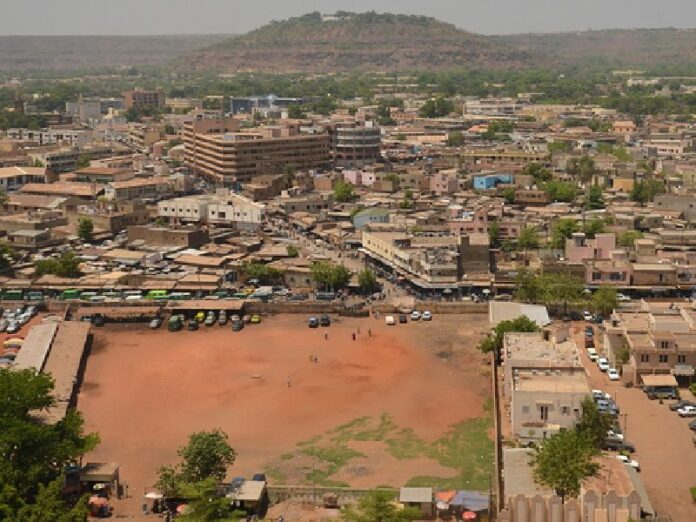
File photo of the Malian capital of Bamako, where two gunmen have taken 170 people hostage at a luxury hotel. Photo: DPA / Oliver Lang

Bamako, MALI — Suspected Islamists attacked the Radisson Blu hotel in Mali's capital Bamako on Friday and took 170 people hostage, but released some who could prove they were Muslims.

The Rezidor Hotel Group, which operates the Radisson Blu, said two people had taken 140 guests and 30 employees hostage.  Six employees of Turkish Airlines are among the hostages, Turkey's state-run news agency reports citing diplomatic sources.

Turkey's national carrier flies three times a week from Istanbul to Bamako. The airline has yet to officially comment on the situation.

A police source said the attackers were believed to be Islamists.

They released about 10 hostages who were able to proclaim the greatness of Allah in Arabic, the source said. Those released were taken to a police station. Witnesses said some of the hostages also escaped.

Radio France Internationale said the attackers shouted "Allahu akbar," or "God is great" in Arabic.

A group of men drove to the hotel in a car with diplomatic plates, entered the building and went up to a higher floor, hotel security sources said.

They forced a door open and shots were heard.

Security forces stormed the area, using heavy vehicles.

"Our safety and security teams and our corporate team are in constant contact with the local authorities in order to offer any support possible to reinstate safety and security at the hotel," the hotel group said.

The US and other Western embassies asked their citizens to stay at home. Radisson Blu is popular among Westerners, including Air France staff.

Islamist violence usually affects Mali's north, which has been volatile since separatist rebels and later al-Qaeda-affiliated militants took control of the region after a 2012 military coup.

French and African military operations dispersed the militants and restored government control over the area. Clashes between rebels and the army persist in some places.

Story: DPA /  Soumaila Guindo

Advertisement

Hot News

LATEST NEWS

Bangkok
overcast clouds
30 ° C
30.5 °
30 °
69 %
3.6kmh
100 %
Mon
35 °
Tue
32 °
Wed
30 °
Thu
32 °
Fri
32 °