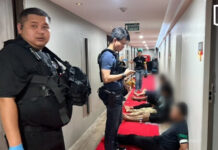
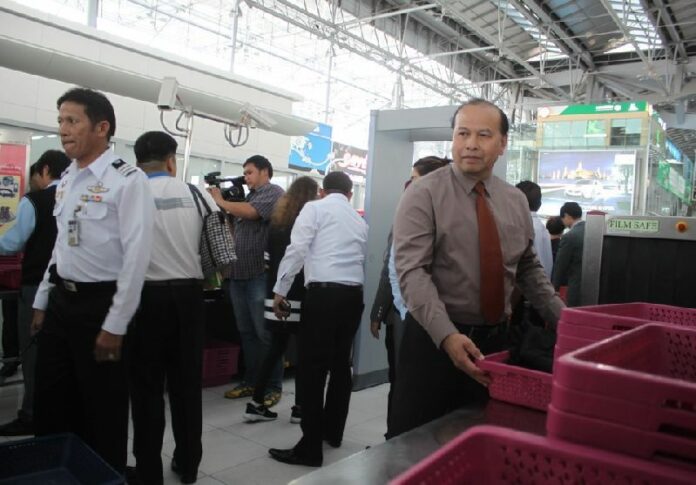
Airport staff demonstrate security protocols June 25 at Suvarnabhumi Airport in Bangkok.
BANGKOK — Beginning in December, air travelers will need to pay another 35 baht when traveling through Thailand’s six major airports to pay for upgraded security systems.
Six months after an alarming security lapse exposed outdated systems at Suvarnabhumi Airport, the company managing them today announced its new passenger processing system will speed the immigration process and comply with international standards. Even more conveniently, passengers will be informed at check-in whether they are blacklisted by their destination countries.
“When the passenger check-in at the counter, the system will verify with the immigration database,” Nitinai Sirismatthakarn of Airports of Thailand said Wednesday in Dailynews. “The system will immediately respond back that the passenger is not allowed to leave or enter the country if they are on a blacklist.
The 35 baht per flight fee will be rolled into ticket prices. The system goes live next month at Airports of Thailand’s six facilities: Suvarnabhumi, Don Mueang, Phuket, Chiang Mai, Hat Yai and Chiang Rai. The company said the system will eventually be introduced at the other 32 airports nationwide.
It comes as international aviation officials have called into question the safety standards of Thai air travel, and six months after a former police official apparently flew from Suvarnabhumi to Tokyo with a gun in his bag.
Some objected to passing the fee on to passengers, saying the airport operator should foot the bill for safety.
Nitinai said the 6 major airports have also tightened their security system since the terrorist attack in Paris.
PATHUM THANI — Dear Rangsit residents: Those who told you you live so ‘baan nok?’ It’s time for your sweet revenge.
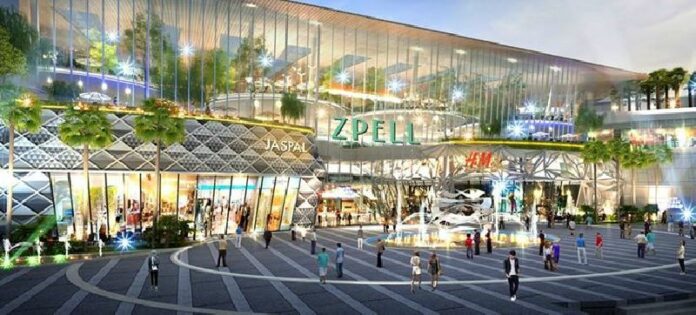
If proximity to large malls is the yardstick of civilization, Rangsit will soon be the most cultured place in Thailand when Zpell opens later this month at Future Park, creating a combined retail space said to be the biggest in the realm.
With a total area 600,000sqm, that’s 20 percent more civilized than Siam Paragon (500,000sqm).
The new mall will open Nov. 27 with all the usual expectations of shopping and eating and entertaining, plus futsal courts, an ice-skating rink, indoor ski park, art installations to welcome all comers, whether compulsive shoppers, crazy foodies, sports aficionado or stereotyped hipsters.
The mall was built in front of the 20-year-old Future Park mall and is said to have cost more than 4 billion baht to construct.
The mall’s boosters hope the new complex will be an integrated shopping mall which covers all people’s lifestyle choices and will draw more “grade-A customers,” according to Future Park CEO Pimpaka Wanglee.
Zpell and Future Park Rangsit are located in northern metro Bangkok in Pathum Thani province. If you want to go there and do not drive or speak Thai, be prepared to call it “sa-pew.”
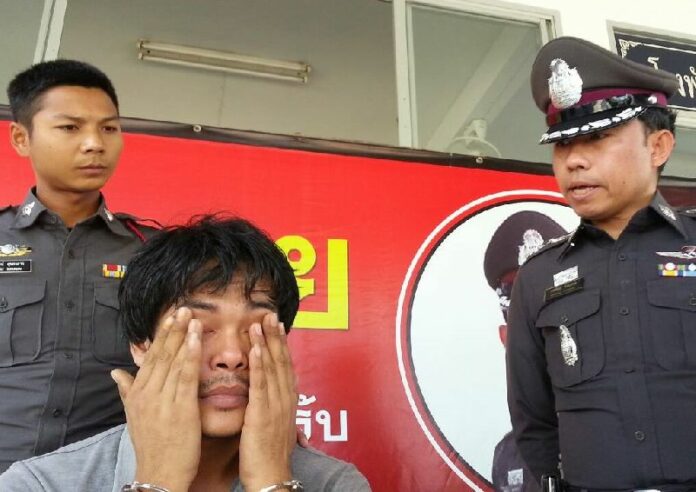
Sunthorn Khunkamdee, 26, wipes away tears as he speaks today to reporters at a police news conference in Chonburi province.
CHONBURI — A man is under arrest in Chonburi province for allegedly selling methamphetamines to pay the dowry demanded by his fiancee’s family.
Sunthorn Khunkamdee, 26, told reporters at a police news conference today he was forced to sell drugs to factory workers because he could not afford the 100,000 baht dowry, or sin sod, required for the marriage.
“I had been saving money in order to ask my girlfriend’s hand in marriage,” Sunthorn said. “My work alone was not enough.”
Thai tradition dictates paying a dowry to the bride’s parents at the amount set by her family. In Sunthorn’s case, he said it was 100,000 baht.
Apart from the bride price, Sunthorn said he also needed the money to support his parents, who live in poverty.
That’s when, according to Col. Korapat Hormhuan of the Bo Win Police Station, Sunthorn started selling speed to employees at several factories in Chonburi province.
Korapat said police soon learned of Sunthorn’s criminal activities and arrested him. A search of his home turned up packets of meth with a street value of about 140,000 baht, the colonel told reporters.
Sunthorn has been charged with possessing Category I narcotics with the intention to sell.
To reach us about this article or another matter, please contact us by e-mail at:[email protected].
Follow Khaosod English onand Twitterfor news, politics and more from Thailand.
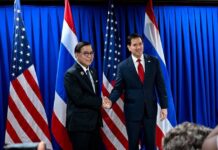
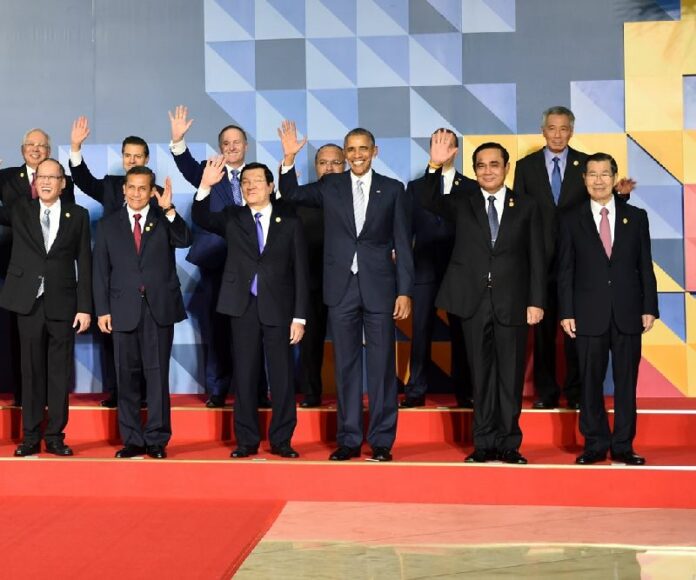
US President Barack Obama and junta chairman Prayuth Chan-ocha during group photo at APEC summit today.
MANILA — Junta chairman Prayuth Chan-ocha said he told U.S. President Barack Obama today that concerns about human rights violations in Thailand were partly based on inaccurate news presented by people with bad intentions.
Gen. Prayuth said he and Obama had the brief conversation on the matter as they sat next to each other this morning at a regional economic summit in Manila. It was the second time Prayuth encountered Obama, whose government condemned the coup d’etat he staged in May 2014.
“Mr. Obama stressed that he’s well aware of the complexity of Thai politics, but the things that worried him are issues about human rights,” Prayuth said in an interview with Thai reporters in Manila today. “I insisted to him that I’m already trying to take care of these issues, but they were really [the results of] news presented by people with bad intentions. Sometimes, these reports were presented without any facts, so it led to misunderstanding.”
He went on, “Therefore, I would like to urge the press not to report the wrong information they receive, especially on human rights issues, because it could cause the other side to pick up the issues and use them to pressure us.”
There was no immediate comment from U.S. officials about the conversation.
Prayuth, Obama and 18 other world leaders are attending the 23rd Asia-Pacific Economic Cooperation, or APEC, summit which opened Tuesday for three days in the Philippines.
It is the second time Prayuth encountered Obama at an international summit; the previous meeting took place when the two leaders crossed paths during the United Nations General Assembly in New York City on Sept. 29.
Junta chairman Prayuth Chan-ocha and U.S. President Barack Obama shake hands on 29 Sept. at the United Nations General Assembly in New York.
The United States is among several nations which criticized Prayuth’s coup d’etat against the elected government in May 2014. The United States also downgraded its cooperation with Thailand and pledged that full relations would only be restored when a new civilian government is voted into power.
Nevertheless, the seemingly cold relationship between the two nations appeared to thaw recently, with the arrival of new U.S. Ambassador Glyn Davies in Bangkok in September. Previous ambassador, Kristie Kenney, retired from the post November 2014, and the position remained unfilled until Davies’ arrival.
On Oct. 29, Davies paid a visit to Prayuth at Government House – the first meeting between a top American envoy and the general since the 2014 coup.
U.S. Ambassador Glyn Davies meets with junta chairman Gen. Prayuth Chan-ocha Oct. 29 at Government House.
In the interview with reporters today, Prayuth said he expressed his gratitude to Obama for appointing a new ambassador for Thailand.
“Obama replied that it was a pleasure, because the alliance between Thailand and the United States has existed for a long time, and we cannot not abandon each other,” Prayuth said. “He also said he would gladly support Thailand to achieve democracy, which I assured him I would do my best to make Thai democracy a complete and sustainable one.”
Following the meeting in Manila today, Prayuth would reportedly travel to Kuala Lumpur tonight to attend the 27th ASEAN Summit which would last until Sunday.
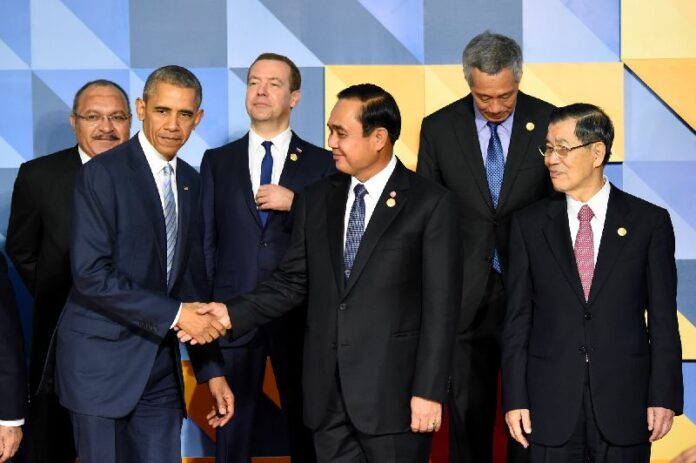
US President Barack Obama shakes hand with junta chairman Prayuth Chan-ocha during group photo at APEC summit today.
MANILA — Junta chairman Prayuth Chan-ocha said he told U.S. President Barack Obama today that concerns about human rights violations in Thailand were partly based on inaccurate news presented by people with bad intentions.
Gen. Prayuth said he and Obama had the brief conversation on the matter as they sat next to each other this morning at a regional economic summit in Manila. It was the second time Prayuth encountered Obama, whose government condemned the coup d’etat he staged in May 2014.
“Mr. Obama stressed that he’s well aware of the complexity of Thai politics, but the things that worried him are issues about human rights,” Prayuth said in an interview with Thai reporters in Manila today. “I insisted to him that I’m already trying to take care of these issues, but they were really [the results of] news presented by people with bad intentions. Sometimes, these reports were presented without any facts, so it led to misunderstanding.”
He went on, “Therefore, I would like to urge the press not to report the wrong information they receive, especially on human rights issues, because it could cause the other side to pick up the issues and use them to pressure us.”
There was no immediate comment from U.S. officials about the conversation.
Prayuth, Obama and 18 other world leaders are attending the 23rd Asia-Pacific Economic Cooperation, or APEC, summit which opened Tuesday for three days in the Philippines.
It is the second time Prayuth encountered Obama at an international summit; the previous meeting took place when the two leaders crossed paths during the United Nations General Assembly in New York City on Sept. 29.
Junta chairman Prayuth Chan-ocha and U.S. President Barack Obama shake hands on 29 Sept. at the United Nations General Assembly in New York.
The United States is among several nations which criticized Prayuth’s coup d’etat against the elected government in May 2014. The United States also downgraded its cooperation with Thailand and pledged that full relations would only be restored when a new civilian government is voted into power.
Nevertheless, the seemingly cold relationship between the two nations appeared to thaw recently, with the arrival of new U.S. Ambassador Glyn Davies in Bangkok in September. Previous ambassador, Kristie Kenney, retired from the post November 2014, and the position remained unfilled until Davies’ arrival.
On Oct. 29, Davies paid a visit to Prayuth at Government House – the first meeting between a top American envoy and the general since the 2014 coup.
U.S. Ambassador Glyn Davies meets with junta chairman Gen. Prayuth Chan-ocha Oct. 29 at Government House.
In the interview with reporters today, Prayuth said he expressed his gratitude to Obama for appointing a new ambassador for Thailand.
“Obama replied that it was a pleasure, because the alliance between Thailand and the United States has existed for a long time, and we cannot not abandon each other,” Prayuth said. “He also said he would gladly support Thailand to achieve democracy, which I assured him I would do my best to make Thai democracy a complete and sustainable one.”
Following the meeting in Manila today, Prayuth would reportedly travel to Kuala Lumpur tonight to attend the 27th ASEAN Summit which would last until Sunday.
BANGKOK – The results of the army review of alleged graft in its 1 billion baht Rajabhakti Park project will be released Friday, according to army chief Teerachai Nakwanich.
Gen. Teerachai said today he would personally announce the findings – the first concrete response from authorities to the scandal, weeks after reports about financial irregularities in the project surfaced on the media.
“Tomorrow, at 11am, I will hold a news conference about the result of inquiry into construction of Rajabhakti Park,” Teerachai said this morning.
He added that he has already been verbally briefed about the report by an adviser to the Royal Thai Army.
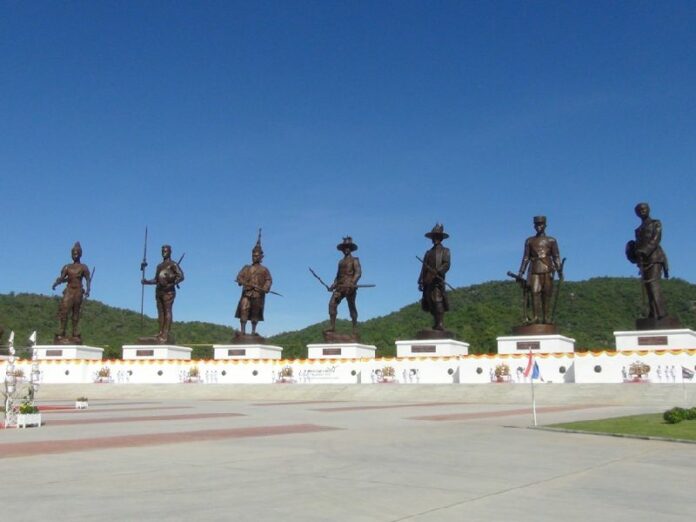
The internal review was announced by the army on Nov. 12, several weeks after media agencies first ran stories about corruption in Rajabhakti Park, a massive park in Prachuap Khiri Khan province that features seven giant statues of Thailand’s historically prominent kings.
The scope and methods of the review were not announced.
Construction lasted from November 2014 to August 2015, and is said to have cost at least 1 billion baht. Much of the budget came from donations overseen by a charitable foundation established by the army.
But army officials anonymously complained to the media about shady transactions in the project, such as the unusually high costs of equipment and a middleman who took 10 percent commissions from the budget for each giant statue, which reportedly cost around 40 million baht each.
Although former army chief Udomdet Sitabutr, who oversaw the park’s construction, admitted to the media that some of the allegations were true, neither police nor the national anti-graft agency is investigating the incident.
Police spokesman Piyapan Pingmuang said police cannot do anything about the alleged graft unless the military request them to do so, while National Anti-Corruption Commissioner Vicha Mahakhun said his office is waiting for the army’s internal investigation to wrap up first before it considers launching any probe.
Nevertheless, the martial court has issued an arrest warrant for an army colonel who reportedly claimed false ties to the monarchy and embezzled money in the Rajabhakti Park project. For his alleged crime, Col. Kachachat Boondee has been charged with lese majeste (defaming the monarchy).
Kachachat fled Thailand to Myanmar on Oct. 31, according to records provided by immigration police.
Rumors Dismissed
Teerachai’s announcement came a day after an army spokesman dismissed as obvious fakes documents alleged to leaked copy from the report on social media.
The anti-government Facebook page called “I Must Have Received 100 Million Baht from Thaksin” published yesterday two photos purported to be from the report. The documents implicated a number of top officials by name.
The post quickly went viral and has been shared more than 1,600 times. But army spokesman Winthai Suvaree told reporters Wednesday evening that the documents were fake.
“They were not bureaucratic documents,” Col. Winthai said. “They were fabricated.”
Today an army commander also denied media reports that lese majeste suspect Kachachat had been arrested near the border with Myanmar.
The website of Daily News newspaper reported that Kachachat was arrested in Myanmar and would be transferred to Thai police in Mae Hong Son province.
Lt. Gen. Somsak Nilbanjerdkul, commander of the Third Region Army, said today the report was false. “We have not received such news from Myanmar,” he said.
To reach us about this article or another matter, please contact us by e-mail at:[email protected].
Follow Khaosod English onand Twitterfor news, politics and more from Thailand.
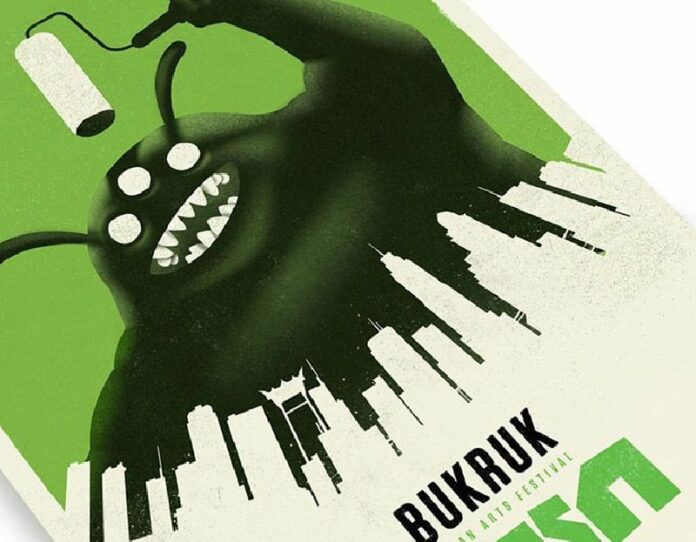
Promotional art for the Bukruk Urban Arts Festival. Image: Courtesy Bukruk
By Lisnaree Vichitsorasatra
Staff Reporter
BANGKOK — Three years after spreading into the sois and onto the walls of Bangkok to herald the arrival of street art as a force, a bigger and more polished Bukruk returns in January.
Street art has exploded into the mainstream since the first was held in 2013, in Bangkok, and to keep Bukruk relevant, its organizers have played with the formula. Where the first brought together artists from Europe and Thailand, more Asian artists will be involved this year.
And overall, whether from Barcelona or Bucharest, Khlong Toei or Tokyo, the roster of talent seems more consistently high-shelf. The 10-day festival will also make better use of the city itself.
“Bukruk was the first street arts festival, but saying that it has inspired the street arts in Thailand would be pretentious,” organizer Nicolas Dali said. “We are not trendmakers, but a global movement in Thailand.”
That may be, but the first Bukruk was staged at a time such expression was just becoming more broadly recognized in the Thai capital, and since 2013, street art has gone from fringe to oversaturation, with the most commercial galleries hyping “street art” links, however tenuous.
For its second outing Bukruk organizers seem intent on getting some distance from that, namely by relabeling it an “urban arts” fest and adding a lot of other stuff to do.
The beating heart of Bukruk will still be wall-wide paintings, but artists will also show in ones and twos in partnering galleries. Check out DJ/VJ sets, and watch large murals come to life in Chinatown before your eyes at live painting events. There will be more digital arts, artists talks and a fierce party (but more on that later).
Murals from Bukruk 2013 by Tawan, Yuree, Bon, Alex Face and the late Mamafaka near BTS Ratchathewi in Bangkok. Photo: Courtesy Gabriel Camelin
Location, Location, Location
Moving away from the normal centers for consuming culture, the festival in January will transform the riverside on the Bangrak and Khlong San sides into an “open-air museum” linking the art to the history, context and now of the place.
“It’s a beautiful part of the city and quite neglected,” Dali said, citing the story of Georgetown in Penang, Malaysia, which has built a brand as a cultural destination by cultivating the arts.
Organizers view the area as a potential place for presenting more street art and are joining hands with galleries and its sponsors to draw attention to the area. Adding cool art in the area, they hope, will serve to revive it and encourage its preservation in the rapidly developing capital.
To attract more tourists to the ancient town, organizer Myrtille Tibayrenc said, there will be digital art in addition to the eccentric wall paintings. Myrtille said mapping projections, media art that swims with the shape of the buildings will cascade onto the area’s historic structures.
As last year, murals will be painted in interesting places supported by the community where they can stay up for at least 10 years.
The Bangkok Metropolitan Administration and Tourism Authority of Thailand have expressed interest in supporting the project, but so far the festival’s primary sponsor is the European Union.
Songkhla-born artist Rukkit was featured in Bukruk 2013
Rotterdam-based artist Daan Botlek from his 2013 mural in Siam Square will return for Bukruk II
Artists, Artists, Artists
Thirty artists from Asia and Europe will join the event, and we asked organizer, Myrtille Tibayrenc of Toot Yung Art Center notoriety, to talk about some of them.
Daehyun Kim, a Seoul-born graphic designer and illustrator based in Vienna whose life project “Moonassi” depicts two characters representing opposing situations, minds and ideas. Tokyo-born Motomichi Nakamura will present mapping projections of humorous characters which contrast the artist’s “disturbing message.”
We asked another returning organizer, Myrtille Tibayrenc of Toot Yung notoriety, to talk about some of the artists.
Spanish artist Aryz will bring his big-wall talents honed in cities around the world. “He sees the world as a museum,” Tibayrenc said. From Austria comes Nychos, a world-class street artist with a love of animals – at least what’s inside them. At least five Thai artists will be featured, such as Lolay, who’s known for visually pondering in splotchy inks and surprising detail the relationships between humans and their behaviors, social standing and more. From New York comes a veteran photographer of its street scenes from the 1970s and 1980s; Martha Cooper, who will display and discuss her work.
Bukruk 2013 opened with an awesome, unrestrained street party its second coming seems intent on exceeding.
A one day music festival will kick things off at the Docklands, an open-air dry dock on the Chao Phraya River. While a giant mural takes shape before the audience, it will hear stirring Mor lam from none other than Paradise Bangkok, as well as music from Cambodian Space Project, Yellow Fang, Desktop Error and Degaruda. All hands will be on the decks with European DJs such as Sun Glitters, Dye and La Fine Equipe. Other ASEAN-sourced DJs from Malaysia and Vietnam are also hoped for.
They have also added an animation night with an “uncanny” theme, with films from a Czech animated film to the eccentric, modern anime.
On the cerebral side, the Thailand Creative & Design Center, or TCDC, is still with us and will host talks with the artists. Expect plenty of people selling food and design work.
The walls and galleries partnering with Bukruk will be in walking distance, turning the neighborhood into a distributed, open museum. Participating spaces include The Jam Factory, Soy Sauce Factory, Speedy Grandma, P.Tendercool, Bridge and Serindia Gallery.
The Bukruk Urban Arts Festival runs Jan. 21 to Jan. 31. Check out more information at the website or Facebook page.
To reach us about this article or another matter, please contact us by e-mail at:[email protected].
Follow Khaosod English onand Twitterfor news, politics and more from Thailand.
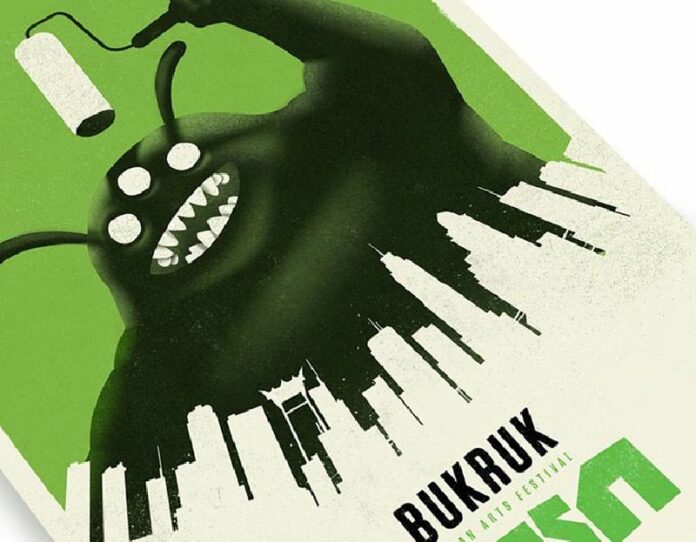
Promotional art for the Bukruk Urban Arts Festival. Image: Courtesy Bukruk
BANGKOK — Three years after spreading into the sois and onto the walls of Bangkok to herald the arrival of street art as a force, a bigger and more polished Bukruk returns in January.
Street art has exploded into the mainstream since the first was held in 2013, in Bangkok, and to keep Bukruk relevant, its organizers have played with the formula. Where the first brought together artists from Europe and Thailand, more Asian artists will be involved this year.
And overall, whether from Barcelona or Bucharest, Khlong Toei or Tokyo, the roster of talent seems more consistently high-shelf. The 10-day festival will also make better use of the city itself.
“Bukruk was the first street arts festival, but saying that it has inspired the street arts in Thailand would be pretentious,” organizer Nicolas Dali said. “We are not trendmakers, but a global movement in Thailand.”
That may be, but the first Bukruk was staged at a time such expression was just becoming more broadly recognized in the Thai capital, and since 2013, street art has gone from fringe to oversaturation, with the most commercial galleries hyping “street art” links, however tenuous.
For its second outing Bukruk organizers seem intent on getting some distance from that, namely by relabeling it an “urban arts” fest and adding a lot of other stuff to do.
The beating heart of Bukruk will still be wall-wide paintings, but artists will also show in ones and twos in partnering galleries. Check out DJ/VJ sets, and watch large murals come to life in Chinatown before your eyes at live painting events. There will be more digital arts, artists talks and a fierce party (but more on that later).
Murals from Bukruk 2013 by Tawan, Yuree, Bon, Alex Face and the late Mamafaka near BTS Ratchathewi in Bangkok. Photo: Courtesy Gabriel Camelin
Location, Location, Location
Moving away from the normal centers for consuming culture, the festival in January will transform the riverside on the Bangrak and Khlong San sides into an “open-air museum” linking the art to the history, context and now of the place.
“It’s a beautiful part of the city and quite neglected,” Dali said, citing the story of Georgetown in Penang, Malaysia, which has built a brand as a cultural destination by cultivating the arts.
Organizers view the area as a potential place for presenting more street art and are joining hands with galleries and its sponsors to draw attention to the area. Adding cool art in the area, they hope, will serve to revive it and encourage its preservation in the rapidly developing capital.
To attract more tourists to the ancient town, organizer Myrtille Tibayrenc said, there will be digital art in addition to the eccentric wall paintings. Myrtille said mapping projections, media art that swims with the shape of the buildings will cascade onto the area’s historic structures.
As last year, murals will be painted in interesting places supported by the community where they can stay up for at least 10 years.
The Bangkok Metropolitan Administration and Tourism Authority of Thailand have expressed interest in supporting the project, but so far the festival’s primary sponsor is the European Union.
Songkhla-born artist Rukkit was featured in Bukruk 2013
Rotterdam-based artist Daan Botlek from his 2013 mural in Siam Square will return for Bukruk II.
Artists, Artists, Artists
Thirty artists from Asia and Europe will join the event, and we asked organizer, Myrtille Tibayrenc of Toot Yung Art Center notoriety, to talk about some of them.
Daehyun Kim, a Seoul-born graphic designer and illustrator based in Vienna whose life project “Moonassi” depicts two characters representing opposing situations, minds and ideas. Tokyo-born Motomichi Nakamura will present mapping projections of humorous characters which contrast the artist’s “disturbing message.”
We asked another returning organizer, Myrtille Tibayrenc of Toot Yung notoriety, to talk about some of the artists.
Spanish artist Aryz will bring his big-wall talents honed in cities around the world. “He sees the world as a museum,” Tibayrenc said. From Austria comes Nychos, a world-class street artist with a love of animals – at least what’s inside them. At least five Thai artists will be featured, such as Lolay, who’s known for visually pondering in splotchy inks and surprising detail the relationships between humans and their behaviors, social standing and more. From New York comes a veteran photographer of its street scenes from the 1970s and 1980s; Martha Cooper, who will display and discuss her work.
Bukruk 2013 opened with an awesome, unrestrained street party its second coming seems intent on exceeding.
A one day music festival will kick things off at the Docklands, an open-air dry dock on the Chao Phraya River. While a giant mural takes shape before the audience, it will hear stirring Mor lam from none other than Paradise Bangkok, as well as music from Cambodian Space Project, Yellow Fang, Desktop Error and Degaruda. All hands will be on the decks with European DJs such as Sun Glitters, Maestro, Dye and La Fine Equipe. Other ASEAN-sourced DJs from Malaysia and Vietnam are also hoped for.
They have also added an animation night with an “uncanny” theme, with films from a Czech animated film to the eccentric, modern anime.
On the cerebral side, the Thailand Creative & Design Center, or TCDC, is still with us and will host talks with the artists. Expect plenty of people selling food and design work.
The walls and galleries partnering with Bukruk will be in walking distance, turning the neighborhood into a distributed, open museum. Participating spaces include The Jam Factory, Soy Sauce Factory, Speedy Grandma, P.Tendercool, Bridge and Serindia Gallery.
The Bukruk Urban Arts Festival runs Jan. 23 to Jan. 31. Check out more information at the website or Facebook page.
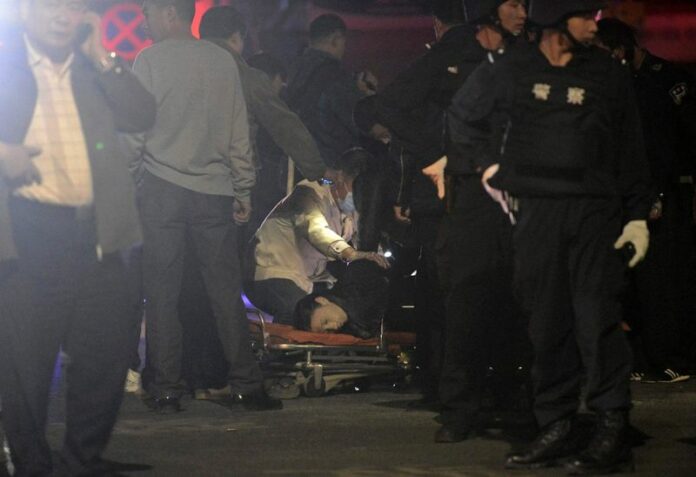
A file photo of a victim being examined after a deadly attack by a group of knife-wielding men in Kunming, in southwest China's Yunnan province on March 2, 2014. Chinese police killed 17 people, including suspects who were allegedly responsible for a deadly terrorist knife attack in the Xinjiang region in September. Photo: EPA / Sui Shui
BEIJING — Chinese police killed 17 people, including suspects who were allegedly responsible for a deadly terrorist knife attack in the Xinjiang region in September, Radio Free Asia reported on Wednesday.
"All of the terrorists" behind the September 18 attack on Sogan colliery in Baicheng county were killed in the raid, the US-based broadcaster's Uighur service reported, citing Xinjiang-based police.
The suspects killed included Tursun Jume, 46, Musa Toxtiniyaz, 47, and Memet Eysa, 60, from Chokatal Meadow, in Kanchi township.
Their family members were also killed in the raid, the report said.
Among the dead was Eysa's 9-year-old adopted granddaughter and two boys, aged 1 and 6, belonging to Jume's family, Radio Free Asia, or RFA, said. The four women killed were Jume's 44-year-old wife, Eysa's 55-year-old wife and two of his daughters-in-law.
The women and children were not involved in the colliery attack and had only followed the suspects when they fled Kanchi township, a township official told RFA in October.
Xinjiang is largely closed off to foreign media, delaying and compromising information from the region and rendering reports difficult to confirm. Calls to the Xinjiang government went unanswered.
The 17 people allegedly went on the run after a gang of knife-wielding separatists killed 50 people and injured another 50 in the Akesu prefecture coal mine, RFA reported.
At least five police officers including a local police chief died when attackers set on security guards at the gate to a mine in Terek township, storming the owner's residence and a dormitory for workers, housing mostly members of the Han ethnic majority.
The gang also rammed police vehicles using trucks loaded with coal, sources told RFA. The assailants searched for explosives but did not find any, the report said.
Authorities sustained no casualties in killing the 17, a Terek township police officer reportedly told RFA.
"I heard from colleagues who participated in the operation that the military blew up the cave where the suspects were hiding," Ghalip Memet was quoted as saying.
A special unit located and killed the suspects, the Ministry of Public Security announced Saturday in a social media post that was deleted on Sunday.
The ministry made its announcement via its official Sina Weibo microblog hours after the Paris attacks.
"On November 13, Black Friday, Paris, France suffered the most serious terrorist attack in its history. Hundreds of people died or were injured," the post said.
"On the other side of the planet, China's Xinjiang police launched a final attack on terrorists and after a 56-day manhunt, finally achieved a significant result."
China has vowed to crack down on the "three evils" of terrorism, separatism and religious extremism in Xinjiang.
The Xinjiang autonomous region has a history of discord between Beijing authorities and the nationally predominant Han people on one side, and the regionally indigenous, majority-Muslim ethnic Uighur population.
Many Uighurs in Xinjiang complain of cultural and religious repression, claiming that ethnic Han Chinese migrants enjoy most of the benefits of development in the oil-rich but economically backward region.
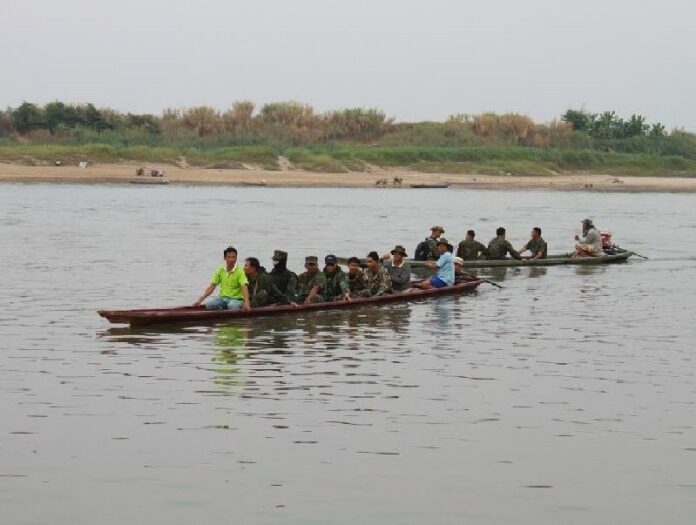
Thai security officers patrol the Mekong River on Feb. 20, 2013, in Nong Khai province. Photo: Matichon
NONG KHAI — Thai security forces last night intercepted seven North Koreans attempting to enter Thailand illegally from Laos via a boat on the Mekong River.
The seven refugees – four men and three women – were apprehended when security officers intercepted their boat in Nong Khai province at around 7.45pm last night, police said. The group, presumed to be seeking refuge in South Korea, will be later allowed to make that request.
“I think they fled to Thailand so that they can ask South Korean embassy in Thailand to help them relocate to South Korea,” said Col. Panya Puinukroa, head of police station where the seven are detained.
The seven did not carry any documents but identified themselves as North Koreans through a police interpreter, Panya said, adding that the man operating the boat successfully evaded police by diving into the river and swimming away.
“This is not the first case. There have been many similar cases in the past,” Panya said. “The Immigration Police will coordinate with the embassy.”
In the meantime, the seven suspects will be taken to court and charged with entering the country illegally before being transferred to Immigration Police custody, he said.
Typically such cases involving North Korean refugees are resolved with small fines and deportation onward to South Korea.
An official at the Republic of Korea’s Embassy in Bangkok confirmed the seven North Koreans are eligible to apply for relocation to South Korea.
“Under South Korean law, the government recognizes North Koreans as fellow Korean citizens, and must assist them when they are in a difficult situation,” said the official, who declined to give her name because she was not authorized to speak to the media.
According to the official, the embassy will reach out to the defectors after they arrive to the central immigration detention facility in Bangkok to find out if they wish to go to South Korea.
The official declined to comment on how many such refugees are granted travel to South Korea, citing confidentiality.
The North Korean state, officially known as the Democratic People’s Republic of Korea, is well known for brutal suppression on its citizens, many of whom live in poverty. The harsh conditions lead many to flee, or “defect,” to South Korea via China and other countries.
Around 2,000 North Korean defectors arrived in Thailand in 2014, media reports say.
Their fate in Thailand is somewhat more fortunate than refugees from other countries who enter the kingdom illegally.
Police typically deport immigrants from neighboring nations such as Myanmar, Laos and Cambodia almost the same day that they are apprehended without proper travel documents. Human rights activists have slammed Thai authorities for deporting anti-government activists and ethnic Uighurs back to China, despite concerns about their safety.
Thailand does not recognise the status of refugees and asylum seekers, as it has not signed the 1951 Refugee Convention
Just yesterday the United Nations refugee agency condemned Thailand for sending two Chinese dissidents and registered refugees back to China. Jiang Yefei and Dong Guangping were arrested by Thai authorities on Oct. 28 for not having valid visas.
“This action by Thailand is clearly a serious disappointment and underscores the longstanding gap in Thai domestic law concerning ensuring appropriate treatment of persons with international protection needs,” the United Nations High Commissioner for Refugees said in a statement.
To reach us about this article or another matter, please contact us by e-mail at:[email protected].
Follow Khaosod English onand Twitterfor news, politics and more from Thailand.