

































35.5 C
Bangkok
Saturday, July 25, 2026
Home Blog Page 2930

As Myanmar Vote Nears, Attacks Raise Fears of Communal Violence

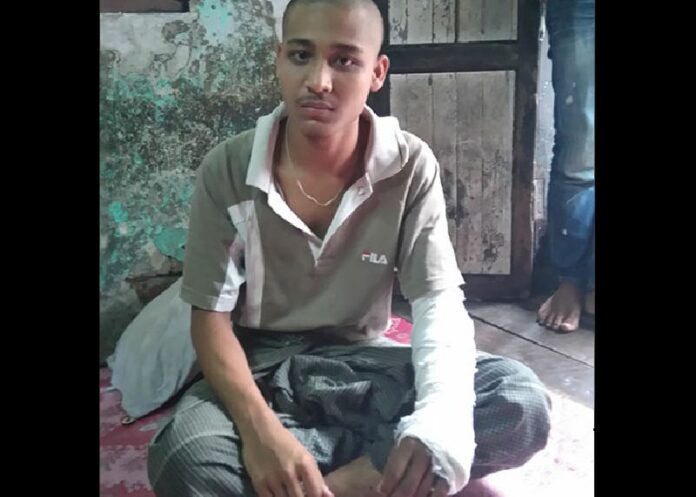
Nyein Htwe, a 25-year-old Muslim from Yangon, who was visiting family in Mawlamyine when he was attacked Sept. 26 by a group of men. Photo: Myanmar Now / Phyo Thiha Cho

Unexplained attacks on members of different religious communities in Mawlamyine are seen as attempts to foment inter-communal tensions ahead of the Nov. 8 elections.

MAWLAMYINE, Myanmar — Several unexplained night-time attacks on members of different religious communities in Mawlamyine have put the Mon State capital on edge in recent weeks. Community leaders fear the attacks are attempts to foment intercommunal tensions here in the run up to Myanmar’s Nov. 8 polls.

One victim, Paung Paung, a Hindu resident in his early 20s, said he and his two brothers had watched a football game at a teashop on Sept. 26 and were walking home on the city’s Strand Road when some men suddenly assaulted them.

“They called us ‘Kalar sons of bitches’ and beat us. We said we are Hindus and not Muslims, but they wouldn’t listen,” he told Myanmar Now, using a Burmese derogatory term for people of South Asian descent. He ended up with a large gash on his head that required 20 stitches.

“These are not ordinary local gangs that sometimes fight on Strand Road; they seemed well-organised,” Paung Paung said.

On the same night, Nyein Htwe , a 25-year-old Muslim from Yangon who was visiting family in Mawlamyine, drove past Zegyo Market with a friend when their way was blocked by a motorbike.

“Then, some 20 men on 10 motorbikes attacked us from behind with swords, nunchucks and iron pipes while swearing at us. I had never seen them before,” he recounted. He was beaten unconscious but heard the attackers tell his Buddhist friends who were driving behind him: “Keep away if you’re Buddhists; we only beat up Kalars.” Nyein Htwe is recovering from a broken hand, while his friend sustained head injuries.

\

Simmering tension between Myanmar’s majority Buddhists and minority Muslims have been heightened during the election campaign. Critics say some political parties have openly courted the radical, Buddhist monk-led Ma Ba Tha movement in an attempt to win votes.


‘A Group is Trying to Provoke Communal Conflict’

It is not only those appearing of South Asian descent who have come under attack. Early in October, an unknown group of men fought with a group of around 10 students who were drinking at night along the Thanlwin River, which runs through Mawlamyine.

Min Han Talamon, chairman of the Mawlamyine University student union, visited a hospitalised victim. “These people threw stones at the youths, provoking them. When a fight ensued, about 30 more people arrived, wielding nunchucks, sticks and swords. They then left on motorcycles,” he said.

“A Muslim was beaten up on Eid (festival). Then the next day, Buddhists were attacked. So Muslim and Buddhist residents in the city suspect that a group is trying to provoke communal conflicts,” he said.

Zin Myo, a local musician, was beaten up on Oct. 22 in a separate incident by an attacker who was apprehended by local residents. “At the ward administration office he said he thought I was a Kalar, and that’s why he beat me. He also asked to phone someone from Ma Ba Tha, but he did not say that when we were at the police station,” said Zin Myo, who is of mixed Burmese and Indian descent.

Aung Ko Ko, Programme Director the Centre of Youth and Social Harmony, a local interfaith organisation, said: “These are systematic actions. There are suspicions that some wealthy and influential people may be supporting these groups.”


A Ma Ba Tha Center In A Diverse City

Mawlamyine, a city of some 300,000 residents, has long had an ethnically and religiously mixed population. The old colonial-era town centre is home to a large population of Muslims and Hindus, who live alongside Buddhist Burmese and ethnic Mon majority.

The town is also a stronghold of the nationalist Buddhist Ma Ba Tha movement and monasteries that are home to some leading firebrand monks such as Vimala Buddhi, Ma Ba Tha’s general secretary.

The groups have been fanning anti-Muslim sentiment and are openly supportive of the ruling party during the current election campaign.

Since 2012, parts of western and central Myanmar have experienced bouts of communal violence between Buddhists and the Muslim minority, which represents around 5 percent of the country’s 51 million population. Thousands of people, mainly Muslims, were displaced by the violence.  

Mawlamyine, despite the presence of Buddhist radicals, has avoided unrest so far, but Ma Ba Tha monks have become increasingly vocal, while some political parties have courted them for support, heightening sectarian tensions.

In recent weeks, Ma Ba Tha held a large rally in the city to celebrate passage of the four ‘Race and Religion Protection’ laws. Local members of the ruling Union Solidarity and Development Party attended the event.

On Oct. 12, the National Development Party – a new, well-funded party of former presidential advisor Nay Zin Latt – held a campaign rally in the city with dozens of radical monks in attendance. His speech echoed their message and called for “safeguarding and protecting our race and religion.”


Communal Leaders Maintain Harmony

In previous instances of communal violence in Myanmar, authorities have been accused of doing too little to prevent outbreaks of unrest.

Paung Paung said he tried to file a complaint over the attack on him at Mawlamyine Police Station, but officers refused to accept it. “Police were on duty that day. Why did they refuse my complaint? Did they know in advance an attack was going to happen?” he asked.

An officer in-charge at the station, who declined to be named, said authorities were taking appropriate measures to deal with the incidents.

“We have got some sort of information and are taking security measures to prevent communal violence,” he said, while denying that the police had refused to investigate Paung Paung’s complaint.

Ohn Taung, the 80-year-old patron of the Mon State Islamic Council, said he believes Mawlamyine has been spared large-scale communal violence because community leaders have worked hard to maintain harmony.  

“In the past, when religious conflicts were likely to break out, we invited Buddhist monks and sought their advice to prevent chaos, so we could maintain peaceful co-existence among different religions,” he said. “We plan to hold discussions with Ma Ba Tha at an opportune time.”

Ohn Taung added, “It’s important to see all people who were born here, live here and will die here, as citizens and humans.”

Story: Phyo Thiha Cho
Advertisement

BTS to Add Two Stations Serving Downtown

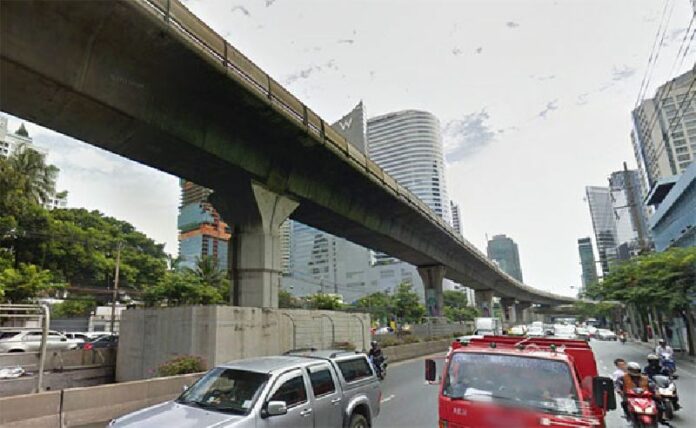
The future location of BTS Suksa Witthaya on Sathorn Road. Photo: Google

BANGKOK — The BTS Skytrain system has committed to building a new station midway between Chong Nonsi and Surasak to accommodate growth in the Sathon financial district.

Though BTS Suksa Witthaya was added long ago to maps of the Silom Line and factored into fares, the station’s construction was put on hold as it was deemed not worth the cost – despite the fact its cost had been factored into fares for several years.

Construction will cost 450 million baht and should begin in 2017 for a 2018 opening date, according to Surapong Laoha-Unya, executive director of BTS Group Holdings.

“We currently see the emerging potential of that area,” said Surapong according to Prachachat report. “There were some developments and investments resulting in growing numbers of buildings and residences. More people moved into the neighborhood. Most importantly it would relieve increasing numbers of passengers using Chong Nonsi station.”


\

Suksa Witthaya and Sena Ruam were already appeared on the BTS Skytrain map. Photo : BTS


BTS Chong Nonsi is on Naradhiwas Road between Silom and Sathorn roads, and is adjacent to the nearly complete Mahanakorn building, which will be Thailand’s tallest building when it is finished.

The new station located past where the Silom Line bends southwest onto Sathorn Road, between the UOB bank-robot and the Double A Book Tower at Soi Sathorn 12. The station will be 610 meters from BTS Chong Nonsi and 570 meters from BTS Surasak. It is expected to serve about 9,500 to 12,000 trips per day and bring net revenue of 70 million baht annually.

The system operator said it hopes to have a contractor for the project by February for a build expected to take one year to 18 months.

Construction of another supplementary station at Sena Ruam between BTS Ari and BTS Saphan Khwai station on the Sukhumvit Line will also begin soon, Surapong said.

For years passengers have been paying to build the two future stations, as both were already counted as stations when the fares were last calculated.


Advertisement

Prawuth Resigns from Police & ‘Bike for Dad’ Board

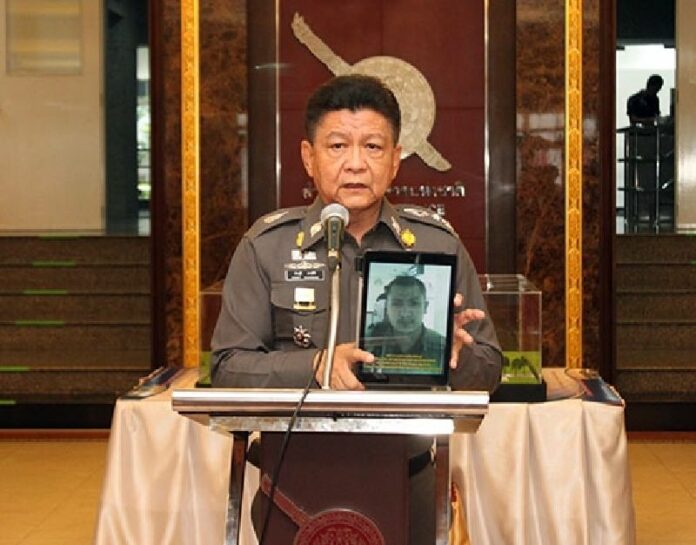
Former police spokesman Prawuth Thavornsiri displays a Bangkok bombing suspect Sept. 14 in Bangkok.

BANGKOK — Former police spokesman Police Gen. Prawuth Thavornsiri has resigned from all bureaucratic posts, police commander Chakthip Chaijinda announced today.

According to Police Gen. Chakthip, Prawuth submitted his resignation to the police on Oct. 29, two days after he was abruptly ousted from his post as a police spokesperson without any explanation. Chakthip said he approved the resignation on the same day. 

“Police General Prawuth submitted his resignation through the Human Resources Office in accordance with the regulation,” Chakthip said today. “Right now the matter is pending royal endorsement by His Majesty the King, because Prawuth is a senior civil servant.” 

On Monday, Chakthip told the media rumors Prawuth had resigned from the force were false. 


Fallen Former Police Spokesman ‘Back in Thailand’


Apart from leaving all posts in the police force, Chakthip said Prawuth also resigned from the government committee in charge of organizing “Bike for Dad,” an upcoming mass cycling event in Bangkok to be held Dec. 11. The government-sponsored event was conceived by Crown Prince Vajiralongkorn to honor his father, King Bhumibol, who will turn 88 on Dec. 5.

Prawuth, 59, has not been seen in public since the Royal Thai Police announced his replacement as spokesperson on Oct. 27. Chakthip said Prawuth was on vacation in Europe at the time. Meanwhile, social media has been rife with speculation Prawuth might be involved in an ongoing investigation of individuals who allegedly exploited their ties to the Royal Family. 

Asked to comment on the rumor by a reporter today, Chakthip said, “Police General Prawuth had intended to retire early from the bureaucracy. So, I don’t think this is connected or related to the suspects in the case of defaming the High Institution [the monarchy].”

Three men – Suriyan Sujaritpalawong, Jirawong Watanathewasilp and Police Maj. Prakrom Warunprapha – were arrested Oct. 16 and charged with lese majeste (insulting the monarchy). The military court ordered the trio into a military prison on Oct. 21 to await trial, but two nights later authorities said Prakrom was found hanged in his room.

According to the authorities, the suspects exploited their ties to the monarchy to further their own riches. For their alleged crime, Suriyan and Jirawong are facing trial in the martial court on a charge of lese majeste, which carries a maximum penalty of 15 years in prison per offense. 

Widening Probe

Several Thai media agencies have reported that police are expanding the investigation to implicate more military and police officers in the case. 

According to Daily News, up to “40 to 50” officers have been named as possible suspects in the “royal imposters” ring. The report cited an anonymous source inside the investigation. 

Khaosod newspaper also reported yesterday that an unnamed army colonel was among potential suspects and had fled the country recently, crossing the border into Myanmar via a checkpoint in Tak province. The colonel also brought more than 20 million baht with him, according to Khaosod, citing an anonymous police source. 

Chakthip dismissed those reports in today’s news conference. 

“We have no evidence about any of that. We are gathering facts about the case,” the police commander said. 

But Police Lt.Gen. Sriwarah Rangsipramnakul, head of the police investigators into the case, admitted yesterday that his case files include information “40 to 50 military officers” might be related to the alleged impostors ring. 

“They implicate each other,” Sriwarah said on Tuesday. “But to this moment, we do not have sufficient evidence to issue arrest warrant on any of the officers. However, I insist that if we find any wrongdoers, we will take legal action against them all.” 

Sriwarah added that new arrest warrants will be issued in the next several days, though he declined to identify the persons. 

Like other lese majeste cases and issues involving the monarchy, the ongoing investigation has been conducted in secret. Media agencies have been instructed by authorities not to report anything other than official statements and authorized disclosures.


To reach us about this article or another matter, please contact us by e-mail at: [email protected].

Follow Khaosod English on and Twitter for news, politics and more from Thailand.

\

Advertisement

US Admiral Tells China 'No Exception' to Freedom of Navigation

US Navy Cmdr. Admiral Harry Harris of the US Pacific Command (left) shakes hands with China's People's Liberation Army Chief of Staff Fang Fenghui (center) before their Tuesday meeting at the Bayi Building in Beijing, China.Photo: EPA/ Andy Wong

BEIJING — The U.S. military will continue to operate wherever international law allows, a top admiral said in Beijing on Tuesday, a week after a U.S. warship sailed through the disputed South China Sea, raising tensions between the two world powers.

"By matching our words and our diplomacy with routine freedom of navigation operations, we're making it clear that the United States continues to favor peaceful resolutions to ongoing disputes," Admiral Harry Harris said during his first visit to China as commander of US Pacific Command. 

"Our military will continue to fly, sail, and operate whenever and wherever international law allows. The South China Sea is not and will not be an exception," Harris said in a speech to students and scholars at the Stanford Center at Peking University.

"I truly believe that these routine operations should never be construed as a threat to any nation," Harris added. 

Beijing summoned the US ambassador to China last week to express its "strong discontent" about the US naval sail-by last week. 

Beijing said the USS Lassen illegally entered Chinese territorial waters when it sailed early Tuesday near the disputed Spratly, or Nansha, group of islands, which are claimed by both China and the Philippines.

"China will do whatever necessary to oppose deliberate provocation from any country," Deputy Foreign Minister Zhang Yesui told US Ambassador Max Baucus according to the Chinese Foreign Ministry.

China and several other Asian nations have overlapping claims to islands in the South China Sea, a major shipping route which is also thought to be rich in mineral resources.

A United Nations tribunal said last week it would rule on the increasingly heated dispute between the Philippines and China over the Spratlys.

China has refused to participate in the arbitration and says it has historic rights over the sea.

Story: DPA

Related stories:

Top Chinese Admiral Says Minor Incident in South China Sea Could Spark War 

China Summons US Ambassador Over Destroyer in South China Sea

Angry China Shadows US Warship Defying Beijing in South China Sea  

Advertisement

Man Leaps Into Canal to Thank Spirits For Son, Dies

Four rescue workers recover the body of a man who drowned after jumping into a canal to fulfill a spiritual pact he'd made in the event his wife was pregnant with a boy.

NAKHON SI THAMMARAT — A man who vowed to the spirits he would jump into a canal if they gave him a son was found dead last night after making good on his promise.

After returning from a hospital where ultrasound confirmed his wife was pregnant with a boy, Naruechat Aksorn was delighted by the news, relatives said.

Relatives and neighbors said the 24-year-old man was happily spreading the good news yesterday afternoon. Late in the evening he disappeared from the house, and they later found him standing at a bridge over the canal.  He then jumped into the canal to make good on his votive offering, at which he disappeared into the water as his family looked on.

The family called for help, and after searching for about 20 minutes, rescue divers discovered the 24-year-old man’s body in a rapid stream. Normally, the water in the canal was not very deep, relatives told Maj. Somchai Raksrithong of the Roonpiboon police station, but due to heavy rain in recent days, the level had increased and the flow was moving faster.

The water was quite cold, and some assumed Naruechat might have suffered cramps and been unable to swim.

Advertisement

Suu Kyi Set to Win Myanmar Election, but Problems Loom

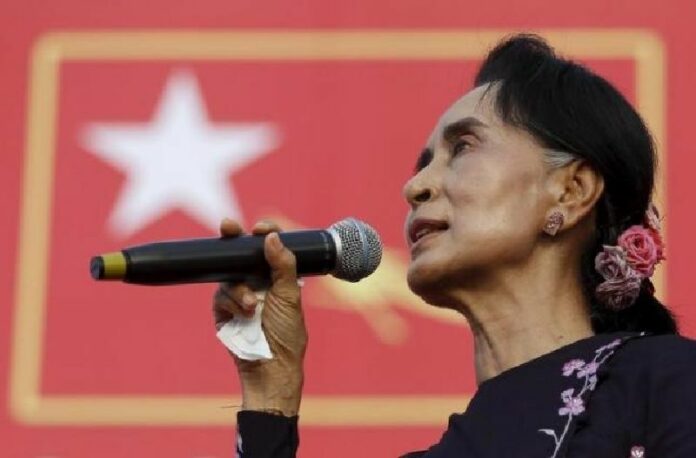
Myanmar pro-democracy leader Aung San Suu Kyi speaks at a Yangon campaign rally Sunday ahead of the Nov. 8 general elections. Photo: Reuters / Soe Zeya Tun

Reuters
By Aubrey Belford

MYAUNGMYA, Myanmar — When Aung San Suu Kyi's candidate emerges at a campaign rally in southern Myanmar, the crowd bursts into cheers and showers him with flowers, confident that the opposition will prevail this weekend after decades of struggle against military rulers.

The scene in the town of Myaungmya, in the country's rice-growing southern delta, is being repeated across the country as Myanmar prepares for a historic election on Sunday that is likely to be dominated by the National League for Democracy, or NLD, party of the Nobel laureate.

The country has no opinion polls, but other parties are clearly scrambling to match the size and enthusiasm of crowds at NLD rallies.

On Sunday, Suu Kyi, 70, received a rapturous welcome from tens of thousands as she closed out a two-month campaign to take power in a country emerging from an isolated half-century of military rule.

Decked in red, in a kilometers-long traffic jam leading to the rally site in Yangon, teenagers danced on pickup trucks and sang: "The junta must leave! So go! Go! Go! Go!"

For NLD supporters, the vote will be a historic chance to right past wrongs. The party won a landslide in 1990, which was annulled by the junta. Suu Kyi was by then already under house arrest, which was to last most of the next twenty years.

She was freed in late 2010, a few months before the military handed power to a semi-civilian government led by ex-generals who launched political reforms that led to Myanmar emerging from decades of international isolation.

In Myaungmya, Soe Moe Thu, a baby-faced doctor, is hoping to ride a wave of NLD support into the country's lower house. At rallies in village fields and dusty roadsides, NLD supporters cloaked in the party's fighting peacock logo mob him with handshakes and plastic flowers.

Despite the euphoria around the NLD as elections approach, there are signs that all will not be smooth, even if the party comes to power. Internal dissent is one problem for the NLD, which is deeply divided despite the popularity of Suu Kyi.

"He's Aung San Suu Kyi's pet," Bo Phyu, the NLD's local chief, told Reuters about Soe Moe Thu. "I was one of his top opponents."

If the NLD wins a majority, it will seek the presidency. Suu Kyi herself is barred from the job by the constitution, but she has said she will be the leader of the government.

That could lead to a dysfunctional leadership. And the military, which has a reserved 25 percent of the seats in parliament, is not going away.

The current ruling party, the Union Solidarity and Development Party, or USDP, is made up of influential former generals and businessmen who made their wealth through ties with the former junta. Radical Buddhist monks, who are gaining influence in Myanmar, have called on their followers not to vote for Suu Kyi, essentially allying with the USDP.

The NLD itself, with little experience in power, may struggle to make the transition from political struggle to governance.


High Expectations

Signs of that have appeared in Myaungmya, in the country's densely-populated southern delta.

The area's lower house seat was one of 43 constituencies the NLD won in 2012 by-elections, which also saw Suu Kyi enter parliament for the first time.

But local party officials say many voters soon soured on the local member, Mann Johnny, who was blamed for failing to direct government spending to the area.

The selection of his successor triggered acrimony, a pattern across the country since the NLD's candidate selection was highly centralized.

Soe Moe Thu, the Myaungmya candidate, said party divisions would not affect the campaign.

"We stick together," he said. And besides, "less people support (Bo Phyu), more people support me."

The USDP has poured resources into retaking the constituency, running as its candidate Tint Hsan, the sports minister and a construction tycoon whose company built the decade-old parliament in the capital, Naypyidaw.

In the past year, the USDP has built 26 local schools and renovated 45. Tint Hsan last year spent his own money on sending 224 high-achieving children from village schools on all-expenses paid trips to Singapore and Thailand.

"I've been helping with development since the beginning, before the election," Tint Hsan told Reuters. "Myaungmya believes in me."


'Protect Race and Religion'

The local chapter of Ma Ba Tha, an organization of nationalist monks that has spearheaded a national campaign against the country's Muslim minority, looms large over Myaungmya, as it does over the country's political landscape.

The group has exhorted locals to vote for candidates who "protect race and religion" – a reference to four anti-Muslim laws drafted by the group and passed by the USDP-dominated parliament earlier this year. The NLD opposed the laws.

Both Ma Ba Tha and the USDP deny working together.

Holding the NLD together so far has been deep affection for the woman many supporters call "Mother Suu," said Bo Phyu, the man overlooked for the Myaungmya seat.

"But once she's gone, for one reason or another, the party will likely disintegrate."

Additional reporting Antoni Slodkowski

Advertisement

Wannarit Pongprayoon Does it All Wrong to Make it Right for Bangkok’s Music Tribes

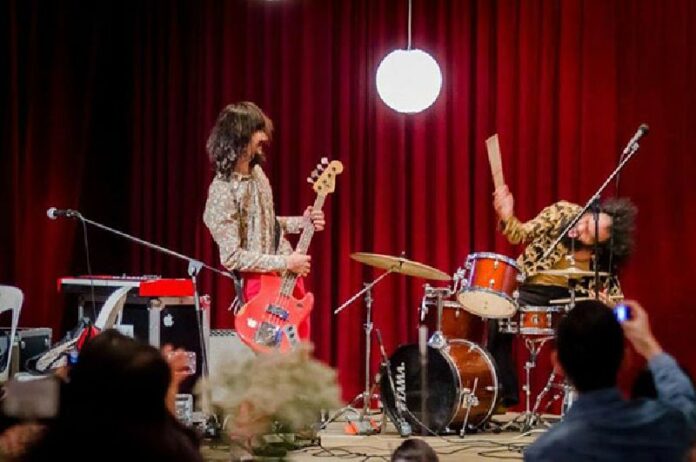
Wannarit 'Pok' Pongprayoon and Yuttana 'June' Kalambaheti perform as Stylish Nonsense at a February 2014 show. Photo: Courtesy Stylish Nonsense

By Lisnaree Vichitsorasatra
Staff Reporter

BANGKOK — When Wannarit “Pok” Pongprayoon was a ‘90s teenager, his parents signed him up at a Yamaha music school to learn the electronic keyboard. It was kind of a trend then.

So he took his place at the first lesson and dutifully listened to the instructor, but when it came time to play, he just wouldn’t play the correct notes like all the other students. Instead of learning the conventional way, he just listened and played.

“I listened and followed what the teacher was playing,” he said. “I realized later, when I became a music teacher, that this was called ‘ear-training.’”

Two decades of broken conventions later, Pok leaned against a stage Saturday at an old theater in Bangkok’s Pinklao area as 22 bands celebrated the 16th anniversary of Panda Records, the label he founded to bring together the cacophony of tribes that make up Bangkok’s ardent original music scene.

A few hundred people, mostly teens, danced and swayed to their favorite bands, most unheard of in the mainstream. The roster included Monomania, Summer Dress, Abstraction XL, Plastic Section, Chladni Chandi, The Sticky Rice, and RedTwenty – just to name a few.

“Thanks for P’Pok, who saw something in us!” someone shouted from the stage.

The sounds weren’t what many would call melodious – some yelled, some sang in broken English – but it meant something to the authenticity-starved youth dancing away in the haunted Halloween theater. The place was small, but the heartfelt, unpretentious vibe brought it to life.

Everybody knew each other and heckled the musicians on stage. People were allowed to be themselves, to hear and play the music they love – even if others think they stink.

And at the center of it all, with a grin framed by a rough chevron of mustache and stringy long hair, stands Pok.

Pok, now 39, started Panda Records as a nonprofit label in 1999 with friend Somsri “June” Sangkaew to support underground musicians.

Today it’s a movement representing the new sounds of Bangkok, though little heard beneath the din of Grammy-pop, and has spawned the Stone Free Festival and Noise Market events.


For better or worse, a vintage Meow-Er track, ‘Dream,’ survives on YouTube

Keyboard-Wielding Upstarts

Pok started a band at university that was soon noticed by Eastern Sky, a small label then working with the likes of T-Bone, Modern Dog and Siam Secret Service. Pok and friends called themselves Meow-Er and made a five-track EP.

“I had an ego,” he said, reflecting on the time when he was about 18. “I wasn’t sure anybody would understand what we wanted to do.”

Discarding typical fixed notes or chords, the band experimented with different sounds that couldn’t be put down on sheet music.

“They had headaches with me,” he said of the label, laughing.

The ‘97 economic crisis spelled the end of Eastern Sky.

A year later he started Stylish Nonsense with Yuttana “June” Kalambaheti, a drummer both wild and gentle who could be mistaken for Animal from The Muppet Show. It was a time when electronic music was taking off due to its low production costs.

They experimented with synthesizing, cutting and pasting, emulating drums and making effects. Like the way he listens to music, Pok starts playing different chords that sound strange and unnatural.

“At first it sounds weird, and then later when you play it frequently, you start getting acquainted with it,” he said of his method for both listening to and making music.

June and Pok still play regular gigs, either in T-shirts or lovely dresses, that can range from semi-conventional music to dissonant noise. It's like Russian Roulette for sensitive ears. In September they played a month's worth of European dates.


\

Wannarit 'Pok' Pongprayoon and Yuttana 'June' Kalambaheti perform as Stylish Nonsense at a February 2014 show. Photo: Courtesy Stylish Nonsense


Pok has preached his gospel of the unconventional. For “The World Will Never Know,” he invited the musicians of Srirajah Rockers to play in a strange setting with different instruments arranged for the musicians.

“Some bands can’t do this,” Pok said. “They think to play music, they need to have a set of equipment and instruments and be on a stage.”

Dave Crimaldi, underground music blogger and the titular Rock Philosopher, says very few people could do what Pok has; supporting independent musicians without quitting to have children or because they couldn’t keep it going.


\

Wannarit 'Pok' Pongprayoon at rest in a photo posted online Sept. 1. Photo: Courtesy Stylish Nonsense

Prophet Without Profit

The “nonprofit” part of Panda Records means just that. It’s struggled to make money from the start.

“Panda Records doesn’t believe in capitalism, they do it for the love of the music, making just enough money to sustain themselves,” said Piyapong Muenprasertdee, co-founder of a new indie streaming music service in Thailand called Fungjai. Piyapong believes Pok has created a small but strong community on the principle music should be dictated by musicians, not record companies.

After making an album and getting it out to different locations, Pok would call retailers who’d never heard of them to find out if any had sold from the box sent, and ask for some money if they did.

“Sometimes they said the records were being sold, but then later discovered the whole box under the table,” Pok said. “That’s Thailand!” Again, the reflexive laugh punctuates the absurdity.

“With big labels, it takes them one day to sell thousands of copies. With us, it’s three years!” When I asked him how strange that was, he cracked up and said, “Strange!”

Panda’s Stone Free Festival, a kind of answer to the crassly commercial Big Mountain Music Festival, may attract thousands to open spaces in Saraburi or Kanchanburi, but it still loses money. No sponsors; no advertising. Bands sell merch and local vendors roll up with beer and food. One year friends organized a post-festival benefit just to help Pok pay the bills.

\

Yellow Fang plays the Stone Free Festival in January 2014. Photo: Courtesy Stone Free Festival


But Pok and friends seem okay with that. If anything, he says attempts to work with commercial enterprise left him with even less money.

“Often when bands play for big companies, the companies pay money for the loud speakers or the radio show who then later sell that music,” he said. “The musicians will be the last one to get money, or they don’t get any money at all.”

Still, a man has to make some money, and Pok says he is no secret rich guy backed by family fortune. Sometimes he models for friends in fashion or does some commercial advertising work. That means, he explains, taking foreign songs and adapting them to Thai lyrics.

“I can’t accept that, sometimes,” he said. “I [also] do music for department stores, the music they think is cool.”

He has doubts about his methods, but they don’t change his belief that money pretty much ruins any chance to create something genuine.

“What people call ‘the arts,’ when there is no money in it, they won’t do it. What people call ‘creativity,’ or ‘charity,’ if there is no money they won’t do it,” he said. “It’s a misunderstanding that to be a vehicle for something, it needs money.”

That brand of purity sets a pretty high bar for anyone to measure up to, and the corporate music squeezers out there are all Sanchos to Pok’s Quixote.

As someone who’s swept the floors and schlepped the gear for lack of money, Pok’s even skeptical of those with noble aims, even such as Fungjai, if their goal is profit.

“You have to see them when they don’t have money, that’s when you see the real thing.”

It can be said that Pok is impractical, but he’s succeeded by being impractical for two decades, and the community he’s helped build provides a desperately needed counterbalance to Bangkok’s commercial culture.

For his part, Pok believes he was just a little ahead of the curve, as people today do not need to pay big money to companies or media for a space to be heard.

“Today, everyone is equal,” he smiled.


Stone Free Festival returns Dec. 11 – 13 with 56 bands playing nonstop for three days and two nights in Saraburi province. A limited number of pre-sale tickets are now on sale for 1,000 baht. Entry will be 1,500 baht at the gate.

On Nov. 21 & 22, the music-DIY-crafts fest that is Noise Market will be staged in the garden of Museum Siam. Unlike its many imitators, Noise Market is free.


To reach us about this article or another matter, please contact us by e-mail at: [email protected].

Follow Khaosod English on and Twitter for news, politics and more from Thailand.

\

Advertisement

Wannarit Pongprayoon Does it All Wrong to Make it Right for Bangkok’s Music Tribes

Wannarit 'Pok' Pongprayoon performs at a record release party for Monomania on Oct. 9, 2014 at Play Yard in Bangkok. Photo: Dave Crimaldi

By Lisnaree Vichitsorasatra
Staff Reporter

BANGKOK — When Wannarit “Pok” Pongprayoon was a ‘90s teenager, his parents signed him up at a Yamaha music school to learn the electronic keyboard. It was kind of a trend then.

So he took his place at the first lesson and dutifully listened to the instructor, but when it came time to play, he just wouldn’t play the correct notes like all the other students. Instead of learning the conventional way, he just listened and played.

“I listened and followed what the teacher was playing,” he said. “I realized later, when I became a music teacher, that this was called ‘ear-training.’”

Two decades of broken conventions later, Pok leaned against a stage Saturday at an old theater in Bangkok’s Pinklao area as 22 bands celebrated the 16th anniversary of Panda Records, the label he founded to bring together the cacophony of tribes that make up Bangkok’s ardent original music scene.

A few hundred people, mostly teens, danced and swayed to their favorite bands, most unheard of in the mainstream. The roster included Monomania, Summer Dress, Abstraction XL, Plastic Section, Chladni Chandi, The Sticky Rice, and RedTwenty – just to name a few.

“Thanks for P’Pok, who saw something in us!” someone shouted from the stage.

The sounds weren’t what many would call melodious – some yelled, some sang in broken English – but it meant something to the authenticity-starved youth dancing away in the haunted Halloween theater. The place was small, but the heartfelt, unpretentious vibe brought it to life.

Everybody knew each other and heckled the musicians on stage. People were allowed to be themselves, to hear and play the music they love – even if others think they stink.

And at the center of it all, with a grin framed by a rough chevron of mustache and stringy long hair, stands Pok.

Pok, now 39, started Panda Records as a nonprofit label in 1999 with friend Somsri “June” Sangkaew to support underground musicians.

Today it’s a movement representing the new sounds of Bangkok, though little heard beneath the din of Grammy-pop, and has spawned the Stone Free Festival and Noise Market events.


For better or worse, a vintage Meow-Er track, ‘Dream,’ survives on YouTube

Keyboard-Wielding Upstarts

Pok started a band at university that was soon noticed by Eastern Sky, a small label then working with the likes of T-Bone, Modern Dog and Siam Secret Service. Pok and friends called themselves Meow-Er and made a five-track EP.

“I had an ego,” he said, reflecting on the time when he was about 18. “I wasn’t sure anybody would understand what we wanted to do.”

Discarding typical fixed notes or chords, the band experimented with different sounds that couldn’t be put down on sheet music.

“They had headaches with me,” he said of the label, laughing.

The ‘97 economic crisis spelled the end of Eastern Sky.

A year later he started Stylish Nonsense with Yuttana “June” Kalambaheti, a drummer both wild and gentle who could be mistaken for Animal from The Muppet Show. It was a time when electronic music was taking off due to its low production costs.

They experimented with synthesizing, cutting and pasting, emulating drums and making effects. Like the way he listens to music, Pok starts playing different chords that sound strange and unnatural.

“At first it sounds weird, and then later when you play it frequently, you start getting acquainted with it,” he said of his method for both listening to and making music.

June and Pok still play regular gigs, either in T-shirts or lovely dresses, that can range from semi-conventional music to dissonant noise. It's like Russian Roulette for sensitive ears. In September they played a month's worth of European dates.


\

Wannarit 'Pok' Pongprayoon and Yuttana 'June' Kalambaheti perform as Stylish Nonsense at a February 2014 show. Photo: Courtesy Stylish Nonsense


Pok has preached his gospel of the unconventional. For “The World May Never Know,” he invited the musicians of Srirajah Rockers to play in a strange setting with different instruments arranged for the musicians.

“Some bands can’t do this,” Pok said. “They think to play music, they need to have a set of equipment and instruments and be on a stage.”

Dave Crimaldi, underground music blogger and the titular Rock Philosopher, says very few people could do what Pok has; supporting independent musicians without quitting to have children or because they couldn’t keep it going.


\

Wannarit 'Pok' Pongprayoon at rest in a photo posted online Sept. 1. Photo: Courtesy Stylish Nonsense

Prophet Without Profit

The “nonprofit” part of Panda Records means just that. It’s struggled to make money from the start.

“Panda Records doesn’t believe in capitalism, they do it for the love of the music, making just enough money to sustain themselves,” said Piyapong Muenprasertdee, co-founder of a new indie streaming music service in Thailand called Fungjai. Piyapong believes Pok has created a small but strong community on the principle music should be dictated by musicians, not record companies.

After making an album and getting it out to different locations, Pok would call retailers who’d never heard of them to find out if any had sold from the box sent, and ask for some money if they did.

“Sometimes they said the records were being sold, but then later discovered the whole box under the table,” Pok said. “That’s Thailand!” Again, the reflexive laugh punctuates the absurdity.

“With big labels, it takes them one day to sell thousands of copies. With us, it’s three years!” When I asked him how strange that was, he cracked up and said, “Strange!”

Panda’s Stone Free Festival, a kind of answer to the crassly commercial Big Mountain Music Festival, may attract thousands to open spaces in Saraburi or Kanchanburi, but it still loses money. No sponsors; no advertising. Bands sell merch and local vendors roll up with beer and food. One year friends organized a post-festival benefit just to help Pok pay the bills.

\

Yellow Fang plays the Stone Free Festival in January 2014. Photo: Courtesy Stone Free Festival


But Pok and friends seem okay with that. If anything, he says attempts to work with commercial enterprise left him with even less money.

“Often when bands play for big companies, the companies pay money for the loud speakers or the radio show who then later sell that music,” he said. “The musicians will be the last one to get money, or they don’t get any money at all.”

Still, a man has to make some money, and Pok says he is no secret rich guy backed by family fortune. Sometimes he models for friends in fashion or does some commercial advertising work. That means, he explains, taking foreign songs and adapting them to Thai lyrics.

“I can’t accept that, sometimes,” he said. “I [also] do music for department stores, the music they think is cool.”

He has doubts about his methods, but they don’t change his belief that money pretty much ruins any chance to create something genuine.

“What people call ‘the arts,’ when there is no money in it, they won’t do it. What people call ‘creativity,’ or ‘charity,’ if there is no money they won’t do it,” he said. “It’s a misunderstanding that to be a vehicle for something, it needs money.”

That brand of purity sets a pretty high bar for anyone to measure up to, and the corporate music squeezers out there are all Sanchos to Pok’s Quixote.

As someone who’s swept the floors and schlepped the gear for lack of money, Pok’s even skeptical of those with noble aims, even such as Fungjai, if their goal is profit.

“You have to see them when they don’t have money, that’s when you see the real thing.”

It can be said that Pok is impractical, but he’s succeeded by being impractical for two decades, and the community he’s helped build provides a desperately needed counterbalance to Bangkok’s commercial culture.

For his part, Pok believes he was just a little ahead of the curve, as people today do not need to pay big money to companies or media for a space to be heard.

“Today, everyone is equal,” he smiled.


Stone Free Festival returns Dec. 11 – 13 with 56 bands playing nonstop for three days and two nights in Saraburi province. A limited number of pre-sale tickets are now on sale for 1,000 baht. Entry will be 1,500 baht at the gate.

On Nov. 21 & 22, the music-DIY-crafts fest that is Noise Market will be staged in the garden of Museum Siam. Unlike its many imitators, Noise Market is free.

Advertisement

Ten Things that Suck About Bangkok Living

Traffic scene taken in August 2012 in front of Central World shopping mall located in downtown Bangkok. Photo : claudio ruiz / Creative Commons

BANGKOK — While continuously voted to be the world’s top destination for tourists for 4 consecutive years, Bangkok ranked 102 out of 140 best cities to live in 2014.

As the only city in Thailand that people can elect their own Governor, Bangkok should be a role model of participatory local governance.

That was the non-profit research institute “Thailand Future Foundation” said when they revealed their new study about the City of God on Friday.

Here are 10 facts they believed can stimulate residents to push for changes against Bangkok Metropolitan Administration (BMA).


1. There are 37 units working toward the city’s traffic in the world’s ranked 8th traffic jam city.

While Ministry of Transport directed the routes of BTS Skytrains, operating concessions was given to private investors by BMA.

BMA Built and maintain all traffic lights, but it was practically controlled by traffic police.

The recommended speed for biking in the city = 16 km/hr =  the average speed of the car driving in the main road during Bangkok’s morning

36% of travel time for Bangkokians is wasted unmoving


2. We highly invested in the less used transports.

Safety, punctuation and convenience remain the familiar problems about public transportation.

City Hall’s solution – smart taxi stands and public bikes system, remain unused.


 3. Bangkok’s 3,200 unsworn municipal officers (tessakit) = 2 officers / 1 sq km

But what about the law enforcement?


4. The BMA spends 377 million baht annually on PR to publicize its campaigns.

That same amount of money could buy:

100 Bangkok Express Service spots

3,500 more street sweepers

half of the 778 million baht tax revenue the city collects for the 100,000 billboards officially permitted around the city


5. Expensive Bangkok lives push people to live in suburb. But the remoter they live, the more they have to pay for travel cost.

Land and condominium price in Bangkok increases 8 percent each year

Average wage in Bangkok increases 4 percent each year

Bangkok’s Skytrain fares is more expensive than

6. Bangkok’s has less than half the green space the BMA claims, because it counts traffic meridians, roadside trees and inaccessible private gardens.

BMA claims 5sqm / person

Practically accessible 2.2sqm / person


5 biggest park areas combined = 2.8 sq.km

5 biggest malls area combined = 2.6 sq.km


7. BMA has 97,000 employees

2X more than Seoul

1.5X more than Jakarta

with the annual budget more than 80 billion baht

Isn’t it enough to work on the city’s problem?


8. 2 in 3 of students from schools under care of BMA failed international math test arranged by The Program for International Student Assessment (PISA).


9. Every BMA unit was evaluated “excellent performance” resulting in 2.3 billion baht bonus money.

66 out of 200 million baht training budget was used for study trip both in the country and abroad.  

\

A new complex of Bangkok city hall located in Din Daeng consists of a 37 floors building and a couple of 27 floors buildings. Photo : Arun Chaiseri Consulting Engineers


10. The construction per square metre of the new city hall office is higher than “MahaNakhon” skyscraper which is the tallest building in Thailand.

The 37 floors building located at Din Daeng is still not completed even it has been building for 20 years.
Advertisement

Indian Uber Driver Gets life in Jail for Rape

Police escort Shiv Kumar Yadav (wearing mask) into court in New Delhi, India, 08 December 2014. The Indian Uber taxi driver was found guilty of raping his passenger a year ago by an Indian court Tuesday, lawyers said. EPA/STR

New Delhi — The victim, a 25-year-old finance executive, was assaulted on December 5 while travelling from her workplace in Gurgaon, a suburb of New Delhi, to her home in the north of the city.

Driver Shiv Kumar Yadav, 32, was found guilty of rape, criminal intimidation, kidnapping and endangering the woman's life by a fast-track trial court in the Indian capital last month.

"We had asked the court for the maximum punishment of life imprisonment, so a strong message goes out to the society. The court found merit in our argument," special public prosecutor Atul Srivastava told reporters outside the court.

Life imprisonment under the provisions of recently introduced tougher rape laws means a jail term until the end of the convict's remaining natural life, Srivastava explained.

The offense of endangering a woman's life while raping her entails a minimum of 10 years rigorous imprisonment and a maximum punishment of life term.

Yadav had pleaded not guilty. His lawyer, DK Mishra, has said he will appeal against the sentence in a higher court. The victim's family told local media outlets they were satisfied with the stringent punishment.

Police had arrested Yadav days after the sexual assault in a town near Delhi. It said Yadav had been accused of previous sexual assaults, but never convicted.

The rape had put the spotlight once again on the safety of women in the Indian capital.


Attacks on women have been a focus of public attention in India since the fatal gang rape of a student on a bus in Delhi in 2012, which sparked mass protests.


Delhi Police had temporarily banned the US-based online car sharing company and several other app-based taxi aggregators soon after the assault, saying they had failed to conduct basic background checks.

India is Uber's largest market outside the United States, with service in about 18 cities.

Uber had apologized for the incident and said it would improve its vetting systems.

"Sexual assault is a terrible crime, and we're pleased he [Yadav] has now been brought to justice," Uber's India operations president Amit Jain said last week.

The sentencing comes days after reports of the rape of two children in separate incidents in Delhi.

In 2014, 36,735 rapes were reported to the police, of which 2,096 were in the capital, according to the National Crime Records Bureau data. Campaigners say many more go unreported.

Story : DPA


To reach us about this article or another matter, please contact us by e-mail at: [email protected].

Follow Khaosod English on and Twitter for news, politics and more from Thailand.

\

Advertisement

Hot News

LATEST NEWS

Bangkok
overcast clouds
35.5 ° C
35.5 °
35.5 °
50 %
4.6kmh
98 %
Sat
35 °
Sun
32 °
Mon
31 °
Tue
30 °
Wed
29 °