33.3 C
Bangkok
Saturday, July 25, 2026
Home Blog Page 2937

Watch Japanese Crew Swipe Breakdancing Cup in Germany

Battle of the Year 2015 World Final on Saturday in Germany. Photo: DPA / Philipp Von Ditfurth

HANOVER, Germany — A dance crew from Japan came out on top at the grand finale of a major breakdancing competition in the German city of Braunschweig late Saturday.

Performing under the name The Floorriorz, the group beat 14 other contenders to take first prize at the Battle of the Year 2015, described on the event's website as "the World Cup of Breakdancing."

The Japanese breakdancers had their own style, showing a unique team spirit and astonishing the jury with unusual tricks, spokesman Mario Roth said Sunday.


Around 6,000 viewers watched the performances carried out by big names from the global breakdancing scene.

The group was joined by teams from Senegal, Brazil, Spain and Thailand. Representing Germany were The Saxonz, from the eastern state of Saxony, who made it to number 10.

It was to be the last time that Battle of the Year takes part in Braunschweig, a central German city also known as Brunswick. Next year the contest will take place further south in Essen.

Story: DPA

Advertisement

‘Royal Imposters’ Suspect Found Hanged in Prison, Officials Say

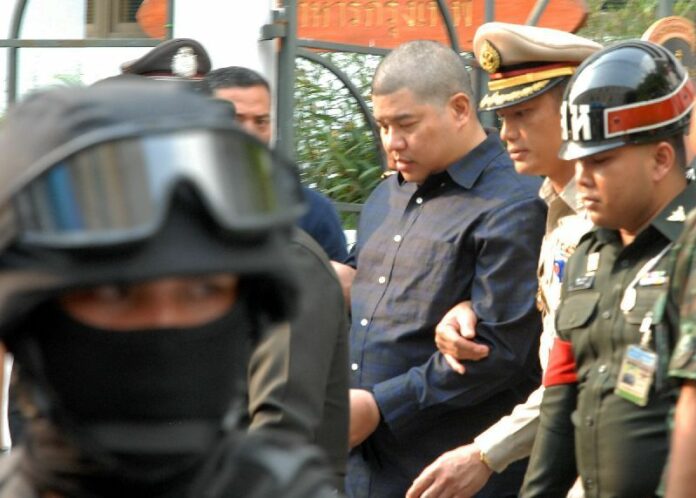
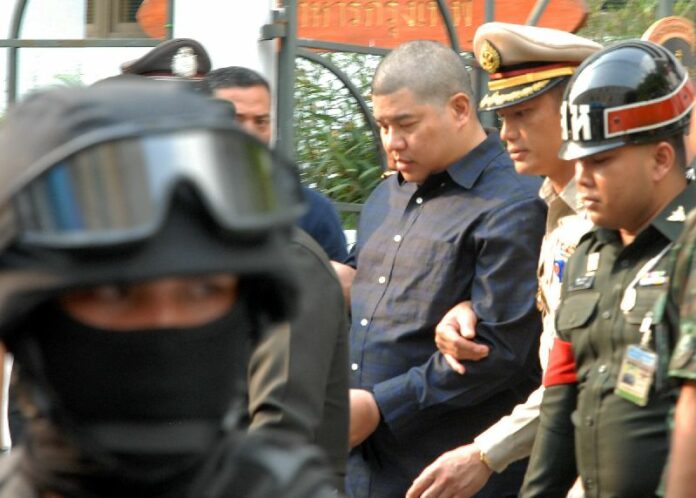
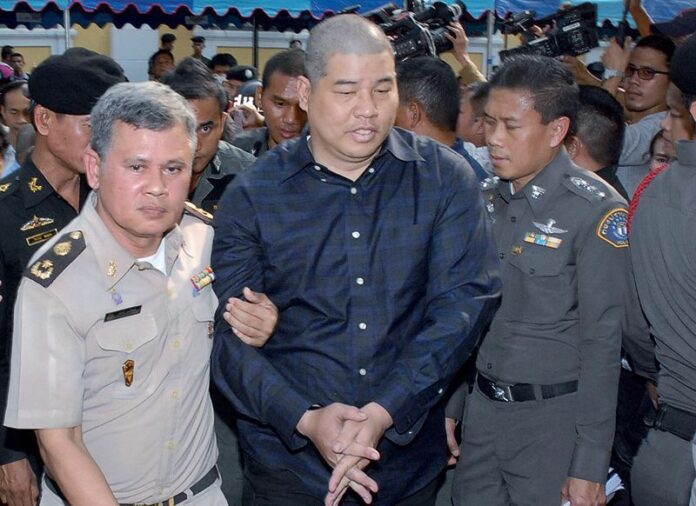
Police Maj. Prakrom Warunprapha, at center, was remanded into custody Wednesday at a military court in Bangkok. He committed suicide Friday night, officials said today.

BANGKOK — A former police officer accused of flaunting ties to the Royal Family hanged himself in custody last night, officials said today.

Police Maj. Prakrom Warunprapha died at a hospital after hanging himself in his cell Friday night, officials said, two days after he and two other men were remanded into custody by a martial court on charges of lese majeste, or insulting the monarchy.

“[Prakrom] attempted to commit suicide by tying his inmate clothes which the prison distributed to him in accordance with the regulations to the window bars in his detention room in the temporary prison,” the statement released to the media by Department of Corrections said.

Prakrom was being kept at the 11th Infantry Division base, which has been converted into a special prison for lese majeste cases and other offenses said to affect national security.

According to the statement, a soldier found Prakrom at around 10pm on Friday, and he was still alive after hanging himself. Help was called, it continued, and Prakrom was rushed to a hospital where he died.

“A committee has been set up to investigate this matter, in order to find the facts and collect evidence,” the statement said.

Prakrom and two other men, Suriyan Sujaritpalawong and Jirawong Watanathewasilp,  were arrested Oct. 16 and accused of falsely claiming ties to the monarchy for personal gain. For their alleged wrongdoing, they have been charged under Section 112 of the Thai Penal Code, a law also known as lese majeste, which outlaws any action or remark that damages the reputation of the Royal Family.

The statement said Suriyan and Jirawong were being held in separate rooms.

Like other legal cases involving lese majeste and the monarchy, the investigation into the three men is shrouded in secrecy. Police began the investigation on Oct. 16 but withheld the suspects’ identities until Wednesday, when police presented them in court to ask military judges to remand them in prison while they await trial.

Due to strict lese majeste laws and sensitivity concerning the monarchy, media agencies in Thailand routinely self-censor their coverage of the case.

Justice Minister Gen. Paiboon Khumchaya, confirmed to reporters this afternoon that Prakrom was found dead in his cell room. He ruled the death a suicide.

“I understand that society is suspicious of how the incident could have happened, so I have instructed the director [of Department of Corrections] to send me a fact-finding report about the incident,” Paiboon said.

Up until his arrest Friday, Prakrom served as an officer in the Technology Crime Suppression Division and was involved in investigating a number of lese majeste cases.

Correction: An earlier of this story misidentified the day of Prakrom’s suicide as Saturday. It was Friday. We regret the error.

Related stories:

‘Royal Imposters’ Suspect Involved in Past Lese Majeste Crackdowns

Famous Astrologer Among Accused ‘Royal Imposters’

Advertisement

Strongest Recorded Hurricane in Americas Hits Mexico

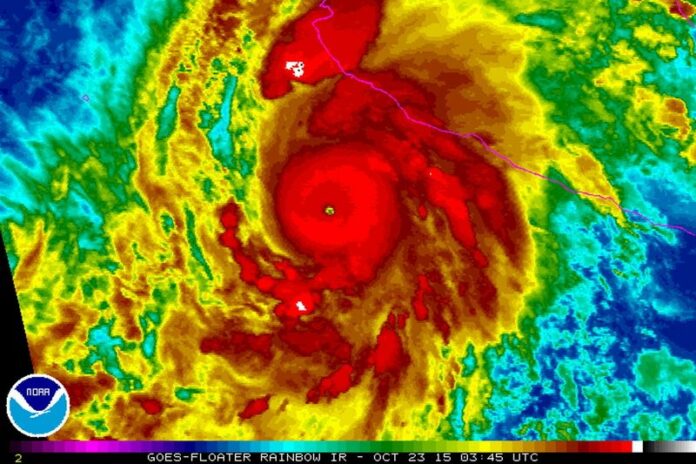
Image of Hurricane Patricia from the U.S. National Oceanic and Atmospheric Administration

MEXICO CITY — Hurricane Patricia, the strongest storm ever recorded in the Americas, made landfall on the Pacific coast of Mexico's Jalisco state late Friday, authorities said.

"Hurricane Patricia is already on the Mexican coast. Do not go out," President Enrique Pena Nieto warned via Twitter. "Protect yourselves and follow the instructions of Civil Protection. I am looking out for you."

Patricia is a category 5 storm, the strongest on the Saffir-Simpson scale of hurricane intensity, as it reached land with sustained winds of 270 kilometres per hour, the Miami-based US National Hurricane Centre said.

"Extremely dangerous hurricane Patricia moving father inland over south-western Mexico," the centre said in its 0000 GMT report. "Patricia is expected to move quickly north-northeastward across western and northern Mexico through Saturday."

Strong winds and heavy rain were particularly affecting the western states of Jalisco, Colima and Nayarit.

It was moving north at a speed of 24 kilometers per hour, the centre said.

\

Residents of Puerto Vallarta, Mexico, prepare Friday for the imminent arrival of Hurricane Patricia. Photo: EPA / Ulises Ruiz Basurto


Strong winds had uprooted trees and signs in some areas, and there were high waves as well as heavy rain. Thousands of people had been evacuated ahead of landfall.

"The country is facing a large-scale threat," Mexico's president said on Twitter.

"Patricia is forecast to rapidly weaken over the mountains of Mexico and dissipate on Saturday," the hurricane centre said.

About 2,500 soldiers and 400 federal police officers were deployed to assist the population in affected areas, and civil defence coordinator Luis Felipe Puente warned people to secure any objects that might "turn into projectiles."

Oil company Petroleos Mexicanos suspended the supply of petrol, and banks and schools were closed, while police and civil defence staff urged residents remaining in high-risk areas to leave.

Hotels in Puerto Vallarta and other resort areas boarded up their windows, gathered materials from the beaches and prepared their convention halls to serve as emergency shelters.

"We have enough supplies for the few guests who do not want to leave," Mily Machuca, a receptionist at the Velas Vallarta hotel, said by telephone. "The rest are leaving the town by land because the airport is closed, or they are heading to shelters."

Fishing crews were told to remain in harbour, and local residents worked to board up the windows of homes and businesses.

The coast in Jalisco and neighbouring Colima state is popular with tourists and retired people, including many from the United States and Canada, but October is low season for tourism.

"Our thoughts are with the Mexican people as they brace for Hurricane Patricia. USAID (Agency for International Development) disaster experts are on the ground and ready to help," US President Barack Obama wrote on Twitter.

People in areas at risk had been asked to move to higher ground or go to Guadalajara, the region's largest city.

"No hurricane of this magnitude has ever made impact on the Mexican Pacific," Pena Nieto said on Twitter.

A hurricane warning remained in effect from San Blas to Punta San Telmo. The Mexican government declared a state of emergency in 56 coastal localities.

Story: DPA

Advertisement

Thailand Back to the Booze Ban Future

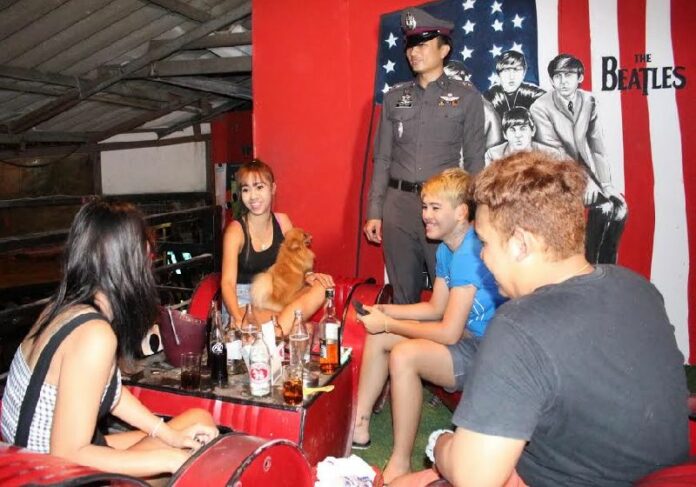
Police raided a bar in Chonburi province Thursday, saying they wanted to ensure no illegal activities were taking place.

BANGKOK — There was little noticeably different Friday in Bangkok after a ban on alcohol sales in the “vicinity” of schools and other vaguely defined areas was reauthorized.

About three months after a vaguely worded ban on alcohol sales was shelved for study, the little-changed order published Thursday – and in effect today – again did not give a distance to the prohibition, leaving authorities to enforce the law at their own discretion.

“No person shall sell alcoholic beverage in areas or places near educational institutes or dormitories that are close to educational institutes,” declared the order signed Oct. 12 by Prime Minister Prayuth Chan-ocha.


Booze Ban to be Arbitrarily Enforced During 6-month ‘Study’


Instead of a law which clearly identifies where alcohol can be sold or not sold, Thursday’s order excluded previous references to a 300-meter distance. No definition was given to “educational institutes” either, though under education laws the term includes all levels of education, from primary schools to universities.

\

An image of the announcement issued Thursday by the Office of Prime Minister


Government spokesman Maj. Gen. Sansern Kaewkamnerd told reporters this morning the ban includes vicinities:

  • Easily accessible by children, youths and students, when considering the proximity of educational institutes

  • Inappropriate for children, youth and students

  • Where children, youth and students are known to participate in illegal activities

  • That would likely cause disturbance to children, youth and students in the educational institutes

The spokesman added that Prayuth expects security officers to strictly enforce the law but not so zealously that honest businesses are affected.

“Although officials must strictly follow the laws, they cannot bully people, or cause trouble to business operators,” Sansern said.

The sudden return of the ban is likely to raise the same objections it did before being shelved for “study,” as its language is little changed.

A similar ban – the second of two – was enacted July 23. After considerable controversy over its reach and little enforcement a deputy prime minister announced Aug. 4 a committee would take six months to define “vicinity.” It remained legally in effect, and the head of the alcohol control board said it would left to authorities to arbitrarily enforce it.

The ban, then as now, omitted the more specific language first signed by Prayuth on July 20.

That earliest incarnation of the ban, since revoked, prohibited sales “within 300 meters of the fence" of universities and colleges, public and private. It also granted exemptions for hotels, established government “entertainment zones,” and wholesale factories and distributors.

Although uniform enforcement of the vague law now in effect is likely impossible, a clearly defined one could have proved simply unenforceable.

When the 300-meter ban was announced in July, it didn’t take long to realize it would have effectively introduced dry zones in large swathes of the nation. In Bangkok, it would have banned sales in many profitable nightlife areas, including the backpacker haven of Khaosan Road, Soi Cowboy red-light district and top shopping malls – just to name a few – all of which sit near schools.

That’s when the intention to study and better define the law came, following outcry and incredulous comments on social media. Government officials pledged to amend the order and re-introduce it in six months’ time, leading to some speculation it would die a quiet death.

“In the meantime, security officers will have to exercise their judgement, based on appropriateness of the situation,” said Samarn Footrakul, head of Alcohol Control Board.

It’s unclear why the law suddenly resurfaced this week, halfway through the proposed period of study, but a morally conservative campaign against alcohol has picked up steam in recent months, with Samarn in the news daily for his anti-alcohol crusading.

Now that the modified version is re-enacted, with even more confusing language than the original, Samarn again said security forces should arbitrarily enforce the ban based on their own interpretation of the law.

“Because each educational institution has a different context and environment, we want law enforcement officials to be flexible in their judgment,” Samarn said. “Each province can determine on their own how much of a distance is appropriate.”


Battling the Bottle

In recent months, a series of increasingly tough measures aimed to restrict the sale and availability of alcohol have been introduced.

Last week, Samarn threatened prosecution of members of the public who post photos of booze to social media. He said it was illegal under the 2008 Alcoholic Beverage Control Act, which bans any action that indirectly “entices” others to consume alcohol.

“If they have no intention to do that, they won’t be guilty,” Samarn said Oct. 12. “However, people shouldn’t post photos of themselves with alcoholic beverages anyway, because it’s a sinful product. It’s an immoral product. They shouldn’t pose with that product, because it’s not good for them.”


Booze Regulator Warns Public on ‘Instant Beer’


Samarn’s office also passed a regulation, which came to effect Monday, that banned alcohol producers from printing certain statements on labels, such as promises of “success in social or sexual life.” Other prohibited items include remarks that lead to "degradation of the national culture" or "division or loss of unity among the people."

Consumption of alcohol is considered a sin under Buddhism. However, in practice, restrictions on alcohol sales are selectively enforced, and drinking is commonplace in Thailand.

Despite the raft of rules and regulations and today’s reauthorized ban, sales of alcohol appeared to continue as usual in the capital today. Staff at a grocery store on Samsen Road, which sits within meters of three private schools, were selling alcohol regularly when a reporter visited this evening.

Correction: The caption of a photo of police raiding a bar in Chonburi in an earlier version of this story misidentified the day as Friday. It was Thursday.

Related stories:

Booze Regulator Warns Public on ‘Instant Beer’

Anyone Posting Booze Pics Will be Prosecuted, Anti-Booze Official Says

Booze Ban to be Arbitrarily Enforced During 6-month ‘Study’

2 Bars Closed Down Under Junta's Sweeping Booze Ban

Five Chiang Mai Cops Transferred Over Illegal Bars

Official Resurrects Proposed Ban On New Year Booze Sales

Advertisement

Battle Over Baby Pits Gay Parents Against Thai Surrogate

Undated file photo courtesy Gordon Lake.

BANGKOK — Almost since the day she was born, baby Carmen has been on the run.

The 9-month-old and her fathers, Gordon Lake and Manuel Santos, are in hiding in the Thai capital, changing their address constantly for fear of being found.

Carmen happily crawls around the apartment but is rarely taken outside.

"She should be playing with other children and discovering the world," Lake says.

The married couple, who are both 41 and have an older son back home in Spain, worry that Carmen will be spotted by the authorities and taken away.

A week after she was born, her Thai surrogate Patidta Kusolsang stopped cooperating with the normal – although unregulated – surrogacy process, and started a battle to keep the baby.

Carmen's rival parents are now fighting it out in the courts, with a ruling due at the end of this month.

"This all just doesn't make any sense to us," said Lake, who said the surrogate had been paid in full through an agency. "But we won't leave the country without our daughter."

Surrogacy was always going to be the best option for Lake and Santos, who set their hearts on starting a family soon after first meeting in Spain.

With surrogacy banned in Spain and many Western European countries, they narrowed their choices down to India and Thailand. Both are popular destinations for foreign or homosexual couples seeking surrogacy services at relatively low costs.


 

\

Undated file photo courtesy Gordon Lake

The average cost of surrogacy in India is about USD$47,000 (1.7 million baht) and USD$52,000 (1.8 million baht) in Thailand, while it costs about USD$100,000 in the United States, according to the nonprofit Families Through Surrogacy.
Lake and Santos had their first child Alvaro through a surrogate mother in India in 2012. However India amended its law in 2013, prohibiting homosexual couples from getting a medical visa for surrogacy.

So they turned to Thailand, where commercial surrogacy was unregulated at the time and relatively common.

Through an agency, they paid Patidta to carry the child using an egg from an anonymous donor, and Carmen was born in January 2014.

Patidta, 34, brought them their "most beautiful girl," but then "turned [their] lives upside down," Lake said.

She refused to sign a document that would allow the baby to get a U.S. passport, and failed to provide a letter that would allow the child to leave the country.

In July she filed a charge of child abduction against Lake, accusing him of illegally taking Carmen away from her mother.

"I want to keep the baby," Patidta said in a television interview in July after she filed the charge. "I am willing to return all the money." She has received USD$13,000 (460,000 baht) for the whole process.

"I am suspicious that they are commissioning babies for sale," she said, accusations that Lake and Santos deny. "I want to protect her," she said.

Her legal advisor, Verutai Maneenuchanert, denies her decision had anything to do with the couple's sexual orientation, although Patidta had told U.S. broadcaster NPR in July that Lake and Santos were not "natural parents … not like male and female that can take care of babies."

"The case has been forwarded to the court and we are objecting to their case," Verutai said. "Now everything is up to the judges to decide."

Thailand's surrogacy sector came under international scrutiny in mid-2014 because of the case of baby Gammy, a Down's syndrome surrogate baby left behind by an Australian couple.

A further revelation concerning dozens of surrogate babies fathered by a Japanese man prompted the government to draft its first surrogacy bill.

The new laws banning all commercial, foreign and same-sex surrogacy came into force in July. This is months after Carmen was born, but the laws apply retroactively.

It is unclear whether the new regulations will help or hinder Lake and Santos.

For example, the new law states that the parental rights of a child should go to the donor of the sperm or egg, rather than the person who gives birth.

The embryo implanted into Patidta was created using sperm from Lake and an egg from a third party donor, theoretically giving him a claim to parental rights; Patidta on the other hand is genetically unrelated to the baby.

But the term "parents" in the law refers to a man and woman only; same-sex marriage is not performed or recognised in Thailand. And Patidta's name is on the birth certificate as the mother, as was required before the current law came into effect.

The family court in Bangkok is due to decide Oct. 30 whether Lake and Santos have sole custody of Carmen. This would allow them to get necessary documents to get the baby out of the country without Patidta's consent.

"If the court doesn't recognise us as parents, we will file for an appeal," said Lake, who vowed never to give up. "We all just want to go home and be with our family."

Story: DPA / Siraphob Thanthong-Knight

Advertisement

‘Anonymous’ Declares War on Thai Junta

An image uploaded to one of several Twitter accounts maintained by members of Anonymous.

By Todd Ruiz
Editor

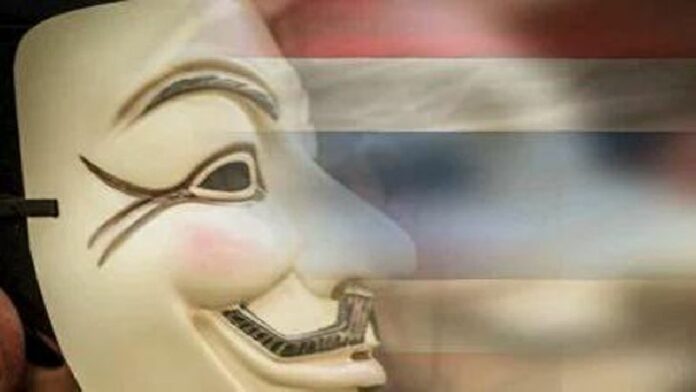
BANGKOK — A worldwide collective of hackers whose shifting membership has successfully attacked corporations and governments declared its own war on the military government for its plan to build a single internet gateway.

While attacks by Thai netizens Thursday seemed to have little effect, Anonymous posted a statement addressed to the junta saying "you will pay the price of your oppression" and also claimed to have stolen sensitive information from the state-run telecom bidding to build the gateway.

“Any corporations or individuals helping to deploy this single gateway will be targeted by any electronic means,” read the statement announced through Twitter. “We will not only fight against the single gateway project but will expose your incompetence to the world, where depravity and personal interests prevail.”


No Shock, Awe from 'Cyber War' as ‘National' Gateway Moves Forward


Images posted to Anonymous accounts showed what was purported to be part of logins, passwords and associated national ID numbers stolen from CAT Telecom.

Junta chairman Prayuth Chan-ocha acknowledged the attack and has ordered authorities to arrest the hackers responsible, according to Daily NewsOfficials said the information obtained was not real.

CAT Telecom president Col. Sappachai Huwanant told Thairath he wasn't sure the hack took place.

"Hacking into the database of our customers is possible in theory, but in practice CAT is confident in our security system, because the database is kept in the backdoor. There are many layers of security."


\

Thailand’s activists have seemed unable to launch more sophisticated attacks and have relied on one of the bluntest object of disruption – mashing buttons to refresh web pages – which had some success when first brought to bear Sept. 30.

On Thursday, the Thailand F5 Cyber Army opened its “war” on the junta by crippling an army finance department system but were unable to shut down its web server.

The military government first announced it would build a single gateway to “govern” the internet in the days immediately after the May 2014 coup d’etat. Beginning in June, a series of cabinet resolutions ordered related agencies to speed up the process of implementing it.

In response to public outcry, junta chairman Prayuth Chan-ocha and his team said the idea was only be studied, but on Tuesday, Prayuth said the gateway was needed to end online dissent against his government. That coincided with an attempt to rebrand the gateway project, which would channel all internet traffic through one point of control, as something that would benefit the kingdom’s digital economy.

Anonymous is a leaderless collective of hacktivists that coalesced online after the turn of the century. It is not tied to any nation, but draws support from members throughout the world for activities which support everything from libertarian principles, progressive causes and internet freedom to mere pranks, "just for the lulz."

They've been accused by the governments they target of being nothing more than criminals and digital terrorists.

Advertisement

No Shock, Awe from 'Cyber War' as ‘National' Gateway Moves Forward

A display panel at the Royal Thai Army's cyber unit taken Sept. 9, 2015. Photo: WeLoveRTA.org

BANGKOK — Damage from an attack on government services online appeared limited today, while state-owned CAT Telecom said it will begin preparations to build a single gateway project that has been rebranded as a business-positive part of the kingdom’s “digital economy” strategy.

Online activists declared victory in the opening of their “cyber war” to punish the junta for not abandoning its ambition to route all traffic through a single channel, but their damage seemed limited to affecting certain systems of the army’s finance department.

“At 1:15pm, the Citizens Against Single Gateway claimed our victory in the first stage after our cyber war declaration,” the group wrote its latest statement posted online. “We made the financial accounting system of the Finance Department of the Royal Thai Armed Force Headquarters unable to work for more than three hours.”


Gamers, Geeks on Epic Quest for Internet Freedom


The group had first called for supporters to overwhelm the department’s web server by reloading its pages, but changed tactics an hour and a half later to the online accounting system. Links to the accounting system do not work at time of publication. Its web site otherwise seemed to be unaffected.

Meanwhile state telecommunications operator CAT Telecom has said it is preparing to build what’s now being called by officials the “National Internet Gateway” project, promoted as a potential economic boon.

The term “national gateway” was first used days after the military seized power in 2014 when it announced its intention to “govern” inappropriate content online by constructing a single gateway for internet traffic in and out of Thailand.

"We want the national gateway to be a more effective tool than the current mechanism for regulating internet use," former ICT Minister Surachai Srisarakam said in a May 2014 Bangkok Post story. At the time, he indicated it would be rolled out by July 2014 and operated by CAT, state telecom TOT and a number of internet service providers.

CAT, which operates Thailand’s international gateways, said Monday it will establish a committee to pursue the project.

"The national internet gateway is a part of the country's digital-hub strategy. It is not aimed at consolidating all international Internet traffic through a single gateway to control internet content, as people understand," acting CAT CEO, Col. Sanpachai Huvanandana was quoted saying in The Nation.

While CAT looks to play a central role in the plan, another precedent will be set when a top intelligence official is expected to take over as chairman.

Gen. Thawip Netrniyom, chief of the National Security Council, is expected to join at the head of CAT’s board. It would be the first time the head of the National Security Council became the top authority at CAT. CAT under Thawip is expected to focus on cybersecurity.

Word that the military government was taking action to extend its reach into the online world through the gateway project invited public outcry almost as soon as it was publicized one month ago.

For weeks the government played down its commitment to the plan, with related agencies and the telecommunications minister insisting last week the plan had dropped. On Tuesday, Prime Minister Prayuth Chan-ocha incensed opponents when he made it clear the plan was still alive, saying it was needed for national security reasons and to end online dissent against his government.

On the same day, Defense Minister Prawit Wongsuwan also revealed plans to establish a new army cyber unit but said it was unrelated to the single gateway project.


Related stories:

First Chapter of ‘Cyber War’ to Begin Thursday

Internet Activists Declare ‘Cyber War’ on Junta

Cyberactivists, Govt Don’t Blink on ‘Single Gateway’

Activists Issue Ultimatum to Junta over ‘Single Gateway’

Junta Readies ‘Great Firewall of Thailand’

Cyber Activists Bring Down Govt Sites to Protest ‘Single Gateway’


Advertisement

Yes, Beer Pics Were Advertisements, Woonsen Concedes

Virithipa “Woonsen” Phakdeeprasong seen here in this June 7, 2015 file photo.

BANGKOK — Actress Virithipa “Woonsen” Phakdeeprasong has admitted Instagram photos of her posing with Chang Beer that had every appearance of being advertising were, after all, advertising.

After weeks of denials from 30 celebs that their similar Instagram photos were part of a marketing campaign, Virithipa broke ranks and confessed as much yesterday to the head of the Alcohol Control Board, whose agency is undergoing a protracted investigation of the lot of them for violating strict alcohol advertising laws.

“She said that she was indeed asked to post it by the business sector, not just something done for fun, and it was aimed to promote beer – not drinking water,” Samarn Footrakool said today. “So it is clearly considered an action with commercial purpose.”


Anyone Posting Booze Pics Will be Prosecuted, Anti-Booze Official Says


Virithipa today confirmed it went down as Samarn said but now insists she did it as a favor, not for money.

“I was there to explain the reason I posted those photos,” Virithipa said. “I have friends at the beer company. They contacted me, but I wasn’t paid.”

Since the issue became an obsession of the national media on Oct. 7, Samarn has appeared in the news daily as he oversees an investigation that seems in no hurry, calling the popular personalities in for questioning one or two at a time.


\

Similar images posted recently on the Instagram accounts of celebs Napasasi "Mind" Surawan and Pharunyoo “Tack” Rojanawuttitham. They've since been removed after coming under scrutiny.

Samarn said Woonsen provided crucial information for the legal case against the celebrities and agreed to atone for her actions by participating in a state-sponsored campaign to discourage young people from drinking.

“This decision will benefit her in the court case,” Samarn said.

After earlier insisting along with the others that the barrage of similar posts praising Chang’s new product were not promotional, Woonsen’s reversal fell short of admitting money changed hands.

“It’s more like, I posted those photos to help my friends out,” Virithipa said.

Under the 2008 Alcohol Control Act, which Samarn helped author and zealously enforces, any effort that “entices” others to drink alcohol is illegal.

Even more, Woonsen maintained she was naive of the law.

“Now that I have done it, I admit it. What’s more, I had innocent intentions,” she said. “I genuinely didn’t know I did anything wrong. If I had known, I would haven’t traded my reputation away for it.” 

On Oct. 10, police and the Alcohol Control Board said they would investigate more than 30 singers, models, actors and actresses on suspicion that had been paid to post photos of themselves with recently introduced Chang Classic. 

The celebrities quickly removed the photos and insisted they were not compensated for posting them. However, Samarn said they are liable for prosecution even if no financial reward was made, because the law also covers any photos posted with the intention to “entice” others to drink.

The photos were first brought to public attention by Piti Bhirombhakdi, an heir to rival Singha Beer who complained the alleged marketing scheme was unethical.

Nevertheless, Samarn today stressed the agency is unbiased. 

“Let me insist that there’s no favoritism in this,” Samarn said. “If [Chang] has information about wrongdoing by its opponent, they can tell us, so that we will take legal action against it.”

Read more: Singha Heir Denies Grudge Against Chang Beer


To reach us about this article or another matter, please contact us by e-mail at: [email protected].

Follow Khaosod English on and Twitter for news, politics and more from Thailand.

\

Advertisement

‘Royal Imposters’ Suspect Involved in Past Lese Majeste Crackdowns

Police officers escort Police Maj. Prakrom Warunprapha to the martial court in Bangkok yesterday

BANGKOK — One of the three men charged with insulting the monarchy Wednesday was a police officer who himself oversaw crackdowns on such offenses in the past.

Police Maj. Prakrom Warunprapha served as an officer in the online crime unit from January until last Friday, when he was arrested along with two other men and accused of falsely claiming ties to the monarchy for their own gain.


Famous Astrologer Among Accused ‘Royal Imposters’


Prakorm’s former unit, known officially as the Technology Crime Suppression Division, is directly responsible for prosecuting internet users who post offensive remarks toward the Royal Family. Defaming the monarchy is crime punishable by up to 15 years in jail under Section 112 of the Thai Penal Code – a law known commonly as lese majeste.

Upon appointing Prakrom as a member of the task force in January, a police official told reporters his knowledge of technology would help police track down lese majeste suspects.

Prakrom’s appointment was not without controversy. In 1998 he was fired from the police force and prosecuted for allegedly forging his commander’s signature. However, the prosecutor eventually dropped the charges and his superiors expressed confidence in his innocence. Upon his return to the force Prakrom was promoted from captain to major.

Shortly after his appointment, Prakrom joined the investigation of Pongpat Chayaphan, former head of the Central Investigation Bureau, who was removed from his post in November 2014 and charged with lese majeste.

\

Police Maj. Prakrom Warunprapha (right) at a police news conference on the investigation of former CIB chief Pongpat Chayaphan, Feb. 19, 2015.

Pongpat was accused of running a massive crime syndicate and flaunting ties to the Royal Family to cover his criminal activities. Nearly 30 people were arrestedin connection with Pongpat, including high-ranking police officers and relatives of former princess Srirasmi Suwadee.

In June, Prakrom was credited with the arrest of a woman who allegedly spread rumors of an imminent counter-coup against junta chairman Prayuth Chan-ocha. Police said the suspect,  49-year-old Chayapha Chokepornboonsri, was tracked down by the Technology Crime Suppression Division.

Chayapha was later charged with lese majeste after Prakrom’s unit said it found critical remarks about the monarchy on social media.

\

Police Maj. Prakrom Warunprapha (standing, second from the left) at a police news conference announcing the arrest of  Chayapha Chokepornboonsri, June 24, 2015

Media reports in the following months indicate Prakrom continued to work on the investigation into Pongpat’s alleged criminal syndicate, collecting evidence and seizing his assets for prosecutors. 

Just last month Prakrom had been tipped to become an inspector for the Crime Suppression Division; former police chief Somyot Pumpanmuang signed his promotion on Sept. 30, one day before his mandatory retirement. The order was meant to come to effect Oct. 30.

However his rise through the ranks ended abruptly Friday when police launched an investigation into a group of individuals later said to “have been falsely claiming [ties to] the High Institution to commit inappropriate acts.” Prakrom was not named as a suspect at the time.

Prakrom and two other men, Suriyan Sujaritpalawong and Jirawong Watanathewasilp, were brought to a martial court Wednesday in Bangkok where they were formally charged with lese majeste and remanded into custody. Police sources told the press the three men had been in custody since Friday.

Yesterday new national police chief Chakthip Chaijinda signed an order expelling Prakrom from the police force, citing the ongoing criminal investigation.

A police news release distributed to reporters yesterday indicated that Suriyan had confessed while Prakrom and Jirawong denied the charge.

The three men are being held at the 11th Infantry Division barracks in Bangkok, which has been converted into a special prison by the military junta for cases affecting “national security.”


NOTE: This article has been censored to comply with Thailand's strict lese majeste law


To reach us about this article or another matter, please contact us by e-mail at: [email protected].

Follow Khaosod English on and Twitter for news, politics and more from Thailand.

\

Advertisement

‘Royal Imposters’ Suspect Involved in Past Lese Majeste Crackdowns

Police officers escort Police Maj. Prakrom Warunprapha to the martial court in Bangkok yesterday

BANGKOK — One of the three men charged with insulting the monarchy Wednesday was a police officer who himself oversaw crackdowns on such offenses in the past.

Police Maj. Prakrom Warunprapha served as an officer in the online crime unit from January until last Friday, when he was arrested along with two other men and accused of falsely claiming ties to the monarchy for their own gain.


Famous Astrologer Among Accused ‘Royal Imposters’


Prakorm’s former unit, known officially as the Technology Crime Suppression Division, is directly responsible for prosecuting internet users who post offensive remarks toward the Royal Family. Defaming the monarchy is crime punishable by up to 15 years in jail under Section 112 of the Thai Penal Code – a law known commonly as lese majeste.

Upon appointing Prakrom as a member of the task force in January, a police official told reporters his knowledge of technology would help police track down lese majeste suspects.

Prakrom’s appointment was not without controversy. In 1998 he was fired from the police force and prosecuted for allegedly forging his commander’s signature. However, the prosecutor eventually dropped the charges and his superiors expressed confidence in his innocence. Upon his return to the force Prakrom was promoted from captain to major.

Shortly after his appointment, Prakrom joined the investigation of Pongpat Chayaphan, former head of the Central Investigation Bureau, who was removed from his post in November 2014 and charged with lese majeste.

\

Police Maj. Prakrom Warunprapha (right) at a police news conference on the investigation of former CIB chief Pongpat Chayaphan, Feb. 19, 2015.

Pongpat was accused of running a massive crime syndicate and flaunting ties to the Royal Family to cover his criminal activities. Nearly 30 people were arrested in connection with Pongpat, including high-ranking police officers and relatives of former princess Srirasmi Suwadee.

In June, Prakrom was credited with the arrest of a woman who allegedly spread rumors of an imminent counter-coup against junta chairman Prayuth Chan-ocha. Police said the suspect,  49-year-old Chayapha Chokepornboonsri, was tracked down by the Technology Crime Suppression Division.

Chayapha was later charged with lese majeste after Prakrom’s unit said it found critical remarks about the monarchy on social media.

\

Police Maj. Prakrom Warunprapha (standing, second from the left) at a police news conference announcing the arrest of  Chayapha Chokepornboonsri, June 24, 2015

Media reports in the following months indicate Prakrom continued to work on the investigation into Pongpat’s alleged criminal syndicate, collecting evidence and seizing his assets for prosecutors. 

Just last month Prakrom had been tipped to become an inspector for the Crime Suppression Division; former police chief Somyot Pumpanmuang signed his promotion on Sept. 30, one day before his mandatory retirement. The order was meant to come to effect Oct. 30.

However his rise through the ranks ended abruptly Friday when police launched an investigation into a group of individuals later said to “have been falsely claiming [ties to] the High Institution to commit inappropriate acts.” Prakrom was not named as a suspect at the time.

Prakrom and two other men, Suriyan Sujaritpalawong and Jirawong Watanathewasilp, were brought to a martial court Wednesday in Bangkok where they were formally charged with lese majeste and remanded into custody. Police sources told the press the three men had been in custody since Friday.

Yesterday new national police chief Chakthip Chaijinda signed an order expelling Prakrom from the police force, citing the ongoing criminal investigation.

A police news release distributed to reporters yesterday indicated that Suriyan had confessed while Prakrom and Jirawong denied the charge.

The three men are being held at the 11th Infantry Division barracks in Bangkok, which has been converted into a special prison by the military junta for cases affecting “national security.”


NOTE: This article has been censored to comply with Thailand's strict lese majeste law


To reach us about this article or another matter, please contact us by e-mail at: [email protected].

Follow Khaosod English on and Twitter for news, politics and more from Thailand.

\


Advertisement

Hot News

LATEST NEWS

Bangkok
overcast clouds
33.3 ° C
33.3 °
32.7 °
57 %
5.7kmh
94 %
Sat
35 °
Sun
32 °
Mon
30 °
Tue
31 °
Wed
32 °