
































27.2 C
Bangkok
Saturday, July 25, 2026
Home Blog Page 2940

Bangkok Bombing Suspects Won't be Tried for Terrorism

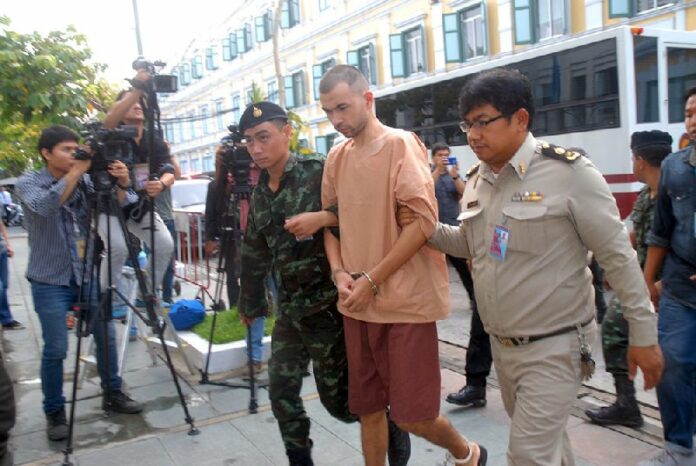
Bombing suspect Mohammed Bilal is led today into a military court in Bangkok.

BANGKOK — Thai police are not pursuing terrorism charges against two men accused of staging a deadly bomb attack in Bangkok two months ago, a police commander confirmed today.

Despite the scale of the attack, which killed 20 people of six nationalities and is considered the worst attack of its kind to strike Bangkok in living memory, the suspects will only be tried on charges of premeditated murder and explosives-related charges, said Sriwarah Siripramnakul, chief of Bangkok metro police.

“We are not charging the suspects in this case with terrorism,” police Lt. Gen. Sriwarah said.

Mohammed Bilal and Yusufu Mieraili, who hold Turkish and Chinese passports, respectively, will stand trial in a military court for their alleged role in the bombing of Bangkok’s Erawan Shrine on Aug. 17. According to police, Bilal planted the bomb at the popular place of worship and Mieraili detonated the device after Bilal left the blast area.

Bilal was arrested in an apartment in Nong Chok district on Aug. 29, reportedly along with a large cache of bomb-making materials, while Mieraili was taken into custody near Thai-Cambodian border on Sept. 1.

The two men have been held without bail at 11th Infantry Regiment barracks, which has been converted into a special prison for the bombing suspects, since Sept. 15. Police have yet to send their cases to the prosecutor.


\

Bombing suspect Yusufu Mieraili is led today into a military court in Bangkok

Under Thai law, remand can be extended to keep suspects in custody up to seven times – which translates into 84 days – before the prosecutor either brings charges against them in court or drops the case.

Today the martial court ordered Bilal and Mieraili to be remanded for the fifth time, accepting the police explanation that investigators have yet to finalize their cases against the defendants. Police said they still need to interrogate some witnesses and are awaiting lab results of some forensic evidence.

Sriwarah said he’s confident that police have airtight cases against the two defendants.

“If we aren’t confident, the court wouldn’t have granted arrest warrants for them in the first place,” Sriwarah told reporters today. “We have clear evidence: documents, material, witnesses.”

A total of 17 arrest warrants have been issued in connection with the Aug. 17 bomb attack, many of which were for unidentified suspects.

National police chief Chakthip Chaijinda said today Bilal and Mieraili are the only two of those suspects to have been arrested so far. The trail of those on the run, he said, has gone cold.

“Whether we find additional suspects, let me say that the police are doing our best. We are always doing our best. But right now, there are no other clues that support … our effort to find the suspects still on the run, both inside and outside the country,” Gen. Chakthip said.


Related stories:

Bombing Suspect Led Through 2-Day 'Re-enactment' (PHOTOS)

Police Return to 'Karadag' as Bangkok Bomber

Police Link Bomb Attack to Uighurs, Deep South and Thai Politics
 

Advertisement

Renamed, Recut ‘Arbat’ Tops Box Office

Scene from Arpat, the movie formerly known as Arbat. Photo: Sahamongkol Film International

BANGKOK — With a slightly different name and two minutes shorter, a movie about a misbehaving monk banned days before its release proved controversy can translate into ticket sales.

Arpat – the movie formerly known as Arbat – brought in 15.72 million baht in sales during its first four days since the ban was lifted Friday, beating Pan (10.4 million) and May Nhai, or May Who? (7.9 million baht).

Complaints from Buddhist hardliners earlier this month over scenes of a novice monk behaving inappropriately prompted the Film Censorship Board to ban Arbat only two days before its premiere. The film won permission to eventually open a day later than planned after the studio cut several scenes and changed its from Arbat to Arpat, which is the same word but spelled in Pali.

The name refers to a violation of a monk’s vows.

The board voted 5-0 on Friday to rescind the ban after Sahamongkol International Film cut scenes considered defamatory to Buddhism, including a novice wearing shoes while stepping on a monk’s seat, pulling a girl by the waist into a room, kissing a girl, drinking alcohol and placing a Buddha image on the floor. Another scene of a monk being murdered was also reportedly removed.

The movie opened Friday night with an +18 rating.

The ban itself seemed to invite more controversy than the now-deleted scenes. Many comments online panned the decision, and 100,000 people signed an online petition calling for the movie to be shown uncensored.

The producer insisted the content of the film remains unchanged. Director Kanittha Kwanyoo said she felt sorry to cut some scenes but was pleased to see it released.

Related stories:

Studio to Recut Movie Banned for ‘Defaming Buddhism’

Horror Film May ‘Destroy’ Buddhism, Activists Warn

Advertisement

Rising From the Mud, Humble Hero Flown to Meet PM

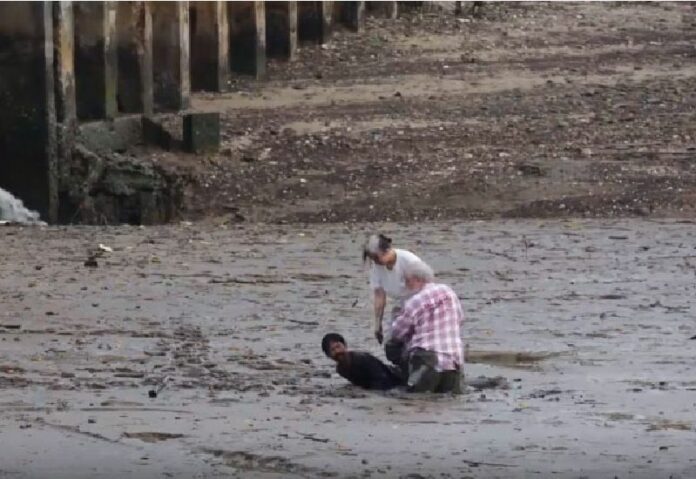
Fisherman Chad Ubonchinda will be feted in Bangkok after becoming a national hero overnight for rescuing an elderly tourist couple in Krabi province.

BANGKOK — The humble fisherman-turned-hero who shot to national fame during the weekend for rescuing mud-mired tourists is being flown to Bangkok this evening for recognition of his deeds.

Chad Ubonchinda, a 44-year-old fisherman from the southern province of Krabi, turned into an overnight hero after he was caught on film rescuing a foreign couple hopelessly stuck in a quagmire by lying down and letting them walk out across his back.

He became an immediate object of online praise, particularly as he was seen shuffling off without asking for any compensation. He said the deed was its own reward – but admitted his back has yet to recover from the mild trampling.

“I didn’t think too much when I saw they were in trouble,” Chad said Saturday. “The only thing I think is I already gained the merit from saving them, and I don’t want anything back.”


Video of the Friday morning incident became an instant hit after it was posted later in the day by videographer Theerasak Saksritawee.

Chad said he did not know anyone was watching when he stopped his boat to save the elderly couple, who were there to take photos. Though he could not communicate with them, Chad felt he could help because he was younger and more familiar with navigating such a muddy morass.

He first quickly moved their camera to a safe place and then came back to lift the couple. As he was unable to lift them, he immediately got down on the ground and let them crawl up onto his back and walk out.

The Norwegian couple, Arild Haben and Guo YaXiang, later found their way to Chad’s home on Saturday to express their gratitude. The couple along with Krabi Gov. Pinit Boonlert presented him flowers and some money as a reward. They also promised to help him get a new boat.


\

Chad at his home today in Krabi

More importantly, Chad said, officials need to urgently place a warning sign at the spot where they couple becamse stuck, as he was concerned another tourist might become trapped in the same spot.

Officials have been lining up to bask in Chad’s acclaim, but the fisherman said he’s been a bit overwhelmed by the attention and hasn’t had time to go fishing.

Junta spokesman Maj. Gen. Sansern Kaewkamnerd yesterday said Prime Minister Gen. Prayuth Chan-ocha applauded Chad’s generosity and described him as a role model.

“The prime minister said this reflects Thai identity. Thai people are generous and Thailand is also known as the Land of Smiles,” Sansern said.

Advertisement

Police Charge BMW-Driving Businessman for Highway Gunplay

Police said Niwat Wicharn confessed today to being the man seen on video firing a gun from the window of his moving BMW on Saturday in Chiang Mai province.

By Teeranai Charuvastra
Staff Reporter

CHIANG MAI — A businessman in Chiang Mai province was arrested today for firing a handgun to threaten other motorists from his BMW on Saturday night – an incident captured on video and posted online.

Niwat Wicharn, 40, explained to police today that at the time he was drunk from “two jugs of beer” and worried about 2 million baht he was carrying when he fired four shots into the air to warn off another car that was tailgating him.

The incident took place, Niwat said, while his wife was driving them home from dinner and he noticed the car behind kept approaching close flashing its headlights – behavior Niwat said eventually caused him to snap.

“It angered me, and I was drunk because I had two jugs of beer,” said Niwat, who owns a construction firm.

Video of the encounter, likely filmed from the other vehicle’s dashboard cam, was uploaded to the internet where it was widely shared and commented upon.

Police officers said they used the video to identify Niwat’s license plate and track him down at home. Niwat was arrested at his home Monday and later taken to the San Kamphaeng Police Station for questioning.

Niwat also explained he was carrying 2 million baht in cash in the car at the time, so he was afraid the tailgating car might have intended to rob him, and he discharged his weapon four times as “warning shots” to deter them.

Niwat was later released on his own recognizance and allowed to return home. Police have charged him with carrying and firing a gun in public area without a license or a good reason.

Correction: An earlier version of this story incorrectly suggested the man had been arrested or placed in jail. Apparently that was not the case, as he was charged, photographed for the media and then allowed to return home.


Related stories:

‘Gun’ was Just a Box, Angry Driver Protests

Advertisement

Iran Nuclear Deal Enters Next Phase

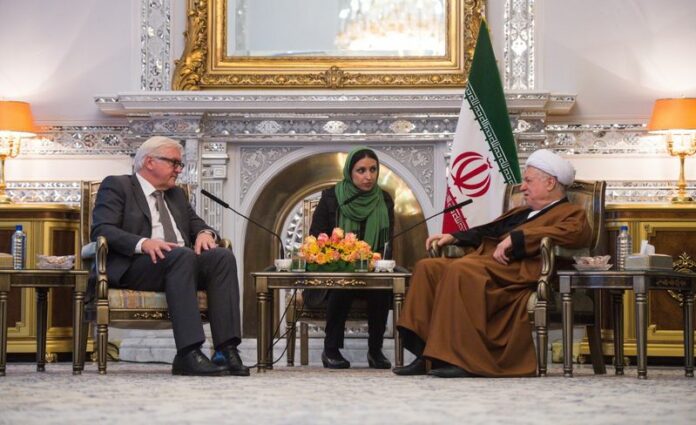
German Foreign Minister Frank-Walter Steinmeier, at left, meets Sunday with former president of Iran Akbar Hashemi Rafsanjani, at right, in Tehran, Iran. Photo: DPA / Bernd Von Jutrczenka

BRUSSELS/VIENNA — The historic nuclear deal reached three months ago between the international community and Iran began a new phase Sunday as all sides implemented policies under which Tehran must scale back its enrichment capacities and dismantle infrastructure in return for an easing of sanctions.

Sunday was "adoption day," the day that participants began making necessary arrangements and preparations for the implementation of their commitments under the Joint Comprehensive Plan of Action.

"Today marks an important milestone toward preventing Iran from obtaining a nuclear weapon and ensuring its nuclear program is exclusively peaceful going forward," U.S. President Barack Obama said in a statement.

Obama on Sunday sent a memorandum to the relevant U.S. authorities about the steps required by Iran before sanctions can be lifted.

Obama said that, in addition, he had directed the heads of all relevant U.S. departments to begin preparations to implement the U.S. commitments in the plan. This includes "providing relief from nuclear-related sanctions as detailed in the text of the plan once the International Atomic Energy Agency has verified that Iran has completed all of its nuclear steps."

The European Union also took the required legal steps to suspend economic and financial sanctions on Tehran and restrictive measures targeting individuals and entities.

The EU on Sunday adopted the legislative framework for lifting all of its nuclear-related economic and financial sanctions, the European Union's foreign policy chief Federica Mogherini, said in a statement.

"We have respected the timetable set out in the JCPOA, which demonstrates our collective will to stick to its provisions," Mogherini said.

Iran signed the accord in July with the United States, Britain, France, Germany, Russia and China, aimed at easing years of tension over suspicions that Tehran's nuclear program was geared towards producing a bomb – an allegation Iran denies.

Under the deal, however, these decisions will only take effect once the International Atomic Energy Agency – or IAEA – confirms that Iran has carried out a series of steps to dismantle its nuclear enrichment program – a moment referred to as Implementation Day.

"My own assessment is that implementation can be expected to take place [at the] end of the year [or] beginning of next year, but of course only once the IAEA has given the green light," a senior Western diplomat said Friday on condition of anonymity.

The deal specifies, among other things, that Iran will drastically reduce its stock of low-enriched uranium from 12 tons to 300 kilogrammes by exporting this material to Russia.

Tehran must also rebuild its Arak research reactor so that it does not produce plutonium as a waste product – a project with which China is heavily involved.

The IAEA is tasked with overseeing the deal, and can carry out inspections at short intervals. Once lifted, the sanctions can be reimposed at short notice if Tehran is found to be in violation of the agreement.

Any disputes are to be resolved by a so-called Joint Commission of representatives from the six Western powers and Iran. This panel is to have its first meeting on Monday, bringing together political directors from the seven countries.

British Foreign Secretary Philip Hammond said: "This is a landmark day for an historic deal, marking the culmination of a decade of talks between the UK, our partners, and Iran."

It will ensure that a nuclear weapon remains beyond Iran's reach, creating a safer region while opening opportunities for Iran to re-engage with the international community.

Senior U.S. administration officials said that Washington doubts that Iran can fulfil all its nuclear requirements by year's end, and that what is important is that "it's done right, not that it's done quickly."

Story: DPA

Advertisement

Philippine Typhoon Toll Rises to 14

A child wades through a flooded area as Typhoon Koppu slams into the Philippines, causing the evacuation of thousands. Photo: EPA / Francis R. Malasig

MANILA — The death toll from Typhoon Koppu in the Philippines rose to 14, officials said today, as emergency teams rescued victims stranded by floods and began clearing areas damaged by the storm.

In the biggest loss of life reported from a single incident, seven people drowned when a motorboat capsized in choppy seas off Iloilo City, 460 kilometers south of Manila, the coastguard said.

The boat had just left port on Sunday when it was battered by huge waves and strong winds. Thirty-two people were rescued, but two were still missing.

Koppu slammed into the country early Sunday, displacing thousands, toppling trees and cutting off electricity.

More than 20,000 people were displaced, while about 6,530 passengers were stranded after dozens of flights were cancelled and sea travel was suspended.

Although it had weakened since the weekend, the slow-moving typhoon was still over the very northern part of the country, packing maximum winds of 120 kilometres per hour (kph) and gusts of up to 150 kph, the weather bureau said.

It was moving north-northeast at just 5kph. The typhoon's slow passage meant it had time to inflict more rain and wind damage compared to a faster-moving storm of the same strength.

Other fatalities included three people hit by fallen trees or collapsed masonry, and two who drowned in floods in the northern province of Nueva Ecija.

One man was buried in a landslide in Benguet province, while another was electrocuted in Tarlac province, local and disaster relief officials said.

Soldiers, police officers and other emergency workers were dispatched to Nueva Ecija, a rice-growing province where murky floodwaters reached up to rooftops in some places.

Stranded residents' calls for help were sent via the disaster relief agency's website and Twitter account, or through radio stations.

"My family trapped on this location, please send rescue," one tweet said, which included a map. Another tweet said, "Please help them. Several houses have already been swept away."

Story: DPA 


Advertisement

Singha Heir Denies Grudge Against Chang Beer

A heated exchange between Singha scion Piti Bhirombhakdi, at left, and singer Pakorn Lam, at right, precipitated the media kerfuffle over possibly illegal celebrity endorsements of Chang Classic beer. Photos: Piti Bhrimbhakdi / Facebook; Pakorn Lam / Instagram

BANGKOK — When controversy erupted earlier this month involving celebrities, social media and beer, the public had an unlikely source to thank for the full-blown media convulsion that ensued.

The man who brought the possibly illegal use of Instagram to promote Chang Classic to public attention, a scion of the archrival Singha Beer conglomerate, said through a rep today however that his actions were not driven by competition.

“This deliberation by law enforcement officials will set a standard for alcoholic beverage business operators in the future, about what can and cannot be done,” Chatchai Wiratyosinond told the Alcohol Control Board today on behalf of Piti Bhirombhakdi. “This is not about an issue between Chang and Singha.”


Anyone Posting Booze Pics Will be Prosecuted, Anti-Booze Official Says


On Oct. 10, the Alcohol Control Board and police launched an investigation into 30 actors, actresses and singers who posted to Instagram photos of themselves with Chang Classic, a recently introduced beer line from Chang’s brewery, ThaiBev.

The investigation came after Piti, an executive at Singha brewer Boon Rawd, posted on Facebook that the celebrities may have violated the 2008 Alcohol Control Act, which forbids advertising alcohol by even showing brand logos or “enticing” others to drink.

A number of celebrities in connection to the suspected Chang campaign have been summoned to testify to the Alcohol Control Board. Piti was also summoned to give testimony as the person who raised the issue but sent his representative, Chatchai, to report to the board instead.  

After two hours of talks with board officials, Chatchai told reporters that Piti did not come in person today because he had other business to attend to. Chatchai also sought to play down Piti’s role in the investigation.

“Mr. Piti is not the person who filed the complaint. He’s not a witness either, because he wasn’t with those celebrities and artists when the wrongdoing happened, and he isn’t aware of marketing plans of other alcoholic beverage business operators,” Chatchai said. “He merely expressed his personal opinion on Facebook and raised the issue for society.”

Alcohol Control Board director Samarn Footrakul insisted the incident is being investigated without bias against any company.

“My office and I have no interests or connection with Singha,” Samarn said. “Chang also knows that I don’t gain anything from the other side. But both sides often think that I am leaning in favor of a certain side. I insist that we work to protect the people.”

Samarn previously told the press that Piti filed a complaint to the board, but today he clarified that the businessman was merely a “witness who raised the issue.”

He said the outcome would be up to the legal system.

“The person who will really make the decision is the court,” Samarn said. “They will weigh whether this action amounts to promoting alcoholic beverage.”

Piti is described in the media as an heir to Boon Rawd Brewery, which is owned by his family, the Bhirombhakdis. Boon Rawd and ThaiBev are the two biggest competitors in Thailand’s growing beverage business, expected to bring in 137 billion baht this year.

In early October, Piti had a heated exchange on social media with Pakorn Lam, one of the celebrities who posted photos of Chang Classic, in which he accused his rival company of using unethical tactics to promote the brand.

“Getting celebrities, net idols, pretties and famous persons to post photographs on FB [Facebook] or IG [Instagram] to boost sales and brand awareness is not right,” Piti wrote Oct. 7 on Facebook.

He took the high ground in his comments.

“Entrepreneurs must have ethics, and celebrities must not fall victim to this scheme. I can say this because I don’t do this kind of thing, and I criticize any of my team members who thinks of doing it.”

Police announced an investigation into Chang campaign three days later.

The celebrities in question have insisted to the press they did not receive money from Chang for showing off its beer on their Instagram accounts.

Thailand has tough laws that restrict sales and advertising of alcoholic beverage – restaurants are not even allowed to display photos of alcohol on their menus, for example – though these restrictions are selectively enforced, and drinking is widespread in the country.

A fresh alcohol regulation also came into force today. The new law, formally called the “Announcement by Alcohol Control Board Concerning Guidelines, Methods and Conditions About Labels of Alcoholic Beverage,” tightens legal limits of acceptable wording that can appear on alcohol labels in Thailand.

Among banned language are promises of positive consequences from drinking consumption, such as “success in social or sexual life.”

The regulation also bans labels that contribute to "degradation of the national culture" or "division or loss of unity among the people."


Related stories:

Anyone Posting Booze Pics Will be Prosecuted, Anti-Booze Official Says

Chang, Celebs Panned for Pitching Beer On Instagram

Advertisement

Health Warnings Over ‘Silent Killer’ After Mom, Boy Die in Lat Phrao Parking Lot

A woman and her young son suffocated to death in their sleep Friday inside their vehicle parked outside a Lat Phrao area restaurant. Photo: Matichon

BANGKOK — Health experts called attention to the danger of sleeping inside a vehicle Sunday after a mother and her young son suffocated to death in a suburban neighborhood of the capital.

The warning came after Sutthida Sakuleang, 49, and her 5-year-old son Kampanat Dutsadee, were found dead Friday inside the Ford Escape they were sleeping in while she waited for her husband to finish dining with friends Friday in Lat Phrao district.

“If the car is moving, carbon monoxide will be dispersed into the air by the wind. But if we park the car with the air conditioner on to sleep, whether it’s an old car or new one, carbon monoxide can leak into the cabin,” said Veerachai Putthawong, a professor of chemistry at Kasetsart University.

Autopsy results from the Police General Hospital yesterday identified suffocation as the cause of death for Sutthida and Kampanat.

Bunnum Dutsadee, 60, the deceased’s husband and father, said he gave the car key to his wife to rest in the car while he was dining. Two hours later, he went out to discover they had died. Police from Chok Chai Police station inspected security camera footage yesterday and said they noticed nothing suspicious. The car will be further examined by authorities.

Sutthida’s sister, 47-year-old Rattikal Sakuleang, insisted her sister and nephew were in good health, but said she did not suspect foul play, as Sutthida would routinely wait inside the car with the air conditioner turned on. Rattikal said she was unaware of any issues between the husband and wife.

Kasetsart’s Veerachai urged people to be aware of such daily, commonplace dangers, saying that he has seen many deaths similar to Friday’s incident in recent years. The level of harm depends on the amount of carbon monoxide is in the air, he said, adding that at peak levels death can result in less than two hours.


Advertisement

Bomb Kills Two Rangers, Wounds Five in Deep South

An armored vehicle was thrown from the road this morning by a remote-detonated bomb in Pattani province this morning. Two army rangers were killed and five others wounded. Photo: Khaosod English

DPA

PATTANI — Two soldiers were killed and five wounded today when a bomb exploded on a road in the violence-plagued, deep south of Thailand, police said.

The bomb exploded at 7:25am as the army patrol was traveling in a vehicle in the Sai Buri district of Pattani province, 770 kilometers south of Bangkok, according to a Sai Buri district police officer.

He said the force of the remotely controlled explosion threw the armored vehicle off the road.

A second bomb exploded as another patrol of rangers arrived at the scene, but no one else was hurt.

No group immediately took responsibility for the attack. The police officer said it was consistent with a wave of bombings, drive-by shootings and beheadings carried out by Muslim insurgents trying to separate the southern-most provinces of Pattani, Yala and Narathiwat from predominantly Buddhist Thailand.

About 6,200 people have been killed and some 11,000 wounded in the area since the insurgency flared anew in 2004.

Advertisement

Changes Sweep Through Remote Myanmar Village Ahead of Election

An ethnic Kayaw boy eats dinner next to his grandmother Sept. 12 at their home at Htay Kho village in Myanmar's Kayah state. Photo: Reuters / Soe Zeya Tun

By Soe Zeya Tun and Antoni Slodkowski
Reuters

HTAY KHO, Myanmar — Htay Kho, a remote village tucked away between the valleys of this ragged strip of eastern Myanmar, was for decades off-limits as armed rebels fought the military before a recent ceasefire stopped the bloody conflict.

Now the semi-civilian government of President Thein Sein and rebels from eight armed groups have signed a wider peace deal, although the pact fell short of the nationwide accord the ruling party had hoped to trumpet ahead of a Nov.8 general election.

But for the Kayaw people of Htay Kho – and millions from myriad other ethnic groups living in similar villages that pepper the fringes of this diverse country – the upcoming vote is about more than just the fragile peace process.

With its lack of access to running water, jobs and proper education, Htay Kho, some 480 km (300 miles) northeast of the commercial capital, Yangon, is Myanmar writ small.

The election comes at a time of sweeping social and economic change, as villagers use the newly-opened borders to leave for Malaysia and Thailand in search of jobs.

Reintegration with the outside world has sparked a debate about whether to abandon traditional costumes of the Kayaw women, famous for brass coils worn around their calves and ankles.

"We are tired of being poor," said Tawnyo, the village headman, who like most Kayaw uses only one name. "We don't have enough clothes for our children and sometimes not enough food. This needs to change first."


\

Ethnic Kayaw attend a mass Sept. 13 at the catholic church at Htay Kho village in Myanmar's Kayah state,. Photo: Reuters / Soe Zeya Tun

Years of Isolation

When the sun sets behind the mist-shrouded hills, the 280 inhabitants of Htay Kho light fires to mark the end of a back-breaking day on the surrounding slopes.

Their raspy voices, tired after planting corn grains and blurred with Khaungyae, a rice liquor, mix with the sparks and drift above its 80 rickety huts and across the nearby mountain tops. A drab yellow Roman Catholic church built by Italian missionaries a century ago towers over the settlement.

After years of isolation, there is no electricity or mobile phone coverage. Average income per person stands at less than USD$50 (about 1,800 baht) a year and the 60 kilomter journey to the nearest city takes four hours on a bus that comes every three days.

Tawnyo places his hopes in opposition leader Aung San Suu Kyi who recently visited the area, galvanizing crowds with pledges of development and a government inclusive of ethnic minorities.

With about 30,000 members, the Kayaw are among the smallest ethnic minorities among Myanmar's 135 officially recognized groups.

The rebels in the area have put down their guns and taken to the hills to grow rice and corn, but slash-and-burn cultivation methods mean they struggle to find new places to farm.


Brass Coils and Coins

One of the farmers, Thu Ray San, 27, said she has to walk for hours to the nearby hills with a basket so heavy she needs help to load it on her back.

"We mix rice with corn because it's easier to grow in the high mountains," she said.

With every move, Thu Ray San's silver braces and necklaces rustled around her neck, knees and ankles.

Kayaw women traditionally wear the coils, decorate their ears with silver rings and sport horn-shaped necklaces and strings with old British and Indian coins.

Only about 100 women from Htay Kho and two neighboring settlements still wear the costumes. At USD$100 a set (3,500 baht), they are a powerful status symbol in the village.

The dress is now at the heart of a debate about customs which have survived unchanged for generations.

"We should abolish this dress so that our women look civilized and can work in offices," said Salomon, vice president of the All Ethnic National Karenni People Development Party, a local political organization. "This is what separates us from the outside world."

But the women, and headman Tawnyo, want to protect the tradition and turn the village into a tourist attraction and cultural heritage site.

In the hut of one woman named Borlinan, family members huddle by a fire to sing and play on traditional instruments.

"How can they even dream of banning our dress," said Borlinan. "Even when we die, we get buried with the coils. They stay with us forever."

Advertisement

Hot News

LATEST NEWS

Bangkok
overcast clouds
27.2 ° C
27.2 °
24.4 °
81 %
2.7kmh
99 %
Sat
36 °
Sun
32 °
Mon
30 °
Tue
31 °
Wed
30 °