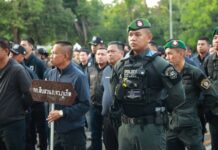
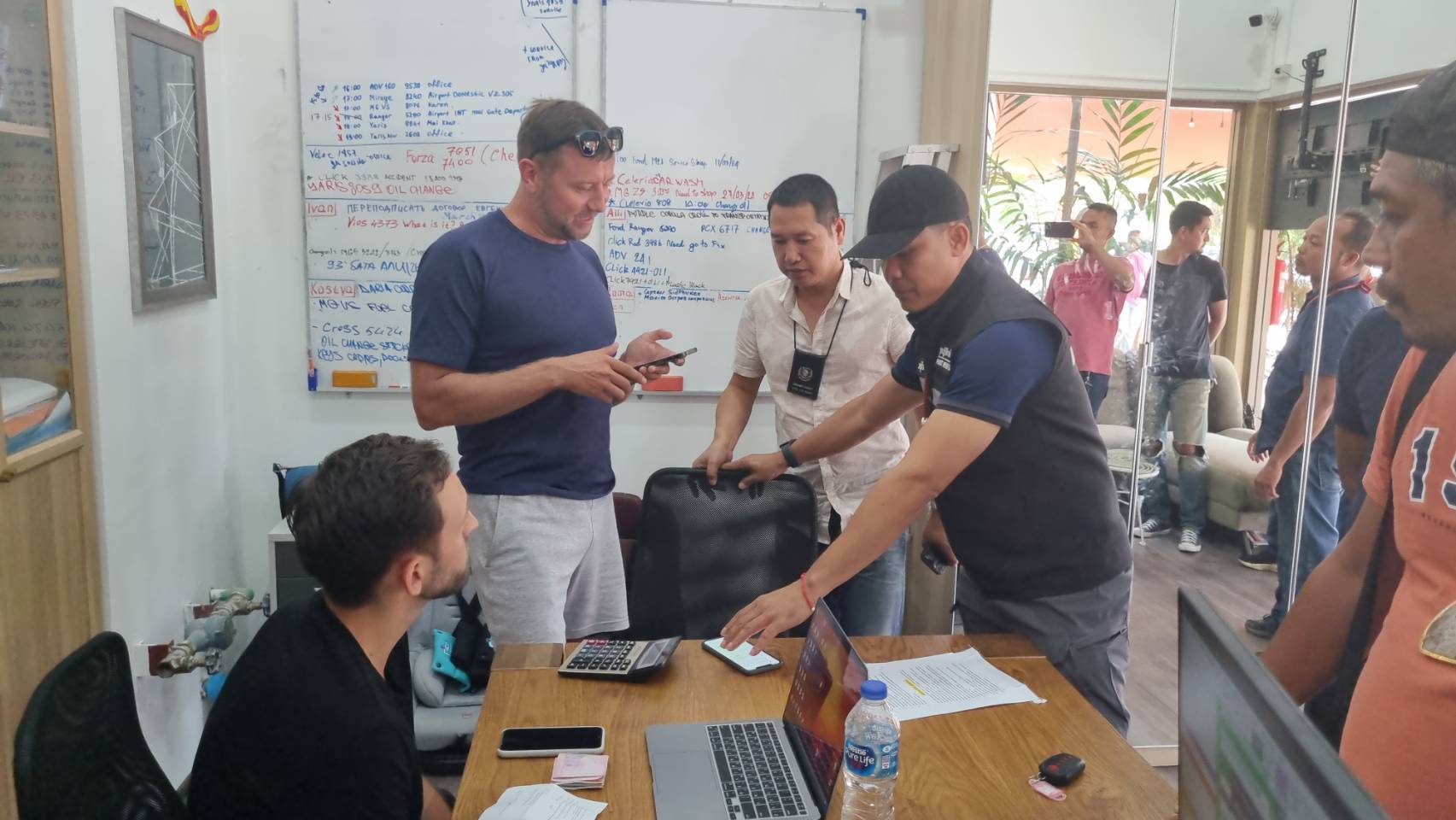
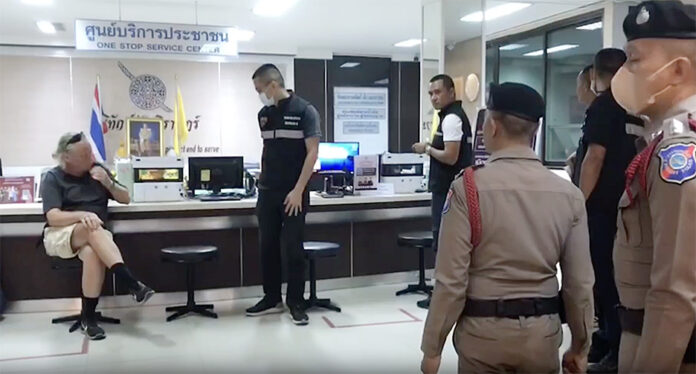
Three Russians were arrested at the car rental company on Sri Sunthon Road, Choeng Thale Subdistrict, Thalang District, Phuket Province on March 5, 2024.
PHUKET – Provincial Police Region 8 officers led investigators into Phuket Province to examine visitors unlawfully operating a car rental business without authorization on March 5. Later, three Russians—Mr. Stepan is 38 years old, Mr. Dmitri is 34 years old, and Mr. Roman is 43 years old—were arrested at the car rental company on Sri Sunthon Road, Choeng Thale Subdistrict, Thalang District.
Police seized evidence from the company Boomerang Car & Bike Rental including: 1. CCTV recording server, brand HIKVISION, 2. Four sets of car rental contracts, two sheets each, 3. Two sheets of documents showing employee work schedules, 4. Four sheets of car rental rate documents, 5. Copies of certification letters. Company registration 21 sheets.
Investigators discovered that this company supplied cars and motorcycle rentals to tourists. Foreigners ran it, including the managing director, and employed foreign workers without work permits.
During the inquiry, police saw that the company office had a constant flow of foreign customers in and out, as well as two foreigners seated at the workplace. On the table, there is a computer and numerous documents that help customers prepare car rental documents, providing guidance to clients who contact the company.
The first individual was accused of “hiring foreigners without a work permit to work. The second and third accused were charged with being foreign workers without a work permit.
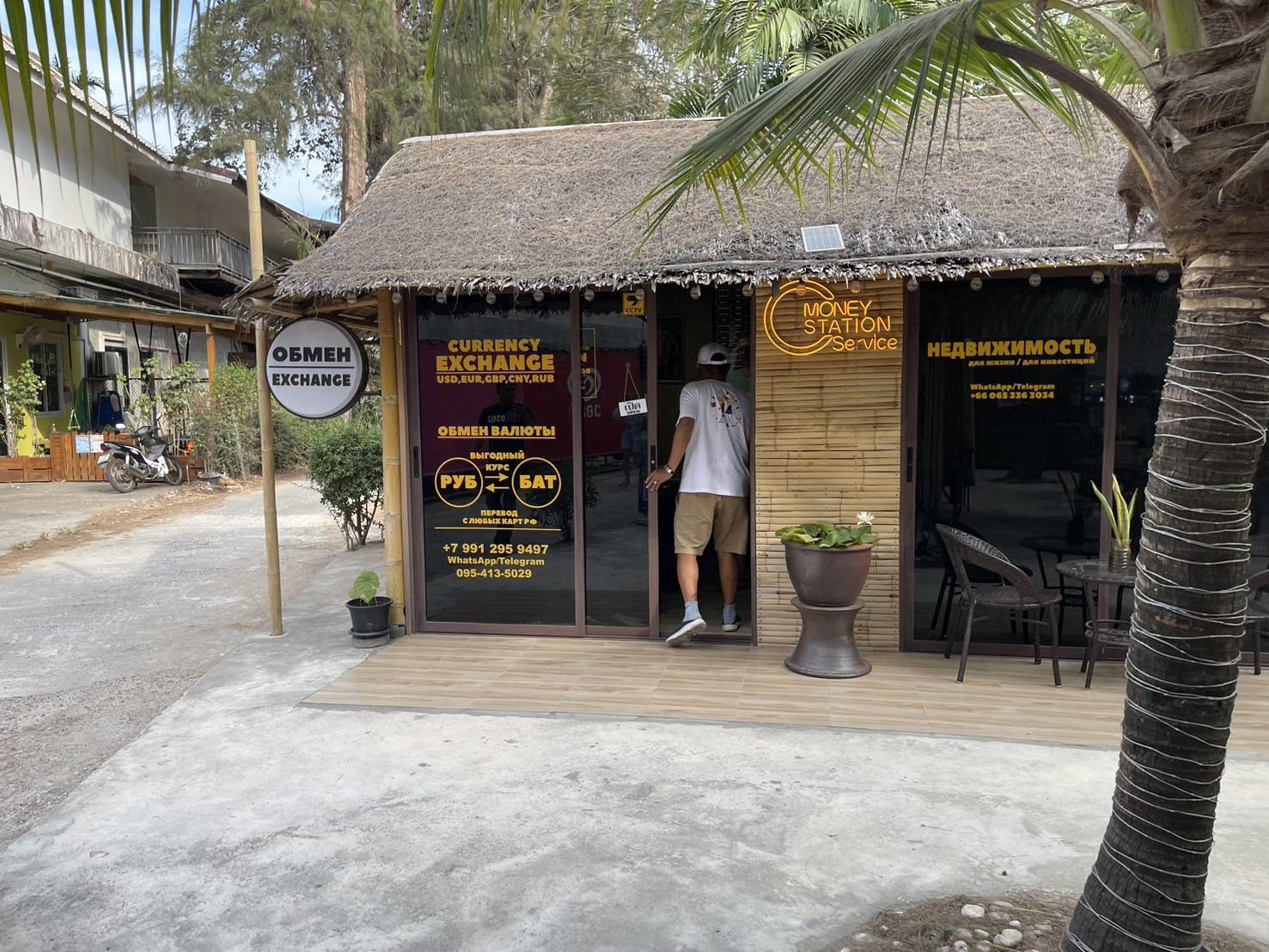
Meanwhile, Phuket Tourist Police arrested another Russian man, 37-year-old Mr. Andréi, who illegally opened a currency exchange office called Money Station in Sakhu Subdistrict, Thalang District. He was charged with being an alien living in the Kingdom of Thailand with expired permission and working without permission.
A currency exchange office, Money Station, was operated without permission.
A Filipino ladyboy, Ivy, and a 29-year-old Thai guy, Champ, have reached an agreement following the disputed incident.
BANGKOK – A Filipino ladyboy, Ivy, and a 29-year-old Thai guy, Champ, have reached an agreement following the disputed clash between a group of Thai ladyboys and Filipino transgenders two days ago. Both parties expressed gratitude and apologies to each other at Lumpini Police Station on Wednesday.
Officials from the Philippine Embassy in Thailand and the Immigration Police also participated in the negotiations after this incident became media headlines.
The incident began late Monday and early Tuesday, March 6, when an angry group of hundreds of Thai people attacked the Filipino transgender persons in front of a hotel on Sukhumvit Soi 11, causing injuries on both sides.
The chaotic situation reached its peak at 3.30 a.m. Tuesday, when about 10 Lumpini police officers protected the first group of two Filipino transgender people who were leaving the hotel.
According to reports, a group of twenty Filipino transgender people had previously attacked six Thais and then shared video footage on social media to mock them.
Ivy dropped her complaint against Champ, and the man paid 10,000 baht in medical expenses for her. She stated that she wants to permanently resolve the issue. She does not want to pursue legal action against anyone else. She currently has no intentions to return to Thailand or what to do. However, after 14 days of treatment, she will return to the Philippines.
The Filipino ladyboy, Miranda, apologises to the Thai people.
Champ expressed his gratitude to the Filipinos for being willing to compromise. It has helped him to file a lawsuit. When it ends this way, the relationship will improve. Ivy did not file any claims after he gave her 10,000 baht for medication, and he apologised. At that time, he was enraged and acted violently. He shouldn’t have done that.
According to the police, two Filipinos involved in the violence, Miranda and Castro, had already been sued at Pathumwan District Court on the charge of planning to assault another person, causing physical harm, and were fined 5,000 baht each. They would then be transferred to immigration for removal from the country.
“I’d like to apologise to the Thai people. I love Thais and Filipinos alike. I apologise to everyone involved in the event. I just misunderstood; however, it is considered a good lesson for us. “I hope everything’s fine,” one of them said.
Bitcoin briefly hit an all-time high Tuesday, March 5, 2024, with the world's largest cryptocurrency surpassing $68,800, according to CoinMarketCap. (AP Photo/Kin Cheung, File)
NEW YORK (AP) — Bitcoin has hit an all-time high less than two years after the collapse of the crypto exchange FTX severely damaged faith in digital currencies and sent prices plunging.
The world’s largest cryptocurrency jumped 4% this week and briefly surpassed $68,800 Tuesday, according to CoinMarketCap. That’s just above bitcoin’s previous record set in November 2021.
The volatile asset soon fell some, standing at just under $62,000 as of 3 p.m. ET, but the price is still up more than 175% from one year ago.
Gains in recent months have been fueled by the anticipation, and eventual U.S. approval, of bitcoin exchange traded funds earlier this year, which provided access to a much broader class of investors. The price for bitcoin has surged about 60% since the approval of bitcoin ETFs in January, an easy way to invest in assets or a group of assets — like gold, junk bonds or bitcoins — without having to directly buy the assets themselves.
Also driving prices is what is known as bitcoin “halving” which is anticipated in April. Halvings trim the rate at which new coins are mined and created, thus lowering the supply.
Here’s what you need to know.
EARLY SUCCESS OF BITCOIN SPOT ETFS
In January, the U.S. Securities and Exchange Commission approved the first spot bitcoin ETFs from asset managers including Blackrock, Invesco and Fidelity. These newly approved ETFs hold actual bitcoin — unlike previous bitcoin-related ETFs that were invested in contracts related to future price bets, but not on the cryptocurrency itself.
While regulators have pointed to persisting risks and maintained reluctance around January’s decision, the greenlight marked a major win the crypto industry.
Institutional demand for bitcoin show “no signs of slowing down,” H.C. Wainwright’s Mike Colonnese and Dylan Scales wrote Tuesday — adding that bitcoin’s popularity “is likely to accelerate in the coming months as more wealth management platforms make spot (bitcoin) ETFs accessible to their clients.”
Using data from crypto platform BitMEX, Colonnese and Scales estimated that the 10 bitcoin ETFs averaged $302 million in net daily inflows for the month of February. Last week alone, these spot ETFs booked record inflows of $1.7 billion — bringing total net inflows to $7.5 billion since their Jan. 11 launch.
HALVING ON THE HORIZON
Increased demand is also aligning with bitcoin’s next halving event, which is expected at the end of April.
Bitcoin halving, which occurs every four years, is when the reward for bitcoin mining is cut in half. This reduces how fast new coins are created — making supply scarcer.
While analysts say that constrained supply in a time of high demand can push bitcoin’s price higher over time, others point to significant volatility that has resulted before and after halving events — and the possibility of sizable declines.
“Past history may not be a reliable guide to predict how the upcoming halving of bitcoin will influence its value,” Rajeev Bamra, senior vice president of digital finance at Moody’s Investors Service, noted. “Various external factors, market sentiment shifts, and regulatory developments can influence the trajectory of Bitcoin’s price.”
A HISTORY OF VOLATILITY
Bitcoin has a history of drastic swings in value — which can come suddenly and happen over the weekend or overnight in trading that continues at all hours, every day.
Bitcoin rocketed from just over $5,000 at the start of the pandemic to its November 2021 peak of nearly $69,000, in a period marked by a surge in demand for technology products. Prices crashed during an aggressive series of Federal Reserve rate hikes intended to cool inflation, slow money flows and make risky investments potentially riskier. Then came the 2022 collapse of FTX, which significantly undermined confidence in crypto.
At the start of last year, a single bitcoin could be had for less than $17,000. Investors, however, began returning in large numbers as inflation started to cool. And 2023’s collapse of prominent tech-focused banks actually led more investors to turn to crypto as they bailed out of positions in Silicon Valley start-ups and other risky bets.
Despite the recent excitement around bitcoin, experts still maintain that crypto is a risky bet with wildly unpredictable fluctuations in value. In short, investors can lose money as quickly as they make it.
“It’s essential to exercise caution and acknowledge that the road ahead for the digital finance ecosystem, particularly the crypto markets, is expected to navigate through a period marked by volatility,” Bamra noted — pointing the importance of “cautious optimism.”
BANGKOK – The Queen Sirikit National Convention Center (QSNCC) has reasserted its position as “The Ultimate Inspiring World Class Event Platform for All” by expanding its customer base to youth with three new high-profile events scheduled for March.
They are “CHA EUN-WOO 2024 Just One 10 Minute [Mystery Elevator] in Bangkok” with Korean heartthrob Cha Eun-Woo; “2024 Youngjae Asia Tour (Inside Out) Concert
in Thailand” with “Youngjae”, a member of the renowned Korean boy group GOT7; and “AssetWhite Presents PIANO & The Magic 7 Concert” with “Tor Saksit” and many guests.
These events will appeal to young people in line with QSNCC’s mission to be more than just a venue for MICE.
“Our main goal is to make QSNCC ‘The Ultimate Inspiring World Class Event Platform
for All,’ which is ready to organize a diverse range of events for all age groups. At QSNCC, we can organize a variety of lifestyle events from concerts and fan meetings to game tournaments and e-sports, which means our target customers are not limited to event organizers, seminar attendees or people who visit exhibitions. All young people who have a passion for activities or different lifestyle events can visit QSNCC too,” said
Surapol Utintu, Chief Executive Officer of N.C.C. Management and Development
Co., Ltd., the operator of QSNCC.
Surapol Utintu
The three events scheduled for March include:
• CHA EUN-WOO 2024 Just One 10 Minute [Mystery Elevator] in Bangkok – AROHA fandom must not miss this solo fan meeting with talented young actor Cha Eun-Woo, who has prepared a series of surprises for his fans in Thailand. And since March is his birth month, be prepared for even more excitement on Saturday, March 9, 2024, 19.00, at Exhibition Hall 3-4, level G.
• 2024 Youngjae Asia Tour (Inside Out) Concert in Thailand promises plenty of fun for all members of Ahgase fandom in Thailand yet again as GOT7 member Youngjae is preparing his latest Asia concert tour with two shows scheduled for Bangkok on Saturday and Sunday, March 16-17, 2024, 17.00-22.00,
at Exhibition Hall 3-4, level G.
• AssetWhite Presents PIANO&i The Magic 7 Concert will bring the magic of an amazing piano performance by Tor-Saksit Vejsupaporn as he performs songs by 7 leading artists in the Thai music industry. The concert will be performed under the concept of “The Magic 7” as one key has 7 notes and every note has its own magic. There will be two shows at 14.00 and 19.30 on Saturday, March 23, 2024, at the Ballroom 1-4, level 1.
Since its re-opening in September 2022, QSNCC has been a highly trusted venue for both Thai and international organizers who have seen its potentials, readiness and convenient location in the heart of the city with a connection to the MRT. In addition, QSNCC boasts cutting-edge technologies for organizing events, top-notch security measures that meet international standards and excellent facilities.
QSNCC has been chosen as a venue for more than 20 concerts and fan meetings, such as 4EVE The 1st Concert Friends & Family, T-POP Concert Fest, EXO-SC BACK TO BACK FANCON IN BANGKOK, 2023 KIM SEON HO ASIA TOUR IN BANGKOK < ONE, TWO, THREE. SMILE > and LAUV ‘the between albums tour’, among others. These events being held at QSNCC have given a boost to the Thai economy while generating revenue for the Thai entertainment industry.
“By expanding our event profile to covering events in the entertainment industry as well as expanding our target group to the young generation who are among the most avid concertgoers and fans, we are confident that we can be ‘more than just a convention center’. With restaurants, cafés, convenience stores, sport club, spa, as well as shower station in the retail zone, QSNCC is ready to welcome all comers to our venue with excellent services and memorable experiences. We expect around 50,000 people to attend
these three events in March,” Surapol said.
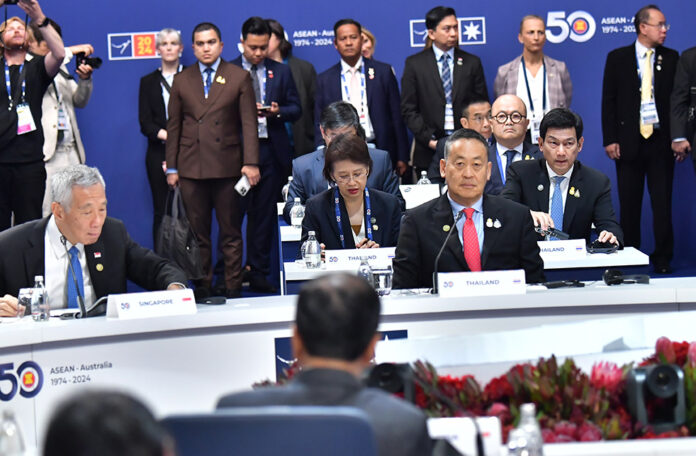
Prime Minister Srettha Thavisin and Deputy Prime Minister and Minister of Foreign Affairs Parnpree Bahiddha-Nukara attend the ASEAN-Australia Special Summit to Commemorate the 50th Anniversary of Dialogue Relations on March 6, 2024.
MELBOURNE – The Ministry of Foreign Affairs published a news briefing of the ASEAN-Australia Special Summit to Commemorate the 50th Anniversary of Dialogue Relations, which Prime Minister Srettha Thavisin and Deputy Prime Minister and Minister of Foreign Affairs Parnpree Bahiddha-Nukara attended on March 6, 2024.
The Special Summit adopted two key outcome documents 1) ASEAN-Australia Leaders’Vision Statement – Partners for Peace and Prosperity and 2) Melbourne Declaration – Partnership for the Future to guide future cooperation under their Comprehensive Strategic Partnership.
The Thai Prime Minister proposed deeper cooperation in areas such as seamless connectivity to facilitate trade and investment, development under the green agenda, food and health security, and climate change mitigation. He shared Thailand’s concerns on geopolitical and regional security issues as well as Thailand’s role on humanitarian assistance in Myanmar.
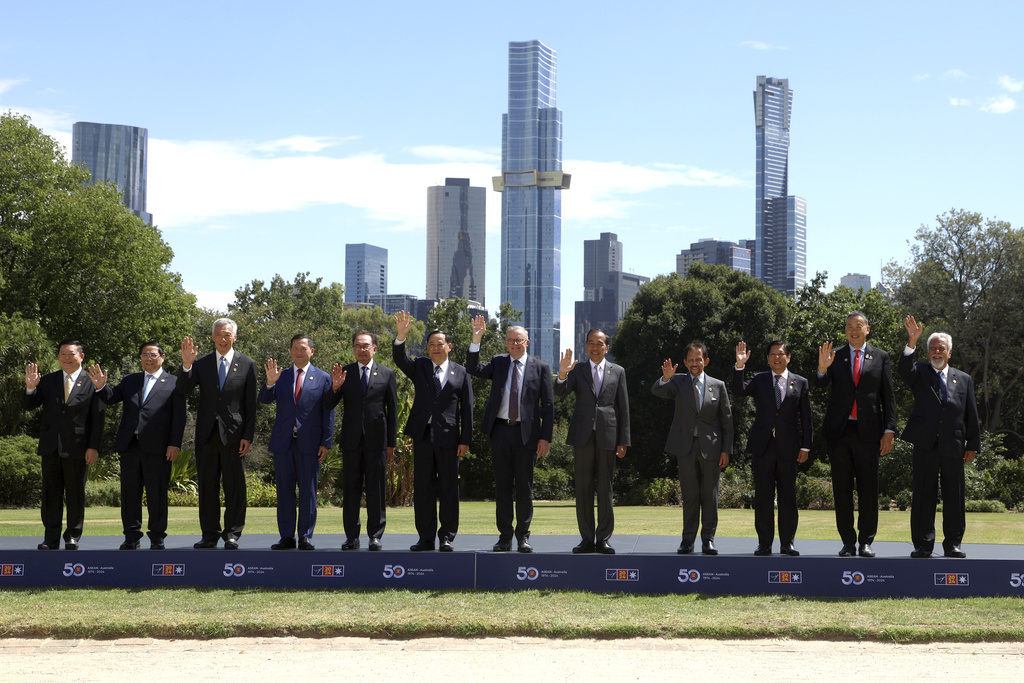
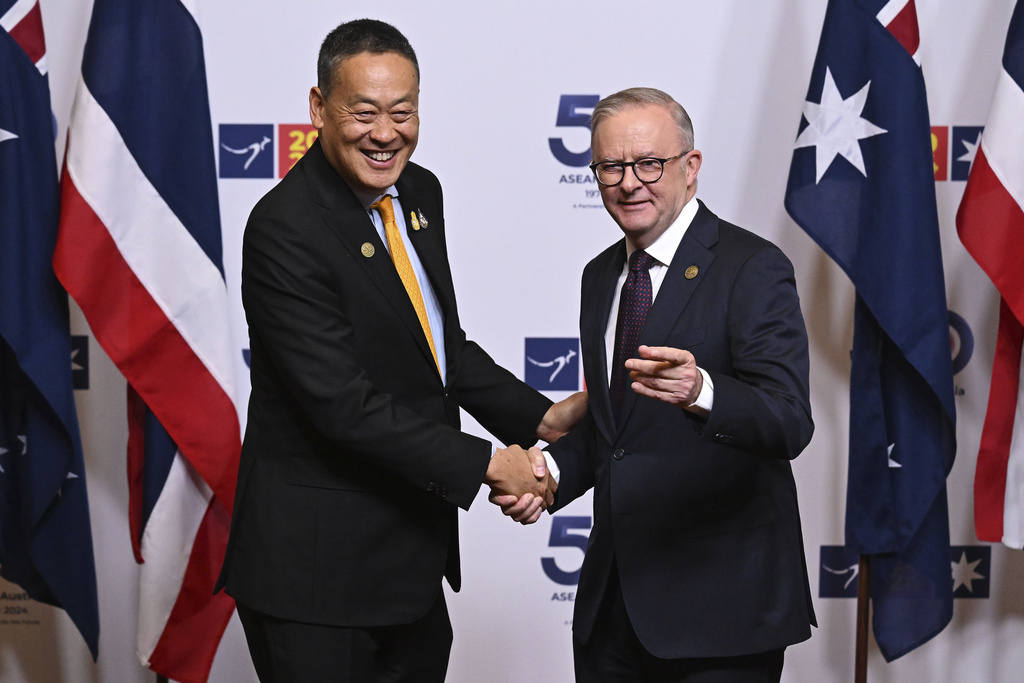
Members of ASEAN wave during a family photo at Government House during the Association of Southeast Asian Nations, ASEAN-Australia Special Summit in Melbourne, Australia, Wednesday, March 6, 2024. (AP Photo/Hamish Blair)Thailand’s Prime Minister Srettha Thavisin, left, and Australian Prime Minister Anthony Albanese shake hands ahead of a bilateral meeting at the ASEAN-Australia Special Summit in Melbourne, Tuesday, March 5, 2024. (James Ross/AAP Image via AP)
The Prime Minister also reiterated the call for the cessation of violence in the Middle-East and the release of all hostages, including Thai hostages in Gaza.
Meanwhile, the Ministry of Foreign Affairs made a statement on the situation between Israel and Gaza, as follows:
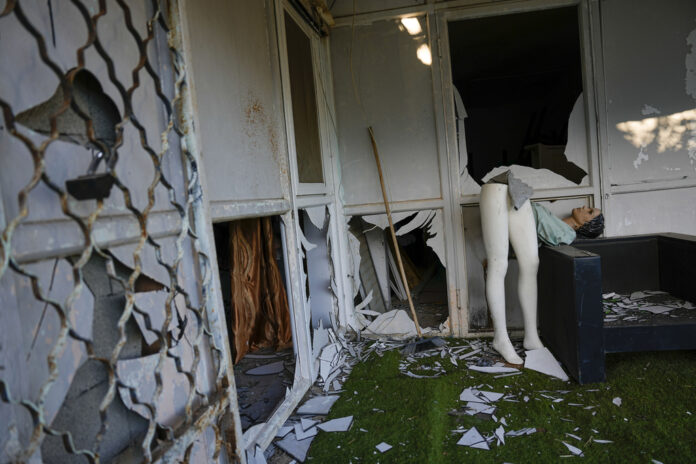
Thailand has been following, with deep concern, the ongoing situation in Israel – Gaza, as well as the attacks in Rafah, and the most recent incident in Northern Israel which has resulted in the loss of innocent lives, including injuries of 5 Thai workers.
These incidents only serve to remind us of the urgency to reach an agreement on the immediate cessation of hostilities, and the need to achieve a durable peace based on the two-State solution.
At this crucial juncture, Thailand is deeply concerned with the stalled ceasefire negotiations between Israel and Hamas, and calls on all sides to exert their full efforts to move forward the talks, and reach a humanitarian ceasefire, allowing greater access for humanitarian assistance to alleviate the plight of the Palestinian people in Gaza. Thailand sincerely hopes that the ceasefire can be reached before the holy month of Ramadan, and will lead to the release of all the hostages including Thai nationals.
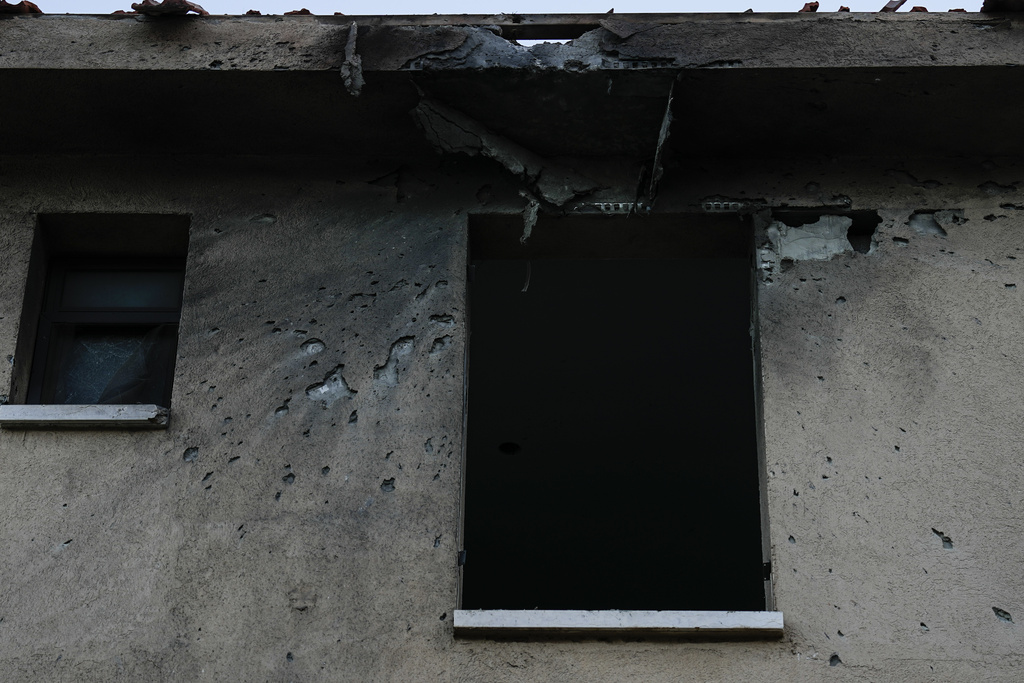
A damage to a house after a rocket fired by Lebanon's Hezbollah militant group hit the northern Israeli town of Kiryat Shmona, on the border with Lebanon, Tuesday, March 5, 2024. (AP Photo/Ariel Schalit)
An Indian laborer in Israel was killed and several other migrant workers injured on March 4, 2024, in a missile attack launched from Lebanon by Hamas-aligned Hezbollah.
They are not the first migrant workers in Israel to get caught up in the monthslong fighting. Dozens of other farmworkers, agricultural apprentices and caregivers from countries including Thailand, Nepal, Tanzania, Cambodia, the Philippines, Sri Lanka and Moldova were murdered or taken hostage during the Hamas attack of Oct. 7.
The sizable number of non-Israeli workers affected by the current war has surprised some onlookers while shining a light on Israel’s reliance on temporary migrant workers.
But as researchers who study the proliferation of migrant workers around the world, we know how labor migration programs have transformed nearly all societies, including Israel’s. The long-running Israeli-Palestinian conflict has shaped Israel’s migrant worker history – and has contributed to the globalization of the workforce in the Middle East.
Israeli security forces in Kiryat Shoma, northern Israel, evacuate a wounded Thai man after he was hit by an anti-tank missile fired from Lebanon, in a nearby village on Monday, March 4, 2024. (AP Photo/Ariel Schalit)
A global story
The initial recruitment of overseas workers to Israel, which began as early as the 1970s, followed a post-World War II trend that saw higher-income countries – such as the U.S., France and West Germany – sign labor migration recruitment agreements with poorer nations. These poorer countries, which at the time included Mexico, Spain and Turkey, among others, overcame an initial reluctance to lose part of their populace and began to see emigration as a strategy for modernization. The idea was that emigrants could learn modern farming or industrial skills overseas, while sending money back to boost development in their home communities.
In the 1970s and 1980s, many South and Southeast Asian countries began to promote the export of migrant workers as a key piece of their economic development strategies. At the same time, receiving countries became hooked on the idea of a flexible, temporary labor force that would not inflame anti-immigrant sentiment as much as more settled migrants seemingly did.
Israel’s relationship with Thai workers came initially by way of the United States’ support for the 1979 peace agreement between Israel and Egypt. The U.S. government recruited Thai workers who had once worked on Vietnam War-era U.S. military bases in northeastern Thailand to help build a new air force base in Israel.
The figure of a hand is marked with blood on the wall of a bomb shelter located in the Thai workers’ housing section of Kibbutz Nir Oz, Israel, near the Gaza Strip, Thursday, Nov. 9, 2023.(AP Photo/Bernat Armangue)
The arrival of the Thai migrant workers, along with Portuguese workers, prompted public controversy among Israeli lawmakers, trade unionists and the media about the creation of a split labor market, as research done by one of us has shown. Meanwhile, others worried that the workers’ presence cut against Zionist imperatives to guarantee a Jewish majority.
Attempting to resolve these contradictions, the Israeli government started to experiment with migration policies designed for a new category of workers – neither Jewish nor Palestinian – who were intended to remain separate from Israeli society.
A decade later, in a different political moment, these policy ideas would become concrete in a new category of person in Israel: the “foreign worker.”
Growing recruitment
The Israeli-Palestinian conflict drove the “foreign worker” policy forward. Though Israel was founded on the ideology of “avoda ivrit,” or Hebrew labor, Israel’s occupation of the West Bank and Gaza since 1967 has led to the recruitment of hundreds of thousands of Palestinian workers, who became an attractive low-wage labor force.
They soon came to compose 7% of the workers in the Israeli labor market as a whole, 24% of workers in the agricultural sector and 60% in the construction sector.
The non-citizen Palestinian workers commuted daily from the West Bank and Gaza, controlled by a regime of permits and regulations.
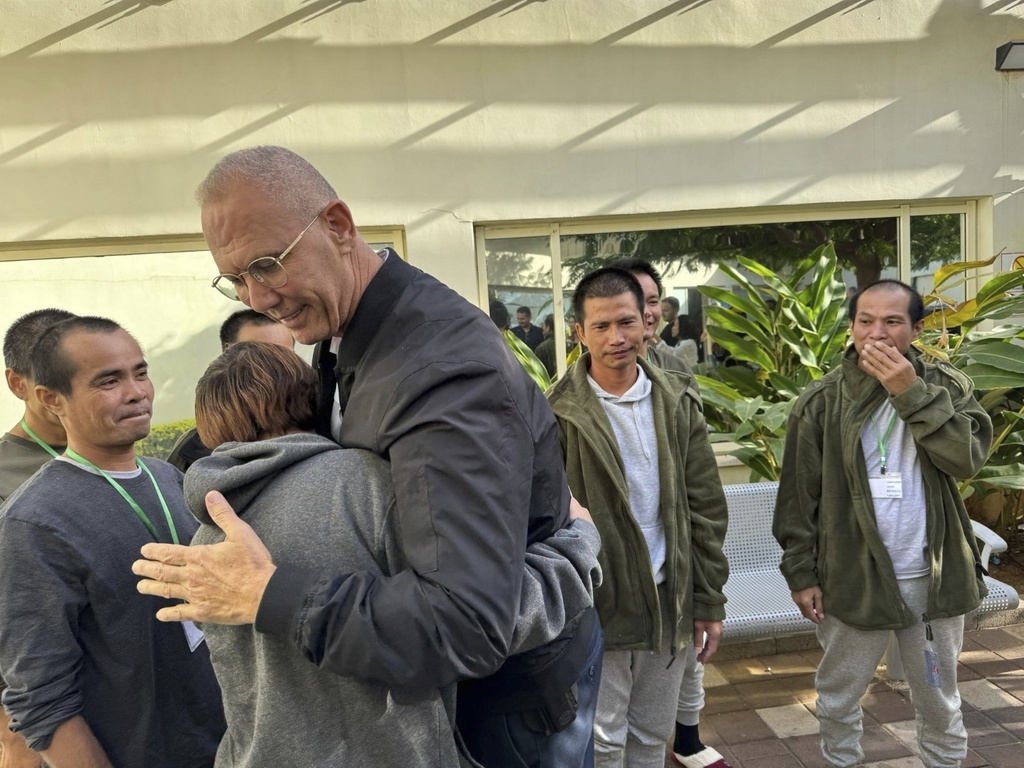
Israel’s Prime Minister’s Office Director General Yossi Shelley, foreground right visits the special area at the Shamir Medical Center for the 14 Thai nationals and one Philippine national, who returned from the Gaza Strip after their having been abducted by Hamas, in in Be’er Yaakov, Israel, Sunday Nov, 26, 2023. (Israel Prime Minister Office via AP)
When the first Palestinian uprising, or intifada, began in 1987, some members of the Israeli public came to see such workers as a security risk.
The 1993 Oslo Accords, which sought to foment “separation” between Israelis and Palestinians, further pushed Israel to minimize the dependency on non-citizen Palestinian workers.
To make up for the shortfall, Israeli employers convinced the government to vastly expand the recruitment of temporary workers to take their place. In addition to Thailand, countries including China, India, Nepal, the Philippines, Romania and Turkey spotted an opportunity and allowed Israeli employers to recruit within their borders. By 2003, migrant workers made up 10% of the labor force in Israel.
Creating marginal workers
Migrant workers in Israel, like their counterparts the world over, have long since been vulnerable to exploitation.
Many of their origin countries did not demand a commitment to secure their citizens’ rights in the form of a bilateral labor recruitment agreement. And workers migrating via private recruitment channels had to pay thousands of dollars in illegal “sign-up” fees, causing them to begin their journeys deep in debt.
Meanwhile, Israeli government policies have attempted to keep migrants outside of society by confining them to specific industries, obligating them to leave the country upon completion of their labor contract, excluding them from the public health system and prohibiting them from marrying or engaging in romantic relations while in Israel.
And authorities have paid little attention to labor standards, leaving farmworkers, for example, vulnerable to wage theft, terrible housing and exposure to pesticides without proper protection.
A damage to a house after a rocket fired by Lebanon’s Hezbollah militant group hit the northern Israeli town of Kiryat Shmona, on the border with Lebanon, Tuesday, March 5, 2024. (AP Photo/Ariel Schalit)
Under pressure from the U.S. government and Israeli civil society, over the past decade Israel began to sign bilateral agreements with countries sending migrants. These eliminated exorbitant recruitment fees, even if they failed to meaningfully improve labor conditions.
Even so, the number of migrant workers has grown slowly but steadily. In 2022, a total of 73,000 migrants in Israel worked as caregivers, in addition to nearly 50,000 in the construction and agriculture sectors combined.
Yet these migrants did not obviate the need to also have Palestinian labor in the mix. By Oct. 7, 2023, about 100,000 Palestinian workers crossed the border daily from Gaza and the West Bank.
In harm’s way
Since Oct. 7, Israeli authorities have ended those Palestinians’ work permits and tried to recruit thousands of new workers to the fields and construction sites to make up for the shortfall.
Malawi, a country that came to depend on migrants’ economic remittances decades before Thailand did, has sent 700 farmworkers and promises another 9,000 on the way – notwithstanding criticism from voices within the African nation itself.
In India, which had long sent caregivers to Israel, the government of Prime Minister Narendra Modi ignored internal criticism and sent Israel more workers in the aftermath of the Oct. 7 attack, including Pat Nibin Maxwell, the man killed in the March 4 Hezbollah attack.
Pat Nibin Maxwell facebook
Workers like Maxwell are now being sent to work near the borders of Lebanon and Gaza, laboring in agricultural communities vulnerable to Hamas and Hezbollah attacks that have been depleted by the evacuation of Israeli residents.
Though foreign governments are able to guarantee their citizens few protections in Israel, thousands have queued up in their home countries in search of a contract.
Once in Israel, they join the vast majority of migrant workers who have elected to remain in the country despite the Oct. 7 attack and its aftermath.
Like millions of migrant workers the world over in search of economic progress or survival, they have calculated, for now, that earning higher wages abroad is worth taking significant personal risks.
While helping keep the Israeli economy running during wartime, these migrant workers remain in the path of rockets – as the death of Pat Nibin Maxwell has illustrated.
PHUKET – Patong police in Phuket Province detained two Russian women, ages 18 and 23, after an investigation revealed that they were secretly selling sex.
Police officers searched the female visitors’ hotel room on Phra Metta Road, Patong Subdistrict, Kathu District, Phuket Province on March 4, 2024, at around 10:00 p.m., and seized the following items: 1. Ms. Anna, 18, has a black shoulder bag carrying 14 1,000-baht bills totaling 14,000 baht. 2. Ms. Olga, 23, owns a white and black shoulder bag that holds 13 1,000 baht banknotes.
After 11:00 p.m., officials transported the suspects and evidence to the Patong Police Station for questioning. The Russian women were charged with illegally working as prostitutes.
Police officers searched the female visitors’ hotel room on Phra Metta Road, Patong Subdistrict, Kathu District, Phuket Province.
According to the policy of the National Police Chief and the Region 8 Commander, a meeting of police station chiefs under the Phuket Provincial Police on March 4 issued a warning about foreigners coming to commit crimes in Phuket Province, including coming to work illegally.
The officers have been ordered to make information available in order to strictly adhere to legal procedures in the area, such as ordering and enforcing the providing of foreign information. When an offence is committed, action might be taken immediately.
The Swiss man, 60, refused to give any evidence at the Trang police station on March 5, 2024.
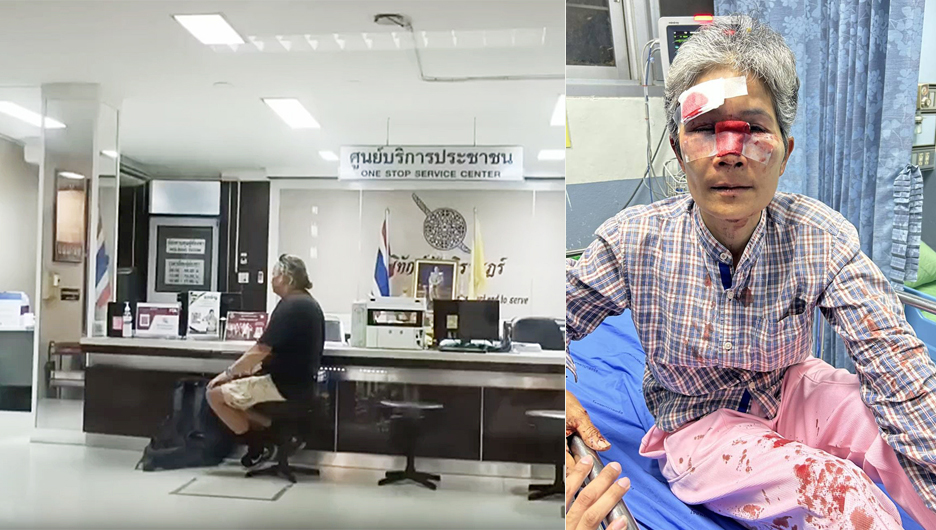
TRANG – Another dispute erupted between a foreigner and a Thai in Trang Province, southern Thailand. A Swiss man attacked a Thai woman, breaking her nose and making her face bloat in the supermarket. She needed to be hospitalised immediately.
Mr. Kritphong Khikkham, 25, of Village No. 1, Ban Khuan Subdistrict, Mueang District, Trang Province, and his family reported to the tourist police on Tuesday evening, March 5, that a Swiss foreigner had attacked his mother, age 53, and caused serious physical harm in the middle of a mall in Trang Municipality.
According to Kritphong, his mother developed a nerve condition as a result of having the wrong tooth moved. As a result, she will need to heal for some time. She needs to use a walker to go around, and she can’t walk very well.
Mr. Straumann, a 62-year-old Swiss man, was taken to the Muang Trang Police Station, and Mrs. Ree, 53, was transferred to the hospital.
His mother went shopping at a well-known supermarket on the second floor on Tuesday. The male foreigner walked to bump his mother and nearly fell. She then told him loudly in English, “Be polite please.” This made him dissatisfied, shouting and shouting before going straight and punching his mother four times and then walking away.
At this point, his mother tossed a water bottle at him. He walked back, locked his mother’s neck, and struck her again, severely banging her head into the ground. This left Kritphong’s mother gravely hurt, with blood all over her face and bruises.
A Swiss man attacked a Thai woman, breaking her nose and making her face bloat in the middle of the supermarket.
The supermarket’s employees called rescuers and hurried her to Trang Hospital’s emergency unit. Her nose was fractured, her eyelids were inflamed, and her back was swelling. The physicians will do a comprehensive examination again.
Patrol police later escorted Mr. Straumann, a 62-year-old Swiss man, to Muang Trang Police Station for questioning. But the Swiss man declined to provide any evidence.
According to Mr. Straumann’s information, he arrived in Thailand correctly and everything was well. He has sought for a visa to live after retirement. He renewed his passport on October 28, 2023, and it is set to be renewed again on November 14, 2024.
The police investigated the CCTV cameras but were unable to see the incident. However, several individuals in the supermarket witnessed it and are willing to testify.
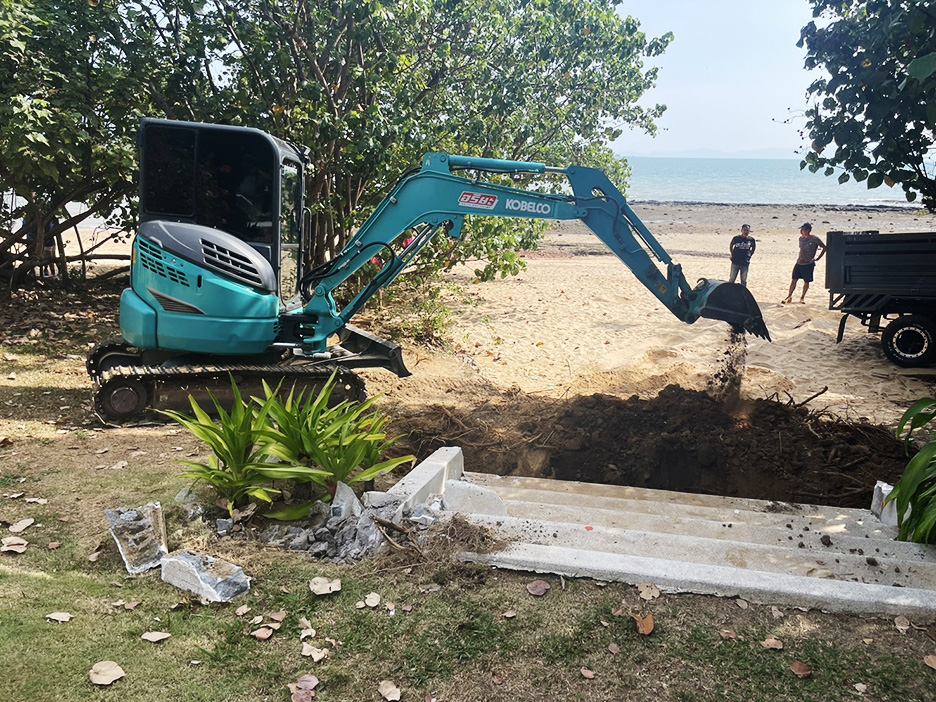
The real estate firm has demolished the controversial beachfront cement steps where the Swiss man drove out the female doctor and her friend who sat there.
PHUKET – Even though Mr. Fehr, also known as David, the Swiss man accused of kicking a female doctor, is currently facing deportation, he has been ordered to stay in the country while he is investigated for several issues, including his involvement in Phuket property ownership.
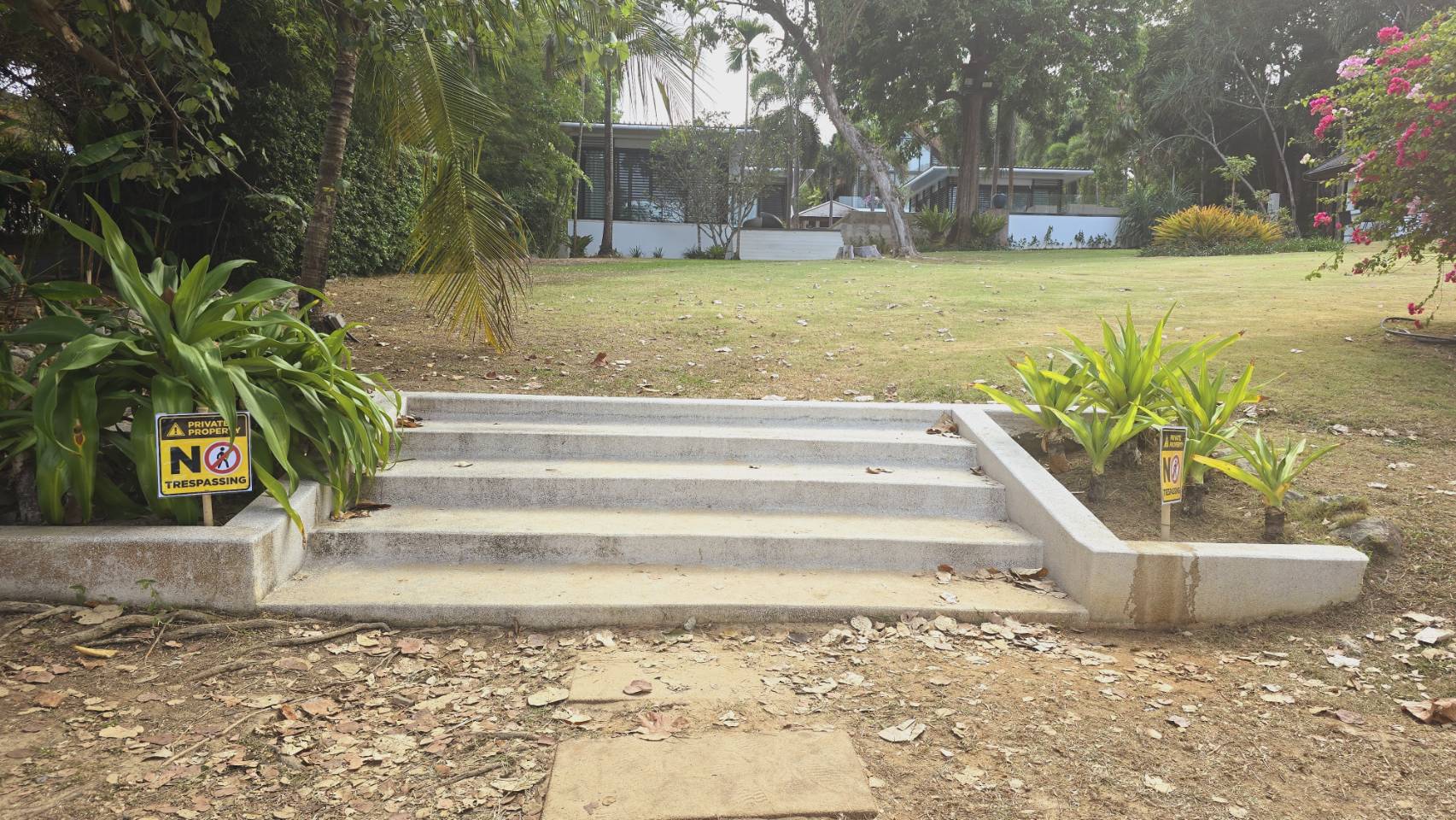
On March 5, Phuket Peninsula Estate Co., the real estate firm that constructed the luxury villa where David resides, has demolished the controversial beachfront cement steps where he drove out the female doctor and her friend who sat there, which led to angry demonstrations and a call for his deportation as well as to remove the steps as they encroached on the beach, which is under Thai law a public property.
The move came after the local authorities posted a notice after the incident to have it removed within 30 days.
There are no more disputed seaside cement stairs where David drove out the female doctor and her friend before they were dismantled.
In addition, officials in Phuket province are now following the instructions of Deputy Prime Minister and Interior Minister Anutin Charnvirakul, who held a video conference with governors across the country on March 4, 2024, to crack down on mafia-like behaviour across the country, especially in Phuket, which is currently in the news.
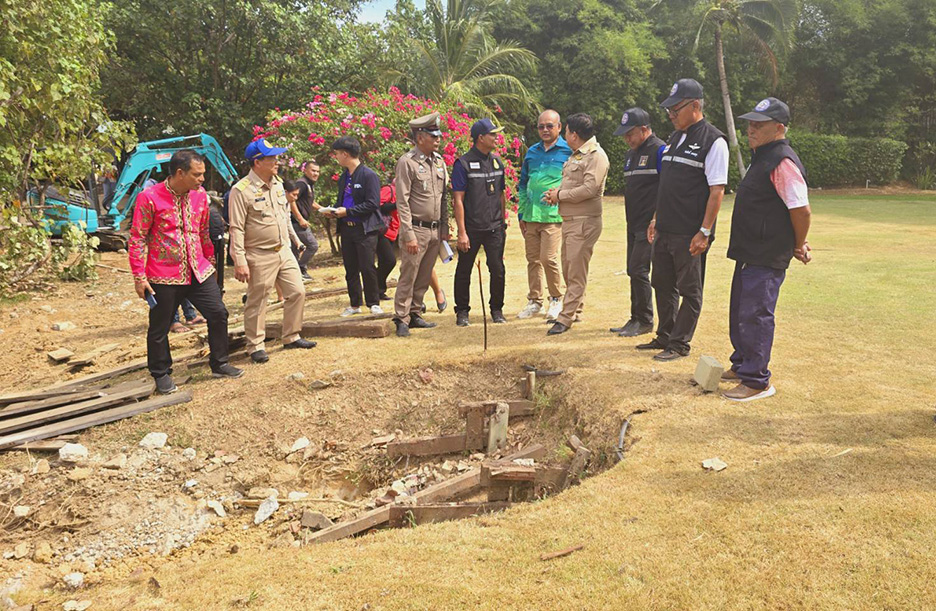
Mr. Adul Chuthong, deputy governor of Phuket province, has instructed provincial administrators to inspect the area around the villa on Yamu Beach where David and his Thai wife are staying. They have already inspected over 10 houses out of a total of over 30 and have revoked the land titles of all ten houses.
The controversial beachfront cement steps have been removed, but the land and properties are being investigated.
At the same time, officials from the Phuket Provincial Land Department will collect more evidence about the history of land in the area, which covers an area of over 100 rai. Officials from the National Anti-Corruption Commission (NACC) office in Phuket have also led a team to inspect the area after residents complained about the closure of the entrance and exit.
Suwat Saowaran, NACC director for Phuket province, stated that his agency will inspect 106 rai of land where title documents have been issued to evaluate whether they were obtained legitimately and if any officials have committed wrongdoing. The investigation would take time and depend on the evidence.
In reality, the NACC has been looking into the situation before it became public. If government officials fail to carry out their responsibilities properly, the NACC will have to take legal action.
The NACC officials in Phuket inspected the area near the villa where the Swiss man resides after residents complained about the closure of the entrance and exit.
Pol. Col. Parinya Klinkasorn, Deputy Commander of Immigration 1, stated that if David does not renew his present business visa, he will be an alien in the Kingdom with a permit that expires on March 13. If he extends his visa, Immigration will renew it for legal reasons rather than for business purposes. It is effective for 90 days and may be extended until the case is resolved. He will be unable to continue running the business in Thailand.
The case of the female doctor who filed a complaint against the Swiss man for assault at the Thalang police station is still under investigation. The police are waiting to interview 2-3 more witnesses after the investigators have already filed assault charges. David has denied the allegations.
In another case, David has a conflict with an ambulance driver and both parties have filed charges against each other since late 2023. Choeng Thale and Thalang police stations have scheduled a meeting between the two parties on March 7 to negotiate a withdrawal of the charges.
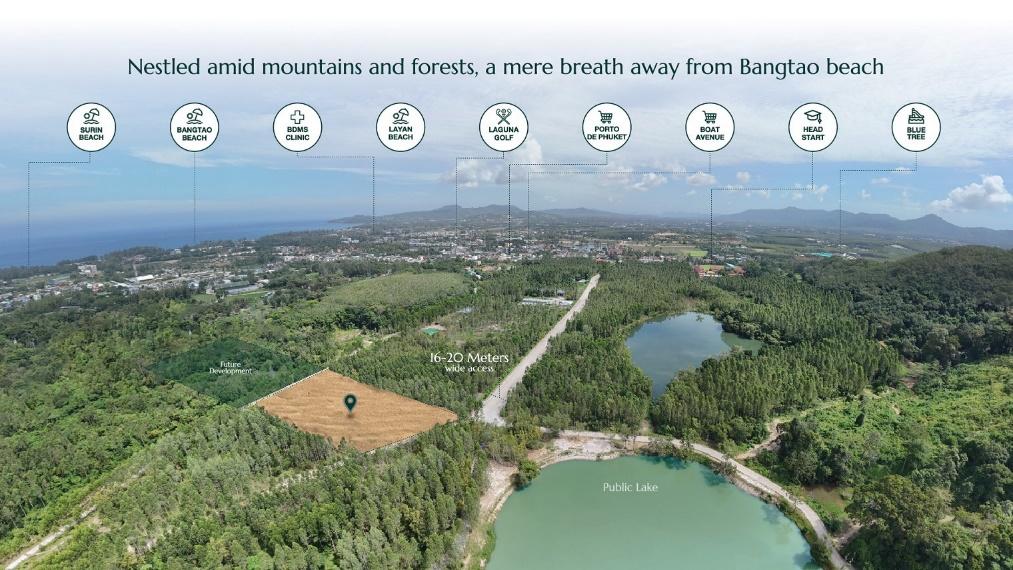
“Naturale Phuket Private Pool Villas” Launch in Prime Location of Cherng Talay, Phuket, for Luxury Living in a Natural Setting near Bangtao Beach
AAG Development, one of Thailand’s prime real estate developers with over 30 years of experience, launches its latest luxury residential project, “Naturale Phuket Private Pool Villas,” under the concept of “Symphony of Luxury and Nature” at a prime location in Phuket’s Cherng Talay. Prices start at 27.6 million baht ($770,000), offering exceptional value for luxury living.
Naturale Phuket Private Pool Villas is a 17-rai (6.7-acre) community just 5 minutes from world-renowned beaches including Bangtao Beach. World-class lifestyle amenities nearby include international schools, shopping centers, renowned restaurants, hospitals, medical clinics, and a wellness center operated by Bangkok Hospital Phuket. These outstanding attractions enable the 1.4-billion-baht ($39 million) project to seamlessly blend a natural setting with luxury living for wonderful short or long stays on the island known as the “Pearl of the Andaman”.
Mr. Wirote Chongsujipan, CEO of AAG Development, said that the company’s in-depth surveys of local and expat lifestyles found that Phuket’s enduring appeal as a global destination continues to drive property demand, particularly in the luxury segment. AAG Development is targeting this growing opportunity with a unique and high-quality living experience with international-standard amenities to meet every family’s need. Investors can look forward to low maintenance costs as well as a high-performing asset.
Under the concept of “Symphony of Luxury and Nature,” Naturale Phuket Private Pool Villas are designed and crafted with distinctive architecture for Luxury Modern Tropical Living amid lush landscapes and breathtaking natural beauty. The villas are designed to cater to families of all ages, with the goal of enhancing family happiness by fostering quality time together. This is achieved through space and functional design, meticulously informed by family research.
The first phase of the project offers 2 alternative private pool villa types, with 4 or 3 bedrooms. The 4-bedroom villas have a usable area of 511 square meters, 5 bathrooms, and parking for 3 cars. The 3-bedroom villas have 357 square meters, 4 bathrooms, and parking for 2 cars.
Each villa has a Universal Design concept and double master bedrooms with direct access to the swimming pool. All bedrooms have ensuite bathrooms and walk-in closets, ensuring privacy and ample storage for all guests. The living room has a 4.5-meter-high teak wood ceiling for spaciousness, light, and ventilation. The international-standard amenities include fully equipped kitchens and imported appliances with elegant dining spaces, extra-long salt-water pools, Jacuzzis, and lighting automation systems. Additional options including EV chargers and home solar systems will also be available at the villas.
The high-end property has convenient and safety access through a 16-20-meter road in front of the project in Cherng Talay Soi 1. Prices for villas in Phase 1 start at 27.6 million baht.
Discover more about refined living at the Naturale Phuket Private Pool Villas at 080 959 7979 or visit www.naturalephuket.com. The Sales Gallery in Cherng Talay Soi 1 opens daily.