
























27 C
Bangkok
Thursday, September 17, 2026
Home Blog Page 1967

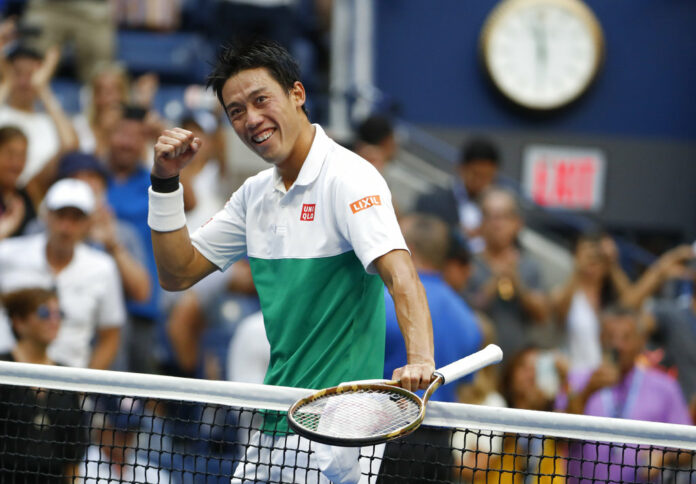
Nishikori, Osaka Give Japan Historic Tennis Day at US Open (Video)

Kei Nishikori, of Japan, celebrates after defeating Marin Cilic, of Croatia, during the quarterfinals of the U.S. Open tennis tournament, Wednesday, Sept. 5, 2018, in New York. Photo: Adam Hunger / Associated Press

NEW YORK — Kei Nishikori looked around Arthur Ashe Stadium and noticed the crowd.

With Nishikori playing immediately after Naomi Osaka on Wednesday, the U.S. Open became must-see viewing for Japanese tennis fans.

“It’s good to have, you know, home support outside of Japan,” he said. “Yeah, it’s great news we’re both in the semis.”

Historic news, actually.

Both players won – Osaka decisively, Nishikori narrowly – to give Japan a men’s and women’s semifinalist at the same Grand Slam tournament for the first time, according to the ATP Tour.

Nishikori rallied to beat Marin Cilic 2-6, 6-4, 7-6 (5), 4-6, 6-4 in a match that lasted 4 hours, 8 minutes. Osaka routed Lesia Tsurenko 6-1, 6-1 in just 57 minutes, the third time in her five matches in the tournament that she finished in less than an hour.

“I think she can, you know, win a title now, even (a) Grand Slam. So I feel, you know, big chance for her,” Nishikori said.

“Also happy for myself, too, being injured last year.”

That was a wrist injury that kept him off the tour from late last season until early this year. He started to regain his form in the spring, was back up to the No. 21 seed for his return to Flushing Meadows, and awaits either No. 6 Novak Djokovic or unseeded John Millman on Friday.

Meanwhile, Osaka won a Masters title at Indian Wells and with her strong run in New York, where she will next play 2017 U.S. Open runner-up Madison Keys, she has picked up more of a following from the Japanese media – though she believes there’s a different reason for that.

“I think it’s because of Kei,” she said, holding her hands apart to show how much bigger Nishikori is in Japan, from where her family moved to New York when she was 3.

So big, in fact, that she was too nervous to talk to him until recently.

Once she did, the 20-year-old Osaka found they had plenty in common. Nishikori, 8 years older, was like a “really big kid” who liked to play video games and have fun like her.

“Overall, he’s just really nice and positive and bubbly and stuff,” Osaka said.

Only once had Japan had a man and woman reach the quarterfinals of the same major, and Shuzo Matsuoka and Kimiko Date both lost in that round at Wimbledon in 1995.

Nishikori and Osaka are looking to keep right on going. Their victories provided a boost to their baseball-crazed country on an otherwise downer of a day with the news that Los Angeles Angels star Shohei Ohtani had new damage in his right elbow and major surgery was been recommended.

When Nishikori became the first Asian male to reach a Grand Slam singles final four years ago, hundreds of fans packed into a convention hall to cheer him on at a standing-room-only public viewing event in his hometown of Matsue.

Now there might be two such events in Japan this weekend.

“Hopefully we do well this week,” Nishikori said.

Story: Brian Mahoney
Advertisement

World Criticism Doesn’t Have Suu Kyi or Myanmar on the Ropes

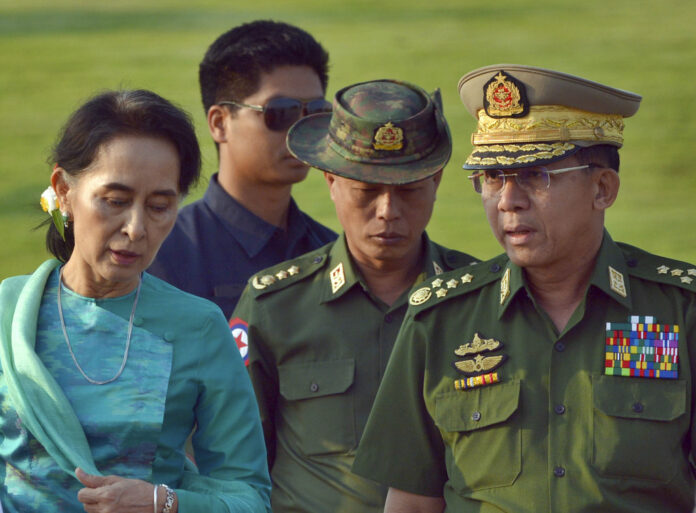
Aung San Suu Kyi, Myanmar's foreign minister and de facto leader, left walks in 2016 with senior General Min Aung Hlaing, Myanmar's commander-in-chief, right, in Naypyitaw, Myanmar. Photo: Aung Shine Oo / Associated Press

BANGKOK — Myanmar’s government looks as if it’s under siege from an international community concerned about the condition of its nascent democracy, with widespread calls for a genocide tribunal to hold its military to account for the brutal treatment of its Muslim Rohingya minority.

But experts say not to expect any change of course from the country’s leader, State Counsellor Aung San Suu Kyi, even after a fresh round of withering criticism from abroad following Monday’s show-trial conviction of two Reuters reporters who helped expose extrajudicial killings of 10 Rohingya men and boys.

Suu Kyi’s motivations are opaque. Even as a revered pro-democracy activist, the Nobel Peace laureate had a reputation for being autocratic, but now her core ideology has come into question.

There is at least a loose consensus that she faces real restrictions on her actions due to the power retained by the military that is enshrined in the constitution it imposed in 2007.

“Aung San Suu Kyi has tried to balance her delicate and antagonistic relationship with the military and her conception of society’s needs, perhaps fearing too strident a stance could prompt an overt return to military rule, which is possible under the constitution in certain circumstances,” David Steinberg, professor emeritus at Georgetown University, wrote in July in the online magazine The Diplomat.

Other observers are less generous, saying Suu Kyi’s seeming impassivity toward the plight of the Rohingya – and hostility toward those wishing to address the issue – undercut the narrative pitting her against the military.

“People tended to think that Aung San Suu Kyi and the military were at odds, and each feared that the other would dislodge them from power,” said Khin Zaw Win, a rare outspoken critic of the government who directs the Tampadipa Institute, a Yangon-based capacity-building institution.

He said the conviction of the two Reuters journalists, who were sentenced to seven years in prison, is a reminder that “shows that what they fear in tandem is the world out there finding the truth and seeking to unseat them.”

The old saying, “They have to hang together, or they hang separately,” describes their situation, he said.

Political realities inside and outside Myanmar suggest there is neither the will nor a way to ensure justice for the Rohingya, 700,000 of whom fled to neighboring Bangladesh to escape a brutal counterinsurgency campaign by the army. Myanmar denies any large-scale human rights violations and says its actions were a response to surprise attacks by militants in August last year that killed a dozen members of the security forces. Critics charge it was ethnic cleansing.

Those inclined to bring Myanmar to account have few weapons to do so. Despite the recommendation last month of a special U.N. fact-finding commission that top Myanmar commanders be charged with genocide, no trial is likely to be held in the foreseeable future.

It’s far from clear that any country would officially push prosecution, and certain that several would seek to frustrate it. Major powers that have never entertained much interest in human rights – China and Russia – also have strategic reasons to cozy up to Myanmar, a well-situated outpost on the Indian Ocean.

“A tribunal at the International Criminal Court, for example, on genocide charges will be difficult to pull off,” Murray Hiebert, a senior associate at the Center for Strategic and International Studies in Washington, D.C., said in an email interview. “Not only isn’t Myanmar a member of the ICC, but a case must be brought by a member of the U.N. Security Council. China and Russia have made clear that they would block a case against Myanmar.”

The desire to contain China’s growing influence in Southeast Asia is a major issue.

“The U.S. and most Western democracies want to avoid pushing Myanmar further in the arms of Beijing,” Hiebert said.

Competition with China for geopolitical influence, as well as friendship from regional countries anxious not to rock the boat or jeopardize investments, also limits the threat of unfriendly action.

“I think Myanmar can still count on most Southeast Asian countries as partners, and also India and probably Japan – Japan has been wary of taking a tough stance on the issues related to the Rohingya, for fear of losing strategic influence in Myanmar,” said Joshua Kurlantzick, a senior fellow for the New York-headquartered Council on Foreign Relations.

Sanctions – the second-line approach to pressuring Myanmar – face the same constraints as pushing for a genocide tribunal, though nations inclined to do so can act unilaterally.

Hiebert noted that U.S. Senate Majority Leader Mitch McConnell – a stalwart supporter of Suu Kyi in her Nobel Prize-winning days as a freedom fighter against military rule – remains sympathetic to her and is a roadblock to tougher action by Washington.

“I think Myanmar and most of the population will hunker down in the face of more sanctions as they have stood up to most protests over the treatment of the Rohingya over the past year,” Hiebert said. “They tell foreign visitors that they have resisted and survived sanctions before. The difference this time, of course, is that most of the population seems to support the military’s moves against the Rohingya, while in the past many people seemed to support the sanctions to put pressure on the military to move toward greater democracy.”

Story: Grant Peck

Advertisement

Quake in Northern Japan Kills 2, Causes Landslides, Blackout

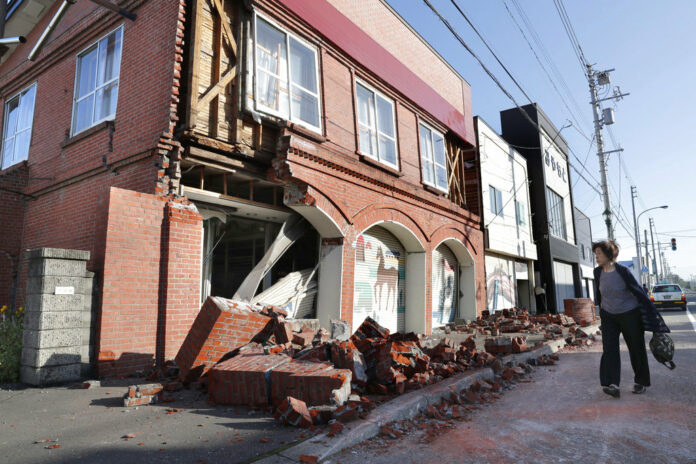
A woman walks past a damaged building Thursday in Abira town, near Chitose, Hokkaido, northern Japan. Photo: Masanori Takei / Associated Press

TOKYO — A powerful earthquake rocked Japan’s northernmost main island of Hokkaido early Thursday, triggering landslides that crushed homes, knocking out power and forcing a nuclear power plant to switch to a backup generator.

The magnitude 6.7 earthquake struck southern Hokkaido at 3:08 a.m. at the depth of 40 kilometers (24 miles), Japan’s Meteorological Agency said. The epicenter was east of the city of Tomakomai but the shaking buckled roads and damaged homes in Hokkaido’s prefectural capital of Sapporo, with a population of 1.9 million.

Chief Cabinet Secretary Yoshihide Suga told a news conference that two people had been confirmed dead. He did not give details.

The Japanese national broadcaster NHK, citing its own tally, reported that 125 people were injured and nearly 40 are feared missing. Hokkaido’s local disaster agency put the number of injured at 48.

Several people were reported missing in the nearby town of Atsuma, where a massive landslide engulfed homes in an avalanche of soil, rocks and timber.

Reconstruction Minister Jiro Akama told reporters that five people were believed to be buried in the town’s Yoshino district. Some of the 40 people stranded there were airlifted to safer grounds, NHK said.

Aerial views showed dozens of landslides in the surrounding area, with practically every mountainside a raw slash of brown amid deep green forest.

Airports and many roads on the island were closed following the early morning quake. NHK showed workers rushing to clean up shattered glass and reinstall ceiling panels that had tumbled down in the region’s biggest airport at Chitose.

Prime Minister Shinzo Abe said that 25,000 troops and other personnel would be dispatched to the area to help with rescue operations.

NHK showed the moment the quake struck the city of Muroran, with its camera violently shaking and all city lights going black moment later. In Sapporo, a mudslide on a road left several cars half buried.

Power was knocked out for Hokkaido’s 2.9 million households. Economy, Trade and Industry Minister Hiroshige Seko told reporters that the extensive power outage was caused by an emergency shutdown of the main thermal power plant at Tomato Atsuma that supplies half of Hokkaido’s electricity.

The hope had been to get power back up “within a few hours,” Seko said. However, damage to three generators at the Tomato Atsuma plant meant that the restoration of power could take more than a week.

Seko said utilities were planning to start up several other thermal and hydroelectric plants to provide at least some power.

In the meantime, authorities sent power-generator vehicles to hospitals so enable them to treat emergency patients, he said.

Reacting quickly to the disaster, troops deployed water tanker trucks in Sapporo, where residents were collecting bottles to tide them over until electricity and tap water supplies come back online.

The quake’s impact was widespread. To the north, in the scenic town of Biei, residents lined up outside of supermarkets and convenience stores, quickly clearing shelves of water, toilet paper and food.

“Only a few cartons of instant ramen were left,” said Mika Takeda, who lives in the town of 10,000. The one local gas station was limiting customers to only 20 liters (5 gallons) of gas, she said.

Suga said authorities were doing their utmost to rescue and assess damage after receiving hundreds of calls about people missing and buildings collapsing.

The central government set up a crisis management taskforce at the prime minister’s office.

Three reactors at the Tomari nuclear plant were offline for routine safety checks, but they are running on backup generators that kicked in after losing external power because of the island-wide blackouts, Japan’s Nuclear Regulation Authority said. Spent fuel in storage pools was safely cooled on backup power that can last for a week, the agency said.

The powerful earthquake and tsunami in March 2011 that hit northeast Japan destroyed both external and backup power to the Fukushima Dai-ichi nuclear plant, causing meltdowns.

Story: Mari Yamaguchi

Advertisement

Kim Jong Un Demands ‘Goodwill Measures’ as Koreas Set Summit

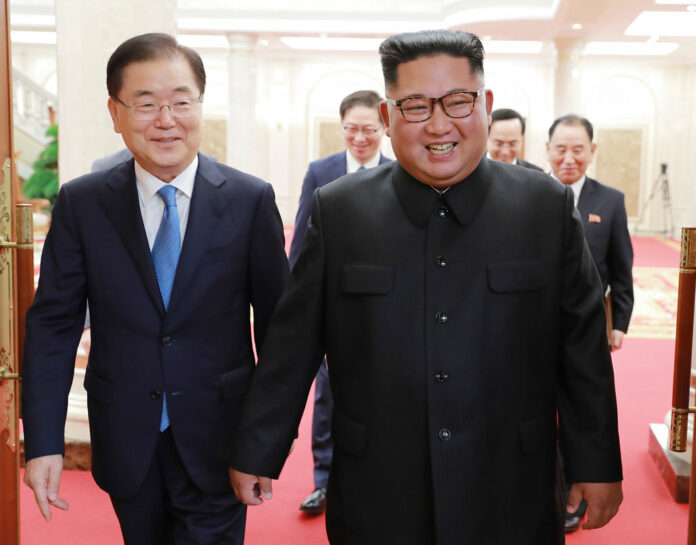
In this Wednesday, Sept. 5, 2018 photo provided on Thursday, Sept. 6, 2018 by South Korea Presidential Blue House via Yonhap News Agency, North Korean leader Kim Jong Un, right, meets with South Korean National Security Director Chung Eui-yong in Pyongyang, North Korea. Photo: Associated Press

SEOUL, South Korea — Kim Jong Un reaffirmed his commitment to a nuclear-free Korean Peninsula and the suspension of all future long-range missile tests and said he had faith to continue working with increasingly embattled President Donald Trump, South Korean officials and the North’s official media said Thursday.

Kim also reportedly expressed frustration with outside skepticism about his nuclear disarmament intentions and demanded that his “goodwill measures” be met in kind.

The trove of Kim comments were filtered through his propaganda specialists in Pyongyang and the South Korean government, which is keen on keeping engagement alive, and they comes amid a growing standoff with the United States on how to proceed with diplomacy meant to settle a nuclear dispute that had many fearing war last year.

Only hours earlier, a South Korean delegation returned from talks with Kim where they set up a summit Sept. 18-20 in Pyongyang between Kim and South Korean President Moon Jae-in, their third meeting since April.

Each statement reportedly made by Kim will be parsed for clues about the future of the nuclear diplomacy. His reported commitment to a nuclear-free Korea, for instance, wasn’t new information – Kim has repeatedly declared similar intentions before – but it allows hopes to rise that negotiators can get back on track after the recriminations that followed Kim’s meeting in June with Trump in Singapore.

The impasse between North Korea and the United States, with neither side seemingly willing to make any substantive move, has generated widespread skepticism over Trump’s claims that Kim will really dismantle his nuclear weapons program.

“Chairman Kim Jong Un has made it clear several times that he is firmly committed to denuclearization, and he expressed frustration over skepticism in the international community over his commitment,” Chung Eui-yong, Moon’s national security adviser and the head of the South Korean delegation to Pyongyang, told reporters on Seoul on Thursday. “He said he’s pre-emptively taken steps necessary for denuclearization and wants to see these goodwill measures being met with goodwill measures. ”

Chung reported Kim as saying that work to dismantle the only engine-test site in the country “means a complete suspension of future long-range ballistic missile tests.”

Kim also said an end-of-war declaration that Seoul and Pyongyang have been pushing Washington to sign off on wouldn’t weaken the U.S.-South Korean alliance or lead to the withdrawal of the 28,500 U.S. troops stationed in South Korea to prevent North Korean attack, according to Chung.

The summit later this month between Kim and Moon, the driving force behind the current diplomacy, will be a crucial indicator of whether larger nuclear negotiations with the United States will proceed.

Moon is seen as eager to keep the diplomacy alive in part so that he can advance his ambitious engagement plans with the North, which would need U.S. backing to succeed. The inter-Korean summit comes on the eve of a gathering of world leaders at the United Nations in New York at the end of September, but Seoul said Thursday that it was unlikely Kim would attend. Seoul has indicated an interest in Kim and Trump meeting in New York, and Trump, who is facing growing domestic turmoil, has hinted that another summit could happen.

While pushing ahead with summits and inter-Korean engagement, Seoul is trying to persuade Washington and Pyongyang to proceed with peace and denuclearization processes at the same time so they can overcome a growing dispute over the sequencing of the diplomacy.

Seoul and Pyongyang both want a declaration to formally end the 1950-53 Korean War. U.S. officials have insisted that a peace declaration, which many see as a precursor to the North eventually calling for the removal of all U.S. troops from the Korean Peninsula, cannot come before North Korea takes more concrete action toward abandoning its nuclear weapons. Such steps may include providing an account of the components of its nuclear program, allowing outside inspections and giving up a certain number of its nuclear weapons during the early stages of the negotiations.

The Korean War ended with an armistice, leaving the peninsula technically still at war. Moon has made an end-of-war declaration an important premise of his peace agenda with North Korea.

While an end-of-war declaration wouldn’t imply a legally binding peace treaty, experts say it could create political momentum that would make it easier for North Korea to steer the discussions toward a peace regime, diplomatic recognition, economic benefits and security concessions.

After their June summit in Singapore, Trump and Kim issued a vague statement about a nuclear-free peninsula without describing when and how it would occur. Post-summit nuclear negotiations between Washington and Pyongyang were rocky and quickly settled into a stalemate.

North Korea has accused the United States of making “unilateral and gangster-like” demands for denuclearization and holding back on the end-of-war declaration.

Trump called off a planned visit to North Korea by Secretary of State Mike Pompeo last month, citing insufficient progress in denuclearization.

The two past inter-Korean summits in April and May removed war fears and initiated a global diplomatic push that culminated with the meeting between Kim and Trump in June. But Moon faces tougher challenges heading into his third meeting with Kim, with the stalemate in nuclear negotiations between Pyongyang and Washington raising fundamental questions about Kim’s supposed willingness to abandon his nuclear weapons.

Story: Hyung-jin Kim, Kim Tong-hyung, Foster Klug

Advertisement

Barring Women From Police Academy ‘Does Not Discriminate,’ Police Chief Says

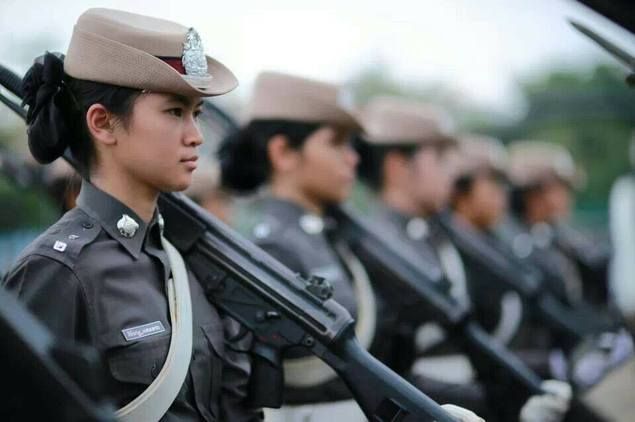
Matichon file photo.

BANGKOK — Police commissioner Chakthip Chaijinda on Wednesday defended plans to bar women from the police academy.

Gen. Chakthip said today that the academy – the only career route to the upper echelons of the force – will only accept applicants from the all-male Armed Forces Academies Preparatory School starting next year. He pushed back against accusations of sexism and said women will still be able to become cops through other channels.

“This policy does not discriminate against women, and it won’t affect the female officers in the force,” Chakthip said.

Read: Women Banned From Police Academy Starting 2019

The change would prevent women from enrolling in the police academy, which graduates cadets with the rank of lieutenant, thus making them eligible for important posts.

The academy, located west of the capital in Nakhon Pathom, is considered the major gateway for those seeking to become commissioned officers. Rank-and-file officers graduate from the non-commissioned academy, which would continue to accept women.

The change would undo a historic 2009 move to admit women into the academy and shut them out of advanced positions. It would also be an abrupt U-turn from two years ago, when police considered promoting women to be station chiefs, an unprecedented move.

The officer behind that idea, then-Bangkok police chief Sanit Mahatavorn, expressed disappointment that many in the upper brass appear mired in backward views.

“Many see women as unfit for some jobs, because they involve hard work and risk to their lives. They, well, they believe women can’t work as well as men,” Sanit, now retired, said in a Tuesday interview. “But I think they should give women the opportunity to do things we thought they couldn’t. Maybe they will even do it better than men.”

Under the new policy, civilians – male and female – can still become lieutenants by meeting other requirements such as having a bachelor’s degree in relevant fields, according to police spokesman Krissana Pattanacharoen.

The news surfaced this past weekend when a Facebook page run by female investigative officers posted an internal police memo announcing the change. The page admin argued the policy would all but eliminate women investigators because their only pathways are through the academy or by obtaining law degrees.

The admin, who does not identify herself on the page, declined to speak to a reporter.

Chatkaew Wanchawee, who’s said to be the country’s first ever female investigator, likewise declined an interview.

Another female investigative officer, Kawaleesiri Phasukthanapaisan, said Tuesday she only heard about the change through the media. She declined to say how she felt about it.

“It’s up to the policy of the commanders,” said Kawaleesiri, who’s stationed in Pattaya. “Because we’ll keep working. It won’t affect us.”

Sanit, the former metro police chief, said he wished the force had given women more opportunities for advancement.

“Many male policemen get drunk and skip work. Women don’t do that.” Sanit said. “They have little distraction outside the workplace. I think they are more effective than men when it comes to running things.”

Advertisement

Local Elections to Come 3 Months After National Vote

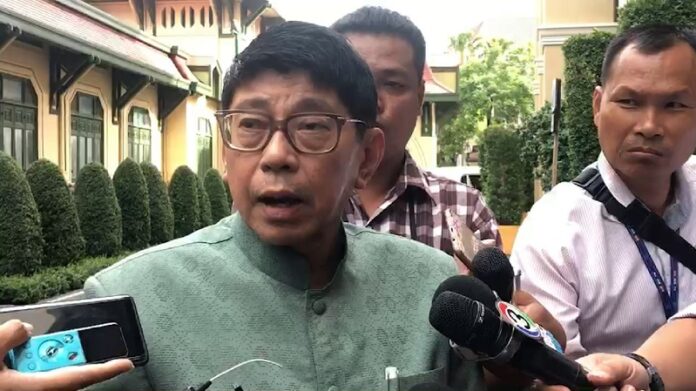
Wissanu Krea-ngam, deputy prime minister, speaks to reporters Tuesday at the Government House in Bangkok. Photo: Matichon

BANGKOK — Local elections will be held 90 days after the general election, a deputy prime minister announced Tuesday morning.

The selection of local authorities in each province must be delayed three months to have adequate time to prepare necessary legislation, Wissanu Krea-ngam said in comments made at Government House.

Late last month, the deputy head of the National Legislative Assembly, Surachai Liangboonlertchai, suggested the local vote would likely follow the national poll as the relevant laws would not be ready in time.

A legal expert said the change runs counter to the junta’s plan for restoring democracy.

“Following the road map, the local elections are expected to happen first because the government would like to see how Thailand gradually returns to democracy,” Choksuk Kornkittichai of the parliamentary secretariat’s library said in an interview.

What would be the first election in nearly five years is now expected to happen in February.

Still, he believes that holding local elections first would pave the way for the democratic rights of citizens.

Pannika Wanich, spokeswoman for the progressive Future Forward Party, said that it doesn’t matter which election comes first because “both local and general elections should have been held since years before, but were blocked by the junta.”

One political scientist said the junta made decision came under pressure to stage a vote.

“As many people make enormous demand on NCPO to unlock political parties, the general election is the main factor to reduce this stressful situation,” Weerasak Krungthep of Chulalongkorn University said in recent comments.

Still, he insisted that the main goal of junta is to prolong its grip on power, despite taking necessary steps to ease its restrictions on political activities before general elections.

“If many of their members take seats in the house of representative, the NCPO could vote who will be the prime minister, which means the junta remains in the power,” he said.

He also said the military government is likely to hold general elections as a test of its capacity for selecting the head of cabinet.

Advertisement

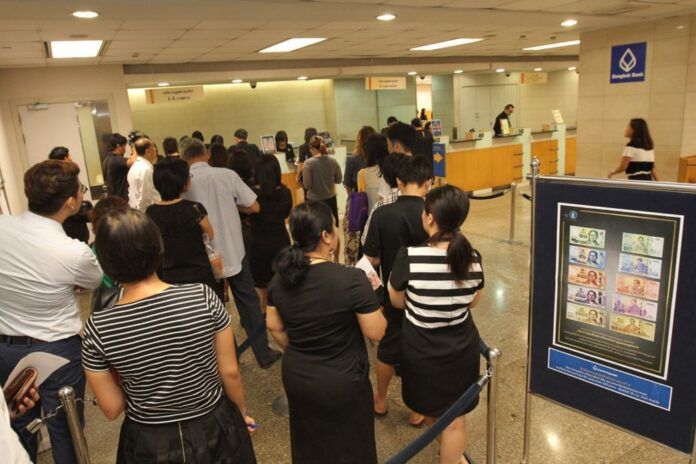
Mid-Year Thai Bank Holiday Abolished

People line up at a bank in Bangkok to buy commemorative banknotes in memory of King Rama IX in September 2017.

BANGKOK — For as long as Thais can remember, bank branches, public or private, always close in the middle of the year on July 1 to do some bookkeeping. That tradition will end next year.

The central bank announced the abolition of the mid-year holiday in a statement issued Tuesday, citing advances in technology that no longer require financial institutions to halt operations for a day.

The holiday began decades ago because banks had to calculate annual interest and verify the past year’s transactions every June 30.

Back when everything was done by hand, staff worked late into the night, so every bank agreed to give them the next day off, said Bangkok Bank vice president Decha Tulanun.

“Everyone involved in the system had to stay up all night,” Decha said Wednesday. “But now everything is done by 9pm.”

Are bank employees sad that they lost a holiday?

“They are probably complaining to each other,” Decha said, laughing.

Related stories:

Machines Coming to Take Millions of Thai Jobs: Report

Advertisement

Teacher Humiliates Young Girls For Garland-Making

NAKHON RATCHASIMA — A primary school teacher apologized for shaming his students online for not weaving flower garlands to his standards.

A teacher at a school in the northeast apologized after netizens brigaded his personal Facebook page Tuesday for cussing out a group of schoolgirls for weaving what he deemed a “real piece of shit” garland in class.

“You guys wove a real piece of shit. You failed today. You are going to sit here and keep weaving until 8pm,” the elementary school teacher Toto Dorothy.

The teacher’s vulgar critique quickly got the attention of a page trafficking in online drama, which shared it to great virality of more than 7,000 reactions and 3,000 shares in less than a day.

The teacher’s initial post included photos of three schoolgirls with their faces blurred out, holding a woven garland.

Toto posted an apology Wednesday accompanied by an unblurred photo of the three children.

pretty

It proved too little and too late, as the crush of outrage pouring into his page and that of his schools already prompted Toto to deactivate his account.

“Why do you have to flame your students on your Facebook? Is it something a teacher should do? If you don’t love the kids just quit and go plow the fields with the buffaloes,” commented Sagittarius Iaolos.

“The kids are weaving the garland to put on your wrist during your funeral. It doesn’t have to be perfect,” Surinthip Thanyakum wrote.

It wasn’t the first time he had posted humiliating messages about his female students.

Before Toto shut down his page, sharp-eyed sleuths dug up posts singling out schoolgirls.

handsome

Toto on student coloring quality:

“Will you guys even survive the small textbook? Even your drawing and coloring doesn’t meet my standards. How depressing.”

Toto on general student attractiveness:
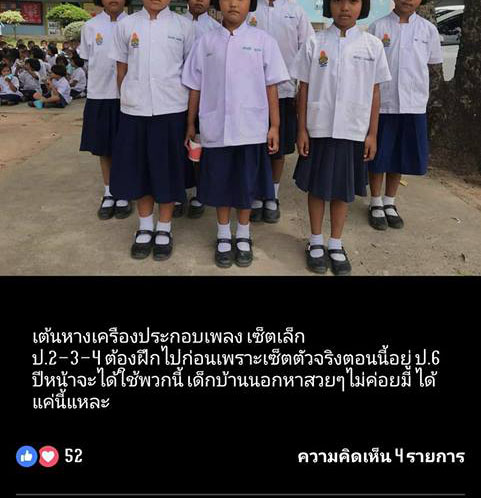
“There aren’t really pretty girls found in the countryside. This is the best that can be found here,” he captioned a photo of seven students from grades 2 through 4 practicing a school dance.

In fact, Toto displayed a pattern of only favoring his male students in possibly inappropriate terms.

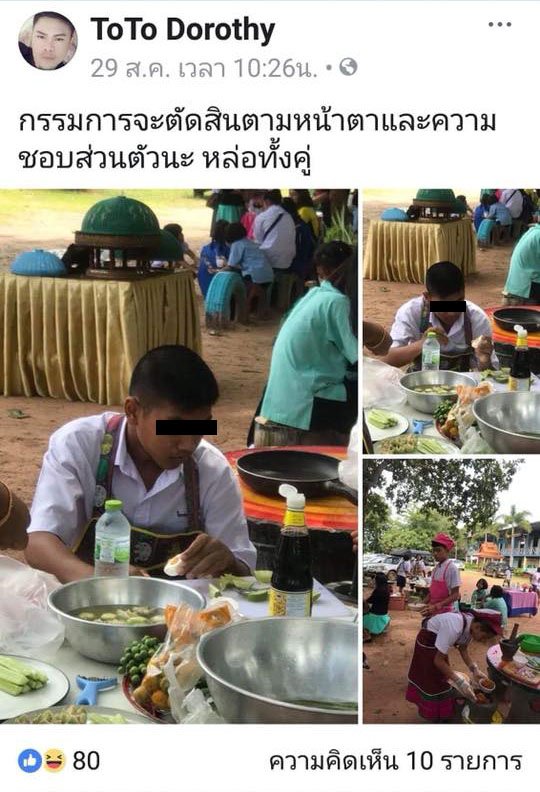
“Evaluation will be based on your looks and my own personal preferences. Both of you are handsome,” he wrote with a photo of several boys working on a class project.

Some have taken to the Chatvittaya School’s page to call for the teacher to be dismissed due to his inappropriate and potentially worrisome comments.

Neither calls or messages to the school were answered as of Wednesday afternoon.

Advertisement

Malaysia, Singapore to Delay, Not Axe, High-Speed Rail Link

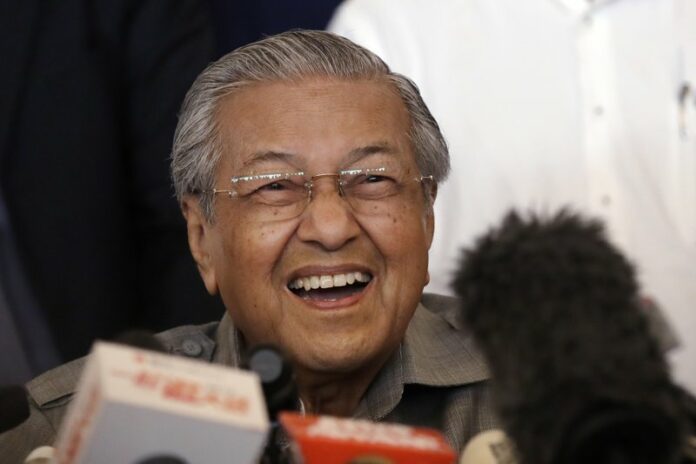
Mahathir Mohamad speaks at a news conference May 10 in Kuala Lumpur. Photo: Associated Press

KUALA LUMPUR — Malaysia and Singapore say a planned high-speed railway that would cut travel time between their capitals to just 90 minutes will be suspended for two years instead of being axed.

Shortly after a stunning election victory in May, new Malaysian Prime Minister Mahathir Mohamad said the 350-kilometer (218-mile) rail project would be canceled because it was too costly.

But after weeks of negotiations, officials from the two countries signed an agreement Wednesday to defer construction of the rail link to May 31, 2020. The two governments said the railway is now slated to begin operations by 2031 instead of 2026.

Mahathir’s about-turn will help Malaysia avoid paying hefty compensation and buy time to improve government finances.

Advertisement

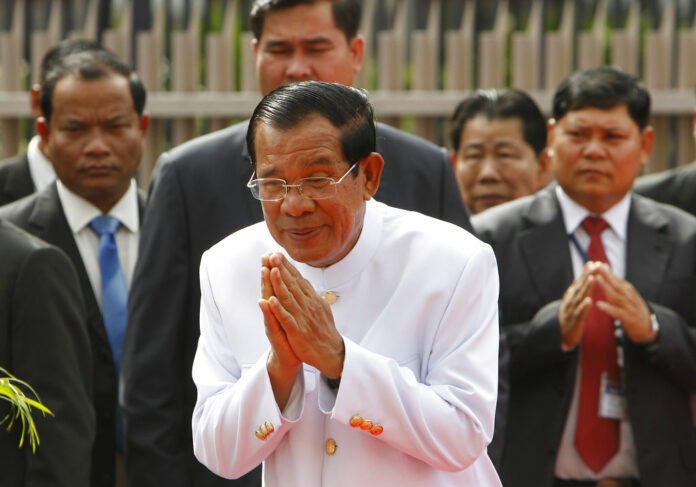
Cambodia’s New One-Party Legislature Begins Session

Cambodia's Prime Minister Hun Sen, center, sees King Norodom Sihamoni off in September in front of the National Assembly in Phnom Penh, Cambodia. Photo: Heng Sinith / Associated Press

PHNOM PENH — Cambodia’s king on Wednesday presided over the opening of the new session of the National Assembly, whose 125 seats are filled by members of a single party following an election widely decried as unfair.

The lawmakers from the Cambodian People’s Party are expected to confirm Hun Sen, who has held power for three decades, for another five-year term as prime minister on Thursday.

His party won a landslide victory in the July 29 general election.

The only credible opposition force, the Cambodia National Rescue Party, was disbanded last year by the courts in a move seen as politically motivated. The 19 other parties that contested the election were seen as either having trivial support or being promoted by the ruling party to foster the illusion of democratic choice.

Many countries branded the election a sham and several poll-watching groups – as well as national contingents from the United States, the European Union and Japan – declined to take part because they also felt the polls were not legitimate.

In a speech at the assembly’s opening, King Norodom Sihamoni conveyed his warmest congratulations to the new lawmakers and urged them to fulfill their duties under the law and to work for the benefit of the entire country.

In a sign of continuing international rejection of the election process, no representatives from the U.S., British and Australian embassies attended the event. Many other diplomats also appeared to be absent.

The United States in December imposed visa restrictions on top Cambodian officials because of the anti-democratic actions taken in the lead-up to the vote , and said it was disappointed by the “flawed elections.”

Last month, State Department spokeswoman Heather Nauert said the U.S. would expand those visa restrictions and in certain cases apply them to immediate family members of the individuals the U.S. had deemed responsible for undermining Cambodian democracy.

Hun Sen has aligned his country firmly with China in recent years, both politically and economically, allowing him to largely ignore criticism from the West.

Story: Sopheng Cheang

Advertisement

Hot News

LATEST NEWS

Bangkok
overcast clouds
27 ° C
28.3 °
25.9 °
81 %
0.5kmh
99 %
Wed
27 °
Thu
34 °
Fri
34 °
Sat
32 °
Sun
29 °