31.6 C
Bangkok
Tuesday, June 9, 2026
Home Blog Page 2080

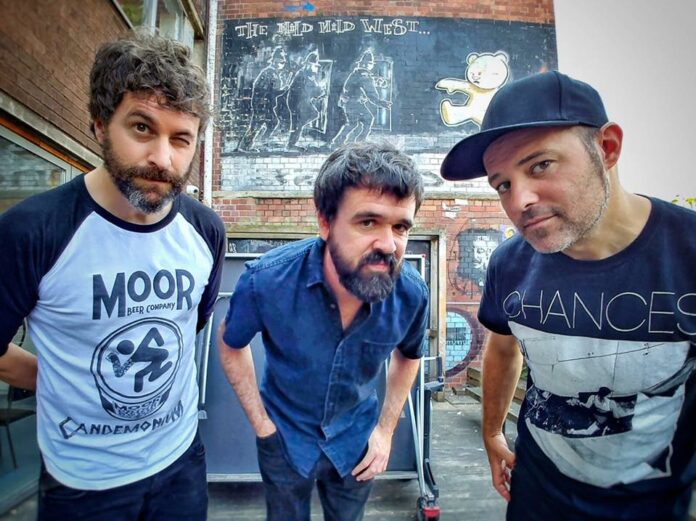
Basque Rockers ‘Berri Txarrak’ to Bark in Bangkok

Photo: Berri Txarrak / Facebook

BANGKOK — With a 20-year career behind them, a Basque band will come to rock the capital next month.

Basque band Berri Txarrak – comprised of veteran trio Gorka Urbizu, David Gonzalez and Galder Izagirre – will rock Bangkok’s alternative music gig Kicks Mini Fest for the first time, with songs ranging from punk to hardcore to thrash.

Influenced by the likes of Nirvana, Rage Against the Machine and Weezer, the band originated in the ‘90s in Spain’s Basque-speaking Navarre region. They will be supported by local four-piece punk band Lord Liar Boots, hardcore quintet Higher Learning and singer-songwriter John Will Sail.

Tickets are 300 baht and include one drink. The show starts at 8pm and goes until midnight on Feb. 2 at Black Cabin. The bar-music venue is located on Soi Farm Wattana across Rama IV Road from Kluaynamthai Hospital, about 1 kilometer from BTS Phra Khanong.

Read: Go Wild for Live Music Every Night at ‘Black Cabin’

Debuted in 2016, Kicks Fest is an event hosting alternative live music concerts. It takes place at a different music venue about every three months with a mix of local and international bands.

Related stories:

Go Wild for Live Music Every Night at ‘Black Cabin’

Advertisement

Makers of Banned Films Ready Arthouse Theater For Bangkok

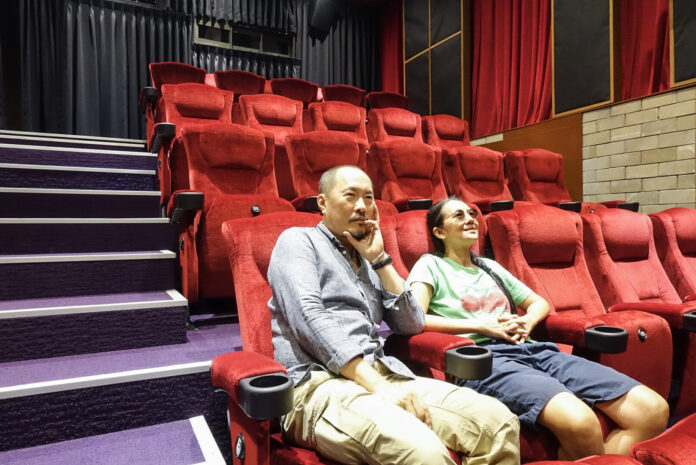
Manit Sriwanichpoom and Ing Kanjanavanit sit inside Cinema Oasis.

BANGKOK — The husband-wife team behind a banned film is opening their own indie movie theater in the heart of Bangkok which aspires to be a rare bloom in a cultural desert.

Founded by Ing Kanjanavanit and Manit Sriwanichpoom, respectively the director and producer of banned film “Shakespeare Must Die,” Cinema Oasis will hoist its curtain for the public within the next two months, giving the capital another much-needed alternative film venue.

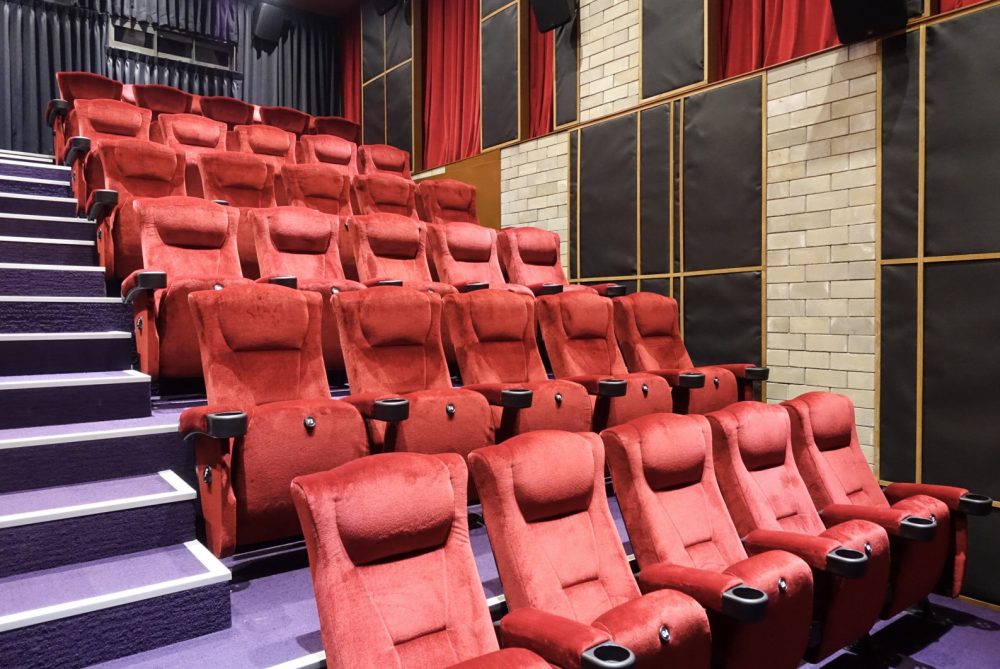
“I know I’m crazy, right? We’re building a cinema when everyone is downloading, watching a movie on their phones,” Ing said while sitting comfortably on a brand new red cushion. “But this place is communal everyone can come and dream together.”

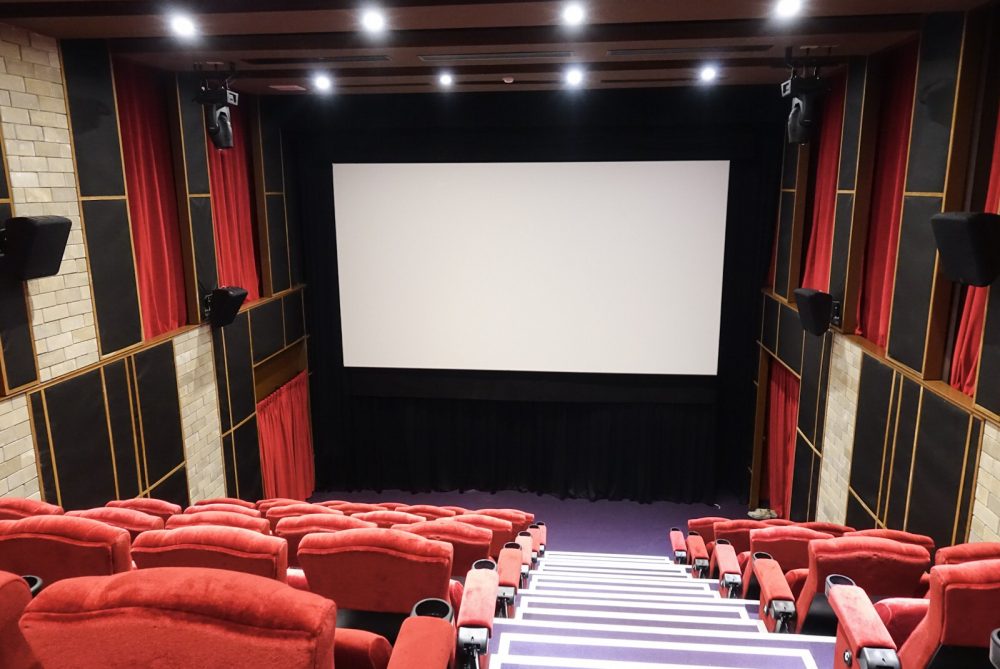
The cinema, which fills the ground and second floors of a newly erected building, offers 48 seats including space for two wheelchairs, whose owners can reach the highest row by elevator.

For the eyes: a 2K digital projector showing movies on a 5-meter screen. For the ears: The theater is equipped with Dolby Digital 5.1 surround sound.

The theater will be a welcome addition to the city’s cinema landscape, especially with its opening timed to the closure of the Lido multiplex, one of the few places to occasionally show non-corporate fare.

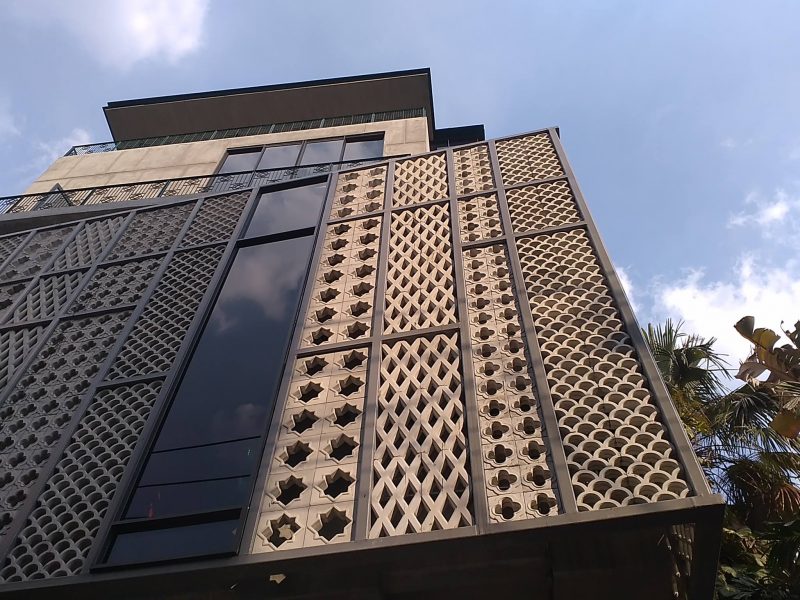
The six-story building was designed by the architect responsible for Sathorn’s five-star SO Sofitel Bangkok – Somchai Jongsaeng of Deca Atelier – and sits on land acquired for 2 baht per square yard (0.8sqm) by Ing’s aristocrat great-grandmother Nueng Singhaseni prior to World War II.

Upstairs above the theater, patrons who arrive before showtime can peruse the latest exhibitions at Galerie Oasis.

Image uploaded from iOS 2 e1516860599265
Lady Burinawarat (Nueng Singhaseni).
Photo: Ing Kanjanavanit / Courtesy

While visitors still won’t be able to see “Shakespeare Must Die,” they will soon have a chance to see the story of the film’s tortured history in the documentary “Censors Must Die.”

Manit, a reputed photographer who owns Silom’s Kathmandu Gallery, hopes to see it open by late March. Once that happens, audiences can expect to see everything from 1977 Thai docudrama “Tongpan” to cult classics, independent movies and more.

“At the very least they must be competent, interesting and entertaining,” Ing said, offering as an example “The Forest” by Paul Spurrier, who owns his own private cinema called The Friese-Greene Club in Soi Sukhumvit 22.

Each film will be curated by the board of a nonprofit created to manage things, the Cinema Oasis Foundation.

Although ticket prices haven’t been settled, Manit and Ing said they’ll aim for affordable – about 160 baht for adults and 100 baht for students – the cinema will be open to everyone, not only ardent cinephiles.

“Everyone in the area likes noodles, and som tam vendors can come to see a movie here,” Ing said.

As the most Thai cinemas belong to the same two companies, meaning some worthy films with potential may get shut out or only limited runs, Ing sees Cinema Oasis as a win-win opportunity for filmmakers and audiences.

Fifteen years after Ing’s film “My Teacher Eats Biscuits” (“Khon Graab Mha”) was banned for depicting dog-worshiping humans, censors also banned her and Manit’s 2012 film “Shakespeare Must Die.” A contemporary adaptation of Macbeth, it contained references to former Prime Minister Thaksin Shinawatra and the 1976 massacre at Thammasat University that remains contentious to this day. Censors deemed it “divisive.” Just this past August, the Administrative Court reconsidered and ultimately refused to lift the ban.

Read: Court Refuses to Lift Ban on ‘Shakespeare Must Die’

“This is my church … This is the house Shakespeare built,” Ing said. “At least when I die, the next generation won’t have to face what I’ve been facing.”

The venue plans to host the Beyond Phad Thai mini film fest, featuring non-mainstream Thai films and a “stoner films” contest in addition to workshops and filmmaker panel discussions.

Cinema Oasis plans to open by the end of March. It is located on Soi Sukhumvit 43, a brief walk from BTS Phrom Phong.

26233687 1996251393923176 1777969665279539051 o e1516860479331
Photo: Cinema Oasis / Facebook

Image uploaded from iOS 3 e1516860695591

Image uploaded from iOS 4 e1516860633592


Related stories:

Court Refuses to Lift Ban on ‘Shakespeare Must Die’

Banned Film ‘Shakespeare Must Die’ to Get Decision, 5 Years On

Finally, an Alternative Cinema to Open in Bangkok

Advertisement

NLA Expects to Pass ‘Election Delay’ Despite Objections

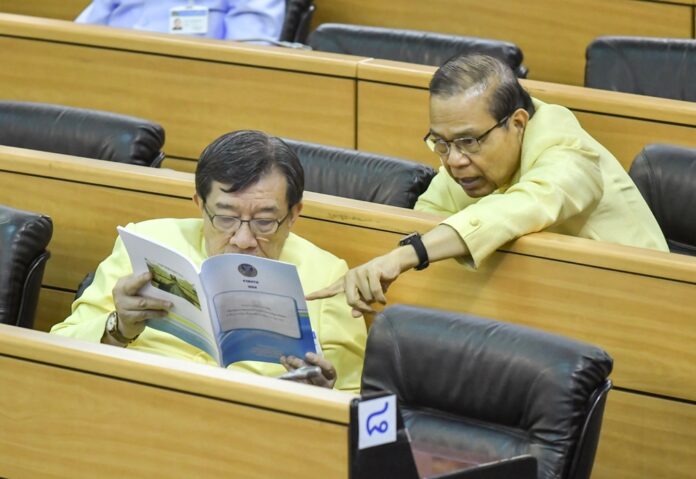
Members of the junta-appointed National Legislative Assembly, or NLA, read from a book in January during a parliamentary debate session.

Update: At about 8:30pm, the National Legislative Assembly voted overwhelmingly – 196 to 12 with 14 absentions – to effectively delay the November elections by 90 days. That would make February 2019 the mostly likely time general elections could be held, barring a successful appeal to the Constitutional Court of today’s vote.

BANGKOK — The junta-appointed legislature Thursday were locked in debate over delaying elections promised for November into next year, a day after Western diplomats urged Thailand to keep to the original timeline.

Protracted deliberations by the National Legislative Assembly are expected to extend into late Thursday night on the bill a key legislator expects will pass despite calls from the kingdom’s Western allies that it be set aside.

One such call came from Pirkka Tapiola, EU ambassador to Thailand, who urged the regime Wednesday to ensure a quick return to democracy by sticking to its pledge to hold elections in November instead of postponing them to February 2019.

Read: Possible Election Deferment is Plot to Benefit Junta: Critics

“[We] encourage stakeholders to respect the previously announced road map for the return to democracy in Thailand, for the benefit of all its people. The EU stands ready to assist Thailand in this endeavor,” the ambassador said, adding that the EU calls for the lifting of restrictions of various rights including rights to assembly and press freedom. Tapiola said he understands that it is still possible to hold elections by November this year.

The statement was a reaction to comments by foreign minister Don Pramudwinai, who said earlier that the proposed amendment is the purview of the legislative branch and that Prime Minister Gen. Prayuth Chan-ocha had nothing to do with it, as his critics suspect.

Kittisak Ratanawaraha, a member of the NLA committee vetting the bill said he believes there’s enough support within the assembly to push for the amendment in the third and fourth readings later this afternoon.

Stephane Castonguay, a US Embassy spokesman, on Thursday reiterated the embassy’s desire to see a poll held no later than November.

“We look forward to Thailand’s return to a democratic government via free and fair elections as soon as possible. This would allow us to strengthen our relationship and for Thailand to be a strong and stable regional leader,” Castonguay said.

The reactions came as junta-appointed legislators reiterated Wednesday that they would continue with the proposal to amend Article 2 of the election bill that could defer its enforcement by 90 days.

Legislators say the measure is needed to give political parties more time to prepare for a general election. As of today, the junta’s ban on political gatherings and activity remain in place. Critics of the military regime say it is buying time to gain support for its own proxy political party.

On Friday, the NLA voted in its first reading to defer elections by 90 days. Prayuth on Monday denied involvement in the move.

Correction: A published update to this story incorrectly identified the time of the vote as being at 9pm. It was held at about 8:30pm. It also mischaracterized the vote as being to delay elections directly. In fact, the vote is to delay by three months the implementation of laws necessary to hold an election; therefore, effectively delaying it until February 2019 under current conditions.

Advertisement

5 Fun Facts About Bueng Kan, Thailand’s Newest Province

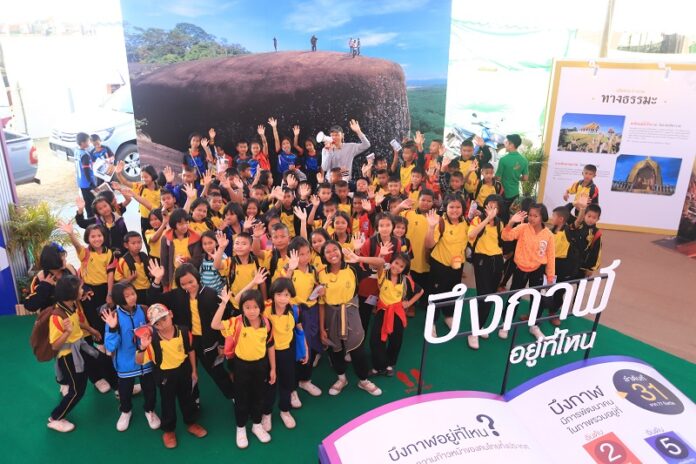
Children pose at an exhibition during the annual Rubber Day event Thursday in Bueng Kan province.

The following is a sponsored report. Khaosod English is not responsible for its content.

BUENG KAN — If a ranking was made about Thailand’s soon-to-be hot destinations, Bueng Kan would definitely clinch top spot. Though largely underrated for being hard to access, the 4,000-sqm province has a lot to offer.

It is fair to say that since Bueng Kan’s establishment seven years ago, people have learned very little about this place along the Mekong river. Here are five interesting facts about Thailand’s youngest province, the emerging and potential future of Isan region.

1. Bueng Kan Was Once a Desert

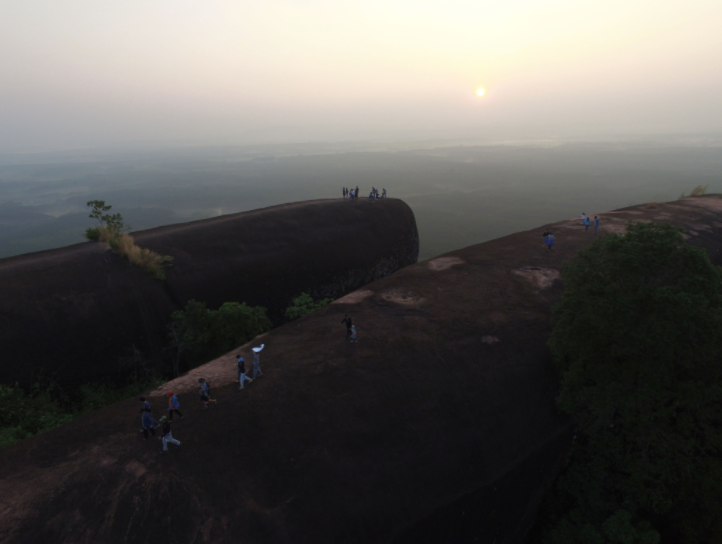
Seventy-five million years ago, the province was a desert. Archaeological evidence from the Cretaceous period is now a unique tourist attraction. Phu Sing, a rock conserved through the millennia, bears testament to the fact the area land was once arid.

The sedimentary rocks in the area formed a mountain with the help of wind and water. Later, between 30 to 55 million years ago during the Eocene period, the sandstone mountains were lifted by plate tectonics and eroded by the Mekong river. It resulted in strangely-shaped rock formations that draw numerous visitors.

Screen Shot 2018 01 24 at 5.27.52 PM
The Three Whales Rocks, a landmark of Phu Sing Reserve Forest in Bueng Kan province. Photo: Matichon

2. Quest to Become a Province’s Began in 1994

It was proposed by then-Nong-Khai-MP Sumet Phromphanhao. Though this was rejected by the interior ministry, it would overburden the state’s budget and human resources.

Another Nong Khai MP proposed it again in 2010. The poll indicated that nearly 99 percent of Nong Khai residents agreed with it, bringing the idea to fruition under Abhisit Vejjajiva’s government.

In the 2011 act, it explained that the shape of Nong Khai province made it difficult to travel from the city center to the far districts. By separating Bueng Kan and the other seven districts nearby, it would be more convenient for more than 400,000 local residents and for the government to oversee the long land border between Thailand and Laos.


3. Soon Home to Fifth Thai–Lao Friendship Bridge

The three-year construction is expected to begin in 2019. The 1.35-kilometer long bridge across the Mekong river will connect Bueng Kan City to Pakxan, the capital city of Bolikhamxay province in Laos.

The 3.6 billion baht project, a co-investment by Bangkok and Vientiane, will allow travellers to connect from Thailand to Laos and onto Vietnam in just one day. It is aimed to stimulate the economy in the region and to eventually facilitate commercial transport to the south of China.

สะพานมิตรภาพบึงกาฬ บอลิคำไซ
A rendering of the fifth Thai–Lao Friendship Bridge expected to be built in 2019. Image: Wikimedia Commons

4. Coming Soon: Direct Flights to the Province

There is perhaps consensus among locals and visitors that the newly established province takes a long time to access. Instead of taking a three-hour ride from Udon Thani Airport, we will soon be able to fly there directly.

The Civil Aviation Authority of Thailand has already begun a feasibility study and identified an area for the construction of an airport 25 kilometers away from the city center along the 212 Nong Khai – Bueng Kan highway. The airstrip will also become an options for those who wish to travel to provinces in the upper part of Isan region.

นิพนธ์ หมอนยางพารา
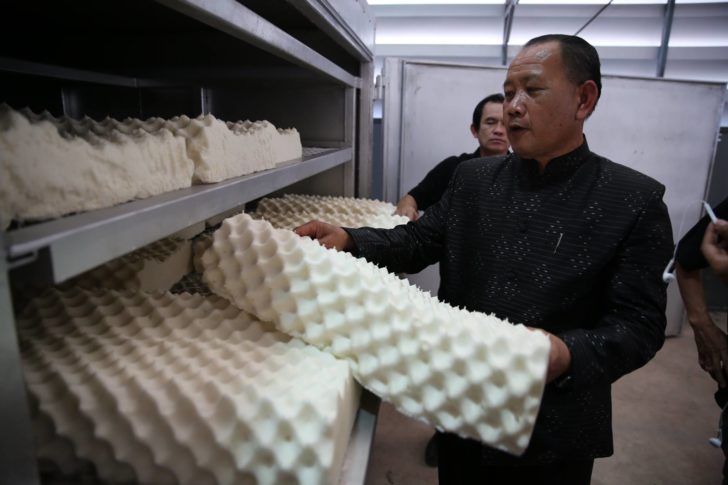
Niphon Khonkayan, chief executive of Bueng Kan Provincial Administrative Organisation, poses with a rubber pillow in 2017. Photo: Matichon

5. Grows the Most Rubber in Isaan

When speaking of rubber, most people usually think of southern Thailand, but this new province wants to change that. In the past few years, Bueng Kan has stepped up to become the biggest rubber producer in the northeastern region with 60,000 farmers producing 1.2 million rai worth of rubber plantations.

Among those farmers is Pinit Jarusombat, former deputy prime minister under Thaksin Shinawatra. Owning more than 2,000 rai of rubber trees, he is one of the main forces pushing Bueng Kan to be the center of the rubber industry.

The city has not stopped there. With the commitment to be less dependent on global rubber prices, they have thrived on using innovation to add value to their commodity. Today, the province owns the biggest factory of rubber pillows and mattress tops in Thailand.

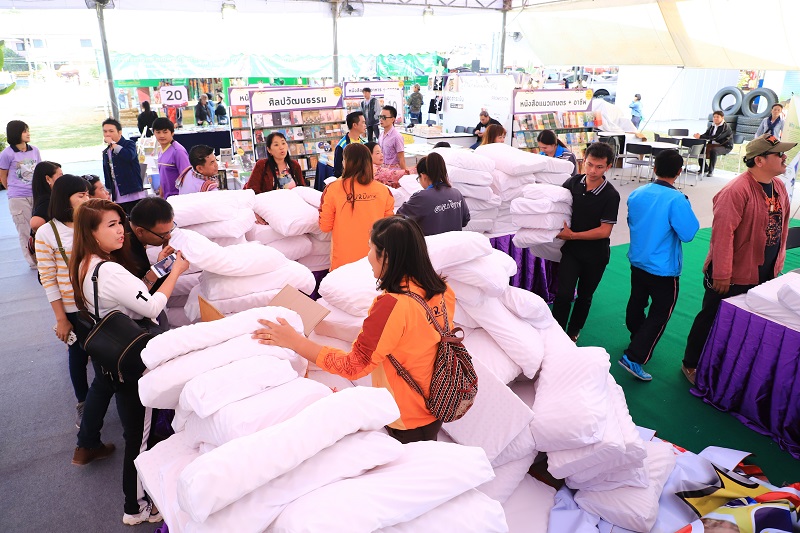
Run by a cooperative of local farmers, Bueng Kan Rubber Group currently buys natural rubber from their 5,000 members and plans to increase production capacity in the future. The factory makes 5,000 to 8,000 pillows daily, mainly for export to China where rubber pillows are popular.

IMG 8897
Visitors shop for rubber pillows during the Rubber Day 2018 event.

This

Advertisement

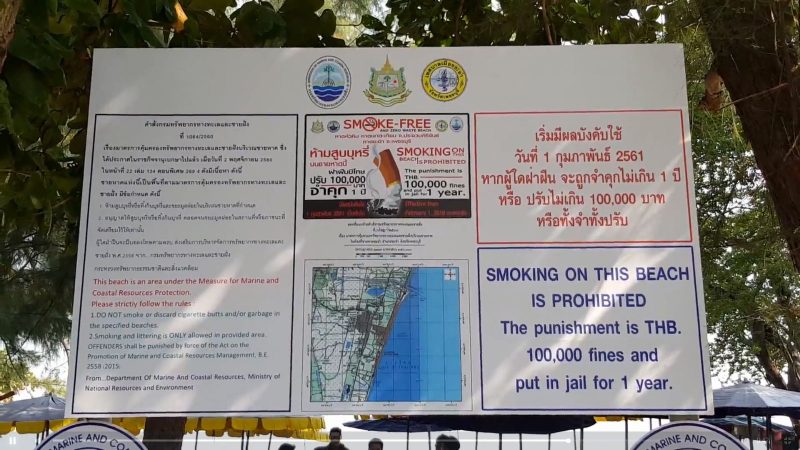
Butts Out: Smoking Ban to Hit 24 Thai Beaches (Video)

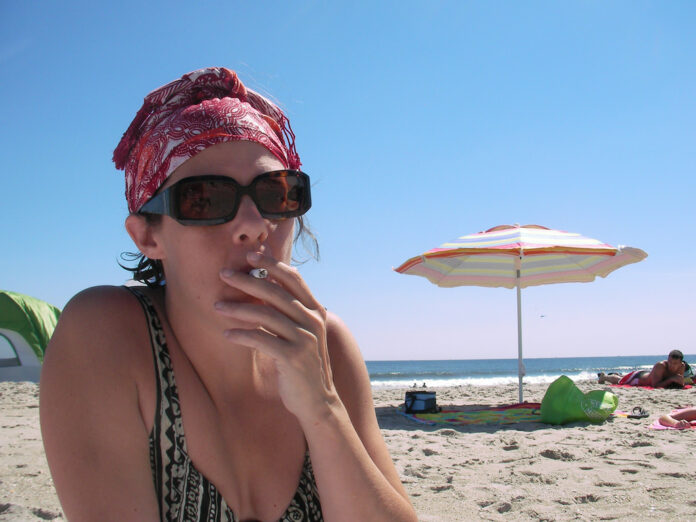
Photo: Shannon Holman / Flickr

PHETCHABURI — Beach-going smokers will have to weigh a year in jail before lighting up next month.

Starting Feb. 1, a smoking ban piloted late last year will go into effect at 24 beaches across 15 provinces. They include popular tourist destinations in Hua Hin, Pattaya, Phuket, Koh Samui and Koh Tao, coastal authorities said Wednesday.

“We aren’t limiting the rights of people who want to smoke. There will be designated places to smoke near the beach,” Bannarak Sermthong, director at the Department of Marine and Coastal Resources said. “But on the beaches, smoking affects the health of families and little children who come on vacation.”

Bannarak added that beach trash – especially cigarette butts – eventually pollute the water and harm sea life by entering their food chain.

The maximum penalty for smoking on the beach will be a fine of 100,000 baht and a year in jail. Bannarak said that at the beginning, the law would be used as more of a warning than strictly enforced.

How evenly the ban is then enforced remains to be seen, as similar prohibitions in other public spaces are routinely ignored. Smoking electronic cigarettes is not an alternative – they’re already illegal.

Nuttawut Phetpornhomsorn, Phetchaburi deputy governor, said that a Marine and Coastal Resources Research Center study found approximately 100,000 cigarette butts strewn across the province’s 5.5 kilometer Cha-am Beach.

Signs in Thai, English and Chinese will be displayed at these beaches, Nuttawut said. The beaches’ business operators have also been informed to help caution tourists about the new law.

“If people smoke outside of the smoking zone and we see it, we will either warn them or take them down to the police station,” Senior Sgt. Maj. Kiattisak Srichan of Hua Hin Tourist Police said Thursday. “We will do regular patrols on the beach, rather than staring and guarding the beaches.”

Nationwide beaches included in this ban are: Banchuen Beach in Trat, Lhaem Sadet Beach in Chanthaburi and Saeng Jun Beach in Rayong.

Smoke-free beaches in Pattaya will include Bang Saen, Tum Pang, Sai Kaew and Dong Tal.

Cha-am Beach in Phetchaburi, Hua Hin and Khao Takiab Beaches in Prachuap Khiri Khan’s Hua Hin District and Sai Ri Beach in Chumphon are also in the list.

Island beaches that authorities hope will become butt-free are Bo Put Beach on Koh Samui, Chalok Ban Kao Beach on Koh Tao in Surat Thani and the ever-popular Patong Beach on Phuket.

Plai Sai Beach in Nakhon Si Thammarat, Chalatat Beach in Songkhla, Wasukri Beach in Pattani, Koh K่hai Nok and Koh Khai Nai Beaches in Phang Nga, Pra-ae, Khlong Dao and Kaw Kwang Beaches in Krabi and Samran Beach in Trang are the southern beaches included in the ban.

Authorities have tried to discourage smoking with recent laws. In November, they banned smoking on 20 beaches after a large number of cigarette butts were found on Phuket’s Patong Beach. In July it became illegal to give cigarettes to minors. Until then, only sale to those under 21 had been forbidden.

smoke2 e1516861340385
A sign above a designated smoking area at Cha-am Beach details the new ban.

Related stories:

Smoking to be Banned on All Beaches

Tougher Smoking Laws Come Into Effect Today

Advertisement

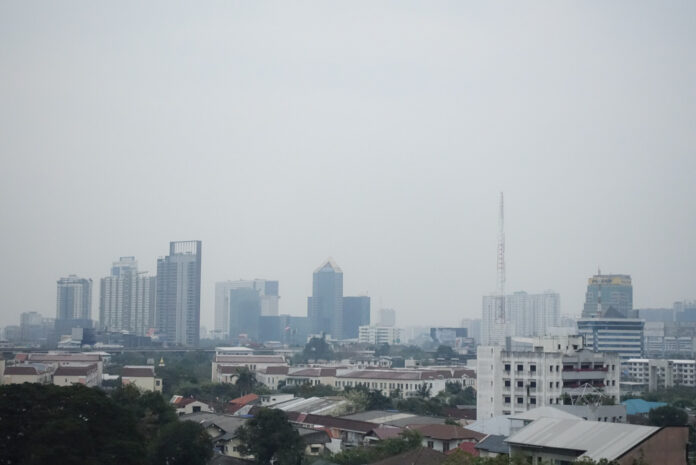
Bangkok’s Air More Toxic Than You Think: Greenpeace

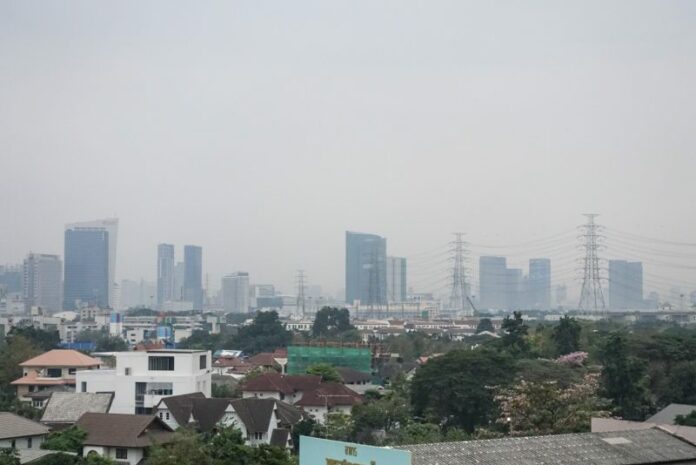
BANGKOK — Bangkok’s air, which has been choking on unusually thick smog for days, is actually more toxic than thought.

After the residents, especially those with respiratory difficulty or disease, were warned to wear masks, Greenpeace Thailand said Bangkok’s reported pollution levels ignore high levels of dangerously small pollutants blamed for the deaths of tens of thousands annually in Thailand.

Greenpeace, which has called for air quality authorities to take action after some regions exceeded World Health Organization pollution levels, said the Pollution Control Department’s numbers don’t tell the full story of what’s in the atmosphere.

Read: Masks On: Bangkok’s Mystery ‘Fog’ is Heavy Smog

Rattanasiri Kittikongnapang of Greenpeace Thailand said her organization has called on Pollution Control to measure and assess fine particulates which can enter the respiratory system, causing – or making worse – stroke, lung and heart disease. In 2015, such pollution killed 37,500 people in Thailand, according to Greenpeace.

The department currently only measures larger particulates. Its measurements resulted in a Wednesday afternoon statement that air quality was not in the danger zone that would “affect people’s health.”

That was a rosier assessment than that of an international air quality monitoring effort, which found Bangkok’s air somewhere between unhealthy and very unhealthy as of 4pm on the same day. That was a 175 on the World Air Quality Index, which considers less than 50 to be good quality, up to 100 as moderate, higher than 150 as unhealthy and in excess of 200 as very unhealthy.

In air quality parlance, fine particles measuring under 2.5 micrometers are deemed PM2.5. They can only be seen with an electron microscope. Larger particles, anything over 10 micrometers, are known as PM10.

The Pollution Control Department, which is part of the Natural Resources and Environment Ministry, plans to assess micro particulate pollution nationwide within two more years.

According to a recent Greenpeace report, the province of Saraburi and Bangkok’s Thonburi district saw the highest average concentrations of PM2.5 throughout 2017. The figures were considered to be over four times higher than WHO air quality limits.

Read: Chiang Mai Has Worst Small Particle Pollution in Thailand: Greenpeace

Other cities with unhealthy levels included Khon Kaen, Chiang Mai, Samut Prakan and Prachinburi.

In 2016, it was the northern city of Chiang Mai, where annual slash-and-burn practices create a choking haze, with the highest levels of fine particulate pollution.

Apart from the usual factors – traffic congestion, industry and open burns – the smog is caused by energy production, especially coal factories.

Bangkok’s current thick smog is blamed in part on a lack of wind to clear it out.

The solutions are not easy, Rattanasiri said, as cooperation across several sectors is needed.

For starters, the government must improve public transportation to get some motor vehicles off the road. The next step would be adopting more solar and wind power.

Greenpeace will host a panel discussion “Transboundary air pollution in Southeast Asia” on Friday afternoon on the first floor of the Bangkok Art and Culture Centre. The talk will be led by environmentalists and experts.

Related stories:

Masks On: Bangkok’s Mystery ‘Fog’ is Heavy Smog

Advertisement

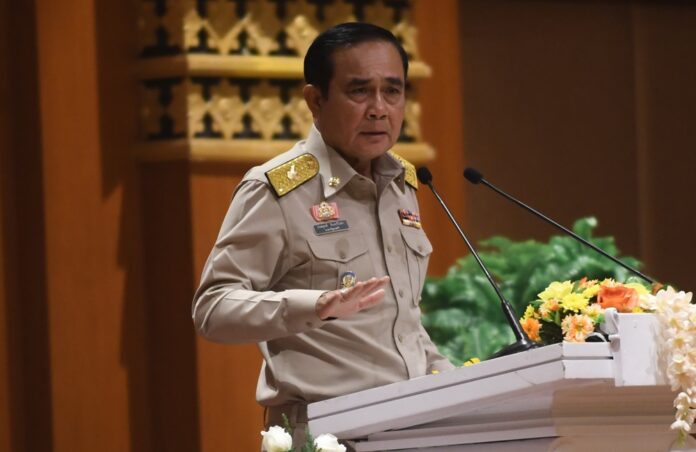
Woman Who Claimed Prayuth Hiding Wealth Acquitted

Junta chairman Prayuth Chan-ocha speaks Monday at Impact Muang Thong Thani

BANGKOK — A 46-year-old woman was found not guilty of computer crimes for an online post in which she claimed junta chairman Prayuth Chan-ocha was moving his wealth to Singapore.

Rinda Pornsiripitak, a single mother of two, was acquitted of the 2015 cybercrime charge because while her posts may have damaged the junta chief, the court decided that they did not affect “national security” as argued by the prosecutors, according to the civil rights lawyer group who represented her.

Prosecutors also made no effort to disprove the truth of what Rinda wrote, Thai Lawyers for Human Rights said in a statement.

Rinda was arrested in July 2015 after police identified her as the person behind rumors on social media that Prayuth had transferred over 10 billion baht to a personal bank account in Singapore.

The government denied the claims and Rinda was charged with violating Section 14 of the Computer Crime Act, which bans any spreading “false information that damages national security.” She faced up to five years in prison if convicted.

Since the 2014 coup, the authorities have routinely prosecuted online dissidents for a variety of offenses, from inciting protests to ridiculing the military regime.

Advertisement

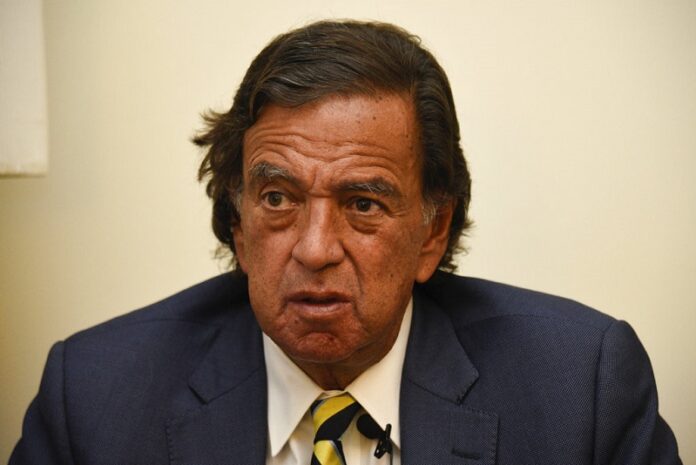
Richardson Resigns From Rohingya Refugee Panel

During an interview with the Associated Press, Former New Mexico Gov. Bill Richardson said he has resigned from an advisory panel trying to tackle the massive Rohingya refugee crisis, Wednesday, Jan. 24, 2018, in Yangon, Myanmar. Photo: Thet Htoo / Associated Press

YANGON — Former New Mexico Gov. Bill Richardson has resigned from an advisory panel on the massive Rohingya refugee crisis, calling it a “whitewash and a cheerleading operation” for Myanmar leader Aung San Suu Kyi.

The sudden resignation Wednesday of probably the panel’s most prominent member, a former senior U.S. politician and diplomat who considered Suu Kyi a close friend, raises serious questions about international efforts to deal with the calamitous fallout of Myanmar military operations since August against the Rohingya Muslims that the United Nations has called “textbook ethnic cleansing.”

It also offers possible insight into the thinking of Suu Kyi, a Nobel Peace Prize laureate once revered as an icon of human rights whose leadership during the Rohingya crisis has shocked many outsiders.

Richardson, a former U.S. ambassador to the United Nations and President Bill Clinton’s energy secretary, castigated Suu Kyi for blaming outsiders for the crisis instead of looking honestly at military actions that have forced nearly 700,000 Rohingya to flee to squalid refugee camps in Bangladesh, where they have spoken of mass killings, rapes and the obliteration of whole villages in Myanmar.

“She believes there’s a concerted international effort against Myanmar, and I believe she is wrong,” Richardson said Wednesday evening in an AP interview at his hotel in downtown Yangon, the country’s biggest city. “She blames all the problems that Myanmar is having on the international media, on the U.N., on human rights groups, on other governments, and I think this is caused by the bubble that is around her, by individuals that are not giving her frank advice.”

The 10-member advisory board is meant to implement earlier Rohingya recommendations made by a group led by former U.N. Secretary-General Kofi Annan, but Richardson said Suu Kyi appears to want the board to validate her Rohingya policies.

“The advisory board is mainly a whitewash and a cheerleading operation for the Myanmar government, and I’m not going to be part of it because I think there are serious issues of human rights violations, safety, citizenship, peace and stability that need to be addressed,” Richardson said. “I just felt that my advice and counsel would not be heeded.”

A spokesman for Myanmar’s government said it was sorry about Richardson’s resignation.

“The reason why we formed the advisory commission was because we hoped that the team will give us constructive support and advice,” spokesman Zaw Htay said in Naypyitaw. “We are sorry that Bill Richardson is releasing a statement and resigned from the commission but that, of course, is out of our control.”

In Washington, U.S. State Department spokeswoman Heather Nauert said Richardson’s resignation and his reasons for doing so “are cause for concern.” She said the U.S. has urged Myanmar’s government to fulfill its pledge to implement the Annan commission recommendations “as a matter of urgency.”

Richardson’s biting criticism of Suu Kyi and his resignation from the panel come as refugees cram camps in Bangladesh rife with crushing poverty, disease and a pervasive air of hopelessness.

More than 680,000 Rohingya Muslims have fled the military of majority Buddhist Myanmar, which began what they called clearance operations following attacks by an Islamic militant group on Aug. 25. The U.N. human rights chief has suggested that what’s happening to the Rohingya may be genocide.

Rohingya are severely discriminated against in Rakhine state and called illegal immigrants although many families have lived there for generations. They have been denied citizenship, freedom of movement and other basic rights.

Richardson, who has frequently negotiated for the release of Americans imprisoned in foreign countries, also said he was “very unhappy and distressed” by Suu Kyi’s heated reaction to his plea that two Reuters journalists detained on charges of violating a British colonial-era secrecy law used by a former military junta to muzzle freedom of speech “be treated fairly and rapidly.”

“That brought almost an explosion on her part, saying there were issues related to the official secrecies act, that that was not my charter as a member of the advisory board,” Richardson said. “It was a very heated exchange that we had.”

The journalists, who are both Myanmar citizens, were investigating the Rohingya crisis. They face up to 14 years in prison if convicted. Local media say their arrests were an attack on media freedom.

“The advisory commission is only to advise on the Rakhine issue. The arrest of the two Reuters journalists has nothing to do with the mandate of the commission or Rakhine issue,” Zaw Htay said. “When he talks about the Reuters journalists, he is speaking out of the boundary of the commission’s mandate.”

Some Myanmar officials are working hard to help people in Rakhine, Richardson said, and he held out hope that the advisory panel might press the government to push through his suggestion of an investigation of widespread reports that the military in Myanmar buried Rohingya victims in many mass graves.

Though he said members of the advisory board were generally “serious people that could be very helpful,” Richardson had tough words for the panel’s leader, Surakiart Sathirathai, a former Thai foreign minister.

“There’s no agenda, there’s no plan to address some of the issues relating to safety, to citizenship,” Richardson said. “I don’t want to be part of a whitewash, and I felt it best that I resign immediately.”

He also disparaged a trip Wednesday by the panel to the border to see Myanmar’s preparations for a possible gradual repatriation of some Rohingya. Bangladesh says it needs more time to prepare for the transfer, and the refugees are deeply skeptical, if not outright terrified, about returning.

There was, Richardson said of the trip, no plan to talk with Rakhine leaders, to talk to members of the Muslim community or to visit Rohingya refugee camps in Myanmar.

“It just seemed like a big photo-op, and I said I’m not going to be part of that,” Richardson said. “Before there is repatriation, there has to be monitors to ensure that that repatriation is properly done. There have to be human rights safeguards. There has to be a commitment, a path to citizenship. There has to be assurances of safety and freedom of movement, and so far there aren’t.”

Story: Foster Klug

Advertisement

Pop Amerigirl Group ‘Fifth Harmony’ Works Its Way to Bangkok

BANGKOK — Don’t go to work, work, work. Go see Fifth, Fifth, Fifth Harmony.

Best known for “Work From Home,” “Worth It” and “Down,” Miami-based pop group Fifth Harmony will perform in Bangkok, organizer BEC-Tero Entertainment announced Wednesday afternoon.

The concert will take place at 7pm March 5 at Muang Thai GMM Live House on the eighth floor of CentralWorld. Tickets start from 1,600 baht and go on sale from Feb. 4 via Thaiticketmajor.
Members Ally Brooke, Normani Kordei, Dinah Jane and Lauren Laurequi rose to fame in 2012 as Fifth Harmony after they performed on American reality singing show The X Factor. A fifth member, Camila Cabello, left the group in 2016.

Advertisement

Masks On: Bangkok’s Mystery ‘Fog’ is Heavy Smog

BANGKOK — Don’t be fooled by the grey mass obscuring the city these past few days. It’s not fog.

Children, seniors and people with asthma and respiratory diseases were advised Wednesday to wear masks when they step outside, as parts of metropolitan Bangkok are suffering from unsafe air quality due to an accumulation of smog.

Particulate levels in Bangkok are much higher than what’s considered safe, largely because there’s been no wind clearing the air these past few hot days, according to Sunee Piyapanpong of the Pollution Control Department.

The sources of the pollution are the usual suspects: traffic, industrial activity and open-air burning.

As of 2pm on Wednesday, Bangkok’s particulate air pollution index rose to 174, a level at the high end of “unhealthy.” Up to 50 is considered “good” and up to 100 is “moderate.” far above what’s on website on Air Quality Index reported that, or “unhealthy.”


Advertisement

Hot News

LATEST NEWS

Bangkok
overcast clouds
31.6 ° C
31.6 °
29.4 °
68 %
3.1kmh
100 %
Tue
35 °
Wed
34 °
Thu
34 °
Fri
28 °
Sat
31 °